Michael Hoffman
Jan. 3, 2025
Contents:
- Motivation of this Page
- The Concerns of the Egodeath Theory and Mushroom-Tree Esotericists
- During Psilocybin Transformation, Does Viable Stable Control Result from Possibilism-Thinking, or from Eternalism-Thinking?
- Irrelevant: “Free Will vs. Determinism”; Closer: “Presentism vs. Eternalism”; On-Target: “Possibilism vs. Eternalism”
- Standing in Switch Stance 🛹 – Practicing {stand on right foot} Relying on 2-Level, Dependent Control
- See Also
- Video: 4 Hours of World’s TOP SCIENTISTS on FREE WILL
- Transcript of Entire Video
- Introduction by Curt Jaimungal
- Michael Levin
- David Wolpert (Part 1)
- Donald Hoffman, Joscha Bach
- Joscha Bach, Control Systems (1)
- Stuart Hameroff
- Claudia Passos
- Wolfgang Smith
- Enlightenment (Realize Eternalism) vs. Salvation (Transcend Eternalism)
- Bernardo Kastrup
- Matt O’Dowd
- Anand Vaidya
- Chris Langan, Bernardo Kastrup
- David Wolpert (Part 2)
- Scott Aaronson
- Nicolas Gisin
- David Wolpert (Part 3)
- Motte and Bailey Fallacy
- Brian Keating, Lee Cronin
- Joscha Bach, Control Systems (2)
- Karl Friston
- Noam Chomsky (Part 1)
- John Vervaeke, Joscha Bach (Control Systems)
- Stephen Wolfram
- BOTTOM OF TRANSCRIPT, CLEANED UP EARLIER TODAY, MOVED FROM IDEA DEVELOPMENT PAGE 27 – 3:21:00 – lots of my commentary below
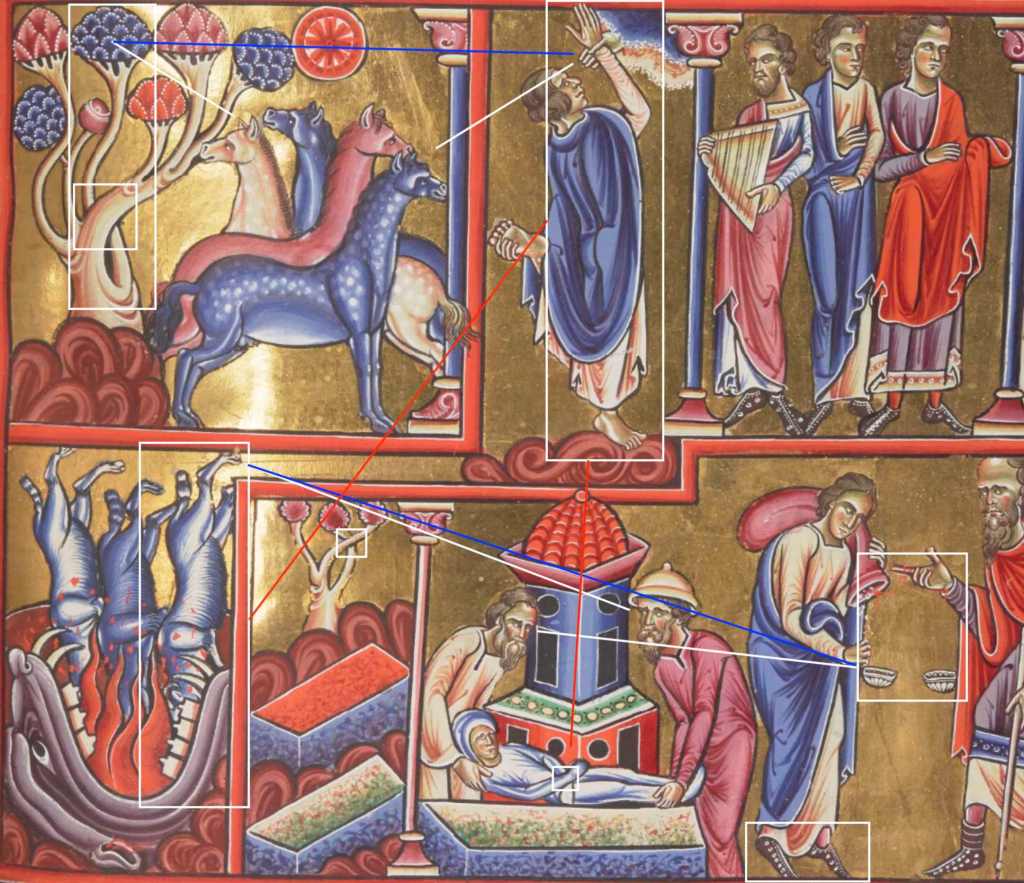
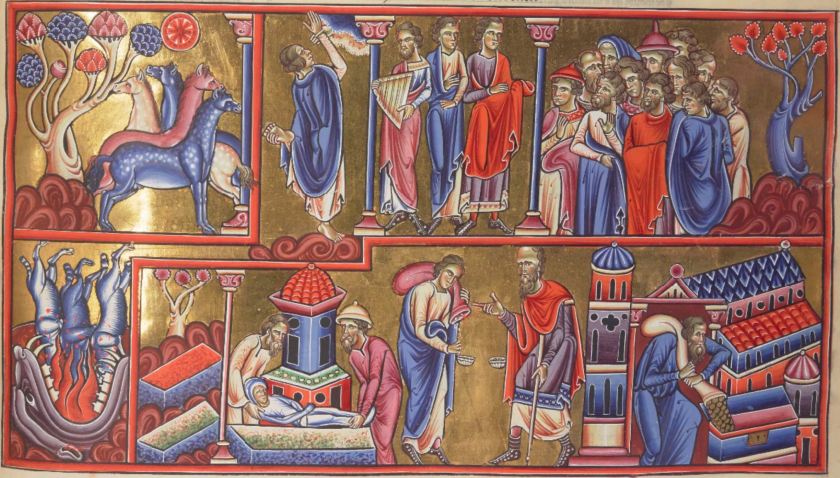
- The medieval art genre of {mushroom-trees} is concerned with stable control in the psychedelic state: that is the test of truth, relevance, concern; the standard of reference
- Jonathan Blow
- 🏋️♂️📚
- Noam Chomsky (Part 2)
- The Relevant, Psilocybin-Transformation Concern, as the Reference Point: Does Viable Stable Control Result from Possibilism-Thinking, or from Eternalism-Thinking?
- In What Sense Do People Make Decisions?
- People Who Properly Disbelieve Freewill Detectably Behave Differently
- Thomas Campbell
- John Vervaeke
- Astral Ascent Mysticism: Prime Mover Sphere Drives Sphere of the fixed stars; Eternalism
- From {king steering in tree} through {mixed wine at banquet} to {snake frozen in rock}
- The Mytheme Theory (part of the Egodeath Theory) Provides and Explains Suitable Analogies
- James Robert Brown: The Platonistic Perspective on Free Will
- Anil Seth: Strange Loops
- Douglas Hofstadter
- More ontoprisms coming…
- Video: Free Will, Morality, Self Awareness | Robert Sapolsky
Motivation of this Page
Video:
4 Hours of World’s TOP SCIENTISTS on FREE WILL
YouTube Channel: Curt Jaimungal
Nov 28, 2023
https://www.youtube.com/watch?v=SSbUCEleJhg —
“In our first ontoprism, we take a look back at FREE WILL across the years at Theories of Everything.
4 Hours of No-free-will Imprisonment Enslavement then Spiritual Redemption
A few sections warrant my inspection. Certainly there are some valuable relevant ideas in this long video. Hard to assess without the present page.
I already cleaned up the bottom part of the transcript in idea development page 27.
Here’s the entire transcript, including that, b/c easiest for me to process all at once.
The Concerns of the Egodeath Theory and Mushroom-Tree Esotericists
The Relevant, Psilocybin-Transformation Concern, as the Reference Point:
During Psilocybin Transformation, Does Viable Stable Control Result from Possibilism-Thinking, or from Eternalism-Thinking?
When the Egodeath theory and Psilocybin form the field & approach of Loose Cognitive Science, the free will vs. determinism analysis will change a lot, including eternalism opening up to be revealed as relevant, instead of domino-chain determinism.
The debate will switch away from “free will vs. determinism” and also away from the newer off-target contrast, “presentism vs. eternalism”, to the relevant debate, possibilism vs. eternalism.
Irrelevant: “Free Will vs. Determinism”; Closer: “Presentism vs. Eternalism”; On-Target: “Possibilism vs. Eternalism”
I wrote a lot about placing randomness into block-universe eternalism, in:
Self-control Cybernetics, Dissociative Cognition, & Mystic Ego Death (1997 core theory spec) (Hoffman, 1997) https://egodeaththeory.wordpress.com/2020/11/30/self-control-cybernetics-dissociative-cognition-mystic-ego-death/
The first posts in Egodeath Yahoo Group 2001 contrast essentially,
- branching Quantum Mysticism
- non-branching 4D Spacetime Mysticism
Many points in this video are suggestive about explaining how the medieval art genre of {mushroom-trees} works, what concerns it depicts and emphasizes, and how I can describe differently the concerns of Egodeath theory.
Mushroom-tree artists are NOT in a Phil-vs.-Physics Dept. armchair debate about quantum flapdoodle theorizing.
Esoteric esotericism & the Egodeath theory IS NOT CONVENTIONAL DEBATE about “FREE WILL VS. DETERMINISM”.
NOR DEBATE about “POSSIBILISM VS ETERNALISM”. Rather:
In what sense is possibilism is the case, as reflected in the intense mystic altered state?
In what sense is eternalism the case?
What does it mean to functionally practically and effectively integrate these, integrated possibilism/eternalism thinking, per maturity as defined by the Teacher of Truth, Psilocybin?
Standing in Switch Stance 🛹 – Practicing {stand on right foot} Relying on 2-Level, Dependent Control
https://www.google.com/search?q=switch+stance+skateboarding
Balancing on a skateboard, a person has an innate strong preference for either L foot forward or R foot forward.
Skateboarding switch stance is hard, a deliberately learned skill – unless one has committed to ambidextrous from the start.
Switch stance requires hard work and uphill-battle re-learning the non-natural stance.
We all stand in Regular stance, weight on L foot.
We all have to work hard to learn to stand in Goofy stance, like the Goofy cartoon character surfing in an animation: weight on R foot; R foot forward on skateboard.
Then we have stable control in the Psilocybin state. This is the message of the mushroom-tree artists.
March 4, 2023
See Also
The “All At Once” Universe Shatters Our View of Time (Emily Adlam)
Excellent video interview & transcript, highly relevant to Egodeath theory of psychedelic eternalism:
The “All At Once” Universe Shatters Our View of Time (Emily Adlam)
Video: 4 Hours of World’s TOP SCIENTISTS on FREE WILL
Video:
4 Hours of World’s TOP SCIENTISTS on FREE WILL
YouTube Channel: Curt Jaimungal
Nov 28, 2023
https://www.youtube.com/watch?v=SSbUCEleJhg —
“In our first ontoprism, we take a look back at FREE WILL across the years at Theories of Everything.
“If you have suggestions for future ontoprism topics, then comment below.”
Transcript of Entire Video
Introduction by Curt Jaimungal
00:00:00 Introduction
Free will is a representation within the system that it’s made a decision and the decision is being made on the best understanding of what’s correct.
The dynamics that break up that undifferentiated ocean of potential selves into one, two or three or more, it can go different ways.
Out of this like ocean of potentiality, these cells, you know, 50,000 cells, and each of them will have specific goals.
Objectivists say that these probabilities are pointing to some real thing in the world.
There is some real random generator in the world.
And subjectivists say, no, these are just degrees of belief.
What is free will?
How is it different than agency?
What constitutes a willful and an unwillful action?
How do you define yourself as separate from the world in order for you to even say that you act on the environment?
What does physics have to say about all of this?
And what are some of the alternatives to the classic compatibilism versus libertarian notions of free will?
Perhaps our question is explored today by the approximately 25 or so guests of Theories of Everything.
For those of you who are new to this channel, my name is Curt Jaimungal, and what we usually do is explore theories of everything in the physics sense from a mathematical perspective.
However, this is also a philosophical channel, investigating the fundamental laws, whatever they may be.
You can think of it as an analysis from multiple perspectives on the largest looming questions we have, while also exploring an experiential approach.
We’ve been having issues monetizing the channel with sponsorship, so if you’d like to contribute to the continuation of Theories of Everything, then you can donate through PayPal, Patreon, or through cryptocurrency.
Your support goes a long way in ensuring the longevity and quality of this channel.
Thank you.
Links are in the description.
What you’re about to watch is a new format called an Onto Prism, where instead of having comprehensive interviews with a single guest on a variety of subjects, we’re flipping that and diving into a singular topic with a variety of guests.
Think of it like a buffet where there’s a smorgasbord of variegated ideas, and you can sample and choose the one you like best, or create your own Weltanschauung by sampling from the assortment.
Hearing opinions on a specific theme is strewn across the over 100 podcasts over the past three years on the Theories of Everything channel, though for convenience, they’re co-located here.
The guests in this episode include Michael Levin, Carl Friston, David Walpart, Donald Hoffman, Joscha Bach, Stuart Hameroff, Wolfgang Smith, Bernardo Kastrup, Matt O’Dowd from PBS Spacetime, Chris Langan, Nicholas Gissen, Brian Keating, Noam Chomsky, Stephen Wolfram, Jonathan Blow, Thomas Campbell, John Vervaeke, James Robert Brown, Anil Sith, and Claudia Paisos.
There’s also Anand Vaidya and Scott Aronson.
This Onto Prism on free will is in preparation for a mountainous interview with the legendary Robert Sapolsky on this very issue. [section at bottom of this page]
If you enjoy this format, then you can suggest other topics for future episodes in the comments section.
Now enjoy this peregrination into free will.
Well, again, what I’d actually like to do is back up a little bit and put some of what you just said into very simple active inference language.
Michael Levin
00:02:58 Michael Levin
If I see something happening on my Markov blanket, on my interface with the world, then I always have the question, did I do that or did the world do that?
Where the world means everything outside me.
And in a sense, the answer is always the world did it.
So the question becomes, did the world do that in response to something I did to it or did it just do it?
Not in consequence of any of my actions.
And so one gets immediately to this kind of babbling scenario that we’ve talked about many times, in which an infant or a robot or some system is trying to figure out by measuring correlations whether the world’s inputs to it have anything to do with its inputs to the world.
And just asking that question requires enormous representative capacity, because one has to represent one’s actions and represent them pretty well in time.
And one has to have a good memory to represent enough actions to get any kind of statistical support for drawing an inference about correlation.
And that memory has to be represented as a memory, not just part of one’s occurrent input.
So I think this question that you posed is really the key question faced by any agent at all that’s trying to get a model off the ground, which in a sense gets back to the question that Mike asked early, early on about how does this all start?
Maybe it starts with babbling in very simple systems.
You know, I was thinking recently, this whole issue of how many agents are there and where is the border between the agent and the world and how do you self-model that border is a fascinating topic.
And there’s an amazing developmental model for this, which is that, you know, we often talk about one embryo and the embryo does this and the embryo does that.
But actually, what happens at the beginning, let’s say, for example, in amniote embryos is that there’s a flat blastodisc, which has just a few cell layers thick.
So it’s kind of, think of it like a Frisbee and it just has a few cell layers.
And normally what has to happen is that one point in this disc breaks symmetry and then organizes the primary axis of the first embryo and basically tells all the other cells, don’t do it because I’m doing it.
And that’s how you end up with one embryo.
Now that process is very easily perturbed and many people have done it.
I used to do it in my graduate work and what you can do is if you perturb that process, that initial blastodisc, that undifferentiated sort of pool of cells, which are these sort of proto, low-level proto agents, that pool can break up into not one embryo, but actually multiple.
And so you can have, so I did this in bird embryos and you can have twins and chicken and duck and things like this.
You can have in humans, humans have exactly the same structure.
You can get them head to head.
You can get them side by side.
You can get all sorts of geometries.
You can get triplets.
You can get multiple individuals emerging by different partitions of this really kind of medium, this particulate medium where you have a bunch of cells and you don’t know ahead of time how many individuals at the level, how many larger individuals, so embryos, are going to arise from this medium because the dynamics by which, and that’s local activation and long range inhibition and things like that, the dynamics that break up that undifferentiated ocean of potential cells into one, two, or three or more cells is actually, it’s very dynamic.
It can go different ways.
And then you get interesting things like this.
So for example, you might know that human conjoined twins that are sort of stuck together side to side, one of the twins often has left, right asymmetry defects.
And it’s because when you have two twins side by side, the cells in the middle, both twins can’t quite agree on who they belong to.
Are they the right side of this twin or are they the left side of that twin?
And both twins think they belong to them, but in fact, they’re overlapping, they’re the same cells.
And so one side will have correct left and right, the other side will have like two rights, for example.
This ends up giving one of the twins laterality defects with respect to hardened gut pattern.
And so their models, each twins, as the collective of cells tries to compute things like where things are and what’s left and what’s right and so on, their models can disagree with each other.
They can draw the boundary between self and world in different ways, and you can have these sort of disputes over certain areas as to who they actually belong to.
And so I’m just incredibly interested in this process of individualization, so to speak, out of this like ocean of potentiality, these cells, you know, 50,000 cells and some number of individuals at the embryo level will be formed.
And each of them will have specific goals and morphospace, each of them will try to achieve very specific morphologies.
And you don’t know ahead of time how many there were going to be.
All right, we’ve just been diving into the interplay between the self and the world with Michael Levin, Carl Fristin, and Chris Field.
Again, every link is in the description.
David Wolpert (Part 1)
00:08:51 David Wolpert (Part 1)
They dissect the process of self-modeling and individualization, which lead us naturally to our next guest, David Wohlpart, who challenges us with a monotheistic perspective on freewill.
If they both have free will, at least once.
That’s incredibly interesting.
So it’s an impossibility result against more than one God?
Yes.
Yep.
That’s why it’s called the monotheism theorem.
It might be that we are in a universe in which you could have one God, who knows?
I’m not going to go there.
I mean, my personal feeling—conclusions on it are that in our particular universe, no.
But there is no reason why—I think the concept itself is not inherently self-contradictory like Riposte’s demon.
There could be universes.
I would say there’s no sense in which we can actually rule them out, in fact, in which there are deities.
But there cannot be any of them that support two deities.
So we might be in one of those ones in which there is a deity, who knows?
But we can’t be in one in which there’s more than one.
And when you say deity, there can’t be two omniscient deities?
There can’t be two that have free will.
So you could have one where there’s Zeus and Hera, but Zeus can always be in a particular state that restricts Hera from being in some of her particular states.
In that sense, she does not have free will of him.
At one particular time, one particular state of Zeus, it’s just not going to be any possible storyline in any of the universe, in our universe, in which Hera is in one of her particular states.
There’s some limitation.
My being in one particular state at one particular time, it could cause a restriction on the possible states that you could be in at that time.
And if that’s true, then we have no free will.
Have you heard of Norton’s Dome?
Norton’s Dome.
I think I did a while ago, ringing a bell, but I can’t bring it up.
Sure.
It’s an experiment about Newtonian mechanics, and it’s to show that Newtonian mechanics isn’t deterministic, even though it’s often said it is.
And the reason is there are certain configurations you can set up such that there’s not a unique answer to the differential equations.
You know, ordinarily in physics, just for people to know, one of the reasons why mathematicians quibble with physicists is that physicists hand wave and gloss over many details.
And so one of them is whenever we have an ordinary differential equation, we tend to say there’s uniqueness in existence.
However, that’s contingent on something called the Lipschitz continuity.
And if you don’t have Lipschitz continuity, you don’t necessarily have a unique solution.
So you basically set up a certain situation with a ball on a dome, and the equation for the dome is fairly simple.
It’s almost like a parabola.
And then it turns out one solution is it stays there forever, zero velocity initially.
And then another solution is at some point t, and the time t is not specified, it goes down some route, and any one of them.
So that’s extremely interesting.
Let’s imagine we live in a Newtonian world.
Is that related to free will, would you say?
Or is that not related to free will?
That’s something different.
I know free will, forget about the sense of intention, interacting with the laws of nature to produce that effect.
Carlos.
Yeah, the Norton’s dome, it’s also, I think it was actually Sabine, who has one of her FQXi essays that she points out that chaos is, in some sense, it can be a much stronger phenomenon that people understand, and that you can set up physical systems in which the chaos is to such a degree that actually passed a certain point in time, you cannot, it is not defined, but the state of the system will be after that.
So that’s, I think that’s the context in which I ran across it.
It’s also, there are related things, the work that goes back to two people called Porel and Richards.
Those were physicists who is well known that, for example, the three body problem, where even if you do, so there you do have the standard Lipschitz continuity, and so on, you’ve got gravitational attraction, and so on.
You can set it up to be a, what’s called a universal Turing machine.
You basically, what you do is you encode the input tape to that Turing machine into the actual precise initial conditions of these three bodies.
And then by reading the appropriate bits of the state of the system at some future time, you can figure out what that universal Turing machine state of its tape would be at that time.
What this means is that you can feed in a configuration that’s actually the halting problem so that that physical system, in fact, it violates the Church-Turing thesis, that physical system, its state in the future would not be complete.
Donald Hoffman, Joscha Bach
00:13:48 Donald Hoffman, Joscha Bach
All right, now having just gone through the monotheistic lens with David Walpart, we’re pivoting to Donald Hoffman’s cognitive neuroscientific perspective.
Also Joscha Bach joins Donald Hoffman.
In a physicalist framework, which I’m, so now I’ll just talk about what most of my cognitive neuroscience peers think, right?
Most of them assume that physical systems are fundamental.
Neural activity causes all of our behavior, and in that case, there can be a fiction of, a useful fiction of free will, but it’s really just going to be a useful fiction.
If I do something, it’s really my neurons with the neural activity that did it, and there is a sense in which you can say, I chose to do it because actually neurons are part of me, so I think that’s the point of view that Dan Dennett takes, for example, on this.
And Sam Harris replies on that, he says, well, yeah, I also grow my fingernails.
I’m not sure that I’m doing that by free will, but I, so it’s not real clear that just because my neurons are doing it, I have free will, just in the same sense that I’m not using free will to grow my fingernails.
So Sam would say there’s no such thing as free will, if you’re a physicalist.
Dan Dennett would say I’m a physicalist, and there is this important notion of free will.
I think that, of course, space-time isn’t fundamental, and so that we have to completely think outside of that box altogether.
And as scientists, we have to say upfront what our hypotheses, what our axioms or fundamental assumptions are, and be very clear about them upfront.
These conscious agents in the mathematics, they get certain inputs, we call them experiences that they have, and then there’s something called a Markovian kernel that describes what actions they take, and those actions affect the experiences of other conscious agents.
So then there’s, so that’s just the mathematics that my team has written down, it’s a very simple notion of a Markovian dynamics of conscious agents interacting.
And it’s not in a physicalist framework, we’re assuming that this is in its own world, right?
These are conscious agents, and that’s the foundation.
Space and time are not the foundation, conscious agents, so conscious experiences and interactions of conscious agents are the foundational notion.
And so then the question is, how shall we understand the probabilities?
So if I get a particular experience that comes into a conscious agent, and it then probabilistically affects the experience of other agents, how shall I understand that probability?
Shall I understand it as a free will choice, or what?
And I could say, I refuse to answer the question, there’s a probability there, and that’s as far as I go with a theory, there’s this agent, so I leave that probability as just where my theory stops, where I say, in some sense, wherever we see a probability in a theory, that’s where explanation stops, right?
That’s basically saying, I don’t know.
So whenever, so I always say this, whenever in a scientific theory you see probabilities coming up, you’re seeing the theory say, this is where I halt, this is where my explanation stops.
And there are two major approaches toward understanding those probabilities, the objectivist and subjectivist to probabilities, right?
So objectivists say that these probabilities are pointing to some real thing in the world.
There is some real random generator in the world.
And subjectivists say, no, these are just degrees of belief.
Whenever you see probabilities, you’re only talking about degrees of belief.
But in either case, explanation stops, right?
How do I come to that belief?
Well, I can only tell you probabilities.
What is that random objective process?
I don’t know, but I can just tell you probabilities.
And so really, whenever you see probabilities in a scientific theory, and they’re all over the place, I read that as saying, here’s where explanation stops and our theories halt.
And if we want to go further, we’re going to have to unpack that probability into some deeper theory.
So if I say that it’s free will in the case of the conscious agents, then, I mean, in some sense, that’s just words.
What theory has is the probabilities, and it has no further explanation.
So if I call that probability a free will, then I can call it that, but I haven’t really done much to give much insight into the notion of free will.
Free will then becomes a primitive, and maybe that’s what I want to do.
I want to say, this is where explanation stops, and so free will is primitive.
So these probabilities are free will, and I agree that that’s where my theory stops, that I can do no further.
Now what’s interesting in the conscious agent dynamics that we’re working on is that any group of conscious agents together also satisfy the definition of a conscious agent, and so they are a conscious agent.
So any conscious agents interacting are also conscious agents.
So in the theory, there’s one conscious agent, because if you take all of them together, they form one conscious agent, but then there are as many, if you’re computational, there’s only a countable number of them, or in my case, I don’t know, it may be an uncountable number of conscious agents.
But what’s interesting is that you unpack this probability in the Markovian kernel.
There could be one big probability for one agent, but you can unpack that into all these dynamical systems that are interacting conscious agents with their own probabilities and their own kernels.
And what’s interesting is that you could then give, in some sense, an unpacking of the notion of free will in that way.
You could say, well, yeah, the one agent has free will and this probability, but I can actually do some non-trivial unpacking of that notion in this sort of recursive unwinding of those probabilities throughout the network.
So there is the possibility here of, I mean, ultimately, there will be a primitive notion of free will that is just primitive and not explained, but given that one, I can explain all these other free wills sort of interacting, arising from this most primitive notion of free will in a non-trivial way.
But once again, I would point out something that I see all the time in scientific theories.
No theory in science will ever explain everything.
And I would love to see if Josje agrees or disagrees.
I will just state to make a strong claim.
There cannot be a theory of everything because every theory has to make assumptions and those assumptions are not explained, they’re assumed.
It’s just that simple.
Okay, am I correct in my summary of your views on free will that if in a physical theory you have probability, now some of that probability is just due to our ignorance, but if there’s a fundamental probability, you can just say, well, that’s indicating that the theories break down, we just don’t know.
Or you can say that there’s something underneath producing those and that which is underneath the probabilities is what you’re calling free will.
Is that correct or is that off?
Right.
So, if I’m a physicalist, I’ll say that that probability is due to some process that I can say no more about, but there’s some process that generates this stuff.
It’s not free will, it’s just a physical process that I don’t know.
But if I’m taking consciousness to be fundamental, then it’s an interesting move to say that probability can be interpreted as free will.
Now, of course, I’m not explaining anything.
I’m just putting the notion free will, the word free will on it, right?
And free will becomes just a primitive notion as well.
So that’s where my explanation stops and the most unpacking I can do is that recursive unpacking that I mentioned, which is an interesting unpacking, but ultimately there’s this primitive notion of free will that I have nothing further to say about.
But I think that that’s not a problem specific to this theory.
The last thing I was saying was that that’s endemic to all scientific theories.
Every scientific theory will have miracles at its foundation.
By miracles, I mean assumptions that are taken for granted and not explained.
If you explain them, then you’ll have a deeper theory with new assumptions that explain those assumptions, but the new assumptions aren’t explained.
So in this sense, science can never have a theory of everything because science theories always have assumptions and the assumptions are what you don’t explain.
Joshua, I know Donald said quite a few, there are quite a few elements to pick from there.
Joscha Bach, Control Systems (1)
23:50
https://www.youtube.com/watch?v=SSbUCEleJhg&t=1430s
We are interlocking claims, but let’s address them.
First of all, I don’t know whether there can be one theory of everything because my reasoning is not tight enough to make that proof one way or the other.
So at this point, I have to remain agnostic because I think from where I stand, it seems to be possible that there can be a theory of everything.
And it seems to be possible that there cannot.
From a computationalist perspective, whenever you have a set of observations that is finite, you will be able to construct a computational model that explains how to make such patterns.
So in principle, there can always be a theory of everything that you observed.
That’s something that I cannot, that I don’t see a way around this.
So this seems to be sound to me, and I think that can be formally proven, but it seems to be almost trivial that it’s proven.
So it’s more interesting.
The question is, can you narrow this down to a single one, to one theory of everything?
You will be always stuck with infinitely many theories of everything where most of these theories will be super inelegant and redundant and basically recordings of your observations.
Or will there be one theory that is the most elegant and explains everything neatly and wraps it up?
And of course, if you think about the space of all theories and think of them as things that you can do in a language and in which you can define truth.
And if you realize that the languages in which you can define truth consistently are the computational languages, it turns out that all your models are going to be automata and that you can sort the space of automata by the length of their definitions.
So it also seems that in principle, it should be possible to find the shortest automaton between to every pair of automata that you can construct and can up this.
And now the question is, what’s your search procedure for all the possible automata?
Do you have a search procedure that you can hope that terminates?
And this is not a question of whether it’s mathematically possible, but whether it’s efficient.
So is there an efficient strategy to find a theory of everything that is the shortest one?
And so far, we haven’t found one.
And it relates to what AI is doing in machine learning when it tries to identify what’s going on in the domain.
So in principle, we can always be sure that we could be a brain in a vat and everything is just a nefarious conspiracy that is playing out.
And because we cannot exclude this, we can never be sure that our theory of everything is the best theory that could exist of things.
So that’s obviously the case.
But if we take out this single thing and make the assumption that reality is not a conspiracy, I think then it starts to look a lot brighter.
Let’s get to the notion of free will.
I think that free will is tied into the notion of agency.
And the best explanation of what an agent is that I found so far is that an agent is a control system that is intrinsically combined with its own set point generator.
Control Systems, Cybernetics
A control system is a notion from cybernetics.
It means you have some system like a thermostat that is making a measurement using sensors, for instance, the temperature in the room.
And that has effectors by which it can change the dynamics of the system.
So the effector would be a switch that turns the heating on and off and the system that’s being regulated is the temperature in the room.
And the temperature in the room is disturbed by the environment.
And a simple thermostat will only act on its present measurement and then translate this present measurement using a single parameter into whether it should switch or not.
And depending on choosing that parameter well, you have a more efficient regulation or not.
But if you want to be more efficient, you need to model the environment and the dynamics of the system.
And maybe the dynamics of the sensory system and the actuator itself.
When you can do this, it means that you model the future of the regulation based on past observations.
So if you endow the controller with the ability to make a model of the future and use this control model to fine tune the actions of the controller, it means that a controller now is more than a thermostat.
It’s not going to just optimize the temperature in the room the next frame, but it’s going to optimize the integral of the temperature over a long time span.
So it basically takes a long expectation horizon.
The further it goes, the better probably.
And then it tries to minimize all the temperature deviations from the ideal temperature from the set point over that time span.
And this means that depending on the fidelity and detail of the model of its environment and its interaction with the environment and itself, it’s going to be better and better if it assumes that there are trajectories in the world that are the result of its own decisions.
By turning the temperature on and off at this particular point in time, I’m going to get this and this result, depending on the weather outside, depending on how often people open and close the door to the room at different times of the day, depending on the aging of my sensor or the distance of my sensor to the heating, and depending on whether the window on top of the sensor is currently open or closed and so on.
I get lots and lots more ways to differentiate the event flow in the universe and the path that the universe can take.
And the interactions that I can have with the universe that determine whether somebody will open the window and so on and so on.
So you have all these points where the controller is a very differentiated model of reality, where it’s going to prefer some events of others and is going to assign its own decisions to these trajectories.
And this decision making necessarily happens under conditions of uncertainty, which means the controller will never be completely sure which one is going to be the right decision.
The controller will have to make educated guesses, bets on the future.
And this even includes the models of itself, right?
The better the control system understands itself and the limitations of its modeling ability, the better its models are going to be.
So at some point of complexity, this thing is going to understand its own modeling procedure to improve it and to find gaps in it and so on.
And this also means that when it starts to do this, it is going to discover that there are agents in the world, other controllers that have set points, generators and model the future and make decisions.
For instance, people that might open the window when you make the room too hot and you lose energy because of that.
So maybe not overheat the room and people are in the room.
This means you have to model agency at some point and you will also discover yourself as an agent in the world, as a controller, as a set point generator and the ability to model the future.
And you will discover this before you understand how your own modeling of the future works.
So you also have to make bets on how you work before you understand yourself.
So you will discover a self-model.
The self-model is the agent where the contents of your own model are driving the behavior of that agent.
And it’s a very particular agent.
It’s one where your reasoning and your modeling has an influence on what this agent is going to do, a direct coupling.
It’s a very specific model, a very specific agent that you discover there.
And so in some sense, free will, I think, is a perspective on decision-making under uncertainty, starting from the point where you discover your own self-model up to the point where you deconstruct it again.
And of course, you will deconstruct it again.
At some point, you will be able to fully understand how you’re operating.
And once you do this, making your decision becomes indistinguishable from predicting your decision.
Because of computational irreducibility, often you will not be able to predict the decision before you make it.
But as soon as you understand that it’s just a computational process going on, and you understand the properties of that process, you will no longer experience yourself as having free will.
Free will is a particular kind of model that happens as a result of your own self-model being a simulacrum, instead of being a high-fidelity simulation of how you actually work.
And we are young beings.
We don’t get very old.
It’s very difficult for us to get to the point where we fully understand how we work.
Except in certain circumstances, right?
When we observe our children, very often we get to the point as parents that we fully understand what they will be doing in a given situation.
And we can fully understand their own actions and anticipate their decisions.
And the child might experience that it has free will.
And we experience that the child has free will up to the point where we suddenly understand, oh, this is what’s going on.
And at this point, I can completely control the child because I can out-model it.
And it’s only to the point where this system is going to introduce levels that are, again, reaching my own level, that decisions become unpredictable.
But if I am a few levels of modeling depth above the other agent that might think that it’s free will, the free will starts to disappear from my own perspective.
And it also happens in my own mind.
There’s many things that I do.
But I thought as a child, I’m acting out of my own free will.
And now I understand how mechanical it is.
And I can deal with myself by controlling myself, by out-modeling myself successively and becoming one more complex in this way.
All right.
Stuart Hameroff
00:33:10 Stuart Hameroff
Having gone through the depths of consciousness and physical systems with Donald Hoffman, we now transition to the quantum world with Stuart Hameroff.
Hameroff’s exploration of temporarily non-local consciousness offers a different angle on the question of free will, moving from cognitive neuroscience to quantum physics.
Now, going to this backward time aspect, I heard you mention Libet’s experiments and that they don’t necessarily show a lack of free will, but perhaps the free will propagates backward in time.
Now, can you explain that?
Well, Libet did these experiments in – well, he did two sets of experiments.
The first set of experiments that Roger wrote about in his book, The Embraced New Mind, were sensory experiments where he had people in neurosurgery.
He worked with a neurosurgeon named Bertram Epstein, who, by the way, was the husband of Bertram Feinstein, who was the husband of Dianne Feinstein, the senator from California.
She’s still around.
He passed away years ago.
But he was a neurosurgeon, and Libet worked with him.
And so he had patients that he did neurosurgery on while awake.
So he would drill a hole and numb it up with local anesthetic.
Once you get into the brain, you can operate on the brain.
It doesn’t hurt, but you numb up the hole, and you can access the brain, and, for example, for the finger on the opposite hand.
So Libet did experiments like he would stimulate the finger and record from the brain and stimulate the brain and then see when the subject was conscious of feeling the finger.
So you would expect, or I would expect, not knowing anything beforehand, that if you stimulate the brain, you feel it immediately.
If you stimulate the finger, it would be a delay because it would have to get to the brain.
If you stimulate the finger, there is a delay, but it’s only 30 milliseconds, evoked potential.
So it’s pretty fast.
But if you stimulate the brain directly, you need to have ongoing activity, and it takes about a half a second, 500 milliseconds, because you don’t get the evoked potential.
But if it continues for 500 milliseconds, you do feel it at 30 milliseconds.
What’s this evoked potential?
Okay, so if you stimulate the finger, the signal, you get a spike.
That’s the evoked potential.
If you stimulate it here, you don’t get the evoked potential.
You just get ongoing activity.
It looks like gamma.
But if you do it for half a second, the patient, subject, has the conscious experience at the time of the evoked potential, 30 milliseconds.
So somehow, at 30 milliseconds, the brain knows whether or not there’s going to be 500 milliseconds of ongoing activity afterwards.
If there is, he or she reports it at 30 milliseconds.
That’s interesting.
Okay.
If there isn’t, then he or she doesn’t.
And so Libet concluded that there was a signal going backwards in time from the time of the, what he called neuronal adequacy, and that sent this information backward in time.
Now, Roger wrote about this in Emperor’s Neuron, because that can happen in quantum physics, which is temporally non-local.
Is this related to the subcutaneous rabbit?
Have you heard of that, where you come on an arm?
Yes.
So this is related to that.
Yes.
And also the color five phenomenon, where the color bounces back and forth, and it goes from red to blue, and you go red, blue, red, blue, and you can guess, and then it goes red, red, and you know you’re not fooled.
And that’s because you seem to know what’s going on.
And the cutaneous rabbit’s the same thing.
I actually wrote a chapter about it.
I can send it to you about all this.
Well, I’ve written several, actually, about it.
And all those can be accounted for, but you somehow know what’s coming.
And this is very important, because if you and I are talking, and you ask me a question, and if someone were measuring the activity in my brain for what you said, it’ll happen in, say, 300 to 500 milliseconds after they get to my ears.
But I will have responded to you at 100 milliseconds.
This is very, very standard neuroscience.
What neuroscience says about that is that I respond non-consciously and have a false illusion of answering consciously after the fact.
The consciousness is epiphenomenal.
My cognitive autopilot non-conscious self answers you, and then a little later, my conscious self says, oh, I said that.
I’m in control.
And it means that consciousness is epiphenomenal and illusory.
That’s what Dennett says.
That’s what all the big-name philosophers say, unless they have some way to weasel out of it.
But if you have backward time, it means that you can do all that, and you can still respond consciously in real time.
What does your theory have to say about free will?
Well, first of all, you need the backward time effect to be able to act in real time.
It doesn’t address determinism, because even if you do act in real time, you still have the problem, well, maybe it was always going to be that way because of everything else that’s already happened.
But when you bring in the backward time effects, I think that gives you the possibility of free will.
But you’re still governed by, if that’s true, you’re still governed by the deterministic Schrodinger equation up to that point, and maybe even the platonic values.
So, you know, the best they could say is that free will is the experience of your volition being influenced by platonic values.
Claudia Passos
00:38:47 Claudia Passos
Stuart Hameroff’s exploration of free will and temporal perception naturally transition into Claudia Paisos’ discussion on behavioral markers as indicators of consciousness.
The audio conditions were suboptimal, thus prompting me to reiterate in post-production the question for you.
The questioner was asking Claudia to expand on behavioral markers versus reflex markers.
Behavioral markers versus reflex markers.
It’s quite difficult.
So, one thing I didn’t have time to go through is how those behavioral markers would be markers of consciousness.
And there is at least one theory of consciousness that you tell us.
If the creature had what they call flexible behavior, the capacity to react with flexibility will change our behaviors regarding, for instance, pain still.
So, imagine you’re feeling pain, but you have a behavior to avoid pain, and this behavior didn’t give you weak pain, we can change your strategy to avoid feeling that way.
And this happens in some flexibility.
Usually, if you’re not conscious, you just have a kind of automatic response that is the same response all the time.
And infants, they try to change their strategies to avoid that painful state.
So, this is a kind of flexible behavior.
And, for instance, from representational experience, we’ve claimed that flexible behavior is a marker of consciousness.
And then you can claim that this behavior is a marker of flexibility and a marker of consciousness.
Wolfgang Smith
00:40:27 Wolfgang Smith
Claudia Paisos’ exploration of behavioral markers and their connections to consciousness sets the stage for Wolfgang Smith’s discourse on the relationship between free will, love, and the divine.
How does free will comport with knowing that there’s a timeless realm, so that you can see all of what occurs through time, but then if we exist as a moment in time and we’re trying to plan something for the future and we have free will, how do we have free will when from another perspective all our choices have been made or all of it can be seen?
Well, I think there’s only one answer to that question.
And that is that free will pertains to our present state, which is a state of half-knowing.
Once we attain enlightenment, there’s no question of free will.
Enlightenment (Realize Eternalism) vs. Salvation (Transcend Eternalism)
Sorry, enlightenment is the same as salvation, or is that different?
[1. On advanced Psilocybin, get enlightenment that no-free-will is metaphysically the case, per Classical Antiquity. Reach sphere 8 fixed stars, Ogdoad.
2) Receive spiritual salvation lifted above no-free-will, per Late Antiquity; reach sphere 9 outside the cosmos, at level of Prime Mover, Ennead.
– Michael Hoffman]
Well, I think nothing short of salvation would put you into that state.
Where there’s no more free will.
There’s no more free will because there is no more will in our sense of the term.
Love is what makes things real.
What do you make of that quote?
Well, I think it is based upon one of the deepest teachings of Christ.
St.
John the Evangelist, in his, I forget what it is called, his letters, not the gospel, but his letters, he says, Deus caritas est, God is love.
So love in the authentic sense that we’re using term now is itself divine.
It is God.
It’s not something that God makes, something that God creates.
Well, there is love in that sense too, but love in its highest, purest sense is inseparable from God.
Bernardo Kastrup
00:42:50 Bernardo Kastrup
Wolfgang’s peregrination of the divine and free will serves as a perfect precursor to Bernardo Kastrup’s discussion on the illusion of free will and the deterministic nature of the universe.
It is the collective unconscious.
It is the last dissociated parts of our minds or the completely non-dissociated mind at large.
That’s the natural wave.
Remember, I am a naturalist and nature is a big wave, it’s going somewhere.
We can choose to swim with it or swim against it.
You can choose to be tools of it or to rebel against it and lose.
You’re guaranteed to lose.
She’s super interesting, super interesting.
So you’re saying that nature is this huge force and it generally controls you way more than you think.
You are an aspect of it, so you’re not even separate from it.
So even to say it controls you is already a categorical mistake.
You are not distinct from it, but you just have a hallucinated narrative about what you are.
In other words, nature has a hallucinated narrative about what it is and it goes in conflict against itself because of it.
Choices are instinctive.
There is something instinctive that runs through you and it’s calling the shots, all the important shots.
The problem is we think it is us choosing it, so we rebel against it or we regret against choices and suffering pours out from that dynamics, which is also a natural dynamics.
It’s nature fooling itself, it’s all natural.
So the choice to swim with the current rather than against it, is that choice yours or is that choice ultimately another current?
In which case, you can’t- Nature can offer less resistance against itself.
Let’s put it that way.
Because you see, it’s impossible to use terms in a completely unambiguous way because the terms like I or doing or resisting or nature, they have already a social meaning.
So if I try to be completely accurate, I will contradict that social meaning and nobody will understand what I’m trying to say.
So I have to be ambiguous and seemingly contradictory perforce if I am to use language.
I don’t think Bernardo Castro exists as a true separate agency.
Bernardo Castro is a ripple or a metaphor I prefer, a whirlpool in the ocean of nature.
It’s a process, it’s a doing, it’s not a thing.
It’s a Castro-ping, not a Castro.
Yeah, I don’t know what said that.
Is that your intellectual mind saying that I don’t believe Bernardo Castro exists?
That’s my intellect saying.
Okay, but you don’t feel that in the moment, but you feel like that’s actually correct.
So let me just say that.
Matt O’Dowd
00:45:23 Matt O’Dowd
And now we transition from Bernardo to Matt O’Dowd from PBS Space Time, as Matt talks to us about the subtleties of relativity, time perception, and the universe’s self-consistency.
Consciousness is just, it is in this sense an emergent phenomenon, but there’s no very hard line, I think, for when it emerges.
You know, I started all this saying I’m no expert and then gave you this super long treatise as though I know anything, but this is the picture that feels the least contradictory to me.
So then in this view, is there such a thing as free will?
In this view, yes.
Correct my misunderstanding, Shen.
The way that I understand it is that there are some atoms moving around and occasionally that is something we call information processing.
That information processing is much like there’s a lamp right here.
That is casting onto the wall.
That wall is now the feeling of consciousness.
That is the effect.
And something is happening here.
Now that wall doesn’t cause anything with this light.
The light will move around.
Right now it’s stationary, but the light can change colors.
It can get brighter.
It can get smashed on the ground and that wall would change.
But I wouldn’t say that that wall has any causal influence on that.
So that’s what I mean when I say that it sounds like there is no free will in what has just been outlined.
So please correct my misunderstanding.
Okay, so let’s try to talk about free will.
So first of all, so Bahar, my partner, she’s a science journalist and has written a lot about these topics.
I encourage you to check out her article in The Atlantic, which debunks some nonsense on the topic.
But she always reminds me to think about these things in the context of the historical development.
So pre-enlightenment, there was this idea that free will and meaning and mind were inextricably attached to notions like God and the immortal soul.
Okay, so when those ideas started to be questioned, was the same time that the materialist paradigm arose.
So the Newtonian worldview of, you know, atoms bouncing around in the void, perfectly predictable clockwork.
So at the same time that we discarded or started to discard the spiritual, and in that gap, we inserted this sort of very first and perhaps naive mechanistic determinism, notions like free will, which were conjoined with God and the soul got thrown out with the bathwater and were replaced by the idea that these things are epiphenomena of a coal mechanistic universe.
So that’s one gripe.
What it is, it’s a gripe with the, what I think is an oversimplification of the approach to thinking about free will, but all other things related to the mind also.
So let me explain why my view doesn’t, suggest that free will is an illusion.
And so what does it mean?
It means free will means that you make, your choices are your own.
They’re not forced on you by something else.
And for any choice you make, you could have chosen otherwise.
And the standard argument is that your choices are not yours because they’re determined by the particles that you’re made of.
Okay, you couldn’t have chosen otherwise.
So this is the argument that you hear.
I won’t mention any names because, so you couldn’t have chosen otherwise because the, whatever, the exact position and velocity of all of your subatomic particles set and had to evolve according to the laws of physics.
Or that if those particles have some fundamental randomness, then the randomness is still not free will.
Okay, so that’s the argument.
And first of all, let me say that, that picture of physics is, it’s right in a sense.
Okay, so I believe that subatomic particles evolve according to the Schrodinger equation, et cetera.
And the subatomic particles have no idea that they’re in a brain or that they’re part of a choice or that they represent a data structure that’s part of, that data structure feels as part of a choice.
But the problem with this reductionist argument is that it’s messing up its definitions and in particular, its definitions of causality.
So if we think about the world as having these kind of layers of complexity, okay, you have physics driving the atoms and chemistry driving the molecules and biology driving the cells.
Then you could say something like, so if you wanna talk about causality here in terms of the hierarchies of emergence, then you could say that quarks and electrons cause atoms, atoms cause molecules, molecules cause cells, cause apples and brains and brains cause minds, right?
But this is a type of causation and it’s like this cross-hierarchical causation.
But I would argue that there’s a real fundamental difference between that type of causation to what you might call an intra-hierarchical causation that defines the dynamics within a given layer.
Can you give me an example?
All right, so you can say that there’s this causal power whereby a cell is, or say a neuron is caused by the molecules that it’s formed of.
It is an epiphenomenon of those molecules, which in turn are epiphenomena of their atoms, et cetera.
But it’s also entirely meaningful to say that an action potential in a neuron causes a downstream neuron to fire, right?
So that’s a reasonable statement.
Okay, a neuron fires one that’s attached to fires and it makes total sense.
And in a real sense, it’s true to say that the first neuron caused the firing of the second.
It’s less useful to say that the wiggle of a quantum string on the Planck scale caused a downstream neuron to fire even if the quantum string is the, let’s call it the hierarchical cause of one of the electrons in the first action potential.
That’s like a roundabout and relatively inane approach to talking about causation.
So there’s this kind of bottom-up causation in which different levels in the scale of physical scale or complexity scale are generated by the lower layers, but there’s a different type of causation within the layer.
Okay, so, and within each of these layers hierarchical layers, you have a dynamics that is in a sense independent of the layer below that generated it.
Okay, so you can, you know, I mentioned Bernoulli’s equation, fluid flow.
So you had this whole field of hydrodynamics, which is beautiful.
And in a sense, it’s causally closed.
Like you can predict anything about the behavior of fluids using these rules.
And it does matter what the properties of the particles in that layer are.
And those properties, the properties of those particles are generated by the layer below.
But once you know the properties of those particles, you don’t care about the detailed physics of the level below.
You are in that layer and the rules of that layer are in a sense closed and independent.
Okay, so brains have a dynamics of neural activity.
Okay, it’s a physical system.
They behave like some type of neural network.
We can even simulate it.
Okay, current neural networks miss an awful lot, but in principle, we’d be able to run the dynamics of the brain with a different substrate.
We can run them.
We could run, we one day probably will be able to run these in silico.
And that dynamical system, the system of…
of neural activity will be independent of the substrate once we figure out what that dynamics is.
Man, Matt, I don’t know if you realize you’re saying such controversial statements at saying in principle.
So for instance, you’re saying in principle, we could simulate the brain substrate independent.
Who knows?
I mean, well, that’s like a huge open…
I’m going to crapple over the expression in principle, I think.
Yeah, who cares?
We’re just talking and people who are listening just realize that none of us have the correct words.
And in order for us to just, in order for us to convey anything that’s non-trivial, we’re going to have to flummox and flounder.
Okay, well, I’m happy.
I’m happy to put myself out there.
I think we will be able to simulate the brain, but it might be a really long time away because there’s so much that goes on.
And the point is that once we figure out those dynamics, it’ll be independent of the substrate, silicon or meat.
So maybe we can agree that the dynamics within a layer are their own thing.
And the idea of cause within one of those layers is different to the cause that generates one layer from the layer below it.
Oh, I see what you’re saying.
Okay.
Okay.
So you have this dynamics of cause and effect in biology or in an ecological system.
Okay.
It’s true that reintroducing wolves to the Yellowstone National Park caused the deer population to become under control.
Okay.
That’s a totally meaningful statement and it would be absurd to try to do the same thing with quarks.
Okay, yes.
Yes.
Like quarks to deers, right?
So you have these dynamical systems and the cause in that sense is like…we should have a different word for it.
So we’re mixing our definitions of the intrasystem versus the intersystem causation.
So we’re still not at free will yet.
So our conscious experience may be emergent from the actions of our neurons.
It probably is in some sense.
But in another sense, it is dual to the actions of our neurons.
Okay, so our neurons have a dynamics which you can, at some level, explain their behaviour.
And they generate this pattern of information that tells a story about itself, etc.
And so, in a way, our minds or the description of our minds is just another way of casting neurodynamics.
It’s essentially a duality.
It is a dual to that system.
But in a way, you could argue that it’s more fundamental, right?
So if, in the broadest sense, our minds are the result of a computation, then our minds are also a dynamical system independent of the substrate.
So a set of elements, in this case thoughts, linked by a set of rules.
And thoughts are symbolic representations.
And so you can come up with a language that manipulates these symbolic representations and tell stories with them.
Okay, that’s in a sense what a mind is, and a bunch of other stuff.
Okay, so in a sense, psychology is the science of understanding the dynamics of that system.
And it’s, to some extent, mappable.
Maybe never completely, but you could write down the dynamics of the mind without referencing neurons.
Okay, just as you could write down the dynamics of the neurons without referencing electrons.
And the reason I said that, in a sense, the way of looking at neurodynamics, which is the dual of it, which is the subjective experience, is more predictively powerful than the neurodynamics themselves.
In some way of looking at it, that’s more fundamental.
There are things you can predict about what a brain will do and how an organism will behave that you could only get by looking at the thought dynamics, like the mental dynamics.
And you could never get by trying to look at a few neurons and guess what they’re going to do.
Is this not a difference between what we can do and what is?
I don’t think so.
First of all, let’s put a pin in the idea that the mind is its own dynamical system, potentially independent of its substrate.
Understanding the dynamics of the mind is better than understanding the dynamics of neurons for many, many things.
But does that mean that, like you said, is this just our impression?
That we can’t we can’t, for example, predict someone else’s detailed behaviour, their inclination to fall in love with particular types of people based on looking at their neurons or looking at their quarks.
Okay, so now we get to this idea of in-principle.
Yeah, okay.
That’s the title of the podcast.
Is it even in-principle possible to do so?
I would argue there also no.
It’s in-principle possible to predict some human behaviour by trying to model the physical aspect of the brain.
So here things get a little bit messy.
You could predict someone’s behaviour just by knowing them well.
Does that mean they have no free will that they couldn’t potentially do otherwise?
You could predict someone’s inclination to certain types of behaviour by knowing about any of the neuropathologies that they might have.
So for sure, the epitomes of free will.
We often fail to exercise free will, or we are predictable.
But the idea that free will is an illusion because brains are mechanistic, I think is a little fallacious.
The reason is that a brain… Because of that dual notion?
Well, not even.
There are physical-ish reasons here.
The idea is that your actions are pre-determined and predictable because they’re entirely determined by the configuration of physical matter and so on.
But then I want to ask, to whom is the brain predictable and pre-determined?
To what observer and what reference frame?
So if you have any sufficiently complex system like the brain, the dynamics are coupled across multiple physical scales.
So for example, an important part of the decision mechanism in the brain is the so-called Breitschark potential, which is basically the correlated noise in brain signal that the brain actually uses as a tiebreaker in decision making.
It partially drives the dynamics in ways that we don’t very well understand at all, because it’s super new that we figured out.
Can you repeat the name of the potential?
It’s the Breitschark potential.
It’s also called the readiness potential.
Okay.
Yeah.
You want to look at Aaron Scherger’s work.
Actually, Bahar wrote an article on this.
I’m just mentioning that because I’m super familiar with it now, but it’s just one example of how you have dynamics influenced.
In complex and even pseudo-chaotic systems, you have these dynamics linked across multiple scales of these hierarchies.
In that case, it becomes essentially impossible to predict behaviour based on the smallest elements of the substrate, whatever the atoms.
So you have this system that is partially chaotic, and it’s well-known that these things can’t be predicted without infinite computation.
I think this is a manifestation of this computational irreducibility.
My question is, what observer or what reference frame could predict your actions perfectly by knowing the exact state of all the quantum fields in your brain?
You could imagine some super-advanced alien that could somehow perfectly scan your brain and get that, and then run a simulation of your brain at the same time.
But even that, I think here, the very nature of quantum mechanics makes that challenging.
Okay, so you literally need to track every bit of quantum information in the most complex systems to make a perfect prediction.
Maybe you can make some predictions, but it’s not even practically impossible.
It’s probably even, in principle, impossible.
You have things like the no-cloning theorem, which forbids you from making a perfect copy of quantum information, which is what you would need to do to make a perfect prediction.
I think in a meaningful way, it’s in principle not possible for any possible observer to perfectly predict your choices.
It is possible for impossible observers like Laplace’s demon, who knows the exact position and velocity of every particle in the universe.
So from the perspective of Laplace’s demon, you have no free will, but Laplace’s demon is a mythical entity.
Like other mythical entities, I don’t think we should rate something an illusion, because a mythical entity could, in principle, predict your behaviour.
So there’s this guy named David Wohlpart.
I don’t know if you know him, but he’s in Santa Barbara, I believe.
He has the limits on inference machines, which says that even Laplace’s demon in Newtonian mechanics can’t exist.
I agree that Laplace’s demon cannot exist.
I think even relativity forbids Laplace’s demon, because there’s a limit to how quickly it could.
Anyway, this is a whole other topic.
Long story short, I think free will is real in a meaningful sense.
Going down the definition of real is like a whole other podcast, but free will is real in a meaningful sense, because choice is a fundamental, dynamical component in a particular dynamical system whose behaviour is independent of its substrate.
Whose behaviour is not fully predictable in the context of its substrates, by mapping its substrates in a way that is possible for any entity that could exist.
If you choose to not believe in free will, then at least you have that choice.
Yeah, okay, great.
Man, there’s so much that we could talk about.
Okay, how about instead of delving more deeply into it, I’ll just tell you the one thought, I’ll just tell you one of the thoughts.
Why is this notion of to who important?
For instance, we can say, there is a computer here.
We consider that to be an objective fact.
We don’t say this computer is here to who, unless you are someone who believes that the observer creates the reality.
So let’s disregard that interpretation and say there’s an objective reality.
So why is it that we’re saying free will exists to who?
Why can’t we just say free will exists in the same way that this computer exists?
Yeah, I mean, we live in a relative universe.
Particles have a relative existence.
You know, Hawking radiation only exists if you’re a certain distance away from a black hole.
Unruh radiation only exists if you’re accelerating.
So there is a sense in which the frame of reference is critical.
And for non-noisy… There’s something noisy about the radiation and the unruh radiation, so the Hawking radiation in that one.
Yeah, well, I think so.
Maybe I do.
I don’t know.
But there is something non-trivial about the relativity of existence in terms of matter, for sure.
This is something I don’t think we’ve properly wrapped our heads around.
Maybe it’s as confusing as the measurement problem.
The idea that the universe can and does look radically different, depending on your frame of reference.
And the only thing that is consistent is the self-consistency of the universe itself.
No matter what changes based on your frame of reference, how you choose to make measurements, for example, in things like a Bell test, these things can radically change what universe you see.
The one thing that never changes is that the universe remains self-consistent for all observers.
Okay.
Can you explain what that means?
Is that different than the statement that the laws of physics are the same?
Well, in the simple case of relativity, let’s take the simple case of the twin paradox.
This is this thought experiment in relativity where a pair of twins jumps in a spacecraft and zips off at a large fraction of the speed of light and comes back several years later from the perspective of the twin at home.
The twin at home has aged and the twin who traveled is much younger because time ticked slower for the twin who was traveling because of their relative speed.
Okay, so from the point of view of the traveling twin, they didn’t think that their clock was ticking.
They were looking back home and they thought that at home the clock was ticking fast.
No, wait on.
No, I should know this stuff.
So, this is a so-called paradox.
You should watch this PBS Space Time.
Yeah.
The way it works is that when you observe a clock that’s traveling at some speed, that clock appears to tick slow.
So, fast-moving objects, the time slows down.
Both twins see each other’s clock as ticking slow because the spaceship is moving fast.
But then for the astronaut twin, Earth appears to be moving backwards quickly because speed is relative.
There’s no preferred inertial frame of reference.
So, Earth erases away.
That twin’s clock seems to slow down.
Yet, when the twin gets back home after that long trip, the twin who stayed at home…so, it has to end up being consistent.
Which one aged more than the other?
The answer is that there is a self-consistent answer.
When they get home, both of them agree that the twin who stayed home aged more.
But how can that work if both of them saw the same change in each other’s clock?
Both of the twins have an answer for that.
Their answers are different, but they lead to the same conclusion.
The twin who was at home sees the traveling twin’s clock tick slower so that the traveling twin ages less and gets home.
Meanwhile, the one at home is waiting and getting older, and his twin comes back much younger because less time passed.
But for the traveling twin, they watch the twin at home and they watch the twin at home’s clock tick slower.
In fact, the traveling twin feels themselves aging faster until the moment that they turn around.
In order to turn around and come home, they have to accelerate.
The other thing that Einstein’s relativity tells us is that if you are deep in a gravitational field, your clock ticks slower.
The amount that that twin has to accelerate in order to return home causes their clock to slow down enough that, from their perspective, the twin who was at home not only caught up to them, but aged a lot more.
They both have different stories about why they both agree that the traveling twin is younger than the stay-at-home twin.
Curt, how did we get to this?
This was in service of a point.
Okay, so firstly I was asking about what does it mean to be self-consistent?
Yeah, yeah.
The universe will always conspire to be self-consistent and that observers will ultimately agree.
I have so many questions here.
That’s even the case with particles.
If you see under radiation, I can’t remember what the solution to this one is.
Someone else doesn’t see under radiation, but they see…
If you accelerate fast enough, then you’ll be incinerated by what’s the equivalent of Hawking radiation.
It’s a type of horizon radiation.
Someone who is not accelerating doesn’t see your particles and yet does see you incinerated.
So why does the person who’s not accelerating see you incinerated?
I think the answer is they see you being incinerated by something else, like the drag on the quantum fields or something.
I don’t recall, but there’s a neat answer.
The universe keeps conspiring to give us these neat answers that everyone ultimately is going to agree, even if the universe that they think they live in looks wildly different to the universe of the next person.
The consistency conspires to always be there.
I think there’s a mystery there.
Now that you’ve heard from Matt O’Dowd of PBS Space Time, the following is Anand Vaidya on free will.
Anand Vaidya
01:19:06 Anand Vaidya
Anand is one of those rare philosophers who’s well-educated in both the Eastern philosophical tradition and Western analytic tradition, particularly Indian and modal philosophy.
Enjoy.
What are your thoughts on free will?
Um, what are my thoughts on free will?
Do you feel like there’s pressure to go in the direction of there is no free will?
No, it’s actually the opposite.
I had this really interesting dinner with Richard Swinburne, one of the leading philosophers of religion in the world, and I had a dinner with him and my wife in Romania.
And we ended up talking about free will, and I just told him, like, I never got into the problem of free will because I think I just was full-blown committed to the idea that free will and determinism are incompatible, and we have free will.
Otherwise, I can’t make sense of – yeah, maybe I’ll repeat the same sort of thing I said to him that I say to all my students and everybody when they ask me about free will.
There’s two things about free will I care about.
One is the thing I’m about to say, and the other is the relationship, again, between artificial systems and freedom and artificial systems and free will.
So, I’m very interested in those.
So, here’s the first one.
I think speaking a language and communicating with someone is an agential activity involving free will at some level and degree of freedom in the choice of constructing sentences and embedding them with meaning to communicate them, so that if we don’t have free will, I’m not talking right now.
No, there’s nothing – it’s a parrot.
There’s nothing going on there, right?
So, parrots are merely under one understanding, simply repeating sounds that they’ve heard without any sort of choice about it in terms of the free construction of meaning.
So, if I don’t have – so, one way to make it clear is some people think about free will only in relationship to bodily action.
I think about free will in terms of its relationship to mental action.
Speaking is a mental act.
So, if I don’t have free will, I don’t have any mental actions.
If I don’t have any mental actions, then I’m not speaking, because speaking is a mental action.
That’s the first point I care about in terms of free will.
I bring this up a lot.
So, yeah.
Then the other one that I bring up is that I’m not so sure that there’s some kind of free will that we have that machines are incapable of having because they’re so-called programmed in some way.
And in fact, I just saw this wonderful episode of Star Trek, it was in the Voyager, Thoth, where they in fact had a discussion between the doctor who is a hologram and one of his assistants, and the doctor said to the assistant, um, well, I don’t choose anything when I give a diagnosis.
I’ve been programmed to give the diagnosis based on these vast amounts of information that I’ve been trained on.
Like, this is the hologram, this is the doctor talking to their assistant about a patient that they have, and expressing himself that he doesn’t have choice or free will in diagnosis and that he simply takes the data that’s been given to him, runs it through all the data he has known before or been given, and then spits out a diagnosis.
And then she says this brilliant response.
She says, well, what’s the difference?
I mean, I went to medical school and I studied all this stuff, and basically when they give me the information, I try to look at all the information in my head, and maybe the difference is that it’s more easily accessible to you because your memory is so free-flowing with all its information and mine is forgetful, but isn’t the fundamental nature—I thought this was one of the most insightful philosophical episodes of Star Trek because of, you know, how this was expressed.
And so, I thought, yes, I do worry about that issue too, about the degree to which we really can run the Charles Babbage, Lady Lovelace objection against machines’ creativity because it’s all programmed in.
As the initial objection goes, the Turing responds to in his famous paper.
Yeah, so those are my two thoughts about free will, but I’m not a free will expert and I know there are many people who talk about it in terms of quantum indeterminacy and things like that.
I probably should withhold without talking about that.
Yeah.
Is there something about free will that makes it sufficient for something to have moral standing?
Oh, I don’t think it’s a necessary condition.
I think it could be in a condition.
So, yes, I think, yeah, so maybe this is something we can get from free will into the other thing that we kind of wanted to talk about.
Moral standing and moral grounding.
Yeah, so I’ll just sort of paint the picture, you know, sort of synaptically what the difference is between.
This is something I actually do have something to say.
I like I have a positive thesis more than just picking apart things I don’t like and writing papers.
Like, I definitely have strong feelings here.
So, I don’t think— Well, you’re so well articulated that when you say that you don’t have something to say, it’s leagues beyond what most people say when they say, I have something to say.
Oh, okay.
So, your threshold is so above.
Yeah, maybe my threshold’s too high then.
No, so, yeah, I think my view is that I don’t, yeah, I don’t think that consciousness is the grounding property.
So, on my view and my research right now, I think that there’s another property that’s important.
It is not free will, though, either.
It’s not free will.
So, we might say that free will is a sufficient condition for having moral status, but not a necessary condition.
But I think the property I’m going to talk about now is more basic, and it’s the one that can explain what’s going on with free will, maybe, when I explain the whole theory.
So, the property I think is relevant is computational intelligence that’s goal-directed and tied to preferential states.
So, this goes back to the example of the creature in the water who can detect the magnetic north and south and tries to get oxygen-rich water by going in one direction.
Yeah, and you call that cognition.
And to me, when I think of cognition— I used to call it cognitive suffering.
Yeah, sorry.
When I hear the term cognitive, I think of a nervous system, and I assume that that’s not what you mean.
I don’t mean that.
No, I don’t.
So, again, let me explain here what’s going on.
So, I think that there are lots of different—it’s always trying to find this word, and I never can find it.
Like, the word that properly applies to biological and non-biological creatures.
I think sometimes I just want to call them natural versus artificial systems.
I mean, a human is a natural system, and a bug is a natural system, and AI is an artificial—but I don’t really like that.
Anyway, you get the point.
There’s like these two different kinds of systems, at least, and there are many different versions of each kind.
So, many different artificial systems and large language models are different than, you know, domain-specific chess-playing games and different types of creatures, right?
Yes.
So, the thing that I think makes something have—that gives something moral standing is that there is a kind of intelligence in it that involves computations, and that intelligence is goal-directed, and the system has preferential states, right?
So, the little creature I was talking about prefers to be in an oxygen-rich environment opposed to oxygen-low environment, right?
It has a detector for getting itself to that thing.
It’s not the greatest detector, but it does its job, and I can mess with it by putting a magnet over it and killing it.
But the thing is, it’s—and that detector is giving it information that that has to be computed then to move that it goes in a certain direction, right?
Now, I don’t know if the thing has phenomenal consciousness.
I don’t know if there’s something it’s like for the thing to detect north or south with that thing, but I know one thing— But that doesn’t matter.
Yeah, for me, it does, because the thing is, it definitely prefers to be in the oxygen-rich environment over the low oxygen.
Yeah, and so, that should be enough to say of that—now, look, let’s go further so you understand.
Plants have computational intelligence that’s goal-directed that involves preferences.
Lots of animals and insects above them have this— Preferences are different than tendencies.
Is that correct?
That’s a good philosophical question, because sometimes people say that tendencies are—this is related to the free will thing—tendencies are a little bit more automatic, and preferences require rational endorsement.
I don’t really think I need to use preference in that way.
This has a tendency to just want to stay at the minimal position.
Yeah.
This doesn’t have moral standing, because it doesn’t meet the artificial life form.
Yeah, I get what you’re—this is a good example, because I get clearly exactly how it’s challenging.
I don’t know.
I’m not trying to challenge.
I’m just— No, no, no.
Well, I mean, it’s the right kind of corner case to think about, is what I mean, in that sense.
Yeah, I definitely think the answer is no, that that thing actually does not satisfy my definitions.
Okay, good.
But I think it’s a good example of how it’s challenging.
Yeah, I agree.
I definitely think the answer is no, that that thing actually does not satisfy my definitions.
All right.
But I think the reason why it doesn’t satisfy my conditions has to do with the fact that none of the things that are going on with it have to do with anything internal to the thing.
I mean, obviously, it’s gravity and mass alone that account for the tendency.
So the use of the word tendency is eliminable completely.
We don’t— There’s no tendency at all within the object.
There’s just the application of the laws of physics to things that have mass.
That was Anand Vaidya.
Again, links to all of these podcasts, the full versions are in the description.
Chris Langan, Bernardo Kastrup
01:28:52 Chris Langan, Bernardo Kastrup
Now, hear from Christopher Langan on free will from his cognitive theoretic model of the universe perspective, also known as the CTMU.
Okay, let’s talk about free will.
It seems like that’s what is at the core here.
So I’ll do so by reading a question which is directed toward Chris.
But then obviously, if you pull something out, even though it has some terminology that’s specific to the CTMU, Bernardo, please comment on it as well.
Okay.
Hey, Curt, I’m reposting this from YouTube.
It’s for Chris on the topic of free will derived from the CTMU.
If you can ask this, you’ll forever be my hero.
You once said, I believe it’s referring to you, Chris.
Chris, you said that because the universe has only itself to define itself, everything in it must exemplify its elementary freedom.
I think I understand from your defining reality as all real influence that reality cannot be abbreviated, because if you were able to simplify it with no loss, whatever was removed could not logically have been real.
I understand where to take this to imply that reality could not have come from anything simpler than its full definition.
And what can’t be simplified must be contributory throughout.
That said, you’ve still maintained a strong distinction between tertiary syntactors, objects, and secondary syntactors slash tellers, life forms, read life forms, in terms of the amount that they are determinative.
Considering that you’ve shown that reality is a mind, could we liken the distinction to the difference between ideas of objects and ideas of self, where just like ideas, all objects have some significance specific to them, however seemingly banal, but only tellers as ideas of self would be self-modeling, and therefore truly take on self-awareness?
Right, that’s why they’re called tellers.
That’s why self-type identity operators are called tellers, whereas tertiary identity operators are fermionic, more or less, and they are inanimate, or at least usually considered to be inanimate.
But basically, they’re embedded in secondary tellers, and therefore they take that higher order metacausation, that ability to self-model from the secondary tellers.
So I assume you’re answering the question right now, but Chris, I didn’t understand the question.
So can you explain the question back to myself, and then answer it?
Well, states, you know, there’s no such thing as a state in isolation.
States are always relatively defined.
That’s why we have theories of relativity and things.
But what must a state be defined relative to?
Well, to completely define any state in the universe, you need to refer to every other state in the universe, because it parameterizes that state, okay?
And you don’t get a complete parameterization unless you have the full matter distribution and the full metric, okay?
So that’s what it takes.
Can I make an analogy?
There’s a duality between a set and the complement of a set, assuming that the set is within some other large set that we can call.
So let’s say the large set is S, you have a subset U, then there’s a duality between U and U with a C, which is the complement of it.
The teller and the environment, right, exactly.
Self and non-self.
Okay, sorry, continue.
Okay, well, the environment, of course, is just the medium minus the teller, or in other words, what is external to the medium, but it’s outside the boundary of the teller.
And so, you get this, basically, the self-dual construct, which is a teller-environment coupling, okay?
And this teller-environment coupling is very important in the CTME, because that’s kind of a metaphormal quantum.
It’s one way of expressing CTME quantization, okay?
You have to put the medium together with the object.
The object is its own medium, through this process called conspansion, which is the operation through which the universe evolves on the global level.
Now, in order to get semantic meaning out of that, you know, basically, it’s called cosmic expansion.
To get meaning out of that, then you need another process called telecrucial, which then specifies that semantic structure to the syntactic structure that’s built up by conspansion.
Chris, it’s been almost a year since I studied the CTME, and when I did, I didn’t go back to it, which means I’ve forgotten so much of it, so much of the terminology.
As I would have done myself, okay.
So much of the terminology.
It goes through me.
So telecrucial, I have a vague recollection that it’s where the universe exercises free will, it looks at some generalized utility state, and then makes a decision.
That’s where tellers self-configure.
That’s where secondary identity operators, or tellers, self-configure.
They actually become the medium, okay?
And I know that Bernardo actually embraces something like this, and his analytic ideal is what he calls it.
Basically, you’ve got to have that.
Okay, so let me be blunt.
So free will, in your theory, in your model, Chris, exists.
And Bernardo, if I’m correct, you’re against the idea of free will, at least currently.
Well, let me tell you what free will is first, before Bernardo gets going.
Okay, yes.
As I said, there is no typographical array in the metaformal system, okay?
You can’t use the parameter as a state.
You cannot just use a fixed array, a fixed array.
The array has to be changing geometric, well, geometric dynamically is the term that the followers of Einstein came up with to describe what must be going on.
It’s happening behind the scenes, okay?
Free will happens because things are determined metacausally, you know, and metaformally, which means that things have to be coupled or factorized, right?
In other words, it’s just not this linear process, this causal process, but it’s this high-order process called metacausation that is occurring.
And this is free will.
If we look at a conspansive cycle in the CTMU, it’s an alpha-omega cycle.
In other words, it starts at an origin, it ends with the boundary, and those two things are in advanced and retarded communication with each other, right?
Free will is in determining one of those conspansive cycles, regardless of what its size is.
So, in other words, there is a way to define free will that gets out of this pseudo-causal dichotomy between determinacy and indeterminacy that we were talking about earlier, right?
In other words, you’re creating the medium.
You’re actually creating space-time as you create a new state, right?
When you bring that new mental state into your head, you’ve actually done it by creating space-time, all right?
This is kind of a very profound, very weird way of looking at it, I understand, but it sounds weird, but it’s the only way, in my opinion, things can work.
I will comment more generically, because I’m not familiar with Chris’s terminology, so it’s impossible for me to go into the details of that, but you offered, Curt, that I am currently against free will.
There’s a lot of nuance to this, so let me try to clarify this.
If the question of free will is linked to a materialist metaphysics, like people worrying that, oh, if my choices are determined by the patterns of brain activity in my brain, then I don’t have free will.
Well, on that account, I think people need not be afraid, because I don’t think physiological patterns of brain activity cause your choices.
I think they are what your choices look like.
In Schopenhauer’s terminology, they are appearances, representations.
The thing in itself is your choice.
So, no, your choices are not determined by your brain activity.
Your brain activity is what the process of making choices look like, and then you would say, well, then I am endorsing free will.
Well, no, we have now to understand what people mean by free will.
What people mean by it is that their choices are determined by that which they identify themselves with, as opposed to being determined by something that they don’t identify with.
And most people don’t identify with their brain activity.
They never get to see it.
They don’t identify with it.
That’s why when a physicalist says, well, your choices are determined by your brain activity, people feel that as a violation of their free will, because they identify with their own mental processes, the flow of their consciousness, not with physical patterns of brain activity inside their skull, which they never saw in their lives.
Now let’s think about the mind of nature.
The mind of nature is the only thing there is.
So need and will are the same thing.
There is nothing, I mean, I have to work, right?
I’m forced by my society to work.
So my choice to work is not freely determined by me.
It’s a need imposed on me by the society, and I don’t identify with the rest of the society.
So my free will has been cut short in that regard.
But if you are the mind of nature, there is no society.
There is no world outside of you.
There’s nothing beyond you.
So whatever choices you make as the mind of nature are free in the sense that they are determined, but they are determined by you.
You see what I mean?
You’re identification, exactly.
Yeah.
The need and the choice are one and the same.
There is no semantic difference between determinism and free will at the level of the mind of nature, because yes, the choices are determined.
Even people who believe in free will, they are not saying that their choices are random.
They are saying that their choices are determined by their preferences, their tastes.
They are determined by them at the level of the mind of nature.
Every choice is determined by the mind of nature because there is nothing beyond the universal mind, the universal consciousness.
So even the question of free will disappears, there is a semantic space for it.
It doesn’t make sense to talk about it, but the choices are still determined in the sense that they are not random.
The choices of the mind of nature are determined by what the mind of nature is.
Its characteristics, its properties determine the choices it makes.
It cannot abstract of itself.
Otherwise, the choices would be completely random.
And that’s incoherent to say that.
Right.
I would merely add that what we have to do is we have to distinguish free will, what’s happening there, from determinacy and non-deterministic.
OK, so it is useful to talk about free will just to distinguish it from what we usually mean by causation.
And once we do that, then we find out that we can describe it in a certain way.
Right.
In terms of this conspansion and teleprocursion thing we were talking about earlier.
I think ultimately everything is determined.
Even your choices are determined by your tastes, by your dispositions, you know, your opinions.
Well, can I ask you a question?
Just imagine the origin of reality.
What determined the structure of reality?
In other words, there was nothing outside reality.
According to general relativity, basically, reality is ontically and geometrically closed.
OK, so there’s nothing outside.
There’s no extrinsic causation that could have caused the universe to take any particular form.
So aren’t we talking about the universe taking its own form, somehow deciding within itself what form it should take?
Deciding within itself can only happen if that decision is determined by what it is.
Yes, but what decides, who decides what it is?
Nobody.
At the end of the day, at the bottom level of nature, something exists that cannot be explained in terms of anything else.
We cannot explain one thing in terms of another forever.
Doesn’t matter what metaphysics one subscribes to, one cannot keep on reducing forever.
Otherwise, eventually you will go back to the beginning and it will be circular reasoning.
Unless it’s idempotent.
Unless it’s idempotent.
That actually applies to themselves.
You don’t get to the top of the ladder, you just keep on going from rung to rung, rung to rung, and each rung is identical to the last rung.
Right?
Then it’s some form of infinite regress.
No.
At the end of…
No, idempotence says that it stays the same.
You’re not regressing anywhere, OK?
It’s just it reaches a static point of maximum generalization, and then it holds steady.
It doesn’t make any difference what you do next.
You’re going the other way around now.
I’m thinking about reduction.
I’m going down to the bottom.
There has to be something at the bottom that simply is.
It simply is what it is.
Now, earlier you said…
Will or toxins, yes.
Yeah.
Now, earlier you said, for something to exist, it needs to have properties.
To say that something is an object means that it has properties.
So to be is to have properties.
I agree with you there.
To be is to have properties.
Whatever it is that you are, you are one thing and not another.
In other words, there are properties associated to your beingness.
Now, whatever there is at the end of the chain of reduction, the bottom line of nature, it just is, and therefore it has properties.
Everything that it does is then determined by its properties.
It’s determined by what it is as opposed to what it is not or to what it could have been.
So even the mind of nature is a mind that has properties.
That’s awfully inspecific, though.
I mean, we’re not attaching any…
We’re not attaching any properties to this ultimate reduction that you’re talking about.
But you’re saying, and yet, everything that the universe is is somehow determined by it.
I don’t think that’s quite kosher.
I think that we have to actually try to attach some properties to it in order to derive…
No, I’m not attaching.
I just said, to be is to have properties.
So whatever there is at the bottom level of the chain of reduction, it has properties.
Now, we may not know directly…
Self-assigned properties, right?
Intrinsic properties.
Not self-assigned.
It’s intrinsic to the beingness of the thing.
To be is to have properties.
But against what background are we distinguishing those properties?
The background of what could have been.
So the laws of nature are what they are.
So gravity makes objects fall.
We could live in a universe in which gravity pulls objects up.
It’s a repellent as opposed to an attractor.
Now, that’s not what it is.
The laws of nature are what they are, as opposed to what they could have been in our imagination.
So whatever nature is, it has properties.
And that’s why objects fall and static electricity is produced when you rub ember to a cloth.
So the stuff that is…
I understand everything that you’re saying, but if it had properties, then those properties had negations, and something had to distinguish those properties from their negations.
Okay?
Otherwise, it is useless to talk about them having properties at all.
David Wolpert (Part 2)
01:44:27 David Wolpert (Part 2)
Following Langen and Kastrup on the nature of free will as a dynamical system, we transition again to David Wohlpart, who discusses the limits or the no-go’s on human cognition.
These are also known as impossibility results and arise in Turing theory as limits of computational abilities.
Limits constrain our understanding of free will and bridge the metaphysical and mathematical.
So we can never know what is the simplest program size for the simplest program for actually doing those calculations.
It’s an amazing restriction on what we human beings can do.
To give you another example, this is one that I know best from a book by Lee and Vitani.
It’s kind of like the Bible and these Turing machine things.
You can actually prove the existence of a function from the integers to the integers, which is always increasing.
Sometimes it’ll stay the same, but it never goes down, and eventually gets to infinity, such that every function you can possibly compute, no matter how you do it, that is also always increasing and gets to infinity, will be strictly greater than this.
You wouldn’t have even thought there is such a limitation that could even make sense.
Do whatever you want.
Say, okay, here’s a function which it has the value 1 for the first million numbers, from 1 through a million, it’s got the value 1.
Then it’s got the value 2, but that’s for the next million to the millionth.
Make it be whatever you want.
So, every rule that you can put down for how to construct this, it’s going to actually be getting to infinity faster than this other function, which is a very strange thing.
And it’s one of the most fundamental philosophical results in the sense that philosophy should not be biased towards what we human beings consider to be compelling.
I find it that impossibility results, in general, and of these sorts in particular, they are very deep philosophy, whether or not we even appreciate they had meaning before we came across them.
Another one… What was the name of that one?
That second one?
Oh, this is… I don’t even think it has a name.
I don’t even think it has a name.
I can point you to the chapter and leave the time as well.
Yeah, that would be great.
But there’s another one that, for example, Scott Aronson has a nice blog post on this.
It’s called the Busy Beaver function, and he’s actually recently written some papers on it as well.
And this is kind of the flip side of what I just said, that let’s try to make the fastest increasing function possible.
So you, Curt, say that, well, for the value 1, it’s got the value 1.
For the value 2, it’s got the value 10 to the 10 to the 10.
For the value 3, it’s got what it had for the value 2, but now itself.
Make it be whatever you want.
There is always going to be something which is called the Busy Beaver function, which is actually increasing faster than the fastest increasing function you can write down.
In other words, there’s an upper limit to how… There’s an upper limit to the speed of increase of any function from the integers to the integers that you can possibly define.
It’s in a certain sense, it’s mind-boggling that there’s that kind of a limitation on what we can do.
I’m not understanding it correctly.
So at first, the way I understood what you said is that you have a function that’s increasing, and then you can make it increase faster, but then there’s a bound to that?
I can write down the definition of a function, and it exists.
I can prove it exists, and it is an increasing function, and it will be increasing faster than any function that you can possibly write down.
Now I have a question about that.
Like I mentioned, I’m speaking to someone who’s an ultra-finitist, an intuitionist, and they don’t particularly like existence proofs.
They like construction proofs.
They don’t.
Yep, and that is the foundation of intuitionism.
I don’t think that actually Nicholas Gissen goes that far, though I’m not sure.
He might in some side idea in one of his papers.
But yeah, that was the foundation.
They don’t like existence proofs.
They want a constructive proof only.
Is this constructed, or you just showed the existence of this function?
Of the busy beaver function?
It has been constructed for the first some number of values of the integers, so we can write down a busy beaver function for 1, for 2, for 3, for 4, and so on, up to some particular value.
But I think that in the busy beaver function, its entirety, almost by definition, no, it can’t be constructed.
Because if it could be constructed, you would construct it.
That’s the point, that this thing exists.
Wait, sorry, I don’t get that last point.
Wait, if it could be constructed, I could construct it, what do you mean?
The definition, so if by construct a function, we mean you write down a program that spits out its values, that’s what we mean to construct a function, then the busy beaver function is something that increases faster than could be the output of any such program you can write down.
Ah, okay, okay, okay.
It’s very, very easy to define.
So it is purely an existence function that you can’t construct it, but I can define it very, very easily.
It takes only a couple of sentences to define what the thing is.
So there are these kinds of results, which I find in many ways flabbergasting, because if one adopts the Church-Turing thesis, these are limitations on human thinking.
And there are other ones, and this is in addition to all the ones like the halting theorem, which is very closely related to, of course, Godot’s incompleteness theorem.
And then there’s Reisz’s theorem and all these other things, which really, I think that the only actual results, the only actual philosophical advances that have been made by humanity are these kinds of results.
Everything else is not only questionable and is being questioned, it is ultimately going to be quicksand and it’s just going to be squishy and you’re not going to get anywhere.
These are the only ones that we have managed to generate so far.
These are it, folks.
By definition, they are the deepest because they are the full set of things that we have actually established incontrovertibly or as incontrovertible as any deductive logic could be for mathematics.
Scott Aaronson
01:51:37 Scott Aaronson
We shift gears now from David Walpart’s exploration of the limitations of cognition and the deterministic nature of mathematical computation to Scott Aronson’s perspective.
Scott is a world-renowned computer scientist, a child prodigy, and a researcher in quantum computing.
Here are his thoughts on free will.
To you, does this touch on free will?
Some people think it does.
I mean, I tend to think that if there were a computer in another room and it ran faster than my brain does and it perfectly predicted what I was going to do before I do it, and maybe it just leaves its prediction in a sealed envelope, but then after I take the action, then we can open the envelope and we can see that it perfectly predicted what I would do.
I would say that would really profoundly shake my sense of free will, just speaking personally.
I would say that based on the known laws of physics, we don’t actually know whether that prediction machine can exist or not.
It comes down to questions about how accurately would you have to scan someone’s brain?
Would you have to go all the way down to the quantum mechanical level?
Would that not be necessary?
I would say that the thing that most people don’t realize is that this is an empirical question.
Maybe whose answer we’ll someday know, but we don’t know it yet.
That’s what I would advocate as the best sort of empirical replacement for the free will question.
If you accepted that, then the fact that I myself can’t predict my future actions is not really the core of the matter.
The question is just whether any machine could do it.
Why is the sealed envelope important?
Because if I saw the prediction, then I could resolve to do the opposite.
If this machine existed, does it still say something about your free will if you were able to look at it and you could go against the wishes of the machine or the predictions of it?
You could say, if that machine cannot be reliably built, if any attempt to build it consistent with the laws of physics fails, then that seems to me about as far as science could possibly go in saying that there seems to be something that corresponds to part of what we mean by free will.
There is this inherent unpredictability to our actions.
Conversely, if the machine did exist, then that seems to me about as far as science could possibly go towards saying, actually, free will is an illusion.
Not just in some abstract metaphysical way, but because here is the machine that predicts what you will do.
Look at it, try it out.
You had a blog post on Newcome’s Paradox.
Yes.
Can you please outline it and then what your proposed resolution is, if it exists?
Sure.
A Newcome’s Paradox is the thing where we imagine this super intelligent predictor, just like I was talking about before, this machine or being that knows what you’re going to do before you do it.
It puts two boxes on a table.
Inside of the first box, there might be nothing and there might be a million dollars.
Inside of the second box, there is definitely $1,000.
Now you have a choice.
You can either take the first box only, or you can take both of the boxes.
The catch is that the predictor has told you in advance that if it predicts that you’re going to take both boxes, then it will leave the first box empty.
So it punishes greed.
Yes.
If it predicts that you’re going to take only the first box, then it puts a million dollars in it.
Let’s say that the predictor has played this game with 1,000 people before you and it’s never been wrong.
What do you do?
People have actually made it into verbs.
Do you one box or do you two box in the Newcome Paradox?
There seem to be basic principles of rationality that you could use to prove either answer is correct.
On the one hand, everyone who takes only the first box ends up about a million dollars richer than the people who try to take both.
The whole setup of the problem is that that’s because the predictor knew and it’s over.
On the other hand, by the time you’re contemplating your decision, the million dollars is either in the box or not.
How could your decision possibly affect what is in the box?
It would seem like it would have to be a backwards in time causation.
Therefore, whatever is in the first box, you’re going to have $1,000 more than that if you take both boxes.
Therefore, you should take both.
So we can prove two contradictory answers.
That is the basic setup of a paradox.
People have argued about this for half a century.
There is an enormous literature on this problem and many different points of view.
I had a blog post back in 2006 where I suggested what seemed to me like the natural resolution of this.
Since then, I’ve learned that other people have had broadly similar ideas.
Some of them do cite that blog post of mine.
My resolution of the paradox was, okay, I think that in this scenario, you should take one box.
You should one box.
Okay, but the question is why?
The question is, how can we possibly explain how your decision to one box could affect the predictor, could affect whether the predictor puts the money in the box?
Now, the key is we have to think harder about what the world would be like with this predictor in it.
The predictor contains within it a perfect simulation of you.
Whatever you’re going to base your decision on, whatever childhood memory, whatever detail of your brain function, the predictor knows all of it by hypothesis.
But the way that I would describe that is that the predictor has effectively brought into being a second copy of you, a second instantiation of you.
Now, the key is that as you’re contemplating your decision, whether to one box or two box, you have to think of yourself as somehow being both versions of you at once, or perhaps you don’t know which one you are.
If you are the simulation being run by the predictor, well then, of course, your decision can affect what the predictor does.
In the scenario that was hypothesized, you have to be radically uncertain about where you physically are, about what time it is.
These are the kinds of things that you have to worry about in a world where there really could be perfect predictors of yourself.
A much more boring resolution would be to say, well, I’m not going to worry about Newcomb’s paradox because I believe that this predictor cannot exist at all.
Nicolas Gisin
01:59:47 Nicolas Gisin
As I said, I regard that as an empirical question, to which we don’t yet know the answer.
Okay, let’s talk about Sabine Hossenfelder, who says that the idea of free will is both incompatible with the laws of nature and entirely meaningless.
Okay, what are your thoughts on that statement?
Yeah, so I know Sabine.
She does a lot of these videos, and I love most of them.
Now she has one indeed on free will, and actually I used that one when I gave some of my lectures to illustrate how extreme some physicists, including very good physicists, can become.
Indeed, in this video, Sabine goes really a very long way, claiming that if you believe in free will, you are denying science.
So she’s really claiming that actually science has answered the question in the negative, there is no free will.
This is, in my opinion, a clear overstatement.
It’s taking physics as a religion somehow, and it’s physics with classical mathematics.
Again, we just discussed that.
It’s pretty strange that Sabine Hossenfelder makes that kind of mistake, because one of her books, which I like very much, I think it’s called Lost in Mathematics, actually says we have to be careful.
We, the physicists, have to be careful not to overestimate mathematics.
In high-energy physics, people try to guess the future theories just by the beauty of mathematics, by symmetries and elegance and things like that.
So she says, no, but maybe actually the correct mathematics of the next physics theory will not be as elegant as we think or would like it to be.
So, okay, that’s a reasonable argument, and I certainly buy that argument.
But then herself takes classical Platonistic mathematics as the truth, and because Platonistic mathematics considers only objects, mathematical objects, that are outside of time, it’s a timeless language, classical mathematics.
And so when she concludes that time cannot exist and that everything has already to be settled, she also believes strongly in super-determinism.
You know, everything is already determined.
There is no quantum randomness.
Bell inequality violations can be explained by super-determinism.
And yeah, at least she’s very consistent that I certainly grant her.
But when she claims that science has proved it, for instance, that free will is an illusion, she goes too far.
And she goes too far by taking mathematics too literally.
CW Earlier in the conversation, you said indeterminacy is the necessary condition for free will.
It’s not sufficient.
However, any indeterminate theory can be made determinate with supplementary variables.
We can talk about that just for people who are wondering what the heck that means.
And then similarly, a determinate theory can be made indeterminate, so they’re equivalent.
And thus, is determinacy truly a necessary condition for free will?
Yeah.
Well, the way to make an indeterministic theory deterministic is by adding variables.
And the trivial way of adding variables is just to add all the future results of all future events or future measurements.
It’s a trivial way of doing it.
It’s not very practical and very useful, but obviously you can always do that.
Somehow, maybe one could say that instead of God playing dice when an event happened, God played all dice at the initial condition, at the Big Bang, and coded all this information of all these dice that he played initially, he coded it into the initial conditions, the initial conditions of these real numbers that contain all this information of all future events.
Or in Bohmian quantum mechanics, it’s a similar idea.
You have this additional value table that also contain infinite information, and that somehow in a clever way, code all the outcomes of all possible future measurements.
So you can always do that.
But you don’t want just to be able to do it, you want to be able to do it in a faithful way.
You want to describe nature in a faithful way.
And adding the result of future measurements into your initial condition, I don’t think this is a When I was speaking with Carlo Rovelli, he said there are two interpretations of quantum mechanics that he feels like are consistent, relational quantum mechanics, and then the many-worlds.
Of course.
Right, of course.
But he doesn’t like the many-worlds interpretation, so he chooses the relational one.
Now, from my understanding of your views, there can’t be a wave function of the universe, because it can’t just simply evolve in time determinately.
Is that an incorrect reading?
Correct, correct.
Okay.
Now, does that mean that you don’t believe in the many-worlds interpretation?
No, not at all.
I think that’s quite an empty concept, and I think the explanatory power of many-worlds is essentially zero.
Again, it’s again one of these things which is super deterministic.
You know, there is the initial wave function of the universe, and then everything evolves according to that, and there is never any event that happens.
Nothing really happens.
It’s just this unitary evolution, which is an enormous rotation in this gigantic Hilbert space.
There’s nothing happening there.
You cannot tell a story here.
No, no.
So my view, I’m much closer.
I’m not claiming that I have the solution to all these problems, but my feeling is much closer, my heart is much closer to spontaneous localization theory, so stochastic evolution of the Schrodinger equation.
And so in this way also, as time passes, this Schrodinger equation, this wave function, sorry, gets added additional information, a bit like my numbers for classical mechanics, and as time passes, this additional information that gets added to the wave function may localize it here or there with appropriate probabilities, and we have stochastic equations doing that perfectly.
I won’t keep you for much longer.
I know that you probably have to get going soon.
So I’ll just ask a couple more questions.
Now going back to when you were younger, and your little Nicholas was philosophizing in his armchair, and you dabbled with different logical systems.
So we talked about periconsistence and intuitionists.
Did you dabble with questioning even if logic should be the basis of mathematics itself?
Well, when I did my PhD in Geneva, indeed, a long time ago, my PhD advisor, Professor Piron, was actually a guy working in quantum logic.
I don’t think he himself really believed in quantum logic, but there were many people around, and so we had visitors who were really thinking of this quantum logic, and that by changing the laws of logic, we could make sense or better sense of quantum logic.
I don’t think that this is an interesting approach.
So my answer to your question is no.
And again, I’m rejecting the law of the excluded middle, essentially about propositions that concern the future.
You know, my bicycle, now you may ask, is my bicycle on that side or on that side?
Well, maybe I forgot.
Actually, I know, but let’s suppose I forgot.
Even if I forgot where my bicycle is, my bicycle is definitely either there or there.
It’s not in an indeterminate position.
Now, if you ask me, where will my bicycle be in a week’s time?
That’s indeterminate, as of today.
Okay, it’s a very nice example that shows that, indeed, you may have initial conditions that don’t determine the future of these dynamical systems, but you need very specific dynamical systems.
You need this dome, that’s why it’s called a dome, in such a way that if you have a particle coming to that dome, it will, okay, if you don’t throw it hard enough, it will just go up and back again.
If you throw it too far, it goes over it and goes to the other side.
So, there’s precisely an initial condition, an initial velocity, such that it will stop at the top.
And that doesn’t exist for all domes.
It exists only for very specific domes.
And for these very specific domes, so, of course, we have another ball comes from that side or from any side, let’s suppose it’s a two-dimensional thing.
From any direction, it can stop at the top, which means now the initial condition, it may go at any time in any direction.
And that will always be a solution of the Newton’s equation.
But, so this is fascinating indeed.
But I don’t think it’s super convincing because, you know, if you change the shape of that dome by an epsilon by a little bit, it’s gone.
I mean, this peculiarity is gone.
So, it is not a generic feature.
It’s a feature of some very, very specific dome or potential, as we call it.
The reason why I like it is because I know that it’s predicated on real numbers and so on.
So, maybe that’s another dispute you have with it.
The reason why I like it is that even in the classical domain, we can show that it doesn’t have certain continuity condition.
And then because of that, it allows for multiple solutions.
And not only that, but you mentioned that it’s not a generic feature.
I don’t know if there’s a result that says, much like we can say that the typical real number has infinite information in it.
I don’t know if there’s a result that says the typical configuration of matter is that which has Lipschitz continuity condition.
I would think it’s the opposite.
I would think that not satisfying the Lipschitz continuity condition would be typical if we have the general space of functions.
But I don’t know if that’s true.
I don’t know if there’s a result like that.
Okay.
I also don’t know.
My bet is that this is very specific and that generically we don’t have this phenomenon, but I’m not sure about that.
My last question is with regard to quantum gravity, is there an approach that you favor?
Make relativity deterministic.
But you know, that’s a vast program.
Okay, now let’s get to the audience questions.
This one comes from Stephen E.
Robbins.
A great question to ask Nicholas is, I’m curious if he has looked at Bergson time and free will.
Wait, yes, I’m curious if he’s looked at Bergson.
So that’s it.
Yeah, yeah.
So I looked at it.
I read some of it.
I mean, it’s too large.
I didn’t read everything.
Certainly a lot of his writing resonates.
But somehow, that’s where I’m a physicist, much more than a philosopher.
And Bergson was clearly a philosopher.
So at some point, it is kind of too vague.
I cannot really, you know, grasp it.
I cannot really anchor on it.
And yeah, so for that reason, I think I cite him even in one of my paper, things like that.
So I’m certainly sympathetic.
But it’s not really my way of doing physics or science.
Now, this question comes from Complex Plane, at Kekule6.
Does he think that the denial of free will by physicists is an attempt to make evidence fit a model?
Now Chomsky says that it may be something outside human cognitive abilities, that is free will, to understand.
Does he hold a similar view?
I don’t really know.
Again, I mean, for me, free will comes first, in this logical order.
So you need it to start arguing about the existence of free will.
So somehow, you cannot really deny the existence of free will, because if you want to argue against the existence of free will, you need free will to be able to buy or not buy the argument.
Then someone may say, well, how is it that you’re choosing so and so?
Because we use our free will to choose among possibilities.
Are you saying there’s nothing that influences that?
Is it random?
How does that work?
No, no, no.
So of course, we get influenced.
I mean, obviously, we are under very heavy influence.
So free will is not something that we use continuously, and so on.
I mean, most of our decisions are not so important, and so on.
And we get influenced by ads and whatever.
And they’re also not random.
I mean, they might be partially random.
You can, for instance, decide whether you go to a restaurant tonight by just tossing a coin.
So sometimes it will be, but most of the time, it will be not random, and not predetermined.
Now you may say, but who is now making the decision?
Is there a little guy in my brain?
Well, it should be myself.
So I’m not sitting in my brain or whatever.
So that’s where our understanding of what free will is, is limited.
We don’t have this kind of understanding.
Maybe it comes also back to what you asked initially about consciousness.
Somehow, I’m making conscious decisions.
Not always, by the way, but sometimes I’m making conscious decisions.
And I’m not sure I have much more to add on that.
Our decisions are extremely determined by our environment, but being extremely determined is not the same as being fully determined.
Exactly, exactly.
There is room for some decisions.
There are clearly some decisions where we spend a lot of time thinking about, we really wait, we discuss with ourselves, maybe also with our friends and relatives.
And there are also other decisions that we don’t really care much about, and that are much easier, and where we can accept that we get seriously influenced by the outside world.
Professor, thank you so much for spending some of your time with me.
I appreciate it.
I know it’s late where you are.
No, it’s okay.
It’s 20 past 8.
That’s perfect.
Thank you very much for your time.
Tell me when that will be online.
Very good.
Thank you.
Thank you for your interest in physics, in science, in free will, and in my poor understanding of all those.
David Wolpert (Part 3)
02:16:52 David Wolpert (Part 3)
Now we switch one more time back to David Walpart, who challenges us to redefine free will in a way that is not only provable, but aligns with our common understanding of the term.
How about we define free will, or you define free will, and then tell the audience what your inference theorems have to say about free will.
You’ll have to define free will, and also define what your inference theorem is, and then what the inference theorem has to say about free will.
Okay, so, first a warning.
There is an unfortunate tendency—it should have a particular name as one of the rhetorical fallacies.
It’s, you know, the ad hominem fallacy, the this fallacy, the that fallacy.
For people to take a term that’s in very common use and is very controversial because of all these reasons, they want to establish that it’s true, so they redefine it in a certain way that they can establish that it’s true.
That redefinition, all of the original reasons that it was so controversial, they are now defined out, and what you’re left with is actually a very different kind of a concept.
And they now then herald it and say, oh, look, I’ve just proved such and such, where what they’ve really done is redefined it in such a way that they could prove it, but all the reason people were interested in the first place is now out of their new definition, so it’s a bait-and-switch.
Motte and Bailey Fallacy
https://en.wikipedia.org/wiki/Motte-and-bailey_fallacy
- great: motte and bailey (descriptive of the particular move)
- vague: bait and switch (in what way)
- vague: moving goalposts (in what way?)
“The fallacy is called Martin Bailey, I believe.
Martin Bailey, okay.
How’s that spelled?
M-O-T-T-E, and then Bailey’s as the drink, I believe?
And essentially, you mean, so you take some fact, and then you’re strawmanning it, and you use the strawman to disprove the larger one.
Tom Miller Yeah, or to prove, as the case might be, Martin Bailey.
That’s nice.
I’ve got to look that up later.
Aaron So, continue.
Tom Miller So, yes.
So, for example, certainly if you’re familiar with the concept, the notion of God has been treated that way.
You know, many people say, oh, Einstein really believed in God because, you know, he said, the laws of nature, and so the laws of nature is God.
But of course, the reason that God is considered to be a controversial topic is because it’s an anthropomorphized.
It’s this dude in the sky with a big beard who’s deciding who’s going to win the football game Sunday night, and that’s the one that’s controversial, and so on and so forth.
And Einstein wasn’t saying anything in favor of that particular one.
So, it’s a little bit of a Martin Bailey.
And frankly, I think that he has done some great work, and he’s a good friend and a great guy.
But I think that Dan Dennett was recently involved in this with free will.
He wrote a book in which he tries to now claim I’ve proven free will, and in essence, he’s defined away its aspects that made it controversial in the first place.
So, what do I mean by free will?
There’s one aspect to it, which would be that of the people who write dictionaries.
What does it mean in common discourse?
And what I think free will means in common discourse has something to do with a means by which it is possible to abrogate the laws of deterministic science in such a way that a human’s cognitions are not subject to those laws.
So, what is going on in your head right now is not some very complicated, too complicated to calculate, but nonetheless inviolable function of what it was you were thinking 10 seconds ago together with the stimuli, sensory stimuli from the environment, that somehow there’s something else that is not subject to any laws of science in some sense.
It’s not even subject to stochastic laws.
It’s just amorphous and ill-defined.
And so, certainly, all of us have a subjective experience of such a thing.
But the proponents of free will in this sense, which is controversial, would say that, no, that’s actually an objective truth.
I don’t see that there’s any room for that, to be quite honest.
So, in that sense, no, I don’t, if that’s what, if we do adopt that kind of a definition, which I think is in accord with the way it’s used in common parlance, no, I don’t see that there’s any room for such a thing.
You can maybe kind of get close, and Scott Aronson, again, he’s involved, engaged in a Mott and Bailey’s in this particular paper of his, but he and even worse Mott and Bailey’s is Seth Lloyd,
They try to make the case that Turing machine notions of computability provide a way out in that they say that, yes, it might be, there are various flavors of the argument, but one version of it is, yes, the present state of your mind is a deterministic function of what it was, and so on.
But it’s an uncomputable function in some technical senses.
Yeah, Stephen Wolfram says something similar, where he uses his term computational irreducibility and says, well, yes, there are outcomes that are computationally irreducible, and that’s where free will may live.
But ultimately, you don’t have control over the laws.
It’s still a deterministic step-by-step algorithmic process.
Yeah.
And in a certain sense, it’s kind of interesting, because one might ask in terms of the laws of science, of physics, of how the universe actually evolves, is there any room for anything besides deterministic or stochastic evolution?
I can write down the definition.
You can go look it up in math textbooks what a stochastic process is, and you can look up in math textbooks what a deterministic invertible process is, and you can actually formulate the one as a special case of the other.
Is there any way you can even in theory imagine science that would not be either random or deterministic?
Is there anything else it could possibly be?
And there are notions in the original motivation for Komogorov in terms of his work on Komogorov complexity, and many other people who are wondering about intrinsic randomness, what does complexity mean, what does random really mean?
They came up with definitions which are something that is random, but is not random, but it has no probability distributions.
So it’s interesting to think about whether that might provide any kind of a, whether that’s a difference without significance, or whether there is a significance to that possibility that physical systems might, in essence, violate the physical Church-Turing thesis and have this kind of an uncomputable character to them, which is not random, and it’s not deterministic, but it’s something different, and whether that has any kinds of consequences, I mean, if it’s true.
So that’s interesting in almost like a philosophy of science kind of a way.
But it really is, I would say, irredeemably far from what people mean by free will to really say that it’s relevant to the discussions that people have about what free will is.
I think for them, for the vast majority of what philosophers have meant by it for millennia, it’s no, it’s certainly nothing to do with Komogorov complexity and Turing machines and so on and so forth.
It’s simply the notion of there, this supernatural in the literal sense of above nature, above the laws of nature, which is inherent in me and my soul, and I cannot even define it, because it is something that’s non-definable, and that allows for superseding of the laws of physics when it comes to my own brain.
That’s what is sometimes meant.
I think that’s most fully what is meant by people who are talking about free will, have been talking about historically, and I almost view it as a non-starter.
And what I’m saying is that where I’m over there wearing my metaphysics hat, if I’m just going to push metaphysics to be what I personally, David Walpert, I’m interested in, which is all the way down the road, I see.
I see.
Okay.
I see.
So let me put it like this.
It sounds like what you’re saying is if one is making a claim that your brain, David, that you have some free will and it supervenes the laws of physics, sorry, it doesn’t supersede physics, supervenes on that your free will somehow determines the laws of physics, at least momentarily enough for a neuron to fire differently.
And so therefore you have free will.
So you have some, your free will has some ontological status.
And then you’re saying, well, okay, where along the chain from electrons to cells, to neurons, to, well, a neuron is this type of stuff, to the whole brain configuration, to your behavior, where on that chain was physical law broken?
Because you can look at any given one of those chains and you can say, well, look, there’s no violation of physical law.
And so if the nebulous person is making the claim about some nebulous concept like free will, you’d better show me where it comes in.
So far, the laws of physics are not violated at any level, as far as we’ve examined it.
Is that what you’re saying?
Essentially, yeah.
As opposed to, do I have a feeling of free will?
Yes, I do.
Okay.
Now what I would say to that is, I’d still say that we don’t know, and I don’t think you’re making the claim that you know either.
So I don’t think that we’re speaking differently.
Let me put a bit of a monkey wrench.
So when we look and we examine any one of these features, so we look at, let’s say the electron bound with a proton, we say there are no laws of physics being violated here.
This is all explainable with what we have currently as our models, or at least we have the idea that some other model may exist in the future, and then cells and so on and so on.
It’s as if you’re looking individually at small parts, but still the counterclaim could be that you show me that the laws of physics are obeyed for someone making a decision across the whole spectrum and not looking at it individually across different people in different circumstances and say, here, it’s not violated.
It would be almost as if what you’re doing is looking at a small billiard balls bouncing around in a small environment saying, there’s no time here, there’s no time here, there’s no time here.
But yet you’re saying that there’s time at the higher level.
Well, there can be a merger.
I mean, Phil Anderson’s more is different.
You can have laws, I mean, that’s what condensed matter physics is all about.
Parisi just won the Nobel Prize for spin glass models, which is thermodynamic limit, an infinite number phenomena that arise, strictly speaking, only when you have an infinite number of these indirect models, but it’s all being governed by mathematics.
And so you’re correct.
I’m not saying that I now, and maybe not humanity ever, would even be able to fill in all those steps.
I’m saying that there is a consistent picture in which those steps are part of a mathematics, which may forevermore be beyond humans.
But I’m then going a little bit further and saying, give me—provide for me anything other than essentially an elaborated version of describing the experience that you have when looking at a beautiful painting, something that’s got something that is not mathematics.
I don’t even see what one could call free will other than—and as I can—I just don’t even understand what else that could be besides mathematics and then aesthetics.
I don’t see that there’s—I don’t see how we can be doing reasoning, reasoning rigid.
Ironclad, we know that with the things that as Ironclad could come up with, given all the stuff about noisy deterministic reasoning, deductive reasoning, but how we can actually come to any kinds of conclusions if we’re not using logic.
Let me say that second-order logic.
That’s part of mathematics.
Second-order logic is part of mathematics, and I don’t see how we can—if we can’t even define the terms in something like what is called in mathematical logic a language where you’ve got an associated set of axioms and so on and so forth, I don’t even see how we can be speaking about it in those terms.
I don’t see what philosophy can be if it’s not that.
I see.
When we’re talking about how some of these philosophical claims are volutinous, they’re bleary, they’re opaque, dubious, you don’t know what the heck it means because they’re speaking ambiguously.
And then you’re saying, well, I don’t know what it means.
I understand what mathematics would mean if mathematics was fundamental.
For me, please help clarify for me, what the heck does that mean?
Because to me, that’s just equally—I can understand the statement that mathematics describes what we’ve seen so far, but then to say that mathematics is what we’ve seen so far, I don’t understand what that is is.
What is the mathematics?
And then when we say it’s a rule, what is a rule?
We can play that game.
So, can you help me understand the ontology?
So, first of all, assuming that we’re not worrying here about things like Gödel’s Incompleteness Theorem or the other things about math eating its own tail.
Sure.
We’re not trying to do, for example, Pressburger arithmetic, which would allow you to avoid Gödel’s Incompleteness Theorem or anything.
That’s one of the things that I find so a deep flaw or attribute in me is that the more I can be smashed on my ass by the universe, realizing that I have been misconstruing my limitations for being those of the universe, the more I feel I’m making progress.
That’s my aesthetic acme.
I don’t think I can answer your question, and that, to me—and I understand your question and feel your question, and the fact that I cannot answer it to me—is a problem.
It’s a really beautiful, stunning illustration of the fact that the deficiency is in me.
It’s a feature, not a bug.
It’s a feature, not a bug.
Brian Keating, Lee Cronin
02:32:39 Brian Keating, Lee Cronin
And we arrive now to Brian Keating.
Again, links to every single one of these full-length podcasts are in the description.
Keating explores the ontological underpinnings of the materialistic perspective of consciousness.
Next question comes from thisincosmin.
This is to both of you.
Ask all of your materialist guests to give one single example of something outside of consciousness.
I think there are great difficulties in doing that, simply because we are the ghost in the machine that is defining, A, what consciousness is, what our experience is, what is materialistic or not.
I should say that I’m much less materialistic than I assume Lee is.
I don’t know so much about Curt, but I’d love to know more.
In that, what I usually talk about is, is there permission to believe?
Not the proof.
I said this on Lex’s podcast.
I don’t care if I believe in God.
Does God need me?
Does God care about Brian Keating?
Who gives a crap?
Maybe if God believes in me, if God exists.
But the question of whether or not you—I’m a behaviorist, so I think that people manifest how they behave, the underlying consciousness that they have internalized is manifest externally by their behaviors.
So I look to things like religion in a very practical sense.
Can this give community?
Can this give a purpose?
Can this—without necessarily accepting the reality as provable in a scientific context?
I don’t think you can prove or disprove.
And I give upbraid my religious friends too.
I say, if you don’t learn science, you’re basically just kind of living in this bubble.
If you don’t learn—because science may actually bolster your faith.
As I said on Lex’s podcast, and I’ve said other places, what if the fact that we can perceive an infinite spectrum of colors, an infinite diversity of life, an infinite number of tastes and dimensionality of—it could be otherwise.
And the fact that the universe is extravagant is potentially a clue, a symbol, a talisman.
I’m not saying it’s proof, of course, because I don’t think there can be proof.
But I think those are sort of non-materialistic.
But again, it’s materialistic in a reductionist sense, because I do believe that you can practice it for your own benefit.
You can glean wisdom from it.
You can glean experience, community, charity, things that improve you, Stoicism.
I’m one of the few people—I read the Christian Bible every day and the Jewish Bible every day.
I read the Stoics, the ancient Greeks, the Romans.
These are things that I think broaden your mind, whether you believe it has to be true or not.
So I’m more of a pragmatist, I would say, in terms of what consciousness things could not be explainable via science.
On a day-to-day basis, do I think that it’s not possible to learn about the universe?
Of course not.
No, I do.
I believe we can learn tremendously about the composition, the structure of the universe on a practical level.
And so, to be honest, I don’t really concern myself so much of, like, these questions, the ultimate question, like, do I exist?
Do I have free will?
I actually don’t personally find those interesting.
I know you’re interested in it.
Yeah, do you—forget about if you find it interesting—do you happen to believe that you have free will?
I do, yeah.
In free will in general?
I do.
And how does that comport with your experimentalist reductionism?
I don’t know if you believe in reductionism, but it’s— I don’t necessarily believe in reductionism.
I find all these things kind of—again, so I participated with Stuart Hoffman, who is a good friend—not Stuart Hoffman, Stuart Hameroff at University of Arizona, who runs a science of consciousness seminar every other year alongside Roger Penrose and others.
And actually, Noam Chomsky spoke with me a few years ago here in San Diego when I was here.
And, you know, I became very frustrated and disillusioned a little bit, because they couldn’t even, like, say for sure what consciousness was, and yet they said they have a science of consciousness, or they’re working towards a science of consciousness.
And I know Sam Harris is the hard problem.
Until you understand—so it’s not so much that I feel like I can prove it, or I feel like I’m a hypocrite because I believe in free will even though I am an experimentalist.
No, it’s more that I think the burden is on other people who believe that there isn’t free will, and there isn’t—you know, there is super-determinism.
And I know people will just throw it around, like the block universe, but there’s no evidence for it.
So I guess the question is— Okay, I’ll give you— Yeah, go ahead.
How is that— Sure.
Let’s say you have free will.
Okay, well, so that means you made a decision of your own choosing.
Well, what caused you to choose in that particular direction?
And then if you say, well, I had some play in that.
Well, then I ask, what caused that?
It’s just what caused.
Until you get to something that is outside of you—so, for example, the initial conditions of the Big Bang, maybe, or your mother giving birth to you, which you didn’t choose—how is it that you have free will?
I guess I would ask kind of like the Turing—like, how would you tell the difference?
Like, if I did have free will, you know, as they say, like, I have to believe in free will.
I have no choice.
But the question of, you know, I would say, is that the super set of all events that have taken place since the Big Bang?
If you want to say that that’s deterministic, when we know that there are certain quantum decoherent effects that cannot be modeled as intrinsically being deterministic or could possibly allow for violations of certain Bell’s inequalities, if you look at it that way, I guess it just—then it becomes very, very, too all-encompassing.
So, like, I recount to somebody a couple days ago, like, when I was dating my wife, we went to an astrologer, and she knew I didn’t believe in astrology, and she wanted to have fun.
So she said, go tell her about yourself, and she’ll predict your horoscope.
And so I said, yeah, I’m Pisces.
I do this, this, and this.
She said, oh, it’s going to be good.
You guys are going to do this, and blah, blah.
And I said, is it really true that Pisces are born in September?
I forgot.
Oh, no, you’re born in September?
Yeah, I’m born in September.
Oh, you’re a Virgo.
But don’t worry.
Everything I said is still going to happen anyway.
So it’s like, what is the difference?
Like, if everything is so all-encompassing, then I guess the free will is— I’m a Virgo, too, by the way.
Oh, you are?
Okay.
Well, Virgos are the ones in their right minds.
I don’t know.
I think, you know— I think you’re right.
Well, I also happen—I wouldn’t say I believe in free will, but I don’t find the arguments against free will as particularly convincing.
I just want to know what your opinion was.
So is it—your counter-argument is that—is the Turing test.
How would you tell one way or the other?
It’s an experiment in this question.
Yeah, exactly.
And isn’t it—I’m a pragmatist, Curt.
You know, at the end of the day, you know, what I’m concerned about are things that I can get a crisp answer to.
So I don’t believe I’ll ever get a crisp answer to that, nor do I—and you could ask me about God, and I don’t think I’m going to have like some answer about God or the existence of God.
But I think, you know, I think a place for a physicist, especially an experimentalist, is to be agnostic, but actually agnostic, which means, like, if you just don’t go to church or you don’t go to synagogue, in my case, you go to the same, you know—you have the same religious performance as Richard Dawkins.
Like, there’s no functional delineation between you and Richard Dawkins.
I actually had this conversation with Freeman Dyson before he passed away, you know, because he said he’s an agnostic.
And I said, well, what church do you go to?
He goes, ah, I don’t really go to church.
I said, oh, so you go to the same church as Richard Dawkins.
And he’s like, cognitive dissonance a little bit.
So what I look at is behaviorism.
So how do I behave?
And if I knew that everything was controlled by, you know, the initial condition state, if there was a Big Bang, which we don’t—so I guess I think about it in terms of what is the pragmatic, day-to-day implication of this?
Does it have any bearing on me individually?
So in the case of free will, I don’t think it does.
I don’t think I’ll behave differently and treat my kids, you know, like one kid hits another one, I say, oh, well, you don’t really have free will, so I’m not going to be—no, of course I’m going to punish them or make them understand and apologize.
I’m not going to lay it off.
As some people, like Michael Shermer, I’ve had this conversation, he basically is much more libertine about this.
On the other hand, if God exists, that’s a much bigger question, right?
And I’m not saying if I believe or I don’t.
As I said, I’m a fully practicing devout agnostic, meaning I go to services, I read and I learn, I’ve taught myself Aramaic so I could understand the arguments of the second holiest book in Judaism called the Talmud.
I learned that at age 30.
It wasn’t easy.
And I study it on a regular basis because I want to take it seriously because if God exists, that would have a—if you knew, I don’t know your religious beliefs and it almost doesn’t matter to me, but if you knew, like I asked Sean Carroll this question.
I said, what is the probability the multiverse is true?
He said 50%.
And I said, what’s the probability that God exists?
He said less than 5%.
He didn’t say zero.
So imagine now, that means he’s open.
He is a brilliant man.
So I could tell him, let’s say I provide evidence, some miracle that he can’t dismiss, and then he believes it.
So he would change his life.
I know that he would, even though I don’t think he thinks the probability is even that high, by the way.
But it was a good soundbite.
We had a good conversation about it.
But do you know what I’m saying, Curt?
The bottom line is I am concerned with things that will impact my life as a behaviorist.
How will it change my behavior?
How will I change my treatment of the poor, the sick, my wife, my kids, you?
How will I change my behavior is much more influenced to the good, I would say, by wrestling with the question of whether or not God exists.
Whether or not it does exist is an important question for that reason.
Because if the answer is yes, it would have huge implications.
And even Dawkins has said he doesn’t rule it out.
But free will, if you told me that everything is super deterministic, it wouldn’t change how I operate on a daily basis.
All right, we’re now done with the philosophical musings on free will of Brian Keating.
Joscha Bach, Control Systems (2)
02:42:55 Joscha Bach
We will segue into Joscha Bach’s exposition on the nature of free will.
Joscha Bach sees free will as an outflow of a control algorithm and explicates its implications for human behavior.
Where does free will come in?
Free will is a representation, in the system, that it’s made a decision and the decision is being made on the best understanding of what’s correct.
And free will is basically the outflow of this control task.
It’s the outflow of the control algorithm being executed in the right way.
The opposite to free will is not determinism.
If you are indeterministic, you cannot have free will.
If you behave randomly, there is no will involved.
It’s just random.
And the opposite to free will is also not coercion.
Because you are deciding that you are giving into the coercion.
You wouldn’t need to be coerced if you wouldn’t have a degree of freedom.
But the opposite to free will is compulsion.
It’s basically when you do something despite knowing better.
The opposite of free will is compulsion as well as randomness.
Randomness is the absence of will at all.
The system that is random has no will.
So the will cannot be free or not.
So we have to look at the opposite of the freedom.
And the opposite of the freedom is not the coercion, it’s the compulsion.
Compulsion means that you have a model of what you should be doing, but you don’t find yourself acting on it.
You find yourself acting on something else.
You are acting based on some impulse or some addiction.
And that is basically the true impingement on your freedom.
But it’s important to realize that freedom is not an absolute notion in the physical sense.
It’s a reference that we make to certain internal states.
So when I refer to my own decisions as being the result of my free will, it depends on the context in which I use this.
And when I talk about the experiential context experienced by will as free, when I have the impression that I made the decision based on parameters that are the right ones, that are in the proper order with respect to the control structures that my mind currently implements, and not because of some glitch in the matrix, of some glitch in the system that implements me, or of some erroneous programming, or some external force that is spreading in my mind.
So when people have the impression that they act out of a compulsion, for instance, because they, say for instance, have anorexia, or bulimia, they might decide not to throw up after eating, but they cannot help themselves.
They just have this enormous urge to throw up, or make themselves throw up.
There’s nothing that they can do about this.
And it’s a very disturbing experience, because it impinges on your freedom.
There is one thing that you want to do, and another thing that you find yourself to be doing.
Karl Friston
02:46:07 Karl Friston
We now transition from Joshua Bach’s views on consciousness and free will, to Karl Fristin’s, who will illustrate the function of consciousness from a free energy principle perspective.
There’s one quote that I love, that I…
I try to live by, and it’s only the shallowest of minds would think that in great controversy, one side is mere folly.
I’m sure you’ve heard that before.
I haven’t heard that particular one, but I’ve heard something similar, which is…
Okay, so do you believe in free will?
And if so, how do you define it?
So free will, yeah.
I mean, you’re asking, do I believe in it?
There’s certainly space for free will in the realization of a free energy principle in sentient artifacts at many levels.
When you actually come to write down and simulate or build little toy agents, you very quickly realize that the most interesting, in fact, the only interesting behaviors that you can simulate arise when you write down the generative models as containing autonomous dynamics, usually of a chaotic sort.
So the reason I use the word autonomous dynamics is that mathematically speaking, there’s a sort of free will in the autonomy.
There’s even in a deterministic setting, there is an unpredictability given the initial conditions that cannot be determined.
So in that sense, there has to be a mathematical kind of free will at play.
The other sort of take, I guess, on free will is it comes back to what we were talking about before about making our own sensations, creating our own sensorium.
So if you remember that from the point of view of minimizing prediction error as surprise, there are two ways I can do that.
I can change my mind so that my predictions are more like what I’m sensing, and that would be a minimization of prediction error through perception.
There’s another way of doing that, minimizing the prediction error.
I actually just change what I’m sampling to make the sensations more like the predictions.
So that’s action in the service of minimizing surprise or prediction error.
But what that means is that my actions are basically enslaved to where they can fulfill my predictions.
So they are in the service of self-fulfilling prophecies.
So collectively, action perception is a self-fulfilling prophecy.
And in that sense, I think you can find free will.
If we are creating our own worlds and our own sensory inputs, we’re constructing our sensorium.
Who else is doing it?
So in that very simple, I won’t say deflationary, but simple account of free will, I can’t see how it can be any other way.
Noam Chomsky (Part 1)
02:49:28 Noam Chomsky (Part 1)
As we move from Carl Friston to Noam Chomsky, Chomsky will take us through a history of the philosophical thought on free will.
I’m curious about your views on consciousness.
If you’ve ever had any experiences, whether it’s with psychedelics or marijuana or an unconscionable amount of alcohol or meditation that has changed your views on consciousness.
It’s not part of my universe.
I’m probably the only person you’ve ever spoken to who never used marijuana.
So what do you think the function of consciousness is?
It’s our window into the world and into ourselves.
Very fragmentary.
Most of what’s going on in our mind is completely inaccessible to consciousness.
Do you take a materialist standpoint, that is, that the world is made up of atoms and from that consciousness is an epiphenomenon?
Or do you see consciousness as foundational at some level ontologically?
There is no clear notion of materialism, so it’s impossible to answer.
By materialism, we mean anything we more or less understand.
And I’m curious to know what your views are on free will.
Free will?
Like 100% of other people, even those who deny it, I think I can decide right now whether to lift my finger up or down.
Science tells us essentially nothing about this.
It only tells us we can’t incorporate it within our current understanding of science.
So there’s a certain sense that material reality from some of the people that we’ve been speaking to is secondary to that of consciousness.
They think that it’s a material that’s more epiphenomenal.
That’s more of an epiphenomenon as opposed to consciousness being something that’s sparked from the material world.
And we were curious because we know you have more kind of materialistic aspects or atheistic aspects in your thinking.
If you thought there was something that was more transcendent, or if you think it’s something more material, something more like it’s just us on earth?
Well, that discussion can only be pursued if you have some notion of what the material world is.
So what is it?
Actually, if you look at the history, there was a quite interesting debate about this several centuries ago.
So the foundations of modern science, Galileo, Descartes, Newton, Huygens, Leibniz, the great scientists of the 17th century, developed a concept of material world.
The concept was called the mechanical philosophy.
Philosophy meant science.
So it’s mechanical science.
The idea was that the world is a machine.
It’s like the complex artifacts that skilled artisans were producing and then spreading all around Europe.
Mechanical clocks, performances that looked like real actors, digestion of a duck, the fountains at Versailles, all over the place, incredible machines.
And the assumption was, well, the world is just a bigger machine.
Machine meant what it just means to you and me.
Levers, gears, and things pushing and pulling each other, and so on.
And that was the reigning doctrine, the idea that Galileo and others considered a theoretical account not acceptable, if you couldn’t construct a machine to duplicate it.
Well, Newton came along and showed that there are no machines, none.
He thought that was a total absurdity, spent the rest of his life trying to overcome it.
The other great scientists of the day, Leibniz and Huygens and others, accused him of reinstituting occult ideas, interaction without contact.
He agreed.
The problem was never resolved.
Science just abandoned the quest.
They basically said, well, we’ll just construct intelligible theories.
Newton’s theories were intelligible.
The world he described wasn’t intelligible, but they said, we’ll forget it.
Science lowered its goals.
Now we just try to construct intelligible theories.
Whatever the theories tell us, that’s the material world.
So there’s nothing to discuss.
The material world keeps changing as we understand more.
So the question whether something transcends the material world is just a way of saying we don’t know how to incorporate it within our intelligible theories.
Maybe we never will.
Maybe someday we will.
Soterios Johnson
John Vervaeke, Joscha Bach (Control Systems)
02:55:06 John Vervaeke, Joscha Bach
Moving now from Noam Chomsky to Joachim Bach [sp] and John Verweycky [sp], who were both in a theolocution together, they talk about Searle’s Chinese Room Experiment.
Noam Chomsky And so, we have updated in a sense because we no longer just see money as an agreement between people, but this agreement between people has been extended into machinery that we have built in the world that works independently of the beliefs that people have.
And this leads us to the question of what is software.
And software is not a thing, right?
Software is something else.
In which sense does software exist?
And the best answer that I have so far discovered is that software is a physical law.
A physical law says if you, for instance, arrange matter in this particular way, the following thing will happen.
And this is true for software, right?
So no matter where you are in the universe, in which universe you are, if you produce the following functional arrangement of things, the following thing will happen.
This is what software is about.
So the programmer, in some sense, is discovering by constructing certain very peculiar circumstances a very specific physical law.
That’s very… I just want to interrupt.
That’s really cool.
That’s really cool.
I really like that idea.
I want to make sure… I’m sorry for interrupting.
I want to make sure I’m following you.
You’re proposing that software has the same kind of ontological status as physical law.
Exactly.
Yes.
Wow! That’s really, really cool.
I hadn’t… That’s cool.
Keep going, please.
I just wanted to say that’s very cool.
Yeah.
I thought when I stumbled on this insight that it was a good insight that basically started to make sense, right?
Because it’s an apparent pattern in the interaction of many parts.
Yeah, yeah, yeah.
That’s very good.
I like that.
That’s very good.
That’s very good.
So this also means, because I think that mental states are best understood as software states, that the ontological status of our mental states is different from the ontological states of the one that we attribute to physical things.
Mm-hmm, mm-hmm.
So this has to do with the notion of identity of a mental state that is similar to the identity of a physical law, which means it’s not this pointwise identity.
Yeah, yeah.
It’s a functional identity.
Yeah, yeah.
And now let’s go back to Searle.
The original Chinese room argument is very simplistic in a sense like it’s a children’s story myth that Searle himself doesn’t believe in.
And it’s an argument that is by Searle when he repeats it today, made in bad faith.
Searle is affiliated with this.
His actual contributions to philosophy have been largely an extension of Austen’s speech act theory that are boring and wouldn’t give rise to fame.
But the Chinese room is somebody that everybody understands because it interfaces with certain intuitions, and it’s an intuition pump.
And if you disassemble these intuitions and try to make them more distinct and more clear, then many of them fall apart.
And Searle is aware, because he’s not stupid, he’s a very smart individual, of many of the ways in which they fall apart.
But he is still repeating the original Chinese room argument because it’s his brand.
So it’s not because he believes in it.
And if you actually read his work, he is aware of many of the counter arguments, and he knows that he needs to go into a few levels of complications to have an interesting argument, to have an interesting case that he’s making.
So the superficial level of the Chinese room argument is maybe not that interesting.
A slight extension that is more interesting is the Chinese brain argument that Searle is also aware of.
And the Chinese brain argument suggests that instead of having this library with books in it, in which you execute the algorithm, we use a different implementation of that whole thing.
And instead, what we do is we take a mechanization of the neuron itself.
So if we accept that what the brain is doing is facilitated by the interaction of neurons, the neuron has to follow certain rules in order to make that happen.
And maybe we can spell out these rules in our thought experiment, and then we assign a Chinese person to a neuron.
And maybe we need a few more, maybe we need 86 billion Chinese people instead of 1.4, but it’s a thought experiment, so not a problem at all.
And now, instead of neurons, we have Chinese, which follow these rules.
Or we could use machines instead of the Chinese that are following these rules.
And so I think that this matching between a neuron and a Chinese person is not completely absurd on the face of it.
Of course, it would be much larger and we blow it up.
And now Searle would say, of course, the Chinese brain doesn’t have the necessary and sufficient conditions to produce a conscious mind and access to meaning.
So it doesn’t change anything, whether the Chinese room or the Chinese brain is performing these operations.
The Chinese brain is still not able to speak Chinese, because the individual identities of the Chinese people and their knowledge does not interfere in any way with the emulation of the functionality of individual neurons.
So now, if we have established this case where Searle would say the Chinese brain is not conscious, but your brain is conscious, let’s see where is the boundary between those two systems.
So let’s take your brain, blow it up until a person and a neuron have roughly the same size.
So change the time so it doesn’t matter how much the Chinese need to talk to each other to make the neural functionality happening and send messages back and forth.
So let’s keep this an identity.
And now we basically take your neurons and Searle accepts that neurons are facilitating mental activity.
He is not a mysterianist or something.
He doesn’t know how the brain does it, but he agrees that the brain is doing it.
He is a physicalist in a sense.
So now let’s replace step by step the neurons by some other machinery, for instance, Chinese people or machines that have neural-like functionality.
And Searle at some point says this loses the ability to be conscious.
So the consciousness is drowning out of the system by this replacement process.
And what this means is that Searle has a strong anti-functionalist position.
He basically says that the function of the individual parts is not producing the essential behavior.
There is somehow an essence.
He is an essentialist.
And I don’t know how to get essentialism to work because nobody has ever seen an essence.
We can talk about an essence, but it’s epiphenomenal.
And the problem with epiphenomenalism is the following.
Epiphenomenalism is, if you go back to our dualism from the beginning of our conversation today, it’s the idea that there is maybe a read access from the mind, where the mind is reading physics, but no write access from the mind into physics.
So it’s not violating the causal closure of physics.
But there is a problem with epiphenomenalism.
And that is the phenomenal experience that you don’t think you can explain in the physical mechanism is not driving anything of what you are saying, including your utterances of beliefs.
So when an epiphenomenalist says, but I feel and this cannot be explained by physics, this is caused by physics.
Because the epiphenomenalist has to move their mouth or move their fingers to express the statement.
And all these movements are caused by an entirely mechanical process.
The true feeling which happens next to the physical mechanical part of their mind, the philosophical zombie and so on, is not driving any behavior.
So basically there would be this locked in epiphenomenalism that would helplessly watching their body make statements in favor or against epiphenomenalism.
But there would be no causal relationship between the epiphenomenalism.
So no epiphenomenalist is an epiphenomenalist because they have phenomenal experience that cannot be explained by physics.
That is the issue here.
And so if Sir goes down that path, he goes down to a very inconvenient place that I don’t know how to resolve.
Okay, John, I know that you have to get going.
So how about I read the last question?
If it would take too long for you to reply, then send me an email and then I’ll read it when I’m re-editing this podcast.
Sure.
Okay.
So the last question comes from Xanthius.
He says, or she says, these models of consciousness seem to focus on explaining the production of intelligence or a simulation.
But it isn’t necessarily clear to me why a simulation should be able to perceive slash experience itself.
If we think of metaconsciousness as a combination of intelligence and consciousness, the model seems to focus mainly on the rise of intelligence in metaconsciousness.
How do you explain the ability to perceive slash experience the simulation?
John, you start.
Um, so it’s a very short, easy question.
Wrap it up for today with this simple question.
I mean, it’s important to ask that question, but it’s important to not ask that question the wrong way.
You can always ask what it is like.
And the thing, and this is like Moore’s thing about the good.
I can ask that for any proposal.
You can even ask that.
Well, you know what it’s like is to have qualia.
Well, what’s it like to have qualia?
Do I have qualia of my qualia?
Like you have to, like, and this is the difficulty.
You have to come to a place where you’re saying that’s what it is like to be what it is like.
And we didn’t get into it too much, but like I said at the very beginning, that primary sense of relevance, and I think is a big piece of what it’s likeness.
It’s why things stand out and are salient and are backgrounded.
It’s why things are aspectualized for us, to use one of Searle’s notions.
And many people are converging on the idea that the function of consciousness is this kind of higher order relevance realization.
And that’s why it overlaps with working memory and attentional machinery.
So what it’s like, if that’s right, if what it’s like is this ability to do salience landscaping, to have this dynamic texture of how things are relevant to you, if that’s a big part of what it’s like.
And I think it is, by the way, because in the pure consciousness event, all of those other things that are so beloved, all the adjectival qualia and all the other things, they go away and consciousness doesn’t.
So those things can’t be necessary conditions for consciousness.
If that’s a significant part of what it’s like, then being intelligent is also that.
Being intelligent is this capacity to zero in on relevant information, exclude relevant information.
That’s why you get high correlations between measures of general intelligence and measures of working memory.
But of course, there’s deep anatomical relations between the machinery of working memory and attention and fluid intelligence and consciousness.
So I think the question is now being to a place where I want to say, no, no, no.
And by the way, notice how you run on that.
You generally attribute consciousness where you attribute high orders of intelligence.
You track them together.
Like, Joscha, I don’t, well, I go further.
I don’t even eat mammals because of that conclusion about mammals.
Well, there you go.
And so for me, right, there has to be a level at which you accept an identity statement.
Because like I said, you can always play the game no matter what.
That is what if I say X is what it is like, you can then then you can just do.
But what is it like to write X?
You have to come to a place where you accept the identity claim.
And I’m proposing to you that if you look into the guts of intelligence, at least general intelligence, fluid intelligence, and then you look into the guts of consciousness.
And where do we need consciousness?
We seem to need consciousness for situations that are novel, for that are complex, that are ill-defined and situations that don’t have those demands.
We can we can make automatic unconscious.
That’s a good point made by Bournseth.
I don’t think the questions about intelligence and consciousness are ultimately separable questions.
And I think there’s good reasons for that.
I’ve just given you some.
And therefore, I think at some level, and maybe Joscha will like this, when a system is sufficiently intelligent, it’s going to be conscious.
That’s what I would argue for the reasons I’ve just given.
And asking me, but what is it like to be intelligent?
Or what’s it like to be?
Notice you don’t ask the question about what is it like to be conscious in the sense of what’s behind it, right?
You have to come to a level at which you say, no, that’s what that’s this.
This is what it is liking is.
This is the function it’s performing.
This is the kind of process it is.
If not, if you don’t put some bound on where that identity is possible, then you just get an infinite regress of this question.
Because no matter what I posit for you, you can step back and say, but what is it like to X?
And then I’ll say, well, what’s it like to X is to Y?
And you’ll say, but what is it like to Y?
This is like the four-year-old ask you why all the time, right?
You have to come to a place.
And what I can’t give you is I can’t give you a phenomenological experience of that.
Because you’re trying to ask how phenomenological experience is itself possible.
What I can give you are these plausible arguments about overlapping functionality, et cetera.
That’s how I would answer that question.
Okay, let me try.
So there is an issue, for instance, with free will.
Free will is an intermediate representation, I think.
Free will is what decision-making under uncertainty looks like from your own perspective, between discovering the first-person perspective and deconstructing it again.
And once you have deconstructed your first-person perspective, you basically realize that there is a particular procedure that you are following when you are making your decisions.
And when you observe yourself following that procedure, you will not have an experience of free will.
It’s just we rarely get to the point in our short lives where we fully deconstruct this.
And I just give this example to argue for the possibility, and I’m not sure there’s no certainty there, that consciousness might be an intermediate representation.
It’s basically a simplification of the state of affairs in which we are in before we automate all the necessary behaviors that an intelligent system might want to exhibit when it’s being confronted with the world in which we are in.
The reason why we experience things is not because physical systems would be capable of doing so.
It’s quite the opposite.
Neurons cannot experience what it would be like to be a person that is confronted with a complex world and it changes its attitudes in response to what’s happening to it in this complex world.
But for the organization of the neurons that is controlling the behavior of the organism, it would be very useful to have this knowledge of what it would be like to be a person that is changing its attitudes in response to what’s happening to it.
So what the neurons are doing is they implement a model of what that would be like, a simulation of what that would be like.
In the same way as the neurons create a simulation of a Euclidean universe with objects that bump into each other and have causal interaction, the neurons create the model of agents that care about future states and how they play out and make decisions about this.
And one of these agents is going to be a model of the organism itself and the behavior that motivates the organism.
And the reason why we experience things is not because we are in the brain.
It’s because we are in that model, we are in that simulation, we are in that dream that is woven by the brain to explain its own behavior.
We experience things for the same reason that a character in a novel experiences things.
It’s because it’s written in the story.
And the story that we experience, of course, is not a linear narrative made up of words.
It’s a more complicated world.
It’s a causal structure that contains the necessary properties to simulate physics and personality and agency and so on.
And we find ourselves in that dream.
So our experience of the world is virtual.
It’s a result of the capacity of neurons to dream and to create dreams.
playing out in the brain cannot be functionally replicated on a silicone-based computer.
I think that consciousness is not so much a side effect of how a biological brain makes sense of the world, but of the need to create a coherent representation out of dynamic perceptual features.
Because of this, I think it’s likely that intelligent, autonomous, sense-making agents with similar complexity as ours may be considered conscious in ways that are comparable to ours, even if they run on a silicone substrate.
There’s an important caveat.
Our computers provide some functionality which is hard to achieve in the brain.
They’re almost fully deterministic.
They’re synchronized in ways that allow each part to rely on the functionality of all others at any given time.
And they can make information available very quickly throughout the entire processing architecture.
Crucial parts of the phenomenology of human consciousness, especially reflexive consciousness,
may be the result of self-organizing processes that our brains cannot do without, but that may not be necessary in our digital computers.
Thank you both for coming.
The audience thanks you.
Bach and Vervaeke’s exploration of consciousness, simulation, and the interplay of neurons provides a compelling perspective on the nature of our existence.
Stephen Wolfram
03:13:27 Stephen Wolfram
These insights are particularly relevant to our next guest, Stephen Wolfram, who’s been on the podcast at least twice, by the way, and links to all will be in the description, as usual.
Stephen’s work on computational irreducibility and the complex nature of space and time sheds light on the nature of free will.
Why don’t you give a three-minute synopsis, I know that’s difficult, as to your theory for those who are unacquainted.
Well, gosh.
So I’ve been working on this for like 40 years, so it’s a little bit hard to compress, but…
But I suppose as gradually as one learns more about what one’s talking about, it becomes easier to explain.
All right, let’s talk about physics and kind of what’s the universe made of, so to speak.
And I think one of the things that has been…
The first question is, we think about things like space and time, and the traditional view of something like space has been, it’s this thing that you put things in.
It isn’t a thing itself, it’s just sort of a background, and you get to specify a position here or there in space.
That’s been kind of the idea of space since Euclid and so on.
So one of the basic points in kind of the models that we’ve developed is, there’s something…
Space is made of something, just like a fluid like water.
You might think of it as just a continuous fluid where you can put something anywhere in the fluid.
Actually, you can’t.
It’s made of discrete molecules bouncing around.
And so we think it is with space that sort of at the lowest level, at very small scales, space is just made of a whole collection of discrete elements.
We can think of them as geometrical points, but they’re not points that have a known position in anything.
They’re just discrete elements.
And the only thing we know about those elements is how they’re connected to other elements.
So it’s kind of like the points that exist in the universe are sort of friends with other points, and we build up this whole network of connections between points.
And so our universe as it is today might have maybe 10 to the 400 of these sort of atoms of space that make it up.
So sort of the first point is everything in the universe is just space.
So what all of the particles and electrons and quarks and all those kinds of things, they’re all just features of this details of the connections between these atoms of space.
So sort of the first thing is, what’s the universe made of?
It’s made of space.
What’s space made of?
Space is made of this giant network of nodes, giant network of discrete elements.
And we don’t even from that know why is space three-dimensional.
The thing could be connected any way it wants.
What happens is that on a large scale, something which is discreetly connected like that can behave as if it is, for example, a three-dimensional manifold on a large scale.
And for example, one thing that can happen and we think does happen in the early universe is that the universe goes from being essentially an infinite dimensional network where things are everything sort of connected to everything else to this sort of more or less three-dimensional, so far as we know right now, perfectly three-dimensional, although we suspect there are some dimension fluctuations that exist today.
So okay, so that’s sort of what space is.
Then what’s time?
Well, the point is, the idea is that there are these definite rules that will say if there’s a piece of network that looks like this, transform it into one that looks like that.
And that’s continually happening throughout this network that represents the structure of space and the content of the universe.
And so what we’re seeing then is a sort of progression of all of these little updates of this network that represents space.
And that progress of all those updates corresponds to the progress of time.
And one of the things that’s unusual about that is for the last 100 years or so in physics, people have kind of assumed space and time as sort of the same kind of thing.
One knows about relativity.
One knows that sort of there’s processes that kind of trade off space with time.
Yet in our theory, space is this extension of this, as it turns out to be a hypergraph, this network basically.
And time is the progressive sort of inexorable computation of the next configuration of the network based on rewriting the previous configuration.
So one of the things that is sort of an early thing to realize in our models is this question of, so how does something like relativity arise?
Well, the answer is if you are an entity embedded within this network, it turns out that the only thing you are ever sensitive to is kind of the network of causal relationships between updating events.
And it turns out, there’s a few more steps here, but it turns out that with certain conditions on the way those updatings work, it is the case that basically special relativity comes out of that.
We can talk in more detail about how that works.
So the next thing that happens is the space just made up from this network, it’s sort of the continuum limit of this network in the sense it’s like you’ve got these atoms of space underneath, and then on a large scale space is like kind of a fluid made up of lots of atoms that behaves in the continuous way that we’re used to perceiving it.
BOTTOM OF TRANSCRIPT, CLEANED UP EARLIER TODAY, MOVED FROM IDEA DEVELOPMENT PAGE 27 – 3:21:00 – lots of my commentary below
https://www.youtube.com/watch?v=SSbUCEleJhg&t=12060s
And then it turns out that you can get space in any number of dimensions, you can get space with different kinds of curvature.
One of the big results is that you can get the way the curvature arises in space is exactly the way that Einstein’s equations for gravity curvature should arise.
Roughly, energy, momentum, mass, these are all associated with levels of activity in the network.
And roughly, levels of activity in the network produce curvature in the network in just the way that Einstein’s equations say that energy momentum in physical space time should produce curvature in space.
So that’s a pretty important thing.
I actually knew that back in the 1990s, that these models could reproduce general relativity, reproduce Einstein’s equations.
So then the next big sort of pillar of 20th century physics is quantum mechanics.
There are really probably two or maybe three pillars of 20th century physics, general relativity, the theory of gravity, quantum mechanics, and also to some extent, statistical mechanics, which also sort of comes out from the formalism of these models, but it’s maybe it’s not the first thing to explain here.
But so how does quantum mechanics arise? Well, first thing is what is quantum mechanics? What is the important feature of quantum mechanics? Basically, in classical physics before the 1920s or so, people thought that in physics, there were definite equations of motion.
Things behave in definite ways.
You throw a ball, it goes in a definite trajectory.
What quantum mechanics says is, no, that isn’t what happens.
Instead, there are many possible histories that develop.
And the universe has many possible histories and all we get to be sensitive to is some kind of aggregated probability of what happens, not knowing specifically what the history of the universe is.
Well, it turns out in our models, that’s something that inevitably works that way.
And what happens is we’re talking about sort of the rewriting of this big network.
And the point is that there isn’t just one possible rewrite that happens at any given time.
There are many possible rewrites.
And each of those different possible rewrites represents essentially taking the universe in a different path of history.
But the critical fact is that just as there might be two possible rewrites that could happen and they produce a branching of two parts of history, so also it will turn out when there are other rewritings that can happen later, that actually these branches can merge.
April 2025
So you end up with something which is this whole graph of possible histories we call it a multi-way graph.
And in this multi-way graph, there is both branching and merging of histories.
And that process of branching and merging of histories, that ends up being the story of quantum mechanics basically.
And one of the things that sort of a thing to think about is when we look at, they have this whole multi-way graph of all these branching histories of the universe.
And we say, let’s imagine that we are observing that.
The medieval art genre of {mushroom-trees} is concerned with stable control in the psychedelic state: that is the test of truth, relevance, concern; the standard of reference
[the art genre of mushroom-trees — the medieval art genre of {mushroom-trees} —
- psychedelic experiencing not armchair ordinary state Phil.
- concerned with control stability; control instability; stable control. ]
“It’s a little bit hard to imagine because what’s happening is we, our brains, our minds are themselves embedded in this multi-way graph.

2025
“So just as the universe is breaking into all these different paths of history, so too are our brains breaking into all these different paths of history.
So in a sense, what’s happening is it’s a branching brain observing a branching universe.
You have to kind of think about, what does, how do you kind of, how does the brain, how does our mind make sense of that universe?
And what you realize is that you’re kind of defining what we might call reference frames, a kind of quantum reference frames.”
- first, the branching model reference frame – unstable thus false, in psychedelics state.
- then, the non-branching model reference frame – stable thus true, in psychedelics state.
“They’re analogous to the reference frames that we think about in relativity where reference frames, typical inertial frames are things like you are at rest, you’re traveling at a certain velocity, et cetera, et cetera, et cetera.
There’s a kind of a quantum analog of those.
And that’s the way that we perceive this multi-way graph of possible histories.
And so when we say, let’s pick a particular quantum reference frame, corresponds to more or less a particular time.
And let’s then ask, what is the sort of slice of this multi-way graph defined by this quantum reference frame?
todo: image: cutting slicing a mushroom-tree
What we have is all these different possible histories and they’re all kind of laid out in some sense.
Histories can be close to each other if they had common ancestors recently.
Histories could be further away from each other if they didn’t have a common ancestor for a long time and so on.
All these histories are kind of laid out in some kind of space.
We call that branchial space, the space of branches, the space of quantum branches.
And that branchial space is not like physical space.
It’s not like something where you have ordinary motion from one place to another, but in branchial space, it’s a layout of possible histories, possible states of the universe effectively.
So one of the things that I find really neat is that you can talk about motion in physical space.
You can talk about, for example, even ever since Newton, we’ve kind of had this principle that if things aren’t acted on by a force, they will keep going in a state of uniform motion.
So it’s kind of like things go in straight lines if you leave them by themselves.
Einstein’s big idea in general relativity was to think that, yes, things do go in kind of straight lines in the sense that they’re shortest paths, geodesic paths, but space can be curved.
And then what might be to the thing, kind of its straight line path to the outside is a curved path.
And because that curvature is associated with momentum, that is what leads to the effect of gravity, so to speak.
So physical space, that’s how things work.
It turns out in branchial space, they work in essentially exactly the same way, except now in terms of the equations of gravity, we have the equations of quantum mechanics and quantum field theory.
And essentially what’s happening is that there are sort of paths in branchial space that are being followed.
And we are seeing deflections of those paths actually associated also with energy momentum.
And the way those deflections work exactly gives one the path integral of quantum mechanics.
So the thing that’s really pretty neat is, I mean, one of many very neat things, but one thing that I just found really was a very wow moment about a year and a bit ago now.
Gosh, I can’t believe it’s so long.
The- Congratulations, by the way.
Yeah, well, time inexorably moves forward, right?
So it’s, no, but I think that sort of a wow moment was realizing that the Einstein equations of physical space are basically the same thing as the Feynman path integral in branchial space.
So in a sense, general relativity and quantum mechanics are the same theory, just played out in these different kinds of space.'”
- [branching possibilities
- non-branching possibility]
“And that has a lot of implications because it kind of shows one how there are correspondences between general relativity and quantum mechanics.
And there’s sort of, I don’t know, intersectional cases when one’s dealing with black holes and so on.
But so that’s at least one level of the story of our models of physics.
And there’s a lot of detail and a lot of things that are now, it’s now clear, yes, we really can reproduce exactly what happens in black hole mergers.
We can reproduce what happens in quantum computing.
We can reproduce all these other kinds of things.
And we’re starting to have kind of ideas about a lot of, I know a lot of experimental physicists who keep on saying to me, when are you going to give us actual experiments to do? And we’re getting closer.
It’s no point in telling them there’s a lot of actual physics and astrophysics and so on to be done to work out exactly what to look for.
But I mean, another direction here that is, well, there’s several directions.
I mean, one is kind of understanding.
I’ve had sort of in the last few months, kind of a deeper understanding of what kind of observers of the universe we actually are and how consciousness relates to what kinds of things we do and don’t observe about the universe and what consequences that has for the kinds of laws, the kinds of physical laws that we believe are going on in the universe.
That’s one direction.
Another direction is I’m trying to understand if we can say, yes, we have the simple rule that’s updating this hypergraph and so on.
And then you say, why is it that simple rule, not another one?
What I’ve realized recently, what we realized a while ago, but it’s become a lot crisper now, is this idea that actually there is the, in some sense, the universe can be running all possible rules.
And we are seeing some kind of reference frame, not in physical space or in branchial space, but in this thing we call ruleal space, the space of all possible rules.
We are essentially picking a particular description language, a particular reference frame with which to understand the universe.
And so this sort of paradox of why, or this sort of conundrum of why does one, why does the universe follow one particular rule and not others?
Turns out the answer is it follows all possible rules.
And we are just at some place in ruleal space, observing it in a particular way.
And that has, the big surprise to me recently, last month or so, has been realizing that I actually think we can get a serious answer to a question like, why does the universe exist?
And as a matter of fact, the thing that comes out of that is the realization that as soon as we say the universe exists, and as soon as we give that argument, we are forced into a position that mathematics, in some sense, fundamentally exists too, which is something people like Plato have said, but something very different from the way that people have assumed the foundations of mathematics work.
So you asked me for a three minute, I’m sure that wasn’t three minutes, but summary, but that that’s, I mean, I have not talked about a lot of the intuitional underpinnings that are necessary for this theory of physics.
Concepts like the principle of computational equivalence, computational irreducibility, and so on.
I mean, what’s basically happened in the building of this theory is, it’s sort of the result of, well, I guess it’s now 40 years of my activities that in the first, the first layer is probably, you know, I used to do sort of traditional quantum field theory, general relativity, particle physics kinds of things.
So I know that stuff fairly well, although it’s kind of, it’s a Rip Van Winkle type situation for me, because that was 40 years ago.
And I’m now kind of, it hasn’t changed as much as you might’ve thought a field might change.
Like if I look at biology over that period of time, you know, there were all these things in biology where it’s like, I learned stuff about cells 40 years ago, 45 years ago, whatever.
And it was like, that’s an organelle of unknown function.
And now there’s a whole, you know, vast journals devoted to exactly what the Golgi complex does or something like this.
So in a sense, that field has advanced a lot more than physics over that period of time.
But I think the, you know, sort of that layer, then there’s the layer that I’ve spent years building practical technology for actually computing things.
And both the level of understanding of how formal systems work that has come with the process of designing Wolfram Language and Mathematica and so on, that has been really critical to what we built.
And then the very practicalities of, you know, so we actually have an environment in which to do experiments.
We can, you know, do graph theory easily and things like this.
And then the whole new kind of science development of what simple programs do, understanding principles of that and so on.
And I realized there’s in the end a fairly tall tower that we’ve ended up relying on to kind of construct this theory.
And I, you know, to me is this funny feeling because, you know, I’m really excited that we managed to get this done and it’s gone a lot better than I expected.
But it almost didn’t happen.
I mean, it very, very nearly didn’t happen.
And, you know, the question that I might ask myself is if it hadn’t happened, when would it have happened otherwise? And the answer is, I don’t know, 50 years, 100 years.
I don’t know.
It wasn’t a thing where, you know, it wasn’t like all the stars were lined up for everybody, so to speak.
It was a particular series of things that are kind of the story of my life.
And then people like Jonathan who had their own things that they bring into this, you know, it’s kind of an unexpected and unusual alignment.
Plus it turned out we managed to get a lot further than we ever expected to get.
So it’s, anyway, that’s a little bit of an outline of kind of where we are, I suppose.
Jonathan Blow I mean, there’s a lot more to say about the details of what’s happening with the models and how we compute things from them and so on.
But you asked for a basic introduction.
That’s my attempt at a basic introduction.
Jonathan Blow
03:32:46 Jonathan Blow
Now we move from Stephen Wolfram to Jonathan Blow.
Jonathan has a take on the second time around problem and the Everidian interpretation of quantum mechanics, which posits that all possible histories do occur.
They just aren’t in our universe.
Of course, predicting new things is always like the gold standard of like how you know you’re into something.
But there’s always the question of, is this just one of a large number of models that are isomorphic to each other?
And because he likes cellular automata, he found the cellular automata one, which would be a big deal anyway, right?
But it doesn’t really answer the question of like, are cellular automata fundamental or something, you know?
Although, like he probably has some angles in which he would argue that it does having to do with computational irreducibility and stuff like that.
Okay, speaking of computational irreducibility.
Okay.
Wolfram thinks free will is tied to that.
I’m curious, but the way that he defines free will, I don’t think is the way that most people would think of the word free will being defined.
More that you can’t predict your own actions, so it has to do with predictivity.
Either way, do you believe that people have free will?
Or do you believe that you have free will?
Let’s say that.
You’re asking the hard questions today.
What I think is that the idea of free will, the question, do I have free will, is, it takes as assumptions backgrounding the, for the question to make sense.
It requires a picture of reality that is too simple.
And that by the time you develop a picture of reality that is sophisticated enough, that question kind of doesn’t make sense anymore.
I’m not claiming that I’m at that level of understanding of reality, but I am saying, yeah.
Can you explain to me the simple background assumptions that go into a question like that?
And then how with more articulated assumptions or more advanced assumptions that dissolves the question?
I mean, I feel like this is ground that has been covered at least okay.
I mean, I don’t know.
I’m often very unsatisfied by discussions about these topics.
But the problem is to do a convincing explanation on this requires going into a lot of like subtopics that if people who haven’t heard them before hear them first from me, I’m not gonna give a particularly convincing version of them because it’s not my shtick.
I don’t go around talking about free will.
But there are, for example, things you can Google that’ll give you good starting points.
So for example, there’s a thing called the second time around problem, right?
Which is that it seems to be indistinguishable whether like this is the first time things were happening and we chose what could happen or whether it’s a fully deterministic playback of that.
And so that’s a simpler question that you could start with.
How would I even know the difference between those two things?
Because in the first time around…
So our reasons for believing we have free will, the primary one is that we feel like it, right?
We feel like we have free will.“
d/k. define your terms. WHAT’S THAT EVEN SUPPOSED TO MEAN?
“Maybe the first time we felt like we had free will because we had free will, right?
But the second time it’s a reproduction of the first time.
So we have to feel the same way or it’s not a good reproduction.
But it’s a deterministic reproduction.
So it’s not like we could have changed our mind, right?
And so thinking about a simpler sub-problem like that is much easier than thinking about the problem of the actual whole universe that we’re in right now.
But by thinking about smaller problems like that, you can broaden your horizons in a certain way.
You can broaden the scope of things that you think about, right?
So in that second time around problem kind of case, it’s unclear whether you had free will or not because which one of those, are you in the original or the replay, changes the answer.
But then it’s exactly the same experience in both of them.
So is that one experience or two experiences? Do you even know, right? Do they like map to the same thing or are they two separate, right? Another, dang, oh, so for people who know a bit of quantum mechanics, right? You know that there are, the Everetians have become quite well-represented currently in terms of the way that people interpret what’s happening.
And the way to interpret things from an Everetian standpoint is that just all things that can happen do happen, right?
And so what does it mean to have free will in that case?
It doesn’t mean what people naively think determinism means, which is that only one thing happens and must happen.
It’s like, no, actually a bunch of things happen, but then does it maybe, like maybe the question of free will is orthogonal to that in some sense anyway, because it changes the weighting on how much of things happen or not.
Like it’s unclear.
But so I think that rather than trying to answer this question directly of do we have free will, I think the best that people can do right now is like go to the gym and work out, right?
And like pump some iron, get buff and come back later and answer these questions.
Do you mean that metaphorically go to the gym?
🏋️♂️📚
Yeah, but it might help non-metaphorically as well.
So what do you mean metaphorically by that?
Do you mean go study philosophy, go live your life, go try and develop a skill?
Well, I mean, if you’re interested in the question of free will, then thinking about these sub-problems, I think can very quickly get you at least to a point where you realize why the question as originally posed is too simple to really make sense.
But that’s then been replaced by all these possibilities of how things could be.
Are those possibilities fictional?
Are they real?
That’s sort of the material you would be contending with in that domain.
Noam Chomsky (Part 2)
But then, Noam Chomsky (Part 2) then there’s maybe equivalent questions that are something like do I have free will, but that are more answerable and maybe more specific.”
03:40:08 Noam Chomsky (Part 2)
The Relevant, Psilocybin-Transformation Concern, as the Reference Point: Does Viable Stable Control Result from Possibilism-Thinking, or from Eternalism-Thinking?
“Jonathan Blow’s probing of free will in the context of deterministic and stochastic processes in quantum mechanics has been shared.
And now we move again to Noam Chomsky, the renowned linguist and philosopher who’s been on the Theories of Everything podcast approximately nine times actually.
Chomsky actually challenges the deterministic perspective and argues for the existence of free will and discusses the impact of our belief in free will on our societal structures and even personal identity.
This question comes from the chat, so it’s not on your list.
This is Laura Sosa who says, forgive a novice here, what are your thoughts on retrocausality, quantum entanglement, time perception and precognition studies?
Well, that’s an interesting question about the only argument I’ve ever seen from the sciences on why there can’t be free will is retrocausality.
The argument that if in our life experience, X precedes systematically Y and we take X to cause Y.
And if it seems that we’re carrying out an act, say am I lifting my finger just because I decided to do it.
At some level, maybe the, you know, not the level of experience, there’s an argument that time is reversible, which means that the lifting my finger could have preceded the decision to do it, which seems to conflict with the idea that I decided to do it.
I personally don’t think that’s a very persuasive argument, but it is at least one argument, I think probably the only argument that comes from the sciences against the universal belief, which we all have, whether we deny it or not, that we can make decisions about our next action.
Number 15, Beers Attitude from Czechnia asks, realistically, would a human society where the lack of free will is the commonly accepted truth be any different than the current human society where having free will is the commonly accepted truth?
There are sub-communities in our society where lack of free will is the commonly accepted truth.
Large part of the scientific community believes that, large part of the philosophical world believes that, thinks everything is determined, that freedom of will is just an illusion.
Actually, none of the people who profess this really believe it, in my opinion.”
- Psilocybin – matured people beleive that no-free-will is metaphysically and cybernetically the case at the level of the source of control thoughts; and that
- Our experience is shaped as possibilism-thinking.
“They, in fact, they’re trying to convince you of it.
They’re giving reasons.
If we’re all just thermostats acting in a totally determined fashion, giving reasons is totally pointless activity.”
You don’t give reasons to an automaton.
It behaves the way it’s going to behave.
But my feeling is, intuitively, all of us believe that we can make a decision as to whether, say, to lift my little finger or not.
[THAT’S NOT WHAT’S AT ISSUE. MEANING-NETWORK, WHO IS THE ‘I’ THAT MAKES THE DECISION? THIS IS KINDERGARDEN LEVEL DEBATE KNOWLEDGE. NOT ONE PERSON HAS EVER SAID “YOU CANNOT MAKE A DECCISION.” RED HERRING; STRAWMAN.]
“I can decide, do I want to do that or don’t I?
I think everybody intuitively believes that.
There are a large number of highly sophisticated, brilliant people who think they can convince themselves that they can’t make that decision.
In What Sense Do People Make Decisions?
Chomsky Strawmans the No-Free-Will Argument as if It Says “People Don’t Make Decisions” – Sloppy Speaking
[no, no one argues that. Chomsky Proves Freewillists Suck at Thinking and Strawman the Debate: “People Make Decisions, Therefore I Proved Freewill and Disproved Arguments against Freewill”]
They’re among us.
Society functions exactly the same for them as it does for us.
So the answer to the question, I think, is already given to us.“
[this is NOT thinking, it’s a failure to engage the debate -Michael Hoffman ]
“There are a great many among us, some of the most sophisticated people who think about these topics, who think there is no free will, everything’s determined.
Do they behave any differently from anyone else? Not detectably.
People Who Properly Disbelieve Freewill Detectably Behave Differently
[after Psilocybin enlightenment, they think about possibility-branching and the source of control differently, and have stable control in the Psilocybin loose cognition state
the psychedelic loose cognitive association state
plcas ]
They behave like we all do.
Joe Soro asks, if mental events are causally predetermined to physical events, in parentheses, which themselves are attached to volition, what does the data say about the relationship between conscious volitions and unconscious wiring in relation to the problem of freedom of the will?
What does linguistics say about this?
Linguistics doesn’t say anything.
But there is a question about decision and choice and consciousness of decision and choice.
And there is experimental work, the famous Libet experiments about 30 or so years ago, which showed that there’s a gap of a couple hundred milliseconds between a decision and conscious awareness of the decision.
They don’t talk about complicated things like what we’re doing, like making up sentences, not that, just simple things like say, lifting your finger.
So suppose I decide I’m going to lift my finger.
Well, it turns out that the musculature and the instructions to it are already being implemented before I’m consciously aware of having made the decision.
Well, what does that tell you about free will? Nothing.
It just puts it back a little further.
It says the conscious decision is maybe already determined, but what about the decision? No, actually, the sciences tell us essentially nothing about this.
What the sciences tell us is we can’t explain it.
What we can account for is things that keep to determinacy and stochastic processes, randomness, basically.
So if it’s within the framework of stochastic processes and deterministic processes, we can develop theories.
Well, is freedom of choice within that framework? That’s the question.
But the sciences don’t answer it.
They can just say we can’t handle it.
I mean, there are some kind of exotic arguments in quantum theory and in relativistic physics.
There’s an argument that actually time is reversible.
It has no particular direction.
It could be going in another direction.
So, for example, if an observer makes a measurement in the split experiments, it’s determining the waveforms collapse and it’s becoming a particle.
Well, could go in the other direction in principle.
So the collapse of the waveform could have preceded the decision to make a measurement.
So does that tell you there’s no free will? I don’t really think so, but it’s a kind of an argument.
And it’s about the only kind of arguments there are.
The rest is just saying, basically, we can’t handle it.
So if you think that the sciences are complete, then there’s no free will because it doesn’t fall within the framework of determinacy and randomness.
But the question is, are they complete? That’s the question of free will.
When you look at the study of voluntary motion, turns out there is extensive neurophysiological study of voluntary motion.
There’s a recent article by two of the leading scientists who work on it, Emilio Pizzi and Robert Ajamian, in which there is a state-of-the-art article.
What do we understand about elementary voluntary motion? Appeared in Daedalus Journal of the American Academy of Arts and Sciences.
They point out that they go through what we’ve learned about it, and they kind of end up by saying, as they put it fancifully, that we’re beginning to understand the puppet and the strings, but we have nothing to say about the puppeteer.
We can’t say anything about decisions.
It’s a fact, you just can’t.
So you can believe what you like.
We actually all believe that we are free to make decisions.
I’m sure you believe it.
I believe it.
We could all be deluded, but there’s no evidence that we are.
Chomsky’s belief in free will, despite the seemingly deterministic nature of the universe, or at least the ineluctable quality of the physical laws, has implications for our personal identity and agency.
Thomas Campbell
03:49:38 Thomas Campbell
This leads us to Thomas Campbell, who provides a contrasting perspective.
Campbell argues that individual consciousness is merely an avatar in a larger quote-unquote simulation, suggesting that perceived free will is some illusion.
Thomas Campbell also explicates his views on death and the continuation of consciousness.
One question is, when you mention that we’re this consciousness and we’re logged onto the game, and that ordinarily we identify with the avatar of the game, and that that’s a mistake, and what we should identify with because it’s true, at least in your theory, sorry to put quotation marks around it, at least it’s true in your theory that this is who we truly are, the consciousness of love that’s logged on.
Then you said that when we die, well, some parts of our memory, I’m not sure if some parts are all, but regardless, let’s not harp on that, some parts of the memory at least continue on as well as with your choices, whether you’ve done good or bad or evil or lower entropy or raised entropy, however you would like to word it.
What I’m wondering is, is that supposed to bring someone comfort? I hear some people say this plenty.
I hear some of the people who are on the more Vedic ends of the tradition that say, well, your consciousness does continue on past your death.
Now on the Western end, they’ll say your consciousness continues, but you go to a place.
Whereas on the more Eastern end, it’s your consciousness continues, but it’s not you, it’s not your ego, it’s something else.
But then what I’m wondering is, the Eastern side doesn’t seem to provide, at least someone like me, it doesn’t provide me with any comfort because that me, that me, the player that’s logged on, bears so little resemblance to who I identify with now that it would be just like a materialist trying to give me hope by saying, well, all your molecules are going to continue on anyway.
So technically you do live on, you’re breathing the sun from, you’re breathing the big bang.
So you are like, I’m like, okay, well, I see that, but it bears so little resemblance to what I conceptualize as my identity.
I don’t give you a lot of comfort either.
That, that free will awareness unit we talked about before, that’s the part that’s really logged on.
That’s the piece of the IUOC, individual unit of consciousness, that’s, that’s logged onto the avatar.
That’s a one-off.
When after that life is done, that, that partition’s taken down, it’s integrated back into the individual unit of consciousness.
And now a new partition gets put down with just what it’s been learned and that goes off and logs on.
So all of those partitions, all those free will awareness units are just one-offs.
When they’re done, they’re done.
But what you accumulate is all of your experience, all your growth, all of your learning, all of your quality, all of your entropy reduction that is accumulated.
And you have a database.
It’s not memory, but you have a database of, of all the things that you’ve done, all the thoughts, all the feelings.
What about your friends? What about the relationships? Are those also cataloged? Because I could imagine that even if somehow I am to continue on with my attributes, but if I don’t have the people that I love around me and I’m not able to recognize them at least, then that also is somewhat meaningless, at least to me, at least right now.
Yeah.
That’s because where you are now and the way you see life and so on, and an ego that wants to continue on as you and wants to continue on those relationships because, you know, your children, your wife, you know, there’s people who are dear to you and you want that to continue on.
It doesn’t.
That’s, that is here.
When you die, your awareness of your life here begins to fade like a dream and you don’t continue that.
It’s, it’s not practical.
Yes, that’s kind of soft and warm and it’s comforting, but it doesn’t work that way because it isn’t functional.
It doesn’t work.
So, let’s say here you are and you’ve been through 10,000 lifetimes and you’ve had 10,000 sets of parents, you’ve had 30,000 children, whatever, and you’re going to remember all those and want to do something with all those relationships? Or is it just the last 20 or the last 500? You know, it doesn’t work that way.
That just is going to wide you up into a big ball of, of stuff that is emotionally grabbing at you and it’s not going to be functional at all.
Each time you take what you’ve learned, you graduate from third grade and you take what you’ve learned and you go into fourth grade.
And it’s a new experience, new teacher, new subjects expect you to know new things.
So, you, it’s that comfort of you being you.
Well, it’s only a problem if you see you as Curt.
If that’s you in your mind as Curt, then you have this problem.
But if you in your mind is your individuated unit of consciousness, the collector of all the experience, if that’s you, then you lives on forever.
And it’s not a problem.
You realize that these relationships you have now as meaningful as they are, they happen because those are the people you ran into.
If you’re born on the opposite side of the planet, you’d run into different people.
And next lifetime, you’re going to run into different people too.
And most of your learning comes from these relationships.
They’re very important.
They’re very significant, but you know, so is your third grade teacher significant, but you don’t make her come along under the fourth grade with you.
It’s done.
John Vervaeke
03:55:14 John Vervaeke
Now that we’ve heard from Thomas Campbell, we talk about free will as well as responsibility and what is causally relevant with John Vervaeke.
Do you personally believe in free will? No.
I mean, if I, if I, if I understand what you’re saying, I, I’m a compatibilist.
I’m somebody who thinks that whenever we’ve been talking about free will, we didn’t mean what is typically meant by free will.
I take it that this is what you mean by free will.
And if you don’t, of course, correct me.
But at least when I have discussions with people about this, they mean that there’s a, there’s something in them that is uncaused, an uncausal center, a non-causal center of causation.
So that there’s a, there in some way, a first mover, that there’s something in them that is right in, totally uncaused, but then can, can make things cause, can, can initiate a causal chain.
And I find, I find that both incredible in the sense of something I can’t believe in.
And I also find it, I don’t understand why people want this, why they want to possess this capacity.
First of all, I think my life gets better as my thinking is more and more determined by what’s true.
My actions are more and more determined by what’s good.
My, my experience is more and more determined by what’s, by what’s beautiful.
I don’t think freedom in that sense is an intrinsic good.
I mean, part of the project, for me, freedom is an instrumental good about, right, about getting more and more.
I would love it if my everything about, if my thoughts were completely determined by the truth, my actions were completely determined by what was good.
If I completely lost my freedom in truth, goodness, and beauty, great.
Why not? Right? Freedom for its own sake doesn’t, I don’t, I don’t, I don’t understand that as a value.
I understand it as an important political value, an instrumental value, but as a metaphysical thing, I don’t find it inherently valuable.
So when I, when I talk about what it is to say that an action is free from a compatibilist framework, for that, for what that means for me is the most causally relevant explanation of my behavior was my current, you know, my current state of consciousness and cognition.
Right? That’s what I think it means when you say I’m responsible for X.
I know I, did we ever mean that I was the sole cause of it? No, of course not.
I can’t think of an instance where we think we are the only causal thing for something happening, even when I’m speaking.
It’s dependent on all the causal properties of my lips and my vocal cords.
Right? I can’t think of anything where we’re not, where we’re talking about soul causation.
For me, we’ve always been talking about causal relevance.
Second, I don’t want a part of me, that’s what I was trying to do earlier, that is uncaused, like that is not causally connected.
That would mean my actions were completely arbitrary.
They were in no way relative to or relevant to the events in the environment.
Because if they are in any way relevant to the environment, that’s going to play out in there being some important causal relationship between what’s happening in the environment and my state of mind.
Not that I believe in free will, but just to play devil’s advocate, what you’re saying is that there are constraints.
So there are physical constraints, the laws of physics, how your tongue is situated in your mouth, the words that you speak.
I’m also saying there’s normative constraints, truth, beauty, and goodness.
Yeah, but go ahead.
Okay, so there are constraints.
Why can’t there be free will with constraints? So you’re saying, well, if you go back, then you would have to be a first mover.
Yeah.
But you could be a first mover within constraints, not just a first mover with no constraints.
Astral Ascent Mysticism: Prime Mover Sphere Drives Sphere of the fixed stars; Eternalism
Like, what the hell are you going to do?
Wait, wait, are you saying the first mover is responsive to the restraints?
Think of it like chess, or think of it like Go.
Right.
The game Go.
So there’s tremendous constraints.
First of all, we’re playing a board game.
Right.
Second of all, you can only move this piece and so on and so on.
But there’s so many options within Go that if you ran a supercomputer from now, from the beginning of the universe to the heat depth of the universe, it still wouldn’t exhaust it.
Yeah, it’s combinatorially explosive.
Right.
But there, so…
So what I’m saying is that there could be constraints, heavy constraints on free will.
So commensurate with your…
Wait, wait, but there’s a difference here.
Your example of Go, your example of Go is that, right, there’s lots of possibilities.
Right.
And that’s not the same thing as saying you have free will.
Right.
From {king steering in tree} through {mixed wine at banquet} to {snake frozen in rock}
Then you choose from those possibilities.
You choose from those possibilities based on…
Okay, so now we’re getting into a causal model.
But free will has to be outside of causality.
That’s exactly what I can’t get an analogy for.”
The Mytheme Theory (part of the Egodeath Theory) Provides and Explains Suitable Analogies
“Well, we know when we come down to subatomic particles that causality is just, you throw it out the window.
So causality being not a part of this universe is true.
It breaks down to some sense.
But as…
And there are other systems, like you said, a structural, functional, I forget what it was called, organizational.
Sure.
So that also breaks a causal model.
But wait, wait, we have two different things we’re talking about.”
[branching control instability vs non-branching control stability ]
“And I think that’s important.
There’s causation and there’s constraints.
And those aren’t identical.
Causation is about events that change actuality.
Constraints are about conditions that shape possibility.
[snake-shaped worldline frozen in rock]
And I’m invoking both of those and saying freedom of the will is…
I mean, if…
So you think it’s logically impossible?
Or do you just not want to believe it?
Or you feel like you have a propositionally consistent worldview that proves that there is no free will?
I think that it doesn’t make any sense.
I don’t know if that’s the same thing as saying it’s logically possible.
Logically impossible…
Sorry, logically impossible.
Logically impossible would mean it clearly makes sense, and then we can find it’s inherently contradictory.
I don’t know if it makes any sense.
The idea of free will.
The idea of free will.
That doesn’t make any sense to me.
And also the valuation of free will doesn’t make any sense to me.
I’m not trying to be obtuse.
I don’t know why people want it.
I mean, most of the major philosophical conundrums, like the mind-body problem and things like that, they deeply interest me.
The free will determinism thing leaves me cold, right?
I don’t know why people want it, and I don’t know what they mean when they say they have it.
Because even to say that you’re choosing, unless your choice is completely arbitrary and not in any way affected by the options you’re considering, constrained by them, right?
Then it’s not a free choice in the free will sense.
If your actions are in any way responsive to, responsible to the environment, you don’t have that kind of free will we’re talking about.
Now, a compatibilist said, we were never talking about that when we said I acted freely.
What we mean when I say I acted freely is precisely what we’re talking about.
I’m acting responsibly and responsibly to the environment and the most causally relevant, not the sole cause, not the original cause, but the most causally relevant explanation of that responsiveness and responsibility is my current cognitive state.
That’s all we ever meant, I think.”
[the medieval art genre of {mushroom-trees} is more relevant: concerns with control stability of the two different mental models of mental model of time, possibilities, and control.
mental model of time, possibilities, and control
mmtpc
WTF no matter how many variants of keyboard shortcut expansion phrase I enter, it’s never, ever the one i naturally think of & need, in practice.]
James Robert Brown: The Platonistic Perspective on Free Will
04:02:41 James Robert Brown
“Mathematical philosopher James Robert Brown will now speak about his Platonistic perspective on free will.
What are your views on free will, by the way?
Do you believe in it?
Yes.
Or believe against it?
Oh, interesting.
Okay, now are you like Daniel Dennett where you say, well, I have a compatibilist view?
[above, DD is accused of Motte and Bailey fallacy; redefining “free will” to neuter it – Like I have accused any “compatibilist” position of lying about what it asserts, though now I am more flexible and see a useful meaning of “compatibilism” – Michael Hoffman]
No, I have here, I feel completely at sea.
Speculate away.
I operate, I live my life as if I have free will.”
[So does Abraham after both killing and not killing child thinking, Isaac – God angel says: YOU HAVE NOT WITHHELD YOUR CHILD]
“I am, I eat too much and I blame myself.
I blame my willpower.
And while it would be very nice to blame something else, I can’t, I just blame myself.
I get angry at others.
I get angry.
I mean, some people I think can’t help what they believe.
Others I think have gone out of their way to make themselves stupid and I blame them for that.
So I’m happy to blame people for not doing what I think they ought to do.
And I do think they have free will.
I don’t know how to live in a world where we really don’t have free will.
But I may have, I may be just highly, that’s not an argument for free will.
That’s just an argument for we have to live as if there is free will.
I don’t know how really to live otherwise.
[Psilocybin & the art genre of mushroom-trees teaches that: think of source of control and branching differently. monolithic, autonomous control vs. 2-level, dependent control w/ illusory branching.]
“Now I’ve seen some people who are very sophisticated, you know, talk about this subject.
And maybe they’ll be able to persuade me in the long run that we don’t have free will or there’s a very good chance we don’t have any free will.
But we should, we can act like this and this and this and this and so on.
So I really, I have childish, immature, underdeveloped views about free will.
[naive possibilism-thinking vs mature integrated possibilism/eternalism thinking]
“The standard view that’s opposed to free will is, well, what caused you to make so-and-so decision?
And then it’s your neurology.
Okay, well, what caused that?
And you keep going until you get to a cause that’s not you.
Along that chain of causes.
Right, right.
Where does that chain of reductionism, because we just talked about physics being extremely powerful and more and more accurate.
There doesn’t seem to be room for free will.
So where does free will comport with our view of physics in the way that it’s formalized currently?
No, it’s terrible.
But it doesn’t have to be quite as crude as you just put it.
Here’s another issue in which I do not have strong views, but it’s sort of in the background.
And this is the difference between, this is the issue of reductionism and emergence.
So if you have a complete reductionist view and your world is deterministic, it’s very hard to make room for free will.
But if you have an emergentist view, that is, yeah, physics is at the bottom, but in a certain level of complexity, there could emerge biological loss.
Like strong emergence.
Yeah.
And out of that could emerge psychological loss and so on.
And free will would be something that is emerging at some higher level.”
[virtual experienced illusory freewill-shaped thinking: Isaac lives though Abraham did not withhold Isaac as a sacrific offering to honor God’s controllership]
“It’s not gonna emerge out of elementary particle physics.
I mean, sometimes people try to do that because they take quantum indeterminacy to be, that’s just stupid.
It’s just really bad arguments.
But if we did have some kind of emergence, you might have free will.”
“Right.
But again, I can’t make up my mind on that issue either.
Okay.
Yeah.
Where I was gonna go is, there’s no evidence for strong emergence, but there’s plenty of evidence for reductionism.
Like there’s no link in the chain that’s broken in the reductionist account as far as we could tell.
[the thinking here is inferior to Emily Adlam block time: shipwrecked on causal-chain determinism]
So then to believe that we have free will, I’m not suggesting that I don’t believe, I’m just throwing something out.
So to believe that we have free will seems to be counter to evidence.
[Psilocybin evidence indicates freewill thinking causes loss of control]
So how do you jive [jibe] with saying that I’m a person who goes wherever the evidence leads me, but simultaneously saying that I’m someone who believes in free will.
And when I say go wherever the evidence believes, sorry, that I’m a person who goes wherever the evidence leads.
I mean, evidence in terms of scientific evidence, because obviously you can be a spiritualist and say, well, I have the intuitions.
[only the spirit portion of the psyche is lifted above heimarmene]
I’m sure you might appeal to intuitions, but I’m curious.
So what do you say to that?
Well, I do count myself as somebody who’s led by the evidence.
Scientific evidence.
On the other hand, I don’t agree with you about, there’s no gaps in the going from us to elementary particles.
I mean, try to imagine accounting for Donald Trump’s election in terms of writing down the Schrodinger equation for the population of the world and solving it and getting out that Donald Trump is president.
What I meant was that so far, there’s no link that’s been shown to be false.
That doesn’t mean that there is.
No, no, no.
I completely agree with you.
So there’s no evidence for it.
Anyway, it wouldn’t be very reliable.
That would be like religious people who argue for the God of the gaps.
God fills in the gaps in our scientific knowledge.
Yeah, it’s a foolish way of doing it.
Let’s talk about Platonism.
Do you mind defining for the audience what Platonism is?
Sure.
Modern Platonism.
As opposed to being a strict follower of Plato.
Modern Platonism is simply the view that there are abstract entities.
Numbers being the most obvious example of this.
But they exist in some way, shape or form.
Yep, they’re real.
They exist.
And there are facts about them.
Like two plus two equals four.
There are infinitely many prime numbers and so on.
And these objects and these facts are completely independent from intelligent creatures.
So even if no intelligent life existed anywhere in the universe, it would still be true that there are infinitely many prime numbers.
If you believe that, you’re a Platonist.
In fact, there’s a little litmus test for audience members who’ve never thought about it before.
Ask yourself, do you think mathematicians discover new truths of mathematics?
Or do they somehow invent or create them?
Shakespeare created Hamlet.
If Shakespeare or no intelligent being had ever existed, Hamlet would not exist.
On the other hand, the spherical shape of the Earth would still be a fact even…
if no intelligent being had ever existed.
I say math is more like the shape of the Earth and less like Hamlet.
That’s what it is to be a mathematical realist or a Platonist.
You definitely should read that paper that you sent me, which I thought that you knew Nicholas Jessen and you were completely familiar with his work.
Anyway, just for the audience.
I read it at the time.
I do remember sending it to you, but I just completely forgot it.
Okay, I’m just going to give a bit of background.
Do me a favor.
Yes.
Send it if you have it.
I’ll send you a lecture from him because it’s wonderful.
Nicholas Jessen is a physicist who was answering a question that I was curious about, which is why I asked Jim here.
I said, hey, is there any other logical foundation of physics other than classical logic?
Because I’m curious, like what’s holding us back from theories of everything?
And I’m trying to tackle it from as many angles as I can.”
[interview me re Psilocybin tradition angle, branching vs non-branching; monolithic, autonomous control vs. 2-level, dependent control. Egodeath theory of psychedelic eternalism]
So I thought maybe this is one.
And you said, well, there is this person named Nicholas Jessen who thinks that intuitionist logic is a way to go.
And now I’m getting, now it’s coming back.
Yes.
Yes.
Okay.
And so what he was saying, he has a few different reasons for believing that first of all, real numbers aren’t real.
And the reason for this is to say is because there’s only a finite amount of information that can be in any finite volume.
So let’s say it’s a real number.
If it’s an arbitrary real number, then it’s going to collapse into a black hole.
If for whatever reason, the particle somehow carries that information with it.
Okay.
Well, you can leave and leave that aside.
He says that all of deterministic physics, like classical physics, actually is completely compatible with an indeterministic view.
Forget about quantum mechanics.
And the reason is that all we can do is test it to a certain precision.
Let’s say 30 decimal places.
That’s being a little bit generous, but let’s say 30 decimals place for classical physics.
And then you can easily construct indeterminate functions.
So here’s one, I can’t say it because I can’t say it.
I would just have to write the function out, but let’s say you have the real line.
So zero to one, and then you somehow stretch the real line and then you cut the real line in half.
I’ll have to tell you what the function is, but either way, that real line, you can describe any number as 0.B1, B2, B like the digits of.
Okay, great.
What that function effectively does is remove the first digit.
So instead of it being 0.B1, B2, B3, it’s 0.B2, B3, B4.
Okay.
Now, given that finite, let’s say non-real numbers are completely compatible with classical physics, because we don’t know where the end of the error bar effectively gives a real number, or if it’s just cut off.
Do you understand what I’m saying? Sorry if I’m not explaining correctly.
Okay.
Given that, then we can have these simple systems that actually are not just chaotic because we don’t have sufficient information, but because within it, it genuinely is indeterminate.
For example, that function, like if you just choose an arbitrary, okay, so you get the idea.
Okay.
So then he was saying that indeterminacy is not incompatible with classical physics, even though we like to think of classical physics as being a determinant theory.
So then he goes on to say, calling physics deterministic or indeterministic is not a scientific question because both models predict the exact same reality that we see classically.
Forget about quantum mechanics.
And then he goes on to make a connection between that and free will.
Anil Seth He’s a proponent of free will, much like yourself.
And he says it can be saved, the libertarian version of free will, not the compatibilist, that is that I choose from the possible world.
Oh, anyway, that’s extremely intriguing to me.
I want to thank you so much for that.
And I’m going to talk to Nicholas about that.
Anil Seth: Strange Loops
04:13:42 Anil Seth
Moving from James Robert Brown, we now go to Anil Seth, a neuroscientist who talks about not only free will, but what strange loops are and how that has any relevance to what we think of as a self, that is your personal identity.
Do you agree with his conception of free will, the compatibilist approach?
I’m a compatibilist.
Yeah.
I mean, I think free will is another kind of perceptual experience.
And I think this whole debate about determinism is totally irrelevant to the understanding of free will.
I’m trying to get it dented [Dennett] on the podcast.
He said that he’s busy writing a book, so he can’t come on.
Douglas Hofstadter
I’m also trying to get Douglas Hofstadter.
What are your views on Douglas Hofstadter’s model?
I just don’t know.
I don’t know him personally.
And I’ve read only really the amazing,
4:14:50 [both talking at same time: Godel Escher Bach]
um, it’s one of the best books.
Everybody should read that.
It’s phenomenal.
Um, it’s just playful.
What I take from that is just this credible playfulness, creativity.
I have it right here.
I keep only it’s, um, three books beside me, four books.
It’s one of them.
Yeah, that’s one.
That’s one of them.
You know, that’s, that’s, I don’t know if you know this show, the Desert Island Discs.
We have it on the radio here in the UK.
And the idea has been going on for like decades.
And the idea is you, what are the eight songs that you would take with you if you were getting banished to a desert island, never to return? You can only take eight tracks.
Um, and then you’re also allowed.
So most people in England spend half their lives figuring out what these eight tracks are going to be just in case they get invited onto the show at some point and you want to be ready.
Um, but you’re also allowed to take a book.
Cool.
And so for you, that would be definitely, well, I wouldn’t say it would be the one, but it would certainly be up there.
I haven’t made a decision about the book yet.
Um, but it’s, so I love the way it just create, playfully explores our intuitions about what cognition is, what mind is, what, what explanations in biology, physics consistent.
I think it’s, I think it’s just, he’s a genius.
Full of insights.
Yeah.
Have you read his analogy book?
[cited in branching-message mushroom trees article – Michael Hoffman]
I haven’t, I haven’t.
It’s a great one, but it’s far too long.
Sometimes it goes through lists and lists what I find to be somewhat tedious.
Okay.
So what are your views on his views of consciousness?
Where do you agree?
Disagree?
Well, it’s a tricky question because to be honest, I, it’s been, I would be hard pressed to articulate what they are.
I mean, to me, it got, he talks about strange loops and things like that.
Um, yeah, I don’t have, I don’t have a particular strong view because I, to me, I’ve always just associated him with these, with these things about language, recursion, all these, all these playful insights.
[transcript garbled here]
So I don’t think he’s, as far as I know, he’s not coming to my radar specifically about consciousness, more about what self consists in and what we think of as a self.
So I don’t, I don’t think he’s coming to my radar specifically about consciousness, more about what self consists in and what we think of as a self.
So I don’t think he’s coming to my radar specifically about consciousness, more about what we think of as a self.“
/ end of video’s interview content
More ontoprisms coming…
04:17:37 More ontoprisms coming…
You may enjoy exploring the mysteries of the universe and free will in this solo episode with me reading mathematician Raymond Smullyan’s blithesome debate on free will between man and God.
Many of those who watch this consider it to be one of the best videos on TOE, and the link to that one with Raymond Smullyan is [NOT] in the description.
Video title:
“Is God A Taoist?” [Curt Jaimungal reads Raymond Smullyan]
https://www.youtube.com/watch?v=P-jh6tRh3Jw
“The late Raymond Smullyan was an American mathematician, logician, Taoist, and philosopher who’s [whose] writings are beloved.”]
Thank you.
The podcast is now concluded.
Thank you for watching.
/ end of transcript
Video: Free Will, Morality, Self Awareness | Robert Sapolsky
I didn’t pay attention to this, but the 4-hour vid surveying what physicists said on this topic on this channel, is a build up to this.
d/k what’s so special about this guy’s take, superior to the other 25 guys.
Video:
Free Will, Morality, Self Awareness | Robert Sapolsky
https://www.youtube.com/watch?v=z0IqA1hYKY8
ch: Curt Jaimungal
Dec 29, 2023
“Robert Sapolsky joins Curt Jaimungal to discuss some of the most important topics of our time.
“Topics discussed include
- morality,
- free will,
- the justice system,
- intuition, and
- chaos theory.”
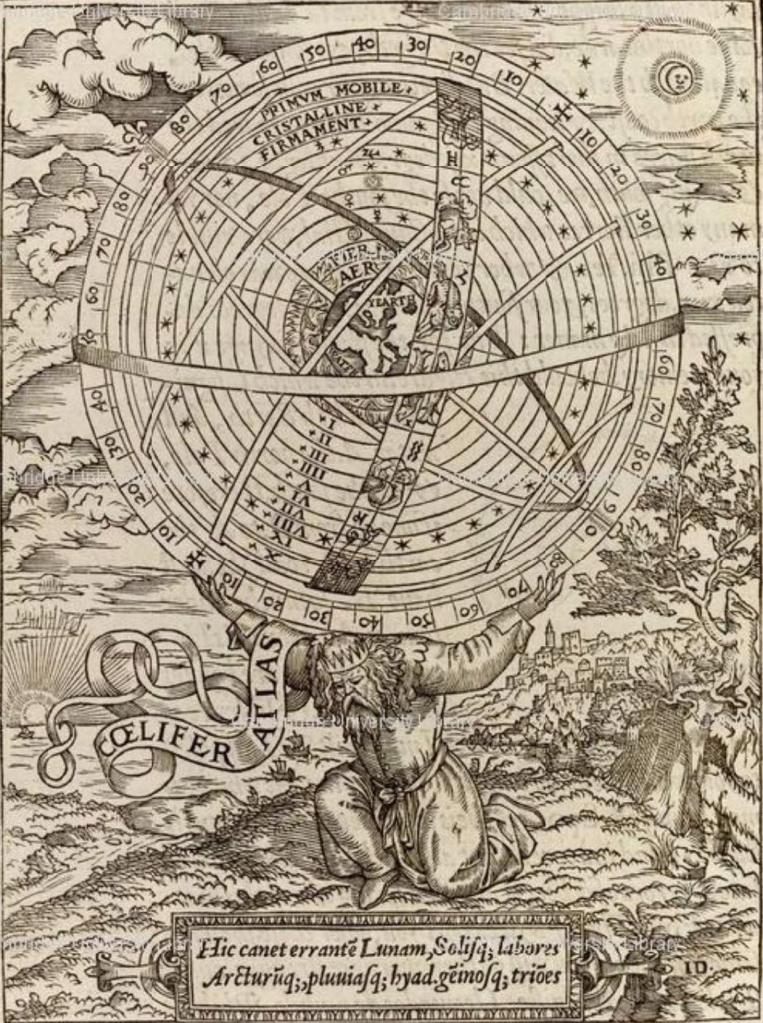
April 2025

 The Egodeath theory