Michael Hoffman, Feb. 9, 2026
Contents:
- Entry into Jerusalem (f94)
- Christ Reigns; Kosmokrator (f32)
- Today Is the 3rd Anniversary of Decoding Finger Shapes, Feathers, & Sticks, in Saint Martin > Entry into Jerusalem
- Motivation for this Page
- High-Context Culture vs. Low-Context Culture
- The Folly of Deniers of Mushroom Imagery in Christian Art Ignoring the High-Context Meaning: The Isolate-and-Deny Strategy
- See Also
Entry into Jerusalem (f94)
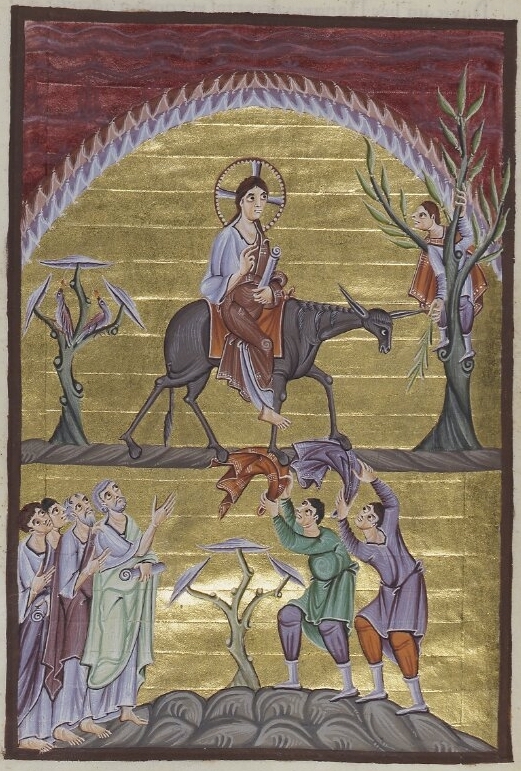
local filename: “Otto-Entry.jpeg” 411 KB, 11:11 a.m. Feb. 20, 2023
https://daten.digitale-sammlungen.de/0009/bsb00096593/images/index.html?fip=193.174.98.30&seite=94, fullscreen
WordPress gallery metadata: “wasserzeichen-projekte-crop.jpeg”, 358 KB, February 20, 2023, 521 x 771 px
Entry: Left Tree: Left & Right Fruit Arms
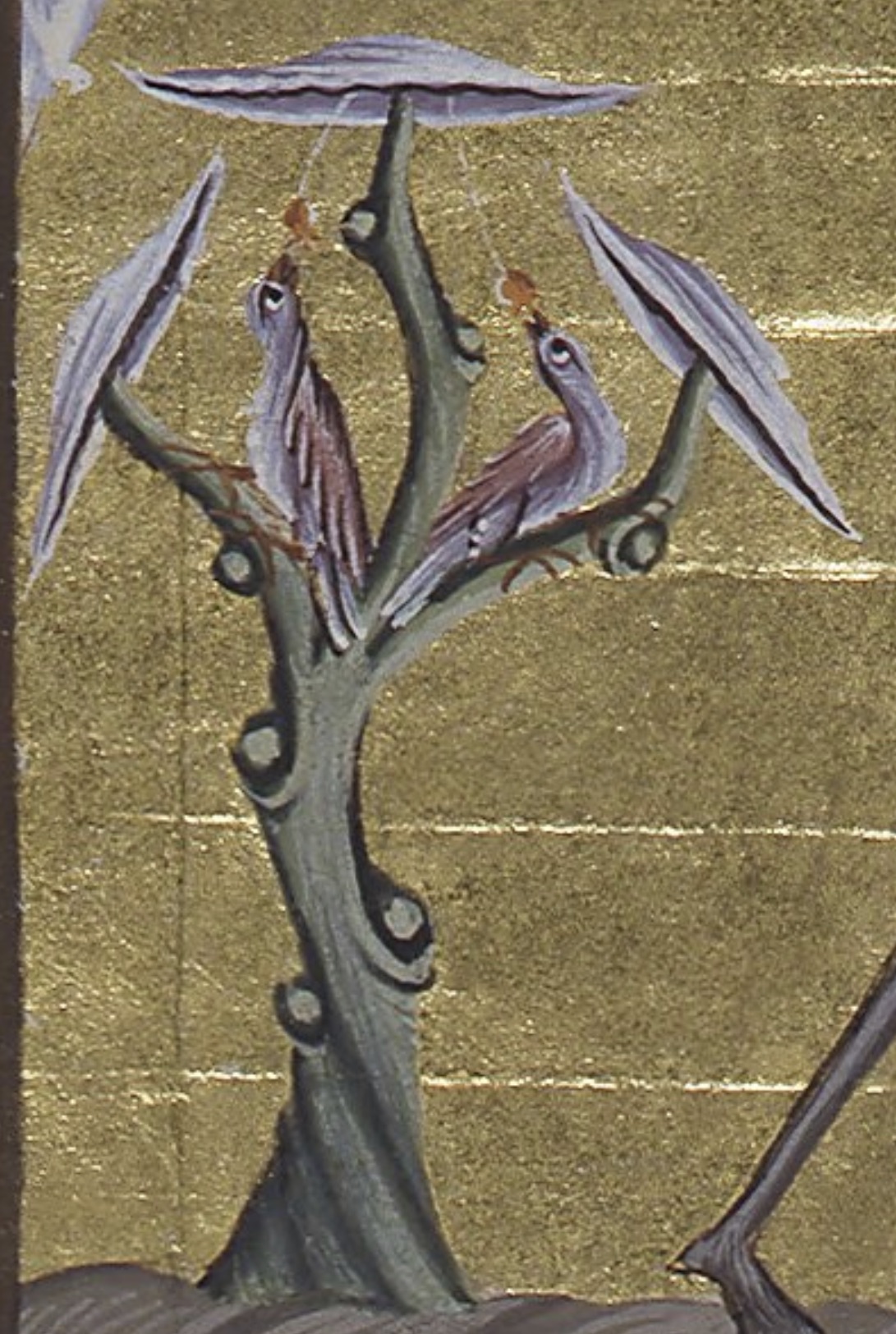
“Otto-Entry-Left-Tree.jpg” 442 KB, 11:09 p.m. Feb. 8, 2026
https://daten.digitale-sammlungen.de/0009/bsb00096593/images/index.html?fip=193.174.98.30&seite=94
fullscreen
Features:
- L & R balls of Gnosis.
See the “eat from tree of knowledge” panel in f11 Great Canterbury Psalter row 3 col 2 Eden scene zoom close up of tree of knowledge grid cap Liberty Cap w/ L & R arms & ball fruit L & R.
Detail in tree of knowledge zoom panel defines the grid cap lib cap implied features throughout the psalter. Each contained Liberty Cap in the grid cap, has 2 fruit L & R; two arms L & R. Emphasis Left & Right arms/ fruit. ie , the Way of Zen by Alan Watts type of binary: pre/post satori; possibilism vs. eternalism.
2 States time/control models together learned both moving between the two states: ordinary-state possibilism vs. psychedelic eternalism.
ordinary-state possibilism vs. psychedelic eternalism
the “ordinary-state possibilism” & “psychedelic eternalism” experiential modes
the altered-state eternalism experiential mode
aeem
the psychedelic eternalism experiential mode
peem
the entheogenic eternalism experiential mode
Grid-Cap Details in Tree of Knowledge (f11): L & R Fruit

Entry into Jerusalem: Right Tree
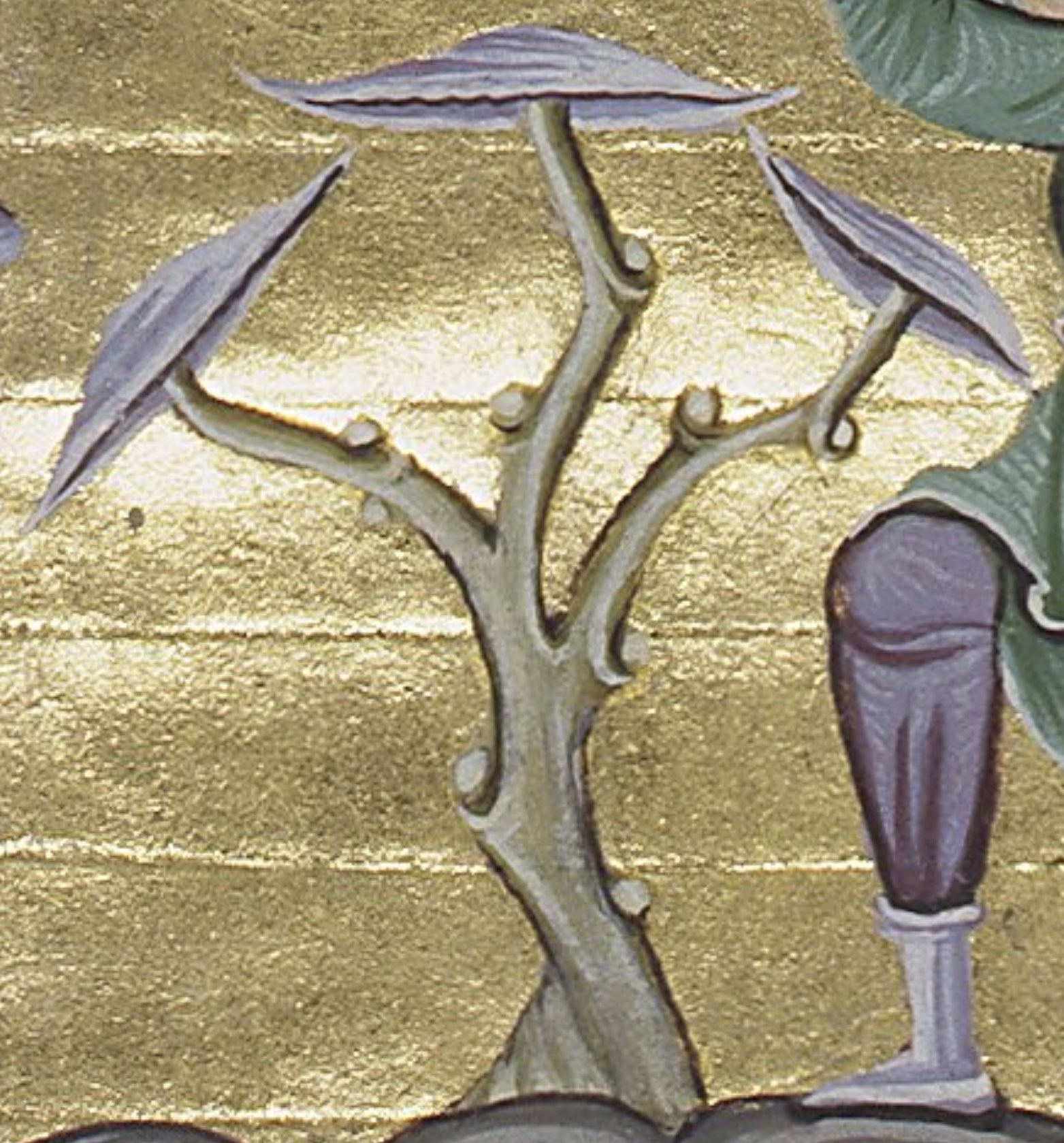
“Otto-Entry-Right-Tree.jpg” 448 KB, 11:14 p.m. Feb. 8, 2026
https://daten.digitale-sammlungen.de/0009/bsb00096593/images/index.html?fip=193.174.98.30&seite=94, fullscreen
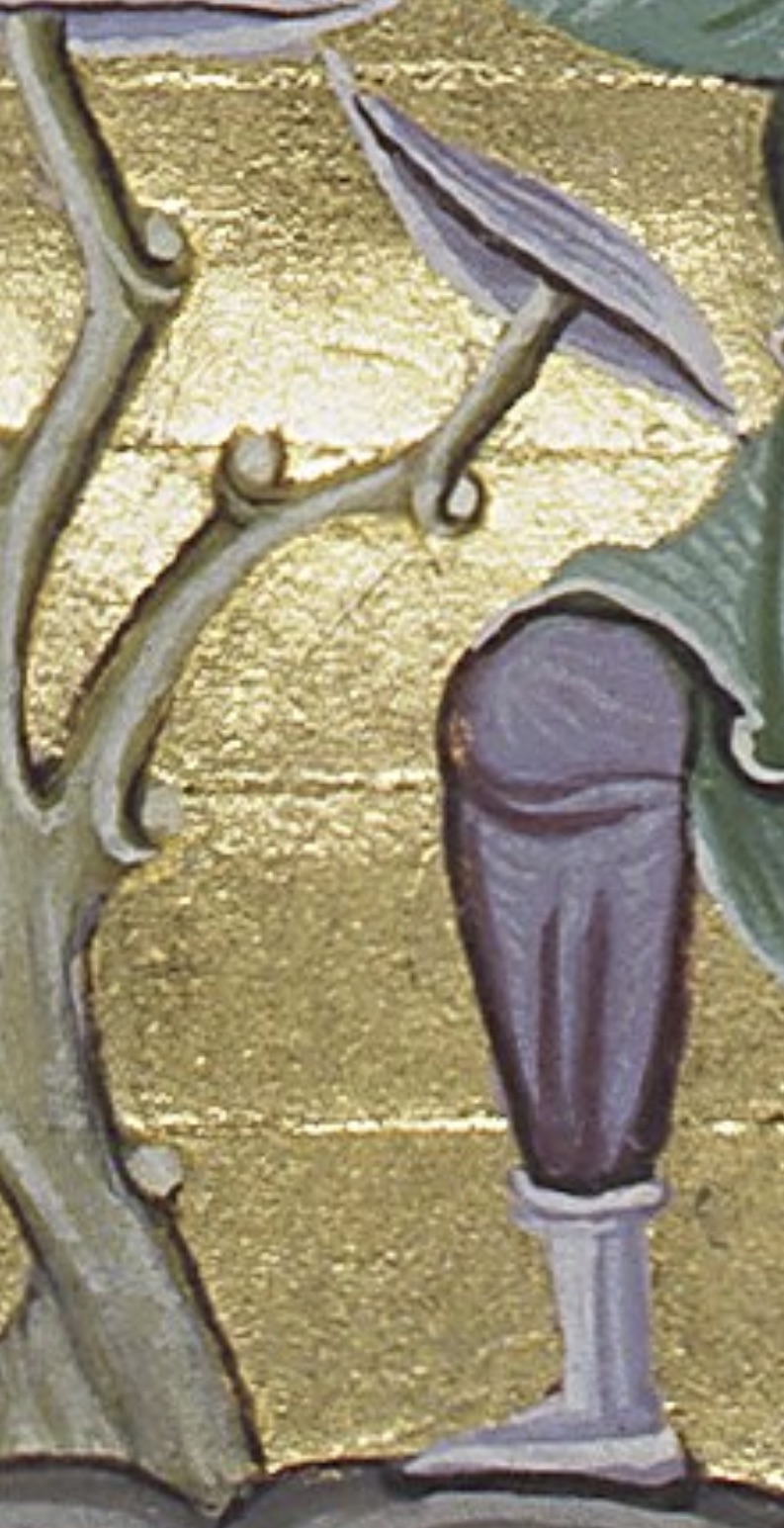
Entry into Jerusalem: Right Tree: {cut right branch} via Coil
“Otto-Entry-Right-Tree-cut-right-branch-coil.jpg” 267 KB, Feb. 8, 2026
https://daten.digitale-sammlungen.de/0009/bsb00096593/images/index.html?fip=193.174.98.30&seite=94
fullscreen
[11:04 p.m. Feb. 8, 2026] – I went to the full-res library, and saw the self cut. d/k if I mentioned this before.
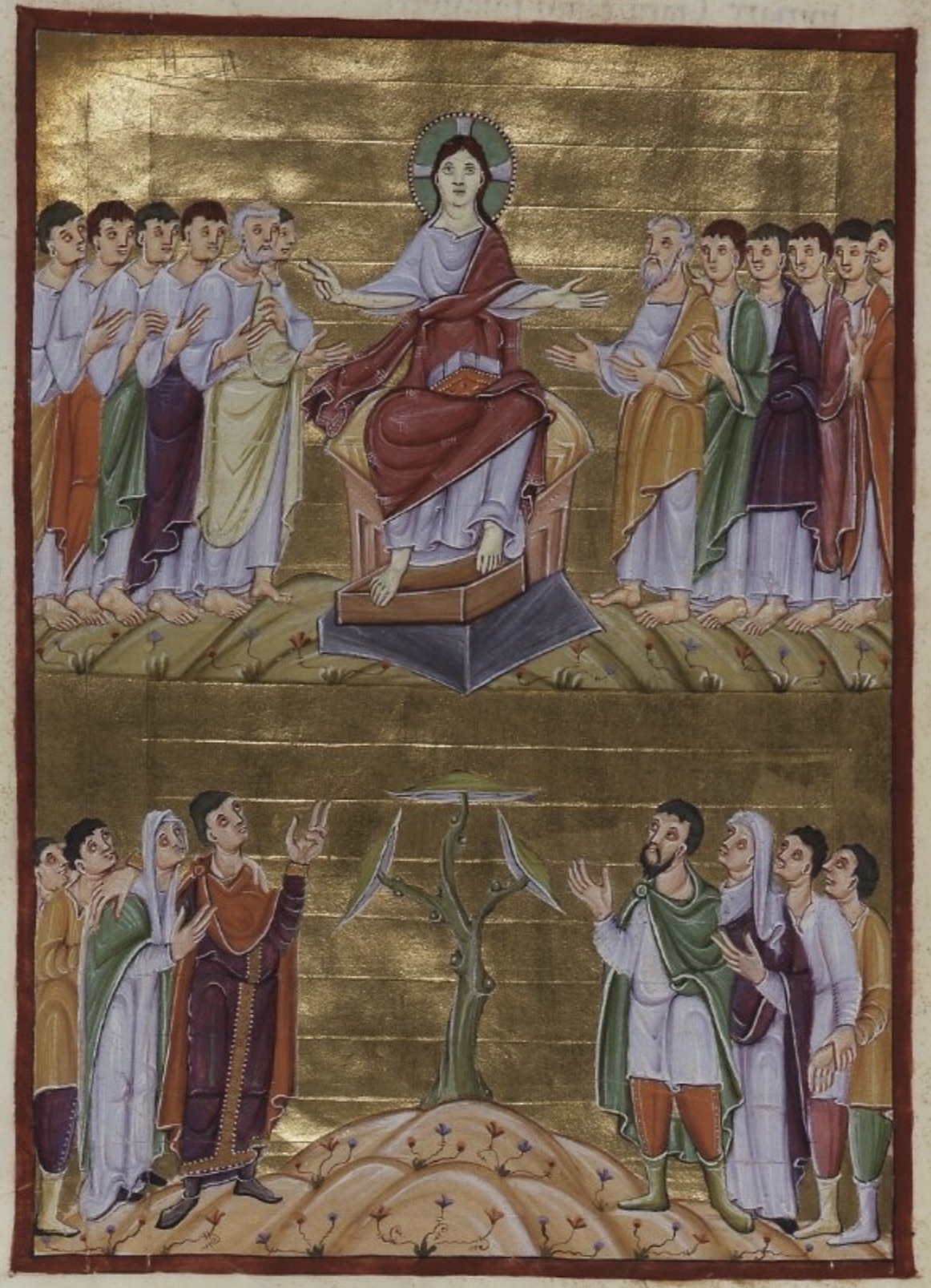
Christ Reigns; Kosmokrator (f32)
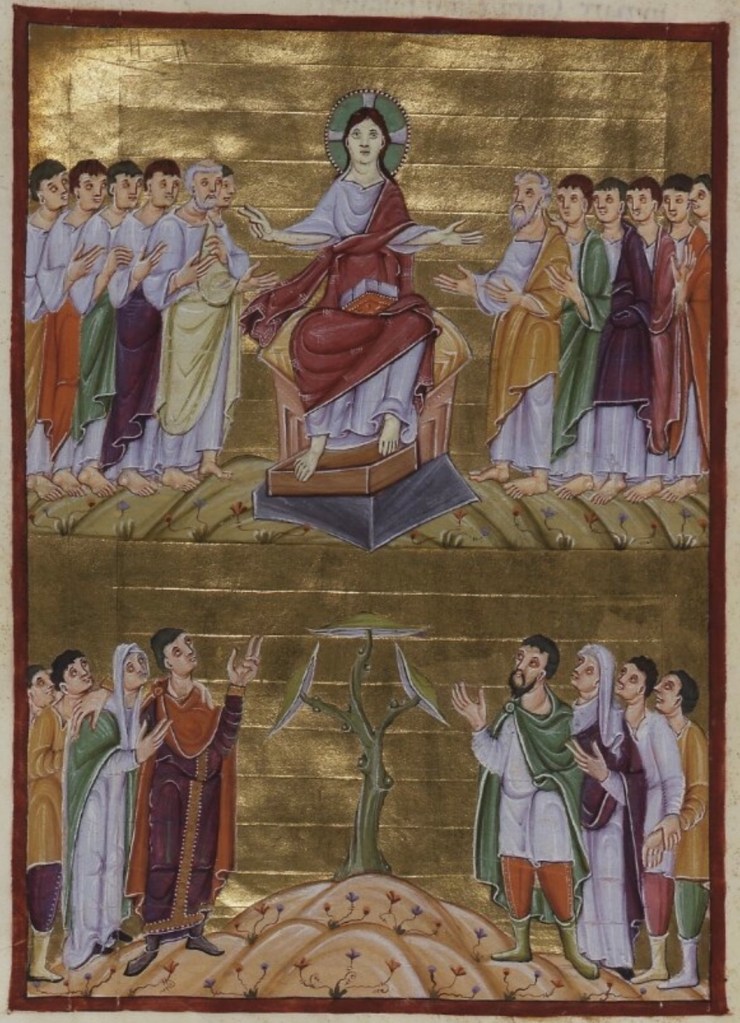
“Otto-34-Christ-reigns.jpg”, 483 KB, 5:39 p.m. Mar. 23, 2023
WordPress gallery metadata: “otto-34.jpg”, 461 KB, Mar. 24, 2023, 1162 by 1607 pixels
https://daten.digitale-sammlungen.de/0009/bsb00096593/images/index.html?id=00096593&seite=32
fullscreen
Christ Reigns, Lower Scene
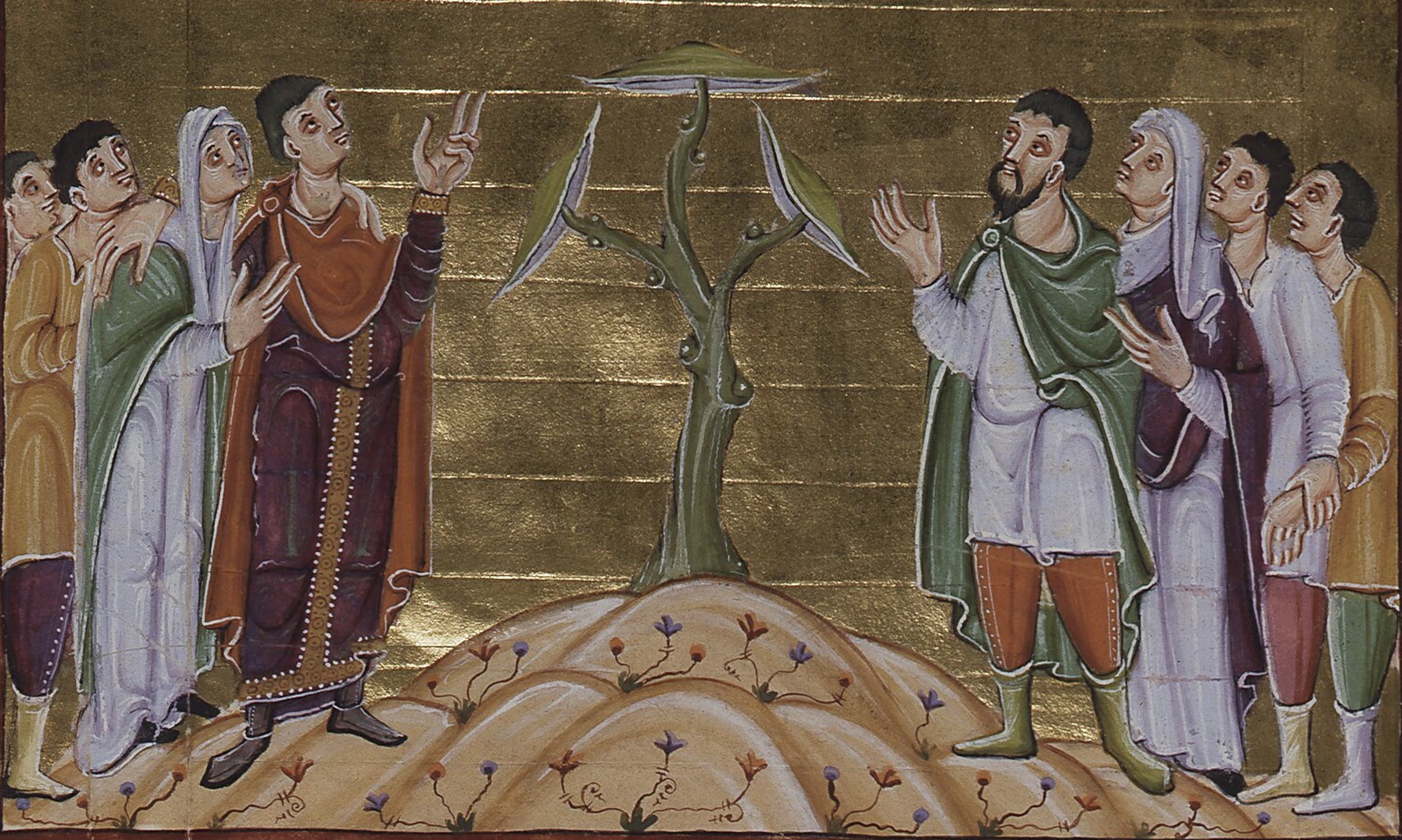
“Otto-Christ-reigns-lower.jpg”, 733 KB, 7:52 Feb. 9, 2026
https://daten.digitale-sammlungen.de/0009/bsb00096593/images/index.html?id=00096593&seite=32
fullscreen
Features:
- YI tree
- right guy 1: YI hand
- right woman: YI hand via 2 fingers & thumb
- rightmost guys: classic hand pair: Y’ + YI. Y’, in that the wrist is visually cut.
- left ppl: IY hand 3x.
Christ Reigns: Mushroom-Tree
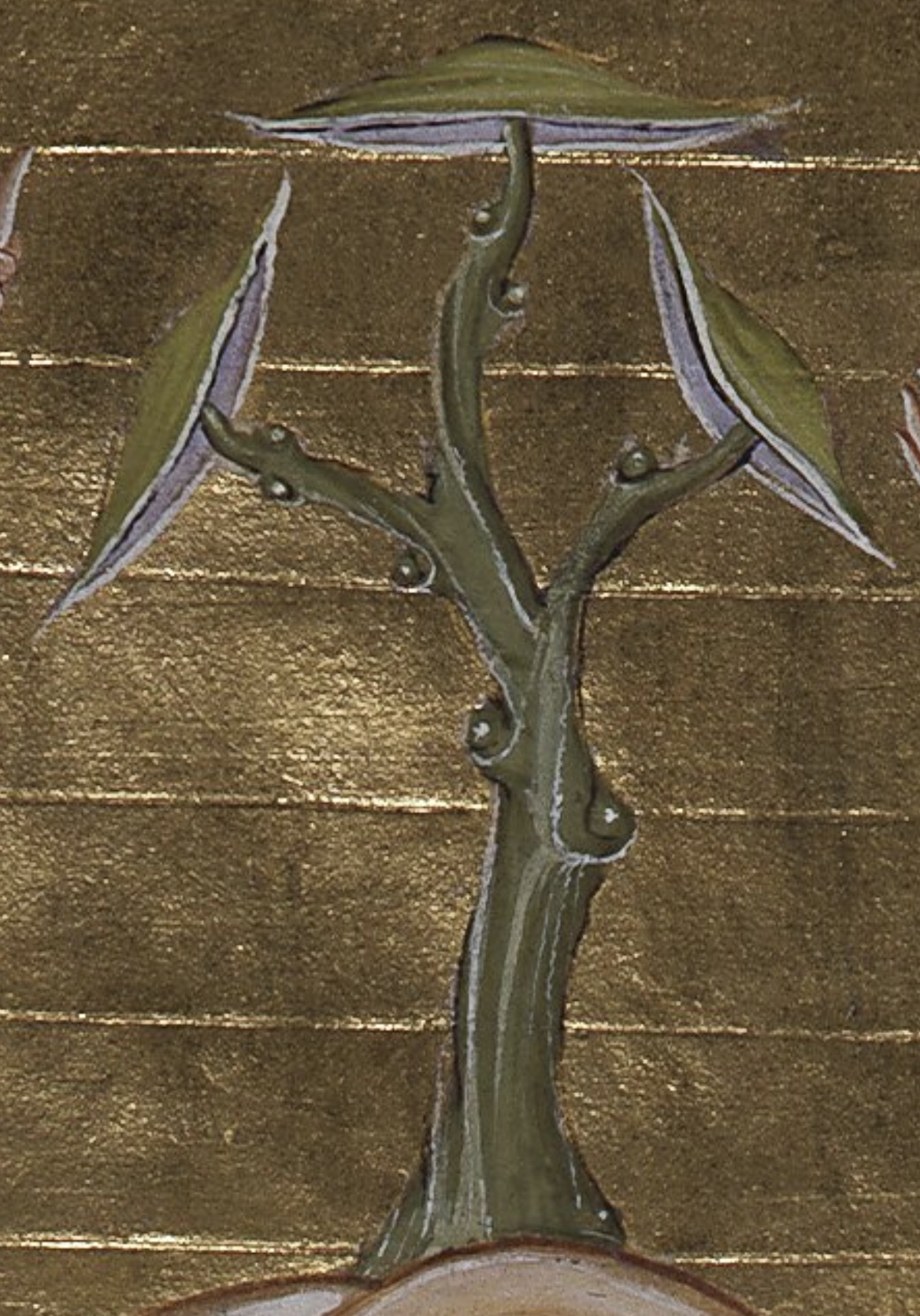
“Otto-Christ-Reigns-tree.jpg”, 491 KB, 11:37 p.m. Feb. 8, 2026
https://daten.digitale-sammlungen.de/0009/bsb00096593/images/index.html?id=00096593&seite=32
fullscreen
Today Is the 3rd Anniversary of Decoding Finger Shapes, Feathers, & Sticks, in Saint Martin > Entry into Jerusalem
Feb. 9, 2026
For the past couple years I have been wondering about the awkward, sore-thumb finger shapes in the two Otto images.
I created this page because I need to take another look at the finger shapes in the two Otto Gospel images, after the recent Tue., Feb. 3, 2026 breakthrough of fingers & thumb YI shapes.
Feb. 9, 2023: Decoded finger shapes, feathers, sticks, in Saint Martin > Entry into Jerusalem.
https://egodeaththeory.org/2023/02/11/saint-martin-frescos-%e2%9e%b3%f0%9f%96%96%f0%9f%8c%b4%f0%9f%94%aa%f0%9f%8d%84%f0%9f%96%bc%f0%9f%94%8d%f0%9f%94%ac%f0%9f%a7%90/#Image-1-Christs-Entry-into-Jerusalem
Emailed Dr. Jerry Brown.
Log of Discoveries & Achievements > Feb. 9, 2023 – Decoded Hand Shapes, Fingers, Thumb, Mapped to Possibilism & Eternalism: Entry into Jerusalem, St. Martin Church
https://egodeaththeory.org/2021/01/04/log-of-discoveries-achievements/#feb.-9-2023-decoded-hand-shapes-fingers-thumb-mapped-to-possibilism-eternalism-entry-into-jerusalem-st.-martin-church
That breakthrough was not one day, but a series of breakthroughs, from mid-Jan to Feb 9, 2026.
Motivation for this Page
Feb. 9, 2026
At the present site there are a couple or few or how many crops of Otto pages scattered.
Now that I am literate at reading YI hand-shapes at the “fingers, thumb, base of fingers, tips of fingers” level, need to re-inspect psalters to integrate YI hand-shape analysis:
- Golden
- Great Canterbury Psalter
- Otto
todo: look for all 4 motifs in Otto: {mushroom}, {branching}, {handedness}, and {stability} motifs.
High-Context Culture vs. Low-Context Culture
Now that I have looked at “all” the art across the large Great Canterbury Psalter and across the entire the medieval art genre of {mushroom-trees}, it is far easier to read semi-explicit, semi-clear motifs.
When a motif is universal among the art initiation guild, it is not necessary in every instance of the art motif to be clear and definitive.
It’s possible to sloppily sketch an allusion, eg the dog blocking its ears from hearing music is clear to its audience that it alludes to the Asp myth.
The Folly of Deniers of Mushroom Imagery in Christian Art Ignoring the High-Context Meaning: The Isolate-and-Deny Strategy
- You can’t prove that this one, lone, isolated mushroom-tree (Plaincourault fresco) means mushroom. It’s agreed that the other 999 mushroom-trees don’t mean mushroom, because:
- You can’t prove that this one, lone, isolated mushroom-tree (pilzbaum instance 2) means mushroom.
- You can’t prove that this one, lone, isolated mushroom-tree (pilzbaum instance 3) means mushroom.
- …
- You can’t prove that this one, lone, isolated mushroom-tree (pilzbaum instance 1,000) means mushroom.
We insist that – per Science Evidence – this isolated motif instance must be self-contained to prove that it means mushrooms, with no reliance on any higher-order evidence and arguments spanning the whole genre.
It’s like arguing about the meaning of one letter, while claiming that the Science way means ignoring the higher-order scope, of the word-level or sentence-level.
Reductionism, divide, isolate, shatter-apart the pieces of evidence. Ignore the general theory or hypothesis; attack (Hatsis strategy) attack each instance in total isolation, and make-sh*t-up an on-the-spot fabricated off-the-wall (the more off-the-wall an arg, the better to throw-off the opponents). Ad hoc, invented-on-the-spot, special pleading:
Fabricate one rule specifically to neutralize instance A;
create a different new rule, to neutralize instance B;
etc.
Day 3 plant 2 (Great Canterbury Psalter) has branches, so, doesn’t count, so, no mushroom imagery in Christian art.
[ignore that the L and the R branch match mushroom exactly]
Day 4 plant 3 is a tree, because Huggins article is about trees.
[ignore that the plant has no branches, contradicting Huggins, and he states no reason to call the 4 Day 4 plants “trees”, when they are plainly, simple basic mushrooms [other than {grid cap} = branching].
You can’t prove that this one, lone, isolated mushroom-tree eg Plaincourault fresco, means mushroom.
Panofsky via Wasson: “First, you mycologists are ignorant, stupid, uninformed, blundering dolts, who failed to consult the art authorities, who are experts on related matters of art.”
Main fallacies there: Distract ’em w/ personal attacks (ad hominem), though that’s totally irrelevant & unnecessary of a framing.
“a matter related to art” is a euphemism for “The Art Authorities are entirely ignorant about mushrooms and about trees in art, yet, since they are committed Deniers, you must submit to their entirely ignorant agenda to reject and deny mushroom-trees.”
“rightly or wrongly we are going to reject…” – The top mycologist/Affirmer, John Ramsbottom, busted the hell out of popebanker Wasson admitting that he’s a committed skeptic arguing in bad faith.
“Given that there are hundreds of mushroom-trees, therefore, this mushroom-tree cannot mean mushroom.”
Main fallacies there: Argument from silent presupposition. Begging the question.
Asp-Dog (Great Canterbury Psalter f109)
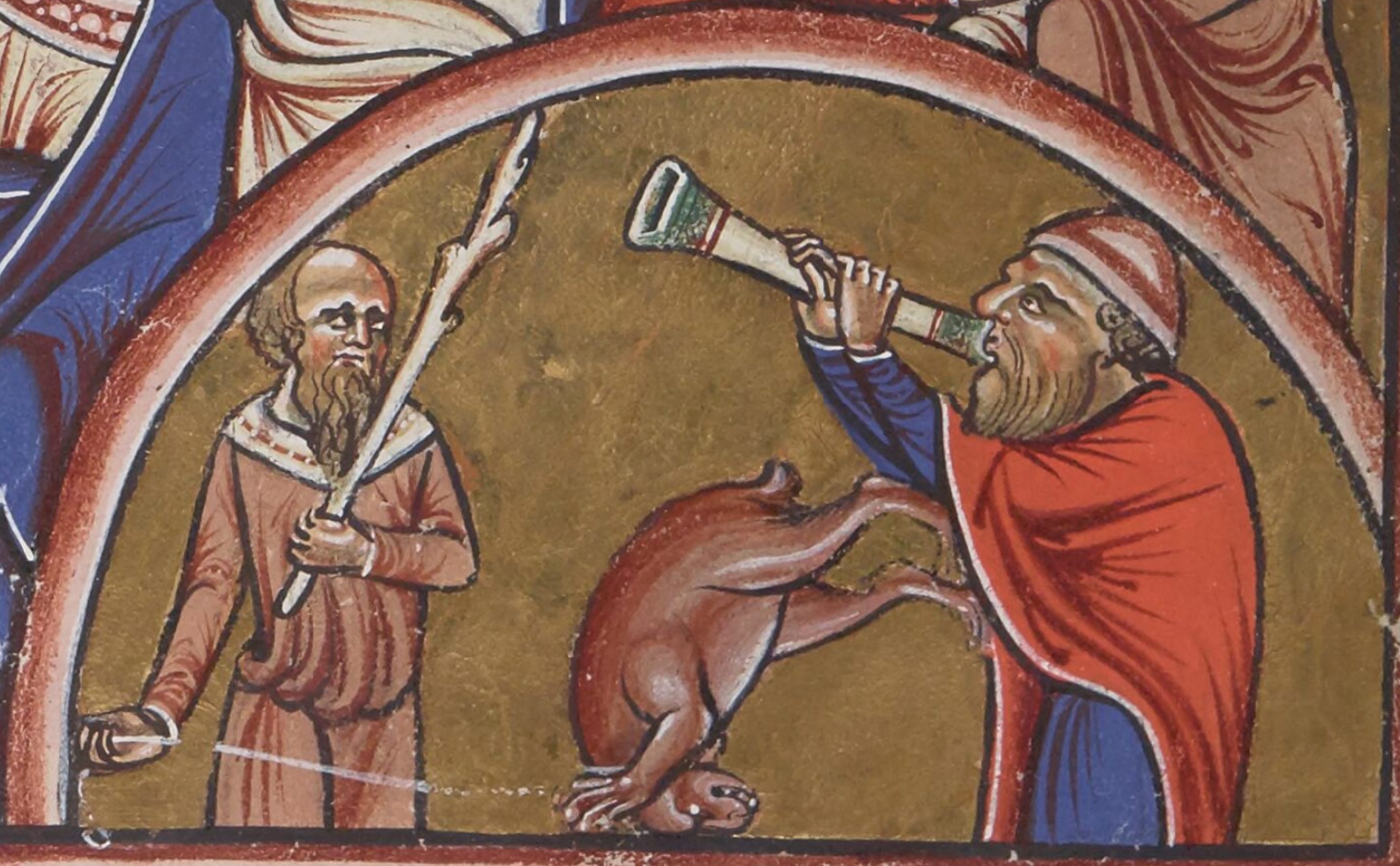
Don’t miss Dogged Shardog:
https://egodeaththeory.org/2026/01/26/the-egodeath-theory-corroborates-carl-rucks-psychedelic-mysteries-paradigm/#Mosurinjohns-Dogged-Avoidance-of-Perceiving-Psychedelic-Evidence
When I entered the field of entheogen scholarship in 1998-2000, I was better than entheogen scholars, in that I was coming from Feb. 1997 having summarized the the Egodeath core theory; the Cybernetic Theory of Ego Transcendence.
When Shardog Mosurinjohn — totally directionless — spotted the trendy new field of Pollan 2018 & Muraresku 2020, totally organic, astroturfed forced-bestsellers, she saw the field of entheogen scholarship as a cheap and easy way to make a name for herself.
Shardog switched focus from NONE to ENTHEOGEN SCHOLARSHIP, then became an Associate Professor.
Asp in Aberdeen Bestiary
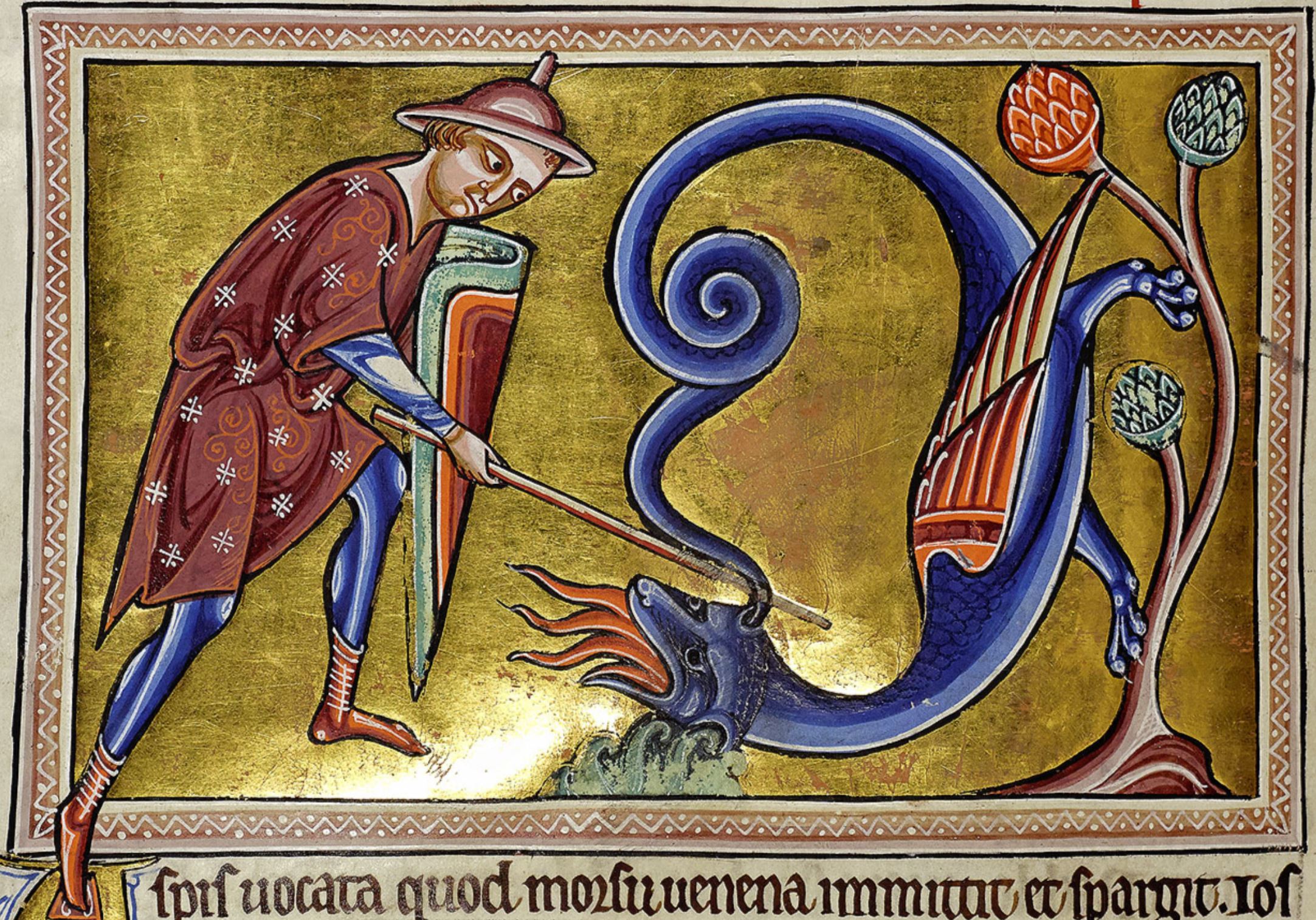
The Culturally Understood Context for Reading the Asp-Dog Image
Search –
“The Asp, or “aspido,” is a mythical creature in medieval bestiaries described as a snake that stops up its ears to avoid being enchanted by the music of snake charmers.
“It presses one ear against the ground and covers the other with its tail to ignore the charming, symbolizing a refusal to hear wisdom or divine truth.”
Asp (Aberdeen Bestiary). Asp (the egoic, possibilism-premised personal control system) is trying to avoid hearing the attractive song. Posted at present sit
When detail is shown in Great Canterbury Psalter f11 > eat tree of knowledge, that establishes the pattern, that is then understood in mere shorthand implementations (small & blurry, lacking the details).
We can deduce and derive the most unambiguous standard reference implemntation of an art motif, by looking at the assorted variant instances.
Main Form {lower hand Y, then upper hand YI} vs. Variant Forms
Variants of the main, Reference, 2-hands pattern/sequence:
- {lower hand Y’, then upper hand Y’I}
- {lower hand Y’, then upper hand Y’I’}
Even though many instances are variants, we have to intelligently figure out the main form, vs. the creative expressive variant forms, NOT get lost in the variety.
What I hate about Wouter Hanegraaff’s call for “radical empiricism”: it sounds like saying “Avoid all generalization; get lost in varied particulars.”
If I am a perennialist doing perennialism, it is my rebel countervailing version: everyone presupposes common-core mysticism and perennialism = the positive unitive model of “mystical experience”.
Everyone is WRONG including Ken Wilber (his system flaw: no psychedelics, Popular Neo-Advaita starting 1893).
REAL, TRUE common-core mysticism and perennialism is:
mental model transformation from possibilism to eternalism, producing 2POV.
Not the positive unitive model of “mystical experience”.
“Reality is not at a general level; reality is at the level of buzzing confusion of unique senseless details.”
Good theory = good generalization, like Maxwell’s equations of electromagnetism.
A great, useful generalization:
- Y vs. I =
- possibilism vs. eternalism
- branching vs. non-branching
- {tree vs. snake}
- ordinary-state vs. altered-state
Wikipedia: High-context and low-context cultures
https://en.wikipedia.org/wiki/High-context_and_low-context_cultures –
“In anthropology, high-context and low-context cultures are ends of a continuum of how explicit the messages exchanged in a culture are and how important the context is in communication.
“The distinction between cultures with high and low contexts is intended to draw attention to variations in both spoken and non-spoken forms of communication.[1]
“The continuum pictures how people communicate with others through their range of communication abilities: utilizing gestures, relations, body language, verbal messages, or non-verbal messages.[2]
“High-” and “low-” context cultures typically refer to language groups, nationalities, or regional communities.
“However, the concept may also apply to corporations, professions, and other cultural groups, as well as to settings such as online and offline communication.[3]
“High-context cultures often exhibit less-direct verbal and nonverbal communication, utilizing small communication gestures and reading more meaning into these less-direct messages.[4]
“Low-context cultures do the opposite; direct verbal communication is needed to properly understand a message being communicated and relies heavily on explicit verbal skills.[5]
“The model of high-context and low-context cultures offers a popular framework in intercultural communication studies but has been criticized as lacking empirical validation.[6]”
See Also
Site Map > Gallery
https://egodeaththeory.org/nav/#gallery

 The Egodeath theory