Michael Hoffman, page draft started 5:31 p.m. Tue., Mar. 10, 2026, posted 8:37 a.m. Wed., Mar. 11, 2026
Contents:
links work on desktop Edge/Chrome:
- Religions Special Issue: On the Origins of Western Psychedelia: Exploring Allegro’s The Sacred Mushroom and the Cross (2025)
- On John M. Allegro’s Suggestion That the Tree of the Knowledge of Good and Evil in the 12th Century Plaincourault Chapel Depicts an Amanita muscaria Mushroom (Huggins)
- John Allegro and the Psychedelic Mysteries Hypothesis (Ascough)
- Odd Conspiracies: John Allegro, Sacred Mushrooms, and the Dead Sea Scrolls (Goff)
- Closing Editorial by Sharday Mosurinjohn & Christian Greer (Nonexistent)
- Flyer for Planned Special Issue
- Description of Planned Special Issue
- Manuscript Submission Information
- The Egodeath Theory Partly Agrees with Critique of (1st-Gen) Entheogen Scholarship
- Timeline of Affirmers of Mushroom Imagery in Christian Art
- Timeline of Deniers of Mushroom Imagery in Christian Art
- Deniers of Psychedelics in Western Religious History are Religious Fundamentalists, Violent Oppressors, and Cheap Namecallers Pandering to Prejudiced Anything-But-Drugs Academia
- The Phrase “The Most Academic Conference” Is a Euphemism for Establishment-Approved, Committed Denial
- Psychedelic Intersections 2026: Bridging Humanities, Religion, & Law (Fri./Sat. Apr. 10/11, 2026)
- Entheogenic Esotericism: Reuniting Religion, Magic, and Science in the Psychedelic Turn (Mosurinjohn 2026)
- Greer at Linked In
- Greer’s Points
- Panofsky’s argument from silent presupposition prejudice: hundreds mushroom-trees, therefore any one of them cannot mean mushroom, QED
- On Ronald Huggins’ Side Are the Pope, His Banker Gordon Wasson, and the Top Anything-But-Drugs Art Historian, Erwin Panofsky
- Team Popebanker: Enemies of the Revelation of Psychedelic Eternalism — THEY Don’t Want Us to Know Transcendent Knowledge
- Team Popebanker: Enemies of Eternalism-Driven Control-Transformation
- Team Popebanker: Enemies of Transcendent Knowledge of Psychedelic Eternalism-Driven Control-Transformation
- Team Popebanker: Committed, Bad-Faith Enemies of Transcendent Knowledge of Psychedelic Eternalism-Driven Control-Transformation
- Team Popebanker: Committed, Bad-Faith Enemies of Entheogen Scholarship
- Censors & Cover-Up of Psilocybin Eternalism-Driven Control-Transformation
- Team Popebanker
- Mental Model Transformation as Progression of Finger Shapes in Hand-Shape Pair
- How the “Suppression of The Mushroom by the Big Bad Church” Narrative Factors In for Various Deniers
- Suppression of Knowledge of The Mushroom () by the Big Bad Church
- AstroSham 1 (Irvin & Rutajit)
- AstroSham 2 (2009)
- Deniers Are Guilty of Having a Tradition of Restricting Access to Panofsky’s Two Letters to Wasson
- How Affirmers & Deniers Are Distorted by Attitudes Toward the Church
- I Will Freely Mention the Catholic ‘Worship’ of Mary & the Saints
- It’s Good to Worship and Glorify the Holy Spirit, If Along with God (the Father) & Jesus (the Son))
- “Worship” Is an Accurate Term in the Broad Sense, of Extreme Spiritual Honor
- Special Issue: Exploring Free Will in Faith Traditions in Conversation with Contemporary Challenges
- todaah Page about the Special Issue
- Todo
- Jay Michaelson Article “The Religious Functions of Psychedelics”, about 2025 Symposium “Psychedelics and Monotheistic Religions: Sacramental Practice and Legal Recognition”
- Deniers of Psychedelics in Western Religious History Are Anything-But-Drugs Religious Fundamentalists
- Mind-Altering Substances are the NON-HIDDEN Source of Biblical and Mediterranean Religions
- Sharday Mosurinjohn: You All Must Study Indigenous Shams, But I Am Exempt and Couldn’t Care Less about Them
- Dogged Entheogen Denier, Religious Fundamentalist Sharday Mosurinjohn
- See Also
Religions Special Issue: On the Origins of Western Psychedelia: Exploring Allegro’s The Sacred Mushroom and the Cross (2025)
Special issue of the journal Religions:
On the Origins of Western Psychedelia: Exploring Allegro’s The Sacred Mushroom and the Cross
Edited by J. Christian Greer and Sharday C. Mosurinjohn.
https://www.mdpi.com/journal/religions/special_issues/5IX8MH3S36
Article 1:
On John M. Allegro’s Suggestion That the Tree of the Knowledge of Good and Evil in the 12th Century Plaincourault Chapel Depicts an Amanita muscaria Mushroom
by Ronald V. Huggins
Religions 2025, 16(11), 1374; https://doi.org/10.3390/rel16111374 – 29 Oct 2025
Aritcle 2: John Allegro and the Psychedelic Mysteries Hypothesis
by Richard S. Ascough
Religions 2025, 16(8), 1029; https://doi.org/10.3390/rel16081029 – 9 Aug 2025Cited by 2 | Viewed by 1748
Article 3:
Odd Conspiracies: John Allegro, Sacred Mushrooms, and the Dead Sea Scrolls
by Matthew James Goff
Religions 2025, 16(8), 946; https://doi.org/10.3390/rel16080946 – 22 Jul 2025Cited by 1 | Viewed by 3912
Article 4 (nonexistent):
“J. Christian Greer and Sharday Mosurinjohn will offer a closing Editorial [404] to this Special Issue. In their closing essay [404], Greer and Mosurinjohn will explore what the failure of apprehending Allegro’s agenda reveals about his admirers and detractors, asking what motivates people to promote or refute narratives that center drugs as the “secret” behind Christianity’s origin.”
On John M. Allegro’s Suggestion That the Tree of the Knowledge of Good and Evil in the 12th Century Plaincourault Chapel Depicts an Amanita muscaria Mushroom (Huggins)
My page about the article:
https://egodeaththeory.org/2026/02/11/on-john-m-allegros-suggestion-that-the-tree-of-the-knowledge-of-good-and-evil-in-the-12th-century-plaincourault-chapel-depicts-an-amanita-muscaria-mushroom-huggins-2025/
Open AccessArticle
by Ronald V. Huggins
Religions2025, 16(11), 1374; https://doi.org/10.3390/rel16111374 – 29 Oct 2025
Viewed by 1448
In his book The Sacred Mushroom and the Cross (1970), John Marco Allegro claimed that an obscure, 12th century CE fresco of the Fall of Adam and Eve in the Plaincourault Chapel in Mérigny, France, provided evidence of the persistence in Christian Europe […] Read more.
(This article belongs to the Special Issue On the Origins of Western Psychedelia: Exploring Allegro’s The Sacred Mushroom and the Cross)
John Allegro and the Psychedelic Mysteries Hypothesis (Ascough)
my page about the article:
https://egodeaththeory.org/2026/01/22/richard-ascough-on-psychedelics-in-western-religious-history/
Open AccessArticle
John Allegro and the Psychedelic Mysteries Hypothesis
by Richard S. Ascough
Religions2025, 16(8), 1029; https://doi.org/10.3390/rel16081029 – 9 Aug 2025
Cited by 2 | Viewed by 1651
John Allegro’s The Sacred Mushroom and the Cross posits that early Christianity derived from fertility cults involving psychedelic mushroom use. Though widely discredited by scholars when it was first published, the theory persists in popular culture and entheogenic discourse. This article evaluates the […] Read more.
(This article belongs to the Special Issue On the Origins of Western Psychedelia: Exploring Allegro’s The Sacred Mushroom and the Cross)
Odd Conspiracies: John Allegro, Sacred Mushrooms, and the Dead Sea Scrolls (Goff)
todo: create page scoped to Goff article, after expand section here
Open AccessArticle
Odd Conspiracies: John Allegro, Sacred Mushrooms, and the Dead Sea Scrolls
by Matthew James Goff
Religions2025, 16(8), 946; https://doi.org/10.3390/rel16080946 – 22 Jul 2025
Cited by 1 | Viewed by 3705
This article examines the scholarship of John Allegro on the Dead Sea Scrolls and the role his status as a scholar has played in the reception of his The Sacred Mushroom and the Cross. While the Dead Sea Scrolls play no prominent […] Read more.
(This article belongs to the Special Issue On the Origins of Western Psychedelia: Exploring Allegro’s The Sacred Mushroom and the Cross)
/ end of article entry
todo: copy sections from “Video Mosur” or similar page
Psychedelics, Eleusis, and the Invention of Religious Experience; Sharday Mosurinjohn & Richard Ascough (July 2025); journal: psychedelic medicine
https://www.liebertpub.com/doi/abs/10.1177/28314425251361835?journalCode=psymed;
https://egodeaththeory.org/2025/08/08/psychedelics-eleusis-and-the-invention-of-religious-experience-mosurinjohn-ascough-2025/
Closing Editorial by Sharday Mosurinjohn & Christian Greer (Nonexistent)
Article 4 (nonexistent):
“J. Christian Greer and Sharday Mosurinjohn will offer a closing Editorial [404] to this Special Issue. In their closing essay [404], Greer and Mosurinjohn will explore what the failure of apprehending Allegro’s agenda reveals about his admirers and detractors, asking what motivates people to promote or refute narratives that center drugs as the “secret” behind Christianity’s origin.” https://www.google.com/search?q=closing+Editorial+Special+Issue+closing+essay+Greer+Mosurinjohn
[A needed topic, but that conflates mere 1st-generation entheogen scholarship (the Secret Amanita paradigm) with the entire topic of mushrooms in Christianity.
- 1st-generation entheogen scholarship (the Secret Amanita paradigm)
- 2nd-generation entheogen scholarship (the Explicit Psilocybin paradigm)]
Flyer for Planned Special Issue
https://www.mdpi.com/journal/religions/special_issue_flyer_pdf_v2/5IX8MH3S36 – this is an immed dl link, not a webpage.
Body text from pdf: a subset of the full text in article special issue:
“Special Issue
“On the Origins of Western Psychedelia: Exploring Allegro’s The Sacred
Mushroom and the Cross
“Message from the Guest Editors
“The articles that constitute this Special Issue are dedicated to analyzing the enigmatic career of the Dead Sea Scrolls scholar John M. Allegro (1923–1988) and the history of the reception of his book, The Sacred Mushroom and the Cross (1970).
“Bringing together scholars from across disciplines, this Special Issue explores three major vectors in the Allegro effect on psychedelic research and culture today:
(1) the nature of Allegro’s evidence and methods for his argument that
the original Christian community was a fertility cult based on the sacramental use of the psychedelic mushroom Amanita muscaria;
(2) the controversy and professional backlash generated by his thesis; and
(3) the ongoing influence of his provocative thesis among academics, believers, and authors of popular fiction.
“For more detailed information, please visit the Special
Issue’s homepage.
“We look forward to your valuable contribution. Guest Editors
Dr. J. Christian Greer
American Studies Department, Stanford University, Stanford, CA
94305, USA
Dr. Sharday C. Mosurinjohn
School of Religion, Queen’s University, Kingston, ON K7L 3N6, Canada Deadline for manuscript submissions
closed (15 June 2025)”
Description of Planned Special Issue
“Dear Colleagues,
“The articles that constitute this Special Issue are dedicated to analyzing the enigmatic career of the Dead Sea Scrolls scholar John M. Allegro (1923–1988) and the history of the reception of his book, The Sacred Mushroom and the Cross (1970).
“A philologist with expertise in comparative Semitic languages, Allegro made a name for himself as a translator and popularizer of the Dead Sea Scrolls; however, his academic reputation was ruined with the publication of The Sacred Mushroom and the Cross: A Study of the Nature and Origins of Christianity within the Fertility Cults of the Ancient Near East.
“The book was shunned by his peers in the academy, repudiated by the Church of England, and ridiculed by the international press.
“Allegro’s book was based on a deep understanding of Aramaic, Hebrew, Accadian, Syriac, Greek, Latin, and Sumerian, and since so few people possess the requisite understanding of comparative linguistics in the ancient world, the arguments presented in The Sacred Mushroom and the Cross were never directly refuted.
“This fact did not escape his small but dedicated group of followers, who have continued to direct attention to Allegro’s work in the decades since his provocative text was published (and republished in subsequent softcover editions).
The book jumped into the cultural mainstream, after being a “cult classic” within the drug underground, on account of the Psychedelic Renaissance in scientific research starting in 2006.
It was frequently promoted on the podcast The Joe Rogan Show (recently rated among the most popular podcasts in the world), and its notoriety was also bolstered by the unexpected success of Brian Muraresku’s The Immortality Key (2020), which covered similar ground to Allegro’s work.” [debatable -mh]
“What is at stake in the resurgence of interest in The Sacred Mushroom and the Cross?
“As the hype surrounding research into psychedelic medicine continues, Allegro’s conclusions gain more ground as a plausible explanation for the origins of monotheism, which is all the more distressing considering specialists’ indifference to his ideas.
Accordingly, psychedelic-enthused celebrities and psychedelic scientists alike draw upon The Sacred Mushroom and the Cross as a resource for narratives concerning the psychedelic origins of Western religion, which are historically inaccurate, philologically suspect, and philosophically confused.
The authors of this Special Issue have decided to afford this matter the care that it deserves.
To be sure, contributors are not invested in merely underscoring the problems that marred Allegro’s research.
Rather, this Special issue contextualizes the motivations behind his provocative theories, the scholarly and social milieux that rejected them as absurdities, as well as the perpetual appeal of The Sacred Mushroom and the Cross for the general public and academics who do not specialize in the ancient Near East.
The articles will, at turns, appreciate the bold inventiveness of Allegro’s theories and disparage his purposefully misleading etymologies, tracing both his considerable intellectual virtuosity and scholarly malfeasance back to his turbulent tenure working on the earliest translation of the Dead Sea Scrolls.
As the new era of Western psychedelia struggles with its own sense of historicity, setting the record straight with regards to Allegro will place the transdisciplinary field of psychedelic studies on a more solid foundation.
“Bringing together scholars from across disciplines, this Special Issue explores three major vectors in the Allegro effect on psychedelic research and culture today:
(1) the nature of Allegro’s evidence and methods for his argument that the original Christian community was a fertility cult based on the sacramental use of the psychedelic mushroom Amanita muscaria;
(2) the controversy and professional backlash generated by his thesis; and
(3) the ongoing influence of his provocative thesis among academics, believers, and authors of popular fiction.
“To address these research directions, this Special Issue seeks contributors who possess the ancient language skills that many of Allegro’s readers do not have: Biblical Hebrew, Greek (Attic and Koine), Latin, Aramaic (biblical, Qumran, Targumic), Syriac, Coptic, Middle Egyptian, and Ge‘ez.
“Contributors may explore Allegro’s isolated ways of translating and working outside the corrective influence of the academic community, as well as the problematic implications of assuming that psychedelics lead to the same mystical states found in the Dead Sea Scrolls.
They may also situate Allegro’s hypothesis in the context of other debates about the nature of psychedelic sacraments, such as the Vedic Soma portrayed in R. Gordon Wasson’s 1968 Soma: Divine Mushroom of Immortality, a book that has long been discredited in academic circles but continues to have a significant influence on the popular and scientific understanding of yoga and altered states.
“Other contributors may address the following questions:
What economic, social, and other gains and losses do writers of this “ancient psychedelic cults” genre experience by making the claim?
How do their experiences differ if they endorse psychedelics and religions as things that matter (Muraresku) versus disparage psychedelics and religions as illusions to be broken (Allegro)?
What are readers using this work to potentiate in the various spaces—underground, clinical, legal, ritual, scientific, popular—of psychedelic culture now?
“We hope that both ancient historians and scholars of the contemporary period will move beyond speculative botany and invocation of vague mystical experiences to explore how the substances that are documented shaped the rituals themselves, and centering what is real phenomenologically and ontologically for the people carrying out the rituals—namely, their own divinity and the agency of the gods, spirits, and plant or fungal teachers.
“The scholarly contributions in this Special Issues will be timely in the context of the burgeoning psychedelic conversation—in fact, they will add an important element to this conversation shortly in advance of what is sure to be the 50th anniversary reprint of Road to Eleusis, the pro-psychedelic book that appeared in the same decade (1978) as Sacred Mushroom and has had a parallel scholarly non/reception.
“This Special Issue draws attention to the fact that people’s treatment of psychoactive use in ancient religious contexts has significant implications for our understanding of the past and for contemporary cultural and legal discussions about the use of drugs.
“Such treatments often overlook the complex cultural and religious context of the ancient world, projecting modern preoccupations with psychedelics onto it.
“J. Christian Greer and Sharday Mosurinjohn will offer a closing Editorial [todo: which article?] to this Special Issue exploring the history of the reception of Allegro’s work, focusing on misconceptions by detractors and admirers alike.
“While his thesis that Jesus was a mushroom is well known among religious studies scholars focusing on psychedelics, few have noticed the actual motivation behind Allegro’s provocative thesis.
“Contrary to public perception, Allegro had no interest in placing psychedelics on the agenda for scholars of the ancient Near East, let alone arguing that psychedelic mushrooms have the potential to generate mystical experiences.
“Driven by the belief that psychoactive drugs only induce madness and delusion, Allegro associated Jesus with the red-capped Amanita muscaria mushroom as a means of discrediting Christianity at its source.
“His negative attitude towards drugs and insistence that Christianity originated as a perversely orgiastic mushroom cult represent a red thread that runs through his later work, beginning with The Sacred Mushroom and the Cross (1970), and which is especially pronounced in his follow-up book, The End of the Road (1970).
“In their closing essay, Greer and Mosurinjohn will explore what the failure of apprehending Allegro’s agenda reveals about his admirers and detractors, asking what motivates people to promote or refute narratives that center drugs as the “secret” behind Christianity’s origin.
“It is clear that the antagonism goes beyond the evaluation of evidence, modes of interpretation, or mere methodological differences but rather strikes at scholars’ more fundamental attitude towards the psychedelic class of drugs and their relationship to religious experience.”
“Dr. J. Christian Greer
Dr. Sharday C. Mosurinjohn
Guest Editors”
Manuscript Submission Information
Religions journal issue page con’t:
“Manuscripts should be submitted online at http://www.mdpi.com by registering and logging in to this website. Once you are registered, click here to go to the submission form. Manuscripts can be submitted until the deadline. All submissions that pass pre-check are peer-reviewed. Accepted papers will be published continuously in the journal (as soon as accepted) and will be listed together on the special issue website. Research articles, review articles as well as short communications are invited. For planned papers, a title and short abstract (about 250 words) can be sent to the Editorial Office for assessment.
“Submitted manuscripts should not have been published previously, nor be under consideration for publication elsewhere (except conference proceedings papers). All manuscripts are thoroughly refereed through a double-blind peer-review process. A guide for authors and other relevant information for submission of manuscripts is available on the Instructions for Authors page. Religions is an international peer-reviewed open access monthly journal published by MDPI.
“Please visit the Instructions for Authors page before submitting a manuscript. The Article Processing Charge (APC) for publication in this open access journal is 1800 CHF (Swiss Francs). Submitted papers should be well formatted and use good English. Authors may use MDPI’s English editing service prior to publication or during author revisions.
“Keywords
psychedelia
John M. Allegro
The Sacred Mushroom and the Cross
Benefits of Publishing in a Special Issue
Ease of navigation: Grouping papers by topic helps scholars navigate broad scope journals more efficiently.
Greater discoverability: Special Issues support the reach and impact of scientific research. Articles in Special Issues are more discoverable and cited more frequently.
Expansion of research network: Special Issues facilitate connections among authors, fostering scientific collaborations.
External promotion: Articles in Special Issues are often promoted through the journal’s social media, increasing their visibility.
Reprint: MDPI Books provides the opportunity to republish successful Special Issues in book format, both online and in print.
Further information on MDPI’s Special Issue policies can be found here.”
Published Papers (3 papers)”
https://www.mdpi.com/journal/religions/special_issues/5IX8MH3S36
The Egodeath Theory Partly Agrees with Critique of (1st-Gen) Entheogen Scholarship
See Cyberdisciple re: Allegro is not an entheogen scholar:
Cyberdisciple’s Pages About Allegro
https://cyberdisciple.wordpress.com/?s=allegro
See Wasson and Allegro on the Tree of Knowledge as Amanita (Hoffman, 2006), http://egodeath.com/WassonEdenTree.htm & https://egodeaththeory.org/2025/03/18/wasson-and-allegro-on-the-tree-of-knowledge-as-amanita/ re: need to sideline and retire Allegro; move ahead not with 1st-generation entheogen scholarship (the Secret Amanita paradigm), but instead, with 2nd-generation entheogen scholarship (the Explicit Psilocybin paradigm).
Agreement Between the Egodeath Theory & Debunkers of 1st-Gen Entheogen Scholarship
Is the issue a rehash of my ideas (not Irvin’s!) in my article?
Wasson and Allegro on the Tree of Knowledge as Amanita (Hoffman, 2006), http://egodeath.com/WassonEdenTree.htm
I have much common per my 3-phase or 4-phase recounting:
- Assert 1st-gen entheogen scholarship
- Rebut 1st-gen entheogen scholarship as if = entire topic of entheogen scholarship (all Deniers of mushroom imagery in Christian art so far)
- Assert 2nd-gen entheogen scholarship
- not done: rebut 2nd-gen entheogen scholarship.
Curiously Let Andy Letcher’s book Shroom, 2006 UK employs 2nd-gen entheogen scholarship (Stamets 96 & Gartz 96) to rebut 1st-gen entheogen scholarship, but he botches this at malformed endnote 31 p. 35-36. Garbled situation with shifting positions: what are deniers rebutting? That’s the Letcher Shroom Q! WHICH POSITION ARE YOU REBUTTING?
- 1st-generation entheogen scholarship (the Secret Amanita paradigm) Secret Christian Amanita Cult – Lash criticized Wasson for pushing Amanita ural mountains spread; Lash is 2nd-generation entheogen scholarship (the Explicit Psilocybin paradigm).
- Explicit Cubensis paradigm 2nd-generation entheogen scholarship (the Explicit Psilocybin paradigm)
Timeline of Affirmers of Mushroom Imagery in Christian Art
List only the earliest year of pub’n for each author.
- 1909 French Mycologists (see Huggins 2025 for citations of several authors)
- 1925 Rolfe & Rolfe
- 1953 John Ramsbottom
- 1957 Robert Graves (1st-gen)
- 1970 John Allegro (1st-gen)
- 1993 Chris Bennett (1st-gen)
- 1995 Clark Heinrich (1st-gen)
- 1997 Giorgio Samorini (truly 2nd-gen)
- 2001 Mark Hoffman, Carl Ruck, Blaise Staples (weakly 2nd-gen)
- 2005 Jan Irvin (weakly 2nd-gen)
- 2006 Michael Hoffman (truly 2nd-gen)
- 2007 John Lash (weakly 2nd-gen)
- 2010? Cyberdisciple (truly 2nd-gen)
- 2011 John Rush (weakly 2nd-gen)
- 2016 Brown & Brown (truly 2nd-gen)
1st-generation entheogen scholarship (the Secret Amanita paradigm)
2nd-generation entheogen scholarship (the Explicit Psilocybin paradigm)
only Michael Hoffman & Cyberdisciple are properly 2nd gen.
- 1925 Rolfe & Rolfe https://egodeaththeory.org/2021/02/13/warmup-readings-for-the-egodeath-mystery-show/#The-Romance-of-the-Fungus-World
- 1953 John Ramsbottom https://egodeaththeory.org/2025/03/18/wasson-and-allegro-on-the-tree-of-knowledge-as-amanita/#ramsbottom-1953
Timeline of Deniers of Mushroom Imagery in Christian Art
- 1952 Erwin Panofsky
- 1968 Gordon Wasson & the Pope
- 2006 Andy Letcher
- 2013 Thomas Hatsis
- 2022 Ronald Huggins
- 2025 Sharday Mosurinjohn
- 2025 Richard Ascough
- 2025 Christian Greer
My page defining at top, the two positions:
https://egodeaththeory.org/2024/11/23/deniers-logical-fallacies-pilzbaum-mushroom-tree-debate/#Position-1-Secret-Amanita
Deniers of Psychedelics in Western Religious History are Religious Fundamentalists, Violent Oppressors, and Cheap Namecallers Pandering to Prejudiced Anything-But-Drugs Academia
Glad to hear there was heavy tension in the fake, non-drug “symposium” where only the Deniers got to present.
The Deniers dubbed themselves as “most academic” and dubbed their opponents as “least academic”.
The Deniers used the podium to namecall their opponents “religious fundamentalists” and “violent colonialist oppressors” — that’s what’s meant by “most academic”.
And “most academic” means, directing people to the drawer at Harvard, instead of normal, proper academic procedure (write, publish, & cite), on this “special taboo topic”.
eg “most academic” means Huggins twice avoiding citing per normal practice, Browns 2019.
See the drawer instead; phone up the art authorities instead; anything but normal academic practice, in this “special, taboo” topic where normal academic practice does not apply.
Entheogens in Christian art: Wasson, Allegro, and the Psychedelic Gospels (Jerry Brown & Julie Brown, 2019) https://doi.org/10.1556/2054.2019.019 & https://egodeaththeory.wordpress.com/2020/11/09/entheogens-in-christian-art-wasson-allegro-psychedelic-gospels-brown/
And as my personal F.U. to Popebanker Gordon . . . .🔍🧐🤔🤬 Wasson, the con artist censor and deceiver:
Wasson censors on behalf of the Pope (though “Suppression of knowledge of psychedelics in Western religious history is just a consp. theory“), but I publish on the World Wide Web:
I’m afraid that, in the worst sense, the Deniers are indeed the “most academic”: the anything-but-drugs agenda/ commitment/ academics/ propaganda/ academia.
Michaelson wrote (below): “On paper, it made perfect sense to bring practitioners, scholars, and lawyers together, but in practice, it was simultaneously the least-academic [IE THE MOST TRUTHFUL AND HONEST] academic conference some people had ever attended, and the most-academic [IE THE MOST LYING, DECEITFUL, and CORRUPT, WITH NEGATIVE PRE-SET COMMITMENT] conference that others had ever attended.”
The Phrase “The Most Academic Conference” Is a Euphemism for Establishment-Approved, Committed Denial
Deniers of Psychedelics in Western Religious History Are Religious Fundamentalists & Oppressors
Driven by Religious Fundamentalism & Violent Cultural Oppression, and Cover-Up of Psychedelics in Western Religious History
Proof of cover-up by Popebanker Wasson:
Wasson 1968 p. 180 https://egodeaththeory.org/2026/02/18/soma-divine-mushroom-of-immortality-wasson-1968/#somap.-180-more-cussing-fewer-annotations-dec.-2-2024
Popebanker Wasson is tightly embraced, on this topic, by the Deniers, eg Huggins.
The Deniers are EAGER to Ally with Gordon . . . .🔍🧐🤔🤬 Wasson, though he is a proven propagandist, censor, and duplicitous cover-up artist who tried to replace normal academic practice (write, publish, & cite) by — ONLY for this “special taboo” topic — highly weird, non scholarly, “phone up the authorities to measure with stopwatch, how quickly & how emotionally they spout the required-by-academia view”.
See Andy Letcher’s book Shroom, 2006 UK re: “consulting” art authorities, like Wasson’s “I was impressed by the celerity with which all competent scholars emotionally disavowed psychedelics in Western religious history.”
Instead of write, publish, & cite, we get instead, “. . . .” from Wasson.
“Consult“, my @ss! HOW ABOUT YOU NOT CENSOR Panofsky’S DOUBLE STRONGLY RECOMM BRINC CIT, YOU S.O.B. WASSON! AND Panofsky’s TWO LETTERS, AND Panofsky’s branches argument, AND Panofsky’s TWO EMPHATIC MUSHROOM-TREE ART WORKS?
GTFO of here, Fraud Wasson, the Religious Fundamentalist Denier and ACTUAL OPPRESSOR.
In retaliation for Huggins refusing to cite Entheogens in Christian art: Wasson, Allegro, and the Psychedelic Gospels (Jerry Brown & Julie Brown, 2019) https://doi.org/10.1556/2054.2019.019 & https://egodeaththeory.wordpress.com/2020/11/09/entheogens-in-christian-art-wasson-allegro-psychedelic-gospels-brown/ , I’m barely citing Huggins, and going to Browns’ 2019 publication of Panofsky’s letters, instead, since Huggins merely repeats the argument that Panofsky already stated in 1952 (censored by Wasson 1968, accused of such by my 2006 article, confirmed and revealed by Browns 2019).
Huggins wraps his copypaste of the Panofsky branches argument within a “Conclusion” section but that section just argues, “it is POSSIBLE to WRITE WORDS stating that “IF” (that’s stupid, it’s a given for the class of all mushroom-trees) a mushroom-tree has any tree features, they somehow magically cancel out the mushroom imagery features, which we are to ignore as meaningless stylization, proved by the consistent skew from pine to emphatic mushroom shape, which proves that the skew cannot have been intentional, as Brinckmann’s little 1906 book explains in detail.
The book does no such thing, which is why Wasson censored the citation that Panofsky urged as must-see.
My accusations in 2006 against Wasson were proved correct:
- Panofsky must have provided citations to Wasson. [confirmed in 2019]
- The citations from Panofsky are feeble; art historians have NOT considered mushroom-trees. [confirmed in 2019]
- Wasson must have censored the feeble citations. [confirmed in 2019]
Evil, Wasson is using stupid chump Panofsky to accomplish his corrupt propaganda campaign.
As Samorini 1997 exclaimed, why does Wasson come to a dead halt here, on such feeble arguments from Panofsky?
Because Popebanker Wasson wants to cover up the class of mushroom-trees — the exact opposite of Ruck in “Daturas for the Virgin” outrageously attempting to paint Wasson as publicly ASSERTING that the class of mushroom-trees means mushrooms.
Psychedelic Intersections 2026: Bridging Humanities, Religion, & Law (Fri./Sat. Apr. 10/11, 2026)
register: https://harvard.az1.qualtrics.com/jfe/form/SV_0lbDafk1NetQD7o – “Thank you for your interest in the fourth annual Psychedelic Intersections conference on Friday & Saturday, April 10 & 11, 2026.” “Thank you for registering for the “Psychedelic Intersections: Bridging Humanities, Religion, & Law” conference livestream, to be held on April 10 & 11, 2026. We will email you more information soon.”
“The Harvard Study of Psychedelics in Society and Culture is excited to announce that the fourth annual Psychedelic Intersections conference will be held at Harvard Divinity School on April 10-11, 2026.
“Building on the Center for the Study of World Religions’ (CSWR’s) popular conference series, the 2026 conference is a collaborative initiative of
- the CSWR at Harvard Divinity School,
- the Mahindra Center at Harvard Faculty of Arts and Sciences, and
- the Petrie-Flom Center for Health Law Policy, Biotechnology, and Bioethics at Harvard Law School.
“Psychedelic Intersections: Bridging Humanities, Religion, & Law” brings together interdisciplinary scholars, practitioners, and policymakers to discuss the intersection of psychedelics and culture.
“The conference will feature research on psychedelics’ intersections with religion, humanities, and the law.”
Entheogenic Esotericism: Reuniting Religion, Magic, and Science in the Psychedelic Turn (Mosurinjohn 2026)
vs. her title:
Entheogenics: Psychedelic Experiences as Revelatory Events in the History of Western Esotericism (Mosurinjohn, 2026)
“My new book is on psychedelics – its metaphysics, psychology, art, and esotericism, working title:
Entheogenic Esotericism: Reuniting Religion, Magic, and Science in the Psychedelic Turn.”
https://www.linkedin.com/in/sharday-mosurinjohn-53906a47/
DAMN have to resort to web search
Christian Greer “Sharday Mosurinjohn” Editorial “On the Origins of Western Psychedelia”
https://www.google.com/search?q=Christian+Greer+%22Sharday+Mosurinjohn%22+Editorial+%22On+the+Origins+of+Western+Psychedelia%22
“J. Christian Greer and Sharday Mosurinjohn will offer a closing Editorial [todo: which article?] to this Special Issue … In their closing essay, Greer and Mosurinjohn will explore what the failure of apprehending Allegro’s agenda reveals about his admirers and detractors, asking what motivates people to promote or refute narratives that center drugs as the “secret” behind Christianity’s origin.”
“Special Issue Editors
Dr. J. Christian Greer
E-Mail Website
Guest Editor
American Studies Department, Stanford University, Stanford, CA 94305, USA
Interests: popular culture and religion; radical politics and religious activism; esotericism and occultism; ecological spiritualities; pilgrimage; countercultures and subcultures; drugs and religion
“Dr. Sharday C. Mosurinjohn
E-Mail Website
Guest Editor
School of Religion, Queen’s University, Kingston, ON K7L 3N6, Canada
Interests: psychedelic humanities; new religious movements; ritual; religion and media; affect (esp. boredom as a spiritual crisis)
Greer at Linked In
Feb 2025:
Greer wrote:
“Thanks for all the kind words about the RELIGIONS special issue on Allegro.
“Wanted to drop the link to the journal site, which has a much more substantial description of the special issue.
“More to the point, it spells out a point that has almost totally been missed since Allegro published “The Sacred Mushroom and the Cross”- as we argue:
“While his thesis that Jesus was a mushroom is well known among religious studies scholars focusing on psychedelics, few have noticed the actual motivation behind Allegro’s provocative thesis.
“Contrary to public perception, Allegro had no interest in placing psychedelics on the agenda for scholars of the ancient Near East, let alone arguing that psychedelic mushrooms have the potential to generate mystical experiences.
“Driven by the belief that psychoactive drugs only induce madness and delusion, Allegro associated Jesus with the red-capped Amanita muscaria mushroom as a means of discrediting Christianity at its source.
“His negative attitude towards drugs and insistence that Christianity originated as a perversely orgiastic mushroom cult represent a red thread that runs through his later work, beginning with The Sacred Mushroom and the Cross (1970), and which is especially pronounced in his follow-up book, The End of the Road (1970).””
Greer’s Points
Good points. It’s absurd how, early Jan Irvin (to 2013, Hatsis Dancing Man article) tries to make Allegro – like Ruck does – an entheogen scholar.
Search Cyberdisciple site on Allegro as not entheogen scholar but as anti-church, anthropology weaponizer that happens to abuse Amanita toward that agenda. Yet Jan Irvin in The Holy Mushroom The Holy Mushroom: Evidence of Mushrooms in Judeo-Christianity (Jan Irvin, 2008) https://www.amazon.com/dp/1439215170 tries to assign credit for asserting the CLASS of mushroom-trees to Allegro, with no citation, proving that Allegro did NOT publish any statement on the CLASS of mushroom-trees ever. Samorini gets the rightful credit, 1997/1998, for the first person to assert that the class of all mushroom-trees means mushroom.
Ruck “Daturas for the Virgin” falsely tries to credit Wasson.
https://egodeaththeory.org/2020/12/24/entheos-issues-1-4-mark-hoffman/#Daturas-for-the-Virgin-p-56
Then counter that, The Holy Mushroom: Evidence of Mushrooms in Judeo-Christianity (Jan Irvin, 2008) https://www.amazon.com/dp/1439215170 tries to falsely credit Allegro instead, yet Allegro (1970-1973) never wrote anything on the class of all mushroom-trees that Panofsky revealed via Wasson 1968.
Soma: Divine Mushroom of Immortality, Gordon Wasson, 1968, https://www.amazon.com/Divine-Mushroom-Immortality-Gordon-Wasson/dp/B000MFKOJA/ & http://egodeath.com/WassonEdenTree.htm
Panofsky’s argument from silent presupposition prejudice: hundreds mushroom-trees, therefore any one of them cannot mean mushroom, QED
On Ronald Huggins’ Side Are the Pope, His Banker Gordon Wasson, and the Top Anything-But-Drugs Art Historian, Erwin Panofsky
Conflict of Interest, Corruption, Cover-Up, Dissuasion Propaganda to Encourage and Leverage No-Mushroom Prejudice; to Inculcate Attitude and Cover-Up Arguments to Put Forth, to Paper-Over the Small Scholarly Inroad by Brink 1906
Popebanker Wasson leveraging Panofsky 1952 in 1968: the Pope, Wasson, and Panofsky were still leveraging the dominant prejudice of 1952-1968 that would lap up the entirely invalid “argument from silent presupposition prejudice”:
“Plaincourault fresco can’t mean mushroom, bc there are hundreds more like it, which you are ignorant about else could not have even proposed that Plaincourault fresco means mushroom, had only you been informed that there are hundreds more mushroom-trees like Plaincourault fresco, it’s a member of a class that we art historians describe as mushroom-trees because we note that they have mushroom features.
“Had you merely only been aware that Plaincourault fresco is not unique but is typical of a class, of course you could not have thought to suggest that it means mushroom, bc there are hundreds more like it, so, NEEDLESS TO SAY THE OBVIOUS, this one instance cannot mean mushroom.
- Plaincourault fresco = mushroom?
- given: Plaincourault fresco isn’t unique; is member of class.
- Therefore Plaincourault fresco cannot mean mushroom.
That is the Panofsky “argument from silent prejudice presupposition” – Wasson doesn’t censor that arg’t (but he sees how totally weak the stupid Panofsky chump is, and wasson the pope’s propagandist leverages the shared stupidity Panofsky and many of wasson’s propaganda victims are, wasson hopes.
How did Wasson choose what not to censor of Panofsky?
Astrotheology and Shamanism: Unveiling the Law of Duality in Christianity and other Religions
Jan. 2006
Read the title as:
Astral Ascent Mysticism & Entheogens: Outer and Inner Analogies
https://www.amazon.com/Astrotheology-Shamanism-Unveiling-Christianity-Religions/dp/1585091073/ —
by Jan Irvin (Author), Andrew Rutajit (Author)
Blurb:
“This well-researched work returns us to the earliest known forms of religion and nature worship to show how our modern religions formed and where they really came from.
“It also brings us into modern times, reviving and supporting the important work of John Marco Allegro.
“This book reveals how natural entheogens, including the Amanita muscaria mushroom, were used by those seeking higher consciousness and an authentic religious experience.
“A must read for researchers investigating the origins of religion and the symbology used by the modern religions of today.
“Includes an extensive bibliography, 185 illustrations and over 500 footnotes.”
AstroSham 1 & 2 have my photos from Egodeath.com.
A good day (nov 2024?) when i saw the {mushroom}, {branching}, {handedness}, and {stability} motifs on this orig cover, AstroSham 1.
Does Wasson ever spout the Allegro/ Ruck/ early-Irvin narrative of “Suppression of Knowledge of The Mushroom (🧚♀️🍄🦄) by the Big Bad Church”?
Team Popebanker: Enemies of the Revelation of Psychedelic Eternalism — THEY Don’t Want Us to Know Transcendent Knowledge
Experimental modification of the “suppression” trope.
ji07 The Holy Mushroom: Evidence of Mushrooms in Judeo-Christianity (Jan Irvin, 2008) https://www.amazon.com/dp/1439215170 ji06 ji05 astrosham 1
Astrotheology and Shamanism: Unveiling the Law of Duality in Christianity and other Religions (Jan Irvin & Andrew Rutajit, Jan. 2006) https://www.amazon.com/Astrotheology-Shamanism-Unveiling-Christianity-Religions/dp/1585091073/
Team Popebanker: Enemies of Eternalism-Driven Control-Transformation
Team Popebanker: Enemies of Transcendent Knowledge of Psychedelic Eternalism-Driven Control-Transformation
Team Popebanker: Committed, Bad-Faith Enemies of Transcendent Knowledge of Psychedelic Eternalism-Driven Control-Transformation
Team Popebanker: Committed, Bad-Faith Enemies of Entheogen Scholarship
Censors & Cover-Up of Psilocybin Eternalism-Driven Control-Transformation
their satanic motive: protect church theology of their Big Bad Church
forget the assumption of suppression of psychedelics in pre-modernity
the evildoers’ assigned mission is to suppress Transcendent Knowledge of non-branching Eternalism
Team Popebanker
Site Map Sharday Mosurinjohn
Site Map Huggs
I should start now, Site Map section:
Committed Enemies of Entheogen Scholarship, Team Popebanker
especially re mushroom imagery in Christian art
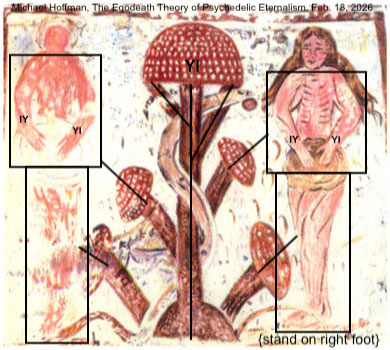
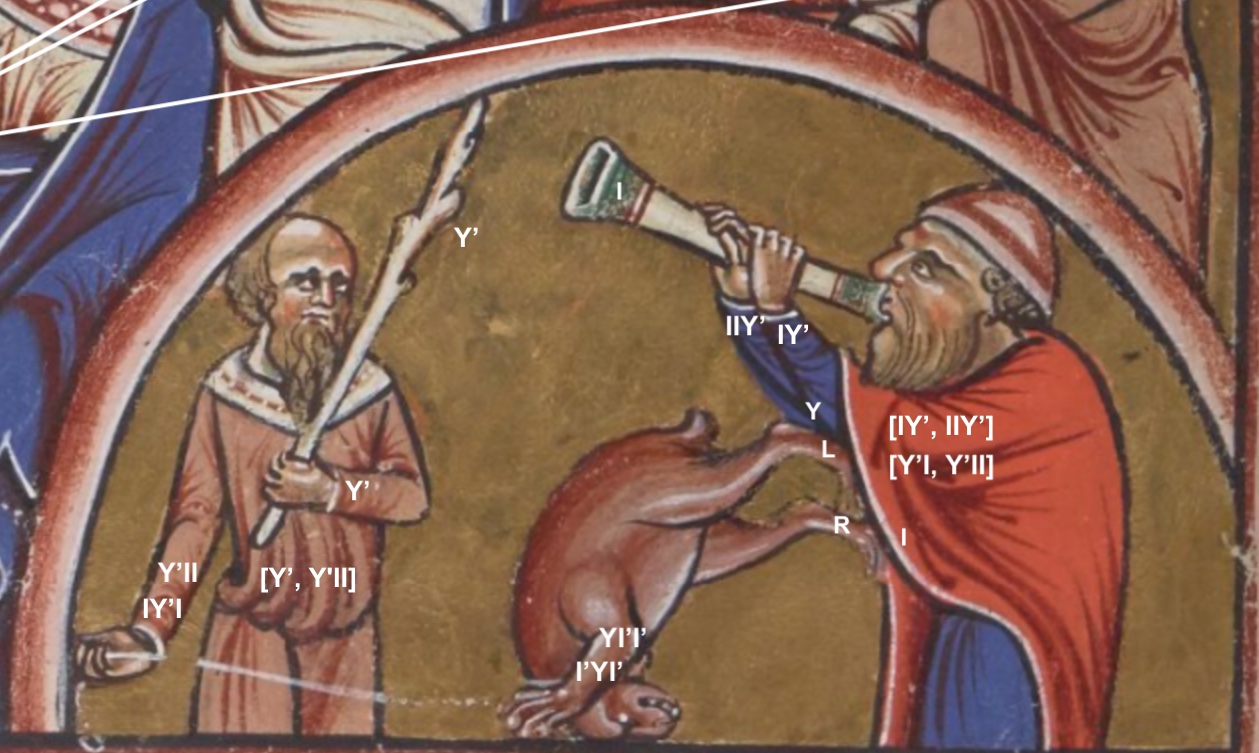
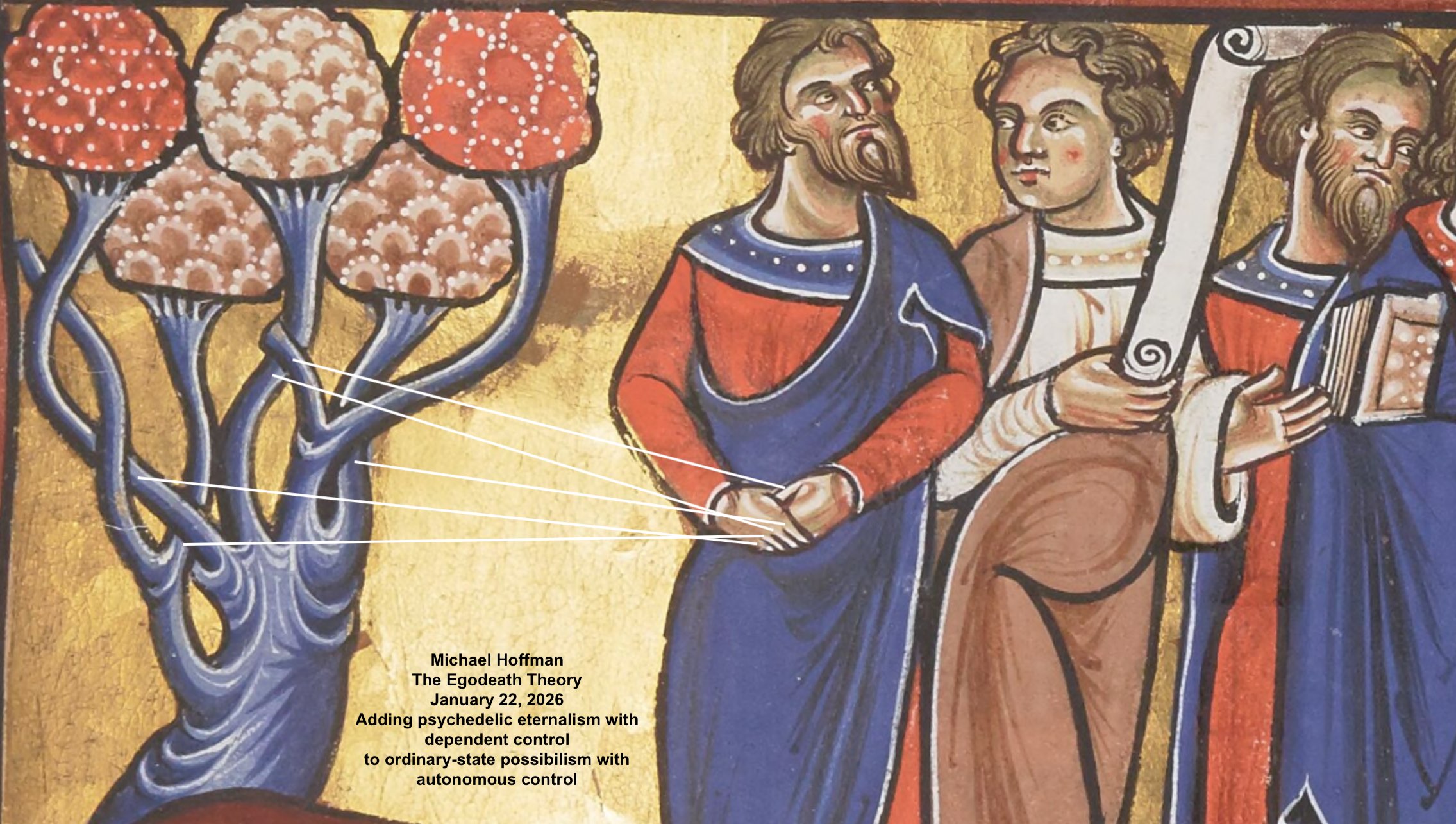
Mental Model Transformation as Progression of Finger Shapes in Hand-Shape Pair
A clear Ref point: von Trimberg in Manesse.
At best, the picture shows L to R, 4 equivalent ways to represent mental model transformation mental model transformation from possibilism to eternalism (ie from basic possibilism-thinking to integrated possibilism/eternalism thinking).
qualified possibilism-thinking + qualified eternalism-thinking = integrated possibilism/eternalism thinking
it depends how narrow u define “possibilism”, “integrated”, “basic”, etc.
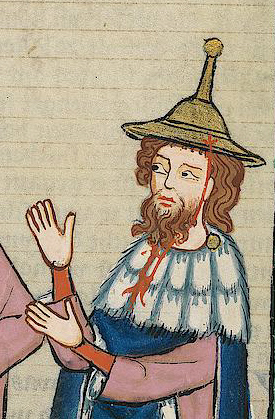
- Y (implied)
- Y’ (cut branching, depicted in lower hand, no thumb)
- I – thumb shown
- integrated YIY’; integrated YI (equiv) like {stand on right foot} : feet are cruder medium of expression: {stand on left foot} vs {stand on right foot} . roughly, {stand on left foot} = Possibilism, {stand on right foot} = eternalism. precisely, from one kind of possibilism alone, to a compound integrated integrated possibilism/eternalism.
from: (starting state):
{stand on left foot} = basic possibilism-thinking
to: (end state):
{stand on right foot} = qualified possibilism-thinking + qualified eternalism-thinking
How the “Suppression of The Mushroom by the Big Bad Church” Narrative Factors In for Various Deniers
How much is the assertion or denial of mushroom imagery in Christian art driven by the narrative of “suppression by the big bad church”?
A charged, hot topic, distorts.
Suppose:
The usual Bad Guys discovered by our hereos Graves, Wasson, Allegro, & Ruck, & Lash – a unified team who all labor in unison side by side aligned in the identical same agenda mission: Stop the Big Bad Church.
Which guy sticks out the most as contradicting that narrative?
Popebanker Wasson, conflict of interest.
Suppression of Knowledge of The Mushroom (🧚♀️🍄🦄) by the Big Bad Church
in medieval, kings & artists & court knew psychedelic eternalism
public shown it
texts recopied about it?
AstroSham 1 (Irvin & Rutajit)
Astrotheology and Shamanism: Unveiling the Law of Duality in Christianity and other Religions (Jan Irvin & Andrew Rutajit, Jan. 2006) [IR06]
Astrotheology and Shamanism: Unveiling the Law of Duality in Christianity and other Religions (Jan Irvin & Andrew Rutajit, Jan. 2006) https://www.amazon.com/Astrotheology-Shamanism-Unveiling-Christianity-Religions/dp/1585091073/
ir06
AstroSham 2 (2009)
Astrotheology & Shamanism: Christianity’s Pagan Roots. A Revolutionary Reinterpretation of the Evidence (Jan Irvin & Andrew Rutajit, Jan. 2009) [IR09]
Astrotheology & Shamanism: Christianity’s Pagan Roots. A Revolutionary Reinterpretation of the Evidence (Jan Irvin & Andrew Rutajit, Jan. 2009) https://www.amazon.com/Astrotheology-Shamanism-Christianitys-Revolutionary-Reinterpretation/dp/1439222428/
ir09
Blurb:
“Jan Irvin and Andrew Rutajit delve deep into Judeo-Christian symbolism and mythology in Astrotheology & Shamanism to reveal the true origins of Christianity in fertility cults and entheogenic drug use.
“The authors show, with the use of numerous images, textual citations, and etymological analyses, how the symbols used in Christian art and encoded in sacred texts reference sacramental use of psychedelic mushrooms as well as ancient astronomical knowledge.
“This knowledge has been kept secret from the public, however, and the truth has remained concealed behind a campaign to prohibit access to entheogenic sacraments through a Pharmacratic Inquisition (of which the current “War on Drugs” is the latest manifestation).
“Along with a call to wake up to the true history of Judeo-Christian tradition, the authors call for a return to direct spiritual experience through visionary sacraments unmediated through dominating religious institutions.
“This is a powerful and provocative book that is sure to challenge and inspire. – Martin W. Ball, Ph.D. Author, The Entheogenic Evolution: Psychedelics, Consciousness and Awakening the Human Spirit”
/ end blurb
Censorship by Popebanker Gordon . . . .🔍🧐🤔🤬 Wasson, who is the figurehead commandeered by Huggins/Deniers; DENIERS OF mushroom imagery in Christian art LOVE WASSON but they would wonder
What would they say when Ruck “Daturas for the Virgin” tries to credit wasson with AFFIRMING THE CLASS of mushroom-trees, when in fact Wasson DEMONIZED Plaincourault fresco as Amanita and was SILENTLY DENIED the CLASS of mushroom-trees as meaning mushrooms.
Wasson actively interfered with, stymied, and shut down scholarship in mushroom imagery in Christian art. Huggins excuses this scoundrel Wasson, “didn’t stop Irvin from publishing” – but Wasson TRIED, and Huggins inherits Wasson’s guiltiness of censorship. Huggins side is SO BAD, so lacking in credibility and academic integrity, they condone Wasson censoring Panofsky & Brinckmann.
Ronald Huggins PRETENDS no censorship by his side occurred.
Huggins just whips out the Panofsky letters & their Brinckmann citation out of nowhere (the damned “drawer” at Harvard, which Jan Irvin is not allowed access to).
I think “no access” is formally doc’d in:
The Holy Mushroom: Evidence of Mushrooms in Judeo-Christianity (Jan Irvin, 2008) https://www.amazon.com/dp/1439215170
Huggins fails twice (in his 2024 & 2025 articles) to cite Entheogens in Christian art: Wasson, Allegro, and the Psychedelic Gospels (Jerry Brown & Julie Brown, 2019) where the Panofsky two letters are finally published for EVERYONE to leverage, not just greedy Huggins.
Deniers Are Guilty of Having a Tradition of Restricting Access to Panofsky’s Two Letters to Wasson
The way Huggins leverages (for himself, WITHOUT PRESENTING) the two Panofsky letters, continues his side’s tradition of suppressing the Panofsky letters and their Brinc cit.
Which side finally made the Panofsky letters available for everyone, not just for the Deniers? Brown 2019; the Affirmers. No thanks to the Deniers!
Finally Samorini 1997 ignored Wasson’s harassment and intimidation and censorship attempts, a full-force propaganda campaing for the Pope to shut down looking at mushroom imagery in Christian art.
How Affirmers & Deniers Are Distorted by Attitudes Toward the Church
The Hot Topic of Psychedelics in Church History Causes Distorting Motives.
Christometer: Which entheogen scholar is the most Pro-Church?
My first instinct is to elect me as #1 churchy entheogen scholar– but im pretty allergic to Popery. I am an American Protestant, allergic to Catholocism and Mary Worship (that is accurate per broad def.) and Saints Worship[tot. defens. term]
I Will Freely Mention the Catholic ‘Worship’ of Mary & the Saints
this article paragraph applies to my objectikn to spending honor on Mary instead of on Jesus or God:
https://www.samstorms.org/enjoying-god-blog/post/should-we-worship-the-holy-spirit —
“whereas the Spirit is entitled to such adoration, he foregoes it in favor of the other two divine Persons who, together with the third Person, have decided that glory should be directed toward them—the Father and the Son—and not toward the Holy Spirit.”
“the Nicene-Constantinopolitan Creed through which the Christian church has historically confessed its belief “in the Holy Spirit, the Lord and Giver of Life, who proceeds from the Father and the Son, who with the Father and the Son together is worshipped and glorified, who spoke by the prophets.”
It’s Good to Worship and Glorify the Holy Spirit, If Along with God (the Father) & Jesus (the Son)
Catholics excessively honor Mary & the Saints, at the expense of Christ & Creator.
thats too diffuse and conflicted.
It’s complex to honor God & Christ, along w the holy spirit.
That can be excused as mythic analogy. Though
Realistically, Catholics are superstitious literalists by default, not analogy-driven esotericists.
Do not misread or mis-assess noise-occluded signal as if it is revealed.
In any era, do not read popular Catholic literalist ordinary-state possibilism as if it is analogical psychedelic eternalism.
“Worship” Is an Accurate Term in the Broad Sense, of Extreme Spiritual Honor
Special Issue: Exploring Free Will in Faith Traditions in Conversation with Contemporary Challenges
https://www.mdpi.com/journal/religions/special_issues/F9FNT728CY
Human Will in Digital Discourses About Shamanism
by Mei Yang andXianhui Li
Religions 2025, 16(6), 804; https://doi.org/10.3390/rel16060804 – 19 Jun 2025Viewed by 1938
“This study investigates how human will is articulated, negotiated, and reimagined within the discourses about Shamanism of Northeast China, with a particular focus on user-generated content from the Douyin platform (Chinese TikTok).
Drawing on the data collected from comments between 2020 and 2024, this research employs a triangulated methodology integrating Latent Dirichlet Allocation (LDA) topic modeling, the Discourse–Historical Approach (DHA), and virtual ethnography.
[relational mysticism -mh]
“In traditional Shamanic belief systems, human will is conceptualized not as purely autonomous, but as inherently relational—interwoven with ecological responsibilities, ancestral spirits, and cosmological forces.
While previous studies have explored Shamanism’s cultural and performative dimensions, they have largely overlooked the ethical and philosophical constructs of human agency embedded within Shamanic practices, especially in their digital adaptations.
“This study reveals that contemporary digital discourse simultaneously preserves, transforms, and commodifies Shamanic concepts of human will.”
[commodify: turn into or treat as a commodity]
“Users express reverence, nostalgia, critique, and playful reinterpretations, demonstrating that digital platforms serve both as spaces for cultural continuity and dynamic meaning-making.
“By analyzing online discursive practices, this research contributes to a deeper understanding of how indigenous spiritual frameworks negotiate modern visibility, identity, and ethical agency in the digital era.”
(This article belongs to the Special Issue Exploring Free Will in Faith Traditions in Conversation with Contemporary Challenges)
todaah Page about the Special Issue
“10 באוגוסט 2025
“The journal “Religions” by MDPI is releasing a special issue titled “On the Origins of Western Psychedelia: Exploring Allegro’s The Sacred Mushroom and the Cross”.
“The issue includes two articles [todo: 3 articles + editorial?] that discuss Allegro’s 1970 book “The Sacred Mushroom and the Cross”, its rejection by academia, and its adoption by other movements, on the fringes of New Age and conspiracy enthusiasts.
“This led to the point where the book was reprinted and became a hit among entheogenic literature lovers, despite its scientific validity being questioned.
“The first article https://www.mdpi.com/2077-1444/16/8/1029 [John Allegro and the Psychedelic Mysteries Hypothesis, by Richard S. Ascough] “tells the story”, outlining what Allegro claimed and why he faced criticism.
“It describes his methodological flaws and the enduring impact of his thesis, which, although considered scientifically invalid, opened the door to various parallel theories about the psychedelic origins of religion and the influence of pagan rituals on monotheistic worship.
“Starting in the 1990s, when Terence McKenna sought to integrate Allegro’s research into the rightful framework for discussing the influence of psychoactive plants on religious experiences, to the reprint of the book with a 30-page introduction by Carl Ruck, who does not fully embrace Allegro’s radical philological analyses but still highlights the revolutionary nature of his work and bold approach in religious studies, and up to recent years, when parallel studies like Brian Murarescu’s work have topped the bestseller lists.
“The second article https://www.mdpi.com/2077-1444/16/8/946 [sh!tty writing! give the goddam title & author ffs! Odd Conspiracies: John Allegro, Sacred Mushrooms, and the Dead Sea Scrolls, by Matthew James Goff] focuses on Allegro’s role as a hero of alternative and conspiratorial movements, which view his academic ostracism as a response by the establishment to his approach, which initially led him to abandon his original research on the Dead Sea Scrolls.
Allegro claimed that he did not connect with the research approach of the rest of the team, who, in his view, were religiously biased and under pressure from the Catholic Church.
He argued that they were not interested in revealing the truth behind the Dead Sea Scrolls, which led him to “bypass” the guidelines and publish excerpts from the scrolls without coordination.
Allegro also led teams that attempted to interpret the Copper Scroll as a secret treasure map.
As the 1960s passed, he became increasingly labeled as eccentric and anti-establishment.
Thus, when he published his bold theory that the origins of Christianity were rooted in the worship of a psychedelic mushroom, he was met with ridicule, which fulfilled his prophecy: the church did not want this truth to reach the masses and would try to paint those claiming it as illegitimate.
This also explains his growing popularity in recent years, as conspiracy ideas against “institutions hiding the truth” are proliferating and no longer considered fringe.”
/ END OF PAGE
Meanwhile, Huggins fails to cite brown 2019, citing the damned drawer at Harvard, and acting like Wasson didn’t censor the F out of the Panofsky letters including two mushroom-trees and the Brinc cit.
Huggins allies with Popebanker Wasson, who extremely hid the truth – SHUT IT DOWN! POPE’S ORDERS
Todo
Site Map Section: Deniers of Mushroom Imagery in Christian Art
Team Popebanker: Enemies of the Revealing of Psychedelic Eternalism
Jay Michaelson Article “The Religious Functions of Psychedelics”, about 2025 Symposium “Psychedelics and Monotheistic Religions: Sacramental Practice and Legal Recognition”
todo: read, maybe even paste entire article here for analysis – good commentary about tensions.
https://jaymichaelson.substack.com/p/the-religious-functions-of-psychedelics –
The Religious Functions of Psychedelics
A dispatch from the first-ever conference on psychedelics and monotheistic traditions”
full article for analysis:
“In the context of immense, rapid societal transformation, it was either an act of foresight, joy, privilege, indulgence, resistance, or all of the above to bring together a diverse group of scholars of religion, psychedelic practitioners, clergy, legal scholars, and legal practitioners for a symposium on psychedelics and religion last week at Harvard Law School.
Whatever it was, that’s what we did, and by all accounts, the results were extremely positive.
I am deeply grateful to my colleagues at Harvard for their work, support, input, and wisdom, and to everyone who showed up. Which is a lot of people: we had around 30 presenters, and over 700 attendees joining us in person and online. David Zvi Kalman has already provided an excellent writeup of the symposium on his Substack newsletter, Jello Menorah, but as a co-convenor (with Professor Noah Feldman) of the symposium, I wanted to offer a few notes here from my own perspective.
First, here’s a bit about what we set out to accomplish.
The symposium was called Psychedelics and Monotheistic Religions: Sacramental Practice and Legal Recognition, and responded to the dramatic increase, in recent years, of psychedelic use in Christian, Jewish, and Muslim communities. While indigenous people have been using these compounds for hundreds, if not thousands, of years, and while people of all backgrounds have been exploring them for a century, it is a new phenomenon that thousands of people experience and understand their psychedelic use as part of their religious practice or identity.
And yet, all of this sincere religious practice is, technically, against the law.
There is, as yet, no legal recognition of such use, which remains formally illegal under the Controlled Substances Act.
Arguably, this religious use is exempt from the CSA, based on several court precedents and settlements with other psychedelic religious organizations, but there is no case that has yet tested that, and no guidance from the government.
Meanwhile, the legal doctrines that govern this question are significantly limited in nature.
Against this background, the symposium set out to explore
(1) the historical and theological bases for psychedelic use in Judaism, Christianity, and Islam,
(2) the self-understandings of contemporary psychedelic practitioners in these traditions, and
(3) the match/mismatch between them and the the requirements for a religious exemption to the CSA under the First Amendment and the Religious Freedom Restoration Act (RFRA).
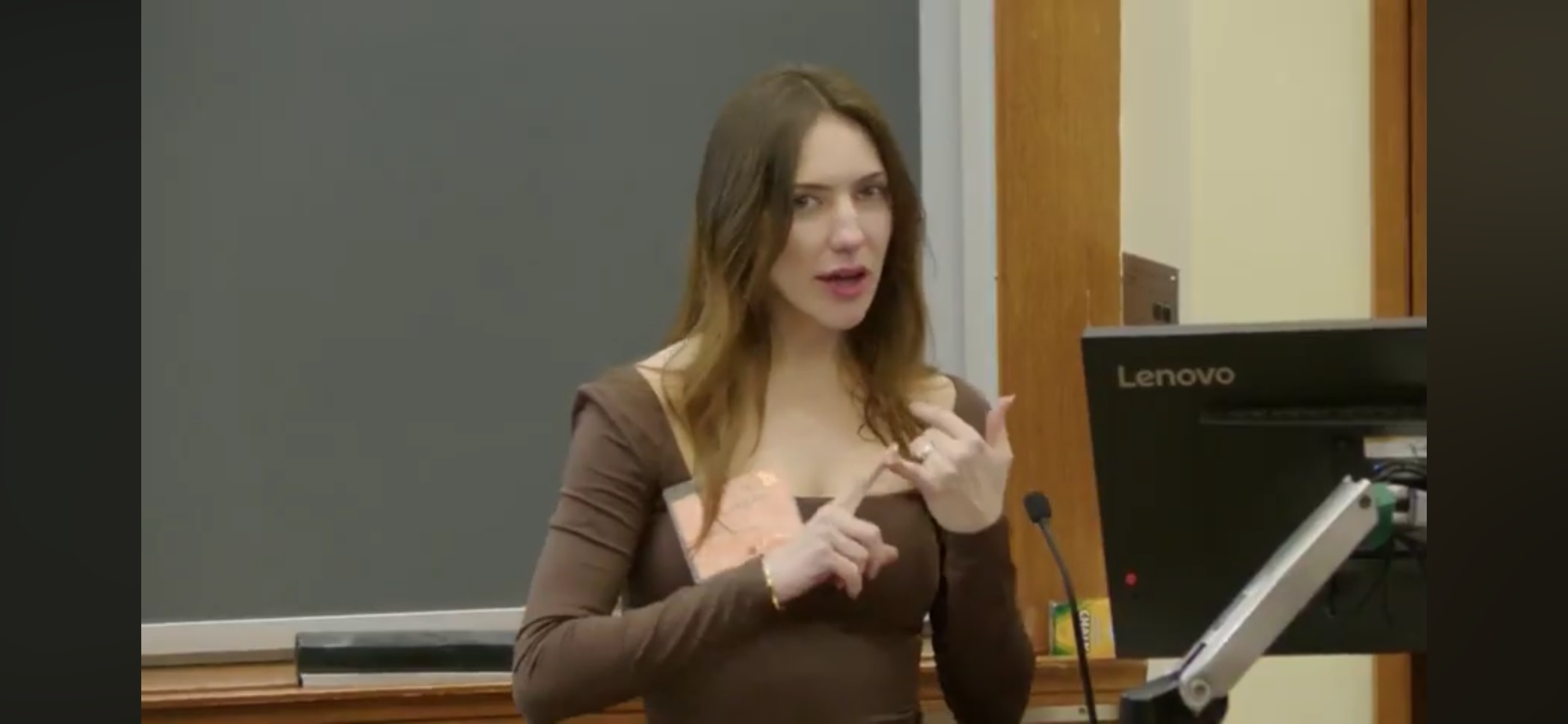
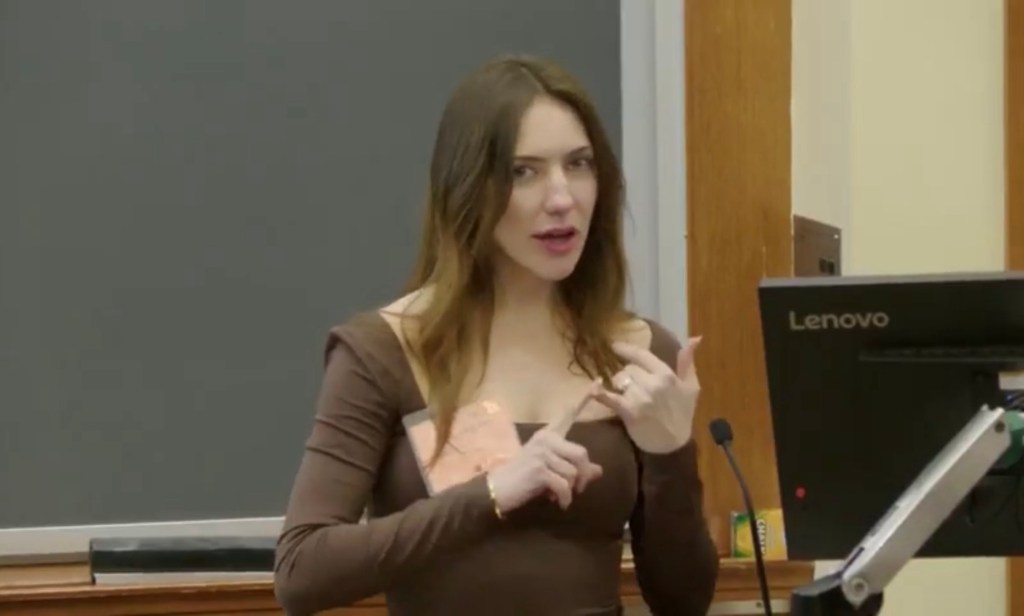
I do talk with my hands a lot.
First, scholars and theologians discussed traditional models for such practice.
All scholars who presented were skeptical of the speculative claims for Biblical and other ancient Mediterranean psychedelic use, noting a paucity of evidence and significant leaps of logic between the available shreds of evidence and conclusions based upon them.
I’ve written about some of these claims here [todo: link], and Harvard Divinity School’s Charles Stang has written perhaps t [todo: link]he definitive analysis of them here. [todo: link]
It was interesting to see how the fifty-or-so psychedelic practitioners in the room received these critiques.
After all, many of them see themselves as reviving ancient practices that underlie religions around the world — some psychedelic communities have even included works like Terence McKenna’s Food of the Gods in their scriptures.
And, well, the air did seem a little tense at times.
On paper, it made perfect sense to bring practitioners, scholars, and lawyers together, but in practice, it was simultaneously the least-academic academic conference some people had ever attended, and the most-academic conference that others had ever attended. The weirdness was fascinating.
[Affirmers of mushroom imagery in Christian art = least academic
Deniers of mushroom imagery in Christian art = most academic
The anything-but-drugs agenda/ commitment/ academics/ propaganda/ academia – mh]
Yet, as Christian Greer, Sharday Mosurinjohn, Charles Stang, and I all proposed at the symposium, insisting on ancient roots of a contemporary practice is a curiously fundamentalistic move.
[PROJECTION! YOU FUNDAMENTALIST DENIERS, Hypocrites!]
Deniers of Psychedelics in Western Religious History Are Anything-But-Drugs Religious Fundamentalists
con’t
“In context, it may be understood, Greer proposed, as a response to the “Pharmacological Calvinism” of religious conservatives opposed to psychedelics:
the view that revelation is a matter purely of Divine Grace, that there is nothing we can do to effectuate it, that drugs are evil and hallucinations are delusory.
Mind-Altering Substances are the NON-HIDDEN Source of Biblical and Mediterranean Religions
“In opposition to this view (which, upon inspection, is intensely Eurocentric and oppressive), what Greer calls the “Entheogenic View” is a maximalist [#1 is Michael Hoffman – but strike to Hell, ‘hidden] assertion that, in fact, mind-altering substances are the hidden source of Biblical and Mediterranean religions, not only Meso-American ones.
“For Greer, this is simply the inverse of the hostile view:
both insist that only what’s ancient is legitimate, that religious cultures cannot evolve new rituals and methods of Divine communion that are as authentic as older ones.
Though this flies in the face of religious history itself (in just the Jewish example, prayer replaced sacrifices as the predominant form of worship), it does resonate with the felt sense, in psychedelic experiences, that these experiences are foundational, ancient, and true. I resonate with that felt sense, but for Lockean reasons, I also am leery of making unverifiable subjective religious experiences the basis for ontological claims, let alone political ones.
After all, it’s likely that a majority of such experiences are hostile to my very existence.
There is a third way, which Greer called the “Empirical View.”
Intoxicating compounds are, in many religious traditions, used as a means to attain revelation, healing, power, and magic — and all such traditions come with guardrails, warnings, and prerequisites for safe use that are of enormous value to practitioners today.
But not in all traditions, until recently anyway. [debatable false claim]
“In some, including Jewish, Christian, and Muslim ones, other techniques are used to cultivate Altered States of Consciousness (ASCs), including fasting, trance techniques, magical processes, contemplation, and prayer.
Rather than insist on what Mosurinjohn called a “Western civilizational pedigree” for the use of psychedelic compounds specifically, perhaps it would be wiser to investigate the pharmacological and non-pharmacological methods for cultivating ASCs more generally, explore the reasons such states are religiously valuable, and develop a syncretic, non-colonial approach to incorporating new technologies learned from non-Western cultures.
Sharday Mosurinjohn: You All Must Study Indigenous Shams, But I Am Exempt and Couldn’t Care Less about Them
[HYPOCRITE! WHY DOESN’T SHARDOGGED WRITE A BOOK ABOUT Indigenous Shams? Poser. Empty posturing. Phony Sharday doesn’t give a SH!T about Indigenous Shams; she just weaponizes them as a blunt club to attack affirmers. -mh]
“Several scholars in the symposium explored how this might look.
In the first session, scholars identified a large number of models, methods, and purposes for the cultivation of ASCs in classical Jewish sources, ranging from the ecstatic rites of women ritual leaders in the Bible to magical and theurgical operations in Kabbalah and Hasidism.
“Muslim scholars talked about Sufi mysticism (including the possible use of hashish), the contemplation of Ibn ‘Arabi, and the contemporary embrace of psychedelics in Muslim communities which experience elevated rates of mental health crises (including suicidal ideation).
And in the Christian context, Rev. Jaime Clark-Soles noted that Christianity is founded on ASCs — visions of the resurrected Christ, Paul on the road to Damascus, the Book of Revelation — and has an array of methods of how to cultivate them, including ascetic practices, sleeping in holy places, ecstatic practice, and, perhaps, the Mysterion itself.
Psychedelic practitioners offered a wide range of self-understandings of their religious psychedelic practice. While some saw themselves as reviving ancient traditions of psychedelic use, most emphasized that their psychedelic use was motivated by present-day spiritual and psychological factors, including healing ancestral trauma, experiencing love in relationship to one another and to God, seeking a mystical experience with the Divine — even, in Jessica Felix-Romero’s phrasing, enabling God to connect with us.
Meanwhile, there were important criticisms of all this work. Ron Cole-Turner noted how love (and enduring bonds of love, rather than brief experiences of it) is absent from many analyses of psychedelic experience yet central to Christian mysticism.
Ayize Jama-Everett highlighted the racialized ways in which some religious traditions are foregrounded and others marginalized, and proposed that the underground may actually be a safer and more equitable way to encounter psychedelics than some partially-legalized, partially-medicalized ‘above ground’ pathway.
Laura Appleman gave a hilarious, terrifying presentation on psychedelics and eugenics that I’ll have much more to say about in a future newsletter.
And several participants sounded cautionary notes about the intense hostility that some religious conservatives have not merely to “drugs” specifically, but to any non-canonical way of accessing emotional, affective spiritual experience. Many believe it to be (like liberalism, of course) an act of the devil.
Finally, legal scholars noted the strengths and weaknesses of a Jewish, Christian, or Muslim case for an exemption to the Controlled Substances Act.
On the one hand, courts recognize these traditions as, obviously, religions, unlike some claims of novel psychedelic spiritual communities.
These practitioners are sincere, and not motivated by financial gain.
On the other hand, existing jurisprudential categories such as ‘sacrament’ may not apply to the compounds used by religious psychonauts, and while some potential claimants may understand psychedelic use as central to their religious practice, it cannot be claimed that it is central to these religions as such.
“And of course, there are significant cultural and ideological barriers in play.
The DEA has never, not once, issued a religious exemption without being forced by a court, despite setting up a process to supposedly do so.
[recent exception? mh]
“And it is unclear whether the expansion of religious liberty jurisprudence under the Roberts Court would be applied to religiously liberal claimants as to religiously conservative ones.
As I wrote about in ARC magazine two weeks ago, the Court will soon have the opportunity to apply that jurisprudence to liberal churches seeking to shelter undocumented immigrants — we’ll see if that happens.
Despite these challenges, it is still possible to conceive of legal doctrine catching up with this remarkable religious reality, and I look forward to digging deeper into this question in the months and years to come.
For now, I will close with a personal reflection on what it felt like to dream in this way in the context of our shared national nightmare.
First, as was discussed at the symposium, many psychonauts don’t see the Trump regime as a nightmare at all: they are excited about the possibilities of innovation less fettered by small-minded regulations and restrictions, and hold views which Appleman aptly described as psychedelic eugenicist. (I’ll talk more about this in a future newsletter, too).
Psychedelics are, as Stanislav Grof put it, a “non-specific amplifier,” and they do not generate a particular political point of view. Psychedelic messianism is undercut by psychedelic realism.
At the same time, the increasingly non-partisan nature of psychedelics offers at least some space for common ground, at least between the libertarian wing of the Trump regime, the civil-liberties wing of the opposition, and the diagonalist-whatever wing of conspirituality and horseshoe politics.
I have no illusions that this one issue will generate a new era of non-partisanship.
But it’s interesting to see it as, perhaps, one site for it.
Elevating the experiences of people in ‘traditional’ religious contexts from a wide range of political, religious, and social locations, might also usefully complicate the Drug-War-era assumptions about the kinds of people who ‘do’ psychedelics, and spiritual practice in general. This, too, seems like a good thing.
Second, whatever future (or lack thereof) awaits our nation and our species, it is my experience that psychedelics, in both therapeutic and spiritual contexts (and in the many that blend the two), offer ways to relate to both beauty and terror that can be profoundly empowering and healing.
I do not believe, as many of my fellow ‘spiritual teachers’ do, that our role as pastors is to help the human race navigate civilizational hospice. But we might be headed to, at the very least, a civilizational ER. Certainly, the exponential growth in AI threatens how people understand ourselves and our value in the world.
The Trump regime’s suicidal climate denial will accelerate chaos and, according to mainstream scientific data, cause millions of deaths in the not-too-distant future. And so on, and so on, and so on.
In that context, perhaps psychedelics, like other remedies for the crisis of meaning, will play a small role in human beings’ evolution into less selfish, cruel, and ethnocentric creatures; certainly, between Trump, Vance, and Musk, the ethnocentric instincts in the human mind are predominant at present, and one might see the mainstreaming of psychedelics as one form of resistance to them.
Working in the psychedelics space often feels like a civilizational Hail-Mary pass, and, to mix sports metaphors, I think it’s worth taking that shot.
But even if psychedelics have no impact on increasing human empathy, they still may have an impact on human resilience, wonder, consciousness, and perspective – all of which have their own value and merit. There are ways of being that lie beyond the fences, malls, fears, panderings, and algorithmic enragements of our now-dominant culture.
And, to paraphrase an overquoted Rumi poem, I’ll meet you there. For ‘when the soul lies down in that grass, the world is too full to talk about. Ideas, language, even the phrase each other doesn’t make any sense.’”
/ end of michaelson article
Dogged Entheogen Denier, Religious Fundamentalist Sharday Mosurinjohn
Sharday Mosurinjohn (the religious fundamentalist denier of mushrooms in mystery religions and Christianity, and perpetrator of colonialist violence who is overlooking Indigenous Shams by erroneously trying to write a book on psychedelics in Western Esotericism, instead) wrote and spoke on:
“We then explore how the dogged pursuit of evidentiary mirages contributes to the [pathetic, invalid, illegitimate, in-vain] project of establishing a western civilizational pedigree to dignify the use of stigmatized drugs and revitalize experiential religion.
“Although the desire for [fake] legitimacy and meaning is understandable [though foolish, erroneous, hopeless, and futile], the strategies used by the writers [not scholars or researchers] of this pseudo-history constitute a kind of religious fundamentalism [“and colonialist violence“].” PROJECTION MUCH?!
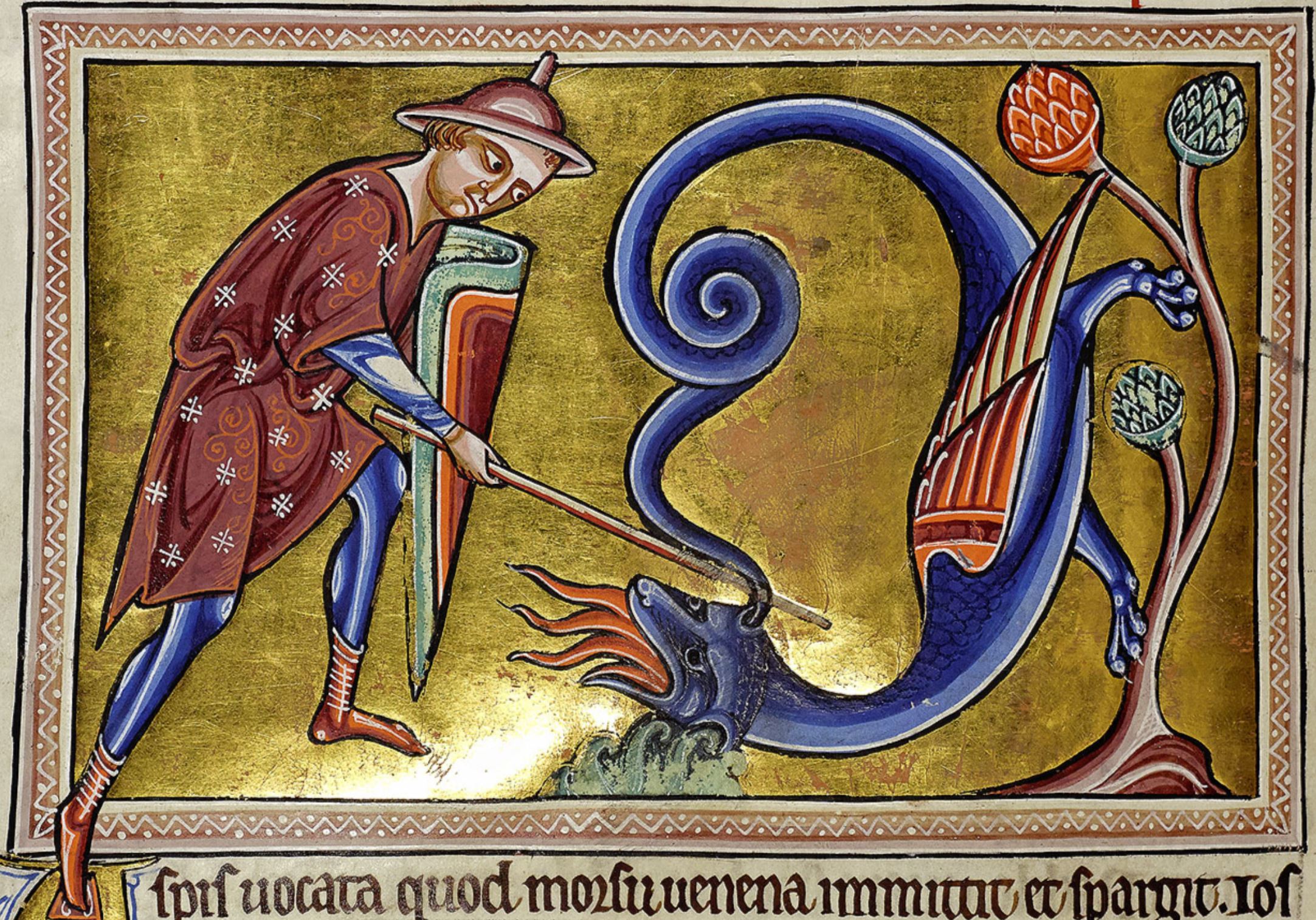
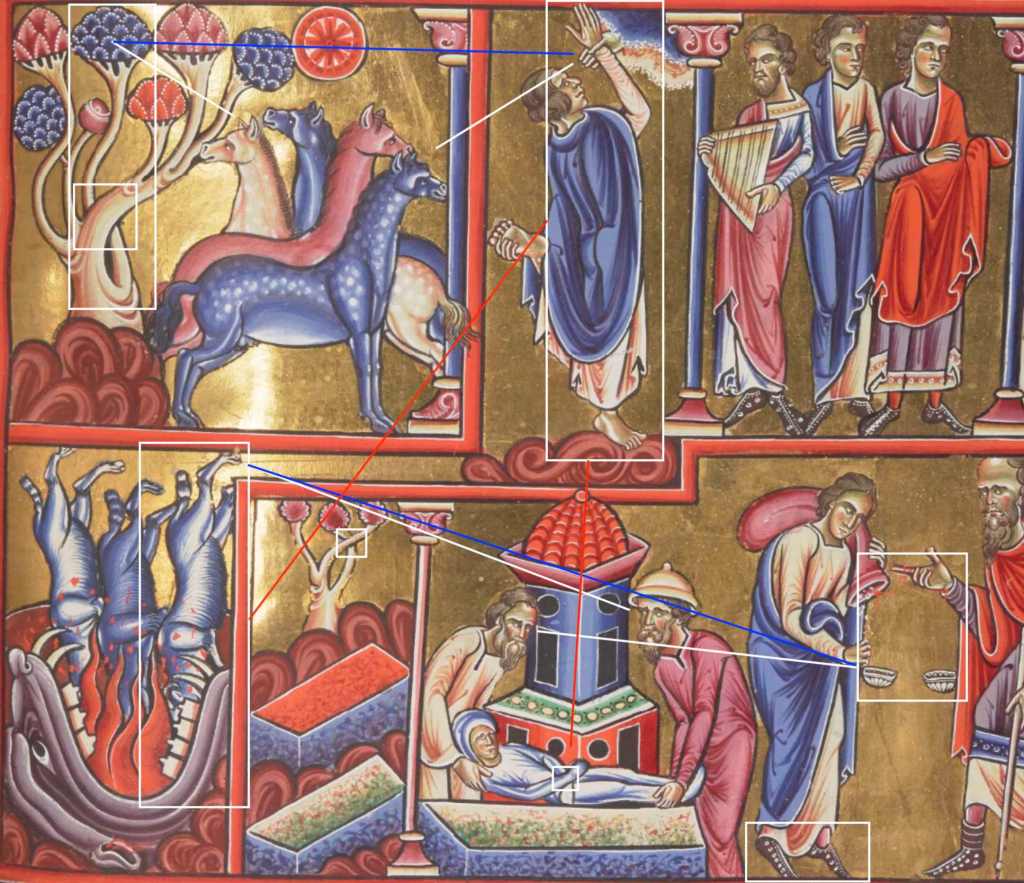
Asp-Dog Trying to Avoid Hearing about Non-Branching
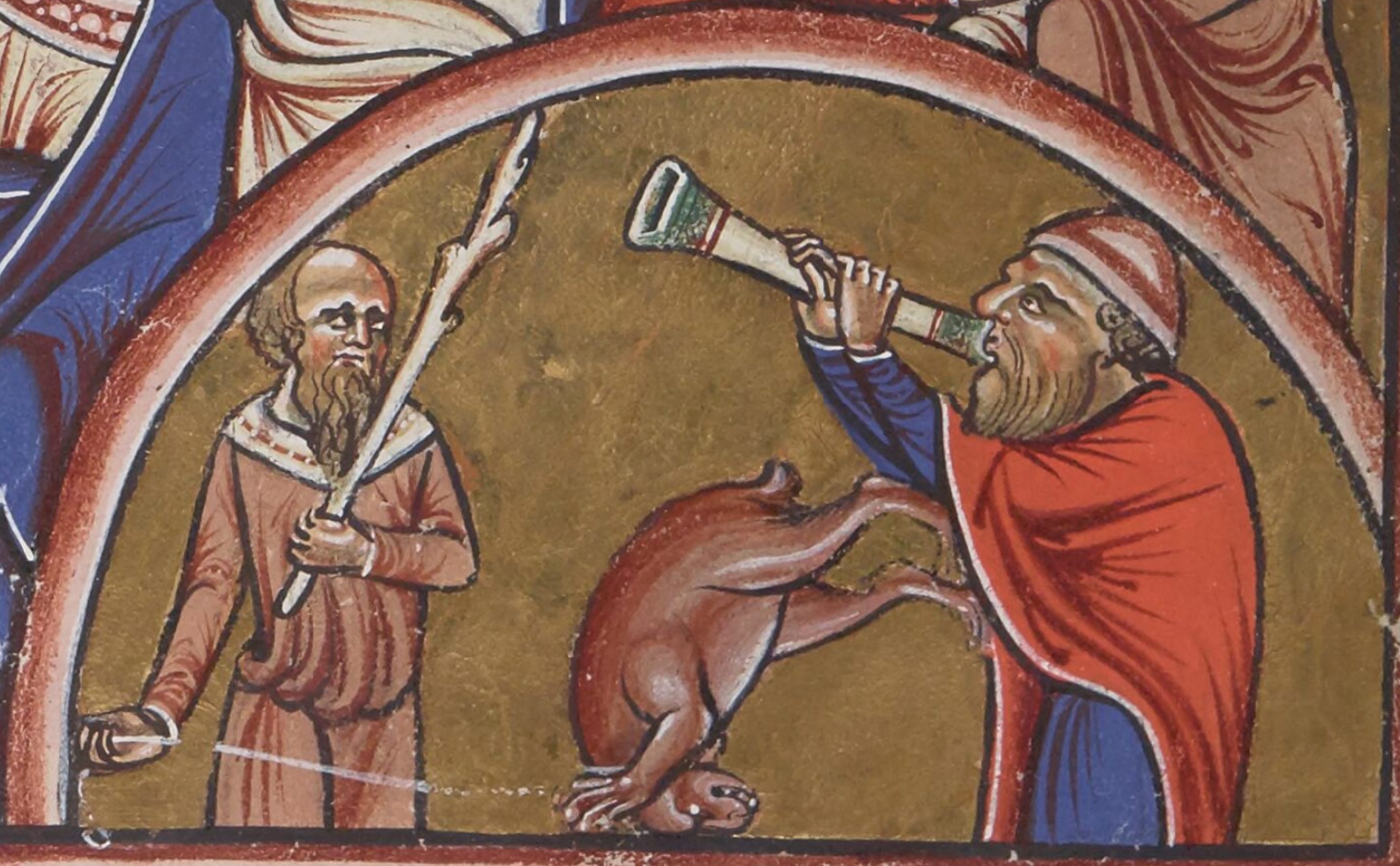
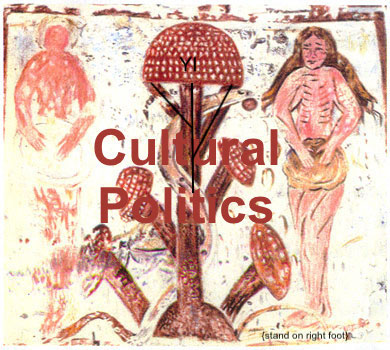
Mushroom-Tree Next to YI Hand-Shapes
The Asp Serpent Tries to Avoid Hearing Wisdom & Divine Truth
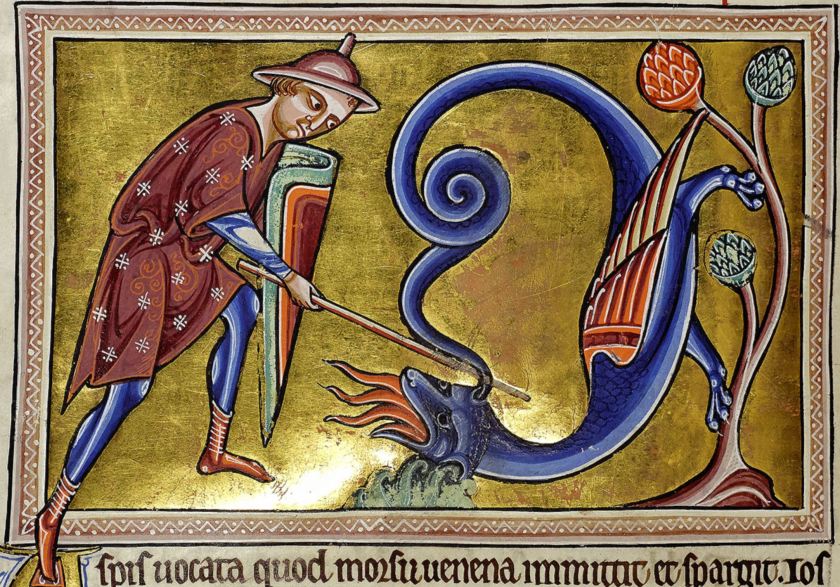
“The Asp, or “aspido,” is a mythical creature in medieval bestiaries described as a snake that stops up its ears to avoid being enchanted by the music of snake charmers. It presses one ear against the ground and covers the other with its tail to ignore the charming, symbolizing a refusal to hear wisdom or divine truth.”
Web search: Asp blocks ear avoid musical enchantment
See Also
Wasson and Allegro on the Tree of Knowledge as Amanita (Hoffman, 2006), http://egodeath.com/WassonEdenTree.htm & https://egodeaththeory.org/2025/03/18/wasson-and-allegro-on-the-tree-of-knowledge-as-amanita/
Cyberdisciple’s Pages About Allegro
https://cyberdisciple.wordpress.com/?s=allegro
Site Map: Ronald Huggins
https://egodeaththeory.org/nav/#Ronald-Huggins
Site Map: Sharday Mosurinjohn
https://egodeaththeory.org/nav/#Sharday-Mosurinjohn
Copied the main 4 sections to here from:
https://egodeaththeory.org/2026/02/02/idea-development-page-33/#special-issue-of-religions-journal-by-sharday-mosurinjohn-christian-greer-oct.-2025

 The Egodeath theory