Contents:
- Incoming Ideas
- Separate WordPress Site for the 183 Egodeath Yahoo Group Posts Digests
- This WordPress Site Was (Effectively) Created October 14, 2020; What I’ve Accomplished the Past 2 1/2 Months
- Keep: Posting of Dec 11, 2020, Showing First 2020 WordPress Pages at Bottom
- Need to Elevate My Own Messy Idea-Development Needs, Over a Clean Website for Newbies
- History of Egodeath Theory Development 2014-2020
- What the Hell Have I Accomplished 2014-2020??
- Reconstructing My Posting-History of Podcast Episode Commentaries
- Crop-and-Zoom of Image Elements Is Absolutely the Way to Go
- Cropped & Zoomed Each of the 4 Plants in Day 3: Creation of Planats, in Great Canterbury Psalter
- Exercise for the Reader: Identify this Object:
Some experts say it’s an Italian Pine.
Other experts have definitively identified it as a Parasol of Victory.
Which of these top experts is correct? - Folio 11 Detail: Row 2 Left: Day 4, with 4 No-Branch Mushrooms, with Grid “Branching” Caps on Left, Not on Right – gee i wonder what plant 3 points at [ans: pan of Balance Scale, 2025]
- Disagreement About Identity of Four Mushrooms in Two Famous Canterbury Images
- Canterbury Psalter Mushroom Inventory
- Umbrellas – By Following Image Search, You Can Find Any Mushroom Shape Challenged, Against the F*cking Annoying, Insultingly Retarded Bullsh*t “It Looks like Italian Pine | Parasol of Victory, not Mushroom”
- Did Allegro Delete Plaincourault from His Book, Caving to Wasson-Panofsky’s Insultingly Retarded Argument, and to Stop Contradicting His Own Theory?
- Challenge: Find a Mushroom Tree or a Vine-Leaf Tree that Doesn’t Have a De-branched Stub
- vil, Combined Cubensis-Liberty Caps + Vine-Leaf Tree
- Academics’ Mushroom Cover-up Operation Involves Calling Artists Ignorant, Unaware Dolts Who Have No Idea What They’re Painting
- Magic Scholar-Phrases: “is/was associated with”; “is/was consubstantial with”
- No One Can Logic Like Gordon “Ellipses” Wasson
- Science, Meta-theory, Explanatory Frameworks: When Additional Data 95% of the Time Confirms the New Theory, Indicates It’s a Good Investment
- Email Draft to Thomas Hatsis
- Pseudoscience Kit
- “Disagreement with” the Egodeath theory Usually Means Misunderstanding and Misrepresenting
- The Egodeath theory vs. Mundane Conduct of Daily Life
- Correlation Between Strength of Academic Affiliation and % Suppression of Mushrooms from Christian Art – Why Samorini Uses a Flimsy Excuse to Suppress Only 50% of Mushrooms from Christian Art, Instead of 100% Like Academic-Affiliated Scholar-Propagandists
- Max Freakout & Cyberdisciple Accurately Represent My Ideas, with Subtlety
- How Academics Use “Evolutionary Anthropology” to Dismiss Mushroom Trees
- Need Hatsis’ Book Psychedelic Mystery Traditions in Print Form, or Slave Away on E-book More
- Debranched Caduceus Mushroom Tree
- Yet More Confirmation: Mushroom Literal Depiction in Christian Art: Mushroom Caps Have Branches Under Them
- Decoding Cain & Abel Two Pictures from Canterbury
- Confusing Canterbury Psalter vs. Eadwine / Paris Psalter
- Article: “Mushroom-Trees” in Christian Art (Samorini)
- Hallucinogens and Christianity: Evidence in Sacred Art (2 vols.) (Camilla & Gosso)
- Was Phase 1 of the Field of Western Entheogen Scholarship in Fact Centered Around Amanita?
- Robert Forte
- Transcendent Knowledge Podcast – Separate Page per Episode
- Ancients Had Only Mytheme-Based Explanation of Esoteric Mushroid Initiation, not Modern Direct Explanation like the Egodeath Theory
- When did Psilocybe Esoteric Consciousness Decline? 1543-1715 (Copernicus 1543, Newton 1687, Louis XIV 1715)
- When Did I Announce “the Maximal Entheogen Theory of Religion”? Precursor; Announcement; then Fine-Tuning the Phrase/Usage
- 1. 6-page Discussion of “the maximum presence of entheogens we can possibly imagine in religious and Christian origins”, & ‘the “maximal influence” case’: October 16, 2002
- 2. Mention of “the maximal-influence theory of the entheogen origin of religions”: January 28, 2003
- 3. 14-Page Announcement of “a maximal entheogenic theory of religion”: March 12, 2003
- 4. First Mention of “the maximal entheogen theory of religion-philosophy-myth”: September 4, 2003
- 5. First Use of Exact Phrase “the maximal entheogen theory of religion”: December 6, 2003
- New Books on Ancient Fate, Determinism, Free Will
Incoming Ideas
Separate WordPress Site for the 183 Egodeath Yahoo Group Posts Digests
Possible idea to consider: create a separate WordPress site just for the 183 the Egodeath Yahoo Group Digests, to separate the Search results.
This WordPress Site Was (Effectively) Created October 14, 2020; What I’ve Accomplished the Past 2 1/2 Months
An alternative approach instead of clicking the links in the Dec 11 posting, below:
Admin: Posts, slowly laboriously scroll wait scroll wait.. eventually shows dates of my initial WordPress weblog Posts: October 14, 2020 (other than Summary, truly started site, on Oct 7 2016).
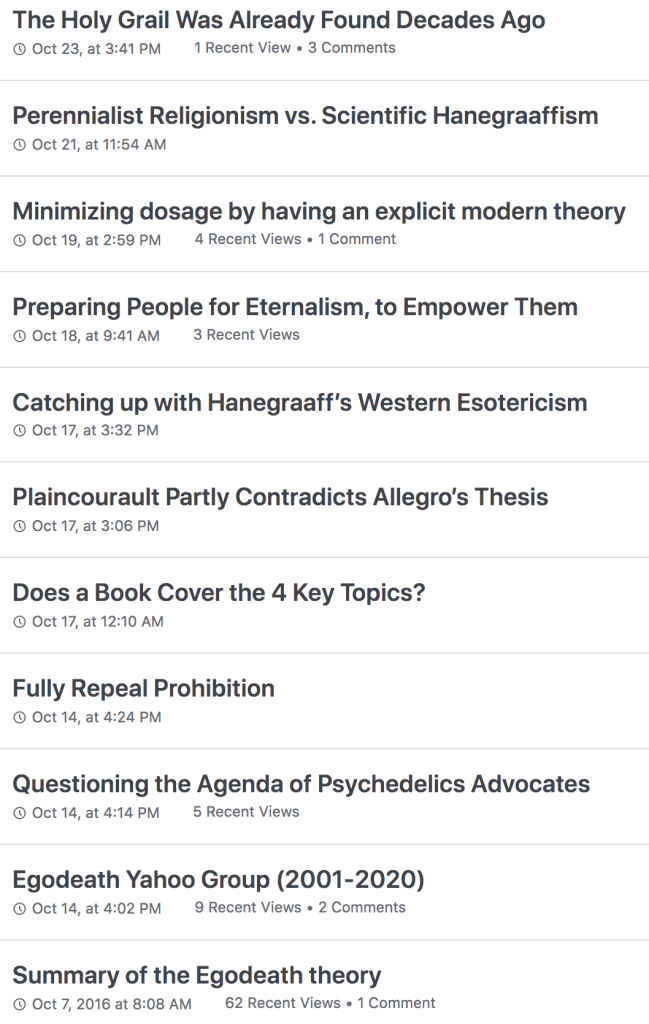
Only “Summary” remains from the initial, 2016 batch, 4 years ago.
Keep: Posting of Dec 11, 2020, Showing First 2020 WordPress Pages at Bottom
RECENT POSTS
- The Personal Control System Is Like a Woman
- Alchemy Woodcuts, Western Esotericism Mytheme Images
- Egodeath Yahoo Group – Posts 10650-10750
- Egodeath Yahoo Group – Posts 1-51
- Brinckmann, Mushroom Trees, & Asymmetrical Branching
- GreekMyths-Interpretation.com — An Aurobindo/Jungian Reading of Greek Myths
- Mythology Reference Websites
- Idea Development page 6
- Record of Discovery: mythemes {Saturn, virgin, phallus, speared, 2 goddesses, epiphany, many more}
- Welcome to the Egodeath Theory, Joe Average
- Commentary on “Transcendent Knowledge Podcast” Episodes
- Todo
- The Hidden Passion: The Gnostic Christ (Caruana’s Gnosticism Research)
- Idea Development page 5
- Theory Concepts
- Gnostic Eucharistic Ascent from the Bridal Chamber through the Aeon Planetary Spheres’ Guarded Doorways to Return to the Pre-existent One
- Scholarly Fail-Quotes Hall of Shame
- Key Gnosticism Concepts: Eucharist, The Elect, Ransom, Redemption, Reflect, Repentence
- Glossary of Gnostic Terms (Caruana)
- Outtakes from “Key Concepts” & “Key Mythemes” Pages
- Potential “Key Mythemes” or “Key Concepts” Glossary Entries
- Crafting “Optimized Concept-Labels” for Reuse, with [acro]/ Keyboard Shortcuts
- Favorite Images
- The Way of Zen: Satori Enlightenment as Reconception of Self-Control Cybernetics
- Esoteric Christianity Books: Pagels; Freke & Gandy
- Idea Development page 4
- Self-control Cybernetics, Dissociative Cognition, & Mystic Ego Death
- The Entheogen Theory of Religion and Ego Death
- About the Egodeath Theory, Including the Cybernetic Theory & the Mytheme Theory
- Idea Development page 3
- Idea Development page 2
- Lesser & Greater Mysteries: Teaching then Initiating
- Strict Requirements for Teachers, Initiation Guides, and Students, Prior to Initiation
- Mytheme: {ram caught helplessly in thicket}
- Hiatus
- Methodology for Decoding the Canterbury Leg-Hanging Mushroom Tree
- Scholars’ Failure to Debate Mushrooms in Christian Art
- Peer Review: Hanging from Mushroom Tree
- Proof that the Canterbury Psalter’s Leg-Hanging Mushroom Tree Is Psilocybe
- Scientific Reproducibility of Mytheme Decoding
- Idea Development page 1
- Book: Ancient Psychedelia
- Gallery of Mushrooms in Greek & Christian Art
- Core Concepts
- Theory of Mythemes: Decodings, Mappings, Referents, & Breakthroughs
- Key Mythemes
- Conceptual Revolutions
- Defining “Compelling Evidence” & “Criteria of Proof” for Mushrooms in Christian Art
- Course Syllabus: Psychedelics and Culture
- Book: Psychedelic Spirituality (Styx)
- Possibilism vs. Eternalism: Two Models of Time and Control
- History of Developing the Egodeath Theory
- John MacArthur – Strange Fire, Transcendent Knowledge
- Mythemes in “Discourse on the Eighth and Ninth”
- Mytheme: {blade & harvest} = ripe for sacrifice, to gain Eternalism
- Ptolemaic Astral Ascent Mysticism
- Log of updates of older articles
- Mytheme: {spear/dagger/wound} = cybernetic death & rebirth
- Entheogens in Christian art: Wasson, Allegro, Psychedelic Gospels (Brown)
- Why Transcendent Knowledge Is of Highest Value
- Varieties of Transformative Experience (Metzner)
- The Psychedelics Integration Handbook
- Promethea comic – video commentary
- Conceived in Drunkenness: Heroes’ Magic Plants (Ruck)
- Notation for Direct vs. Metaphor Words
- Transcendent Knowledge Podcast episodes
- Jonah’s ketos (short sea-serpent) in art
- Esoteric Christian Prayers
- Minkowski’s Block Universe
- Initiatives passed: 109 (Psilocybin clinics), 110 (all drugs), 81 (plants & mushrooms)
- Esoteric Restorationist Christianity
- Hatsis maintains “no mushrooms in Christianity”
- Psychedelic Mystery Traditions (Hatsis)
- Corrections and Critique of Egodeath Theory
- Valentinian Freewill Compatibilism
- Revivifying Semi-Living Tradition
- Difficulties of Being an Esoteric Christian
- Regulated Therapy as a False Religion, Unqualified & Dangerous Without Egodeath Theory
- The Holy Grail was already found decades ago
- Perennialist Religionism vs. Scientific Hanegraaffism
- Minimizing dosage by having an explicit modern theory
- Preparing People for Eternalism, to Empower Them
- Catching up with Hanegraaff’s Western Esotericism
- Plaincourault Partly Contradicts Allegro’s Thesis
- Does a Book Cover the 4 Key Topics?
- Fully Repeal Prohibition
- Questioning the Agenda of Psychedelics Advocates
- Egodeath Yahoo Group (2001-2020)
- Summary of the Egodeath theory – beautiful URL like my great summary content I posted as Egodeath Yahoo Group posting #1 on June 10, 2001:
https://egodeaththeory.wordpress.com/2016/10/07/first-blog-post/
It would’ve been better as:
/summary-of-egodeath-theory/
I could make a WordPress web “Page” (wide-col) with that URL. I’d have to try it and see the feel of the wider col.
Need to Elevate My Own Messy Idea-Development Needs, Over a Clean Website for Newbies
Dammit, I removed my flags showing which Core Concepts groups of phrases need work.
That set back Transcendent Knowledge development.
Instead, I find that when I elevate *MY* needs (for Transcendent Knowledge development) over the needs of the reader, it HELPS the reader — eg,
When my Nav section in the upper right was failing to serve MY needs, I said “F the reader; *I* need different links emphasized” – that led to the *awesome*, *far* better usage of the Nav section, way more helpful for my needs — AND way better for the audience needs/nav’n.
History of Egodeath Theory Development 2014-2020
I’m struggling with amnesia again, this time, for RECENT history — but then, ever since my Jan 1988 breakthough, I always stopped and took the time, every 3 months, to list What the Hell Have I Accomplished (in Transcendent Knowledge development) since Last Inventoried?
- Awesome Pair of Articles Nov 10 2020, amazing Canterbury Psalter image. the Canterbury Psalter “mushroom tree/ hanging/ sword” image with the trained, self-threatening Psalter reader. And entire set of images from Psalter.
- Created new website.
- 2016 initial creation then deletion: October 7, 2016.
- 2020 first real content: todo: date?
- todo: Hatsis recovered page, what date? doesn’t show it; shows November 2, 2020, corrob’g that “v2” of present site is literally “Nov/Dec 2020”
- Can turn on Show 150 Latest Posts, to check date of creation not 2016 initial but 2020… Hatis page recovered from first 2016 batch which was deleted along w/ the Egodeath Yahoo Group posts.
- todo: check if maybe the first batch double check of Digests has the del’d posts but i don’t think so. mid 2018 to mid 2019 jump in ID.
- Date of weblog posts is visible right in the URL! 2016-10-07 <– note, nice, it corroborates my good sense to move toward YYYY-MM-DD or YYYY/MM/DD format; by coincidence, the URL divider is forwardslash / just like in date format. Why use dash vs. slash?? Need to standardize pretty bad; right now have tangle of 4 different date formats!
Summary of the Egodeath theory
https://egodeaththeory.wordpress.com/2016/10/07/first-blog-post/
What the Hell Have I Accomplished 2014-2020??
It’s Time for Historical Reconstruction/Logging of 2014-2020.
What accomplished? How did I get here?
Where are my postings?
where are my commentaries on every Podcast episode?
The Egodeath Yahoo Group gets very ragtag at the end:
- deleted posts 2018
- Web UI went away Oct 2019? stopped posting.
- Oct 2019-Dec 2020 final posts?
I manually copied the final year of posts to: Egodeath Yahoo Group – Digest 183: 2019-05-20
todo: I liked the Summary SEntences posts,
https://egodeaththeory.wordpress.com/2020/12/13/egodeath-yahoo-group-digest-183/#Summary-statements-of-Egodeath-theory
and so I conteinued createing summary sentences but didn’t post final batch. todo: find date of final post of Summary statements, find that in my Notes local file, then gather all subsequent Summary STatements that I added to the top of that local Notes file, then format those Summary Statments and add them either to Digest 183 WordPress page, or, make them top of a new “Summary Statements” page.
Reconstructing My Posting-History of Podcast Episode Commentaries
I’ve reached the point where I *must* do historical recordingkeeping. I have amnesia for (bc/ always blasting FORWARD, FORWARD FROREWARD never loooking back, no memory traces!
What was I up to for the Egodeath theory affter the 2013 breakthgouhg? brea breakthrough?
- 2014
- 2015
- 2016 – Ep 1 of Podcast. Started thread “Transcendent Knowledge podcast” then? Which digest is that first post in? When did I break off sep “Commentary” thread? for which episode?
- 2017 – what the Egodeath theory development/ idea development that year? Which episodes that year?
- 2018 – Deleted posts 2018-2019? Which episodes of Podcast?
- 2019 – the Egodeath Yahoo Group got rid of Web UI (Oct?), so I stopped posting to the Egodeath Yahoo Group. Audio voice recordings were that year? Summaries (see Digtest 183) Sentences were all posted 2019?
- 2020 – Dec 15 the Egodeath Yahoo Group ended; final posts using Yahoo Mail.
Hard to find my commentary on each podcast episode
eg Yahoo Mail doesn’t contain “Episode 25”. What about main mailbox? Looks like I found the answer: as a stopgap, I merely emailed my writeup privately, in main mailbox.
It really messed me up when Yahoo got rid of their Web UI, I think I stopped all posting, eventually figured out recently how to use Yahoo Mail account to post at the very end, final year.
Need something like line up all dates of the 26 podcast episodes, and which the Egodeath Yahoo Group Digest matches each date.
Other odd factor: the first commentaries I posted were jumbled into the main announcement thread announcing episodes and their outlines, then I broke-off the Commentary posts as a separate dedicated thread, when was that, which episode?
Crop-and-Zoom of Image Elements Is Absolutely the Way to Go

https://www.statnews.com/wp-content/uploads/2016/05/MagicMushrooms_AP_070802036452-1024×576.jpg

https://www.bing.com/images/search?q=cubensis

Cropped & Zoomed Each of the 4 Plants in Day 3: Creation of Planats, in Great Canterbury Psalter
note 2025/01/26: that’s been done, w/ 2022 library’s brightened colors. my pages: Site Map nav section:
https://egodeaththeory.org/nav/#Great-Canterbury-Psalter
- gallery of all mushroom-trees.
https://egodeaththeory.org/2022/03/13/the-75-mushroom-trees-of-the-canterbury-psalter/#1 – trees 1, 2, 3, & 4. - gallery of Lib cap caps & Pan caps.
https://egodeaththeory.wordpress.com/2022/03/16/liberty-caps-and-panaeolus-caps-in-the-canterbury-psalter/
- new 2025 page dedicated to f11 incl. 6 Days of Creation.
https://egodeaththeory.org/2025/01/18/the-six-days-of-creation-in-great-canterbury-psalter/ – not many crops eg of indiv mushrooms – it links to the other pages. - Commentary page containing crops from all Eadwine images.
https://egodeaththeory.org/2023/06/11/eadwine-images-in-great-canterbury-psalter-commentary-interpretation/#f11 – has some crops of the 4 plants, incl pairs.
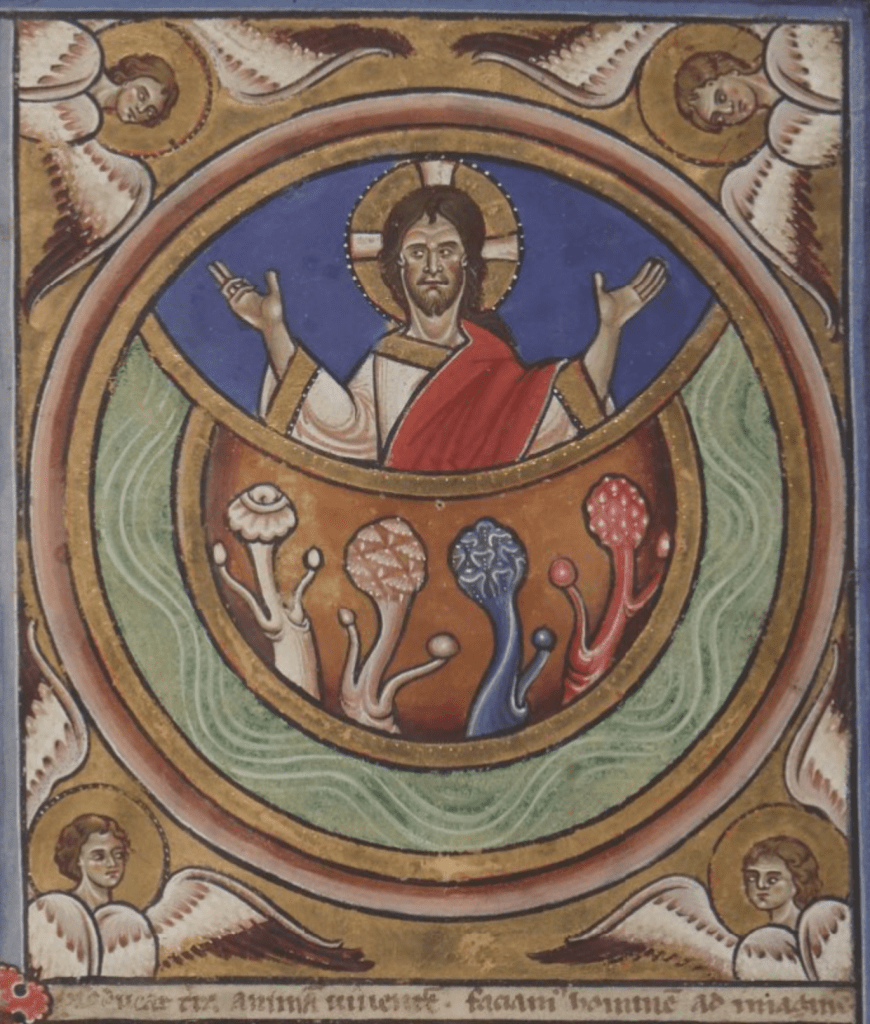
I read the above as: Panaeolina, Liberty Cap, Cubensis, Amanita — Michael Hoffman, the theorist of ego death, [8:40 p.m. December 13, 2020]
.jpg)
nyways, Def Not Cubensis, Liberty Caps, & Amanita.
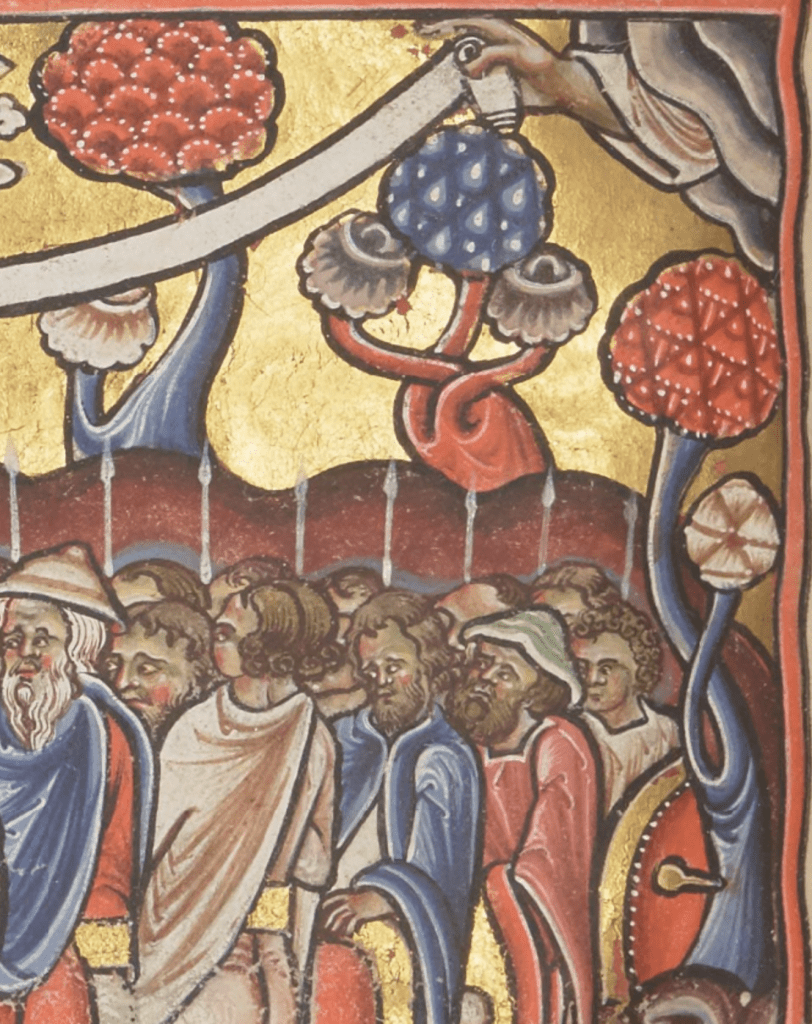
Exercise for the Reader: Identify this Object:
Some experts say it’s an Italian Pine.
Other experts have definitively identified it as a Parasol of Victory.
Which of these top experts is correct?

Folio 11 Detail: Row 2 Left: Day 4, with 4 No-Branch Mushrooms, with Grid “Branching” Caps on Left, Not on Right – gee i wonder what plant 3 points at [ans: pan of Balance Scale, 2025]
[Jan 26, 2025 Michael Hoffman]
The above, revised heading is packed with superior 2025 perspective eg grid in LEFT plants = “branching” in contrast to plant 3; RIGHT plants have no grid so not “branching” – see Day 1 items pointed out, for corrob’n, & Day 3, & Tree of Know Row 3 R.
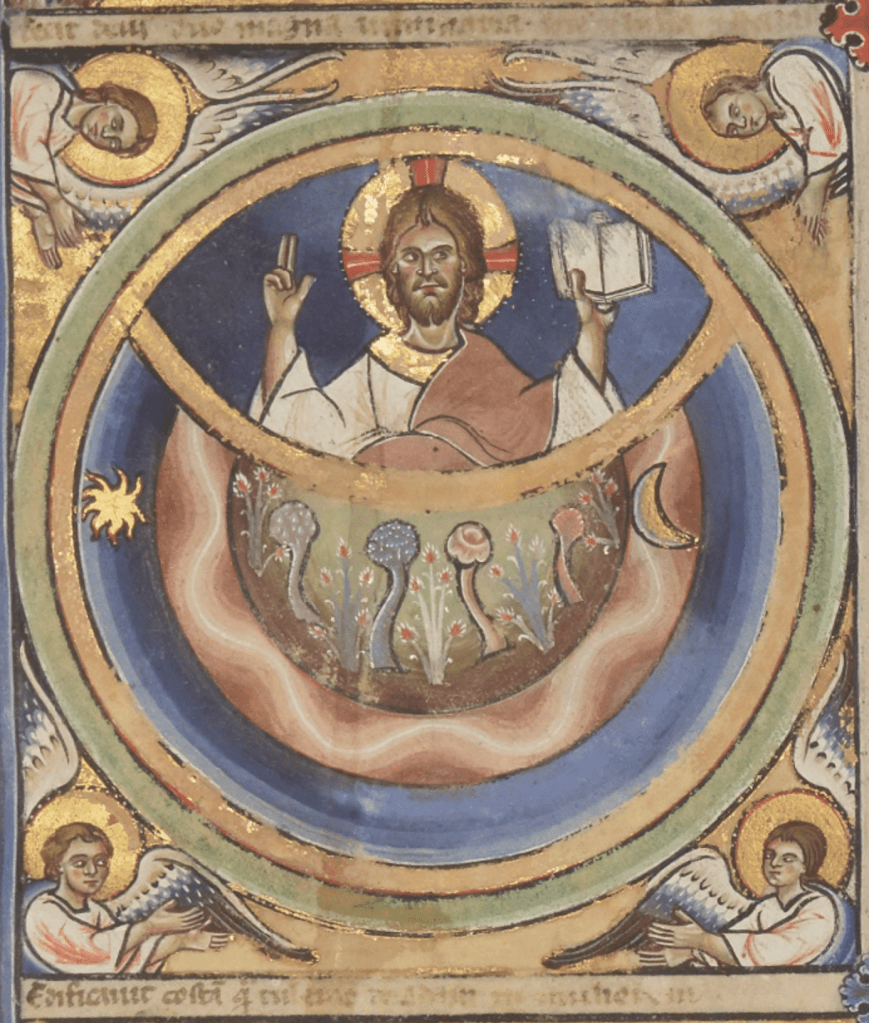
Disagreement About Identity of Four Mushrooms in Two Famous Canterbury Images
- Amanita
- Liberty Cap
- Cubensis
- ringed Panaeolus

http://www.mykoweb.com/CAF/photos/large/Panaeolina_foenisecii(fs-07).jpg
Canterbury Psalter Mushroom Inventory
https://egodeaththeory.wordpress.com/2020/12/13/canterbury-psalter-mushroom-inventory/

Photo: Michael Wood. California Fungi—Panaeolus semiovatus
http://www.mykoweb.com/CAF/species/Panaeolus_semiovatus.html
I really reject reading some of the 4 mushrooms as cannabis or opium.
I pull hard toward 4 types of muhsrooms – 3 pisl psilocybin + amanita. Clearly 3 of those are Cubensis, Liberty Cap, Amanita, then the ringed cap is unclear. Cannabis is possible, but I’ve seen photos of mushrooms that very closely match the ringed cap, so why reach for cannabis and opium?
Why not stay with mushrooms as the referent, since these are stylized mushroom shapes?
quick check:
https://www.bing.com/images/search?q=psilocybin+mushroom – didn’t find those good photos of caps with rings matching the two famous images from Cant Ps.
Umbrellas – By Following Image Search, You Can Find Any Mushroom Shape Challenged, Against the F*cking Annoying, Insultingly Retarded Bullsh*t “It Looks like Italian Pine | Parasol of Victory, not Mushroom”
Short of Stem-Branching, though Branches Under Cap Is Available
Have These Idiot Academics Never Seen Mushroom Specimens’ Tremendous Variety First-hand?
These Brain-Dead Excuses to Delete Mushrooms from Christian Art Are Insulting to Our Intelligence!
They Think We’re Morons!
They Think We’re Mental Children, Instantly Mollified with the Flimsiest of “Reasoning”!
They Expect Absolutely No Pushback, No Critical Thinking, and
Why the F Didn’t Lame-brain Allegro Put Wasson-Panofsky in His Place? BECAUSE ALLEGRO IS A POSER; in No Way Is Allegro an Entheogen Scholar; Allegro Should Be Deleted from Entheogen scholarship History
If Allegro were actually an entheogen scholar, he would have actually DEBATED Wasson; instead, Allegro carelessly threw darts past Wasson; no debate of any kind happened; Allegro never pointed out the utter garbage “argument” Panofsky put forward, but instead, deleted Plaincourault from his book.
Did Allegro Delete Plaincourault from His Book, Caving to Wasson-Panofsky’s Insultingly Retarded Argument, and to Stop Contradicting His Own Theory?
The PR-Propaganda Argument from Wasson-Panofsky Is Directly Insulting to Painters & Mycologists & the Public
Treating the Compromised “Impressive Celerity” “Top Art Historians” as if They Had Credibly Debated the Issue (I Call Major Bullsh*t on That), While Smearing Painters and Mycologists and the Public as “Unknown to Them”, “Ignorant”, & “Should Have Consulted the Experts” –
While of course Wasson in Persephone Congratulates Himself on His Brilliance for Figuring Out that the Eden Tree Is Popularly Revered Throughout History Because of Its Mushrooms, Which Wasson Is the First One to Discover, … —
But Plaincourault – Ridiculously, a Single-Mushroom Proxy for the *Big Problem* of Mushrooms Mushrooming All Throughout Christian Art – Is Italian Pine, Not Mushrooms 🔫 gahh mental spaghetti mind-f*ck illogic & self-contradiction
“Art Historians in Brinckmann’s “Little” book (Panofsky’s word) Have Proved that Mushroom Trees in Art are only Accidentally Mushroom-Shaped Due to Sloppy Inept Recopying on the part of Uncomprehending, Incompetent Artists working from Templates that [exact quote:]
Need fact-check on that claim.
Hatsis claimed that Allegro deleted Plaincourault from later printings of his book – that wouldn’t surprise me, since Plaincourault contradicts Allegro’s 19th C Philology-Fertility-Anthropology position (Allegro’s book was NOT an entheogen scholarship book/theory/argument), that after primitive Christianity, everyone forgot Jesus is a mushroom.
Hatsis’ claim is veyr interesting and relevant.
Allegro caused great harm to entheogen scholarship by not BTFO’ing Wasson-Panofsky’s bullsh*t insultingly childish argument.
Allegro Is a Traitor to ENTHEOGEN SCHOLARSHIP because He Failed to BTFO Wasson-Panofsky’s Insulting BS “Reasoning” and Instead Allegro Deleted Plaincourault from His Book – Loser! Traitor! Incoherent Thinker!
Allegro Is an Embarrassment to Critical Thinking and Defense in Entheogen Scholarship

Challenge: Find a Mushroom Tree or a Vine-Leaf Tree that Doesn’t Have a De-branched Stub
Typical of mushroom trees is, debranched stubs. Answer: half.
Finding: Half of mushrooms in Christian art have cut-of stubs.
vil, Combined Cubensis-Liberty Caps + Vine-Leaf Tree

Academics’ Mushroom Cover-up Operation Involves Calling Artists Ignorant, Unaware Dolts Who Have No Idea What They’re Painting
I doubt I have gathered enough quotes for a dedicated page, but this could be a special-focus part of the Scholarly Fail-Quotes Hall of Shame.
- Samorini article
- Panofsky’s infamous 1952 letter censored by Gordon “Ellipses” Wasson
- Search my Plaincourault article
Samorini employs this method, from 19th C Evolutionary Anthropology whig history, which assumes right from the start as a Given (ie, a foundational assumption), that everyone in history was dumb as a rock, until Wonderful Us.
The general dumbness assumption is great, because it can be worked both ways: if we grant that some early people were smart or lucky enough to know something, we can still assume that the later people forgot that comprehension, because they were dumb. Because people were stupid, we can dismiss mushroom trees.
Painters were ignorant that the tradition-based mushroom-like shapes they reproduced, originally meant mushrooms.
No, I am not a fiction writer; I couldn’t make this sh*t up; that’s literally how Samorini reasons.
Since artists who drew mushroom trees were too ignorant to know they were drawing mushrooms, this means that the mushroom trees in Christian art don’t count, given that the artists were unaware that mushroom shapes mean mushrooms.
The General Dumbness Assumption Theory of History — aka Evolutionary Anthropology — is the Idiocracy movie projected back into history, instead of forward into the future. The game is, grant like Wasson in the book SOMA that yes, there was one instance of not a mushroom tree, but rather, of the snake, that way back in pre-history, the snake “was associated with the mushroom”.
In Persephone, he changes-up his logic, to enable crowning himself: the Eden tree was revered and popular down through history, because long before anyone could remember, mushrooms (Amanita, needless to say) grew on the tree’s roots.
Then everyone forgot that, way back before the Old Testament was written — but super-brain Wasson figured it out nevertheless!
— even though no one, and no painter, throughout the entirety of Hebrew or Christian religion remembered the mushroom connection with the Eden tree. Even though they revered the Eden tree because of its connections to mushrooms. Hope this clears up Wasson’s reasoning — such as it is — for you.
What a convoluted mind-f*ck the Old Theory is. In my New Theory, mushrooms in Christian art mean mushrooms. So there is nothing for me to explain about my position, per the New Theory.
Magic Scholar-Phrases: “is/was associated with”; “is/was consubstantial with”
Diversion: the magic phrase “is/was associated with”. The make-sh*t-up school of scholarship and pseudo-explanation noises.
To be even smarter, use the word “consubstantial” — that’s Ruck-level smartness!
No One Can Logic Like Gordon “Ellipses” Wasson
Wasson might write: “In prehistory, the snake was associated with the mushroom.
So when the Plaincourault painter drew a snake, unknown to the painter, he was drawing a mushroom, by drawing the snake!
So in that remote sense, there is a grain of truth to the mycologists’ uninformed effort to associate Plaincourault with the mushroom.”
(oooh, Learned, learned!)
(I can’t make this sh*t up; ellipses-for-brains Wasson literally argued that.)
Wasson calls the Plaincourault painter who painted the Eden mushroom tree an idiot, and (via Panofsky’s 1952 letter) calls the mycologists Ramsbottom, Rolfe, and Brightman ignorant for thinking the Plaincourault Eden tree is mushrooms, and then Wasson heaps praise on himself for his brilliance of figuring out that the Eden tree means mushrooms:
To propose a novel reading of this celebrated story is a daring thing: it is exhilarating and intimidating. I am confident, ready for the storm. – Wasson, Persephone’s Quest, p. 74
Some months ago I read the Garden of Eden tale once more, after not having thought about it since childhood. I read it as one who now knew the entheogens. Right away it came over me that the Tree of Knowledge was … revered … precisely because there grows under it the mushroom … that supplies the entheogenic food … – Wasson, Persephone, p. 76
Valentina Pavlovna and I were the first to become familiar with the entheogens and their historical role in our society. My discovery of the meaning of the Adam and Eve story came as a stunning surprise. The meaning was obvious. … The tree is revered but only because it harbors the entheogen that grows at its base … When my wife and I discovered the magnitude of what was revealed to us, what were we to do? … Valentina Pavlovna and I resolved to do what we could to treat our subject worthily, devoting our lives to studying it and reporting on it. – Wasson, Persephone, p. 77
What kind of a PR propaganda mind-f*ck are you trying to pull, Gordon “Ellipses” Wasson?
If you crown yourself with laurel wreath, you must first apologize to the mycologists and the Plaincourault painter for your being an idiot.
ah man, I am DONE analyzing and unravelling other people’s knots of confusion, dissimulation, and double-talk.
I wasted enough of everyone’s time on the FARCE of Plaincourault, the Brinckmann-Panofsky-Wasson clown-show operation.
How in the HELL can you pat yourself on the back for figuring out that the Eden tree is valued because of its mushrooms, and then deny that the Plaincourault Eden tree is mushrooms?
You flat-out contradict yourself!
Maybe no one will notice this PR sleight-of-hand double-talk.
Article:
Wasson and Allegro on the Tree of Knowledge as Amanita
Section:
Wasson Claims Credit for Discovering What Plaincourault Plainly Shows
http://www.egodeath.com/WassonEdenTree.htm#_Toc135889203
I can’t stand to read my own article. Bunch of idiots.
Science, Meta-theory, Explanatory Frameworks: When Additional Data 95% of the Time Confirms the New Theory, Indicates It’s a Good Investment
I re-found the image I probably haven’t seen since 2001, from the gallery in support of Entheos issue 1.
Not sure if Entheos published both versions of the picture.
I am sure that Entheos failed to write anything at all about the Mandrake tree on the right, regardless of whether they published the pink or yellow image.
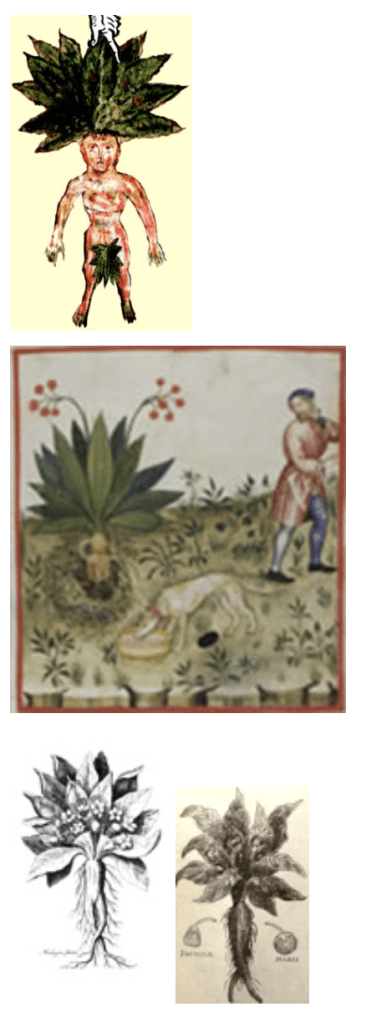
Based on the yellow image around 2004, I argued that I identified the item on the right as a Mandrake tree.
Now I (re-) found the pink image, another version of that Mandrake tree, and its Mandrake tree matches the esoteric and botanical illustrations of Mandrake.
When the more data you collect, the more experiments you run, has a strong tendency to confirm rather than disconfirm the New Theory (or theory-addition), this is definitive of Success and Confirmation, showing that people should invest in and commit to the New Theory.
The person driving the New Theory is spoiled; they get accustomed to almost always winning; almost always having new incoming data and experiment results confirm, rather than disconfirm, the New Theory.
With new incoming data — the second version of the Montecassino image with Psilsocybe Eden tree & Mandrake Tree – I have increased, rather than decreased, my confidence in identifying the right-hand tree as a construct that I contributed to the field: a Mandrake-tree:
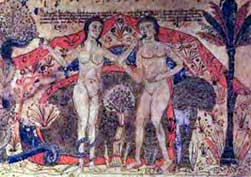
Why so cropped, in Entheos? Can’t find a less-cropped version. Who would crop an image this way? Why such terrible quality? why bother
If any entheogen scholar has mentioned Mandrake-tree, it would likely be Ruck, or else another Entheos author.
I also contributed in late 2020, the new construct to the field of entheogen scholarship: the grape-basket, intentionally mushroom-shaped:
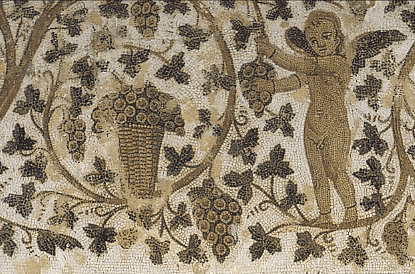
If any entheogen scholar has mentioned grape-basket, it would likely be Ruck, or else another Entheos author.
Email Draft to Thomas Hatsis
Hi Thomas,
I’m trying to gather all I can from your book Psychedelic Mystery Traditions re: mushrooms in Greek & Christian art (primarily Psilocybin-containing; & merely in support of that, Amanita).
I can’t tell yet, your position on Psilocybe in Greek art, along the lines of Robert Graves’ 1956 (best I can glean) essay Centaurs’ Food.
“You said some really untrue things in your piece.”
Such as what?
I’m looking for some sense of what you are referring to, what you have in mind.
__________________
You and I agree on several aspects or topics – I’m not up for listing out several of our points of agreement right now.
At best, the writings of Ruck & Irvin are extremely limited and superficial, regarding mushrooms in Christian art (and Ruck’s writings on mushrooms in Greek art).
I could hardly be bothered to get and read Irvin’s books on Amanita.
I’ve read Irvin’s book Astrotheology (superficial & literalist), and a book by his coauthor Rutajit, but I don’t have Irvin’s book Holy Mushroom; I was on hiatus and burnt out on his approach by then.
Cleaning Up my WordPress Pages
I want to clean up my new WordPress pages related to your work and mushrooms in Christian and Greek art, cut the word count, make concise outlines, and try to remove insults while keeping the arguments.
I’ve been improving the headings & navigation at this new website.
https://egodeaththeory.wordpress.com/2020/12/13/images-of-mushrooms-in-christian-art/
Would I write to a friend, Hatsis, with ridicule and accusation?
Maybe ridicule is due; there is plenty written that deserves ridicule; for which ridicule is appropriate.
I am accusing Wasson of arguing in bad faith and of censoring Panofsky’s (rough) citation of Brinckmann’s book, every time Wasson published Panofsky’s letter with ellipses in place of Panofsky’s rough citation of Brinckmann’s 1906 book Tree Stylizations in Medieval Paintings.
Brinckmann, Mushroom Trees, & Asymmetrical Branching
https://egodeaththeory.wordpress.com/2020/12/11/brinckmann-mushroom-trees-asymmetrical-branching/
If I were to come across Wasson, I’d ask him:
Why did you replace Panofsky’s citation of Brinckmann’s book Tree Stylizations in Medieval Paintings by ellipses every time you published Panofsky’s letter?
Are you trying to hide the images of mushrooms in Christian art?
Are you (Wasson) trying to hide the fact that Brinckmann’s book is “little” (Panofsky’s word), slim, thin, and inadequate to address the topic of mushrooms in Christian art?
Are you trying to hide the fact that there has been no actual treatment, no actual debate, no actual scholarly discussion of mushrooms in Christian art — nothing but a slim old 1906 book in German, that’s all you mushroom deniers got?!
All that these anti-mushroom propagandists have, is a cover-story, for their cover-up operation.
What is your motivation for participating in the academic cover-up operation which has a completely flimsy, grossly inadequate basis — a single short book in German in 1906, to cover the Big Problem that there are many mushroom shapes throughout Christian art.
So far, we have translated only 1 1/4 of the 5 chapters into English, and that 25% of Brinckmann’s book doesn’t even mention mushrooms.
I’m calling their bluff, the Brinckmann/ Panofsky/ Wasson (= the Pope) crowd.
“Art historians have covered mushrooms in Christian art, to prove they aren’t mushrooms.”
You are bluffing. Where have art historians critically and adequately discussed the topic of mushrooms in Christian art?
Brinckmann’s 1906 pamphlet, that’s all you’ve got? That’s it?!
Translation: Art historians have fabricated and agreed upon their cover story, to cover-up the problem of mushrooms throughout Christian art.
____________________
Thomas, why are you participating in the academics’ subterfuge, their cover-up effort?
On what basis do you justify suppressing and denying all of the many mushroom shapes in Christian art, given their variety, given that mushrooms are proved to induce religious experiencing, given that Christian art (esp. medieval) is non-realist.
Why wouldn’t medieval religious artists depict mushrooms?
What is your justification for denying that religious artists would include mushroom shapes to depict psychoactive mushrooms, given that mushrooms induce religious experiencing?
Is that all you got, the supposed lack of literal descriptions of mushrooms in Christian texts?
Do you expect people to believe your argument, if that’s all you have — that the (supposed) lack of direct, literalist mentions of mushrooms in Christian texts, is supposed to cover and explain away all of the mushroom shapes and elements throughout Christian art?
No one ought to be convinced by such a thin argument.
Are you convinced by your own, thin argument, given the many, varied specimen photographs matched to the many, varied mushroom-shaped visual elements in Christian art?
What is your justification for exclusively respecting text (literal) evidence, and for dismissing and ignoring all of the varied depictions, the Liberty Cap literal shapes in art, the Cubensis stylized and literal shapes in art, and the Amanita literal and stylized shapes in art?
On what basis do you ignore, dismiss, and as you brag about, “explain away”, 5/6 of the types of evidence for mushrooms in Christian art?
The phrase “explain away” is considered to be a form of lying; you shouldn’t be bragging about “explaining away”.
You claim that you desire for there to be mushrooms in Christian history, and yet, you are eager to dismiss all the varied evidence, on the flimsiest of reasoning, which should convince no one:
There are (supposedly) no literal descriptions of mushrooms in text, therefore, we must dismiss all of the many Cubensis, Liberty Cap, and Amanita shapes across all Christian art.
We have no choice but to dismiss and ignore mushrooms in Christian art, no matter how many, no matter how varied, no matter how literal and explicit, “because” (supposedly) there aren’t literal mentions of mushrooms in Christian texts.
How does that follow? That’s a big jump, from texts, to art.
On what basis can you defend, that art evidence counts for nothing, and only textual evidence counts — and only if that evidence in texts is literal, direct statements. On what basis do you discard 5 out of 6 types of evidence?
- Texts
- Literal mention in texts. <– worship this god exclusively
- Stylized description in texts. <– discard this data
- Description of effects in texts. <– discard this data
- Art
- Literal mention in texts. <– discard this data
- Stylized description in texts. <– discard this data
- Description of effects in texts. <– discard this data
Why is it, that you choose to make exclusively count, the one out of six types of evidential data, that is most useful to support the biased academics’ project of suppressing mushrooms in Christian art, while at the same time, you claim that you desire for there to have been mushrooms in Christian history?
Seems to Be Bad-Faith Argument
Your argument position comes across as incoherent and insincere. Are you arguing in bad faith?
https://www.bing.com/search?q=define+arguing+in+bad+faith – top hit:
A Field Guide to Bad Faith Arguments
… recognize these weak tactics …
Aaron Huertas —
https://medium.com/s/story/a-field-guide-to-bad-faith-arguments-7-terrible-arguments-in-your-mentions-ee4f194afbc9 —
“It’s easy to fall prey to bad faith arguments and waste time engaging someone on points that obscure rather than shed light …”
“The hallmark of a bad-faith argument is that it disguises the core point of a debate rather than addressing issues, beliefs, and values head-on. Bad faith arguments aren’t “real” positions; they’re proxy positions people take for rhetorical purposes. In some cases, a bad faith position can be intentional.”
(I didn’t read the article; I only want to consider that extracted definition of “arguing in bad faith.)
The Many Types of Evidence for Mushrooms in Christian Art, and the Gross Inadequacy of Simple, Quick Universal Dismissal
Literal depictions in art: 3+ types: Cubensis, Liberty Cap, & Amanita.
Stylized depictions in art, includes my category I identified, hybrid Cubensis/Liberty Cap/Amanita, of which I show multiple instances:
- In Mithras’ leg & hem which Ruck failed to see.
- In Canterbury Psalter: cubensis shape of cap, Liberty Caps within cap, red cap.
- I also identified a new, “crossover” category/concept: Amanita depictions are an analogy referring to the use of Psilocybe.
Other entheogen scholars didn’t think of these substantive analyses and identify the instances I found — and entheogen scholarship isn’t even my central field of theorizing, but is merely a supporting side-concern building-block, in support of the Egodeath theory.
That argument and the drastic, extreme conclusion you try to draw from that argument, is unjustifiable, by a large amount.
Is that grossly inadequate argument, and its extreme, sweeping conclusion, supposed to pass for “scientific historiographical method” and “sound, tried-and-true historical criteria”?
Is that supposed to pass as “critical reasoning”?
Who is that flimsy argument supposed to persuade? How can you believe your own thin, grossly inadequate argument?
Why do you act like you eagerly desire to suppress all mushrooms, such that you are so hastily satisfied with such a thin argument?
You argue: “There are no literal mentions of mushrooms in Christian texts; therefore, no matter how many mushroom shapes there are in Christian art, we should ignore and dismiss all of the many mushroom shapes in art — no matter how many, no matter how literal the depictions, as matched against specimen photographs.
“We should ignore the fact that mushrooms induce religious experiencing, while painters strive to depict religious experiencing.”
How can you justify your total, absolute, exclusive elevation of textual (literal) evidence over art evidence, no matter how many, no matter how literal, no matter how varied, the mushroom shapes throughout Christian art?
Unbelievably, you claim that you desire for there to be mushrooms in Christian history, yet by all your actions, you gleefully and eagerly suppress all mushrooms from Christian art.
You act like a good slave of hopelessly compromised academia, which has no credibility on the topic of mushrooms in Christian art.
You don’t even engage with most of the evidence for mushroom shapes in Christian art, yet you claim that you wish there were mushrooms in Christian history.
Your claim is evidently insincere and you are not arguing in good faith (you are advocating a position which you pretend to believe in but don’t believe in); or, you have yet to look at the evidence (which I’m sure is the case) and therefore you haven’t adequately done Science.
You should desire to look at the evidence, not just a small handful of proxy images, but the full body of evidence instances.
You should not be discouraging people from finding and uploading and tagging, many more instances of mushroom shapes in Christian art.
You should be encouraging people to increase the contended evidence-base.
That would be proper scientific method and argumentation.
You’re acting like your reasoning is corrupted by a conflict of interest, like you are arguing for a position you don’t really believe in, letting yourself be strongly influenced in order to ingratiate yourself with academia, spewing the deemed-correct, approved party-line – “with impressive celerity” – to prop-up their cover-up operation.
You look like you are arguing in bad faith, advancing a position you cannot possibly believe in.
I invite you to look at the evidence and actually engage with many more of the photographs of specimens and with the images in (broadly) Christian art.
https://egodeaththeory.wordpress.com/nav/#gallery
I invite you to consider Psilocybe in Greek religion more. I’m against separation of Greek & Christian religion, for entheogen scholarship.
Wasson’s Extreme Conflict of Interest
Gordon “Ellipses” Wasson had private meetings with the Pope. Wasson was head of PR Propaganda for a bank.
Here is the text which Wasson replaced by ellipses, when twice re-publishing the 1952 letter from Panofsky:
“If you are interested, I recommend a little book by A. E. Brinckmann, Die Baumdarstellung im Mittelalter (or something like it), where the process is described in detail. Just to show what I mean, I enclose two specimens: a miniature of ca. 990 which shows the inception of the process, viz., the gradual hardening of the pine into a mushroom-like shape, and a glass painting of the thirteenth century, that is to say about a century later than your fresco, which shows an even more emphatic schematization of the mushroom-like crown.”
– Transcribed from the photograph of Panofsky’s letter in Figure 2 (in Brown’s article): Letter of Erwin Panofsky to R. Gordon Wasson, May 2, 1952. Wasson Archives, Harvard University Herbarium, Cambridge, Mass. Page 145.
Article:
Entheogens in Christian art: Wasson, Allegro, and the Psychedelic Gospels
https://akjournals.com/view/journals/2054/3/2/article-p142.xml
Find: Letter of Erwin Panofsky to R. Gordon Wasson, May 2, 1952
Brinckmann, Mushroom Trees, & Asymmetrical Branching
https://egodeaththeory.wordpress.com/2020/12/11/brinckmann-mushroom-trees-asymmetrical-branching/#Citation-of-Brinckmanns-Book
Title of book:
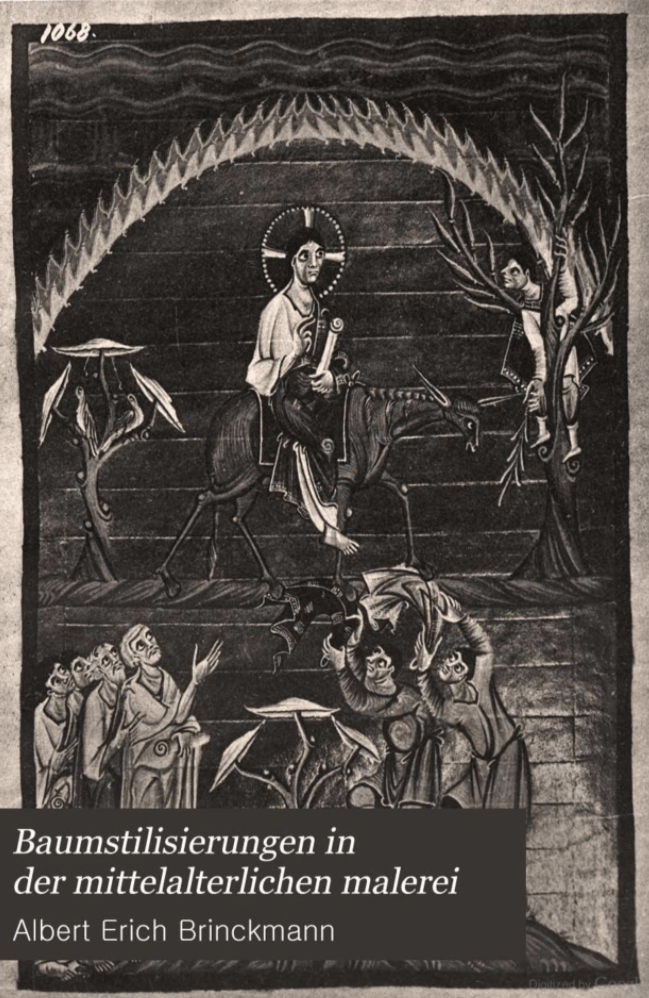
Baumstilisierungen in der mittelalterlichen Malerei
(Tree Stylizations in Medieval Paintings)
I suspect that Wasson was intent on suppressing mushrooms from Christian art as part of his relationship with the Pope.
Extreme conflict of interest makes Wasson completely suspect and completely untrustworthy regarding the topic of mushrooms in Christian art.
Wasson is known to have told Graves that Wasson gave Graves no credit and didn’t cover Graves’ topic of mushrooms in Greek religion, in Wasson’s book, because Wasson didn’t want to fight a war on two fronts at the same time; in the same book.
Gordon “…” Wasson wanted SOMA to only propose entheogens in Vedic religion, and wanted to steer around or minimize the added controversies of:
- Mushrooms in Greek religion (per Robert Graves’ interest & proposal of 1956-1960).
- Mushrooms in Old Testament & in Christian history.
Gordon “Ellipses” Wasson was extremely compromised and completely untrustworthy, with an extreme conflict of interest, regarding not merely the proxy case of Plaincourault, but on the entire subject of entheogens in the Bible and in Christian history, including the subject of mushrooms in Christian art.
Wasson’s writing on these topics is trash; a negative contribution to the field: poorly reasoned, poorly evidenced, poorly articulated.
Wasson’s few writings on mushrooms in Christian history aren’t scholarship, but the opposite: they’re a cover-up operation.
On the topic of mushrooms in Christian art, Wasson is all PR propaganda; no substance.
Conflict of interest causes people to write nonsense and to obfuscate their positions.
I am stating suspicion of conflict of interest: I distrust their motivations.
People have bad motivations for wanting to deny the many mushrooms in (broadly) Christian art.
Academia has a problem: there are many mushrooms throughout Christian art.
Academics have a bad-faith motivation: they want to make up the flimsiest of excuses and arguments to dismiss and as you bragged about in your book, “explain away” all mushrooms.
What is your motivation for desiring to “explain away” all mushrooms from Christian art?
The many mushrooms in (broadly) Christian art vary in type and shape.
It seems like you have a bad-faith motivation to explain-away all mushrooms as “Parasols of Victory”.
Such a flimsy, grossly inadequate, blanket excuse to suppress and dismiss all mushrooms in Christian art seems like bad-faith motivation on your part.
I cannot take your argument seriously; you’re play-acting the part of the contrarian.
Who are you trying to impress — the hopelessly biased and compromised academics, who are committed skeptics?
What conflict of interest is making you put forth such an untenable blanket argument?
Your massively sweeping position deserves maybe not trash talk, maybe not “ridicule”… but your position is objectively ridiculous, it is so massively sweeping and a broad generalization.
What argument can you possibly have, to dismiss all of the various mushroom shapes throughout Christian art?
Your position is simply untenable; your argument cannot possibly cover-up and account for all of the varied mushroom shapes in Christian art.
Inveterate mushroom-deniers, committed skeptics, have a problem, and your 1-dimensional cover-story cannot possibly cover-over the far-too-many mushroom shapes sprouting all over the place.
You look foolish — is that your brand? Retract. Save yourself.
You provide such a thin, flimsy excuse to deny the magnitude of the Big Problem that the academic art historians have: there are just too many mushrooms of all different types — don’t look at how thin and inadequate Brinckmann’s 1906 book is, to cover-over this magnitude of evidence!
You claim that you desire mushrooms in Christian art, but I think you are dishonest here, misrepresenting your own views.
You are letting academics’ intense bias against mushrooms distort and confuse what you believe. You act conflicted.
It’s manifestly clear, anyone can see that you plainly desire to eagerly deny any and all mushrooms from Christian art, whether Amanita, Cubensis, Liberty Caps; whether literal; stylized; or depicting effects, and readily accept the first cover-up story anyone can think of.
Which cover-story you glom onto and put-forth, doesn’t matter at all; just toe the party line, post haste, “with impressive celerity” (Wasson’s term).
It looks as if you are lying, when you claim that you desire for there to be mushrooms in Christian art. Does anyone believe you?
If you actually desire for there to be mushrooms in Christian art, why then do you use the flimsiest of arguments, to massively, sweepingly dismiss all the various, varied types of mushroom depictions, with seemingly a single, narrow, universal cover-story, “they are all parasols of victory”?
There are so many instances for which the “parasol of victory” is a laughable, ridiculous, absurd proposal.
This whole type of move, of putting forth a single, specific, narrow, universal explanation in service of explaining-away countless varied mushroom shapes throughout a large body of Christian art, has become a laughingstock!
My new website literally makes a running joke out of your grossly inadequate attempt, comically unbelievable, “Parasols of Victory”.
Here we see Tom Hatsis waving his magic Parasol of Victory in a vain attempt to banish all the mushrooms from Christian art:
“Be gone, mushrooms, I wave my magic Parasol of Victory at you!
By the power of Yaldabaoth, I command you: Be gone, mushrooms!“
A small percentage of mushroom shapes in Christian art are shaped like a Parasol of Victory.
Those instances might also be choosing and serving to depict mushrooms, by means of the “Parasol of Victory” shape.
You don’t explain why the parasol looks like a mushroom; are entheogenic cultures oblivious to the fact that a Parasol of Victory looks like a mushroom?
You don’t explain all the other mushroom shapes that don’t choose to employ the Parasol of Victory shape.
If you actually used Science, you’d adequately engage with the contended evidence-base, the datum, the full data-base of the explanandum.
https://egodeaththeory.wordpress.com/nav/#mushrooms-in-art
Those images are far from complete and you should encourage adding more – that would be the scientific thing to do.
The data so far is highly promising, which indicates that we ought to continue gathering more such instances for critical evaluation.
I can report that it is easy to find more instances, if people would merely open their eyes and try, and upload and crop and tag such instances.
The old “spot the mushroom” game is shallow, but at least it’s easy.
But people like Wasson discourage looking for such data; he censored, multiple times, Panofsky’s citation of Brinckmann’s book. Don’t look behind that curtain!
Your flimsy cover-story — all mushrooms in Christian art are parasols of victory — is in conflict with the academics’ flimsy universal cover-story: all mushrooms in Christian art are Italian Pines.
Which is it — Parasols of Victory, or Italian Pines?
Please explain which of the mushroom shapes are Parasols of Victory, and which are Italian Pines, and how do we tell the difference — such as the mushroom shapes which look neither like a Parasol of Victory nor an Italian Pine.
The hopelessly biased and compromised academics need to come up with some additional flimsy cover-stories to explain away the various mushroom shapes.
That whole mode of argumentation is comical; comically inadequate. This mode of argument you participate in is a joke; it’s comical.
This absurdly sweeping type of explaining-away is so inadequate and the opposite of convincing.
The type of argumentation you are depending on, is as convincing as a “little” (Panofsky’s word) 1906 book by a single author, which, 1/4 having been translated from German to English, doesn’t even have the word ‘mushroom’ in it. That’s all you got?
That’s the only objection you can come up with, against the many mushroom shapes in Christian art, and yet you claim that you desire for there to be mushrooms in Christian history? That claim is impossible to believe.
You act like you desire to suppress and deny, by being satisfied with the thinnest, flimsiest of excuses, all mushrooms from Christian art.
Retract. Save your credibility.
Show that you can contribute something positive and constructive and intelligent to the field of mushrooms in Greek & Christian art, not just toe the academics’ intensely biased party line.
__________________
Two Versions of an Image of a Mandrake Tree
Since you are advocating identifying Mandrake in (broadly) Christian history: I found a second version of a Mandrake-tree image — a manual recopying within a Montecassino manuscript.
Inline image, yellow-toned, Psilocybe tree on left, Mandrake tree on right, grape-baskets on ground intentionally arranged into a mushroom shape:

From Entheos journal issue 1, from the same roll I think:
Image gallery for the article:
Conjuring Eden: Art and the Entheogenic Vision of Paradise
Carl Ruck, Blaise Staples, Mark Hoffman
Entheos: Vol. 1 Issue 1, Summer 2001.
https://entheomedia.net/eden1.htm
Inline image: mandrake tree on right, psilocybe tree on left:
Why so cropped, in Entheos? Can’t find a less-cropped version. Who would crop an image this way? Why such terrible quality? why bother
Grape-Basket
Intentionally mushroom-shaped, arranged, grape-basket, one of four such images, from the Dionysus Triumph mosaic.
The mosaic contains 5 explicit mushrooms in garment hems (one explicit mushroom on/above each of the four tigers drawing Dionysus’ chariot), and an Amanita leopard-watering fountain (positively identified by my own specimen-photographs), thus establishing the mushroom context for the mosaic):
In one version of the Adam & Eve image, there’s a mushroom-basket between them; in the other version, there’s a mushroom tree between them — to establish the entheogen & mushroom context to help identify the two items on the ground.
Positively identifying the Amanita leopard-watering fountain in that mosaic, based on 5 evidential points:
Article:
Defining “Compelling Evidence” & “Criteria of Proof” for Mushrooms in Christian Art
Subsection:
Identifying the Leopard-watering Bowl as Amanita
https://egodeaththeory.wordpress.com/defining-compelling-evidence-criteria-of-proof-for-mushrooms-in-christian-art/#Identifying-the-Leopard-watering-Bowl-as-Amanita
Also shows the 5 explicit literal mushroom shapes in hems.
I provide that evidence to corroborate & justify reading the grape-baskets as deliberately arranged to be mushroom-shaped.
Extent to which I’ve read your work
Psychedelic Mystery Traditions: Spirit Plants, Magical Practices, and Ecstatic States
A comprehensive look at the long tradition of psychedelic magic and religion in Western Civilization
Thomas Hatsis, 2018
http://amzn.com/1620558009
I only have your book Psychedelic Mystery Traditions in ebook format, so I don’t feel like I have that book. I have not read the whole book; I have only searched and spot-read it, for Psilocybe in Greek & Christian art & religion.
I might get Psychedelic Mystery Traditions in print format, since ebooks don’t give me enough access.
It feels like I “look at” an ebook but I can actually *read* (mark up) a print book. I would not say I’ve “read” Psychedelic Mystery Traditions.
I’m kind of burnt out on reading books; I’m reluctant to allocate time for reading books like in the past.
Irvin and Ruck books are boring (unsatisfying, inadequate), superficial, and literalist.
Also blind, due to mono-plant focus, reaching for long-shot identification: Ruck writes that red and white on Mithras’ cape indicates [the physical form of] Amanita.
Meanwhile Ruck fails to see a blue-stem Psilocybe, with red Liberty Cap cap shape, in Mithras’ leg and hem. (An instance of combined visual attributes of Cubensis, Liberty Cap, & Amanita.)
Benny Shanon’s book is far more interesting, with his Cognitive Phenomenology approach & attunement.
That’s the core or foundation of my approach to entheogen scholarship, not the boring, shallow “spot-the-mushroom” game from 20 years ago.
Ruck’s summary book has ‘Consciousness’ in the title, yet the book says nothing whatsoever about consciousness, or things that are observed and experienced in the altered state. False advertising.
I’ve “looked at” your online articles multiple times, but I haven’t printed them out and read every line.
I have not read, in any format, your first book:
The Witches’ Ointment: The Secret History of Psychedelic Magic
Thomas Hatsis, 2015
http://amzn.com/1620554739
I’ve watched a few of your videos.
Cheers
— Michael Hoffman
Pseudoscience Kit
https://www.theskinny.co.uk/comedy/opinion/esoteric-spiritual-christmas-gifts-from-mystic-mark

“My First Pseudoscience Kit (£149.99)
“Getting a child’s soft, pink brain interested in pseudoscience can be hard work, but this kit makes for an exciting and logic-defying introduction into the world of alchemy, astrology and invisible crystal energy.
“Spend Boxing Day building a “free energy” car battery using household magnets, salt crystals and a single car battery.
“Watch with pride as your kids learn to collect data on the population of faeries in the garden with the aid of powerful hallucinogens.
You can even help them build a fully working transdimensional star gate in the garage using their imagination!
“The kit also teaches children to bodge data to support preconceived conclusions and circumvent their own rational objections to outlandish ideas. Skills essential to any budding young pseudoscientist.”
“Disagreement with” the Egodeath theory Usually Means Misunderstanding and Misrepresenting
I’m going to have to repeat this aphorism; this idea bears repeating periodically.
We saw this truth in the Peak Bizarre Episode 16 where someone reasoned himself into the conclusion “Therefore, the Egodeath theory neglects to consider the idea of timeless pre-existence.”
No One Disagrees with the Egodeath Theory
No one disagrees with the Egodeath theory. Either you understand the Egodeath theory and agree with it; or, you misunderstand the Egodeath theory, and you disagree with the malformed version of the Egodeath theory that you have created.
It is impossible to disagree with the Egodeath theory.
What passes for “disagreement with the Egodeath theory”, is actually, misunderstanding of the Egodeath theory.
The Egodeath theory vs. Mundane Conduct of Daily Life
I’ve come around all the way, looped all the way around now, from April 1987, when my ambition was to write a technical spiritually informed self-help book on how to control the mind to not be in cross-time self-conflict (in the OSC, during mundane daily conduct of life).
Now, people are asking for me to cover the topic of applying the Egodeath theory to daily conduct of life, and I’m unwilling.
I specialize in the peak moment of mental-model transformation.
“Justly”, gets into issues of social structuring, which is peripheral. It is difficult covering what I cover, in the inner core and outer core.
The outer core or the inner periphery (in a 4-layer model), that I’m focused on lately, is not how to live better, or how to have cross-time self-control integrity in mundane daily life, but rather, the battle against the academics’ attempt to suppress mushrooms from Christian history.
My initial motivation in 1985-1987 was to gain coherent cross-time self-control during mundane life. That was the only thing wrong with my life. This was after immersion, through my father, in spiritual self-help.
The only thing that the mundane state lacked, was non-self-conflicted cross-time self-control.
In Transcendent Knowledge Podcast, episode 26, at 46:00, Max discusses whether mystics are a special class during the OSC.
Max mentions that such professional certified mystics may be differently “affected by psychedelics” (an ambiguous phrase – does he mean in the ASC, or OSC?)
https://egodeaththeory.wordpress.com/2020/12/06/tk-podcasts-commentary/
Max introduces the concept that for professional mystics, the relation between OSC vs. ASC, might be different than for normal people. I’d need Max to elaborate more, and listen more to episode 26.
https://egodeaththeory.wordpress.com/2020/12/21/odd-view-egodeath-theory-excludes-mystics/
Correlation Between Strength of Academic Affiliation and % Suppression of Mushrooms from Christian Art – Why Samorini Uses a Flimsy Excuse to Suppress Only 50% of Mushrooms from Christian Art, Instead of 100% Like Academic-Affiliated Scholar-Propagandists
Samorini article:
Typically, academics are firmly anti-mushroom biased activists, who fabricate the flimsiest of reasons, to dismiss ALL mushrooms from Christian art. ALL mushrooms are Parasols of Victory; ALL mushrooms in Christian art are Italian pines.
Why does Samorini only strive to fabricate a flimsy reason to suppress 50% of mushrooms, instead of the usual 100%?
[1:30 p.m. December 29, 2020] I got it:
Because Samorini is not literally an academic and is not striving to ingratiate himself with academia like Hatsis is, Samorini doesn’t try to use the flimsiest of excuses to suppress 100% of mushrooms in Christian art, but only to suppress 50% of mushrooms.
“Mushroom Trees” in Christian Art (Samorini)
Subsection:
How the “Evolutionary Anthropology” Approach Is Utilized to Suppress Mushrooms in Christian Art by 50-100% (mh)
https://egodeaththeory.wordpress.com/mushroom-trees-in-christian-art-samorini/#Evolutionary-Anthropology-Reduces-Mushroom-Count
Ruck is an academic who proposes mushrooms in Greek & Christian art.
New Hampshire Mushroom Religious Freedom Case
https://stopthedrugwar.org/chronicle/2020/dec/24/first_time_cdc_recommends
“New Hampshire Supreme [Court] Rules for Religious Freedom to Use Psychedelic Mushrooms.
The state Supreme Court on Tuesday overturned the conviction of a New Hampshire man for possession of psilocybin mushrooms after he argued that his arrest conflicted with the Native American-based religion he practices.
Jeremy D. Mack was a card-carrying member of the Oratory of Mystical Sacraments branch of the Oklevueha Native American Church.
Mack was a minister in the church.
“We have long recognized that in Part I, Article 5 [of the state constitution], there is a broad, a general, a universal statement and declaration of the ‘natural and unalienable right’ of ‘every individual,’ of every human being, in the state, to make such religious profession, to entertain such religious sentiments, or to belong to such religious persuasion as he chooses, and to worship God privately and publicly in the manner and season most agreeable to the dictates of his own conscience and reason,’” wrote Supreme Court Justice James Bassett.”
Source Article, longer:
https://www.unionleader.com/news/courts/nh-supreme-court-rules-in-favor-of-religious-freedom-to-use-psychedelic-mushrooms/article_dae38c9f-1080-5dab-b8ec-36f7e3c032bc.html
Heading
Article in Issue 1 (Summer 2001):
Conjuring Eden: Art and the Entheogenic Vision of Paradise
Hoffman, Ruck & Staples
Online gallery of ancillary illustrations
38 pages, 33 illustrations, 47 ancillary online illustrations cued to text.
https://entheomedia.net/eden1.htm
This image provides some kind of corrob for grape baskets: there’s a mushroom tree shape bwteen even and Eve and Adam here, in place of a grape basket object in the other image. Clearly one image is a copy of the other.
Exultet roll, Monte Cassino monastery, dated 1075.
[10:32 p.m. December 28, 2020] – I identify the right as a mandrake-tree — Michael Hoffman – compare other Montecass image I’ve covered eg grape baskets.
https://entheomedia.net/Edenpics/6cassino.jpg
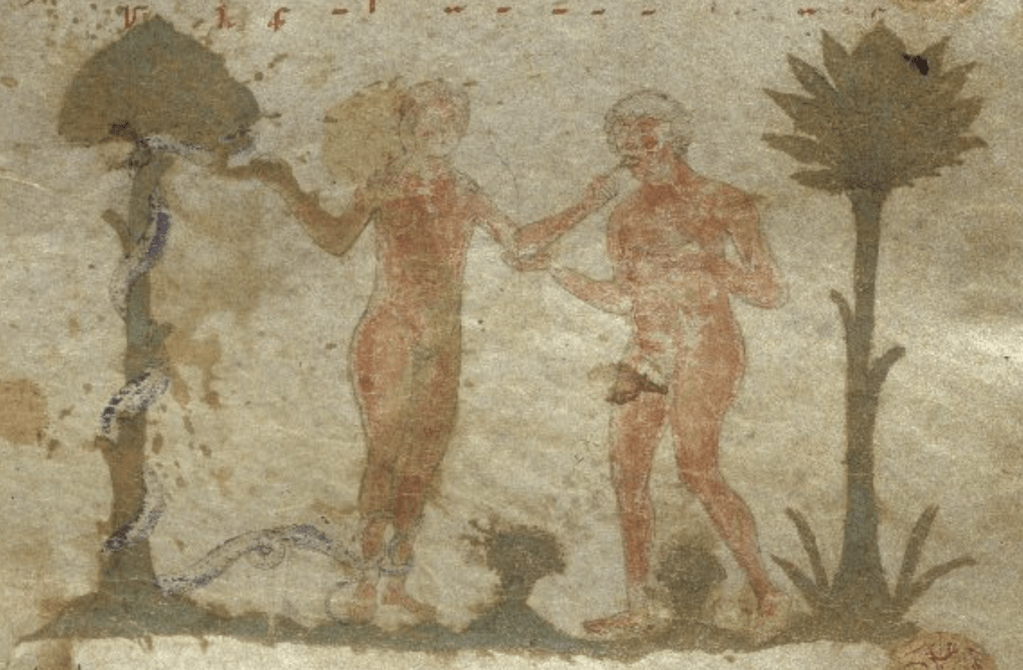
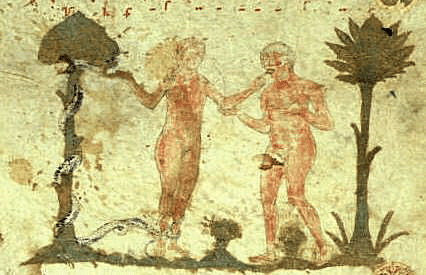
Italy [Abbey of Montecassino]; circa 1072 – British Library

https://www.pinterest.com/pin/233342824421631425/
Snake wrapped around mushroom tree and Eve’s legs.

Snake wrapped around mushroom tree and suckling earth.
https://i.pinimg.com/736x/43/18/f4/4318f4295f7b1dbf7100a896e249b47e–mother-earth-a-group.jpg
Navigation Design Work at WordPress Site
Standardizing Nav in Each Page
- In all pages, I added Top-of-page Site Map link that goes to a subsection link group within the Site Map page. This leverages the Site Map 100x more than before, and stops spaghetti linking; excellent better than a See Also list for every page.
- Every page now has the beginning of a Table of Contents.
- Need to add headings within every page — this approach works very well to add structure & add nav; no more wondering what’s in a page. I decided that putting an empty tbd table of contents quickly in all pages (breadth-first sweep), rather than get hung up on making each page proper as I went along (would never finish). Cross-site nav, is more urgent than in-page nav to anchors. Stop-gap works well, of adding a few non-linked section headings in TOC eg STOP GAP SWEEP NEXT: EVERY NORMAL PAGE NEEDS TO REPLACE TBD TOC ITEM BY TWO NON-LINKED HEADINGS; BREADTH-FIRST SWEEP TO DO ONLY THAT. SO YOU WILL NEVER SEE TBD IN TOC; WILL ALWAYS SEE AT LEAST TWO, NONLINKED ITEMS/SUBHEADS IN TOC. do not go deep; go breadth. Going deep is a fail — a page w/ 20 photos requires 20 headings; takes hours. Would never finish.
- Add 2 subheads only, not 20.
- maybe don’t even link them; go fast.
- Pri 1:
- Pages for Hatsis
- Gallery pages for Brown
- Add 2 subheads only, not 20.
Brinckmann Man in Tree
[7:35 p.m. December 28, 2020] – representing a realization 24 hours ago:
tax collector in tree listening to Jesus has shades of {king steering in tree} — also, what it the mushroom-gavel in the popular Canterbury image? A scroll??
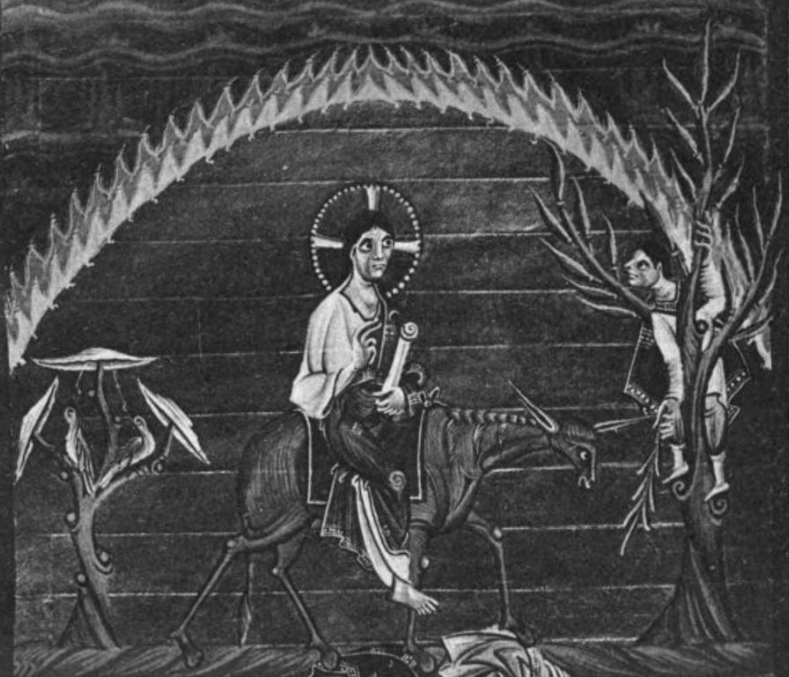
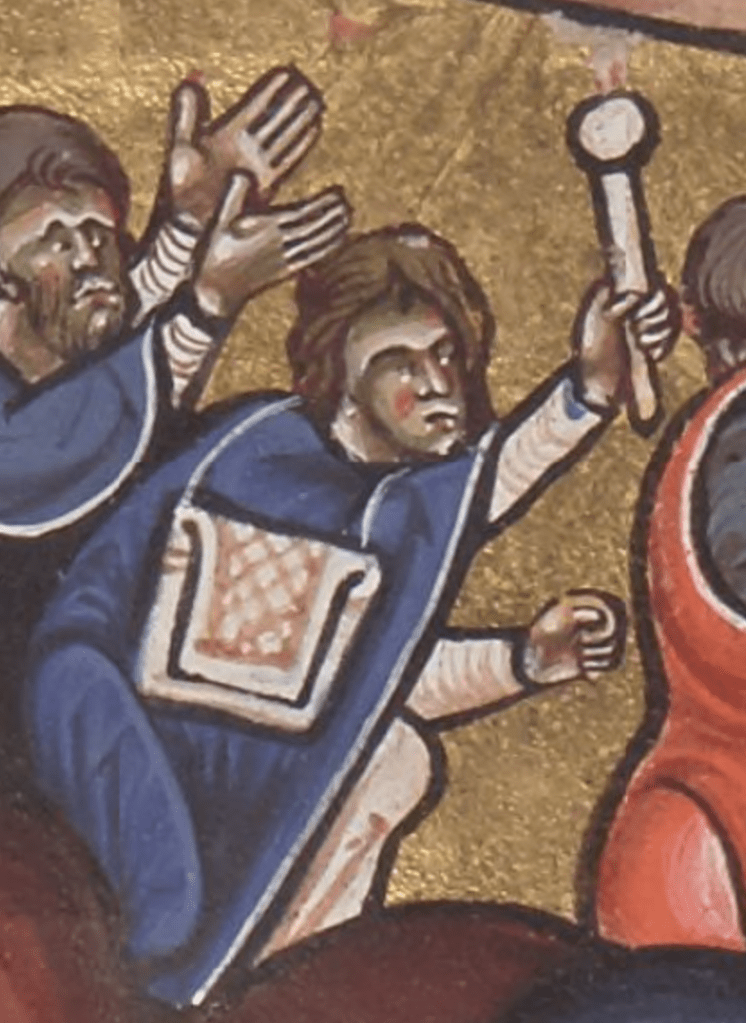
todo: add the below pic from Brinckmann cover, to WordPress page that has 3 so far such images:
Alchemy Woodcuts, Western Esotericism Mytheme Images
subsection:
{king steering in tree}
https://egodeaththeory.wordpress.com/2020/12/11/alchemy-woodcuts-western-esotericism-mytheme-images/#%F0%9D%95%B6%F0%9D%96%8E%F0%9D%96%93%F0%9D%96%8C-%F0%9D%95%BE%F0%9D%96%99%F0%9D%96%8A%F0%9D%96%8A%F0%9D%96%97%F0%9D%96%8E%F0%9D%96%93%F0%9D%96%8C-%F0%9D%96%8E%F0%9D%96%93-%F0%9D%95%BF%F0%9D%96%97%F0%9D%96%8A%F0%9D%96%8A
Brinckmann, Mushroom Trees, & Asymmetrical Branching
https://egodeaththeory.wordpress.com/2020/12/11/brinckmann-mushroom-trees-asymmetrical-branching/
includes all the plates, my commentary, and partial translation to English
Max Freakout & Cyberdisciple Accurately Represent My Ideas, with Subtlety
Often, in a Podcast, Max Freakout or Cyberdisciple say something a bit off, and then they reliably correct the statement so that it is then spot-on.
It’s almost impossible to construct a list of disagreements or misrepresentations.
Not a “Rumor” that Freke & Gandy Were Censored
Cyberdisciple called it a “rumor” about Freke & Gandy being censored re: entheogens; I corrected him & he corrected that. Max/Cyb ended up accurately specifying that the book The Jesus Mysteries contains a remnant of the censored entheogen coverage. That remnant is what led me to ask Freke & Gandy about censorship of their entheogen coverage (in an underground coffeehouse at a table with the three of us). Later, I found Freke’s pro-entheogen pages in another of his books.
The Egodeath Theory Explains All Minds
The Egodeath Theory Explains All Minds; ‘All’ Means All; ‘Everyone’ Means Everyone, as Cyberdisciple Said
By Definition, the Word ‘Everyone’ Means Not Excluding Anyone; Specifically, Not Excluding Mystics.
‘Not Excluding’ Means Not Excluding.
In a recent podcast with Kafei, Max Freakout, and Cyberdisciple, some people got the impression from Max’s hyperbole that the Egodeath theory doesn’t apply to mystics, that the Egodeath theory fails to explain how the mind of a mystic works and transforms in the loosecog state.
The communication context: Max was straining, with some hyperbole, to emphasize a point in order to break Kafei away from focus on special people, professional mystics.
There’s no reason at all for me to not stake my claim to understand all minds, re: transformation from possibilism to eternalism in loosecog.
It is not possible for anyone to be more extreme than me; I occupy & stake my claim at the most extreme possible position. If there were a position more extreme, I’d be claiming that position.
As Cyberdisciple said, the Egodeath theory applies to everyone.
How Academics Use “Evolutionary Anthropology” to Dismiss Mushroom Trees
Pretty big realization, figuring out the Bad Strategy that academics use to get rid of 50%-90% of mushrooms from Christian art:
Page:
“Mushroom Trees” in Christian Art (Samorini)
Section:
How the “Evolutionary Anthropology” Approach Is Utilized to Covertly Reduce the Number of Mushrooms in Christian Art (M.H.)
https://egodeaththeory.wordpress.com/mushroom-trees-in-christian-art-samorini/#Evolutionary-Anthropology-Reduces-Mushroom-Count
Need Hatsis’ Book Psychedelic Mystery Traditions in Print Form, or Slave Away on E-book More
4 Highlighter Colors in Kindle Ebook
eg
- Yellow = Psilocybe in Hellenistic
- Pink = mushrooms in Christendom
you can then nav to each highlight from the Notebook pane.
Note that Snakes Are Carved in Rock; Don’t Fail to Perceive the Medium of Rock, a Major Top-10 Mytheme
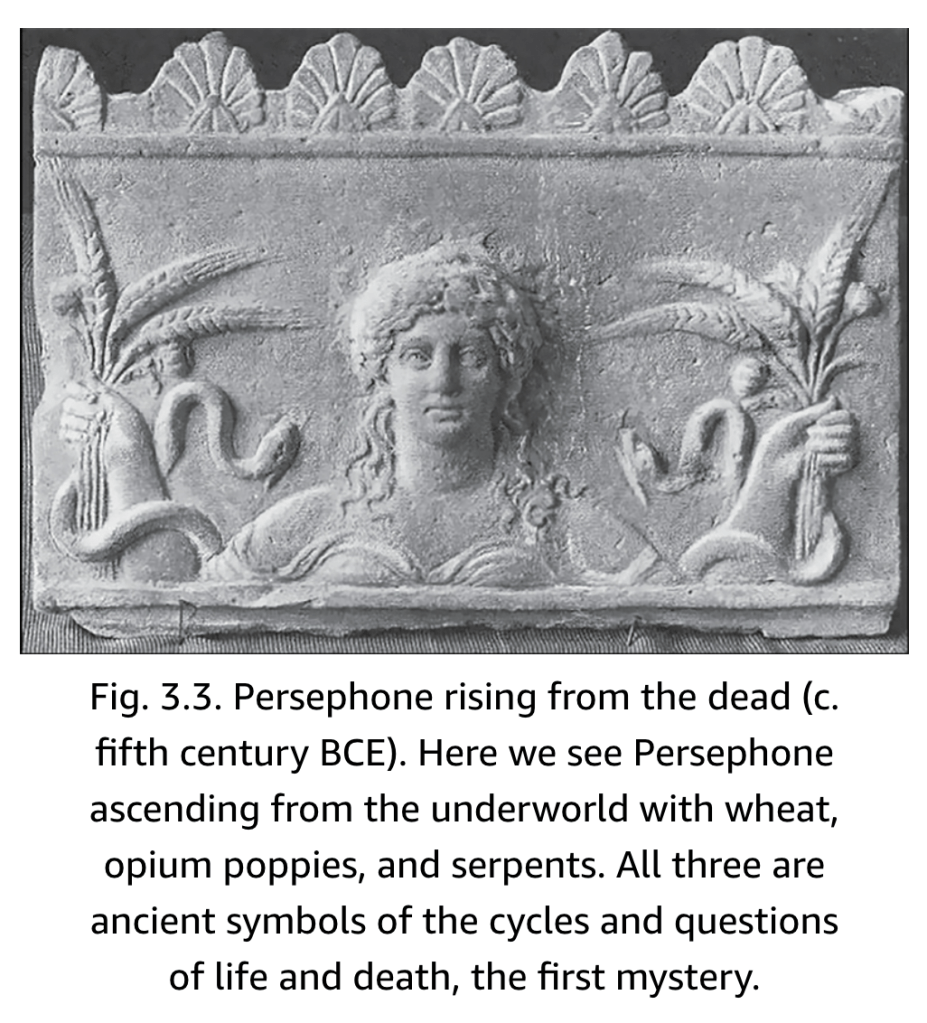
What everyone in the world misses, except me, is that the snakes are CARVED IN ROCK. People fail to perceive the MEDIUM ITSELF is a major mytheme. From Hatsis’ book Psychedelic Mystery Traditions, page 74:
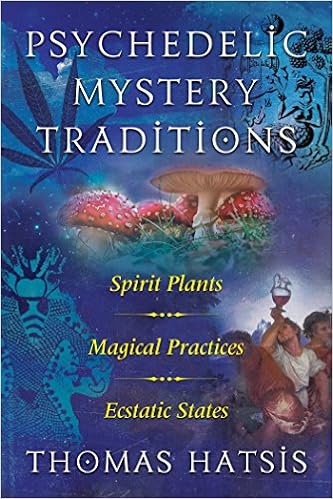
List of what the front cover covers vs. covers-over: …
Does Hatsis hate the front cover art?
What is not on the front cover:
- Psilocybe in mystery-religion initiation & mixed-wine banqueting & esoteric Christianity.
Having given Hatsis double the money, I can do double the constructive critique.
todo: Extract/identify/glean, WHAT IS HATSIS’ POSITION (MIN MOD MAX) RE: Psilocybe in mystery-religion initiation & mixed-wine banqueting
- The minimal theory: __
- The moderate theory: __
- The maximal theory: __
TODO: Reduce one of my Hatsis pages (the URL I recently sent him); cut the wordcount, clarify / simplify the wording; tighten the outline of what to change in Hatsis’ forthcoming book “The Sacred Mushroom Conspiracy”.
The URL I probably sent him:
todo ~~: __
https://egodeaththeory.wordpress.com/2020/12/16/book-review-the-sacred-mushroom-conspiracy-hatsis/
ebook format sucks so bad, I’m not even sure whether I’m interested in the rest of his book other than 2 Greek pages covering-over Psilocybe in Psilocybe in mystery-religion initiation & mixed-wine banqueting , and 2 pages covering-over Psilocybe in Christian history.
Even if the only topic I care about is Psilocybe in mystery-religion initiation & mixed-wine banqueting & esoteric Christianity, I’m trying to find Hatsis’ mental model AROUND that, surrounding that, to triangulate and better understand his poorly articulated position on that particular topic, which he doesn’t focus on and he doesn’t tell me his position on the questions I am posing/ investigating.
I’m trying to state Hatsis’ position on Psilocybe in mystery-religion initiation & mixed-wine banqueting — he might not state his position there, and he presents mistakes instead, so I have to BROADEN my view looking searching in his book — it WON’T WORK, naively saying “well just look up his Index, and Find”. Won’t work.
His coverage is more scattered/ roundaboutn / peripheral.
IDEALLY he’d havE a chapter,
“MY POSITION ON Psilocybe in mystery-religion initiation & mixed-wine banqueting & esoteric Christianity”
I tried that, extracting his outline, inmy orig page below. It’s not working well — I can try harder.
Workaround: continue my original outline page about his book, filling-in commentary on each relevant section of his book.
Psychedelic Mystery Traditions (Hatsis)
Page created on All Halloweds’ Eve
https://egodeaththeory.wordpress.com/2020/10/31/psychedelic-mystery-traditions-hatsis/
Every time I get an ebook, if it’s good or relevant I also get the strongest feeling from the ebook, THIS FORMAT SUCKS! It’s good for search but not for … as a scholar I need to manage my coverage of a book, have a mental model of the structure of teh book. Ebooks prevent this.
If I get a book, I should always get it in both print & ebook format.
Debranched Caduceus Mushroom Tree
[10:53 a.m. December 26, 2020] theory hypothesis formation, first statement of a long-brewing for some time idea, caduceus Y-shaped mushroom tree, nonbranching / debranched cauduceus mushroom tree.
Stem splits into 2, has cut off branches.
https://egodeaththeory.wordpress.com/mushroom-trees-in-christian-art/
todo: add “samorini” to URL, I meant to.
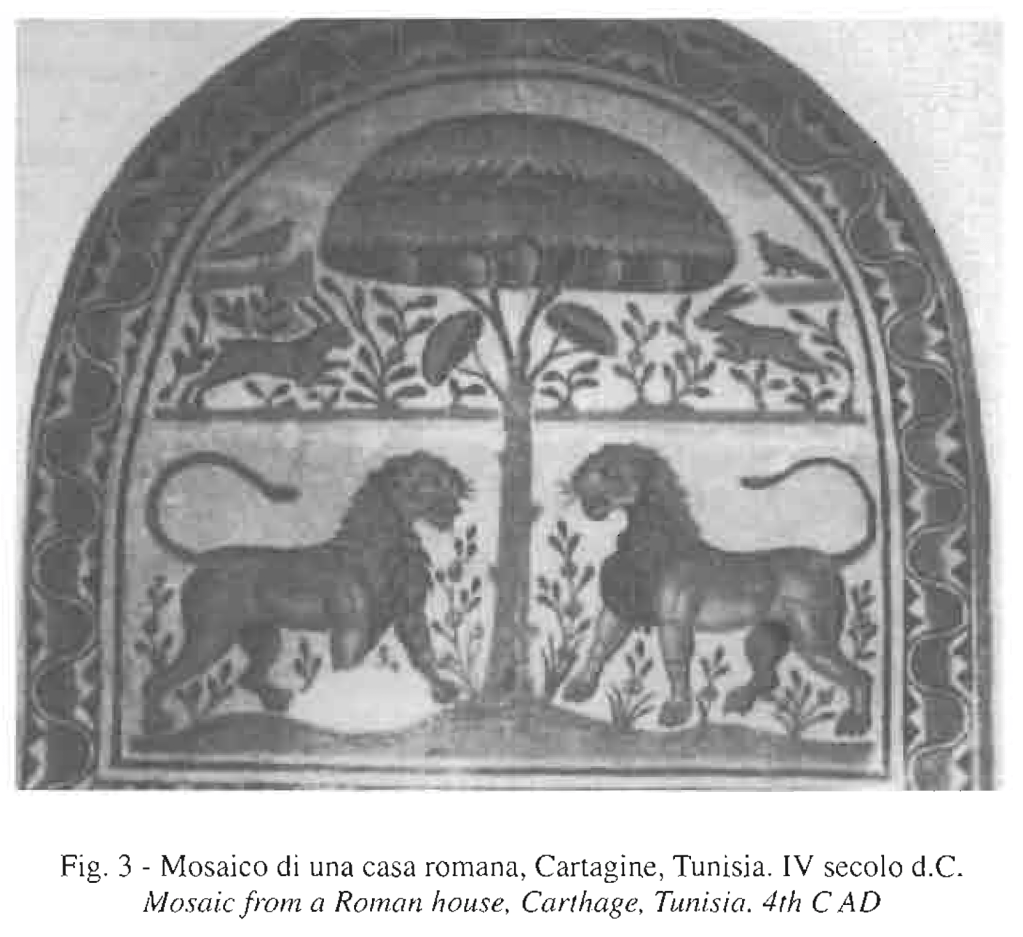
Yet More Confirmation: Mushroom Literal Depiction in Christian Art: Mushroom Caps Have Branches Under Them
I’m adding pictures to page Gallery of Mushrooms in Christian Art —
Samorini Figure 11
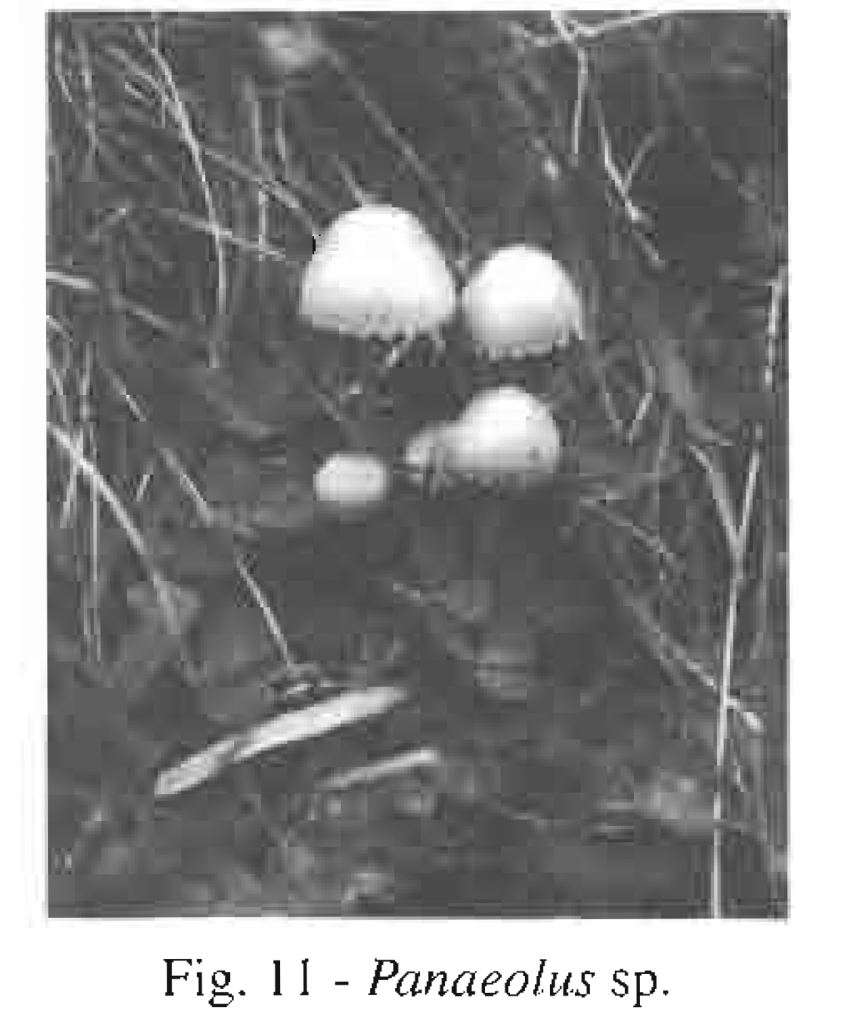

proof that psilocybine mushroom caps have branches under them, as accurately literally depicted in Canterbury Psalter. Panaeolus semiovatus
Webpage:
California Fungi—Panaeolus semiovatus
http://www.mykoweb.com/CAF/species/Panaeolus_semiovatus.html
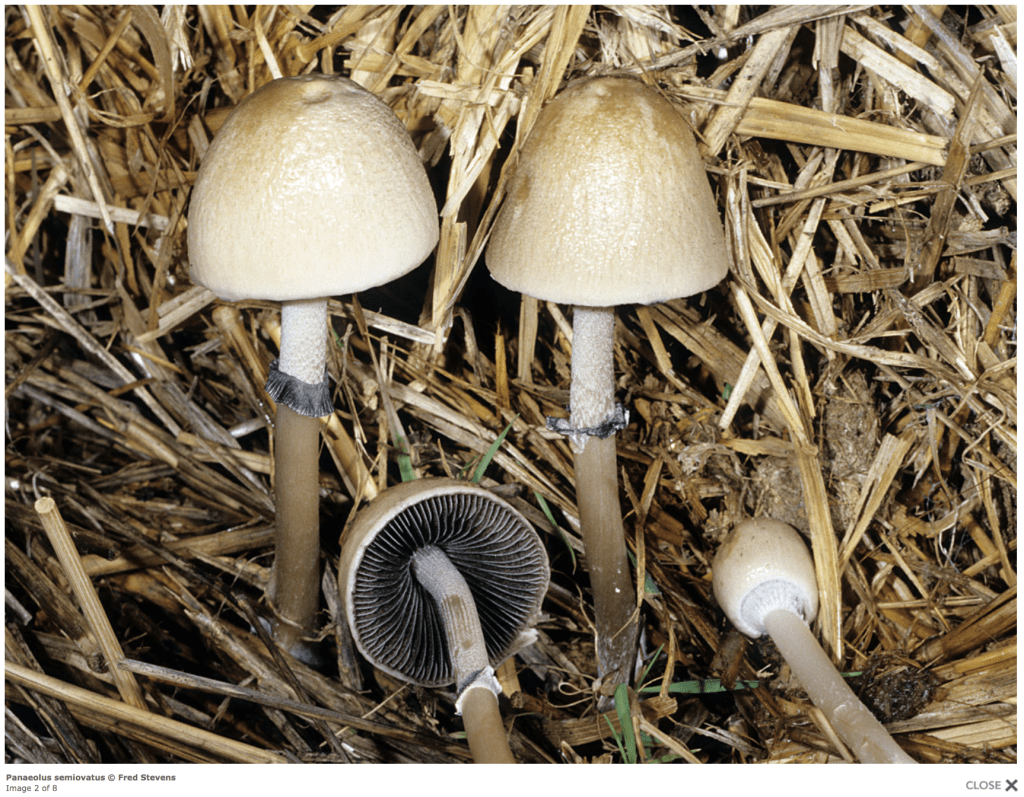
proof that psilocybin mushroom caps have branches underneath the canopy cap
todo: add this and above, to Proof article or Criteria article
Article similar to the Egodeath theory: the Cybernetic theory: Metaperception.
Cognitive Phenomenology of Mind Manifestation
https://www.academia.edu/8238696/Cognitive_phenomenology_of_Mind_Manifestation
Mentioned on Transcendent Knowledge Podcast episode 3, around 50:00.
Decoding Cain & Abel Two Pictures from Canterbury
Cyberdisciple translated the scrolls, and wrote the following.
Above the first image is written “Ubi Cain interfecit fratrem suum Abel” translation:
When Cain killed his brother Abel
Above the second image the writing has faded. There was writing above the gold line border, above the scene, just like above the first image. Presumably the words described the scene below, of god confronting Cain.
To read the scroll held by God, you have to rotate the page. You start reading up by God’s hand, towards the scroll end at the Abel’s body. The text reads “ecce vox sanguinis • maledicta terra.”
Translation of the scroll held by God:
behold the voice of the blood; the earth is cursed.
To read the scroll held by Cain, start at the bottom, by Abel’s body.
The text reads “nescio, domine • numquid custos fratris”
Translation of the scroll held by Cain:
I don’t know Lord; Am I my brother’s keeper?
Derived from Genesis 4:9-10. English: https://www.biblegateway.com/passage/?search=genesis%204&version=NIV
Vulgate Latin here:
https://sacred-texts.com/bib/vul/gen004.htm
The text in the images is adapted from the Vulgate, and does not match the Vulgate text exactly.
The text in the image does not follow the order of the Genesis narrative.
In the Genesis narrative, God asks Cain where Abel is, and Cain responds “I don’t know, am I my brother’s keeper?”
God then says that he hears the voice of Abel’s blood coming from the earth, and that for Cain the earth will be cursed from now on.
Confusing Canterbury Psalter vs. Eadwine / Paris Psalter
Confusion about “Canterbury Psalters”:
The “Eadwine Psalter” is different from the “Great Canterbury Psalter.”
The psalter with the images of Cain and Abel above and with the mushroom tree / “sharpen your sword” that you decoded this year is the Great Canterbury Psalter.
Wiki
https://en.wikipedia.org/wiki/Eadwine_Psalter:
“The Eadwine Psalter or Eadwin Psalter is a heavily illuminated 12th-century psalternamed after the scribe Eadwine, a monk of Christ Church, Canterbury (now Canterbury Cathedral), who was perhaps the “project manager” for the large and exceptional book.
As far as the images are concerned, most of the book is an adapted copy, using a more contemporary style, of the CarolingianUtrecht Psalter, which was at Canterbury for a period in the Middle Ages.
It was sometimes called the “Canterbury Psalter” in the past, as in the 1935 monograph by M. R. James, but this is now avoided, if only to avoid confusion with other manuscripts, including the closely related Harley Psalter and the Great Canterbury Psalter (or Anglo-Catalan Psalter, Paris Psalter), which are also copies made in Canterbury of the Utrecht Psalter.”
End of quotation from wikipedia
Article: “Mushroom-Trees” in Christian Art (Samorini)
My commentary/reading version of the article:
“Mushroom Trees” in Christian Art (Samorini)
https://egodeaththeory.wordpress.com/mushroom-trees-in-christian-art-samorini/
Obsolete URL:
https://egodeaththeory.wordpress.com/mushroom-trees-in-christian-art
Article title:
“Mushroom-Trees” in Christian Art
Gli “alberi-fungo” nell’arte cristiana
Author:
Giorgio Samorini
Journal issue:
Eleusis, n.s., 1:87-108, 1998
https://www.samorini.it/doc1/sam/sam-alberifungo-1998.pdf
Link to the PDF is from Cyberdisciple.
Samorini’s article has about 10 mushroom trees (b&w) that were not in my gallery of mushrooms in Christian art.
Update: I added color copies of many of Samorini’s images, both in my reading-version of his article, and in my Gallery page, and added Samorini’s images to my gallery (including his captions):
Gallery of Mushrooms in Christian Art
https://egodeaththeory.wordpress.com/2020/12/13/images-of-mushrooms-in-christian-art/
[I reject Samorini’s assumption that anyone ever paints a mushroom tree without intending it as mushrooms. That’s a biased, unfounded assumption, an unscientific, anti-mushroom presupposition. These overeducated, self-confused scholars should ask any 8th-grader, who is less likely to over-think the matter. Update: added criticism sections:
- The Role of Mushrooms in Christian Art (M.H.)
- How the “Evolutionary Anthropology” Approach Is Utilized to Covertly Reduce the Number of Mushrooms in Christian Art (M.H.)
Call me a far-out radical;
I assume mushroom shapes in religious art mean mushrooms.
Why wouldn’t mushroom shapes in religious art mean mushrooms, given that mushrooms produce religious experiencing?
On what basis do you assume that mushroom shapes in religious art don’t represent mushrooms, given that mushrooms produce religious experiencing? That position makes no sense and is unjustifiable.
-mh]
excerpt:
“If it is recognized that during the Middle Ages knowledge of the psychoactive properties of mushrooms still existed, it is more likely that this was the intention in older representations. Here [in 20th C art], the indications are few and far between, and it must also be noted that research of this kind has been very scarce indeed.
“There are quite a few psychoactive mushrooms in Europe. Not only do we have the two species, Amanita muscaria and A. pantherina -which require conifer or birch woods in their habitat (forests which were much more common and extensive than they are today) -, we also find a few dozen species of psilocybian mushrooms including the genera Psilocybe, lnocybe, Pluteus and Panaelous (to be found both in fields and forests, on the plains and in mountainous regions) (FESTI 1985; GARTZ 1996; GuzMAN 1983; STAMETS 1996).”
Hallucinogens and Christianity: Evidence in Sacred Art (2 vols.) (Camilla & Gosso)
Note that there is so much evidence, 2 volumes were required. 128 pp, 112 pp. Ah f*ck it, I’m gonna hafta get these, or AT least the 2nd vol.
From Cyberdisciple.
Book title:
Allucinogeni e Cristianesimo. Evidenze nell’arte sacra
Hallucinogens and Christianity: Evidence in Sacred Art
Authors:
Gilberto Camilla, Fulvio Gosso
Year edition: 2007
On the market since: 2019
Pages: 128, illustrated
EAN: 9788886345569
http://amzn.com/8886345569

Hallucinogens and Christianity: Evidence in Sacred Art, Vol. 2 (Camilla & Gosso)
Book title:
Allucinogeni e Cristianesimo. Evidenze nell’arte sacra, Vol. 2
Hallucinogens and Christianity: Evidence in Sacred Art, Vol. 2
Authors:
Gilberto Camilla, Fulvio Gosso
Year edition: 2016
On the market since: 2016
Pages: 112, illustrated, Rilegato
EAN: 9788897206286
http://amzn.com/889720628X

Cyberdisciple wrote: From the description of book 2, it seems that book 1 focuses on Amanita, while book 2 focuses on liberty caps:
“Se nel primo volume l’Amanita muscaria ha avuto una attenzione particolare, in questo gli autori individuano anche la presenza, in alcune rappresentazioni proposte, della Psilocybe semilanceata.”
If in the first volume, Amanita muscaria had special attention, in this volume the authors identify also the presence, in some proposed representations, of Psilocybe semilanceata.
psilo-cybe semi-lanceata
smooth-head semi-spear
Liberty Caps
Was Phase 1 of the Field of Western Entheogen Scholarship in Fact Centered Around Amanita?
[acro]/keyboard shortcuts
Western entheogen scholarship [wes]
the field of Western entheogen scholarship [fwes]
the field of entheogen scholarship [fes]
Psilocybe in mystery-religion initiation & mixed-wine banqueting [pmrimwb]
Psilocybe in mixed-wine banqueting & mystery-religion initiation [pmwbmri]
Psilocybe in mixed wine & mystery religion [pmwmr]
Psilocybe in mystery religion & mixed wine [pmrmw]
Psilocybe in mystery-religion & banqueting [pmrb]
Psilcybe in mixed wine, mystery religion, and esoteric Christianity [pmwmrec]
Email Sent to Jerry Brown
Hi Jerry,
Did you at one time defend Amanita as the center of the universe of entheogen scholarship, and then did you “move the goalpost” and switch to instead, falling back to a more easily defensible position, of Psilocybe instead?
In a video debate, Hatsis characterized you as “oh, so you’re moving the goalpost” because you refused to be a devoted Amanita-defender; you failed to conform to Hatsis’ tilting-at-windmills, his strawman, the only game he knows how to play.
____________________
2. Is it true that the field of Western entheogen scholarship in its first, formative phase was squarely centered on Amanita, and was mostly limited to Amanita as the universal solution to Mixed-Wine, Mystery Religion, and Esoteric Christianity?
In 2011, Ruck is still pumping out books obsessing on Amanita.
Mushrooms, Myth and Mithras: The Drug Cult that Civilized Europe
Ruck, Hoffman, Celdran, 2011
http://amzn.com/0872864707
Am I the lone odd man out, and Letcher-Hatsis is correct that the entire field of Western entheogen scholarship really is identified (incorrectly) with Amanita?
Am I the only Western entheogen scholar who doesn’t identify the field of Western entheogen scholarship with Amanita?
By historical accident, even I have roots in Amanita: the first question I asked in the field, in 1986, was What is the eaten scroll of Revelation 10? I was satisfied in 1999 by Heinrich’s 1995 answer: Amanita, and I agree that Revelation 10 refers to Amanita.
__________________
3. Can you reassure me that the field of Western entheogen scholarship was not centered on Amanita and practically limited to Amanita?
I hope the field of Western entheogen scholarship was never actually centered around Amanita.
I might have to say:
Phase 1 of Western entheogen scholarship = Amanita. 1956-2003 or -2011
(perish the thought)
I hate that concession, can you save me and show that the field of Western entheogen scholarship was not drenched in, and held prisoner in, the Amanita single-plant fallacy/fixation/obsession for 1956-2011, for 55 years?
Phase 2 of Western entheogen scholarship = Psilocybe (and less-ideal fallbacks) in mixed-wine banqueting & mystery-religion initiation.
Thanks
— Michael
_____
“2003” above: = Entheos issues 1-4, and my 2003 announcement of the maximal entheogen theory of religion.
My coming onto the Western entheogen scholarship scene, spelled the end of the Amanita single-plant fallacy, and displaced Amanita by
Psilocybe in Psilocybe in mixed wine & mystery religion;
Psilocybe in mixed-wine banqueting & mystery-religion initiation.
Phase 1 of Western Entheogen Scholarship Was Amanita; Phase 2 is Psilocybe in Mixed Wine & Mystery Religion
Reluctant Framing:
- Phase 1 of Western Entheogen Scholarship Was Amanita
- Phase 2 of Western Entheogen Scholarship is Psilocybe in Mystery-Religion Initiation & Mixed-Wine Banqueting
Reluctant Framing:
- Phase 1 of Western Entheogen Scholarship Was Amanita in Christianity & Mystery Religions
- Phase 2 of Western Entheogen Scholarship is Psilocybe in Mystery-Religion Initiation & the Ancient Mixed-Wine Banqueting Tradition
I hate this narrative about Phase 1 = Amanita, it’s a sh*tty situation if true. If true, we have to fix the situation.
Email Draft Not Sent to Jerry Brown
Did Brown at one time defend Amanita as the center of the universe of entheogen scholarship, and then did Brown “move the goalpost” and switch to instead, falling back to a more easily defensible position, of Psilocybe instead?
In a video debate, Hatsis characterized Brown as “oh, so you’re moving the goalpost” because Brown refused to be a devoted Amanita-defender; Brown failed to conform to Hatsis’ tilting-at-windmills, his strawman.
Is it true that the field of entheogen scholarship in its first, formative phase was centered on Amanita? If that is the happenstance fact, I’ll have to say:
Phase 1 of Western entheogen scholarship = Amanita.
Phase 2 of Western entheogen scholarship = Psilocybe in mystery religion & mixed wine
the field of Western entheogen scholarship;
the subfield of Psilocybe in mixed-wine banqueting, mystery-religion initiation, and esoteric Christianity
Maybe I’ll have to concede that the field of entheogen scholarship did make a huge mistake and really was Amanita-fixated in its first phase.
If so, then I need to talk about a New, Different, Mature Phase of the field, that the field of entheogen scholarship was indeed Amanita-centric, but the field has moved past that error, into a different, mature phase; that the field of entheogen scholarship is moving to a next phase, where Amanita is relatively irrelevant.
Hatsis is confused by the change of focus in Phase 2 of the field of entheogen scholarship.
Brown is operating within Phase 2 of the field of entheogen scholarship.
Phase 1 of the field of Western entheogen scholarship was centered on Amanita.
I hate that notion and I hope it is not true, that the field so began.
Phase 2 of the field of Western entheogen scholarship is centered on (eg) Psilocybe in the Mystery Religion Initiation & Banqueting Tradition.
I and Brown are operating in Phase 2 of the field, but Hatsis is still stuck in Phase 1 of the field.
From Hatsis’ perspective, Brown is an Allegro follower of a certain type: a bad, unfaithful, deviant follower, and Brown (by being in a Phase 2 that Hatsis is unaware of) has “moved the goalpost” in Browns’ effort to defend “The Allegro-Amanita Holy Mushroom Theory”, which is the only theory Hatsis can imagine, being stuck as he is, in Phase 1 of Western entheogen scholarship.
In Hatsis’ mind, the only possible way to not be a follower of the “secret Amanita cult” theory, is by rejecting mushrooms in Christian history.
If Brown asserts mushrooms in Christian history, then by definition, per Phase 1 the field of Western entheogen scholarship, Brown is a “follower of Allegro” and Brown is an advocate of the “secret Amanita cult” theory.
Letcher-Hatsis would strive for Phase 2 of the field of Western entheogen scholarship, to be some form of “no mushrooms in Christianity”.
Because Phase 1 was wrong, and Phase 1 reduced-down the entire field of Western entheogen scholarship into solely the “secret Amanita cult” theory, this means — in their confused and biased thinking — that Phase 2 of the field of Western entheogen scholarship must therefore be, “no mushrooms in Christianity”.
Pope Wasson approves.
Ever-malformed argumentation around Allegro-Amanita Madness:
I wonder if there’s any validity to Hatsis arguing that Jerry Brown “moved the goalpost” by not defending Amanita, but defending Psilocybe (Cubensis & Liberty Caps) instead.
Hatsis’ argument depends on everyone in the entire field of entheogen scholarship, making Allegro-Amanita the very center and omphalus navel origin, of the entire field of entheogen scholarship.
I strongly reject the narrative that “the field of entheogen scholarship comes from Amanita”.
That narrative might have some, accidental historical origin of truth, happenstance; but even if so, the origin of the field is irrelevant to the later, more mature & developed field.
We aren’t in 1970 anymore!! Even if the Pop wing or tier of the field of entheogen scholarship still acts like it.
Ruck’s book Apples of Apollo is about Amanita, and claims that myth describes the Amanita plant (not its effects). (Boring & limited.)
I wonder if Ruck’s book The Effluents of Deity covers Psilocybe or cognitive phenomenology experiential effects, or is limited to “this art depicts the physical form of Amanita (Boring & limited; superficial, narrow. The single-plant fallacy. The plant-focus fallacy (vs. Effects)).
The accidental, halting, off-base origin of a field should never hold it back; that is not how Scientific Knowledge progress works.
People are trying to hamper and cripple the field of entheogen scholarship by shackling the field with the Allegro-Amanita permanent ball-and-chain.
The messy, malformed, backwards, initial phase of a field should not eternally constrain the field.
The field needs to cut off the initial childhood phase and move forward transformed, into mature form.
(If we agree that Amanita-obsession was the original phase of entheogen scholarship — we really need to interrogate, whether that was the case.)
I want to argue that “Allegro-Amanita” was never actually the be-all, end-all, star by which the nascent field of entheogen scholarship EVER steered by.
I hope that Amanita was never actually the central point of reference for the entire field, in the past.
My first question in the field of Western entheogen scholarship, was in 1986, when I wondered which visionary plant the eaten scrolls of the book of Revelation refers to.
Robert Graves was too positive about Amanita, and he should’ve emphasized Psilocybe more.
Cyberdisciple compares on the Greek side, the extreme overemphasis on Kykeon.
The academic fixation on Kykeon in Greek Mystery Religion, is like the unbalanced, oversimplifying fixation on Allegro-Amanita in Christianity.
At 46:15 in Transcendent Knowledge Podcast episode 22.
https://www.youtube.com/watch?v=on6EFVLF-58&t=2775s
The tendency
(in artificially making Kykeon the center and guiding star for all of Mystery Religion & Greek mythology,
or making some imagined “Allegro-Amanita Theory” the Dead Center (forever) of the field of entheogen scholarship),
comes from intellectual laziness, oversimplification; narrowing, narrow minded, reductionistic; reducing down the entire field, into one preconceived central focus.
There is a noxious narrowing type of reductionism in the field of entheogen scholarship, like reducing all theology and religious-experiencing questions to only the one brain-dead question, “Does God exist, or not?” A guaranteed-unprofitable debate, is the only possible outcome.
The preconceived narrowing-assumption, the fixation on a single position, as if it’s the only notion or phrasing possible, reduces and hampers and hobbles the field; it’s reductionistic.
Just because Chemistry, by historical accident, initially defended Phlogiston, or Physics the Ether —
does that mean that we must for all eternity, frame all of Chemistry in relation to Phlogiston; or for all eternity, frame all of Physics in relation to either being a “follower” of the Ether theory?
Is the only possible alternative to describe the alternative positions as a “lapsed follower who is now a deviant from his initial position”, that is guilty of “moving the goalpost”, but now “has been caught trying to move the goalpost”?
I’m surprised at how little pushback I expressed against Amanita Mania within the field of Entheogen Scholarship.
Too much, 24:00 Transcendent Knowledge Podcast, Episode 22, critiques Allegro-Amanita Mania that tries to reduce the entire field of entheogen scholarship into the narrow prison of Amanita and turn everyone into a slave of Wasson & Allegro, falsely describing every entheogen scholar as a “follower of”, or a follower of who is a deviant from.
So there is no escape — EITHER YOU ARE A FOLLOWER OF WASSSON-ALLEGRO, OR YOU ARE A LAPSED DEVIANT FOLLOWER OF WASSON ALLEGRO, OR YOU ARE “MOVING THE GOALPOST” BUT YOUR “REAL” POSITION IS AMANITA-ALLEGRO WORSHIP.
THERE IS NO ESCAPE FROM THIS TRAP PEOPLE HAVE CONSTRUCTED, both the Pop Sike world AND Letcher and Hatsis who push against it.
todo: quote confused writer John Lash, his narrative of the whole field trying to connect Amanita & entheogens to Old Testament & Christianity (he likes entheogens, he hates Abrahamic religion, so therefore there cannot be allowed entheogens in Christianity).
I have accused Letcher-Hatsis as being a brainwashed Allegro-Orbiter even while they sell books against Allegro-Amanita & “The Holy Mushroom theory” and the “secret Amanita cult” theory. They’re just making the problem worse, further restricting and narrowing the options & horizons of thought.
The King of Plants for the Mono-Plant Fallacy is Amanita.
Hatsis “sells” Mandrake in Christianity, and wants to shut-out the conflicting interest, the competitor, which he sees as Amanita (& as an afterthought, as if synonymous, “mushrooms”).
If I’m thinking of the right book, I proved that Bennett’s book is multi-plant, but anyway my point remains.
Sex, Drugs, Violence and the Bible
Chris Bennett, 2001
ISBN: 1550567985.
My book review:
https://www.amazon.com/gp/customer-reviews/R2SVUH3MI5Z3PN/ref=cm_cr_dp_d_rvw_ttl?ie=UTF8&ASIN=1550567985
Michael Hoffman
5.0 out of 5 stars
Reviewed on March 29, 2003 —
Valuable cannabis-focused entheogen theory
“Anyone interested in the entheogen theory of religion should get and read this book.
It is largely devoted to ferreting out the many entheogen references and allusions in the Bible.
It covers most books of the Bible in order.
High-quality scholarship.
… it is highly readable and reveals how interesting and complex many of the Bible stories are.
As is standard, it assumes the literal existence of Bible characters — an assumption which entheogen scholars are increasingly calling into question.
I’m grateful for this book spurring me on to take on studying all the books in the Bible.
Highly recommended for entheogen and religion collections — essential, in fact, especially in light of how few books there are about entheogens in Christianity.
16 people found this helpful
/ end of book review
Chris Bennett “sells” Cannabis as his single-plant fallacy.
In overselling Cannabis in Christianity, at the expense of all mushroom species, Bennett further emphasizes Amanita: he’s currently focused on pushing against __ re: Amanita (in India religion).
THERE IS NO ESCAPE FROM THE ALL-SWALLOWING GREAT AMANITA THEORY, THE ALLEGRO-AMANITA THEORY-TRAP.
If you agree like Ruck that the universe resolves around the Omphalus navel of Allegro’s Amanita, you are guilty of pushing the baseless Holy Mushroom Theory, and the “secret Amanita cult” theory, and are a follower of Allegro-Amanita.
If you are like me and ignore Amanita, and in opposition to Allegro-Amanita, you instead “sell” Psilocybe, then you are (as the very confused writer John Lash mis-described) a “lapsed follower of Allegro who is guilty of moving the goalpost“.
If you do not disavow all mushrooms in Christianity history, that makes you some type of follower of Allegro-Amanita, and of the “secret Amanita cult” theory, and of Irvin’s The Holy Mushroom theory.
THERE IS NO ESCAPE FROM THE JAIL OF ALLEGRO-AMANITA I HAVE CONSTRUCTED FOR YOU.
DISAVOW ALL MUSHROOMS IN CHRISTIANITY OR ELSE YOU ARE A SLAVE OF WASSON-ALLEGRO. By the logic of Phase 1 of Western entheogen scholarship.
“Moving the goalpost” is Hatsis’ nonsensical accusation against Jerry Brown.
Did Brown in any sense move from an Amanita focus, to Psilocybe?
Robert Forte
https://psychedelicstoday.com/2018/08/07/robert-forte/
Video:
Robert Forte: Mainstreaming Entheogens: Psychological, religious, and political considerations
Channel: ERIE vision: Exploring Entheogenic Potentials
Date: Nov 29, 2012
https://www.youtube.com/watch?v=fuGZ26qt4QM
Video:
A People’s History of Psilocybin With Robert Forte
Channel: Tam Integration
Date: September 19, 2019
https://www.youtube.com/watch?v=hRrV2sW-y3A
Video:
Robert Forte: Psychedelics, The Elite, & Our Brave New World
Channel: Last Born in the Wilderness Podcast
Date: September 27, 2018
https://www.youtube.com/watch?v=QKhG90AtVGY
Transcendent Knowledge Podcast – Separate Page per Episode
tbd
Ancients Had Only Mytheme-Based Explanation of Esoteric Mushroid Initiation, not Modern Direct Explanation like the Egodeath Theory
wrmspirit wrote:
“In the podcast when Max was trying to steer Jimmy away from mystics by focusing on average people when they start experimenting and how some may be transformed and some not.
“Isn’t the point right there that transformation is dependent upon the Egodeath Theory which helps to facilitate transformation for anyone.” -w
Ancients had effective initiation, and rich mythemes to describe initiation by analogy — but they were poor at direct discussion.
The Egodeath theory provides for the first time, a clear, direct discussion.
Ancients had transformation — to some degree — without a clear, modern, directly worded Egodeath theory.
The Lesser Mysteries taught textbook, book-learning instructional preparation for initiation. That could be comparable to the Egodeath theory.
“Words are powerful, especially when used as tools for the mind in understanding experience.
“Someone who doesn’t read and has not been exposed to education can experience symptoms of indigestion after eating,but without the words to assist the mind in cognitively knowing that, may never realize the indigestion discomfort could be symptoms of heart problems as well.
“The same holds true with experience in the mystic altered state for the average age group of 18 to 25 mentioned in the podcast and I now say, anyone experiencing the mystic altered state.
“Without the Egodeath Theory, how can the mind assimilate the experience into cognition for understanding?” -w
The ancients used mythemes to describe by analogy, the altered-state experience.
It’s better to have a non-mytheme description that’s mapped to mythemes, as with the two parts of the Egodeath theory.
“Instead, the mind will focus on interpreting sights and emotion during loose cognition, (and not the necessary understanding of the mapped and decoded driving force beneath the uneducated interpretations) — resulting in randomness such as:
- The James K’s who don’t understand beyond the hallucination, and demean the experience.
- The mystics who don’t understand beyond feeling oneness, non-duality.
- and the list goes on.
“So isn’t the point that
the Egodeath Theory is the mind’s universal instruction for the potential for understanding
the phenomenology of the mind experiencing mystic state loose cognition,
including pre-existence- eternalism,
through its decoding and mapping mystic altered state experience with myth and metaphor,
which historically has yielded itself into the world of possibilism through religion, science, literature and art?” -w
Understanding is a matter of degree, and a matter of review/refresh/reminder as well.
The ancients generally didn’t decode and map explicitly, the mythemes to the actual referents (“things that are observed and experienced in the altered state”).
Before the Modern era (like Newton’s Principia Mathematica / Physics), Ancients used religious mythology, proto-science, literature, and art.
Ancients did not use modern-type direct, relatatively non-analogy based, description, like the Egodeath theory.
Like both halves of the Egodeath theory:
- The Cybernetic theory is not concerned with mythemes.
- The Mytheme theory explains mythemes in terms of non-mythemes; mapping mythemes to non-mytheme directly identified referents (things that are observed and experienced in the altered state).
Within the Egodeath theory, the Mytheme theory maps mythemes to the Cybernetic theory (the Cybernetic Theory of Ego Transcendence).
When did Psilocybe Esoteric Consciousness Decline? 1543-1715 (Copernicus 1543, Newton 1687, Louis XIV 1715)
Predominant, mainstream mushroom consciousness spanned from Antiquity through the Proto-Modern/ pre-Classical era, and then declined at the start of the Enlightenment; between the move to Heliocentrism in 1543, to the start of the Enlightenment in 1687/1715.
In Digest 53, in a post on 2003-12-06, I wrote:
“What happened during the so-called age of the Enlightenment, when true entheogenic mythic allegorical religion was discarded together with bad
literalist religion, resulting in lack of both types of religion, high and
low?”
Entire post:
https://egodeaththeory.wordpress.com/idea-development-page-7/#My-First-Use-of-the-Phrase-the-maximal-entheogen-theory-of-religion-without-a-or-adding-anything
https://en.wikipedia.org/wiki/List_of_time_periods#European_periods —
European Periods from Wiki with My Mushroom History Trajectory
Further information: History of Europe
- Bronze Age (c. 3000 BCE – c. 1050 BCE)<– mushroid consciousness
- Iron Age (c. 1050 BCE – c. 500 CE)<– mushroid consciousness
- Greek expansion and colonization (c. 1050 BCE – 776 BCE)
- Archaic Greece (776 BCE – 480 BCE) – begins with the First Olympiad, traditionally dated 776 BCE
- Archaic period (776 BCE – 612 BCE) – the establishment of city-states in Greece
- Pre-classical period (612 BCE – 480 BCE) – the fall of Nineveh to the second Persian invasion of Greece
- Classical antiquity (480 BCE – 476 CE)<– peak mushroid consciousness
- Classical Greece (480 BCE – 338 BCE)
- Macedonian era (338 BCE – 323 BCE)
- Hellenistic Greece (323 BCE – 146 BCE)
- Late Roman Republic (147 BCE – 27 BCE)
- Principate of the Roman Empire (27 BCE – 284 CE)
- Late Antiquity (284 CE – 500 CE)
- Migration Period (Europe, 300 CE – 700 CE)
- Middle Ages (Europe, 476–1453)<– continued mushroid consciousness
- Byzantine era (330–1453)
- Early Middle Ages (Europe, 476–1066)
- Viking Age (Scandinavia, Europe, 793–1066)
- High Middle Ages (Europe, 1066 – c. 1300)
- Late Middle Ages (Europe, c. 1300 – 1453)
- The Renaissance (Europe, c. 1300 – c. 1601)
- Early modern period (Europe, 1453–1789) <– decline of mushroid consciousness 1543-1715
- Age of Discovery (or Exploration) (Europe, c. 1400 – 1770)
- Polish Golden Age (Poland, 1507–1572)
- Golden Age of Piracy (1650–1730)
- Elizabethan era (the United Kingdom, 1558–1603)
- Protestant Reformation (Europe, 16th century)
- Classicism (Europe, 16th – 18th centuries)<– decline of mushroid consciousness 1543-1715
- Industrious Revolution, (Europe, 16th – 18th centuries)
- Jacobean era (the United Kingdom, 1603–1625)
- Petrine Era (Russia, 1689–1725)
- Age of Enlightenment (or Reason) (Europe, 18th century)<– decline of mushroid consciousness 1543-1715
- Scientific Revolution (Europe, 18th century)<– decline of mushroid consciousness 1543-1715
- Long nineteenth century (1789–1914) <– nadir of mushroid consciousness
- Georgian era (the United Kingdom, 1714–1830)
- Industrial Revolution (Europe, United States, elsewhere 18th and 19th centuries)
- Age of European colonialism and imperialism
- Romantic era (1770–1850)
- Napoleonic era (1799–1815)
- Victorian era (the United Kingdom, 1837–1901); British hegemony (1815-1914) much of world, around the same time period.
- Edwardian era (the United Kingdom, 1901–1914)
- First, interwar Britain and Second World Wars (1914–1945) <– reawakening of mushroid consciousness:
- 1880: Peyote use spread northward to North America.
- 1897: Mescaline isolated
- 1918: Mescaline synthesized.
- 1920: Native American Church.
- 1938/1943 Hofmann bicycle ride myth.
- 1880: Peyote use spread northward to North America.
- Cold War (1945–1991) <– reawakening of mushroid consciousness:
- 1956 Centaurs’ Food essay by Graves; Graves/Wasson discussions
- 1957: Wasson book Mushrooms, Russia & History. Wasson bride-walk myth.
- 1968: Wasson book SOMA.
- 1970: Allegro’s punchy book cover with Plaincourault diagram and dust-jacket flap; punchy, basically sound grand theory (in sharp contrast to the book’s content, which is turgid Philology in support of 19th C Fertility Anthropology, not a proper entheogen or ahistoricity book).
- Post-Cold War / Postmodernity (1991–present) <– reawakening of mushroid consciousness;
1988 discovery of the Cybernetic Theory of Ego Transcendence.
1997 theory-spec for the Cybernetic Theory of Ego Transcendence.
2003 announcement of the maximal entheogen theory of religion.
The Move from Geocentric to Heliocentric Cosmology in 1543
I’d also look at the move from geocentric to heliocentric cosmology in 1543, which could be seen as the beginning of the end of the esoteric worldview/consciousness.
https://en.wikipedia.org/wiki/Copernican_heliocentrism
the Enlightenment in various countries, started when?
Wiki excerpt
“Copernican heliocentrism is often regarded as the launching point to modern astronomy and the Scientific Revolution.
Although he had circulated an outline of his own heliocentric theory to colleagues sometime before 1514, he did not decide to publish it until he was urged to do so late in his life by his pupil Rheticus. Copernicus’s challenge was to present a practical alternative to the Ptolemaic model by more elegantly and accurately determining the length of a solar year while preserving the metaphysical implications of a mathematically ordered cosmos. Thus, his heliocentric model retained several of the Ptolemaic elements, causing inaccuracies such as the planets’ circular orbits, epicycles, and uniform speeds,[1] while at the same time introducing such innovative ideas as:-
- The Earth is one of several planets revolving around a stationary sun in a determined order.
- The Earth has three motions: daily rotation, annual revolution, and annual tilting of its axis.
- Retrograde motion of the planets is explained by the Earth’s motion.
- The distance from the Earth to the Sun is small compared to the distance from the Sun to the stars.
/ end wiki excerpt
The Enlightenment Started: 1637 Decartes; 1687 Scientific Revolution with Newton’s Principia Mathematica; 1715 Death of Louis XIV
https://en.wikipedia.org/wiki/Age_of_Enlightenment —
“The Age of Enlightenment (also known as the Age of Reason or simply the Enlightenment)[1][note 2] was an intellectual and philosophical movement that dominated the world of ideas in Europe during the 17th and 18th centuries.[3]
The Enlightenment emerged out of a European intellectual and scholarly movement known as Renaissance humanism and was also preceded by the Scientific Revolution and the work of Francis Bacon, among others. Some date the beginning of the Enlightenment to René Descartes‘ 1637 philosophy of Cogito, ergo sum (“I think, therefore I Am”), while others cite the publication of Isaac Newton‘s Principia Mathematica (1687) as the culmination of the Scientific Revolution and the beginning of the Enlightenment. French historians traditionally date its beginning with the death of Louis XIV of France in 1715 until the 1789 outbreak of the French Revolution. Most end it with the beginning of the 19th century.
…
The Enlightenment included a range of ideas centered on the sovereignty of reason and the evidence of the senses as the primary sources of knowledge and advanced ideals such as liberty, progress, toleration, fraternity, constitutional government and separation of church and state.[5][6] In France, the central doctrines of the Enlightenment philosophers were individual liberty and religious tolerance, in opposition to an absolute monarchy and the fixed dogmas of the Church. The Enlightenment was marked by an emphasis on the scientific method and reductionism, along with increased questioning of religious orthodoxy—an attitude captured by Immanuel Kant‘s essay Answering the Question: What is Enlightenment, where the phrase Sapere aude (Dare to know) can be found.[7]“
When Did I Announce “the Maximal Entheogen Theory of Religion”? Precursor; Announcement; then Fine-Tuning the Phrase/Usage
Finding: It was 9 months (8 mo 25 days) after my announcement of “a maximal entheogen theory of religion”, until I finally used the exact phrase “the maximal entheogen theory of religion” (without feeble ‘a’, without complicating additions at the end).
Similar Precursors to the Maximal Entheogen Theory of Religion by Previous Writers
- The first time anyone wrote anything like the maximal entheogen theory of religion (in late-modern era): Eusebe Salverte, 1846, in his book Occult Sciences. Eusebe Salverte. The Occult Sciences: The Philosophy of Magic, Prodigies, and Apparent Miracles. ISBN: B0008AC74O. 1846.
- The first book focusing on anything like the maximal entheogen theory of religion: Valentina Pavlovna Wasson & R. Gordon Wasson, Mushrooms, Russia & History, 2 volumes. ISBN: B0006AUVXA. 1957.
- The first statement of the maximal entheogen theory of religion by anyone: James Arthur makes a claim, year: 1997
- The first mention of the idea of the maximal entheogen theory of religion by me: apparently (based on Find of ‘maximal’ in the Egodeath Yahoo Group digests): Oct. 16, 2002
- The official bold blunt assertion and announcement (even this is not as forceful as it could be; NO PROPER THEORY-NAME ANNOUNCED; only a descriptive label of the idea, not an Official Name of the Theory): March 12, 2003 post 1391.
Why did it take me, a FULL YEAR to graduate from feeble “a maximal entheogen theory of religion” to “the kick*ss THE Maximal Entheogen Theory of Religion by Michael Hoffman the Great”: dammit, even here, I contaminate the title by adding more to it: (that’s got pros & cons):
“the maximal entheogen theory of religion-philosophy-myth“.
I did not exactly write “the maximal entheogen theory of religion” on March 13, 2003, when rebutting James Arthur in post starting the thread “Must theorize far more forcefully to disrupt the new status quo“, digest 28, post 1396, 5 posts after.
WHY DID IT TAKE ME __ months TO MOVE FROM A PHRASE DESCRIBING THE IDEA, TO AN OFFICIAL NAME/TITLE OF THE IDEA?
Announcements should ideally include an Official Name of the New Theory.
Again, we see that in practice, there are roots that go very far back, and the New Theory gradually comes into view, with punctuated jumps of clarity and officialness with grand official title(s) of the New Theory.
1) My precursor mentions of the idea: e.g. October 16, 2002 (AND earlier, we can assume, not necessarily with the word ‘maximal’, but discussed using some other wording).
2) my official announcement of the idea: March 12, 2003. The closest I come there to stating the official name/title of the new theory is subject line using the word ‘a’: “a maximal entheogenic theory of religion”.
How understated of me, to use the too-mild article ‘a’; instead of putting MY stake in the ground and MY name on “THE” theory.
Forget the weak mild milquetoast “a” theory; write powerfully, THE theory.
The very next day in pushing back against Arthur’s claim, I switched from the weak “a” to the stake-my-claim “THE” theory;
“The Maximal Entheogen Theory of Religion”.
Ideally with init-caps like that.
3) my providing an official Name/Title of the New Theory using the word ‘the’: March 13, 2003.
| Group: egodeath | Message: 1396 | From: Michael Hoffman | Date: 13/03/2003 |
| Subject: Must theorize far more forcefully to disrupt the new status quo |
Including a debate (discussion) with James Arthur, stating why his statement of the maximal entheogen theory of religion (like tepid Robert Graves’ weak, softspoken, opposite of Allegro’s “punch” and the strong self-PR of Wasson & Allegro).
James Arthur stated much, MUCH too weakly and garbled and roundabout.
I’m the first to define the phrase “the maximal entheogen theory of religion” and use it like a blunt club comparable to my infamously (like Allegro’s tone) saying:
All (non-drug) meditation is bunk.
All religion comes from entheogens.
Did Blavatsky write that? Did Manly Hall write that? Did Salverte in 1846 write that?
Article:
Wasson and Allegro on the Tree of Knowledge as Amanita
Subsection:
Wasson’s Claim to Be the First to Cover Visionary Plants in Western Religion
http://www.egodeath.com/WassonEdenTree.htm#_Toc135889202
excerpt: in 2006, I wrote:
“Wasson may be the first to focus on
the history of visionary plants specifically in religion.
Wasson often writes ambiguously, causing confusion and dispute about what he claimed. It’s unclear what Wasson is uniquely claiming when he states:
Valentina Pavlovna and I were the first to become familiar with the
entheogens and their historical role in our society.
– Wasson, Persephone, p. 77
The key words in his claim are ‘entheogens’, ‘historical’, and ‘our society’. ‘Entheogens’ denotes the specifically religious use of visionary plants. ‘Historical’ denotes a span of coverage across time, potentially pre-history through today. ‘Our society’ is the most ambiguous term; presumably meaning centered around Europe. His usage of the word ‘and’ introduces ambiguity about the scope of his claim: is he claiming to be the first to become familiar with the entheogens, and the first to become familiar with their historical role? The first part of such a claim is disproved, and the second part of such a claim is vague in scope.
He may have been
the first to commit all of his attention to the history of entheogens,
but he was neither the first modern scholar to write about
the role of entheogens in Western religion,
nor did he cover them in
the central, Christian aspect of the history of Western society.
Manly Hall in 1928 quotes Eusebe Salverte, a French author, from 1846:
The aspirants to initiation, and those who came to request prophetic dreams of the Gods, were prepared by a fast … after which they partook of meals expressly prepared; and also of mysterious drinks, such as … the Ciceion in the mysteries of the Eleusinia. Different drugs were easily mixed up with … the drinks, according to the state of mind … into which it was necessary to throw the recipient, and the nature of the visions he was desirous of procuring. – Salverte, Occult Sciences, 1846, quoted in Hall, Secret Teachings, 1928, pp. 353-354.
Hall has generally sound though brief coverage of the tree of knowledge, Soma, mystery religions, strong drink, and herbs in Western religion and Western esotericism, pp. 296-301, 352-354; for example, he quotes Helena Blavatsky from 1877:
Plants also have like mystical properties in a most wonderful degree, and the secret of the herbs of dreams and enchantments are only lost to European science, and useless to say, too, are unknown to it, except in a few marked instances, such as opium and hashish. Yet, the psychical effects of even these few upon the human system are regarded as evidences of a temporary mental disorder. The women of Thessaly and Epirus, the female hierophants of the rites of Sabazius, did not carry their secrets away with the downfall of their sanctuaries. They are still preserved, and those who are aware of the nature of Soma know the properties of other plants as well. Blavatsky, Isis Unveiled, 1877, quoted in Hall, Secret Teachings, 1928, p. 353
/ end of Plaincourault article excerpt
Put side-by-side my announcement of the maximal entheogen theory of religion, next to James Arthur’s weak text — no comparison.
James Arthur might be the first one to believe the maximal entheogen theory of religion (that’s a separate question — see my Plaincourault article for history of this belief in late-modern era) — but I am certainly (?) the first to loudly, clearly announce the maximal entheogen theory of religion.
[11:01 a.m. December 23, 2020]
This is a good example of how there are always earlier roots for a discovery. If you say the discovery was on day D, there’s always roots prior to day D where the discovery was identified.
Here’s my official, long announcement posting announcing the maximal entheogen theory of religion:
Date: March 12, 2003 (expanding on my October 16, 2002 first-found-mention of “maximal” theory)
Subject: Defining a maximal entheogenic theory of religion
https://egodeaththeory.wordpress.com/2020/12/23/egodeath-yahoo-group-digest-28/#message1391
1. 6-page Discussion of “the maximum presence of entheogens we can possibly imagine in religious and Christian origins”, & ‘the “maximal influence” case’: October 16, 2002
Tentative earliest mention of the maximal entheogen theory of religion by finding the word ‘maximal’.
You can surely find me working up to the idea in even earlier posts.
Precursor mention:
Subject: Entheogen use constant in religion
October 16, 2002
https://egodeathyahoogroup.wordpress.com/2021/01/09/egodeath-yahoo-group-digest-23/#message1162
| Group: egodeath | Message: 1162 | From: Michael Hoffman | Date: 16/10/2002 |
| Subject: Entheogen use constant in religion |
| “Egodeath.com discusses the possibility of “block universe determinism”, the idea that free will is an illusion and everything really is unfolding by itself, as planned.” The “no-free-will” idea is powerfully paired with the commonplace idea of “no-separate-self”, identifying the two as “the no-free-will/no-separate-self insight”. The separate self illusion essentially *is* the freewill illusion; the first purpose of the illusory separate self is to wield the supposed power of freewill. New Age religionists worship the “no-separate-self” idea but whose worldmodel is shattered by Ramesh Balsekar’s proposal in the magazine What Is Enlightenment? that the core of revelation is no-free-will. At last even these religionists on their cliched “path” confront the meaning of having to sacrifice the ego’s *most prized possession* as the sacrificial price of entering heaven and nirvana. Anyone is willing to kill their firstborn child, that’s a low price. Kill the separate-self illusion? Everyone is fine with that. But what egoically possessed person would be willing to give much more than that, and sacrifice their own free will? It is against the nature of ego to let go of its precious ring of power, its most precious possession, free will. The moment ego is brought to sacrifice free will, the ego dies, burned away as a husk, and only the true and real aspects of the person remain, with the ego remaining only as a vestigial ghost, one’s childself now relegated to the shadowy underworld of Hades. The damned in hell are possessed by the freewill demon-delusion; the saints in heaven have had their freewill delusion burned off by the fires of purgatory. “There is further a significant discussion of psychoactive substances (psychedelics/entheogens) and the possible role they have played in the emergence and development of world religions large and small. “so in recent months i couldn’t avoid the speculation that perhaps helen and bill [some creators of The Course in Miracles] had access to some LSD or other substances.” In the book Up From Eden, Ken Wilber speculates that foreign religions don’t have strong long-term prospects in the U.S., but that Christian-derived religion and the technology of psychoactives are more likely to have a long-term future: he cited specifically Course in Miracles and LSD. One researcher is gathering suggestive evidence for Amanita in the creation of Mormonism. I am fully entering the realm of strategic, productive, and efficient speculation. What we need before we can gather evidential proof of the entheogen theory of the origin of religions is an *excellent hypothesis* that would, if it were true, explain everything. Feyerabend states that it’s *not* the case that evidence builds up for a new theory until it overwhelms evidence for the old theory. One paradigm doesn’t come along and persuade inveterate doubters through compelling force of evidence. What actually happens is that there is, in the early adoption phase, a shortage of evidence for the new theory or paradigm, yet some researchers commit to the new theory *despite* its inferior evidence: the new theory just seems more sound and plausible, a more convincing proposition *despite* the early lack of evidence. So it is with the current state of the entheogen theory of the origin of religions. There are conventional entrenched assumptions that entheogen use was rare, that it was cut off from the mainstream, that it wasn’t influential, that it was used only by a rare and odd deviant religionist or two — these are all entrenched axiomatic assumptions. Now it is wise and powerful to wave aside all that knowledge, all that framework of conventional assumptions, and erect anew a different set of axiomatic assumptions that is part of a different highly viable paradigm. Forgetting all we think we know, consider this paradigm, this set of assumptions, motives… this “reality tunnel” (Robert Anton Wilson). o Meditation was created to augment entheogens, and as entheogens were suppressed, meditation was used more and more with the effect of overly praising it and giving it credit that is actually stolen from entheogens. o All religions began and were reinvigorated through entheogens. o All the mystic geniuses who created and reinvigorated religions used entheogens. o There is a great deal of explicit entheogen evidence, if we simply think to look for it — such as the lily as symbol for datura, and the lotus blossom representing the entheogenic species of water lily, and Christian haloes as stylized Amanita cap. o What percentage of late 20th Century U.S. citizens and Europeans used entheogens? Suppose 25%. o What percentage of early Eurasians, 1000 B.C., used entheogens? Suppose 25%. o What percentage of Eurasians 500 BCE–500 CE used entheogens, such as “mixed wine”? Suppose 25%. There are exact parallels in comparing the debate of whether Classic Rock *is* Acid Rock, and whether Christian and other Mystery Religions were entheogen initiation religions. Everything hinges on cultural context, the actual incidence of using entheogens, and your assumptions about how rare or suppressed or uninfluential entheogens were in the period in question. Those who say that Rush, being philosophers, in the Rock culture after the 60s, wouldn’t have used entheogens, are living in a reality tunnel that is at odds with the statistical and cultural realities. It’s less interesting to analyze Led Zeppelin — there isn’t much Mystery there, with Robert Plant picking a psilocybin mushroom at the start of his mid-1970s Rock concert movie. But analyzing the controversial band Rush provides a great deal of insight on the debate over whether real Christianity was entheogenic initiation and whether medieval Christianity was also founded on entheogenic experiencing. If you assume that the 1970s were as LSD-influenced as we *know* them to have been, and if you assume that mid-1970s Heavy Rock such as Queen and Led Zeppelin was strongly influenced by and devoted to drug-induced altered states, then it becomes highly plausible, not in the least implausible, that Rush also was strongly influenced by and devoted to entheogens. You adopt either one paradigm or the other, with a huge raft of axiomatic assumptions. Either: o The 70s were somewhat saturated with drugs, but Classic Rock was largely independent of this, especially Rush. or o The 70s were totally saturated with drugs and Classic Rock was a mystic philosophical experiential religion devoted to the altered state, with some groups taking it to a highly refined art form, such as Rush. Which reality tunnel seems more plausible? Which set of assumptions and way of thinking seems more sound and likely? Arguments are interesting because they so often come down to incommensurable paradigms, mutually exclusive reality tunnels, with their own “coherent” sets of axiomatic assumptions. People must take responsibility for their faith-like adoption and choices of sets of axiomatic assumptions. Would you accept the convention view, which is pushed into the following corner? “Around 1000 BC, entheogen use was common, and 500-500 it was common, and in the late 20th Century it was common — yet, during Medieval Europe’s Christian reality-tunnel, entheogen use was rare and not influential — that Christianity was an exception.” I propose instead this axiomatic assumption: entheogen use is more of a constant across eras. In all eras of European history, entheogen use has remained constant — suppose 25% (naturally, this figure needs heavily qualification or definition, but it is plenty clear enough for the ideas I’m laying out here). So I don’t think the question is “Was entheogen use common in Christianity in the early and Medieval eras?” We need to draw up stronger axioms than that: *Given* the assumption that entheogen use is practically a constant in Europe across the eras, what was its role, influence, and relation to the Christian religion? What is the relation between unofficial European religion, official Christian religion, and entheogen use? I propose that entheogens were 25% present in unofficial European religion, in monastic religion, and in official religion. The populace was fully aware of entheogen religion — as much as today’s ignorant U.S. population is aware that entheogens produce religious experiencing and insight — and the monastics were fully aware of entheogen religion, and so were the officials. There was no possibility of disputing entheogens’ central role in Christianity; all dispute revolved around social control, suppression, revival, unofficial prophets versus official priests, and so on. Many people were clueless about entheogens at the heart of Christianity, but many were not, just the same as today, many people are not clueless about the intense religious and philosophical potency of entheogens. We all play huge social-control games around this huge potential, but no serious thinker is so clueless and idiotic to go up against this most concrete of facts. More characteristic is like Zaehner, striving to find ways to belittle the intense religious experience of entheogens as being in some vague way inferior to official, purportedly non-entheogenic mystic experiencing. It’s obviously a hopeless case to deny that entheogens produce profound, intense religious experiencing. All that the anti-entheogenist can do is distort and try to steer aside this reality, but not deny it head-on. So which axiomatic assumption sounds most plausible: o Our religious evasions about the importance of entheogens today are wholly different than during early Christian and medieval eras. or o Our religious evasions about the importance of entheogens today are essentially the same as during early Christian and medieval eras. The phony, amoral, profit-driven “War on Drugs” (prohibition for profit) and the controversy about whether Rush is Acid Rock both provide much insight into axiomatic assumption-sets, which is essential for understanding how early Christianity, medieval Christianity, and religions in general originated and were reinvigorated through very common and very influential entheogen use. I would even hesitate to say any longer that entheogenic religion was “suppressed” or “suppressed to some degree” in Christianity. The idea of “suppression” is too simplistic and always underestimates how very common and even *dominant* entheogens were throughout Christian history. Are you surprised to imagine Christians of the 1400s, 1500s, 1800s, 1700s… commonly using entheogens? But if we apply a certain set of axiomatic assumptions, everything falls into place in a different and self-consistent arrangement. Imagine Christianity being dominant from 300 to 2000 in European culture and imagine that in all eras, 25% of people had significant religious experiences through entheogens. Even if 5 or 10%, the main idea still holds. In this reality tunnel, a significant percentage of mystics, priests, and laity were *constantly* experiencing the entheogen aspect of the Christian religion. We cannot assume that this entheogen inspiration was ever absent — not in the 1400s, not in the 1600s, not in the 1700s or 1800s. Do we fancy that we know so much about entheogens, but Europeans were worse-than-subhuman barbarian savages completely bereft of all knowledge of plants? But how could that be; it is *we* who are out of touch with plants. They had potions. *We* are attracted to psychoactive plants, were not our ancestors? We proudly fancy ourselves the first generation since antiquity to have discovered entheogens. We would likely be closer to the truth if we accept the axiom that entheogen use is a constant across eras, and that just as mystics today are very interested in entheogens, so were their ancestors. It is time to look out at the world and history and evidence from *this* set of assumptions and see how the story elements fall into place, painting a picture that is drawn together by its own compelling logic. I’d be more inclined to admit that Christianity has always struggled around the central fact of the psychoactivity of the true sacrament, rather than any longer saying that entheogens were simply “suppressed”. Commandeered, slightly, suppressed, a little… but not much. See the Amanita halos, see the lily daturas — you call that “suppressed”? No, I call *us* blind and ignorant. Our entheogen-using Christian ancestors knew a thing or two about plant potions. The greatest danger for us in retelling the story of Christian history and the history of religions is to underestimate the presence of entheogens. The greatest profit now is through erring on the side of overestimating the importance of entheogens. What is the maximum presence of entheogens we can possibly imagine in religious and Christian origins and ongoing reinvigoration? Let us generally suppose that entheogens were “many times more important” in the start and continuation of Christianity than previously imagined. This axiomatic assumption produces highly suggestive and interesting possibilities that haven’t been considered nearly enough. After we make this “maximal influence” case, then we can consider backing off to some degree and acknowledging that entheogens were not the entirety of the origin and continuation of Christianity. I advocate the “maximal influence” case and am dedicated to enabling research on the question: What is the maximum possible role of entheogens in the origin and continuance of religions? A case can be made, or at least a hypothesis can be formulated, but has never yet been made very strongly, that entheogens have been very central and dominant and popular in the origin and continuance of religions. It is time to get this hypothesis, this proposition, this paradigm, in order; it is time to systematize a theory in which entheogens are given a maximal, rather than the accustomed minimal, role, in the start and continuation of religions, including Christianity, Buddhism, the Hebrew religion, and Rabbinical Judaism. “On Amanita, the Course in Miracles perspective seemed apparent, right on. It seemed like we really are all heading inevitably toward god and the only proper response is profound and humble gratitude. I am convinced that one of the motivations for keeping psychedelics illegal is their potential for undermining the authority of established religions, since, if one can get one’s spiritual experiences from substances, why join a church? It is more important now to put forth a perfectly clear and explicit and straightforward theory to be considered, rather than relying on a base of compelling evidence. The theory comes first, the suggestive evidence comes next, and the compelling evidence is effectively constructed, assembled, and recognized much later. Paradigms aren’t based on compelling evidence, so much as on their ability to bring a framework and perspective into focus so that we perceive a scene that has its own integrity. We cannot perceive the “supporting evidence” until we already have the highly refined *theory* to look through as a focusing lens. — Michael Hoffman Egodeath.com |
2. Mention of “the maximal-influence theory of the entheogen origin of religions”: January 28, 2003
from digest 26:
https://egodeathyahoogroup.wordpress.com/2021/01/09/egodeath-yahoo-group-digest-26/#message1318
| Group: egodeath | Message: 1318 | From: Michael Hoffman | Date: 28/01/2003 |
| Subject: Entheos journal #3 shipping |
| http://www.entheomedia.com/Entheos_Issue_3.htm This journal continues to give me hope for justifying the maximal-influence theory of the entheogen origin of religions — that the bottom line is, religions are “really” about entheogen experiencing, despite the massive dominance of non-entheogen assumptions. Even if the vast majority of practiced religion is something else, some deviance or irrelevant goings-on, the religion that really makes sense and rings true is the entheogenic version. Paradigm change requires a sensibility toward evidence and reasoning that is immune to sheer numbers. If 99 people think religion is about ethics or the supernatural, and 1 person thinks it’s about entheogen experiencing mythically encoded, I’d agree with the 1 person. So a two-level view, a kind of elitism, is helpful. There is lower and higher religion. Higher religion is entheogenic religion; non-entheogenic religion is lower religion. Putting aside the considerations of the ersatz Prohibition gravy-train, I hold with McKenna that most non-entheogenic approaches to religious experiencing are actually a way of evading religious experiencing — a safe watered-down and overly domesticated substitute, because of their great inconvenience and unreliability. — Michael Hoffman Egodeath.com Entheos Issue 3: Soma (Part 1 of 2) Contents Entheos: The Journal of Psychedelic Spirituality, Vol. 2, Issue 1, Summer, 2002 A Letter of R.G. Wasson, Easter, 1965 The Mushroom Gods of Ancient India Clark Heinrich The Entheogenic Eucharist of Mithras Mark Hoffman, Carl A.P. Ruck & Blaise Staples Visit an online gallery of ancillary illustrations (coming soon!) Download Footnotes in MS Word Sidebar: Menhirs Sidebar: Etymological Considerations by H. W. Bailey Sidebar: Linguistic Interlude by R.G. Wasson Coda: Under the Same Cap: Attis Freemasonry and the Survival of the Eucharistic Brotherhoods Mark Hoffman, Carl A.P. Ruck Visit The full article online! Psychointegrators: The Physiological Effects of Entheogens Michael Winkelman Two Paintings by J.W.M Turner: An Entheobotanical Interpretation Vincent Wattiaux Addendum: Turners Vision of Medea Mark Hoffman and Carl A.P. Ruck The Lote Tree of the Furthest Boundry: Psychoactive Sacraments in Islamic Gnosis Alan Piper In Memoriam: The Spirit of Bob Wallace Rick Doblin, Maggie Hall, Tom Roberts |
3. 14-Page Announcement of “a maximal entheogenic theory of religion”: March 12, 2003
Date: March 12, 2003 (expanding on my October 16, 2002 first-found-mention of “maximal” theory)
Subject: Defining a maximal entheogenic theory of religion
https://egodeathyahoogroup.wordpress.com/2021/01/09/egodeath-yahoo-group-digest-28/#message1391https://egodeaththeory.wordpress.com/2020/12/23/egodeath-yahoo-group-digest-28/#message1391
| Group: egodeath | Message: 1391 | From: Michael Hoffman | Date: 12/03/2003 |
| Subject: Defining a maximal entheogenic theory of religion |
| Toward a viable model of how religious literalism overshadowed entheogenic mysticism and the entheogenic origin and vital fountainhead of myth-religion. According to the entheogenic non-literalist theory of the origin and development of religions, pretty much all the religions began from entheogen use, not from a literal founder, and always retained a strong tradition of entheogen use and purely esoteric, non-literalist thinking, though this has consistently been obscured by the official religionists and by the thick-headed cluelessness and shallow literalism of the modern era’s sensibilities. We’ve been trained to see literalist religion everywhere, but must learn to instead see entheogenic religion everywhere. This article defines the main outlines for an entheogenic non-literalist theory of the origin and development of religions. I’m committed to the axiom that religion is really about entheogenic experiencing and entheogenic insight rather than literalism, ethics, and the supernatural. This may seem at first to be problematic and therefore unthinkable. However, recall that worldviews are a dime a dozen. Nothing is easier than constructing a worldmodel that is consistent according to its innate version of what consistency means, and logical according to its own built-in conception of what it means to be logical, and well supported by the evidence, according to its own, characteristic, built-in conception of what constitutes evidential support. Every interpretive framework has strengths and weaknesses. Literalist Christian history, including the New Testament version of the history of the origin of the Christian religion, is strongly accepted even though it is deeply improbable by the standards of the skeptical minority, and even when reasonable people scientifically discard the supernatural miracles, they still accept the New Testament version of history overall. So improbability, even gross improbability, has never been a serious impediment to adopting a worldview. A battle between interpretive frameworks is a largely even contest; both sides have elements that can be considered strengths and weaknesses, evidence and counter-evidence. The theory that religion is really about entheogens rather than literalism is no different than the literalist, New Testament-based theory, that religion originates like a big bang at a point in time from the immensely great and innovative deeds and teachings of a founding figure, an original religious superstar. Literalist Christianity has had many years to explain away its difficulties and highlight its reasonableness and put into place the standards of assessment that are optimized to favor literalism. The entheogen theory of the origin of religions has hardly had a year or two to begin — a strong candidate for the start of the building of this case, as far as Christianity, is John Allegro’s 1967 book The Sacred Mushroom & The Cross — and that was just an isolated theory about one religion in isolation. Who before me has made a general proposal that the real meaning and origin of all the religions is entheogenic? McKenna seems to propose something like that, but that doesn’t come across clearly. I have my own particular model of entheogens and religion and myth, and am bound to raise the question in a way that favors my own theory, but I ask: what scholar has proposed that basically, all religion originates, and all the religions originated, from entheogens? Did Wasson propose that? Leary? The assertion requires qualification, of course. No doubt, many things that can be called religions did not proceed from entheogens directly, and many individuals who are conventionally considered religious are oblivious to entheogens. So clarifying the assertion or proposal is a main step in erecting this interpretive framework. The proposal in short is that “religion and religions are really, essentially, originally entheogenic, not Literalist”, or more tersely, “religion is really entheogenic, not literalist”. This proposal can be called “the entheogenic theory of the origin of religions” and particularly applies to Christianity as well, and implies a rejection of the default counter-proposal that currently is dominant, which may be called “the literalist theory of the origin of religions” and takes it for granted that Buddha started Buddhism, just like the Buddhists say, and Jesus Christ started Christianity (together with Paul) just like the New Testament says, and Mohammed started Islam, and Moses and Abraham started Judaism. Much scholarship has been done by Christians and skeptics to examine and account for the weaknesses of the literalist theory of the origin of Christianity. Almost no scholarship has been done to examine and account for the weaknesses of the entheogenic theory of the origin of Christianity. First of all, we need to start defining what these weaknesses are. The origin, essence, inspiration, and source of Christianity is really entheogens rather than the literalist factors such as the big bang New Testament story, where the causal explosion event is held to be the resurrection, Jesus’ incredible and stunning ethical innovation, or Paul’s incredibly and unbelievably rapid proselytizing. But why is there so much credence given to the literalist theory and so little evidence for the entheogen theory? Why are the predominant religions so averse to psychoactives? Why does the typical religionist — Buddhist, Christian, and others — take such offense to any positive role of psychoactives as the historical source of inspiration for their religion? We need to work to gradually clarify how entheogens may have been used as a source of early Christianity, and how they reinvigorated early Christianity. On the other side, we need to clarify the main varieties of the literalist theory of the origin of Christianity: there are perhaps three main versions: Supernatural Literalism, demythified literalism, and gradual-coalescence literalism. Supernatural literalism as a theory of the origin of Christianity is the proposal that Jesus existed, and was crucified, and miraculously was raised to life by God; the disciples became apostles and Paul did as well, as reported in Acts. Between half and all of the Bible miracles are true, particularly the great deeds of Jesus. The Holy Spirit descended on a particular historical day, mysteriously and inexplicably. Jesus will literally return and battle the forces of evil, and all souls will be judged and sorted into heaven and hell. N.T. Wright holds this position. Demythified literalism accepts many of the above scenario aspects, but removes all the supernatural or miraculous elements, and soft-pedals hell and heaven, and holds an awkward stance of accepting that some miracles could happen, that the overall history of the start of Christianity as told in the New Testament is true. Jesus and the other characters in the New Testament existed, but either didn’t rise after his crucifixion, or was never fully dead, and was resuscitated and may have gone to India. This view normally assumes that a historical Jesus played an important and necessary role; Christianity as we know it couldn’t have started without some historical Jesus. This view is considered liberal, but certainly not radical to any degree. This view tends to assume that Christianity began as a mostly single, unified religion, though often besieged by breakaway sects and various dissenters or deviants. Gradual-coalescence literalism still hangs onto many of the above elements, usually taking for granted the historicity of a single Jesus figure and of Paul and of some of the New Testament characters. However, it doesn’t hold the existence of Jesus to be necessary for the origin of Christianity. It holds that the driving force behind Christianity at the start was the various schools or sects, with various combinations of Hellenistic high philosophy, Jewish sects, and gnostic groups. Christianity began in extreme diversity and multiplicity, and was only brought together into an apparently single religion around 313. This viewpoint is promoted definitively by Burton Mack, who doesn’t challenge the assumption that there was a single historical Jesus, but whose theory is entirely independent of whether there was such an individual. This is considered moderately radical. Those are the three main frameworks that currently reign. Any big bookstore has several books promoting each view. The gradual-coalescence view is the most cutting-edge relative to mainstream scholarly consensus. Supernatural literalism is a huge popular market which supports the constant publication of many books upholding that set of assumptions about the nature of the origin of Christianity. Demythified literalism is mainstream in the Churches. By defining and differentiating between these three existing, mainstream views, we have several points of view which help to define the position of the entheogenic theory of the origin of Christianity. We also at the start of this project need to differentiate possible main variants of the entheogenic theory: Jesus as an entheogenic hierophant, and Jesus as purely a personification of the entheogen, like Dionysus. Mainstream scholars mention Allegro’s theory by incorrectly describing the scenario as “Jesus was the leader of a mushroom cult.” Allegro’s theory actually held that Jesus was the mushroom, not the leader of consuming mushrooms. Allegro assumes that Christianity was originally singular, and later branched. The same mode of thinking happens if you assume Buddha used mushrooms: you accept the premise of a literal founding figure who, in big bang fashion, started a single original version of the religion, that later branched. The several main literalist and entheogenic views of religious origins must also be defined for Buddhism, Islam, and Judaism. What are the three main literalist views of the origin of those religions? What are the two or three main entheogenic models of the origin of those religions? Was Buddha the leader of a mushroom cult? Or was Buddha strictly the mushroom consumed? Was Moses a user of mushrooms? Or instead, was Moses a traditional mythic figure that was explored by mushroom users in the Jewish tradition? I see two main entheogenic theories of the origin of any religion: either the founder used entheogens, or the founder didn’t exist but is a personification of the use of entheogens or of the experience-cycle resulting in the life of a follower by using entheogens. These positions can be called the literalist entheogenic position, and the purely entheogenic position. So at a high level we have two paradigms to compare: literalist versus entheogenic, but at a more detailed level, we have five paradigms to compare. I use the words “conservative”, “liberal”, and “radical” with caution: it’s all relative. I use the terms here in the conventional, consensus sense, though I point out that they are tricky and full of assumptions; in general, one man’s “radical” is another man’s “conservative”. The most radical of the literalist theories, gradual-coalescence literalism, is very compatible with viewing entheogens as the origin of some sects, but probably not of all sects. That acceptance and compatibility makes the first-order approximation, “literalist versus entheogenic”, problematic. The most conservative of the entheogen theories, the “literalist entheogenic” position in which the founding figure consumed entheogens, is very literalist while being entheogenic as well, which again makes the first-order approximation, “literalist versus entheogenic”, problematic. We can see my two first-order groupings touching: Burton Mack could accept that some of the earliest schools of what would become Christianity utilized entheogens, and Jesus’ own group may have done so as one of those diverse groups — that’s the “Jesus tripping with the Essenes at Qumran” scenario, which is very popular with the entheogenists, who wish to gain Jesus as a powerful political ally in the drug policy reformation movement. Even in the entheogen camp we can see the forces of literalism at work: gaining mundane power is often helped by a literalist rather than purely mystic framework of assumptions. The two groups and the five subgroups I’ve identified, as theories of the origin of Christianity, are: Literalist theory: Supernatural literalism Demythified literalism Gradual-coalescence literalism Entheogenic theory: literalist entheogenic purely entheogenic My theory is that Christianity and the religions are really entheogenic and not literalist. My main problem is that there is so much evidence for religions being about literalism and so little evidence of religions being about entheogens. The main work, in putting forth a viable theory of the entheogenic origin of religions, is to explain why, if religions are really about entheogen use and originate from entheogen use, there is so little evidence of that, and so much evidence that suggests a literal founding-figure origin and especially an intensely literalist tradition. Two possibilities instantly come to mind together: that there really isn’t much evidence for a literal founding-figure, and there really isn’t much evidence that the later tradition was so literalist as we in the modern era have thought. So we have a puzzle developing, with some complexity and flexibility. First we find that there is no single literalist version of a religion or literalist model of the start of a religion, and there is no single entheogen-compatible model of a religion’s origin or later tradition. These latter points indicate another distinction we must address: there are two periods to distinctly debate: whether a religion was *originally* about entheogens or literalism, and whether that religion was *later* about entheogens or literalism. I am committed to defining and promoting the most extreme view, that all the religions, in their origin and their later development, we about entheogen use, and, they were neither started by a literal founding figure nor later based on the assumption of a literal founding figure. All the religions began as non-literalist entheogenic initiation rites and continued as non-literalist entheogenic initiation rites. This is the opposite in every way of the conservative Christian assumptions about the religions: they assume that all the religions were founded by a literal founding figure and didn’t involve entheogens. Literalist anti-entheogenists have a literalist anti-entheogenic theory of what all religions are about and how they started. Literalist entheogenists (“Jesus and Buddha took mushrooms, and so did the most esoteric of their later followers”) have a literalist entheogenic theory of what all religions are about and how they started. Purist entheogenists must now work to create an equivalent model. It’s not a matter of whether it can be done. Any model, interpretive framework, paradigm, worldview, or worldmodel can be constructed and defended, and it’s not that difficult. Self-consistent systems are a dime a dozen. Just as the most conservative literalist saves his credibility by grudgingly admitting that some religion is nonliteralist and entheogenic, so should the purist entheogenist admit that not all religion is purely entheogenic and nonliteral. These two camps are arguing then about the relative size of the two kinds of religion models, or histories. As a purist entheogenist, I argue that religion has always “really” been about entheogens and not literalist elements. Much of the work of paradigm definition concerns defining what exactly is meant by that “really”. This includes addressing the question not of *whether* drugs were used in Christianity or other religions, but only *how commonly* and how influentially or how importantly. A purist entheogenist theory of the origin of religion can be a purist entheogenic theory of what all religions are about and how they started. By “purist”, I mean emphatically and definitely rejecting the literalist explanations of the origin of religions. “Purist entheogenist” means an entirely entheogenic, and not at all a literalist, model of the origin of the religions. We need a model of how religious literalism overshadowed entheogenic mysticism, at least overshadowing it according to the official histories. This suggests another piece of the puzzle, the distinction between the official histories of religions and the actual, perhaps popular or mystic or radical histories and actualities of the religions. Certainly, Christianity is portrayed in the great majority of books as literalist and not entheogenic. Let’s change what we’re defining a bit: The “purist entheogenic theory of religion” holds that a religion was *both originally and later* really about entheogen use rather than literalist concerns. The “purist entheogenic theory of the origin of religions” holds that a religion was *originally* about entheogen use rather than literalist concerns. The “purist entheogenic theory of the development of religions” holds that a religion was *during the main, central part of its history* about entheogen use rather than literalist concerns. Spelling out the first of those three theory-names, the most extreme theory is the purist entheogenic theory of the origin and development of religions. I may be the first to formulate such an extreme and uncompromising model. This theory holds that generally, all the religions were originally about entheogens, not literalist concerns, and were later about entheogens, not literalist concerns. It is practically easiest to formulate this extreme theory, and then later ease back and see how much compromise must be admitted and how much ground must be conceded to the literalist views of origins and developments of religions. I am willing to grant that Joseph Smith existed as a single, historical individual who used Amanita and started the Mormon church, perhaps somewhat like Tim Leary existed and consumed psilocybin and then LSD and started the LSD cult, exemplified by the League for Spiritual Discovery. There may be many combinations: The founder did/didn’t exist. The founder did/didn’t take entheogens. The original members did/didn’t use entheogens. The later followers did/didn’t take entheogens. Permutating the combinations: 0000 The founder didn’t exist. The founder didn’t take entheogens. The original members didn’t use entheogens. The later followers didn’t take entheogens. (Typical no-historical-Jesus position) 0001 The founder didn’t exist. The founder didn’t take entheogens. The original members didn’t use entheogens. The later followers did take entheogens. (The “later deviant esotericists” position) 0010 The founder didn’t exist. The founder didn’t take entheogens. The original members did use entheogens. The later followers didn’t take entheogens. 0011 The founder didn’t exist. The founder didn’t take entheogens. The original members did use entheogens. The later followers did take entheogens. (The purist entheogenic theory of the origin and development of religion, “Pretty much all the religions began from entheogen use, not from a literal founder, and always retained a strong tradition of entheogen use and purely esoteric, non-literalist thinking, though this has consistently been obscured by the official religionists and by the thick-headed cluelessness and shallow literalism of the modern era’s sensibilities”) 0100 The founder didn’t exist. The founder did take entheogens. The original members didn’t use entheogens. The later followers didn’t take entheogens. 0101 The founder didn’t exist. The founder did take entheogens. The original members didn’t use entheogens. The later followers did take entheogens. 0110 The founder didn’t exist. The founder did take entheogens. The original members did use entheogens. The later followers didn’t take entheogens. 0111 The founder didn’t exist. The founder did take entheogens. The original members did use entheogens. The later followers did take entheogens. 1000 The founder did exist. The founder didn’t take entheogens. The original members didn’t use entheogens. The later followers didn’t take entheogens. 1001 The founder did exist. The founder didn’t take entheogens. The original members didn’t use entheogens. The later followers did take entheogens. 1010 The founder did exist. The founder didn’t take entheogens. The original members did use entheogens. The later followers didn’t take entheogens. 1011 The founder did exist. The founder didn’t take entheogens. The original members did use entheogens. The later followers did take entheogens. 1100 The founder did exist. The founder did take entheogens. The original members didn’t use entheogens. The later followers didn’t take entheogens. (“Jesus was secretly using mushrooms, but his followers never understood this.”) 1101 The founder did exist. The founder did take entheogens. The original members didn’t use entheogens. The later followers did take entheogens. 1110 The founder did exist. The founder did take entheogens. The original members did use entheogens. The later followers didn’t take entheogens. (The popular literalist entheogenist theory of an originally entheogenic and later degenerated, placebo tradition – “Jesus was an entheogenic hierophant on top of whom Christianity later developed in a distorted way, lacking the psychoactive sacrament Jesus used with this disciples”) 1111 The founder did exist. The founder did take entheogens. The original members did use entheogens. The later followers did take entheogens. (“Jesus started Christianity as a mushroom cult and is has remained so among his true followers in the esoteric semi-suppressed tradition”) Combination 0011 is the purist entheogenic theory of the origin and development of religion, which I advocate and am defining. I leave it as a fun exercise for the reader to add parenthetical characterizations of the remaining permutations of assumptions above. The above is the top-level outline of the challenge. The detailed work remains, to explain exactly and in detail how it was that each religion started with entheogen use, and didn’t start with a literal founder, and continued with a strong tradition of entheogen use and a strong tradition of purely esoteric, mystic-state, allegorical understanding of the religion’s mythic framework. It remains to explain exactly how those strong entheogenic, allegorical-only origins and traditions were not clearly reflected in the literature and artwork that is commonly available. Books about mysticism and entheogenic religion always have half a page explaining rather carelessly and casually that the officials naturally wanted to retain control, so suppressed those who sought and promoted direct experiential knowledge of the sacred realm. But if such books want to effectively promote their view of mysticism and entheogens, clearly a whole chapter and book are required to explain exactly and in detail how the suppression of the mystics and the suppression of entheogen use worked in practice. If a huge number of original and later members of the religion were mystics (whether literalists or anti-literalists) and entheogenist mystics (whether literalist or anti-literalist), why is there so little evidence for the existence of the mystic version of Christianity, and why is there so little evidence for the use of entheogens in the beginning and later development of the religions? Why exactly was the mystic version of each religion suppressed so much and so effectively, and why exactly was the common use of entheogens suppressed so determinedly and so effectively? To gain insight on how suppression and distortion works with regard to mysticism and entheogens, look for comparable examples from the current era. Consider the suppression of LSD references in rock from 1965 through the 1970s and beyond, how it forced the creation of covert encoded lyrical allusions to LSD phenomena instead. Also look at how drug prohibition has distorted history, museum exhibits, cognitive science, psychotherapy, and religious practice, making a perfectly complete and extreme mockery of the claim to allowing religious freedom (you can practice any fake, placebo, ineffective, nontransformative religion you want). Another strategy that must be used in this project is to consider the religions both as a group and individually, striving to find and assert the commonness of entheogenic anti-literalist features in the start and development of every religion. By now, there are a couple books that make the case for the presence of entheogens in each religion, and there are a handful of good books on the mystic, psychological, symbolic, esoteric reading of Christianity, as well as such books about other religions. A couple of the Christian mysticism books advocate the purely mystic, anti-literalist view of the origin of Christianity (Alvin Huhn’s book Rebirth for Christianity, Freke & Gandy’s books The Jesus Mysteries and Jesus & The Goddess), or assert that the later Christians were entirely concerned with the allegorical archetypal psychological, esoteric Christ, and unconcerned with the historical Jesus (Watts’ book on Christian symbolism). Dan Merkur’s books Mystery of Manna and Psychedelic Sacrament reveal entheogens in Jewish religion. This is the first time enough books exist so that a theorist can focus on gathering their fruits to begin to formulate a sweeping theory that all religions started and remained entheogenic and not literalist. I’m really pushing the edge here. I really doubt that anyone else has brought these ideas to this logical culmination point. This is a paradigm shift, in that a minority hold the New Testament to be all fictional, a minority holds the Old Testament to be all fictional, a minority holds that entheogens are present at the start of some religions, a minority holds that entheogens were present at the start of most religions including Christianity, and a minority hold that entheogens have always been significantly present in all religions. It’s time to combine and resolve these epicyclic corrections or Newtonian spacetime incongruities into a theory that can better accommodate all of them. Another element in this framework formation is to examine the ongoing dynamic tug-of-war between official literalism and mysticism, including entheogenic mysticism. Look at the relations between official literalism and mainstream mystics, and consider that relationship to be present even more pronouncedly between the official religionists and the entheogenic mystics. Was there really such a thing as non-entheogenic mystics, or does it finally turn out that basically all mystics used entheogens? Something similar happens with regard to the debate about the freedom of the will in both philosophy and religion, as well as in quantum mechanics and artificial intelligence or consciousness research. Treat this as a related distinct case of suppression and distortion and potential paradigm shift, a hot, ever-contested pivot point of concern to mystics and officials. Free will is discussed so much but yet so little, and always so contentiously. Concern with the subject of the freedom of the will always turns out to be as central in theology as the Eucharist, and is a standard concern of mysticism, but it still isn’t discussed in popular religion. It is truly amazing that no one has written a book on the history of determinism — it is a subject so hot, so widespread, so close to us that it doesn’t occur to look and see that the subject is very common and widespread. The strong entheogen theory of religion requires seeing something everywhere, in the center of the picture, where before we kept seeing it scattered here or there as isolated heresies or deviance off to the side. It is a revolution in perspective to stop painting literalism in the middle of the religious scene, with mystics and magic plants off to the side demoted to scattered heresies, and instead start painting the historical picture with the literalists demoted to the role of annoying deviants and scattered minor cults, with entheogenic mysticism in the middle. I am concerned that many would-be progressive scholars do themselves a disservice by taking too many conventional assumptions for granted, and questioning one piece in isolation. These baby steps won’t go anywhere; they are band-aids and stopgaps. Let’s begin from the maximal postulate that all religion is really about entheogens rather than literalism. A wholesale paradigm shift is much faster than incremental change, and there are now enough books to begin making the maximal theory viable. Any paradigm can be built up and supported; let’s try this one and see how much ground were are forced to conceded when looking through this lens and using this framework’s standards of assessment of what’s plausible and what’s implausible. From the vantage point this system entails, it is implausible to have a religion in which entheogens aren’t central, both in the origin and later development. Entheogens are powerful, reliable, and widespread; people have every reason to make entheogens the center of religion, and no reason not to, except for reasons that are outside religion, such as moralism, social convention, and political contention. The latter suggests some useful main categories for explaining how entheogens have been largely suppressed from the official, false history of religion. Religion appears literalist rather than entheogenic because of reasons that mainly include (bad and distorting) reasons in various domains such as political, social, moral, and psychological. McKenna provides an example in the latter field: he expressed clearly the proposal that popular spirituality rejects entheogens because people are afraid of the very intensity and religious experiencing that they think they are seeking. Most popular religion functions mainly as a substitutive protection against actual religious experiencing: “actual religious experiencing is too strong and upsetting, yet you naturally desire transcendence — the solution is to kid ourselves by using a harmless substitute, like playing violent video games or watching violent movies instead of beating on each other with sticks. Popular religion is a harmless substitute for real religion, which we desire but are apprehensive of. This may help to explain more convincingly the puzzling question of why people go to church even though it is in fact so obviously completely untransformative. Theology books are packed from cover to cover with talk about Christianity as a religion of powerful inward transformation, yet nothing could be less transformative, obviously, than sitting listening to a sermon and eating crackers and drinking grape juice. Such popular religion is essentially safe placebo substitute religion, providing an inert placebo to temporarily gratify one’s innate desire for transcendence and awakening of the higher mind, while protecting from the travails of actual psychic death and rebirth. Popular religion is a make-believe to satisfy one’s higher drive while safely avoiding paying the price and experiencing the downfall — a way to have your religious drive satisfied, somewhat, for awhile, while keeping your egoic worldmodel safe and sound and comfortable, at the same time. It’s a religion of comfortable substitute gratification for drives that would otherwise lead to uncomfortable actual transformation — because real initiation does have aspects that are deeply uncomfortable. Such safe, comfortable, placebo substitute religion staves off that annoying inner drive toward actual transcendence. Ken Wilber’s early book The Atman Project explains this drive and futile, temporary substitution. I would define Boomeritis as being exactly this placebo religiosity, rather than some nebulous psychology-speak like Wilber’s vague label “narcissism”. Most spirituality is placebo religion, a substitute to protect the egoic mind from ego death which would happen in actual, real, genuine religion. The issue or right move isn’t one from “religion” to “spirituality”. The way those are contrasted usually means rejecting the lowest form of religion and embracing a somewhat higher (middle) level of religion. We could describe this more accurately as progressing from substitute religion to substitute spirituality to real religion. Today’s “spirituality” is nothing but substitute, literalist, supernaturalist religion minus the supernatural and authoritarian elements; it doesn’t have anything more positive to contribute than the official/literalist/supernaturalist versions of the religions. Like Protestantism was created largely by subtracting from an often-empty Catholicism, so was today’s “spirituality” created largely by subtracting from Protestantism, and then sprinkling on some decoration. Today’s “spirituality” isn’t significantly more transformative than official literalism; at best, it is less inauthentic, rather than more authentic. Even mysticism, as officially portrayed in the regular Christian books, wouldn’t be significantly more transformative than the official religion of supernaturalist literalism, ceremonies and sermons. I don’t intend to disparage people who have used entheogens and respect them as fully legitimate and chose to meditate without them. It’s a lie that non-augmented meditation is more legitimate than entheogens. It’s a false history to claim that entheogens were deviant rather than essential and central within the best part of a religious tradition. The official literalists would claim that entheogens are the worst part of their religious tradition, contributing only negatively; but actually, entheogens are the best and most definitive part of a religious tradition. To gain one degree of authenticity, leave the literalists and go to the mystics; to gain two degrees, leave the anti-entheogen mystics and go to the entheogenic mystics. Then you will have arrived at the heart, origin, and foundation of the religion, joining the true hidden Church of which the literalist church is a poor imitation. Someone told me that he liked Jewish mystic contemplation until it actually started to succeed at producing cognitive changes — then it was uncomfortable and frightening, so he quit. I’d be satisfied if today’s spiritualists would admit that they are apprehensive of the negative effects of the actual transformative religious state of cognition, and are knowingly and intentionally settling for a lite, safe, comforting, denatured, domesticated, neutered, ersatz, make-believe, cargo-cult, placebo, substitute version of religion — one designed to satisfy one’s natural thirst for transcendence, without providing any actual transcendence, which includes uncomfortable aspects. As usual, prohibition complicates and distorts the picture — some people would like to use entheogens or wish others would be allowed to use them, but are forced to settle like Grof for far less effective and reliable triggers of the mystic state, such as meditation. Prohibition promotes disparagement of entheogens and treating them as isolated, unfortunate deviations within religious traditions. Prohibition, official literalist religion, and popular spirituality all work together to distort and suppress the role of entheogens in religious history and to strongly disparage their use. This widespread systematic distortion and suppression helps to explain how we’ve ended up with the opposite of the truth, bolstering the literalist theory of the origin and development of religions, which only serves to obscure history and block actual religious transformation, when we should be uncovering the entheogenic theory of the origin of religions. — Michael Hoffman http://www.egodeath.com — simple theory of the ego-death and rebirth experience |
4. First Mention of “the maximal entheogen theory of religion-philosophy-myth”: September 4, 2003
| Group: egodeath | Message: 2226 | From: Michael Hoffman | Date: 04/09/2003 |
| Subject: Relig based on enth? How can it be, given a,b,c? |
| In my paradigm — the maximal entheogen theory of religion-philosophy-myth, it is *certain*, a fact, a given, a fundamental axiomatic truth, that religion is based on visionary plants; my challenge is not to prove that but to state clearly the proposition, accounting for: o The apparent or supposed lack of explicit evidence for visionary plants o The supposed great majority of religionists who supposedly have nothing to do with visionary plants. Even the latter “majority” claim is suspect — by a suspicious coincidence, evangelical Christianity had a surge immediately after the psychedelic 60s. I axiomatically assume that many mystics and many of the most famous Christians used visionary plants — so the challenge is not to prove that, but instead, to lay out a scenario and a proposed reality, a way of portraying that scenario clearly and viably. The latter is tantamount to a proof. A clear and coherent scenario effectively amounts to a kind of proof. My main challenge is to answer: If religion is based on entheogens, why is there so little explicit evidence of that, and why does the majority of religion have or seem to have nothing to do with visionary plants? The task isn’t so much “prove it” as “show how that can be”. — Michael Hoffman http://www.egodeath.com — simple theory of the ego-death and rebirth experience. The essence, paradigm, origin, and fountainhead of religion is the use of visionary plants to routinely trigger the intense mystic altered state, producing loose cognitive association binding, which then produces an experience of frozen block-universe determinism with a single, pre-existing, ever-existing future. The return of ordinary state of consciousness is allegorized as a transcendence of Necessity or cosmic determinism. Myth describes this mystic-state experience. Initiation is classically a series of some 8 visionary-plant sessions, interspersed with study of perennial philosophy. Most religion is a distortion, corruption, literalization, and cooptation of this standard initiation system. |
5. First Use of Exact Phrase “the maximal entheogen theory of religion”: December 6, 2003
This sucks, but confirms how a theory evolves over time with:
1) roots before, then
2) the main statement/announcement; and then
3) bolstering, clarification, & strengthening of positioning afterwards:
The first time I ever used the phrase “the maximal entheogen theory of religion” without adding anything to it or using feeble word ‘a’, is much later, December 6, 2003 — that’s 1 year, 1 month, and 21 days later than my first use of ‘maximal’, Mention of “the maximum presence of entheogens we can possibly imagine in religious and Christian origins”, & ‘the “maximal influence” case’: October 16, 2002
2003 12 6 – first use of exact phrase “the the maximal entheogen theory of religion”
-2002 10 16 – first use of ‘maximal’ re: the idea of the maximal entheogen theory of religion.
______
2003 11 37
-2002 10 16
1 yr 1 mo 21 days
_____
How long after my official announcement? —
2003 12 06 – first use of exact phrase “the the maximal entheogen theory of religion”
2003 03 12 – official announcement date:
_____
11 37
– 03 12
8 mo 25 days
Strange fact, but represents the phased development of a new theory:
it was 9 months (8 mo 25 days) after my announcement of “a maximal entheogen theory of religion”, until I finally used the exact phrase “the maximal entheogen theory of religion” (without feeble ‘a’, without complicating additions at the end).
From Egodeath Yahoo Group, Digest 53:
| Group: egodeath | Message: 2679 | From: Michael Hoffman | Date: 06/12/2003 |
| Subject: Maximal entheogen theory of religion; “lone deviant subculture” fal |
| Bill wrote (paraphrased): “Regarding entheogens in Asia, look into the book “Shamanism and Tantra in the Himalayas” by Christian Ratsch, Claudia Muller-Ebeling, and Surendra Bahadur Shahi. They worked and studied for years among the Himalayan shamans, and conducted a week-long workshop/conference in Nepal. Ratsch has worked with many traditional peoples including the Mayans and Himalayans.” I read that book when it came out. It’s great, but what I was looking for was separate additional information specifically to demolish any assumption that entheogens were “safely cordoned off” and restricted *just* to a little Himalayan deviant subculture — a restrictive implication the book seems to imply, or gives the impression of implying, just like John Allegro misleadingly gives the impression that entheogens were restricted just to the small deviant subculture of only the very first Christians. This is “the lone deviant subculture fallacy”. The current scholarly situation overall gives the impression that every religion includes by the ay an odd, small deviant minority; these tiny cells are rare but present, one per continent, a long time ago. That paradigm, that model based on the assumption of rarity of entheogens even while one reveals entheogen use, is exactly what I’m aiming to overthrow and disprove. I want to convert from today’s impression given by the set of entheogen scholarship books, to a new and actually quite different impression, of ubiquity — the maximal entheogen theory of religion: that entheogens are more like the *norm* and *standard*, in all religions-philosophies-myths, all eras, all regions. The most minimal requirements to accomplish this is to find *2* “subcultures” within each religion. Use of visionary plants in Judaism is *not* restricted *just* to the ancient Merkavah mystics, or alternately, *just* to the Hasidic mystics — no, it is comparatively *everywhere* throughout Judaism: all regions, all eras. Same with every other major religion. And this is especially true for pre-modern history of each religion. What happened during the so-called age of the Enlightenment, when true entheogenic mythic allegorical religion was discarded together with bad literalist religion, resulting in lack of both types of religion, high and low? o People no longer lived in nature; read “in proximity to visionary plants”. They no longer lived with their holy cow, producing an ideal entheogen, psilocybin mushrooms. o Religion was diminished — in all forms, that is, both forms, mystic/ entheogenic/ allegorical/ esoteric as well as literalist/exoteric — to the point where religion, a dyadic combination of vivid allusion to entheogens and literalist misunderstanding of such allegorical description, was lost, leaving only the echoes of literalism, too faint to break through into the old, pre-modern recognition of the true meaning. By diminishing religion in all forms below a threshold of recognition and comprehension, in the “rational” and “enlightened” modern era, religion became reduced to the point where the entheogen allegory and true mysticism was lost. — Michael Hoffman http://www.egodeath.com — simple theory of the ego-death and rebirth experience. The essence, paradigm, origin, and fountainhead of religion is the use of visionary plants to routinely trigger the intense mystic altered state, producing loose cognitive association binding, which then produces an experience of frozen block-universe determinism with a single, pre-existing, ever-existing future. The return of the ordinary state of consciousness is allegorized as a transcendence of Necessity or cosmic determinism. Myth describes this mystic-state experience. Initiation is classically a series of some 8 visionary-plant sessions, interspersed with study of perennial philosophy. Most religion is a distortion, corruption, literalization, and cooptation of this standard initiation system. |
The Egodeath Theory Explains How All Minds Work when Exposed to the Loose Cognitive Association Binding State, Including the Minds of Normal People and the Minds of Mystics
The Egodeath theory applies to everyone, including non-mystics and mystics.
The Egodeath theory is for everyone, including non-mystics and mystics.
The Egodeath theory explains how all minds work in the altered state (loose cognitive binding), including non-mystics and mystics.
The Egodeath theory understands all minds that are exposed to loosecog, including the minds of non-mystics and mystics.
The Egodeath theory explains how all minds work, per entheogenic World Religion, including non-mystics in all religions, and mystics in all religions.
Where People Are Hearing that the Egodeath Theory Excludes Professional Mystics
People are hearing the following assertions:
“The Egodeath theory does not apply to mystics.
The Egodeath theory is not for mystics.
The Egodeath theory does not explain how the minds of professional mystics work.
The Egodeath theory can never understand mystics.
The Egodeath theory apples to regular people.
Regular people are different and alien compared to mystics.
The Egodeath theory is for regular people.
The Egodeath theory explains how the minds of regular people work.”
Here is where they are picking up assertions similar to the above:
[1:01:15]
https://www.youtube.com/watch?v=cZ-xfMkHyuQ&t=3665s
Max says “The Egodeath theory in that sense applies to us, it doesn’t apply to any special class of people; it applies to how Joe Average experiences … at some point in their life, but normally it’s like after age 15 or so between age 18 to 25ish roughly, most people first encounter … in a certain way and they may or may not be transformed in a certain way, and what I’m saying is the Egodeath theory is about that, it’s not about any special class of people who you might refer to as ‘mystics’”
Kafei: “Yeah sure I mean I figured that maybe like it could at least comment on it, from the vantage point of the Egodeath theory how would it describe mystics, or something like that.”
Max: “He doesn’t, he doesn’t, forget about mystics, forget about mystics, bracket them off, for this part of the conversation, we’re talking about how people like us would [explore], because that’s what’s relevant to us, because we are not mystics, why would we be so interested in a theory about people who we are never going to be like, who we can never know what it’s like to be those people, we can only know what it’s like to be ordinary regular everyday people. And so the Egodeath theory is for us. Cyberdisciple used the word ‘democratizing’; I think that’s a crucial point here: it’s a democratic theory, it’s not a theory for some ultra special elite who we can never hope to understand.”
Kafei: “Ok, I do consider myself an aspiring mystic.”
New Books on Ancient Fate, Determinism, Free Will
[10:20 p.m. December 22, 2020]
AncientEsotericism.com
http://ancientesotericism.com
is the website for the
Network for the Study of Ancient Esotericism (NSEA),
a thematic network associated with the
European Society for the Study of Western Esotericism (ESSWE)
https://ancientesotericism.com/news/ —
TWO NEW BOOKS ON PROVIDENCE AND FATE:
- Did God Care? Providence, Dualism, and Will in Later Greek and Early Christian Philosophy (Burns; author of below webpage)
- FATE, PROVIDENCE AND FREE WILL (BROUWER AND VERMICATI (EDS.))
“The end of summer has brought us not one but two new titles dealing with
providence, fate, and free will
in Roman philosophical and religious literature of the first centuries CE,
both published by Brill.
Did God Care? Providence, Dualism, and Will in Later Greek and Early Christian Philosophy
I am admittedly much more familiar with the contents of the first of them,
Did God Care? Providence, Dualism, and Will in Later Greek and Early Christian Philosophy
, because I wrote it.
Did God Care? is a synthetic examination of the problem of providence in later Greek and early Christian philosophy, focusing on how the language of providence was used to explore questions of divine care; evil and theodicy; and individual responsibility and free will.
In addition to bringing together a diversity of sources and secondary literature from across the fields of ancient philosophy, early Christian studies, ancient Judaism, and theology, it includes in-depth analysis of Coptic and Syriac as well as Greek and Latin sources.
The second title,
Fate, Providence and Free Will: Philosophy and Religion in Dialogue in the Early Imperial Age,
I am looking forward very much to reading, as it appears to cover many of the same Greek, Roman, Christian, and Jewish philosophers, albeit with perhaps more focus on issues of fate, determinism, and free will.
Interesting stuff, but why at this website? AncientEsotericism.com
Ancient Gnostic literature has a great deal to say about providence, and no exploration of early Christian thought about providence is really complete without a full examination of the Gnostic dossier and especially the Coptic Gnostic corpus.
Moreover, the question of providence and will collides in a fascinating way with the notion of the will or thought of The One in the thought of Plotinus, and here too Gnostic sources present us with enticing material for comparison. (Read all about it in DGC chs. 4 and 7…!)
Here’s hoping these two books help stimulate more conversation about these perennially fascinating questions.
Books’ Blurbs
From the books’ respective websites at Brill, here and here:
Dylan M. Burns, Did God Care? Providence, Dualism, and Will in Later Greek and Early Christian Philosophy. Studies in Platonism, Neoplatonism, and the Platonic Tradition, 25.
Book blurb:
Is God involved?
Why do bad things happen to good people?
What is up to us?
These questions were explored in Mediterranean antiquity with reference to ‘providence’ ( pronoia).
In Did God Care? Dylan Burns offers the first comprehensive survey of providence in ancient philosophy that brings together the most important Greek, Latin, Coptic, and Syriac sources, from Plato to Plotinus and the Gnostics.
Burns demonstrates how the philosophical problems encompassed by providence transformed in the first centuries CE, yielding influential notions about divine care, evil, creation, omniscience, fate, and free will that remain with us today.
These transformations were not independent developments of ‘Pagan philosophy’ and ‘Christian theology,’ but include fruits of mutually influential engagement between Hellenic and Christian philosophers.
Fate, Providence and Free Will: Philosophy and Religion in Dialogue in the Early Imperial Age
Book blurb:
René Brouwer and Emmanuele Vimercati, eds., Fate, Providence and Free Will: Philosophy and Religion in Dialogue in the Early Imperial Age. Ancient Philosophy & Religion, 4.
This volume, edited by René Brouwer and Emmanuele Vimercati, deals with the debate about fate, providence and free will in the early Imperial age.
This debate is rekindled in the 1st century CE during emperor Augustus’ rule and ends in the 3rd century CE with Plotinus and Origen, when the different positions in the debate were more or less fully developed.
The book aims to show how in this period the notions of fate, providence and freedom were developed and debated, not only within and between the main philosophical schools, that is Stoicism, Aristotelianism, and Platonism, but also in the interaction with other, “religious” movements, here understood in the general sense of groups of people sharing beliefs in and worship of (a) superhuman controlling power(s), such as Gnosticism, Hermetism as well as Judaism and Christianity.”
The First “Idea Development page” that Uses WordPress Web “Page” Format Instead of WordPress Weblog “Post” Format
[9:20 p.m. December 21, 2020]
Experiment: this idea development page uses WordPress web “Page” format (w/ “Blank” template), rather than the WordPress weblog “Post” format.
 The Egodeath theory

.jpg)
