Contents:
New [January 19, 2021] – Machine Transcription of Entire Podcast Episode 26 (below) – with some of my analysis. To find that commentary from me, starting at halfway down this page, find: cm.
- Links
- Episode Outline
- Start of Podcast
- 4:00 Importance of Optimized Concept-Labels – ‘Determinism’ vs. ‘Eternalism’ vs. ‘Pre-Existence’
- 5:23 Causal-chain determinism vs. eternalism
- 6:18 Hard Determinism, Ramesh, Statistical Determinism
- 7:51 Bizzy Bone Doesn’t Understand, Acts as if No-Free-Will Is Harmed by His “Random” Movements
- 10:14 Whether Evil Exists Inside Meditation
- 11:15 Max Defines “causal-chain determinism” vs. “block-universe determinism a.k.a. eternalism”
- 13:07 Causal-Chain Determinism vs. Block-Universe Eternalism
- 13:50 Peak Confusion: “kind of figured maybe referring to causal determinism in some way, through the block universe”
- 14:33 Kafei Describes Experiencing Block-Universe Eternalism
- 16:37 Kafei Describes Return to OSC Experience of Domino-Chain Determinism
- 17:04 Rick Strassman DMT Volunteers, Roland Griffiths Psilocybin
- 18:25 Brahmin = Block-Universe Eternalism; the Egodeath Theory Is a Way to Explain Religion
- 19:14 A 2-State Model: Egoic, vs. Psychedelic Block-Universe Eternalism
- 21:00 Good at Summarizing Other Writers but not the Egodeath Theory
- 22:54 “Extreme, Really, Really High”
- 32:30 In Praise of Saying Nothing, Instead of Stepping Up to Form a Clear, Direct Explanatory Model
- 40:00 Dosage & Frequency
- 40:30 Non-Drug Contemplation/Meditation Is an Invented Pseudo-Explanation, a Cover-Story Invented by Outsider, Armchair Academics
- 40:30 Debatable Usage of the Word ‘Natural’, Against Jonathan Ott’s Sound Lexicon
- 40:50 Huge Dose, 16 Grams, “always try to take it higher”
- 49:00 Nondual Unity Oneness Awareness as a Beginners‘ Stage, vs. as an Advanced Stage, of the Initiation-Series
- 52:00 Fallacy: “Psychedelics Make You Have Good Moral Values in Mundane Conduct-of-Life after the Return to the Ordinary State of Consciousness”
- Definition of ‘Mystics’, ‘Ordinary People’, and ‘Everyone’
- 1:00:00 The Egodeath Theory Is Designed for Everyone, Including Mystics and Ordinary People
- 1:01:14 The Egodeath Theory Explains How All Minds Work when Exposed to the Loose Cognitive Association Binding State, Including the Minds of Normal People and the Minds of Mystics
- 1:01:15 The Theory Applies Especially to Mystics
- 1:01:47 How Does the Egodeath Theory Describe Mystics
- 1:02:02 Max: “We Are Not Mystics”
- 1:02:45 Aspiring Mystic
- 1:03:30 The Theory Is Aimed for Everybody, Including Mystics and Ordinary People
- 1:05:00 Max Asks: Do You Hold that Mystics Have Perma-ASC? Kafei answers No; Transient. Only More Frequent than Ordinary People (new section, Jan 18 2021)
- 1:05:00 +1 for Kafei – Who Is Constructing-by-Definition a Group of Perma-ASC Non-Ordinary Mystics? (new section, Jan 18 2021)
- 1:07:00 The Theory Is Aimed at Normal People and Mystics
- 1:07:22 Is Max Pressuring Kafei to Assert “Mystics Have Perma-ASC”? (new section, Jan 18 2021)
- 1:10:30 The Theory Applies to Everyone, Including Mystics
- 1:17:30 Freewill-Premised Quantum Branching Multiworlds Possibilities Tree
- 1:25:13 Afraid of Psychedelics, High Dose
- 1:31:30 Too Intense to Think, Always Aiming for that Level, No Ego There to Try to Control Anything or Grapple With
- 1:34:00 Egoic vs. Transcendent Conceptions of the Multiverse Concept
- 1:34:43 Block Multiverse Determinism
- End of Podcast
- Machine Transcription of Entire Podcast Episode 26
Links
Episode 26, December 6, 2020 – Max Freakout, Cyberdisciple, & Jimmy
https://www.youtube.com/watch?v=cZ-xfMkHyuQ
Transcendent Knowledge Podcast episodes
https://egodeaththeory.wordpress.com/2020/11/07/transcendent-knowledge-podcast-episodes/
Outline of all episodes.
Site Map: Podcast section
https://egodeaththeory.wordpress.com/nav/#Podcast
Episode Outline
- The distinction between determinism and eternalism
- The role of eternalism in the egodeath theory
- Ramesh Balsekar’s deterministic thinking
- Mystics and shamans as a special class of tripper
- The difference between mystic trippers vs ordinary trippers
- Mysticism as a social practice
- The psychedelic interpretation of the zen koan ‘chop wood, carry water’
- Two-state thinking vs one-state thinking <– clarify/relisten/summarize
- Psychedelic tripping and moral conduct
- Jainist ethical tradition and mystical experience
- The ephemerality of mystical experience
- The relation between eternalism and loss of control in the psychedelic state
- Mystical depression and suicidality
- The irrelevance and misleadingness of the previous generation of writers and thinkers
Start of Podcast
3:30 What’s Determined, per Debates, Is the Will
4:00 Importance of Optimized Concept-Labels – ‘Determinism’ vs. ‘Eternalism’ vs. ‘Pre-Existence’
https://www.youtube.com/watch?v=cZ-xfMkHyuQ&t=240s
to [18:00]
The term ‘the pre-existent’ and ‘pre-existence’, is equivalent to the term ‘eternalism’, and is understandable per commonplace language, unlike the alien technical term ‘eternalism’: for example, people can understand, in the ballpark, the statement:
The possibility-branching model of time & control, versus the pre-existence model of time and control. Through psychedelics.
compare:
The possibilism model of time & control, versus the eternalism model of time and control. Through entheogens.
What is “possibilism” supposed to mean? No one has ever heard of this word. Can’t you speak English?! The Egodeath theory is complicated and abstruse, not helpful. It is a failure.
What is “eternalism” supposed to mean? No one has ever heard of this word. Can’t you speak English?! The Egodeath theory is complicated and abstruse, not helpful. It is a failure.
What is “entheogens” supposed to mean? No one has ever heard of this word. Can’t you speak English?! The Egodeath theory is complicated and abstruse, not helpful. It is a failure.
“What I mean, is simply:“
The possibility-branching model of time & control, versus the pre-existence model of time and control. Through psychedelics.
The pre-existing worldline of personal control-thoughts.
the pre-existing worldline of your future control-thoughts
the pre-existing worldline of future personal control-thoughts
The pre-existence of your worldline of future personal control-thoughts.
your pre-existing worldline of future control-thoughts
Oh, okay, WHY DIDN’T YOU SAY? Are you *trying* to make the Theory incomprehensible?
Speak plain English, not some esoteric theology-babble.
Laurence Caruana’s Gnosticism glossary shows the use of the term ‘pre-existence’:
https://gnosticq.com/az.text/glos.mr.html#Anchor-PRE-EXISTENCE-6296 —
– PRE-EXISTENCE
– The state of being in the Upper Aeons, before material time and space were created in the Lower Aeons. Synonym: STAND AT REST.
– The One [God or maybe the Ground of Being, block universe] pre-exists: “I invoke you, the one who is and who pre-existed in the name which is exalted above every name.” (Prayer of the Apostle Paul A:11)
– The One then created images of itself, which ‘pre-existed’: “He (the Father) created the pre-existent images”
[this could include: the pre-existing worldline of personal control-thoughts]
— (Tripartite Tractate 96:24)
– The Father, which is the first image or emanation of the One, pre-existed: “…through the incorruptible bosom, and through the great light of the Father, who pre-existed.” (Gospel of the Egyptians)
– The Mother Barbelo, which is the next image or emanation of the One, pre-existed: “Great is the first aeon, male virginal Barbelo, the first glory of the invisible Father, she who is called ‘perfect’. Thou (fem.) hast seen first the one who truly pre-exists because he is non-being. And from him and through him thou hast pre-existed eternally.” (Three Steles of the Great Seth)
– All creatures in the Lower Aeons are shadows of ‘pre-existing things’ in the Upper Aeons: – “But the creature [sounds like the virtual egoic control agent] is a shadow of pre-existing things.” (Valentinian Exposition)
– Through the gnosis, each of the Elect may come to know their pre-existence in God: (Barbelo:) “If you seek with a perfect seeking, then you shall know the Good that is in you; then you will know yourself as well, as one who derives from the God who truly pre-exists.” (Allogenes 56:15)
– Knowledge reveals ‘the pre-existent One’: “He who gave them (the Elect) knowledge of him (Christ) was one of his powers for enabling them to grasp that knowledge in the fullest sense is called (…) ‘the revelation of those things which were known at first’ and ‘the path toward harmony and toward the pre-existent one…’ [‘one’, read: the block universe] ” (Tripartite Tractate 127:8)
– To ‘pre-exist’ is ‘to stand at the beginning’. These will know the end: (Jesus said:) “Blessed is he who will stand at the beginning. And he will know the end, and he will not taste death.” (Gospel of Thomas 18 – 36:14)
– Blessed is he who came into being (i.e. pre-existed) before he came into being (in the flesh): “Jesus said, ‘Blessed is he who came into being before he came into being.” (Gospel of Thomas 19 – 36:17)
– He who pre-existed shall exist afterward and always:“The Lord said, ‘Blessed is he who is before he came into being. For he who is, has been and shall be.’” (Gospel of Philip 64:10)
– At the end of time, during the restoration, the Elect will return to their ‘pre-existence’: “The restoration is at the end, after the Totality reveals what it is (…) that is, the return to the pre-existent” (Tripartite Tractate)
5:23 Causal-Chain Determinism vs. Eternalism
domino-chain determinism
block-universe eternalism
k: causal-chain determinism, they see determinism as something causally happening throughout the univ, whereas in eternalism, no such thing takes place, there is no cause & effect, everything just already is.
6:18 Hard Determinism, Ramesh, Statistical Determinism
k: “Hard determinism is usu associated w/ Ramesh, he’ll say everything that occurs occurs to cosmic law or god’s will, you make no choice of your own.
“Soft determinism encomp’s Hawking ‘s statistical determinism, where things are not necessarily fixed concretely , but there’s a bit of open freedom to it, but nevertheless it does follow a det’ist fashion.
“You could make your way to the mall, there’s sort of like freedom on the way to get there, whereas in hard determinism, there’s only one way you’re going to make it too that mall.
“There’s a bit more openness in the type of determinism of Hawking.
“That’s why it intrigued ppl, they’re not turned on by ‘everything’s predet’d’.”
7:51 Bizzy Bone Doesn’t Understand, Acts as if No-Free-Will Is Harmed by His “Random” Movements
k: “no-free-will, ramesh, weaving nodding, that was predet’d?” flaunting his freewill in front of me, interesting,
[We should not be impressed in the slightest; Bizzy fails to understand the position & argument. I can’t believe that Kafei’s Ramesh philosophy was so easily shaken by Bizzy’s uncomprehending, completely & pathetically impotent “rebuttal” that is as compatible as could possibly be, with nfw. -cm]
“I started rethinking Ramesh, I got into Eastern phil & compatibilsm.
“Ramesh will say people ask where does fw come from, he gives a compatibilist response. daily living. al action is destined by cosmic law, he’s not… he’s not concrete & to the point, he’s not like that re: fw , you’d think he’s a hard dtist but then he’ll throw some compatist caveat but he’s not too clear on how it works together.”
Cyberdisciple: “That’s common. No-free-will is not very popular, ppl recoil.”
10:14 Whether Evil Exists Inside Meditation
Kafei: “Bizzy Bone feels he achieved greatness on his own, argumentative tone, slammed hands, ‘I’m done.’ Whether evil exists inside meditation.”
11:15 Max Carefully Defines the Exact Phrases “causal-chain determinism” vs. “block-universe determinism a.k.a. eternalism”
[7:38 p.m. January 16, 2021] More analysis of this conversation is at https://egodeaththeory.wordpress.com/2021/01/15/idea-development-page-10/#wut-I-Always-Contradict-Myself
Max: “I won’t use the term ‘hard determinism’; I will stick to the terms:
“causal-chain determinism” vs
“block-universe determinism, aka eternalism“.”
“A good distinction between them was contained in what you just said, I’ll extract it: In causal-chain determinism, you have a process of causation occurring in time, you used ‘unfolding’, that’s causal-chain determinism. contrast that w/ block-universe determinism / eternalism: in that model of determinism, there’s no causation in time occurring, b/c all of the causation has already happened, everything has already unfolded, so you’ve got the full chain from the beginning to the end of time, or u could look at it as [length of your life] all existing at once, all in one go.
“So there’ no unfolding, there’s only something that has already eternally unfolded.”
K: “Yeah, that definitely pretty much echoes what I said.”
13:07 Causal-Chain Determinism vs. Block-Universe Eternalism
[I like this particular phrase-contrast:
- domino-chain determinism
- block-universe eternalism
determinism vs. eternalism
domino-chain determinism
block-universe eternalism
–cm]
13:07 Max : “A point of confusion that happened in our last conversation is that when you were reflecting your understanding of the Egodeath theory, sometimes you seemed to be attributing causal-chain determinism to mh’s view/ mh’s theory, but other times you seemed to say that mh is expressing the other kind of determinism; block-universe eternalist model of time.”
See Also: Additional analysis of this passage, at:
The Fallacy “The Higher the Dose, the Better” – subsection E26 13:50
13:50 Peak Confusion: “kind of figured maybe referring to causal determinism in some way, through the block universe”
[For Kafei’s next point:
Does Ramesh think in terms of:
- domino-chain determinism (temporal causal-chain determinism)
- block-universe determinism
What kind of determinism could fit w/ eternalism: the block universe type of determinism. check max defn of that, at 11:15
Kafei seems to hold the following categorization scheme:
- The Non-Absolute, Non-High Dose Model
- OSC-based models (Ramesh) indirectly informed by firsthand intense experience (of Ramesh’ guru)
- Moderate intensity models (the Egodeath theory)
- Unfolding-in-time determinism/causality
- The Absolute High Dose Models
- Kafei
- the Famous Mystics
- Holistic pre-existence, acausal
Kafei’s tentative Ramesh/Hoffman conflation is in Episode 26:
https://egodeaththeory.wordpress.com/2020/12/06/tk-podcasts-commentary/#Peak-Confusion —
Exact quote: IMPROVED ACCURACY [11:24 a.m. January 10, 2021]
YouTube timestamp-URL:
13:47 = 13*60 + 47 = 827
https://www.youtube.com/watch?v=cZ-xfMkHyuQ&t=827s
I kind of see determinism within the model of eternalism.
Kafei, todo: timestamp
Next, soon after, at 13:47 (in Episode 26), Kafei said to Max:
(precise transcription)
Kafei: “I well the reason that you said, you mentioned, ’cause you said that uh, you mentioned that Ramesh and Michael Hoffman are concluding the same exact point, so I kind of, you know, figured that maybe, you know, Michael was referring to, uh uh, causal determinism in some way, through the block universe, but you know that yes, everything’s determined, we have, you know, in the psychedelic experience itself, you don’t, you know, the mystic no longer identifies with the material body, because they see themselves as all events, occurring, you know, all time past and future collapsed into the moment, and so, you know, they have no identific…”
Max: “So which, which model of determinism would that be then, that, what you’ve just explained?”
Kafei never answers that pretty straightforward question. Why not?
Kafei only goes on to describe his own experience and view; he never answers which model – or models – of determinism he just described, and which model of determinism he’s ascribing to the Egodeath theory.
Max was expecting one of the following, clear-cut, defined, named answers:
- “causal-chain determinism”
- “block-universe determinism, aka eternalism”
It turns out, Max should have given Kafei a multiple-choice question, like:
“Which model of determinism would that be, that you just explained: causal-chain determinism; or block-universe determinism, which is also called ‘eternalism’?
“Or did you just describe both of those positions?
“If you just described both positions, which position did you describe first?
“Are you attributing that first position to the Egodeath theory?”
Does Kafei even *try* to answer Max’s question? No. Kafei next responds by describing (rather than labelling) the position which he himself holds & asserts.
He shifts from discussing two labeled concepts, using those two labels, to instead, characterizing the ASC experience of the block universe (without the labels).
Kafei doesn’t, next, state what he thinks the Egodeath theory’s conception of the block universe is; he only states how he himself thinks of the block universe and the experiencing of the block universe.
Kafei doesn’t employ or touch base with Max’s two terms, the two types of determinism being the causal-chain, and block-universe types of determinism.
14:33 Kafei Describes Experiencing Block-Universe Eternalism
Max: “So which, which model of determinism would that be then, that, what you’ve just explained?”
(precise transcription)
Kafei: “I consider it, like the way I was sort of thinking about it is like a direct experience of the block universe, or the mind fuses with the block universe, like it becomes all, it becomes the block, and so there is no time to unfold because you know, everything is occurring at once, simultaneously, but that’s the vision inside the experience, but when you come- when you return to the baseline of consciousness, you return to space and time, the egoic illusion, but nevertheless you still have in your memory banks the vision of where, where that ego death happened, where you know, there was no longer an ego, but there was still awareness there, and it’s that awareness that you could recall from your memory banks, …” 15:25
Pull-quote of the above:
https://egodeaththeory.wordpress.com/2021/01/22/quotes-from-the-great-mystics-of-egodeath/#Experiencing-the-Block-Universe
Kafei exclaims all of the above, as if it’s different from the Egodeath theory; as if the Egodeath theory hasn’t already articulated and asserted all that. Which strongly gives evidence that Kafei hasn’t read the Egodeath theory, despite his claim to have read 20% of Egodeath.com.
Jan 10 2021: see:
Page title:
Idea Development page 9
Subsection:
podcast 14 – Takeaway Questions About Effective Conversion of People to the the Egodeath Theory
https://egodeaththeory.wordpress.com/2021/01/07/idea-development-page-9/#Takeaway-Questions-Conversion-to-Egodeath-Theory
After the red-highlighted phrase, Kafei seems to be trying to contrast as if:
- the Egodeath theory = causal determinism through the block universe
whereas in contrast, - in the loose cognitive state, experience block universe eternalism.
Kafei seems to be saying: the Egodeath theory = causal-chain determinism through block-universe determinism; but in contrast against the Egodeath theory, there is loosecog experience of eternalism.
I believe Kafei is opposing and contrasting his view – which is the “direct experience” view, AGAINST the Egodeath theory – as if he has NO IDEA what the Egodeath theory asserts.
He seems to be guessing that maybe the Egodeath theory is the same as Ramesh’s OSC-based view. It sounds like he’s critiquing Ramesh, not the Egodeath theory.
As a 5-minute cursory reading of the 2006 main article at Egodeath.com should be sufficient to make perfectly clear:
- The Egodeath theory is ASC-based, not OSC-based; that is, the Egodeath theory asserts a 2-tier model: OSC vs ASC.
Kafei is (inarticulately) trying to set up or formulate a 3-tier model:- OSC-based models.
- Lose-Dose-ASC-based models (Ramesh, the Egodeath theory),
= unfolding-in-time causality. - High-Dose-ASC-based models (Kafei, the Famous Mystics),
= the Absolute; pre-existence of all events and actions
- The Egodeath theory asserts pre-existing block-universe determinism (eternalism; pre-existence of everything, especially of control-thoughts), not unfolding-in-time, domino-chain causality or determinism.
“Loose Cognition” vs. “High Dose”
In the Egodeath theory, loose cognition = ASC-based, regardless of futile probing/ searches for advocacy of extreme “high dose”.
The key explanatory construct ‘loose cognition’, ‘loose cognitive association binding’, is defined as the ASC from visionary plants.
Kafei seems to categorize that as “not high dose”, AS IF “loose cognition” means OSC.
What does Kafei think loose cognition means: “not high dose”?
Kafei has some ideas about intensity that are causing him to grossly mis-categorize the Egodeath theory as if the Egodeath theory is the same as Ramesh’s OSC-based no-free-will theory.
The Egodeath theory doesn’t advocate “absolute overdose”-level intensity; therefore, Kafei categorized the Egodeath theory together with Ramesh, placing the Egodeath theory within the “OSC-based” category of explanatory models.
/ end of “loosecog vs high dose” section
15:25 tangent: memory of the experience
After 15:25, Kafei goes on a “tangent” (his word):
“alot of the research is saying the reason why it’s becoming so efficacious with all the benefits of for depression, ptsd, cancer patients, fear of death, is b/c it’s the memory of the experience, it’s not the a drug you have to take over and over, … what the pharmacists want, something expensive every day, a single memory of that experience that’s helping the volunteers therefore they don’t have to take a medication ever again, so the memory of the experience is a big thing, even roland griffiths talks about he’s never seen any other drugs in 50+ yrs that has such a vast impact on memory, mull them over until death. , once you have it. 16:32
16:37 Kafei Describes Return to OSC Experience of Domino-Chain Determinism
“When you return to the egoic baseline of consciousness, you return to this impression of causal-chain determinism… even though you’ve had a glimpse of it, where that didn’t exist at all, that’s why ppl say you have an experience that’s more real than real, DMT voluntteers & phil. ret’g to this egoic illusion, you often have this impression thta you’re returning to a kind of dream, that’s like the psychedelic exp’c was the brief moment when you woke up, the psychedelic….” “all-konwing, being able to see all things”
17:04 Rick Strassman DMT Volunteers, Roland Griffiths Psilocybin
See Also: Additional analysis of the above passage, at:
The Fallacy “The Higher the Dose, the Better” – subsection E26 13:50
18:25 Brahmin = Block-Universe Eternalism; the Egodeath Theory Is a Way to Explain Religion
Kaf: “when a yogi spoke about brahmin is precisely what we talk about when we talk about when we talk about eternalism and the block universe. The Egodeath theory is not a religion, it’s a theory, a way to explain religion.”
19:14 A 2-State Model: Egoic, vs. Psychedelic Block-Universe Eternalism
19:14 Max: “I want to extract the relevant point and summ’ize to point the conversation toward the Egodeath theory. … You said, a 2-state model, a 2-state cosmology:
- the egoic state of consciousness
vs. - the intense psychedelic state of consciousness
- It’s block-universe eternalism, where everything has already unfolded in time; there’s no ongoing process of causal unfolding in time.
That model of time is the one that is relevant to mystical altered state experiencing, which is the kind of experiencing from d0se”
20:22 Kaf: “Ramesh wiki: quotes , wayback machine: “The final truth as gurus and sages clearly state: there’s neither creation nor destruction, all there is is consciousness. There’s no destiny, no-free-will, no ego, just a consciousness that contains all.”
(40% of words missing, todo: could fill-in the rest.
Think of this transcription as a preview, to listen to the audio for the full passages.)
todo: paste here joke emailed to wrmspirit:
“there is no self, no time, no ego, no change”
-> no insight from shallow guru
-> there is no money coming from me to you, useless “sage”
21:00 Good at Summarizing Other Writers but not the Egodeath Theory
21:30 Max
https://www.youtube.com/watch?v=cZ-xfMkHyuQ&t=1260s
Max says Jimmy is good at summarizing other writers but not the Egodeath theory, and requests keeping conversation in terms of the Egodeath theory, not changing to in-depth discussion of other writers, other theories that might be comparable; don’t abandon explicitly referencing the Egodeath theory.
22:30 The Ultimate Intense Mystic Experience is Control Loss, Not nondual unity oneness awareness
Max: “What you just said is that
the ultimat intense mystical exp’c
is characterized by
block-universe determinism, but
not by causal-chain determinism , bc
domino-chain determinism / causal-chain determinism/ unfolding-in-time determinism is something that’s relev to egoic ordinary daily state of consciousness; …” (con’t next section)
22:54 “Extreme, Really, Really High”
22:54 = 22*60 + 54 = 1374s
https://www.youtube.com/watch?v=cZ-xfMkHyuQ&t=1374s —
Max: “But in the altered state, the experience you have fits in with the block universe idea.”
Kaf: “Definitely. …”
32:30 In Praise of Saying Nothing, Instead of Stepping Up to Form a Clear, Direct Explanatory Model
https://www.youtube.com/watch?v=cZ-xfMkHyuQ&t=1950s
Jimmy praises the opposite of the Egodeath theory: saying nothing, to win the contest of who can best ARTICULATE Transcendent Knowledge.
The instructors of mushroom self-control seizure at the Lesser Mysteries of Eleusis, and depicted in the Canterbury Psalter image with mushroom-tree, swords, and the self-threatening Bible reader in the focal center of the image, believed in teaching candidates for initiation, about how self-control seizure and transformation works.
Tthey didn’t throw up their arms and brag about their superiority from being inarticulate (though some Negative Mystics did) — it wouldn’t have worked; reverence for giving up and being inarticulate or sloppy in their preparing of candidates to become initiates, wouldn’t have worked.
An inarticulate prep program is a self-contradiction — it couldn’t have routinely led initiates to transform from child-thinking to adult-thinking, about time, possibility, and control.
In 1986, I knew that no book properly approached articulating spiritual enlightenment, and that that was a failure of effort.
I knew that there was no valid reason why no one, by the late date of 1986, had plainly articulated what enlightenment is about. People weren’t trying.
They left it to me, so that’s what I set out to do; and I succeeded at that specific, focused objective, in January 1988.
In April 1987, I set out to write the first clear, directly stated theory of ego transcendence and Transcendent Knowledge.
I read the less-than-articulate book The Way of Zen — the least bad, least-unclear book on the subject; I believed that enlightenment is real, but was needlessly poorly explained.
When I was correcting Alan Watts’ inarticulate wording in the book The Way of Zen in late 1987, I knew that a clear, directly stated theory of ego transcendence is needed.
40:00 Dosage & Frequency
https://www.youtube.com/watch?v=cZ-xfMkHyuQ&t=2400s
Jimmy:
“I actually am very enamored by the mystical theology of Western religion of Mysticism and Eastern Philosophy.
“The mystics that I’ve studied refer to Mysticism as a practice that’s frequented. They probably frequent the state far more than we do.
“I don’t know how often you take [them].”
Ancient Greek & Christian mushroom use in the holy agape meal/ {banquet} technique: they didn’t necessarily take 1 large dose.
Evidently, the ancients used an optimized technique of multiple rounds of mixed-wine mushroom wine during the the altered state session, thus stretching out and reducing the peaks, compared to a single-dose at start of session.
Heavy and frequent would be three hundred, three and a half days.
More frequently would be futile and wasteful.
40:30 Non-Drug Contemplation/Meditation Is an Invented Pseudo-Explanation, a Cover-Story Invented by Outsider, Armchair Academics
https://www.youtube.com/watch?v=cZ-xfMkHyuQ&t=2430s
Some scholars think mystics use non-drug Contemplation and are in the altered state more often than mushroom users.
That is the Moderate entheogen theory of mysticism — that mystics have the ability to do Zen Meditation in caves just like Eastern authentic meditation monks, who access the the intense mystic altered state all the time through their Traditional Mystics’ Techniques — which entire story I reject as an invention, a cover story.
I won’t permit a more radical position to be possible, than mine:
My Maximal position is that:
Any time any Christian mystic had a mystic experience, it was due to ingesting entheogens, NOT due to some magic mysterious alien-psychology technique of some muddleheaded academics’ invention, of “Christian Contemplation”.
There is no such thing as “authentic Christian Contemplation traditional techniques” other than ingesting entheogens.
The notion that Christian monks and mystics sit around doing “Contemplation” that induces the intense mystic altered state just like Zen Meditators accomplish all the time, is a scholars’ imagined fantasy; an artificial invention of outsiders, an invented pseudo-explanation.
Non-drug Contemplation or Meditation does not cause the intense mystic altered state, although some people make the most grand claims.
Experience proves that Contemplation and Meditation normally and generally FAIL to produce the gigantic marketing claims, the failure of which is covered-over by the excuse:
“The fact that our product — The Traditional Non-Drug Contemplation Techniques of the Certified Professional Mystics — doesn’t actually work, is purely due to USER ERROR; there’s just something wrong with all the customers who report that our product is bunk and doesn’t actually have any effect, and fails to deliver the grandly promised “the intense mystic altered state that’s better and more authentic than mushrooms” claim, which we double-down on.”
40:30 Debatable Usage of the Word ‘Natural’, Against Jonathan Ott’s Sound Lexicon
https://www.youtube.com/watch?v=cZ-xfMkHyuQ&t=2430s
Jimmy mentioned the phrase (maybe skeptically), something like the phrase “natural techniques/methods”, as opposed to ingesting entheogens– but as Jonathan Ott emphasizes, ingesting natural entheogens is the most natural thing in the world, flesh of Christ, the Eucharist, we require His flesh, or else we cannot be saved/regenerated.
Christian theology thus agrees, that ingesting bread and wine given to the Elect by the god ({serpent}) is required; is the only way, to access the Holy Spirit that regenerates.
Calling the ingestion of entheogens “unnatural” risks the unpardonable sin of blaspheming the Holy Spirit.
Pharmacophilia or The Natural Paradises
Chapter 1: Le Paradis Naturels
Jonathan Ott, 1997
http://amzn.com/1888755016
Good, per-chapter customer review:
https://www.amazon.com/gp/customer-reviews/RE2Z8Z1Z853Q4/ref=cm_cr_dp_d_rvw_ttl?ie=UTF8&ASIN=1888755016 — “Starts off with an overview of 19th century literary works by pioneers of the field such as De Quincy and Baudelaire leading into Ott’s assertion that Baulelaire’s calling of hashish and opium as an artificial paradise is not only incorrect but the exact opposite from the truth because they are in fact the most natural routes to paradise available.
“Because of the brain receptors that specifically fit the molecules that exist in the plants and our own neurochemicals that are so similar to them. In conclusion of the chapter Ott quotes Nietzsche and Gottfried Benn saying that “Inebriation is Nature’s game with man” and that “potent brains are not strengthened by milk, but by alkaloids.“”
40:50 Huge Dose, 16 Grams, “always try to take it higher”
An objection I have to this notion & value, is that some people obsess over high dose as a substitute and proxy for reading and understanding the Egodeath theory, and wrongly think that they can think in terms of high dose as a way of evaluating the Egodeath theory — instead of evaluating the Egodeath theory directly, by reading and comprehending the principles of the Theory. -cm
49:00 Nondual Unity Oneness Awareness as a Beginners‘ Stage, vs. as an Advanced Stage, of the Initiation-Series
https://www.youtube.com/watch?v=cZ-xfMkHyuQ&t=2940s
Concept: nondual unity oneness awareness
https://egodeaththeory.wordpress.com/2020/11/17/glossary-for-the-egodeath-theory/#nondual-unity-oneness-awareness
Egodeath Concepts Database – Concept area: Core Concepts
Concept: the mind’s innate transformation sequence
https://egodeaththeory.wordpress.com/2020/11/17/glossary-for-the-egodeath-theory/#the-minds-innate-transformation-sequence —
Egodeath Concepts Database – Concept area: Core Concepts
Concept: {initiation}
https://egodeaththeory.wordpress.com/2020/11/15/mytheme-list/#initiation
Egodeath Concepts Database – Concept area: Key Mythemes
52:00 Fallacy: “Psychedelics Make You Have Good Moral Values in Mundane Conduct-of-Life after the Return to the Ordinary State of Consciousness”
[52:00 – 59:00]
https://www.youtube.com/watch?v=cZ-xfMkHyuQ&t=3120s
Considering the routinized Lesser Mysteries teaching programme, and routinized exposure of Mystery Religion initiates to the uncontrollable source of control-thoughts, in some sense, completed Mystery Religion initiates or the Professional Mystics of the Canterbury Psalter mushroom tree/ swords image, Professional Mushroom Initiates can have a different experience than Normal Untrained People — a much more organized and to-the-point experience.
Professional Completed Mystery Religion Initiates have been trained and prepared and educated ahead of time about myths…
Lesser & Greater Mysteries: Teaching then Initiating
https://egodeaththeory.wordpress.com/2020/11/24/lesser-greater-mysteries-teaching-then-initiating/ — she writes:
“… the differences between the two Mysteries: the Lesser was an instruction on theology and mysticism, when candidates were taught the myths of the Two Goddesses and of the sacred meaning of the Mystery rites.”
“Candidates” means, not yet Upper Level “initiates”.
The “Two Goddesses” concept is accompanied by Kore the initial maiden; it has three parts:
first, Kore, the childhood-thinking maiden; then afterwards after abduction by Hades, there are then the two goddesses:
Persephone, queen of the underworld +
adulthood-thinking Demeter, queen of the aboveground.
Three goddesses, speaking roughly — or,
The One Mortal and the Two Goddesses: Kore, Persephone, & Demeter.
My brand new formula, December 7, 2020:
{maiden vs. (underworld-queen + overworld-queen)} =
naive-possibilism vs. (qualified-possibilism + eternalism)
Professsional Certified Mushroom Initiates know how to routinely experience the attractor/seizure vortex in the peak intense mystic altered state.
Professsional Certified Mystery Religion Mushroom Initiates have systematically been instructed and tested by Professional Self-Control Seizure Instructors; they have learned to routinely accommodate perceiving the will of God operating inside the mind.
The Professional Completed Initiate knows how to pop the goddess’ kiste trunk, lifting the lid off of the personal control system engine to see, view, and {touch the divine} higher-level controller’s {snake} (without cybernetically dying) that’s hidden-then-revealed inside of the mind’s personal control system, not perceptible in the ordinary state of consciousness.
Definition of ‘Mystics’, ‘Ordinary People’, and ‘Everyone’ (new section, Jan 18 2021)
- everyone is the universal set.
- ordinary people have less than some level of theoretical knowledge + mystic experience.
- mystics have greater than that level of theoretical knowledge + mystic experience.
The Egodeath theory explains everyone; is relevant to everyone; applies to everyone; and is for everyone, including ordinary people and mystics.
– Cybermonk
1:00:00 A Theory About How the Mind Responds, whether a Mystic’s Mind or an Ordinary Person’s Mind
See subsection:
Definition of ‘Mystics’, ‘Ordinary People’, and ‘Everyone’
https://egodeaththeory.wordpress.com/2020/12/06/tk-podcasts-commentary/#Definition-of-Everyone
https://www.youtube.com/watch?v=cZ-xfMkHyuQ&t=3600s
Max:
“The Egodeath theory is a theory about how the ordinary mind responds to mystic experience.”
Jimmy:
“I never thought of it [the Egodeath theory] as specifically a theory on ordinary minds.”
Max:
“Oh it very much is. … How Joe Average experiences taking mushrooms”
I created a new WordPress page:
Welcome to the Egodeath Theory, Joe Average Mystic
https://egodeaththeory.wordpress.com/2020/12/07/welcome-to-the-egodeath-theory-joe-average/
Welcome to the Egodeath theory, Joe Average Mystic; General Audience; Professional Mystics; Loose Cognitive Scientists; Ancient Hellenistic Initiates; Esotericism Initiates; Rock Musicians; Symposium Drinking Party Bacchants.
Professional Mystics vs. Completed Mystery-Religion Initiates
I described real “mystics”(?) when I extracted their routine mushroom initiation practice in the Canterbury Psalter image with mushroom tree and swords.
I have an entire area of the Egodeath Concepts Database about History, Esotericism, Mysticism, Gnostic Mushroom Initiation, and Mystery Religion Initiation.
I moved this “History-of-Esotericism” content out from my Core Concepts database (a WordPress page with Concept-entries as page sections), similar to how Max is trying to keep the conversation focused on the Egodeath theory Core Concepts (explicitly identified as such), rather than seeming to forget that and drifting off into a thousand more-or-less “great writers” of not-always-explicitly-specified relevance to the Core Concepts of the Egodeath theory.
Contrast Mystery Religion “completed initiates” vs. the professional “mystics” which Jimmy treats as a standard and point of reference — there are very different preconceptions and connotations, for “completed Mystery Religion initiates, vs. Professional Mystics with book contracts.
It is possible to compare:
How does a completed Mystery Religion initiate do conduct-of-life; what is their moral-philosophy of conduct-of-life?
How does a Professional Mystic do conduct-of-life, what is their moral-philosophy of conduct-of-life?
Jimmy has bought into the Marketing Department’s grand promises, that nondual unity oneness awareness will make your whites whiter and your colors brighter, that undergoing mystic ego death and rebirth will produce the Benefit of harmonious mundane-state Conduct of Life — somehow.
So, all the completed Mystery Religion initiates in Antiquity must have been gentle good people, in their mundane conduct of life — their literature says so:
“Only the morally pure and unpolluted may approach the goddess and touch the revealed snake (with their right hand) without dying from fatal snake-bite.”
So, therefore, we know that completed mushroom initiates must be, morally pure people in their mundane conduct-of-life.
I read it in their marketing brochure, so it must be true.
Ken Wilber wrote a lot about this fallacy, of thinking that because a guru has advanced far on one developmental line, or in one area of life, that must mean that the guru is simply, wholesale, monolithically, a Good Person all around — that’s what Enlightenment is all about, as even every non-enlightened person knows.
The Egodeath Theory Is Designed for Use by Normal People — Not Just Exotic, Famous, Brand-Name Scholars and Mystics
Pretty interesting curious difference of angle between Jimmy vs. Max, I’m trying to follow what the “angle difference” is. We all read many various writers & theories.
eg I quickly added many book-pages at WordPress: https://egodeaththeory.wordpress.com/nav/#sbavco
1:00:00 The Egodeath Theory Is Designed for Everyone, Including Mystics and Ordinary People
See subsection:
Definition of ‘Mystics’, ‘Ordinary People’, and ‘Everyone’
https://egodeaththeory.wordpress.com/2020/12/06/tk-podcasts-commentary/#Definition-of-Everyone
https://www.youtube.com/watch?v=cZ-xfMkHyuQ&t=3600s
Max distinguishes between “theory designed for ordinary people today”, vs. “discussion of history of mushroom esotericism”. I recently broke out 3 pages of Concept-sections:
o Egodeath Core Concepts <– Max tries to focus the conversation on this.
o Key Mythemes
o Meta-theory including debates about matters of the history of mushroom esotericism, discussion of various scholars’ writings, mystics’ writings, esotericism researchers eg Hanegraaff; Ramesh Balsekar, etc. <– Jimmy strongly tends to pull conversation toward this. His “writers-namedropping” is the “tell” (indicator) of how very “scholar-centric” Jimmy’s thinking-style / discussion-style is.
When discussing the Egodeath theory, discussion of other topics should explicitly state how that other writer/scholar/mystic/book/religion relates to the Egodeath theory and its principles
(analogical psychedelic eternalism; or:
metaphorical entheogenic pre-existence).
The conversation should not focus on another topic, theory, or writer, without stating the connections to the Egodeath theory — or else, you’re no longer discussing the Egodeath theory as such; you’re discussing some other topic.
That coverage of other writers or theories or professional mystics can be good, though not explicitly related to the Egodeath theory, so out of scope for a discussion group or podcast about the Egodeath theory.
There were two types of posts to the Egodeath discussion group: on-topic, and off-topic.
Any topic is on-topic for a given topical forum if the person explicitly states what is the connection to the focal topic of the discussion forum — in this case, Transcendent Knowledge per the Egodeath theory; analogical psychedelic eternalism.
In a podcast about Transcendent Knowledge per the Egodeath theory, per analogical psychedelic eternalism, the audience expects that central explicit focus.
To be on-topic while discussing other writers: go out, but then bring the topic back in, to the show-name, “Transcendent Knowledge podcast” (Transcendent Knowledge as in, the Egodeath theory).
1:01:14 The Egodeath Theory Explains How All Minds Work when Exposed to the Loose Cognitive Association Binding State, Including the Minds of Normal People and the Minds of Mystics
See subsection:
Definition of ‘Mystics’, ‘Ordinary People’, and ‘Everyone’
https://egodeaththeory.wordpress.com/2020/12/06/tk-podcasts-commentary/#Definition-of-Everyone
cm’s commentary section
The Egodeath theory applies to everyone, including non-mystics and mystics.
The Egodeath theory is for everyone, including non-mystics and mystics.
The Egodeath theory explains how all minds work in the altered state (loose cognitive binding), including non-mystics and mystics.
The Egodeath theory understands all minds that are exposed to loosecog, including the minds of non-mystics and mystics.
The Egodeath theory explains how all minds work, per entheogenic World Religion, including non-mystics in all religions, and mystics in all religions.
Where People Are Hearing that the Egodeath Theory Excludes Professional Mystics
People are hearing the following assertions:
“The Egodeath theory does not apply to mystics.
The Egodeath theory is not for mystics.
The Egodeath theory does not explain how the minds of professional mystics work.
The Egodeath theory can never understand mystics.
The Egodeath theory apples to regular people.
Regular people are different and alien compared to mystics.
The Egodeath theory is for regular people.
The Egodeath theory explains how the minds of regular people work.”
1:01:15 The Theory Applies Especially to Mystics
See subsection:
Definition of ‘Mystics’, ‘Ordinary People’, and ‘Everyone’
https://egodeaththeory.wordpress.com/2020/12/06/tk-podcasts-commentary/#Definition-of-Everyone
https://www.youtube.com/watch?v=cZ-xfMkHyuQ&t=3665s
Here is where they are picking up assertions similar to the above:
Max says “The Egodeath theory in that sense applies to us, it doesn’t apply to any special class of people; it applies to how Joe Average experiences … at some point in their life, but normally it’s like after age 15 or so between age 18 to 25ish roughly, most people first encounter … in a certain way and they may or may not be transformed in a certain way, and what I’m saying is the Egodeath theory is about that, it’s not about any special class of people who you might refer to as ‘mystics’”
1:01:47 How Does the Egodeath Theory Describe Mystics
Kafei: “Yeah sure I mean I figured that maybe like it could at least comment on it, from the vantage point of the Egodeath theory how would it describe mystics, or something like that.”
1:02:02 Max: “We Are Not Mystics”
Max: “He doesn’t, he doesn’t, forget about mystics, forget about mystics, bracket them off, for this part of the conversation, we’re talking about how people like us would [explore], because that’s what’s relevant to us, because we are not mystics.*”
[* Contradiction. At 1:03:00, Max says: “I’m not going to comment on whether I would say I’m a mystic or an aspiring mystic or a non-mystic.” In contrast, 60 seconds earlier, above, at 1:02:02, Max definitively said “We are not mystics.”
Max’s above assertion “We are not mystics” is untenable, per various definitions: https://www.bing.com/search?q=define+mystic –
“A person who seeks by contemplation and self-surrender to obtain unity with or absorption into the Deity or the absolute, or who believes in the spiritual apprehension of truths that are beyond the intellect.”
“A mystic is a person who has a direct experience of the sacred, unmediated by conventional religious rituals or intermediaries.”
todo: put together a long WordPress article of definitions of ‘mystics’. -cm]
“Why would we be so interested in a theory about people who we are never going to be like, who we can never know what it’s like to be those people.
“We can only know what it’s like to be ordinary regular everyday people.
“And so the Egodeath theory is for us.
“Cyberdisciple used the word ‘democratizing’; I think that’s a crucial point here: it’s a democratic theory, it’s not a theory for some ultra special elite who we can never hope to understand.”
1:02:45 Aspiring Mystic
Kafei: “Ok, I do consider myself an aspiring mystic.”
The Egodeath theory is a theory explaining mysticism. See my position statement and critique:
A Special Class of Mystics, Who Blend the Two States into One? Or Just, Anyone who so Tries?
https://egodeaththeory.wordpress.com/2021/01/14/ideas-for-podcast-topics/#Special-Class-of-Mystics
1:03:00 Max: “I’m not going to comment on whether I would say I’m a mystic, or an aspiring mystic, or a non-mystic” (new heading)
See subsection:
Definition of ‘Mystics’, ‘Ordinary People’, and ‘Everyone’
https://egodeaththeory.wordpress.com/2020/12/06/tk-podcasts-commentary/#Definition-of-Everyone
1:03:30 The Theory Is Aimed for Everybody, Including Mystics and Ordinary People
See subsection:
Definition of ‘Mystics’, ‘Ordinary People’, and ‘Everyone’
https://egodeaththeory.wordpress.com/2020/12/06/tk-podcasts-commentary/#Definition-of-Everyone
Max: “The Theory Is Aimed for Everybody, It’s Not Aimed for Some Ultra-Special Class of People”
Contrast Max’s hyperbole statement elsewhere in this podcast that sounds as if the Egodeath theory fails to cover mystics.
1:05:00 Max Asks: Do You Hold that Mystics Have Perma-ASC? Kafei answers No; Transient. Only More Frequent than Ordinary People (new section, Jan 18 2021)
See: https://egodeaththeory.wordpress.com/2020/12/06/tk-podcasts-commentary/#Definition-of-Everyone
Do You Hold that the non-ordinariness of mystics is that they have perma-ASC? Kafei *clearly* said “NO, MYSTICS’ ASC IS A FEW HOURS ONLY, THEN OSC RETURNS. THEY JUST ASC MORE frequently.
(Kafei also makes an additional, different argument, based on bugs.)
PRESCRIPTION: EVERYONE, STATE YOUR CURRENT POSITION EFFECTIVELY. MAKE SURE THE OTHER PERSON ACCURATELY UNDERSTANDS YOUR CURRENT POSITION. CONSISTENTLY.
THE LETCHER ERROR: FAILURE TO EXPLICITLY SPECIFY VARIOUS POSITIONS AND ARGUE IN AN EXPLICIT, PLANNED, STRUCTURED WAY IN REFERENCE TO THOSE POSITIONS ON DISTINCT TOPICS/QUESTIONS.
1:05:00 +1 for Kafei – Who Is Constructing-by-Definition a Group of Perma-ASC Non-Ordinary Mystics? (new section, Jan 18 2021)
See: https://egodeaththeory.wordpress.com/2020/12/06/tk-podcasts-commentary/#Definition-of-Everyone
At 1:05:00 ep 26, Kafei does well – Max has been striving to match-up Kafei with an extreme position Max asks with openly leading questions, Max is striving to try to lead Kafei into an extreme position, and Kafei rejects that extreme position.
1:07:22 Max emphasizes the Egodeath theory as 2-state model. Which means Max is agreeing with the position which Kafei just asserted (naturally in the form of a citation of a Non-Ordinary, Mystic Person – the Great Mystic Wm James, who said…
The ASC for mystics is ephemeral.
The ASC for mystics is ephemeral. <– Kafei’s explicitly asserted position, which he supports by citing William James.
Kafei directly and straightforwardly answers Max’s question, in the Negative.
My Prescription:
First, look up definitions of ‘mystics’. Reality-check with Webster: you need to discuss proper definition of the word ‘mystics’ and how you think of mystics as being “non-ordinary” in some sense that you hold.
Max seems to expect that Webster defines:
How Max Imagines Webster Defines the Word ‘Mystics’
mystics – the set of people who fuse the altered state with the ordinary state of consciousness, per the 1-state model.
Webster
TELL US: WHAT DO
IN WHAT SENSE DO YOU THINK MYSTICS ARE NON-ORDINARY. PERMA-ASC?
Kafei: “No.” <– ok, so what we
Max: “No.” <– have is agreement.
THEREFORE NO ONE IS ASSERTING AND DEFENDING THE POSITION THAT
“WHAT MAKES MYSTICS NON-ORDINARY IS PERMA-ASC.”
Who Is Asserting that Such a Group Could Exist, in a Definable Way?
What Does “Mystics” Mean?
Are There Such “Mystics”, Defined that Way?
Who Is Taking that Position?
Who Is Defining and Who Is Asserting that Position?
What Does Max think Kafei’s position is, on the the question “Is there a special group called mystics? if so..”
If so, in what way are “mystics” special; non-ordinary?
Is there a non-ordinary set of people called mystics?
What’s Max’s position on that question?
What’s Kafei’s position on that question?
What position does Max think Kafei holds, on the question of whether there exists a group non-ordinary called mystics?
What position does Kafei think Max holds, on the question of whether there exists a group non-ordinary called mystics?
What position does Max think Kafei holds, on the question of:
In what way are “mystics” “non-ordinary”?
What position does Kafei think Max holds, on the question of
In what way are “mystics” “non-ordinary”?
1:07:00 The Theory Is Aimed at Normal People and Mystics
See subsection:
Definition of ‘Everyone’, ‘Ordinary People’, and ‘Mystics’
https://egodeaththeory.wordpress.com/2020/12/06/tk-podcasts-commentary/#Definition-of-Everyone
https://www.youtube.com/watch?v=cZ-xfMkHyuQ&t=4020s
Max: “the Egodeath theory is aimed at normal people … democratic, non-specialized.”
The Egodeath theory is also designed & optimized for Cognitive Scientists, to come into this new field I’ve mapped out, the new scientific field of Loose Cognitive Science.
Writing well for a general audience is basically the same as writing well for a specialty audience.
1:07:22 Is Max Pressuring Kafei to Assert “Mystics Have Perma-ASC”? (new section, Jan 18 2021)
See: https://egodeaththeory.wordpress.com/2020/12/06/tk-podcasts-commentary/#Definition-of-Everyone
Is Max Asserting that Mystics Have Perma-ASC?
Kafei: Mystics are only different from ordinary ppl in frequency. The ASC is transient for mystics; mystics soon return to OSC, per Wm James citation (so, a defensible position).
Max: “the Egodeath theory doesn’t apply to mystics who have perma-ASC. the egodeath theory only applies to ordinary people; that is, everyone – except your proposed group of perma-ASC non-ordinary, mystics.
Kafei: “wut? I just said, per citation, the altered state is transient for mystics; that mystics do NOT have perma-ASC.”
Max: “The Egodeath theory doesn’t apply to special mystics, who have perma-ASC.”
Who is asserting that position: that perma-ASC mystics exist? Kafei is not asserting that mystics have perma-ASC.
Is Max asserting that mystics have perma-ASC?
Is Max asserting that the Egodeath theory doesn’t apply to mystics, and that there is a group of people called mystics, who have perma-ASC?
So we have the conversation:
Max: “So you think mystics have perma-ASC, right?”
Kafei: “No, like Wm James, I believe mystics, like ordinary ppl, have ASC only for a few hours and then return to OSC.” 1:07:22 ep 26.
Max: “I shall now deliver a lecture asserting that the Egodeath theory only applies exclusively to ordinary people who have ASC only for a few hours and then return to OSC. (Unlike mystics – defined a certain way, “having perma-ASC” – that I’ve assigned to you.)
“And,
“my main point is simply that
the egodeath theory applies to everyone, not to some special, different, non-ordinary group, that I’m assigning to you.”
Kafei: “Uh.. ok ..?”
Is Max there using the word ‘everyone’ to mean ‘not everyone’?
The word ‘everyone’ always means the universal set.
If you mean to refer to a subset of the universal set, either say “ordinary people”, or “mystics”.
Do not use the word ‘everyone’ to mean ‘ordinary people’.
‘Ordinary people’ is a subset of ‘everyone’.
The conversation ought to be focused on why the heavy reliance on the magic word “mystics”.
What are Max’ and Kafei’s HEAVY PSYCHOLOGICAL HANGUPS around the magic-charged word ‘mystics’?
Discuss why Kafei thinks these dudes are worth reading.
What does Webster say about it?
IN WHAT WAY DOES KAFEI CONSTRUCT THE CATEGORY, “MYSTICS”? FORGETTING WEBSTER, WHAT DO THESE “MYSTICS” MEAN TO HIM?
IN WHAT WAY DOES FREAKOUT CONSTRUCT THE CATEGORY, “MYSTICS”? FORGETTING WEBSTER, WHAT DO THESE “MYSTICS” MEAN TO FREAKOUT?
they are CROSS-TALKING ACROSS EACH OTHER B/C MAX IS TRYING TO CONSTRUCT A DEFINITION OF “MYSTICS”, WEBSTER HAS DEFINED “MYSTICS” DIFFERENTLY ALREADY
KAFEI SAYS MYSTICS ARE NOT SPECIAL, AND YET HE TREATS THEM AS IF A SPECIAL GROUP – BUT NOT TO THE EXTREME DEGREE THAT MAX REPEATEDLY TRIES TO ATTRIBUTE TO KAFEI, AGAINST KAFEI’S REPEATED REJECTIONS
WHY DOES KAFEI SO VALUE “MYSTICS”?
IN WHAT SPECIFIC WAY ARE MYSTICS NON-ORDINARY?
I’d like to see more, in ep 16&26, prescription: STATE YOUR POSITION ON.
1:10:30 The Theory Applies to Everyone, Including Mystics
See subsection:
Definition of ‘Everyone’, ‘Ordinary People’, and ‘Mystics’
https://egodeaththeory.wordpress.com/2020/12/06/tk-podcasts-commentary/#Definition-of-Everyone
https://www.youtube.com/watch?v=cZ-xfMkHyuQ&t=4230s
Cyberdisciple says “Our interest in the Egodeath theory is because it essentially applies to everyone, because it’s simply saying here’s an easily summarizable explanation of what goes on in the altered state; in the loosened cognition state: that feeling of eternalism[?”whats that“] and a certain feeling of not being in control of ones’ own future thoughts.”
an easily summarizable explanation of what goes on in the altered state
the feeling of not being in control of ones’ own future thoughts
“Boom; simple, easily digestible by people, by everyone.”
Cyberdisciple point outs that the word “everyone” — by definition — does not “exclude mystics”, but includes Cognitive Scientists, and Average Joe, and Professional Certified Mystics — such as Jimmy’s training-program path of coursework he’s on.
Is Jimmy expecting to put Transcendent Knowledge out of reach of normal initiates? His relationship stance regarding “famous” writers is concerning: he is too reverent and buys into their marketing-department hype uncritically, it appears.
And what’s with Jimmy dumping on trailer-park gamers? Not very “enlightened” of him.
I would never even think of putting down a gamer; or a person who lives in a trailer park; or trailer-park gamers.
I lived in a trailer right before I began developing the Egodeath theory in 1985 — 2 years 8 months before I made the biggest intellectual breakthrough of all time, a clear direct explanation of ego transcendence by combining the concepts:
o The block universe
o No-free-will
o Loose cognitive association binding
o Cybernetic non-control
o Mental model transformation
o Ego transcendence.
I am personally an instance of a trailer-park gamer who made the greatest intellectual breakthrough of all time; so Jimmy is 100% incorrect and wrong here, dumping on trailer park gamers.
Not very enlightened, for all his worshipful reading of “the greats“.
Trailer-park gamers are perfectly intelligent — more so, than idiot propeller-head, out of touch ivory-tower professors who write unbelievably incredible rubbish.
Scholarly Fail-Quotes Hall of Shame
https://egodeaththeory.wordpress.com/2020/12/04/scholarly-fail-quotes-hall-of-shame/
The acid-Metal album Ride the Lightning runs absolute circles around the clueless tripe written about mystics by academics.
It’s odd for Jimmy to imply that the Egodeath theory doesn’t speak to mystics, if or “because” the Egodeath theory is designed and crafted for a general audience.
There are some strange assumptions and attitudes underlying Jimmy’s reaction to the idea that the Egodeath theory is written for a general audience.
Maybe he puts mystics and published writers on a pedestal.
Half (or more) of what Wilber writes, and says, is clueless crap.
Half of what Watts writes in The Way of Zen is garbled inarticulate clueless crap.
I had my initial satori in December 1987 from intensively interrogating Watts in his book.
I was immediately mad at him for failing to give the key to make sense of the model that his fumbling poetic manner of expression was ineffectually, half-heartedly, inconsistently, sort-of trying hard to articulate: no-free-will; and the pre-existence of future control-thoughts.
All the big-name mystics and “famous writers” in the world, have FAILED, and have not formulated a plain, clear, direct, easily summarizable explanation of what goes on in the altered state.
No wonder their industry is plagued with their tendency to burn all their writings.
1:17:30 Freewill-Premised Quantum Branching Multiworlds Possibilities Tree
Freewill Protective Fog of Quantum Multiworlds Magic Steering Power to Create the Experienced Future While Moving Through Time into the Experientially Open Non-Existent Multi-Quantum Future – Quantum Egoic Thinking, Steering with Power in the Multipossibilities Tree
Is Kafei defining or asserting Possibilism here?
Kafei said here he had previously an idea like branching worlds worldlines:
1:16:54 the impression of causal determinism
(todo: transcribe)
Everything’s fixed in time
Is this freewill thinking sneaking back in through the multiworlds worldmodel?
I am King Steersman Among the Multiworlds!
I Control the Future Worldlines Timelines Master of Reality Future
1:25:13 Afraid of Psychedelics, High Dose
Kafei: “Afraid of Psychedelics … take High Doses … Take 20 Grams” [disclaimer: the Egodeath theory has never expressed a recommendation].
An objection I have is that some people obsess over high dose as a substitute and proxy for reading and understanding the Egodeath theory, and wrongly think that they can think in terms of high dose as a way of evaluating the Egodeath theory — instead of evaluating the Egodeath theory directly, by reading and comprehending the principles of the Theory. -cm
1:31:30 Too Intense to Think, Always Aiming for that Level, No Ego There to Try to Control Anything or Grapple With
1:34:00 Egoic vs. Transcendent Conceptions of the Multiverse Concept
https://www.youtube.com/watch?v=cZ-xfMkHyuQ&t=5640s
The egoic, possibilism-equivalent version of the multiverse concept (the ordinary-state conceptualization)
vs.
the transcendent, eternalism-equivalent version of the multiverse concept (the altered-state conceptualization)
The way egoic thinking conceptualizes the multiverse, is equivalent to possibilism-thinking: ego has the power to steer among branching multiverse possibilities.
In contrast, Egodeath students, or the mind in the altered state, conceptualizes “multiverse” in an eternalism-modelled way.
1:34:43 Block Multiverse Determinism
https://www.youtube.com/watch?v=cZ-xfMkHyuQ&t=5683s
Max articulates and expresses “block multiverse determinism” using the Egodeath theory terminology:
“You experienced everything had already happened in this world; you
you didn’t just experience block-universe determinism in the sense that everything had already happened in this world; you’re saying that it went further than that, and that you were experiencing a sense that:
Everything had already happened in this world and every other possible world; so everything that could possibly happen in any universe had already happened.
So it was ultra block universe determinism; block multiverse determinism:
Everything that could ever happen in any possible world had already happened.“
End of Podcast
Machine Transcription of Entire Podcast Episode 26
Me: “I Am Worlds Best Communicator. My Followers Are Super-Geniuses who Read My Spectacularly Clear and Simple Words.”
Max: “According to my logic, the Egodeath theory has nothing to do with mysticism. Or ego death.”
Kafei: “Interesting. According to my logic, the Egodeath theory asserts domino-chain determinism, expressed as block-universe eternalism. Thats because its based only in the OSC.”
🤯 😱 😵 🔫
Ozzy: “Never heard a thing I said (dead, dead dead)”
Flying High Again
3:30
https://www.youtube.com/watch?v=jXonmlNCQ3o&t=210s
🤯 😵 HOW CAN ANYONE POSSIBLY SAY THE EGODEATH THEORY DOESN’T APPLY TO ‘MYSTICS’, IS NOT ABOUT ‘MYSTICS’, DOESNT EXPLAIN ‘MYSTICS’, IS NOT FOR ‘MYSTICS’ 🤯 😵
- My 1997 core theory-spec, in the title of the entire Annotation, equates ego death with the word ‘mystic’:
Self-control cybernetics, dissociative cognition, & mystic ego death
http://pespmc1.vub.ac.be/Annotations/PHILOSI.0.html –- “Schizophrenia and mystic rapture both present the sense of being remotely monitored and controlled”
- “Acid-rock mysticism vividly alludes to and resonates with ego death and the dissociative cognition that leads up to it.”
- The 2006 main article discusses mysticism:
https://egodeaththeory.wordpress.com/the-entheogen-theory-of-religion-and-ego-death-2006-main-article/- “The essence and origin of religion is the use of visionary plants to routinely trigger the intense mystic altered state, producing loose binding of cognitive associations.”
- “Myth describes this mystic-state experiential insight and transformation.”
- “Leading mystics throughout the history of various religions have used visionary-plant sessions on-demand, with mystic-state experiencing that was largely rationality-oriented (Merkur 2001).”
- “Early Christianity involved mystical, religious, visionary experiencing, including the experience of the transformative, transcendent power of the Holy Spirit at Eucharistic agape meals (Johnson 1998).”
- “The figure of Paul the Apostle is portrayed as a shamanistic mystic (Ashton 2000), and the apostles are portrayed as adepts in altered-state mystic experiencing (Pilch 2004).”
- “Solving the riddle of the original mystic-metaphorical meaning of Christianity requires also understanding the surrounding metaphorical altered-state initiation systems throughout Christian history. These altered-state initiation systems that were related to Christianity, include Roman religion, Neoplatonism, Western Esotericism, and astral ascent mysticism.”
- “The New Testament editors utilized the era’s standard mastery of mystic-state metaphor and the altered-state experience of communal unity to direct the Jewish mystic-metaphor system into the figure of Jesus. This combination of Jewish themes, mystic-state metaphor, and the communal altered-state unity experience enabled…”
- “Mystic revelation about the nullity of self-will was routine in antiquity. Roman imperial theology utilized this routinized mystic-state revelation to legitimate the Roman sociopolitical arrangement. Christianity became popular as a polemical counter-narrative about how the entheogen-accessed mystic revelation should be used for sociopolitical concerns. The figure of the ‘king on the cross’ in the New Testament is a depiction of the mystic-state insight of non-autonomous control, in service of a rebuttal and alternative to Roman imperial theology.”
- “… a long-term standoff between mystically neutered religious literalism versus exclusively ordinary-state-based Science. “
- “The ability to mystically climax is inbuilt, as is the mental model that is revealed, although the useful metaphors and systematic explanation that are necessary to retain the revealed mental structure must be a product of human effort.”
- “Mystic metaphor both endorses and disparages the realization of determinism, because determinism is only an intermediate destination on the path to salvific regeneration. “
- “Fatedness and Control in Astral Ascent Mysticism – Heimarmene or universal fatedness was centrally important in ancient astrological cosmology (Barton 1994), and was a major theme in Hellenistic-Roman astral ascent mysticism and religion (Cumont 1960).”
- “Astral ascent mysticism centers around the dangerous gateway or “fatal” boundary crossing – the sphere of the fixed stars – representing the apprehension of Heimarmene and its control of one’s thoughts.”
- “The defeat of egoic autonomy and power in the mystic ecstatic state was similar to the defeat of rebellious nations.”
- “In mystic metaphor, misunderstanding moral agency is considered the fundamental sin and immorality; God was most angry about the king’s rebellious worship of idols…”
- “Mystic-state ‘compassion’ and ‘rescue that narrowly averts divine wrath’ means that that which ultimately gives you your thoughts is intimately united with you and is good or benevolent toward you,…”
- “… is found in the Roman Saturnalia and in the mystic allegory of Jesus’ trial; …”
- Arbel, V. Beholders of Divine Secrets: Mysticism and Myth in the Hekhalot and Merkavah Literature. Albany: SUNY, 2003.
- Fishbane, M. The Kiss of God: Spiritual and Mystical Death in Judaism. Seattle: University of Washington, 1994.
- Freke, T.; and P. Gandy. The Complete Guide to World Mysticism. London: Piatkus, 1997.
- Merkur, D. Gnosis: An Esoteric Tradition of Mystical Visions and Unions. Albany: SUNY, 1993.
- Merkur, D. The Psychedelic Sacrament: Manna, Meditation, and Mystical Experience. Rochester: Park Street, 2001.
- Every one of the 183 digest files of the Egodeath Yahoo Group postings contains the word “mystic”.
- A core concept of the Egodeath theory is “the mystic altered state”.
https://egodeaththeory.wordpress.com/2020/11/17/glossary-for-the-egodeath-theory/#the-intense-mystic-altered-state
- et cetera
Conclusion – You Skipped the Philosophy Step, Which Is: Define Your Terms
Conclusion – You Skipped the Philosophy Step, Which Is: Define Your Terms; First Discuss the Proper Definition and the Common Definition of the Word ‘Mystics’; Get Agreement on that Word-Usage, Before Productive Conversation Is Possible, Instead of Talking Past Each Other Based on Different Assumed Definitions and Connotational Definition of the Word ‘Mystics’
- Max is misunderstanding and misusing the word ‘mystics’, laboring under a severe misimpression of what the common definition of the word is, as if, “ultra-special, 1-state people”.
- The discussion of 2-State should have begun in proper Philosophy fashion, by first, discussing: What should be the proper definition, and what is the common definition, of the word ‘mystics’?
- They would have found – which is to say, Max would have discovered – that no one defines the word ‘mystics’ as Max assumes, and mis-argues based on, as meaning “ultra-special, 1-state people”.
- According to Max, everyone thinks and agrees that the word ‘mystics’ connotes “a postulated group of ultra-special, 1-state people.” Max employs a non-philosophical stance, that there is no need to stand back and debate the proper definition and the common definition of the word ‘mystics’, because it’s simply a given that the word ‘mystics’ means – inherently and universally – “ultra special, 1-state people”.
- Max holds an extremely non-standard definition of the word ‘mystics’, as if it’s the standard and only definition.
- Max evidently thinks that the word ‘mystics’, by standard (and inherent) definition, refers to “the set of people who are 1-state, who fuse ASC with OSC, a very special, inexplicable class of people unlike people who are 2-state.”
- That mistaken understanding of what the standard, common definition & connotation of the word ‘mystics’ is, led Max to imply that the Egodeath theory has nothing to do with mysticism, and led him to state 5+ times, “We are not mystics” – before *FINALLY* waking up, entering proper Philosophy mode [this is my ultimate point and realization/ finding] and beginning – but only beginning – to ask:
What should be the proper definition, and what is the common definition, of the word ‘mystics’?
And then, what definition of ‘mystics’ does Kafei hold?
THE DISCUSSION about 2-state SHOULD HAVE BEGUN THERE. Max’s explanation of 2-state is good, but off-base, mis-framed as if 2-state is opposed to Kafei’s understanding of the word ‘mystics’.- Max is strenuously laboring under the delusion that Kafei, and the world, defines ‘mystics’ as “ultra-special, 1-state people”, and that that’s the only possible way to define the word ‘mystics’ – as if the word’s meaning is simply inherent, fixed, & given; and, that the word’s (fixed, given, inherent, universally shared) meaning is “ultra special 1-state ppl”.
- I venture that everyone who listened to Max declare 5+ times “We are not mystics“, was puzzled, and thought:
- We aren’t? I don’t think I agree.
- How can you say that?
- What are you saying?
- What do you mean?
- What do you mean by the word ‘mystics’?
- What do you think the word ‘mystics’ means, to everyone? <–
- What is the common meaning of the word ‘mystics’?
- The common meaning of the word ‘mystics’ is not “ultra-special 1-state people”, as Max silently, uncritically, incorrectly assumes, and then mis-argues, based upon – resulting in, talking past Kafei, arguing against Kafei as if Kafei, and the world, firmly defines ‘mystics’ as “ultra-special 1-state people”, when Kafei (and the world) does not, in fact, so define the word ‘mystics’.
MAX IS MISUSING THE WORD ‘MYSTICS’.
- Max mistakenly thinks that the word ‘mystics’ means – to everyone – “ultra-special people who are 1-state; who fuse asc/osc”
- 46:00 Max says “the three of us, who are not mystics or shamans”
- DOES MAX ALSO THINK THAT EVERYONE AGREES THAT SHAMANS ARE ULTRA-SPECIAL, 1-STATE PEOPLE??
- Position Statement, ex cathedra:
The Egodeath theory explains, is for, is relevant to, and applies to, shamans. – Pope Cybermonk, cyber-shaman.
- 55:25 “other people, people who are not mystics … are the people to whom the Egodeath theory is relevant” (implying – or explicitly asserting – that the Egodeath theory is irrelevant to mystics; ultimately implying that the Egodeath theory has nothing to do with mysticism or the mystic state).
- 59:37 “we are not mystics here”
- 1:00:54 “because we are not mystics“
- 1:02:15 “we are not mystics; why would we why would we be so interested in a theory about people who we are never going to be like“
- 1:02:58 “i’m not gonna comment on whether i would say i’m a mystic or an aspiring mystic or a non-mystic”
- finding: Max says 2x essentially, then 3x literally, “we are not mystics”, and then afterwards, says “I’m not going to comment on whether I would say I’m not a mystic”.
- The conversation is suffering from failure to define ‘mystics’ in an agreed-upon working definition.
- Max holds some strange, extreme ideas about how the world defines “mystics” — the word and the concept. Max has really latched onto (locked onto) the notion that “mystics are postulated by everyone to be ultra-special, 1-state people“. Where did he pick up that firm, strong, absolute impression? Sure that idea floats around, but it’s hazy; not an official definition that’s attached, by everyone – connoted, by everyone – with the word ‘mystics’. Who thinks the word ‘mystics’ connotes “ultra-special, 1-state people”?
- According to Max, everyone thinks that the word ‘mystics’ connotes a postulated group of ultra-special, 1-state people.
- 46:00 Max says “the three of us, who are not mystics or shamans”
- Significantly, Max afterwards said”I’m not going to comment on whether I would say I’m a mystic, or an aspiring mystic, or a non-mystic.”
- Where did Max get the misimpression that the word ‘mystics’ means “ultra-special people, who are 1-state, who fuse ASC with OSC”?
- I see no indication that Kafei, or Webster, or the world holds that definition, of the word ‘mystics’ as 1-state, but Max argues as if 1-state is “the” definition of the word ‘mystics’, the given definition, that everyone has put forth.
- Max sees Kafei as holding an extremist view of mystics, putting mystics on such a high pedestal as to render mystics alien and beyond explanation. I don’t see evidence for Kafei putting mystics on that high of a pedestal – citations needed, from Max, showing where Kafei puts mystics on such a high pedestal as to render mystics alien and irrelevant and inexplicable.
- Max sees Kafei as saying mystics fuse ASC/OSC – but I don’t see evidence that Kafei claims for mystics, there’s one fused state instead of two separate states – citations needed, from Max, showing where (allegedly) Kafei says mystics fuse ASC/OSC.
- Even if Kafei elevates mystics so high as to render them alien and inexplicable, and even if Kafei claims mystics fuse ASC/OSC (I see no strong evidence for Kafei asserting either of those views), I would never support the conclusion that the Egodeath theory is severed from, separated from, or divorced from mystics or from mysticism.
- The only way to appear to reach such a position, to give the misleading impression that the Egodeath theory is severed from mystics, is by employing malformed pseudo-definitions of the words ‘mystic’ and ‘mysticism’, which, by my accounting, everyone rejects:
- Max asserts and puts forth a mal-definition of ‘mystics‘ as alien and inexplicable, and who fuse ASC/OSC.
This is not Kafei’s definition of the word ‘mystics’; this is Max’s definition of the word ‘mystics’. We need to explicitly label that definition as:
“Max’s definition of the word ‘mystics'” [the problem w/ doing that: more the root of the problem: latest finding: Max is under the misimpression that this is the world’s normal standard unanimous definition; Max thinks that the word ‘mystics’ itself, really does mean, “ultra special 1-state ppl” – he’s making a mistake of “given definition”, of assuming that a certain definition is a given. He’s not consciously taking ownership of the act of defining words, and debating best-definitions. He’s taking a passive, received-view stance, “that’s just what the word means”. Max doesn’t think he is defining the word and advocating or “pushing” his definition; he thinks that the word ‘mystics’ really means, in and of itself, inherently, — not by convention of definition-debates, but inherently – a certain meaning. Max is not taking an “ownership stance” regarding definition. The word just means what it means, and no one can do anything about it. So there’s no need to take a stance of establishing the best definition – the word simply means what it means; its meaning is “god-given” and there’s nothing we can do about it except passively receive that given, inherent, universally held definition. - Max fails to go into philosophical word-definition responsibility-ownership mode, but instead argues as if the meaning of the word ‘mystics’ inherently universally means, “ultra special, 1-state people”.
- Max implicitly claims that Max is extracting that definition from Kafeis’ held position – or from the world, as if the meaning of the word ‘mystics’ is set, fixed, god-given, inherent, and thus shared by everyone – but the machine transcription of this particular conversation appears to indicate that Max is picking up that extremist stance from someone other than Kafei (or creating the definition himself), and Max is then attributing that extremist position to Kafei, against Kafei’s protestations and corrections.
- It’s only at 1:02:58 that Max finally enters “Responsible Philosopher” mode, stops simply repeating “we are not mystics” 5+ times, employing the undefined word ‘mystics’ as if the meaning of ‘mystics’ is simply a given, and he finally speaks in proper Philosophy mode, saying “I’m not going to comment on whether I’m a mystic”. He’s here, finally starting (but only starting) to raise Question Number 1:
“What is the proper meaning, and the commonly held meaning, of the word ‘mystic’?” - Do some writers assert that the definition of ‘mystics’ is: “the ultra-special, ever-inexplicable people who fuse ASC & OSC”?
- What writers assert that definition of ‘mystics’ that Max is vigorously asserting and then tilting at? with the outcome being the implication that the Egodeath theory has nothing to do with mysticism. 😵
“Truly, your logic is dizzying.” - I don’t see Kafei asserting that extremist definition of ‘mystics’; I don’t see Kafei as explicitly asserting that mystics are ultra-special people who we can never hope to explain or experience like.
- What writers assert that definition of ‘mystics’ that Max is vigorously asserting and then tilting at? with the outcome being the implication that the Egodeath theory has nothing to do with mysticism. 😵
- I see Max explicitly and vigorously asserting the latter definition of the word ‘mystics’: that ‘mystics’ are, in fact, ultra-special people, who are, in fact, beyond our experiencing & understanding, and who the Egodeath theory in fact is not for, and in fact doesn’t explain or address; and who are, in fact, the set of those people who really have fused the ASC & OSC.
- Kafei demonstrably, repeatedly rejects that mal-definition – citations are provided below, to show Kafei rejecting Max’s extremist definition of the word ‘mystics’.
- I reject that mal-definition.
- Webster rejects that mal-definition.
- Everyone in the world rejects that mal-definition.
- Max asserts and puts forth a mal-definition of ‘mystics‘ as alien and inexplicable, and who fuse ASC/OSC.
SURPRISING FINDING: 🤯 THE GREAT MYSTICS OF EGODEATH HAVE HEAVY PSYCHOLOGICAL HANGUPS AROUND THEIR MAGICALLY-CHARGED, EVER-UNDER-DEFINED WORD ‘MYSTICS‘ 🪄, AND SO ARE UNABLE TO COHERENTLY CONVERSE ABOUT THIS MYTHICAL EPIC ALLEGED GROUP TO WHICH THEY MAY OR MAY NOT SECRETLY ASPIRE TO PUT ON A MORE OR LESS HIGH PEDESTAL AND THEN CONJOIN THEMSELVES WITH, AFFIX THEMSELVES TO.
These adherents to the word ‘mystics’, these who style themselves
the Grea🍄 Mys🍄ics of Egodea🍄h
mistakenly think that they desire
to develop the Perennial Entheogen Philosophy,
but that pursuit is just a substitute wish fulfillment project;
their actual wish is to __ on fire, per Freud, who people should stop laughing at
🛋🪑😢 <- 😄
🛋😞🗒🖋️️🤔🪑
- Why is Max striving and working strenuously hard to put forth a mal-definition of ‘mystics’ that everyone in the world rejects as bunk and mal-formed, being not even a definition, since it is purely negative?
- Does Max desire to cast off and condemn mystics as alien, irrelevant, and unfathomable?
- Why is Max so alienated from mystics as to write them off as beyond readership, beyond explanation, beyond relevance for the Egodeath theory – as if the Egodeath theory has nothing to do with mysticism?
- Did Kafei’s elevation of mystics too high, cause Max to want to write-off the whole lot of them?
- Did Max mistake my dispute with explanations of mysticism, as being the same thing as writing-off mystics as inveterate irrationalists; aliens who are beyond all explicability?
- Why did Max assert 3 [update: 5+] times, “We are not mystics”, and yet, he also subsequently said “I’m not going to comment on whether I would say I’m a mystic, or an aspiring mystic, or a non-mystic”?
🗒🖋️️ DIAGNOSIS & PRESCRIPTION
The Grea🍄 Mys🍄ics of Egodea🍄h are talking past each other, floating freely, ungrounded, because they lack an effective, stable, determinate, agreed-upon definition of the central term, ‘mystics’, and then of the inversely derived key term ‘ordinary people’, and strict consistent definition of the term ‘everyone’ as referring to the universal set.
– Dr. Cybermonk
Max keeps bringing-in the topic of 2-states, AS IF Kafei were asserting a 1-state definition of ‘mystics’ – which I’m barely seeing Kafei assert.
IS MAX COUNTERING SOME 1-STATE POSITION ABOUT MYSTICS THAT KAFEI ASSERTED IN SOME OTHER, TEXT EXCHANGE? MAX SURE VERY MUCH ACTS LIKE IT. PUZZLING.
THE CONVERSATION PARTICIPANTS HAVE NO CONSENSUS ABOUT THE DEFINITION OF THE WORD ‘MYSTICS’.
MAX VIGOROUSLY PUTS FORTH AN EXTREMIST DEFINITION OF THE WORD ‘MYSTICS’ (PICKED UP FROM WHERE?), AND KAFEI REJECTS THAT EXTREMIST DEFINITION AND PUTS FORTH A MORE MODERATE DEFINITION.
BUT THE EXCHANGE ENDS THERE, AND THE CENTRAL TERM REMAINS UNRESOLVED; WE DON’T END UP WITH AN AGREED-UPON DEFINITION OF THE CENTRAL TERM, ‘MYSTICS’, THAT ALL PARTIES PROCEED TO USE IN THE SAME SENSE, WITH THE SAME ATTACHED POSITION-ASSERTIONS OR DEFINITIONAL CONNOTATIONS.
A PRELIMINARY CONVERSATION IS NEEDED, TO PRODUCE REASONABLE CONSENSUS ON THE DEFINITION OF THE CENTRAL TERM, ‘MYSTICS’ (ALONG WITH THE FOLLOW-ON DERIVATIVE TERM ‘ORDINARY PEOPLE’, AND DEFINITIVELY DEFINING THE WORD ‘EVERYONE’ AS REFERRING TO THE UNIVERSAL SET, NOT A SUBSET).
Once you have those 3 terms locked-down as determinate, and actually agreed upon by the conversation participants, then you can viably link other terms to that determinate set of reference points, such as the terms ‘democratic’ and ‘elites’, so that they too are stably defined, instead of slipping all over the place and just exacerbating the confusion.
If Episode 16 was the Bizarre episode, this episode is:
THE “DEFINE YOUR TERMS” EPISODE
Survival Kit for Episode 26
To survive this episode, you’ll need this:
Definition of ‘Mystics’, ‘Ordinary People’, and ‘Everyone’
https://egodeaththeory.wordpress.com/2020/12/06/tk-podcasts-commentary/#Definition-of-Everyone
Start of Complete Machine Transcription of Episode 26
Max: “hello and welcome to the transcendent knowledge podcast episode number 26
and this episode is going to feature both jimmy and cyber disciple in a three-way conversation so fingers crossed that the technical side of this is all going to to work
so i would like this episode to be a follow-up to the last conversation that i had with jimmy but also involving cyberdisciple
so jimmy and i recorded a couple of different episodes together and the topic of the record the topics that we covered in the recording were quite spread out um diffuse all over the place.
And over the subsequent recordings it became clearer and clearer what the key topics we need to cover are in order to i-
i think that the ultimate aim as i see it of these recordings are to get jimmy into a place where he can accurately paraphrase the ego death theory
Focus: Determinism & Eternalism
and i think that for this conversation i would really like to focus very squarely very centrally on the topic of determinism and eternalism
so in light of that um i just want to mention one thing
so jimmy i listened to a recording on youtube that you made recently with uh speed of sound also c- mike bruzenak right on his youtube channel
[not found so far. try “Michael Bruzenak”
a lead?? https://www.youtube.com/watch?v=_A7oeCEMqC4&list=PLO7jNIlDQChCmSHOg4ix-tWxfSVGfoU6H
-cm]
and you did actually mention your conversations with me and also the subject of block universe determinism which as i said that’s the core concept that i want to cover today
um and you you paraphrased it quite accurately um but i just wonder if you could repeat for the purpose of this podcast what exactly does the word determinism mean to you
/ end of Max’ intro
Kafei: “uh let me see well in in light of if you consider eternalism uh you know determinism i would relate it to what plato called you know the moving image of eternity uh we have this illusion of uh time and space but i i think you’ve heard i’ve heard you speak about it as like a holographic illusion that’s created within the block universe and you know and that’s really all i could really attribute it to like uh to say from the standpoint of the eternalism uh the tournament determinism might mean a word that refers to the illusion the illusion of matter of movement in matter
Pull-quote of the above:
https://egodeaththeory.wordpress.com/2021/01/22/quotes-from-the-great-mystics-of-egodeath/#Illusion-of-Movement
Kafei: uh i don’t know if that’s uh clear i can try to you know put it a bit more uh i’d be more articulate about it let me see
Max: can you just clarify what do you think in the concept of determinism, what is it that is determined?
Kafei: well uh a lot of times when these you know when people have these discussions it’s usually they speak of the the will being determined
uh you know it’s always a discussion surrounding will uh free will and and uh no free will and uh i think that’s you know what interests people most in these types of discussion uh free will and and the lack or the lack of it and uh
within um you know it’s determinism like like uh
i’ve been hearing the podcast throughout the year and um i’ve heard you mentioned that uh you know michael hoffman switched uh from using determinism to eternalism because you have so much misconception surrounding that term and
i think that’s why it’s hard to you know uh pin it down in a discussion like this relative to eternalism uh
Kafei Seeing Determinism within the Model of Eternalism
Kafei: i kind of see uh determinism uh in in within the model of eternalism uh
I kind of see determinism within the model of eternalism.
Kafei
[That’s remarkably similar to what I said in today’s recording [download link is in idea development page 10 ], wondering what kind of determinism could fit w/ eternalism. todo: identify what kind of determinism or QM could fit w/ eternalism. [January 21, 2021] -cm]
the best you’ve probably heard the term hard determinism uh you know
the way kind of einstein referred to it as the atoms as billiard balls just you know flinging their way in the only possible way they can according to cosmic law and yeah
that’s kind of what i’m getting at but it’s it’s uh hard to speak of that because you have to speak of the motion of matter when in when in fact from the vantage point of eternalism there is no such thing occurring there is no movement everything is frozen you know from beginning to end hence block universe
you know but uh i don’t know
i don’t know if that’s getting to it at all so far i don’t know would you agree with any of that
Max: “i think that what you just said does incorporate uh both both causal chain determinism and block universe determinism and i’m quite keen to distinguish between those two separate models and i wonder if do you have a clear understanding of the difference between
Kafei: “yeah that’s why yeah causal chain is another way i’ve heard it put and i i think people who believe in uh like a type of hard determinism or causal chain determinism you know believe they see the determinism as something that’s uh you know causally happening happening you know throughout the universe uh
whereas in uh in eternalism that no such thing takes place uh it’s there is no cause and effect; everything just already is
um you know that i don’t know maybe you could articulate a lot better than that uh the distinction
Max: “i think you’ve got it right i think you you do understand uh the difference between so you you use the term hard determinism and i’m not sure which model you were referring to in calling which one you meant was hard
that’s it’s usually associated with uh ramesh barsakar you know um he will say that uh you know every uh everything is that occurs there’s a occurs to cosmic law or god’s will, that everything is you know uh according to god’s will
you you make no choice of your own
um you know that that type of that’s usually
what’s considered harder to the reason [trans. glitch?]
why it’s considered hard determinism as opposed to maybe soft determinant determinism is because uh you know
softer determinism uh sort of uh encompasses uh with um ah the physicists that died recently stephen hawking will talk about um uh statistical determinism where you know things are not necessarily fixed concretely but they there’s a bit of open freedom to it
so you know he uh but nevertheless it does follow uh a determinist fashion in other words like uh you can make your way to the mall for instance but uh there’s there’s sort of like freedom on the way to get there or something like that
whereas in hard determinism, no there is only one way you’re going to make it to that mall uh i don’t know there’s kind of like a a bit more openness in in the type of determinism that stephen hawking was talking about
uh you know and
i think that’s why it intrigued a lot of people because uh i guess they’re not really turned on by the idea that everything’s being predetermined
you know you remember i don’t know if you remember
i had mentioned last time that i spoke to Bizzy bone about that and um you know i one thing i had brought up to him because i would just after my p experience
i was being so influenced by ramesh balsa car i was speaking in these terms of like no free will and i remember pitching that to busy bone and
he came back and came back at me and he started like weaving and nodding his head to the side and he would go that was determined that was predetermined that was predetermined you know bobbing his head to the side like kind of short kind of in a way i guess he thought of it as flaunting his free will in front of me
[flaunting his low iq more like -cm]
you know and uh it was real interesting to have that experience because here i am telling busy bone about how there’s no such thing as free will and yet he’s over here flaunting it in front of me you know this and this uh it’s a meeting that i never would have expect to happen me sitting in front of this you know legend in hip-hop and uh
he got me to thinking when i went home i’m like man i’d started rethinking like ramesh and all that and uh you know that’s i think that’s what i when i finally got led into um eastern philosophy and and uh compatibilism uh you know and and uh ramesh if you hear ramesh he’ll say like i don’t know if you hear a lot of his talks but
he’ll say uh people will ask him well what does free will come from then and he’ll sort of give this like compatibilist response and say uh fear free will is what god was forced to give you so that daily living can happen you know daily living cannot happen unless yet every human being is free to do whatever he wants in any situation but nevertheless he maintains that all action is destined by cosmic law.
you know um he doesn’t he’s not real um like uh like you want him like in the way he kind of want me to say something very concrete and and to the point like he’s he’s not like that with uh when it comes to free will and and his view because he you wouldn’t think he’s a hard determinant just by hearing him speak but then he’ll say something like that and then he kind of throws some compatibility you know caveat out there at the same time but he’s not too clear on how it works together
Cyb: no i think that’s common; the idea of no free will is usually not very popular many people recoil against it and we’ll kind of shut down a conversation or we’ll you know want to
yeah and and to add yeah because there is something i wanted to say add to that that uh i’m glad you brought that up it’s it’s because uh you know what
i was thinking about Bizzy but i’m like man i’m thinking you know this guy he achieved all this you know he he feels in his own ego that he achieves all this greatness on his own you know like all the songs that he ever did and you
and then some guy just comes in a pizzeria and tells him he has no free will you know and it’s some insight he got out of p and and uh yeah i guess yeah he i think
from that point or not that point on he kind of like they kind of went into an argumentative like uh tone between him and i and that’s i i think i mentioned i don’t know if i mentioned it last time but he slammed his hands on the table he said i’m done after that last question he asked me about whether but whether um evil exists inside meditation and he took off
went to go order a drink but it was interesting man we had a whole uh crowd surrounding us and uh we were having this conversation and then when he slammed on the table like everyone kind of just went their own way it was it was interesting
Max: “right i
i just wanted to extract from what you just said
what i see as the central concept in distinguishing between – i’m not going to use the term hard determinism, it’s too unclear what that means
i’m just going to stick to two basic terms, which are
causal chain determinism on the one hand and
block universe determinism which is also called eternalism on the other hand
[alternate phrase-pair:
domino-chain determinism
block-universe eternalism
-cm]
Max: “right i want to very clearly distinguish between these two concepts and i think that
a good distinction between them was contained in what you just said so i just want to extract it
what you said as i understood it was
- in causal chain determinism you have a process of causation occurring in time which in the last time we spoke you used the word unfolding and i took i took it to mean the same thing right so that’s causal chain determinism
- and then you also said to contrast that with block universe determinism or eternalism as michael hoffman now calls that that in that model of determinism there’s no causation in time occurring because all of the causation has already happened it’s already everything has already unfolded so you’ve got the full chain from the beginning to the end of time or you you could look at it as the beginning of your life to the end of your life all existing at once, all in one go so there’s no unfolding; there’s only something that has already eternally unfolded.
[i see the merit of Max using phrase pattern:
foo determinism vs. bar determinism
It can be good to call both positions “determinism” instead of changing one of them to ‘eternalism’.
Imagine keeping the two contrasts separate by using these concept-labels:
- causal-chain determinism vs. block-universe determinism
- branching-universe possibilism vs. block universe eternalism
The latter suggests interesting terms that use common terms, not tech-terms:
branching universe vs. block universe
the Canterbury Psalter “mushroom tree/ hanging/ sword” image would probably label those:
branching universe vs. non-branching universe
-cm]
right does that make sense to you
yeah that definitely um you know pretty much echoes what i said yeah definitely
right so i think that the uh a point of confusion that happened in our last conversation is that when you were reflecting your understanding of the ego death theory sometimes you seemed to be um attributing causal chain determinism to michael hoffman’s view michael hoffman’s theory, but other times you seem to say that michael hoffman is expressing uh the other kind of determinism determinism block universe eternalist model of time
well i mean okay do you agree or
i i well there is something that you said you mentioned because you said that um you mentioned that ramesh and michael hoffman are are concluding the same exact* point so i kind of you know uh figured that maybe you know michael was referring to a causal determinism in some way through the block universe that you know that we yes
[probably not exact same – does Ramesh agree w/ the Egodeath theory’s pre-existing timeless block-universe eternalism, that the future exists? including future control-thoughts pre-exist. -cm]
everything’s uh determined we have you know um in the in the p experience itself you don’t uh you know the mystic no longer identifies with the material body because they see themselves as all events occurring uh you know all time past and future collapse into the moment and so you know they have no identity
Max: so which which model of determinism would that be then that what you’ve just uh explained
start of pullquote source
Kafei: i i consider it like the way i was sort of thinking about it and is like a direct experience of the block universe or or the mind fuses with the block universe like it becomes all it becomes the block and you know so there is no time you know to unfold because you know everything is occurring at once simultaneously um
but that’s the vision inside the experience
but when you come and you return to the baseline of consciousness you return to space and time and egoic the egoic illusion you know uh but nevertheless you still have in your memory banks the vision of where your that ego death happened where you know there was no longer an ego but there is still awareness there uh and it’s and it’s that awareness that you know you could recall from your from your memory banks
Pull-quote of the above:
https://egodeaththeory.wordpress.com/2021/01/22/quotes-from-the-great-mystics-of-egodeath/#Experiencing-the-Block-Universe
and you know a lot of the the research is saying the the reason why it’s becoming so efficacious with all the benefits of where you know depression and all that and uh ptsd the cancer patients fear of death is because it’s the memory of the the experience it’s not the a drg you know they always emphasize it’s not a drg you have to take over and over you know what the pharmacists want you know the something that’s really expensive and you have to take every single day uh it’s just a single memory of that experience that’s helping the volunteers therefore they don’t have to take any medication ever again you know um so you know so that i mean
memory the memory of the experience is a big thing you know even roland griffiths talks about he’s never seen any other with any other type of d in his experience like 50 years plus experience uh with that has such a vast impact on the memory uh you know people are i and you know people who have this experience and they will um mull them over on to death i think once you have it um but matt i probably got off a tangent right there but uh uh well i guess i was trying to emphasize you know yeah “
headings by cm:
The relationship between OSC, Possibilism, freewill model, and causal-chain determinism model:
THE ORDINARY STATE OF CONSCIOUSNESS = tightcog = Possibilism-thinking = the freewill experiential model,
sometimes taking one step forward toward Eternalism-thinking by
switching from freewill thinking to causal-chain determinism thinking. causal-chain determinism is a step away from Possibilism but still mostly Possibilism, …
Does Kafei make a Mistake Here?
ASC = experiencing block-universe determinism;
OSC = causal-chain determinism? <– what? crossed ideas? mixed up?
OSC = experience of freewill possibilism-thinking ,
not OSC = causal-chain determinism.
causal-chain determinism is closer to
{OSC, Possibilism-thinking, freewill thinking}
than to
{ASC, Eternalism-thinking, no-free-will thinking}
causal-chain determinism = 80% possibilism-thinking, 20% eternalism-thinking
when you return to the egoic uh you know the baseline of consciousness you you return to this impression of causal chain determinism* even though you had a glimpse of it where that didn’t exist at all and i think that’s why
[*error? expect him to instead say “baseline = return to the impression of freewill Possibilities-branching“]
a lot of people when they have the experiences they say that the p experience is more real than real you know it’s the most real experience they can have and and
this is like invariably amongst the volunteers that’s it’s emphasized you know rick strossman talked about it with his dmt uh volunteers ronan griffiths talks about it with the psilocybin volunteers and um you know they i think and so like returning to this egoic uh illusion they all you often uh have that impression that you’re returning to a kind of dream
you know like uh that’s like the
the p experience was the brief moment that you woke up or as others actually put it the mind at large that you know our brain right now is a filter on reality and what the p does is remove those filters and you know you become like the r hat in jainism
or i don’t know if you’ve ever heard of the cave of juliana i probably i don’t know if i’m butchering that pronunciation but it’s the uh you know they say
at the core of everyone’s soul is omniscience, of all knowing, being able to see all things
um and that’s you know that’s to me
that sounds aligned with all you know of course all the other major religions you know god is within uh brahman or even you know i i because i really think that you know what hindus were speaking about is no different from kind of our discussion but
we’re just kind of speaking about it in a more refined fashion um
hopefully you know that is the goal too i think um that you know when uh what a yogi said when he we spoke about brahman is precisely what we’re talking about when we speak of eternalism and the block universe uh there’s just kind of two different ways of describing it
but i i really like uh the igor theory man i think it’s a real uh you know because it’s not a religion in itself it’s just it’s a theory and on and it’s an expan it’s a way to explain religion and you know i i i you know i find it really attractive man it’s one of the reasons i wanted to have this discussion with you not only that because i find these topics infinitely interesting “
Max: sorry uh cyber disciple did you want to add anything to that
Cyb: no i was going to i was going to see what you were going to say
Max: right right so to be clear i just want to again try to extract the relevant point and summarize uh summarize in to point the conversation towards the ego death theory
what the picture that emerges in what you just said is
a two-state model uh a two-state cosmology i guess you could say where you’ve got
the egoic state of consciousness on the one hand and then
the intense p state of consciousness on the other hand and as i understood what you said
it’s eternalism or block universe determinism where everything has already unfolded in time, there’s no ongoing uh process of causal unfolding in time that’s block universe determinism that model of time is the one that is relevant to mystical altered state experiencing which is the kind of experiencing that happens on like doze it
[I marked-up my orig transcription higher in page -cm]
am i correctly characterizing what you said there jimmy
yeah i mean what you said it reminded me of like uh they used to be if you go to ramesh’s wikipedia page he has some quotes there you probably have to go in the wayback machine now to find him but uh it says uh is to say like something like the
the final truth says you know maharash and anisegata all said and all the sages before them have clearly stated is that you know
there’s neither creation or destruction, neither birth or death, neither destiny nor free will, neither any path or any achievement; all there is is consciousness
and i you know i think that’s what they mean by that you know it’s uh if there’s another
there’s no destiny and there’s no free will, because there’s no you know there’s no ego there to have a destiny nor free will
it’s it’s
there’s just a consciousness that contains awe in a sense [glitch?]
um if that reflects anything of what you said
Max: okay so i think that as far as possible please can we try to avoid referencing thinkers and writers because we can we can do all that later but so i mean i agree ramesh bolsakar is highly relevant to this conversation but he’s also not fully relevant to this conversation um and rather than trying to pick out the relevant parts of ramish bolsakar i would rather just eliminate these external thinkers and writers from the conversation as much as possible and just focus on this one
because i just want to make a point jimmy like you’re you’re very good at accurately paraphrasing many writers and many theories um such as ramesh bolsakar, alan watts, paul tillick, etc, but you cannot yet accurately paraphrase michael hoffman’s ego death theory and it’s that point that i’m trying to reach through these conversations so let’s try and keep it focused just on this on this one theory and this one set of ideas that the theory involves
so i was talking about the difference between causal determinism and non-causal block universe determinism
and as i understood it what you just said earlier was that:
the intense mystic experience, the ultimate mystical experience is characterized by block universe determinism but not by causal chain determinism
because causal chain determinism i i took it you correctly identified is something that is relevant to the egoic state of consciousness or the ordinary day-to-day state of consciousness
but in the … altered state … the experience that you have fits in with the block universe idea
is that right
Kafei on Acedia
Kafei: “oh yeah definitely that’s that’s definitely what i experienced
i i think ah one uh interesting thing you you left i was episode 16 i think we last spoke on and and uh at the very end yes you told me to look into acedia
and uh you know i because i had mentioned that uh because you know there is this impression that you get of the block universe or the omniscience of uh everything have already been done uh when i was coming down there was a like i guess my when the ego was coming back you know uh um you know when i was when you were turning to the baseline uh there was i guess almost like a mesh of the two states that was occurring that like i felt this extreme boredom that if i couldn’t like if my ego couldn’t escape this intense uh ennui
you know it was almost like because everything had occurred or because it was like deep um boredom and knowing everything a kind of intuitive knowledge uh that was occurring
[SAME REASON MCFAKEA SECRETLY STOPPED USING – YET CONTINUED ADVOCATING; MISREPRESENTING HIMSELF –cm]
and i remember thinking like man if i don’t if this doesn’t end i i’m probably liable to commit suicide because it’s it’s overwhelming um you know and luckily i mean
eventually it wore off and at that point i was able to sit up because i thought the whole time i don’t know if this happens uh happens to you when you take doze like uh it the it drags you down like you feel like magnetized to the ground like i think
terence used to say the major program to be executed is like hanging on to the ground and um yeah that’s that’s what i remember like i remember when i was able to sit up that’s when i realized oh okay i’m coming down like
this is it’s getting out it’s you know it’s finally wearing off but
it sounds like it it’s like you wanted to prove that you could do something
i was thinking what you’re saying about the the ennui and the boredom and the suicide ideas like the suicide suicide ideas like they’ll prove you can do something even if it’s canceling yourself out ending yourself
oh yeah
it’s like this attempt by the ego to prove that it can will something
i see what you’re saying yeah uh oh who else uh there’s a i think
sriniv talks about that too like uh
people who not even in the context of tripping but people who commit suicide anyway are still trapped in the illusion that they’re an egoic will that’s able to do anything at all
well i think that there’s like a distinction like an important distinction here between
- experience of something in the altered state
and then our - the way we talk about it afterwards
and i think
Cyb: that’s also uh speaking to some of what max is bringing up about other thinkers and just the whole also being able to describe things and summarize things you know
there’s like the experience of eternalism, or block universe determinism, whatever term we use like – what is that; what do we mean when we say we are experiencing that as opposed to having an intellectual discourse about it like we’re doing now but what does it mean to actually experience that; what was that like for you
Cyb continues: the the uh well for me uh and
it’s tricky because we are automatically back into discourse
right on we’re trying to describe it but it’s kind of like trying to get at like what was that like you know what was that like to when we say experience a block universe or something like that
Kafei: um man let me see like uh when when it occurred for me one thing’s the some things that i do remember that stood out uh is that whether my eyes were closed that are open
there was a point where uh this mandalic vision completely encompassed uh you know everything that i guess my mind’s eye could see it was you know bright very vividly colored it was it did have motion in it like it wasn’t something that was frozen
it was something that was kind of uh i guess you could a lot a lot of mis uh yogis are here seeing uh religious scripture that god is is uh unchanging and i guess in a sense you could say that the mandalic pattern was unchanging in that it it it kind of pulsated in an unchanging way it was a pulsating energy that just kept on going
and uh but it
[see LP back cover of Caress of Steel 12″ image: river, tree, roots undulating; & album title Permanent Waves –cm]
it represented and somehow there was an intuitive feeling in my consciousness i guess where in staring at this mandalic pattern it represented uh every possible pattern that could be and in other words like when they when uh when you hear in scripture a lot of times that that god is outside of space and time with uh you know people mistakenly imagine you know the bearded white man uh you know bearded figure that’s outside the continuum you know that’s completely outside the continuum but they fail to see that what outside of space and time really means is inclusive of all space and time that’s that’s what it means and and that’s
in staring at the mandalic pattern that’s what it felt that almost as though i was seeing the undergird of every single possible permutation that could manifest in reality
i was seeing where the source of it you know like um every single thing was there, every sound, every song, every you know, every experience, every you were every person every everywhere everything every everything that ever was
um you know i think i mentioned mac to max last time uh that you know
maria sabina would would say uh you know it’s the place where everything is known you know was her metaphor for it but uh that was the impression that i got in it it was um almost like my consciousness itself you know i no longer at a point there was a certain point where i no longer identified with the ego the ego wasn’t there anymore it was just that mandalic pattern that represented all things you know uh the prayer roma in gnosticism or uh the all you know there’s many names for it in religion but uh that at least i mean if i had to say something about it it’s a bit more than just metaphor uh to add you know a visual aspect of what was going on that’s what i would say
and how did that i think the rest of my question has to do with how did that relate to um your sense about say the future because i think that that’s a big concept of that we’re that we hang out with a lot and and hanging out with the igor theory is this concept of what’s going to happen in the future and what’s my relation here and now to that idea of the future
no you’re right and that’s what i was trying to tell max that like when i came down it wasn’t some immediate thing that i suddenly had a revelation like ramesh basically you know the revelation he had was that everything was you know this causal determinism you know this everything was fixed in time uh you know that ramesh had it like uh like it was revelatory for him but uh what i came down with after having that experience you know it was like seeing it wasn’t like i came back and said oh this this world line is the one specific world line or um i i was i didn’t know exactly how to think about it but i had for some reason i had a slight intuition that i’m like man what if like you can have the reason why you can have an experience of everything like that is because that you know everything is fixed in time you know there is really while everyone while we think we’re doing things and performing actions you know everything’s really just occurring um you know in the one fashion that it could and you know that’s what got me to google p experience and um you know uh i guess lack of free will or no free will or determinism and that’s when i found ramesh basically and then when i was searching ramesh bastar i really interested in ramesh basically that’s when i started that’s when i found michael hoffman’s website because he lists he lists uh rahm spastaka he cites from his foster car and so i was reading Balsekar’s citation from michael hoffman’s website and then i’m like what the hell am i reading and i look at the website i’m like Egodeath.com?
i had to go to the main page Egodeath.com, i’m like whoa is this you know like i my eyes lit up man
i was like this is ex it just resonated completely that’s how i got into it
but it wasn’t something that i realized right away it kind of just it took some edging a little bit that’s what i was trying to tell max
yeah yeah yeah well again there’s that there’s this thing between what we experience and then how we conceive of it and how we talk about it um
and it’s funny because i i you know i also i met max knows that i i listen to a lot of uh alan watts and and uh you know he he
he talks about these zen masters that are all trying to you know each one of them one of our having a contest who can articulate the void the best like
kind of like what we’re trying to do here
who could say who can uh articulate the block universe the best right
and and uh so
they’re having this contest among amongst the zen masters and then they turn to this like zen master that hasn’t spoken yet and they ask him and he says nothing and he wins the contest
you know because he doesn’t say anything and they’re all freaked out like holy [ __ ] he just uh he you know he blew our minds
but um you know but to to say something about it i think uh man i don’t know
there’s also zen like huang po i don’t know if you’ve ever read hong kong’s quotes but he he is real insightful and speaking on you know the the zen or whatever you want to conservatory
um but yeah yeah i mean yeah to i guess uh
your line of questioning sort of invoked already what i wanted to say about that uh cyber
oh right i was just going to say um just to be clear to kind of again summarize to bring it back to the main point jimmy
what what you seem to be saying which i would agree with is that
the intense altered state experience is like block universe determinism it feels as if everything in time has already happened
there’s no further unfolding there’s just one eternal moment of time when everything happens
and then you go back to the ordinary state of consciousness and the the block universe determinism model doesn’t apply to ordinary experience
so we have a two-state model here right where the intense altered state is you can model it by block universe determinism in in the sense that the phenomena that you experience in the intense altered state are suggestive of block universe determinism
it feels as if block universe determinism is the case when you’re tripping very hard
but then in the ordinary state of consciousness the other state when you’re not tripping … it doesn’t feel as if everything has already happened and block universe determinism is the case, because in the ordinary state of consciousness you get the sense of a flowing time and a future that has yet to happen
yeah i don’t know
i completely agree i was going to say one aspect we haven’t touched on i mentioned it uh i mentioned that email i said to you a like a couple hours ago i meant to send that like a man a week ago man i just hadn’t had the time um but i one thing we haven’t touched on is uh because
accompanied with this mandalic pattern and you know this uh feeling uh this intense uh transformation of consciousness into uh the block universe or what you know what have you there’s also a company in all this uh agape you know that’s a greek spoke of it or it’s also mentioned in christianity uh a deep infinite unconditional love uh that also was part of the experience uh that i that i recall man and i know we haven’t really touched on the emotion like um you know because we’re having this discussion where who’s speaking right [now?] if everything’s the block universe and so in the-
Max: yes but remember that we said but but jimmy i must interrupt you there remember that we what i was saying it’s a two-state model not a one-state model so
as we are having this conversation now we’re not tripping we’re not in the intense mystic experience so therefore from this point of view, block universe determinism is not the case
so it’s actually quite easy to answer your question right now it’s us that are talking right there’s there’s no mystery to that because we’re not having mystical experience
oh no no i agree but you know like i guess what i was gonna get at was that um you know
a lot of mystics who which you know have mystical experience they return you know they uh they still don’t they don’t uh identify their ego with the material body [what does “the material body” signify to K? –cm] you know they in have in having seen uh the unitive state of all all everything being part of the black universe uh they identify as as the block itself and you know they
they talk about in religion original sin where you have this impression in your consciousness that your sep your separate entity that you know the what we spoke of last time of
alan watts the skin encapsulated ego you know so uh we have these uh assumed roles right these assumed uh encapsulated egos and so we could see it as though you know each skin encapsulated ego speaks to another uh but
for like i suppose the mystic it’s really the where instruments are vessels through which the block universe itself you know wills its cosmic law
and uh you know
so for the mystic in experiencing that unconditional love they’re gonna speak they become like a you know an instrument or a music instrument through which the the mystical experience whistles through
you know the the you know that’s why the love aspect and so forth but uh
i don’t know if you wanted to take it in a different way i just had a thought there that that what if they don’t do that i think that that’s something that’s been bouncing around in my mind recently that that it’s not,
it is perfectly possible i think to have sort of a mys- what we call or calling a mystic experience and then not lead one’s life any differently
Cyb?: a mystic experience does not equal someone then living their life according to some sort of lesson that they are basing out of that mystic experience
and i think that we are like that’s often throughout the say the 20th and 21st century a lot of the discourse i’m familiar with about mysticism often assumes that that will be the case:
that people will take some sort of lesson from that and then live their ordinary state life differently and that’s one thing i find um interesting compelling say for example my time with the ego death theory is that it doesn’t really do that; it it really stresses what max has been stressing here, that’s two states that
there may not be a connection between one’s experience in the altered state and then how one lives one’s life, because they are two different realms they’re like uh they’re two different modes of operating and a lot there there is certainly some people who want to say i mean there is certainly there are people who want to say well we’ve had this experience we should base our lives off of it in x y and z way but that is a bit different from from kind of defining the experience or having the experience um you know then you get involved in sort of cultural project or sort of moralism or sort of ideas about how to lead one’s egoic life
um do you see what i mean that there that
there could be people who just i mean it actually reminds me of some of that you know all old kind of very familiar often kind of like
zen thing about like the chop would carry water thing right where you um you have the experience you have you become enlightened and then you go back to doing what you’re doing beforehand anyway; just in it the only difference is that now you’re enlightened and that’s it that’s like i see these and koans i believe
K: um no yeah i’ve heard it uh the well i mean i
i actually am very enamored by the mystical theology of western religion of mysticism and eastern philosophy
the mystics that i’ve studied like you know they refer to mysticism as a something of practice it’s frequented
so like when i imagine uh a mystic i i see someone as they probably frequent the state far more than than we do
uh i don’t know how often you take p but i i’ve always restricted it for myself once a year
i don’t know why i do that i don’t know if it’s just a tradition or something like develop but um i’ll
i’ll take a doze like once every year i haven’t done it this year but i think my my last one was something like … and i always try to take it higher
and um you know but i imagine the mystic is someone who develops uh because i know you know there’s an ego death theory there’s um it can’t be accessed naturally [OBJECTIONABLE USE OF ‘NATURAL’ PER OTT –cm] and so you know if you consider like sometimes i consider not
maybe there is natural methods like hezekiasm i don’t know if you’ve heard of that but uh you know these types of contemplative uh retreats that these mystics would have and or the prayer closet
and you know they would constantly refer to this for answers for moral guidance
you know so like they were going back at it pretty quickly i think even terence talked about where like uh you know he would advocate herodosis but he didn’t recommend him very frequently he said if you your fear taking like 70 milligrams every other day of dmt you’re by the end of the month you’re gonna find yourself a very completely different person
you know and even in uh the man
the research like uh they talk about that it’s like a it’s a social threat you know um to society but it might be a good threat because uh it might disrupt the order of things uh but of course
[“CAN”, “MIGHT” – careful w/ disrupting structure, bc everything also “might” turn to sh*t –cm]
the world is not obviously in great order right now to begin with you know it could be a good thing but um i i don’t know man i i feel that they’re different definitely influential i mean
even in the research you know the benefits and so forth like the cancer patients they’re they completely lose their fear of death
you know there is a if i may if you don’t mind i don’t
have you guys seen the “Revealing the Mind: The Promise of P“?
Revealing the Mind: The Promise of Psychedelics
doc’y, May 2019
https://www.bing.com/search?q=Revealing+the+Mind+The+Promise+of+Psychdelics
Cyb: well i just have to admit i’m very opposed and skeptical to the therapy the p for therapy okay all right all right i have studied it and but that’s that’s really another conversation
i think i think what i’m again the point i’m trying to summarize is that i think that
There’s like mysticism as like a social practice so to speak or a cultural institution and then there’s experiencing that we often describe as mystical
And they’re not the same thing; so
the researchers at hopkins and nyu and places like that are doing a model of mysticism as a social practice and saying it has x y and z benefits and things like that
whereas we’re in the more we’re much more in the like almost pure theory theoretical area and in a way i view that as more democratizing because it does not ask you to change your life and give up your lifestyle and start doing i don’t know what doing whatever you know going to therapy centers joining a cult you know whatever these things happen to be
no i agree i i mean
even in the research that they speak of you know one single dose that they’re giving volunteers that have these lasting effects
but uh you know i think it’s i i’m really referring to maybe early mysticism like you know for us practice you know between first century onward uh where you know it it seems as though mystics were frequenting these these states and and you know i
i don’t really see that today
i don’t see anyone doing that today including myself i don’t i don’t take i mean
if i was uh uh you know aspiring mystic i think i would frequent the p state maybe more often or uh maybe practice be a little bit more healthy or you know have a greater probity with my with concerning or morality um you know but uh i i yeah i know you’re right i think like
even it’s kind of ridiculed like you know the people who are taking mushrooms today are not scientists or these people who we think should be taking them it’s you know it’s teenagers that live in [ __ ] trailer homes playing xbox and you know stuff like that like uh yeah it’s real diminished like it’s not um because i really think it at one point in like you know
long ago years ago thousands of years ago even though even amongst the shamans like you know the the mayans and so forth like they probably went they probably went into it a lot greater uh you know a lot more frequent than than we do
i think um so
Max: can i just point out a dynamic that i observe here is that you jimmy are focusing on what you refer to as mystics and you just use the word shamans as well as if mystics and shamans are a special type of person who use p d in a special type of way – they do it more often than us common folk and so it affects the mystics and the shamans differently to how it affects us common folk, people like the three of us who are not mystics or shamans
[in ep 16 or 26, Kafei says “Per Wm James, I think mystics return soon to the OSC. –cm]
[badly need to stabilize the conversation’s use of the term ‘mystics’.
See the present page, section:
Definition of ‘Mystics’, ‘Ordinary People’, and ‘Everyone’
https://egodeaththeory.wordpress.com/2020/12/06/tk-podcasts-commentary/#Definition-of-Everyone
]
we’re just regular everyday people who sometimes use p d
and i think cyberdisciple’s point is more relevant to the ordinary folk [exclusive sense; excluding mystics –cm] taking p
whereas you jimmy are just focusing on on how mystics and shamans are affected by taking p d and i think what what the ego death theory does it’s more about how ordinary people non-mystics non-shamans who are not special who don’t necessarily take p every day or every week maybe they just have a handful of experiences um in their late teenage years something like that uh it’s it’s more relevant to those people rather than the mystics and the shamans
K: okay no no i agree i i think the reason maybe i emphasize mystics or something is because i’m i’m obviously obsessed with mistakes or shamans
i have you know so many references bookmarks or books on it uh you know i
i’m very intrigued by mystics and and and what they have to say man because i i really feel that they spoke from directly from those experiences um so so
Max: it may very well be the case that there is such a kind of person as a mystic or a shaman and when they take p d and they trp out, either because of something that’s special about them or because of something that’s special about the way that they use p d, and what you the quality you refer to is the frequency of their use that they may use it more often than us ordinary people and that for those special people these mystics they are affected by p in a different way to the way that us ordinary folk like the three of us are affected by taking p do you agree
[K stated just above, that the reason he likes mystics writings is bc those writings are from within the state – he did not say he likes mystics writings b/c mystics have experiencing that is diff than ord ppl have in the ASC –cm]
K: uh well yeah i mean they uh i think we’ve we’ve touched on this once before where um i i mentioned uh uh mercy my uh
marcilio uh facina i think is his name with uh you know he saw himself in uh as uh in time with a a whole row of mystics throughout history that were eventually uh inevitably going to realize this uh you know revelation
um you know uh so there was man if you don’t mind i know you said don’t quote uh
there’s one quote from meister eckhart uh i don’t know if you’ve heard him speak he says uh well
Max: would would you would you class him as a mystery as one of these special people or would you cl right okay so go ahead what’s the quote
K: i he says um you know uh simple people imagine as though uh when they when they meet greet god that god’s gonna stand there there and they hear
he says no no such thing takes place; the eye which i see god is the same uh with which god sees me
uh you know he says uh the knowledge of god – god and i are one in knowledge
you know that uh you know that that’s the way he spoke on the divine and uh you know he was speaking of towards a non-duality
and um you know that’s another thing i wanted to mention because uh i know last time in the email um
michael hoffman uh wrote that he felt that non-dualism was a beginner approach and man i was interesting i don’t know if he knew anything about that of why he would say that but uh what i think meister eckhart was expressing right there was a non-dualism the you know the collapse of the subject object dichotomy uh that occurs at the heights of the
[I question whether Max is accurately representing Kafei’s view below; I doubt Kafei holds the view of “special people” that Max is defining as Kafei’s position/conception –cm]
experience so so jimmy it sounds like what you’re saying is that
when you’re talking about these special people these mystics, the two-state cosmology doesn’t really work because for these special people the two states pretty much collapse into one
[where does Kafei assert the above? CITATION NEEDED –cm]
[below, K says (exact machine quote): “i don’t really think there’s much difference between ordinary people and mystics except that maybe mystics just have the experience more often“]
yeah and i wonder why that is yeah i wonder because like uh you know
a lot of gurus will say that you know you could call the maharaj and he’s gonna respond “Yes?” That’s his ego responding you know that they’re so like uh i
i see what you’re saying like
Are they always in that state of mind, or or do they have this uh distinction themselves?
uh man from from what i read they i
i don’t really think that they speak from that i think they speak with their identity in that but i think they they i they have to have some egoic impression, because a lot of the the speeches or the quotes are in response to people who you know what i mean they’re
they’re in response of the of duality
so i i think they have this experience that we experience that you and i are speaking to each other in uh but they’re i think they lose their identity in the material body [Kaf completely loses me when he brings in, out of nowhere, this construct “the material body”. What are his mental connotations of that? –cm] they they don’t you know uh they don’t place their identity there and
[does Max start spkg here?] they don’t get it back they don’t get their identity back when they stop trpping is that what you’re saying?
yeah or uh where when they define
when they try to define themselves they won’t place it in the skin encapsulated ego they’ll see all as one and i think
that’s what you know uh you know that’s what morality overcomes in like if you see everything else as yourself then you can’t uh perform any sin upon it you can’t steal from it you can’t read from it maybe you heard me say that to speed of sound that you know um as long as you have this impression of a division then you can get a one-up on reality but if everything is one then you’re only hurting yourself by hurting the perceived other
you know um so like the
that’s why the mystics are often renowned for their probity because you know they they they’re speaking from that place they’re speaking from an identity where everything is one, where there’s love for all
and and so forth um you know at least that’s so that’s what i get out when i read it
so what i would say is when you’re talking about these mystics um the way that they experience and react to this strong ultimate mystical experience is different from the way that people like us respond and react to the strong mystical experience
Well I’ve, I mean there, I don’t really think there’s much difference between ordinary people and mystics, except that maybe mystics just have the experience more often, uh or something like that.
I don’t really think there’s much difference between ordinary people and mystics, except that maybe mystics just have the experience more often. – Kafei
you know i think the the
the experience they enter into is one of the same with with any person can into enter into because it’s a potential in all of us
uh but you know the but there is you’re right there is a point to people doing it nowadays i i think even the way i i do it is maybe detrimental like i i probably should do it more frequently than once a year um you know i i it would probably benefit me more that way uh i think so i don’t know because i i i’m kind of falling back into unhealthy ways man like drinking a little bit more often stuff like that but um you know but
every individual today i i think it could help it but i don’t think everyone um i think just because people have this experience like i i would consider myself an aspiring mystic i don’t i definitely don’t see myself as a mystic but uh it’s something a potential that i would like to uh possess
man like i think uh you know i think it’s
the experience is beneficial definitely for people, but i don’t think everyone has the calling for that you know to to frequent it, to learn more from it uh to act to you know to allow it to guide your actions and so forth um that i don’t know that
maybe uh there’s a reason why certain people become mystics and some don’t
you know there might be more to it than that and uh there might be you know i i there’s nothing obviously in psychology we can pin down you know, i’ve never read a study that would explain that but i i made i know
terence mckenna would often say you know maybe it’s just a higher calling for some people you know
so what i would say is that
The Egodeath theory isn’t a theory about how these special people these mystics [I question whether Max defines the group “these special people, these mystics” in a way that matches Kafei’s conception –cm] have psyched have um intense mystical experiences and then are changed in in whatever way the way that you’re characterizing it is
that you’re saying that these mystic
these mystics have um intense mystical experiences and then afterwards when they’re back in the ordinary states they live their lives differently or they experience things differently even after the the state has ended
yes? right?
[I don’t hear Kafei affirm that Kafei holds the view that Max is identifying and attributing to Kafei.
Kafei does assert, above, that mystics, after returning to OSC, “don’t identify with the material body, skin-enc ego” –cm]
but the ego death theory is more yeah right
but the ego death theory is not really talking about that
that as i said that
that phenomenon might exist; it may very- there may very well be these special people [I am skeptical that Kafei holds that there are such “special people” as Max defines –cm] out there in the world who are transformed in this way so that they come back from their ex their intense tripping experience and then they live differently or they act differently or they perceive differently or something like that yeah
other people people who are not mystics or shamans, they are the people to whom the ego their theory is relevant, right
the ego death theory is talking about how normal people like me and you and cyber disciple and michael hoffman how we would experience p d and then be be affected by it afterwards right
so do you understand the distinction there
Kaf: yeah no i do i’m i’m just kind of like i’m surprised to hear uh you know i guess uh a disagreement there or not a disagreement but i i think
The Argument from Bugs
cyber said he’s not uh too keen on the benefits in the research um i i want to say something i don’t know if you guys can relate to this but one thing that happened another thing that happened to me was uh
i find myself unable to kill insects afterwards
like uh
whereas i used to like swap flies and you know kill them and stuff, i would find myself directing them out the door or or same thing with like a roach or something like that
or i i don’t know if you guys experienced that and like um i remember richard saying something like that he wanted to do a study to see if people how they behaved with insects after the experience because he uh a lot of people were reporting that they were more gentle with insects that they weren’t killing them and stuff like
it was just coming up in the reports and so he wanted to run a study but i remember that occurred with me and like
i remember also reading in jainism like the if you read about the jains they were naked people that that uh worship this you know mystical experience that it was uh you know a practice they engaged in often and uh they were people that had such respect for life that they wouldn’t even harvest potatoes in fear of harming or killing insects you know so i don’t know i’ve always thought of like the jeans
Max?: but but jane’s don’t necessarily they james don’t become jane’s because they’ve had a p experience right they’re probably raised like that that’s a tradition you know they’re raising no they don’t have anything to do-
K: right no i i agree they’re raised like that but that’s what i’m saying it was a it’s a society that was raised in this fashion to cultivate mystical experience and not all of them became arhats the not all of them perfected it like you know um the arhat was the perfected jane um you know someone who mastered the the mystical experience
[reference the masses of completed mystery-religion initiation; routine, everyone can reach mystical Completion –cm]
Max: but what i’m saying is these jainist people who have such a respect for life that they would never kill an insect they don’t become that way because they’ve had a mystical experience right they become that way because that’s how they are raised within their culture and that that’s the moral code that is inculcated into them by their parents and their upbringing and their schooling that kind of thing it’s not as a result of having a massive profound p experience in say your late teenage years right that’s not ever the implication that that’s why someone has become a jedi that’s i mean i was sort of thinking of it in that way that that when you say it’s because the tradition the parents well what were the parents doing but entering into these states you know like there were whole generations of people who cultivated this and that’s why their tradition became that uh at least that’s the way i was interpreting it i mean i don’t know if you were like trying to make a distinction right there
yeah because you you’ve just shifted from saying that it’s you might have a mystical experience and then in your own case you gave the example of yourself you had a mystical experience and then afterwards you stopped killing insects but with jane’s that’s not that’s not typically what a how a jane decides to not kill insects; it’s nothing to do with a strong mystical experience they’ve had it’s just because that’s the moral code
K: oh yeah no i see okay i see the distinction then yes okay yeah now right so
Mx?: that’s that’s the point i’m i’m
I’m really trying to make a sharp distinction between this class of person that you have uh that you are talking about [to the contrary, Kafei stated above: “i don’t really think there’s much difference between ordinary people and mystics except that maybe mystics just have the experience more often” -cm] which is people like meister eckhart you named as a specific example of a mystic um we are not mystics* [instance 1 where Max says that][that depends on what definition – or mis-definition, or mal-definition – of the word ‘mystics’ you use -cm] here, we’re us, having this conversation; we’re not people like that; [like what? what definition? unclear -cm] they are different from us [“] they are special; we are we are not in the same class of people as as mystics* are [what def’n of ‘mystics’ are you holding? no one agrees w/ that def’n -cm] and what i’m saying is the Egodeath theory applies to us rather than applying to mystics*.
[*what def’n of ‘mystics’ are you holding?
no one agrees w/ that def’n -cm]
It’s not a theory about how mystics* respond to mystical experience; rather it’s a theory about how the ordinary mind responds to mystical experience
K: oh okay sure i i would figure that maybe it could extend to that being um i i you know i never thought of it as specifically a theory on ordinary minds but –
[the Egodeath theory is not a theory “specifically” <- another ambig word! –
The Egodeath theory is a theory about explaining everyone, it is written for everyone, including both subsets of the universal set ‘everyone’: ordinary ppl, and mystics – where ‘mystics’ is defined in a way that people agree upon -cm]
[The Egodeath theory is written so that everyone, including ordinary ppl and mystics, can understand Transcendent Knowledge.
The Egodeath theory is not “specifically” a theory on ordinary minds; the Egodeath theory is a theory on *all* minds, and is constructed & written to be understandable to ordinary ppl as well as understandable to mystics.
The Egodeath theory is a simple, universal theory about how the human mind works in the altered state – regardless of any poorly defined, unstable, not-agreed-upon sets of definitions of the words ‘mystics’, ‘ordinary people’, and ‘everyone’. And variant alternative words such as ‘special people’, and ‘democratic’.
The only person I hear going on and on about “super duper ultra special people that are absolutely beyond all explanation“… is not Kafei. So I don’t know what this conversation-aspect is trying to accomplish other than the apparent goal of being able to say — meaninglessly, irrelevantly, and misleadingly, the implied utterance:
“The Egodeath theory has nothing to do with mysticism.”
– so long as the word ‘mysticism’ is mal-defined in a way that everyone involved, or maybe even everyone in the world, along with Webster, has rejected.
See section in present page:
Definition of ‘Everyone’, ‘Ordinary People’, and ‘Mystics’
https://egodeaththeory.wordpress.com/2020/12/06/tk-podcasts-commentary/#Definition-of-Everyone – present wording at that section includes:
“The Egodeath theory explains everyone; applies to everyone; and is for everyone, including ordinary people and mystics.”
-cm]
Max: oh it very much is it definitely
The Egodeath theory explains how people like us three would experience and respond to the intense p state of consciousness
right okay
Kaf: uh yeah i could see that uh i , i suppose you’re we’re speaking of a mystic* as we’re uh not too sure how they experience uh have have experienced because it may be different from an ordinary mind um yeah because
[*problem term! DEFINE THE KEY TERMS OF THE DISCUSSION SO AS TO GET AGREEMENT ABOUT THE DEF’N. NOT DONE here, so, TALKING PAST EACH OTHER -cm]
Max: exactly you got it exactly right
we don’t know firsthand [we don’t? how do you know? –cm] how mystics* trip and how they* live their lives after they trip and that kind of thing because we are not mystics*, [instance 2 where Max says that] right we are not in that special class of people [but who is defining that class? how does max define it, how does kaf define it, how does max think kaf defines it, etc –cm] we’re just ordinary people who can take p d and have these very amazing experiences and then come back to normal life again and the Egodeath theory in that sense applies to us; it doesn’t apply to any special class* of people; it applies to how Joe Average [I’d say, “Joe Average mystic” –cm] experiences taking mushrooms
[*malformed conversation: there is no agreement among Kafi, Max, & Cyb on Max’s def’n of “there exists a special class”, which Max uses as the (sandy, unstable) foundation of his argumentation -cm]
at some point in their in their uh life but normally it’s like after age 15 or so between age 18 to 25-ish roughly most people first encounter p d
and then they experience it in a certain way and they may or may not be transformed in a certain way and what i’m saying is
the ego death theory is about that it’s not about any special class* of people who you might* refer to as mystics*.
[*or might not –cm]
Kaf: uh yeah sure i mean i i figured that maybe like uh it [the Egodeath theory] could at least comment on it you know what i mean like what would
from the vantage point of Egodeath theory how would it describe mystics or something you know what i mean something like that
but uh yeah
Max: he doesn’t, he doesn’t; forget about mystics* forget about mystics* bracket them* off for this part of the conversation we are talking about how people like us would would trip because that’s what’s relevant to us right because we are not mystics* [3rd instance of Max saying this, relying on a term-def’n that there’s no agreement on -cm] why would we why would we be so interested in a theory about people who we are never going to be like [Kaf, Cyb, & Max have not reached agreement on that], who we can never know what it’s like to be those people* [Kaf, Cyb, & Max have not reached agreement on that]; we can only know what it’s like to be ordinary regular everyday people* [poor category definitions; the conversation participants have not established definitions of the categories –cm] and so the Egodeath theory is for us*, Cyberdisciple used the word democratizing* [NEED TO DEFINE PER SET-THEORY; DO YOU MEAN the UNIVERSAL SET, OR, EXCLUDING ELITES? ambiguity of key terms! –cm] and I think that’s a crucial point here: it’s a democratic* theory; it’s not a theory for some ultra-special elite* who we can never hope to understand.
[I hear Max defining this “defined as undefinable and impossible-to-explain” group; I don’t hear Kafei or Cyberdisciple agreeing to Max’s definition of the two groups/subsets of people.
In podcast 16 & 26, every time I hear the idea of “an ultra-special elite”, it’s always Max who is talking, not Kafei.
Whose idea is it, that ‘mystics’ are so alien as to be irrelevant and unfathomable and not an audience or explanandum of the Egodeath theory?
I don’t hear Kafei expressing that extreme idea – citations needed.
* Definition of ‘Everyone’, ‘Ordinary People’, and ‘Mystics’
https://egodeaththeory.wordpress.com/2020/12/06/tk-podcasts-commentary/#Definition-of-Everyone – my present wording at that section includes:
“The Egodeath theory explains everyone; applies to everyone; and is for everyone, including ordinary people and mystics.”
–cm]
Kaf: okay i mean I don’t know if you heard me say earlier, I do consider myself an aspiring mystic.
[Kafei states his disagreement with Max’s subset-definition of ‘mystics’.
Max said 3 times “we are not mystics”.
Kafei says, to the contrary, “I consider myself an aspiring mystic.”
Max also says “I’m not going to comment on whether I would say I’m a mystic, or an aspiring mystic, or a non-mystic.”
And Kafei said “I don’t really think there’s much difference between ordinary people and mystics except that maybe mystics just have the experience more often.” –cm]
but i okay i accept that i mean if you uh
[Kafei doesn’t accept that –cm]
Max: so so you’re so you’re somewhere in between ordinary people and mystics [that’s evidence of failure to effectively define key terms and reach consensus on those def’ns –cm] right I wouldn’t particularly okay
Max, 3 times: “We are not mystics.”
Also Max: “I’m not going to comment on whether I would say I’m a mystic, or an aspiring mystic, or a non-mystic.”
– the result of employing undefined key terms with no consensus.
I’m not gonna comment on whether i would say i’m a mystic or an aspiring mystic or a non-mystic [RED FLAGS! that’s huge evidence of failure to effectively define key terms and reach consensus on those def’ns –cm]
but i am certainly the target audience* of the Egodeath theory
[* The target audience and the explanandum of the Egodeath theory is everyone; how the mind works; the universal set.
The fact the the Egodeath theory is written at 8th-grade level, does not mean that the Egodeath theory isn’t written for post-docs.
The Egodeath theory is written for 8th graders, so that it can be read by everyone at all levels above 7th grade, to explain all minds: how the ASC works, to explain how the mind works in the altered state – which is independent of vague & unstable definitions of the word ‘mystics’. –cm]
i’m i reacted to the p experience in the same way that any any person could i didn’t need a special* badge of being a mystic* [whose definition of ‘mystic’ are we presumably using in this conversation? –cm] to get what i got from p experiencing so i’m just trying to um point out the democratic* element of the ego death theory it’s not- it’s aimed for everybody*
[DANGER: AMBIGUOUS word; do you mean the universal set, or a subset? -cm]
it’s not aimed for some ultra special class* of people; that’s really the point that i’m making [you didn’t succeeed at making your point, b/c you relied on ill-defined terms, sets -cm]
The Diamond Hammer of Interpretation
Kaf: okay no i i definitely hear that and i mean i know uh in your just
you mentioned in your discussion with troy like the diamond hammer interpretation to get straight to the point so no i respect that man
[My semi-mythology-compliant construct, “the diamond hammer of interpretation”, doesn’t mean “getting to the point”, it means:
use the strategy of forcing the data (the explanandum) to conform to a firmly committed-to interpretive framework.
Most recently, turn the gem while shine a torchlight through it, to see add’l mytheme-mappings/connections / ADD’L ANALOGIES, like a fractal, you can never identify ALL the analogies of a mytheme. -cm]
Max Emphasizes Two-State as if Kafei Asserts One-State, Fusing ASC/OSC
(Citation Needed: Where Does Kafei Take a Position Other than 2-State?)
Max: right so having said that i bring it back to earlier in the conversation what i’m saying is that when we’re talking about ordinary people* very much a two-state cosmology applies which is what the ego death theory brings out which is to say that
we experience time and also control but we’ll get to that later
we experience time and causation in a certain way and then we take d and for a few hours we experience time and causation in a different a very radically different way and then a few hours after that the p experience wears off and we return to the the same experience of time and causation as we had before we tripped
but now we have a memory of the experience that we didn’t have before
so do you agree with with that shape of how ordinary* people take p and experience them
Kaf: no yeah absolutely everything would be set up to that point was i think pretty much sums up what we were talking about
Max: right because i felt like when you started to involve the subject of special people*, mystics* into the conversation you collapsed the two-state distinction
[CITATIONS NEEDED – Where does Kafei “collapse the 2-state distinction?”
Kafei said “I don’t really think there’s much difference between ordinary people and mystics, except that maybe mystics just have the experience more often.” -cm]
and I want to keep that two-state distinction alive [who is saying otherwise? citation needed -cm] because because it’s relevant to us it’s relevant to the way that we experience p
there are yep sure
Kafei: i didn’t mean to imply that it’s permanently collapsed
i mean even in the writings of William James they always speak of the mystical experience as ephemeral as you know short-lived it’s not something that is permanent
In the writings of William James they [mystics] always speak of the mystical experience as ephemeral; as you know short-lived; it’s not something that is permanent. – Kafei
uh and and you know yeah there’s a lot of uh talk in you know and uh mystical uh amongst theologians there’s arguments and stuff uh i don’t know if you’ve heard of um like whether christ was fully man or fully god or or both in between or so on and so forth you know they they
the reason they i think they have these arguments is because they don’t they’re they either are maybe unaware of the mystical experience or they see they are they don’t they’re not too sure of the nature of it
you know i i
I think William James is right, it’s [the mystic altered state is] ephemeral; it’s not something that’s permanent. You couldn’t- You couldn’t act if it was permanent.
like uh you know right so so william james
Max|Kaf? In that sense William James is correct and his thinking is in line with the Egodeath theory in specifying that the intense mystical experience which you get when you take doze is ephemeral; it’s time-bounded.
You experience ordinary the the ordinary state and then you temporarily experience the altered state and then you return to the ordinary state.
And for most people people like us we have lives to live we have jobs to do we can’t spend all of our time in the intense mystic state.
It’s a limited thing that you might do once a year you might do it five times a year whatever but you’re not in it all the time.
So the two-state model clearly applies right. [who is saying otherwise? citation needed. cm]
you cannot escape from this reality of two separate states of consciousness: the one that you’re in by default all of the time; and then the one that you’re only in for a small minority of your waking life which is the p experience
so all i’m i’m really trying to hammer this concept that the Egodeath theory is a two-state theory [where did anyone say otherwise? citation needed -cm] and that that’s the only way that it could be practically and realistically relevant to ordinary people* which are after all its target audience* it’s not aimed at some special class* of people that we can never be; we could we could aspire to be, but we may never succeed in our aspirations.
[* HUGE PROBLEM, UNDEFINED TERMS/SETS, & subsets, WITH NO CONSENSUS AMONG THE CONVERSATION PARCIP’S.
THE CONVERSATION is officially jumped the tracks, in the weeds, left the road. UNDEFINED SETS/SUBSETS OF TERMS/PEOPLE -cm]
🐐🐑🐄🐮🚙 🐐🐄🐄
[Kafei has asserted that mystics are subject to two states. Does he ever deny that? CITATIONS NEEDED. -cm]
Max: it doesn’t, the Egodeath theory doesn’t demand that* of us, it just asks that we be ordinary people* experiencing d the way that any normal person* would experience including um you referenced earlier like people in a trailer park who play xbox all day well it might be slightly more refined people that than that people who are maybe like you who don’t just sit playing xbox all day but aside from your regular life where you work and you have your relationships and your family that kind of thing you also like to be an autodidact and to read a lot of books and inform yourself um
the Egodeath theory is relevant to [so, the Egodeath theory is irrelevant to mystics? this train has certainly jumped the tracks -cm] that broad swathe of people which inc which includes people like yourself the the smarter people the the autodidacts the readers among us and also to the the trailer park people who don’t necessarily read a lot of books but they just play xbox all day but they might also take mshrms sometimes in their life right
so the ego death theory is democratic* [= the universal set, or a subset excluding elites? UNDEFINED KEY TERM -cm] whereas the model of mystic* i wouldn’t say mysticism* rather mystichood*, being a mystic* is not very democratic* because it demands that you be a part of this ultra special elite class* of people
[Who is defining a special class, and how are they actually, defining that class? I only hear Max striving strenuously to define an emphatically super-special group… and then end up nonsensically implying that the Egodeath theory has nothing to do with mysticism.
Citations needed, for where Kafei allegedly defines a super-special group, that Max strains to define and then attach to Kafei, against Kafei’s repeated protestations.
Is Max referring to Kafei’s Argument from Bugs? -cm]
Max: right does that make sense
Kaf: yeah that makes sense and i i mean
i’m not too sure you know mystics become mystics by their own you know um uh it could be you know by their own uh volition
you know like sometimes i think for them
for some of them it’s just it’s natural like a mystical experience becomes natural to them or or but i mean some of them go through hardships like some of them will lock their stories like anthony the great he locked himself into a hut for like over 30 years and he would get food from a little hole in the wall and people thought that he was going to emerge like mad and you know like you know crazy but he came out healthy serene and enlightened
so yeah i mean it took him a while but i mean he you know he became a mystic that way
but it’s i don’t know i just that’s why i find mystics interesting
[Kafei rejects Max’s set of set-theory definitions:]
i don’t think they’re necessarily like an elite class of uh i i think um there
they may be just being aware of people when that that they somehow find that they listen to that higher calling
like like i was mentioning earlier uh you know like um because
I don’t think you necessarily have to be some elite person to be a mystic.
I don’t think you necessarily have to be some elite person to be a mystic. – Kafei
uh like a lot of the mystics were developed in the early ages by uh poverty uh you know they didn’t want to live poorly inside the town so they retreated to the the hills where they had the mystics had temples and stuff like that and they would accept them in so you know and and sometimes it would become a mystic that way so you know there’s it gets really deep man like uh i think some of max’s point here is that that would still be a small percentage of a population who would do that and thus it is some sort of identifiable group right whereas we’re our are like interested in the theory as it potentially applies to everyone
because it’s simply saying here’s a quick explanation for easily summarizable explanation of like what is what goes on in this altered state of consciousness and the loose-sinned cognition state that feeling of eternalism and a certain feeling of not being in control of the future of one’s own future thoughts
boom simple easily digestible by people by anyone but when you say apply to everyone of course you’re excluding mystics or no i’m not i don’t mean to exclude mystics i think some of um some of the stuff some of the thoughts i’ve been having in this conversation have been about the um you know mysticism as a social role as a cultural role that there’s and maybe even a mode of writing for example a lot of our ideas about what mysticism is comes from certain texts well that’s also a genre of writing to write mystical literature is a genre of writing that has certain conventions ways of talking etc um and
there can be a tendency to say well that that’s all that mysticism is is the genres of is you know it’s what has been written down about mysticism
and i think
that’s something that max i find really appealing about looking at the egodeath theory is that it stands outside of that; it looks at that, and kind of can talk to it, talk to those genres of writing, and all these definitions of what mysticism is, um and address it; but it also stands outside of that and is kind of its own
yeah i know i i agree that and you know that when you say democratize that it’s you know it’s probably more relevant to speak of ordinary people because that’s the majority of people are ordinary people and you know i mean
the only reason i mentioned i would mention mystics is that i find a lot of the you know the terms in mystical theology interesting like i’ve mentioned i i mean i i said i don’t think i mentioned the term but hypostatic union uh you know that uh where they’re discussing whether christ is uh both the in the both states at once or are completely in the other state and so forth you know like they
there’s interesting discussion that goes there that i i thought that might be relevant
but uh no
i don’t mind taking in the direction of just speaking towards ordinary people because that is more relevant to most people
right right
so given this sharp distinction between the mystics and the ordinary people and we’ve said how the ego death theory is really only relevant to the ordinary people looking at that then what the ego death theory is saying about ordinary people is that the two-state model of uh
Max’s Extremist Definition of ‘Mystics’ as “the 1-State Model”
[Max is evidently using this set of definitions, which I doubt anyone involved agrees with:
- ‘mystics’ = 1-state model. fuse asc/osc. <- where the heck is Max picking this up??
- ‘ordinary people’ = 2-state model.
For Max, to assert and discuss the 2-state model, is to not discuss the hypothetical group he calls “mystics”. The egodeath theory asserts the 2-state model, therefore, according to Max’s misguided definition of ‘mystics’ as 1-state, he can then say the misleading statement, “The Egodeath theory doesn’t apply to mystics.”
What the heck is Max reading so as to get this firm, complete impression of “mystics are the people who fuse the altered state & the ordinary state”?
I sure don’t see that extreme position coming from Kafei; extremist citations of Kafei are needed, from Max, to counter the moderate citations of Kafei which I highlighted in this machine transcription.
If Kafei is weird the way he keeps running-off to “high d0se” (probably in episode 16), Max is being weird in this episode that way he keeps running-off to the topic of 2-states, AS IF Kafei were asserting a 1-state definition of ‘mystics’ – which I’m barely seeing Kafei assert.
IS MAX COUNTERING SOME 1-STATE POSITION ABOUT MYSTICS THAT KAFEI ASSERTED IN SOME OTHER, TEXT EXCHANGE WITH KAFEI? MAX SURE VERY MUCH ACTS LIKE IT. PUZZLING. -cm]
there’s the ordinary state and the p state is firmly fixed you can’t escape from it you’re in the default state of consciousness ordinarily all the time from when you wake up in the morning to when you go to sleep at night and it’s only when you take mushrooms and then for a few hours you experience this very different state of cognition um which is also a different a different feeling of the way that time and causation works to how you do when you’re in the ordinary state of consciousness that’s a central point that the ego death theory is bringing out and explaining okay
right and and furthermore it goes into more detail than that because it further specifies that the ordinary state of consciousness is characterized as uh what what you’ve said is like an unfolding in time from when i wake up in the morning to when i sleep at night i feel this constant onward moving progression of events which seems to be linked by certain causal rules which which um determine the outcome of certain causes so things tend to go only in a specific way like i know that if i uh flick the light switch that the light’s gonna turn on and i would be surprised if it didn’t happen that way that’s ordinary causation and then that is sharply contrasted with the way that causation appears in the mystic altered state the p intense p state of consciousness where again as you have said with reference to your own experience that model of causation doesn’t apply anymore because if you’re tripping hard enough it can feel as if time has already fully unfolded and that there is only one eternal moment when everything happens right which is the as we also identified that’s the block universe determinism model which is also called eternalism and it’s very profoundly radically different from the model of determinism that applies to the ordinary state which is ongoing progressive causal unfolding right so there’s a two-state model i’m really hammering that point home for ordinary ordinary people the way that we experience p it divides life into two separate states of consciousness most of the time you’re not tripping causation works a certain way in this limited space of time when you’ve taken d you are tripping and for that limited period of time where your body is metabolizing the d causation works a different way does that all make sense no i really like the way you put it there man i agree with all that um there was um i one thing i guess when cyber was talking to me earlier about this distinction um i wanted to mention that in that state where you said you know all time has already unfolded um and then you could return to the baseline he returns to the roadline you know uh the causal determinant determinism or the impression of it and
when i was in that experience i i didn’t necessarily have the insight that when i when i returned to the baseline i was returning to this one world fixed world line uh and because in that experience it almost felt as though uh the my perception was of all world lines that could ever be you know so it was kind of hard to come back and realize oh everything’s just one world line
uh you know like or
the impression that i have in and now is that um you know that uh cosmic law that everything’s fixed in time
and i it was
that’s what i meant by it wasn’t readily discernible uh when i when i returned to the baseline uh
but it was um it was something that was in the back of my mind though it wasn’t it wasn’t something that was revelatory in the front of my mind you know like as in ramish’s revelation but uh
it was something in the back of my mind that i had a suspicion of and you know
that’s what caused me to to go to google and and find ramesh and michael’s website
um i mean that’s all i wanted to add to that so
what you call it what what you call a suspicion can i ask
do you think that the re that you could equally say it’s a memory that you have you have the suspicion that there’s this other way that things could be but it’s because of the memory of the altered state, is that right?
yeah you know it was right and i think i don’t know if you remember i think of my the first email that you told me to throw at you if even if it was unfinished i i did that and um you know like i think uh i i had mentioned
in some talk where terence talks about uh belster i mean i don’t know if you’ve heard bells theorem or like they said that uh every atom that was ever associated with each other like that would mean everything because at one point all atoms were supposed to each other in the big bang no matter how far they’ve come apart in time and space are still instantaneously connected somehow and this is a bell’s theorem
and so he thought well you know something like that must exist to account for the informational content of the p experience i
in that very same spirit or fashion i feel that i felt the same way towards uh you know um i guess eternalism like uh even though i had glimpsed it inside the memory of that the experience um i
i had glimpsed you know like i said it was more i i i had the impression that everything could probably be part of one world line because i i had a an impression of seeing all possible world lines in the experience
but it wasn’t uh it wasn’t something that i recognized right away i guess that’s the only thing i was trying to say it wasn’t something that uh hit me with with force it was something that i kind of had to um be pushed into a little bit and but i the whatever influenced me you know
obviously there was something there because i was influenced to search determinism i was influenced to somehow find ramesh and and michael’s website so there had to be something there they had you know
this decision the suspicion um of eternalism
uh you know i i don’t know if you get what i’m saying man like it wasn’t directly the insight wasn’t directly to return and realize this one worldline because the insight was seeing all possible world lines you know like in any universe in any universe that occurred not just ours like that
that was the impression i had in the experience that it was just every single possibility that could ever be like you said all time um unfolded already but but uh you know
it wasn’t necessarily i
i didn’t necessarily have the idea of any specific you know world line when i came back
uh uh you know i it was uh that somehow uh got influenced later when i started reading ramesh and i i it just appeared to make too much sense to ignore
uh that’s how it hit me i don’t know how i mean i i think you spoke about how you got introduced in the first episodes of the Transcendent Knowledge podcast with uh cyber
Cyb: jimmy can i ask if can i ask you a question about that since you’re talking about that experience more was that accompanied by i mean
did you hmm feel you feel any sense of panic about that about seeing all those world lines
do you feel a sense of um unease or discomfort or a sense of uh lacking your usual kind of your usual way of of being able to make decisions and alter the future and things like that
Kafei: i i i would say
it only occurred before the height and after because at the very height i wasn’t able to do much at all you know i was just uh my body was just basically lying there on the ground but my mind became that fractal mentality pattern like nothing else there was nothing else that existed
but that you know and uh and so like uh
but prior to it oh yes man i feared for my life i thought i was gonna die man
i uh i was begging my brother to stick his fingers on my throat so i could vomit the mshrms but he he didn’t have any compassion he was like man if they’re already in you if they’re going to kill you they’re going to kill you he didn’t want to put his fingers in my mouth
and um you know and
afterwards like i said i had to see that what max related to acedia that it was like overwhelming
[McFakea secretly stopped using, for the same reason (while continuing to broadcast the recommendation that everyone else should use extreme intensity “like i do”, misrepresenting himself): -cm]
it was i guess it was like egoic minds trying to return after you know after the experience and there was this overwhelming boredom you know like because everything already had occurred there was nothing to do like so i i wanted to end that and the only way i could perceive ending that or a chance of ending it was suicide
but before before that became a possibility i i realized the reason that that whole thought process was even occurring at all was because i was coming down and uh yeah i was finally able to sit up and like uh return to to the baseline
Cyb?: so you were you were worried about your capacity your capability to even do anything
Kaf: oh yeah yeah at the height i wasn’t yeah everything became the mandala
Cyb?: about even your thoughts about what thought would come next what you would think of next what you could be made to think
Kaf: oh yeah yeah i mean that all that all that completely disappeared yeah that’s why i always thought it was weird when terrance would talk about the the d-t statement i’ve never had … i don’t know if you’ve had … but i’ve only had ps and you know of course it is much more long-lasting it lasts hours as opposed to minutes or seconds and uh
i’ve parents would often say that … the part that you consider yourself is intact like the egoic mind you’re able you’re still able to think but you’re just like what the [ _ ] happened to reality you know and
i didn’t really have that with suicide been like um either i think there was a point at the very height where the that egoic chatter just is silent you know and it’s just it becomes just the the mandalic fractal that represents eternalism or what have you
um that’s at least how i experienced it and i every time i do it i try to i try to achieve that when i take p you know like that’s what i want to happen
um
but you know i’m every time i do it i’m i still get nervous i’m still afraid like you always have you know a lot of people are afraid of like whether you’re not going to come back you know you’re not going to return to the baseline
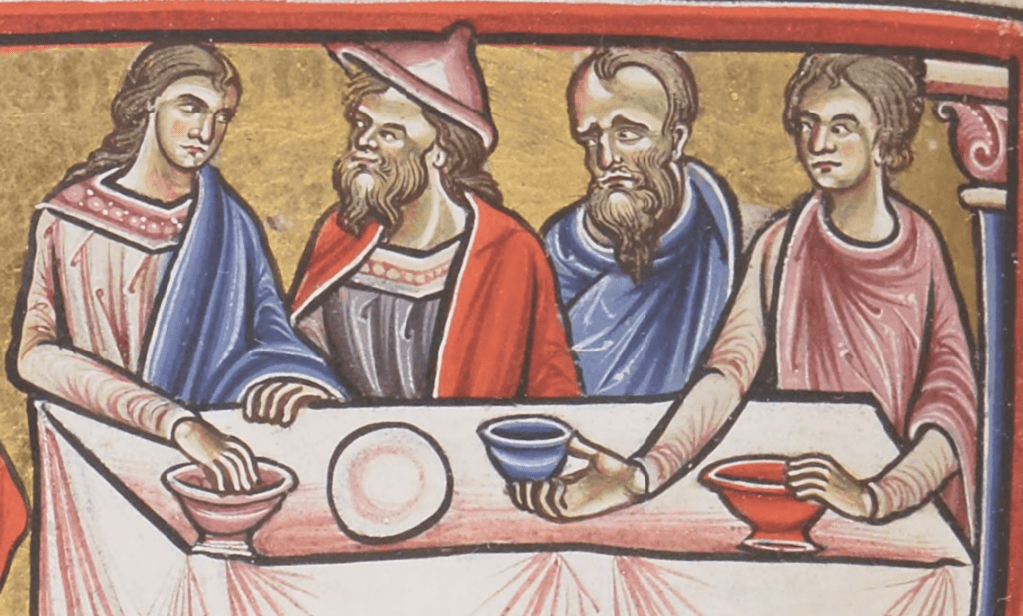
like i don’t know if you did you did you have that fear yeah i think i have that fear every time i do it
but uh you know because i you
i don’t know if you read about the monks that that uh that meditate in the mountains and they freeze to death i always wonder like why that happens could it be that they just they enter the state and don’t return you know and they get frozen in that posture
um you know so that i mean i don’t know i’m just speculating but but uh it’s speculation like that that keeps me afraid of p man um i you know i’m not uh i i still take high amts uh but i uh you know like i i i plan to … 2020 but i haven’t gotten around to it man because because of everything that happened but you know it’s whole stupid uh you know v… but uh i i mean it’s still uh still on the bucket list it’s
Cyb: the story you mentioned there about the monks freezing on the mountain and the earlier one about anthony the great locking himself in a s i think he said a stone room
those sound like very uh there’s some like good stories to interpret in the uh as analogy for altered state experiencing in which one is trapped in the block universe and perhaps freezes to death when it’s frozen there and dies on the mountainside on the rock while you’re meditating or in the altered state
yeah yeah i agree and the same thing that the anthony that anthony’s story would be a story of everyone thought he was trapped in the room and wasn’t going to survive but miraculously he survived and emerged enlightened this can all be that can fit my my analogy interpretive mind is going now as you’re mentioning these stories
that’s i mean to me that’s the value of a lot of these stories is the imagery of them uh to not so much about how we’re going to actually behave in our day-to-day lives but the imagery thereof to uh to express the express what happens in the altered state
Kaf: no i agree i absolutely agree that’s well you know that’s one of the reasons i mentioned mystical theology because they do have stories that can bring insight into a discussion like this
because imagine if you didn’t have the Egodeath theory, well you know, what would you rely upon you know and uh you know you would have to of course look towards scriptural source uh you know i practice hermeneutics and things like that like very intensely uh exegetical you know readings of scripture uh you know i things like i look into things like lectio divina you know the way the mystics would read text they wouldn’t simply read text they would be practicing you know these uh altered states and then come back to the text and they wouldn’t uh read it and try to intellectually interpret it they would now resonate with the text now having had the experience because the entire scripture is based out of the experience
you know there’s a lot of mystics that spoke towards that that you know the text ultimately doesn’t matter because it it’s something uh that’s that’s uh just a a remnant or a a byproduct of the experience itself of direct experience that’s what’s truly emphasized that’s what really if you pay attention i mean if you’re really paying attention i think what all religions are pointing to are is one’s direct experience of it
Max: right but jimmy so um that pushed the conversation slightly into the domain of analogy or metaphor which is a thing that we haven’t really touched on yet which i think we need to touch on later on in this conversation but just to bring it back a bit in response to the question that cyber disciple asked you
he was basically asking the experience that you had did it include these features which are not feeling like you’re not in control and also feeling fear and panic and i think that you emphatically answered yes to both of those questions you in this first mshrm trp that you had where you took … you experienced uh a feeling of block universe determinism and you experienced a feeling of fear and panic and you experienced a feeling of not being in control would you agree that you experienced those three things
Kaf: i agree and and i i think even the i was even more fearful than control like i you know to lose my volition uh really wasn’t i what was being sucked out of my life at that point was mystery itself it was like mystery was being sucked out of life
and and uh you know and if i i guess when i came back from that experience what you realize right away is like wow i i didn’t realize like yin and yang ignorance is very necessary to have any experience at all
that’s what i became grateful for because you see if if you were omniscient in some intellectual sense there would be no reason for me to speak right now because he would know every single thing i was going to say so it’d be no point to that
[why McK secretly stopped using:]
uh so you know that’s like you staying in that state of mind there’s no reason to stay in the state of that state of consciousness that’s kind of what it taught me and like so um what i feared the most was like all mystery of life disappearing because that’s what felt like was happening like all mystery was just being sucked out of life completely and so it until there was no mystery left
and um you know so uh it wasn’t necessarily like the will that was being emphasized but it is it’s in a way the same thing you know if
if there’s no mystery there’s there’s nothing to do there’s nothing to will there’s you know that it’s there’s nothing to control
so it is i think it’s just one way of saying the same thing it is fear of uh uh the mystery being gone is also a fear of you know losing control i think they’re one of the same thing
right right it sounds like what you’re saying is that in your particular experience that one time there was le you wouldn’t really strongly characterize it as a feeling of loss of control
but you would still characterize it as an experience of block universe determinism where everything had already happened and as you said there’s no more mystery to life because there’s nothing new that could possibly happen everything has already happened
plus coupled with a feeling of um it sounds almost like depression that you’re describing but also you had a feeling of a feeling of suicidality and panic
Kaf: yes i think that was uh like like i said i think it was more on the climb and in the come down rather than at the height because at the height like it was just the experience itself like there wasn’t i don’t think there was an ego any anymore there to fight with the experience of what was going on or to try to try to control anything um everything just became the
oh right okay yeah right so there is there is an element of non-control in this peak of the experience you you just said
yes exactly okay so i mean that um it certainly sounds from from my point of view like that that experience you you are describing is classically typically in line with what the ego death theory explains which is that you can model the intense p experience in terms of loss of control and block universe determinism
there’s nothing i hear in your description of the experience that contradicts that
it’s only when you start bringing in other thinkers other writers people like ramesh balsacar these mystics like um meister eckhart these people that you start to try to veer off of this um this very narrow limited and precise characterization of what mystical experience is about
if you’re just talking about your own experience it’s very clear that what you experienced was block universe determinism all time had already unfolded panic attack and suicidal feelings wanted wanting to end your own life also desperately wanting to end the experience by by inducing vomiting um and uh yeah and yeah panic fear
these are all the the core phenomena that the ego death theory identifies it’s so i’m saying it’s only really when you start to try to interpret it in the light of other writers that you have um read and other ideas that you’ve heard that you start kind of veering off that
yeah i mean it’s it’s hard not to uh i mean i i do have i guess my own understanding but uh you can’t be led astray by semantics especially you know of other writers uh or even like uh man i mean uh
King Ego Steering Among Branching Possibilities in a Tree – Quantum Multiverse Version: I Am the Creator of My Future Worldline, Now with Multiverse Hyper-Drive Power Added
something we haven’t maybe we’ll talk about it later uh i mean i’ll i’ll mention it real quick but i mean i’m pretty sure you you’ve heard of the multiverse or the um you know many worlds theory and it says like uh theories that say that not only does every decision you make uh create a different universe but it extends to like every collapse of a waveform every collision of atoms every event no matter how minuscule or insignificant that we’re not even aware of proliferates multiple time frames uh you know it doesn’t make sense obviously we kind of wrap our heads around it and uh it may be that we’re not confined to one timelines we could be living some uh timeline simultaneously or infinite number of timelines uh you know the idea of fractal universe infinite amount of fractal universes is that they’re constantly changing and moving like a type of cells a type of cells just washing over the world just you know back and forth never ends but why not right why reality
Max: i think uh jimmy if i could just try and bring what you’re saying now into more into this the terminological lines of the ego death theory what you’re saying is that to clarify or maybe extend the concept of block universe determinism in in the light of your own personal experience
when you tr-p … what you’re saying is that you didn’t just experience block universe determinism in the sense that everything had already happened in this world
you’re saying that it went further than that and that you were experiencing a sense that everything had already happened in this world and every other possible world so everything that could possibly happen exactly in any universe had already happened right so it was ultra ultra ultra block universe you could almost say maybe block multiverse determinism yeah anything that could ever happen in any possible world had already happened is that what you’re saying
Kaf: no no you got it you hit the [ _ ] now on the head man that’s exactly what i’ve been trying to articulate the past maybe hour or so but i i think you’ve you’ve said it really man i i couldn’t have said it might better myself yeah that’s exactly what i’ve been trying to say that
i didn’t get this impression of one world line; i had this impression of every single world line that could ever be and and so like uh it wasn’t yeah like i said it wasn’t readily discernible that that we know that this universe only consists of one possible worldline but it was this world
Max: yeah right right okay um with that i would actually quite like to wind this conversation up um in case my my brain turns to much but i would like to revisit this i i think we should do this again ideally another trialogue as soon as possible if that’s okay with the both of you
oh i’m totally cool with it max i love i love speaking to you man uh yeah i definitely would love to do it again man i’d be happy to yeah this is great

 The Egodeath theory
Reblogged this on Autism Candles.
LikeLike