[private note to the leader of the ignorant, blundering, naive Mycologists:] Rightly or wrongly, I am going to reject the Plaincourault fresco as representing a mushroom.
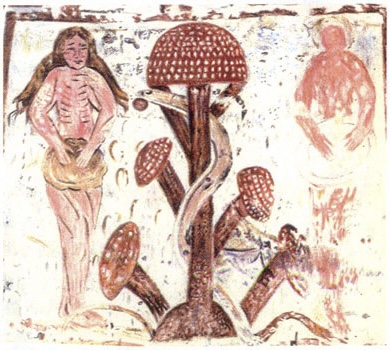
I’m going to just trust him on this, since he is a historian discussing art by using sound, tried-and-true historical criteria. 😑
The artist had no inkling that the Eden tree secretly has a long forgotten association with Amanita (via the serpent, which in pre-history, was considered the guardian and provider of the mushroom – a long-forgotten association that I’m the first one ever to figure out! 😊 🙌 ).
I’ve decided to abandon truth, coherence, intelligibility, and honesty, and join the anonymous writers’ committee of Dr. Secret Amanita and the evil M. Hoffman.
It’s easier sailing that way.
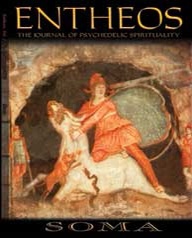
It turns out, Mirceau Eliade’s made-up load of arbitrary, intensely biased & prejudiced nonsense is the truth:
The great shamans of long ago were able to will themselves into the mushroom state without resorting to the crutch of the fake, simulated, modern, degenerate method, mushrooms.
http://www.egodeath.com/WassonEdenTree.htm#_Toc135889223
Mushrooms Have No Place in Entheogen Scholarship
I now take it as granted that ancients all considered mushrooms as despicable and worthy of insult, as the anti-mushroom psychedelic witch Thomas Hatsis takes for granted, building his argument on the basis of that implicit assumption.
We know that Christians didn’t use mushrooms, because if Christians had used mushrooms, pagans would have leaped at the opportunity to smear Christians as vile users of mushrooms.
But pagans didn’t smear Christians as users of mushrooms; therefore, we know that Christians didn’t use mushrooms.
Use your head, people, duh! 😣
“the big problems laid out in this study: … How pagan authorities could accuse Christians of infanticide, incest, and cannibalism — far more appalling crimes than adulating a fungus — but not accuse them of eating a mushroom;”
The Dogmatist’s Debacle
Picking a Specialization
I’m picking a specialization now, having officially joined the ranks of the Entheogen Scholars.
🤔
What type of entheogen do you think I should specialize my scholarship in, since it’s customary to wed a single-plant fallacy, and I’m kind of done with the Psilocybin single-plant fallacy, since it restricts you to only 250 different species of Psilocybin-containing mushrooms, and I want to broaden out a little bit in my chosen single-plant fallacy that I push.
I think I’m going to specialize in exclusively pushing Wouter Hanegraaff’s non-drug entheogens.
book: Contemporary Esotericism; chapter: Entheogenic Esotericism
https://www.academia.edu/3461770/Entheogenic_Esotericism_2012_ –
“Although the terms “entheogen” and “entheogenic” were invented with specific reference to the religious use of psychoactive substances, it is important to point out – although this broadens[ie completely inverts & negates the essential purpose & definition into its opposite] current understandings of the term– that the notion of “entheogenic religion”, if taken literally, does not strictly imply such substances: after all, there are many other factors that may trigger or facilitate a state of ε’νθουσιασμός (“enthusiasm”), such as specific breathing techniques [ie hyperventilation = Psilocybin], rhythmic drumming, ritual prayer and incantations, meditation, and so on.
“This was already the case in antiquity[please ignore my footnote 3], and remains so today.
“It will therefore be useful to distinguish between entheogenic religion in a narrow[ie drug-based entheogens] and in a wide sense[ie non-drug entheogens]: with respect to the wider category[ie non-entheogen based entheogens], one could think of such cases as the ritual practices known as “theurgy”, described for instance by the third/fourth-century neoplatonic philosopher Iamblichus,3[footnote: ‘may be plants‘] the complicated techniques known as “ecstatic kabbalah”, developed by the Jewish mystic Abraham Abulafia in the thirteenth century,4 or even the experience of being “filled by the Holy Spirit” in contemporary Pentecostalism.
“The historical evidence in Western culture for entheogenic religion in a narrow sense (that is, involving the use of psychoactive substances) is a contentious issue to say the least, and discussing it seriously would require a book-length treatment; but in order to establish that we are not pursuing a chimaera it suffices, for now, to point out that the existence of such kinds of religion in indigenous cultures is well documented, particularly in the Latin American context.5
“The present chapter will focus exclusively on one particular trend of contemporary entheogenic religion – in a narrow sense [ie drug-type entheogens ] – which may be defined as a form of Western esotericism and has not yet received the attention it deserves.”
“Footnote 3. See e.g. Shaw, “Theurgy”; Luck, “Theurgy and Forms of Worship”. Luck suggests that Neoplatonic theurgy may in fact have been entheogenic religion in the narrow sense[ie entheogen-based entheogens rather than non-entheogen based entheogens].”
Never trust an entheogen scholar.
Trust me on that; I’ve decided to become one of them.
Was there mushroom use in Christianity? Yes, but No.👎
Are you following my assertions?good. You are following my new mode of coherence.
I’ve ascended to the Ken Wilber Trans-Rational level, be sure to keep up.
Branches Prove that Mushroom Trees Don’t Look Like Mushrooms
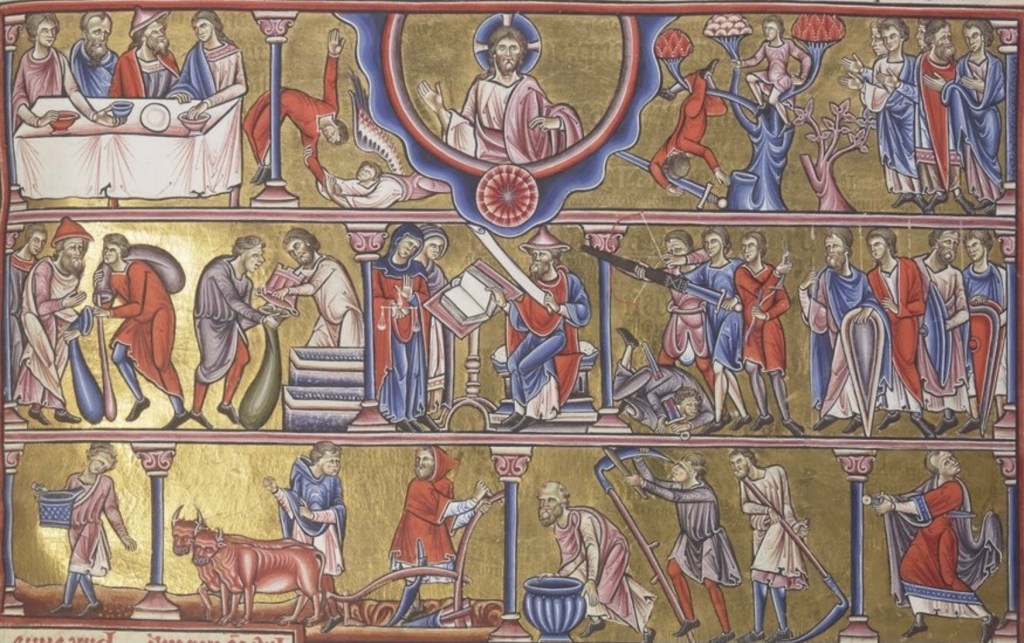
If the medieval, impressionistic artist Eadwine had wanted to give art historians a mushroom impression, he would have instantly set Erwin Panofsky’s precious meaninglessly sloppily accidentally distorted Pine tree templates on fire and consulted nature instead, and cut off the branches of this mushroom-looking tree.
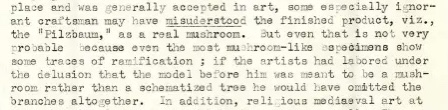
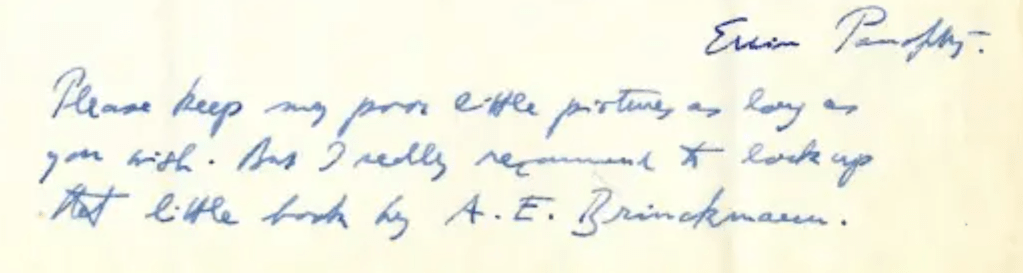
the kept-secret, second letter from Erwin Panofsky (the most influential art historian) to Gordon Wasson (the father of obstructionist ethnomycology), 10 days after the first letter.
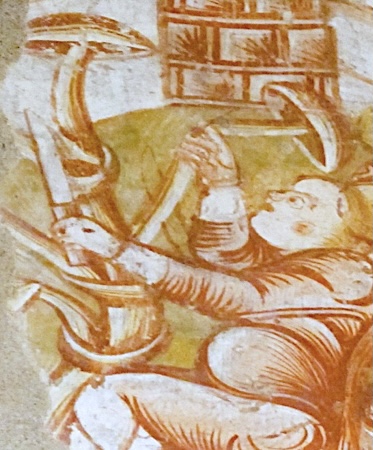
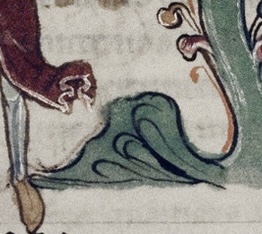
Real, normal Christianity (the kind that counts) has never used mushrooms, despite all the mushroid Eucharist texts and mushroom imagery.
The mushroom-tree artists had no inkling of the archaic-only, forgotten, obscure, “serpent-provided mushroom” association, and they would be shocked, shocked! if you were some especially ignorant craftsman laboring under the delusion, stuck to a naive misinterpretation made as a band of ardent advocates, in your blundering misapprehension and error due to your naive ignorance & isolation, that the mushroom-looking distorted templates are impressionistically styled to consciously & intentionally produce the impression that art historians describe as mushroom-looking trees (which art historians actually refer to as ‘Pilzbaum’ in German texts).
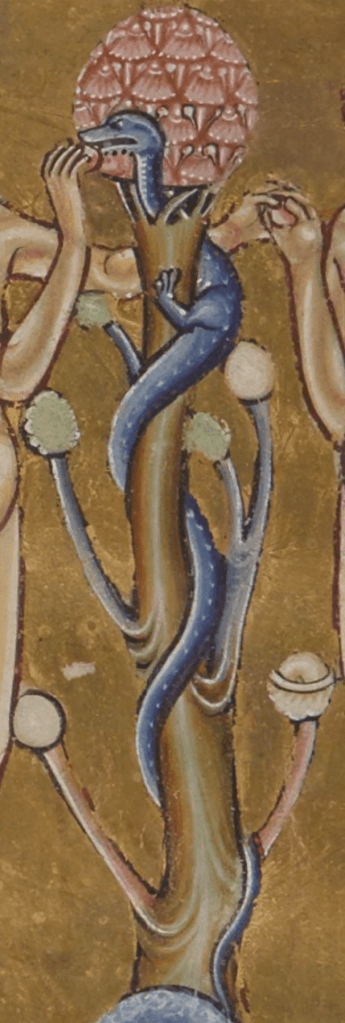
The mushroom-looking impressionistic meaningless accidental distortions in this Italian Pine depiction have no connection whatsoever with intending mushrooms, and this image has no place in any mycology discussion.
But however, the serpent in this Italian Pine picture (in a way of which the artist had no inkling at all), back only in the archaic era, used to have an association with the mushroom.
But I am the only one who’s figured that out, ever since 1000 BC! 😊 🙌
However, note that Panofsky has proved that this serpent-looking animal can’t possibly be intended by the artist to mean a serpent, or else the artist would have omitted the legs altogether.
That’s my sincere public profession of faith position official stated stance, despite my resulting necessarily 8-way direct self-contradiction.
Read the Art History Publications About Mushroom Trees, You Ignoramuses!
Read an art history book, you ignoramuses!
(but I won’t name the one, litttle 1906 book that exists and briefly touches on this topic of trees that look so distinctly like mushrooms despite their having branches.)

You Screwed Up: You Trusted Us Entheogen Scholars
I’ve decided to join the ranks of the Entheogen Scholars – so be sure not to trust anything that I write, from now on.
you’ve been warned
details: Egodeath Mystery Show episode 134a https://egodeaththeory.wordpress.com/2022/03/09/idea-development-page-13/#Ep134-Art-Historians-Got-Nothin maybe ~24:00 & last quarter ~1:40:00 (if you trust my app’s timestamp, which you’d have to be a gullible fool to do)

 The Egodeath theory
What’s most important Michael is to trust that which guides you. There will always be critics.
.
LikeLiked by 1 person
trying reply in wordpress app. On the one hand, junk arguments such as are rife regarding visionary plants in Christian history, are a waste of time to engage with; good analogy is: why would Copernicus waste time refuting particular epicycles of the surpassed Ptolemaic model? The wrong model is inherently a waste of time engaging – (reminds me of the way, described by Hanegraaff, that modern scienve trashcanned western esotericism posthaste without giving esotericism the compliment of a detailed engaged rebuttal, but summarily ditched the whole lot of esotericism as dross en toto. But my 2006 article is worth reading, well argued mostly, theres variuos reasons/ benefits for engaging a superseded view/position/ set of arguments or even a set of insincre coverup pretexts/ bluffing/ con artist deception. I even used ‘psychopath’ to describe the lack of hesitation, the “celerity with which”, Panofsky & Wasson insult everyone: mycologists & artists alike. This editing window is too tiny for my BIG THINKING 🤔🤯😑
LikeLiked by 1 person
In tonights read-aloud halfway through my 2006 Plaincourault article, I reached a passage like your comment, where I point out that Wasson/Panofsky’s obstructionism attempts had no power to prevent entheogen scholarship of eg 1996-2006 from realizing & taking advantage of the backfire risk in the Panofsky argument: “there are Too Many Mushroom Trees to be able to suppose that they mean mushrooms.”
Us: Hold our beer. …
LikeLiked by 1 person