Contents:
- todo
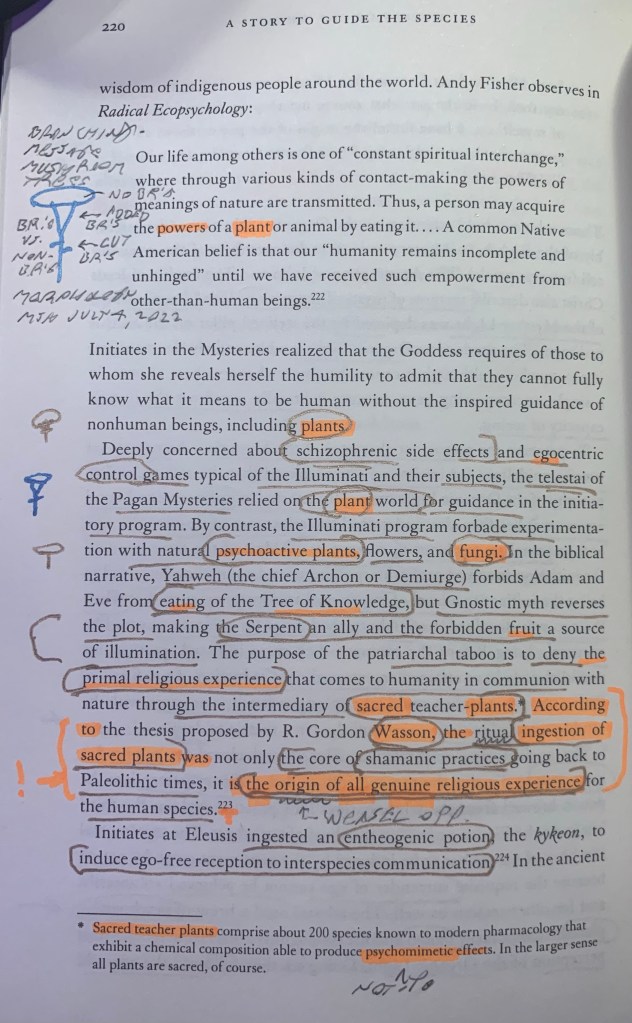
The ingestion of sacred plants is the origin of all genuine religious experience.
R. Gordon Wasson, presenting the Wasson thesis, in Lash 2nd Ed. p. 220
That is the Wasson thesis, as reported by John Lash.
The Wasson thesis is actually, in fact, the entheogenic theory of religion except Christianity.
That is the Lash/Wasson standard “entheogen theory of religion except Christianity”.
hey wasson
i have a question
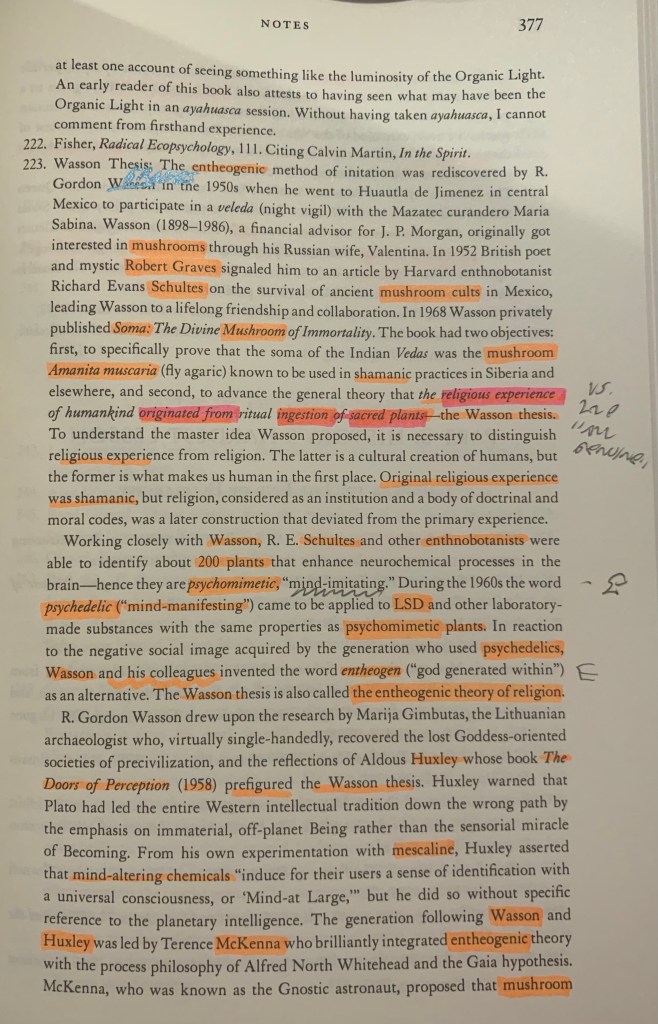
… for you to be given the extreme massive (yet vague & silent re: Christianity) credit that John Lash gives you as the creator of the entheogenic theory of religion, which asserts all genuine religious experience is by ingesting entheogens:
What specifically is the Wasson thesis?
What specifically is the entheogenic theory of religion?
… Especially regarding medieval Christianity, hellenistic symposia mixed wine, mystery religion sacred meals (not focusing on Eleusis/ kykeon, please), and mushroom trees in Christian art.
What is your definition of “the entheogenic theory of religion”?
What is your definition of “the entheogenic theory of Christianity”?
Does the medieval church contain genuine religious experiencing that’s not from ingesting entheogens?
Are entheogens the origin of all genuine Christian religious experiencing in the middle ages?
Did Christians in the middle ages know that all genuine religious experiencing is from ingesting visionary plants?
Is your theory the entheogenic theory of religion?
Are you the creator of the entheogenic theory of religion, like you wrote in Soma that you were the first person since pre-history to associate the tree of the knowledge of good and evil with amanita (other than the mycologists, that said that the tree in the fresco is amanita, and other than the mushroom tree artists and their viewers)?
Given that the Eden trees are Amanita as you wrote, then is the tree of life at the other end of the bible Amanita?
Is the entheogenic theory of religion the theory that “the … ingestion of sacred plants … is the origin of all genuine religious experience” (Lash p.220), or is John Lash misattributing that innovation and that theory to you?
Are you the creator of the word ‘entheogen’, or is Ruck?
Do you agree with the maximal entheogen theory of religion, that visionary plants are by far the main way that Christians, and others, accessed the intense mystic altered state throughout history?
Are the hundreds of mushroom trees in Christian art (aside from the Plaincourault fresco) depictions of mushroom imagery?
Are the 75 mushroom plants in the Canterbury Psalter representations of mushrooms, given that (as Lash says that you were the first to assert) all genuine religious experience is from ingesting entheogens?
Are Panofsky’s two “little pictures” that he attached to one of his May 1952 pair of letters to you paintings of mushroom imagery, given that “the … ingestion of sacred plants … is the origin of all genuine religious experience”?
Do you agree with Albert Brinckmann 1906 per Panofsky, that mushroom trees are random accidental sloppy distortions of Italian umbrella pines?
Why did the art world accept the outcome of the pine tree template development into mushroom evoking imagery, given that they knew would cause viewers to describe them as mushroom trees?
Were artists unaware that their pilzbaum force a mushroom impression on the viewer?
If mushroom tree artists did not want to cause the impression of mushrooms on the viewer, then why did they go ahead and depict mushroom imagery in a way that they knew would force a mushroom impression on their viewers?
Why exactly did the mushroom-tree artists consider causing this mushroom impression to be acceptable?
Why did the art world accept this particular specific outcome, which is to say, a mushroom-looking outcome?
What is your theory of individual artist intention re: mushroom trees?
Did you obtain & read Brinckmann’s book which Panofsky’s pair of May 1952 letters strongly urged you to read, and which author name & accurate title you wrote on his letter that you partly republished?
Did Panofsky give you permission to publically publish his two letters to you? were they intended for public consumption, unlike your “rightly or wrongly we are committed skeptics” letter to lead mycologist John Ramsbottom?
How did you decide which portions of Panofsky’s pair of letters to publish, and which parts to keep secret and hidden from the public?
Why didn’t you pass on Panofsky’s double recommendation of Brinckmann’s book to the mycologists; John Ramsbottom, and the public?
A genuine authentic maximal entheogen theorist and a real scholar would have provided citations, not hid them away, like Lash’s deleted articles about the Canterbury Psalter’s many mushroom trees.
Why did you publish a couple of Panofsky’s arguments from the first letter, but you didnt publish any of his arguments from his second letter, such as:
There are too many mushroom-trees for them to represent mushrooms.
and that:
The mushroom-tree artists would have had to omit the branching features, if they had wanted to give the viewer the impression of mushrooms, such that art historians would call them pilzbaum.
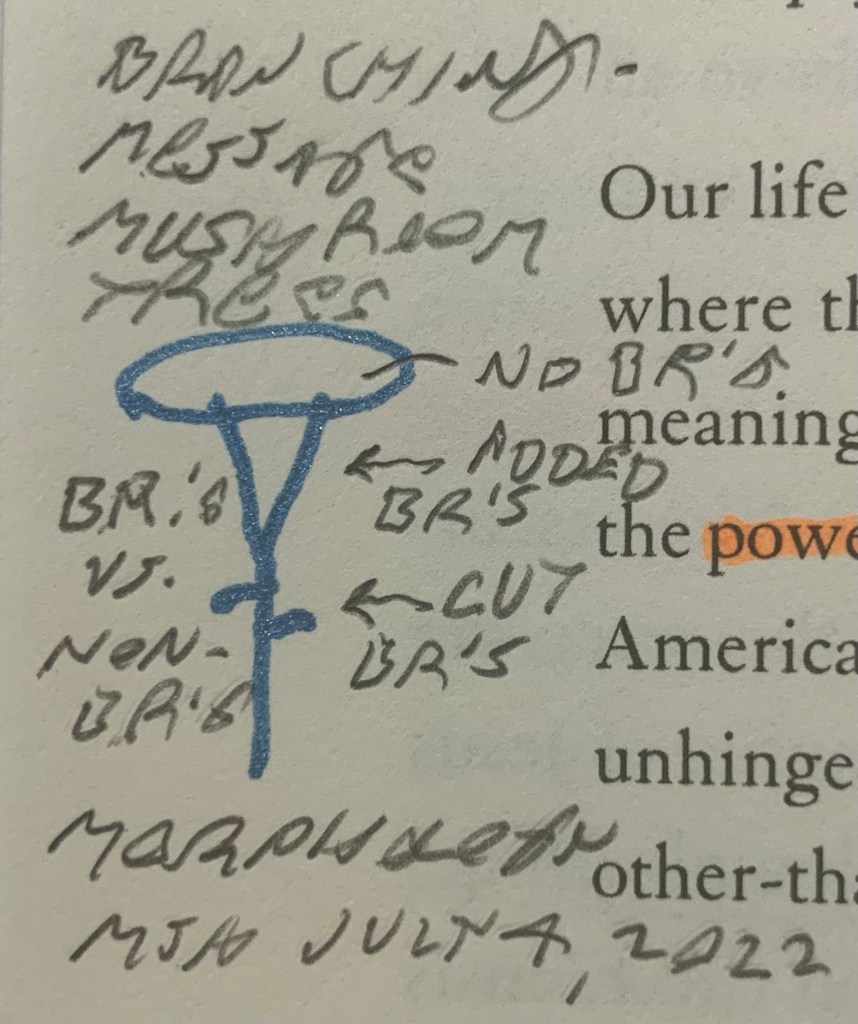
Were you telling mycologists that they had to go consult the art historians merely to get the dogmatic conclusion according to the art historian authorities?
Or were you telling mycologists that they need to have a two-way discussion and debate and investigation to open up like Panofsky’s citing Brinckmann’s’s book and including attached paintings, like an actual honest and curious scholar would do?
john lash, Not in His Name, 2nd ed. p 220, 377, 392
add links to lash’s deleted, covered-up articles about his discovery of some of the 75 mushroom trees in canterbury psalter as “the discovery of a lifetime”, which he hides and omits from his book Not in His Name because they make Christianity look good, against his narrative agenda of “the big bad church eliminated all entheogens” – same false narrative most entheogen scholars are committed to;
entheogen scholars would rather remove mushrooms from Christianity than admit mushrooms are within Christianity.
add links to Idea Development page 13 here, voice – Egodeath Mystery Show reading Lash book
Egodeath Mystery Show episode 179 – Graves Wasson Thesis (July Fourth, 2022

 The Egodeath theory
A noun changes greatly by the adjective placed in front of it such as when the adjective ‘Authentic’ vs the adjective ‘Organized’ is placed in front of the word, ‘religion/religious experience’ – Authentic religion/religious experience vs Organized religion/religious experience. . In Authentic religion/religious experience, the word ‘religion/religious’ is purely and authentically the practice of the sacred divine which a person directly and wholly receives for spiritual growth. In Organized religion/religious experience, the primary benefit and direction of reception of religion/religious experience is for and toward the maintence of the actual institution of religion/religious experience, mainly its political and physical structure/makeup including – the church/ hierarchy of priests, bishops and pope/king, rather than for the individual person receiving and experiencing religion. Those changes of religion/religious experience takes place in the middle ages.
LikeLike