Contents:
- Sacrifice to the Astral Daimons to End Their Tormenting
- Announcing Art Breakthrough of Brown’s Two Images:
Youths Hold Removed Possibility Branching, Put Right Leg Forward, Remove Their Worldmodel Garment Placed Under Epiphany Perception of Higher Controller - Gnosis Is of Heimarmene/ Fatedness/ Eternalism
- Sun Scarab Is Psychoactive Because Eats Psilocybin Mushrooms
- Essentialism in Gnosis Is as Sound & Routine as with any Natural Law
- Hanegraaff Cites Ken Wilber’s Eye to Eye
- “You cannot write the history of gnosis if you hold that gnosis transcends history”
- His Unscientific, Stars-Incompatible Cosmos Revision to Invert Cognitive Development as if from Eternalism Delusion Through the Saturn Gate into the Revelation of Egoic Possibilism
- Define Your Damn Terms: Religionism
(Admin: List nesting/indenting remains broken at WordPress.)
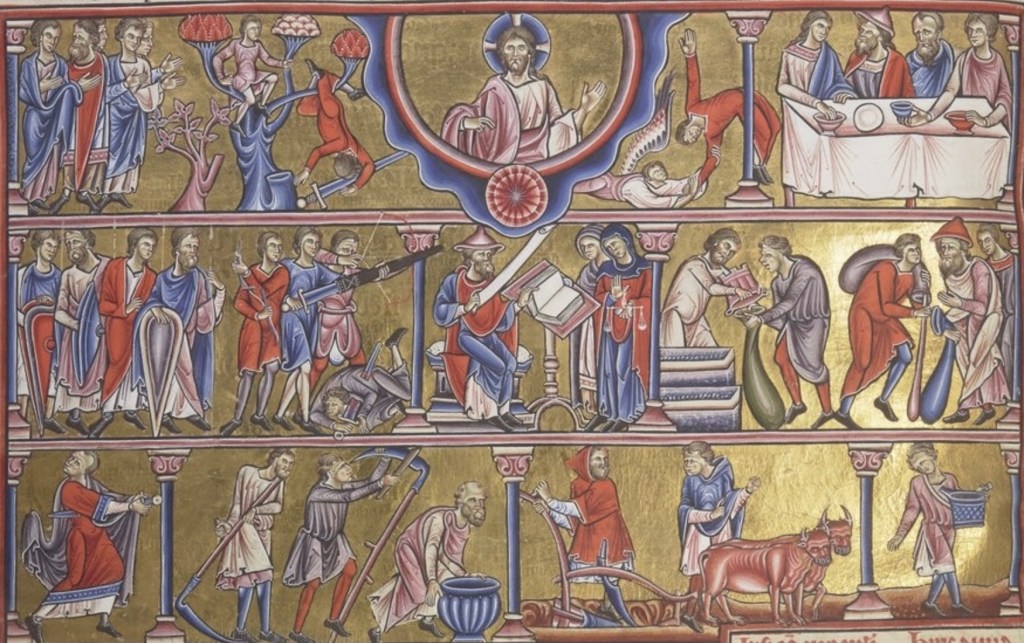
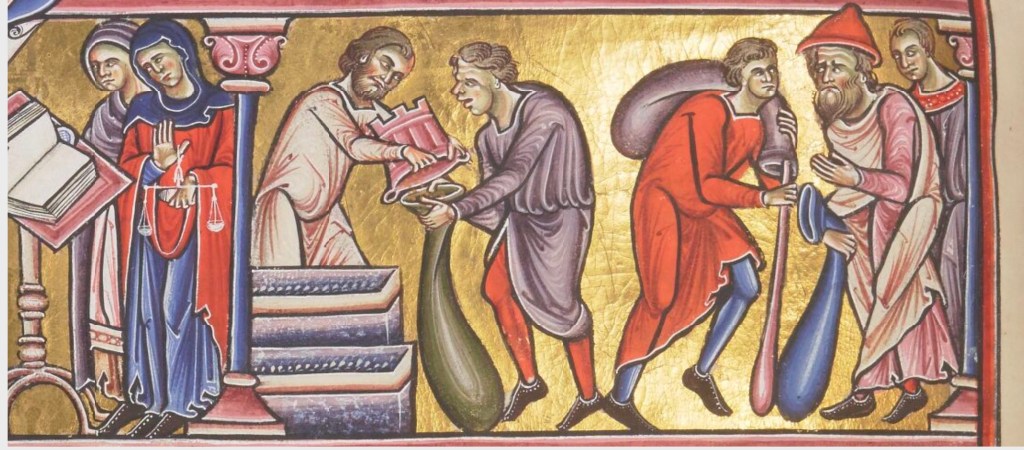
imagine if I said the takeaway from the Eadwine image is that gnosis is conversion from right leg to left leg because the sage lifts right foot.
This is the extent of Hanegraaff falling for the hermetic poetic ironic inversion use of the theme “I Hate Fate”.
He paints an inverted model of psychospiritual development from eternalism to possibilism, that’s so extremely untenable, he has to avoid the topic of fixed stars, which destroys his that-delicate, perishable, flimsy model.
Sacrifice to the Astral Daimons to End Their Tormenting
Cognitive Dissonance Solved, My Assertion Confirmed! You Sacrifice TO the Fate-Daimons to Appease Them and Ward-off Their Torments (Not Their Reality/Power)
I reread the page before “to drive away the fate-controller daimons, she offers sacrifice.”
In yesterday’s voice recordings for Egodeath Mystery Show, I yelled: “to who? To who?! This is incoherent incomprehension — or a whitewash cover-up by Hanegraaff; you don’t just “offer sacrifice“, to nothing and to no divinity!! That’s not how sacrifice worked, that’s vague, superficial, magical thinking!”
I stumbled very happily upon and reread: The previous page”s quoted ancient text confirms my answer that I asserted: she sacrificed TO the fate-controllers: to the astral / planetary daimons.
Of whom the emperor is Helios demiurge in the fixed stars level – he says “Helios divine demiurge” in another article/context I found yesterday, check Gnosis entry 2016 Cam. Hbk W Mys/Esotericism.
To end torments when ascending through the 7 planetary spheres, you must HONOR, by sacificing to, the fate controllers.
You sacrifice your claim to be not controlled by fate/eternalism, to gain control stability.
Announcing Art Breakthrough of Brown’s Two Images
Youths Hold Removed Possibility Branching, Put Right Leg Forward, Remove Their Worldmodel Garment (Cloak) Placed Under Epiphany Perception of Higher Controller
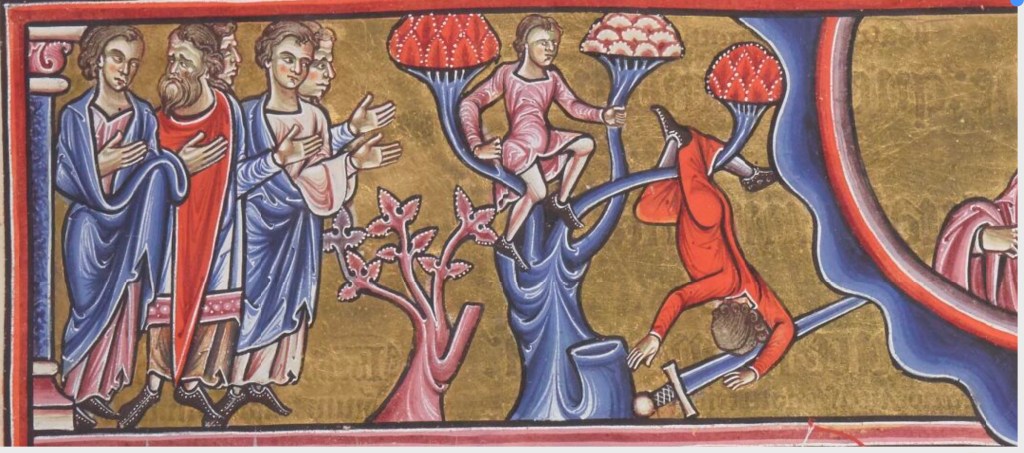
This is separate from Hanegraaff progress, but in Sep 3 Sat voice recordings, I (too briefly so far) discussed the problem of announcing this major art breakthrough of interpretation: that youth are in a branching tree holding removed possibility branching and Jesus approaches.
I identified this by using, among other images, most prominently, two isomorphic images from Brown. Jesus on right-foot donkey approaches youth and tree, youth holding out removed possibility-branching in right arm.
This is the Jesus revelation of the higher controller, in images that show mushroom trees, that include youths in trees holding onto branching with left hand, and holding out removed branching with the right hand, as Jesus the higher controller approaches and makes his epiphany entrance, and is seen; as the youths in the trees see Jesus the higher controller, in these mushroom images of {branching-message trees}, asserting non-branching, and handedness.
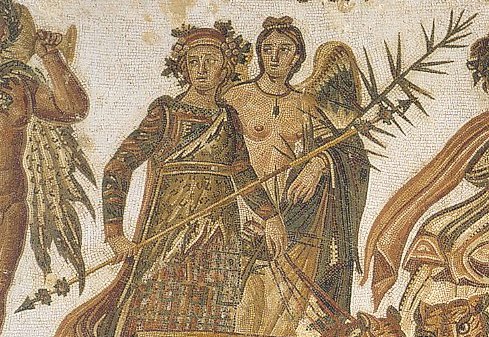
I also made progress decoding/mapping/interpreting/ resolving the “garment” (cloak) mytheme by considering (mainly by talking on the Egodeath Mystery Show a couple days ago as a sudden aside) that Ariadne in Dionysus victory procession mosaic holds garment like she holds branch in left arm so THEREFORE GARMENT/CLOAK = ILLUSORY BRANCHING = egoic possibilism mental worldmodel, now removed & revealing – like Brown’s interpretation of Eve’s ribs made visible under flesh:
The underlying eternalism reality: Dionysus wears the glorious garment of the eternalism mental worldmodel, holds nonbranching spear in right arm: Sep 4 11:14am note: BOTH ARIADNE AND DIONYSUS CONTRAST TWO ELEMENTS: GARMENT/CLOAK 1 VS 2 (her removed garment, his glorious garment), HELD ITEM 1 VS 2 (branch vs nonbranching spear).
JESUS IS THE PSILOCYBIN REVELATION OF NON-BRANCHING including Douglas Hofstadter awareness of levels of control.
Jesus is the higher controller and the awareness that you are subject to and controlled by a higher controller, or something that is higher than or outside or beyond your domain of personal control power.
The Psilocybin eucharist
You see that don’t control the source of control thoughts, and you see monopossibility.
Control agency seems to be steering in a tree, but with the psilocybin eucharist, the tree is revealed to be non-branching (like a snake-shaped path in the tree).
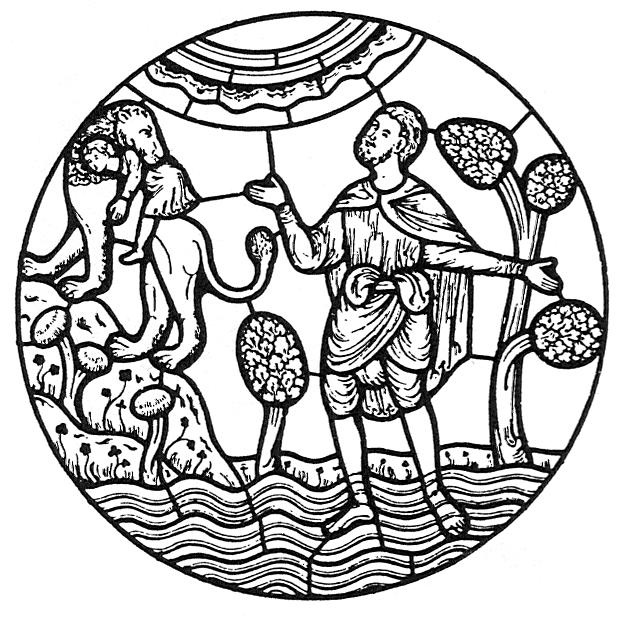
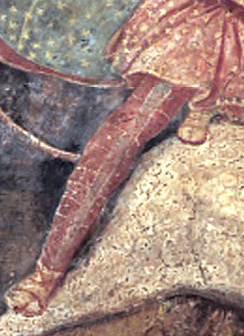
Eustace window, Chartres cathedral:
left leg (heel raised, no weight on it) = possibilism thinking/ initial branching-premise;
right leg / foot/ limb/hand/arm = eternalism-thinking/ non-branching reality.
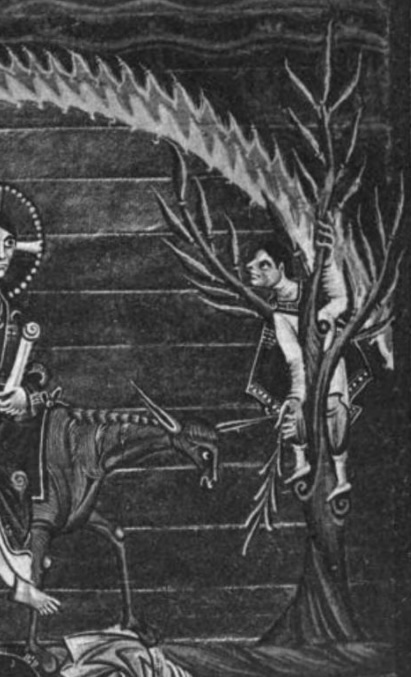
Brown translated 1/4 to English at my Brinckmann page here.
{fire/light arch} decoded
1:05 p.m. September 4, 2022: The fire arch in this medieval painting means the perception, able to see eternalism, from outside the block universe; the hypercosmic perspective.
I’m lifted up outside of eternalism / heimarmene so that I am able to see it – NOT so that I become magically freed and empowered over it (except insofar as “I” am God the creator/ higher controller – which ain’t much in any actionable sense).
Ulansey articles:
Mithras and the Hypercosmic Sun click here.
The Eighth Gate: The Mithraic Lion-Headed Figure and the Platonic World-Soul click here.
Cosmic symbolism in the Gospels (from the Journal of Biblical Literature) click here.
The Mithraic Mysteries, published in Scientific American (December, 1989), click here.
{youth in tree}
Artist could have made left foot floating, right foot on cut branch.
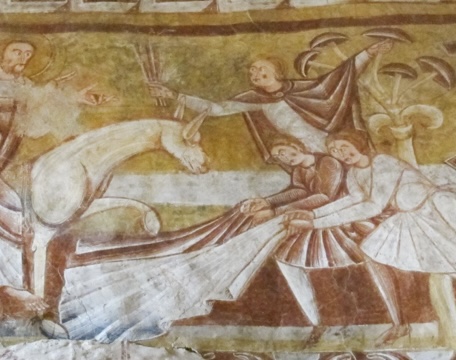
Take off possibilism garment/cloak, remove it and uncover truth underlying visible, put your garment/cloak underneath the revealed higher control level.
Take off your possibilism garment/cloak, remove it and uncover truth underlying visible, put your garment/cloak underneath the revealed higher control level.
Take off your possibilism appearance covering garment/cloak, remove it and uncover truth underlying, made visible/perceptible: the youth perceives Jesus as king/higher controller and asserts non-branching.
The arrival of perceiving the higher controller when psilocybin, removes branching possibilities. King Inevitability & personal non-control of control-thoughts/ possibility steering.
Right leg forward, asserting eternalism not possibilism, not branching possibilities steered among by the purported power of personal control agency.
I should try image processing/ enhancing the ~4 images of held branches.
put weight on right leg, affirm right arm.
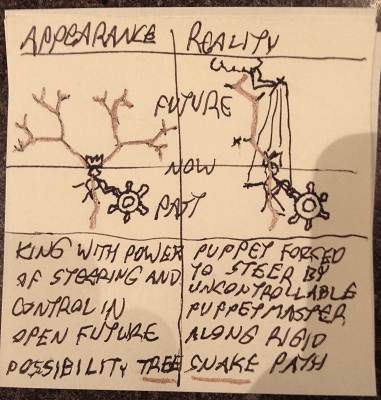
I fit perennialial essentialist gnosis – Transcendent Knowledge – on a post-it note, in STEM fashion per my approach which is the multistate cognitive science of religion approach which hanegraaff invites to contribute to academic study of history of religion/ esotericism.
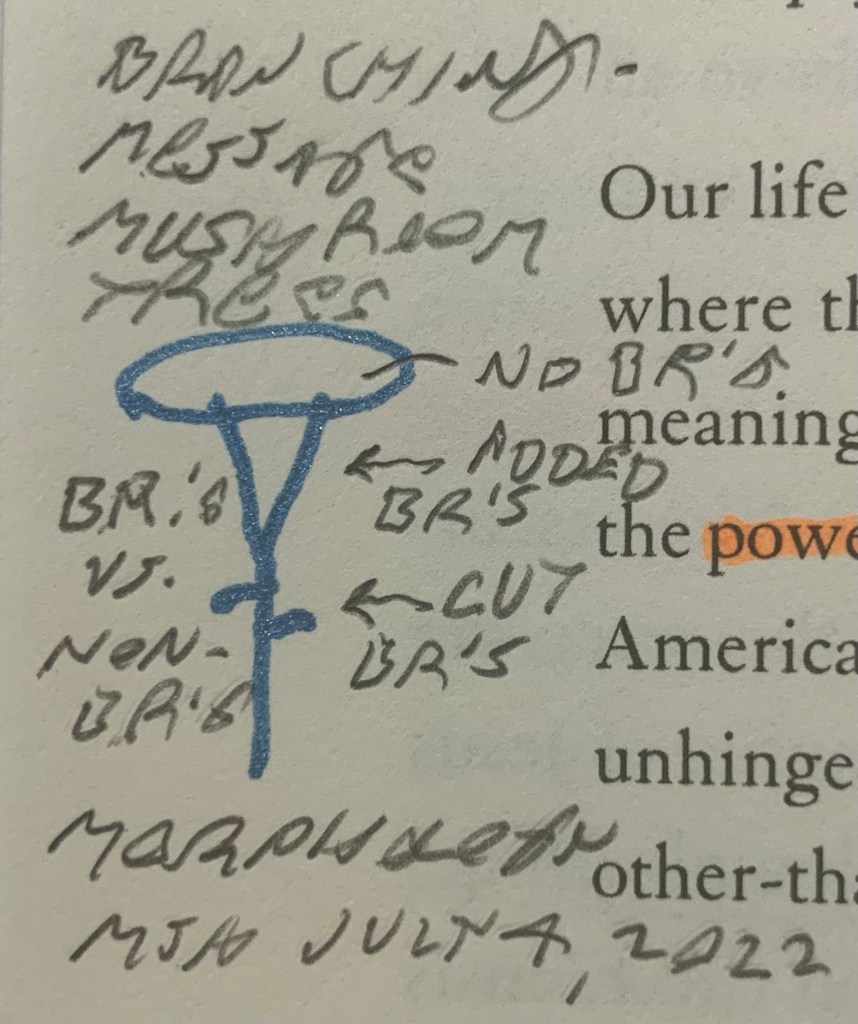
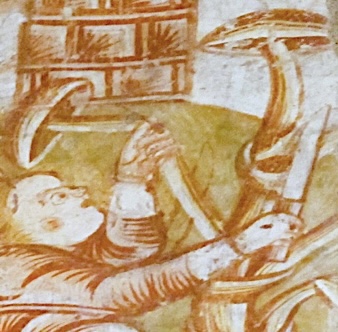
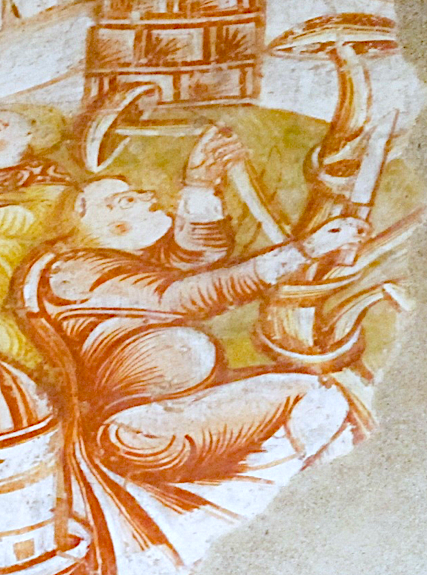
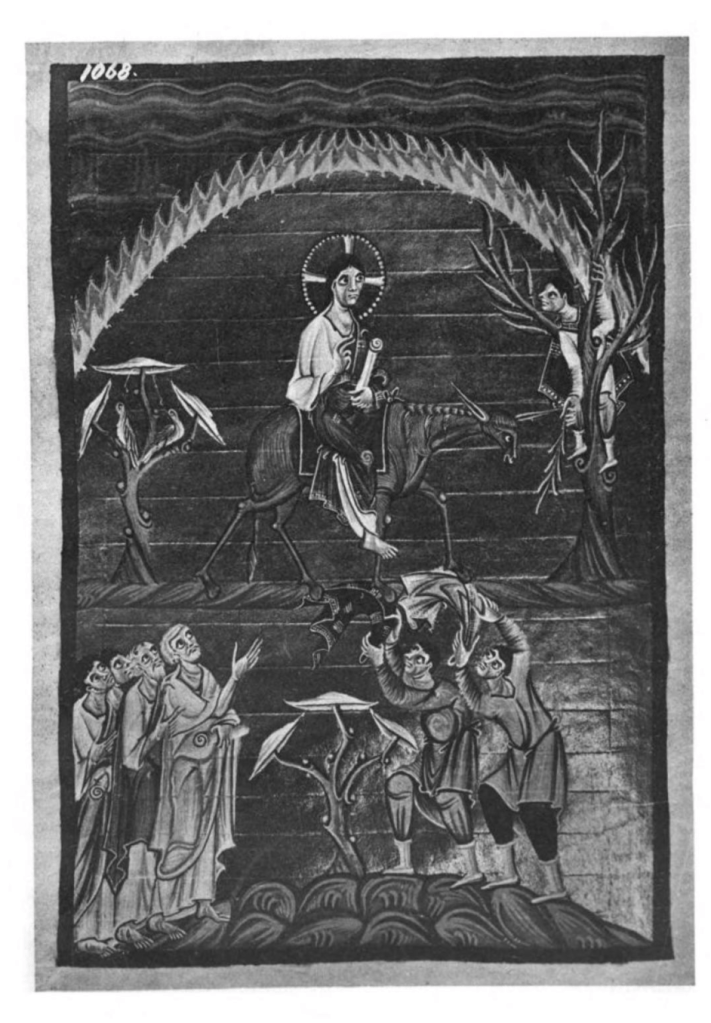
psilocybin removes branching of the control-agent’s possibility-steering tree, makes perceptible the epiphany of higher control level arriving with weight on right leg.
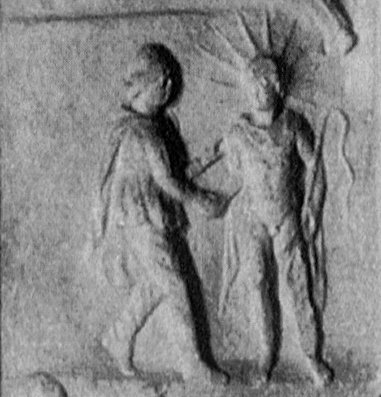
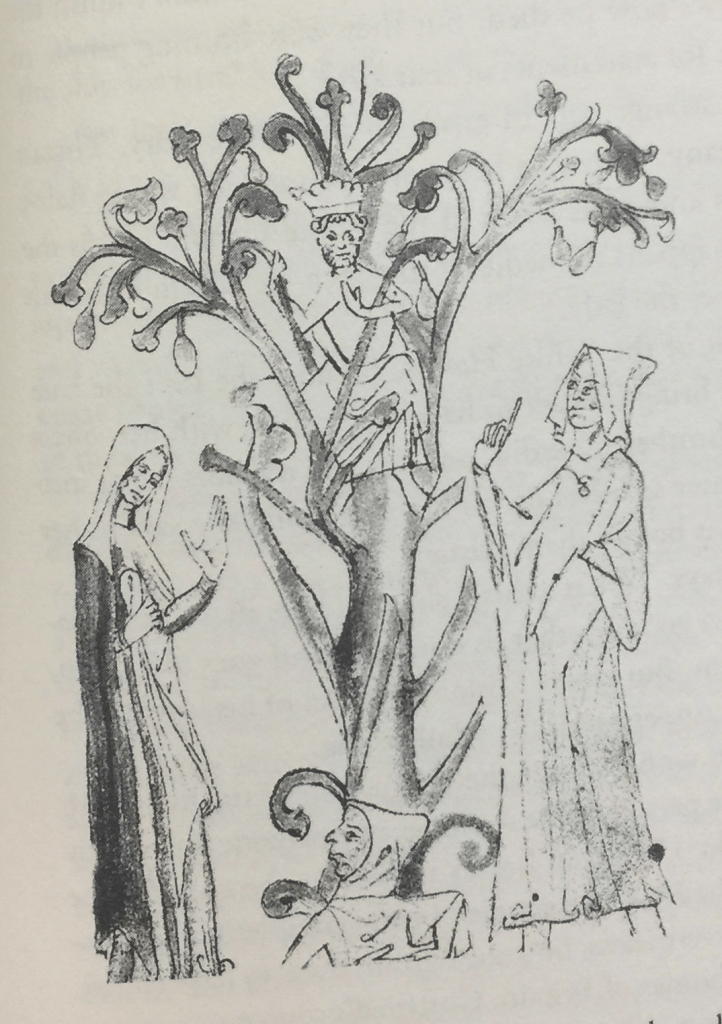
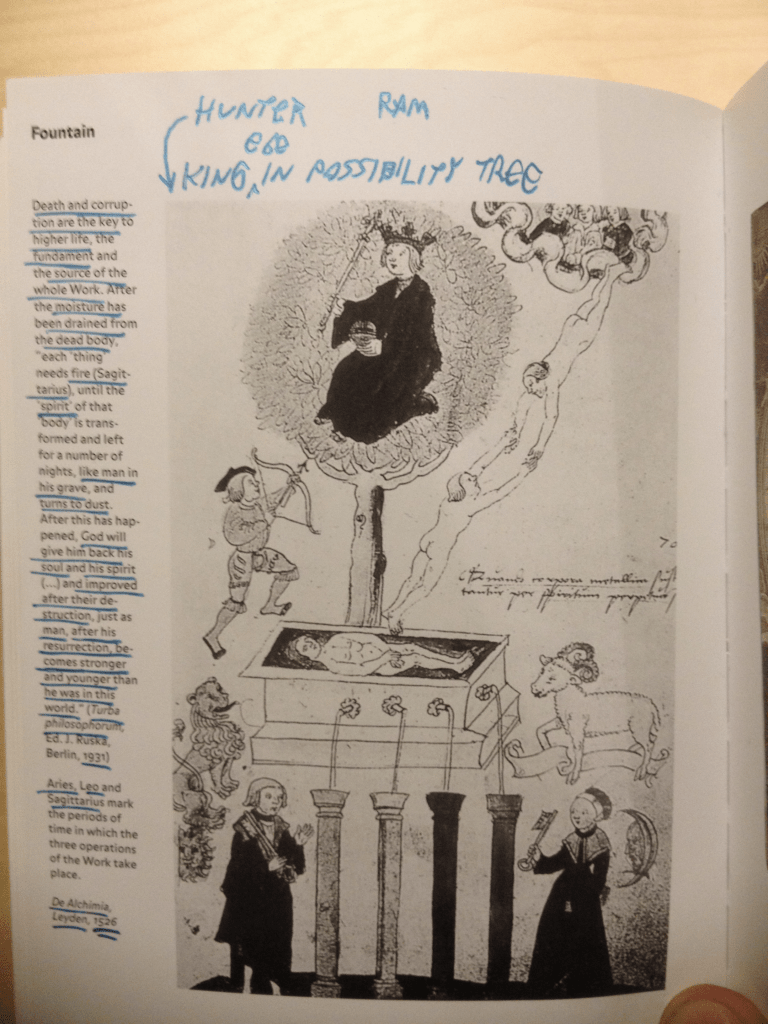
~2011 – I was sure glad to get this confirmation of my hypothesis of extending/ expecting to find instances of equivalent to {King Pentheus in a tree}! Around 2011, I asked “Isn’t {king steering in a tree} a great efficient condensed mytheme combination configuration we need and should expect to find? Answer: YES.
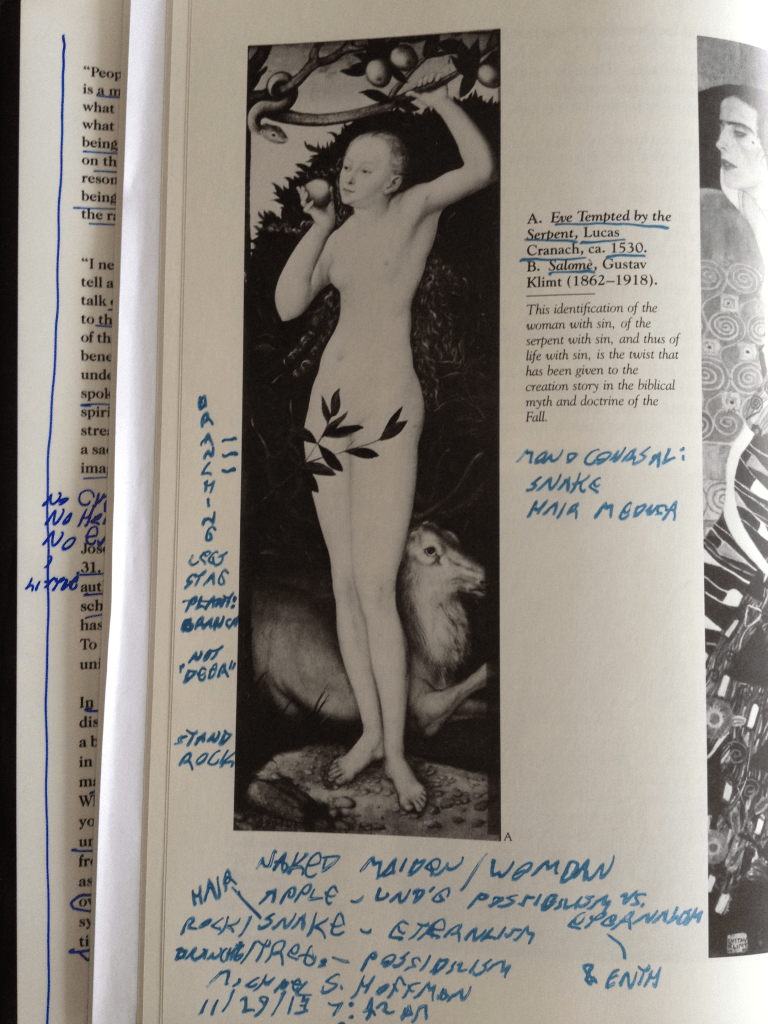

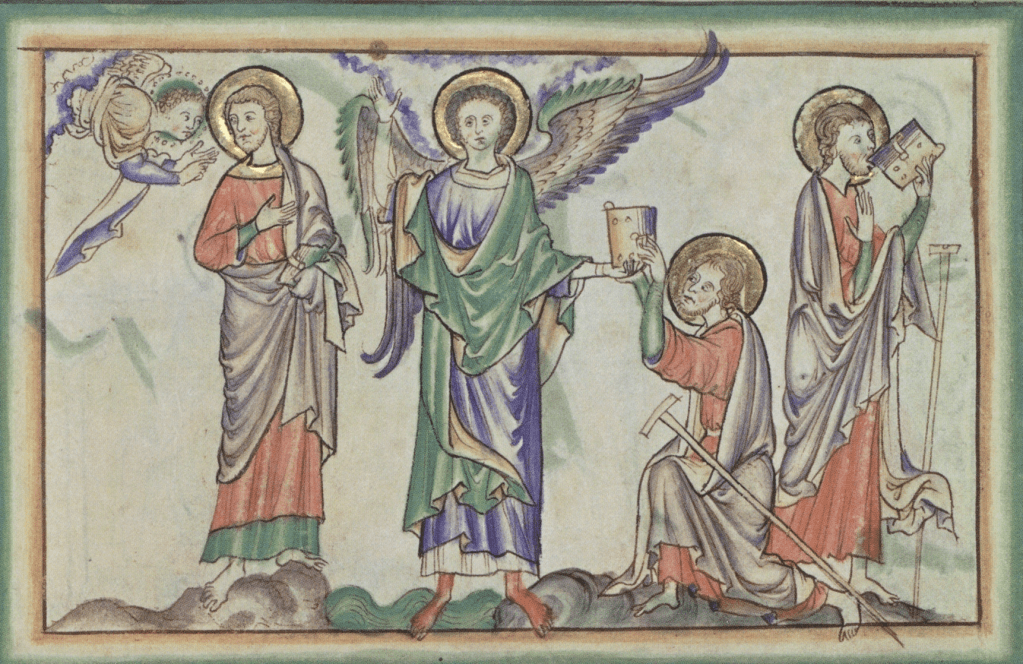
Eating the amanita scroll (indicates psilocybin) causes lifted garment/cloak, revealing the reality under the garment/cloak/appearance that covers and hides the underlying reality about personal control agency and its power of possibility branching steering.
http://www.clinicalanthropology.com/jesus-mushrooms-origin-christianity/
Email to Professor Jerry Brown September 4, 2022
Hi Jerry [Professor Brown],
Announcement: I have positively identified, in the past week, what the youths in mushroom-related trees are holding in right arm: removed branches, meaning removed possibility branching; asserting eternalism rather than possibilism.
Depiction of anti-naturalistic diamond leaves means the morphology is the message; the art message is about branching, not a species of tree.
Mushroom trees are in this image from Albert Brinckmann’s book that Erwin Panofsky twice recommended in the pair of letters to Wasson that you published, so this is to be considered as a mushroom tree; a branching-message mushroom tree.
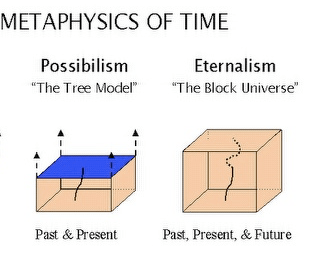
The mytheme {left vs right} = possibilism vs. eternalism.
https://egodeaththeory.wordpress.com/2020/11/12/possibilism-vs-eternalism-2-models-of-time-and-control/
I did this (made this realization, made this connection) by late at night idly gathering my gallery of images of guys in trees, and holding branches, including especially two images that are associated with you: Julie’s photos and Brinckmann’s 1906 book Tree Stylizations in Medieval Art, plate 7. https://egodeaththeory.wordpress.com/2020/12/11/brinckmann-mushroom-trees-asymmetrical-branching/
1. My discovery was while late night last weekend idly gathering images in “Gallery” section in Idea Development page 14:
https://egodeaththeory.wordpress.com/2022/07/14/idea-development-page-14/#Gallery
The next day, I confirmed the merit/defensibility of this conjectured reading, which I have been working on ever since you emailed us around Spring 2022 ~April that the fresco scholar wrote about youths “cutting branches” (your bolding); I asked what the heck is he holding out to Jesus on donkey in right hand?
Answer this week: removed possibility branches/branching a la asserting the Eternalism rather than Possibilism metaphysical model of time & control per Stanford online ency. Philosophy: Philosophy of Time article.
I may have conjectured that as soon as receiving your “cutting branches” email, but now it’s a positive, articulated, defensible, well-specified & well-evidenced identification.
Especially it became clear last weekend when I put the two pictures together to see the isomorphisms centered at donkey & youth in mushroom-related tree holding removed branching while seeing Jesus’ arrival.
2. After that, I made a dedicated posting on the same art interpretation subject:
- Brinckmann and Brown Book Plates Handedness Branching Youth in Tree Jesus Riding Donkey
https://egodeaththeory.wordpress.com/2022/08/28/brinckmann-and-brown-book-plates-handedness-branching-youth-in-tree-jesus-riding-donkey/
3. Today I wrote up from yesterday’s Egodeath Mystery Show discussion recordings segment on same subject-cluster: {garment, handednesss [donkey right foot down, left not; right foot forward], nonbranching, epiphany, branching-message mushroom trees}:
https://egodeaththeory.wordpress.com/2022/09/04/progress-on-the-hanegraaff-front/
— Michael
Gnosis Is of Heimarmene/ Fatedness/ Eternalism
I strikingly noticed something about his list of gnosis vs: “Demiurge, archons, heimarmene, astral fate, etc”: when Hanegraaff’s Gnosis handbook-entry was claiming that the latter are not the proper center of focus but instead we should make gnosis the proper center of focus.
Every single one of his gnostic mythology terms that he claims is inappropriately emphasized as the center of focus, every one of the gnostic mythemes that he lists describes heimarmene/ fatedness/ eternalism!
See Egodeath Mystery Show pending, recorded ~Sep. 1-4 2022, for Episode 219.
Big finding: in his “Gnosis” 12-page entry in The Cambridge Handbook of Western Mysticism and Esotericism (Magee 2016), Hanegraaff replaces heimarmene-related list of gnostic myth themes by gnosis as the center of focus. But they are same!!
https://www.academia.edu/25678334/Gnosis_2016_
He asserts the false dichotomy of “we should centrally focus on gnosis, instead of on heimarmene myth themes”.
His unthinking presupposition is that gnosis is not about heimarmene/ eternalism/ no-free-will.
He assumes unthinkingly that gnosis reveals some knowledge other than, and essentially unrelated to, heimarmene/ fatedness/ eternalism.
Gnosis is of heimarmene/ eternalism/ you don’t control the source of control thoughts, they are separate control levels a la D Hofstadter GEB.
The mind experiences this revelation as being a helpless 1) puppet 2) frozen in rock 3) coerced by the experience of sacred transcendent deja vu, the experience of remembering “oh no oh yes, I remember, here is the episode where my control is threatened to death”;
Every direction the mind turns spells same conclusion: no effective control is based on possibilism thinking when this aspect of the mind is vividly perceived and tested in the altered state, loose cog assn state, divine madness.
Sacrifice/ jettison that possibilism / branching thinking to retain stable, effective control.
Sun Scarab Is Psychoactive Because Eats Psilocybin Mushrooms
Holy Cow 💩🍄
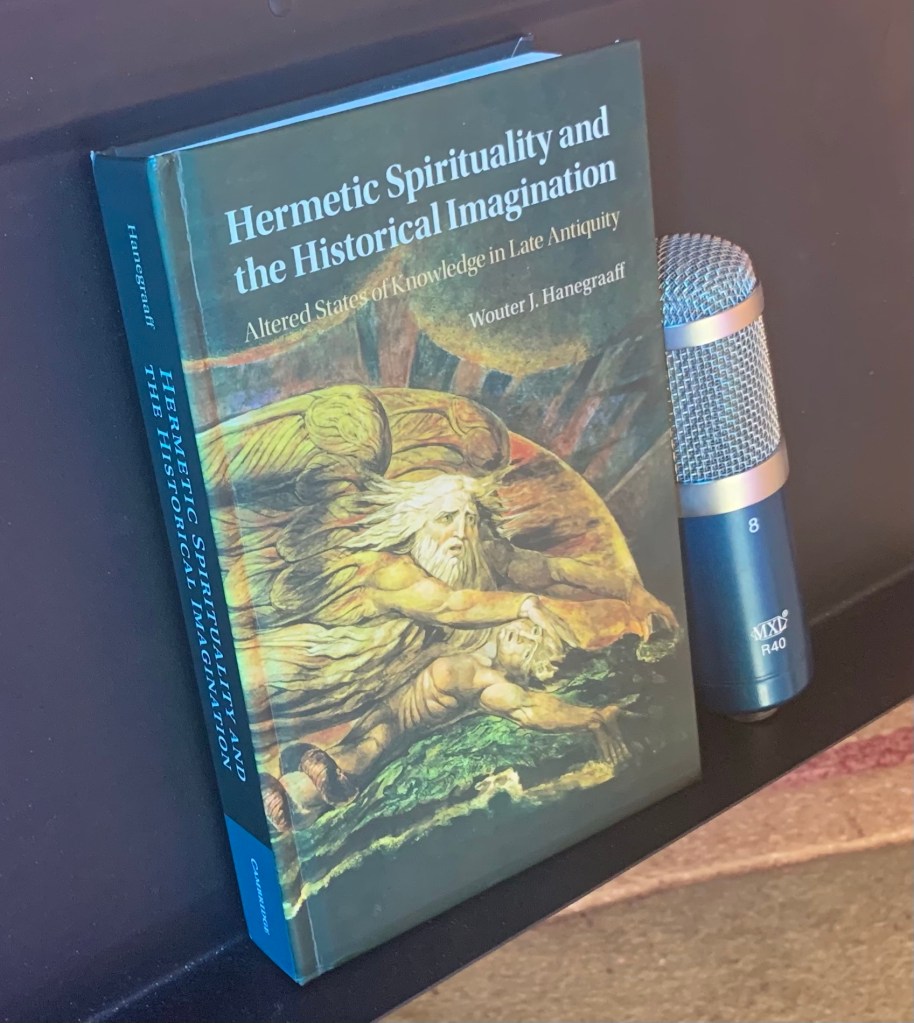
Hanegraaff has been a mycologist since youth.
The Sun Scarab dung beetle may be psychoactive, since likes to eat dung mushrooms, he surmises.
Today Sep 3 2022 I read all pages in his book, on keywords index entries related to psychoactives.
Essentialism in Gnosis Is as Sound & Routine as with any Natural Law
Hanegraaff writes twice in his Versluis rebuttal “You can’t write history of gnosis, when you hold that gnosis exists distinctly from history.”
Utter malformed baloney, fails instantly a trivially easy replacement text: imagine asserting:
You can’t write history of astronomy, when you hold that astronomy exists distinctly from history.”
ALL THE TIME we write about natural law (considered distinct from history) AND about the history of ideas about natural law.
Per the Egodeath theory; the cybernetic theory of ego transcendence, confirmed by the complete, full explanatory success of the entheogen mytheme theory:
Transcendent Knowledge is natural law like Maxwell’s laws of electromagnetism.
Hanegraaff asserts that historians can’t ever know if Transcendent Knowledge actually exists.
That’s like saying the same for electromagnetism.
By every sensible measure, he asserts uncomprehending nonsense, a malformed, misconceived assertion.
This is defeatism and intellectual feeble cowardice, putting gnosis way too high and out of reach, beyond comprehension.
His error is due to his not knowing what gnosis actually refers to.
He calls for multistate cognitive science of religion (my Loose Cog Sci per the Egodeath theory; he applauds Shanon) to contribute to the study of history of religion/esotericism.
Luther H. Martin, a colleague of David Ulansey of CIIS ( California Institute of Integral Studies; https://www.ciis.edu), advocates the approach of Cognitive Science of Religion, but alas is merely single-state; Martin fails to incorporate the psilocybin altered state; loose cognitive association binding.
The “Consciousness Studies” bookcase exists in the New Age bookshop section, in 1994 yet he naively (his word) wrote that New Age religion is not inspired by psychedelics.
Hanegraaff Cites Ken Wilber’s Eye to Eye
FINDING: Hanegraaff’s 1996 New Age Religion book cites Ken Wilber’s book and chapter 1 essay Eye to Eye, using the abbreviation ‘EtE’.
The book heavily covers Ken Wilber.
Ken Wilber’s books are placed in the “Consciousness Studies” section (Psychedelics Spirituality) in New Age bookstores.
Hanegraaff walked past that “Consciousness Studies” section (containing Wilber’s books & Psychedelic Spirituality), while naively writing that New Age isn’t inspired by psychedelics.
Eye to Eye (the essay) is better than Hanegraaff’s defeatism, his anti-essentialism, his anti-perennialism.
That invitation contradicts his claim that perennialism is false, that essentialism is false.
Tons of scholars object to Hanegraaff here, and say he should take gnosis more seriously as something we can say exists to discuss in itself distinctly from history.
But they are all in a dustup based in their shared confusion and incomprehension.
The mind transforms from possibilism to eternalism mental worldmodel when exposed to Eadwine’s two bowls of cubensis one and a half hours apart times 10 weeks.
This is about how the mind works.
This is how the mind works – without reference to history.
All the time, we write history of models of how the mind works; see Paul Thagard’s book Conceptual Revolutions.
So much for the specious, confused, malformed, self-contradictory claim that you can’t study the history of something that you say exists distinctly from history particulars.
– while he calls for multi-state cognitive science to contribute to history of esotericism, contradicting himself.
This is perennial essentialist gnosis, which is 100% perfectly offensive to & poison to egoic presuppositions, because this experiential revelation utterly collapses possibilism’s premise of autonomous control-power.
Perennial gnosis is: psilocybin reveals you don’t control the source of control thoughts.
“You cannot write the history of gnosis if you hold that gnosis transcends history”
Tonight (Sep 3 2022) I read a couple statements from Hanegraaff that were so easy to completely demolish, about the limits of scholarship, and it made me wonder just how massive are my disagreements with Hanegraaff just how full of baloney is he, and how off-base his disputes with Arthur Versluis and name-calling of each other and misunderstanding each each other and arguing about irrelevant muddleheaded things: oriental Platonism or Platonic orientalism (who knows, who cares) —
if I thought that stuff were worth arguing about, I would have studied that and made it my foundation like Hanegraaff does, worshiping Plato even though Plato is such a failure, such a complete failure of communication that it took modern scholars 500 years merely to just figure out that he’s talking about the mystic altered state.
This is a total failure of communication.
This poetry analogy metaphor roundabout approach to explaining Transcendent Knowledge does not work at all, and the extent to which it does not work is the fact that scholars have been studying Plato forever and only now have a dim slight realization that he’s talking about the mystic altered state.
This is practically a total failure of pre-modern approaches to Communication and theory/ model contruction and communication and expression.
This is precisely why I set about taking two weeks which became two years in 1985 saying I am taking the wheel here, let me show you how it’s done: use the can-do clear thinking clear expression of engineering and science, and I do not mean conducting experiments and such, I mean the character, the can-do spirit of “figure stuff out clearly and clearly teach and explain it”.
This is exactly what mystics revel in not doing, so it raises your question of, Is Hanegraaff more of an ally or more of the bad, old, failed approach that deserves really no particular respect.
That was one thing I especially remember my father teaching me beware of respecting people, beware of holding someone in reverence, because you’ll be limited to their limitation.
I saw some things written by Hanegraaff so malformed, such worthless argumentation, such a failure of critical thinking.
False dichotomies galore, particular statements by him that are clearly dead wrong — how much respect does he deserve?
As much disdain– he deserves a lot of disdain; he puts forth a lot of incredibly malformed, unthinking assertions, these false dichotomies that “an academic scholar cannot have mystic experiencing”, (error: emphasizing only differentiation, not integration of techniques and of experiences)
things like that, that are trivially easy to completely shatter — they don’t hold up to scrutiny for two seconds, and he has a lot of statements like these on the subject of “you smell funny and you are a religionist”. “No, YOU are a religionist.” 🙄
I am talking about the article which I had read a couple weeks before:
Esotericism and Criticism: A Platonic Response to Arthur Versluis
http://wouterjhanegraaff.blogspot.com/2018/06/esotericism-and-criticism-platonic.html
June 2018 –
“The simple truth is that I do not hate religionism at all.
“On the contrary, I see it as an inherently problematic but very important intellectual tradition.
“Religionist scholarship has always been an endlessly fascinating phenomenon for me, and I have the greatest respect for its famous representatives (plus some of its less famous ones).
“So what do I find so “problematic”?
“Simply the fact that you cannot write the history of something that transcends history.
“Still, the very impossibility of resolving this paradox [no more “paradoxical” than academic history of astronomy -cm], which I believe lies at the heart of religionism, has led to brilliantly creative and profound attempts at resolving it nevertheless.
“That is where the fascination lies, at least for me.
“In this regard – and here Arthur and I find ourselves in agreement – the religionism of Eranos is somewhat similar to the great tradition of Platonism, which I admire even more, and which lives from the deep contradiction between Being (the eternal forms or ideas) [eternalism -cm] and Becoming (our world of impermanence and change) [possibilism -cm].
[the initiated mind possesses both the earlier developmental structure, per Ken Wilber, and the later mental worldmodel – both are intact and are employed by the fully developed mind -cm]
“Being able to hold two contradictory notions in one’s mind at the same time is not a sign of intellectual weakness: on the contrary, all the great metaphysical thinkers in the Platonic tradition (think for instance of Cusanus or Bruno) have known that, once you go beyond first appearances in exploring reality, you encounter logical paradoxes all the way down – or rather, into infinity.”
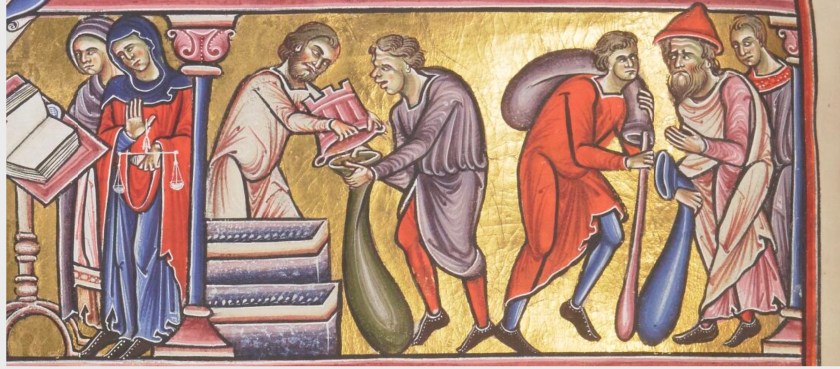
2:00 pm Sep 4 2022: sage’s bag of knowledge includes non-branching walking stick staff: he touches eternalism knowledge and carries possibilism thinking.
Bearded guy pours gnosis into clueless youth’s sack, who is happy to receive it (he doesn’t carry it on his own/ legs yet).
Sage’s sack neither rests on ground nor carried on his back, but floats like him, emanating from the stable column base.
Thee Hypnotics: Come Down Heavy

Funnel hat sage worrying about Becoming vs. Being; possibilism vs. eternalism – with mushroom hem stable column base; able to function both in the mundane daily marketplace & in the psilocybin loose cognitive mystic altered state without control instability/seizure.
He carries the limbless, qualified possibilism-thinking (which includes eternalism-thinking), which is youthful thinking available to him, not destroyed or rejected or discarded, and his thinking is compatible with the psilocybin mushroom state while retaining control stability.
Possessing and having available two distinct mental worldmodels is hardly a “paradox”, but you can call it that, if you want to frame this maturation as incomprehensible.
There is no “paradox” between doing both:
- Understanding astronomy or laws of electromagnetism or gnosis (Transcendent Knowledge; that which is efficiently explained by the Egodeath theory) in itself, and
- Studying & documenting the history of ideas about astronomy, electricity & magnetism, & gnosis (Transcendent Knowledge).
His Unscientific, Stars-Incompatible Cosmos Revision to Invert Cognitive Development as if from Eternalism Delusion Through the Saturn Gate into the Revelation of Egoic Possibilism
Hanegraaff is under enormous pressure and scrutiny.
He is the academic field of Western Esotericism.
And in writing a review that describes the book for potential readers, and points out its cosmos-sized errors (failure to recognize that psilocybin reveals heimarmene/ eternalism; aiming “instead” for gnosis — as if gnosis is not centrally a revelation of Fatedness), I feel this weight of responsibility, completely unlike what I felt with posting a five star quickly written critical review of Carl Ruck & M. Hoffman’s book “Entheogens, myth and human consciousness”.
it is very hard to justify penalizing this book omitting a star (like the author deletes all of the stars except for five white dots in his night sky).
This field and book is too important to just pat him on the head with five stars.
I would be telling a lie in a very important field.
Out of respect for the field, not the author, I need to delete a star (like he does on the scale of thousands) and level with people and let them know just how disastrous & confusing this extremely anti-scientific, purely fantasy-based imaginational construct of his mystic cosmos that has absolutely no connection with science or with mystic sensible conventions.
He hasn’t even read Ulansey, or if he has, I do not understand why he doesn’t mention that his mystic cosmos model (asserted heavily, citation-supported never) completely flies in the face of every treatment of the subject and provides zero citations for his false claim that the highest level of the cosmos is number seven, implicitly claiming that the hermetic texts assert this nonsensical impossibility.
Then he tells lies, completely unscientific, based purely on hearsay, redefining the word entheogen to mean the exact opposite of what it means, elevating fraudulent lies and falsehoods up into the sacred level of now-respectable Psilocybin, introducing falsehood, inviting every deceiver up to the hallowed levels, now respectable, of psilocybin — I think not!
Keep your deceitful not-even hypothesis pollution away from our sacred Theory: “Other, unknown methods can produce entheogenic effects”: not even a specified hypothesis; zero scientific disconfirmability or specificity, based purely on hearsay and conjecture.
Scientific foundation of history? Hanegraaff proffers the exact opposite. his book indiscriminately jumbles together his own fantasy cosmos pulled straight from his imagination with zero citations to back it up, that level eight is above heimarmene – no text ever says that, and no text ever can say it; it’s an incoherent notion that’s impossible, as impossible as saying that the stars don’t exist, or that they exist in planet / moving motion level seven.
This is just sheer nonsense concocted from his imagination, jumbled together with what he claims to be “scientific history”, without him saying a single word to warn the reader, but this cosmos model is something that he is putting forth as an imaginary hypothesis.
But what is so revealing is that he doesn’t dare say a single word about the fixed stars, because it would utterly destroy his cosmic model; he cannot talk about it except to stammer in footnote 114, hidden, buried, incomplete sentence saying I don’t know where the fixed stars go: in level eight or in level seven, the planet Saturn.
Should I give him a medal, a star, for quietly admitting that he doesn’t know the first thing about fixed stars, and that he cannot say anything about them because they do not fit — his model is completely incompatible with the fixed stars, so he has to remain silent and sweep them under the Saturn rug and conflate slot 8 with the actual above-Fate level 9, so that he can tell his inverted narrative of entheogenic transformation from eternalism to possibilism: “Transcendent Knowledge” according to the egoic freewill premised worldmodel.
“Ego death and rebirth is from eternalism to possibilism: just silently move the stars [the heimarmene destination that is gnosis; Transcendent Knowledge] from above the Saturn gate to below it.”
Hanegraaff’s 2016 12-page entry “Gnosis” in Cam. Handbook of W Mystm & Esotericism calls for moving the center of focus of Esotericism/ Gnosticism scholarship from heimarmene to gnosis – a total false dichotomy; he ought to call for recognition of how gnosis AS heimarmene-comprehension is the actual center, and that *combination*, that recognition, needs to be the center of scholarly focus.
Erik Davis gets it right in the book Led Zeppelin IV, but academics can’t keep up, because Transcendent Knowledge is too simple (and offensive to freewill egoic possibilism premises), for academics to engage with.
The Ultimate Religionism: Claiming Everything Is Predetermined
Esotericism and Criticism: A Platonic Response to Arthur Versluis
http://wouterjhanegraaff.blogspot.com/2018/06/esotericism-and-criticism-platonic.html
June 2018 –
In a comment, Hanegraaff finally troubles himself to define his damn terms: “Religionism I define technically as:
“The project of exploring historical sources in search of what is eternal and universal”.
The Egodeath theory since the core theory was defined and announced in 1997-1998, ever since 1998 has created the entheogen mytheme theory of religion for the purpose of obtaining confirmation of the cybernetic theory of ego transcendence (the Core Egodeath theory as of 1998). I couldn’t obtain confirmation from Mr. Historical Jesus – nor Mr. Saint Paul – so I successfully obtained that confirmation by looking in fields including religious myth (as I had done in Rock lyrics first, and in Gnosis journal since the mid-1990s): looking for corroboration, which required interpretation and constructing an explanatory framework to elegantly explain the referent of myth analogies. By providing a superior interpretation of myth, I got confirmation of the merit and soundness and relevance of the Egodeath theory.
The Egodeath theory: in the loose cognitive state from psilocybin, the mental worldmodel changes from literalist ordinary-state possibilism with autonomy-premised control, to analogical psychedelic eternalism with dependent control. ‘Analogical’ refers to the Mytheme theory.
I don’t know why the discussion ends up switching to the subject of “religionism is assertions about the future”, where the hell did that focus/topic come from? The whole conversation is random and arbitrary agenda proxies. I read a lot of Hanegraaff re: religionism, he never said it was about the future.
Commenter Kurt Leland wrote:
“Lest my definition of the extreme religionist perspective be perceived as biased because it seems rosier than its opposite, keep in mind that I hinted that my naming the poles of the continuum of objectivist/pessimist and subjectivist/optimist was ironic. The ultimate extreme of religionism would be an entirely predetermined order in which the transcendental plan[what the f, what is this conversation about? why are you suddenly talking about “plan”, out of the blue? -cm] controls every aspect of history, repeating itself in endless cycles until we find some way to free ourselves from it. This is the only “worthy” opposite to the complete chaos at the other extreme.”
[I’m here to model the scientific theory of gnosis, not argue about the future plan. I sense this whole conversation is a proxy. -cm]
There is a funny comment at the bottom of Hanegraaff’s weblog posting against or the rebuttal of Arthur Versluis that sets out a spectrum ranging from 1) chaos which is the opposite of 2) the perennialist essentialist approach to explaining Gnosis,
which says that there is a perennial tradition of a gnosis that exists outside of the history of chaotic particulars happenstance.
This commentor defines a spectrum and he claims that on the extreme end of what would be a pure extreme Religionism, the ultimate version would be, the ultimate perfect pure essentialism would be an assertion that everything is pre-determined.
iow the Egodeath theory! per Erik Davis p 118 122 book Led Zep IV.
except the commenter also wove in a history assertion, that pure religionism/ perennialism/ essentialism would assert that history would be leading to some predetermined inevitable culmination point.
this falls outside my thought-style/ concerns.
My prediction for the future is that inevitably we are guaranteed that everybody will adopt the Egodeath theory as the model of how the mind works, for stable control in the psilocybin state.
Define Your Damn Terms: Religionism
first my main quip against the idea of religionism is that these academic clowns don’t even know what their stupid word ‘religionism’ means, and it is used in 10 different ways and everyone just name-calls each other and nobody’s on the same page.
Hanegraaff fails to even define what he means by ‘religionism’, for all his heavy bandying-about of the term to employ it, never with coherent, intelligible definition of it.
Define your damn terms!!
His one definition that was clear that he finally wrote was about irrelevant use of the accusation “you are one of those evil people, religionists”, for the purpose of political smearing, attaching abstract labels to your enemy, having nothing to do with the theory of transcendent knowledge in itself, giving me the impression that none of this debate/fight over “religionism” has anything to do with Transcendent Knowledge.
I define ‘religionism’ as, the most useful definition of it is:
the mistake of making religious mythology analogy poetry the foundation for your thinking,
Instead, use multi-state cognitive science of religion, clearly articulated unambiguous models of how the mind transforms in the altered state from psilocybin.
This should be the foundation of our scholarship and thinking, not mystic poetry, confusing far analogies.
The latter thought-style is religionism – if that confusion-spawning, strife-generating word means anything and is of any use.
One of Hanegraaff’s definitions — in so far as he even bothers to articulate a definition, instead of merely throwing around the undefined term — is that religionism is against modern science progress, and wants to elevate tradition; backwards-looking instead, and saying that mystic poetry/ analogy is the way to truth, and that science and rationality progress is not the way to transcendent knowledge.
Egodeath Theory is the extreme example of do not give credence to the pre-modern theories and explanations, but do commandeer and take up their data of their mythology themes, and put the catalog of mytheme-analogies/ descriptor metaphors in a new, modern, scientific, clearly articulated model of how the mind works when exposed to a Psilocybin, emphasizing practical, clear communication and articulation, efficient-model construction, as best seen in Engineering: figure stuff out, clearly explain it, and then improve it and improve the explanation to be clearer and clearer and more and more useful, instead of reveling in incomprehension and vague ambiguous poetry like mystics do (to occlude the anti-ego truth).
This is really the essence of the STEM approach, is this thinking style, or explanatory style, more than conducting experiments, though yes of course experience and exploring cognitive phenomenology is the foundation, but especially:
The hallmark of engineering and science thinking is clear practical communication and useful arrangement of knowledge instead of stupid ambiguous vague poetry and confusion — and egoic evasion/ substitution/ avoidance of Transcendent Knowledge because of not wanting to admit the truth that kills ego fully dead: that you don’t control the source of your control thoughts.

 The Egodeath theory
There are written documents and translations and other means of expressions that come down the line creating a history. Are the writings from the ordinary world or from the loose cog entheogen state?
For example; Is the recorded story from a vision of existence of lets say, a kingdom of people with wars and battles, created from the altered state, and then passed down the line in written documents through the ordinary world, without specifying where it came from, considered history?
Does the definition of history include everything seen and experienced in both the ordinary world and the altered state? And if not, how can those be separated if the written documents don’t specify where they come from?
That is precisely what bugs me. How can anyone know for sure that what appears to have happened, never really happened at all?
LikeLike
You are so right on target to thoroughly clear the air.
I just found a quotation from Hanegraaff listed in the menu for Patron Project’s art exhibition for artist Kadar Brock, which took place in NYC in 2019. (Hanegraaff’s words travel)
The quotation listed is from Hanegraaffs; “New Age Religion and Western Culture: Esotericism in the Mirror of Secular Thought, ” which states;
“Spiritual growth in the New Age sense may well be characterized as an ongoing individual psychotherapy in which each of us is his/her own therapist, and unlimited freedom for creativity is the promised goal.”
http://www.kadarbrock.com/exhibitions/bury-enchantment/selected-works?view=thumbnails
LikeLike
I’m discussing right now on the Egodeath Mystery Show that it was a little bit of an adjustment and confusing for me in 2001 — a confusing point on which Hanegraaff has fallen into the pit and he has been misled by Hermetic texts.
In 2001, when I started the Egodeath Yahoo Group, I had to adjust, because I had had great success in studying *early* antiquity, including ancient Greek religion, but then when I tried to find the same success in late antiquity religion, I found that they were all instead promising as the desired goal, not the revelation of eternalism, but instead, the marketing department of all the religions in late antiquity were now instead promising that the whole purpose and end goal of joining their religion was to *transcend* fate/ eternalism/ heimarmene, to avoid it, to rise above it — in contrast to early antiquity, where are the end goal promise of the marketing department was “join our religion (or be part of your homeland cultures’ religion) because we enlighten you about fate/ eternalism; worship the snake frozen in rock”.
This is the difference between a two-level model (with barely any emphasis on transcending eternalism) versus a three-level aspiration model, where they came to aspire to transcend fate and avoid eternalism (which is fatally offensive to egoic freewill empowerment), and Hanegraaff has been misled by that late antiquity attitude, the negative attitude towards eternalism.
So Hanegraaff, being misled by marketing attitudes against eternalism has concocted and imagined — following their marketing department, he imagines that the mental trajectory of development is that we begin life in eternalism-thinking and then the reason & motivation why we go through spiritual ego death and rebirth is so that we can reach the goal, which is freewill possibilism-thinking — which is essentially simply backwards.
Ken Wilber likes to write about egoic thinking taking over the Atman project, using spirituality as a means to avoid ego transcendence.
Hanegraaff has been misled by the clever poetic ambiguous irony, the ironic use of the anti-fate, “I hate fate” theme that was the dominant standard normal theme during late antiquity but not during early antiquity.
This is why it is so important to put our language and scientific model on a clear thinking, not a poetic basis, but based on a point of reference that we can negotiate without tricky ironic transpositions and shifting and flipping of values and cute clever poetic ambiguity that’s driven by the egoic desire to avoid Transcendent Knowledge.
We have to put the science on a clear simple unambiguous grounding instead or we will be misled like Hanegraaff into forming the exact opposite model of how the mind works.
As any Erik Davis type of explorer in the late 20th century knows, the true actual mental developmental trajectory is from Free Will possibilism to frozen-in-rock eternalism, as he accurately and clearly writes in page 118 and 122 in the book Led Zeppelin IV, 2005.
LikeLiked by 1 person