Michael Hoffman, January 14, 2023
The present page is older; fewer entries; has commentary; specialized title.
The other page is newer; more entries; no commentary; cleaner title:
Moving Past Mysticism in Psychedelic Science (Article Debate Series)

Contents:
- Article Debate Series: “Moving Past Mysticism in Psychedelic Science”
- “Common Core Mystical Experience” Is Defined Exclusively as Positive Boundaryless Unity (vs. Negative Ego Dissolution, or Fear of Loss of Control)
- Pahnke Dissertation: Fear of Loss of Control
- Titles of this Page
- My Old Site Link Is “Mysticism De-Mystified”
- Articles
- Article: A Channel for Magic: Ralph Hood’s Mysticism Scale and the Occult Roots of the Johns Hopkins Psychedelic Research Program (Kitchens, Sep. 2022)
- Article: Mystical and Other Alterations in Sense of Self: An Expanded Framework for Studying Nonordinary Experiences (Taves, May 2020)
- Article: The Psychedelic Religion of Mystical Consciousness (Strassman, Jul. 2018)
- Positive Unity Mysticism Is Merely One Experience, Picked for Wrong Reasons, and Is Noxious Avoidance Strategy to Shut Out the Real Master Experience
- Article: Gnostic Psychedelia (Erik Davis, April 2020) * Stace Takes Another Hit – Davis 2020 Gnosis journal (editor April DeConick) article “Gnostic Psychedelia”
- Post: Gnostic Psychedelia and the Archetype of the Archons (Davis, Apr. 2020)
- TAGS
- Evil Rulers of the 21st Century Shoving Their Denatured Psychedelic RenaissanceTM Down Our Throats While Keeping Psilocybin Prohibition Firmly in Place, Foisting Their Bunk Non-Mystic Mysticism to Replace Psychedelic Experiencing
- Article: Consciousness, Religion, and Gurus: Pitfalls of Psychedelic Medicine (Johnson, April 2021)
- Article: Moving Past Mysticism in Psychedelic Science (Sanders & Zijlmans, May 2021) * Abstract
- 😱 * Advaita Vedanta the Weak Engine of Integral Theory
- Page 3 Excerpts
- Strawmanning the Sanders Article: Sanders Says We Should Eliminate Subjective Experiencing. <– CITATION NEEDED!
- Pros and Cons of Sanders’ Article
- Pros: Many Right-on Quotable Statements
- Cons: Cognitive Neuro-Reductionism
- Naturalism Defined
- Generalized ‘Reductionism’: any time you mis-analyze or mis-model any domain (regardless of ‘level’) as if it were a different domain than it really is; = category error
- Todo: Good Quotes from the Reply Articles
- Cognitive Neuro-Reductionism in Sanders’ Article, Which Everyone Rightly Rejects
- Cons: Eager to Strike a Psychedelics-Diminishing Pose
- Article: Reconciling Mystical Experiences with Naturalistic Psychedelic Science: Reply to Sanders and Zijlmans (Jylkkä, June 2021)
- Article: Working with Weirdness: A Response to “Moving Past Mysticism in Psychedelic Science” (Breeksema & van Elk, July 2021) * The battle between Science vs. Mysticism/Vagueness * STEM vs. Mysticism, as Modes of Explanatory Models * Egodeath theory (Science specificity & articulateness) vs. Vagueness * Dominant Discourses * The phrases ‘common core’ theory and ‘perennialism’
- Book: The Psychology Of Religion: Theoretical Approaches/An Empirical Approach
- Heading
- Heading
- Wiki Article: Advaita Vendanta
- Heading
* Definition of ‘Meditation’ in My Writings
* All Experience Is Ineffable, to those who don’t have the experience that’s being described – Sanders - Article: Researchers Debate the Role of Mysticism in Psychedelic Science (Lattin, Sep. 2021)
- Article: Mystical Experience Defines Psychedelics (Kilham, Oct. 2021)
- Article: High Mysticism: On the interplay between the psychedelic movement and academic study of mysticism (Baier, 2021)
- Article: Mystical experiences without mysticism: An argument for mystical fictionalism in psychedelics (Garb & Earleywine, Jun. 2022)
* Abstract - Article: How to End the Mysticism Wars in Psychedelic Science (Letheby 2024)
- Article: The Most Controversial Paper in the History of Psychedelic Research May Never See the Light of Day: Was the Psychedelic Renaissance Led by Science or Faith? (Kitchens, Mar. 2025) [subscribers]
- Article: The Strange Case of The Immortality Key (Kitchens 2025) [subscribers]
- Leading Chemist David Nichols Says Meditation Came from Psychedelics, Argues Against Meditation Huckster
- Article: Psychedelic Induced Transpersonal Experiences, Therapies, and Their Implications for Transpersonal Psychology (Roberts, 2013)
- Against Psychoanalysis: Groffian Psychedelic Literalistic Memory Processing
* The Egodeath theory vs. Meditation, and Against Psychotherapy, and Against Stan Grof “Physical Birth Memory Retrieval for Processing = totally explains what challenging trips are about“ - Article: Psychedelic-Induced Experiences (Fadiman, 2013)
- Against Mysticism as a Basis for Explanation of Mystical Experiencing
- Your interpretation of your experience is incorrect
- Eye to Eye (Ken Wilber)
- Junk Science vs. Junk Mysticism — and Then There’s the Egodeath Theory
- I Agree with What the Anti-Mystical Psychedelic Scientists (Sanders & Zijlmans) Are Actually Saying!
- Egodeath Theory Doubling Down on Psychedelic Eternalism – Commitment to Asserting the Particular Position
- Psychedelic Eternalism as Specific Psychedelic Science vs. Vague Psychedelic Possibilism Mysticism
- My Previous Discussions About Stepping Up to Scientifically Explain, Not Omit, Mystical Experiencing (“Psychedelic Scientists Mystic Wusses”)
- Book: The Illusion of Will, Self, and Time: William James’ Reluctant Guide to Enlightenment (Bricklin 2016)
- Keyboard Shortcuts/Acronyms
- Naming the Core theory vs. Mytheme theory
- Book: Philosophy of Mysticism: Raids on the Ineffable (Jones 2017) – update of Stace 1960
- Article: This Is Your Priest on Drugs (Michael Pollan, May 2025)
- Motivation of this Page
- Motivation of My Two “Moving Past Mysticism” Pages: To Correct Psychedelic Pseudo Science
- To Switch from “Pleasant, Boundaryless Unity” to “Challenging, Cybernetic Eternalism”
- Two Conflicting Models of Mystical Experience: “Positive Unity” vs. “Challenging Dependent Control”
- Pleasant, Boundaryless Unity; the “Positive Unity” Model of Mystical Experience
- Challenging, Cybernetic Eternalism; the “Challenging Dependent Control” Model of Mystical Experience
- The Original, Verbose Page with Commentary
- Come Down Heavy (Thee Hypnotics, 1990)
- Bias Against ‘Religion’, for ‘Spirituality’ Revealed by Bob Jesse Talk
- Analyzing Scope of this Page
- Never Bring Together Two Topics: History of Drugs in Religion; Drugs vs. History of Mysticism
- Which Advocacy Group Are You In? “Psychedelics give same experience as mystics”, or “Psychedelics played a major role in religious history”?
- Advocacy Topic A: Psychedelics Produce Mystical Experience
- Advocacy Topic B: Psychedelics Had a Major Role in HistoryAcademia Allows Advocating A, not B
- Timeline Sketch
- Numbered Key Topics
- So Offensive, Mosurinjohn’s Argument: “Stop Psychedelics Research in European History, which is Committing Colonialist Violence; Entheogen Scholars Must Put Indigenous Shams as their Central Focus & Boundary Limit”
- Parody of How Much Ruck Contradicts Himself b/c He Only Cares about the Social Drama Narrative, not About Coherent Theorizing
- Timeline of 20th C Writings on: Unitive Mysticism; Psychedelic Mysticism; Psychedelic Science; Psychedelics in History
- The Battle Between [Unitive Mysticism & Psychedelic Mysticism & Psychedelic Science] Against [Psychedelics in History]
- Why Do Writers on “Unitive Mysticism”, “Psychedelic Mysticism”, & “Psychedelic Science” Resist the Topic of “Psychedelics in History”?
- The Strange Standoff Between Psychedelic Science & Psychedelics in History
- 3 Generations of Psychonautics per John Lash
- The Strong Entrenched Dogma and Intensely Strong, Dominant, Silent Presupposition “The traditional, non-drug methods of the mystics”
- Scope of these Critiques: Psychedelic Science, Ignoring Entheogen Scholarship
- We pointedly disavow the maximal entheogen theory of religion, and instead strongly assert non-drug entheogens
- We pointedly disavow the Allegro assertion that entheogens had a major role in pre-modern history
- See Also
Article Debate Series: “Moving Past Mysticism in Psychedelic Science”
Condensed page with just the article links, derived from the present page:
Moving Past Mysticism in Psychedelic Science (Article Debate Series)
https://egodeaththeory.org/2025/05/15/moving-past-mysticism-in-psychedelic-science-article-debate-series/
“Common Core Mystical Experience” Is Defined Exclusively as Positive Boundaryless Unity (vs. Negative Ego Dissolution, or Fear of Loss of Control)
copied from idea development page 29 from book club email
May 14, 2025
The Egodeath community might meet again with Alan Houot (author of Rise of the Psychonaut), developing/ defining a high-quality, upward-convergent Science approach that can include Transcendent Knowledge aka Mysticism, in some framing.
The past few days, I re-read the article debate “Moving Past Mysticism in Psychedelic Science”.
Now in psychedelic science (psych. assisted therapy) there are many influential & compelling calls to broaden and open up, from that narrow model of what “mysticism” allegedly is, re: the alleged “common core” of mysticism, by which the writers meant, specifically, positive-experienced boundaryless unity.
My review of the article series strongly confirmed:
The Walter Stace 1960 model of so-called “mysticism” is specifically, narrowly, emphatically the experience of positive-experienced boundaryless unity.
The Stace model of “common core mysticism” is rooted in Advaita Vedanta ever since Swami Vivekananda in 1893, who met with William James.
That’s the historical origin of the dubious model of “a complete mystical experience” per Mystical Experience Questionnaire (MEQ), Hood Mysticism Scale, & Hopkins group.
Writers following the Stace model of “mysticism” narrowly claim that mystical experience excludes any negative experience, such as what they call “ego dissolution“, by which they narrowly mean negatively experienced boundaryless unity — like reported in Michael Pollan’s book, re: Mystical Experience Questionnaire (MEQ)), pp. 276-284, How to Change Your Mind; 5-MeO chapter: Pollan says the MEQ failed to match his terrifying experience, because too positive a framing to be applicable.
Charles Stang in Harvard video interview of R Griffiths also challenged the alleged model of “a complete mystical experience”;
Griffiths admits “we use a positive-balanced model”, and told Stang the Hopkins group has negative experiences covered by their (also positive-balanced) Challenging Experience Questionnaire (CEQ).
{shadow dragon monster}/ transformation gate = experience of the threat of catastrophic loss of control.
Pahnke Dissertation: Fear of Loss of Control
https://maps.org/images/pdf/books/pahnke/walter_pahnke_drugs_and_mysticism.pdf – not copyable text; only photo pdf.
search web:
Drugs Mysticism Analysis of the Relationship between Psychedelic Drugs and Mystical Consciousness Walter Pahnke
https://www.google.com/search?q=Drugs+Mysticism+Analysis+of+the+Relationship+between+Psychedelic+Drugs+and+Mystical+Consciousness+Walter+Pahnke
i know the text version is linked at present site – found it: https://egodeaththeory.org/2023/01/17/references-for-psychedelic-psychometrics-questionnaires/#MEQ43-Pahnke-1963 — the good copy of dissert is at: 119 pages:
http://www.en.psilosophy.info/pdf/drugs_and_mysticism_(psilosophy.info).pdf –
Pahnke wrote:
“We must not make the assumption that each subject wrote down his complete experience.
He might not have mentioned some particular phenomena because he did not think of it when he was writing his report, although we can assume that he reported what he thought was most important or what impressed him the most.
Stace has pointed out that even the mystics did not write as much as we would have liked about the actual phenomenology of their experiences.
The questionnaires and interviews provided a check on this type of omission, and such evidence should not be ignored.
…
Nine out of ten of the experimentals considered that their experience was significant and worthwhile and would be very willing, in fact eager, to try the experience again.
Judged from the interviewer’s perspective, eight out of ten of these experiences were predominantly positive, and had a pronounced significant and worthwhile effect in the lives of the persons involved, according to their own testimonies.
One experimental had what he considered a worthwhile and significant experience from which he learned a great deal, but in regard to mystical phenomena his experience was not on the same level with the other eight.
In his account and interview it was obvious that he had spent much of his time trying to remain in control and to interpret and intellectualize his experience.
At one point he attempted to memorize Greek vocabulary-cards.
After one such experience he was eager to have another chance to let himself go into the experience more completely without trying to resist the effects of the drug.
The tenth experimental subject had what he termed
an interesting “psychological” and “aesthetic” experience for the first three-fourth of his experience,
but then became frightened by loss of control and spent the remaining time in a terrifying fight to overcome the drug effects.
He would not be interested in repeating the experience because his most predominant memory of the experience was that of fear.
Six months later, in Part I of the followup questionnaire, he considered this fear-experience slightly harmful because “in a mob panic situation, I feel I would be less likely to maintain a calm objective position than I might have formerly.”
During the interview he admitted that he had gone into the experience “as a psychological experiment” and had done no serious devotional preparation.
His “inspirational” reading while the drug was taking effect consisted of studying some Psalms for a course in the Old Testament.
His interpretation of his experience was a “psychotic episode.”
Titles of this Page
The Theory of Psychedelic Eternalism Provides a Scientific Basis for Mystic-State Experiencing, Superseding the “Mysticism, Meditation, & Psychotherapy” Framework
The Theory of Psychedelic Eternalism Provides a Scientific Explanatory Basis for Mystic-State Experiencing, Superseding the Mysticism, Meditation, & Psychoanalysis Frameworks
The Theory of Psychedelic Eternalism Fulfills Sanders and Zijlmans’ Call for a Scientific, not Mysticism, Explanatory Basis for Psychedelic Effects
My Old Site Link Is “Mysticism De-Mystified”
1998 url: https://web.archive.org/web/19980126224931/http://www.cybtrans.com/ – contains major link “Mysticism De-Mystified”.
Snapshot of the Egodeath theory on the World-Wide Web before Egodeath.com:
Feb. 14, 1997: site title: Ego Death and Self-Control Cybernetics
https://web.archive.org/web/19970214093956/http://www.cybtrans.com/
That would be days after publishing my 1997 theory spec. Includes an early version of Egodeath.com content:
CybTrans.com/philosph/postings.htm –
https://web.archive.org/web/19970624125927/http://www.cybtrans.com/philosph/postings.htm
Articles
Article: A Channel for Magic: Ralph Hood’s Mysticism Scale and the Occult Roots of the Johns Hopkins Psychedelic Research Program (Kitchens, Sep. 2022)
Debunks Psychedelic Therapy Religion.
“A Channel for Magic: Ralph Hood’s Mysticism Scale and the Occult Roots of the Johns Hopkins Psychedelic Research Program
Psychologist Ralph Hood’s study of serpent handling and mysticism helped legitimize the study of psychedelics. So why doesn’t he want them approved for medical use?
Travis Kitchens, September 9, 2022
https://www.psymposia.com/magazine/a-channel-for-magic-ralph-hoods-mysticism-scale-and-the-occult-roots-of-the-johns-hopkins-psychedelic-research-program/
I wrote about this article in https://egodeaththeory.org/2025/04/21/idea-development-page-28/#a-channel-for-magic-ralph-hoods-mysticism-scale-and-the-occult-roots-of-the-johns-hopkins-psychedelic-research-program-kitchens-2022 – at top of page, Find “Kitchens”.
Search site for Kitchens:
https://egodeaththeory.org/?s=kitchens
Article: Mystical and Other Alterations in Sense of Self: An Expanded Framework for Studying Nonordinary Experiences (Taves, May 2020)
Debunks the “Positive Unity Experience” Model of Mysticism.
Mystical and Other Alterations in Sense of Self: An Expanded Framework for Studying Nonordinary Experiences
Ann Taves, 2020
Perspect Psychol Sci
2020 May;15(3):669-690
https://pubmed.ncbi.nlm.nih.gov/32053465/
doi: 10.1177/1745691619895047. Epub 2020 Feb 13.
PMID: 32053465 DOI: 10.1177/1745691619895047
Free article at: https://escholarship.org/uc/item/86r3f75j
Erratum in: Corrigendum: Mystical and Other Alterations in Sense of Self: An Expanded Framework for Studying Nonordinary Experiences.
Perspect Psychol Sci. 2022 Mar;17(2):614. doi: 10.1177/17456916221076158. Epub 2022 Jan 24.
PMID: 35073216
I wrote about this article in section https://egodeaththeory.org/2025/05/07/idea-development-page-29/#mystical-and-other-alterations-in-sense-of-self-an-expanded-framework-for-studying-nonordinary-experiences-taves-2020 – at top of page, Find “Taves”.
Search site for Taves:
https://egodeaththeory.org/?s=taves
Article: The Psychedelic Religion of Mystical Consciousness (Strassman, Jul. 2018)
The Psychedelic Religion of Mystical Consciousness
Rick Strassman 2018
https://www.rickstrassman.com/wp-content/uploads/2018/07/JPS_Strassman.pdf
Strassman’s short article is praised by Davis 2020 article.
May 13, 2025: I read this 4-page article again: it is good. His Jewish complaints are reasonable. His critique of Wm Richards book Sacred Knowledge today solved a problem: I preorderd that 2015 book, and have been disappointed, now I know why: that book pushes the fake, made-up, wrong model of “mysticism”: positive Unity.
The book Sacred Knowledge is as bogus as
- Stace,
- Mystical Experience Questionnaire (MEQ),
- Mysticism Scale questionnaire, and
- the ultimate bogosity, the Challenging Experience Questionnaire (CEQ) — 100% junk psychedelic pseudo science.
I have now switched from critic of psychedelic pseudo science, to an outright debunker, following Travis Kitchens, Ann Taves, and all critics of Stace.
I suddenly find myself siding with obnoxious “naturalism materialism Science cheerleader Matt “Lose the Buddha Statue” Johnson: the statue means, the sheer invention of mysticism as positive – per the great creiticism of Stang on video at Harvard directly confronting Grifty, “your model of mysticism fails to match mystics”.
Roland Griffiths team at Johns Hopkins Dept. of Psychedelic Pseudo Science replied: “That’s ok, we use a positive-balanced model; see our positive-balanced negative effects the Challenging Experience Questionnaire (CEQ).”
I used to throw a bone to the “unity mysticism” model, saying that it is ok for beginner level mystical experience. I think that is bad strategy and a missed opportunity to hammer-smash fraudulent lies about mystical experience.
Positive Unity Mysticism Is Merely One Experience, Picked for Wrong Reasons, and Is Noxious Avoidance Strategy to Shut Out the Real Master Experience
Real …
I am re-settling, I am resetting as of 6:03 pm May 13, 2025, to attack bunk fake mysticism, just like I attacked and fully exposed Fraud Wasson.
Authentic mysticism — the kind that MATTERS and is worthy of respect — is about transformed control in transformed world, per the Egodeath theory/ myth/ lyrics/ mushroom-trees/ Mystery Religions.
The Fake Model (tepid about psychedelics; positive-balanced; Unity focused) Serves to Eliminate True Model, So the Fake Model Must Be Destroyed and Vigorously Rected
Article: Gnostic Psychedelia (Erik Davis, April 2020)
Gnostic Psychedelia
Erik Davis, April 2020
Gnosis: Journal of Gnostic Studies
https://techgnosis.com/wp-content/uploads/2020/04/Davis-Gnosis-5.1.pdf
Stace Takes Another Hit – Davis 2020 Gnosis journal (editor April DeConick) article “Gnostic Psychedelia”
Good article, I resonate with many points. Even notes the over-influence of James and Stace.
Defines, sort of/ as if, two opposed versions of mysticism:
“Within the official clinical discourse, at least in America, the key
to individual healing is largely tied to the capacity of psychedelics to trigger
transcendental unitive and ecstatic experiences whose “mystical” character is
vouchsafed, it must be said, by scholarship that is over half a century old.“
/ end of Davis quote near end of article
And ridiculously narrow, particular, and specific! Stace 1960 (out of print), James 1902.
All the clinical talk of “mystical experience” is not actual mystical experience, but is, instead Stacean so-called “mystical experience”, specifically, narrowly, particularly.
‘Hermetic’ = Stacean “mystical experience”
vs.
‘Gnostic‘ = w/ DeConick, a critical, Gnostic equivalent opposed conception of the realm of so-called “mystical experience”.
Post: Gnostic Psychedelia and the Archetype of the Archons (Davis, Apr. 2020)
A post about the article Gnostic Psychedelia:
Gnostic Psychedelia and the Archetype of the Archons
Erik Davis, April 14, 2020
https://techgnosis.com/gnostic-psychedelia/
https://techgnosis.com/gnostic-psychedelia-and-the-archetype-of-the-archons/ – truncates to the above
Categories:
ESOTERICA, PSYCHEDELICS, SCHOLARSHIP
TAGS
Full content of post:
Davis wrote:
“I wrote this paper for Gnosis: Journal of Gnostic Studies, a newish journal edited by April DeConick, with whom I had the great fortune of being able to study Gnosticism during my time at Rice.
—
“This article first draws out one particularly important feature of gnostic myth—the idea of the archons, or fallen “rulers” against whom the gnostic wages spiritual warfare.”
“In contemporary conspiracy culture, the archons now hold a prominent place at the table, but they are also described in both orthodox and heterodox texts of antiquity.
“Since I am describing a type rather than analyzing a particular sect or text, some scholars will probably find my use of the term too loose to be of value, but my goal is not to dig deeper into the ancient world.
—
“Instead, I use the concept of the archons to illuminate an important feature of modern western psychedelic culture that tends to get short shrift: an agonistic and critical spirituality directed against social reality, rather than the dominant perennialist emphasis on unity, interdependence, and Oneness.”
“In studying modern psychedelic texts from Alan Watts, Timothy Leary, Jim DeKorne, Robert Anton Wilson, and Jonathan Talat Phillips—some of whom explicitly invoke the archons of old—I find a gnostic psychology that has much to say to our time of crisis, and that features a more explicitly political dimension to entheogenic vision.”
link to article pdf
/ end of Davis post
Evil Rulers of the 21st Century Shoving Their Denatured Psychedelic RenaissanceTM Down Our Throats While Keeping Psilocybin Prohibition Firmly in Place, Foisting Their Bunk Non-Mystic Mysticism to Replace Psychedelic Experiencing
Grassroots psychedelicists vs. Hopkins Prohibition-compliant therapy & the top-down fake imposed alien invaders “Michael Pollan surprise bestseller” and “Brian Muraresku surprise bestseller” books that were MADE to be bestsellers by MegaCorp Publishers.
Entheogen scholarship went off the rails and lost the plot, by caring far more about their “secret suppressed hereetical sects” narrative which became the opporessive narrative that NEUTERED every finding in mushroom imagery in Christian art, converting them to de-powered evidence instead, of mushrooms in HERETICAL Christianity.
Against Ruck the Neutralizer, every instance of mushroom imagery in Christian art amounts to evidence of mushroom imagery within Christianity — NOT in Ruck’s fabricated “in heretical Christianity” heavy-handed narrative that’s far more important to Ruck than real psychedelics or repeal of Psilocybin prohibition. Ruck school is not driven by interest in finding evidence for psychedelics in religious history.
What motivates the Ruck school is storytime tale-telling of the Big Bad Church vs. suppressed The Mushroom (🍄) — not an interest in psychedelics or repeal of Psilocybin prohibition.
In the Amanita Primacy Fallacy, in entheogen scholarship driven by AND CONSTRAINED BY the Amanita Primacy Fallacy, scholars don’t get high on psychedelics; they get high on crybaby infantile narrative ritual retelling of the great tabu suppression of Our Holy Sacred Mushroom, Amanita.
Search present site: many “davis” articles relevant here:
https://egodeaththeory.org/2023/01/23/idea-development-page-16/
found the section there:
https://egodeaththeory.org/2023/01/23/idea-development-page-16/#Davis-Criticizes-Staces-Mysticism
The present Davis section was copied from there to here wholesale, then rearranged.
Article: Consciousness, Religion, and Gurus: Pitfalls of Psychedelic Medicine (Johnson, April 2021)
Consciousness, Religion, and Gurus: Pitfalls of Psychedelic Medicine
Matthew Johnson
https://pubs.acs.org/doi/pdf/10.1021/acsptsci.0c00198
ACS Pharmacology & Translational Science 2021 4 (2), 578-581
DOI: 10.1021/acsptsci.0c00198
Matthew Johnson, a professor of psychiatry and behavioral sciences at Johns Hopkins University in Baltimore
Article: Moving Past Mysticism in Psychedelic Science (Sanders & Zijlmans, May 2021)
Moving Past Mysticism in Psychedelic Science
Sanders and Zijlmans, May 2021
https://pubs.acs.org/doi/abs/10.1021/acsptsci.1c00097
Abstract
“The mysticism framework is used to describe psychedelic experiences and explain the effects of psychedelic therapies.
“We discuss risks and difficulties stemming from the scientific use of a framework associated with supernatural or nonempirical belief systems and encourage researchers to mitigate these risks with a demystified model of the psychedelic state.”
Sanders aren’t against mystical experience, they are against the Walter Stace-based mysticism model and lexicon.
Condensed excerpts
Condensed excerpts rewritten by Cybermonk for scholarly commentary & analysis – deliberately making very minor deviations; see the article for exact quotes:
Moving Past Mysticism in Psychedelic Science
Sanders and Zijlmans, May 2021
https://pubs.acs.org/doi/abs/10.1021/acsptsci.1c00097
I can do a lot with this article, Sanders & Zijlmans make lots of great points that the Egodeath theory fulfills.
There are many great quotable important points in this article, well-articulated.
Page 1 Excerpts
Condensed excerpts by Cybermonk for scholarly commentary & analysis:
Moving Past Mysticism in Psychedelic Science
Sanders and Zijlmans, May 2021
https://pubs.acs.org/doi/abs/10.1021/acsptsci.1c00097
Sanders and Zijlmans p. 1:
“Concepts like “pure awareness” and “ineffable” experiences of “ultimate reality” … these statements are too seldom accompanied by a deeper discussion on what a term like mystical means within the context of psychedelic science, and what consequences might come with the scientific use of the mysticism framework.
“The root [“scientific basis”] of mysticism in psychedelic science lies in the work of philosopher W. T. Stace, who in 1960 theorized a distinct type of “mystical consciousness” achieved through a variety of cultural practices.
“Stace’s theory was informed by theological, historical, and anecdotal accounts, and the defining criteria for the state include
- a sense of unity – agree
- a sense of timelessness – agree
- a sense of spacelessness – agree
- a sense of objectivity and reality – agree
- a sense of sacredness – disagree, not useful expl’y construct
- a sense of blessedness – disagree, not useful expl’y construct
- a sense of peace – disagree, not useful expl’y construct
- a sense of paradoxicality – disagree, not useful expl’y construct
- a sense of ineffability – disagree, not useful expl’y construct
“Early psychedelic researchers adopted the concept and took these criteria as
relevant operational categories for the study of psychedelic
experiences.” – Sanders p. 1 col. 1
The field is foolishly and unhelpfully attempting to do scientific research in psychedelic mystic-state experiencing, by applying Stace’s conception of mysticism as the scientific basis for all of psychometrics science of mystic-type experiencing.
“the encroachment of supernatural and nonempirical beliefs on psychedelic science, we identify shortcomings of this link between mysticism and psychedelic research
“The mysticism framework, along with its associated theories and terminology, should be actively superseded.
“the risks stemming from the relation between mysticism and supernatural or otherwise nonempirical belief systems [& would-be psychedelic science]
“why current researchers should be optimistic at their prospects of creating valid frameworks that are supported by, and accessible to, empirical methods.
“the ways in which new frameworks may bring greater benefit for science and society alike.” – Sanders, p. 1 col 2.
“Within psychedelic science, we are concerned that use of the mysticism framework creates a “black box” mentality in which researchers are content to treat certain aspects of the psychedelic state as beyond the scope of scientific inquiry.”
love it! 🎉
Condensed excerpts by Cybermonk for scholarly commentary & analysis:
““psychedelic exceptionalism”: when psychedelic experiences are taken to be “so sacred or important that the normal rules do not apply” [cites Matthew “Lose the Buddha statue” Johnson]
My commentary
Moving Past Mysticism in Psychedelic Science
Sanders and Zijlmans, May 2021
https://pubs.acs.org/doi/abs/10.1021/acsptsci.1c00097
Griffiths/Studerus-type articles refer to Stace’s book as the “scientific” basis, and they also, as a fallback, claim James 1902.
The James/ Stace/ Pahnke/ Richards/ Griffiths line of mysticism framework and lexicon.
Pahnke/ Richards/ Griffiths call Walter Stace’s 1960 book Mysticism and Philosophy their “scientific” basis.
Griffiths’ system of articles & the MEQ43 & MEQ30 stands or falls with Stace’ 1960 book — that single book is used and cited as the science basis for their “mysticism” model.
Sanders & Zijlmans and I condemn the Stace “ineffability” premise (they articulate this well).
We demand (& The Theory of Pychedelic Eternalism provides) useful, scientifically proper articulate explanation and lexicon, instead of “Mysticism” per Stace 1960.
Beginning in 1985-1988, the Egodeath theory (the Theory of Psychedelic Eternalism) rejects and replaces these failed, unhelpful explanatory frameworks that substitute from STEM-type clear, useful explanation:
- Mysticism (per Stace 1960 eg ineffability,
- Meditation (ie conventinoal assumptions and paradigm, non-drug meditation as the original authority)
- Psychoanalysis (eg Grof’s application of psychedelics to prop up the bunk “science” of psychoanalysis)
/end my commentary
Page 2 Excerpts
Condensed, marked up, and annotated for scholarly purposes.
The “reply” articles have zero quotes of Sanders’ actual position statements and phrasing. The field has two caricature positions available: mystics studying mystical experiencing, vs. naturalistic scientists studying psychedelic states & psychedelic experiences.
psychedelic states & psychedelic experiences includes mystical experiencing but we won’t make Stace’s Mysticism the framework that we employ; we need scientific frameworks, not mysticism-based frameworks (Stace 1960)
Stace’s 1960 book Mysticism and Philosophy, which is the scientific basis and framework and lexicon and conceptual system for Psychedelic Science, is out of print. See below, section:
Philosophy of Mysticism: Raids on the Ineffable (Jones 2017) – update of Stace 1960
😱 🦄💨🌈
Moving Past Mysticism in Psychedelic Science
Sanders and Zijlmans, May 2021
https://pubs.acs.org/doi/abs/10.1021/acsptsci.1c00097
Sanders and Zijlmans p. 1:
“As scientists, we should not be satisfied to label psychedelic experiences as “ineffable”, “paradoxical”, or “void”
“The term mystical does little in terms of explaining psychobiological phenomena.
“Although the subjective aspect of psychedelic experiences may be difficult for the individual to fathom and describe, the terminology and conceptualization scientists use in their research should not imply that a psychedelic experience holds a special status of inaccessibility beyond other kinds of experience.
“To assume this special status a priori is unscientifically pessimistic.“
BRAVO!!
As the Egodeath theory does; as the Theory of Psychedelic Eternalism does, we must take perfection/ completion of initiation/ enlightenment/ satori down off its pedestal of inaccessibility and alienated mis-reverence that everyone strives to glorify it upon, pushing it out of reach and distorting Transcendent Knowledge.
“By using the mystical experience construct, we are providing participants with a particular terminology and framework with which to understand their psychedelic experiences.
“When we administer a mystical experience questionnaire, we invite participants to interpret their experience through the framework of mysticism.
“We risk creating biased data and may fail to learn from participants’ own articulation and interpretation.” – Sanders p. 2 left col
“mystical experience phenomena are conflated with mystical beliefs about what psychedelic experiences mean.”
That’s a key distinction, between experiencing vs. interpretation.
Is Psychedelic Science to be driven by the STEM-type effort to figure stuff out and explain it usefully? Or, driven by Pop Sike Cult?
Moving Past Mysticism in Psychedelic Science
Sanders and Zijlmans, May 2021
https://pubs.acs.org/doi/abs/10.1021/acsptsci.1c00097
“We observe a broader and stronger use of mystical language and concepts than is warranted by the science.
“The integration of mysticism [as framework/lexicon, not experiencing -cm] into research and clinical practice risks creating unrealistic and potentially problematic expectations and associations.”
“As scientists, we must consider more carefully our choice of frameworks and more actively distance psychedelic research and clinical practice from the supernatural, fantastical, and divine; mysticism.”
Section heading: “Demystifying Our Concepts” – tons of great quotable assertions and calls for change. See the article. eg:
“A superficial change in terminology will not address the depth of mysticism’s influence in psychedelic science — rather, new theories rooted in the modern empirical study of conscious states are needed.”
DONE: see the Theory of Psychedelic Eternalism; the Egodeath theory.
I read the word ’empirical’ per the essay Eye to Eye by Ken Wilber, except “eye of spirit” actually means Reason that’s used in the advanced Psilocybin altered state.
‘Reason’ here means rational, clear, useful model construction, informed by probing & testing & demonstration & state-specific observation.
More brilliant wording from Sanders & Zijlmans, condensed for scholarly commentary – a huge breath of fresh air for me.
I’m so glad others notice the crazy, unscientific degree to which Stace’s 1960 book Mysticism and Consciousness is treated by Griffiths et al as Gospel Science handed down from God, the rock-solid authoritative basis on which to construct Psychedelic Science:
“Alternative [to the mysticism lexicon,] terms such as “ peak experience” and “ oceanic boundlessness” exist in the literature, but in each case, the theory and measurement of constructs remain closely linked to Stace’ s mystical consciousness.”
Glad to see Stace specifically named as the soggy sand foundation of this mess.
“Stace’s choices in research methods and sources reflect an assumption that the states he studied are infrequent, transient, and difficult to observe.”
Great point, well said.
Moving Past Mysticism in Psychedelic Science
Sanders and Zijlmans, May 2021
https://pubs.acs.org/doi/abs/10.1021/acsptsci.1c00097
Sanders and Zijlmans point out like I’ve done: it is so ironic that Wouter Hanegraaff acts like the mystic state is an alien, inaccessible thing, when there are psychedelic truffles right across the street in the smartshop, an incredible wealth of the cognitive loosener readily on tap:
“Contemporary researchers should not feel as limited:
“psychedelics can be administered in experimental settings, and participant experiences can be probed with methods that do not assume a mystical framework of explanation from the outset.”
“states that are currently labeled as ‘mystical’.”
“Psychedelic science has not made a concerted effort to supersede Stace’ s mystical consciousness concept with an alternative rooted in empirical data and an unambiguously secular framework.”
DONE: See the Theory of Psychedelic Eternalism; the Egodeath theory.
How to read their word ‘secular’ as opposed to ‘mystical’: here, the word ‘secular‘ is firmly based in the advanced intense Psilocybin state.
The word ‘secular’, in sharp contrast against ‘mystical’, means commitment to clear, explicit, directly expressed, STEM-type explanatory models.
“It is concerning whenever mysticism is taken for granted in psychedelic science circles: our choice of frameworks and measures serves to reify concepts such as mystical consciousness without sufficient justification, which opens the door for unscientific assumptions and associations.
“By demystifying scientific understanding of the psychedelic state, scientists can increase the scientific credibility of the frameworks used in their research and fill gaps in our understanding of latent psychological phenomena that could previously only be [pseudo-] filled in mystical ways.”
Bravo!
The Mysticism framework substitutes for (and shuts out) useful comprehensibility, which had been delivered by the STEM-driven Theory of Psychedelic Eternalism.
Note that “increasing the credibility” sounds like Letcher Hatsis calling to “Save the reputation of entheogen scholarship by deleting mushrooms (picture exclusively 🍄) and the Secret Amanita Cult 🤫🍄 theory.”
quotes from p. 3 are in a section below
Advaita Vedanta the Weak Engine of Integral Theory
I was a little shocked to eventually realize Ken Wilber is pushing glorified Advaita Vendanta non-drug meditation.
Non-drug meditation is the best way to avoid ever posing any threat to egoic delusion.
Non-drug meditation guarantees the mind is never loosened and turned, to transform the mind from possibilism to eternalism.
Meditation keeps the mind from transforming from child form to adult form.
Meditation is a product of drug prohibition and freewill fog, to substitute for and avoid Psilocybin, which would cause meditation to work correctly.
Authentic meditation is Psilocybin meditation. Meditation came from Psilocybin.
David Nichols is a top chemist, collaborator with Shulgin.
Nichols debated a meditation huckster. Nichols asserted:
Psilocybin produced Meditation.
Non-drug meditation makes no sense.
It makes no sense the invention of meditation, without coming from psychedelics.
Page 3 Excerpts
Condensed excerpts rewritten by Cybermonk for scholarly commentary & analysis – deliberately making very minor deviations; see the article for exact quotes:
Moving Past Mysticism in Psychedelic Science
Sanders and Zijlmans, May 2021
https://pubs.acs.org/doi/abs/10.1021/acsptsci.1c00097
Sanders and Zijlmans 2021, p. 3:
“In fact, there are new understandings in development that have the potential to perform this function, informed by diverse modern methodologies.”
“Psychological phenomena previously [pseudo-] explained as mystical might come to be understood in terms that are not encumbered by theological, supernatural, or fantastical baggage.”
“This leads us to an optimistic note:
“With a clear and accessible model of why psychedelic therapies are showing
such promising results, we can use psychedelic research to its greatest benefit.
“Theories must describe in clear terms the relationship between the data we collect and the psychobiological concepts we employ.”
“These states of consciousness need no longer be treated as an elusive black box.
“We must utilize the tools and opportunities available to reconceptualize this aspect of the psychedelic state, so that science and society alike can benefit from new ways to understand and experience what was once considered unfathomable.”
/ end of Conclusion of article Moving Past Mysticism
Strawmanning the Sanders Article: Sanders Says We Should Eliminate Subjective Experiencing. <– CITATION NEEDED!
Reconciling Mystical Experiences with Naturalistic Psychedelic Science: Reply to Sanders and Zijlmans
https://pubs.acs.org/doi/10.1021/acsptsci.1c00137
Jussi Jylkkä (2021)
June 8, 2021
Published by American Chemical Society
Defining ‘naturalism’
Good entry: https://www.britannica.com/topic/naturalism-philosophy
Some authors aren’t replying to Sanders’ article, but rather, to a certain general philosophical vision or school or mentality. They conflate the Sanders article with the general mentality.
Articles ought to distinctly reply to the particular statements asserted by Sanders’ article, and, the general mentality of materialistic science, reductionism, dismissive of altered state.
Jylkka’s first sentence is a false statement, no quote is provided, it’s a misrepresentation, false attribution of position:
“Sanders and Zijlmans ignore the subjective aspect of psychedelic experiences. Mystical experiences are felt as real and can yield personally meaningful insights.”
Sanders never denied that. Strawman much?
Quote/citation needed!
Strawman, WATCH THE TRICKY WORDING HERE:
“In a recent Viewpoint article, Sanders and Zijlmans call for the demystification of the psychedelic experience.”
WRONG! FALSE! Made-up B.S. & misrepresentation. Excuse me? B.S.! You’re playing stupid wording tricks.
YOU wrote: “demystification of the psychedelic experience” – that’s YOUR words, that’s a misrepresentation through trying to sneak words past the reader.
Jylkkä should honor Sanders’ ACTUAL wording.
Let’s see some quotes! Jylkkä can’t, because then their fake & phony “argument” collapses.
Why should I even read this article, that’s all driven by misrepresentation?
Please reply to the article, not your fantasy projection onto it.
Jylkkä wrote “demystification of the psychedelic experience”. Show me that combination of words in Sanders – Jylkkä can’t; it’s not there.
But what did Sanders IN FACT write that seems similar but is very different?
Let’s see some quotes, Jylkkä can’t back up their B.S. false claims and misrepresentation through cheap wording trickery.
Writers are strawmanning Sanders, freely misrepresenting this article — they appear to have not have not read the article – as if they imagined what the article says but haven’t read it, and are not actually responding to Sanders’ article, but to some other article.
Did they even read this article? no indication of that.
The particular article(s) reflect a broader difference and tension about doing psychedelic within “the secular” vs. “the mystical” paradigm. In a response statement in LucidNews Don Lattin’s article Sanders writes:
Again I see high-quality, quotable writing from Sanders & Zijlmans, and poor-quality writing and tons of strawmanning from other writers.
Lattin wrote:
“Zijlmans, a post-doc researcher who runs a course on the neuroscience, history and therapeutic potential of psychedelics, said in an interview [w/ Lattin?] that critics have misinterpreted their paper.”
[topic: the framework/ theories/ lexicon that Psychedelic Scientists use:]
“We are not only trying to explain things biologically,” he said.
[topic: the experiences people have:]
“These are extraordinary, weird experiences that are very meaningful and powerful to people.”
[topic: the framework/ theories/ lexicon that Psychedelic Scientists use:]
I just want to explain them accurately and scientifically, rather than vaguely. ‘Weird’ and ‘mystical’ don’t capture it.”
I noticed in the pseudo-response articles: VAGUENESS and strawmanning, so was glad to see this final note where Zijlmans says the need is to move past vagueness of explanatory framework.
Regarding the battle between Science vs. Mysticism/Vagueness, see the section below, Psychedelic Eternalism as Specific Psychedelic Science vs. Vague Psychedelic Possibilism Mysticism.
Lattin continues:
“For example, he [Zijlmans] prefers to attribute the experience of a high-dose trip to “ego dissolution” rather than some “mystical” connection to Ultimate Reality or the collective unconscious.”
[diss’ing Jungianism, the popular heavy-handed overlay]
– Don Lattin
Researchers Debate the Role of Mysticism in Psychedelic Science
Lucid.news
Don Lattin
https://www.lucid.news/researchers-debate-the-role-of-mysticism-in-psychedelic-science/
The other articles just project a poor, weak position onto this article, but the authors of Sanders article write well and articulate their points well.
The other writers never quote this article but just make claims that this article is against mystical experience.
Response articles never address this article’s position in terms that this article puts forth:
Sanders is against scientists applying (and being limited to) Stace’s mysticism framework and lexicon.
Sanders makes this point very prominently and clearly and emphatically.
Bad writers ignore Sanders’ clearly stated point and position (did they even read the article? I see no indication), and they just strawman some other point and position that this author doesn’t assert.
The other articles ought to quote this article, but then they’d be forced to do the hard work of writing a real reply to this article’s actual position.
LucidNews.org provided a little more balanced, lucid news about this article. Don Lattin:
“In his recent paper, Matt Johnson has no problems with patients bringing their own religious icons or ideas into psychedelic sessions.
“But he advises against guides and therapists bringing their spiritual preconceptions and religious paraphernalia into session rooms.”
Johnson’s advice matches
Sanders’ advice in May issue matches Johnson’s advice in April. One issue had Matthew “Lose the Buddha statue” Johnson’s article, next issue had Sanders’ article saying the same kinds of points. People all came to the defensense of mystical experience, — total straw man! Sandkers emphasizes pointedly up front, the message is don’t use the Stace “mysticism” framework and lexicon, to do science.
This clash of views about “mysticism” framework/ approach in psychedelic psychometrics science / psychedelic assisted therapy is similar to disparaging the religionism approach/ methodology style, in the field of academic history of esotericism.
Since I finally got a clear view of the two opposed, radical empiricism” vs. “religionism” perspectives, I can better understand Sanders’ critique and distinctions between approach vs. the experiences studied by the approach.
Bad writers conflate Sanders’ critique of a science approach that uses the mysticism framework and lexicon as if Sanders had instead critiqued the mystical experiencing which science is studying.
Pros and Cons of Sanders’ Article
Pros: Many Right-on Quotable Statements
The article contains many excellent passages I agree with — well worded, and that I’d like to quote here – so many, it’s hard to know where to start. A breath of fresh air!
“The purported “sacredness”, “ineffability”, and “noetic quality” of these states may take on characteristics congruent with scientific understanding if an accessible scientific explanation exists, and if questionnaires reflecting this explanation are administered.” – Sanders p. 1254 at end.
See the Egodeath theory, Egodeath.com, the Theory of Psychedelic Eternalism, and the ECQ – “Eternalism and Control Questionnaire”.
An accessible scientific explanation was exactly what I demanded, explaining the nature and summary-explanation of “ego transcendence” in October 1985 through December 1987.
My father in 1985 gave me Ken Wilber & Alan Watts books as the least-inept books on ego transcendence available.
It was then perfectly clear that the mysticism bozos, busy reveling in “words can’t“, were never in a million years going to deliver a sensible, coherent, useful explanatory framework and lexicon like is standard in STEM.
It was all too clear in 1986 that it fell on me — the Engineering student — to articulate comprehensibly and usefully the summary of the real nature of ego transcendence:
loosen cognition, experience block-universe and worldlines, transform from egoic possibilism-thinking mental worldmodel to the eternalism-thinking mental worldmodel.
And then write an article explaining the actual nature of ego transcendence to the field and Journal of Transpersonal Psychology.
Sanders & Zijlmans use the term “the psychedelic state” in place of the term “the mystical state” or “the mystic state”
hit count:
“mystical experience” – 14 hits
“psychedelic experience” – 11 hits
“psychedelic state” – 6 hits
“mystical state” – 0 hits
“mystic state” – 0 hits
“mystic-type state” – 0 hits
“mystic experience” – 0 hits
Cons: Cognitive Neuro-Reductionism
All of the strawman pseudo-replies to Sanders criticize and condemn neuro-reductionism, and I agree with that. I need to develop this idea to the extreme completion:
I AM A DEDICATED DEFENDER OF A PURELY COGNITIVE PHENOMENOLOGY APPROACH WITH NO COMPROMISE WITH NEURO-REDUCTIONISM aka “materialist naturalism”.
What is “naturalistic Science”?
Is the Egodeath theory a “naturalistic” theory? define “naturalism” in Science. Her’s a definition, this is so not my vocabulary, this notion of “causes”:
Search: https://www.google.com/search?q=define+natualism
naturalism – “the philosophical belief that:
Everything arises from natural properties and causes.
Supernatural or spiritual explanations are excluded or discounted.
– Oxford Languages
Naturalism Defined
Everything arises from natural properties and causes.
Supernatural or spiritual explanations are excluded or discounted.
It’s a given that those concepts will be mapped by habit, to ordinary state & altered state.
In this biased context of Late Modernity,
“Everything arises from natural properties and causes” will be misread as:
Science as a mode of explanation should be restricted to the ordinary state.
“Supernatural or spiritual explanations are excluded or discounted” will be misread as:
The altered state should not be drawn from as a source of explanation.
So you end up with awful theories like the entire horrible field of CSR, “the Cognitive Science of Religion”, which is ordinary state Cog Sci explaining away ordinary state “religion” or what passes for “religion”.
Reductionistic Cog Sci then delivers what passes for a “Science” explanation of what passes for “Religion”. In such a mileaux, we’re given:
Bunk reductionist Science
Bunk reductionist supernaturalist Religion is supernaturalist and yet reductionist at the same time.
Generalized ‘Reductionism’: any time you mis-analyze or mis-model any domain (regardless of ‘level’) as if it were a different domain than it really is; = category error
We need a concept that’s a hybrid of “reductionism” and “category error” that gets rid of restricting the concexpt of ‘reductionism’ to only mean “modelling a higher level domain as if it were instead a different, lower-level domain”.
The concept of “any two domains have a religion of higher vs lower” is wrong and limiting.
Get rid of the concept of “higher vs lower” in the word “reduce”; make “reduce” mean generally “omit because category error”.
Actually, to be reductionistic is to omit & misrepresent the real nature of a domain, because of making a category error.
‘Reductionism’ is best defined as generalized category error.
The real, actual essence of reductionism, the problem that the concept ‘reductionism’ actually addresses, is not really about “wrong level” or “too low level”.
The error & fallacy of ‘reductionism’ is actually, any time you mis-analyze or mis-model on domain as if it were a different domain than it really is.
Supernaturalism (& parapsychology) is a category error that’s proffered as an alternative to reductionist (pseudo-) Science.
Junk Science is no better than Junk Religion, which are no better than Junk Esotericism (the phony “3rd option”).
The problem with the word ‘naturalism’ is that like all our concepts, it is already compromised and participating in a false network/matrix of biased, stunted, reductionist, bad values; ‘naturalism’ connotes restricting science to the ordinary state of consciousness.
All of our language, terminology, and assumption-set, and paradigm, all favors restricting ourselves to the ordinary state of consciousness. Therefore (Tart is trying to change this):
‘rational’ means ordinary state
‘naturalism’ means ordinary state (and materialism)
‘scientific’ means ordinary state (and materialism)
Every word in the dictionary in the Modern period connotes and assumes ordinary state (and materialism).
Any phrase or term other than intens intense mystic altered state is ASSUMED to be based in valuing and advocating for ordinary state —
‘science’, ‘reason’, ‘logos’, ‘rationality’, ‘naturalism’, ‘sanity’, “good judgment”, are all in biased fashion grounded in and limited to the ordinary state.
“We should be scientific” is taken to mean “We should be limited to the ordinary state.”
“We should use Reason” is taken to mean “We should be limited to the ordinary state.”
“We should use naturalism” is taken to mean “We should be limited to the ordinary state.” Including our explanatory framework should be grounded in, which is taken to mean restricted to, the ordinary state.
I disagreed with all of Charles Tart’s wording.
Tart’s call for “multi-state science” is all mis-articulated, misspoken. Scrap Tart’s writings and use streamlined expression instead:
Fake Science is restricted to the ordinary state.
Authentic Science is fully engaged with the altered state.
Proper Science (Loose Cog Sci) is fully engaged with switching between the ordinary state & altered state.
Todo: Good Quotes from the Reply Articles
Cognitive Neuro-Reductionism in Sanders’ Article, Which Everyone Rightly Rejects
We should not psychologize(?) MEs.
We should reject Sanders’ element of neuro-reductionism, also people push back against the general Sanders-type view and they warn “We should not psychologize clients’ M.E.’s” (mystical experiences).
5 hits on “neuro”. I’m against “neurofoo” and loathe and resent Cognitive Neuro-Reductionism.
All 5 hits on ‘neuro’ in the article body:
“Neuroimaging can help elucidate biopsychological
mechanisms and contextualize qualitative results.” – Sanders & Zijlmans 2021, p. 2
“Demystified psychedelic research has the potential to enlighten
subjective experiences of the psychedelic state.
“Cognitive neuroscience concepts have been adopted by laypeople to
explain, interpret, and predict experiences and behaviors in
new ways.
“Using the example of addiction, researchers have highlighted the potential benefits of neuroscience influencing common understanding:
“knowing the role of neurophysiology in their experience of substance abuse disorder, addicts can gain informative and lucid new ways to characterize and contextualize their feelings and behaviors, gaining a more realistic concept of personal agency regarding their treatment.
“We assert that cognitive neuroscience can do the same
for the psychedelic state” – Sanders & Zijlmans 2021, p. 2
Cons: Eager to Strike a Psychedelics-Diminishing Pose
“Then, the benefits of psychedelic science might extend from providing therapies for those already afflicted to developing preventative measures
that need not even require the use of psychedelic drugs.” – Sanders, Moving Past Mysticism p. 1255, just above the Conclusion.
Sanders, why are you, a Psychedelic Scientist, advocating for not requiring psychedelics?
What Prohibitionist-compliant system of values and attitudes are you selling?
Like the Meditation hucksters argue, “Soon, you’ll be able to get rid of Psychedelics — fake, simulated, pseudo-meditation — and graduate to the real thing: authentic, bona fide, traditional non-drug meditation.” Which is all lies and falsehoods, since actually, AUTHENTIC MEDITATION IS NONE OTHER THAN PSILOCYBIN MEDTIATION.
It’s ok to meditate without psychedelics, but it is unacceptable (per the Egodeath theory / the Theory of Psychedelic Eternalism, especially the entheogen Mytheme theory, the “eternalism” theory of mental transformation ) to tell & parrot the compromised, compromising, false narrative that “meditation didn’t come from Psilocybin” and “the authentic reference standard for Meditation is non-drug meditation.”
I’m supposed to overlook and wink at this affectation of disrespect for psychedelics – but it is a major red flag, actually; you can’t just slip-in, “psychedelics suck and are fake and inferior”, “With success, Psychedelic Science will soon be able to get rid of psychedelics!” – WE SAW THAT, we very much noticed.
Sanders, here’s your “developing preventative measures that need not even require the use of psychedelic drugs” – Nixon’s drug schedules; the Prohibition of Psilocybin, putting people in cages for using Psilocybin.
Sanders tries to appease and sell and market and appeal to anti-psychedelics mentality, by promising as if a good thing, “hopefully we can get rid of Psychedelics!”
Who are you trying to appeal to, Prohibitionists?
Whose vote are you trying to win, like a politician trying to make self-contradictory promises to two opposed camps?
Cons: Eager to Get Rid of Psychedelics; Insincerely Strategically Striking a Pose and Fake Affectation of a Stance of Diminishing Psychedelics
On Affectation, On Striking a Pose of Compromise and Moderateness by Diminishing and Lowering Psilocybin and elevating to the skies “he traditional non-drug methods of the mystics”
Striking a stance of diminishing psychedelics isn’t a repeated, constant theme that runs throughout the Sanders article.
But this strategic anti-psychedelics attitude that they let slip or that they PUT ON SHOW, the fact that Sanders tried to use the strategy like Hanegraaff of “Try to look like you are anti-psychedelics”, like Griffiths trying to cop a stance, an affectation, like Brown, trying to bargain with haters – I’m working out how to explain it, I have to make voice recordings to talk it through.
You try to compromise, you try to appease, you try to market & position yourself & strike a POSE, an affected STANCE, it is insincere. “Look at me, I’m not a psychedelics enthusiast, I’m not an Ardent Advocate, I’m not an extremist, watch me disparage and disrespect and put down psychedelics, look at what a middling, neutral, middle of the road, look how compromised and compromising I am, look at my elevate and glorify non-drug ways that “can” “could” “might” and “may” produce the exact same effects as a 10-strip (repeated ten weeks), same as two bowls of Cubensis 3 hours apart, repeated 10 weeks.”
“Then, the benefits of psychedelic science might extend from providing therapies for those already afflicted to developing preventative measures
that need not even require the use of psychedelic drugs.” – p. 1255, just above the Conclusion.
Also, authentic non-drug meditation could produce the exact same effect as ten sessions of two bowls of Cubensis redosed, producing a complete mystic-state transformation from possibilism to eternalism.
Also, the traditional non-drug methods of the mystics can produce the exact same effect as ten sessions of two bowls of Cubensis redosed, producing a complete mystic-state transformation from possibilism to eternalism.
Also, Groffian birth-memory abreactive psychotherapy may produce the exact same effect as ten sessions of two bowls of Cubensis redosed, producing a complete mystic-state transformation from possibilism to eternalism.
Article: Reconciling Mystical Experiences with Naturalistic Psychedelic Science: Reply to Sanders and Zijlmans (Jylkkä, June 2021)
Reconciling Mystical Experiences with Naturalistic Psychedelic Science: Reply to Sanders and Zijlmans
https://pubs.acs.org/doi/10.1021/acsptsci.1c00137
Jussi Jylkkä (2021)
June 8, 2021
Published by American Chemical Society
Article: Working with Weirdness: A Response to “Moving Past Mysticism in Psychedelic Science” (Breeksema & van Elk, July 2021)
Working with Weirdness: A Response to “Moving Past Mysticism in Psychedelic Science”
Joost Breeksema and Michiel van Eck
https://pubs.acs.org/doi/10.1021/acsptsci.1c00149
ACS Pharmacol. Transl. Sci. 2021, 4, 4, 1471–1474
July 16, 2021
https://doi.org/10.1021/acsptsci.1c00149
American Chemical Society
Clearly this is another misrepresentation of Sanders, relying on conflating “mysticism” as an explanatory framework with the experiencing that’s called “mystical experiencing”.
Sanders is not saying anything against Science studying the experiencing that’s called “mystical experiencing”.
Sanders is saying to use Science, not Stace’s “mysticism” framework and lexicon, as the basis to explain and study the experiencing that’s called “mystical experiencing”.
p. 3, Breeksema & van Elk writes:
first of all, realize that Breeksema & van Elk is one of those repliers who TAKES IT AS GRANTED that what we Psychedelic Scientists are attempting to study, and are striving to study, is mystical experiences.
Sanders disagrees on that fundamental assumption; we are striving to study psychedelic effects, not mystical experiences.
Per Sanders, our specified project is the study of psychedelic effects, the psychedelic state, not the study of mystical experiences; not the mystic state.
If the psychedelic state includes mystical experiences / the mystic state, fine, BUT DON’T JUST ASSUME THAT RIGHT OUT THE GATE.
Elk wrote (tilting at windmills, acting like Sanders is against this):
“However, rather than “actively superseding” the concept of MEs, a category of extraordinary human experience, we argue that this should spur psychedelic
researchers to investigate all other possible relevant angles and
pathways of studying MEs, using the full methodological
toolkit available to science, of which neuroscience techniques
are but one possible approach.
“Getting rid of MEs [strawman!] because they are difficult to research, lack plausible neurocognitive [Cognitive Neuroreductionism] explanations or because of problematic colloquial associations would be throwing away the baby with the bathwater.
“And although science may not currently have all the tools to explain or study these weird experiences, they are still “real” and meaningful to many.”
The battle between Science vs. Mysticism/Vagueness
Regarding the battle between Science vs. Mysticism/Vagueness, see the section below, Psychedelic Eternalism as Specific Psychedelic Science vs. Vague Psychedelic Possibilism Mysticism.
Regarding ‘weird’ and ‘mystical’, Sanders retorted in an interview with Don Lattin of Lucid.news Sep. 9, 2021, “‘weird’ is too vague”.
Exact quote: Zijlmans told Lattin:
“We are not only trying to explain things biologically.” [emphasis in the original]
“These are extraordinary, weird experiences that are very meaningful and powerful to people.” [emphasis in the original]
“I just want to explain them accurately and scientifically, rather than vaguely.”
“‘Weird’ and ‘mystical’ don’t capture it.”
Naturally, everyone whose strategy is to strawman (misrepresent) Sanders, uses the phrase “straw man” against Sanders or against the mentality which Sanders is supposed to represent.
They even presume to lecture Sanders about the distinction between explanation vs. explanandum.
I am very glad to see that word ‘vague’ used by Sanders, because I have been making “vague” my #1 emphasis during marking up my hardcopies.
In 1986, I rejected the “mysticism” framework because it is vague and unhelpful and inarticulate, and it positively revels in vagueness.
Griffiths LOVES his “ineffable” category so much, that you’ll flunk his Complete [Newbie] Mystical Experience test if you fail to give him (Team Vagueness) the correct doctrinal answer, “my experience was ineffable”.
If you fail to give vague mystical wording to Griffiths, he fails you – you weren’t vague, therefore you weren’t mystical.
YOU WEREN’T SUFFICIENTLY VAGUE, THEREFORE, YOU FAILED TO HAVE A COMPLETE MYSTICAL EXPERIENCE.
Are we to erect our Science of Psychedelics on a “basis” which is chosen and selected and preferred because of its vagueness?
In the boxing ring: In one corner, is James/ Stace/ Pahnke/ Richards/ Griffiths, and the replies to Sanders: Team Vagueness.
In the other corner, is Cybermonk, Sanders: Team Science, Team Clarity.
Selected for: that’s the “selection bias” that Griffiths has been accused of by Charles Stang etc.
STEM vs. Mysticism, as Modes of Explanatory Models
Egodeath theory (Science specificity & articulateness) vs. Vagueness
I watched a spirituality interview of Sarah Elkhaldy today: it was vague. It wasn’t wrong; it was vague.
I let my expectations get a little too high for the book The Illusion of Will, Self, and Time: William James’ Reluctant Guide to Enlightenment (Bricklin 2016). Nothing in Bricklin’s book is wrong; the book’s just not as clear on the key points as it needs to be.
The mysticism interview didn’t fail a test of truth; it failed a test of comprehensibility, specificity, usefulness, efficiency, clarity, coherence of principles.
Video title:
Sarah Elkhaldy | Alchemy, Freewill, Timelines, Dimensions | Ep. 177
Details below the video.
“Danica Patrick” channel, 192K subscribers.
Series: Pretty Intense Podcast
https://www.youtube.com/watch?v=pivu5LVFJnk
Sanders IN FACT says we should supersede the following:
- the mysticism framework
- theories that are associated with the mysticism framework
- terminology that’s associated with the mysticism framework
Exact quotes from Sanders are below, to back up my assertion, against Elk’s fabricating of phrasings to falsely attribute to Sanders.
Why does no one ever quote Sanders, in these “reply” articles?
Elk gives an incomplete quote of Sanders, pretending to quote Sanders: “actively superseding” (followed by strawman false attribution of a position to Sanders).
Why didn’t Breeksema & van Elk quote a full phrasing from Sanders?
Because Breeksema & van Elk’s article is a project of misrepresenting Sanders’ stated position.
What did Sanders actually write, when using the term ‘supersede’? There are 2 hits on ‘supersede’ in Sanders’ article:
“However, in light of the encroachment of supernatural and nonempirical beliefs on psychedelic science, we identify shortcomings of this link between mysticism and psychedelic research, and we contend that the mysticism framework, along with its associated theories and terminology, should be actively superseded.” – Sanders, Moving Past Mysticism, p. 1 of PDF.
Sanders wrote 5 hits on ‘terminology’, including:
“the terminology and conceptualization scientists use in their research should not imply that a psychedelic experience holds a special status of inaccessibility
beyond other kinds of experience.”
Sanders’ hit 2 of 2 on “supersed”:
“Perhaps we state the obvious by listing these avenues of research, but we contend that psychedelic science has not made a concerted effort to supersede Stace’s mystical consciousness concept with an alternative rooted in empirical data and an unambiguously secular framework.”
The strawmanners claim that Sanders says we should get rid of:
mystical experiences.
In fact, Sanders says here to get rid of, specifically:
“Stace’s mystical consciousness concept“.
Sanders’ ACTUAL request is to:
Move from a mysticism framework to a secular framework, as the basis and as a set of concepts and terminology, in order to scientifically study psychedelic experiencing, which includes what’s been called ‘mystical experiences‘.
Move from assuming (thinking of ourselves as striving to) that we’re studying mystical experiences using a mysticism framework to assuming that we’re studying psychedelic experiencing (which may to some extent include experiences that some have called ‘mystical’).
Move from thinking of ourselves as striving to study mystical experiences using a mysticism framework, to assuming that we’re studying psychedelic experiencing (which may to some extent include experiences that some have called ‘mystical’) by using a secular framework.
hits on ‘secular’ in Sanders’ article: 2 hits. one is in a ‘supersede’ quote, the other is in the Conclusion section.
Which sections contain ‘supersede’? p1 & 2, not Conclusion.
Sanders wrote in the Conclusion:
“Prospective frameworks should be unambiguously secular, and alternative questionnaires need to be explored or developed so as to not only predict outcomes, but indeed measure the experience of interest.
“Accordingly, theories must describe in clear terms the relationship between the data we collect and the psychobiological [should read ‘cognitive phenomenological’] concepts we employ.”
Instead of writing “the psychobiological concepts we employ”, Sanders should have written “the cognitive phenomenology concepts we employ”.
I do not mean Cognitive Neuroscience, because of the way Cognitive Neuroscience is used wrongly and falsely to shut out a bona fide Cognitive Phenomenology approach.
Science must have Cognitive Neuroscience, BUT, not (any longer) at the expense of Cognitive Phenomenology.
Entheogen scholarship should include some coverage of Amanita and the ergot Kykeon hypothesis, but not (any longer) at the expense of:
- Psilocybin sacred meals in non-eleusis mystery religions’ initiation.
- Psilocybin mixed wine banqueting symposium parties.
- Medieval Psilocybin branching-message mushroom trees.
Cognitive Neuroscience is ALWAYS used (has always been used) to eliminate a Cognitive Phenomenology approach, just like non-drug Meditation (as a doctrine, cultural values worldview, & practice) is ALWAYS misused (has always been misused and lied about) to eliminate and minimize Psilocybin.
Dominant Discourses
See Sanders vs. Replies as a battle between two discourses. WAYS of talking talking about meditation, mystic-state experiences, “therapy”, “healing”. Go to a shamanic culture and ask “Do you have mystical experiencing”, they say “No”.
The phrases ‘common core’ theory and ‘perennialism’
The James/ Stace/ Pahnke/ Williams/ Griffiths school claims Core Concept mysticism per perennial philosophy – find ‘perennial’ in:
- Reply 1: Jylkka (American Chemical Society) – 0 hits on ‘perennial’
- Reply 2: Breeksema & van Elk (American Chemical Society) – 1 hit on ‘perennial’
- Reply 3: Lattin (Lucid.news) – _ hits on ‘perennial’
- Reply 4: Kilham (Lucid.news) – _ hits on ‘perennial’
= the TOC links in the present page:
- 3. Reconciling Mystical Experiences with Naturalistic Psychedelic Science: Reply to Sanders and Zijlmans (Jylkkä, June 2021)
- 4. Working with Weirdness: A Response to “Moving Past Mysticism in Psychedelic Science” (Breeksema & van Elk, July 2021)
- 5. Researchers Debate the Role of Mysticism in Psychedelic Science (Lattin, Sep. 2021)
- 6. Mystical Experience Defines Psychedelics (Kilham, Oct. 2021)
Breeksema’s single hit on ‘perennial’:
“According to James, mystical experiences are
- noetic (imparting important knowledge or insight), are
- transient (they are experienced directly and subjectively), and are
- characterized by ineffability (James compared it to describing the experience of love or music to someone who has experienced neither).” [given psychedelics on tap, that constraint fails to match our actual scenario, per Wilber’s Eye to Eye essay]
“In the 1950s and 1960s, researchers discussed whether MEs [mystical experiences] shared a common core or whether they are ultimately shaped by one’s cultural and religious background (for a review of this debate, see ref 5).
“Proponents of the common core theory, or perennialism, built on James’s key elements of MEs and identified additional characteristics:
- transcendence of space and time;
- feelings of unity and connectedness;
- a sense of awe; and
- positive emotions of love and peace.
In turn, this view has had a strong impact on theory and scale [psychedelic psychometrics questionnaire] development in the scientific study of mysticism.”
Sanders might write: We are not setting out with our scope of intent being doing scientific study of mysticism; we are striving to do scientific study of psychedelic states and psychedelic effects, which MIGHT include experiences which have been called “mystical”.
Reference 5:
5) Ralph Hood & R. W. J. (2019) The empirical study of mysticism
in the book The Psychology of Religion (Spilka, B.[Bernard], and McIntosh, D. [Daniel] N., Eds.),
Routledge.
This garbled citation combines the editors of the 1st Edition with the date of the 2nd edition if you add 1 to that date. I have found the exact section heading in the 5th edition, so that is the one that this garbled citation is supposed to be pointing to. Amazon says “September 17, 2018”, which is 3.5 months earlier than 2019.
here’s supposely Spilka 2019: https://www.google.com/books/edition/The_Psychology_Of_Religion/jf7EDwAAQBAJ?hl=en but Copyright page “1997”. agggh
ok, good: here’s a bunch of editions: https://www.google.com/books/edition/The_Psychology_Of_Religion/jf7EDwAAQBAJ?hl=en&kptab=editions
damn, pain! CAN’T FIND DAMN BOOK w/ any certainty.
does academia.edu list article
Ralph Hood
The empirical study of mysticism
2019
no, just https://www.academia.edu/30979148/High_Mysticism_On_the_interplay_between_the_psychedelic_movement_and_academic_study_of_mysticism
How a High Dose of Psilocybin Producing 39% Freakouts (in Griffiths 2011) Becomes 30% (in Griffiths 2016) for No Reason
Houot’s dissertation pointed out the 39% figure, I had taken great note of the 30% figure from some of the same questionnaire data by same institution, for the same dosage level, same questionnaires.
What did Griffiths have to do with math trickery to make 39% become 30% freakouts?
Is it the same math they used when picking ALL 13 [out of DED/Unpleasant’s 21 effects, ignoring and omitting 8 of 21 = 38% of negative effects] to add to CEQ’s Initial Item Pool:
“The 13 items of the 5DASC that constitute the ICC and ANX sub-scales were retained for the initial item pool for the CEQ”
– Griffiths CEQ 2016
The 5D-ASC includes the 21-item 1994 DED Dread category, aka the Unpleasant high-level category of Studerus’ 11 Factors questionnaire – 8 items of which didn’t make the final cut for Studerus’ ANX or ICC low-level categories.
By strategically picking only the 7 ICC & 6 ANX low-level categories’ items, but not picking the entire 21 Unpleasant high-level category’s items, Griffiths magically got rid of 8 of 21 = 38% of negative psychedelic effects when constructing the CEQ’s Initial Item Pool.
Why did Griffiths, who could well have used 5D-ASC’s ‘A’ (Angst/Dread) dimension of 21 items, conflate 11-Factors with 5D-ASC?
Answer: In order to accidentally
focus on Studerus’ patchwork new subset factors at a low level (13 negative effects items),
instead of
focusing on Dittrichs’ 5D-ASC’s innate DED category that’s at a high level (21 negative effects items).
By the time of the final CEQ set of items, Griffiths completely got rid of 10 of those 13 items, keeping only 3 out of 21 negative psychedelic effects.
Magic!
But we professional couch psychotherapist are all relieved that somehow, at the same time, their shiny new Grief category positively thrived, and grew and grew at every opportunity, becoming the biggest category of CEQ, while the Dread of Ego Dissolution (DED) items shrank and shrank at every turn, from 21, down to 13, then down to just 3 negative effects questions to gather data about.
Quote 1: Griffiths 2011: High Dose Produces 39% Freakouts
“Although volunteers were carefully screened and psychologically prepared, and close interpersonal support was provided during sessions, on questionnaires completed at the end of the session, 39% of participants (seven of 18) had extreme ratings of fear, fear of insanity, or feeling trapped at some time during the session.
“Such episodes occurred in six of seven of these participants after the 30 mg/70 kg dose and in one of seven after the 20 mg/70 kg dose.” – Griffiths 2011, p. 656; ie:
https://www.academia.edu/16410218/Psilocybin_occasioned_mystical_type_experiences_immediate_and_persisting_dose_related_effects
Psilocybin occasioned mystical-type experiences: immediate and persisting dose-related effects
2011
Roland Griffiths, Matthew Johnson, William Richards, Brian Richards, Una McCann, Robert Jesse
Psychopharmacology.
2011; 218(4):649–65. [PubMed: 21674151]
https://pubmed.ncbi.nlm.nih.gov/21674151/
Quote 2: Griffiths 2016: High Dose Produces 30% Freakouts
“Approximately 30% of participants in each of three highly controlled experimental studies (total sample: 69 participants and 204 sessions – Griffiths et al., 2006, 2011; Johnson et al., 2014) involving a high dose of psilocybin (0.429 mg/kg psilocybin) experienced marked periods of anxiety or fear, while between 17–39% experienced paranoia (Griffiths et al., 2006, 2011).” That passage is from article:
The Challenging Experience Questionnaire: Characterization of challenging experiences with psilocybin mushrooms
Frederick S Barrett, Matthew P Bradstreet,
Jeannie-Marie S Leoutsakos, Matthew W Johnson, Roland R Griffiths
2016
https://www.academia.edu/33760114/The_Challenging_Experience_Questionnaire_Characterization_of_challenging_experiences_with_psilocybin_mushrooms
Break that down:
3 studies
69 participants
204 sessions
- Griffiths et al., 2006,
- Griffiths et al., 2011;
- Johnson et al., 2014
The dosage is same: high dose of psilocybin: 0.429 mg/kg = 30mg/70kg
The institute is same: Center for Psychedelic and Consciousness Research, at Johns Hopkins University.
The session room is same.
The Buddha statue is the same:
https://en.wikipedia.org/wiki/Psychedelic_therapy#Resurgence_in_the_early_21st_century
To keep Matthew “Lose the Buddha statue” Johnson from spotting and removing the Buddha statue, they hid the Buddha statue in the monitor’s hair.
- 17–39% experienced paranoia (Griffiths et al., 2006, 2011).
What Math Trickery Did Griffiths Use to Reduce 39% (2011) Down to 30% (2016)?
Tricks with AND and OR give lots of opportunities to put lower or higher percentages in front of the reader.
My sarcastic math: An average of 17-39% on 3 studies experienced either dread and paranoia and panic, or mystic positive effects as well. WTF? useless pseudo-stats. Be specific.
Masters’ Thesis: Toward a Philosophy of Psychedelic Technology: An Exploration of Fear, Otherness, and Control (Houot 2019)
This dissertation points out that (unlike one Griffiths article that reports 30% of their high dose sessions are extreme panic/fear), “nearly 40%” are, per another Griffiths article.
See newer dedicated page:
Toward a Philosophy of Psychedelic Technology: An Exploration of Fear, Otherness, and Control (Houot 2019)
https://egodeaththeory.wordpress.com/2023/01/22/toward-a-philosophy-of-psychedelic-technology-an-exploration-of-fear-otherness-and-control-houot-2019/
Book: The Psychology Of Religion: Theoretical Approaches/An Empirical Approach
This section is where I figured out a garbled reference in a Breeksema article.
… one of several partial matches:
The Psychology Of Religion: Theoretical Approaches
1st edition,
By Bernard Spilka, Daniel Mcintosh [names match citation 5]
https://www.routledge.com/The-Psychology-Of-Religion/Spilka-Mcintosh/p/book/9780813329475
Copyright year 1997 (not “2019), published November 22, 1996
“Theory in the psychology of religion is in a state of rapid development,” as Cybermonk puts together an early barebones website containing the Egodeath theory; the cybernetic theory of ego transcendence.
From same webpage: “Bernard Spilka is professor of psychology at the University of Denver and the co-editor or co-author of several books including Psychology of Religion: An Empirical Approach, second edition. Daniel N. McIntosh is assistant professor of psychology at the University of Denver.”
https://www.routledge.com/The-Psychology-Of-Religion/Spilka-Mcintosh/p/book/9780813329475
damnit i’m going to have to do web search:
“The Psychology of Religion” Spilka McIntosh
Wrong book:
The Psychology of Religion
Series: The Psychology of Everything (Routledge)
https://www.amazon.com/Psychology-Religion-Everything/dp/0815368127/
Here’s 5th edition instead:
The Psychology of Religion: An Empirical Approach
Fifth Edition, Guilford Press [wrong edition if Routledge is right per the citation]
by Ralph W. Hood Jr. (Author), Peter C. Hill (Author), Bernard Spilka (Author)
Copyright page says 2018, Amazon page says September 17, 2018 (could fit w/ calling the section “2019”)
https://www.amazon.com/Psychology-Religion-Fifth-Empirical-Approach/dp/1462535984 –
This book DOES have a section exactly headed:
“The Empirical Study of Mysticism“, in chapter “Mysticism”: p. 360.
Also section: Entheogens and Religious Experience
Also section: The Need for Theory in the Psychology of Religion
The citation differs from this book in 3 ways: publisher, date, editors names.
blurb:
“Keeping up with the rapidly growing research base, the leading graduate-level psychology of religion text is now in a fully updated fifth edition.
“It takes a balanced, empirically driven approach to understanding the role of religion in individual functioning and social behavior.
“Integrating research on:
- numerous different faith traditions
- the quest for meaning
- links between religion and biology
- religious thought, belief, and behavior across the lifespan
- experiential dimensions of religion and spirituality
- the social psychology of religious organizations [= the Meditation Hucksters and their battle to dishonor Psilocybin?]
- connections to coping, adjustment, and mental disorder.
“Chapter-opening quotations and topical research boxes enhance the readability of this highly instructive text.
New to This Edition
*New topics: cognitive science of religion; religion and violence; and groups that advocate terrrist tactics.
*The latest empirical findings, including hundreds of new references.
*Expanded discussion of atheism and varieties of nonbelief.
*More research on religions outside the Judeo-Christian tradition, particularly Islam.
*State-of-the-art research methods, including techniques for assessing neurological states.”
/ end 5th edition blurb. See Also publisher quotes/blurbs/reviews.
Heading
p. 360, start of section “The Empirical Study of Mysticism”:
“In 1899, no word had been used more loosely than ‘mysticism’.“
In 1893, the word ‘mystical’ meant “woo” in the broadest sense, like the expression “mystical sh!t” in 2000.
Compare the breadth of the two volumes titled “Contemporary Esotericism”.
In 1839, ‘mystical’ meant like “newage” or “woo” – as broad as possible.
But, their fix, per Vivekananda & Wm James, was bad: narrow the word ‘mystical’ to mean “positive unity experience” per Advaita Vedanta, first, foremost, and exclusively.
Heading
Good section opening. Interesting.
I think it quotes the book I was looking for!
I think maybe it was 1991 book, Bernard McGinn, page 1 footnote “of course, no college student has any way of accessing the mystic state.” Living under a rock, wildly out of touch.
Typical mystic. Trying to confirm the quote, I’m looking at Intro chapter in book The Foundations of Mysticism https://www.amazon.com/Foundations-Mysticism-Origins-Presence-Christian/dp/0824514041/ (2002 printing, cover looks right) – warm, but can’t confirm this is the right book where I believe around 2002 page 1 had a footnote about students having no way to have mystical experience.
p. xiv: “there can be no direct access to experience for the historian.”
What a meaningless point, when the historian has a frosting jar of ergot on tap.
I couldn’t confirm this is the right book I remember, by McGinn.
I well might have that book by McGinn.
Wiki Article: Advaita Vendanta
https://en.wikipedia.org/wiki/Advaita_Vedanta –
“Its core tenet is that the individual experiencing self is ultimately pure awareness mistakenly identified with body and the senses, and non-different from Ātman/Brahman, the highest Self or Reality.
“Advaita means “non-secondness“, rendered as “nonduality“.
“This refers to the Oneness of Brahman, the only real Existent, and is often equated with monism.
“Moksha (liberation from ‘suffering’ and rebirth) is attained through
- knowledge of Brahman,
- recognizing the illusoriness of the phenomenal world and disidentification from body-mind and the notion of ‘doership‘, and
- by acquiring knowledge of one’s true identity as Atman/Brahman, self-luminous awareness or Witness-consciousness.”
Heading
The Perennial Philosophy – Published 1945.
The Doors of Perception – Published 1954.
Heaven and Hell – Published 1956.
https://egodeaththeory.wordpress.com/2023/01/17/references-for-psychedelic-psychometrics-questionnaires/#The-Perennial-Philosophy
todo: Move heading “Dominant Discourses” to Idea Development 15 page. Useful concept. Move to the section:
Top 10 Self-Defeating, Dead-End Narratives that Must Be Overthrown
https://egodeaththeory.wordpress.com/2022/09/03/idea-development-page-15/#Top-10-Self-Defeating-Narratives
Add bunk narratives:
“Cognitive Neuro-Reductionism”.
“CSR Cognitive Science of Religion”, taken as ordinary state Cog Sci explaining ordinary state Religion.
How to get rid of Cognitive Phenomenology? Push Cognitive Neuroscience.
How to get rid of Psilocybin? Push Meditation.
Definition of ‘Meditation’ in My Writings
By ‘meditation’, unless otherwise specified, I mean a huge wrong arbitrary bunk raft of assumptions.
My Connotations and Definition of the Unadorned Word ‘Meditation’
When I write ‘meditation’ alone, I always mean the prejudiced, biased cultural values-doctrine that non-drug meditation is the source of authority for mystic revelation.
Page title:
Theory Concepts
Section heading:
My Usage of the Word ‘meditation’
https://egodeaththeory.wordpress.com/2020/12/05/key-theorizing/#My-Usage-of-the-Word-meditation –
“When I say’ meditation’, usually I mean bunk lying non-drug meditation that tries to steal credit from plants and then disparage the plants and deny that plants are the origin of religion and the inspiration driving religion.”
All Experience Is Ineffable, to those who don’t have the experience that’s being described – Sanders
I never thought I’d see the day someone articulates my point against the “ineffable’ argument/ excuse/ characterization about the intense mystic state:
Sanders & Zijlmans in Moving Past Mysticism wrote that all experience is ineffable, to those who don’t have the experience that’s being described. Fits with essay Eye to Eye by Ken Wilber.
Newbies describing their complete [newbie] mystical experience to other newbies: they all agree “it’s ineffable”. This is all pre- Egodeath-theory ways of talking & thinking.
The Egodeath theory (the Theory of Psychedelic Eternalism) replaces all this talk and construct, “mystical experiencing is ineffable”.
As long as all you have is possibilism-thinking (the “possibilism” mental worldmodel), you might say (unscientifically) that the eternalism experiential mode is “ineffable”.
Naive possibilism-thinking cannot describe eternalism-thinking.
That’s why naive possibilism-thinking calls eternalism-thinking, or the eternalism experiential mode, “ineffable”.
The eternalism experiential mode, truly, cannot be described effectively by the conceptual network that is the “possibilism” mental worldmodel.
The limitation isn’t language, though; the limitation is that your language is limited to naive possibilism-thinking and you lack the mystic-state suited conceptual vocabulary of eternalism-thinking.
Systemic meaning-shifting from the first concept network to the second concept network is described, hazily/roughly, by Alan Watts in Way of Zen.
Article: Researchers Debate the Role of Mysticism in Psychedelic Science (Lattin, Sep. 2021)
Researchers Debate the Role of Mysticism in Psychedelic Science
DON LATTIN, SEPTEMBER 9, 2021
https://www.lucid.news/researchers-debate-the-role-of-mysticism-in-psychedelic-science/ –
“In a recent paper titled “Moving Past Mysticism in Psychedelic Science,” two Dutch researchers warn against the emergence of a “risky blend of mysticism and science.” https://pubs.acs.org/doi/abs/10.1021/acsptsci.1c00097
“If science states that psychedelics induce mystical experiences that are key to their therapeutic action, this is too easily misinterpreted as research advocating a role for the supernatural or divine,” write James W. Sanders of the University of Amsterdam and Josjan Zijlmans of the Amsterdam University Medical Centers.”
Meanwhile, in the U.S., one of the nation’s leading psychedelic researchers has issued a similar warning about the vague and “sloppy” use of terms like “consciousness.”
Matthew Johnson, a professor of psychiatry and behavioral sciences at Johns Hopkins University in Baltimore, published a paper titled “Consciousness, Religion, and Gurus: Pitfalls of Psychedelic Medicine.”
https://pubs.acs.org/doi/pdf/10.1021/acsptsci.0c00198
“This danger is scientists and clinicians imposing their personal religious and spiritual beliefs on the practice of psychedelic medicine,” Johnson wrote, citing a pervasive “loosely held eclectic collection of various beliefs drawn piecemeal from mystical traditions, Eastern religions, and indigenous cultures, perhaps best described by the term ‘new age.’ ”
“Richards has worked with Matt Johnson at Johns Hopkins, and he was not surprised by his younger colleague’s paper.
“God bless, Matt,” Richards said. “He is a professor in the Center for Psychedelic and Consciousness Research, and he hates the word ‘consciousness.’ ”
“We’ve always had a statue of Buddha in our treatment room at Johns Hopkins.
“When we run a session, Matt always takes the statue out.
“But that doesn’t stop the spiritual experiences from happening.”
That’s no contradiction of Johnson. Johnson clearly (not confusingly) wrote that the patients – not the guides – need to bring the symbols, if symbols are brought into the treatment room.
Johnson wrote that he’s not against religious symbols in the treatment room – but they must be brought by the client, not by the researcher/guide.

Principled, consistent, explicit eternalism is the scientific basis, not a mythology basis or a Walter Stace-type mysticism basis.
Article: Mystical Experience Defines Psychedelics (Kilham, Oct. 2021)
Mystical Experience Defines Psychedelics
BY CHRIS KILHAM, OCTOBER 1, 2021
https://www.lucid.news/the-mystical-experience-defines-psychedelics/
All Articles Against Sanders Are Mainly Strawmanning Misrepresenting What’s Proposed
but many great points discussed, glad to break this sense of self-smug uninimous agreement with Griffiths
OVERCONFIDENT VENERATION AND OVERSELLING OF MEDITATION: “Meditation can/ could/ might/ may produce the exact same effects as a 10-strip”
Yet you also say:
“To really activate your advanced-level meditation, expert meditators know that psychedelics give a super boost to their meditation.”
Griffiths is self contradictory, asserting:
- Psilocybin is much more potent and reliable than advanced meditation.
- Non-drug meditation can/could/might/may have the exact same effect as high-dose Psilocybin redosed, 10 sessions.
Article: High Mysticism: On the interplay between the psychedelic movement and academic study of mysticism (Baier, 2021)
High Mysticism: On the interplay between the psychedelic movement and academic study of mysticism
Karl Baier, 2021
https://www.academia.edu/30979148/High_Mysticism_On_the_interplay_between_the_psychedelic_movement_and_academic_study_of_mysticism?email_work_card=interaction-paper
in book:
Constructions of Mysticism as a Universal: Roots and Interactions across Borders
2021, Annette Wilke, Robert Stephanus and Robert Suckro (eds.)
Article: Mystical experiences without mysticism: An argument for mystical fictionalism in psychedelics (Garb & Earleywine, Jun. 2022)
Mystical experiences without mysticism: An argument for mystical fictionalism in psychedelics
Garb, B. A., & Earleywine, M. (June 2022)
https://akjournals.com/view/journals/2054/6/1/article-p48.xml
Journal of Psychedelic Studies, 6(1), 48-53
https://doi.org/10.1556/2054.2022.00207
I wrote about that article at:
https://egodeaththeory.org/2023/01/23/idea-development-page-16/#Mystical-experiences-without-mysticism, below “Every time Matthew Johnson walks by the session room, the Buddha statue walks out and travels to its other location. Every time Roland Griffiths walks by the session room, the Buddha status walks back to its spot in the session room.”
Abstract
“Mystical experiences frequently precede decreases in human suffering or increased functioning.
“Therapies that include the ingestion of psychoactive substances in supportive environments often lead to improvements that correlate with the magnitude of the mystical experiences generated.
“A close look at these phenomena from a philosophy of science perspective might put empiricists in a quandary.
“Arguments with critics of the import of these mystical experiences, prohibitionists, or others who are apprehensive about psychedelic-assisted treatments, might prove awkward or difficult given the tacit assertion that the mystical genuinely exists.
“The assumption might even dampen theorizing in ways that remain outside of theorists’ awareness.
“The predicament might lack the epistemic humility ideal for good science as well.
“Nevertheless, abandoning the construct of mystical experiences would require ignoring compelling, replicated empirical work.
“We argue that a version of philosophical fictionalism that draws on research in logic and linguistics can help investigators engage in this discourse without implying a belief in the mystical.
“Comparable approaches have proven helpful in mathematics and empiricism more broadly.
“Mystical fictionalism could help theorists view reports of mystical experiences as true even if the mystical fails to be veridical.
“The approach creates an expressive advantage that could assist researchers and theorists eager to refine our understanding of mystical experiences and improve psychedelic-assisted treatments.
“Mystical fictionalism might also inspire novel looks at correlates of mystical experiences that might serve as mediators of their effects, potentially generating models with comparable explanatory power that sidestep the need for a fictionalist approach.”
Article: How to End the Mysticism Wars in Psychedelic Science (Letheby 2024)
How to End the Mysticism Wars in Psychedelic Science
Chris Letheby, Jaipreet Mattu, and Eric Hochstein
2024
Palgrave Handbook of Philosophy and Psychoactive Drug Use
https://www.academia.edu/124791282/How_to_End_the_Mysticism_Wars_in_Psychedelic_Science
https://www.amazon.com/Palgrave-Handbook-Philosophy-Psychoactive-Drug/dp/3031657896/ —
Article: The Most Controversial Paper in the History of Psychedelic Research May Never See the Light of Day: Was the Psychedelic Renaissance Led by Science or Faith? (Kitchens, Mar. 2025) [subscribers]
March 2025 issue of Reason: by Travis Kitchens: The Most Controversial Paper in the History of Psychedelic Research May Never See the Light of Day: Was the Psychedelic Renaissance Led by Science or Faith?
https://reason.com/2025/03/01/the-most-controversial-paper-in-the-history-of-psychedelic-research-may-never-see-the-light-of-day/
Article: The Strange Case of The Immortality Key (Kitchens 2025) [subscribers]
The Strange Case of The Immortality Key
Travis Kitchens
Reason, March 2025
https://reason.com/2025/03/01/the-strange-case-of-the-immortality-key/
Leading Chemist David Nichols Says Meditation Came from Psychedelics, Argues Against Meditation Huckster
A typical meditation salesman, Carlos, claimed to Nichols that Meditation was discovered first, and later Psilocybin was used as a simulation attempt. That’s exactly backwards, argues Nichols.
Dr. David Nichols, who collaborated w/ Shulgin:
At 1:08:30 in https://www.youtube.com/watch?v=IYWITI4fGJw&t=4110s –
We meditation hucksters are conditionally ok with psychedelics only if psychedelics-adding meditators glorify and worship non-drug meditation – not Psilocybin – as “the real thing”, the “original form” — worshipping non-drug meditation as your ultimate authority and point of reference and time commitment and god and savior.
The Meditation Hucksters are ok with psychedelics — as long as you frame Meditation as “the real thing” and Psilocybin the mere tacked-on adjunct incidental nothing, while you BOW DOWN to non-drug meditation.
You know that you’re being B.S.’d when Mr. Meditation Huckster claims that (glorious!) non-drug meditation does the exact same thing as Psilocybin.
The B.S.’ing becomes clear when the Theory of Psychedelic Eternalism reveals the full effects of Psilocybin, which Meditation can’t match.
Meditation can (could|might|may) produce the exact same effect as two bowls of cubensis three hours apart, ten times, resulting in BECOMING PERFECTED AND IMMORTAL: undergoing mental worldmodel transformation from possibilism to eternalism.
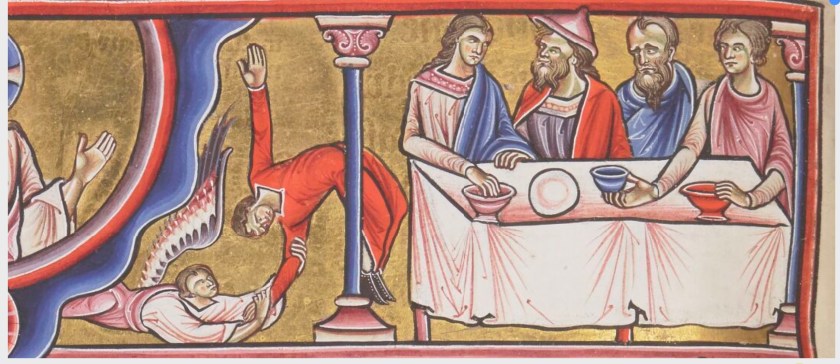
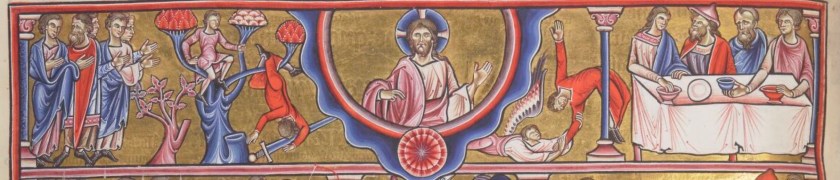
Non-drug meditation could|can|might|may give the exact same effects as two bowls of Cubensis re-dosed, ten sessions.
The Ultimate “Effect” of Psilocybin: achieving mental worldmodel transformation from possibilism to eternalism.
Non-drug Meditation totally does that. 😑 Gives the exact same effect, but actually, Meditation is much better than Psilocybin, because [play back the standard psychedelics-diminishing stock dominant narrative/discourse]
You’re allowed to unnaturally and artificially import alien, inauthentic psychedelics into meditation (which is the authentic way).
Psychedelics can simulate the same effects as the real thing, which is non-drug meditation.
When adding psychedelics to real meditation, psychedelics are a mere abnormal supplement to venerable, glorious non-drug meditation.
Non-drug meditation is the source of all authority.
Psilocybin must be measured against the gold standard authoritative definitive reference of what meditation authentically is: non-drug meditation.
Article: Psychedelic Induced Transpersonal Experiences, Therapies, and Their Implications for Transpersonal Psychology (Roberts, 2013)
Psychedelic Induced Transpersonal Experiences, Therapies, and Their Implications for Transpersonal Psychology
Thomas Roberts & Michael Winkelman
in book:
The Wiley-Blackwell Handbook of Transpersonal Psychology
2013
https://www.academia.edu/4674528/Psychedelic_Induced_Transpersonal_Experiences_Therapies_and_Their_Implications_for_Transpersonal_Psychology
This Handbook of Transpersonal Psychology (2013) entry on Psychedelics by Thomas Roberts & Michael Winkelman is a GREAT summary and explanation of how psychedelics historically fit, levels of psychotherapy, Maslow’s tacking-on “Self-Transcendence” in his 1968 2nd Edition Preface of his book totally diss’ing mere Self-Actualization, diminishing it:
“In the Preface to the second edition of Toward a Psychology of
Being (1968, pages iii–iv) Maslow reported this new top to his needs hierarchy” – p. 4, adding “Self-Transcendence” above “Self-Actualization”.
Against Psychoanalysis: Groffian Psychedelic Literalistic Memory Processing
Notes on Dose Nation ‘Final 10’ Ep. 4
Cyberdisciple, April 2020
https://cyberdisciple.wordpress.com/2020/04/03/notes-on-dose-nation-final-10-ep-4/ –
“Kent is critical of superstitious aspect of New Age and psychedelia. I agree that taking them as literal truth about reality is wrongheaded.
“Frames Grof, Leary, Huxley, Hofmann as science. For them psychedelic action happens in head, but later New Age superstitious psychedelicists ascribe agency to external objects being things.”
Stan Grof is “Science”? Grof’s paradigm is psychedelics-amplified couch psychoanalysis abreaction memory-accessing & processing of your physical birth trauma.
If remembering your childhood memories to “process” them through “psychoanalysis” is valid and good, then the ultimate and best version is to amplify that approach by using psychedelics to access one’s earliest possible memories: your traumatic memory of your literal physical birth, which is what’s ultimately causing your ordinary-state maladies & altered-state bad trip.
All very scientific. 😑 🧠 🔬 📊 🔶
The Roberts & Winkelman article Psychedelic Induced Transpersonal Experiences, Therapies, and Their Implications for Transpersonal Psychology is extremely clear in specifying the Psychedelic Transpersonal Psychology paradigm, so that I can better contrast the Theory of Psychedelic Eternalism as a superior explanatory framework.
Page:
Critique of Griffiths MEQ30 and other ME questionnaires (Brown Thread)
Section heading:
2/ Grof’s Basic Perinatal Matrix II
https://egodeaththeory.wordpress.com/2023/01/09/critique-of-griffiths-meq30-and-other-me-questionnaires-brown-thread/#Perinatal-Matrix
The Egodeath theory vs. Meditation, and Against Psychotherapy, and Against Stan Grof “Physical Birth Memory Retrieval for Processing = totally explains what challenging trips are about“
This Roberts & Winkelman article is so great, it summarizes clearly so that I can critique and identify exactly why I reject Grof’s literalistic BPM misused analogy:
“Your bad trip is because you are remembering your physical birth trauma, for us professional couch psychoanalyst Psychologists to “process” your trauma memories”.
If ordinary-state psychotherapy accesses childhood memories to process them, let’s take that to the extreme: add psychedelics, opening up your literal physical birth trauma memories.
Paradigm: Abreaction memory access/processing – that is the paradigm of “Transpersonal Psychology” – not the Benny Shanon type of Cognitive Phenomenology per the Egodeath theory/ the Theory of Psychedelic Eternalism.
Ken Wilber is against limiting to Psychology (even the transpersonal brand); Wilber works within Integral Theory, not Transpersonal Psychology.
The Roberts & Winkelman article is about the psychedelic history of About the Journal of Transpersonal Psychology & psychedelics.
Found my entry w/ PDF URL, appears I got the PDF a year ago: https://egodeaththeory.wordpress.com/2021/02/19/idea-development-page-12/
Abstract:
“This chapter presents a neurophenomenological model of psychedelic-induced transpersonal experiences, therapeutic processes that they induce, and their implications for transpersonal theory.
“The pharmacological effects of psychedelics also enable them to address a range of psychological and emotional maladies [negative psychology, not positive psychology].
“In addition to indigenous and shamanic approaches, there are four main types of psychedelic sessions:
- psycholytic and
- psychedelic—which developed from Grof’s work—
- entactogenic, and
- pharmacological.
“transpersonal psychology could exist without psychedelics, it may be just as safe to say that transpersonal psychology would not exist without psychedelics.
“The chapter concludes with a brief overview of the multidisciplinary implications of psychedelics for the sciences and society.”
/ end winkelman abstract
Caution: Groffian “Science” & “Psychology” here means the Freudian couch psychoanalysis paradigm, amplified by psychedelics — not a pure psychedelics phenomenology basis/origin, like the real Science that’s the Egodeath theory / the Theory of Psychedelic Eternalism.
Article: Psychedelic-Induced Experiences (Fadiman, 2013)
Related article in same book as Roberts & Winkelman, similar topic:
Psychedelic-induced experiences
James Fadiman, A. Kornfeld
2013
In H. L. Friedman & G. Hartelius (Eds.),
The Wiley-Blackwell Handbook of Transpersonal Psychology
(pp. 352–366)
Wiley Blackwell
https://psycnet.apa.org/record/2013-05204-019
https://doi.org/10.1002/9781118591277.ch19
[At “transpersonal … psychology”, don’t read “Cog Sci”; read as: “professional psychotherapy expanding the Freud paradigm supplemented by psychedelics to recover and ‘process’ the earliest memories thereby accessed”]
[abreactive/ abreaction: the expression and consequent release of a previously repressed emotion, achieved through reliving the experience that caused it (typically through hypnosis or suggestion).]
Fadiman abstract condensed by Cybermonk:
“This chapter considers how psychedelic substances affect consciousness, using the lens of a transpersonal approach to psychology.
“Transpersonal psychology‘s point of view is suitable to grapple with this question due to its continuing interest in altered states of consciousness & its long-standing relationship with psychedelic research.
“founders of both the Journal of Transpersonal Psychology and Association of Transpersonal Psychology were involved in psychedelic research prior to the founding of the discipline, and discovered that the emerging field resonated with their own worldviews.
“mainstream psychology distanced itself from this area of study, perhaps in part because so many reports of psychedelic-induced effects include data historically shunned, denied, or pathologized by science [“Science” = couch psychotherapy ‘Psychology’]: out-of-body experiences, spiritual or transcendent states of consciousness, disidentification with one’s personality, and healing.
“recent thaw in mainstream psychology‘s stance toward psychedelic research
“skittishness about taking the data and its implications seriously.”
/ end Fadiman abstract
Against Mysticism as a Basis for Explanation of Mystical Experiencing
OVERCONFIDENT VENERATION AND OVERSELLING OF STACE’S “MYSTICISM” LEXICON AND EXPLANATORY FRAMEWORK
Science as the basis from which to explain non-science
Sanders is NOT against the experiencing which is called mystic; they’re specifically against the “mysticism” framework & lexicon per Walter Stace 1960 as used by Roland Griffiths.
Pro-Psychedelics Meditation Advocates Contradict Themselves
Kilham in Mystical Experience Defines Psychedelics is misrepresenting Sanders’ article Moving Past Mysticism in Psychedelic Science.
Sanders isn’t against mystical experiencing, or science explaining mystical experiencing.
Sanders is against making the interpretive framework and lexicon called “mysticism” the basis on which to explain mystical experiencing.
Kilham is a meditation huckster, not trustworthy; claims that meditation gives the exact same effect as Psilocybin, and then states that Psilocybin is more potent and reliable than meditation.
Jordan Peterson (in his YouTube channel interview) called out Griffiths for that exact self-contradiction.
Wouter Hanegraaff isn’t against religionism (the religious practice of Esotericism).
Hanegraaff is against misusing religionism as if it can serve as a basis for academic historiography.
The two distinct legs model of the Theory of Psychedelic Eternalism
To scientifically explain religious mythology, don’t make myth my basis; make the Theory of Psychedelic Eternalism my basis.
The two distinct legs model of the Egodeath theory:
In February 1997, I published the Core theory outline spec, which is the scientific foundation that explains myth.
In October 2002, I announced the Radical Maximal Entheogen Theory of Religion.
In 2006, I published my main article, about mytheme decoding in terms of the Cybernetic Theory of Ego Transcendence — including loose cognitive binding, mental model transformation, mental world models, and (new) how myth is metaphor describing those referents by analogy.
In 2013, 2015, 2020, 2022, I extended decoding of myth using my science basis.
When I say “Science”, I largely mean “STEM” as a mentality and approach to figuring stuff out and explaining it (communicating about it, expressing as an explanatory model).
The Egodeath theory Provides the Useful, Relevant STEM-type explanatory model of ego transcendence that I needed in 1985-1987
I personally needed and required a STEM-type explanatory model of ego transcendence, and the mystics failed to deliver that.
the mystics = the “mysticism” framework & lexicon per Walter Stace 1960, which psychedelic psychometrics claims as its “scientific” foundation
So, I myself stepped up, and started from the least-poor presentation available, Alan Watts’ book The Way of Zen, augmented by Ken Wilber’s books to date (1985-1988) and a tiny handful of 5-25 books, including Modern Physics textbook re: block universe, and created the successful STEM-type explanatory model of ego transcendence in January 1988.
- The Theory of Psychedelic Eternalism =
- the Cybernetic Theory of Ego Transcendence
- the Egodeath theory
- the maximal entheogen theory of religion
- the Core Cybernetic theory & the Entheogen Mytheme theory
Your interpretation of your experience is incorrect
Experience vs. interpretation. My interpretation of your experience is correct. Your interpretation of your experience is incorrect. You experienced the eternalism experiential mode, but you interpreted that experience throufgh the lens of framework of possibilism-thinking and ineffabilism mysticism supernaturalism or vague hazy freewill fog or causal-chain determinism.
Immediately before reading this article, I made voice-recording comments (Jan 14 2023).
My contrast between the Egodeath theory vs. the popular predominant view matches the critique in this article.
“two Dutch researchers warn against the emergence of a “risky blend of mysticism and science.””
Eye to Eye (Ken Wilber)
The Eye to Eye essay in the book Eye to Eye is important.
Wilber’s essay, which he affirmed and praised in this Revised book edition, advocates 3 levels of shared empirical observation and I say, in all 3 levels, apply STEM-type rationality, in the loose cognitive state.
Wilber says use all 3:
- eye of body
- eye of mind (ie reason in ordinary state)
- eye of spirit (ie altered state)
Assumes “eye of mind” = ordinary state, and “eye of spirit” = altered state.
Eye to Eye: The Quest for the New Paradigm (Revised)
Ken Wilber
https://www.amazon.com/Eye-Quest-New-Paradigm/dp/157062741X/
2001 –
Junk Science vs. Junk Mysticism — and Then There’s the Egodeath Theory
Science & Spirituality Battle Between Xer Johnson and Boomer Griffith & Richards
Johnson Declared He’s Not Onboard with Worship of Meditation Religion
A clustr of about 5 articles perfect for me to cover in voice recordings and print them and markup and post about them and link to them.
I just need to copy entire articles then delete and highlight parts and comment. For now here are tiny selected portions.
I Agree with What the Anti-Mystical Psychedelic Scientists (Sanders & Zijlmans) Are Actually Saying!
They and I condemn the Stace “ineffability” premise, and we demand (& The Theory of Psychedelic Eternalism provides) useful, scientifically proper articulate explanation and lexicon.
Egodeath Theory Doubling Down on Psychedelic Eternalism – Commitment to Asserting the Particular Position
The psychedelic loose cognitive association binding experiential mode is the eternalism experiential mode.
Other people double down on psychedelic possibilism, or poorly formed psychedelic eternalism.
The Egodeath theory is well-formed, explicit, pointed, principled psychedelic eternalism.
Dogmatic anti-dogmatists are a walking massive self-contradiction: incoherence is their god, is what they are narrowly pushing.
Psychedelic Eternalism as Specific Psychedelic Science vs. Vague Psychedelic Possibilism Mysticism
Popular psychedelic spirituality is vague and self-contradictory and unhelpful. They sell this as “open, nonjudgmental, and saying everyone is right”.
Judging that nonjudgmental is better than judgmental is the worlds most judgmental and self-contradictory and irresponsible position, a non-position position.
The biggest favor the Egodeath theory can do everyone is to be particular and specific and crystal clear.
The worst crime per the Egodeath theory is to be unclear, to waffle, to be vague.
Prevarication and doubletalk (like Wasson and everyone) is the worst.
If you say “everyone is right”, you’re incoherent, self-contradictory, and unhelpful. It’s you against you.
Everyone asserts hazy possibilism mysticism, or hazy eternalism mysticism. the Egodeath theory isn’t hazy possibilism mysticism.
The Egodeath theory isn’t hazy eternalism mysticism.
The Egodeath theory is specific Psychedelic Eternalism.
The Egodeath theory firmly, specifically, pointedly, and exclusively asserts psychedelic eternalism.
My Previous Discussions About Stepping Up to Scientifically Explain, Not Omit, Mystical Experiencing (“Psychedelic Scientists Mystic Wusses”)
tbd, around Sep 2022, includes Egodeath Mystery Show voice recordings, might not be much text posted here.
I mocked and insulted weakling wimpy so-called psychedelic scientists (they can’t handle mysticism, so they omit it), but I should have read the actual article by Sanders, which actually resonates with many of my points.
wusses – try a Find on that word here at this site.
Might find a description of an episode of podcast Egodeath Mystery Show, either as a page/post dedicated to the episode, or possibly in Idea Development page 14 or 15.
Book: The Illusion of Will, Self, and Time: William James’ Reluctant Guide to Enlightenment (Bricklin 2016)
Moved this section to form a new page; see:
The Illusion of Will, Self, and Time: William James’ Reluctant Guide to Enlightenment (Bricklin, Eternalism)
https://egodeaththeory.wordpress.com/2023/01/15/illusion-will-self-time-james-enlightenment-bricklin-eternalism/
Equates “enlightenment” with eternalism.
Bricklin’s book is part of Consciousness Studies, the Journal of Transpersonal Psychology, & Journal of Consciousness Studies, and was reviewed in draft by Benny Shanon & Ramesh Balsekar.
Balsekar asserted no-free-will as enlightenment, among the Ken Wilber Integral Theory crowd.
Benny Shanon = Ayahuasca from a Psychedelics Cognitive Phenomenology approach like the Egodeath theory.
Such books by Sam Harris, Balsekar, Shanon, Campbell, and Bricklin don’t bring the ideas together tightly and simply, as the Egodeath theory does.
Keyboard Shortcuts/Acronyms
Naming the Core theory vs. Mytheme theory
After the 1997 Core theory, doc’d at website fully in 1998, mine is not a history-based approach; it’s a mytheme decoding approach (1999+, and the 1988-1998 Rock Lyrics decoding).
1985-1998: Core theory – not History, not Mythemes (except in Rock lyrics, but that’s not formally part of the Core theory).
Best I can figure, 1998 was website buildout and STARTING to investigate religious history to corroborate the Egodeath theory (later differentiated as “Core”).
The “corroboration” would become designated as the Mytheme theory, and the thing corroborated would become the Core theory.
what keyboard shortcuts expand as “the Core theory” and “the Mytheme theory”? aka the Entheogen Mytheme theory. For my personal purposes, it’s effective to say “the Core theory” & “the Mytheme theory”; with:
‘Mytheme’ defined as entheogen scholarship, history, myth, also now incor’g the Rock lyrics decoding back to 1988 including the later part of the Phase 1 Core period.
Phase 1 = 1985-1998.
Rock lyrics decoding period = 1988-1998. Yet assign that not to Core theory, but to Mytheme theory.
Similarly also, 1995 = reading all Richard Smoley’s Gnosis magazine issues (obtained all around 1999).
In 1988 I deliberately started reading “all knowledge”, for the purposes of communicating my completed/closed Core theory, but I didn’t write about “all knowledge” (history of ideas, myth, metaphor) that until 1999+, because I wanted to only express the Theory in terms of current, direct referents. Not History of Ideas, not myth & metaphor.
I didn’t learn about entheogen scholarship until 1999, though I researched “What psychedelic is the scrolls in Revelation?” starting potentially in June 1986.
Myth decoding = 1999+.
‘Core’ defined as “block universe/ loose cognitive association binding/ mental worldmodel transformation, etc).
1999-
the entheogen Mytheme theory temt
[temt] the Entheogen Mytheme theory
test: the Entheogen Mytheme theory, the Entheogen Mytheme theory. The core theory as of Jan. 1988 conjoins:
- block-universe eternalism & frozen worldlines,
- loosecog,
- mental model transformation,
- the two worldmodels.
See the Principles (section headings ) of my handwritten 1988 Minnesota draft.
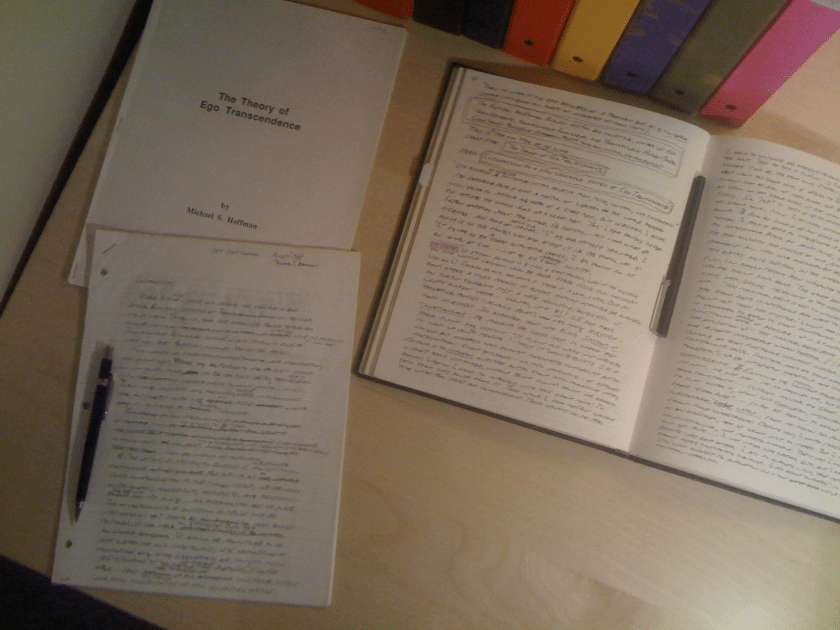
My handwritten August 1988 Minnesota draft: The Theory of Ego Transcendence, = my 1997 Core theory summary specification, same/ equivalent set of Principles; theory-components & Core Concepts like my Core Concepts page of 2020, vs. my Key Mythemes page of 2020. https://egodeaththeory.wordpress.com/nav/#flagship-The-Egodeath-Theory
Upper left: laser printer late 1988 revision of same.
Upper right: early 1989 art blank book (for Transcendent Knowledge idea development) with ink pen instead of Pentel P-205 engineers’ mechanical pencil.
the Core Cybernetic Loosecog Psychedelic Block Universe mental worldmodel transformation theory:
the Core theory of Psychedelic Eternalism; defined by my 1997 Principia Cybernetica website outline summary, which lacks entheogen history scholarship and lacks religious mythology decoding to map to the core reference experience.
“Core” as specified by referring to the 1997 outline, means “not entheogen history” and “not myth decoding”.
My 1997 core theory is all based in and limited to being expressed as current 20th C, and it’s all directly articulated.
The Core theory of [within] the Theory of Psychedelic Eternalism: “Core” means no history, no analogies (no mythemes-decoding, no Rock lyrics).
The Mytheme theory of [within] the Theory of Psychedelic Eternalism, includes (naturally) History; entheogen scholarship; entheogen history scholarship.
The field of entheogen scholarship is inherently by definition, a theory whose explanandum is religious myth.
The purpose of the field of entheogen scholarship is to explain the actual referent of religious mythology.
Incorrectly, entheogen scholarship claims or mis-identifies the referent of myth as “entheogens”.
The song Red Barchetta by Rush — it is CRUDE to say that “the real referent of the song Red Barchetta is ergot”.
That is inadequately precise. It’s a wrong answer, it is vague and crude and insufficient.
More precisely, only this identification of the referent is adequate & sufficient; only this referent-identification meets the requirements for clarity and pointing to the real actual thing:
The song does NOT point to ergot; the song in fact points to ergot EXPERIENCING.
That is a major, significant difference.
You fail to comprehend the song if you identify its referent as “ergot”.
You comprehend the song only if you identifiy and recognize its referent as ergot experiencing.
The real referent of the song Red Barchetta is ergot experiencing.
The actual referent of myth [same as inspired Rock lyrics] is entheogenic experiencing – especially, ultimately, the gradual process of transformation of the mental worldmodel – transformation from possibilism to eternalism. What’s the
The main “effect” of Psilocybin is transformation of the mental worldmodel from possibilism to eternalism.
The Mytheme theory of Psychedelic Eternalism (no need there to say ‘entheogen theory’ b/c already ‘psychedelic’).
I get automatic all-caps variant for free – unless the expansion is mixed case.
[mes] = mystical experiences
test: mystical experiences MYSTICAL EXPERIENCES
[altst] = altered state
test: altered state ALTERED STATE OF CONSCIOUSNESS
[ordst] = ordinary state
test: ordinary state ORDINARY STATE
[asc] = altered state of consciousness
test: altered state of consciousness ALTERED STATE OF CONSCIOUSNESS
[osc] = ordinary state of consciousness
test: ordinary state of consciousness ORDINARY STATE OF CONSCIOUSNESS
Book: Philosophy of Mysticism: Raids on the Ineffable (Jones 2017) – update of Stace 1960
Page title:
References for Psychedelic Psychometrics Questionnaires
Section heading:
Philosophy of Mysticism: Raids on the Ineffable (Jones 2017)
https://egodeaththeory.wordpress.com/2023/01/17/references-for-psychedelic-psychometrics-questionnaires/#Philosophy-of-Mysticism-Raids-on-the-Ineffable
todo: link there to here
Philosophy of Mysticism: Raids on the Ineffable
Richard Jones
Jan. 2, 2017
https://www.amazon.co.uk/Philosophy-Mysticism-Ineffable-Richard-Jones/dp/1438461186/ uk
Blurb by Ralph W. Hood, Jr., coauthor of The Psychology of Religion: An Empirical Approach:
“A comprehensive exploration of the philosophical issues raised by mysticism.
“This work is a comprehensive study of the philosophical issues raised by mysticism.
“Mystics claim to experience reality in a way not available in normal life, a claim which makes this phenomenon interesting from a philosophical perspective.
“Richard H. Jones’s inquiry focuses on the skeleton of beliefs and values of mysticism: knowledge claims made about the nature of reality and of human beings; value claims about what is significant and what is ethical; and mystical goals and ways of life.
“Jones engages language, epistemology, metaphysics, science, and the philosophy of mind.
“Methodological issues in the study of mysticism are also addressed.
“Examples of mystical experience are drawn chiefly from Buddhism and Advaita Vedanta, but also from Christianity, Judaism, Islam, and Daoism.
“This is a significant extension of the seminal work by Walter Stace, Mysticism and Philosophy.
“That work has stimulated much literature, all of which Jones manages to review here.
“He critically extends Stace’s universal core and embeds it [the ‘common core’ hyp.] in a sophisticated discussion of the extent, range, and metaphysical implications of mysticism.”
unclear / ungramm:
Jones extends Stace’s mysticism common core.
Jones embeds Stace’s mysticism common core in a sophisticated discussion of:
- The extent of mysticism.
- The range of mysticism.
- The metaphysical implications of mysticism.
Article: This Is Your Priest on Drugs (Michael Pollan, May 2025)
This Is Your Priest on Drugs
Michael Pollan, May 19, 2025
https://www.newyorker.com/magazine/2025/05/26/this-is-your-priest-on-drugs [subscribers] – If you are able to view entire article, you might want to Save As, Print (try 75% size), or Save As PDF – if you go in again, d/k if you have access to it.
I was able to access the full article and Save and Print it.
Hunt Priest, Ligare psychedelic Christian org.
Hopkins/NYU: Religious Professionals Study of 2015, might be published soon in 2025.
Charles Stang emphasized: Psychedelics give a religious experience, but beware: can be much more challenging than than WHITEWASHED Hopkins marketing.
Psychedelic Science conference in Denver in 2023.
Reverend Joe Welker, a Presbyterian pastor in Vermont complained that the study was part of a strategy to integrate psychedelics into mainstream religion. I say Christianity should re-integrate its psychedelic source of Holy Spirit; do not disparage the Holy Spirit – Michael Hoffman.
The Johns Hopkins Institutional Review Board (I.R.B.) is charged with protecting participants in human trials.
Many participants signed an open letter disagreeing with Joe Welker.
I disagree with Welker’s framing – I have different cautions for the Church.
Matthew Johnson objected that Roland Griffiths wanted psychedelic research to influence religious groups, and contacted the I.R.B.
I am not too keen on Welker’s angle – he criticizes people for RE-INTRODUCING Psilocybin into Christianity.
It might SOUND like we’ve been trying to find mushroom evidence in Christianity since 1952.
But, so very late as Jan. 2025, I discovered in Day 1 & 4 of Creation, in Great Canterbury Psalter, perfect-shaped mushrooms, indicated as Liberty Cap, Panaeolus, Cubensis, and Amanita, point at the pans of the {balance scale} that God the Creator holds in Day 1 Let there be Light, with God holding an open book.
I proved that we have not even started to look for mushrooms in Christianity.
Similarly, in ANOTHER image source that entheogen scholars have been covering since 1998, Bernward Doors & Column, in 2025 I found mushroom imagery that Brown was practically touching in his 2016 book photo, that no one else found, because they were too busy ritually re-telling their constructed narrative tale of “big bad Church suppressed into heretical groups”, to preoccupied to open their eyes and see and report the mushroom imagery evidence – hold the narrative overlay, please!
Evidence for what? Suppressed alien infiltration of the kiddie Amanita into the heart of the church? No. Simply, evidence for Psilocybin mushrooms in Christian history.
Hold the heavy-handed obscuring overlap, stop constructing your fabricated barrier wall of “mainstream tradition vs. closed heretical groups”.
FORBIDDEN WORDS for 2nd-generation entheogen scholarship (the Explicit Psilocybin paradigm):
- tradition
- mainstream
- underground
- sects
- cults
- communities
- groups
- suppressed
- oppression
- secret
- hidden
These constructions have NOT helped to find evidence; they have been abused to prevent finding evidence, putting a lower priority on finding evidence and putting top priority on ritual retelling of the narrative overlay,
“The big bad church suppressed kiddie Amanita, isn’t that terrible?!” No, I really DGAF about fkking Amanita, which is not even a psychedelic, and isn’t illegal.
What Allegro-Ruck OUGHT to care about is full repeal of Psilocybin Prohibition, rolling back to the non-existence of laws.
Letcher p. 35-36: Various writers have suggested cult, secretly, oppression, hidden, secret cult, surreptitiously slipped in.
There are add’l examples eg color tauroctony on the cover of Entheos 3 – no mention of the lib cap in Mithras’ right leg.
The 1952-2024 efforts were so negative, so loaded with the Allegro-Ruck anti-Christian demonization, that any effort to find evidence was cancelled out by Ruck’s extreme effort to construct a barrier wall and fakely reframe as “evidence for heretical use of The Mushroom — kiddie Amanita — alien infiltration”.
Ruck contradicts himself because “tail wag dog”:
It is much more important to Ruck to ritually re-tell his narrative of suppression, than to quietly hand over the raw evidence, hold the narrative PLEASE!
Stop re-framing as evidence for alien infiltration of the [infantile] Amanita via heretical sects, given center stage by Ruck.
Andy Letcher in 2006 book Shroom disproved the Allegro-Ruck 1st-generation entheogen scholarship (the Secret Amanita paradigm), by using a single image from 2nd-generation entheogen scholarship (the Explicit Psilocybin paradigm).
Motivation of this Page
Scope/topics; the field being critiqued:
- Critiques of Psychedelic Science with psychometrics questionnaires modelling mystical experience.
- Not critiques of entheogen scholarship / history of psychedelics in religion – that’s a separate debate.
It’s surprising how much my criticisms and recommendations / advocacies match or align with those of Sanders & Zijlmans in the article Moving Past Mysticism in Psychedelic Science.
What they mean by ‘mysticism’ pejoratively is what I mean by ‘mysticism’ pejoratively.
January 21, 2026 – Popular Neo-Advaita; the positive unitive model of “mystical experience”, is totally dominant, and wrong.
The Unitive model is avoidance of real deal: mental model transformation from possibilism to eternalism, that’s what real mystical experience is about; Classic, timeless, Reference point.
The Unitive philosophy is a stunted dead end, emptied of the main content.
Myth doesn’t depict Unitive, it depicts Classic: eternalism-driven control-transformation, to add eternalism-thinking to possibilism-thinking.
/ end of January 21, 2026 note
I have the Egodeath theory; the Theory of Psychedelic Eternalism – they don’t.
The Theory of Psychedelic Eternalism answers in a completed, mature way, Sanders’ call for an alternative to making mysticism the foundation,
Wouter Hanegraaff: “don’t make mysticism or religious myth the foundation for scientifically conducted historiography”.
also, minor note, I renamed the Egodeath theory to the Theory of Psychedelic Eternalism
Motivation of My Two “Moving Past Mysticism” Pages: To Correct Psychedelic Pseudo Science
Why this topic is relevant, for what field of concern:
I found illegitimate the Challenging Experience Questionnaire (CEQ), then found illegitimate Mystical Experience Questionnaire (MEQ).
I then said: psychedelic pseudo science.
I traced the fiasco of errors to help whitewash and cover-up the risk, in how the 11-Factors questionnaire was created and documented, and then how the the Challenging Experience Questionnaire (CEQ) was created and doc’d.
The result was, most notably and significantly, Item 54 “I was afraid to lose my self-control” from OAV 1994 went missing, and wasn’t even included by Dittrich in the APZ from 1975, until 1994.
See my corrective ECQ, which addresses the biggest factor blocking Psilocybin usage:
ECQ – “Eternalism and Control Questionnaire” (Hoffman 2022)
https://egodeaththeory.org/2022/12/23/eternalism-and-control-transformation-effects-in-the-psychedelics-effects-questionnaires/
To Switch from “Pleasant, Boundaryless Unity” to “Challenging, Cybernetic Eternalism”
Motivation for this page: To switch from the Weak, Fool’s Gold “Pleasant, Boundaryless Unity” Model to the Classic, Ultimate “Challenging, Cybernetic Eternalism” Model of Climactic Mystical Experience Transformative Apocalyptic Revelation
Two Conflicting Models of Mystical Experience: “Positive Unity” vs. “Challenging Dependent Control”
Historically, there are two competing conceptions of Transcendent Knowledge or mystic knowledge revelation; two conflicting models of mystical experience:
- Beginner, positive unity. Suspension of constructing the self/other boundary sensation. Origin: Swami Vivekananda, 1893, for the reductionist/distorting purpose of international political unity. A one-sided, lopsided, “positive-balanced” (as Griff told Stang in Harvard video) model eagerly taken up by Wm James, Walter Stace, Walter Pahnke/ Tim Leary, Wm Richards, Ralph Hood, & Roland Griffiths group.
- Advanced, challenging dependent control. Omitted from Mystical Experience Questionnaire (MEQ), by omitting challenging experiences as “unpleasant therefore unmystical”. Omitted from the Challenging Experience Questionnaire (CEQ) by omitting 18 of 21 negative effects from OAV 1994, to (motivation:) deliver a generic, forced-familiarized “Grief challenges” factor instead of a psychedelic-specific, unfamiliar & mysterious “Control challenges” factor.
Pleasant, Boundaryless Unity; the “Positive Unity” Model of Mystical Experience
False, incomplete model of mystical experience, as basis for “Psychedelic Science”:
Feeble version of “mystical experience”: The quintessential common core of mystical experience is pleasant, boundaryless unity. aka: positive unity.
Weak, beginner, shallow, popular, substitute, dabblers, for avoidance. Focused on by:
- Swami Vivekananda’s Advaita Vedanta 1893.
- William James 1902.
- Walter Stace 1960.
- Timothy Leary/ Walter Pahnke 1962 Mystical Experience Questionnaire (MEQ).
- William Richards 1975/2015.
- Ralph Hood’s Mysticism Scale (M Scale) 1975.
- Roland Griffiths 2006.
Challenging, Cybernetic Eternalism; the “Challenging Dependent Control” Model of Mystical Experience
Full-strength version: The quintessential common core of mystical experience is challenging, cybernetic eternalism.
Intense, advanced, shattering, deep, hardcore, ultimate transformative test. Focused on by:
- Acid Metal Lyrics: The most revelatory or exclamatory Rock Lyrics. Help; Heaven Can Wait; S.A.T.O., Right the Lightning, No One at the Bridge. Album art treats non-boundary unity like mere perceptual distortion; commonplace, entry-level beginner effect: Thee Hypnotics: Come Down Heavy.
- Myth: doesn’t depict non-boundary unity; emphasis is snake not rock, in {snake frozen in rock}. {shadow dragon monster} guarded transformation gate.
- The medieval art genre of {mushroom-trees}, including {mushrooms}, {branching}, {handedness}, and {stability} motifs.
- Astral ascent mysticism re: heimarmene & transcending it. End up above heimarmene and at One/Source/Pege, but central focus is reaching heimarmene and transcending heimarmene, in awesome fear & trembling.
- The Egodeath theory.
- The Way of Zen by Alan Watts w/ focus on switching to a 2nd model of self-control cybernetics. Summarized in “Zen and the Problem of Control” in This Is It.
- Quote from Pankhe: 9 guys had pleasant, boundaryless unity; 1 guy had challenging cybernetic eternalism; threat of catastrophic loss of control.
The Original, Verbose Page with Commentary
I created the present, condensed page, because I need a page that’s:
- Clearly titled.
- A clear link, to help people follow this debate in psychedelic science.
- Clean, organized by date.
- Listing the articles in order.
- Separating commentary from citation info.
- Without uneven-length commentary.
Verbose original version of the present page, with commentary:
Moving Past Mysticism: Theory of Psychedelic Eternalism Provides Scientific Basis, Superseding “Mysticism, Meditation, & Psychotherapy” Framework
https://egodeaththeory.org/2023/01/15/the-theory-of-psychedelic-eternalism-provides-a-scientific-explanatory-basis-for-mystic-state-experiencing/
Come Down Heavy (Thee Hypnotics, 1990)
https://www.youtube.com/watch?v=nZIuhCxXN5E —
https://www.google.com/search?q=lyrics+thee+hypnotics+come+down+heavy
No lyrics for this song, on the web! I have to transcribe (quick/rough start):
When you’re down on your bended knees
And evil hoodoo gonna make you aggrieved
Well there ain’t no need to feel uptight, no
Just let it come down heavy tonight
When you can’t seem to get it on
Every minute gonna last too long
If your blues gonna gone aground
That’s when you just got to let em calm down
Bias Against ‘Religion’, for ‘Spirituality’ Revealed by Bob Jesse Talk
todo: move this section out eg to idea development page 30
Bob Jesse seems worth watching.
He showed the bias:
pleasant, good words/ideas/ associations = spirituality = stuff i like
unpleasant, bad words/ideas/ associations = religion = stuff i don’t like
Analyzing Scope of this Page
p.m. January 17, 2026
Why is entheogen scholarship out of scope for this page?
Why the heck is entheogen scholarship (history of drugs in religion) deliberatly kept separate as much as possible; denies by presupporitionally denied and ignored, by psychedelic science & hsitory of the positive unitive model of mystical experience?
Never Bring Together Two Topics: History of Drugs in Religion; Drugs vs. History of Mysticism
p.m. January 17, 2026
People who advocate “drugs give mystical experience”, pointedly ignore the topic of history of drugs in religion – WHY?!
People who advocate “psychedelics give mystical experience”, pointedly ignore the topic of history of psychedelics in religion – WHY?!
Every writer on the topic of whether psychedelics give mystical experience, firmly takes it as granted, that drugs did not play a signif role in relig history – WHY?!
Are isn’t the group of ppl who say “psychedelics give same experience mystics had“, the same as the group of ppl who say “psychedelics played a signif role in relig history“.
Why are these advocacies mutually exclusive?!
Which Advocacy Group Are You In? “Psychedelics give same experience as mystics”, or “Psychedelics played a major role in religious history”?
p.m. January 17, 2026
The asymmetrical, unrequited relationship between two seemingly adjacent advocacy topics:
Worded as questions:
- “Do psychedelics produce mystical experience?”
- “Did psychedelics have a significant role in religious history?”
Worded as assertions:
- “Psychedelics produce mystical experience”
- “Psychedelics have a significant role in religious history”
(or: “Psychedelics are central in religious history”)
If you want to say “Psychedelics produce mystical experience”, you must say “No psychedelics in religious history”, to avoid being accused of the Allegro combination.
If your mission is to advocate A, you must deny B, or else you’d be accused of the Allegro position.
If your mission is to advocate “Psychedelics produce mystical experience”, you must deny “Psychedelics are central in religious history”, because if you were to also advocate “Psychedelics are central in religious history”, you would be accused of the Allegro position.
It IS PERMISSIBLE in establishment academia, to advocate A.
It IS NOT PERMISSIBLE in establishment academia, to advocate B.
Ruck asserts both B and A.
Huxley, Pahnke, Richards, Griffiths assert A, but do not assert B.
“Controverted” by academics: A.
“Rejected” by academics: B.
“Controverted” by academics: A.
“Rejected” by academics: B.
Academics have medium objection to advocacy of A.
Academics have strong objection to advocacy of B.
Advocacy Topic A:
Psychedelics Produce Mystical Experience
p.m. January 17, 2026
Advocacy Topic B:
Psychedelics Had a Major Role in History
Academia Allows Advocating A, not B
p.m. January 17, 2026
if you are willing to go against academia, so as to assert B, then you have no problem also asserting A.
If you are unwilling to go against academia, you are allowed to assert A, but not allowed to assert B (even though A & B seem a package deal).
Are you a moerate radical? Assert A.
Are you a radical radical? Assert B (and also A).
A is moderately controverted by academics.
B is extremely controverted (taboo/ignored) by academics.
In this way, Allegro 1970 is extremely influential: Allegro’s “discrediting” means, as a result, academics feel free to assert “Psychedelics give mystical experience”, but are afraid to assert “Psychedelics were major in history.”
A and B SEEM like they would be locked together, package deal – but, academia disallows B more than disallowing A, producing inconsistent asymmetriy of advocacy of positions.
Advocacy Topic A:
“Psychedelics produce mystical experience”
“Do psychedelics produce mystical experience?”
[Unitive Mysticism (Stace); Psychedelic Mysticism (Huxley); Psychedelic Science (Pahnke)]
Advocacy Topic B:
“Psychedelics had a major role in religious history”
“Did psychedelics have a major/significant role in religious history?”
[Graves, Wasson, Allegro, Ruck, Heinrich; 2nd Gen: [McKenna], Samorini/ Irvin/ Hoffman/ Brown]
Anyone who asserts B, asserts A.
Anyone who asserts A, asserts ‘B.
Anyone who asserts “Psychedelics played a major role in religious history”, asserts “Psychedelics give same experience as mystics”.
yet:
Anyone who asserts “Psychedelics give same experience as mystics”, asserts “Psychedelics did not play a major role in religious history”.
Anyone who focuses on asserting B, also asserts A.
Yet, anyone who focuses on asserting A, denies & ignores B.
Anyone who focuses on asserting “Psychedelics played a major role in religious history”, also asserts “Psychedelics give same experience as mystics”.
Yet, anyone who focuses on asserting “Psychedelics give same experience as mystics” [Badiner’s Zig Zag Zen], denies & ignores “Psychedelics played a major role in religious history”.
The ppl who primarily advocate “Psychedelics played a major role in religious history”, also advocate “Psychedelics give same experience as mystics”.
Yet, the ppl who primarily advocate “Psychedelics give same experience as mystics”, deny and ignore “Psychedelics played a major role in religious history”.
They must deny it – why? For ppl who advocate “Psychedelics give same experience as mystics”, why is it counterproductive for them to also advocate “Psychedelics played a major role in religious history”? Ans: Prohibition: TO DISTANCE ALLEGRO “THERE WERE DRUGS” FROM ALLEGRROS ASSERTION “FERTILITY SEX CULT & DRUGS & NO JESUS”.
To distance themselfs from Allegro’s sex+mushrooms/no jesus theory, advocates of psychedelic science deny drugs in religious history.
This is how Allegro harmed the field: he discredited combining advocacy for:
- “Psychedelics give same experience as mystics” [that position subtlely demands that you adopt the presupposition, “the non-drug methods of the mystics”]
- “Psychedelics played a major role in religious history”
b/c anyone who says “psychedelics give same experience mystics had“, operates on the firm, silcent, silent presupposition that mystics did not use drugs psychedelics to produce their mystical experience.
Because this is a SILENT presupposition, the reusult is an unack’d boundary line:
you must not mention the entheogen scholarship history proposal, when you assert that psychedelics give same experience as mystics [taken to be non-drug; traditional methods of the mystics].
It is REQUIRED that advocates of “Psychedelics give same experience as mystics”) must SILENTLY ASSUME mystics didn’t use drugs, in order to ask the question, “Do psychedelics produce mystical experience?”
The ppl who ask “Do psychedelics produce mystical experience?” NEVER consider the hypothesis, “Maybe psychedelics played a significant role in religious history”.
Research on entheogen scholarship (“Did psychedelics have a significant role in religious history?”) has no interaction with research on whether psychedelics give mystical experience (“Do psychedelics produce mystical experience?”)
Rather, it’s a 1-way, asymmetrical relationship:
Research on B incorps research on A,
yet research on A feels that it is hampered, impeded, by incorp’ing research on B.
Research on A distances itself from research on B.
Yet research on B embraces research on A.
Research on “Do psychedelics produce mystical experience?” distances itself from research on “Did psychedelics have a significant role in religious history?”.
Yet research on “Did psychedelics have a significant role in religious history?” embraces research on “Do psychedelics produce mystical experience?”
Research on B wants to marry research on A.
Yet research on A shuns research on B.
Research on “Did psychedelics have a significant role in religious history?” wants to marry research on “Do psychedelics produce mystical experience?”.
Yet research on “Do psychedelics produce mystical experience?” shuns research on “Did psychedelics have a significant role in religious history?”.
Research on “Did psychedelics have a significant role in religious history?” has no interaction with research on “Do psychedelics produce mystical experience?”
Research on
“Did psychedelics have a significant role in religious history?”
has no interaction with research on
“Do psychedelics produce mystical experience?”
Why not?
Timeline Sketch
p.m. January 17, 2026
from my notes written on aritlce High Mysticism by Baier 2021:
- 150 – Plotinus Neoplatonism: Academic Philosophy of Mystical Union with the One, sans intense mystic altered state mixed wine mystery religion initiation described by myth. Neopl merely uses myth as metaphor for armchair Phil Dept’izing.
- 1687 – Newton Princip Math: forgot astral ascent mysticism along with entheogenic esotericism; finally switch from geo to helio centric model of cosmos.
- 1893 – positive unitive model of mystical experience; Swami Indian Hinduism Venanta Vivekananda & raft of accretions & particular philosophies tacked-on; Westernized; Protestant expectatiosn; popular demand for sanitized positive unitive mysticism, avoiding eternalism-driven control-transformation (ends up having repressed {shadow dragon monster}).
- 1902: James, The Varieties of Religious Experiencing – Psychedelics & Mysticism
- 1906 – Tree Stylizations in Medieval Paintings (Brinckmann, 1906) https://egodeaththeory.org/2020/12/11/brinckmann-mushroom-trees-asymmetrical-branching/
- 1910 French myc society talk & publication: Plaincourault tree of knowledge is Amanita mushrooms.
- 1915 – Safford article: There’s definitely no psilocybin mushroom use in Mexico; it’s peyote.
- 1952 – Panofsky letterS to Wasson: News flash: There are hundreds of mushroom-trees in Christian art, therefore they cannot mean mushrooms. They developed from pine, which proves that it was accidental that the end-state was, quote: “the gradual hardening of the pine into a mushroom-like shape … emphatic schematization of the mushroom-like crown.”
- 1954 – Huxley: psychedelics give mystical experience – common-core mysticism and perennialism (it’s hidden [as a protective ploy/strategy] that the core is taken to be, specifically, the positive unitive model). Perennialists strategically covertly conflate “that there is something common among mystical experience” with “the thing in common is positive unitive experience”.
- 1957 – Wassons book Russia History Mushrooms
- 1957 – Graves’ Food for Centaurs / What Food the Centaurs Ate, New Yorker: Ancient Greeks used mushrooms. The first article besides Blavatsky or Manly Hall, to say psychedelics in mystery religion.
- 1960 – Stace (brief mention of psychedelics as outside his expertise & too early to cover)
- 1962 – Pahnke / Leary / Richards is 1965
- 1968 – SOMA wasson “You blundering mycologists failed to consult the art authorities” – but in the same paragraph p. 180, dishonestly censored the citation of Brinckmann 1906. Wasson the Academic Fraud; compromised, max conflict of interest, on this point.
- 1968 – SOMA, Wasson: “I am first to ever propose that the tree of knowledge connects w/ Amanita; and, 1910 myc’ists were fools to say that the tree of knowledge in Plaincourault is Amanita.”
[kettle logic self-contradiction: if french were stupid in saying Plaincourault shows tree of knowledge as Amanita, then is it impossible for Wasson to be the first to connection tree of knowledge w/ Amanita.
incoherent self-promotion, disinfo by pope’s banker] - 1992 – McKenna, Food of the Gods: “Do not look for mushrooms in Christianity, b/c big bad church eliminated psychedelics.”
- 1992 McKenna Food of the Gods
- 1995 – Strange Fruit, Heinrich: chapters trace history of Amanita in esotericism.
- 1997 – Samorini: The mushroom-tree of Plaincourault
- 1998 – Samorini: ‘Mushroom-trees’ in Christian art
- 2001 – Ruck committee: “Conjuring Eden” & “Daturas for the Virgin”
- 2002 – Apples of Apollo – A disappointment & a narrowing (flip-flops from the Moderate to merely the Minimal Entheogen Theory of Religion), after the strong article “Conjuring Eden”, caused me to define, as breakaway from Waffle Ruck School driven and constrained by / restricted by social drama narrative, announcing maximal entheogen theory of religion in rebuttle to the Secret Amanita paradigm, favoring what I’d later in 2023 call the Samorini/ Hoffman/ Brown Explicit Cubensis paradigm. ie 2nd-generation entheogen scholarship (the Explicit Psilocybin paradigm).
- 2006 – Hopkins psychedelic pseudo science: psilocybin gives mystical experience, where “mystical experience” is defined per Stace as exclusively nothing other than the positive unitive model from Swami Vivekananda 1893.
- 2006 – Michael Hoffman, Wasson and Allegro on the tree of knowledge as Amanita – 64-page article for Robt Price journal of Higher Criticism.
- 2007 – Michael Hoffman reformat main article, nails analogies except for branching, handedness, snake vs tree, solved in years: 2013-2025
- 2013 – Michael Hoffman: Branching confirmed a major theme in mythic art (branching in paintings by Cranach & Douris)
- 2015/2025 Hopkins’ Religious Leaders Study – crash and burn, faceplant disaster, conflict of interest: “Do not cite this “Science conclusions for purchase” article.”
- 2015 – Michael Hoffman: Dancing man (Hatsis provided hi-res): right foot = eternalism-thinking?? Looking for confirmation of hypoth.
- 2020 – Michael Hoffman: Canterbury folio image f134: confirmed hypoth: branching, handedness.
- 2023 – Michael Hoffman: Identify branching / handedness in many art pieces.
- 2025 – Michael Hoffman: Prove Canterbury Day 1 {balance scale} pans contain mushrooms; and progressive branching morph’y in Day 3. Jan 13.
- 2025 – Michael Hoffman: 2POV; add eternalism-thinking to possibilism-thinking; “embrace and include” per Ken Wilber. Developed 2POV in April (after 6 months of devmt), wrote page in August.
todo: above, indicate topics 1-4 in each entry, to keep them differentiated unlike John Lash’s timeline of psychedelics events and all cultural events, mixed together indiscrim.
Numbered Key Topics
p.m. January 17, 2026
- The positive unitive model of mystical experience (Vivek 1893, Stace 1960)
- Psychedelic Mysticism (Huxley 1954)
- Psychedelic Science (Pahnke 1962; = Mystical Experience Questionnaire (MEQ))
- entheogen scholarship (1G: Graves, Wasson, Allegro, Ruck; 2G: McKenna, Samorini, Heinrich, Irvin, Hoffman, Brown)
You can search this site for “conflicts of interest”, with quotes, to find the actual section heading (“Author Disclosure Statement”) in the 2025 Hopkins Religious Leaders Study article that took 10 years to flop across the finish line in disgrace:
https://egodeaththeory.org/2025/11/29/taves-and-breau-entrench-unity-model-while-critiquing-staces-unity-model/#would-you-like-to-purchase-some-science-conclusions —
Article title:
Effects of Psilocybin on Religious and Spiritual Attitudes and Behaviors in Clergy from Various Major World Religions
Author Disclosure Statement (p. 17-18)
“The Johns Hopkins Medicine Institutional Review Board (JHM IRB) conducted an audit of the JHU site (IRB00036973—“Effects of Psilocybin-facilitated Experience on the Psychology and Effectiveness of Professional Leaders in Religion”) and concluded that the following must be reported to all journals and disclosed in all publications where data related to this study may be published:
(1) There were two unapproved study team members, one who was also a study funding sponsor, directly engaged in the research.
(2) There was an additional approved study team member whose role as a
funding sponsor of the study was not disclosed to the IRB and who directly led the qualitative analysis.
(3) Conflicts of interest related to the two individuals who were engaged in the research and also served as funding sponsors were not appropriately disclosed nor managed.
(4) The funding sponsorship for this study was not disclosed
to the JHM IRB.”
So Offensive, Mosurinjohn’s Argument: “Stop Psychedelics Research in European History, which is Committing Colonialist Violence; Entheogen Scholars Must Put Indigenous Shams as their Central Focus & Boundary Limit”
p.m. January 17, 2026
Mosur: her written summary of her talk argues:
“Do not look for psychedelics in Europe history, or else you are guilty of Colonial Violence; you must put Mexican history / Indigenous Amazon ayahuasca history (whihc is as much as 100 years old!!) in the center of your focus, making that the boundary limit of your investigation.”
I bet her coauthor Ascough destroyed her over that; he called her out on that summary, because in her actual talk, she has been put on the defensive; put on her back heels, and she is forced to retract and backtrack.
“I’m not saying that if you put Europe history instead of Indigenous history in your focus and boundary, you’re not allowed to do that Eurocentric scholarly investigation, b/c you’d be committing Colonial Violence.”
But that is EXACTLY what her written summary argues, and, I NOTICE she does not CORRECT her written summary, even though in her talk, she pointedly contradicts her written summary.
SO OFFENSIVE!
She tries to pivot and strike a tone of “my message is:
“We must avoid the one extreme of Pop Allegro Ruck Secret Christian Amanita Cult history…
“And we must also avoid the extreme of academic butthead denial of any drug role in relig history.”
We must be good scholars, LIKE ME (who entered the field two minutes ago): Mosur claims that her message is:
“When we look for history of drugs in Europe, we must be midway on the spectrum from Gullible Affirmation, to Obstinate Committed Skeptic.”
But her written summary has a different message: “Given that we know there is no evidence for psychedelics in Euro history”
- Samorini 1997 – The mushroom-tree of Plaincourault
- Samorini 1998 – ‘Mushroom-trees’ in Christian art
- Ruck 2001 – “Conjuring Eden”
Mosur’s cocky, rude, insulting, ignorantly total confidence denial of evidence reveals that she failed to read the 2nd-generation entheogen scholarship (the Explicit Psilocybin paradigm)
She enters the field as a newbie and immediately starts throwing insults at scholars in the field, without having done the basic reading of the top articles in the field.
She cites Huggins’ Foraging Wrong article as if it has been peer reviewed and its atrocious fallacious args tested and passed merit.
Mosur cites Huggins not because that article has any basic merit, but only because Huggins’ prejudiced article is in accord with her own prejudice. She simply takes the Hug article as if proven fact.
Samorini 1997/1998
Conjuring Eden: Art and the Entheogenic Vision of Paradise (Hoffman, Ruck & Staples, Entheos 1, 2001), https://entheomedia.net/Issue%20one.htm, https://egodeaththeory.org/2020/12/24/entheos-issues-1-4-mark-hoffman/#Entheos-Issue-1
I bet she has NO PROBLEM with scholars like Benny Shanon looking for Acacia Rue in Jewish history.
Sharday Mosurinjohn ONLY has a problem with, specifically, white, European history scholarship looking for psychedelics in Euro history (broadly “euro” ie W history; mediterranean/ ANE / Europe/ Britain).
Anti-whiteism invades entheogen scholarship to deny a psychedelics history lineage to Europeans, while encouraging a psychedelics history lineage for every other nation/ race/ group:
Scholarship on a a psychedelics history lineage for Indigenous: Good.
Scholarship on a psychedelics history lineage for Jews: Good.
Scholarship on a psychedelics history lineage for Europeans: Bad; = committing Colonial Violence.
Parody of How Much Ruck Contradicts Himself b/c He Only Cares about the Social Drama Narrative, not About Coherent Theorizing
p.m. January 17, 2026
In a voice recording around Jan 15-16 2025, I listed ways in which Ruck is self-contradictory/ inconsistent.
Psychedelics (= Secret Gnosis about Secret Amanita) had a major role in religious history, but no one knew about Secret Amanita, except 26 different categories of groups and individual elites, showing the extent to which Christianity didn’t have any mushrooms, but mushrooms heretical groups infiltrated fully Christianity.
That’s how there’s no mushrooms in Xn history, and mushrooms thoroughly heretical infiltration of the mushroom throughout Christianity.
No wonder McPriest mischar’s Ruck, claiming Muraresku says Ruck says “the institutional Church elim’d psychedelics”.
Here is my accurate char’n of Ruck’s characteristically self-contradictory position:
“the institutional Church elim’d psychedelics” and
“psychedelics were infused throughout Christianity by heretical groups, monastics, and elites”.
“The big bad church elim’d psychedelics, and here’s 250 images of psychedelics in the art of the church, to prove it”
“Thank you for yet more evidence of psychedelics in HERETICAL Christianity, showing how terrible the church was for eliminating psychedelics” – Ruck. Incoherent!
Pope Ruck literally writes, to hide his declaration that Amanita is heretical:
“Thank you for yet more evidence of psychedelics in so-called heretical Christianity.”
“so-called”? The ONLY person calling psychedelics “heretical” is Ruck himself, driven by his crybaby social drama narrative.
The tail (the “terrible Church” social drama narrative) wags the dog (entheogen scholarship), and thus corrupts and restricts findings of entheogens in religious history.
… producing self-contradiction; kettle logic.
The Egodeath theory is better than Ruck b/c not burdened with that social drama narrative; same for Stamets/Gartz (2nd-generation entheogen scholarship (the Explicit Psilocybin paradigm): they are better, b/c not burdened w/ trying to tell some social drama narrative. They say Bern door shows Liberty Cap” – no more; no attempt to t4ell any social drama narrative of “suppression” or “mainstream”.
Agaisnt Letcher’s botched endnote 31 in Shroom, Stametz & Gartz do not say either:
“The Liberty Cap mushroom-trees on Bernward Doors & Column prove entheogens were suppressed, hidden, & secret.”
“The Liberty Cap mushroom-trees on Bernward Doors & Column prove entheogens were mainstream, normal, & commonplace.”
The Egodeath theory is not doing social drama narrative; it’s forming a model of mental model transformation described by myth as analogies, expressed as STEM.
social drama narrative
sdn
Timeline of 20th C Writings on: Unitive Mysticism; Psychedelic Mysticism; Psychedelic Science; Psychedelics in History
p.m. January 17, 2026
It is really strange, how:
Writers on Unitive Mystcism implicitly assert “No psychedelics in history”.
Writers on Psychedelic Mysticism implicitly assert “No psychedelics in history”.
Writesrs on Psychedelic Science implicitly assert “No psychedelics in history”.
asym: in contrast,
Writers on Psychedelics in History assert Unitive Mysticism.
Writers on Psychedelics in History assert Psychedelics Give Mystical experience.
Writers on Psychedelics in History support Psychedelic Science.
The Battle Between [Unitive Mysticism & Psychedelic Mysticism & Psychedelic Science] Against [Psychedelics in History]
p.m. January 17, 2026
Why Do Writers on “Unitive Mysticism”, “Psychedelic Mysticism”, & “Psychedelic Science” Resist the Topic of “Psychedelics in History”?
p.m. January 17, 2026
You can fold into Psychedelic science: “Univity Mysticism” (the assertion that the nature of mystical experience is the (exclusive) Positive Unitive model), and “Psychedelic Mysticism” (the assertion psychedelics give mystical experience).
Then we can form two opposed focuses of scholarship & writing:
- Psychedelic Science [includes Unitive Mysticism & Psychedelic Mysticism]
- Psychedelics in History
- The
The Strange Standoff Between Psychedelic Science & Psychedelics in History
p.m. January 17, 2026
Why do writers on PSYCHEDELIC SCIENCE
Why do advocates of psychedelic science shun and suppress and ignore psychedelics in history? To market themselves as “new”?
Timeline of Unitive Mysticism (Vivekananda 1893); Psychedelic Mysticism (Huxley 1954); Psychedelic Science (Pahnke 1962); Psychedelics in Religious History (Graves 1957)
Interleaved Timeline of:
1) The positive unitive model of “mystical experience” (Stace [Vivekananda, James]); – Armchair academic outsider Philosophy [dept.; construction] of Mystical Experience; academic theorizing, like Neoplatonism in ancient academy, vs. mixed wine intense mystic altered state in initiation mystery religion described by intense myth.
Algis Uzdavinys straddles the “academic armchair Phillosoph of Mysticism” & “intense mystic altered state” poles.
2) Whether psychedelics give mystical experience; “the psychedelic movement” (Huxley [James]);
3) Psychedelic science (Pahnke [Richards, Griffiths);
4) Psychedelics’ role in religious history; “entheogen scholarship” (Ruck [Graves Wasson Allegro in pop mind])
Above pattern for names of writers: (representative writer [other writers]).
3 Generations of Psychonautics per John Lash
p.m. January 17, 2026
First Generation: 1935 – 1965
The Psychonautic Adventure
https://web.archive.org/web/20111019195903/http://www.metahistory.org/psychonautics/Psychonautics1.php
- First Generation: 1935 – 1965
- Second Generation: 1965 – 1995
- Third Generation: 1995-2011
He never listed timelines and writers for Gen 2 & Gen 3, so hard to characterize his eras. Bad too b/c in 1st Gen, he jumbles every Current Event with no limit on what topics to include – random mess.
John Lash ruins his timeline of psychonautics, by defining everything as relevant to psychonautics, diluting the timeline to death.
He simply writes/ summarizes the general history of 1935-1965, and inserts into that (instead of omitting), psychedelics-specific dates — without distinguishing which events were directly about psychedelics.
- Moon landing is central to psychedelics?
- JFK was essentially about psychedelics?
- Computers were invented, which is centrally about psychedelics?
That’s why I’m puzzling over (analyzing) scope of the present page:
This page is NOT about the pre-modern history of psychedelics; it’s about history of positive unitive model of mystical experience & then psychedelic mysticism, then psychedelic science.
Psychedelic science is strategically reluctant to give any attention to psychedelics in pre-modern history, b/c Allegro has tainted that topic.
WE advocates of psychedelic science MUST DISOWN ALLEGRO’S TOPIC (PSYCHEDELICS IN HISTORY) TO BETTER ADVOCATE FOR PSYCHEDELIC SCIENCE, INCLUDING “PSYCHEDELICS CAUSE MYSTICAL EXPERIENCE SAME AS THE HISTORICAL NON-DRUG METHODS OF THE MYSTICS”.
Given our primary goal of advocating for psychedelic science, we must assert that mystics did NOT use psychedelics, or else we are guilty of the Allegro transgression of the rules. Academics only semi-resist this psychedelic science.
Academics strongly resist topic of “drugs had major role in relig history”. Ruck is willing to advocate that, and therefore, also, the less controversial (per academics) proposal that “psychedelics mimic the non-drug methods of the mystics.”
https://egodeaththeory.org/nav/#John-Lash
John Lash in a cancelled planned series of articles on history of psychedelics (https://egodeaththeory.org/2022/07/07/wise-as-serpents-entheogenic-religion-and-the-paris-eadwine-psalter-john-lash/#PSYCHONAUTICS – defines 3 generations of “psychonautics history” [Karl Baier: “the psychedelic movement”, probably Partridge’s phrase]), incoherently combines a million unrelated topics in cultural history.
Lash suffers from too broad a focus, he makes his timeline useless because HAS NO BOUNDARY OF ANYTHING BEING OFF-TOPIC
EVERYTHING THAT HAPPENED IN 20TH CENTURY IS EQUALLY ON-TOPIC IN John Lash’s “TIMELINE OF Psychonautics/ PSYCHEDELIC RESEARCH”.
Mostly out of scope for this page: entheogen scholarship (history of drugs in religion).
- positive unitive model of mystical experience, along with the Psychedelic Movement (Hux 1957) – that project or self-presentation REQUIRED or was firmly premised on, “no history of drugs in religious history”; it HAD to suppress interest in (& belittle) entheogen scholarship (Graves, Wasson, Allegro, Ruck, Samorini).
- Entheogen scholarship (premise that drugs … maximal entheogen theory of religion) MUST be ignored and rejected by [positive unitive model –> psychedelic science].
psychedelic science (= Mystical Experience Questionnaire (MEQ); tech term: psychedelic psychometrics = “science”)
- history of positive unitive model of mystical experience (rep: Stace)
- history of how positive unitive model was baked into psychedelic science (rep: Pahnke)
- history of entheogen scholarship (Graves Wass Alleg Ruck; rep: Ruck)
- history of the psychedelic movement (term from Partridge 2vol Re-enchantment book set, on Modern Esotericism.
psychedelic science
ps
The Strong Entrenched Dogma and Intensely Strong, Dominant, Silent Presupposition “The traditional, non-drug methods of the mystics”
The way scholars write, shows a very silent, very strong presupposition, a dogma so firm, so entrenched, it is not stated.
None of these writers (Allen Badiner ZZZ) is even able to ask what’s the history of psychedelic mysticism in pre-modernity.
It is impossible to think that thought, from their paradigm – because they must avoid the Allegro crime, “suppose psychedelics in religious history”.
It’s not belong to Allegro but everyone absolutely treats fearfully as if it is.
Scope of these Critiques: Psychedelic Science, Ignoring Entheogen Scholarship
p.m. January 17, 2026
The focus of this page is on critiques of psychedelic science re: “Hypothesis we tested and ‘validated’: A mystical [ie positive unitive] experience is required, for successful psychedelic-assisted therapy.”
The focus of this debate is not critiques of entheogen scholarship about psychedelics in pre-modern history.
I came to realize today p.m. January 17, 2026 that psychedelic science is actively disowns and ignores and denies entheogen scholarship premise or question of psychedelics in pre-modern history, in order to posture as:
We are not with Allegro!”; we put on a show of distancing psychedelic science from that fool Allegro who we want nothing to do with.
We serious psychedelic scientists and committed academics, emphasize:
We pointedly disavow the maximal entheogen theory of religion, and instead strongly assert non-drug entheogens
January 17, 2026
- We pointedly disavow the maximal entheogen theory of religion, and instead strongly assert non-drug entheogens: Anything activity you can imagine (such as hanging from skin hooks; shaking a rattle; hyperventilating; or whatever), can produce the same effect as 10g of Cubensis. Wouter Hanegraaff https://egodeaththeory.org/2020/12/04/scholarly-fail-quotes-hall-of-shame/#Non-Drug-Entheogens is all too typical, pulling this clich, tired, posturing, move or selling-point, in 2012 Entheogenic Esotericism keynote talk/article/chapter. Carl Ruck: Some important entheogens are purely symbolic: https://egodeaththeory.org/2020/12/04/scholarly-fail-quotes-hall-of-shame/#Purely-Symbolic-Entheogen. We are NOT saying that psychedelics are more effective than the traditional, non-drug methods of the mystics.
- Do not accuse us of saying psychedelics are the only reliable way of producing mystical experience.
We pointedly disavow the Allegro assertion that entheogens had a major role in pre-modern history
p.m. January 17, 2026
Compromised, posturing academics, to show they are on the correct team, buttheaded ABD Apologists: Anything But Drugs is to be considered a “reasonable” and “evidenced” cause of the intense mystic altered state.
- We pointedly disavow the Allegro assertion that entheogens had a major role in pre-modern history:
- We are NOT asserting the narrow, particular, Allegro Secret Christian Amanita Cult theory;
- and we are not even asserting the broad, general theory that drugs had a major role in religious history.
- Do not charge us with the Allegro violation.
See Also
The present page is older; fewer entries; has commentary; specialized title.
The other page is newer; more entries; no commentary; cleaner title:
Moving Past Mysticism in Psychedelic Science (Article Debate Series)

 The Egodeath theory