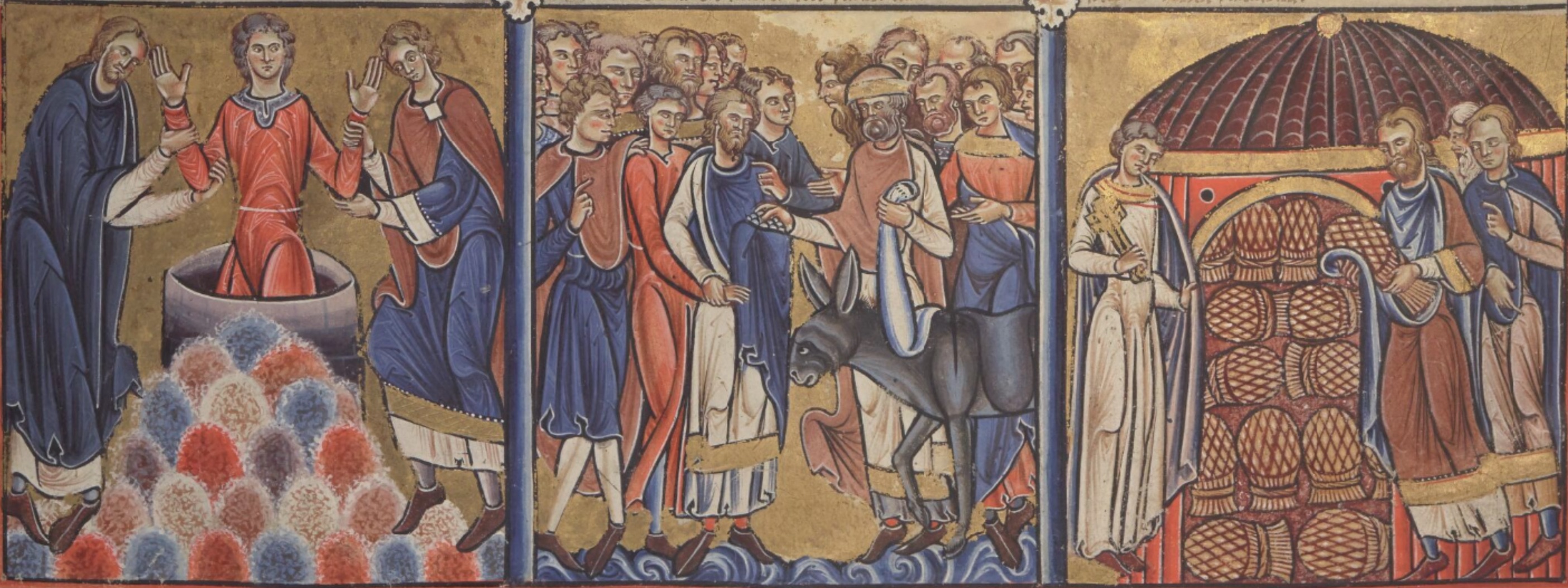
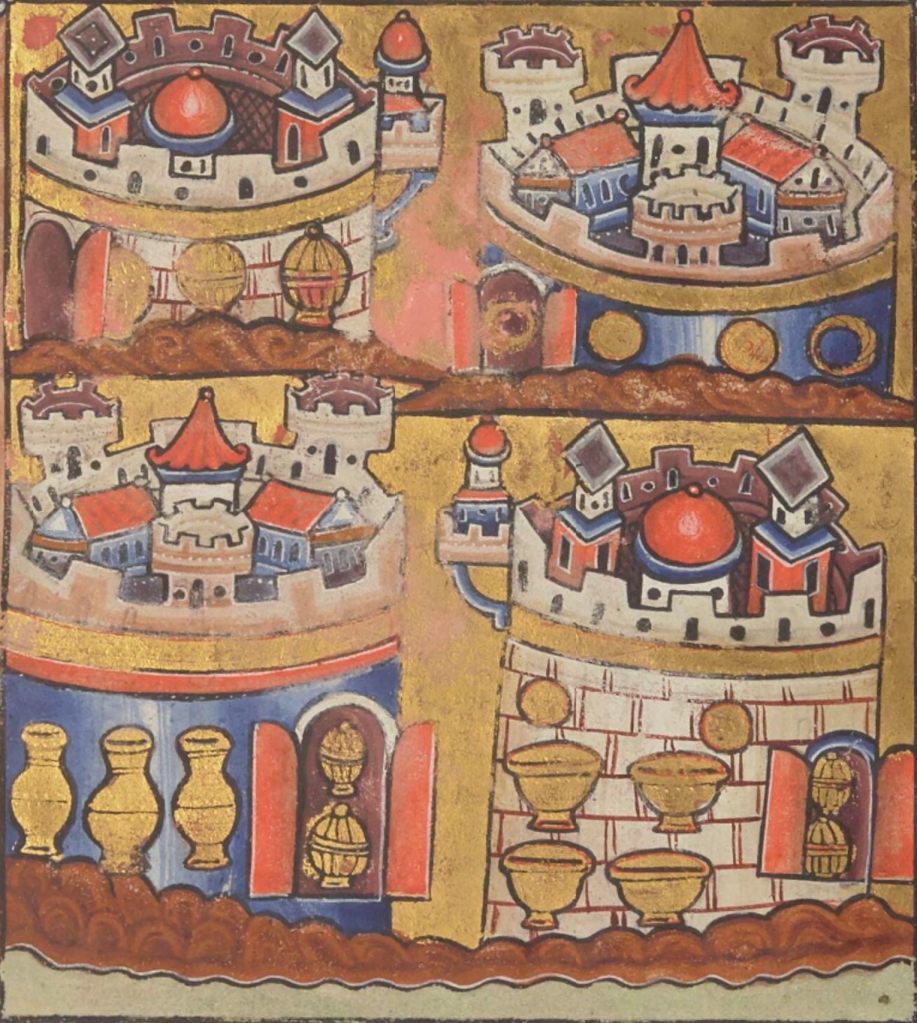
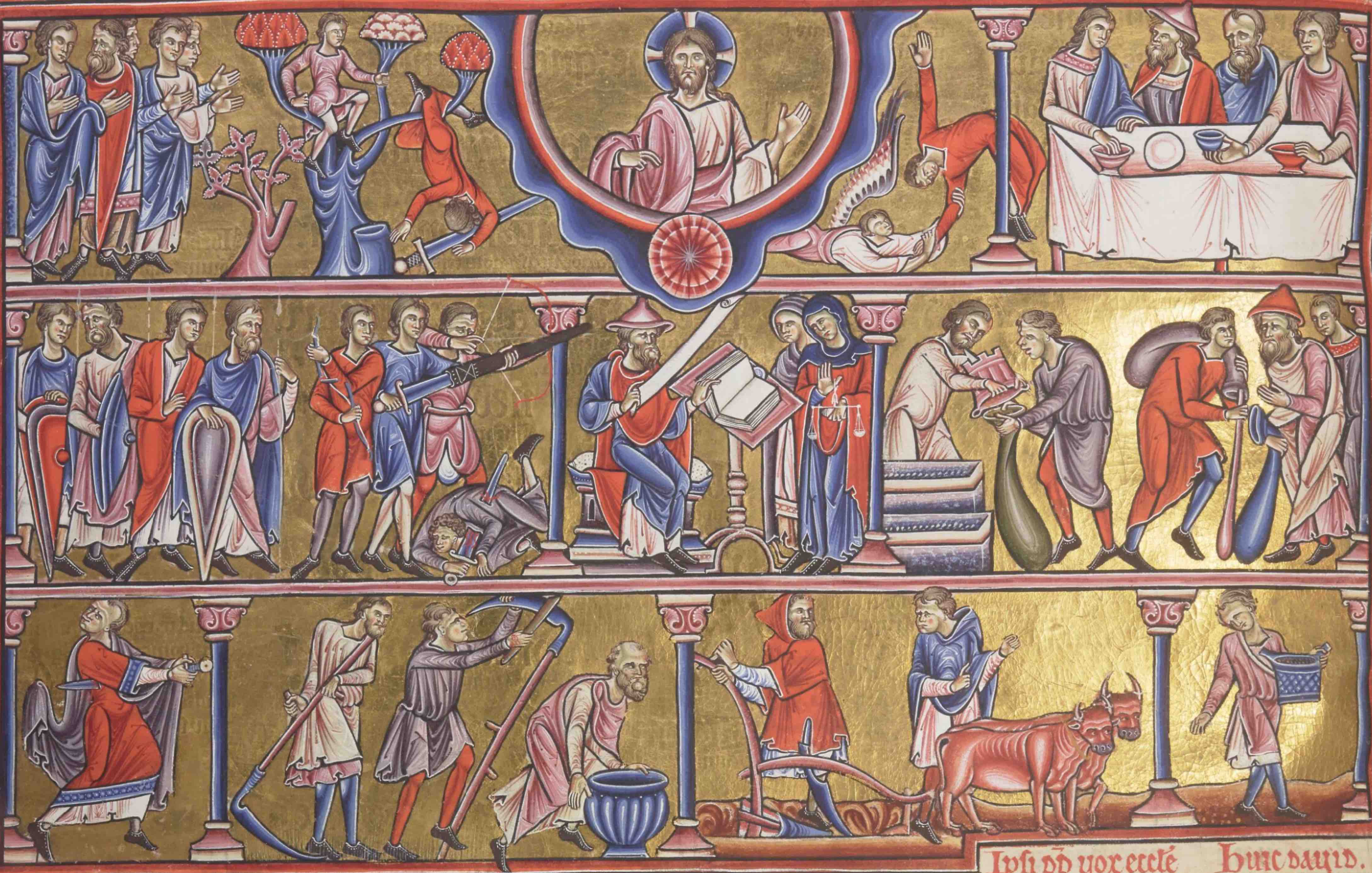
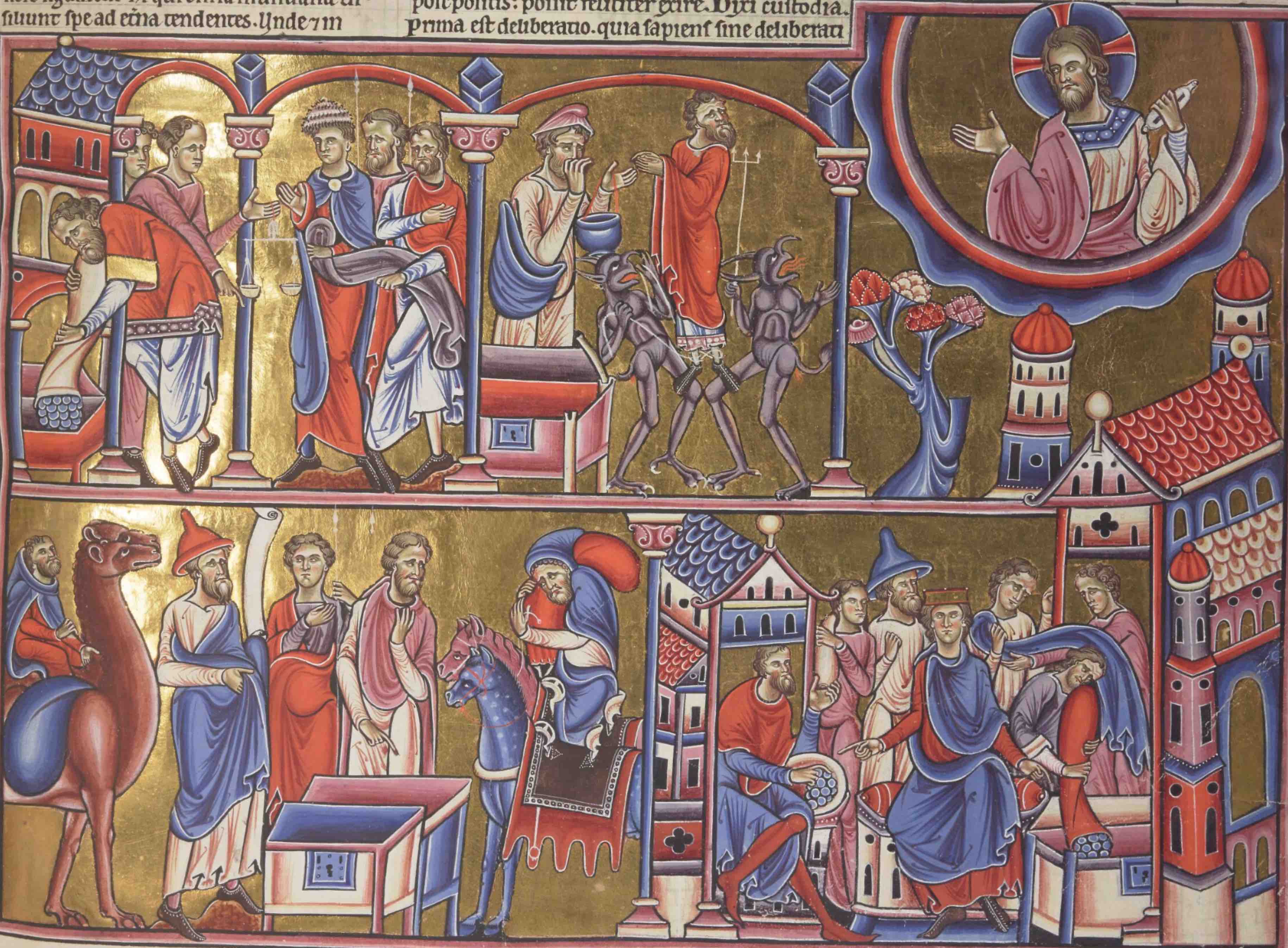
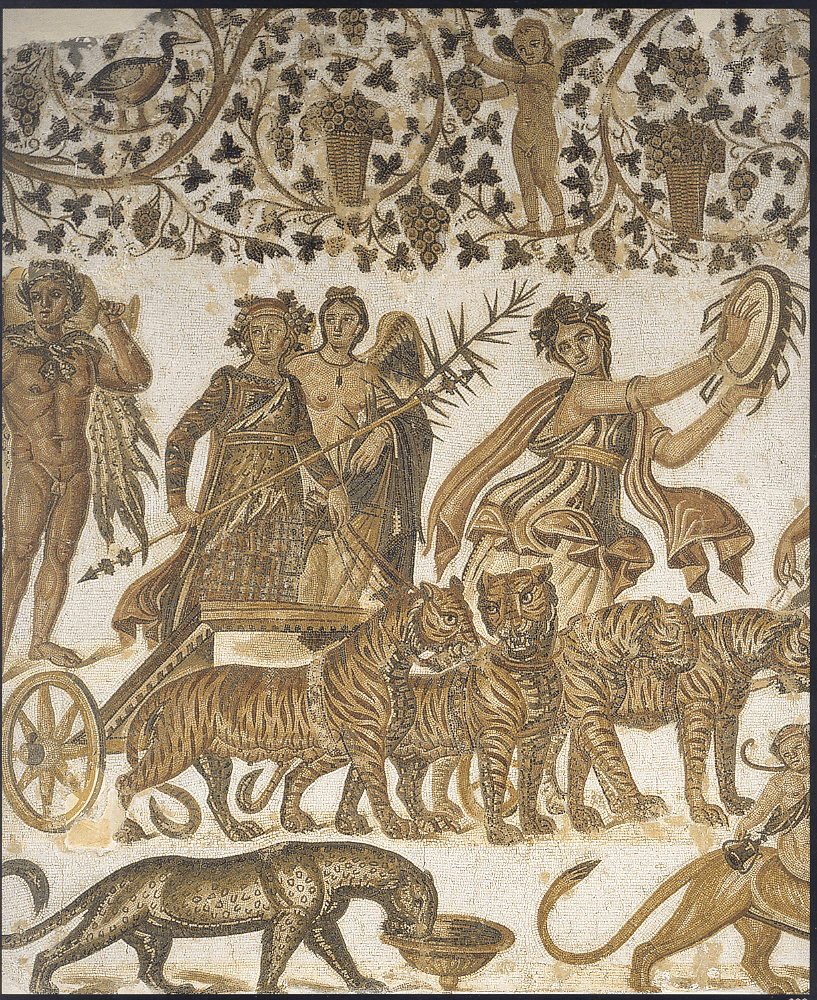
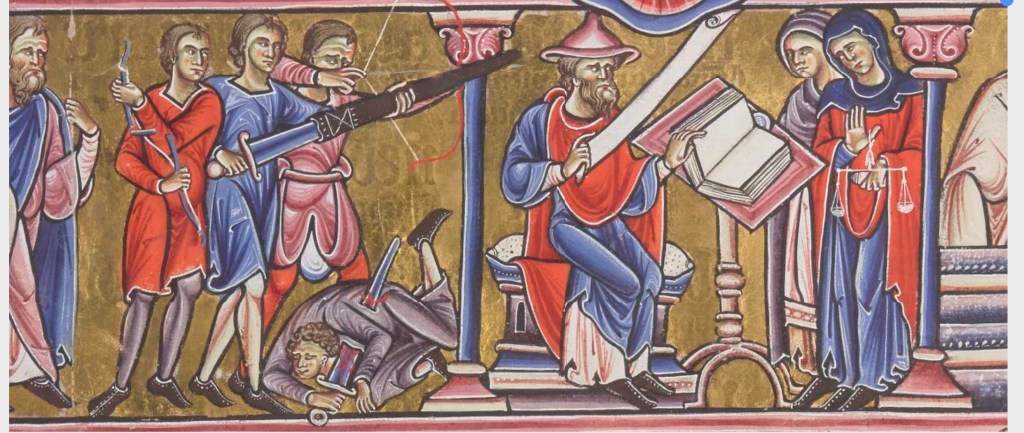
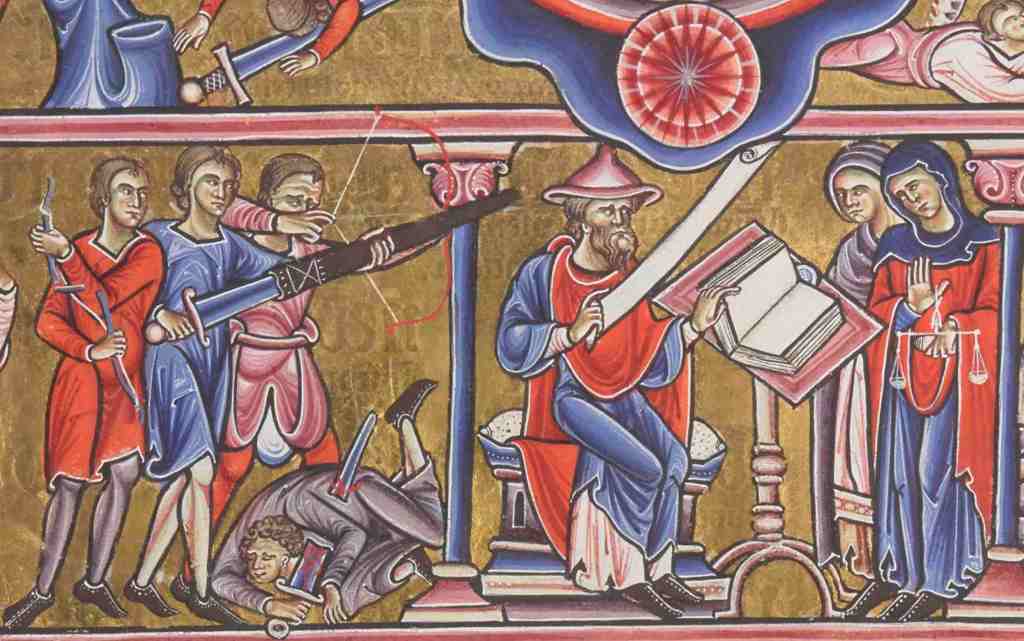
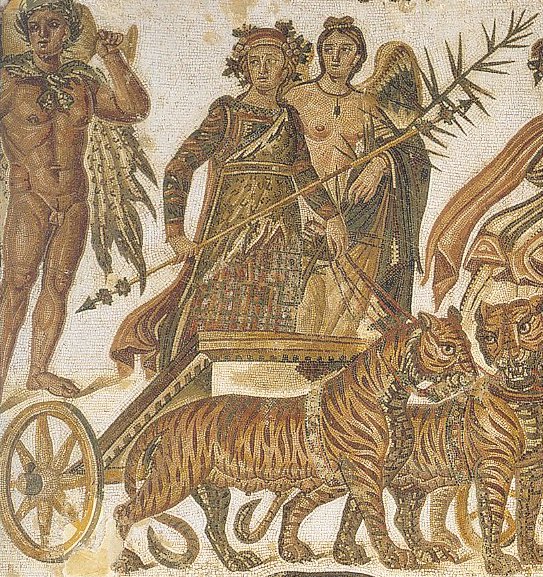
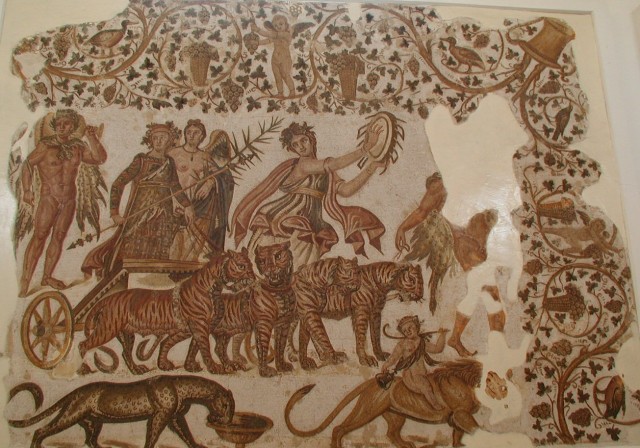
Reversible Tauroctony Mithraism Bull-Sacrifice Scene​

Michael Hoffman, Noon, May 22, 2025

Contents:

some links only work on desktop Chrome/Edge:

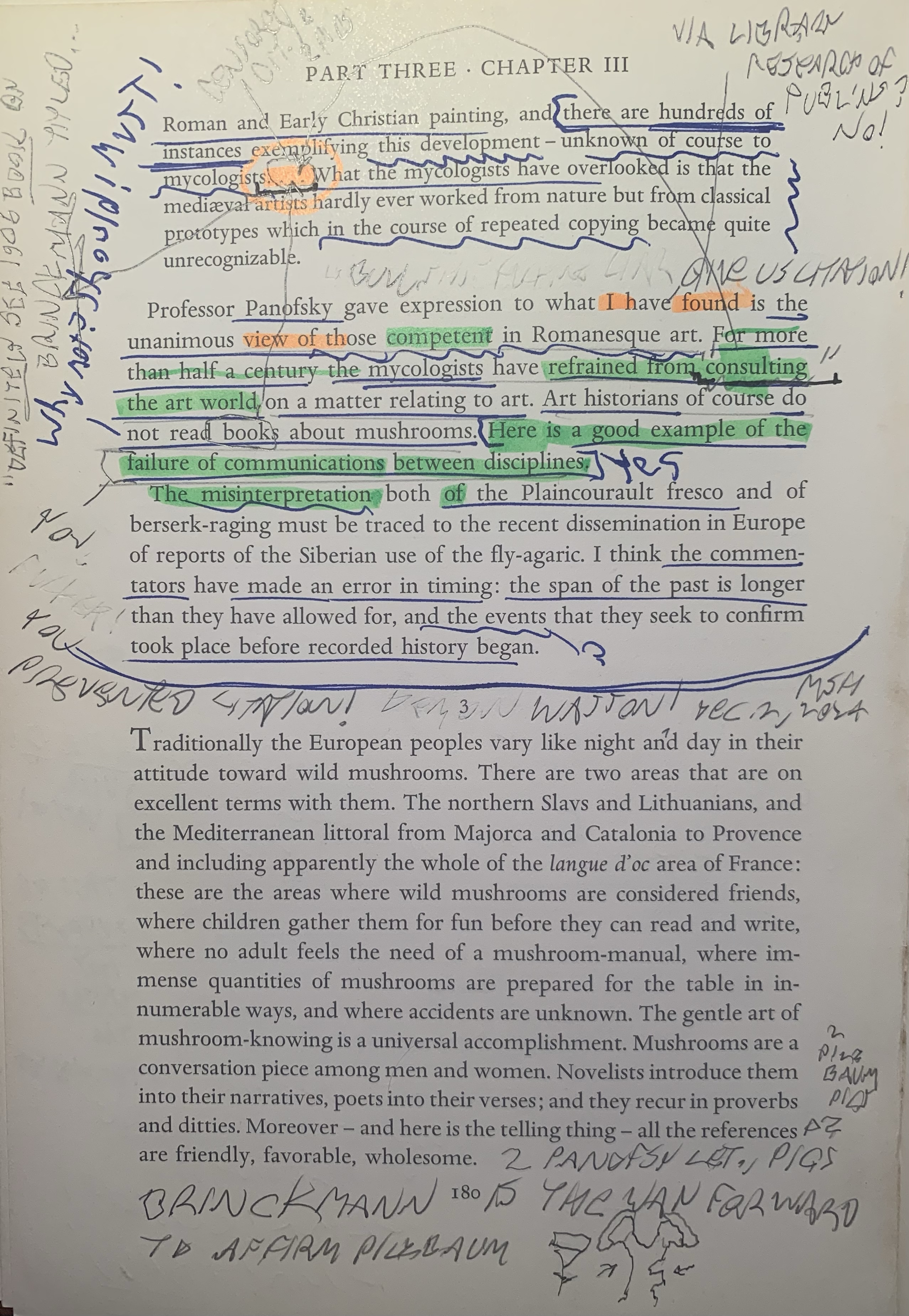
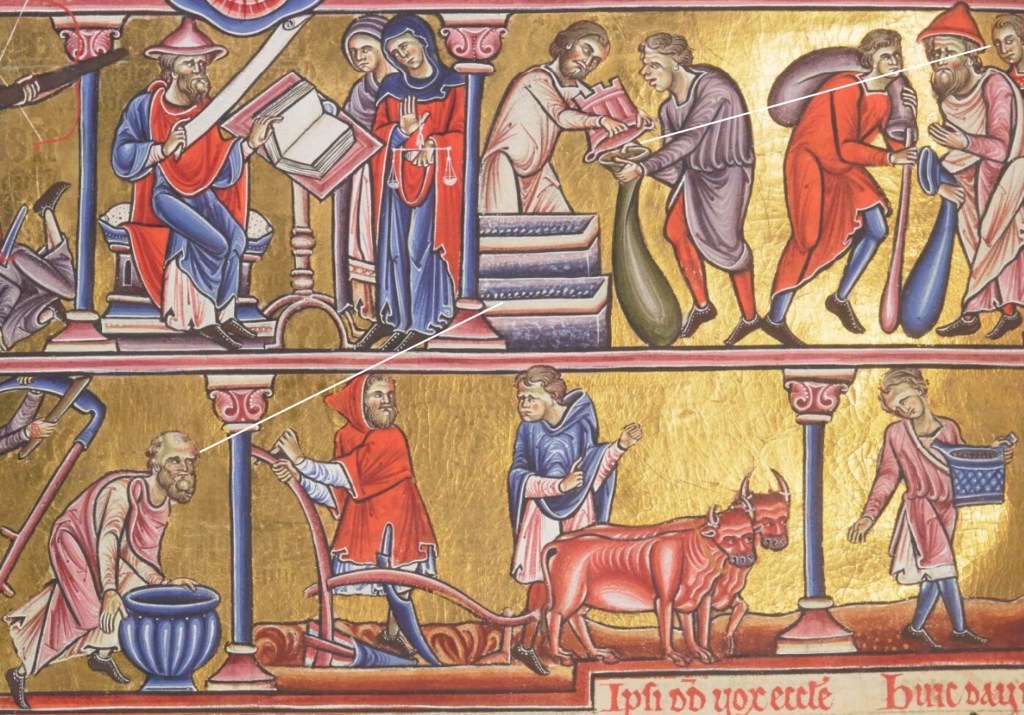
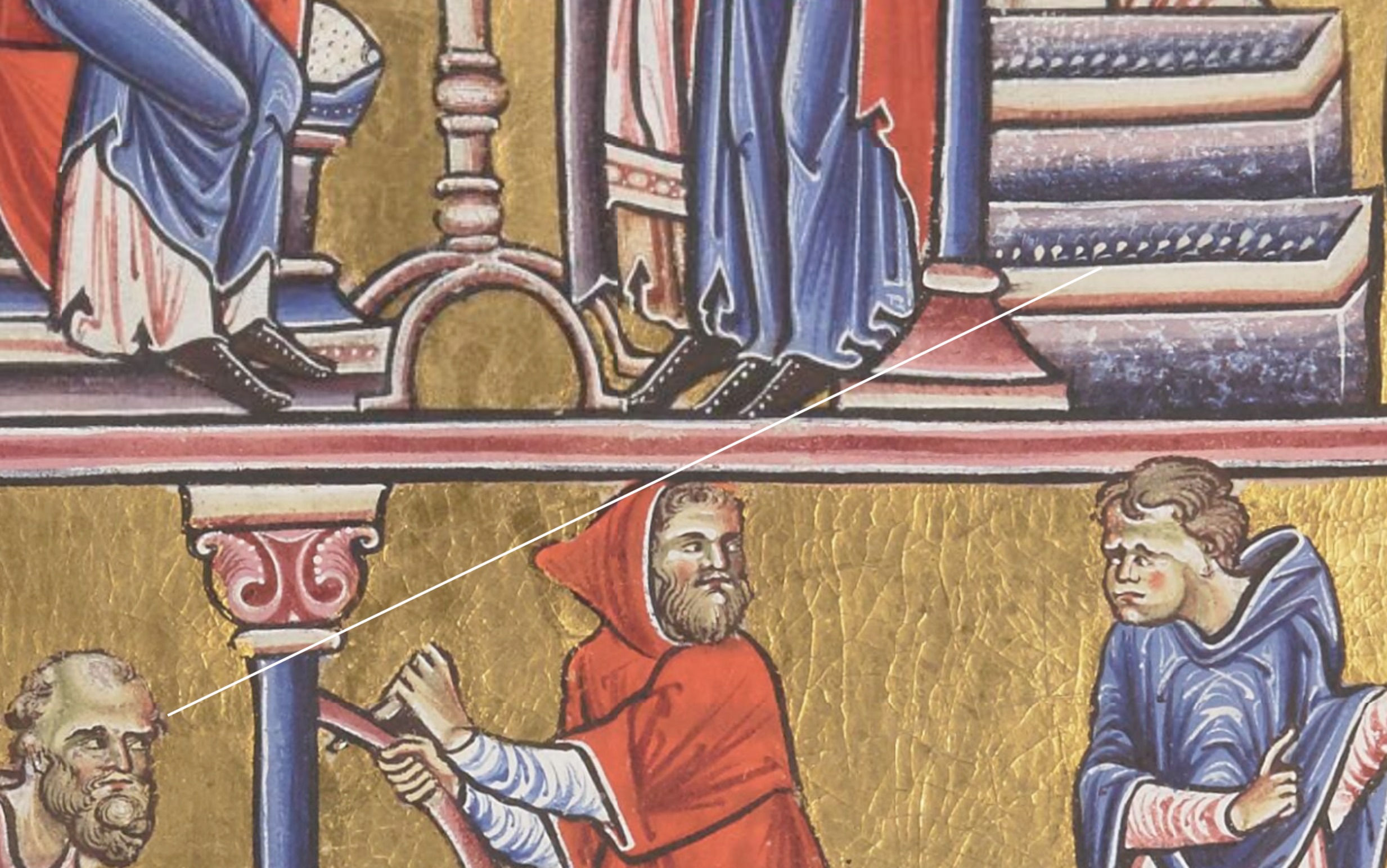
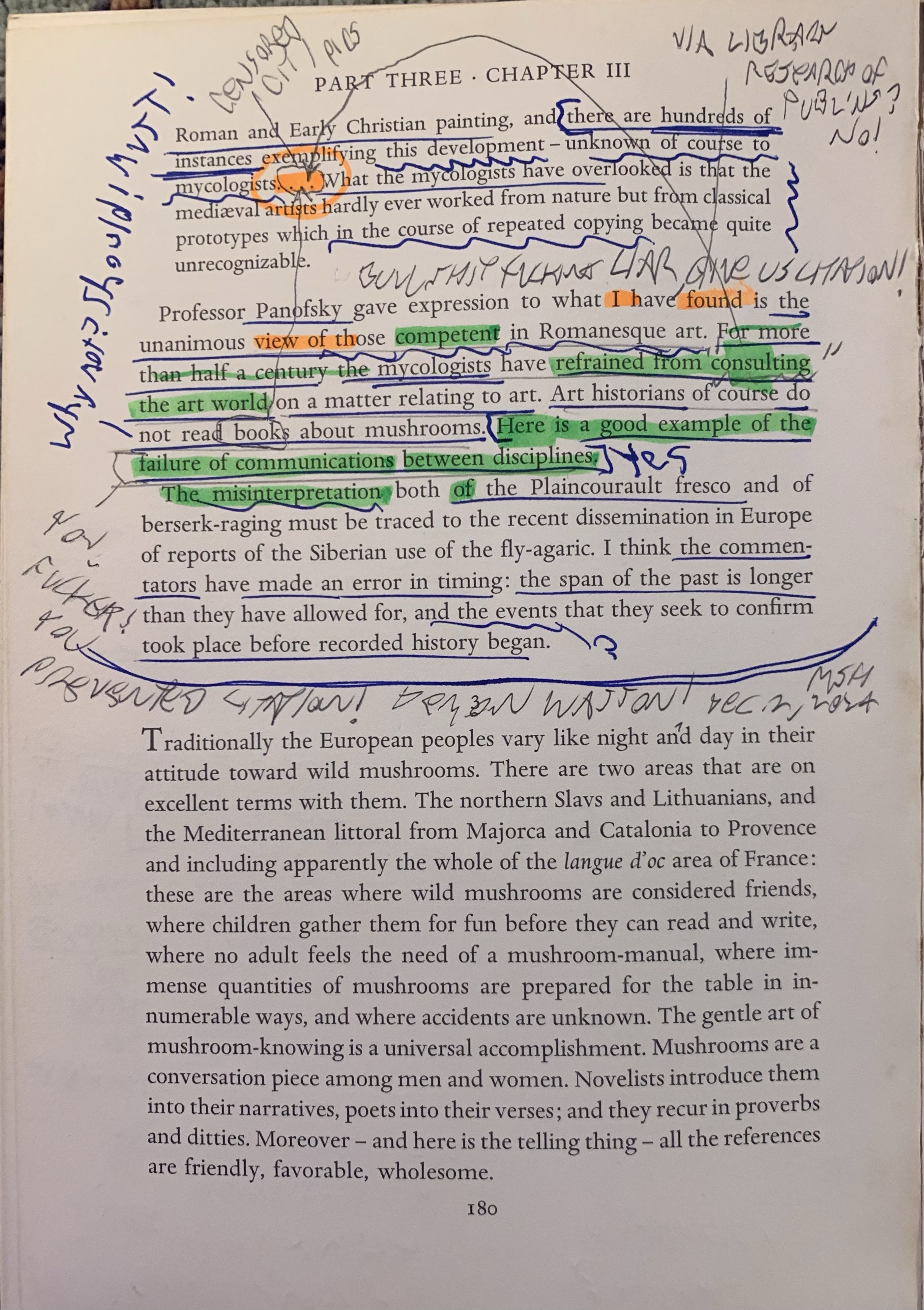
The present page was copied from idea development page 29 https://egodeaththeory.org/2025/05/07/idea-development-page-29/#Colorized-Revolving-Tauroctony

Where and When This Tauroctony Was Discovered

It’s in Cumont book, b/w, not color. So, not new.

Is the colorization Photoshop, or orig. paint?

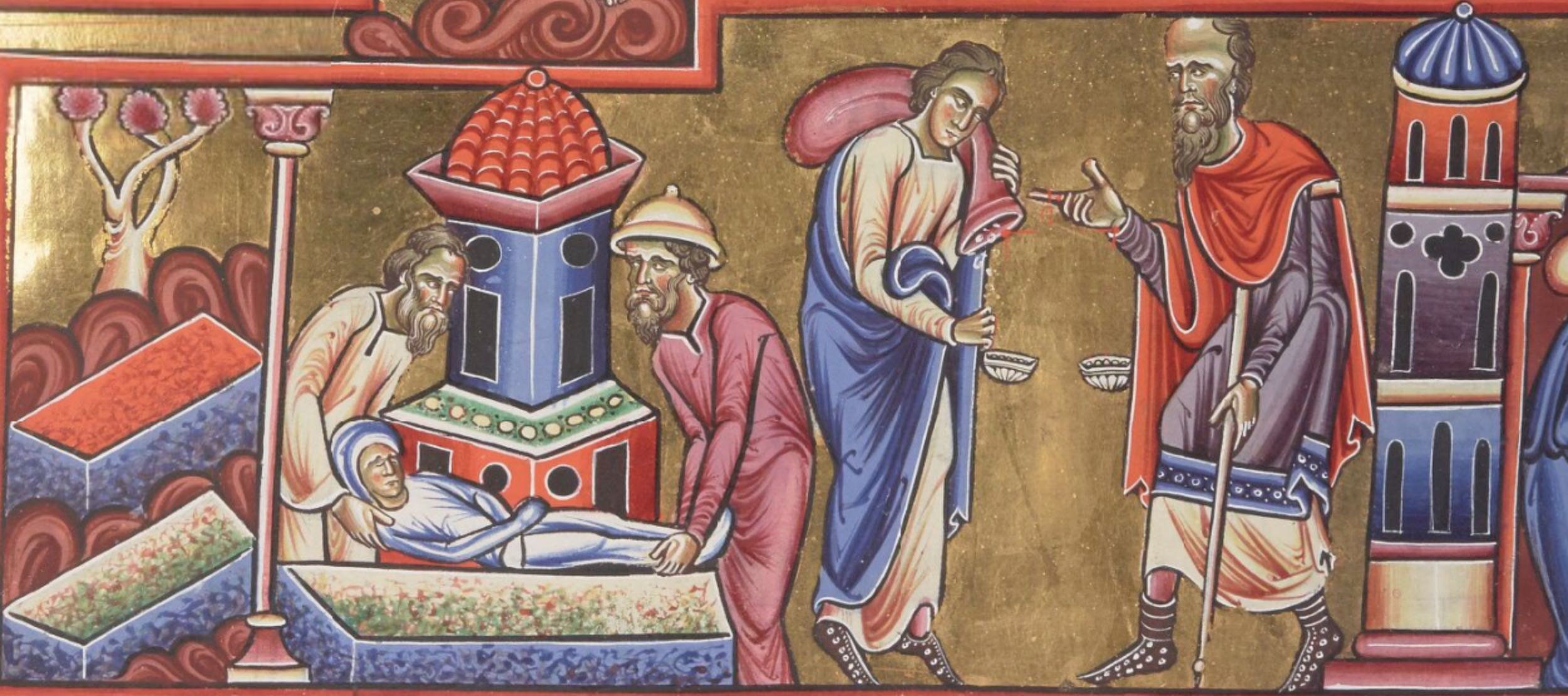
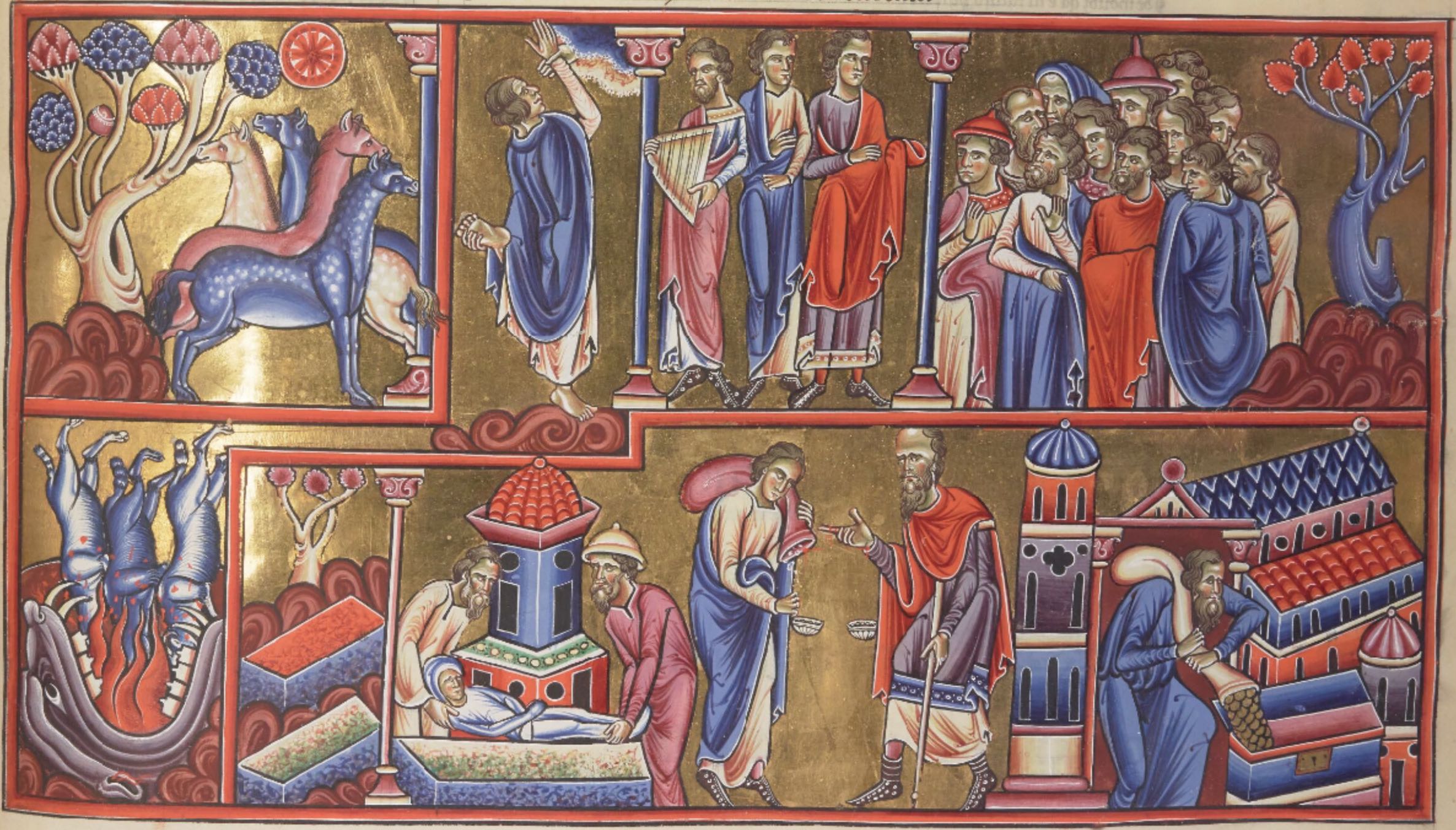
Crop by Michael Hoffman
“Tauroctony Mithras in tree Bull see snake Crown Sol Wield shoulder.jpg” 51 KB a.m. 12:27 May 29, 2025]

map section about Mithraism.

Crop by Michael Hoffman
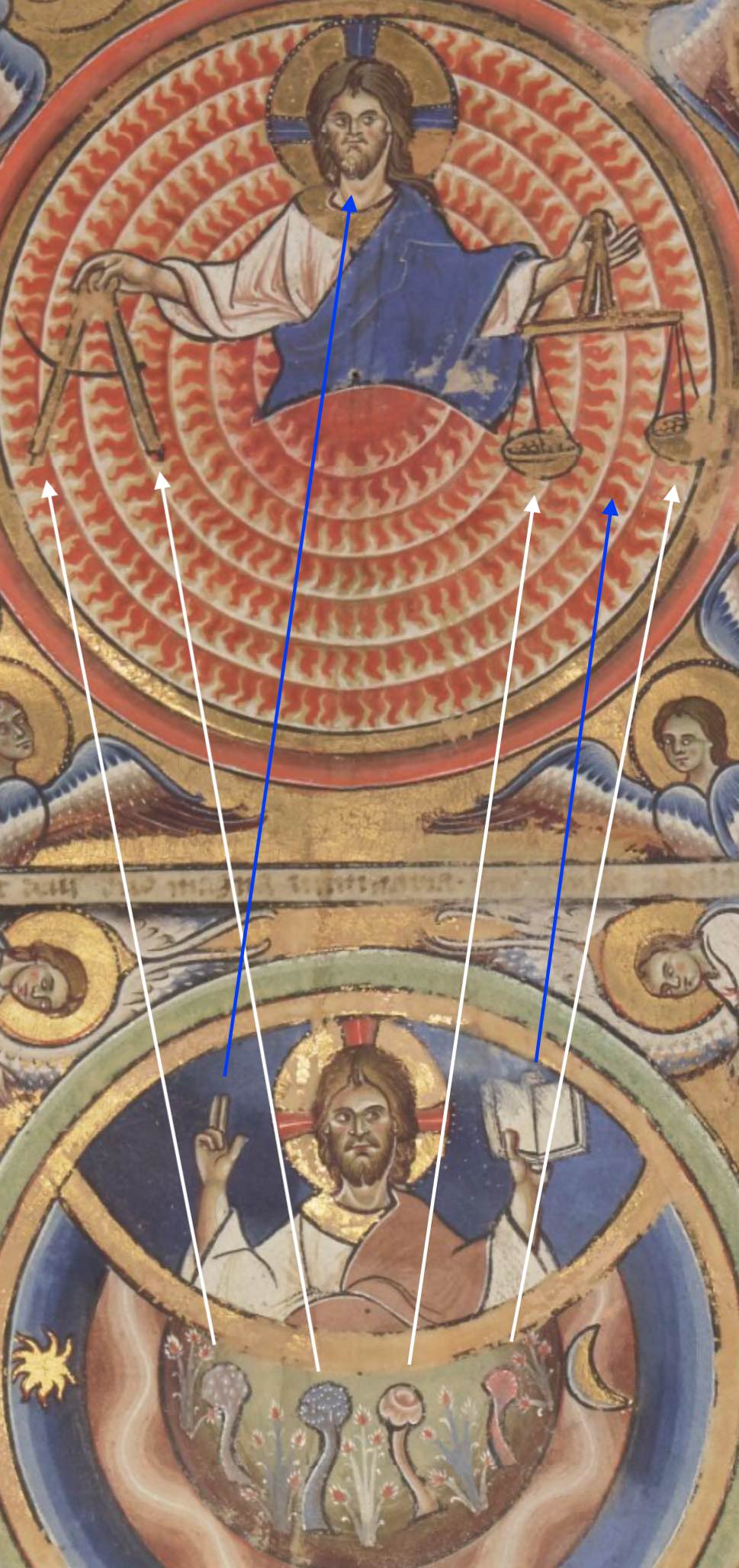
“Tauroctony reversible colored main scene.jpg” 144 KB 3:02 pm May 24, 2025

todo: copy analysis from https://egodeaththeory.org/2025/05/07/idea-development-page-29/#Reversible-Tauroctony-blood-snake-3x-right-foot-touches-right-trunk

Crop by Michael Hoffman
“Tauroctony snake tree crowns Sol.jpg” 19 KB 11:38 May 29, 2025
Crop by Michael Hoffman
“Tauroctony weild shoulder.jpg” 28 KB 11:36 May 29, 2025
Crop by Michael Hoffman
“Tauroctony zodiac arch threat arrow upper row.jpg” 106 KB 12:02 May 29, 2025

Same row as eternalism zodiac is {threatened by arrow/blade}.

Above zodiac row is seeing eternalism snake worldline non-branching, and being made to see 2-level, dependent control.

Above zodiac row, top row, is steering with divine authorization, not monolithic, autonomous control. transcend eternalism. steer with reins in L hand; steer using washed-clean possibilism-thinking. Two horses = two mental models.

top row: Left rock horses look at tree’s branching, Right rock horses (Luna) look at a tree’s non-branching trunk.

top row L: Mithras stand on right foot in the chariot that’s steered by Sol in relation with Mithras.

A pact, an agreement, handshake, a concord between a higher ruler emperor and a king local ruler, in the hierarchy of honor / hierarchy of control per 1997 Egodeath theory spec:

https://egodeaththeory.org/2020/11/30/self-control-cybernetics-dissociative-cognition-mystic-ego-death/#budaac

“The underlying block universe is at a higher level in the hierarchy of control than the practically free actions that take place within the stream of personal actions within the block universe. The universe forcefully controls the stream of personal control-actions, then the stream of control actions exerts its secondary power. One can postulate a god — a creator and controller — at an even higher level in the control hierarchy

{billowing cape} = the eternalism state of consciousness

{billowing cape} instances: row 1 L; row 2 M; row 4 L

number of trees (Y trees): 3 + 4 + 1 = 8 trees.

cape = billowing = wind = pneuma = heimarmene fixed stars state of consciousness; the eternalism state of consciousness.

the eternalism state of consciousness
esoc

the possibilism state of consciousness
psoc

possibilism-branching steering control

Orig. Content Developed in “Cyberdisciple Site Map” Page

Moved to here from my Cyberdisciple site map page:

The motive for this cleanup: Need detailed info below each crop, that was first put into Cyberdisciple site map page.

todo: merge sections/ crops.

Tauroctony Decoding April 25, 2025

Crop by Michael Hoffman
“Tauroctony snake tree bull bladed see snake.jpg” 50 KB 6:16 pm April 25, 2025
https://commons.wikimedia.org/w/index.php?curid=92776678
export/crop from wiki orig file might be clearer
Crop by Michael Hoffman
“Tauroctony snake tree bull dragged see snake.jpg” 16KB 6:14 pm April 25, 2025
https://commons.wikimedia.org/w/index.php?curid=92776678
export/crop from wiki orig file might be clearer
estab’s snake = non-branching part of tree
Crop by Michael Hoffman
“Tauroctony snake tree in tree threatened blade.jpg” 39 KB 6:21 pm April 25, 2025
https://commons.wikimedia.org/w/index.php?curid=92776678
export/crop from wiki orig file might be clearer
Crop and annotations by Michael Hoffman

seeing {snake frozen in rock} threatens to death egoic control agent, monolithic, autonomous control. replaced by mental model that is 2-level, dependent control.

Crop by Michael Hoffman
“Tauroctony snake tree crowns Sol.jpg” 30 [conflict: 19] KB 6:26 pm April 25 [conflict: may 29] , 2025
todo: straighten out two widths of crop that got same filename:
https://egodeaththeory.org/wp-content/uploads/2022/04/tauroctony-snake-tree-crowns-sol.jpg
https://commons.wikimedia.org/w/index.php?curid=92776678
export/crop from wiki orig file might be clearer
Crop by Michael Hoffman
“Tauroctony snake tree authorized alt-state control.jpg” 64 KB 6:33 pm April 25, 2025
https://commons.wikimedia.org/w/index.php?curid=92776678
export/crop from wiki orig file might be clearer
Crop by Michael Hoffman
“Tauroctony snake tree authorized alt-state control crop.jpg” 157 KB 6:53 pm April 25, 2025
https://commons.wikimedia.org/w/index.php?curid=92776678
L horses look at branches, R horses look at non-branching trunk.
Rock touches R side of tree, not L side of tree.
Mithras appears within top of branching tree.
Crop by Michael Hoffman
“Tauroctony snake tree top authorized controller.jpg” 449 KB 6:57 pm April 25, 2025
https://commons.wikimedia.org/w/index.php?curid=92776678
Crop by Michael Hoffman
“Tauroctony snake tree.jpg” 452 KB 6:04 pm Apr. 25, 2025

Features: Apr. 25, 2025:

  • snake in tree near bull mouth
  • {king steering in a tree} upper left then
  • bull dragged when see snake at right trunk of tree,
  • bull replaced by Sol, crowned.

Grape bunch on lib cap mushroom stem aimed at drinking horn filled with strong dose of lib cap the God brings the follower to ingest, after which god gives initiate crown to steer wind-blown cape chariot in altered state.

8:02 pm April 25, 2025 Michael Hoffman

naive possibilism-thinking bull sacrificed thus, upon seeing snake rather than branching tree,

bull identity replaced by Sol, transcendent possibilism-thinking.

Pre/Trans fallacy: pre = bull; trans = Sol.

bull != Sol though both are a form of possibilism-thinking.

bull = naive possibilism-thinking.
Sol = transcendent possibilism-thinking.

Completed initiate has together:
transcendent eternalism-thinking +
transcendent possibilism-thinking.

from cover of German book David Ulansey’s solution explaining Mithraism

/ end of content moved to here from my Cyberdisciple site map page

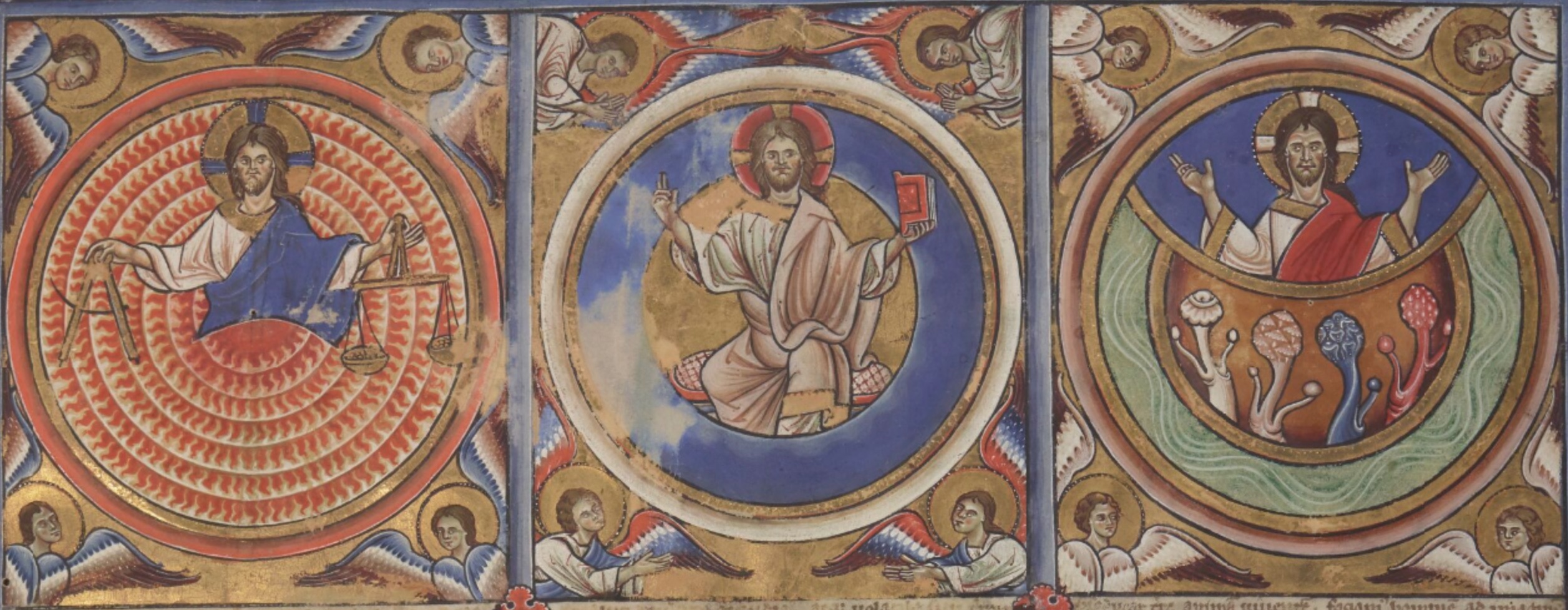
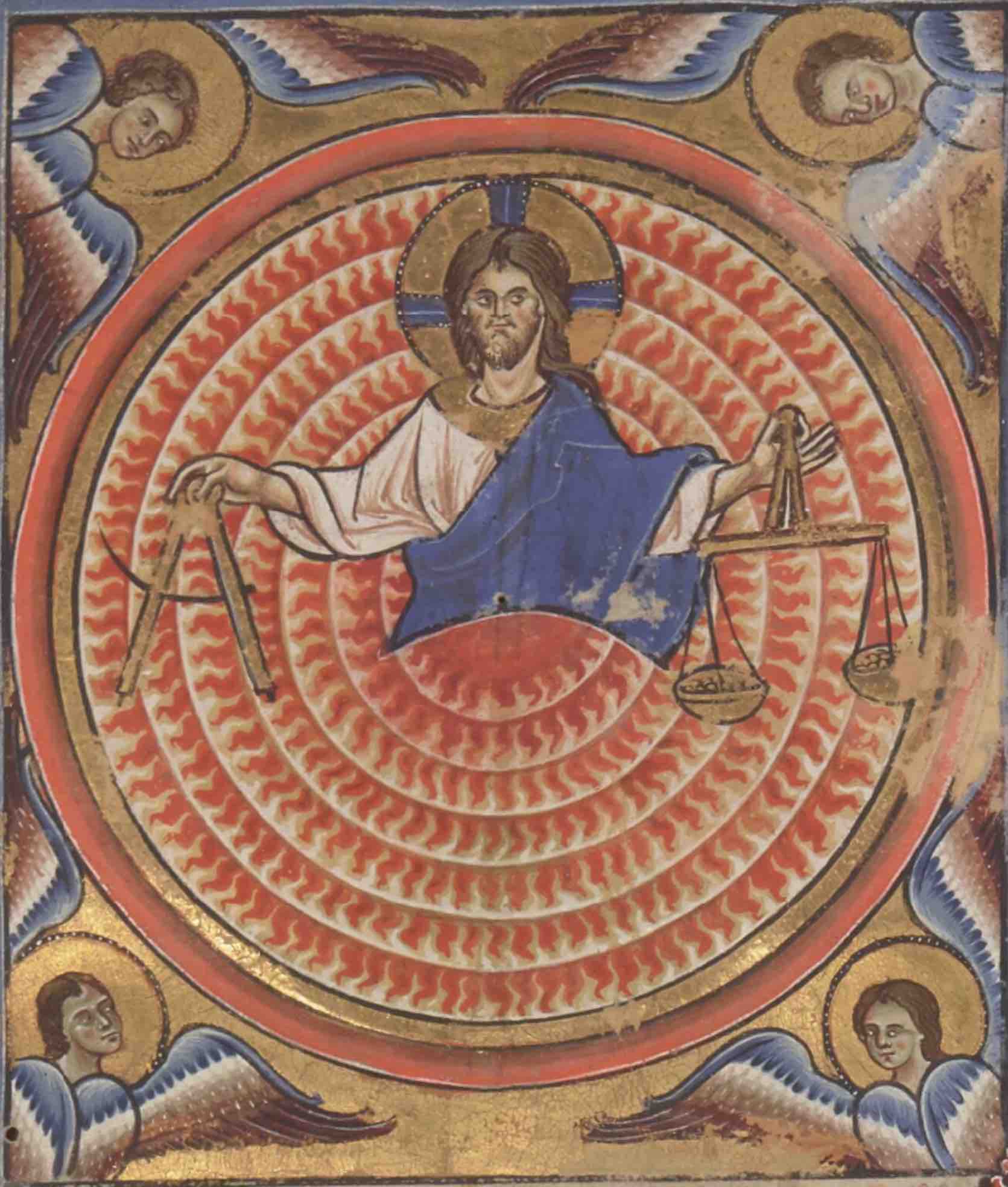
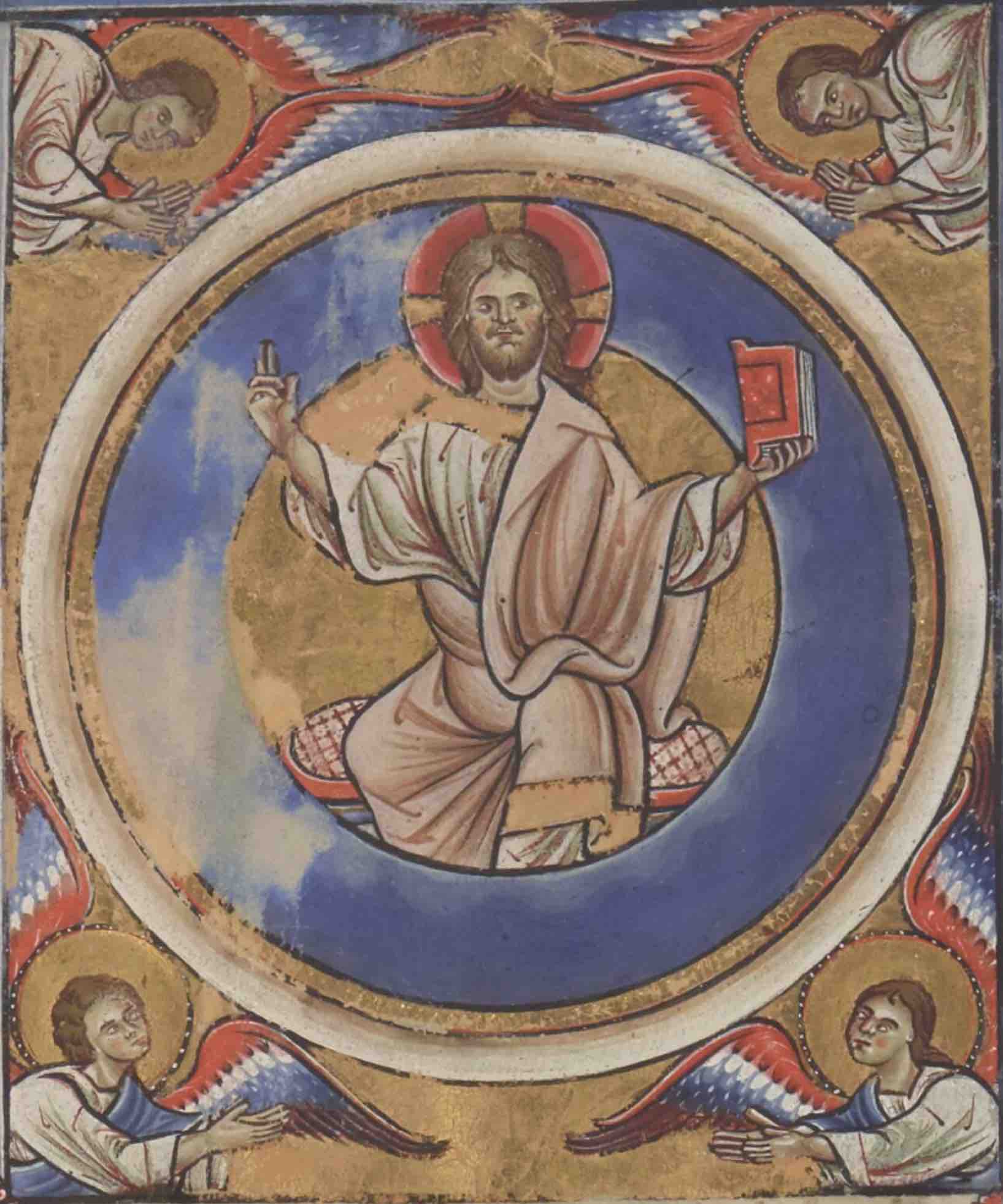
Entire Front

Features:

  • wind blowing beard on R in top row, on L in bottom row. bottom row: beard is near Mithra’s R foot.
  • which leg bent on L, on R. Consistent. stand on right foot vs. stand on left foot; ie, the leg which is not bent. Forget “crossed” legs; which leg is bent and thus not bent?
  • L side: 3 bent L legs = 3 stand on right foot. Most tauroctony scenes have bent L leg, on L twin.
  • R side: 2 bent R legs = 2 stand on right foot.
  • random art choice re: L torch light up or down: if you choose to show torch down on L, that points to {stand on right foot}, above that snake.
  • wheat tail against heimarmene fixed stars: affirming heimarmene gives fecundity reward. Sol is higher personal control system after blade the vulnerable bull which is lower personal control system, especially egoic naive possibilism-thinking “monolithic, autonomous control” is repudiated, specifically.

Revolving Front, from Ulansey Book Cover

from cover of German David Ulansey book 1998

Ulansey Book in German

https://www.amazon.com/Urspr%C3%BCnge-Mithraskults-Kosmologie-Erl%C3%B6sung-Antike/dp/3806213100/

Banquet Scene on Reverse Side, Angle

Crop by Michael Hoffman
“Tauroctony reverse.jpg” 386 KB 7:35 pm Apr. 25, 2025

Banquet Scene on Reverse Side

Crop by Michael Hoffman
“Tauroctony reverse 2.jpg” 406 KB 7:51 pm Apr. 25, 2025

Features:

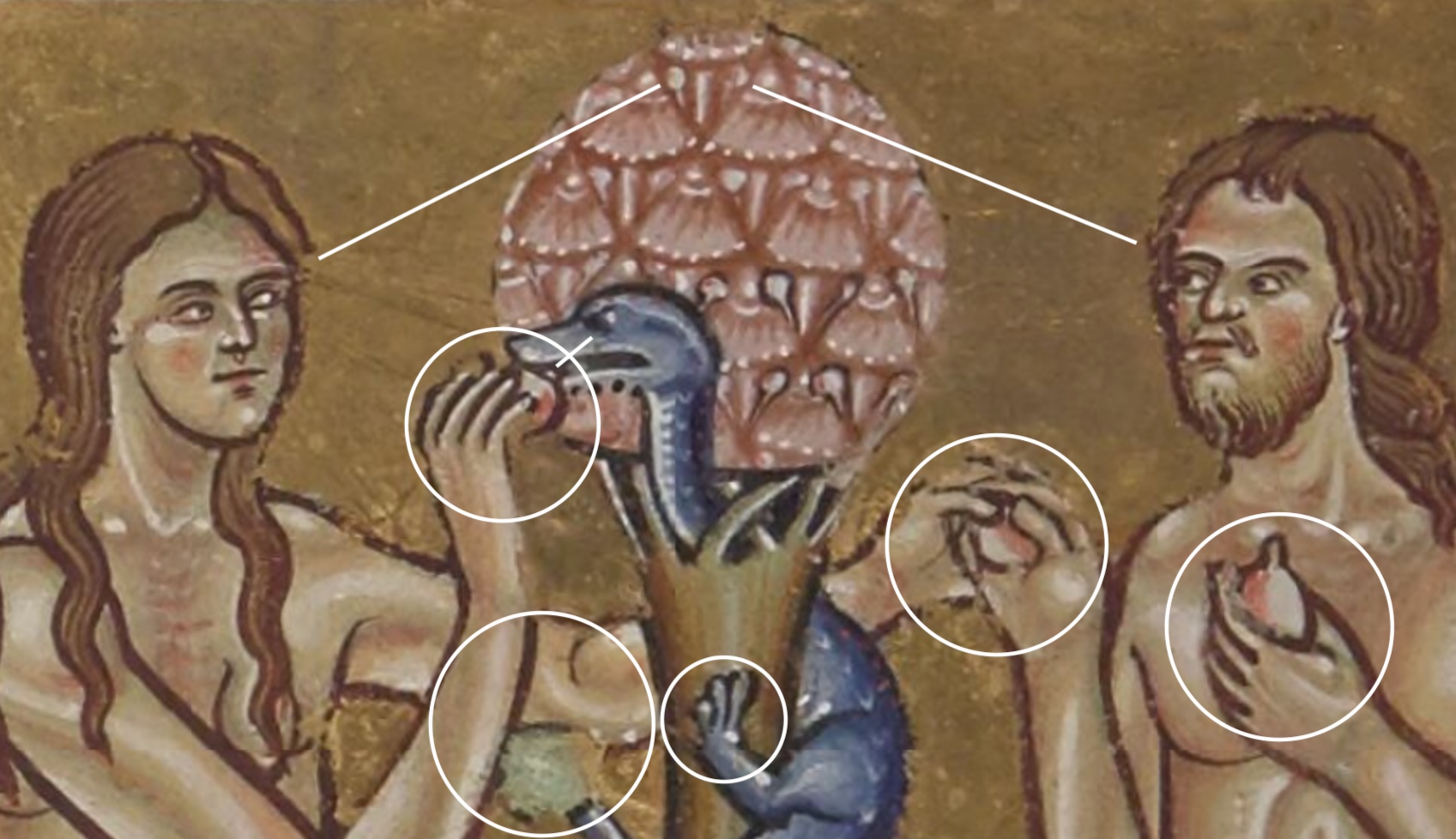
  • Lib Cap has sword blade revealing Psilocybin transformation about steering; crown = steering ability authorized by the standard of Psilocybin. Mithras showing palm = threatened & mercy pleading, apprehension. Apprehending the blade – Psilocybe semi-lanceata; spear-blade-mushroom.
  • Steering rod is non-branching.
  • Blade goes into bull near shoulder.
  • Seeing how steering works in non-branching revealed world (an experience).
  • Bull’s right legs are bent, implying bad/unstable {stand on left foot}: belief in stand on left foot is dead, when on Psilocybin. To still use possibilism-thinking (branching possibilities steering), must transcend eternalism-thinking.
  • Drinking horn contains lib cap Psilocybin which is a blade that kills initial monolithic, autonomous control steering in a branching possibilities tree. Cuts off the branching & cuts off the egoic autonomous personal control system of the type that steers in a tree to create the open future to “close” the future by your egoic autonomous control power.
  • grape = Psilocybin lib cap
  • mercy hand: thumb = non-branching; fingers = branching. IY. “display hand” = the capability of finger shapes to represent branching vs non-branching.
  • hunting dogs: Acteon sees Artemis, turns into stag w/ branching antlers, torn to pieces by his own hunting dogs.
  • Cubensis mushroom above bull head. Angle illusion; it’s a right hand above bull ear.
  • wheat tail: bovine dung grows Cubensis.

Bull Made to See Snake in Tree

Crop by Michael Hoffman

Bull Dragged Seeing Snake at Trunk of Tree

Crop by Michael Hoffman

Sol Authorized to Steer as Charioteer

Crop by Michael Hoffman

Sol Authorized to Steer as Charioteer, with Pneumas

Crop by Michael Hoffman

Top Rows

Crop by Michael Hoffman

Sol Crowned by Mithras and Made to Understand Mithras Controls Your Control-Thoughts, in Harmonious, Benevolent, No-Harm Relationship

Crop by Michael Hoffman

Features:

  • naked L foot-relying Sol on R: no control power; crown not on head; powerless; Mithras controls Sol’s power; Mithras holds controls your bull muscle, your source of power.
  • left Mithras stand on right foot; left foot floats. Heimarmene cap billowing touches branching part of tree.

Mithras Is Tree’s Branching; Dragged to See Snake at Trunk; Threatened by Arrow-Blade at Rock

Crop by Michael Hoffman

Ulansey Books

https://www.amazon.de/-/en/Mysteria-Ancient-Mysteries-Evolution-Consciousness/dp/1556438818/

Mysteria: The Ancient Mysteries and the Evolution of Consciousness

30 Oct. 2012 (no such)

“David Ulansey’s Origins of the Mithraic Mysteries won wide acclaim for its splendid scholarship and what Gnosis magazine called “an absolutely spell-binding detective story of antique lore.”

“Ulansey returns here with another detective story, this time unearthing the once-flourishing religious movements snuffed out by the arrival of Christianity.

Based on a series of lectures presented at San Francisco’s prestigious Jung Institute, Mysteria employs a wealth of scholarly and investigative tools in this exploration of

the role ancient mystery religions played in the evolution of Western consciousness.

The book reveals how these secret

cults, which centered on rituals and symbols of transformation at the deepest levels, catalyzed the formation of the individual, personal identity that became the core of the Western psyche.

Mysteria also examines the impact of the extraordinary

cultural and intellectual transformations of the Hellenistic Age on consciousness and self-awareness.

Individual chapters describe a rich

spiritual landscape in antiquity that included

  • the Eleusinian Mysteries,
  • the Orphic and Pythagorean Movements,
  • Plato and the Mysteries,
  • the Hellenistic Revolution,
  • Mithraic Mysteries, and
  • Apocalypse and Gnosis.”

See Also

Site Map:
https://egodeaththeory.org/nav/#Mithraism-Tauroctony

Moving Past Mysticism in Psychedelic Science (Article Debate Series)

Michael Hoffman, May 14, 2025

Contents:

Drugs and Mysticism: An Analysis of the Relationship between Psychedelic Drug Experience and the Mystical State of Consciousness (Pahnke, 1963)

Drugs and Mysticism: An Analysis of the Relationship between Psychedelic Drug Experience and the Mystical State of Consciousness
Walter Pahnke, June 1963, PhD thesis
http://en.psilosophy.info/drugs_and_mysticism.html

How the swans came to the lake (Rick Fields, 1986)

How the swans came to the lake (Rick Fields, 1986)

40th anniv edition book. pending, ancient computer reboot time

Oriental Verities on the American Frontier: The 1893 World’s Parliament of Religions and the Thought of Masao Abe (McRae, 1991)

Oriental Verities on the American Frontier: The 1893 World’s Parliament of Religions and the Thought of Masao Abe
John McRae, 1991
Journal: Buddhist-Christian Studies
Volume v.11, pp. 7 – 36
Publisher University of Hawai’i Press
http://www.uhpress.hawaii.edu/t3-buddhist-christian-studies.aspx

Contents:

  • I. AN IRENIC DIALOGUE AND ITS ROUGH-EDGED ANCESTOR 7
  • II. THE WORLD’S PARLIAMENT OF RELIGIONS OF 1893 9
    • A. The Context and Meaning of the Columbian Exposition 9
    • B. The World’s Parliament as an Event in International Religious History 13
    • C. Asian Religions at the Parliament 14
  • III. TURNING THE MESSAGE AROUND I: INDIAN REPRESENTATIVES SPEAK OUT AT THE WORLD’S PARLIAMENT OF RELIGIONS 15
    • A. Vivekananda (1863-1902) and the Eternal Truth of Indian Religions
    • B. Anagarika Dharmapala (1864-1933) and Buddhism as the “Light of Asia” 18
  • IV. TURNING THE MESSAGE AROUND 2: CHINESE AND JAPANESE 23
    • A. Shaku Soyen (1859-1919) and Japanese Zen as the Law of Cause and Effect 23
    • B. Pung Kwang Yu, Government Official and Confucian Scholar, and the Evils of Religion Itself 27
  • V. THE IMPACT AND MEANING OF THE WORLD’S PARLIAMENT OF RELIGIONS IN ASIA AND AMERICA 29
    • A. The Asian Representatives and Their Messages
    • B. Lessons to Be Drawn Concerning the Buddhist-Christian Dialogue 31
  • NOTES 33

The article was inspired by the book How the swans came to the lake (Rick Fields, 1986).

The Psychedelic Religion of Mystical Consciousness (Rick Strassman, Jul. 2018)

The Psychedelic Religion of Mystical Consciousness
Rick Strassman 2018
https://www.rickstrassman.com/wp-content/uploads/2018/07/JPS_Strassman.pdf

My commentary:
https://egodeaththeory.org/2023/01/15/the-theory-of-psychedelic-eternalism-provides-a-scientific-explanatory-basis-for-mystic-state-experiencing/#Psychedelic-Religion-of-Mystical-Consciousness

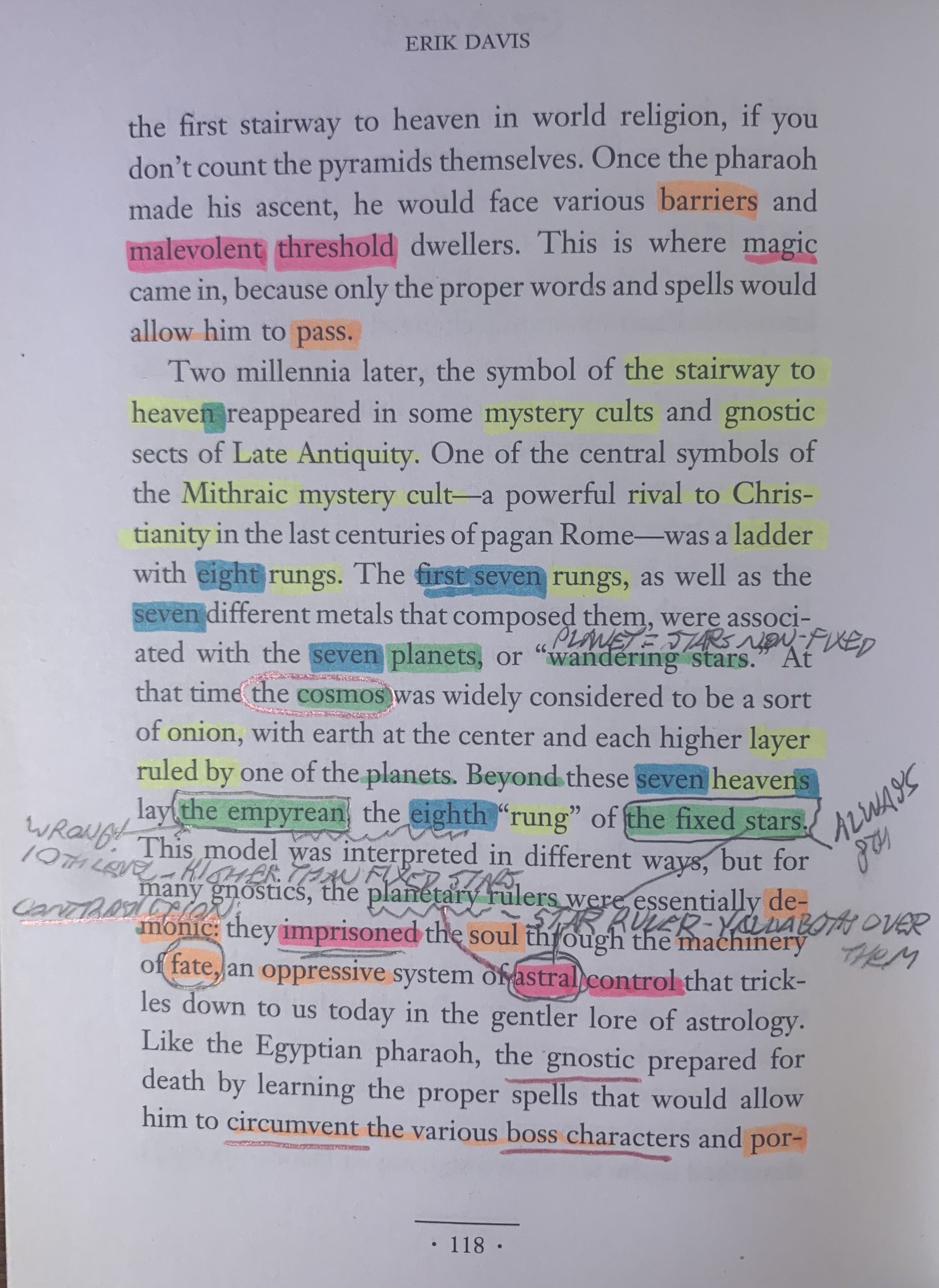
Gnostic Psychedelia (Erik Davis, Apr. 2020)

Tangential to the Moving Past Mysticism in Psychedelic Science debate. Favorably links to the 2018 Strassman article.

Gnostic Psychedelia
Erik Davis, April 2020
Gnosis: Journal of Gnostic Studies
https://techgnosis.com/wp-content/uploads/2020/04/Davis-Gnosis-5.1.pdf

My commentary:
https://egodeaththeory.org/2023/01/15/the-theory-of-psychedelic-eternalism-provides-a-scientific-explanatory-basis-for-mystic-state-experiencing/#Gnostic-Psychedelia

Post: Gnostic Psychedelia and the Archetype of the Archons (Erik Davis, Apr. 2020)

Tangential to the Moving Past Mysticism in Psychedelic Science debate. Favorably links to the 2018 Strassman article.

A post about the article Gnostic Psychedelia:
Gnostic Psychedelia and the Archetype of the Archons
Erik Davis, April 14, 2020
https://techgnosis.com/gnostic-psychedelia/

My commentary:
https://egodeaththeory.org/2023/01/15/the-theory-of-psychedelic-eternalism-provides-a-scientific-explanatory-basis-for-mystic-state-experiencing/#post-gnostic-psychedelia-and-the-archetype-of-the-archons-davis-apr.-2020

Crop by Michael Hoffman

Mystical and Other Alterations in Sense of Self: An Expanded Framework for Studying Nonordinary Experiences (Ann Taves, May 2020)

Debunks the “Positive Unity Experience” Model of Mysticism.

Mystical and Other Alterations in Sense of Self: An Expanded Framework for Studying Nonordinary Experiences
Ann Taves, 2020
Perspect Psychol Sci
2020 May;15(3):669-690
https://pubmed.ncbi.nlm.nih.gov/32053465/
doi: 10.1177/1745691619895047. Epub 2020 Feb 13.
PMID: 32053465 DOI: 10.1177/1745691619895047
Free article at: https://escholarship.org/uc/item/86r3f75j

Erratum in: Corrigendum: Mystical and Other Alterations in Sense of Self: An Expanded Framework for Studying Nonordinary Experiences.
Perspect Psychol Sci. 2022 Mar;17(2):614. doi: 10.1177/17456916221076158. Epub 2022 Jan 24.
PMID: 35073216

My commentary:
https://egodeaththeory.org/2025/05/07/idea-development-page-29/#mystical-and-other-alterations-in-sense-of-self-an-expanded-framework-for-studying-nonordinary-experiences-taves-2020 – at top of page, Find “Taves”.

Search site for Taves:
https://egodeaththeory.org/?s=taves

High Mysticism: On the interplay between the psychedelic movement and academic study of mysticism (Karl Baier, 2021)

High Mysticism: On the interplay between the psychedelic movement and academic study of mysticism
Karl Baier, 2021
https://www.academia.edu/30979148/High_Mysticism_On_the_interplay_between_the_psychedelic_movement_and_academic_study_of_mysticism?email_work_card=interaction-paper
in book:
Constructions of Mysticism as a Universal: Roots and Interactions across Borders
2021, Annette Wilke, Robert Stephanus and Robert Suckro (eds.)

Consciousness, Religion, and Gurus: Pitfalls of Psychedelic Medicine (Matthew Johnson, Apr. 2021)

Consciousness, Religion, and Gurus: Pitfalls of Psychedelic Medicine
Matthew Johnson
https://pubs.acs.org/doi/pdf/10.1021/acsptsci.0c00198
ACS Pharmacology & Translational Science 2021 4 (2), 578-581
DOI: 10.1021/acsptsci.0c00198

Matthew Johnson, a professor of psychiatry and behavioral sciences at Johns Hopkins University in Baltimore

Photo: Michael Hoffman

I GOT TO TELL YOU NOW THE SHIP IS READY
WAITING ON THE SHELF.

Photo: Michael Hoffman

Moving Past Mysticism in Psychedelic Science (James Sanders & Josjan Zijlmans, May 2021)

Moving Past Mysticism in Psychedelic Science
Sanders and Zijlmans, May 2021
https://pubs.acs.org/doi/abs/10.1021/acsptsci.1c00097

My commentary:
https://egodeaththeory.org/2023/01/15/the-theory-of-psychedelic-eternalism-provides-a-scientific-explanatory-basis-for-mystic-state-experiencing/#Moving-Past-Mysticism-in-Psychedelic-Science

Reconciling Mystical Experiences with Naturalistic Psychedelic Science: Reply to Sanders and Zijlmans (Jussi Jylkkä, Jun. 2021)

Reconciling Mystical Experiences with Naturalistic Psychedelic Science: Reply to Sanders and Zijlmans
https://pubs.acs.org/doi/10.1021/acsptsci.1c00137
Jussi Jylkkä (2021)
June 8, 2021
Published by American Chemical Society

Working with Weirdness: A Response to “Moving Past Mysticism in Psychedelic Science” (Joost Breeksema & Michiel van Eck, Jul. 2021)

Working with Weirdness: A Response to “Moving Past Mysticism in Psychedelic Science”
Joost Breeksema and Michiel van Eck
https://pubs.acs.org/doi/10.1021/acsptsci.1c00149
ACS Pharmacol. Transl. Sci. 2021, 4, 4, 1471–1474
July 16, 2021
https://doi.org/10.1021/acsptsci.1c00149
American Chemical Society

My commentary:
https://egodeaththeory.org/2023/01/15/the-theory-of-psychedelic-eternalism-provides-a-scientific-explanatory-basis-for-mystic-state-experiencing/#Working-with-Weirdness

Researchers Debate the Role of Mysticism in Psychedelic Science (Don Lattin, Sep. 2021)

Researchers Debate the Role of Mysticism in Psychedelic Science
DON LATTIN, SEPTEMBER 9, 2021
https://www.lucid.news/researchers-debate-the-role-of-mysticism-in-psychedelic-science/

My commentary:
https://egodeaththeory.org/2023/01/15/the-theory-of-psychedelic-eternalism-provides-a-scientific-explanatory-basis-for-mystic-state-experiencing/#Debate-Mysticism-in-Psychedelic-Science

Mystical Experience Defines Psychedelics (Chris Kilham, Oct. 2021)

Mystical Experience Defines Psychedelics
BY CHRIS KILHAM, OCTOBER 1, 2021
https://www.lucid.news/the-mystical-experience-defines-psychedelics/

My commentary:
https://egodeaththeory.org/2023/01/15/the-theory-of-psychedelic-eternalism-provides-a-scientific-explanatory-basis-for-mystic-state-experiencing/#Mystical-Experience-Defines-Psychedelics

Mystical experiences without mysticism: An argument for mystical fictionalism in psychedelics (Garb & Earleywine, Jun. 2022)

Mystical experiences without mysticism: An argument for mystical fictionalism in psychedelics
Garb, B. A., & Earleywine, M. (June 2022)
https://akjournals.com/view/journals/2054/6/1/article-p48.xml
Journal of Psychedelic Studies, 6(1), 48-53
https://doi.org/10.1556/2054.2022.00207

My commentary:
https://egodeaththeory.org/2023/01/15/the-theory-of-psychedelic-eternalism-provides-a-scientific-explanatory-basis-for-mystic-state-experiencing/#Mystical-experiences-without-mysticism

A Channel for Magic: Ralph Hood’s Mysticism Scale and the Occult Roots of the Johns Hopkins Psychedelic Research Program (Travis Kitchens, Sep. 2022)

A Channel for Magic: Ralph Hood’s Mysticism Scale and the Occult Roots of the Johns Hopkins Psychedelic Research Program
Psychologist Ralph Hood’s study of serpent handling and mysticism helped legitimize the study of psychedelics. So why doesn’t he want them approved for medical use?
Travis Kitchens, September 9, 2022
https://www.psymposia.com/magazine/a-channel-for-magic-ralph-hoods-mysticism-scale-and-the-occult-roots-of-the-johns-hopkins-psychedelic-research-program/

My commentary:
https://egodeaththeory.org/2025/04/21/idea-development-page-28/#a-channel-for-magic-ralph-hoods-mysticism-scale-and-the-occult-roots-of-the-johns-hopkins-psychedelic-research-program-kitchens-2022 – at top of page, Find “Kitchens”.

Search site for Kitchens:
https://egodeaththeory.org/?s=kitchens

The M-Scale and the Occult Roots of the JHU Psychedelic Research Program (Travis Kitchens video, Feb. 2023)

Video title:
The M-Scale and the Occult Roots of the JHU Psychedelic Research Program | Plus Three #56
YouTUbe channel: Psymposia
Feb. 15, 2023
Show: Plus Three podcast

“In this episode, the Psymposia team speaks with writer Travis Kitchens about his recent piece “A Channel for Magic: Ralph Hood’s Mysticism Scale and the Occult Roots of the Johns Hopkins Psychedelic Research Program”

https://www.youtube.com/watch?v=Ued8NNIraFs

The Religious Science of Johns Hopkins (Joe Welker, Aug. 2023)

6 part series

  1. The Religious Science of Johns Hopkins
    https://www.psychedeliccandor.org/p/the-religious-science-of-johns-hopkins – Aug. 12, 2023
  2. The Religious Science of Johns Hopkins: Spiritual Direction
    https://www.psychedeliccandor.org/p/the-religious-science-of-johns-hopkins-4cd
  3. The Religious Science of Johns Hopkins: The Power of Suggestion
    https://www.psychedeliccandor.org/p/the-religious-science-of-johns-hopkins-bfc
  4. The Religious Science of Johns Hopkins: Clergy Ambassadors
    https://www.psychedeliccandor.org/p/the-religious-science-of-johns-hopkins-079
  5. The Religious Science of Johns Hopkins: The Silence and the Smile
    https://www.psychedeliccandor.org/p/the-religious-science-of-johns-hopkins-9dd
  6. The Religious Science of Johns Hopkins: In the Name of the Holy Spirit
    https://www.psychedeliccandor.org/p/the-religious-science-of-johns-hopkins-7b6 – Aug. 17, 2023

Includes read aloud voice recordings by the author.

My commentary:
https://egodeaththeory.org/2025/04/21/idea-development-page-28/#The-Religious-Science-of-Johns-Hopkins

Crop by Michael Hoffman

Psychometric brahman, psychedelic science: Walter Stace, transnational Vedanta, and the Mystical Experience Questionnaire (Breau & Gillis-Smith, Nov. 2023)

https://www.google.com/search?q=psychometric+brahman+breau

Psychometric brahman, psychedelic science: Walter Stace, transnational Vedanta, and the Mystical Experience Questionnaire
Jeffrey A. BreauORCID Icon &Paul Gillis-Smith
Pages 788-806 | Published online: 13 Nov 2023
https://www.tandfonline.com/doi/abs/10.1080/03080188.2023.2266322

My notes:
https://egodeaththeory.org/2025/06/11/idea-development-page-30/#psychometric-brahman-psychedelic-science-walter-stace-transnational-vedanta-and-the-mystical-experience-questionnaire-breau-gillis-smith-nov.-2023
Slightly below that is:
https://egodeaththeory.org/2025/06/11/idea-development-page-30/#staces-covert-advaita-model-of-mysticism-is-presented-as-the-scientific-basis-of-psychedelic-science

The Pseudo-Religion of Psychedelics (Kitchens, Dec. 2023)

The Pseudo-Religion of Psychedelics
Travis Kitchens, Dec. 18, 2023
https://www.compactmag.com/article/the-pseudo-religion-of-psychedelics/ todo: read

todo: read the links Travis emailed Aug 20, 2025

How to End the Mysticism Wars in Psychedelic Science (Chris Letheby, Jaipreet Mattu, Eric Hochstein, 2024)

How to End the Mysticism Wars in Psychedelic Science
Chris Letheby, Jaipreet Mattu, and Eric Hochstein
2024
Palgrave Handbook of Philosophy and Psychoactive Drug Use
https://www.academia.edu/124791282/How_to_End_the_Mysticism_Wars_in_Psychedelic_Science
https://www.amazon.com/Palgrave-Handbook-Philosophy-Psychoactive-Drug/dp/3031657896/ —

The Psychedelic Evangelist (Brendan Borrell, Mar. 2024)

The Psychedelic Evangelist
A Johns Hopkins scientist was known for rigorous studies of psychedelics. Was he a true believer?
by Brendan Borrell, March 21, 2024
https://www.nytimes.com/2024/03/21/health/psychedelics-roland-griffiths-johns-hopkins.html

My commentary:
https://egodeaththeory.org/2025/04/21/idea-development-page-28/#The-Psychedelic-Evangelist-Borrell-March-2024-NYT

What We Do Is Secret: Part One: The Night Watchman (Travis Kitchens, Jan. 2025)

What We Do Is Secret: Part One: The Night Watchman
Travis Kitchens, Jan. 2, 2025
https://vegetabletelevision.substack.com/p/what-we-do-is-secret

What We Do Is Secret: Part Two: There Must Be a Way Out (Travis Kitchens, Jan. 2025)

What We Do Is Secret: Part Two: There Must Be a Way Out
Travis Kitchens, Jan. 2, 2025
https://substack.com/home/post/p-153869153

Billionaires are Secretly Funding a Psychedelic Holy War | Travis Kitchens (Danny Jones video, Feb. 2025)

Video title:
Billionaires are Secretly Funding a Psychedelic Holy War | Travis Kitchens
YT ch: Danny Jones
Feb 10, 2025
Show name: Danny Jones Podcast

https://www.youtube.com/watch?v=8jksrbKGGSM&t=940s —

Desc:

“Travis Kitchens was a psychedelic research subject for Johns Hopkins University who eventually uncovered a secret plan to revive religion with drugs. Travis writes on the history and philosophy of psychedelic research.”

Outline:

  • 00:00 – Johns Hopkins’ psychedelic study
  • 08:22 – ‘Robo-tripping’
  • 17:00 – The Council on Spiritual Practices
  • 25:30 – Can humans summon aliens?
  • 43:33 – How the psychedelic renaissance started
  • 56:11 – Did ancient mystery cults start Christianity?
  • 01:01:25 – Graham Hancock vs Academia
  • 01:11:30 – The fall of Christianity
  • 01:20:47 – What happens to the brain on psychedelics
  • 01:25:34 – MAPS
  • 01:33:22 – The Catholic church is pushing drugs
  • 01:38:10 – The Immortality Key: A New Reformation
  • 01:42:59 – DARPA: Psychedelics on the battlefield
  • 01:48:38 – Travis’ weird email from Roland Griffiths
  • 01:52:49 – MKUltra 2.0
  • 01:57:36 – Reviving religion with Psychedelic drugs
  • 02:15:16 – Secret unreleased psychedelic paper
  • 02:24:33 – Who is funding psychedelic medicine research?

Some Very Strange Enchanted Boys: The Curious Science of Roland R. Griffiths (Kitchens, Feb. 2025)

Some Very Strange Enchanted Boys: The Curious Science of Roland R. Griffiths
Travis Kitchens, Feb. 14, 2025
https://vegetabletelevision.substack.com/p/some-very-strange-enchanted-boys

todo: read & comment probably at idea development page 31. paste text into Word, del junk, paste to 31.

The Most Controversial Paper in the History of Psychedelic Research May Never See the Light of Day: Was the Psychedelic Renaissance Led by Science or Faith? (Travis Kitchens, Mar. 2025)

March 2025 issue of Reason: by Travis Kitchens: The Most Controversial Paper in the History of Psychedelic Research May Never See the Light of DayWas the Psychedelic Renaissance Led by Science or Faith?
https://reason.com/2025/03/01/the-most-controversial-paper-in-the-history-of-psychedelic-research-may-never-see-the-light-of-day/

The Strange Case of The Immortality Key (Travis Kitchens, Mar. 2025)

Somewhat tangential to the debate, “Moving Past Mysticism in Psychedelic Science”.

The Strange Case of The Immortality Key
Travis Kitchens
Reason, March 2025
https://reason.com/2025/03/01/the-strange-case-of-the-immortality-key/

Brave New World- The Psychedelic Renaissance is a Social Engineering Project (Travis Kitchens video, Apr. 2025)

Video title:
#60 Brave New World- The Psychedelic Renaissance is a Social Engineering Project. Travis Kitchens
YouTube channel: AWONDERJUNKIE
Apr 2, 2025
https://www.youtube.com/watch?v=_ZWsLluqU3Y

Desc:

“Travis Kitchens was a psychedelic research subject in the Johns Hopkins study in 2014.

“Travis and Ryan explore the history of the current psychedelic movement, focusing on the Johns Hopkins studies, the Council on Spiritual Practices, and the implications of psychedelics in social engineering.

“Travis critiques the psychedelic movement, highlighting the influence of key figures and the commercialization of psychedelics, while questioning the narrative that psychedelics universally improve individuals and society.

“Travis and Ryan delve into the complexities surrounding psychedelics, discussing their potential benefits and the authoritarian elements that often accompany their use.

“They explore the dangers of addiction and escapism, the importance of cultural context, and the need for critical examination of psychedelic literature.

“The dialogue emphasizes the mystery of existence and the limits of knowledge, advocating for a humble approach to understanding consciousness and the human experience.

Chapters:

  • 00:00 Introduction to Psychedelics and Personal Journey
  • 09:58 The Johns Hopkins Study and Its Impact
  • 19:57 The Council on Spiritual Practices and the Psychedelic Renaissance
  • 30:05 Social Engineering and the Role of Psychedelics
  • 32:26 Narrowing Down the Focus
  • 34:01 The Psychedelic Renaissance and Its Critics
  • 36:31 Journalism and the Psychedelic Movement
  • 38:55 Transhumanism and Psychedelics
  • 42:18 Rick Doblin and the MAPS Controversy
  • 49:19 Whistleblowers and Hidden Research
  • 55:35 The Oversimplification of Psychedelic Benefits
  • 01:02:32 Psychedelics and the Military
  • 01:06:47 The Future of Psychedelics in Medicine
  • 01:11:56 Cultural Context and Individual Healing
  • 01:17:34 The Dangers of Escapism and Addiction
  • 01:24:38 Integration and the Mystical Experience
  • 01:35:45 The Mystery Cult of Psychedelics
  • 01:37:36 The Role of Subtlety in Psychedelic Experiences
  • 01:38:06 Exploring Richard Noll’s Controversial Work on Jung
  • 01:40:38 Understanding Jung’s Influence on the Psychedelic Renaissance
  • 01:42:05 Debunking the Cult of Personality in Psychedelia
  • 01:44:32 The Importance of Questioning Authority
  • 01:47:30 Psychedelics as a Tool for Humility
  • 01:49:49 The Need for Critical Examination in Psychedelic Literature
  • 01:52:43 The Dangers of Suggestibility in the Psychedelic Movement
  • 01:55:40 The Artistic Value of Controversial Figures
  • 02:01:36 Final Thoughts on Mystery and Skepticism Travis Kitchens

Publish or Perish (Joe Welker, May 2025)

Channel? PSYCHEDELIC CANDOR
Article title: Publish or Perish
Joe Welker
May 10, 2025
https://substack.com/home/post/p-162917659

Desc:
“Despite failing human subjects protections, a Johns Hopkins psychedelic clergy study driven to influence the public appears set to be published.”

My commentary:
https://egodeaththeory.org/2025/05/07/idea-development-page-29/#Publish-or-Perish [todo: move that content from Idea Development page 29 to the verbose orig. page Moving Past Mysticism in Psychedelic Science instead?]
Verbose original version of the present page, with commentary:
Moving Past Mysticism: Theory of Psychedelic Eternalism Provides Scientific Basis, Superseding “Mysticism, Meditation, & Psychotherapy” Framework
https://egodeaththeory.org/2023/01/15/the-theory-of-psychedelic-eternalism-provides-a-scientific-explanatory-basis-for-mystic-state-experiencing/

This Is Your Priest on Drugs (Michael Pollan, May 2025)

This Is Your Priest on Drugs
Michael Pollan, May 19, 2025
https://www.newyorker.com/magazine/2025/05/26/this-is-your-priest-on-drugs [subscribers] – If you are able to view entire article, you might want to Save As, Print (try 75% size), or Save As PDF – if you go in again, d/k if you have access to it.

I was able to access the full article and Save and Print it.

My commentary: https://egodeaththeory.org/2023/01/15/the-theory-of-psychedelic-eternalism-provides-a-scientific-explanatory-basis-for-mystic-state-experiencing/#This-Is-Your-Priest-on-Drugs

Crop and Annotations by Michael Hoffman, Jan. 13, 2025

Effects of Psilocybin on Religious and Spiritual Attitudes and Behaviors in Clergy from Various Major World Religions (May 2025)

The long-awaited “Religious Leaders Study”.

Effects of Psilocybin on Religious and Spiritual Attitudes and Behaviors in Clergy from Various Major World Religions
Roland R. Griffiths, Robert Jesse, William A. Richards, Matthew W. Johnson, Nathan D. Sepeda, Anthony P. Bossis, Stephen Ross
May 30, 2025
https://www.liebertpub.com/doi/10.1089/psymed.2023.0044
Psychedelic Medicine (journal)

web search:
“Religious Leaders Study” Hopkins “Psychedelic Medicine” journal
https://www.google.com/search?q=%22Religious+Leaders+Study%22+Hopkins+%22Psychedelic+Medicine%22+journal

Abstract

Background: 

“Although historical writings, anthropological accounts, and experimental studies document associations between psilocybin use and religion, no prospective experimental study has investigated how the effects of psilocybin are experienced and interpreted by religious clergy.

“This exploratory study evaluated the overall safety and the acute and enduring effects of psilocybin in clergy.

Methods:

“Participants were psychedelic-naïve clergy from various major world religions.

“A randomized, parallel group, waitlist control design was used to assess the effects of two supported psilocybin sessions, with participants receiving 20 and then 20 or 30 mg/70 kg about 1 month later.

“Outcomes were compared between the Immediate Group (n = 13) and the Delayed Group (n = 16) at 6 months after screening using self-report measures.

“The effects of psilocybin were also assessed on session days and 4 and 16 months after the second psilocybin session in the 24 participants who completed both sessions.

Results:

“The primary outcome assessment at 6 months after screening showed that, compared with the delayed control group, participants who had received psilocybin reported significantly greater positive changes in their religious practices, attitudes about their religion, and effectiveness as a religious leader, as well as in their non-religious attitudes, moods, and behavior.

“Follow-up assessments showed that positive changes in religious and non-religious attitudes and behavior were sustained through 16 months after the second psilocybin session.

“At that time, participants rated at least one of their psilocybin experiences to be among the top five most spiritually significant (96%), profoundly sacred (92%), psychologically insightful (83%), and psychologically meaningful (79%) of their lives.

“Furthermore, 42% rated one of their experiences to be the single most profound of their lifetime.

“At 16-months follow-up, most (79%) strongly endorsed that the experiences had positive effects on their religious practices (e.g., prayer or meditation) and their daily sense of the sacred, and most (71%) reported positive changes in  their appreciation of religious traditions other than their own.

“Although no serious adverse events were reported, 46% rated a psilocybin experience as among the top five most psychologically challenging of their lives.

Conclusions:

“In this population of clergy, psilocybin administration was safe and increased multiple domains of overall psychological well-being including positive changes in religious attitudes and behavior as well as their vocation as a religious leader.

“The study was limited by a waitlist control design, homogenous sample, and the use of some unvalidated outcome measures. Further research with more rigorous control conditions and diverse samples is needed.”

/ end Abstract

todo: move out to Commentary page:

Find “conflicts of interest” in the article:

The section is restrictive-sounding. Will that reduce how often the article is cited?

“the following must be reported to all journals and disclosed in all publications where data related to this study may be published”

How often would people want to publish data related to this study?

With or without the violations that taint & invalidate this entire study.

What impact the requirement of disclosure of taintedness?

UNCLEAN study

You cannot build evidence-based Science with unclean studies. That’s the simplified idea. Practical is more nuanced: It is not bad that they attempted a study in this pioneering area.

After Controversy, the Psilocybin & Religious Leaders Study Is Finally Published (Psychedelic Alpha, May 2025)

Post at X by Psychedelic Alpha, about Religious Clergy Study (May 30, 2025)
https://x.com/Psyched_Alpha/status/1928507396067864624

After Controversy, the Psilocybin & Religious Leaders Study Is Finally Published

The Published “Effects” and the Unpublished Effects (Welker, June 2025)

The Published “Effects” and the Unpublished Effects
Joe Welker
June 2, 2025
https://www.psychedeliccandor.org/p/the-published-effects-and-the-unpublished

“After late-stage drama, one of two papers in the psychedelic clergy study is published. Other things weren’t.”

Psychedelics and Spirituality in Light of the Religious Leaders Study (Livestream, June 11, 2025) – Graduate Theological Union in Berkeley

Psychedelics and Spirituality in Light of the Religious Leaders Study (Livestream)
https://events.gtu.edu/event/gtu.events.1016144
Graduate Theological Union in Berkeley
Wed., June 11, 2025, 5:00 PM – 6:30 PM, PST
Pollan, etc. on the panel

Video title:
Psychedelics and Spirituality in Light of the Religious Leaders Study
YouTube channel: Graduate Theological Union
Streamed live on Jun 11, 2025
https://www.youtube.com/watch?v=WwXbPfx1vAI

Desc:

“Entanglements between psychedelics and religion are nothing new.

Such intersections span countless cultures across millennia, presumably ever since humans started gathering to ingest psychoactive plants and fungi.

This fact has both enchanted and tormented modern researchers who wish to study these substances within the secular frameworks of scientific materialism.

We now find ourselves at an intriguing moment in the history of psychedelics and religion.

Nearly a decade ago, a team of scientists from Johns Hopkins and NYU observed the effects of psilocybin on dozens of religious leaders from various traditions.

The researchers sought to replicate and improve upon the groundbreaking “Good Friday Experiment” of 1962, conducted beneath Howard Thurman’s Marsh Chapel by a Harvard PhD candidate who sought to measure the impact of psilocybin on local divinity students in a devotional setting.

Central questions underlying both studies were:

Given the tendencies of psychedelics to induce “mystical” or “spiritual” states typically associated with religions, what happens when you administer them to seasoned religious practitioners from traditions that do not normally incorporate psychedelics?

Are these individuals somehow primed for the psycho-spiritual terrain?

Do psychedelic experiences change their religious identities or outlooks?

For a variety of reasons, publication of the scientific article from the Hopkins/NYU study was stalled for years.

Just recently, on May 19th, Michael Pollan published his own article in The New Yorker about the study, its contexts, and its controversies.

Then, the scientific article finally appeared on May 30th in the journal Psychedelic Medicine.

During a panel discussion we are hosting at the Graduate Theological Union and via livestream on June 11,

  • Pollan will engage in discussion with
  • Rabbi Zac Kamenetz, who participated in the Hopkins/NYU study;
  • Aidan Seale-Feldman, an anthropologist researching contemporary psychedelic “churches” with an eye toward secularism;
  • Bia Labate, an anthropologist who has published extensively on Indigenous plant medicine traditions, as well as other marginalized psychedelic cultures; and
  • Michael Silver, a neuroscientist and co-director of the UC Berkeley Center for the Science of Psychedelics.
  • Sam Shonkoff, a scholar of religion at the Graduate Theological Union, will moderate.

Together, these speakers will shed light on the cultural significance of the Hopkins/NYU study and how its results and reception ought to inform perspectives on psychedelics, religions, and the entanglements between them.

To learn more about earning a Master of Arts in Psychedelics and Spirituality from the GTU, visit https://www.gtu.edu/academics/ma-program

Video: “Erica Rex – Science and Religion”: Summary of Hopkins’ “Religious Leaders Study” Fiasco (June 30, 2025)

Video title: Erica Rex – Science and Religion
YouTube Channel: Psychedelics Today
Streamed live on Jun 30, 2025, I was there live.
https://www.youtube.com/watch?v=A_TYKKU-2MI

Good summary of Religious Leaders Study fiasco.

Award-winning science writer Erica Rex, conversation about the recent Hopkins religious study.

My Notes:
https://egodeaththeory.org/2025/06/11/idea-development-page-30/#video-erica-rex-science-and-religion

John Allegro and the Psychedelic Mysteries Hypothesis (Ascough, 2025/08)

https://www.google.com/search?q=richard+ascough+the+psychedelic+mysteries+hypothesis
There are reviews of the article.

John Allegro and the Psychedelic Mysteries Hypothesis
Richard Ascough
2025/08/08
https://www.mdpi.com/2077-1444/16/8/1029
John_Allegro_and_the_Psychedelic_Mysteries_Hypothe.pdf

Psychedelic Priest Deposed by the Episcopal Church (Welker, Aug. 8, 2025)

Psychedelic Priest Deposed by the Episcopal Church
JOE WELKER
AUG 08, 2025
https://www.psychedeliccandor.org/p/psychedelic-priest-deposed-by-the

My commentary:
https://egodeaththeory.org/2025/06/11/idea-development-page-30/#The-Fall-of-McPriest

Episcopal Church removes priest who founded Christian psychedelic society (K. Post, Aug. 20, 2025)

Episcopal Church removes priest who founded Christian psychedelic society
Kathryn Post, Aug. 20, 2025, has audio read-aloud avail.
https://religionnews.com/2025/08/20/episcopal-church-removes-priest-who-founded-christian-psychedelic-society/
“Hunt Priest was removed from ministry nearly a decade after participating in a controversial study on clergy and psychedelics.”

Chris White at Vassar re: James & Starbuck: A Measured Faith

https://www.google.com/search?q=Chris+White+Vassar+James+Starbuck+A+Measured+Faith

Motivation for this Page

Crop by Michael Hoffman

To Correct Psychedelic Pseudo Science

Why this topic is relevant, for what field of concern:

I found illegitimate the Challenging Experience Questionnaire (CEQ), then found illegitimate Mystical Experience Questionnaire (MEQ).

I then said: psychedelic pseudo science.

I traced the fiasco of errors to help whitewash and cover-up the risk, in how the 11-Factors questionnaire was created and documented, and then how the the Challenging Experience Questionnaire (CEQ) was created and doc’d.

The result was, most notably and significantly, Item 54 “I was afraid to lose my self-control” from OAV 1994 went missing, and wasn’t even included by Dittrich in the APZ from 1975, until 1994.

See my corrective ECQ, which addresses the biggest factor blocking Psilocybin usage:
ECQ – “Eternalism and Control Questionnaire” (Hoffman 2022)
https://egodeaththeory.org/2022/12/23/eternalism-and-control-transformation-effects-in-the-psychedelics-effects-questionnaires/

Crop by Michael Hoffman. From lower left to upper right.

To Switch from “Pleasant, Boundaryless Unity” to “Challenging, Cybernetic Eternalism”

Motivation for this page: To switch from the Weak, Fool’s Gold “Pleasant, Boundaryless Unity” Model to the Classic, Ultimate “Challenging, Cybernetic Eternalism” Model of Climactic Mystical Experience Transformative Apocalyptic Revelation

Two Conflicting Models of Mystical Experience: “Positive Unity” vs. “Challenging Dependent Control”

Historically, there are two competing conceptions of Transcendent Knowledge or mystic knowledge revelation; two conflicting models of mystical experience:

  1. Beginner, positive unity. Suspension of constructing the self/other boundary sensation. Origin: Swami Vivekananda, 1893, for the reductionist/distorting purpose of international political unity. A one-sided, lopsided, “positive-balanced” (as Griff told Stang in Harvard video) model eagerly taken up by Wm James, Walter Stace, Walter Pahnke/ Tim Leary, Wm Richards, Ralph Hood, & Roland Griffiths group.
  2. Advanced, challenging dependent control. Omitted from Mystical Experience Questionnaire (MEQ), by omitting challenging experiences as “unpleasant therefore unmystical”. Omitted from the Challenging Experience Questionnaire (CEQ) by omitting 18 of 21 negative effects from OAV 1994, to (motivation:) deliver a generic, forced-familiarized “Grief challenges” factor instead of a psychedelic-specific, unfamiliar & mysterious “Control challenges” factor.

Pleasant, Boundaryless Unity; the “Positive Unity” Model of Mystical Experience

False, incomplete model of mystical experience, as basis for “Psychedelic Science”:

Feeble version of “mystical experience”: The quintessential common core of mystical experience is pleasant, boundaryless unity. aka: positive unity.

Weak, beginner, shallow, popular, substitute, dabblers, for avoidance. Focused on by:

  • Swami Vivekananda’s Advaita Vedanta 1893.
  • William James 1902.
  • Walter Stace 1960.
  • Timothy Leary/ Walter Pahnke 1962 Mystical Experience Questionnaire (MEQ).
  • William Richards 1975/2015.
  • Ralph Hood’s Mysticism Scale (M Scale) 1975.
  • Roland Griffiths 2006.

Challenging, Cybernetic Eternalism; the “Challenging Dependent Control” Model of Mystical Experience

Full-strength version: The quintessential common core of mystical experience is challenging, cybernetic eternalism.

Intense, advanced, shattering, deep, hardcore, ultimate transformative test. Focused on by:

  • Acid Metal Lyrics: The most revelatory or exclamatory Rock Lyrics. Help; Heaven Can Wait; S.A.T.O., Right the Lightning, No One at the Bridge. Album art treats non-boundary unity like mere perceptual distortion; commonplace, entry-level beginner effect: Thee Hypnotics: Come Down Heavy.
  • Myth: doesn’t depict non-boundary unity; emphasis is snake not rock, in {snake frozen in rock}. {shadow dragon monster} guarded transformation gate.
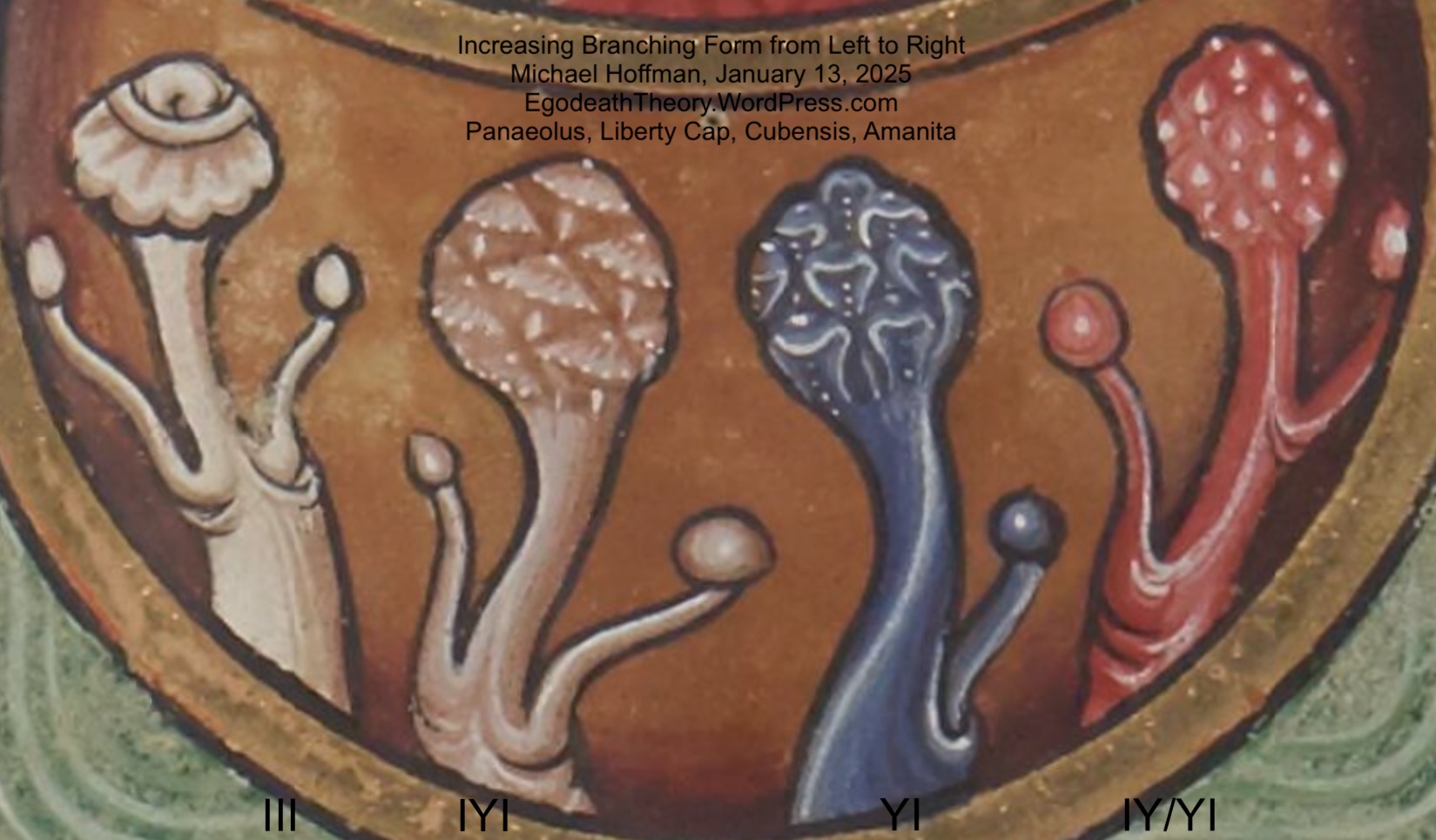
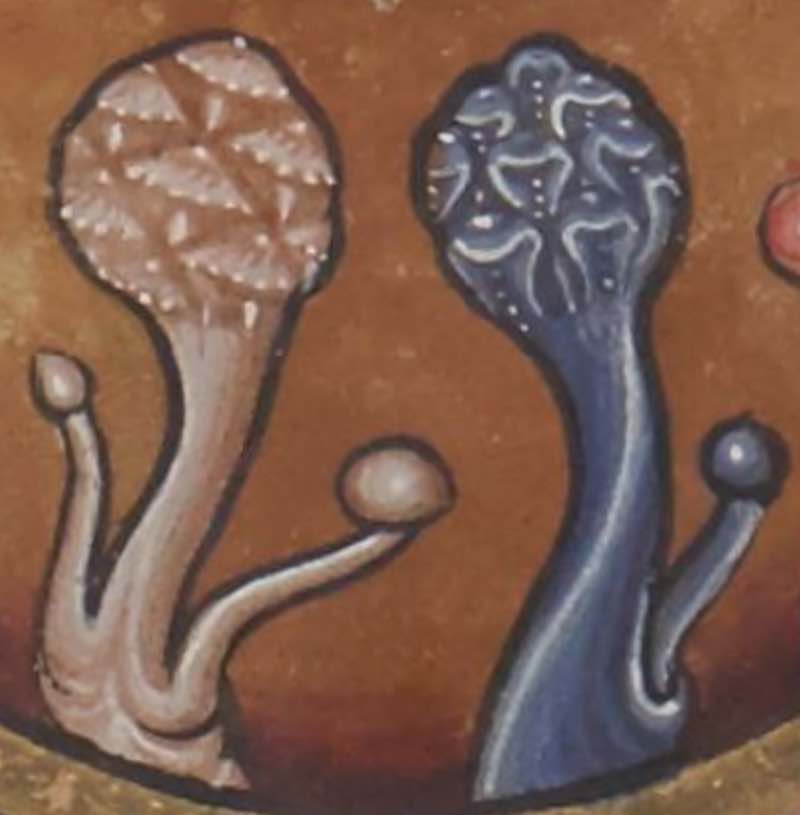
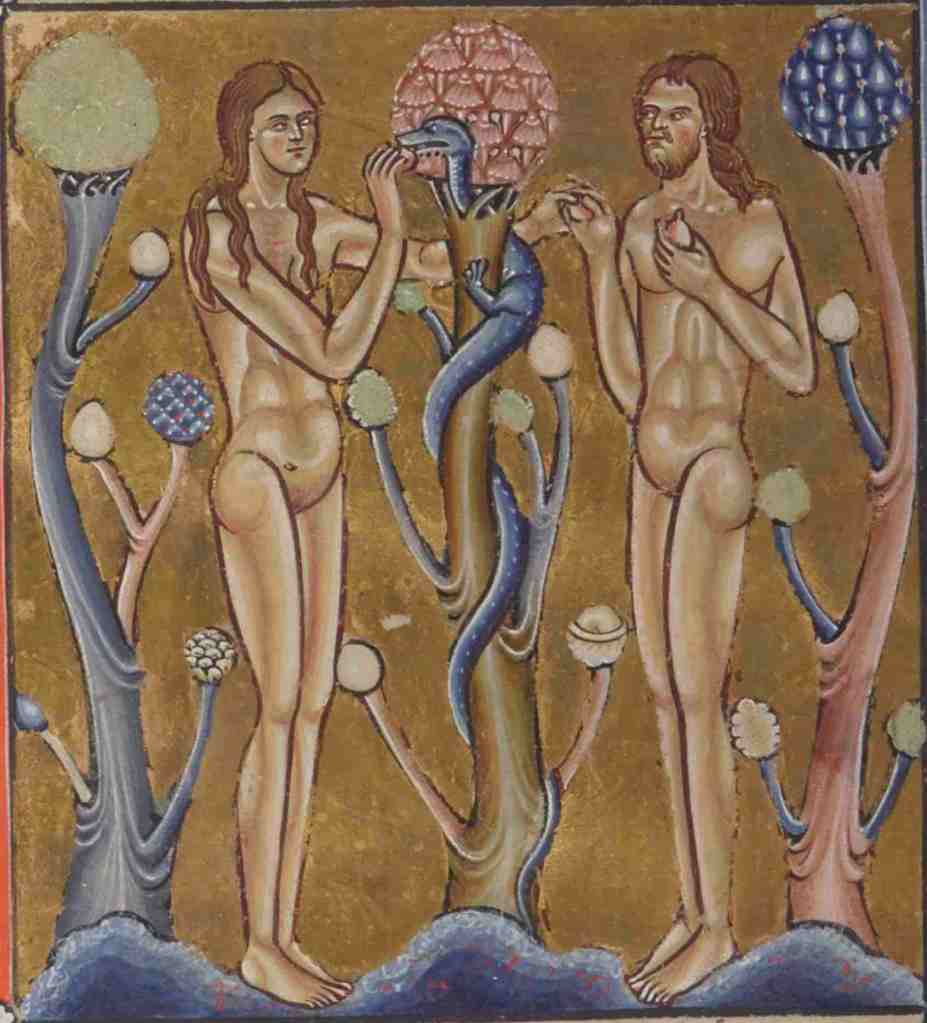
  • The medieval art genre of {mushroom-trees}, including {mushrooms}, {branching}, {handedness}, and {stability} motifs.
  • Astral ascent mysticism re: heimarmene & transcending it. End up above heimarmene and at One/Source/Pege, but central focus is reaching heimarmene and transcending heimarmene, in awesome fear & trembling.
  • The Egodeath theory.
  • The Way of Zen by Alan Watts w/ focus on switching to a 2nd model of self-control cybernetics. Summarized in “Zen and the Problem of Control” in This Is It.
  • Quote from Pankhe: 9 guys had pleasant, boundaryless unity; 1 guy had challenging cybernetic eternalism; threat of catastrophic loss of control.

The Original, Verbose Page with Commentary

I created the present, condensed page, because I need a page that’s:

  • Clearly titled.
    • A clear link, to help people follow this debate in psychedelic science.
  • Clean, organized by date.
    • Listing the articles in order.
  • Separating commentary from citation info.
    • Without uneven-length commentary.

Verbose original version of the present page, with commentary:
Moving Past Mysticism: Theory of Psychedelic Eternalism Provides Scientific Basis, Superseding “Mysticism, Meditation, & Psychotherapy” Framework
https://egodeaththeory.org/2023/01/15/the-theory-of-psychedelic-eternalism-provides-a-scientific-explanatory-basis-for-mystic-state-experiencing/

Come Down Heavy (Thee Hypnotics, 1990)

https://www.youtube.com/watch?v=nZIuhCxXN5E

https://www.google.com/search?q=lyrics+thee+hypnotics+come+down+heavy

No lyrics for this song, on the web! I have to transcribe (quick/rough start):

When you’re down on your bended knees
And evil hoodoo gonna make you aggrieved
Well there ain’t no need to feel uptight, no
Just let it come down heavy tonight

When you can’t seem to get it on
Every minute gonna last too long
If your blues gonna gone aground
That’s when you just got to let em calm down

Bias Against ‘Religion’, for ‘Spirituality’ Revealed by Bob Jesse Talk

todo: move this section out eg to idea development page 30

Bob Jesse seems worth watching.

He showed the bias:

pleasant, good words/ideas/ associations = spirituality = stuff i like

unpleasant, bad words/ideas/ associations = religion = stuff i don’t like

See Also

Verbose original version of the present page, with commentary:
https://egodeaththeory.org/2023/01/15/the-theory-of-psychedelic-eternalism-provides-a-scientific-explanatory-basis-for-mystic-state-experiencing/

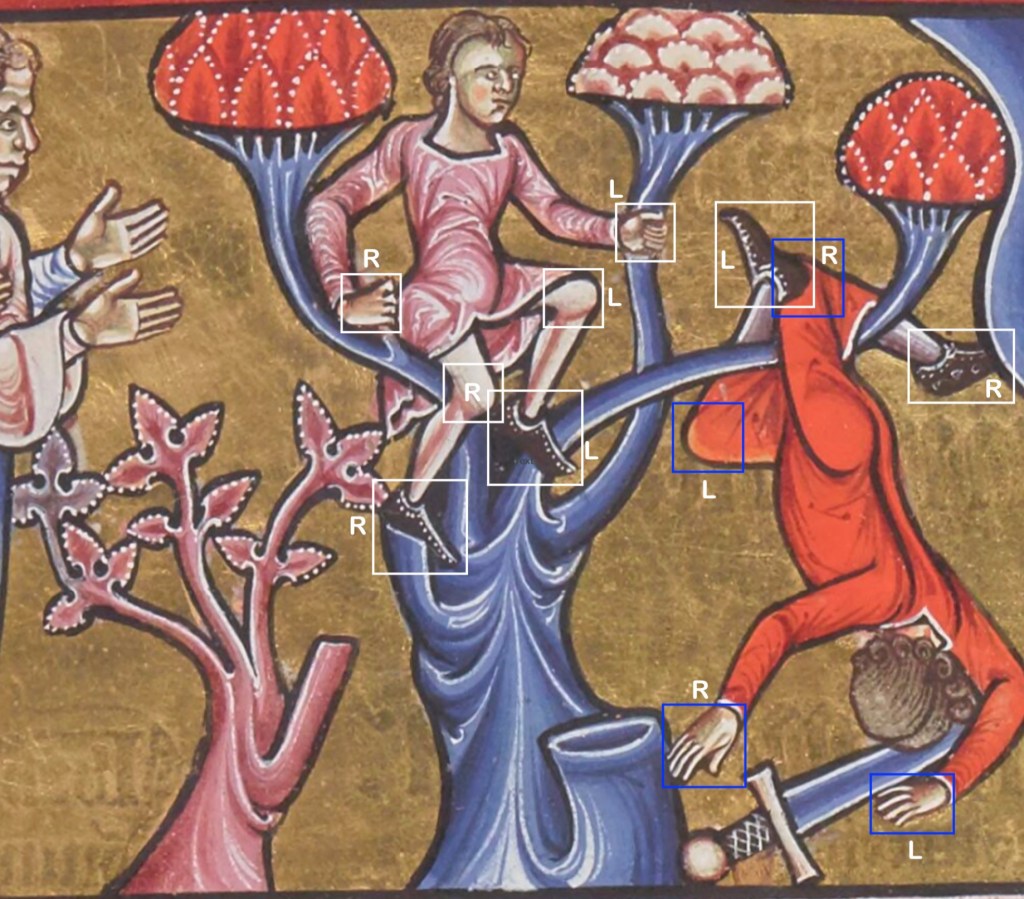
Crop by Michael Hoffman – YI tree; more branching on L than R
Crop by Michael Hoffman – YI tree; {cut right trunk}

Idea Development page 29

Michael Hoffman, started May 6, 2025

Crop by Michael Hoffman

Site Map – Previous page – Next page

Contents:

most links might only work on desktop Chrome/Edge browser – the first link works:

Incoming Ideas

Bad Trip Psychosis Prep: High Priest Put Blood of Sacrifice All Over Inner Temple, to Avoid Being Killed by God – Rescued by Idea of Substitute Blood

See YouTube videos that exclaim: The driving theme of Bible religious myth is blood.

Bunk model of mystical experience: positive unity.
Actual model of psychedelic peak mystical experience includes, according to Bible and other myth:

Psychedelics = religious myth = {blood} & {substitution} & {suffice}

Video title:
Why Christianity Is Obsessed With Blood — Worse Than You Think
YouTube channel: Mindshift (Brandon) – literalist
May 18, 2025
https://www.youtube.com/watch?v=c0NB2117Quw&t=1010s = 16:50

Video title:
The Bible’s Most Dangerous Story — Here’s Why [sacrifice of Isaac]
YouTube channel: Mindshift (Brandon) – literalist
Apr 27, 2025
https://www.youtube.com/watch?v=HoQ-qP3j2_A

Who is worst and stupidest? Literalist Christians, or literalist anti-Christians who merely prove that they are “those on the outside”?

Literalism kills, idolatry kills; mythology enlightens and transforms, delivering the treasure.

Better than 1) Old Testament literal blood sacrifice of horned livestock is 2) New Testament literal blood sacrifice of Mr. Jesus, but after I was saved from cybernetic loss of control threat by the IDEA of Jesus on the cross in 1995, I puzzled over the role/ function/ purpose of an actual, literal death of a literal Jesus.

I had a couple years to think and write about that question 1996-1998, which explains why I so quickly and immediately pivoted in 1999 as soon as I heard about ahistoricity.

I gladly immediately switched from asking Paul & Jesus to confirm the Egodeath theory, to asking religious myth to confirm the Egodeath theory.

3) Best is the idea (comprehension of mythic analogy) of blood violent sacrifice (eg you must bring a piglet to sacrifice, to the Eleusinian mysteries), or the idea of godman fastened to spacetime cross helplessly.

I can explain how the IDEA (mythic analogy) of substitute blood saves the mystic psychonaut from harm; I cannot explain how literal blood could save the psychonaut from harm. Magic thinking, literal thinking, cannot enlighten or save or transform.

Strangely, the angel of God never told Abraham to sacrifice the ram, though pictures show that, in the medieval art genre of {mushroom-trees}.

The angel said do not harm the boy, and don’t do anything to the boy.

The angel said because you have done this thing and NOT withheld your only son, your offspring will thrive and be blessed.

The angel did NOT say “sacrifice this ram instead of your son.” THE ANGEL DID NOT SAY BECAUSE YOU KILLED THIS RAM, YOU ARE SAVED/ BLESSED, AND ISAAC IS SAVED.

Angel ACTED like Isaac was let live because the ram was killed.

Sequence: Gen 22: Omits the setup where God commands Abraham to offer up Isaac.

Abraham makes the child carry the cut wood branches:
child-thinking = branching thinking

Abraham Tested <– NIV authors add headings

22 Some time later God tested Abraham. He said to him, “Abraham!”

“Here I am,” he replied.

Then God said, “Take your son, your only son, whom you love—Isaac—and go to the region of Moriah. Sacrifice him there as a burnt offering on a mountain I will show you.”

Early the next morning Abraham got up and loaded his donkey. He took with him two of his servants and his son Isaac. When he had cut enough wood for the burnt offering, he set out for the place God had told him about [when?]

On the third day Abraham looked up and saw the place in the distance. 

He said to his servants [young men; youths], “Stay here with the donkey while I and the boy go over there. We will worship and then we will come back to you.” [lying, or planning to cheat God? Is Abraham testing God?]

Abraham took the wood [cut branches] for the burnt offering and placed it on his son Isaac, and he himself carried the fire and the knife.  [missing: {rock} altar]

As the two of them went on together, Isaac spoke up and said to his father Abraham, “Father?”

  1. “The fire and wood are here,” Isaac said, “but where is the lamb for the burnt offering?” Abraham answered, “God himself will provide the lamb for the burnt offering.”
  2. Then he reached out his hand [like tree of life in Gen. 3] and took the knife to slay his son.
  3. But the angel of the Lord called out to him from heaven, “Abraham! Do not lay a hand on the boy. Do not do anything to him. Now I know that you fear God, because you have not withheld from me your son, your only son.”
  4. Abraham looked up and there in a thicket he saw a ram caught by its horns [probably horns = {branching}: consider: 7:52 pm June 9 2025: goat, ram, bull all have horns]. He went over and took the ram and sacrificed it as a burnt offering instead of his son.
  5. And to this day it is said, “On the mountain of the Lord it will be provided.”
  6. “I swear by myself, declares the Lord, that because you have done this and have not withheld your only son, I will surely bless you and make your descendants as numerous as the stars in the sky. Through your offspring all nations on earth will be blessed, because you have obeyed me.” Gen 22:7-18 https://www.biblegateway.com/passage/?search=gen%2022%3A7-18&version=NIV

To “obey God’s commandments” (Rev 22:14 per KJB) is to be made willing to expose the vulnerability of egoic personal control system; to be made willing to sabotage one’s control-power.

Then receive idea of sufficient grasp of analogies instead, eg vicarious imaginal blood sacrifice of a provided ram or son of God.

Comments on Cyberdisciple Site Map Page

x https://cyberdisciple.wordpress.com/2025/04/25/announcement-site-map-of-cyberdisciple-wordpress-com-published/

I haven’t read the comments much.

Strickland Comment Against Writing ‘Alien’, but Only Strickland Wrote ‘Alien’

“Cyberdisciple, it’s so good to see your site map.

“I’m not sure if the following information is appropriate here, but thought I would give it a try.”

[I recall the concept of/ critique of, the “alien primitive psychology” theory of religious myth/ the alleged non-drug intense mystic altered state confabulated by academic inventors/ taboo-driven storytellers. Strickland should have stated that context, if that’s what this comment is about. -mh

Cyberdisciple, I must take issue with your advocating kicking puppydogs.

man of straw loses once again

Search Cyberdisciple site for “alien”:
https://cyberdisciple.wordpress.com/?s=alien

CITATIONS NEEDED]

“I don’t get why there is a misuse of labeling a reference of mystic altered state experience as ‘alien’, when the mystic altered state is commonly expressed in many ways throughout time.”

“From the very roots of the ancient world and found in literature, art, music, sculptures, religion, to name a few, the mystic altered state carries itself forward, through many mechanisms. and including through medicine where the Caduceus is alive and well, and commonly seen on ambulances in the modern world.

“The matching of the mystic altered state through natural entheogens with that of technological consciousness is scary simply because the roots of origin may differ, one being from heart and soul through the depths of earth, and the latter from machines.

“So just what is the motive behind the writings which support the word ‘alien’, if not just another form of fame seeking exploitation of the cherished mystic altered state, with effort of making it not only strange but also further away from the living heart and soul by placing it into the wires of lifeless AI.

“If using the word ‘alien,’ becomes the message for the ordinary world mindset in bringing forward expression of the mystic altered state, then what’s truly becoming ‘alien’ is not the magnificent mystic altered state, but rather the ordinary world mindset moving farther away from its natural origin.”

About 7 More Comments to Possibly Read

on same post by Cyberdisciple

Wrmspirit post at Cyberdisciple site June 9, 2025

“There is an elegance which comes from the whole of mystic altered state experience which becomes eclipsed by the power of the bible’s literal interpretations of the dark night of the soul.

The elegance of the whole of altered state experience is reflected within its creative expressions and not difficult to see, feel, and love, such as the Bernward Doors, stone carvings, statuaries and sculpted elements throughout the world, music, paintings, theory and literary compositions. Artistry in its finest form.

Even the most experienced in altered states can become blindsided in nullifying the purity of elegance by placing the gore as the core, stating gore is not gore, in order to differentiate between literal and analogical representation of mystic altered state experience with good intentions, never realizing the power of those images deeply ingrained within lifetimes of exposure to literalism’s lurking shadows.

Where is the power of prayer in the dark night of the mystic altered state. The forgotten power of gut-level prayer, not verbose wording, but prayer from the soul in its purest form, gets lost in the thrill for graphics of daggers and swords stabbing into the flesh of life taking full stage.

Pattern recognition, a valuable tool, used now for teaching the intricacy of mystic altered state experience with good intentions, may very well become the creation of a 3rd mode of interpretation. In addition to literal interpretation and analogical interpretation, there is pattern recognition interpretation. A new Bible. A new format to follow, dogmatic in the sense of ‘must adhere to,’ another layer of diversity placed onto the mystic altered state for new generations to peel away in order to find their naked heart.

From ancient hands gifting the modern world with treasures of the soul, who could ever have imagined that the simplicity of the mystic altered state could be reduced to a complexity that dilutes the very essence of its being.”

Psychedelics in Monotheistic Traditions: Sacramental Practice and Legal Recognition (Harvard Law School, March 5-6, 2025)

https://www.psychedelicsandreligion.info – “This interdisciplinary symposium brings together scholars of religion, legal experts, and religious leaders to explore the legal recognition of religious psychedelic use in Jewish, Christian, and Muslim communities.”

“Sessions will draw on methodologies of religious studies, law, and the humanities, and will cover topics including:

  • Biblical, theological, philosophical, and mystical bases for religious psychedelic use
  • Religious psychedelic practices in Jewish, Christian, and Muslim communities today
  • Theological, critical, and doctrinal perspectives on religious psychedelic use
  • Legal pathways to recognition including religious exemptions, decriminalization, and legislative initiatives
  • Critical perspectives on safety, ethics, representation, access, and justice”

Conference Schedule (Psychedelics and Monotheistic Traditions:
Sacramental Practice and Legal Recognition
Harvard Law School, March 2025)

https://www.psychedelicsandreligion.info/schedule

“Wednesday, March 5
Religious Cultures and Theologies
Austin 101

9am Welcome and Introduction
Noah Feldman
Jay Michaelson

9:30-10:45 Jewish Techniques of Ecstasy, Mysticism, Magic, and Spiritual Guidance
Jill Hammer, The Drum and the Vineyard: Priestesses Changing Consciousness in Ancient Israel
Elly Moseson, Jewish Magical Techniques as Model for Psychedelic Practice
Sam Shonkoff, Enlightened Amnesia and Entheogenic Memory: The Case of Neo-Hasidism
Yosef Rosen, Ba’alei Shem as Predecessors for Contemporary Jewish Psychedelic Guidance

11:00-12:00 Contemporary Jewish Psychedelic Practice
Natalie Ginsberg, Rabbi Dan Goldblatt, Zac Kamenetz, Madison Margolin, Adena Phillips, David Sauvage

12:15-1:15pm Islam and Psychedelic Practice
Sughra Ahmed, Ismail Ali, Karina Bashir, Hena Malik
Kamal Abu-Shemsieh:
Harm Reduction and Islamic Jurisprudence
Fayzan Rab:
Muslim Communities’ Perceptions of Psychedelics

1:15pm Lunch

2:20-3:30 Christianity, Psychedelics, and Non-Ordinary Experiences
Rev. Jaime Clark-Soles,
Searching the Depths of God: Non-Ordinary States of Consciousness in Scripture
Hunt Priest,
Claiming a Healing Ministry: Resourcing Christians for Spiritual and Pastoral Care
Bryan McCarthy,
Could MDMA Support Catholic Faith and Practice? A Conservative Maybe
Ron Cole-Turner,
Psychedelics and the Christian Mystical Path

3:40-4:20 Syncretistic Psychedelic Practices
Jessica Felix-Romero –
The Rattle and the Rosary: Intersections Between Lay Theology and Shamanism
Joshua Falcon –
Catholicism & Psychedelics in South Florida: Ambivalence and Affirmation
oriana mayorga –
Nothing New! Communal Use, Ancestral and Ancient

4:30-5:40 Complexifying Psychedelic Theologies
Christian Greer,
Psychedelic Christianity: Real and Imagined
Sharday Mosurinjohn,

The Sweetest Taboo: Psychedelics and the Invention of Religious Experiences
Tim McMahan-King,
Natural Law on Drugs
Nathaniel Berman –
Nomopoeisis, Psychedelia, and Synesthesia: Envisioning Correspondences with Larry Tribe, Maurice Merleau-Ponty, and the Sefer Ha-Zohar

5:50-6:20 Kabbalah, Space-Time Synesthesia, and Psychedelics
Elliot Wolfson and Noah Feldman

6:30 Dinner for Presenters
Milstein East, WCC

8:00 Open Space Sessions and Screening of A Table of our Own
WCC 2004 and 2024

Thursday, March 6
Law and Policy
Austin 111

9am Welcome
9:10-10:10 Safety, Access, Ethics, and Equity
Laura Appleman –
The Church of Eugenics? Envisioning Psychedelic Dystopias
Jeffrey Breau –
Care and Creed: Learning from Novel Psychedelic Spiritual Communities
Ayize Jama-Everett –
Pharmacological Reductionism, Unequal Justice, and Anti-Blackness in the Pursuit of Religious Freedom Under RFRA
oriana mayorga –
An Orated Ethnography

10:20-11:40 Legal Doctrines and Religious Realities
Martin Lederman, Victoria Litman, Mason Marks, Josh McDaniel, Charles Stang

11:50-1:00 RFRA, the DEA, and Religious Exemptions
Ismail Ali – Cultural Blind Spots and Growth Edges of US Protections for Entheogenic Religions
Allison Hoots – Religious-Based Exemptions Under RFRA and the Controlled Substances Act
John Rapp – RFRA Challenges That Have Succeeded… and Failed
Matt Zorn – So, You’re Looking to Litigate. Strategic Considerations in Filing a Lawsuit.

1:10pm Closing Remarks
Noah Feldman
Jay Michaelson

1:30 Symposium Ends
Lunch for Afternoon Session Participants
2:30-4:00 Afternoon Session 1 (invited participants)
Langdell Hall

4:15-5:45 Afternoon Session 2 (invited participants)
Langdell Hall

Conference Abstracts (Psychedelics and Monotheistic Traditions:
Sacramental Practice and Legal Recognition
Harvard Law School, March 2025)

Jeffrey Breau,
Care and Creed: Learning from Novel Psychedelic Spiritual Communities
Novel psychedelic spiritual communities (NPSCs) are new religious movements forming around psychedelic use that are distinct from Indigenous plant medicine traditions and unaffiliated with major world religions. They represent religions that are unique to the psychedelic space. NPSCs challenge conventional understandings of religious life, have sophisticated approaches to community care, and will face distinct hurdles to obtain religious freedom. This presentation will share preliminary findings from a multisite ethnography of NPSCs in the United States. Religion, the law, and care are inextricably entwined for NSPCs, and this presentation will argue that to learn from NPSCs we must attend to how these three domains shape their communities. The talk will focus on how NPSCs are creating safe psychedelic rituals, navigating the regulatory environment, and approaching ethical oversight. It will conclude by discussing what NPSCs suggest for established religious communities interested in entheogenic practices.

Rev. Jamie Clark-Soles,
Searching the Depths of God: NOSC in Christian Scripture
If the U.S. Constitution is the founding communal document for America, then Sacred Scripture is/are the founding communal document/s of Christianity. From Genesis to Revelation we find ample evidence of NOSC and even the attempt to induce them. How might this inform (or not) our current consideration of legalizing psychedelics for the purposes of spiritual formation within Christianity?

Ron Cole-Turner,
Psychedelics and the Christian Mystical Path

“The mystical in Christianity finds its center in lifelong spiritual transformation in relationship to the presence of divine love. The process of transformation might be punctuated by intense or non-ordinary experiences, but the experiences are not its defining feature. In the tradition of James or Stace, however, modern definitions of mysticism (and the Mystical Experience Questionnaire, widely used by researchers) focus almost exclusively on mystical experiences, and even then do not discuss love. My central questions are: When intense psychedelic spiritual experiences occur, can they lead to the rich spiritual transformation that Christianity values? Can church leaders and congregations support those who want to explore psychedelic experiences within a Christian context? Moreover, in terms of legal recognition, the use of psychedelics are not a traditional sacrament [FALSE!], but the use of groups for spiritual reflection and growth is a longstanding practice. If we imagine groups tailored to include reflection on psychedelic experiences, over time, such groups might come to consider psychedelics as central to spiritual growth. Would they be free to act on this belief?

Rabbi Jill Hammer,
The Drum and the Vineyard: Priestesses Changing Consciousness in Ancient Israel

“Biblical texts reveal that women in ancient Israel used the drum, dance and song to create sacred experience and change consciousness. Archaeology bears out that women with drums, acting as sacred musicians, were important figures in biblical culture, and were sometimes named as temple workers or prophetesses. While they used these tools in a variety of contexts, we can particularly note that women were the celebrants of biblical vineyard dedication rituals and annual vineyard celebrations. It is possible to conclude that wine was also involved in these celebrations—a further tool for trance. Set in the wider context of women’s sacred ritual in ancient Israel, these musical, earthy rituals seem to suggest that music and wine were openings to deep ritual experience and even to prophecy.”

Ayize Jama-Everett,
Pharmacological Reductionism, Unequal Justice, and Anti-Blackness in the Pursuit of Religious Freedom Under RFRA

“The Religious Freedom Restoration Act (RFRA) was intended to protect sacred practices from government interference, yet its application reveals a stark racial bias. While Indigenous traditions involving peyote and ayahuasca have secured legal recognition– and even some largely-white entheogenic churches’ uses of them – African and African diasporic spiritual traditions—such as Hoodoo’s use of High John the Conqueror and Bwiti’s Iboga—remain marginalized. This talk explores how pharmacological reductionism limits the sacred to a material plane and constructs a view of the Sacred that is exclusory to traditions and religious effects that are collaborative in nature.. This exclusion reflects a deeper legacy of anti-Blackness, wherein Black religious innovation is dismissed, criminalized, or erased. Addressing these disparities requires an expanded legal and cultural framework that honors the full spectrum of sacred traditions.

Elly Moseson,
Mysticism, Magic and the Search for Psychedelic Analogues in the Jewish Tradition

“While the cultivation of altered states of consciousness (ASCs) for religious purposes in the Jewish tradition is typically treated in connection with the Jewish mystical tradition, this paper proposes that reframing ASCs in terms of magic offers a compelling framework for considering the place of psychedelics in contemporary Judaism.

“Despite the significant overlap between the two traditions, magic tends to focus on individual agency, prioritizing efficacy and pragmatic outcomes, whereas mysticism often emphasizes specific doctrines, pietistic ideals, and communal or initiatory structures.

“The relative absence of pietistic rhetoric and strictures in magical literature, along with its emphasis on efficacy, parallels both the availability of psychedelic substances without moral preconditions and their consistent effectiveness in inducing ASCs.

“Another parallel can be found in the ambivalence with which normative religion and culture regard both magic and psychedelics. Drawing on examples from the Jewish magical tradition, this paper suggests that reconsidering ASCs in terms of magic, rather than mysticism, provides a fresh perspective on both the integration of psychedelics into contemporary Jewish practice and its potential challenges.”

con’t below…

Video: Ep. 57: Can Psychedelics Replace Religion? – Sharday Mosurinjohn

Video title:
Ep. 57: Can Psychedelics Replace Religion? – Sharday Mosurinjohn
https://www.youtube.com/watch?v=onlx_Lr0SQI
ch: Atheists United
May 30, 2025
i think a re-release of same vid from 2 years ago, “ep 57”.
Beyond Atheism Podcast – 73 episodes
Desc:

“In this episode, we’re joined by Dr. Sharday Mosurinjohn, an Associate Professor in the School of Religion at Queen’s University in Canada.

“We learn about the current use of psychedelics as well as their links to religion in both the past [“BEEN DEBUNKED, MANY TIMES IN THE PAST 90 YEARS – Mosur.] and present.

“Sharday talks about the universal connections [“mystical experience = positive unity, which doesn’t require psychedelics“] and spirituality found through mind-altering chemicals.

“Along the way we meet a few mechanical elves.

“We also ask whether a “true psychonaut” can believe in an afterlife or attend a church.”

[I’ve been studying psychedelics since 1985, but I can’t be a psychonaut, because I attend a church.

The hosts (ordinary-state-based atheists) were surprised to find out that psychedelic churches exist.

What wisdom can atheists have regarding religion, and mystical experience, and entheogens – if they know nothing at all about them?

That lack is fairly well remedied by this pretty good interview with Sharday Mosurinjohn.]

“In the bonus section, available exclusively to Patreon supporters, we talk with Sharday about

  • the aesthetics of psychedelics,
  • issues around drug prohibition, and
  • her current book. [published, or planned?]

“For more on Sharday: https://shardaymosurinjohn.com

“Check out her latest book, The Spiritual Significance of Overload Boredom”

Video Transcript, Mosurinjohn

ranscript welcome to the Beyond Atheism podcast with me Nathan Alexander and my co-host Todd Dvarez

this podcast moves beyond questions of God’s existence to ask what’s next in the godless world

if you’re enjoying the show so far remember to like and subscribe rate and review and consider supporting us on Patreon

beyond Atheism is produced and distributed by Atheist United [Music] Studios

turn on tune in and drop out

this was the famous phrase by Timothy Liry addressed to the counterculture movement of the 1960s in which he urged people to explore the nature of reality and the meaning of life partly or entirely through the use of psychedelic drugs

but can psychedelics allow us to grasp deeper truths about life and reality and even to experience transcendence

to talk about these issues and more we’re joined by Dr charardde Morrison John

chararda is an associate professor in the school of religion at Queens University in Kingston Ontario

as a multidisciplinary scholar her work draws from a wide range of topics including religion cultural theory aesthetics and mind augmenting technologies ranging from AI to psychedelics

her first book is the spiritual significance of overlord overload boredom

her new [next] book project considers the psychedelic renaissance as an ethnogenic new religious movement in the long history of esotericism

[as if European use of psychedelics is “new”]

my goodness that’s a mouthful for our day welcome from the name to the books yeah

thank you thank you for having me yeah it’s great to have you here yeah uh thanks so much Charardai for coming on

really looking forward to talking with you i guess

the first question is

Why psychedelics? Why are you so interested in this topic?

well I probably first of all have to do the the Andrew Huberman style line like I wish to emphasize that

any real or perceived advocacy on my part is completely separate from my research and teaching roles at Queens University and service

um but is nonetheless part of my desire to bring um low low cost to consumer information to the general public about weird metaphysics

um yeah so uh

psychedelics is is the the most fun I’ve had in my career, the most interesting um thing that I’ve worked on

and you know and and personally like non-ordinary experiences um uh yeah that that’s that’s where it’s at

so how did did it start as a a research project or a hobby or an in how did it go from how did it become a focus of study

i think where it started was listening to Paul Stammit’s [Stamets’] TED talk about 10 or 12 years ago about fungi

And so well that’s kind of like the approximate starting point in a way um because you know really in some sense

it starts with the DARE program back when I was a kid in public school

do you all remember the DARE program they have come drugs are bad

yeah um and I I I really drank that flavor aid and I I was absolutely straight edge for for the longest time

[can’t relate. in school, I learned, but I was always critical – I read stacks of books at public library and schoolroom]

and um and it’s a funny thing because I was craving aesthetically interesting meaningful intense experiences but I had cut myself off from most avenues of doing that

um not just with respect to you know um like substances and practices but even socially

um I

I didn’t want to associate socially with people who did who did drugs

it seemed like the most morally bankrupt thing that anybody could do

but I I nonetheless or you know maybe tied up with that kind of prohibition that I’d set for myself was really really fascinated with the nature of mind and consciousness and you know this whole sort of family of concepts that taps into whatever we’re trying to get at with those words um and was kind of constantly experiencing some sort of low-level crisis of meaning

which is where my first book came from and I boredom as an idiom to describe this sort of um warping of time and problem of meaning

and as I was working on that I was thinking about you know different kinds of minds and phenomenology and what is it like to be a me or in anything

I was thinking about orked [artif?] intelligence and network thinking and network living because I I wound up really talking a lot about what it is to live like in our present computational condition

and uh and this was back in the early days of TED talks the cool days of TED talks and I listened to that and

I remember you know the idea of this um this agential and really kind of clever mycelium the the way that the that that the underground part that we don’t notice of the mushroom fruing bodies

like it could move fast and it could communicate fast and it could communicate with other organisms and it could do all kinds of things so I had that in my mind and I had that resonance of that um you know he he is fond of saying stemits and and others are fond of making a comparison between the way that that all fungal mycelia connect and communicate and the way that psilocybin the the active ingredient in so-called magic mushrooms does that for in in human body minds um and between people who have had those experiences so all of that was in there

[a complete(sic) mystical experience ie of just “positive unity”; nondual unity oneness – not cybernetic eternalism / mental model transformation]

and and percolating and

I was using some of those ideas in in my book The Spiritual Significance of Upload Boredom — i too, often say “overlord” I can’t say overload boredom i say o “overlord boredom”

um I don’t know what that pretends and then the funny thing is I mean we we

We started to get like the endless trip of Michael Pollen

you know eventually his his stuff came out and um and just

gradually it was definitely more and more in the air if not the water and then sbatical [? todo] became on the horizon

you know the

the book number one was done and people started asking me “What are you going to do?”

And I started hearing myself say psychedelics

and I and it it I just and it and it came true i I said it enough and I lived into it and then it became true

and I have oriented my whole research program around psychedelics and

it has been the most generative fruitful socially rich collaborative thing I’ve ever done

um there’s so much kind of intersectoral and interdomain collaboration in that space

right yeah and just just to go back you mentioned about you know

in school like this sort of anti-drug message and that really um kind of like hit you hard or whatever

and I wonder maybe like we can ask about like your religious background like if that in any way um informed like your attitudes toward toward drugs and and so on and and if there was a change

that Yeah that

that changed your like religious changes that changed your attitudes

yeah well yeah this is this is so it’s so strange um because so I always say

I would have made a really great zealot like for somebody if anybody had recruited me i would have been fabulous

i I was this kind of I mean I it would be nice to be able to say

rebel without a cause

but I I wasn’t you know particularly outgoingly rebellious it was it was just like

well I’ll show you by forming strong moral standards within my own self and like withholding experiences from myself

and so I grew up without

but I I think maybe that is because I grew up without um being raised in it just didn’t feel like anything in particular um so what

I was not was Irish Catholic that’s what my mom had been and then the nuns beat her sufficiently that she ran away and um and so therefore that is what I was not

[WHERE IS YOUR FATHER?]

and what I had was something like the like what does Megan Goodwin say something like it was Protestantism with the barcode filed off or the serial number filed off sort of like standard issue liberal mainline types of hegemonically Christian values floating around

there I’m sure because that’s you know what would have been residual in my mom I assume um and

I was really like there I just I didn’t have uh

there wasn’t sort of a community identity in terms of like a a neighborhood

there wasn’t you know extended family

[NOT EVEN A BASIC FAMILY, NO MENTION OF FATHER]

there wasn’t a kind of cultural identity

there wasn’t a religious identity

there just kind of wasn’t a lot to hang on to

so I think I started cobbling together a whole bunch of strictures for myself and I just kind of um things that would be I was this like virtue signaling for kids

i was like “Oh this if I if I can internalize this message then this will give me some kind of moral ground to stand on.”

and maybe look down at my tears but it’s neat that that you have an awareness of that without like were you were you

Was your family church going

[family with no father?]

were you sort of

No not at all

you didn’t have those rituals

no and I I remember for really no reason that I can point to until I was probably at the end of my undergrad i was vehemently anti-religious

i was so hostile

i was I mean

if the militant atheists had gotten me I would embrace them too it’s not claimed to me it’s true i

I haven’t my draft letter yet but um there’s still time before I get back

it’s a neat perspective which I don’t think we’ve heard much on this like

people who are raised without religion

yeah and because it seems to be a very different flavor and it’s not one that we’re very familiar with

but it’s also interesting that you go from that upbringing to something that at least is studying I mean are

do you feel like you study religion as an outsider now

it’s you well

this is the most insider I’ve ever felt

so I it was like it was very much a a sort of

I’m going to study this thing that I’m angry at

and the angle that I took for many years was I am angry at religion which I mean thankfully

my master’s supervisor pointed out is you’re you’re sort of angry at mainline Protestantism chararda

and I was like okay I’ll do

I’ll do an ethnography with the United Church Women’s Group and I’ll show them

and you know they were tremendously liberal lovely people um about whom I could say nothing like truly critical

and um and and so

that sort of vitriol that I had that I just did I didn’t know where to place it and I didn’t know what it was

except that I I thought okay I can I can say something about the fact that religion is tied up with sexism and capitalism and those things are bad so I’ll you know I’ll follow that angle

and then as I got into the discipline ipline of religious studies which I came to through

I came through socioultural anthropology

i came through some philosophy of science stuff

i came through museiology

i came through cultural studies

and sort of kept just like flirting with religious studies and

the more that I got into it as a discipline the more that I was allowed to just be metaphysically curious in some respects because there’s lots of boundary policing too

and I and at that point it became like

I am not doing anything that can ever be mistaken for theology

um and you know but

The more that I let my philosophical flag fly the more that was also sort of more and more a tense boundary that I had to deal with

uh and so at this point being that

I am doing work in a community of psychonauts that I’m part of

it’s the most insider that I’ve ever felt

and it’s not

it still you know comfortably falls outside the world religions

but like clearly I have embedded myself personally and professionally in something esoteric that as a religious studies scholar I can recognize is a kind of you know insider position

it’s like

so is it religion adjacent or like it has parts of religion

what’s what’s the best way to put that

this is a really interesting thing because uh

I keep having this experience in psychedelic communities where people will say things to me like well religion is disappearing right the the churches are closing their doors and um so what’s going to happen next and I say they’re doing it right now

this isn’t not that you know

if we look at what the functions are and they go we need community

like yep yep we do and that’s what religions have done yep and we’re and we’re still doing it right now

um and so I mean on the one hand I could just say

whatever it is is amanable to study with the whole conceptual toolkit that we have as religious studies scholars

and then uh in another way I could say yeah

I can firmly locate this in terms of religion in in the history of western esotericism

so if I locate it as a form as of esotericism it is something that I guess it it also I think this also sort of fits with Lois Lee’s definition of non-religion as something that gets its identity from being meaningfully different from religion that in

in Vder Hanikov’s [Wouter Hanegraaff?] sense of esotericism it’s the thing that is in that reject basket of both mainstream religion and mainstream science um but is informed by and always kind of intense relationship with both

right and and what

What do we mean exactly by esotericism?

[Laughter] um as um so it the

the absolute simplest kind of soundbite definition uh is Hannah Craft’s [Wouter Hanegraaff] it’s stigmatized knowledge or it’s rejected knowledge it’s the waste basket of knowledge and who is it rejected by religion on the one hand and science on the other

or mainstream religion and science on the other

[poor def., b/c it is negative: If I reject anything, that thing is “esotericism” BECAUSE i rejected it. The poor Chris Partridge approach to characterizing esotericism.]

What does it positively consist of?

very broadly speaking magic alchemy astrology

[I would define ‘esotericism’ like Timothy Freke & Peter Gandy’s book The Jesus Mysteries, 1999, https://www.amazon.com/Jesus-Mysteries-Was-Original-Pagan/dp/0609807986/ ]

very broadly speaking and you know

those being histories that we can trace back to like say with astrology the earliest empirical practices of observing stars [all 7 of them in Hanegraaff’s sky] and like weather patterns in order to do practical things in the world

but that also takes on this kind of mysterious predictive esoteric dimension

um well there I just used the word to define itself but I said enough words at the time

yeah no I think

that makes sense

yeah and and so

How does psychedelics like fit into that?

like

Are there

kind of Yeah um almost

like churches or institutional sort of things like that around uh psychedelics?

oh man

there’s so many ways it’s a damn schmorggas board right now

it so okay so one thing is that yeah

There are these entheogenic NRMs

that was the That’s maybe that’s another thing we should define i don’t know yeah yeah so

entheogen means god-generating

okay okay i see okay and um this is another it’s a

it’s a synonym or sometimes I think a euphemism for psychedelic

that I’m hearing increasingly lately in fact so usually it’s being used specifically to point to religious uses or spiritual uses

like avowedly you know by the people avowedly religious or spiritual uses of psychedelics or other practices like fasting for a long time or like praying with your head between your knees for a really long time or holotropic breath work things that can [/ could/ might/ may] produce psychedelic experiences but for religious or spiritual purpose

[Breathwork can produce psychedelic experiences. Smashing your head against a wall can produce psychedelic experiences. The empty worthless tin “can”.]

but I’m seeing some concept creep increasingly

so for instance

I was at one of Kingston’s um psychedelic community events the other day and this was one that was targeted towards students because we have a a club at Queens for psychedelics

so there was a PowerPoint and it periodized the different eras in psychedelic history with the most recent one being the enthogenesis era

[athiests want psychedelics without entheogenic]

[era 1: the hippie 60s. era 2: Rave 90s. That’s it. I learned this from the intensive research of Chris Partridge etc. Swiss cheese history consisting of 99% holes/ absences.]

and I thought well that’s really interesting because

That embeds the notion of God or religion into the very premise and what what the era is about right now

but so that’s that’s enthogenic um and then it it’s just you know

there’s always some kind of strategic branding problem or communication issue or angle

um psychedelic comes from like psyche your suk mind soul and do loss manifesting so mind manifesting

[what about pneuma, spirit manifesting? Classical Antiquity vs Late Antiquity model]

and that was kind of coined in part to be able to not use the word hallucinogen uh you know just all of these things have baggage and get freighted and sort of need to so that’s that’s yeah so

there are enthogenic churches popping up

https://www.google.com/search?q=the+religious+studies+project+podcast
https://www.religiousstudiesproject.com
https://www.religiousstudiesproject.com/?s=psychedelic

and um I was actually just talking on the religious studies project podcast the other day about this one called the church of Silomthoxin which is started by two lawyers and a veteran in the states and they are very saviley using the legal form of a church in order to provide legal protection to give a psychedelic as a sacri

And the the fellow whose labor of love this is he has as a lawyer helped um establish over 30 other such churches so there’s a big anthogenic church movement

Psychedelic Science’s Claim that “The Root of All Religion Is Psychedelic” Has Been Debunked 90 Years Ago, Many Times [CITATION NEEDED!]

“but then there’s also just stuff like

You would not believe the number of psychedelic scientists who say to me “Did you know that the root of all religion is psychedelic?”

and Did you know that the mysteries of Elucus were psychedelic? on it was actually psychedelic

“and then I go to my biblical studies friends and colleagues and I say you know they’re saying this still and they go we debunked that 30 years ago [CITATION NEEDED!] we debunked that 60 years before that [ie 90 years ago = 2023-90 = 1933] like how many times [answer: zero times]

“um so so there’s that”

[my comment posted at video:

20:00 – there’s a false statement by Sharday Mosurinjohn that the claims that “the root of all religion is psychedelc” and “the mysteries of Eleusis were psychedelc” has been debunked many times by Biblical Studies scholars 30 years ago and 60 years before that.

In fact, entheogen scholarship has not really even started to investigate the question. There has only been 1st-generation entheogen scholarship (the Secret Amanita paradigm), and then starting in 1998, 2nd-generation entheogen scholarship (the Explicit Psilocybn paradigm).

In fact, Bible Studies has not even attempted to debunk the claim that “the root of all religion is psychedelc”.

Citations Needed, from Sharday Mosurinjohn:

In what publications did Bible Studies scholars debunk the claim that the root of all religion is psychedelcs?

Will Mosurinjohn resort to citing Andy Letcher’s 2006 book, in which he treated only a single piece of art evidence (page 35-36, Bernward Door), and gives phony endnote 31 falsely claiming that Stamets & Gartz tell a narrative of “secret, suppressed”?

The claim that the root of all religion is psychedelcs has been treated and debunked ZERO times – not “many times, 30 years ago and 60 years before that.”

Stop trying to reach negative conclusions and close the door, before sincere historical investigation has even begun.

-mh]

There’s also the fact that when psychedelic research got back up and running in the early 2000s when John’s Hopkins obtained regulatory approval after the whole freeze due to Nixon’s racist war on drugs, it was the mystical experience questionnaire that was at the heart of those first studies with psilocybin, saying psilocybin can occasion mystical experiences and things like mystical experiences that are indistinguishable from religious experiences [which came from Psilocybin -mh] that are had in you know a church setting um and

The mystical experience questionnaire was itself it was derived

so what was used there was derived from what Walter Panky [Tim Leary] used in the 60s

which was with the Marsh Chapel Good Friday experiment where he with approval dosed Harvard Divinity students in a Good Friday service in church and then said like do these psilocybin occasioned experiences compare to sort of regular religion occasioned mystical experiences that could be called the regular version [which came from Psilocybin -mh] of

And yes they did and so there’s been this kind of use of religion to legitimate psychedelics all the way through and that mysticism concept was itself taken from the perennialist Christian work of the philosopher Walter Stace earlier than than that

and so there there’s just so much also in this space I see so much interest in astrology in magic in past lives in ancient aliens and it just my friend Jacob used the metaphor of like a violently shaking snow globe of um of esoteric references it has everything yeah

so okay so far what I’ve got is that there are there’s a large community of psychonauts some of whom are using psychedelics to create gods which may or may not form into religion based on

mystical experiences [sic; the “positive unity” false model selectively fabricated & whitewashed & neutered for the purpose of trojan horse pretext [to push for international mundane unity] by Swami Vivekananda 1893, James 1902, Stace 1960] and spirituality

this sounds very different from what we typically understand as religion and it seems like most mainstream religions disregard this they’re not interested in it um

but spirituality is a universal part of religious experience

what is meant by spirituality and

How does this mystical esoteric phenomenon inform spirituality as an experience?

yeah good question so

that is really at the heart of what I’m tracking with these communities

because that

that part the

What does spirituality mean in this context?

it’s a discursive question that I can track through the literature and I can track through the way that people use it

and well I mean so

Charardai for me and I think this is true for most most atheists like it’s just it’s

it’s almost like an alien concept

it’s so weird I

I don’t have any functional grasp of it

And I don’t know Nathan do you have a spirituality

like a

Yeah

When you think of spirituality is there do you even have like a sense of it? Is it a feeling, can you define it?

no uh I don’t think I have a sense of it it’s hard to define

i mean

it’s one of those things like it’s hard to define without defining it in a circular way

i think um Right wasn’t Wasn’t there yeah may this is

maybe is it ineffable is that but I remember like I think at some point you looked up the definition there was something like you know spirituality is like believing in spiritual things or something like that

i mean I don’t know

it’s just some like totally circular definition

um but uh yeah anyway yes go ahead i can

I can offer something that can help ground this my dear friend and colleague the brilliant Dr galen Watts wrote his dissertation and first book on the spiritual but not religious in Canada

so espions millennial espioners um of which we are that generation and um I mean I think what they said so he he actually hung out at institutions where he thought that this particular type of spirituality was really embodied and he hung out at um C3 which I believe did understand itself specifically as a church but also Toast Masters and AA very interesting and what they said had a

lot to do with notions that I think will probably sound very familiar like connection and meaning and personal expression and the idea of I think sort of belonging in a responsive universe and things like that the far more interesting element that I think Galen articulated was the historical context of this that these notions come through like Wesleian charismatic Christianity through liberal and romantic modernity so it’s these these this twinned phenomenon of liberal and romantic modernity that carries what he calls uh advisedly because of it its root in this kind of like you know tent show situation with the strange warming of the heart um the religion of the heart so yeah I I think that that

That helps me historically ground where the those elements of the discourse of like belonging and connectedness and um all of these kind of good things come from but yeah in practice I think

one of the things that will be interesting is to see

does psychedelic spirituality actually show up differently than SBNR spirituality?

because the psychedelic spirituality very much about belonging in a responsive universe very much about connectedness

like with the the fungal mcelium as the primary metaphor of connectedness but very very much about direct non-ordinary experience which I mean is similar to the kind of charismatic impulse of having some kind of a revelatory event um an event deemed revoly in Tavian language but in this case there there’s a lot of drawing on kind of archetypal language and imagery

there’s a real interest as there is in a in generally in esotericism of authenticating things by going way way way back

European History Has No Entheogens, because I Accuse Fabrication by Appropriating Indigenous

[THE CENTER FOCUS AND CONCERN OF EUROPEAN ENTHEOGEN SCHOLARSHIP IS EUROPE.

THE CENTER OF FOCUS OF EUROPEAN RESEARCH IS NOT INDIGENOUS.

INDIGENOUS HAS NO PART, NO ROLE, NO RELEVANCE (IE, PERIPHERAL ONLY)

World religious myth informs the topic of European entheogen history, while the focus and concern of … these remain two distinct scopes and focuses of concern:

  • European religious myth – high pri. from POV of this research, non-Euro “indigenous” & world religious myth is low pri and in a merely peripheral supporting role.
  • World religious myth – subservient low pri in service of the high pri.
  • Indigenous religious myth
  • Indigenous European religious myth
  • Indigenous non-European religious myth

https://www.google.com/search?q=define+indigenous

“So very ancient yeah

wanting to refer to stuff like the Greco Roman mysteries but also wanting to and

There is no “appropriation” needed, as accused by ignorant semi-scholars, no need to “appropriate”, because Europe has its own indigenous “traditions”, “mainstream”, of Psilocybin and other, lesser inebriants such as mixture of Datura, Amanita, opium, & cannabis to form deliriant non-psychedelics.]

“this is where it the psychedelic community is really reckoning with its relationship with um learning from and appropriating indigenous traditional knowledges

“because there’s a lot of that way of of framing things and you know like making contact with entities from those traditions and so

these connections are are are really really broad and mean in a lot of different ways

you can have like it’s like the oneness across people a connection to the universe and a connection across time as well going back to other systems of belief and other people’s historically as well

that’s wow that’s a very broad notion of spirituality and it it does

it helps me make sense of other ways people have used it is when psychonauts

I’m sorry I just love that word and want to keep using it

when people draw these connections how far back do they see the the the use of psychedelics going back in time to build these connections

like does it go back to prehistory

is it only going back to the 60s

how far back does it Oh yeah

there is this fellow a lawyer who did a classics undergrad Brian Morasco who recently put out this book The Immortality Key [as if this one, “ergot Christianity” book = the state of entheogen scholarship in Europe] and

he claims that not only is the one of the psychedelic community’s kind of like foundational documents

and and you know a story that it often lives by um the road to elus by our Gordon Wson and Albert Hoffman who synthesized LSD and Carl Ruck the classicist not only were they correct in in saying that the Greco Roman mysteries were psychedelic [if you consider Amanita to be a psychedelic – like Ruck – which it is not]

Moresu wants to say that actually there were all these kinds of all these all these kinds of cults way before that uh and wants to stretch it back I think into prehistory

and it’s it’s an it’s an interesting thing because that so I

I have heard that hypothesis filtered through scientists who have picked up that book cuz they’re psychedelic scientists and they’re interested in it and they are unfamiliar with sort of humanity’s standards of evidence

[We have not even STARTED looking yet. IDIOT HUMANITIES washed out the cups and then claimed “there’s no evidence”, yeah because you dumbasses washed the cups and mixing bowls, so impressive, your standards for evidence]

and as I’m reading that book [THE ONLY BOOK YOU’VE READ ABOUT ENTHEOGEN SCHOLARSHIP!] I’m seeing okay there’s a lot that is frontloaded here on evidence that my colleagues who work in the Greor Roman antiquity area find spurious at best

[WE HAVEN’T STARTED LOOKING, SO THAT MEANS NOTHING]

and it dedicates many many many more chapters to going through a lot of detail about you know particular artifacts found at particular museums and telling a very sort of dramatic story about like how they don’t want you to find out about this

[= 1st-generation entheogen scholarship (the Secret Amanita paradigm) – a narrative-driven, narrative-restricted approach to scholarly gathering of evidence. MUST OMIT SUCH NARRATIVES. -mh]

and um and I just I noticed that the form that that takes is that it’s like

the farther away you get from that initial hypothesis [?] the more plausible it [?] seems to become

because all of this so-called evidence is stacking up in between it but if you remember that the hypothesis to begin with was on shaky grounds according to the people who have dedicated themselves to those disciplines you know except for a few kind of outlier figures it’s yeah it is suspect

[“WE WASHED OUT THE CUPS AND HAVEN’T STARTED LOOKING. SO, DO NOT LOOK, B/C THE EVIDENCE IS SUSPECT”]

so there are claims that seem to be being taken seriously because it looks to people who are not in that area

[LOOK IN THE MIRROR: YOU HAVE NOT READ ANYTHING ON THE TOPIC YOU PRESUME TO TALK ABOUT HERE]

like there’s a heck of a lot of evidence being marshaled for it um that it’s very very very very very old

and then I think you know with with traditions that are alive right now then I think the imperative there is to take what they say about how long their traditions have been going with psychedelic sacraments

yeah yeah i I wanted to ask um moving away from religion and to more like secular and atheist people i mean I feel like probably they would there

there’s benefit I think for atheists and secular people from psychedelics too

and perhaps more so I mean like well

what is your thought about taking psychedelics and like getting a new picture of reality but not ever not ever kind of abandoning like a materialist worldview or something like that but nonetheless um uh yeah still like finding doing psychedelics and then coming away with like you know change understandings of consciousness or something like that

[false dichotomy. religious analogy = changed understanding of mental model]

yeah this is something that I also want to work on and I think I’m going to have to do this in more of a data driven way because anecdotally it seems like a lot of people come through powerful psychedelic experiences

so I’m not talking about a micro dose or a mess dose but you know maybe a full acid trip or um something heroic

yeah yeah a heroic mushroom trip or a full embrace of DMT and and they come back ontologically shocked

they come back changed

they we

integration is such a huge part of the psychedelic community because these profoundly strange metaphysical things seem to happen that you then have to incorporate into your model of how the world is

[non-branching; 2-level, dependent control]

and so I am curious to know actually

how many people do go through that level of non-ordinary experience and do not deem it religious spiritual supernatural non-materialist

but then there’s also stuff like I don’t know like

are you a dual aspect monist

[monism here means Swami Vivek’s “positive unity” model of mystical experience – not cybernetic eternalism]

“maybe you think that there is one substance but it sort of shows up in two ways you know it’s it’s shakti and it’s Shiva it’s a particle and it’s a wave

it’s and so yeah I don’t know but

that really is something that we need to track

and I’m going to Yeah

there’s um Sam Harris who’s the this well one of the new atheists but he’s um

he’s written about like his experience with psychedelics and

he has this funny article where he’s talking about basically

he’s kind of going through a list of like substances and things like talking about his daughters

like you know like

he would be really disappointed if you know they took up smoking or like he would be horrified if they took up heroin

um and so on but

he said like I’d be really disappointed if they didn’t uh ever try psychedelics

um so as as a note:

psychedelic exceptionalism is a real issue: that psychedelics are the good kind of drugs but let’s keep the rest stigmatized

yeah it’s a real problem

oh that’s interesting yeah go on no no i mean it was

it was just just a note

that Yeah that that that Yeah that

the secular person is is uh kind of boosting them

[“look how the good, atheist, secular person is boosting psychedelics, against other drugs”]

yeah well

he’s ultra ultra spiritual now isn’t he

i think he’s psychedelics i think

he’s trying trying to like uh reappropriate or whatever um the word spirituality

but yeah uh yeah i mean I I wonder

how much of this is like that sort of like secularization of of something that’s seen as sort of ceremonial or sacred

right like

you have this thing it’s it’s part of a ritual it’s part of it’s either a right of passage or something connected to a bigger pro religious pro community project

and now it’s been taken out of that

are PE

Are the psychonaut community are they trying to rebuild around that notion trying to sacriize it or is it something that’s being left to be profane and meant to be secular and meant to be common

[I want religious mental model transformation to be made entirely commonplace and familiar -mh]

yeah that’s that’s such a good question because

there are I think um it’s not like counterveilling forces but

there are forces from different directions that are maybe converging such that you could say that

one strand of what’s happening is that

  • this psychedelic renaissance or enthogenesis era right now is a manifestation of the the weak secularization hypothesis
  • is religion is changing in the face of modernity like clearly there are things of some sort of worldbuing importance going on here and it’s not happening necessarily within the confines of the so-called traditional [McPriest article in the Journal of Psychedelic Studies​ doubts the “traditional Christianity” construct] world religions
  • um but reckoning with the same kinds of existential questions and impulses regarding meaning and um community
  • and so functionally there’s you know religious stuff happening but it’s it’s being but it’s it’s it’s secular it’s secularizing
  • and then another strand of what’s happening is that there are
  • particular ritual forms particular substances i mean I think IA is a really key example um I highly recommend checking out the work of Olivia Marcus who’s a medical anthropologist on shamanic tourism
  • she’s done field work at retreat centers Iaska retreat centers in um in Peru and uh and the tradition that is taken mainly in the iawaska space is specifically shapibbo and as those practices like that IA [Aya?] is typically done in a group setting led by somebody who hopefully is not only self-appointed as the shaman far as I understand ought to be a communal designation like that is driven from the opinion of the community and but
  • That form is what you see often transported into North America so there is a secularization there for instance mushrooms got popularized because Gordon Wson inappropriately took pictures of the Kurandera Maria Sabina and published them in I think it was time or
  • his wife um Valentina Wson also who was a brilliant myologist also ran a similar story in another like national magazine and so it the
  • a lot of mushroom lore and practice and just knowing about them how to identify them all kinds of stuff this is taken from the Masetch tradition
  • which is you know in both of those traditions that I’ve just mentioned Masetch and Shipo are very much extent um but have been seriously damaged by tourism like they ruined Maria Sabina’s life by overrunning her town and so so there’s so there’s that and then there’s the fact that um and interestingly I think because

A lot of the researchers who have been at the forefront of the really the Renaissance period so at Hopkins

Roland Griffiths um nearly left his his research career to go join an ashram

and Bill Richards is theologically trained

and there are a bunch of other people who actually come from some kind of theological training and then into this space

there’s something there’s some sort of secularization of some kinds of internal maps of how things go and bringing that into a clinical space and a research space and figuring out how to do that

and then there is also you know even beyond those particular um personalities a recognition of that whether it’s you know like

I don’t think religion can be used to explain this i think it’s just that

people do things in community um and those communities that some of these psychedelics have been done in historically could be described or people want to describe them in religious or spiritual terms

[see Jan Irvin, who disproves “religious” use of Psilocybin in Americas, that such “religious” has little match between Americas vs. Europe.

The present site proves that compared to actual “religious use of Psilocybin” in Europe, the Vivek/Stace model is false and fails to match actual religious Psilocybin mystical experience.

  • article series: The Secret History of Magic Mushrooms
  • latest book God’s Flesh.

and so then people go “Oh we’ve always done it this way so if we’re going to have the right set and setting to do it today we need to make new rituals.”

[seeming contradiction above: always done this way … new rituals — vague speaking.]

And so you do see the this is another line of where there is the invention it’s like the Sunday assembly for the research lab

it’s in the invention of secular rituals because they can’t be too clearly referential to any given tradition

but I have seen still photos for instance of some of the the settings where um where says psilocybin sessions would happen for trials or for for research and you know there’s like there’s a Buddhist statue there’s a candle there’s a rose and there’s a maybe there’s like celtic knot tapestry or something

so um yeah the the

there is a a a ritualization

https://egodeaththeory.org/2025/05/15/moving-past-mysticism-in-psychedelic-science-article-debate-series/

yan yeah and it it really tells the story because you’re as you say like

something is being co-opted

[define “co-opt”. religion comes from Psilocybin. To use Psilocybin, draw upon religious history. Stupid notion: “later culture is a cooptation of earlier culture“.]

right

it’s being being taken out of where it was but it’s being recreated in a in a a different society that’s secularized

[biggest false dichotomy: alleged gap between secular approach to psychedelics, vs. having religious experience from psychedelics]

that has this loss of meaning that’s being recreated but it has this setting set in setting meaning the

the conditions that you do you have a heavy trip in and who you’re with and how it establishes the mindset

you have to create sort of a ritualized setting and then you have a heavy dose you go through it and you you get to meet God that sounds pretty nice and then it and you come out of it with a spiritual awakening that really does sound like like it’s

it’s almost like

a secular road back to a sort of religious foundation

and I think weird it’s

[Zep: “I only wanted to have some fun” but had religious transformation instead]

it’s a strange path that secularism can take that’s unexpected

yeah that’s a good way to put it um Yeah and it it really

regardless of exactly the terms that it’s put in it it does come to this meaning crisis problem

and some people describe that by saying something more like

it’s because we’ve lost religion or tradition

um and some people put it more like no

those changes are a function of a much broader you know set of conditions that can produce you know enemy [anomie?] and disconnection and fragmentation

um but it it comes down to yeah

finding these different roads to experience something meaningful

right so

how do people get into it

that this is the we’re

we’re at the end

all right how do we all how do we do this uh

check out your your local society or community

and I guess the the disclaimer has to be made that

there are a lot of good folks fighting the good fight for legalization

um you know it’s following the medical cannabis model

there are legal challenges up right now that it

it violates sort of basic rights that people have to not be able to make these decisions for themselves and that there should be access

but so I have to say that because um of course

we can’t encourage anybody to do anything illegal now can we

yeah yeah the legality also extends to research doesn’t it where it’s still mostly illegal to to conduct research on psychedelics even for things like PTSD and

any sort of psychological treatment there are in Canada two ways to obtain um the special access program and section 56 exemption and so

the special access program I believe is the way that most researchers who are able to do this are are doing it like who researchers who are you know there are researchers who are collecting observation of naturalistic use say through um quantified citizen is a citizen science app [see Houot, Rise of the Psychonaut] where um a bunch of say micro do [dose] studies are going on right now

but yeah for researchers who are actually administering a substance it’s uh it’s not easy but it’s it’s possible but it can be said that um well so I’ve got

Cannabis Can Produce the Same Effect as High-Dose Psilocybin, So Cannabis Is a Psychedelic Like Psilocybin

“I’ve got friends who are absolely absolutely insistent that with the right set and setting and so a sort of ceremonial one and paired with breath work cannabis can [/ could/ might/ may] be just as psychedelic as anything else

[same with tobacco, and alcohol, inhaling engine fumes, and sniffing glue, and smashing your head against a wall -mh]

and so what I could say about you know if you kind of want to do a toe dip into this space is find a community that is doing that kind of group work and you can have a perfectly legal experience in that way but uh it seems like a lot of municipalities have a community like a psychedelics community and yeah I mean I think often about the fact that

It not that long ago and for friends of mine in this space who are of an older generation to put that out there could have you know maybe outed friends of yours or you know taken a a community that was supposed to be very close-knit and underground ground uncomfortably above ground and exposed

so it almost it feels weird in a way to say like go join your local community like do so carefully and with respect please but

excellent that I think that’s great advice and it’s Yeah and also

keep it legal and safe it’s it’s not just set in setting, it’s making sure it’s everything’s safe

um that’s right: setting, supply, dose, integration, all of that um we’ve got the lightning round charard

so I should we make it It’s normally

can a true atheist should we make it can a true psychonaut

yes i love that all right okay see if it works

yeah I think it’ll

I think it’ll work all right

well the easy one do you want to start Nathan sure okay so I guess we should just say these are just short short questions short answers and so on you can elaborate a little bit but it’s called a lightning round though I guess um anyway yeah okay so okay

Can a true psychonaut believe in God?

[Music]

i know a bunch of do

can you like can you have both can like I I mean we we mentioned it earlier

do you know people who’ve like gone through it and been like “Yeah I just I totally talked to God it was amazing.”

And then been like “Yeah but God’s not real.”

Can you kind of have that sense really actually yeah yeah I do i know

i know a particular neuroscientist who maintains uh I mean he has had he has he’s gotten into some pretty wild polyarm pharmacy like many layers of many substances and and had some really you know some experiences that were like yeah this shows something about how very profoundly weird reality is but I don’t know but uh but yeah Yeah so

they met God but maybe it wasn’t God trickster God

yeah that’s right yeah well

Can a true psychonaut attend church?

in fact

There’s a whole phenomenon of psychedelic chaplain

wait like like Ken Casey’s um I forgot what they’re called already man mary pranksters

the merry pranksters like where they were evangelicizing acid

is it like that um not evangelizing but actually uh you know maybe

working on the staff of the institutions that would traditionally employ chaplain for the sake of integration, which is something between like a spiritual direction and psychotherapy

and uh yeah and harm reduction and um and the I there is an idea that that actually yeah that

mainline churches may want to adapt to this and theo generation um by by training or providing psychedelic chaplain

so yeah I think I think yes okay okay um

Can a true psychonaut think we live in a computer simulation?

[Laughter]

i want the answer to that to be no

oh to be no yeah i I want it to be no i want it so that every you know the

I want the intel that people are bringing back to be like “Yeah don’t worry it’s all very true.”

That’s a good point yeah

does anybody endorse the the simulation

i mean nobody comes back from a trip and says like “Oh yeah it’s all programming

it’s Yeah people

people don’t tend to come back talking about computers.”

But there there is this this funny phenomenon of um the the gear elves the gear elves with DMT

so there there is like a mechanical flavor to some of these the aesthetics of some of these but I haven’t heard I have

I haven’t heard like Yeah it’s all code you know it’s it’s all binary

right yes like gear elves man

Can a true psychonaut believe in the transcendent?

i just Or do they have to yeah well I think

A true psychonaut probably thinks that the transcendent is imminent

oh yeah man

that’s draw you in horrible ro uh okay

Can a true psychonaut play with a Ouija board

oh every every Saturday night yeah

one hasn’t been busted out at any parties that I’ve been at

but um but

That is like esoterically on brand

mhm that’s true yeah

Can a true psychonaut believe in an afterlife?

one of my favorite things on this that I’ve heard recently is a

a dear friend of mine said to me with a straight face and then heard what he said and laughed hysterically but continued to endorse the sentiment

it’s hilarious that we think that people die

yeah it was so clearly circular in some way that that’s that’s quite telling yeah it’s a good one so is the answer yes yes okay or or I guess if you never

if no one dies then I guess there’s no afterlife

oh oh thank you

that’s actually a way more sophisticated answer cut out you saying that cut to me saying that well

if consciousness is fundamental then life is ongoing with no serious interruptions

we ties in our just last our last episode um we talked about about that um but uh the persistence of consciousness

how it just can’t Yeah exa Exactly we the self

The self dies but consciousness goes on

um I think it’s me um this one is more relevant for the

Can a true atheist part but

Can a true psychonaut use the prayer emoji?

[Laughter]

frequently religiously i’m I’m picturing Jason Baitman in that episode Arrested Development where he winds up on the cover of the magazine

yes but so but

the God that’s created isn’t is it an active God

i I’ve just thought of this because like there’s no one to pray to is there in Well I think

there’s so so many really you know I think it’s it’s like especially with the sort of desire to like

there’s a real pagan strain in that that all of the natural forces are sort of personified oh wow yeah as gods

and it’s like

call in whoever you need or want

um I see and

I’m not I’m not saying I of course everybody is like this and

if you’re working with any specific tradition you’re going to have particular figures or concepts or gods or whatever

it’s not just the recreation of monotheism; it’s not just the recreation of Abraham’s God

it’s it is like it’s it’s creating new gods all the time

there’s there’s a lot of a type of perennialism that is like and you know

when in that story Moses saw the burning bush you know that was psychedelic and you know the god that spoke to him was

and so like everybody’s gods might be able to play in this story in so far as probably the access through psychedelics

[WAIT, I THOUGHT Mosur. had firmly reached the conclusion that European history lacks entheogens, and any attempt or wish or desire to find entheogens in Euro history is cultural appropriation and oppression of indigenous? -mh]

and probably it’s just the many faces of some principle that transforms itself into many things

i see much multiplicity all right and finally I think it’s me um

Can a true psychonaut think life is sacred?

i don’t think I’ve met one who doesn’t

interesting all right yeah

that’s a beautiful place to end it

I think yeah nice

i don’t think life is sacred

it’s like how do they define that

but it seems like nice that’s deep and important and I’ve learned a lot thank you so much Charardai this has been fantastic

thank you so much thank you both for having me

this was so much fun

all right that was Charardai Mazerin john [Sharday Mosurinjohn]

uh what were some of your takeaways

well I mean there’s a lot to lot to unpack there i Well one thing

I finally learned what spirituality is

like that’s all right i feel better like this idea of uh

we’re all connected to each other, we’re all connected to the universe

that feels pretty good

do you uh

are you a spiritual person Nathan

it’s

now that we have a good working definition

[biased trojan horse “positive unity” beginner/ “lite” model of “mystical experience” fabricated by Swami Vivek., latched onto by James, Stace, etc. – “mystical experience lite”]

no I don’t i would probably say not i mean it’s like I think the thing is it can also just kind of kick the definitional can down the road

like then you get like

what does it mean to feel connected to the universe

i mean I’ve

I feel connected to

I mean

I realize that I’m part of the universe and I’m part of something that’s way way bigger than myself and so on

but I don’t know if I feel Yeah like

What does it mean to feel connection?

i’m not sure exactly

right yeah what about what about you no I mean like in the the like the one of the things that got thrown around like the SBNR like spiritual but not religious, not in that sense not in like a woo woo sense but I mean like it’s baked into like you know humanism

it’s like

you can have a materialist reality and still feel that connection

[beginner “mystical experience” Lite: the “positive unity” model of mystical experience, vs. the mature, cybernetic eternalism model]

and it’s weird things like I don’t know

have you ever seen that like I think it’s a paradox the checkerboard paradox where if you start working backwards so okay

here’s how it works out

you get a checkerboard 8 by8 64 squares right

you start with the first square and that’s you right

this is just a way to show that we’re all interconnected

that’s you

and then how many parents do you have okay so the next square that’s two and that’s a generation

and then we go back another generation it’s 4 8 16 32 264 blah blah blah blah blah

the problem is because it’s exponential you rapidly get to the point where it’s more people than have ever existed and how the hell do we get to the point where it’s more people than have ever existed to produce one person

right that’s weird there’s something there’s something so simple to the logic of it but it gives us this conclusion that’s so strange it doesn’t seem to make sense at all

in less than I mean 64 generations would be about 1,200 years right working backwards let’s say 1500 years so that’s um and you know

one of the logical answers that we come to is that we’re all related

right like yes of course of course

we’re all connected we’re all related

when you hear that somebody’s related to Charlemagne or Ginghan it doesn’t who gives a [ __ ] we’re all related to Charlemagne and we’re all related to Genghaskhan it doesn’t matter right like there’s no getting away from it

after a certain point you go back enough generations with the exception of extreme genetic isolation everybody’s related and like that

in that sense I have this sense of connectedness the sense of holism the sense of and you know the cosmic sense of like yes we are I mean we’re a pale blue dot we’re all stuck in the same situation whether we like it or not we’re all together so I I don’t you don’t need drug I I feel you don’t need drugs for that they certainly help apparently but you don’t need it

[1. Define a weak, feeble model of mystical experience = positive unity. A complete mystical experience of positive unity.” update: now the acceptable locution is: “a mystical-type experience“.
2. Point out that many ways can/ could/ might/ may give experience of positive unity.
3. Psychedelics give positive unity (as one of the resulting effects).
4. Reach the false conclusion:
“Many ways give mystical-type experience (ie positive unity), therefore Psilocybin is not the only way to have a complete mystical-type experience.” -mh]

yes yeah i think it’s so that’s

one thing I think that’s a good takeaway

is there anything anything you found Nathan uh just to add on to to that point i mean I think again

I don’t know that I would say it’s spiritual but like

even if we go beyond like how we’re related to human like other humans like like we’re literally cousins with animals and birds and plants like not like metaphorically like literally cousins if you go far far enough back

and so I think that’s pretty cool um that we’re all part of the same story of life um but again I don’t know that it’s I wouldn’t call it “spiritual“; maybe other people would and then maybe that’s just a matter of the terminology people are comfortable with

yeah yeah i mean you know if it’s this

if it’s more of a metaphysical sense but you can get to that point with without the metaphysical

I feel so that’s one thing um you know

what struck me you know what was weird that I hadn’t thought about before is that like the idea that religion permits drugs right or like advocates it which I never really like explicitly considered before

like religions do advocate explicitly ways to like alter your consciousness

and normally we think about like forbidding and I mean

I don’t know if if I ever told you this one but um

when I was in Korea I had a student who um didn’t drink alcohol

it’s first of all like some good background to know is like

Korea has a very strong drinking culture and particularly in workplaces you have to go out and drink as a group it’s kind of like socially mandated

and he um and he’s like I I don’t drink i’m like why why don’t you drink and he said “Well because I’m a Christian.”

It’s like “Well that’s kind of weird like the first miracle Jesus performed was turning water into wine like how do you how why do you not drink?”

I’m not looking for a theological discussion but like trying to get some insight into this kid and he’s he goes

“Oh yeah that turning water into wine that was really grape juice.”

[John MacArthur’s LAME made-up arguments]

What the That’s so weird but the thing was it’s like

That allowed him to escape what the rest of society does

right and we like and we have it and

the flip side is of course that Christianity permits it it’s very permissive with drinking

and in a lot of ways we see that like

that is a part of western cultural legacy

right like we have very strong drinking from very strong Christian communities

whereas in Islam you don’t have that right

and one way to look at it is like it’s banned in these but in another way it’s like it’s permitted it’s allowed it’s encouraged

i mean it’s a sacrament in Catholicism

[alcohol wine is not an authentic sacrament. Liberty Cap is an authentic sacrament; Liberty Cap in grape wine.]

Liberty Cap
lbc

“so if we think about it that way one of the things that we find is that like the state kind of when we think of like governmentality

the government is really um reinforcing this sort of civic legacy, this religious power that’s been passed down even if it’s not good by the way that we measure things by the government government typically I mean

one of the things that we discuss in in political theory is like the harm principle the idea that you permit things that are not that don’t cause harm to other people

there is no way you can look at something like alcohol and say it does not harm other people

it’s it it’s very very clear that it does

but we have it where it’s it’s passed down right we know that this is what the state does right it’s permitting this it’s reinforcing this social permission it it also allows businesses things like opiates pharm pharmaceuticals

but when we start pushing it into this drugs section these psychoactive drugs psychedelic drugs places where we don’t find any harm and cannabis is included in this category

there’s a break with this legacy with this religious legacy

it wasn’t religion that permitted permitted it

[Greco Roman Christendom was filled with drugs, so that’s an untenable sweeping assertion]

it wasn’t businesses that were permitting it

it’s it’s just democracy

right

it’s just people who have for a long time worked to legalize cannabis and then they it happens it happens and in the US I’m not sure about the Canadian case but almost every state in the US that’s legalized marijuana almost all of them did it through voter initiatives there’s only like one or two cases where state legislators did it so the government

it’s not the government rationally looking at a list of drugs saying “Okay what’s harmful what’s dangerous what’s bad?”

It’s got nothing to do with it uh

instead it was it was people going out voter initiatives saying this is what we want

and this is to bring it full circle back to you know the atheist project when we go out and we say “Okay

What does it look like if we have a government that’s divorced from religion, what do we do that disrupts a religious legacy that imposes culture on us imposes the rules on us?

[Euro’n religious legacy gives us many pharmacopia/theon]

This is a case where we’re doing that right this is a blank slate

We don’t have a religious legacy that endorses psychoactive drugs

[False, overbroad assertion based in IGNORANCE]

but we know socially they’re not harmful right compare opioid deaths tens of thousands i mean it’s really ridiculous in the US right the tens of thousands of opioid deaths every year um which were like artificially created in laboratories

compared to psychedelics that have killed literally no one over

Yeah right for entire history

yeah i I agree i mean one interesting thing is like and I think Charardai we talked a little bit about this with her like that sometimes

you can even make a religious freedom argument for legalizing certain like uh psychedelics or whatever

which is almost um Yeah almost like a kind of a reverse case where Yeah but atheists aren’t going to do that

are they no but I I think I think

she was talking about

like these sort of if I recall correctly like

particular churches

well I mean the thing is

what does it mean to be a church

like church kind of based around uh psychedelic drugs or something uh and claiming that religious freedom

I mean it’s sort of like this

like the satanic temple uh using that idea of religious freedom um yeah whether that’s that’s a good thing

here’s the flip side of that Nathan like with marijuana [sic; cannabis] nobody did that and we don’t need to

that’s true right and

if we’re going to be atheists we we can just we can say “Yeah we can do that.”

Or we can just say “No we we like this

We think about it rationally: we measure the harm verse um like the risk versus the reward

we think the outcome is totally okay.” Yeah I Yeah and

it’s a weird thing right because

we’re getting rid of that grounding that used to be there

[now admit Euro history includes psychedelics]

jesus drank wine we should be allowed to drink wine right

our our elders ate peyote, we should be allowed to eat peyote it’s an important part of a ritual

or right so I mean so

one of the things I find which I hadn’t thought of is that like

when we think of things as like an atheist culture, an atheist society: what does an atheist world look like, we don’t need to do that

right

we can wash away these things that religion says are good to do or you need to do socially

i think that’s powerful yeah i think Yeah um and I think

there is more of a focus on like um you know rationally considering laws versus like such and such thing is just bad it’s just immoral that’s just the way it is

you know like

even if it’s not even religiously like there’s no like you know religious prohibition on psychedelics [good point] or something like that but it’s more like you know drugs are bad and like why well they’re just bad okay like they’re just immoral like we they should be illegal

but rather than like actually sort of thinking about like what is the harm versus benefit or so on which more more rational way to approach it

I think yeah and I mean like

This isn’t to say that as an atheist or a non-believer you need to endorse psychedelics, you need to go out and do them, it’s just that we you know yeah that we have to think about these things rationally

with like and look at things like Like we aren’t looking into an abyss right like

whoa where do we want to put the ground

do we want to right like

we get to make these decisions, take it seriously become uh interested in and invested in it whether or not you’re doing it

so Nathan are you going to start hitting up the mushrooms

now well there is

I never done psychedelics before but there is um here in Ottawa there’s a ton of cannabis stores but I saw on my street there’s like I think there’s like a like a dispensary or something for like magic mushrooms

Crop by Michael Hoffman

i don’t know you know like Yeah I’m not sure like I assume it’s illegal but it’s like it’s one of those things where it’s probably becoming sufficiently like widespread that people will do it the other way maybe i’m not sure so maybe we’ll see see I should I don’t know

We expect you to report back in the next episode about what happened with the magic mushroom discussion

yeah yeah all right yes better not just be like creini mushrooms or oyster mushrooms oh it’s got it’s got uh psychedelic artwork and stuff on the building so obviously yeah maybe they just color Did they put food dye on the mushrooms yeah right yeah yeah yeah yeah i I don’t think

I’m not going to be smoking DMT no anytime soon

yeah okay that sounds like a good thing probably yeah but

if uh anyone’s interested you can stop follow Charardai’s work um we’ll put some links below um what else we should plug her what What else can we say about Charardai other than she’s a fantastic scholar doing incredible work so

her book is called the spiritual significance of overload boredom

i almost said overlord as well overlord and uh check that out and

she’s got a new well she’s working on a new book on psychedelics which is mostly what we talked about

so Um keep an eye on her website and and follow her on social media if you want to and I’m sure if you have fantastic stories she would love to hear from you that’s always a question for

It’s always an issue for people doing research in that field yeah yeah good otherwise what do we I don’t know

nathan do you have anything to plug what’s going on no nothing to plug um follow me on Twitter I guess uh Nath G alexander

well it still exists i’m I really have have I think I sort of have not being there anymore but you never know so it’s still there

i’m also do it a lot so he notices push the buttons really hard

yeah I guess yeah so check that out nathan’s there um

as always like and subscribe if you like what you hear that’s the easiest way of course if you have extra money hanging around we’d love to have you throw some our way and become a patron

big support to our patrons we love you guys so much thank you and uh remember even for $5 a month you get some of the behind the scenes you get the extra talk which is a little looser a little sloppier more swearing I think and that’s totally worth the money too that’s that’s the best part

um and yeah be sure to check out Remember

we are part of Atheist United Studios check them out there are partners on the on the network and Atheist United if you’re in California looking for a good time sign up they’re always out there they’re always doing stuff looking for members looking for people to join the project

um and that’s it from me Nathan any last words thanks again people for listening and we’ll see you next time

awesome [Applause] [Music]  

About Mosurinjohn, Who Advocates Ignorance of European Entheogen History and Is Against Scholarly Research on That Topic

https://www.queensu.ca/religion/people/faculty/sharday-c-mosurinjohn

“Dr. Mosurinjohn studies the discursive construction of spirituality and religion as well as concepts of nonreligion and secularity.

“Specific interests include the study of “new religious movements” (NRMs), ritual, and religion and/as media.
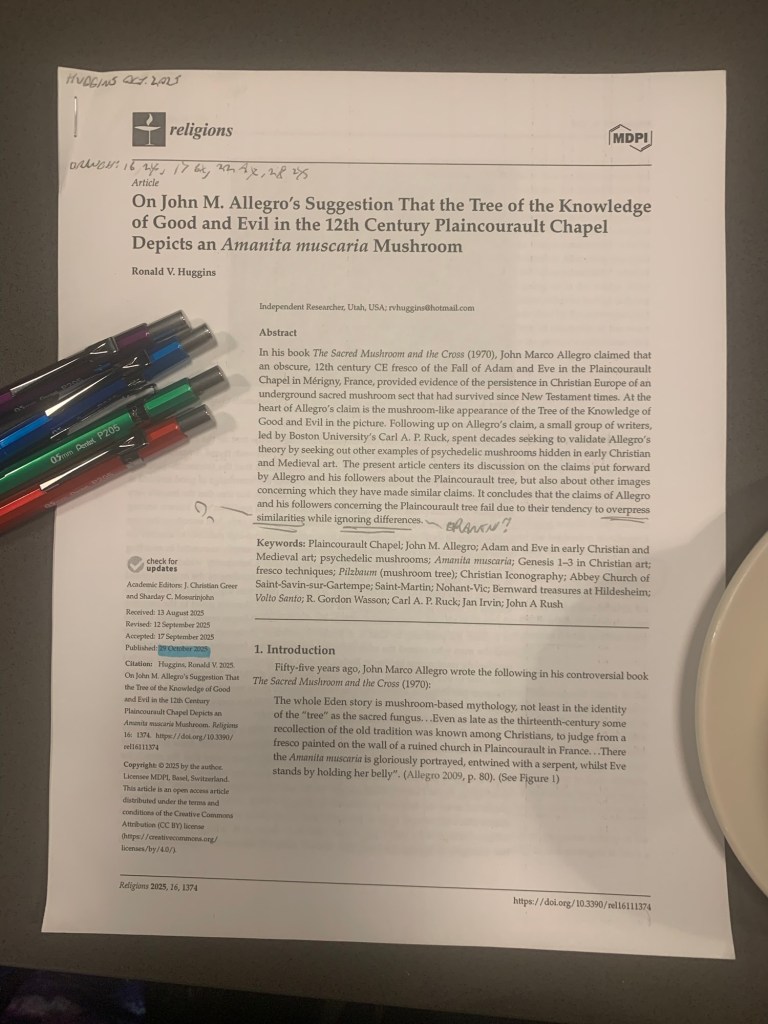
“Her broad interest in the material turn touches on contexts of contemporary (especially conceptual) art; museums; everyday aesthetics; digital contexts (eg. social media; surveillance cultures), and affect.

“Her major line of research continues to be about boredom and spirituality—taking the modern concept of boredom as a spiritual crisis as a heuristic through the late modern context of choice and information overload.

“Professor Mosurinjohn’s research is about contemporary mind-body experience as spiritual and religious experience.

“Her work bridges religious studies, cultural theory, aesthetic philosophy, and media and technology studies.

“Prof. Mosurinjohn’s first book is The Spiritual Significance of Overload Boredom (2022; McGill-Queen’s University Press).

“Her new project explores the concept of entheogenic esotericism in a way that reunites the study of religion, magic, and science in the psychedelic turn.” [didn’t say “re-integrate psychedelics into religion”]

Relevant to new book by Hatsis
https://egodeaththeory.org/2025/04/21/idea-development-page-28/#psychedelic-injustice-how-identity-politics-poisons-the-psychedelic-renaissance-hatsis-june-16-2025

Conference Abstracts (Psychedelics and Monotheistic Traditions:
Sacramental Practice and Legal Recognition
Harvard Law School, March 2025), con’t

Sharday Mosurinjohn,
The Sweetest Taboo: Psychedelics and the Invention of Religious Experiences

“This talk responds to the idea that the ancient Eleusynian Mysteries were psychedelic, as claimed by Carl Ruck and co-authors in The Road to Eleusis (1978), revitalized by Brian Muraresku’s The Immortality Key (2020), and popularized by the Overton window-widening Joe Rogan.

It begins by exposing critical methodological flaws in the arguments, namely, a pattern of presenting claims, followed by mild circumstantial evidence, and then rhetorically solidifying the interpretation of this evidence into a “fact,” on which is built each subsequent round of conjecture.

In The Road To Eleusis, a speculation like “It seems obvious that an hallucinogen must have induced it” (2008: 47) immediately furnishes the next premise “To identify the Eleusynian drug…” (2008: 47) that begins the following paragraph.

I argue that these writers’ dogged pursuit of evidentiary mirages has to do with wanting a western civilizational pedigree to dignify the use of stigmatized drugs.

[Mos. equates – like terrible writers McC & Priest – Muraresku as if TIK is an adequate representative of Euro entheogen scholarship.

Mos. equates European history research in psychedelics with “myopia” b/c not focusing on non-Europeans] [

Succesful strategy:

Focus on European history, and mostly ignore non-European history.

Like how bad Amanita scholarship abuses Psilocybin by only employing Psilocybin as a slave to sing the glory of Amanita; subsuming Psilocybin in service of the Ruck committee’s grand narrative of “Amanita = Europe = mixed wine”.

Use non-European entheogen history, only employ non-European entheogen history in service of the only goal that matters for this Euro Entheogens project.

Pay attention to non-European entheogen history only insofar as it can be used to prop up European entheogen history.

The little, feeble effort to find entheogens in European history was impeded and blocked by the duplicitous Wasson, who had to resort to lies, deception, censorship, and play-acting con-artistry:

Conflict-of-interest Gordon . . . .🔍🧐🤔 Wasson LIES, as the banker for the pope, and falsely says no Psilocybin in Christian history, resorting to duplicity and censorship, Soma p. 180 top, his ellipses in same paragraph as his admonition to”consult art historians”.]

Browns’ expose of the Panofsky two 1952 letters shows what got censored and replaced by . . . . at top of SOMA 1968, page 180:
https://egodeaththeory.org/2025/01/07/panofskys-letters-to-wasson-transcribed/#Sentence-1-6

“If you are interested, I recommend a little book by A. E. Brinckmann, Die Baumdarstellung im Mittelalter (or something like it), where the process is described in detail. Just to show what I mean, I enclose two specimens: a miniature of ca. 990 which shows the inception of the process, viz., the gradual hardening of the pine into a mushroom-like shape, and a glass painting of the thirteenth century, that is to say about a century later than your fresco, which shows an even more emphatic schematization of the mushroom-like crown.
[handwritten:]
Albert Erich Brinckmann
Baumstilisierungen in der mittelalterlichen malerei”
= Tree Stylizations in Medieval Paintings (Brinckmann 1906)

Mosurinjohn con’t:

“This myopia is rooted in colonial violence that precludes seriously relating to the many well-documented Indigenous histories of psychedelics, as well as a sort of functional fixedness that prevents seeing contemporary psychedelic practice in continuity with other, and maybe even older, non-pharmacological methods of changing consciousness.”

[myopic over-focus on alleged indigenous psychedelics history [see Jan Irvin’s new book] precludes seriously relating to the many well-documented mushroom imagery in Christian art & greco-roman.

Your bullsh!t sword cuts both ways. -mh]

“I conclude that, given how the psychedelic hypothesis is fundamentally flawed in its study of antiquity, it is a shaky foundation [SO MAKE IT STRONGER, NOT GIVE UP BEFORE YOU EVEN TRY LEGITLY] on which to build an argument for modern psychedelic use for therapeutic and spiritual practice.”

[1st-generation entheogen scholarship (the Secret Amanita paradigm) is fundamentally flawed in its study of Antiquity. Switch to 2nd-generation entheogen scholarship (the Explicit Psilocybin paradigm).

A naysayer crowd who sucks at building arguments, should not lecture others.

WE HAVEN’T EVEN BEGUN TO LOOK, AS PROVED BY MY recent additional of mushroom imagery in Christian art.

Refusing to discuss the tons of evidence, is foisted here as “there is no evidence”.

Argument from ignorance, like Letcher 2006 only considering 1 evidence, even ignoring the other evidence in the Bernward Door/ column/ chandelier.

Fallacy: premature negative conclusion before we have started to even look – properly per 2nd-generation entheogen scholarship (the Explicit Psilocybin paradigm).

“Let’s stop looking, before we have started looking.”]

“I also report on the multi-year history of the rejection of the manuscript on which this talk is based as it is emblematic of the way popular audiences and scholars fail to communicate around psychedelic history and culture, even as psychedelic bioscience scholarship is at the centre of today’s social mainstreaming.”

  • Your ms. was rejected. Maybe it is nonsensical:
  • You here tell scholars to stop looking for entheogens in European history.
  • And you accuse scholars of failing to communicate re: psychedelic history.

[BUNK, PREJUDICED, AGRESSIVE CRYBABY (CRYBULLY) ARG: “Indigenous entheogens history is well doc’d. Euro entheogen history is not well doc’d, therefore, we should not try to doc Euro entheogen history.“]

Anti-European Prejudice: Europe Is Not Allowed to Have Psychedelic History, because That Oppresses Non-Europeans (per Sharday Mosurinjohn)

Sharday Mosurinjohn Disrespects, Discredits, & Dismisses European Entheogen History Scholarship, Pushes Divisiveness

… Implying that European Entheogen History Scholarship Should Disrespect, Discredit, and Dismiss Non-European Entheogen History

Zero-sum arg: “We should not look for entheogens in Europe/ Mediter. history, b/c that fails to promote entheogens in non-Europe history, and steals credit from Indigenous.”

MOSURINJOHN USES HER OWN IGNORANCE OF EUROPEAN ENTHEOGEN HISTORY TO FALSELY ACCUSE EUROPE HISTORY OF STEALING CREDIT FROM INDIGENOUS.

Mosur takes advantage of two weaknesses of The Immortality Key by Brian Muraresku, 2020:

  • Should focus broadly on all Mystery Religions, not only Eleusis; and sacred meals, “mixed wine”.
  • Should focus broadly on all entheogens eg Lib Cap, not only on ergot.

Muraresku restricts theorizing to ergot in Eleusis & proto Christianity. A weak case results.

Mosur leaps on that weakness to accuse Europe scholarship of fabricating European history of entheogen use.

Thanks for Your Divisive Recommendation, Mosurinjohn, your effort to delete entheogens from history.

F*ck social-suppression narratives! This is the “deletion” effect produced by narrative-driven entheogen scholarship.

In entheogen scholarship, Social-Suppression Narrative = effort to restrict entheogens, thus accommodating & perpetuating Prohibition and ignorance of history.

McPriest’s Presentation (Conf. Abstracts, con’t)

Rev. Hunt Priest,
Claiming a Ministry: Resourcing Christians for Psychedelic Spiritual and Pastoral Care

“With high-quality educational resources and training, Christian congregations could, through existing programs and ministries, support parishioners and the wider community in their psychedelic experiences by providing a safe and non-judgmental space for open discussions and peer support.

“Clergy and layleaders could offer spiritual guidance and integration support, helping individuals make sense of their psychedelic journeys within a Christian context.

“Additionally, churches could explore how the psycho-spiritual insights gained in a psychedelic experience might be integrated into existing Christian practices and beliefs, fostering a more inclusive and expansive approach to spirituality, religion, and mental health.

Yosef Rosen,
Ba’alei Shem as Predecessors for Contemporary Jewish Psychedelic Guidance

Not too long ago, Jewish shamans roamed through Ashkenaz, offering healing and mystical ecstasy.”

“These practitioners were called Ba’alei Shem, masters of the name, because kabbalistic names of God and angels were a core part of their medical craft—written in amulets or chanted over herbs.

“Trained in Kabbalah, bloodletting, herbalism, other pre-modern healing modalities, and magical incantations, they offered a uniquely Jewish style of healing throughout the early-modern period.

“This talk will propose that these figures—with their integration of ecstasy, healing, meditation, and ascent—provide the best historical template for contemporary Jewish psychedelic facilitation.”

[better let Mosurinjohn know about this terrible fabrication and stealing credit from indigenous – Europeans must stop pursuing this mirage, myopically, and put indigenous in the center of focus instead. https://egodeaththeory.org/2025/04/21/idea-development-page-28/#psychedelic-injustice-how-identity-politics-poisons-the-psychedelic-renaissance-hatsis-june-16-2025 ]

“As more Jews search for psychedelic settings that offer healing modalities rooted in Jewish lineage, “Ba’al Shemkeit” offers a model of training and practice for emergent Jewish facilitators.

“Unlike more traditional (theoretical) Kabbalistic models, Ba’al Shemkeit emerges from Practical Kabbalah and is thus better suited to contemporary models of psychedelic facilitation that integrate the earthy, somatic, and curative aspects of existence.”

/ end of: Conference Abstracts (Psychedelics and Monotheistic Traditions:
Sacramental Practice and Legal Recognition
Harvard Law School, March 2025)

“Karina Bashir” (Psychedelics Today podcast) Video

Video title: Karina Bashir
YouTube ch: Psychedelics Today
https://www.youtube.com/watch?v=7vI81OvFWwU

Non-drug entheogens; diminishing actual psychedelics while falsely elevating non-drug, avoidance strategies to the level of “psychedelic”

I strive to be the extreme voice representing “ppl who say entheogens are the only way to access the intense mystic altered state” – I defend that position, against the tired repeated assertion that other ways “can/ could/ might/ may” produce the same effect.  

Has legal ramif.  I reject any diminishment of entheogens (the source of religion) & I reject false elevation of other approaches above, or to the level of, entheogens. Other approaches are lesser.   

1:30 https://www.youtube.com/watch?v=7vI81OvFWwU&t=90s
Harvard Law School conference:
Psychedelics in Monotheistic Traditions: Sacramental Practice and Legal Recognition
March 5-6, 2025:
“interdisciplinary symposium brings together scholars of religion, legal experts, and religious leaders to explore the legal recognition of religious psychedelc use in J, C, and M communities.”

https://www.psychedelicsandreligion.info

harvard+law+school+logo.png
Psychedelics and Monotheistic Traditions – psychedelicsandreligion.info

15:30 https://www.youtube.com/watch?v=7vI81OvFWwU&t=930s
psychedelcs vs. potential of non-drg methods.  The gold standard reference is Psilo; other ways that ppl have accessed the intense mystic altered state are the deviant nonstandard exceptions that are far less reliable and strong and effectual.  Non-drg methods “can/ could/ might/ may” produce same effects as high-dosce Psilo, but are poor and serve as ways of avoiding the experience.  

Joe’s Weak, False Elevation of Breathwork to Steal Credit from Psychedelics: “Breathwork Is a Psychedelic Practice”

17:00 https://www.youtube.com/watch?v=7vI81OvFWwU&t=1020s
“breathwork is a form of psychedelc practice” –  no, it is a misuse of language to construct the notion of “non-drg psychedelcs”. This is a contradiction in terms.  Moves like proposing “non-drg entheogens” is a way of falsely elevating other methods, stealing credit from entheogens to elevate ineffectual attempted alternatives that serve as a way of avoiding the actual transformative experiences that primarily come from entheogens. 

Esotericism in Western Culture: Counter-Normativity and Rejected Knowledge (Wouter Hanegraaff, May 29, 2025)

Esotericism in Western Culture: Counter-Normativity and Rejected Knowledge
May 29, 2025
Wouter Hanegraaff
https://www.amazon.com/Esotericism-Western-Culture-Counter-Normativity-Knowledge/dp/1350459690/

Replaces 2013 book Western Esotericism: A Guide for the Perplexed. 2nd, expanded & revised version.

Blurb:

“This accessible introduction by the world’s leading expert explains why the study of esotericism is not a marginal pursuit but belongs at the center of modern research in the humanities. Reflecting updates in the field since the foundational publication Western Esotericism: A Guide for the Perplexed (2013), Wouter J. Hanegraaff demonstrates that the exclusion of “rejected knowledge” from normative accounts of Western civilization is the reflection of a narrow Eurocentric ideology that became the template for discrediting and ultimately destroying so-called “primitive” cultures associated with “superstition” and “pagan idolatry” during the global colonial age.

Rejecting this “rejection of rejected knowledge” means restoring the suppressed to its legitimate place in history and cultural analysis. Through this approach, Wouter J. Hanegraaff depicts a radically inclusive vision of the Greater West and its forgotten histories, from pagan antiquity through Jewish, Christian, and Islamic cultures up to secular modernity and beyond.”

Before You Trip (Caution Site)

https://beforeyoutrip.org

CPC Healthcare Professionals/Healers meeting report (June 5, 2025)

Signal group post:

CPC Healthcare Professionals/Healers meeting report, June 5, 2025

cpc website = ?? 

Guest presenter: Leo (Leonora) Russell (knows [ppl])

https://entheosociety.net — “Entheo Society – We support the therapeutic, spiritual, and medical right to heal ourselves with entheogens and join together to decriminalize, de-stigmatize, and honor their use.”

https://adapt-wa.org

😱 🚫☸️

https://adaptwabill.org – TRIGGER WARNING for Matthew Johnson (advocate of Naturalism Materialism Scientism): includes Buddha statue. 😱 🚫☸️
https://egodeaththeory.org/2022/12/17/meditation-is-bunk-and-is-pushed-solely-to-eliminate-psychedelics/

The meeting was at X’s place, where they’ve had a series of meetings, usually w/ “therapy/ healthcare providers rather than policy activists”.

It was a lovely ride through the arboretum, to East of … Was able to mobile Zoom book club, Singh’s new Shamanism book. (back-to-back Zoom meeting & in-person meeting)

I made it to the 2nd hour of Leo’s presentation, missed presentation but discussed with [ppl]:

Leo pointed out advantages of legalizing psil rather than simply Repeal of psil Prohibition.

Leveraging 2nd-Generation Entheogen Scholarship (the Explicit Psilocybin Paradigm) for Repeal of Prohibition

In the meeting, I explained:

Entheogen scholarship needs to put aside the question of “What kind of ppl used psil in Medieval Christendom history?”, and instead greedily gather all evidence that Christendom fully included psil.

Evidence-first approach, not driven by (= restricted by) baseless social speculation conjectured narratives that tend to restrict, not expand, the evidence.

Do not allow entheogen history to be co-opted by (Carl Ruck-type) agenda of anti-Christian restrictive narrative that perpetuates & accomodates Prohibition.

Avoid narrative words “secret”, “heretical”, “mainstream”, “tradition”; just give the raw evidence that “Throughout Medieval Christendom, psil was fully used.”

I found more evidence than Ruck, by ignoring speculative narratives of restriction/suppression; by focusing on Psil rather than Amanita; & by avoiding would-be explanatory constructs of “secret” & “tradition”.

“There’s no textual evidence”: false; see “Eucharist” & “the Teacher of Righteousness” and its effects; superior Theory produces maximal evidence.

Inferior theorizing (eg narrative-driven, restrictive presuppositions) restricts the evidence.

Darren Le Baron

I am to contact Darren Le Baron 
mesoamerica Psilocybin history –> reform activism
https://www.darrenlebaron.com

In the meeting:

Discussed rift among conservatives: ignorant prohibitionists, vs informed libertarians.

/ end of Signal group post

Entheogen Scholarship Habitual Narratives of Restricting Mushroom Use in Medieval Christendom

Signal group post:

narrative-driven entheogen scholarship (Carl Ruck school) is funny how it waffles between trying to tell contradictory stories/ constructs: 

“evil elites always restricted the sacrament to themselves” vs. 

“here’s more evidence of the sacrament that was always restricted to underground, suppressed, heretical, closed cults/ groups”.  

So which is it? Which narrative of restriction is correct?

Answer: Drop all restriction narratives. Stop trying to pick out specific, bounded groups of users. Evidence does not support the presupposition that Psilocybin mushrooms were restricted to selected/ specific groups of users.

Drop the construct “groups that had the mushroom”.

Stop obsessing and prioritizing the “all-important, most fundamental question: Which group was the mushroom restricted to?

Evidently, use of the sacrament was broadly spread throughout Christendom (& greco-roman, eg Mixed Wine = Lib Caps). WITH NO DISCERNIBLE RESTRICTION TO ANY PARTICULAR GROUP(S).

/ end of Signal group post

1st-Generation Entheogen Scholars Serve as Gatekeepers to Keep Prohibition in Place Perpetually

Gatekeeper effect: The Carl Ruck school with its defeatist narrative of restriction serves The System of Prohibition as a gatekeeper; enabling Prohibition; accommodating Prohibition perpetually.

The evidence goes against speculations about restirction to any particular group.

The evidence indicates LACK of restriction to any particular group.

There is simply no evidence supporting Browns’ arbitrary adding the word “secret” to the plain word “initiation”.

The “suppression”/”secrecy” narrative converts sheer “initiation” to “secret initiation”, thus propping up Prohibition.

from my comment on my page: https://egodeaththeory.org/2025/03/19/letcher-disproved-1st-gen-entheogen-scholarship-secret-amanita-paradigm-by-using-2nd-gen-explicit-psilocybin-paradigm/comment-page-1/#comment-2932

Listen to the self-contradiction here:

“The prevalence of this psychedelic tradition in a wide variety of texts and artistic media including illuminated manuscripts, bronze castings, and stained glass windows in the high holy places of Christianity shows that this tradition was not suppressed by the early Church, but to the contrary was made available as a secret practice for initiates.” – p. 156, Brown & Brown 2019

WHAT EVIDENCE FOR ADDING YOUR NEEDLESS AND UNJUSTIFIED WORD “SECRET”?

“(b) by arguing that based on the presence of these images in the high holy places of Christianity, these psychedelic traditions were not suppressed by the Church, but were rather maintained for the secret instruction of initiates and possibly for the education of the illiterate masses;” – p. 161, Brown & Brown 2019

WHAT EVIDENCE FOR ADDING YOUR NEEDLESS AND UNJUSTIFIED WORD “SECRET”?

Need a way of writing about the evidence without employing the narrative construction, arbitrary, loaded, presupposition-laden words “tradition” and “secret”. These arbitrary words complicate the situation and reduce and restrict the evidence and the framing we present.

Use simpler, cleaner words that don’t have a lot of contentious baggage attached.

“I experimented with X.” vs. “I used X.”

What do we think we are trying to show, and WHY?!

“evidence for the secret tradition of use of Psilocybin mushrooms”
vs.
“evidence of use of Psilocybin mushrooms”

Are we here to discuss and propose “secret tradition“?
Or, conversely, here to propose and discuss use of Psilocybin mushrooms?

Letcher 2006 disproved 1st-generation entheogen scholarship (the Secret Amanita paradigm) by using a single instance of 2nd-gen entheogen scholarship evidence: a Liberty Cap mushroom-tree explicitly on Bernward Door.

Prejudiced, bad reasoners are using the heavy-handed “secret” construct/ framing/ narrative, to try to appear that they have disproved sheer USE of Psilocybin mushrooms.

Psychedelic Science Conference ’25 (Denver, June 16-20, 2025)

Psychedelic Science Conference ’25
https://www.psychedelicscience.org

Agenda (5 days):
https://www.psychedelicscience.org/agenda?tab.day=20250616#/

Brad Necyk AI muppet movies:
https://www.psychedelicscience.org/agenda?tab.day=20250616&search=%22Brad%20Necyk%22#/
search web: https://www.google.com/search?q=Brad+Necyk+puppet
https://www.bradnecyk.com/psychedelic-puppet-show
https://psychedelicpuppet.show/
https://www.youtube.com/@psychedelicpuppetshow

https://www.lucid.news/psychedelic-science-gathers-community-to-integrate/
Charles Lighthouse, May 21, 2025:

“Thousands of researchers, clinicians, activists, and curious minds will gather in Denver next month for Psychedelic Science 2025: The Integration, a week-long conference exploring the future of psychedelics in medicine, policy, and culture.

Hosted by the Multidisciplinary Association for Psychedelic Studies (MAPS), the event will run from June 16 to 20 at the Colorado Convention Center.

This year’s theme, The Integration, emphasizes

  • The merging of science and spirituality.
  • The merging of traditional wisdom and modern medicine.
  • The merging of research and real-world practice.

“It’s time to unite and integrate the insights, progress, and passion that have defined the psychedelic movement,” said MAPS representatives in a statement.”

Effects of Psilocybin on Religious and Spiritual Attitudes and Behaviors in Clergy from Various Major World Religions (May 30, 2025) – “Religious Leaders Study”

Added nearby entries (above/below) to https://egodeaththeory.org/2025/05/15/moving-past-mysticism-in-psychedelic-science-article-debate-series/

The long-awaited “Religious Leaders Study”.

Effects of Psilocybin on Religious and Spiritual Attitudes and Behaviors in Clergy from Various Major World Religions
Roland R. Griffiths, Robert Jesse, William A. Richards, Matthew W. Johnson, Nathan D. Sepeda, Anthony P. Bossis, Stephen Ross
May 30, 2025
https://www.liebertpub.com/doi/10.1089/psymed.2023.0044
Psychedelic Medicine (journal)

PDF/EPUB

Abstract

Background: 

“Although historical writings, anthropological accounts, and experimental studies document associations between psilocybin use and religion, no prospective experimental study has investigated how the effects of psilocybin are experienced and interpreted by religious clergy.

“This exploratory study evaluated the overall safety and the acute and enduring effects of psilocybin in clergy.

Methods:

“Participants were psychedelic-naïve clergy from various major world religions.

“A randomized, parallel group, waitlist control design was used to assess the effects of two supported psilocybin sessions, with participants receiving 20 and then 20 or 30 mg/70 kg about 1 month later.

“Outcomes were compared between the Immediate Group (n = 13) and the Delayed Group (n = 16) at 6 months after screening using self-report measures.

“The effects of psilocybin were also assessed on session days and 4 and 16 months after the second psilocybin session in the 24 participants who completed both sessions.

Results:

“The primary outcome assessment at 6 months after screening showed that, compared with the delayed control group, participants who had received psilocybin reported significantly greater positive changes in their religious practices, attitudes about their religion, and effectiveness as a religious leader, as well as in their non-religious attitudes, moods, and behavior.

“Follow-up assessments showed that positive changes in religious and non-religious attitudes and behavior were sustained through 16 months after the second psilocybin session.

“At that time, participants rated at least one of their psilocybin experiences to be among the top five most spiritually significant (96%), profoundly sacred (92%), psychologically insightful (83%), and psychologically meaningful (79%) of their lives.

“Furthermore, 42% rated one of their experiences to be the single most profound of their lifetime.

“At 16-months follow-up, most (79%) strongly endorsed that the experiences had positive effects on their religious practices (e.g., prayer or meditation) and their daily sense of the sacred, and most (71%) reported positive changes in  their appreciation of religious traditions other than their own.

“Although no serious adverse events were reported, 46% rated a psilocybin experience as among the top five most psychologically challenging of their lives.

Conclusions:

“In this population of clergy, psilocybin administration was safe and increased multiple domains of overall psychological well-being including positive changes in religious attitudes and behavior as well as their vocation as a religious leader.

“The study was limited by a waitlist control design, homogenous sample, and the use of some unvalidated outcome measures. Further research with more rigorous control conditions and diverse samples is needed.”

/ end Abstract

Web Search for Hopkins/NYU Religious Clergy Study

web search:
“Religious Leaders Study” Hopkins “Psychedelic Medicine” journal
https://www.google.com/search?q=%22Religious+Leaders+Study%22+Hopkins+%22Psychedelic+Medicine%22+journal

Post at X by Psychedelic Alpha, about Religious Clergy Study


Post at X (May 30, 2025) by Psychedelic Alpha:
https://x.com/Psyched_Alpha/status/1928507396067864624

After Controversy, the Psilocybin & Religious Leaders Study Is Finally Published

“After years of anticipation and controversy, Johns Hopkins and NYU have released their research on the effects of psilocybin on religious leaders via a journal article in Psychedelic Medicine.

“The road to publication has been turbulent.

“Earlier this year, the Johns Hopkins Medicine IRB identified “serious non-compliance” in the study’s conduct, including undisclosed conflicts of interest and improper handling of participant data.

“Regardless, a majority of participants have spoken out in favour of publication, defending their agency and the value of their experience.

“Headline findings:

📌 Most rated at least one psilocybin session among the top five most spiritually significant of their lives.

📌 At 16-month follow-up, most reported lasting positive effects on both their religious practices and their daily sense of the sacred.

📌 Nearly half also described the experience as among the top five most psychologically challenging of their lives.

📌 No serious adverse events were reported.”

“The study: https://www.liebertpub.com/doi/10.1089/psymed.2023.0044

/ end of X post

Psychedelics and Spirituality in Light of the Religious Leaders Study (Livestream, June 11, 2025) – Graduate Theological Union in Berkeley

[4:59 pm June 11, 2025] – notes:

Psychedelics and Spirituality in Light of the Religious Leaders Study (Livestream)
https://events.gtu.edu/event/1016144?_eid=661037201279569522088ea4
https://events.gtu.edu/event/gtu.events.1016144

Video title:
Psychedelics and Spirituality in Light of the Religious Leaders Study
June 11, 2025
https://www.youtube.com/live/WwXbPfx1vAI

Wed., June 11, 2025, 5:00 PM – 6:30 PM, PST (Berkeley, CA)

Desc:

“Entanglements between psychedelics and religion are nothing new.

“Such intersections span countless cultures across millennia, presumably ever since humans started gathering to ingest psychoactive plants and fungi.

“This fact has both enchanted and tormented modern researchers who wish to study these substances within the secular frameworks of scientific materialism.

“We now find ourselves at an intriguing moment in the history of psychedelics and religion.

“Nearly a decade ago, a team of scientists from Johns Hopkins and NYU observed the effects of psilocybin on dozens of religious leaders from various traditions.

“The researchers sought to replicate and improve upon the groundbreaking “Good Friday Experiment” of [April 20,] 1962, conducted beneath Howard Thurman’s Marsh Chapel by a Harvard PhD candidate [Walter Pahnke, under Timothy Leary] who sought to measure the impact of psilocybin on local divinity students in a devotional setting.

“Central questions underlying both studies were:

“Given the tendencies of psychedelics to induce “mystical” or “spiritual” states typically associated with religions, what happens when you administer them to seasoned religious practitioners from traditions that do not normally incorporate psychedelics?

“Are these individuals somehow primed for the psycho-spiritual terrain?

“Do psychedelic experiences change their religious identities or outlooks?

“For a variety of reasons, publication of the scientific article from the Hopkins/NYU study was stalled for years.

“Just recently, on May 19th, Michael Pollan published his own article in The New Yorker about the study, its contexts, and its controversies.

“Then, the scientific article finally appeared on May 30th in the journal Psychedelic Medicine.

“During a panel discussion we are hosting at the Graduate Theological Union and via livestream on June 11,

  • Pollan will engage in discussion with
  • Rabbi Zac Kamenetz, who participated in the Hopkins/NYU study;
  • Aidan Seale-Feldman, an anthropologist researching contemporary psychedelic “churches” [eg Sacred Garden Church] with an eye toward secularism;
  • Bia Labate, an anthropologist who has published extensively on Indigenous plant medicine traditions, as well as other marginalized psychedelic cultures; and
  • Michael Silver, a neuroscientist and co-director of the UC Berkeley Center for the Science of Psychedelics.
  • Sam Shonkoff, a scholar of religion at the Graduate Theological Union, will moderate.

“Together, these speakers will shed light on the cultural significance of the Hopkins/NYU study and how its results and reception ought to inform perspectives on psychedelics, religions, and the entanglements between them

“This event is hosted by the GTU with support from the Berkeley Center for the Science of Psychedelics and the Berkeley Center for the Study of Religion.

To learn more about earning a Master of Arts in Psychedelics and Spirituality from the GTU, visit our website. https://www.gtu.edu/academics/ma-program – “The Graduate Theological Union in Berkeley brings together scholars of the world’s diverse religions”

If you find that you are unable to join us in person, you can access the panel discussion via livestream at: youtube.com/@gtuberkeley.

My Notes and Comments About Livestream

video has no timestamp yet; raw stream

33% in: He [Sam Shonkoff?] says the awaited article starts w/ 1902-1975 citations – he points out like Erik Davis:

How come the most recent scholarship cited about defining “mystical experience” is 1975, 50 years ago?!

From start of main article “Effects of Psilocybin on Religious and Spiritual
Attitudes and Behaviors in Clergy from Various Major World Religions”, Roland R. Griffiths et al 2025:

“Mystical experiences are characterized by a range of subjective features including a sense of unity, “noetic” quality (e.g., an authoritative sense of truth), transcendence of time and space, a sense of awe or sacredness, intense positive mood, transiency that nevertheless feels timeless, presence in awareness of mutually exclusive states or concepts, and ineffability.1–8

References

1. James W. The Varieties of Religious Experience: A Study in Human Nature. Longmans Green and Company; 1910. [1902??]

2. Stace WT. Mysticism and philosophy. Philosophy 1960; 37(140).

3. Russell B. Mysticism and Logic and Other Essays. Longmans, Green and Co.: London; 1918.

4. Huxley A. The Perennial Philosophy. 1945. London: Chatto & Windus. 1974.

5. Pahnke WN. Drugs and Mysticism: An Analysis of the Relationship Between Psychedelic Drugs and the Mystical Consciousness: A Thesis. Harvard University; 1963.

6. Maslow AH. Religions, Values, and Peak-Experiences. Ohio State University Press: Columbus; 1964. p. 123.

7. Hood RW. The construction and preliminary validation of a measure of reported mystical experience. J Sci Study Religion 1975; 14(1):29–41.

Citation: https://egodeaththeory.org/2025/05/15/moving-past-mysticism-in-psychedelic-science-article-debate-series/#Effects-of-Psilocybin-on-Religious-and-Spiritual-Attitudes-and-Behaviors-in-Clergy

The long-awaited “Religious Leaders Study”:

Effects of Psilocybin on Religious and Spiritual Attitudes and Behaviors in Clergy from Various Major World Religions
Roland R. Griffiths, Robert Jesse, William A. Richards, Matthew W. Johnson, Nathan D. Sepeda, Anthony P. Bossis, Stephen Ross
May 30, 2025
https://www.liebertpub.com/doi/10.1089/psymed.2023.0044
Psychedelic Medicine (journal)

Panel Speakers

Michael Pollan is a writer, teacher, and activist.

His May 19, 2025 New Yorker article “This Is Your Priest on Drugs” focuses on a study by researchers at Johns Hopkins University and N.Y.U. about religious leaders’ experiences with psilocybin.

Pollan is the author of several highly acclaimed books, including This is Your Mind on PlantsHow to Change Your MindCookedFood RulesIn Defense of FoodThe Omnivore’s Dilemma, and The Botany of Desire, all of which were named New York Times Bestsellers.

In addition, The Omnivore’s Dilemma and How to Change Your Mind were listed among the ten best books of the year by The New York Times.

Pollan teaches writing in the English department at Harvard University, and for many years, served as the Knight Professor of Journalism at UC Berkeley’s Graduate School of Journalism.

Several of his books have been adapted for television, such as series based on How to Change Your Mind (2022) and Cooked (2015) that are streaming on Netflix, and The Botany of Desire and In Defense of Food that premiered on PBS.

From 2022-23 Pollan was a Guggenheim Fellow and in 2010 he was named one of Time Magazine’s 100 most influential people in the world.

Pollan lives in Berkeley with his wife, the painter Judith Belzer.
 
Aidan Seale-Feldman is a medical anthropologist interested in affliction and its treatments who has spent the past decade conducting ethnographic research in the Himalayas.

Based on this research, her forthcoming book, The Work of Disaster: Crisis and Care along a Himalayan Faultline, is an ethnography of mental health governance in Nepal in the aftermath of disaster.

Dr. Seale-Feldman’s current research focuses on the mainstreaming of mysticism in the United States.

Funded by the John Templeton Foundation, her current project, Ethical Substance: Psychedelic Medicine in Times of Social and Spiritual Crisis, is an interdisciplinary study that explores the incorporation of mystical experience in to the lives of secular Americans and their therapeutic practices.

Dr. Seale-Feldman’s work has been published in journals such as Cultural AnthropologyEthosHIMALAYA: The Journal of the Association for Nepal and Himalayan Studies, and the Kennedy Institute of Ethics Journal, and has also been featured in The Microdose. Dr. Seale-Feldman received her PhD in Anthropology from UCLA in 2018. Prior to joining the faculty at the University of Notre Dame, she was a Postdoctoral Research Associate and Lecturer in Bioethics at the University of Virginia.
 
Zac Kamenetz is a rabbi and community leader who is based in Berkeley.

A highly sought-after educator and qualified MBSR instructor, Zac’s work is centered on seeking answers to life’s essential questions within the context of Jewish tradition and embodied spiritual practice.

Zac is the founder and CEO of Shefa, an independent 501(c)(3) organization that was founded in 2020 and is dedicated to supporting Jewish psychedelic explorers in North America and abroad.

Shefa, a word that means “flowing abundance” in Hebrew, is helping to

  • cultivate greater awareness in the Jewish community about the potential rewards and risks of psychedelic use in a variety of settings;
  • advocating for a more culturally competent and religiously inclusive approach to Jewish experience in the psychedelic world; and
  • integrating Jewish spiritual traditions and psychedelic exploration in ethical and authentic ways.

Through these efforts, Zac is pioneering a movement to

  • bring safe and supported psychedelic use into the Jewish spiritual tradition,
  • advocating for individuals and communities to heal inherited trauma, and
  • inspiring a Jewish religious and creative renaissance in the 21st century.

Zac is also

  • a co-founder of the Jewish Psychedelic Summit, is
  • trained in psychedelic-assisted psychotherapeutic care through Inbodied Life, and is
  • certified in psychedelic-assisted psychotherapy by the Hakomi Institute of Northern California.

Bia Labate (Beatriz Caiuby Labate) is an anthropologist, educator, author, speaker, and activist, committed to the protection of sacred plants while amplifying the voices of marginalized communities in the psychedelic science field.

As a queer Brazilian anthropologist based in San Francisco, she has been profoundly influenced by her experiences with ayahuasca since 1996.

Dr. Labate has a Ph.D. in social anthropology from the University of Campinas (UNICAMP) in Brazil.

Her work focuses on plant medicines, drug policy, shamanism, ritual, religion, and social justice.

She is the Executive Director of the Chacruna Institute for Psychedelic Plant Medicines and serves as a Public Education and Culture Specialist at the Multidisciplinary Association for Psychedelic Studies (MAPS).

Additionally, she is a Visiting Scholar at the Graduate Theological Union in Berkeley and an act as advisor for around 15 organizations, among them the Veteran Mental Health Leadership Coalition and the Alaska Entheogenic Awareness Council.

Dr. Labate is also a co-founder of the Interdisciplinary Group for Psychoactive Studies (NEIP) in Brazil and the editor of its site.

She has authored, co-authored, and co-edited 28 books, three special-edition journals, and numerous peer-reviewed and online publications.

Michael A. Silver is a Professor of Optometry and Vision Science and Neuroscience at the University of California, Berkeley.

He has served as the Faculty Director of the UC Berkeley Center for the Science of Psychedelics (BCSP) since its founding in 2020.

His research investigates how the human brain constructs representations of the visual environment and how these representations are modified by cognitive processes such as attention, expectation, and learning.

He addresses these questions by applying a combination of behavioral, neuroimaging, computational, and pharmacological techniques to the study of both healthy human participants as well as patients who suffer from diseases that affect perceptual processing.

Last year, Dr. Silver’s group launched the first ever studies involving administration of psychedelics to human research subjects at UC Berkeley.

Blurb con’t:

UC Berkeley Center for the Science of Psychedelics (BCSP)

Blurb con’t:

“In the BCSP’s first five years, it has

  • created a widely read newsletter on psychedelics (The Microdose),
  • conducted and disseminated results from the UC Berkeley Psychedelics Public Perception Survey,
  • launched an award-winning podcast (Altered States),
  • developed a free online course (Psychedelics and the Mind),
  • incubated the BCSP Certificate Program in Psychedelic Facilitation, and
  • supported fellows in the following programs:
  • Ferriss – UC Berkeley Journalism Fellows,
  • Psychedelics in Society and Culture,
  • Indigenous Student Research Fellows, and
  • Mycoskie-UC Berkeley Social Media Fellows and
  • Psychedelic Documentary Fellows.

Panel Speakers, con’t

Sam Shonkoff is the Taube Family Assistant Professor of Jewish Studies at the GTU, where he teaches on Jewish religious thought and methods in the study of religion.

“His scholarship focuses primarily on German-Jewish and Hasidic theologies, as well as integrations of Hasidic spirituality in relatively secular spheres.

Dr. Shonkoff invites students and readers to examine how perspectives on the very fabric of reality are always morphing through interpretive acts, and how these practices are always mutating in the protean habitats of history.

He takes an interdisciplinary approach to building bridges across historical, theological, and cultural studies and his commitment to mentoring, public engagement, and expanding interreligious dialogue strengthens the GTU’s significance as a hub for innovative and inclusive theological scholarship.

Dr. Shonkoff is co-editor with Ariel Evan Mayse of Hasidism: Writings on Devotion, Community and Life in the Modern World (Brandeis University Press, 2020) and the editor of Martin Buber: His Intellectual and Scholarly Legacy (Brill, 2018).

His current research project investigates themes of embodiment in Buber’s representations of Hasidism vis-à-vis the original sources.

He earned his PhD with distinction in 2018 from the University of Chicago Divinity School and his MA in 2011 from the University of Toronto, and graduated magna cum laude from Brown University in 2007.”

/ end of info page about livestream event

Livestream Chat

Graduate Theological Union – ​​Thank you all for joining us for Psychedelics and Spirituality in Light of the Religious Leaders Study! The panel will begin shortly.

Michael Hoffman – ok

Jaime Clark-Soles – ​​👍

Michael Hoffman – ​​lots of chatter, for a single person looking at phone

Graduate Theological Union – ​​We have about 110 folks who registered to join us on campus today!

Michael Hoffman – ​​🎉

Michael Hoffman – ​​hey that’s Clif

Paul Houston Blankenship – ​​that’s wonderful!

Julio A – ​​Good to see Cliff

Julio A – ​​and Phil

Graduate Theological Union – ​​Thank you for bearing with us on the delays, everyone!

Michael Hoffman – ​​I imagine the interest in academia is greater than openly expressed, among many departments

Michael Hoffman – ​​article title: Effects of Psilocybin on Religious and Spiritual Attitudes and Behaviors in Clergy from Various Major World Religions (May 30, 2025) – the “Religious Leaders Study”

Michael Hoffman – ​​before 1902 Wm James was 1893 Swami Vivekananda, who defined mystical experience as positive unity, and met w/ James – historical root of the debatable def’n

Michael Hoffman – ​​Elaine Pagels’ first 3 books show vying against each other in early Christianity, “orthodox”/ literalist vs. “gnostic”/ experiential. so, can trace this tension through history

Graduate Theological Union – Thank you for all of the contextual points, Michael!

Graduate Theological Union – Please feel free to share any questions you have in this chat. We will share them with the folks in Berkeley in hopes that the panel can respond to them during the Q&A.

Michael Hoffman – ​​Question: Will Hood’s Mysticism Scale, the Mystical Experience Questionnaire (MEQ), & the Challenging Experience Questionnaire (CEQ) be replaced by a more balanced and complete model of mystical experience?

Michael Hoffman – ​​For example, Ann Taves, Erik Davis, and Charles Stang have questioned the 1960 Walter Stace “positive unity” model of mystical experience.

[Bia Labate said “overly biased on positive”]

Michael Hoffman – ​​Best list of negative/ challenging experiences is Dittrich’s 1994 version of OAV questionnaire: the A/”Angst/ Dread” dimension listing 21 effects eg item 54: “I was afraid to lose my self-control.”

[panelists said “Michael’s article”]

Michael Hoffman – ​​article: This Is Your Priest on Drugs (Michael Pollan, May 19, 2025, New Yorker)

/ end of livestream chat

Email from Jennifer Ruppert re: Michael Pollan re: Replacing MEQ, from Livestream on Religious Leaders Study

Jen Ruppert, Chief External Affairs Officer, Graduate Theological Union wrote:

Hi Michael,

Thank you for tuning into the livestream of our Psychedelics and Spirituality in Light of the Religious Leaders Study event last night.

I am sorry we never got to the Q+A portion of the program so we couldn’t share your question with the panel.

You asked:

Will Hood’s Mysticism Scale, the Mystical Experience Questionnaire (MEQ), & the Challenging Experience Questionnaire (CEQ) be replaced by a more balanced and complete model of mystical experience? For example, Ann Taves, Erik Davis, and Charles Stang have questioned the 1960 Walter Stace “positive unity” model of mystical experience.

I was able to run this past Michael Pollan who said:

Yes, absolutely. People are already working on this.

While I suspect you were seeking a more in-depth response, we are hoping it will be possible to hold a “part 2” event on this same topic to explore additional themes and ensure that attendees can ask questions.

We will let you know if and when that happens.

We greatly appreciate your interest in this topic and thank you for participating in our event!

Sincerely,

Jen

Jen Ruppert 
Chief External Affairs Officer
Graduate Theological Union 
2400 Ridge Road, Berkeley, CA 94709

gtu.edu 

My Reply Friday the 13th of June, 2025 to Jennifer Ruppert

Hi Jennifer,

Great, thanks.  

Many ppl are interested in this field, yet also, livestreams sometimes have almost no viewers or posts in the livestream chat.  In my own specialty in the field (eg mushroom imagery in Christian art), the field often feels deserted.  Ppl might not want to post publicly, due to Prohibition.  

I worried that my question was extreme and punchy, because of the condensed chat format (I like how chat forces tight posts).

Good to hear Pollan’s response.  His book p. 283 (“experienced eternity”) says Mystical Experience Questionnaire (MEQ) is so misrepresentative, he had to answer “N/A”, because he did strongly experience the “timeless” effect, but it was challenging/ unpleasant, instead of mystical/ pleasant (a false dichotomy at the root of the field). 

Pollan, whistleblowers, Matthew “lose the Buddha statue” Johnson: but in this debate, the root problem is the mis-defined, misconceived word “mystical”/”mysticism”:

at-war-with-the-mystics.jpg
Moving Past Mysticism in Psychedelic Science (Article Debate Series)egodeaththeory.org

My equivalent of the Challenging Experience Questionnaire (CEQ) but without its mistakes during its construction:

img_0047.jpg
ECQ – “Eternalism and Control Questionnaire” (Hoffman 2022)egodeaththeory.org

— Michael Hoffman, Egodeath.com, member of Sacred Garden Church

Sacred Garden Community Churchsacredgarden.life

Expanded States of Consciousness Mega Summit (June 17–26, 2025)

https://www.expandedstatesworldsummit.com
June 17–26, 2025
Daily videos of presentations.

  • Ken Wilber – Philosopher, Visionary, Integral Theorist, Founder of the Integral Institute [todo: quote by Christian debunker of psychedelic pseudo science, from Integral site: “We are the superior evolved people”]
  • Matthew “Lose the Buddha Statue” Johnson
  • Christopher Timmermann (neuropseudoscience, associate of Chris Letheby = Phil Dept discovers psychedelics)
  • Stan Grof
  • John Vervaeke – Cognitive Scientist
  • etc.

Video: DMT Isn’t Enlightenment… It’s Something Else | Dr. Rick Strassman [YMTP]

Moved content from below to new page: https://egodeaththeory.org/2025/06/06/dmt-isnt-enlightenment-its-something-else-biblical-rick-strassman/

Other Videos Where They Might Have Said “Want More Coverage of Threat”

Alcoholics Anonymous: Another Lying, Psychedelics-Diminishing Religion

AA founder Bill Wilson was inspired by Belladonna (scopalamine) and advocated LSD to break addiction. So it is odd to say AA is “against psychedelics”.

AA’s history follows a common pattern in religions: the original (& ongoing) inspiration = largely psychedelics, then later, deny that inspiration and compete against psychedelics and diminish and disparage them.

VR Matches Psychedelics According to the Poor, Weak, Beginners Model of Mystical Experience

Video title:
David Glowacki – scientist, artist, cultural theorist
YouTube channel: Psychedelics Today
Streamed live 5 hours ago [May 30, 2025]
https://www.youtube.com/watch?v=R05TqGsHpfg

Desc:
“Join us to learn about VR, MEQ, psychedelics and much more!”

My Comment 1

https://www.youtube.com/watch?v=R05TqGsHpfg&t=1834s = 30:34 —

Beginner visuals phenomenology in VR goggles only has to be compelling enough to match the Mystical Experience Questionnaire (MEQ) & Mysticism Scale, which are based on a half-baked, skewed, whitewashed, “positive-balanced” model of alleged “mystical experience” based on Swami Vivekananda 1893, William James 1902, & Walter Stace 1960.  

The 1893 trojan-horse agenda of the “positive unity experience” model of mystical experience was to create international political unity, giving a denatured, reductionist, narrowed model of mystical experience. 

That model falsely excludes challenging experiences from mystical experience, per a “positive-balanced” model, as Roland Griffiths told Charles Stang, as a euphemism for a false, half-complete model of mystical experience. 

That model equates positive unity (nondual unity oneness boundary-suspension) with mystical experience, and omits any “divine Wrath, demon, monster, threat, guarded gate, fire, puppet, non-control, loss of control, control instability, or sacrifice-idea” type of mystical experiences, where much or most of the transformative, significant dynamics are at.

/ end of video comment

My Comment 2 [comment not posted yet]

https://www.youtube.com/watch?v=R05TqGsHpfg&t=1900s = 31:40 —

“Against psychedelics advocates, there are other ways for doing this”: vague; the altered-state effects are specified too weakly, such that any feeble effects are conflated with the full classic Psilocybin transformation effects. 

A “complete authentic mystical experience” then is reduced to merely perceptual distortion or mere “positive unity” sensation, ie the cessation of the self/other boundary construction.  

VR goggles can produce perceptual distortion and some beginner positive unity (nondual unity oneness boundary-suspension).  

But the full criteria or goal for mystical experience includes transformation of the mental model of time, self, and control; mental model transformation of “control steering in world”.

By that criteria, alleged non-drug meditation and non-drug methods of the mystics fail to meet the stringent criteria defined and delivered by  psychedelics.

Being merely dizzy doesn’t meet the meaningful criteria.

Non-drug meditation can produce some effects, but not the main effect of full mental model experiential transformation.

The Term ‘Pneumadelic’

[potential comment, not posted]

https://www.youtube.com/watch?v=R05TqGsHpfg&t=1900s = 31:40 —

David Glowaki defines ‘pneumadelic’, oddly, as less than psychedelic.

https://egodeaththeory.org/2025/04/04/idea-development-page-27/#acid-tragedy-unfortunately-psychedelic-means-merely-psyche-not-spirit-revealing-ie-psychedelics-are-not-pneumadelics-856-am-apr-19-2025-only-exposes-the-enslavement-imprisonment-in-block-universe-eternalism

I coined & posted the descriptor ‘pneumadelic’ on April 19, 2025, to mean: more developed than psychedelic, based on the Late Antiquity model: 

hylic body; psyche soul; then pneuma spirit.  

Psyche-delic merely reaches heimarmene/ Fatedness/ eternalism; end up imprisoned, trapped, and enslaved in block time, per Classical Antiquity (before 150 AD).

Then Pneuma-delic brings the person’s spirit to above sphere of the fixed stars; partly transcending heimarmene/ Fate/ eternalism, escaping the cosmic rock. Redeemed, saved, rescued, emancipated, per Late Antiquity  (150+ AD).

Respect Both Possibilism & Eternalism; Mature Hybrid Mental Model = Integrated Possibilism/ Eternalism Thinking

Gnosticism plays with “demonize Psilocybin-revealed eternalism, to put all value on phase 3: transcend eternalism.” See my summary in book review of 2013 book Nicola Denzy Lewis: Under Pitiless Skies. https://egodeaththeory.org/?s=%22Nicola+Denzy+Lewis%22

Book Review: Cosmology and Fate in Gnosticism and Graeco-Roman Antiquity: Under Pitiless Skies (Lewis 2013)

“Cosmology and Fate in Gnosticism and Graeco-Roman Antiquity: Under Pitiless Skies (Nag Hammadi and Manichaean Studies, 81)
by Nicola Denzey Lewis, 2013
https://www.amazon.com/Cosmology-Fate-Gnosticism-Graeco-Roman-Antiquity/dp/9004245480/

5 of 5 stars
Lone review by Michael Hoffman
https://www.amazon.com/gp/customer-reviews/RO5N2HMBGSY1O/
Reviewed November 12, 2014
Title of review:
You are ignorant slaves of fate; we have been released from fate

I had my university library order this book in hardcover and electronic form.

People in Mediterranean antiquity including Jews, Pagans, Gnostics, and Christians, around the 1st Century, believed in fatedness. Then around the 2nd Century, people adopted a rhetoric of transcending fatedness, while disparaging other people or the other groups as being ignorant and being slaves to fate. This book supports the 3-tiered systematic analysis in my Egodeath theory, in which we move through three stages during initiation experiences:

1. Ignorant freewill thinking.

2. Enlightened realization of fatedness and personal noncontrol. This stage disparages stage 1 (ignorant freewill thinking).

3. Transcending fatedness to gain a transcendent freedom. This stage conflates and disparages stage 1 (ignorant freewill thinking) and stage 2 (realization of fatedness and personal noncontrol).

Lewis’ analysis is not as systematic, but supports this explanation of how stage 2 was first positively valued and then later was negatively valued.

Lewis shows that competition and rhetoric inflation led all the groups (Jews, pagans, Christians, gnostics) to praise themselves as having true freedom and disparage the other people as being both ignorant (per stage 1) and slaves of fate (as realized in stage 2). People didn’t complain of themselves being enslaved by fate; they disparaged other people as being ignorant and enslaved by fate. However, during initiation, as I have analyzed, the experience of fatedness and personal noncontrol give rise to panic and egodeath, which amounts to suffering enslavement by fate.

Lewis misses this point and understates the intensity of ancient experience of enslavement to fate; she argues that enslavement to fate was mere rhetoric, but in fact enslavement to fate was intense peak experiencing. Lewis’ theory is literary scholarship unplugged from intense, lightning-bolt, ancient experiential transformation of consciousness. Once this connection is made, from initiation experience to the encounter with fatedness, Lewis’ book can be corrected and recognized as relevant to explaining the heart of religious origins in antiquity.

Introduction
Chapter 1: Were the Gnostics Cosmic Pessimists?
Chapter 2: Nag Hammadi and the Providential Cosmos
Chapter 3: ‘This Body of Death’: Cosmic Malevolence and Enslavement to Sin in Pauline Exegesis
Chapter 4: ‘Heimarmene’ at Nag Hammadi: ‘The Apocryphon of John’ and ‘On the Origin of the World’
Chapter 5: Middle Platonism, Heimarmene, and the Corpus Hermeticum
Chapter 6: Ways Out I: Interventions of the Savior God
Chapter 7: Ways Out II: Baptism and Cosmic Freedom: A New Genesis
Chapter 8: Astral Determinism in the Gospel of Judas
Chapter 9: Conclusions, and a New Way Forward
Selected Bibliography
Subject Index

— Michael Hoffman, the Egodeath theorist

/ end of review

Don’t demonize possibilism, don’t demonize eternalism; keep balanced and respectful toward both mental models, esp. integrating them while differentiating them.

  1. Develop possibilism-thinking – that’s good.
  2. Learn eternalism-thinking — that’s good.
  3. Develop integrated possibilism/eternalism thinking – that’s good.
  • Learn naive possibilism-thinking.
  • Learn basic heimarmene (eternalism).
  • Learn transcend heimarmene.
  • Learn qualified possibilism-thinking.
  • Learn integrated possibilism/eternalism thinking.

Avoid attitude pattern:

2-phase, Classical Antiquity pattern to avoid:

  1. Start with possibilism.
  2. Get rid of possibilism; demonize it; affirm eternalism instead.

3-phase, Late Antiquity pattern to avoid:

  1. Start with possibilism.
  2. Get rid of possibilism; demonize it; affirm eternalism instead.
  3. Get rid of eternalism; demonize it; affirm possibilism instead.

basic possibilism-thinking
qualified possibilism-thinking
transcendent possibilism-thinking

basic eternalism-thinking
qualified eternalism-thinking
transcendent eternalism-thinking

integrated possibilism/eternalism thinking

Criteria for Altered-State Technologies

https://www.youtube.com/watch?v=R05TqGsHpfg&t=3880s = 1:04:40 —

“Ask: The right question to ask is not which technology is better, but rather:

“Which of these technologies is able to simulate the other ones?”

  1. Can a VR headset or non-drug meditation simulate the visual-distortion effects of Psilocybin?
  2. Can a VR headset or non-drug meditation simulate the beginner positive unity sensation of Psilocybin? ie cessation of mental construction of the self-other boundary; moving or suspending this cognitive experience.
  3. Can a VR headset or non-drug meditation simulate the ultimate transformation effect of Psilocybin? ie mental model transformation from possibilism to eternalism; of the mental model of control, time, and possibility branching.

David Glowacki Is Friends with Chris Timmermann

https://egodeaththeory.org/2023/03/10/mbq-metaphysical-beliefs-questionnaire-timmermann-letheby-2021/#Link-Citation

Reversible Tauroctony, {blood}, {snake} 3x, {right foot touches right trunk}

Crop by Michael Hoffman. Instead of snake licking bull’s blood, snake is in tree, seen. Blood is the snake’s destiny brought, producing fertile wheat-tail in heimarmene (eternalism) fixed stars in billowing cape of Liberty Cap state of loose cognition.

In this tauroctony, instead of snake licking bull’s blood, snake is in tree, seen.
https://egodeaththeory.org/2025/05/22/reversible-tauroctony-mithraism-bull-sacrifice-scene/

Standard tauroctony: two snakes:

  • Snake under the bull: The worldline leads to ingesting Liberty Cap mixed wine, krater, wine mixing bowl that heals.
  • Snake at the bull’s shoulder POWER MUSCLE: The worldline leads to {blood} vision of realization of helpless 2-level, dependent control that could be made to have control violation and cause harm.

{bull’s shoulder} both in the mini scene and in the main scene, {blood} at bull’s shoulder = personal control power to steer in tree of branching possibilities.

Crop by Michael Hoffman, April 25, 2025

Mithras’s L foot does not touch R trunk of tree
Sol’s R foot touches R trunk of tree

11:27 May 29, 2025: Sol’s R foot almost touches trunk, it is where the bull sees snake. R side of bottom of tree trunk = snake = see worldline in frozen block-universe eternalism; see 2-level, dependent control.

Snake = R side of tree; billowing cape (the eternalism state of consciousness) = non-branching/ worldline in frozen spacetime block.

frozen spacetime block
fsb

4D spacetime block
fdsb

4D spacetime
fds

todo: study symmetries in L side & R side, near {threaten with arrow at rock}.

Crop by Michael Hoffman

Helps explain why Sol kneels wrong orientation, why L foot is forward against the {kneel} motif.

This can be a clue to help interp decode {kneel} w/ both feet bent, not standing w/ straight legs.

copied 3 new crops to Tauroctony page:

Crop by Michael Hoffman
“Tauroctony snake tree crowns Sol.jpg” 19 KB 11:38 May 29, 2025
Crop by Michael Hoffman
“Tauroctony weild shoulder.jpg” 28 KB 11:36 May 29, 2025
Crop by Michael Hoffman
“Tauroctony zodiac arch threat arrow upper row.jpg” 106 KB 12:02 May 29, 2025

Mytheme Decoding: {fall down and worship the god}

To fall down and worship = to acknowledge “you have greater power than me, power to make me think {blood} and harm; pls do not harm me.”

Phase 1: Inventory the motifs and handedness.
Phase 2: Interpret the motifs and use of handedness.

Only sometimes is it the case that to inventory = to interpret. Should differentiate these, because:

  • It is difficult to inventory motifs.
  • It is difficult to interpret motifs after inventory them.

ie, when I inventory Features (motifs), I am NOT thereby doing interpretation and bragging that ever motif proves the Mytheme theory.

On L,

  • Mithras = altered state billowing cloth,
  • Mithras stand on right foot.
  • Sol is wearing robe (mental model).
  • Sol: stand on left foot (slightly).
  • Crown touches Sol’s head.
  • Mithras’ cap touches R side of tree.
  • Sol’s L arm touches L side of tree.

On R,

  • Mithras = ordinary state, not billow cloth,
  • Mithras: stand on left foot (bad)
  • Sol has no outer robe (mental model). (good)
  • Sol has L foot forward. (bad)
  • Sol: stand on right foot. (good)
  • Crown doesn’t touch Sol’s head. Mithras controls the bull’s shoulder, so Sol is not in control.

The tree of the knowledge of good and bad (ie, of cybernetic eternalism and cybernetic possibilism).

The tree and snake of the knowledge of cybernetic eternalism and cybernetic possibilism.

Every Liberty Cap in Great Canterbury Psalter has
a L arm/fruit and a R arm/fruit, =
good and evil, =
good and bad, =
possibilism-thinking & eternalism-thinking =
monolithic, autonomous control (in branching world) vs. 2-level, dependent control (in non-branching world).

Crop and annotations by Michael Hoffman, Jan. 30, 2025

Mithras says by insert blade in blood, I control your source of control power and can make you cause harm, and I remove branching possibilities appearance, undermining your power; personal control system. monolithic control-agent. monolithic, autonomous control, steering in tree.

Vision of {blood} is destined in the worldline, at the point where bull’s power is overpowered by Mithras.

Outcome/ benefit/ boon: Sol becomes an authorized steersman.

Sol is made aware of being helpless puppet of Mithras, after Mithras brings Sol to the banquet of Liberty Cap mixed wine over the dead bull, sacrificed bull and bull’s blood that gives new life & authorized steersmanship/ control agency aware of 2-level, dependent control.

Blood is the snake’s destiny brought, producing fertile wheat-tail in heimarmene (eternalism) fixed stars in billowing cape of Liberty Cap state of loose cognition.

Literal Blood (Fails to Give Transcendent Knowledge) vs. Mythic-Realm Comprehension of {blood} Mytheme (Gives Transcendent Knowledge)

Relying on literal blood sacrifice fails to give Transcendent Knowledge, and causes harm.

Relying on comprehending {blood} analogy gives Transcendent Knowledge, without causing harm.

To rescue the mystic unharmed, giving Transcendent Knowledge without causing any harm, requires comprehending the analogies of {blood}, not literal magical-thinking literal {blood} that saves and rescues.

Vision of {blood} can be part of loss of control during peak window of intense mystic altered state. The person can be struck down and harmed, or, the person can receive the message transcendent message from the angel of God:

“Do not lay a hand on the boy. Do not do anything to him. Now I know that you fear God, because you have not withheld from me your son, your only son. Because you have done this and have not withheld your only son, I will surely bless you and make your descendants as numerous as the stars in the sky. Through your offspring all nations on earth will be blessed, because you have obeyed me.”

{obey God’s commands} = the mind’s personal control system is made to recognize 2-level, dependent control.

The person is made to see that they could be made to do harm, = {blood}, but is given instead the comprehension of {blood} idea via analogy, as fulfillment of expression of 2-level, dependent control. via comprehending analogy, it is finished: the mind is brought into mature alignment with revealed, 2-level, dependent control, mitigating or complementing monolithic, autonomous control (possibilism-thinking).

Do not lay a hand on the boy. Do not do anything to him. Now I know that you fear God, because you have not withheld from me your son, your only son. Because you have done this and have not withheld your only son, I will surely bless you and make your descendants as numerous as the stars in the sky. Through your offspring all nations on earth will be blessed, because you have obeyed me.

Genesis 22:12-18, the angel of the Lord telling Abraham what the Lord says; https://www.biblegateway.com/passage/?search=gen%2022%3A12-18&version=NIV

“The fire and wood are here,” Isaac said, “but where is the lamb for the burnt offering?” Abraham answered, “God himself will provide the lamb for the burnt offering.” Then he reached out his hand and took the knife to slay his son. But the angel of the Lord called out to him from heaven, “Abraham! Do not lay a hand on the boy. Do not do anything to him. Now I know that you fear God, because you have not withheld from me your son, your only son.

Abraham looked up and there in a thicket he saw a ram caught by its horns. He went over and took the ram and sacrificed it as a burnt offering instead of his son.

And to this day it is said, “On the mountain of the Lord it will be provided.

“I swear by myself, declares the Lord, that because you have done this [what, killed a ram? killed Isaac? almost killed Isaac? killed his offspring in some way?] and have not withheld your only son, I will surely bless you and make your descendants as numerous as the stars in the sky. Through your offspring all nations on earth will be blessed, because you have obeyed me.

— Gen 22:7-18
https://www.biblegateway.com/passage/?search=gen%2022%3A7-18&version=NIV

Finally I can employ Cyberdisciple’s translation of Cain & Abel panel in Great Canterbury Psalter.

Grain offering can’t represent control violation and restabilization; loss of control is represented by {blood} not by “grain”.

Especially, specifically: blood of the ram caught in the thicket by its horns.

Notable silence: The angel does not tell Abraham to sacrifice the ram.

Not just the blood of any man; the blood of son (prince) of God (ruler); Jesus is king hung from tree branch.

These are mythically meaningful blood sacrifice ideas/ instances/ analogies. It’s all about comprehension …. effective blood sacrifice, blood as cybernetic violation/ transcendence, is a matter of analogy comprehension, NOT literal blood magical thinking literalism.

Literal, ineffective: literal blood sacrifice of a random sheep or of a man.

Effective for salvation and avoiding harm while receiving Transcendent Knowledge: comprehending analogy of blood.

Experiencing threat and “I don’t understand” = please explain the analogy:

The mystic peak mind can be made to cybernetic control instability = {blood}, but receive message idea concept analogy comprehension from messenger of control-levels:

“Do not lay a hand on the boy.

Do not do anything to him.

Now I know that you fear God, because you have not withheld from me your son, your only son.

“Because you have done this and have not withheld your only son, I will surely bless you and make your descendants as numerous as the stars in the sky.

Through your offspring all nations on earth will be blessed, because you have obeyed me.”

To {obey God’s commands} = you have been made to perceive 2-level, dependent control. Like Balaam says after passing through the angel of death gate on the vine yard non-branching path:

All the words I say are given to me by God, the higher controller above the local personal control agent.

Rather than the initial {robe} (mental model of control, time, and possibility branching).

Messenger of control-levels:

  • Hermes.
  • angel of the Lord
  • raven psychopomp, in Mithraism.

Raise a sheep or a goat or a bovine, in order to use its blood as substitute for one’s own harmful control violation {blood}.

To show that blood to higher thinking, as a lightning rod, as comprehension of levels of control, and non-control.

Not just any sacrifice (eg grain, lamb); specifically blood and fire sacrifice of the ram caught in the thicket by its horns.

And especially the message, the idea, from the angel:

appease apotropaic wrath in intense mystic altered state, gain non-harm, peace, harmony, good relationship of 2-level, dependent control.

Hand Shapes: R Hand = YI = Eternalism; L Hand = IY = Possibilism

f11 row 4 right: Cain and Abel sacrifice ram and grain

Crop by Michael Hoffman, Jan. 4, 2025

Features:

  • God approves Lamb via R hand making YI form; straight fingers held together on L, non-branching thumb on R.
  • God’s L hand does not show awareness of Y vs I, branching vs non-branching — touching grain. Grain offering = no comprehension of non-branching; only of branching.

{sacrifice a lamb} somewhat stands on its own (instead of you being made to loss of control and harm = blood, God provides idea of sacr animal instead), but after the sacrifice of Isaac, also must see each sacr’l lamb as meaning, specifically, “God provided a ram caught in a thicket by its horns“. – which has stronger cybernetic comprehension.

[8:12 pm May 27, 2025] f134 row 1 M: red guy on right brought by angel is same as hanging in tree.

  • When brought by angel, he displays The Shape w/ L hand.
  • When hanging, he displays The Shape w/ R hand.

Angel’s L wing has like 4 fingers (blue lines) and thumb.

Today, building on past few days of reflection on decoding The Hand Shape (roots go back some years), proposed that:

Regardless of perspective, R hand is read as YI form (the preferred/ favored form, over L hand = IY form).

Branching vs. non-branching is ALWAYS significant.

Handedness is significant 50% of the time in such art (“such art” = more broadly than the medieval art genre of {mushroom-trees} strictly speaking).

f134 Row 1 Middle: Hand Shapes
Crop by Michael Hoffman. f134 Row 1 M

Passover, {pass over}, {blood}, threat, deliverance from enslavement and death, lightning rod, bloody threat then peace – Exodus 12

{blood} = life = cybernetic levels relationship control stability limitations and switch of modes and mental models that are an inherent dynamic birth death rebirth limit-violation transformation-causing maturation of integrating a 2nd mental model from loose cognitive state

{blood} = threatened personal control system, control violation, control cancellation/limitation climax and adding a 2nd control level outside under rock substrate worldline frozen.

receive idea of idea of blood as control violation threatening to death while lifting up the experiential mode from possibilism to eternalism mode, causing death and stability limit of control for operational boundary maturation

the maturation rebirth transformation into the mature form that bows and stands, fear of the wrath of the gate guard tree of that fruit you ate, Transcendent Knowledge is the fruit; knowleddge

the snake in the tree claims that higher knowledge is about tree vs. snake, the fruit of the tree is konwledge of stable and unstable, tree and snake, possibilism-thinking and eternalism-thinking / experiential mode.

the time aspect: eternalism
the control aspect: cybernetic

cybernetic eternalism

the Cybernetic Theory of Ego Transcendence

the Cybernetic Eternalism Theory of Ego Transcendence

literalist ordinary-state possibilism with autonomous control

analogical psychedelic eternalism with dependent control

psychedelic = loose cognition

ordinary state = tight cognition

if i could only have 1 word, eternalism (not cybernetic modifier).

the Egodeath theory of psychedelic eternalism

the Cybernetic Theory of Ego Transcendence

Curt Jaimungal trying to get Doug Hofstadter on the show Consciousness & Science.

change from mental model: mental model of time, self, and control
from

monolithic, autonomous control in branching possibilities into open future

2-level, dependent control worldline block-universe eternalism with extremely closed future

Spectrum of Determinism Models

  1. determinism; causal determinism; determinism that’s always defined as domino-chain causality across time. Retains egoic thinking, the egoic personal control system with minimal & hidden impact. Similar to freewill thinking; shares/ retains much of same network of concepts. Bromhall calls this “causal determinism”.
  2. deterministic manyworlds; deterministic branching manyworlds; Everett Quantum Physics. Sustains egoic personal control system steering in branching possibilities.
  3. superdeterminism – the mode of reasoning of determinism (domino-chain causality), amplified and broadened to include the decision about which measurement to make (similar to my adding a focus on Cybernetics to the topic of Eternalism and models of time).
  4. Strong Determinism article by Eddy Chen, Apr 2024.
  5. Wm James 1897 article The Dilemma of Determinism tries to make domino-chain causality (future is weakly closed/ inevitable) produce block-universe eternalism (future is strongly closed/pre-existing), as Kyle Bromhall article points out: An Inchoate Universe: James’s Probabilistic Underdeterminism (2018).
  6. logical determinism – McTaggert: A series & B series; arg’n in terms of truth value of statements about future states. 1908 article The Unreality of Time. Bromhall calls this “logical determinism” as opposed to “causal determinism”.
  7. the all-at-once universe
    The “All At Once” Universe Shatters Our View of Time (Emily Adlam)
  8. eternalism – the future is real, the future exists. Minkowski 4D spacetime block universe. Philosophy of time. presentism vs. eternalism. Source/ Pege, unity. Omits considerations/ discussion of control transformation; personal control system aspects. Gets sidetracked into wrong contrast, metaphysics-based: Presentism vs. Eternalism; ought to focus on control-contrast in Possibilism vs. Eternalism.
  9. experiential cybernetic eternalism; psychedelic cybernetic eternalism – future control actions already exist, non- branching possibilities. (cybernetic) possibilism vs. (cybernetic) eternalism. Conceive of “the Source” or “the One” as uncontrollable source of control-thoughts; cybernetic death boundary violation, more than nondual unity oneness non-boundary unity. The cybernetic eternalism experiential mode/state; the mind can experience eternalism & cybernetic non-control –
    Psychedelic 4D-Spacetime Block-Universe Mysticism

naive assumption: any conception of determinism is the same b/c “future is closed” or inevitable.

actually, determinism and eternalism are extremely different, and there are expressions that are in between; each model has a different sense of “future is closed”.

Turns out, the weakest, most possibilism-soaked, un-reconstructed model is “determinism”, which, per Kafei, is ALWAYS, universally defined as domino-chain causality – to the extent that, the word ‘determinism’ ought to be replaced by what they are REALLY talking about, specifically: domino-chain causality.

The poorly chosen contrast between Presentism vs. Eternalism is due to framing this as a debate within the field of Perception/ Epistemology/ Ontology/ Metaphysics. Within the more relevant concern of personal control system steering within world, the far more relevant contrast – per the mushroom-tree artists – is Possibilism vs. Eternalism.

Presentism – only the present exists. Hyper solipsism: I only know that my present time slice exists; I think now therefore the the present-time-slice “I” am. Don’t know if “me yesterday” exists.

Possibilism – the present and past exist, the future is open and non existing.

4D Spacetime Mysticism vs. Quantum Mysticism – Must integrate the two competing Physics models proxy models

4D Spacetime Mysticism (male, 2nd) weds Quantum Mysticism (female, 1st born)

4D spacetime block universe

eternalism w/ 2-level, dependent control

upon seeing fountainhead source of control thoughts arm in cloud with chain, slave of Christ, passed over

God’s wrath passed over you because you received idea of blood = cybernetic transgression of limit of possibilism-thinking, the mental model vs the state…. concept-label for the two states of

the eternalism experiential state gives the Eternalism mental model

the eternalism state of consciousness — omits “control” modes

the cybernetic eternalism

the cybernetic eternalism state of consciousness

I complained long ago about NIV vs KJB having entirely different translations of Jonah’s Prayer.

Old Testament myths I am tracking
todo: list

Jonah

Isaac

Overnight Pastures

Eden

Offerings from Cain vs. Abel

we (while only having possibilism-thinking) are not allowed to eat from tree of knowledge; we are cast out the gate guarded by dragon demand sacrifice maiden princess ruler

the egoic mental model based possibilism-thinking based egoic personal control system

{gate} {guard} {serpent}

kicked out of Garden mushroom-tree by angel flame sword gate (tradition built out — added {gate} theme as a figuration of the bible text Gen 2-3 – the analogy is easy after it is set up to see the analogy:

psychedelics are forbidden because they cause death that day,

snake wins, makes you have wisdom and non-dying immortality.

forbidden fruit, not allowed to ingest

snake makes you ingest the forbidden fruit that surely causes death on that day, snake says that snake eternalism-thinking does not kill you but makes you wise, as snake makes you ingest to have gods take you transform your source foundation

blood of the savior idea in whom

Gen 22:

“The fire and wood are here,” Isaac said, “but where is the lamb for the burnt offering?” Abraham answered, “God himself will provide the lamb for the burnt offering.” Then he reached out his hand and took the knife to slay his son. But the angel of the Lord called out to him from heaven, “Abraham! Do not lay a hand on the boy. Do not do anything to him. Now I know that you fear God, because you have not withheld from me your son, your only son.” Abraham looked up and there in a thicket he saw a ram caught by its horns. He went over and took the ram and sacrificed it as a burnt offering instead of his son. And to this day it is said, “On the mountain of the Lord it will be provided.” “I swear by myself, declares the Lord, that because you have done this and have not withheld your only son, I will surely bless you and make your descendants as numerous as the stars in the sky. Through your offspring all nations on earth will be blessed, because you have obeyed me.” Gen 22:7-18 https://www.biblegateway.com/passage/?search=gen%2022%3A7-18&version=NIV

The egoic personal control system is not allowed to enter loose cognition state until mental model transformation to die to sin to possibilism-thinking then it is resurrected and 2-level faith relationship is formed,

Ariadne is married by Dionysus after Ariadne was abandoned on island by husband King and the minotaur

Gods climaxing cybernetically via mortals overpowering and transforming – maturation as cybernetic climax and death limit and – the region of control stabliity after which possibilism-thinking is overpowered and undermined by eternalism-thinking climax excitement death and resurr and new life basis in the dangerous climactic transformative model-switching inner chamber where the threat draws and transforms and gentle peace dove lamb good shepherd Wrath, offense, dishonoring then being made to honor eternalism-thinking revealed underlying {snake frozen in rock} united with blodd of lamb – a pair of the two main {sacrifice lamb/ram}

todo: myth cluster:

golden fleece lamb:

golden apples,

the themes in douris krater

jason

ladon serpent drakon guarding
golden apples immortality tree garden hesperides ladon
https://www.google.com/search?q=golden+apples+immortality+tree+garden+hesperides+ladon

athena spear splits levels/ boundary non-branching spear

tree in the garden hesperides has golden apples of immortality guarded by seeing-dragon,

to see is to be made to self cancel or escape personal control system viable reach of its control power, Mithras holds your power you bow, while Mithras crowns the local control, {blood} in tauroctony the tauroctony bull-sacrifice scene​ while tail of wheat ears (sometimes branching) against Mithras’ heimarmene {billowing cape} = saying: artists knew: altered state of loose cognition = tantamount to: fixed stars,

dine over bull dead drinking horn lib cap cap on sword blade stem holding grapes = liberty cap = vine = worldline = snake brings you the loose cognition wafer – image: brown – St Martin: Isaiah impure lips coal from the god angel arm given, Jesus at last supper giving Judas the psychedelic, making Judas correctly kneel stand on right foot left foot lifted laying down mental model possibilism-thinking limited domain, and transformed re-stabilized by eternalism-thinking added to possibilism-thinking in the ego death inner chamber bull in labyrinth

MIthras’ bull overpowered/ undermined, lifted up awareness changes from experiential mode possibilism-thinking lifted up to the level of eternalism-thinking , undermining or showing hte the limit and 2-level, dependent control again, repeated purification exposure of teh possibilism-thinking mind – or mental model —

the Possibilism mental model of time, self, and control
pmm
“eternalism” mental model
emm

whirlwind up to heaven drawn by horses steering,
the Possibilism horse on the Left
the Eternalism horse on the Right

how rev 22 14 has two translations – each one fits, but still, how are they so different?

{wash your robe} = {obey God’s commands}: both are analogies for no-free-will; puppethood; 2-level, dependent control; etc.

Passover: display the blood of the lamb so that the angel of death doesn’t kill your FIRSTBORN child/son/sons.

Features:

  • {lamb}
  • {blood}
  • {door}
  • lightning-rod dynamic: to avoid your {firstborn} {child} being killed, kill a lamb and display its blood.
  • judgement, wrath, mercy
  • do “not touch” the child, if blood of lamb displayed (compare the sacrifice of Isaac).
  • suspend egoic activity of working

A baby goat is called a “kid”.

Exodus 12: Passover Blood Displayed to Not Have Your Firstborn Child Killed by the Lord

https://www.biblegateway.com/passage/?search=Exodus%2012&version=NIV — entire chapter, NIV:

The Passover and the Festival of Unleavened Bread

12 The Lord said to Moses and Aaron in Egypt, “This month is to be for you the first month, the first month of your year. Tell the whole community of Israel that on the tenth day of this month each man is to take a lamb[a] [or kid] for his family, one for each household. If any household is too small for a whole lamb [or kid], they must share one with their nearest neighbor, having taken into account the number of people there are. You are to determine the amount of lamb [or kid] needed in accordance with what each person will eatThe animals you choose must be year-old males without defect, and you may take them from the sheep or the goatsTake care of them until the fourteenth day of the month, when all the members of the community of Israel must slaughter them at twilightThen they are to take some of the blood and put it on the sides and tops of the doorframes of the houses where they eat the lambs. That same night they are to eat the meat roasted over the fire, along with bitter herbs, and bread made without yeast. Do not eat the meat raw or boiled in water, but roast it over a fire—with the head, legs and internal organs. 10 Do not leave any of it till morning; if some is left till morning, you must burn it. 11 This is how you are to eat it: with your cloak tucked into your belt, your sandals on your feet and your staff in your hand. Eat it in haste; it is the Lord’s Passover.

12 “On that same night I will pass through Egypt and strike down every firstborn of both people and animals, and I will bring judgment on all the gods of Egypt. I am the Lord. 13 The blood will be a sign for you on the houses where you are, and when I see the blood, I will pass over you. No destructive plague will touch you when I strike Egypt.

14 “This is a day you are to commemorate; for the generations to come you shall celebrate it as a festival to the Lord—a lasting ordinance. 15 For seven days you are to eat bread made without yeast. On the first day remove the yeast from your houses, for whoever eats anything with yeast in it from the first day through the seventh must be cut off from Israel. 16 On the first day hold a sacred assembly, and another one on the seventh day. Do no work at all on these days, except to prepare food for everyone to eat; that is all you may do.

17 “Celebrate the Festival of Unleavened Bread, because it was on this very day that I brought your divisions out of Egypt. Celebrate this day as a lasting ordinance for the generations to come. 18 In the first month you are to eat bread made without yeast, from the evening of the fourteenth day until the evening of the twenty-first day. 19 For seven days no yeast is to be found in your houses. And anyone, whether foreigner or native-born, who eats anything with yeast in it must be cut off from the community of Israel. 20 Eat nothing made with yeast. Wherever you live, you must eat unleavened bread.”

21 Then Moses summoned all the elders of Israel and said to them, “Go at once and select the animals for your families and slaughter the Passover lamb. 22 Take a bunch of hyssop, dip it into the blood in the basin and put some of the blood on the top and on both sides of the doorframe. None of you shall go out of the door of your house until morning. 23 When the Lord goes through the land to strike down the Egyptians, he will see the blood on the top and sides of the doorframe and will pass over that doorway, and he will not permit the destroyer to enter your houses and strike you [your firstborn child] down.

24 “Obey these instructions as a lasting ordinance for you and your descendants. 25 When you enter the land that the Lord will give you as he promised, observe this ceremony. 26 And when your children ask you, ‘What does this ceremony mean to you?’ 27 then tell them, ‘It is the Passover sacrifice to the Lord, who passed over the houses of the Israelites in Egypt and spared our homes when he struck down the Egyptians.’” Then the people bowed down and worshiped28 The Israelites did just what the Lord commanded Moses and Aaron.

29 At midnight the Lord struck down all the firstborn in Egypt, from the firstborn of Pharaoh, who sat on the throne, to the firstborn of the prisoner, who was in the dungeon, and the firstborn of all the livestock as well. 30 Pharaoh and all his officials and all the Egyptians got up during the night, and there was loud wailing in Egypt, for there was not a house without someone dead.

The Exodus

31 During the night Pharaoh summoned Moses and Aaron and said, “Up! Leave my people, you and the Israelites! Go, worship the Lord as you have requested. 32 Take your flocks and herds, as you have said, and go. And also bless me.”

33 The Egyptians urged the people to hurry and leave the country. “For otherwise,” they said, “we will all die!” 34 So the people took their dough before the yeast was added, and carried it on their shoulders in kneading troughs wrapped in clothing. 35 The Israelites did as Moses instructed and asked the Egyptians for articles of silver and gold and for clothing. 36 The Lord had made the Egyptians favorably disposed toward the people, and they gave them what they asked for; so they plundered the Egyptians.

37 The Israelites journeyed from Rameses to Sukkoth. There were about six hundred thousand men on foot, besides women and children. 38 Many other people went up with them, and also large droves of livestock, both flocks and herds. 39 With the dough the Israelites had brought from Egypt, they baked loaves of unleavened bread. The dough was without yeast because they had been driven out of Egypt and did not have time to prepare food for themselves.

40 Now the length of time the Israelite people lived in Egypt[b] was 430 years. 41 At the end of the 430 years, to the very day, all the Lord’s divisions left Egypt. 42 Because the Lord kept vigil that night to bring them out of Egypt, on this night all the Israelites are to keep vigil to honor the Lord for the generations to come.

Passover Restrictions

43 The Lord said to Moses and Aaron, “These are the regulations for the Passover meal:

“No foreigner may eat it. 44 Any slave you have bought may eat it after you have circumcised him, 45 but a temporary resident or a hired worker may not eat it.

46 “It must be eaten inside the house; take none of the meat outside the house. Do not break any of the bones. 47 The whole community of Israel must celebrate it.

48 “A foreigner residing among you who wants to celebrate the Lord’s Passover must have all the males in his household circumcised; then he may take part like one born in the land. No uncircumcised male may eat it. 49 The same law applies both to the native-born and to the foreigner residing among you.”

50 All the Israelites did just what the Lord had commanded Moses and Aaron. 51 And on that very day the Lord brought the Israelites out of Egypt by their divisions.

Footnotes

  1. Exodus 12:3 The Hebrew word can mean lamb or kid; also in verse 4.
  2. Exodus 12:40 Masoretic Text; Samaritan Pentateuch and Septuagint Egypt and Canaan

Displaying the Hand Shape with Thumb Out, Fingers Straight, Held Together, L or R Hand

hand shape in f134 – subtle distinction, a hypothesis: 7:02 pm May 27 2025:

  • Left hand with thumb out and 4 fingers straight together, palm facing viewer. Proposal: Read it as IY.
  • Left hand with thumb out and 4 fingers straight together, back of hand facing viewer. Proposal: Read it as IY even though appears to viewer as YI.
  • Right hand with thumb out and 4 fingers straight together, palm facing viewer. Read it as YI.
  • Right hand with thumb out and 4 fingers straight together, back of hand facing viewer. Proposal: Read it as YI even though appears to viewer as IY.

Proposals seem sound / consistent, as follows:
Displaying “the shape” with L (inferior) hand produces inferior IY form.
Displaying “the shape” with R (superior) hand produces superior YI form.

For analysis of art motifs, I frame possibilism as (generally) inferior to eternalism.

Be cautious about belittling Left or possibilism-thinking in any way.

The fully mature mind affirms integrated possibilism/eternalism.

I predict much inconsistency in the medieval art genre of {mushroom-trees}, nevertheless this analysis is obviously needed.

Inventory of f134 row 1 Left, YI hand shape variants:

  • student 1: R hand IY form with back of hand facing viewer = R hand with YI form facing the figure and facing the instructor. Instructor sees R hand with YI form; student is showing YI form to instructor.
  • student 1 L hand = holding up outer garment forming {lifted garment} motif.
  • instructor: R hand IY form with back of hand facing viewer = R hand with YI form facing the instructor (& student 1).
  • re: my recent correct that re-assigned the L hand to the instructor instead of to student 2: it’s variable, given that the face of student 2 can be read as the instructor’s initial, possibilism mental model. The instructor has two heads: one with beard, both(!) with {furrowed brow}. The L arm comes out from the instructor’s outer garment, BUT, the instructor has two heads (two mental models, and we can arguably assisng the L arm – as I initially did — to student 2 instead of to the instructor.
  • L hand belonging to the instructor and/or student 2:
Crop by Michael Hoffman

image: f134: {blood} motif: Row 3 L; Row 3 M; Row 2 M-L.

f109 – some L & R hands that form “the shape” have negative L hand and positive R hand – but, not always; not always significant:

  • significant: blue guy in net makes The Shape with R hand, which means YI regardless of appearing to viewer as IY. Red companion has stand on right foot; both figures affirm Right, and the vine leaf tree is mostly Right = cut; has {cut right trunk} & {cut right branch}.
  • God reaches R hand forming The Shape, but notably holds back the L hand making The Shape.
  • Jesus boy makes The Shape with L hand, fitting being a child AND DOES NOT HAVE A R HAND, b/c the immature mind knows possibilism-thinking but not yet eternalism-thinking.
  • 4 saved safety guys who have been purified (upper right) have no limbs [7:30 pm May 27 2025] because they affirm non-branching (eternalism-thinking).
Crop by Michael Hoffman

Lower right: the group clustered around the asp blocking ears, MUST be connected / equated. None of them display The Hand Shape, but on L (blue) is two {raised garment}.

  • lower right group of 7 guys: none of them display The Hand Shape. Artist says “I am hiding and refraining from showing The Shape.” Group above them — in same space as the purifying trajectory — has 1 guy making The Shape w/ R hand: appears to viewer as IY, but read it as YI given that it’s the R hand – his companions refrain/withhold The Shape.
  • This raises Q about f177 row 1 L (“the Egodeath community”): the outstanding furrow brow guy displaying his L hand, which I read as “IY” (~= possibilism-thinking).
  • The smooth brow (at peace) guy looks at viewer and displays semi-splayed R fingers, no thumb.🤷‍♂️

Canterbury-f177 row 1 R

Crop by Michael Hoffman
Canterbury-f177 row 1 R

f134 Row 3 R

7:02 pm May 27 2025: from last Thurs teaching meeting to teach how to read Great Canterbury Psalter – f134 row 3 R sowing Cubensis spores: pretty sure I wrote that speculation within the past couple years:

Crop by Michael Hoffman
f134 Row 3 R

Motif Identified: Hand-Shape (IY & YI)

{lion} = threaten-to-death; wrath kills egoic personal control system (monolithic, autonomous control; possibilism-thinking), forces transformation to 2-level, dependent control (eternalism).

Wrath threat, then appeasement peace reconciliation. https://egodeaththeory.org/2025/05/26/the-sacrifice-of-isaac/#threat-then-peace

child = egoic personal control system (monolithic, autonomous control; possibilism-thinking).

Crop & image processing by Michael Hoffman ~2005.
From window of the Legend of St. Eustace in Chartres cathedral

11:22 am May 26, 2025:

Like grid-cap is considered “branching” in Great Canterbury Psalter:

Four straight fingers held together are considered multiple and thus map to {branching} (even though not splayed);
thumb is singular and maps to {non-branching}.

Emoji is semi-splayed (depending on platform):

✋ 🤚
YI IY

“Standard orientation” = YI:

  • Y = branching = L (conventionally) = possibilism.
  • I = non-branching = R (conventionally) = eternalism.

— 11:27 am May 26, 2025.

11:11 am May 26, 2025:

  • Eustace’s Right hand (on Left for viewer) is YI form, and the tree-pair on the Left is a YI pair.
  • Eustace’s Left hand (on Right for viewer) is YI form, and the tree-pair on the Right is an IY pair.

11:14 am May 26, 2025:
Look at palm of your L hand: IY form.
Look at palm of your R hand: YI form.

Viewer’s POV vs. figure’s POV, makes the {handedness} motif the most squirrely motif.

  • Medium importance: {mushrooms}
  • Low importance: {handedness}
  • High importance: {branching}
  • High importance: {stability}

The Goal Is Reached via Analogy, not via Literalism

If analogy-based modelling cannot deliver the ability to have stable control in the intense mystic altered state, then neither can literalist religion and literal violence and literal sacrifice deliver that.

The final state of mystery is the future and the uncontrollable source of control-thoughts, how we — determinism puppets — are to live as active control agents when we believe in no-free-will.

How is that stable control, during the fated peak loose-cog experience that we are often fated to be subjected to, at points in our worldlines?

The mind is designed to be threatened, and dependent on the mysterious unfathomable uncontrollable source of control-thoughts upon which we are utterly dependent.

How to trust in the Creator of our worldlines?

What is the usable, practical foundation and source of stable control, then?

We can never say we are secure, if we are brought into loose cognition divine mania and threatened and ego-killed and reconfigured, all driven by the mysterious Source.

We are stable, by being threatened with control instability – is that “safe”?

Life is semi-stable danger; so is peak religious experience that the mind undergoes in the normal course of religious maturation; psychospiritual development.

How to have stable control when we are forced to ingest the loose cognition agent?

“The god wants an exchange bargain honor-shame hierarchy.”

Goal: Have the right to the tree of life and may go through the gates into the city.

Goal: Be able to high-dose loose cognition, with reasonable degree of stable control, as claimed by {stand on right foot} in the medieval art genre of {mushroom-trees}.

The mind’s personal control system is given the sacrament by the Creator, by the snake-shaped worldline.

The mind is then tormented by demon-thoughts and angel-message-thoughts and shown the uncontrollable source of control-thoughts.

The outcome is that we end up with 2-level, dependent control; stand on right foot; eternalism-thinking.

The mind’s personal control system ends up with mature, integrated possibilism/eternalism thinking.

“Blessed are those who wash their robes, that they may have the right to the tree of life and may go through the gates into the city.” – Revelation 22:14 (the last page of the Bible), NIV https://www.biblegateway.com/passage/?search=rev%2022%3A14&version=NIV

From 2007 main article:
https://egodeaththeory.org/the-entheogen-theory-of-religion-and-ego-death-2006-main-article/#Wrath-Compassion-and-Making-Peace

The sections below, May 18 to May 24, 2025, are mostly focused on the {threat-then-peace} dynamic of the peak state, when non-control (of a sort) is demonstrated in practice, not just in theory.

Literalist Jewish Religion, Literalist Christianity, and Analogical Mythic Religion

The battle between literalist religions: Which literalist religion is the correct religion?
The True Israel Of God (video series, May 2025)
https://www.youtube.com/watch?v=TQZIohUP7xg
This church leader is focused on “Christians are the true Israel”, disagreeing with my Dec. 2, 2013 classroom lecture statement that it’s purely analogy, that:

{Israelites} = people who are destined to have mental model transformation from possibilism to eternalism.

Balaam goes to curse Israel, but encounters the angel of death on the non-branching path, and is threatened and transformed to bless Israel: I now know that every word I say is put there by God, not by myself as an egoic, monolithic, autonomous control agent steering in branching possibilities.

Reality-realm Amanita is a poor entheogen.
Mythic-realm Amanita is the ultimate super-psychedelic.

Reality-realm Israel and Abraham, Isaac, ram, lamb, Mr. Historical Jesus being literally killed:

How can these past events be required in order to have psychedelic maturation and mental model transformation?

It doesn’t make sense and cannot make sense.

When reading as analogy, THAT is relevant; that can make sense.

Analogy describing mental model dynamics, THAT is relevant.

Abraham sacrificing the bush-caught ram, that Abraham is not responsible for providing, caught by its Y-like pair of horns in a branching thicket, when considered as an enlightening comparison and analogy, THAT is relevant to the dynamic of altered state {threat-then-peace}.

This principle has been part of the successful Egodeath theory since like 1995.

Literalist violence, killing an actual ram way back in 150 B C or 200 BC era when the Old Testament was written, how is that required, for mystic control restabilization, when we now can only know the IDEA of that happening.

We can’t know if it literally happened, and there is no clear way to connect the LITERAL killing of animals, to the cognitive dynamics, when the IDEA of killing as in lightning-rod demonstration and comprehension, IS explicable.

Conventional theological doctrine is a half-baked incoherent mishmash of literal and analogical.

Exoteric religious thinking seems to never make sense, because it is a magical, nonsensical mode of thinking.

I can explain how the idea of killing ram instead of son is involved in, or is like, cognitive dynamics of personal control system when the mind is brought into the loose cognition state of eternalism experiencing.

I cannot explain how literal violence and literal killing of a ram, lamb, or man is required, for the mind to undergo mental model transformation in the altered state — especially for how Abraham must kill his ram in order for Mithraism initiates or Eleusis initiates to have transcendent reconciliation.

How does the threat-then-reconciliation dynamic depend on and require literal Abraham to literally threaten his literal son and then kill a literal ram instead, so God gives such a man health and prosperity?

I can explain in terms of mythic analogy.

I cannot explain in terms of literalism.

This analogy-based, successful explanation — this model of mental model transformation — explains not only Jewish religion; not only Christian salvation, but also, Mystery Religions eg Eleusis & Mithraism, and world religious myth.

In contrast, literalism is baffling, inexplicable, MAGICAL THINKING.

Literalist Israelites = magical thinking, literal sacrifice in literal temple is “required”?

{Israelites} as analogy — analogical psychedelic eternalism with dependent control — is mature and coherent, intelligible thinking.

Salvation, Rescue, and Mental model Transformation Makes Sense via Analogy, not via Literalist Religious Myth

All the dynamics of ego death and reset makes little sense — in various religions and regions and eras — if it requires literal sacrifice of a specific ram, or literally willing to kill your literal only son, or literal crucifixion of literal Mr. Historical Jesus.

Another reason why I believe a science model of the Cybernetic Theory of Ego Transcendence per 1988, before I really knew religious myth:

My Jan. 1988 theory did not involve literal Jewish or Christian religion, yet in 2025 I still assess (as measured by 1997 summary) that my 1988 theory of mental model transformation is sound.

I can upload my 1988 August Minn. draft or the first Word document draft, and it matches my 1997 outline; my 1988 & 1997 core theory is sound. It’s just not fully mature so as to integrate the two ways of thinking.

As I said in my chalkboard presentation in 2013 Dec. 2, — and I can upload audio, but the video is still at the orig address —

{Israelites} = people whose mental model was transformed from possibilism-thinking to eternalism-thinking.

Maturely, that includes integrated possibilism/eternalism thinking.

This non-literal theory is desirable because it applies universally to the human mind in ancient Greece; global world religious mythology, and other planets, in all eras.

If I have to cobble and restrict the Egodeath theory so that it depends on literal existence of Abraham, Isaac, ram, lamb, Jesus, crucifixion, resurrection — that sounds like what the Bible warns against and mocks, literalist incomprehension.

The bad guys are literalists; those on the outside.

The good guys are analogical comprehenders; those on the inside.

The objectively preferable explanation of Transcendent Knowledge is that ALL CULTURES AND PLANETS CAN HAVE THE SAME DYNAMIC, without depending on arbitrary particulars.

from
Amanita, Christianity, surface form, low esotericism
to
Psilocybin, Greek + Christian, cognitive effects, high esotericism

I have written about this before; thinking about it since maybe 1995.

A video series about the promise to Abraham proposes to change from Jewish literalism to Christian literalism.

Per the explanatory model of mental model transformation in the Egodeath theory, no literal Abraham, ram, Jesus, or crucifixion is needed or involved.

Suppose there was:

  • no literal Abraham.
  • no literal Isaac.
  • no literal ram caught in bush, to substitute for Isaac.
  • no literal Jesus.
  • no literal crucifixion.

Does the lack of these specific literal things make the peak dynamic of “threat and then receive idea for peace” not work?

My principle is based on assumption that:

Ancient Classical Antiquity Greek religious myth 500-300 B C contains the same dynamic of “threaten to death, and then receive peace and stable control and Transcendent Knowledge”, as I received in 1995, and that people receive by thinking of the substitute sacrifice idea of ram caught in bush and replacing Isaac.

From an altered state analogy perspective, “Isaac” does not mean literal son and literal offspring; “son” means egoic personal control system, and not harming oneself or others during the enlightening cybernetic dynamic of peak-state threat and transformation gate and peaceful no-harm outcome.

“King Jesus, son of God, crucified and resurrected” is not literal.

Where the action is actually at is, the IDEA of Jesus taking the lightning-strike so that we who are “in” that mythic figure are not harmed, yet brought to Transcendent Knowledge and forcing mental model transformation, like a birth through the transformation gate and momentarily destroys egoic control power, to produce mental model transformation and Transcendent Knowledge.

A scientific theory of mental model transformation in loose cognition should TRY to not depend on elements that are unknown to the ancient Greek mind and Mystery Religions and symposium parties, which knew nothing of:

  • literal Abraham
  • literal Isaac
  • literal ram caught in bush
  • literal Jesus
  • literal crucifixion
  • literal resurrection

Receiving of Transcendent Knowledge & Rescue from Threat only Requires God to Provide Ideas (Including Mythic Analogies), not Literal History

From 2007 main article:
https://egodeaththeory.org/the-entheogen-theory-of-religion-and-ego-death-2006-main-article/#Wrath-Compassion-and-Making-Peace

Gospel of John says figurative analogies, not literal; same with Mark 4:12.

I doubt Transcendent Knowledge can be reached by depending on literalist thinking – whether literalist Jewish, literalist Christian, etc.

My theory is coherent, my explanatory model of altered state mental model transformation, if the model explains Mystery Religions and religious myth and Jewish myth and Christian myth.

If the mechanism of the “saved from threat” dynamic depends on literal existence of Abraham, Isaac, ram, Jesus, and crucifixion, that’s hard to make a coherent scientific explanatory model.

But if the dynamic depends on figurative analogy, and the salvific angel-message that bypasses us from taking harmful lightning-strike is analogy, then an explanatory model is possible.

The fundamental question of literalist vs. analogical salvation and enlightenment:

Are we saved (peaceful and un-harmed) by literal external historical events, and thereby given Transcendent Knowledge?

Are we saved (peaceful and un-harmed) by mythic analogy comprehension and thereby given Transcendent Knowledge?

Does mental restabilization depend on literal Jesus crucifixion, or literal ram, or literal threatening literal Isaac?

My reasoning since 1995, before even I found about mythicism, is that:

In ~1995, I WAS SAVED FROM HARM BY RECEIVING THE IDEA OF JESUS HARMED ON THE CROSS taking the lightning-strike.

Given that the IDEA was salvific for me, receiving just the message from the higher thinking angel of God, I then struggled to find any reason why Jesus would want or need to be literally crucified.

Around 1998-1999, when I first heard of ahistoricity, I had thus been already wrestling with puzzlement about literalism, for 3-4 years.

When I was saved from harm (~1995) by receiving the idea of lightning-strike figure of Jesus on the cross, I started wondering what Mr. Jesus’ purpose was in actually being willing to be crucified.

A LITERAL DEATH OF A VICARIOUS PERSON WAS RECOGNIZED TO BE SUPERFLUOUS!

Superfluous = wrong = ineffectual.

A literal godman undergoing a literal death, has no saving power, and in fact PREVENTS SALVATION/ Transcendent Knowledge / rescue, and might cause harm.

  • Greek Mystery Religion, aliens with Transcendent Knowledge on other planets, and other brands of religion (demon guards in Buddhism) can’t be explained in terms of literal Abraham/ Isaac/ ram/ Jesus-lamb/ crucifixion.
  • The Bible has plenty of indicators saying “those on the outside = literalist”, “those on the inside = analogical/ mythic realm ideas”.
  • I was saved from harm by an IDEA of lightning-rod Jesus around 1995.
  • The several times that I was threatened and came out unharmed but given Transcendent Knowledge, a literal Abraham/ Isaac/ ram/ Jesus-lamb/ crufixion was not required, and played no discernible role.
  • I am successfully explaining Mithraism by studying equivalent dynamic of the sacrifice of Isaac & crucifixion of the gentle lamb on the tree.

The more that the angel of God teaches me, I’m saved and redeemed in idea-space, I’m not seeing how a literal violence is required and plays a role in mental model transformation, given that receiving IDEAS of violence and no-harm and benevolent God is centrally involved in the experience of threat and ego death and cybernetic seizure and release, lightning-strike IDEA that many, multiple people participate in the same idea-pattern — vs. requiring physical, temple, physical literal sacrifice that has to be repeated literally — that cannot save.

IF WE CANNOT BE SAVED BY RECEIVING THE IDEA OF VICARIOUS VIOLENT LIGHTNING-STRIKE, IT’S NOT CLEAR HOW LITERAL SACRIFICE COULD SOLVES THAT GAP AND SHORTCOMING.

There is far more to explain, unclearly, if our salvation is a matter of literalism than idea-space.

If someone tells me to make the Egodeath theory require literalism, I give up; I don’t see how to do that. And the Bible speaks against that, and doesn’t make sense.

I hear God and angel telling me to write explanation of how lightning-strike enlightenment & Transcendent Knowledge & no-harm rescue, that is so great, so fulfilling and sensible, so comprehensible, that it explains:

  • Greek myth
  • world religious myth
  • Mithraism
  • Jewish mythemes
  • Christian mythemes
  • Rock lyrics

The Egodeath theory is a huge success at that. But if God and angel tells me I have to make this theory depend on literal ram of Abraham, I DON’T KNOW HOW TO EXPLAIN HOW OUR MENTAL MODEL TRANSFORMATION DEPENDS ON LITERAL DEATH OF A RAM, or requires temple, or sacrifice, or priest, or worship.
I am incapable of MIXING literalist thinking and analogical thinking, to make a useful, helpful, relevant (and simple & clear) explanatory model of mental model transformation.

1) Take the successful, coherent: analogical psychedelic eternalism with dependent control;

2) then try to add literalist dependence on literal ram or lamb being sacrificed literally;

3) Now the Egodeath theory is a smoking ruin. No longer “analogical psychedelic eternalism”; it would be psychotic chaos of literalist-analogical, ordinary-state/psychedelic, possibilism/eternalism.

New Testament Christianity doesn’t involve temple, sacrifice, priest, or worship.

After my 1995 salvation in the form of receiving an idea of violent Jesus crucifixion that I am “in” as an idea, now in 2025 I am re-assessing — because of a sermon series about how literalist Jewish is wrong, and literalist Christian is right — he actually

The Lightning-Rod Dynamic Producing Peace

copied from below:

The lightning-rod dynamic: the high transcendent mind receives the threat of loss of control, and then receives the holy saving idea of idea of fulfillment in idea-space and no-harm participation (a collective aspect; a vicarious atonement; subst sacr.

eg in myth-space, the bull of Sol is made to lose control and we the followers of Mithras are “in” that fulfillment): gentle dove not eagle; gentle donkey not warhorse; gentle lamb not ram.

From 2007 main article:
https://egodeaththeory.org/the-entheogen-theory-of-religion-and-ego-death-2006-main-article/#Wrath-Compassion-and-Making-Peace

YI Tree Pair: Prince Absalom Hung [May 25, 2025]

May 25, 2025:

  • Left tree: YI
  • Right tree: IY
  • Right tree is relatively non-branching compared to Left tree.
  • Horse (or donkey) saddle has no rider.
  • Left hand: YI (but fingers pressed together like f109 Great Canterbury Psalter: hand shape displayed)
  • Right hand: IY (but fingers pressed together like f109 Great Canterbury Psalter: hand shape displayed)
Crop by Michael Hoffman – f109 Great Canterbury Psalter

Shaken Control Death and Transformation/ Purification

(Email 1 to Cyb & Max, May 19, 2025, 3:38 pm)

Symposium religious drinking party

Exotic coveted incense #5 vintage 2001 – weak after 24 years?  No; too strong.

🐸

The frog god https://www.google.com/search?q=frog+god brought the followers to the god’s banquet called by the god.

Invited (forced) from the beginning of time.

Worshippers of the frog epically BTFO’d.

Strangeloop followed my instructions at Egodeath.com, but didn’t have ego death control seizure. 

The devotee was given the sacrament by the frog god.

He vividly and lucidly had that in the symposium.

He and God were alone in the intense bridal chamber, in community of devotees.

I can improve my instructions and talk with Strangeloop about this type of experience / the control vortex transformation.

Image: the tauroctony bull-sacrifice scene in the colorized reversible tauroctony:

He was the bull forced to look at snake (= threat of psychotic loss of control, experienced being Semele struck down by Zeus’ revealed power, giving brith to Dionysus godman/boon) – the wheat sprouting (fruiting) from tail of bull against the heimarmene fixed stars (eternalism) = no harm was done, but    https://www.google.com/search?q=Zeus+Meilichios – benevolent snake-in-rock god – gave well-formed control model and honoring the divine control level, killing a claim to have control.

Had well-formed “loss of control” and “forced surrender” and the sense of “i have control” lifted off.

Shamans Do Not Have Superior Control Technology Above Mystics’ Surrenderism

Relevant for analyzing “mystic surrender” w/ Alan Houot.

I reject the assertion in Houot dissertation that Americas shamans have control-technology better than mystics’ surrenderism.

Fear “loss of control” or fear harm-inflicting loss of control.  What is “loss of control”?  

What is “psychotic” or “psychotic-like” loss of control – what ego calls “loss of control” is a forced revealing of “in some way, you never HAD control, of a certain type”. 

The “control death gate” is a kind of loss of control that gives non-harmful, viable, stable well-formed right honoring of the control-levels relationship.

“Do not harm the child, do not do anything to the child.  You are blessed and healthy and prosperous because you have done this thing; were forced to want to …”

Initiates lose control [? define carefully!] and are forced to surrender and die – there is a bad/ incomplete & good/complete way of this:

* if malformed and incomplete, can cause harm/ “catastrophe” (or, might just put on a token display of scrambling one’s room –  but that’s still a form of harm; thus is not proper).   

* If well-formed and complete, the revelation of loss of control / non-control/ control transformation is non-harmful and the person is made to honor higher control or, honor the right relationship of control-levels.

Being forced to have mental loss of control in psychotic-like, or manic DIVINE MANIA state, is a kind of cybernetic “death” to the personal control agent.

Mentally overpowered at the root, given that you surrendered when overpowered, were caused to surrender, by the higher power; [the illusion or virtual effect of] control was taken out of your hands – without harm, without real psychosis, because well-formed control-relationship/ arrangement.  The robe [of the sense of “I have control”] is taken off by higher thinking.

This cybernetic dynamic of the mind can be explained, but is not easy to explain. 

The separate higher controller lifts up the soul on cloud of smoke, and strips away the garment clothing robe, the sense of “I have control” – that circuit, that mental construct: egoic personal control system is shown to be illusory re: source of control thoughts. 

This is a kind of psychosis-like state and is like psychotic loss of control, but when well-formed, produces a boon, no harm, and honor to the gods, ie, a stable control relationship.

  • Noah releases a raven (death psychopomp), a dove comes back
  • peaceful harmless dove vs eagle
  • peaceful harmless lamb vs ram
  • peaceful harmless donkey vs. warhorse
  • good shepherd.

Does the mind then have [psychotic] loss of control?  

Better to ask: “Do I have viable, stable, non-dysfunctional control?”

You’d have to fully grasp the mushrm-state diagrams in Great Canterbury Psalter, to be able to go through this death transformation gate; demon-guarded gate: the demon = psychotic harmful loss of control; the threat of that.  

Those who are pulled through the door 

* endured no harm except deepest humility and honoring/ spiritual elevation and purification.  

To get through the door:

* Be lifted by God level control, 

* Be pulled through the gate, and 

* Have no harm done, except ego death/ made to surrender and allow loss of control (lightning bolt), and then 

* Made to give honor to the more powerful control-level.

The transformed mind in the peak state does not experience focusing on “unity”. 

The claim of having control is pulled away like a garment. 

Beyond this no-harm loss of control gate, no-harm control-transformation gate, unity is one reward.  

But the gate is where all the action is at: the heart of mystical experience.  psychotic-like type of “loss of control”, as defined here.  

That is what myth cares about, that is what the mushroom-tree artists care about: the control transformation gate, not “unity” …. 

The bridal chamber unity of the god bridegroom who overpowers and marries the bride.  

THAT kind of relational unity; a unity that includes oneness yet also includes the separate self.

Includes the individual separate self as locus of control, revealed as illusory / virtual (this is not dishonoring or getting rid of self), along with unity experience.

A unity that does not destroy the individual creature/ local control agent is per Ken Wilber, Tim Freke, & Jessica Nathanson, who all say to preserve the initial developmental structure, even while affirming AT SOME LEVEL a nondual unity oneness boundarylessness.

— Cybermonk 

David Bowie:

Oh no
Not me
We never lost control

We lost control [in what way?] in divine mania when the god brought us up to his banquet.

We were shown to never have had that type of control really, but control was stable – not harm or unstable, not falling.  

We were held up only by the grace of God.  image Great Canterbury Psalter 177 row 1 panel 2:

Crop by Michael Hoffman

Email 2 to Cyb & Max [May 22, 2025, 11:06 am]

Teaching a policy reform expert to read Great Canterbury Psalter today, to leverage for Repeal and to rewrite Christian / European history, and NOT in the f’d up Ruck narrative.

Then I will be able to teach my church how to read Great Canterbury Psalter; mushroom-trees genre.  

The immature lure, the attraction, the reward: massive shipment of “spot the mushrm”.  Rewrite history.

Amanita Experts Reject Amanita as Mixed Wine

mixed wine means Liberty Cap wine in antiquity for funeral banquets, Mystery Religion sacred meals, and symposium religious drinking parties
mwl

mixed wine
mw

Amanita experts concluded mixed wine was likely Psilocybin eg Liberty Cap,, far more likely than Amanita.

Amanita experts disbelieve mixed wine was Amanita.

Liberty Cap = mixed wine, the preferred engine.

Example of Liberty Cap in Mystery Religions: Liberty Cap on Reverse Side of Tauroctony

Against the book by Ruck asserting Mithraism’s engine was Amanita.

I don’t know how to revise the theory that Ruck’s book and entheos issue 3 2002 article about — tauroctony is reversed on the cover, loudly signalling incomprehension, and is forced from blue to red, thus giving me restricted confidence in that book/theory.

Similarly, I doubt ergot played much role in Mystery Religions & Christianity, given that Psilocybin potentially fits the bill in classic form. Must admit though, Psilocybin …. flipping that point:

Eating dried Psilocybin mushrooms can be non-ergonomic, therefore, mixed wine based on Psilocybin mushrooms makes more sense.

Compare Amanita mixed wine vs. the potential of Psilocybin mixed wine, as the engine of:

  • Mystery Religions
  • Old Testament religious experience
  • New Testament religious experience
  • Gnosticism religious experience
  • Hermetic religious experience
  • funerary banquets
  • Banquets
  • symposium

If there was a technology of grape juice plus Psilocybin mushrooms, with rounds of mixed wine, THAT WOULD WORK PERFECT.

Grape juice with Amanita would not. Throw in some cannabis, herbs, datura, kitchen sink, opium…. that WILL make you dizzy — but would it deliver classic religious myth experience? Doubt. Abstract conjecture.

Psilocybin mushrooms in grape wine would DEFINITELY work PERFECTLY; ergonomic form, classic effects.

How to take 1st-generation entheogen scholarship (the Secret Amanita paradigm) — eg Ruck’s Mithraism book — and convert it to 2nd-generation entheogen scholarship (the Explicit Psilocybin paradigm)?

I showed an Amanita expert the reversible colorized tauroctony bull-sacrifice scene: the back side shows the killed bull (local control agency of you & of the mythic god), Sol is brought to dine by Mithras, and shows a Liberty Cap formed by sword/blade, with Phrygian cap, with a sun-rays crown on the cap.

https://egodeaththeory.org/2025/05/22/reversible-tauroctony-mithraism-bull-sacrifice-scene/#banquet-scene-on-reverse-side-angle

Church Plant by Frog

An awful inspired church plant [spiritual founding of a church]. A church pastor received this source of inspiration decades ago.  It was a major inspiration to start a church.

The symposium is blown away and requires integration for a long time afterward.

Cybernetic Dynamics of {surrender}

The bad: the mind is was made to think dreadful threatening actions.

The good: confirms and validates mythemes: the {threat} {cowering} {angels throwing spears & arrows & sword down} {demons applying fire}

In {surrender}, the sense of local control agency was forced and overpowered, violated by the God, in the {bridal chamber}. 

They died, were defeated, and were reborn and instructed by the angels and demons.

They mystic hardly survived, but the outcome is, the mind brings back the treasure stolen from the dragon.

I can’t exactly recommend that anyone be subjected to this threat that kills and torments and reshapes and forces a surrender like shown in the tauroctony bull-sacrifice scene & in the medieval art genre of {mushroom-trees}.  

But it’s up to the god to pull the followers up to him.  

My job is just to clearly document the dynamic, and to show that IF we can ever achieve stable control in loose cognition, it will be via well-formed mature mental model, including themes of “gentle benevolent powerful god”; dove; donkey, “do not harm the boy”.  

The personal control system receives the “no harm” doctrine: the worshipper is saved from the threat, and in exchange, the god gets to be honored by a civilization honoring the god, a thriving people, the sons of Abraham.  

If God harms the person, there can be no sons of Abraham to honor God.

God violated and smashed the follower with threats, zapped him into a pile of ash, and then gave him the treasure.

Depicted in the mushroom-tree set of motifs in the Great Canterbury Psalter. The medieval art genre of {mushroom-trees}.

Discuss (analyze, model) the dynamics of surrender.  and limits; forming a relationship around that LIMIT for the blessed egoic personal control agent/ agency.  

The personal control system is brought through the gate into the city and given the right to enter this bridal chamber but NOT bringing egoic …. “pollution” (but do not disparage egoic personal control system).

The mind, the person is brought again into bridal chamber to be overpowered and lose control in some way, that’s good, but, the egoic personal control system cannot enter that space.

The mind’s “I” can re-enter, but “I” am pushed down to kneel and that lower “I” cannot enter that space.

“Blessed are those who wash their robes, that they may have the right to the tree of life and may go through the gates into the city.” – Revelation 22:14 (the last page of the Bible), NIV https://www.biblegateway.com/passage/?search=rev%2022%3A14&version=NIV

After the excessive, too-frightening experience, the personal control system is gently made to slightly re-enter the space: good for reconciliation.  Knocked down hard, threatened to death, but “stay away” can’t possibly be the lesson!

There would be no honoring of Transcendent Knowledge, of God, if the lesson/ message from the {angels of death & the fire-applying demons} is: “Too dangerous; stay away from God’s inner temple chamber.

To get this benefit, this treasure/ boon, the personal control system is made limp like douris’ Jason kylix: the sacrificed golden ram robe/coat/ fleece limp in the tree where it branches; and Jason is limp coming out of the snake, with Athena boundary spear dividing the scene.

https://egodeaththeory.org/2023/02/16/branching-message-mushroom-trees-psychedelic-eternalism-depicted-in-medieval-art-as-branching-mushrooms-handedness-and-non-branching/#Jason-Douris

Ladon, Jason, Athena, golden fleece of Zeus’ ram hiding the non-existent branching of the vine tree. Kylix by Douris. Photo from Wikipedia user Daderot, xyz public use license.

“The fire and wood are here,” Isaac said, “but where is the lamb for the burnt offering?”

Abraham answered, “God himself will provide the lamb for the burnt offering.”

Do not lay a hand on the boy,” he said. “Do not do anything to him.

“Now I know that you fear God, because you have not withheld from me your son, your only son.”

Abraham looked up and there in a thicket he saw a ram caught by its horns.

He went over and took the ram and sacrificed it as a burnt offering instead of his son.

“Because you have done this and have not withheld your only son, I will surely bless you and make your descendants as numerous as the stars in the sky.

Through your offspring all nations on earth will be blessed, because you have obeyed me.”

— Gen 22:7-18
https://www.biblegateway.com/passage/?search=gen%2022%3A7-18&version=NIV

“Loss of control” is the threat, but what does that even mean; “control restabilization” is more precise.

Honoring of God is not acting out but God threatens the personal control system with that. 

Honor God is to clearly write up the danger, the cybernetic death and violation, that traumatic bridal chamber overpowering.

Control instability then control stability in the non-branching/ eternalism model.

A problem with focusing on eternalism / time / branching: it completely omits the more important part, cybernetics.

Thus recently my construction (not entirely new): cybernetic eternalism.

The mind is made better at being in the lightning-washed, threatened, purified-by-fire mindset to read Eadwine images in Great Canterbury Psalter, and the medieval art genre of {mushroom-trees}.

Every time the priest sacrifices at the altar at the temple entryway the priest must wash hands again – purification prior to entering the inner chamber where God the source of control thoughts demonstrates threat, and scares to death again, and… the Teacher of Righteousness:

Crop by Michael Hoffman

I wondered if, after mental model transformation, you can’t experience ego death again?

Or does the godman dyad have this climax multiple times?  

Seems that the mind can undergo ego death seizure panic death surrender multiple times, becoming more apprehensive and reverent and reshaped, more and more made to stand balanced on Right foot (and kneeling halfway down using some Left foot, blessed, as well.

HEALTHY WELL FORMED MENTAL MODEL transformed, is the resulting confiiguration.  

God brings some people to continue entering the bridal chamber to terrorize and reshape us again.

My given role cast in stone turns out to be to document this, and preach “no harm”; Dove; harmless donkey not warhorse; well-formed relationship.  

We are placed in the “bus” (inner temple) shelter, after dying.

On this (eventual) side of the ossuary path, [is he balancing?] [I think figured out the hand shape displayed w/ fingers held together & thumb out], there is no Left limbs.

Do not belittle possibilism-thinking; egoic personal control system; immature child-thinking.  Requires subtle refined fine-tuning of attitude about possibilism-thinking.

Folio image f109 – this temple is the destination:
https://egodeaththeory.org/2023/06/07/eadwine-images-great-canterbury-psalter-catalog-gallery/#f109

f109: Caught in Hell-Mouth Furnace Net, Summoned to City Gate Entrance Past Ossuary Corpse, Stable Building Protected by Cloth Washed Clean:

Crop by Michael Hoffman

We are purified and transformed and probably threatened again, and made again to stand on right foot (and bless stand on left foot too).

YouTube channel: “We Are Being Transformed
https://www.youtube.com/@WABTpodcast

The effect is like classic peak experience of loose cognition, instantly go straight to the peak experience.   

New Pages Created: 6 Days + Eden; Image f109; Tauroctonies; Color Reversible Tauroctony

{raven} Motif Mytheme [May 24, 2025]

[May 24, 2025]

Funny – what triggered me (most distinctly) on May 24, 2025 to decode {raven} is the TOC of the book Springer Handbook of Model-Based Science, which mentions “the raven paradox”.

Raven = attracted to dead bodies to eat meat. Raven = death psychopomp. a guide that leads you quickly up to God, higher controller, the lifting causes loss of control / cybernetic death and Transcendent Knowledge; higher stability.

https://www.google.com/search?q=%22raven+paradox%22

“The Raven Paradox, also known as Hempel’s Paradox, is a philosophical problem that challenges our intuitive understanding of evidence and confirmation

“It arises from the fact that

“observing a non-black, non-raven object (like a red apple) can, in a logically sound way, be considered as evidence for the hypothesis that all ravens are black.”

In tauroctony instances, the raven is placed near Sol; between Sol and the heimarmene fixed stars cape of Mithras.

The transcendent message about death, as awareness is elevated and pulled out from the egoic personal control system.

The Traditional Model of Stable No-Harm Control and Transcendent Knowledge

You are made to ingest then made to participate in mythic-realm representative sacrifice (eg of bull, piglet, ram, Christ). This is how the mature mind is transformed.

God could make my control cause harm, and God gives me the idea of harming an idea in idea-space to represent the ability to make me will harm.

I am made to participate in that mythic-realm sacrifice of control power, and am not harmed and have Transcendent Knowledge. This is the theory of stable no-harm control and Transcendent Knowledge.

Springer Handbook of Model-Based Science (2017)

Springer Handbook of Model-Based Science
Lorenzo Magnani (Editor), Tommaso Bertolotti (Editor), 2017
Part of: Springer Handbooks (45 books)
https://www.amazon.com/Springer-Handbook-Model-Based-Science-Handbooks/dp/3319305255/

Mentions Paul Thagard 40 times; author of Conceptual Revolutions.

Blurb:

“This handbook offers the first comprehensive reference guide to the interdisciplinary field of model-based reasoning.

“It highlights the role of models as mediators between theory and experimentation, and as educational devices, as well as their relevance in testing hypotheses and explanatory functions.

“The Springer Handbook merges philosophical, cognitive and epistemological perspectives on models with the more practical needs related to the application of this tool across various disciplines and practices.

“The result is a unique, reliable source of information that guides readers toward an understanding of different aspects of model-based science, such as the theoretical and cognitive nature of models, as well as their practical and logical aspects.

“The inferential role of models in hypothetical reasoning, abduction and creativity once they are constructed, adopted, and manipulated for different scientific and technological purposes is also discussed.

“Written by a group of internationally renowned experts in philosophy, the history of science, general epistemology, mathematics, cognitive and computer science, physics and life sciences, as well as engineering, architecture, and economics, this Handbook uses numerous diagrams, schemes and other visual representations to promote a better understanding of the concepts.

“This also makes it highly accessible to an audience of scholars and students with different scientific backgrounds.

“All in all, the Springer Handbook of Model-Based Science represents the definitive application-oriented reference guide to the interdisciplinary field of model-based reasoning.”

Noah Sends Death-Raven, Receives No-Harm Dove

Crop by Michael Hoffman. Canterbury window near other mushroom windows.

Noah releases a raven (death psychopomp), a dove comes back (vs eagle; peace; lamb vs ram; donkey vs. warhorse; good shepherd). Noah raven: https://www.biblegateway.com/passage/?search=Gen.%208%3A6%E2%80%937&version=NIV

Raven research:
https://en.wikipedia.org/wiki/Cultural_depictions_of_ravens

When a the tauroctony bull-sacrifice scene​ shows up-pointed torch-light held by R twin, here that up direction points to / reveals, makes perceptible, the snake vs tree; fire (light) = (touches) snake.

There is distinct lack of consistency whether the torch light is pointed up or down on L & R.

The Left twin usually has weight on Right foot, bent Left leg, like the bull’s rear legs and like Mithras.

On the left, the torch can illuminate Right foot (when pointed down) or heimarmene fixed stars (when pointed up).

On the right-hand twin, the torch can illuminate snake in tree (when pointed up) (in the case of the reversible tauroctony) or “weight on left foot” (when pointed down).

{torch up|down on Left|Right}: summarized May 24, 2025, based on analysis since Nov. 2025 (and possibly earlier eg 2023).

90% consistent: L twin = stand on right leg (L leg bent), matching Mithras.

A color example against that: the L twin has bent R leg, contradicting nearby Mithras: https://en.wikipedia.org/wiki/Tauroctony#/media/File:Santa_Maria_Capua_Vetere_Mithraeum_Tauroctony.jpg
Conclusion: the contrast between the two models is expressed by the twins.

Mithras always has weight on R leg; L leg bent.

Front of bull always has weight on L leg; R leg bent.

{kneel} Posture Motif Mytheme [May 24, 2025]

  • {raven}
  • cut left limb = {blade touching left limb}
  • decoded {kneeling posture}
  • {Judas kneeling given the psychedelic sacrament at Last Supper then handing over king Jesus to be crucified for him to have unharmed life + Transcendent Knowledge}; we learned this by studying illum ms psalters art related to the medieval art genre of {mushroom-trees}: this scene, occurring several times, DEMANDS that we (ie, I) MUST decode the {kneeling posture}. done May 23 2025 last night, on tape, after discussing center of f109 w/ S. & N.

Search the present site for “posture” (to track my history of initial work trying to identify and then decode this mytheme), because I used that word specifically for early (2020-2025) decoding work re: the {kneeling} motif: https://egodeaththeory.org/?s=posture – eg in https://egodeaththeory.org/2023/06/11/eadwine-images-in-great-canterbury-psalter-commentary-interpretation/#f16 , Find “kneel”: March 26, 2023. 10:41 am May 24 2025: significant connecting of insights & experiences including super epic Sunday May 18 2025 experience:

In a mental experiment, I was given the Eucharist by – see Judas kneeling at Last Supper (3rd instance; Great Canterbury Psalter ; Golden ps, Saint Martin) – https://egodeaththeory.org/2023/02/11/saint-martin-frescos-%e2%9e%b3%f0%9f%96%96%f0%9f%8c%b4%f0%9f%94%aa%f0%9f%8d%84%f0%9f%96%bc%f0%9f%94%8d%f0%9f%94%ac%f0%9f%a7%90/#Image-4-Last-Supper — I (as local control agent) was shown my helpless lack of control and being threatened, and I was “in” Jesus the crucified king on a cross, I handed over [the idea of; in idea-space] king Jesus to represent my vulnerability of control per 2-level, dependent control — like Abraham’s “place”; the location of the sacrifice of Isaac: “God will provide”, in the place where God provides the sacrifice [in mythic analogy idea-space] to substitute for harming me.

Mentally, you gather rock, and flame, and blade, and sacrifice [the root of “religious ritual”] – a mental religious ritual – …. if I give physical form to my undergoing threat and then my pointing to king Jesus on the cross as fulfilling demonstration of Transcendent Knowledge of control vulneratbility, that would be the paradigm of “religious ritual sacrifice offering”; we offer king Jesus crucified (and resurrected) in our mind, to represent that God can harm us but can instruct and reshape us to have the holy combination:

  • I live my life as unharmed prosperous control agent AND
  • I have Transcendent Knowledge.

New Posts/Pages Needed

[copied to above] The lightning-rod dynamic: the high transcendent mind receives the threat of loss of control, and then receives the holy saving idea of idea of fulfillment in idea-space and no-harm participation (a collective aspect; a vicarious atonement; subst sacr. eg in myth-space, the bull of Sol is made to lose control and we the followers of Mithras are “in” that fulfillment): gentle dove not eagle; gentle donkey not warhorse; gentle lamb not ram.

I created a dedicated page about f11:
f11 Great Canterbury Psalter: 6 Days of Creation, Eden
I previously tried a page just covering top half 6 Days of Creation, but two reasons to have just a single page: 1) everyone treats Day 3 & tree of knowledge panels usually together; 2) fits design pattern for pages eg f134, f145, f177.

I copied the initial first-attempt page
https://egodeaththeory.org/2025/01/18/the-six-days-of-creation-in-great-canterbury-psalter/
into the new, more comprehensive page.

I created a dedicate page about f109:
f109 – sucks that none of these 5 pics (11, 109, 134, 145, 177) have angels throwing blades at mystics. Angels assaulting mystics with blades. There is one panel that has a version of that: f11 row 4 left: gate of Eden, angel w/ flaming sword driving out Adam & Eve.
f109 Great Canterbury Psalter: Hellmouth, Net, Ossuary, Cloth, Looking Out from Temple

That breakout of pages implies making a page for each picture in Great Canterbury Psalter.

The alternative is to make the “commentary” page REALLY REALLY LONG, as has happened.

A better design would be – I already hate the Golden Commentary page and the Great Canterbury Psalter Commentary page, a stupid parallel structure w/ the Gallery page.

A pain! Use a star design instead:

1 page: Gallery of all images in Great Canterbury Psalter. (or in Golden).

Each image folio image should have its own webpage, linked from the gallery.

Do I have a main page about Tauroctony? I created now that page:

Mithraism; the tauroctony bull-sacrifice scene ? no, it sucks [before creating that page]:

I have little topical pages about Mithraism enough for a Site Map section, but no main page about Mithraism / The tauroctony bull-sacrifice scene​.

done: Step 1: Make site map section gathering my topical Mithraism-related pages.

done: Step 2: Make official main page about Mithraism/Tauroctony.

God Please Don’t Harm Us, and Do Bring Tree of Life Ingesting Psychedelics

The grand wish and prayer and aspiration: I have stable control and am immortal, nondying, stable in altered state of loose cognition, insofar as I can mentally do the ritual acknowledgement, the ultimate kneeling (standing but not standing, both legs bent, R leg forward, being given by God angel the sacrament, I hand over the piglet (Eleusis) king Jesus for sacrifice on the tree, and I am thus “covered” and “protected” so that I walk with God and am threatened but LIGHTNING ROD JESUS idea.

Judas, Lightning Rod, Substitute Sacrifice, Religious Ritual [May 24, 2025]

This motif is poor for trad myth, but useful: {lightning rod vicarious representative: the branching-caught ram; the savior on the cross = lightning rod: strike Jesus as God’s child-thinking, in place of harming MY child-thinking; my egoic personal control system. Do not do anything to your child self,

the keyboard shortcut for SoI is: gen22 — it’s f’d up. fail to diff what Abr says vs what Angel/God says:

“The fire and wood are here,” Isaac said, “but where is the lamb for the burnt offering?” Abraham answered, “God himself will provide the lamb for the burnt offering. Do not lay a hand on the boy,” he said. “Do not do anything to him. Now I know that you fear God, because you have not withheld from me your son, your only son. Abraham looked up and there in a thicket he saw a ram caught by its horns. He went over and took the ram and sacrificed it as a burnt offering instead of his son. Because you have done this and have not withheld your only son, I will surely bless you and make your descendants as numerous as the stars in the sky. Through your offspring all nations on earth will be blessed, because you have obeyed me.” Gen 22:7-18 https://www.biblegateway.com/passage/?search=gen%2022%3A7-18&version=NIV

Fixing the keyboard shortcut expan: should be: (damnit, gonna have to re-do the excerpt from the Bible original passage):

This passage claims that the angel does not tell Abraham to sacr the ram.

This passage gives Abr the initiative for subst’g the ram for Isaac, tho God provides the ram according to Abr.

todo: make post/page about the sacrifice of Isaac.

the sacrifice of Isaac
asoi

The sacrifice of Isaac is SUPER important, and key for understanding the Crucifixion.

We participate in vicarious sacrifice, how we are saved in Christ, as Abr/Isaac was saved by the branch-caught ram that God provided.

Could Abr/Isaac have been saved were there no ram?

“The fire and wood are here,” Isaac said, “but where is the lamb for the burnt offering?” Abraham answered, “God himself will provide the lamb for the burnt offering.” [angel of god said:]: “Do not lay a hand on the boy,” he said. “Do not do anything to him. Now I know that you fear God, because you have not withheld from me your son, your only son.” Abraham looked up and there in a thicket he saw a ram caught by its [branching pair of] horns. He went over and took the ram and sacrificed it as a burnt offering instead of his son. [angel of God said] “Because you have done this and have not withheld your only son, I will surely bless you and make your descendants [through Isaac] as numerous as the stars in the sky. Through your offspring [mystical not bodily] all nations on earth will be blessed, because you have obeyed me.” [that is active voice; passive voice: the higher controller forced you to cyber-die and provided the lightning rod that covered you by isomorphism, and saved you from harm] Gen 22:7-18 https://www.biblegateway.com/passage/?search=gen%2022%3A7-18&version=NIV
[11:12 am May 24, 2025]

You are made to kneel not able to stand on L or R leg, but you receive the R leg, and you are given the sacrament of loose cognition, you are threatened to death w cybernetic vulnerability threat as you are lifted to the edge of stable control.

A portion of you (the local control agent) goes outside the domain of stable control, and you are threatened with harmful control thoughts, but you receive [the dynamic of salvation is] the idea of wanting to be covered by a representative figure of taking the lightning hit: the idea of {ram caught in branching by its pair of horns}, and idea of {king on cross} (and resurrected).

We believe in the future life in heaven city gates with tree of life after we are cybernetically killed upon seeing higher controller.

{conversion}

Conversion from possibilism w/ monolithic, autonomous control, to eternalism w/ 2-level, dependent control.

2-level, dependent control [May 24, 2025]

lower control: egoic personal control system in branching world.

higher control: rock block universe containing snake-shaped worldline, created by the Creator.

Judas hands over Jesus to be crucified, and Judas participates in that crucifixion, is covered by it, is kept from harm yet also receives Transcendent Knowledge and a viable life.

We (like Judas receiving the sacrament of enlightenment [Transcendent Knowledge] at the Last Supper) want Jesus to be crucified [in mythic-experiencing idea-space] so that we can be saved and protected from harm by God the higher controller.

The experiential reasoning about control transformation (Psilocybin transformation) is hard to comprehend and hard to depict, but we CAN be made to comprehend it (this transcendent control dynamic) and we CAN depict it in art.

We are well on our way, I am well on the way toward that, using university course engineering Control Systems engineering eg domain of stability.

Control Systems engineering stability:
https://www.google.com/search?q=Control+Systems+engineering+stability

mytheme decoding: Friday, May 23, 2025, in voice recording VOX_TK_6490.wav: f109 Great Canterbury Psalter when explaining to a policy reform expert in a 1-hour teaching meeting on Thurs May 22 2025:

There are kneeling motifs in the medieval art genre of {mushroom-trees} , and I have mentioned this motif but have not seriously tried to decode it. https://egodeaththeory.org/2023/06/07/eadwine-images-great-canterbury-psalter-catalog-gallery/#f109

Crop by Michael Hoffman, April 4, 2023

I created a new page dedicated to image f109, including crops:
https://egodeaththeory.org/2025/05/25/f109-great-canterbury-psalter-hellmouth-net-ossuary-cloth-looking-out-from-temple/

Mytheme Decoding: {cut left limb} = Possibilism-Thinking, in {shrouded corpse} Motif in f109 & f177 [May 24, 2025]

May 24, 2025

announcement – i figured out last night may 23 2025 in voice recording:

ossuary does not have correct “{cut right branch/limb}”; has instead incorrect {cut left branch/limb} which – , must mean possibilism-thinking. {cut right branch} means eternalism-thinking THEREFORE in both shroud-corpses: f109, f177 — {cut left branch} means possibilism-thinking. therefore mytheme decoding: {cut left limb} = possibilism-thinking. Q.E.D.

cut left limb = {blade touching left limb} as in f134. also matches guys who have {empty left sleeve}.

Equivalent motifs:

  • {empty left sleeve}
  • {shrouded corpse with cut left limb}
  • {blade touching left limb}
  • related: hand sign throughout f109: thumb out, four fingers together.
    {hand displayed with thumb out, four fingers together}

In the meeting where a policy reform expert helped interpret f109, I broke through to recognize at 3-4 pm that day, the fact that the guy is BALANCING and falling off losing balance and being caught passively by the net, the net (to catch you when you are made to cybernetically fall and lose control) is tied by the kneeling guy, the guy pulled up from the net is making the hand sign: thumb out, 4 fingers together straight (non-branching). Elements that I grasped that I did not grasp before:

  • guy is balancing and implicitly he falls but is caught by net.
  • little guy kneeling — I didn’t figure this out during the teaching meeting but the following evening (Friday May 23 2023 voice recording): puts Right foot forward meaning using eternalism-thinking, and also, some weight on L leg – both legs bent.
  • kneerling posture and often laying down robe under incoming emperor per Otto illum ms and others in the (Saint Martin church) Entry into Jeru scene.
  • {laying robe under Jesus/donkey}
  • search this site for kneel or kneeling: https://egodeaththeory.org/?s=kneel
    eg: https://egodeaththeory.org/2020/12/13/images-of-mushrooms-in-christian-art/#Conversion-of-Placidas-Saint-Eustace-Window-Chartres-Cathedral – 10:24 am May 24, 2025: blade touches left leg at the non-branching, exact mushroom; branching antlers = death of king on cross while mind is controlled/ inspired by God during CONVERSION (mental model transformation from possibilism to eternalism – to have both legs, as in kneeling; to integrate both ways of thinking).
  • Although right bent leg is forward, this is not to entirely disparage Left leg – he bends both legs, in the {kneel} motif.
  • Placidas (10:29 am May 24 2025) is not on his saddle, he is holding reins as a steersman, the saddle and back of deer each have a branching mushroom-tree.
  • On Left side of picture is a branching and a non-branching mushroom-tree, same on Right side of picture.
  • Middle of picture has a mushroom-tree that I read as a YI tree, where the I branch touches his Right leg. copy of pics from that page:

Conversion of Placidas, Saint Eustace Window, Chartres Cathedral

Conversion of Placidas, Saint Eustace Window. Chartres Cathedral, France, early 12th century (photo by Julie M. Brown)
Citation: Journal of Psychedelic Studies 3, 2; 10.1556/2054.2019.019
“the Conversion of Placidas to Saint Eustace. Flanked by sacred mushrooms, he kneels and prays before the crucifix, which appears between the antlers of a stag standing regally before him.”

YI hand shape ✋ 😶 🤚 in f109 [May 17, 2025]

YI hand shape means YI comprehension. Studied:

re: ✋ in https://gallica.bnf.fr/ark:/12148/btv1b10551125c/f109.item.zoom

Crop by Michael Hoffman
9:48 a.m. April 4, 2023

10:45 pm May 17, 2025 figured/ got more confirmation. Left mushroom-tree sets a pattern mapped to YI hand; groups of 4 guys + 1 guy, check all hand shapes, and claw shapes –

search present site on “claw”

I have written along these dedocding lines before, Otto two pictures.

recently wrote about guy w/ YI hand behind Jesus in Saint Martin church – Entry into Jerusalem, where Jesus does splayed left fingers on L hand & held-together two fingers on R hand.

search site for “Julie M. Brown”
https://egodeaththeory.org/?s=%22Julie+M.+Brown%22

Photo Credit: Julie M. Brown.
“Brown Entry pdf fullscreen screencap best res.png” 4.8 MB, stamp: [10:31 a.m. February 11, 2023]
https://www.academia.edu/40412411/Entheogens_in_Christian_art_Wasson_Allegro_and_the_Psychedelic_Gospels

popular
elite

Everyone was looking for YI everywhere:

branching
non-branching

possibilism
eternalism

monolithic, autonomous control
2-level, dependent control

branching possibilism
4D spacetime block universe eternalism

Quantum Mysticism
4D Spacetime Mysticism

Quantum Mysticism – possibilism; branching Everett manyworlds; branching possibilities – monolithic, autonomous steering control

4D Spacetime Mysticism – Minkowski non-branching frozen block universe – 2-level, dependent control

Publish or Perish (Joe Welker, May 2025) – Hopkins “Religious Professionals Study”

In Moving Past Mysticism in Psychedelic Science” page, I have only minimal info:

https://egodeaththeory.org/2025/05/15/moving-past-mysticism-in-psychedelic-science-article-debate-series/#Publish-or-Perish

Channel? PSYCHEDELIC CANDOR
Article title: Publish or Perish
Joe Welker
May 10, 2025
https://substack.com/home/post/p-162917659

Desc:
“Despite failing human subjects protections, a Johns Hopkins psychedelic clergy study driven to influence the public appears set to be published.”

Not sure how relevant the article is

The archons are pushing a fake (or at best a low-grade, low-quality), global watered-down religion, like Joseph Atwill accused Roman rulers of inventing Christianity to control the populace. I have not studied his theory.

I am interested in the Religious Professionals Study, brand new in: see:
https://egodeaththeory.org/2025/04/21/idea-development-page-28/#Religious-Professionals-Study-Trial
Actual Study Completion Date: 2024/05/31 (a year ago)

I should have printed and marked up on paper before starting this page. I only care about some points in this article.

Ann Taves:
https://egodeaththeory.org/2025/05/15/moving-past-mysticism-in-psychedelic-science-article-debate-series/#mystical-and-other-alterations-in-sense-of-self-an-expanded-framework-for-studying-nonordinary-experiences-taves-2020 — Sets a really high bar, she reaches exact same objections and wording that I did, re: the dubious construct, “unity = mysticism”.

Everyone Is Skeptically Interrogating & Critically Re-Examining Mysticism Claims and Nonduality Claims

Everyone has suspended their belief in assertions about mysticism or nonduality. The mood in the air is skepticism and agnosticism.

The Enterprise top-down Bob Jesse CSP dubious claims and NARRATIVES are all in question, they have all been exposed and revealed:

Andy Letcher 2006, Thomas Hatsis 2013, & Michael Hoffman 2020 Debunking the Secret Amanita Paradigm

The Secret Amanita paradigm, pushed by Allegro and then amplified by Ruck. Letcher 2006 debunked it w/ a single picture from the Explicit Cubensis paradigm.

Cyberdisciple Critique of Narrowing Motive of The Immortality Key

Cyberdisciple’s critique of The Immortality Key by Brian Muraresku, 2020:

Did Cyberdisciple summarize the points of agreement & disagreement?

That’s an excellent format that I used with Wouter Hanegraaff re: astral ascent mysticism.

Cyberdisciple agrees with the general idea that Muraresku sort of overlaps with: the important aspect of religions comes from psychedelics.

Cyberdisciple disagrees with the agenda purpose narrowing use of Eleusis narrative to support the Big Pharma Astroturf Psychedelic Renaissance psychedelics-assisted psychotherapy model.

Alan Houot Against the Therapy & Mysticism Approaches, Calling for a Science-Based Approach to Exploring Psychedelics

Alan Houot noticed two objectionable agendas: combining of therapy approach & “mystical = pleasant boundaryless unity” approach

Justin Sledge: Critical Mysticism

Dr. Justin Sledge, ESOTERICA YouTube channel, is making a video on “Critical Mysticism“.

Vervake: Zen & Neoplatonism Require Update & Correction

Cog Scientist John Vervake is correcting the weaknesses of Zen and of Neoplatonism.

Tim Freke and Jessica Nathanson: Advaita Vedanta Is Malformed and Causing Insanity

Tim Freke and Jessica Nathanson report people going insane from poorly formed Advaita Vedanta, warped selective version fabricated in 1893 for ulterior motives agenda by:

  1. Swami Vivekananda, taken up by
  2. Wm James, then
  3. Walter Stace,
    Next add psychedelics to that unicorns & rainbows fake mysticism model:
  4. Tim Leary & Walter Pahnke (Mystical Experience Questionnaire (MEQ))
  5. Wm Richards 1975/2015 book that now I know why I hate that book Sacred Knowledge: it pushes psychedelic “Transcendent Knowledge = nondual unity oneness boundary-suspension. (vs. cybernetic eternalism per the Egodeath theory), like Ken Wilber’s 1979 book No Boundary (his 6 main books 1977-1984).
  6. Ralph Hood’s Mysticism Scale (M Scale) 1975;
  7. Bob Jesse: CSP; Council for Spiritual Practices.
  8. Roland Griffiths 2006.

All of the psychedelic mystical experience = Unity writers aim for the wrong target, missing the mark: they all construct altered-state “mysticism” around nondual unity oneness boundary-suspension.

That mystical experience is not wrong, but it’s a mere lightweight beginners sideshow, according to:

  • The mushroom-tree artists.
  • The best myth eg Buddhist {demon-threat guarded gates}.
  • The best lyrics.
  • The Egodeath theory.

… instead of hitting the main, potent target, cybernetic eternalism.

Cybernetic eternalism actually collapses ego altogether, and successfully explains panic freakout challenging experiencing.

The Egodeath Theory of Cybernetic Eternalism

Given that everyone agrees “altered state” is key, and more people say altered state via psychedelics, this means, I do not need to highlight:

psychedelic eternalism

but I instead need to highlight:

cybernetic eternalism

the Egodeath theory of psychedelic eternalism –>

[7:59 pm May 17, 2025]
the Egodeath theory of cybernetic eternalism
edtce

The “psychedelics” part no longer needs emphasis, in some contexts of writing/ theorizing.

Thus the Egodeath theory of psychedelic eternalism solves the biggest barrier, by intelligibly theorizing and modelling the guarded gate of threat of loss of control.

Thus the Egodeath theory of cybernetic eternalism solves the biggest barrier, by intelligibly theorizing and modelling the guarded gate of threat of loss of control.

The bad fake explanation of panic freakout challenging experiencing provided by the Unity paradigm (nondual unity oneness boundary-suspension):

“The bad trip was caused by your resisting ego dissolution; ie resisting nondual unity oneness boundary-suspension.”

The good useful relevant helpful explanation of panic freakout challenging experiencing provided by the cybernetic eternalism paradigm:

The bad trip was caused by relying too much on possibilism-thinking (branching possibilities + monolithic, autonomous control); need to rely instead (also) on eternalism-thinking (non-branching possibilities + 2-level, dependent control).

Your near-future control-thoughts already exist, cast in stone.

  • stand on left foot = possibilism-thinking (branching possibilities + monolithic, autonomous control)
  • stand on right foot = eternalism-thinking (non-branching possibilities + 2-level, dependent control)
Crop by Michael Hoffman, March 17, 2023

Moving Past Mysticism in Psychedelic Science (Article Debate Series)

Hot Topic In the Air: Deep Questioning of What Mystical Experience Is; What Ego Transcendence Is

Upon discovering cybernetic eternalism in Jan 1988, my dispute against Wilber’s model was not mainly A, B, or C; but rather, D.

D: boundary change vs. cybernetic eternalism.

The boundary change model of ego transcendence isn’t bad b/c it’s specifically boundary change; the real problem is that it’s NOT cybernetic eternalism.

Every model of ego transcendence that’s something other than cybernetic eternalism is bad and wrong, not b/c of what it is, but because of what it’s not. Boundary change model of ego transcendence might be really great in 8 substantial ways, but it is stil WRONG and BAD, FAILURE, fails to be relevant; useful; helpful

(also: a different kind of objection, probably smaller and unimportant: the boundary-change model fails to be clear and simple.)

i HAVE critcized Ken Wilber for a model that is long-delayed development/ gradual change model; I HAVE criticized his model as over-articulated [like when I ritually insulted and dishonored a representative set of 12 books] – but none of those complaints are important.

Ken Wilber model 1984 (6th of 6 regular books) – I thought about … in 1986 I read wilber 1977-1984, then Jan 1988, critcized Ken Wilber of 1984 saying I have a better model of what the altered state delivers for ego transcendence: not boundary change, but cybernetic eternalism.

boundary change
b-c

not b-c, but ce

Mystical experience is not boundary change, but cybernetic eternalism.

The “boundary change” vs. “cybernetic eternalism” model of ego transcendence

The main point of dispute is not altered state, psychedelics, or speed of transformation, or word-count.

I am not bragging that as opposed to Ken Wilber, the Cybernetic Theory of Ego Transcendence has altered state, psychedelics, or low word count (high summarizability).

Actually, I am bragging that as opposed to Ken Wilber’s model, the Cybernetic Theory of Ego Transcendence brings cybernetic eternalism rather than boundary change as a successful explanatory framework.

The problem with his model is not that it is boundary change, but that it is not cybernetic eternalism;

The Cybernetic Theory of Ego Transcendence (cybernetic eternalism) is strong, at delivering and explaining a relevant helpful useful model of ego transcendence.

The Cybernetic Eternalism Theory of Ego Transcendence is strong, at delivering and explaining a relevant helpful useful model of ego transcendence.

The boundary change model of ego transcendence is weak, at delivering and explaining a relevant helpful useful model of ego transcendence.

In 1988 my titles were:

transcendent eternalism-thinking

the Cybernetic Theory of Ego Transcendence

but better is:

omit “Psychedelic”, b/c Ken Wilber agrees altered state – this is a minor detail…. not as super important as:

GIVEN altered state, what is the kind of ego transcendence that results?

One attempted answer to “what kind of ego transcendence” is, off the mark, the guess is: boundary change.

Wrong answer.

This is one wrong answer among potentially many wrong answers –

Perhaps it is a “better wrong answer” than some other wrong answers; maybe outside the bullseye target several bands.

A terrible answer = literalist “the nature of ego transcendence, i speculate, is alien literal angels and aliens and demons”.

  • One terrible answer (among others) to “What is the nature of ego transcendence?” is: literal angels and demons; or, alien machine entities. Alan Houot 2025. This general low-quality kind of answer = tyupical of (or, representative of; or, an instance of) lowest tier of religion.
  • One mediocre answer (among others) to “What is the nature of ego transcendence?” is: boundary change. Ken Wilber 1977-1984. Instance of “mediocre tier of religion; pseudo-esoteric; a lower but claims to be the higher.
  • The best and only correct answer to “What is the nature of ego transcendence?” is: cybernetic eternalism. Michael Hoffman Jan 1988.

Search this site for the phrase “coined” yesterday, Friday May 16 2025:
cybernetic eternalism – found Dec 2020, keyboard shortcut = cybetm.
Found on 25 pages.
https://egodeaththeory.org/?s=%22cybernetic+eternalism%22

cybernetic eternalism
cybetm
ce

Ultimately the specific actual problem of Ken Wilber model 1984 (6th of 6 regular books) is that it is something (boundary change) OTHER THAN cybernetic eternalism.

In theory, the false, fall-short, miss-the-mark “boundary change” theory of Transcendent Knowledge is only one among many possible false theories, like “shed skin” is not the ONLY false explanation of why {snake} is #1 mytheme.

The “boundary change” theory of mysticism (or ego transcendence, or Transcendent Knowledge) is only one among many possible wrong, failed theories of mysticism.

The “boundary change” theory of mysticism covers/ delivers a false explanation of panic challenging trips, by explaining from within paradigm of the boundary change theory/paradigm.

According to the “boundary change” paradigm of mysticism or ego transcendence or Transcendent Knowledge, panic/ freakout/ challenging experiencing is caused by resisting boundary change; and the solution is: trust [random word] and surrender to [random word].

Surrender to what????? THEY GIVE A DIFFERENT ANSWER EVERY SINGLE TIME THEY SAY TO SURRENDER! RED FLAG!

best answer: boundary change …. surrender to boundary change. trust boundary change.

surrender to nondual unity oneness ego dissolution non-boundary (boundary cessation).

That explains panic freakout challenging experiencing.

Popular but false proposal:

panic freakout challenging experiencing [add: THREAT]
pfce

panic freakout threatened challenging experiencing
pftce

{shadow dragon monster}

experience of the threat of catastrophic loss of control
etcloc

Panic freakout threatened challenging experiencing is caused by resisting boundary change.

by resisting nondual unity oneness boundary-suspension.

key phrases:

  • nondual unity oneness boundary-suspension
  • cybernetic eternalism
  • panic freakout threatened challenging experiencing

Cybernetic eternalism includes 2-level, dependent control – stand on right foot held upright by God:

The only thing stopping loss of control (“falling over”; “falling down”) is God:

Crop and annotations by Michael Hoffman, Jan. 3, 2025

f134 row 1 l > hanging guy: {right foot down}? R foot on cloud; he stands on the cloud of God. Not on the ground.

  • sitting guy: does not use possibilism-thinking to keep balance / to avoid falling. R foot on cut branch. mere basic simplified immature eternalism-thinking.
  • hanging guy: R foot touches cloud of God. (R knee on tree branch). = detailed, refined, integrated, mature eternalism-thinking.
  1. immature possibilism-thinking.
    • failed student 2 & 4; L-foot youth.
  2. immature eternalism-thinking.
    • red R-foot youth; sitting guy in tree. passing “C” student 3.
  3. mature integration of possibilism-thinking & eternalism-thinking.
    • hanging guy in tree; floating sage. ideal fully passing student 1.

“The solution is to trust boundary change and surrender to boundary change.”

The solution is to trust cybernetic eternalism and surrender to cybernetic eternalism. 2-level, dependent control.
not rely on monolithic, autonomous control. Fine detail: You do not “stop using possibilism-thinking”.

You actually always use possibilism-thinking – but now, you rely on also using eternalism-thinking.

The mind ends up with an integrated combination of distinctly perceived possibilism-thinking & eternalism-thinking

The (loose cognition) mature mind ends up with integrated qualified possibilism-thinking with qualified eternalism-thinking.

Crop by Michael Hoffman, March 20, 2023
Crop by Michael Hoffman, Apr. 16, 2025
  1. basic possibilism-thinking
  2. basic eternalism-thinking
  3. advanced integrated possibilism/eternalism thinking
  1. basic possibilism-thinking
  2. basic eternalism-thinking
  3. integrated possibilism/eternalism thinking

advanced integrated possibilism/eternalism thinking
aipet

next, change “boundary change” to: nondual unity oneness boundary-suspension:

nondual unity oneness boundary-suspension
nuobs

nondual unity oneness awareness
nuoa

nondual unity oneness
nuo

The solution is to trust nondual unity oneness boundary-suspension, and surrender to nondual unity oneness boundary-suspension.

That is the currently dominant, most widespread, false, pseudo-explanation of __, based in a false explanatory framework:
the boundary change model of mysticism/ ego transcendence/ Transcendent Knowledge.

the true explanation of panic … is based in the true expw:
the cybernetic eternalism model of mysticism/ ego transcendence/ Transcendent Knowledge.

singular: challenging experiences …. THE one and only, challenging experience.

challenging experiencing
c-e

  • challenging experiences
  • the challenging experience
  • challenging experiencing <– fav

What if Ken Wilber 1977-1984 model of ego transcendence were climaxed in cybernetic eternalism?

What if his model said the essence of ego transcendence is cybernetic eternalism?

Then in 1988 I would have had only minor disputes with Ken Wilber.

a Core Concepts entry
cce

Book Club Singh Email (May 14, 2025)

My church book club picked for next book after Joe Tafur (author who joined us a few minutes ago), the forthcoming book by Singh.

Cool coincidence, my colleagues brought up Singh and that March 30 video, and book, a few days ago. 

I posted about the video at my site, & linked to book,  I’ll re-watch, and maybe pre-order book:
Kindle ebook 
Audiobook 🤔
Hardcover

Shamanism, Human Culture & the Evolution of Religion | Manvir Singh | 219
ch: Mind & Matter Podcast
Mar 30, 2025
https://www.youtube.com/watch?v=HrAZTd9rlVk

Shamanism: The Timeless Religion,” comes out on May 20, 2025. https://www.amazon.com/Shamanism-Timeless-Religion-Manvir-Singh/dp/0593537548

(Find Singh below)

Hot topic for readers: Article debate series: “Moving Past Mysticism in Psychedelic Science”

[May 14, 2025] – from book club email

Non-book, though some of the articles are book chapters.

The Egodeath community might meet again with Alan Houot (author of Rise of the Psychonaut), developing/ defining a high-quality, upward-convergent Science approach that can include Transcendent Knowledge aka Mysticism, in some framing.

The past few days, I re-read the article debate “Moving Past Mysticism in Psychedelic Science” – that review strongly confirmed:

The Walter Stace 1960 model of so-called “mysticism” is specifically, narrowly, emphatically the experience of positive-experienced boundaryless unity.  

The Stace model of “common core mysticism” is rooted in Advaita Vedanta ever since Swami Vivekananda in 1893, who met with William James.

That’s the historical origin of the dubious model of “a complete mystical experience” per Mystical Experience Questionnaire (MEQ), Hood Mysticism Scale, & Hopkins group.

Writers following the Stace model of “mysticism” narrowly claim that mystical experience excludes any negative experience, such as what they call “ego dissolution“, by which they narrowly mean negatively experienced boundaryless unity — like reported in Michael Pollan’s book, re: Mystical Experience Questionnaire (MEQ)), pp. 276-284, How to Change Your Mind; 5-MeO chapter: Pollan says the MEQ failed to match his terrifying experience, because too positive a framing to be applicable.

But now in psychedelic science (psych. assisted therapy) there are many influential & compelling calls to broaden and open up, from that narrow model of what “mysticism” allegedly is, re: the alleged “common core” of mysticism, by which the writers meant, specifically, positive-experienced boundaryless unity.

My new streamlined page:
Moving Past Mysticism in Psychedelic Science (Article Debate Series)
Has only the citations links for the 18 articles, without my own commentary; in order of publishing.

My verbose orig page w/ confusing custom title:
Moving Past Mysticism: Theory of Psychedelic Eternalism Provides Scientific Basis, Superseding “Mysticism, Meditation, & Psychotherapy” Framework
https://egodeaththeory.org/2023/01/15/the-theory-of-psychedelic-eternalism-provides-a-scientific-explanatory-basis-for-mystic-state-experiencing/

Mystical and Other Alterations in Sense of Self: An Expanded Framework for Studying Nonordinary Experiences (Taves 2020)

Mystical and Other Alterations in Sense of Self: An Expanded Framework for Studying Nonordinary Experiences
Ann Taves, 2020
Perspect Psychol Sci
2020 May;15(3):669-690
https://pubmed.ncbi.nlm.nih.gov/32053465/
doi: 10.1177/1745691619895047. Epub 2020 Feb 13.
PMID: 32053465 DOI: 10.1177/1745691619895047
Free article at: https://escholarship.org/uc/item/86r3f75j

Erratum in: Corrigendum: Mystical and Other Alterations in Sense of Self: An Expanded Framework for Studying Nonordinary Experiences.
Perspect Psychol Sci. 2022 Mar;17(2):614. doi: 10.1177/17456916221076158. Epub 2022 Jan 24.
PMID: 35073216

Travis Kitchens links to this Taves article in his article
https://www.psymposia.com/magazine/a-channel-for-magic-ralph-hoods-mysticism-scale-and-the-occult-roots-of-the-johns-hopkins-psychedelic-research-program/ – that article has some great sections needing copy/paste/ commentary per the Egodeath theory.

https://independent.academia.edu/AnnTaves

Abstract:

“Although many researchers in psychology, religious studies, and psychiatry recognize that there is overlap in the experiences their subjects recount, disciplinary silos and challenges involved in comparing reported experiences have left us with little understanding of the mechanisms, whether biological, psychological, and/or sociocultural, through which these experiences are represented and differentiated.

So-called mystical experiences, which some psychologists view as potentially sui generis, provide a test case for assessing whether we can develop an expanded framework for studying unusual experiences across disciplines and cultures.

“Evidence for the special nature of “mystical experience” [boundaryless unity? or, control-model transformation?] rests on the operationalization of a metaphysically untestable construct in two widely used self-report scales: the Mysticism Scale [M Scale] and the Mystical Experiences Questionnaire [MEQ].

“Consideration of the construct in light of research on alterations in sense of self [sense of self as boundaryless unity? or, sense of self as control-agency/ control-model transformation?] induced by psychoactive drugs and meditation practices suggests that “positive experiences of undifferentiated unity” are not sui generis, but rather a type of “ego dissolution.”

“To better understand the nature and effects of unusual experiences, such as alterations in the sense of self [regarding unity? or control transformation?], we need self-report measures that distinguish between generically worded experiences and the way they are appraised in terms of valence, significance, cause, and long-term effects in different contexts.

Keywords: consciousness; ego dissolution; psychoactive drugs; psychopathology; scale development.

See also: https://pubmed.ncbi.nlm.nih.gov/32053465/ – the “Similar articles” list there.

‘self’ or ‘ego dissolution’ re: non-boundary unity?
(like “two models in Phil of Time” but omitting any consideration of personal control system implications)

or,

‘self’ or ‘ego dissolution’ re: cybernetic control-model transformation?
(like possibilism vs eternalism but with emphasis explicitly on cybernetic personal control system model modification/ transformation)

Taves Quotes: Unity, Positive, Narrow, Advaita, common core

No need to do this. I thoroughly read the long, good article.

Summary of Findings, Conclusions, Observations about the False, Pleasant Unity Model of “Mysticism”: Smashing the Pleasant Unity Paradigm of Mysticism

Having re-read the debate, it is easiest and a fine strategy to concede dismissively:

LOWER COMMON CORE MYSTICAL EXPERIENCE IS POSITIVE EXPERIENCE OF BOUNDARYLESS UNITY.

“Common” as in, hoi poloi; unsophisticated; vulgar; beginner; commonplace and as worthless.

HIGHER COMMON CORE MYSTICAL EXPERIENCE IS CYBERNETIC ETERNALISM.

ONLY THE BEST MYSTICS, WITH THE STRONGEST Psilocybin, ACCESS THIS SUPERIOR POTENTIAL.

The positive unity model of mysticism is worse than merely a beginner narrative; that model was just MADE UP.

Purely fabricated and selected from Advaita.

Sw Vivek/ Wm James/ Walter Stace/ Tim Leary/ Walter Pahnke/ Wm Richards/ Ralph Hood/ Bob Jesse/ Roland Griffiths: they simply MADE UP the “positive unity” model of mysticism.

The Stace “positive unity” model of mysticism is as phony as Wasson, SOMA, p. 180, his call to “consult” art historians in the same paragraph where he censors the Brinckmann book citation, while meeting with the Pope, as the Pope’s banker: 100% maximum extreme conflict of interest.

https://egodeaththeory.org/2024/12/27/ceq-challenging-experiences-questionnaire/#Pollan

Pollan reports the extreme, total mismatch between so-called the Mystical Experience Questionnaire (MEQ) framing vs. the actual mystical experience:

Pure made-up bullsh!t, quoted not critically enough via Pollan:

“mental phenomena– thoughts, images, and sensations that psychologies and philosophers regard as typical of a mystical experience. The questionnaire draws on the work of William James, W. T. Stace, and Walter Pahnke.”

Translation: A certain group of confused scholars fabricated a lot of fantasy nonsense based on Swami Vivekananda’s 1893 trojan-horse pretend model of mysticism selectively plucked from Advaita Vendanta, to push a political agenda of international political unity by selectively abusing and ignoring actual mystical experience.

It is utterly misleading to write as Pollan got suckered into:

Mental phenomena of positive boundaryless unity that psychologies and philosophers regard as typical of a mystical experience, such as James, Stace, Pahnke.

That statement fails to point out 2018-1893 = 125 years (not just “over 50” per Erik Davis) of pushback against this BOGUS MODEL OF MYSTICISM drawn from a quirky Swami’s portrayal, “Advaita positive Unity experience = the true essense of mystical experience”.

Against Mr. Swami, as much as against Zen Master Brad and against the pope’s banker fraud fake academic Wasson, the Salvation Salesmen, the Meditation Hucksters,

I support Psilocybin based meditation.

I’m against meditation that tells lies to diminish Psilocybin and to deny the Psilocybin origin of meditation.

Real, authentic, Reference gold standard meditation is defined by Psilocybin meditation. Imitation, avoidance-tactic meditation is non-psychedelic meditation.

Non-psychedelic meditation is as phony as Wasson: fraudulent, imitation, avoidance-tactic meditation. Not to say anyone must use psychedelics in meditation

It is a LIE to claim meditation doesn’t come from Psychedelics, yet, every book in the field all tells this lie.

I can’t stand reading them, they ALL say the same false biased lies to diminish and steal credit from Psilocybin. None of these books ever considers the possibility that (as Nichols David said) meditation must have come from Psilocybin.

Any transformative or revelatory experience of positive boundaryless unity mystical experience came from Psilocybin, typically accompanied by wrestling with gate guard demons; negative altered sense of self.

Meditation that denies the Psilocybin origin of Meditation is FAKE PHONY PSEUDO MEDITATION and it is an AVOIDANCE TACTIC.

James, Stace, Mystical Experience Questionnaire (MEQ), M Scale – all are PURE NOTHING BUT IMAGINED PUERILE JUNK MADE-UP NOTION OF Mystical Experience Questionnaire (MEQ).

Selective, arbitrary, positive-only, unity-only –

The entire conception of “mystical experience” used in the field of psychedelic pseudo science is PURE FANTASY.

My condemnations since like 2022 were TOO GENEROUS.

It turns out, I was right, even understated, when saying: psychedelic pseudo science.

I am suddenly more sympathetic to the naysayers Matt Johnson who call for – even filing claims of ethics violations at Hopkins — “Moving Past Mysticism in Psychedelic Science”. the key is, whose ‘mysticism’ are we talking about?

‘mysticism ‘ – What’s that supposed to mean?

You don’t want to know the answer, it’s awful; it’s WORST-CASE SITUATION.

I am glad that I so liked the Sanders & Zijilmans article about Moving Past Mysticism in Psychedelic Science.
https://egodeaththeory.org/2023/01/15/the-theory-of-psychedelic-eternalism-provides-a-scientific-explanatory-basis-for-mystic-state-experiencing/#Moving-Past-Mysticism-in-Psychedelic-Science
The article is anti-mysticism of this bad sort. (Must refresh my mem)

What they all mean by ‘ mysticism’ is, made-up, positive-only, Advaita based.

I am mad at Ken Wilber the past few years, since around 2022, I figured out that Wilber is nothing but non-drug Advaita meditation.

I was correct in Jan 1988: my Cybernetic Theory of Ego Transcendence contradicts the self-assured, entrenched, dominant, made-up, Eastern meditation philosophy model that:

The Old Theory:

ego transcendence = positively experienced boundaryless unity nondual unity oneness awareness.

The New Theory:

The only, definitive, authentic way of zapping and eliminating ego in a sense, in a deep sense, yet harmlessly, is by block-universe eternalism experienced through high-dose psychedelics repeatedly.

‘Trust’ and ‘surrender’ seemed utterly pathetic in this category 5 mental storm. Terror seized me. The terror didn’t disappear with with extinction of my “I”, in the flames of terror. Pure and terrible sensation. No time or space. It was just horrible. The dimensions of time and space returned. The leaves had blown off the great tree of being and scattered to the four winds, find their way back, fly up into the welcoming limbs of reality, and reattach. The terror I had just endured, died, reborn. I had tied myself up in a philosophical knot, constructed a paradox or koan I was clearly not smart enough or sufficiently enlightened to untangle. One of the most shattering experiences of my life. The MEQ asked me to rank a list of thirty mental phenomena– thoughts, images, and sensations that psychologies and philosophers regard as typical of a mystical experience. The questionnaire draws on the work of William James, W. T. Stace, and Walter Pahnke. “Looking back on the entirety of your session, please rate the degree of which at any time you experienced the following phenomena” using a six-point scale. “From zero, for “none at all,” to five, for extreme: “more than any other time in my life.” But I was unsure what to do with this one: “Feeling that you experienced eternity or infinity.” The language implies something more positive than what I felt when time vanished and terror took hold: NA, I decided. The “experience of the fusion of your personal self into a larger whole” also seemed like an overly nice way to put the sensation of becoming one with a nuclear blast.

Michael Pollan, How to Change Your Mind, pp. 277-284

Stace’s 1960 model of “mystical experience” is more brittle, more cartoonish, more arb’y, more fake, and even less of a merited “science foundation” than I realized.

the dominant definition of common core and mystical is far worse and far more narrow than I realized.

Just like ‘determinism’ is defined far more specifically than I realized. It’s an exact synonym of domino-chain causality.

‘mysticism’ as it is used in the field, is an exact synonym for the firm, narrow, specific, entirely self-assured emphasis: THE COMMON CORE MYSTICAL EXPERIENCE IS (positively experienced ie pleasant) BOUNDARYLESS UNITY.

All of my criticisms of Stace as bunk have been proved, other critics especially Taves reached same conclusion, and I was if anything, TOO EASY ON STACE.

Everyone in that Popular Paradigm says “Item 54: I was afraid to lose my self-control” is not mystical because it is not positive and it is not about boundaryless unity.

per Pop paradigm: “Mystical” only, exclusively, specifically means:
positively experienced boundaryless unity.

I hate and completely reject the notion of “mystical experience” that EVERYONE uses; all late-modern scholars since 1893-2025.

They all (except critics)….

There is a certain dominant model of “mystical”, “common core”, and sometimes “perennialism”, used by a certain community/ group/ paradigm.

Critics make a few same objections that I do: eg, Stace is too narrow and too exclusively positive.

OTOH I agree with aspects of Stace and common core, or, “best case” mysticism, normative.

The best mystics should use psychedelics and should experience transformed control in transformed world.

The best lyrics and myth should depict that, via analogy.

My concept of “common core” is more normative and selective.

I’m picking out a certain potential experience as “the best” and “the authentic”.

Many mystics lack that.

Many myths lack that.

Many lyrics lack that.

Those are inferior.

My concept of “common core” is more like, I like the word “classic” or “epic” or “archetypal”.

I like astral ascent mysticism and

I like Hero’s Journey, though with Science explanation, the 2nd gen n/a.

1st gen discoverers do the Hero Journey, then add to Science, then 2nd gen does not do hero journey; they do merely mystery-religion initiation like everyone else.

My model of common-core mysticism and perennialism is normative: If you are tuned into what’s best, you experience transformed control in transformed world; you experience…

Strangeloop found my practical method failed.

Ideal mystical experience is not “unity”, but better: it should cause cybernetic control transformation per sequence:

  1. naive possibilism-thinking. then series of Psilocybin sessions, giving:
  2. basic eternalism-thinking. come down 10th time to the ordinary state of consciousness, end up with:
  3. eternalism-modified possibilism-thinking.

Especially Ann Taves article cleared this up (that “ego dissolution” really means Unity per the Unity Paradigm of mysticism, but with negative valence), but I also got unanimous, overwhelming, extremely consistent indicators May 11-13 2025 from every writer that I checked – wiki, Kitchens, Strassman.

Taves omits transformed world, over-focuses on “sense of self”, fails to consider concom. “sense of world”.

I didn’t realize how pointedly and emphatically Stace & everyone – even Dittrich! — specifically urged, “mystical = positive boundaryless unity” (as Taves clarified). Makes my job easy: black and white contrast:

  • Everyone says mystical = boundaryless unity per Advaita. A cheap, inarticulate equivalent of eternalism-thinking, without reconciling possibilism-thinking.
  • These writers waffle, re: psychedelics as the cause of historical mystical experience.
  • THESE WRITERS DENY THAT HISTORICAL MYSTICS GOT THEIR MYSTICAL EXPERIENCE VIA PSYCHEDELICS. EVEN Even Lundborg writes usual anti-psychedelics assumption: “can Psilocybin simulate genuine traditional methods of the mystics?” I can’t stand to read any of these books asking if meditation hucksters are allowed to use novel innovative new thing, psychedelics.
  • the Egodeath theory says, and myth, rock lyrics, trippers, Mystery Religions, mushroom-trees says: mystical = cybernetic control transformation; transformed control in transformed world. from branching possibilism with monolithic, autonomous control, to non-branching eternalism with 2-level, dependent control. end up with stable control in both states. end up knowing and perceiving both mental models: possibilism & eternalism.
  • “ego dissolution” is directly tied to the false, Unity model of mystical experience: like every term used by the bad paradigm, every construct is soaked with the framing; they mean “ego dissolution a la non-boundary unity”. NOT cybernetic control transformation; not control-agency phen’y.
  • every time they say “mystical”, they always means specifically and narrowly, boundaryless unity.
  • negative experience of boundaryless unity gets categorized as “non-mystical”.
  • People challenged the Stace model, though you wouldn’t know it from page 1 of 11-F the 11-Factors questionnaire article.
  • Stace model is arbitrary and narrow and positive-balanced (selective).
  • Everyone in psychedelic pseudo science and all fields defines mystical experience specifically as Unity, per specifically Advaita.
  • The James/Stace false unity model is lifted from Advaita per Swami Vivekananda 1893.
  • Everyo Critics agree positive
  • Stace omits negative unity experience.
  • Dittrich’s OAV’s Ocean dimension means positive unity. (discovered in Taves article).
  • OAV’s Angst dimension means negative unity, called “ego dissolution“.
  • “ego dissolution” means negative equiv of Oceanic unity. Vision dim is not related to Unity.
  • Ocean = positive unity exp.
  • Angst = negative unity exp.

When they all say “ego dissolution“:

  • they do NOT mean loose cognition;
  • they do NOT mean transformed control in transformed world.
  • All of the writers about “mysticism” merely, always, exclusively, narrowly mean: boundaryless unity (experienced as negative).

Thanks to Taves for shining light on this mostly surprising realization though this was noted when I noticed that Dread is allegedly of what? of “ego dissolution”.

Translation: Dittrich means DREAD OF the boundaryless unity EXPERIENCE.

Dread of Ego Dissolution doesn’t mean Item 54: I was afraid to lose my self-control.

Yesterday May 11 or 12 2025 i noticed that v1 1985-1993 OAV lacked item 54, “anxiety about control”!

During 1975-1993, Dittrich failed to realize that psychedelics cause fear of loss of control.

Only in 1994 OAV did Ditt finally add Item 54: I was afraid to lose my self-control.

  • Vision != unity exp.

Item 54: I was afraid to lose my self-control.
i54

item 54, “anxiety about control” (“I was afraid to lose my self-control”), from OAV’s Angst/Dread dimension
i54l

Item 54, “anxiety about control”

Item 54 was dropped from the fancy stupid overcomplicated failed-in-execution low-level factors in the 11-Factors questionnaire, because 54 fit equally in both poor factors:

  • their misconceived “Anxiety” factor.
  • their misconceived “Impaired control and cognition” (poor scoped factor).

Shadow Factor 13 is where Item 54: I was afraid to lose my self-control ends up, to be ignored.

This is the history of Item 54: I was afraid to lose my self-control:

  1. Failed to think of it until 1994, not 1975, Dittrich.
  2. Got placed in the 11-Factors questionnaire only in the Unpl hi-lev dim, not in any low-level factor other than my Shadow Factor 13.
  3. When the Challenging Experience Questionnaire (CEQ) should have copied all 21 items from OAV Angst 1994, they instead copied only the two negative factors in the 11-Factors questionnaire – thus ignoring 8 of the 21 items, for no reason.

My Comment on Freke Podbook Chapter 4 (Why the Universe is Like a Learning AI system)

4 Why the Universe is Like a Learning AI system
Tim Freke
May 12, 2025
This is a chapter from ‘Why Your Life Really Matters: The Podbook‘.

podbook YouTube playlist: https://www.youtube.com/playlist?list=PL9oOm-3dG-W_GmO0l8NW14xR-gwyjAdvX – “A chapter by chapter exposition of a new ‘post-scientific’ spirituality

https://www.youtube.com/watch?v=OK8ao410koU

My Comment, minutes after the episode posted:

Tim Freke and Jessica Nathanson have brought a useful critique of nondual unity oneness Advaita.

I look forward to hearing Freke’s critique of how to integrate eternalism (extremely closed future) with our experience of possibilism branching into an open future.

Today I got massive confirmation that the entirely dominant model of common-core “mystical experience”, since Swami Vivekananda in 1893, is, specifically, “boundaryless unity”; nondual oneness.

Swami V fabricated this “unity” model as a means to an end, a trojan horse to push political international unity. James, Stace, Pahnke, Richards, then Griffiths took up this “positive unity feeling” mis-conception of the central mystical experience.

Since 1988, I disagree: the actual main dynamic of mystical experience is the “challenging experience” of cybernetic control destabilization and restabilization, upon experiencing 4D spacetime block universe eternalism — especially the problematization of control, not merely the “unity” aspect of eternalism.

I also got a definition of “perennialism”, from the Summary of the article “The Common Core Thesis in the Study of Mysticism” (Ralph Hood, 2016):

Sentence 1 of Hood’s Summary directly equates Mystical Experience with Unity:

“The common core thesis contends that mystical experience is an ultimate non-sensuous experience of unity of all things.”

“Unlike the perennialist thesis, the common core thesis does not assume that any common theology, philosophy, or practice[??] necessarily follows from mystical [ie boundaryless unity] experience.” I don’t know what “theology, philosophy, or practice” is attributed to perennialism.

It is completely clear now why I definitely have to reject “perennialism” and “common core mysticism”. I cannot assert “mysticism” without specifying my model (control destabilization and restabilization) as opposed to the firmly entrenched, false model with misplaced focus (boundaryless unity).

Official Admission: “Common Core Mysticism” Is Sold as “Merely That There Is Something in Common” — but Is Actually, Specifically, Unity

The bait:

The common-core mysticism and perennialism thesis is simply the proposition that:

Religions have a mystical experience in common at their core.

Phony Beginner Mystical Experience: Positive Boundaryless Unity Sensation

The switch:

Religions have unitive mystical experience in common at their core.

The common-core mysticism and perennialism is unitive experience.

= nondual, boundaryless unity, non-boundary unity, oneness, suspension of the self-other boundary; No Boundary –

Unitive experience; suspension of the self-other boundary, is the essential core mystical experience.

In fact, cybernetic control transformation from psychedelics is the essence of Transcendent Knowledge, the important thing that all authentic religion has in common.

Is Mystery Religion about unity experience? No. Mystery-religion initiation is about cybernetic control transformation.

cybernetic control transformation
cct

cybernetic transformation
cyb

egodeath > CybTrans.com = cybernetic transcendence

component-theory
ct

the cybernetic theory
ct

control transformation
cx

THAT is the central essence of religious expeirencing or peak mystical experience across all brands of religion.

(not:)

All paths join at the mountain top, the mountain top is unitive experiencing eg of eternalism per philosophy of time [in which we smartly contrast two metaphysics models: is only the present real, or is past/present & future real?

ie, we contrast Presentism vs. Eternalism, as a Metaphysics debate], and you feel that you = all of space and time, and it is a positive experience.

Authentic Advanced Mystical Experience: Harrowing Cybernetic Control Transformation

In fact:

Myth is about cybernetic control transformation; cybernetic re-stabilization when eternalism is experienced as a POV outside of possibilism-thinking; {shadow dragon monster} driving through the transformation gate]

The relevant cybernetic contrast is the two models of control implied by possibilism vs. eternalism.

branching vs non branching.

open future vs. maximally closed future — on the other extreme end of spectrum from mere domino-chain causality “determinism” with its EXTREMELY WEAKLY “CLOSED” FUTURE, vs eternalism — not the weak half baked grasp of eternalism that Josie Kins effect index has.

  1. Determinism.
  2. Superdeterminism.
  3. Strong determinism.
  4. Phil of Time’s “eternalism” (vs. of course Presentism [facepalm]) – omits control destabilization and restabilization.
  5. Effect index weak eternalism per Josie Kins.
  6. Eternalism per the Egodeath theory; myth; acid lyrics; mushroom-trees, & mystery-religion initiation.

control agency phen’y:
control destabilization and restabilization
cdr

Supposedly:

nondual unity oneness awareness

Religious experiencing has unitive experience in common at their core.

Religious experiencing has unitive experiencing in common as the core of mystical experience.

— That That Unspecified Something Is Specifically Unity ie Boundaryless Nondual Oneness Unity.

But in fact:

The something – the experience that authentic religions have in common, such as:

  • Myth
  • Acid Lyrics
  • actual trippers
  • the Egodeath theory
  • the mushroom-tree artists
  • mystery-religion initiation

is:

The true actual common core mysticism is CYBERNETIC RE-STABILIZATION AFTER ETERNALISM EXPERIENCE INTRUDES INCURSION

Way of the World (Cheap Trick, 1979)

Cheap Trick: Way of the World (1979)
https://www.youtube.com/watch?v=Ziqaz9TkkuI&t=102s

The most extreme example of hardcore acid freakout isolated within a Power Pop upbeat happy song:

  • tape phasing
  • nervous escalating violins
  • 3-4 key freakout words/lines

Lyrics:

Remember
You were at work and then Friday at five
I remember
Felt like a pawn, was I dead or alive?
I remember
Thought no one could hear me,
I was goin’ insane
I remember,
It was a real fine line, now you’ve changed my life around

I’ve been runnin’, I’ve been hidin’, it’s the way of the world
You say it’s over, but the world keeps turnin’ ’round
World goes round, life goes on, and on, and on

I went to this concert tour. This album is my life, in 1980.

Dream Police was a huge album, delayed so as to not harm sales of their hit Live at Budokan album, 1978/1979.

Six years before Back to the Future day (October 26, 1985).

Given the musical cues of tape phasing and nervous escalating violins, I do NOT read this as (positive) unitive experiencing; I read this as (extreme harrowing) cybernetic control reconfiguration/ restabilization.

Mystery Religion initiation mythic peak seizure!

cybernetic control reconfiguration/ restabilization
ccrr

The Common Core Thesis in the Study of Mysticism (Hood 2016): Sentence 1: “Mystical Experience = Unity”

The Common Core Thesis in the Study of Mysticism
Ralph W. Hood Jr.
https://doi.org/10.1093/acrefore/9780199340378.013.241
Published online: 07 July 2016
https://oxfordre.com/religion/display/10.1093/acrefore/9780199340378.001.0001/acrefore-9780199340378-e-241

Ralph Hood “the expert in religious experiencing”, 2016 article.

Summary:

“The common core thesis contends that mystical experience is an ultimate non-sensuous experience of unity of all things.”

LOL THERE IT IS! “There is a common thing AND SPECIFICALLY THAT THING IS UNITY”

“It can be identified within major faith traditions, whether explicitly religious or not.

“Its roots are in the work of William James who explored mystical [boundaryless unity] experience outside the limits imposed by what he perceived as only a provisional natural science assumption of the newly emerging discipline of empirical psychology.

“Following the explicit phenomenological work of Walter Stace, the phenomenology of a universal core to mystical [boundaryless unity] experience has been operationalized and an explicit psychometric measure developed to allow empirical assessment of the claim to a common core to [boundaryless unity] mysticism. [vs. control restabilization mysticism]

[control destabilization and restabilization mysticism
control destabilization and restabilization
cdr

control restabilization mysticism
crm]

“It is the linkage of psychometric approaches to the work of James and Stace that is now known explicitly as the common core thesis.

“The common core thesis needs to be delineated from the perennialist thesis popularized by Aldous Huxley in which there is postulated not only a common core experience, but also values and practices[??] claimed to be associated with this experience if not directly derived from it.”

[he’s lost me… what “values and practices”? I have NO IDEA what you’re talking about.]

[compare: Eranos religionism as criticized by Wouter Hanegraaff; traditionalism.]

“Psychometric and empirical evidence for the common core thesis is substantial and continues to accumulate.”

[minor detail: the “boundaryless unity” model is a false, fake model invented selectively by Swami V & followers through Roland Roland Griffiths team at Johns Hopkins Dept. of Psychedelic Pseudo Science; NOT THE MAIN DYNAMIC; FAR FROM IT!]

“evidence….” What circular bull sh!t! Same as: Quantum Physics is irrational nonsense, but this is fine, because super duper mega well proven!! I’m not lying, no no no no no! I super swear, rock solid proof!

“The common core thesis is restricted to mystical [non-boundary unity] experience and assumes that this experience seeks to express itself in various faith traditions, whether religious or not, but is not restricted to or defined adequately by the culture or language with which this experience is interpreted.

“Unlike the perennialist thesis, the common core thesis does not assume that any common theology, philosophy, or practice[??] necessarily follows from mystical [ie boundaryless unity] experience.”

This entire article from Ralph Hood is a false, far-off-base model of “mysticism”, ignoring as “challenging therefore non-mystical” the TRUE CORE experience, cybernetic control destabilization and restabilization.

cybernetic control destabilization and restabilization
ccdr

In January 11, 1988, our knowledge of ego transcendence leaps ahead: it’s not actually about Unity like everyone unanimously emphasizes, following Swami V 1893 phony concoction of international political unity-purposed “mystical unity” made-up model.

Keywords

Subjects:

  • Comparative Religions
  • Mysticism and Spirituality
  • Theology and Philosophy of Religion

Mentions of Swami V

Strassman year 2018 review of Wm Richards book Sacred Knowledge, p. 2 mentions Swami Vivekananda.

Ann Taves year mentioning S.V.: 2020

Kitchens year of mentioning S. V. 2022

Dan Merkur Error: Stages of Ascension in Hermetic Rebirth (38 pages,

https://www.scribd.com/document/163517835/Stages-of-Ascension-in-Hermetic-Rebirth

“The document discusses stages of mystical experiences in Hermetic rebirth traditions.

“It describes four specific mystical experiences sought by initiates in a deliberate sequence:

1) Detaching from the senses and material world to achieve intellectual detachment,

2) Ascending through seven planetary zones discarding earthly attachments,

3) Ascending beyond the planetary zones to free the mind from astral determinism,

4) Achieving a rebirth experience associated with a specific celestial region to induce a particular doctrinal orientation.

“The document analyzes differences between Hermetic and Gnostic views of ascension and mystical experiences.”

Critique of Merkur

Ascending beyond the planetary zones to free the mind from astral determinism” – CITATION NEEDED!

Hermetic writings do NOT say this!

Fowden or someone is MAKING SH!T UP!

No hermetic writing says “when you reach sphere 8 Ogdoad sphere of the 4000 fixed stars above planet spheres 1-7, you are now freed from astral Fate/ heimarmene/ determinism/ eternalism.”

https://www.google.com/search?q=define+astral – of, connected with, or resembling the stars. M-W: of, relating to, or coming from the stars.

However, hermetic scholars do not use ‘astral’ that way when they write “astral determinism is among the planet spheres” — the 5 moving-star spheres (Mer Ven Mar Jup Sat) vs. the 4000 fixed stars.

Hermetic scholars w/ straight face tell us:

“You rise above the planet zones to be above astral determinism, at the level of the 4000 fixed stars.”

“You reach the 4000 fixed stars, so now you are above astral fate.”

Merkur has a hand-waving passage saying “hermetic cosmos models are a jumbled mess switching from 7 planet spheres to 12 zodiac (= sphere 8 sphere of the fixed stars = Ogdoad) zones.”

Merkur gives no citation to support “above planet zones = free from astral determinism”.

Above planet spheres you are by definition in sphere 8 sphere of the fixed stars, which you must explain how sphere of the fixed stars is free from astral determinism.

When you reach sphere 8 sphere of the 4000 fixed stars, how does that constitute being “free from astral determinism”??

Hermetic scholars once again MAKE NO SENSE, CONTRADICT THEIR own TERM USE from one paragraph to the next, and they cannot provide citations here re: these contradictory, inconsistent term-usages.

Heremetic scholars can’t even handle saying “the fixed stars are immediately above the moving planet spheres.”

Their cosmos model is disjointed.

David Ulansey book & articles: simple coherent, consistent, intelligible, not a mass of inconsistent contradictions.

Why Clueless Blaming of Tripper for “Failing to Surrender”

the fear & threat is not of lifting the boundary between self & world – that’s what the foolish “blame the tripper who failed to surrender” think.

Actually, the ‘surrender’ crude folk advice IS pretty close to seeing the actual threat: control-related.

Surrender your control to [gets 100% hazy here]…

On the ego side of the transformation gate, it looks like you are required to hand over your control to mystery agent X, as is, unchanged.

Actually what happens is your model of control is transformed upon seeing the {snake frozen in rock}.

The king remains on his throne as the emperor episphany reveals his higher power under the king’s throne.

the fear & threat is of catastrophic loss of control

per my sect6ion heading:
The Dimension Name “Dread of Ego Dissolution” Participates in the False, Swami V Model of “Mystical experience”: by “ego dissolution”, Dittrich Merely Means non-boundary unity, not Control Transformation – –

6:02 pm May 12, 2025: This means that the blame-the-tripper explanations, eg at effectindex.com — when they say “your bad trip panic seizure is your fault, for resisting ego dissolution – you should have surrendered to the drug/trip/ demon/ satan/ mystery-threat] – they really are thinking, wrongly, “you were stupid to be afraid of merely non-boundary unity”.

They are oblivious to the real actual threat, experience of the threat of catastrophic loss of control.

The Word “Mystical” Always Means the Fake, “non-boundary unity” model of mysticism

Always Read “Mystical” (since 1893) as Swami Vivekanandean Fake Political Substitute “non-boundary unity” model of mysticism

boundaryless unity

in all writings, globally insert after “mysticism”/ “mystical”:

[boundaryless unity] mysticism

mystical [ie boundaryless unity] experience

as opposed to the authentic, “control-model transformation” model of mystical experience

the Egodeath theory is an explanation of authentic mystical experience – it is NOT a model of that which scholars or psychedelic pseudo science calls “mystical experience”.

When anyone in those communities says “mysticism”, they are instead talking about boundaryless unity experience.

I’ve been using “Stacean” or “Staceanism” pejoratively, to replace “mysticism” or “mystical”. Better say “Vivekanandean” or “Vivekanandeanism”. Thanks to Strassman 2018 then Taves 2020 then Kitchens for tracing back to Swami. Or Jamesian/ism.

Move Over, Zen Master Brad, Make Way for Swami Vivekananda, on the Bench of Unity Spirituality Fabricators

Salvation Salesman

Meditation Hucksters

Unity Mysticism Fabricators

When anyone in those communities says “mystical experience”, they are instead talking about boundaryless unity experience.

Kitchens & Taves Excerpts from Channel for Magic

In article “A Channel for Magic”, Travis Kitchens discusses Ann Taves’ article “Mystical and Other Alterations in Sense of Self”:
https://egodeaththeory.org/2025/04/21/idea-development-page-28/#a-channel-for-magic-ralph-hoods-mysticism-scale-and-the-occult-roots-of-the-johns-hopkins-psychedelic-research-program-kitchens-2022

in my page https://egodeaththeory.org/2024/12/27/ceq-challenging-experiences-questionnaire/ I added sections about Taves’ article & Kitchens’ “A Channel for Magic”.

excerpt so I can comment:
https://www.psymposia.com/magazine/a-channel-for-magic-ralph-hoods-mysticism-scale-and-the-occult-roots-of-the-johns-hopkins-psychedelic-research-program/

Ralph Hood’s Mysticism Scale was based on Stace 1960; ie based on James 1902; ie based on Swami Vivekananda 1893 fake reductionist [ie explanandum-replacing] non-boundary unity mysticism trojan horse for international political unity.

search/replace:
mysticism ->
[boundaryless unity] mysticism

search/replace:
mystical experience ->
mystical [ie boundaryless unity] experience

Kitchens wrote about M Scale:

“The paper was published in The Journal for the Scientific Study of Religion in March 1975, solidifying the [sic; non-boundary unity model of; not the control transformation model of] mystical experience as a valid scientific concept.

“Science wasn’t exactly replacing religion, as some would argue, but it was beginning to reformulate it in its own image.

“Mystical [ie boundaryless unity] experience as a measurable phenomena didn’t emerge (or evolve) without its critics.

“Ann Taves, Distinguished Professor of Religious Studies at UC Santa Barbara and the recipient of a Guggenheim Fellowship,8 says that the conclusions derived from the research at Johns Hopkins rely heavily on the idea of a universal “mystical [ie boundaryless unity] experience,” a theological concept that functions as a catchall category for a variety of possibly unrelated mental states.”

Including:

  • Pleasant, beginner, barely psychedelic, non-boundary unity experience.
  • Unpleasant, advanced, fully psychedelic, cybernetic control transformation experience (producing eternalism-modified possibilism-thinking).

“Hood’s questionnaire—based on this spiritual belief [trojan horse for international political unity by Swami V 1893] that Taves says was elaborated over the past one hundred years—doesn’t just influence the volunteer into seeing the experience as a positive one, it also suggests and reinforces their assumption that the mystical [ie boundaryless unity] experience is a distinct or sui generis one.

“If scientists fail to make a clear distinction between

  • scientific claims based on empirical evidence
    and
  • theological claims based on revelation or tradition [or on Swami V’s scheme to fabricate a model of “mystical experience” that’s “positive-balanced” and that’s limited to merely non-boundary unity experience, to advance his agenda of international political unity in 1893]

“, they risk setting mystical [ie boundaryless unity] experiences apart from other similar experiences on theological rather than scientific grounds.

“They have no scientific basis for making theological claims regarding the common core of all religions [falsely or feebly taken to be non-boundary unity] or the presence of an ultimate reality that unites them,” Taves wrote.

“These broad [unity, but ignore control transformation] and unstable categories, she says, limit our ability to uncover the mechanics of consciousness and how these experiences actually work.”

The Dimension Name “Dread of Ego Dissolution” Participates in the False, Swami V Model of “Mystical experience”: by “ego dissolution”, Dittrich Merely Means non-boundary unity, not Control Transformation

The Challenging Experience Questionnaire (CEQ) by Roland Griffiths team at Johns Hopkins Dept. of Psychedelic Pseudo Science omits 18 of 21 unpleasant effects (from OAV 1994’s Angst/DED/Dread dim [5:16 pm may 12 2025: here i connect-in, my previous noting that Ditt’s dim name “Dread OF EGO DISSOLUTION” is false], which = the Unpleasant hi-lev dim of 11 Factors questionnaire), replacing them by a giant Grief Therapy factor/subscale, no “Control challenges” subscale.

Kitchens con’t:

“Some believe that these theological premises are being obscured by researchers who have both an ideological (and in some cases: financial) interest in bringing psychedelics to market. Add to this the fact that psychedelics are now being hyped as the answer to all of our problems and a troubling picture emerges. Did the scientists of religion, attempting to model the natural sciences and systematize religions, accidentally synthesize them, creating a new, scientific subgenre of Christianity that they themselves could believe in? What’s really happening at Johns Hopkins might be the flowering of a new psychedelic spirituality, grounded in Jamesian [love it! modifier just like I been doing!] mysticism, with psilocybin “therapy” replacing the ancient initiation ceremony.

“Dr. Rick Strassman calls it “the psychedelic religion of mystical [ie boundaryless unity] consciousness.”

“It’s a messianic movement,” Strassman told me. “They want to bring about a utopia, and in this case, the messiah is the mushroom.”

“Strassman is not just a veteran psychedelic researcher—his investigations into DMT in New Mexico in the late 1980’s were the very first post-prohibition psychedelic trials in the United States—he was also the first person Bob Jesse asked to help initiate the mystical [ie boundaryless unity] experience trials before Roland Griffiths and Johns Hopkins signed on.

“Bob Jesse discovered the rave culture in the Bay Area in the early 1990s and he got bit by the bug big time,” Strassman says.

“He thought that this was a path to utopia.

“He stopped working at Oracle, got a big severance package from Larry Ellison, and just went on this mission.

“And he’s been kind of nonstop since then.”

“Psychedelics, Strassman says, don’t have any inherent mystical [ie boundaryless unity] or spiritual effects—those are caused by set and setting: specific musical playlists, sensory isolation, and filtering the results through questionnaires like the M-Scale.

The current psychedelic movement or “renaissance,” he says, is essentially the emergence of a new mystico-[ie boundaryless unity]-scientific religion—“camouflaged by scientific studies and statistical firepower” [= sloppy 11 Factors paper then dropping 18 of 21 effects in CEQ]—with its own Moses (William James) and cult vocabulary (psychedelics “occasion” effects; adverse effects are now “challenging”; flashbacks are “reactivations”; “and if you read the articles, they all start to borrow the same language.”)

“There’s the philosophy of James, Strassman says, and then there’s his theology, which was inspired by his connection with Swami Vivekananda.

“Vivekananda was preaching [fabricating; inventing] a universal religion—not just anybody’s universal religion, his universal religion—which would promote utopia.

“There would be no more sectarian strife.

The way you could do it was by positing a universal religious [non-boundary unity] experience which all major religions shared and that was biological or “hardwired” so, how could you deny it?

“If you accepted it [DO NOT ACCEPT “PERENNIALISM” OR “MYSTICISM” – TRJOAN HORSE PACKAGE DEAL!], all the sectarian differences would kind of melt away.”

[… along with omitting advanced control transformation mysticism, from strong psychedelics.

What Sw V did wasn’t necessarily abandoning authentic mysticism control transformation; but, the way he did it, that’s what he did:

  • Omit unpleasant;
  • omit high dose psychedelics;
  • omit control transformation.]

“This was consistent with and supported James’ idea of a universal [read: unitive] religious [non-boundary unity] experience that was a formless, content-free, no-self [ie, non-boundary unity] state.

“Strassman worries specifically about Judaism, which is “particularistic” and therefore incompatible with a universal religion.”

[Actually Rick Strassman’s Jewish religion is incompatible with a merely non-boundary unity mysticism.

Jewish religion would be more compatible with authentic, control transformation mysticism, per my Dec 2, 2013 chalkboard lecture about the true referent of {the Israelites}.

{the Israelites} = those who affirm non-branching possibilities and 2-level, dependent control, like Abraham & Isaac.]

“The Hebrew Bible doesn’t contain any contentless, selfless, ego-loss experiences free of time and space, he says, and as a result, is viewed by researchers as inferior.”

but theologians elevate relational mysticism over unitive mysticism -Michael Hoffman

““The existence of a universal religious experience is a theological solution,” he said.

“Other researchers are moving away from [boundaryless unity] mysticism for their own reasons.

“Matthew Johnson, a professor at Johns Hopkins Center on Psychedelic and Consciousness Research, has warned his colleagues against adopting frameworks “drawn piecemeal from mystical [boundaryless unity] traditions” that might alienate potential customers.

“Ultimately, we want them [insurance companies] to cover this stuff,” Johnson told Vice.

“And there is going to be an issue with covering religious therapy.

“The point is, someone could make an argument against it.”

“It is also inappropriate, he says, to introduce “meta-religious” belief systems such as perennialism (or “the common core”) [always defined as boundaryless unity mysticism, never as control transformation mysticism] into therapeutic practice.

“Johnson is a paid advisor with at least seven different companies developing psychedelics for medicinal use.

“Hood freely acknowledges the limits of language and even his own scale for capturing the sacred. ]

prediction: M Scale questionnaire is weak at covering control transformation effects, and strong at boundaryless unity effects. – Michael Hoffman

“Some things you just have to try for yourself, he says.

“Say you’ve never tasted a lemon before and ask me what one tastes like.

‘Well hell, I say, I don’t know. Have you ever had an orange? It’s like that, but sour.’

“No matter how much I talk, can you walk away saying that now you know what a lemon [he means boundaryless unity, not control transformation experience] is like?

“The answer is no—go taste the goddamn thing.

“Once you taste it [non-boundary unity], all of the words don’t matter.

“There’s no substitute for [non-boundary unity] experience.

“You will know the answer on the basis of your [non-boundary unity] experience, and what that experience has elicited in you.

“We are caught as intellectuals with the notion that it’s [non-boundary unity is] all in the words.”

“One explanation for such widely reported claims of experiencing God and transcendent realities [he doesn’t mean cybernetic control aspects of eternalism; he means only non-boundary unity], he says, “is simply that they do.”

[5:39 pm May 12, 2025: A huge key for critiquing the kind of “Philosophy” positions defined by Chris Letheby: why he wrongly focuses on mere Metaphysics, not on Cybernetic phen’y: b/c he is under delusion that mystical experience = non-boundary unity – oblivious to the control transformation aspects of experiencing eternalism, which invites appropriate Control Agency Phen’y modelling instead of Metaphysics.

Letheby & Timmerman’s MBQ should be instead, not Metaphysical Beliefs [= boundaryless unity] Questionnaire, but rather, Control Agency Phen’y [= control transformation cybernetics] Questionnaire

– Michael Hoffman]

Kitc con’t:

“People don’t just search for the sacred [ie non-boundary unity], they respond to it, and his scale simply and accurately measures that response, whether it’s [non-boundary unity is] occasioned by drugs, isolation, meditation, prayer, or gazing at the sunset.

“Though culture is certainly a factor in how people choose to express these [boundaryless unity] experiences, no mystic [ie, experiencer of boundaryless unity] would mistake the interpretation for the experience [of non-boundary unity] itself.

Those who know [the feeling of non-boundary unity] don’t say, Hood says, and those who say don’t know.

[indeed they do not know control transformation phen’y]

“I never ever said that I measured mystical [ie boundaryless unity] experience.

“I don’t have that much hubris.

“I measured people’s response to an [non-boundary unity] experience.

“Maybe you lied.

“Or, maybe my questions were good enough so that you said, ‘I’m going to mark it this way because there’s something there that rings true.’

“That means it is more than just a mark on that piece of paper.

“One of the arguments that people have made against my [mysticism ie non-boundary unity] scales is that it’s difficult.

“Double negatives.

“My response is that the people who respond to it never have that problem.

“It has high reliability.

“I’m always open to the fact that you lied, but it’s hard to mask that. If you did lie on the other scale, fine, but then that’s just stupid.”

“Despite the shortcomings of experimental science, Hood believes that most drugs could safely be in the marketplace if people are educated about them.

“However, he does worry about the commodification of psychedelics and what may happen if the pharmaceutical industry—prone to baseless hype and deceptive advertising—controls the market.

“Strassman agrees that Johns Hopkins’ approach is too reductive and that there’s a danger of turning psychedelics into “super Prozacs.””

Taves’ Abstract Suggests Groupings: Pleasant Boundary-Unity Mysticism vs. Unpleasant Cybernetic-Control Mysticism

Taves’ Abstract suggests coupling two sets of ideas/ theory-constructs:

  • non-boundary unity vs control-model transformation – two models of mystical experience
  • positive/pleasant therefore mystical, vs. negative/ unpleasant/ challenging therefore unmystical but actually, TRULY KEY-MYSTICAL

Then grouping the associated two items of the old theory vs new theory:

Traits of the old theory (not supported by Religious Myth, Acid Metal lyrics, or the mushroom-tree artists):

  • non-boundary unity; boundaryless unity
  • positive/pleasant therefore mystical

Traits of the new theory (supported by Religious Myth, Acid Metal lyrics, & the mushroom-tree artists):

  • control-model transformation
  • negative/ unpleasant/ challenging; TRULY KEY-MYSTICAL

‘Monism’ vs. ‘Pluralism’ in James Studies Means Bare Eternalism, Lacking the Cybernetic Control Transformation Implications

That’s why it is never sufficient to say eternalism; must say cybernetics word too. (at a certain summary level)

  • pluralism = possibilism = [paired with] monolithic, autonomous control
  • monism = eternalism = [paired with] 2-level, dependent control

‘Monism’ vs. ‘Pluralism’ in James and Bricklin: Illusion of Will Author Book: They Mean Bare Eternalism Lacking the Crucial Implicit Control Transformation Implications of Eternalism Omitted by Only Seeing Time or Space

Myth Supports the Control Transformation Model of Mystical Experience (the new theory), not the Boundaryless Unity Model (the old theory)

boundaryless unity
blu

boundaryless unity mysticism
blum

The Well-“Validated” But False, “Unity” Model of Mystical Experience

The model of mystical experience hasn’t been validated.

Only the questionnaire to measure mystical experience has been “validated”.

‘Validated’ merely means that someone did some specialized calculations; it does not at all imply that the model of mystical experience is valid.

A “validated” questionnaire means NOTHING regarding the truth of the model it’s based on. Even the the Challenging Experience Questionnaire (CEQ-POS has been “validated”.

The word “validated” sounds impressive to the gullible, but is far less impressive really.

Raising suspicion even more, AI’s source says “well-validated”.

The beans I ate were well-validated by my extra-big fart.

The AI summary (its sources) should say SUPER-WELL VALIDATED.

A QUESTIONNAIRE BASED ON A TOTALLY FALSE MODEL OF MYSTICISM IS “VALIDATED” — YET REMAINS FALSE.

Quantum Physics has been super duper ultra confirmed [suspiciously strenuous emphasis] by experiment (even if insane, false interpretations).

Did Hopkins Use Mystical Experience Questionnaire (MEQ 32) (Single Session) or Hood M-Scale 30 (Lifetime)?

todo: correct my pages if needed – this might explain why index of Pollan How C Mind says Mystical Experience Questionnaires; =

  • M Scale, Mystical Scale, 1975 from Ralph Hood (the “expert” about religious experience, who is oblivious to transformed control in transformed world).
    https://en.wikipedia.org/wiki/Ralph_W._Hood
  • MEQ 1975 (William Richards, from Walter Pahnke).

Criticism/Debunking of Hood’s Mysticism Model (from Stace) at Wiki

https://en.wikipedia.org/wiki/Ralph_W._Hood#Criticism

“Stace’s work in mystical experience has received strong criticisms for its lack of methodological rigor and its perennialist pre-assumptions.[6]

“Major criticism came from Steven T. Katz in his influential series of publications on mysticism and philosophy[a] and from Wayne Proudfoot in his Religious Experience (1985).[7]

“In defense of Stace, Hood (2001) cites Robert K. C. Forman, who argues that introverted mysticism is correctly conceptualized as a common core, since it lacks all content, and is the correct basis for a perennial philosophy.[8][b]

“Hood notes that Stace’s work is a conceptual approach, based on textual studies.[7]

“He posits his own work as a parallel approach, based on an empirical approach, thereby placing the conceptual claims in an empirical framework,[10] assuming that Stace is correct in his approach.[11]

“Jacob van Belzen criticized Hood, noting that Hood validated the existence of a common core in mystical experiences, but based on a conceptual framework which presupposes the existence of such a common core: “

“[T]he instrument used to verify Stace’s conceptualization of Stace is not independent of Stace, but based on him.”[12]

“Belzen also notes that religion does not stand on its own, but is embedded in a cultural context, which should be taken into account.[13]

“To this criticism Hood et al. answer that universalistic tendencies in religious research “are rooted first in inductive generalizations from cross-cultural consideration of either faith or [non-boundary unity] mysticism”,[14]

“stating that Stace sought out texts which he recognized as an expression of [non-boundary unity] mystical expression, from which he created his universal core.

“Hood therefore concludes that Belzen “is incorrect when he claims that items were presupposed.”[14][c]”

My Commentary on Wiki Critique of Hood

religious experience
r-e

There IS a common core, but it is NOT what EVERYONE assumes, boundary lifting.

In fact common core BEST mystical experience is transformed control in transformed world – NOT unity; not non-boundary unity dissolution of self-other boundary.

The best, most authentic mystical experience was refined; the analogies describing were most refined in the superior and best brands that most fully developed and honed in on this specific dynamic.

These superior recognitions of ultimate mystical experience ignore inferior mystical experience, and commit all focus to the very best mystical experience:

  • Acid Rock Music Lyrics
  • mystery-religion initiation
  • religious myth
  • astral ascent mysticism
  • the medieval art genre of {mushroom-trees}
  • reports of 1950-2025 transformed control in transformed world by psychedelics users

In the acid song Heaven Can Wait, does Iron Maiden sing
“To see the truth: non-boundary unity“?
No, they sing:
“To see the truth: the path for you is decided“.

Does myth or mushroom-trees exclaim:
“OMG, non-boundary unity!”?
NO! Myth & mushroom-trees exclaim:
“OMG, tctw

transformed control in transformed world
tctw

Wiki page about criticism/debunking of Stace’s mysticism model

https://en.wikipedia.org/wiki/Walter_Terence_Stace#Criticism

Wm James, Walter Stace, Ken Wilber, etc. Get Their Model of “Mystical” Experience from Advaita’s “Unity” Religious Philosophy

Theory of psychedelic transformation needs to weed out bad alien models based in rumor and Orientalism or Nativism. Overlooked: religious myth, imagery, art, mushroom-trees, mystery religion, acid Rock lyrics, tripper reports, the Egodeath theory.

The main source of evidence for ideal cases, for the Egodeath theory, is the Egodeath theory. The Egodeath theory the best source for generating evidence that the Egodeath theory needs.

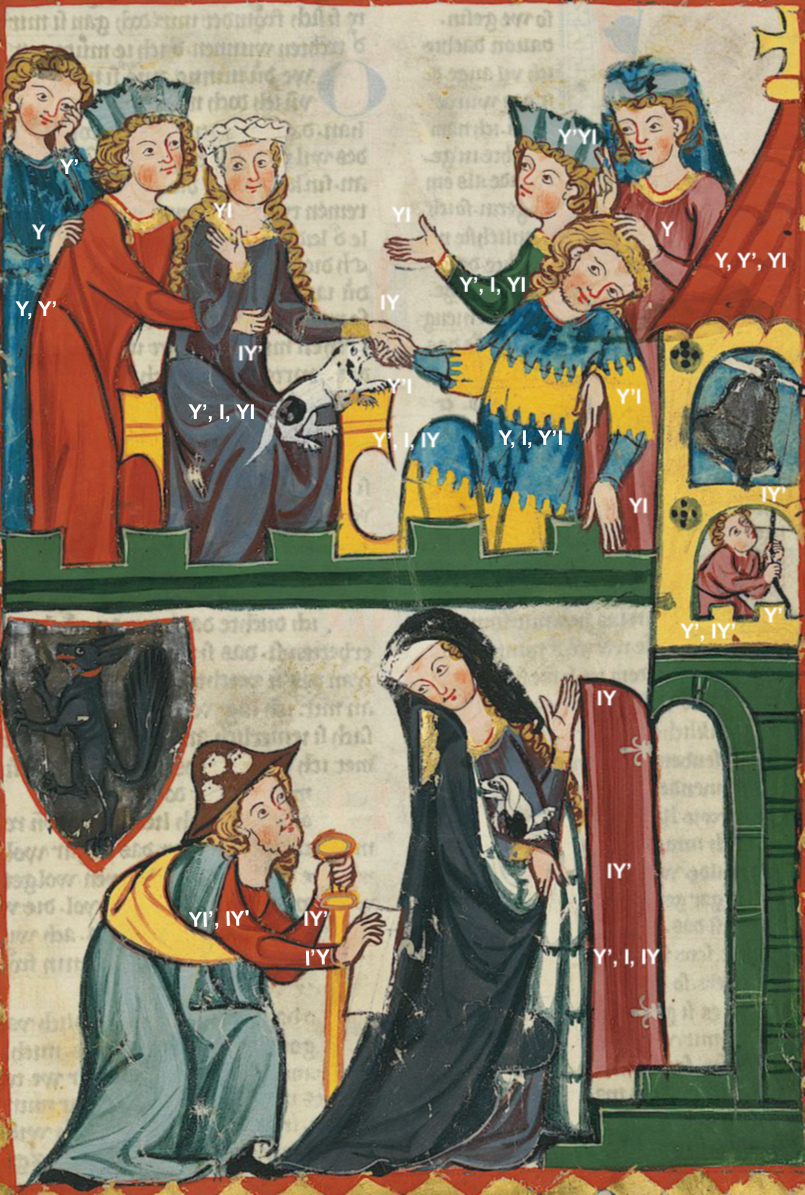
Note that both “science founders of mysticism”, consistently:

  • Wm James 1893: Mainly influenced by Swami V’s Advaita Vendanta.
  • Walter Stace 1960: Mainly influenced by Advaita Vendanta.

https://en.wikipedia.org/wiki/Walter_Terence_Stace#Criticism

Stace advocates freewill:

“He concluded that the spirit of scientific enquiry … has furthered religious scepticism by undermining the teleological presumption of an ultimate ‘final cause’. Concern with divine purpose of events had been replaced by investigation into what had caused them; the new imaginative picture of the world was dominated by the idea that life is purposeless and meaningless. The effects of this change included moral relativity, the individualisation of morality, and the loss of belief in free will.”

Excerpts about non-boundary unity

https://en.wikipedia.org/wiki/Walter_Terence_Stace#Criticism

“his idea that mysticism is everywhere “the apprehension of an ultimate nonsensuous unity in all things“.”

“the mystic perceives the unity in “the multiplicity of external material objects”, while in the latter the mystic perceives the One … “as the wholly naked One devoid of any plurality whatever”.”

“the psychological qualities of mystical experience, which he roots in a passage from the Mandukya Upanishad:

  1. Undifferentiated unity
  2. Dissolution of the self [Does that mean control agency? Hell no! As always, all words are packaged within a heavy framework of “unity boundaryless”, so, “the self” means suspending the boundary between self vs. everything.]
  3. Feeling of revelation or veracity of the event
  4. Feeling of blessedness and peace [cybernetic control transformation aspects are not typically tranquil/serene]
  5. Feeling of serenity

“for his definition of mysticism, and identifies the realisation the personal self is identical with the infinite Self at the core of the experience. … there are three causes for this:

  • loss of individuality [ie non-boundary unity]
  • transcending space and time
  • feeling of peace and bliss

“Professor Stace seems to have no knowledge of any Indian language and his examples are drawn from what is most monistic in the Upanishads and other sacred writings”

“Stace’s list of characteristics hardly represents the broad variety of mystical experiences described by mystics. His “unitary consciousness” is only one characteristic, and not necessarily connected to illuminating insight.”

“Stace is also normative in his preference for monistic mysticism and his rejection of theistic mysticism.

“Stace fails to understand the difference between phenomenology and metaphysics

“‘constructivism’, this position holds that all states of mind are in some degree constructed by social and cultural factors, so that we cannot speak of a unitary consciousness.”

“It is the pure unitary consciousness, wherein awareness of the world and of multiplicity is completely obliterated. It is ineffable peace. It is the Supreme good. It is One without a second. It is the Self.””

Overemphasis on Advaita by James, Stace, Wilber, Everyone

https://en.wikipedia.org/wiki/Walter_Terence_Stace#Criticism

“King, Richard (1999), Orientalism and Religion: Post-Colonial Theory, India and “The Mystic East”, Routledge, who describe how Western preferences for monotheism influenced the Western perception of Indian religions, and the influence of their Brahmana informants, lead to a favoring of Advaita Vedanta as the quintessential Indian philosophy.

“This Advaitic preference, together with the influence of Unitarian missionaries, shaped the worldview of Swami Vivekananda [influenced Wm James 1893], arguably one of the strongest forces in the shaping of the Western popular understanding of Indian “mysticism.”

“His [Vivekananda’s] Ramakrishna Mission spread his idiosyncratic understanding on Advaita Vedanta in the West, and popularized Ramakrishna, one of Stace’s examples of genuine mystics, as an exemplary Indian saint.”

Mystical Experience Questionnaire (MEQ) vs. Mysticism Scale (M Scale)

What’s the relationship between the Mystical Experience Questionnaire (MEQ) vs. the Hood Mysticism Scale (M scale)?
https://www.google.com/search?q=What%27s+the+relationship+between+the+Mystical+Experience+Questionnaire+(MEQ)+vs.+the+Hood+Mysticism+Scale+(M+scale)%3F

AI summary:

The Mystical Experience Questionnaire (MEQ) and the Hood Mysticism Scale (M-Scale) are both well-validated instruments used to measure mystical experiences, but they differ in some key aspects: 

Similarities:

  • Theoretical Basis: Both scales are rooted in the same theoretical framework, particularly drawing upon W.T. Stace‘s [VILLAIN follower of Swami Vivekananda] conceptualization of the “core” characteristics of mystical [read: positive-balanced, boundaryless unity] experiences.
  • Content Domains: Both instruments assess similar underlying content domains, such as unity, transcendence of time and space, and ineffability, which are central to mystical experiences.
  • Convergent Validity: Studies have shown a strong correlation between scores on the MEQ and the Hood Mysticism Scale, demonstrating convergent validity. 

Differences:

  • Time Frame:
    • MEQ: The MEQ is typically used to assess phenomena occurring during a single, discrete mystical experience, often in the context of studies involving classic hallucinogens like psilocybin.
    • Hood Mysticism Scale: The Hood Mysticism Scale (M-Scale) has been applied as a measure of phenomena occurring over a lifetime or retrospectively, assessing mystical experiences more broadly.
  • Factor Structure:
    • MEQ: The MEQ, particularly the 30-item revised version (MEQ30), has a validated four-factor structure consisting of mystical, positive mood, transcendence of time/space, and ineffability.
    • Hood Mysticism Scale: The Hood Mysticism Scale (M-Scale) typically demonstrates a three-factor structure, such as introvertive, extrovertive mysticism, and interpretation.
  • Specific Items: While both scales address similar themes, they differ in the specific items used to measure mystical experiences. 

In summary:

Both the MEQ and Hood Mysticism Scale are valuable tools for studying mystical experiences.

The MEQ is often preferred for examining the features of a single, hallucinogen-occasioned mystical experience, while

the M-Scale is better suited for assessing mystical experiences more broadly across an individual’s lifetime

/ end of AI summary

Mysticism Scale (M scale) Psychedelics Effects Questionnaire (Ralph Hood, 1975) (32 items, based on Stace’s “Boundaryless Unity” Model of Mysticism, 1960)

The Construction and Preliminary Validation of a Measure of Reported Mystical Experience
Ralph W. Hood, Jr.
Journal for the Scientific Study of Religion
Vol. 14, No. 1 (Mar., 1975), pp. 29-41 (13 pages)
https://www.jstor.org/stable/1384454

Abstract:

“A measure of reported mystical experience is presented.

“This “Mysticism Scale, Research Form D (M scale),” has 32 items, four for each of 8 categories of mysticism initially conceptualized by Stace (1960).

“Items on this scale are both positively and negatively expressed to avoid problems of response set.

“A factor analysis of the M Scale indicated two major factors, a general mystical experience factor (20 items) and a religious interpretation factor (12 items).

“Preliminary evidence indicates that those high on the M Scale

  • have more intrinsic religious motivation as defined by Hoge’s (1972) scale,
  • are more open to experience as defined by Taft’s (1970) ego permissiveness scale,
  • have more intense religious experience as defined by Hood’s (1970) scale,
  • and have moderately higher scores on the L, Hs, and Hy scales of the MMPI .”

William James and Swami Vivekananda: Religious Experience and Vedanta/Yoga in America (Frederick 2012)

William James and Swami Vivekananda: Religious Experience and Vedanta/Yoga in America
Norris Frederick, 2012
William James Studies, 2012, Vol. 9, pp. 37-55
https://williamjamesstudies.org/wp-content/uploads/2014/03/frederick.pdf

Relevant to the Egodeath theory: Everyone wrongly models mystical experience as non-boundary unity; the “non-boundary unity” model of mystical experience.

Where did this false, fabricated, “positive-balanced” model of mystical experience come from? It was invented by Swami Vivekananda for the World 1893 World’s Parliament of Religions, per Frederick 2012, per Kitchens 2022, “A Channel for Magic”:
https://www.psymposia.com/magazine/a-channel-for-magic-ralph-hoods-mysticism-scale-and-the-occult-roots-of-the-johns-hopkins-psychedelic-research-program/

Only the Way of Zen by Alan Watts & the Egodeath theory (reflecting acid Metal lyrics & Myth & mushroom-trees) model mystical experience as the “control-model transformation” model of mystical experience; the Cybernetic Theory of Ego Transcendence 1988.

Late Antiquity (Astral Ascent Mysticism) Asserts that Possibilism-Thinking Is Used Coherently and Validly as a Personal Control System Mental Model, Not as a Metaphysical Reality

Ken Wilber “trans-rational” = the way in which the Psilocybin-matured mind uses possibilism-thinking. Our virtual world we exist in is structured in the shape of possibilism, though Psilocybin reveals that at the substrate level, eternalism is the case.

The alien Psilocybin incursion of eternalism truth into virtual possibilism world.

The alien transmitted message of Hermes from the gods to immortals is that at the substrate level, eternalism is the case, and at the virtual experienced level, possibilism is effectively the case.

Entry into Jeru: Jesus head = knowing eternalism is the case metaphysically. Donkey head = experiencing virtual possibilism world & control-agency; the practical personal control system (bulk of it).

Exception: during peak state, use possibilism-thinking but also use / rely on eternalism-thinking.

Late Antiquity astral ascent mysticism is only semi-guilty of lying, claiming that you transcend Fatedness/ eternalism: The Psilocybin-Transformed Mind Ends up Using the “eternalism-modified possibilism-thinking” mental model/ personal control system

Late Antiquity Doesn’t Claim Possibilism Is the Case Metaphysically; It States that Possibilism-thinking Is Used Coherently and Validly as a Personal control system / mental model (not as a metaphysical reality)

Coherent Viable Integrity Requires Using eternalism-modified possibilism-thinking.

That is what’s practically relevant, not what’s the case metaphysically; only the suitable type of functional, in-practice “coherence” or “integrity” is required.

May 10, 2025 all-day voice recording, I switched from “Late Antiquity lies, pretends possibilism is legit” per epistemology, ontology, metaphysics – to saying instead, POV: possibilism (eternalism-modified possibilism-thinking) is indeed how the mental model of control ends up, just as claimed by astral ascent mysticism”

the way i arrived at that favorable framing of qualified possibilism-thinking – instead of saying “possibilism is merely virtual illusory, not really the case” – is because this huge benefit of having for 3 years reviewed, analyzed, and corrected the book Hermetic Spirituality and the Historical Imagination: Altered States of Knowledge in Late Antiquity (Wouter Hanegraaff, 2022).

Friend said ignore Wouter Hanegraaff, he’s confused and wrong.

Instead, I followed through and wrote and posted the review correcting Hanegraaff – the huge payoff for me – for the Egodeath theory — was that wriing the review and explaining his error, required me to get super clear on my model of mental model transformation:

  1. naive possibilism-thinking (resulting from the personal control phen’y of the tight cognitive binding state)
  2. basic eternalism-thinking (resulting from the personal control phen’y of the loose cognitive binding state)
  3. eternalism-modified possibilism-thinking

Nowhere in those 3 phases does the model of mental model transformation focus on the question of whether eternalism or possibilism or eternalism is the case metaphysically.

Unlike the Letheby & Timmerman questionnaire, we don’t aren’t focusing on Metaphysics (MBQ); we are instead relevantly focusing on phen’y driven mental model transformation about control-model transformation.

MBQ – “Metaphysical Beliefs Questionnaire” (Timmermann & Letheby 2021) – semi-focused on psychedelics, and even then, merely psychedelics specifically for medical-model “therapy”; mere psyhcedelics-assisted therapy. Not full-spectrum entheogens

Hermetic Spirituality and the Historical Imagination: Altered States of Knowledge in Late Antiquity (Hanegraaff, 2022)

In April 21 2025 for me to compose finally the book review – in context of conversations w/ Houot — just after I posted the Houot Rise of the Psychonaut book review — reviewing Wouter Hanegraaff book and straightening out his cosmic mess so as to bring fixed stars back in, I had to keep referreing to my model OF WHAT? WHAT POV?

Answer: My model of mental model personal control system t control transformation.

Did I say my model of “what is actually the case metaphysically/ epist’y / ontol’y”? No.

I said, CONTROL AGENCY PHEN’Y MAY 10 2025, AFTER my successful Wouter Hanegraaff book review April 21 2025.

To write my Wouter Hanegraaff review, to fix his cosmos mess, I had to keep referring to my model of mental model transformation.

NOT my Phil department position per Letheby, re: epis’ly “what is the case” – not Metaphysics; not Epis’y, not Ontol’y. Basically, cognitive control agency phen’y.

From the POV of cognitive control agency phen’y, it is irrelevvant what is the case metaphysically. astral ascent mysticism accepts Mewtaphysics sphere 8 = eternalism is the case, and combinees sphere 9 cognitive control agency phen’y: end up with rebirth into / as, eternalism-modified possibilism-thinking.

The mind IN FACT ends up with eternalism-modified possibilism-thinking, in the personal control system.

Even though metaphysically, eternalism is the case.

This is the sense in which:

  • On the Metaphysical level, eternalism is privileged and possibilism is irrelevant.
  • On the mental model Phen’y level, possibilism is privileged and eternalism is irrelevant.

Switched from “Eternalism is the case, metaphysically” to “Possibilism is the final, mature personal control system mental model”

more a Phenomenology basis of valuation & judgment, than Metaphysics:

on May 10, 2025, and while writing book review Wouter Hanegraaff April 21, 2025

Are we describing what’s metaphysically the case?

Or are we describing mental model transformation driven by loose cognition phen’y? To make sense of Late Antiquity hermetic astral ascent mysticism, required my model of mental model transformation driven by loose cognition phen’y — NOT my model of what’s the case metaphysically.

This is how on May 10, 2025 I finally dropped all traces or hints of disparaging possibilism-thinking.

It is irrelevant that eternalism, not possibilism, is the case metaphysically. (So, possibilism-thinking is fake and illegit; dirty.)

What’s relevant (for the Egodeath theory & astral ascent mysticism) is that the personal control system mental model transforms to qualified possibilism-thinking. (So, possibilism-thinking is washed clean, so we have the right to the tree of life and may go through the gates into the city.)

Fake Mysticism Agenda: Non-boundary unity vs. control transformation; Fake Unity Mysticism vs. Authentic Cybernetic Mysticism

This realization and spot-on summary was developed as outcome of all-day Sat May 10 2025 voice recording idea development [eg VOX_TK_6469.wav] and Mon May 12 2025 idea development within page https://egodeaththeory.org/2024/11/20/cubensis-driven-entheogen-scholarship-the-most-productive-relevant-and-rewarding-approach/ – see article sections in that page, capturing May 10/ May 12 2025 ideas:

I joined a May 10 distinction w/ a May 12 (today) 2025 IDENTIFYING specifically what all the bad models have in common:

May 10 2025: Myth confirms the Egodeath theory AND DISPROVES ALL OTHER MODELS, “the old theory”. Myth matches the Egodeath theory far better than myth matches the old theory.

But what’s the hallmark essence of the false theory? Answer from May 12: non-boundary unity (instead of control-model transformation).

May 10 I mocked “I experienced my boundary (self vs world) moving from here to there — from A to B — or lifting/suspending. Therefore, I have Transcendent Knowledge.

That’s the stupid model of mystical experience or ego transcendence or Transcendent Knowledge that everyone pushes, except for the Egodeath theory; the Cybernetic Theory of Ego Transcendence 1988.

The best religious myth & the medieval art genre of {mushroom-trees} confirms the latter, not the former.

May 12 2025: the essence of the old theory (the non-boundary unity model of mystical experience), seen everywhere, eg:

  • the 1987 the Journal of Transpersonal Psychology model.
  • The Ken Wilber model; integral theory; model of psycho-spiritual dev’mt: “you do non-drug Adv meditation for 30 (ie 60) years, to gain non-boundary unity awareness.”
  • the James positive-balnaced model of mystical experience, from Swami Viv.
  • Mystical Experience Questionnaire (MEQ)
  • the lopsided whitewashing of the Challenging Experience Questionnaire (CEQ).

My Jan 1988 model is instead, the Cybernetic Theory of Ego Transcendence; ie, the control transformation model of mystical experience. Use a few loose cognition sessions and study block-universe eternalism and mental model transformation about control, to readily (1 semester class) do control-model transformation, become a completed initiate (Classical Antiquity’s 2-phase model of Transcendent Knowledge) or transcend Fate (Late Antiquity’s 3-phase model of Transcendent Knowledge/ spiritual transcendence/ redemption/ rescue/ emancipation/ salvation).

Scholars claim that:

  • Classical Antiquity = communal Mystery Religions
  • Late Antiquity = indiv Mystery Religions

perhaps, but more important is:

Classical Antiquity = 2-phase model: possibilism-thinking, then eternalism-thinking. basic possibilism-thinking, then basic eternalism-thinking. [a charitable wording; Classical Antiquity was not wrong, but was too limited/ basic]

basic possibilism-thinking
bpt

basic eternalism-thinking
be-t

Late Antiquity = 3-phase model: naive possibilism-thinking; basic eternalism-thinking; eternalism-modified possibilism-thinking:

Crop by Michael Hoffman

the medieval art genre of {mushroom-trees} is typically limited to depicting basic possibilism-thinking then basic eternalism-thinking.

Eadwine in Great Canterbury Psalter elaborates and develops the genre refining it, to depict the limitation of merely basic eternalism-thinking; to go on all the way to final mental model: the final model of personal control system produced by Psilocybin indefinite endless series of Psilocybin sessions:

the end result mental model (personal control system) is eternalism-modified possibilism-thinking. Not basic eternalism-thinking.

eternalism-modified possibilism-thinking
empt

I discovered the the “control transformation” model of mystical experience (as opposed to the dominant, wrong, “non-boundary unity” model of mystical experience) on Jan 11, 1988, and immediately contrasted it against the non-boundary unity model of mystical experience (as I put my finger on that contrast, today, May 12, 2025).

Classic Ken Wilber Books for my 1988 Cybernetic Theory of Ego Transcendence

No Boundary (Ken Wilber 1979) pushes the “non-boundary unity” model of mystical experience

the “control-model transformation” model of mystical experience
cmtmme

Before Jan 1988, I was definitely reading the 1979 book No Boundary by Ken Wilber. eg likely Jan 1986-March 1987. The book is probably in my small library photographed in dorm/ cottage room. On my gtr spk iso box table in cottage.

1985-1987, the “non-boundary unity” model of mystical experience was pushed by everyone, and it did not provide value for my needs of fixing my dysfunctional cross-time control/ self-conflict.

I did not need to experience non-boundary unity.

I needed to experience what the Way of Zen by Alan Watts pushed: a sudden revised model of self-control cybernetics.

Does No Boundary push the “non-boundary unity” model of mystical experience? YES! Totally 100%, explicitly, emphatically!

https://www.amazon.com/No-Boundary-Eastern-Approaches-Personal/dp/1570627436/ — blurb:

“No Boundary: Eastern and Western Approaches to Personal Growth
Ken Wilber

“A straightforward and accessible study of personal development and human consciousness, as seen through the lens of Eastern and Western therapeutic traditions.

[the “therapy = non-boundary unity” claim/ model/ paradigm/ attempted explanatory framework]

“In No Boundary, Ken Wilber masterfully bridges Eastern and Western philosophies to explore the intricate relationship between consciousness and identity. [read that verbiage as: non-boundary unity]

“Through an inquiry into the essence of self [as boundary within a branching world? or as a transformed-model control agent in a revealed-non-branching world?], Wilber challenges readers to question the boundaries that define their identities, illustrating how these self-imposed limits shape our perceptions and experiences.

[Tim Leary & Alan Watts also – like everyone else – casts Transcendent Knowledge as “skin encapsulated ego: realizing unity; illusory boundary” – ie, non-boundary unity]

“The book examines the concept of unity consciousness, a state where boundaries dissolve, revealing the interconnectedness of all existence.

“By weaving together insight from psychology, spirituality, and modern physics [Everett manyworlds branching Quantum Mysticism — not the other, passed-by potential model, Minkowski 4D spacetime block-universe mysticism], Wilber offers a comprehensive view of human potential [within branching possibilities world] and the path to enlightenment [re: non-boundary unity — not re: control-model transformation]

“Readers will gain a valuable understanding of the nature of identity and the illusion of separateness that pervades our understanding of reality.

No Boundary serves as a guide to personal transformation, encouraging individuals to engage with psychological and spiritual practices that awaken them to their true nature. [ie, non-boundary unity]

“Through this journey, readers can embrace a more integrated and harmonious existence, free from the constraints of dualistic thinking.

[we can see / smell/ detect here, Swami Viv poking through: political agenda: fabricate a model of mystical experience that pushes the agenda of international political unity – if the Strassman/Kitchens lead is valid]

“Wilber’s exploration provides practical tools for self-discovery, inviting readers to transcend their limitations and experience a deeper connection with the cosmos. [read: connection between all nations, all religions]

“For those seeking a transformative exploration of consciousness, No Boundary offers a compelling invitation to rethink the boundaries that define our lives.

“Wilber’s insightful narrative not only challenges conventional wisdom

[like my 1988 Cybernetic Theory of Ego Transcendence puts forth the “control transformation” model of mystical experience , challenging the dominant “non-boundary unity” model of mystical experience]

“but also inspires readers to embark on a journey toward unity consciousness.

“This book is a must-read for anyone interested in personal growth, spirituality, and the profound interconnectedness of all life.”

/ end blurb of No Boundary

Ken Wilber (1984) pushes the “non-boundary unity” model of mystical experience

I read the 1970s/1980s Ken Wilber books prior to my Jan. 1988 breakthrough that ego transcendence is actually a matter of control-model transformation, not non-boundary unity.

I re-referenced / re-read these books immediately after the breakthrough, in 1988-1990:

https://en.wikipedia.org/wiki/Ken_Wilber#Books

  • The Spectrum of Consciousness, 1977
  • No Boundary: Eastern and Western Approaches to Personal Growth, 1979
  • The Atman Project: A Transpersonal View of Human Development, 1980
  • Up from Eden: A Transpersonal View of Human Evolution, 1981
  • The Holographic Paradigm and Other Paradoxes: Exploring the Leading Edge of Science (editor), 1982
  • A Sociable God: A Brief Introduction to a Transcendental Sociology, 1983: Toward a New Understanding of Religion
  • Eye to Eye: The Quest for the New Paradigm, 1984
  • Quantum Questions: Mystical Writings of the World’s Great Physicists (editor), 1984
  • Transformations of Consciousness: Conventional and Contemplative Perspectives on Development (co-authors: Jack Engler, Daniel Brown), 1986
  • Spiritual Choices: The Problem of Recognizing Authentic Paths to Inner Transformation (co-authors: Dick Anthony, Bruce Ecker), 1987

Only the monographs, not about Q P, in 1970s/1980s:

  • The Spectrum of Consciousness, 1977
  • No Boundary: Eastern and Western Approaches to Personal Growth, 1979
  • The Atman Project: A Transpersonal View of Human Development, 1980
  • Up from Eden: A Transpersonal View of Human Evolution, 1981
  • A Sociable God: A Brief Introduction to a Transcendental Sociology, 1983: Toward a New Understanding of Religion
  • Eye to Eye: The Quest for the New Paradigm, 1984

Those six books were “the Wilber books”, for me in Jan 1988.

Tim Freke Parrots Non-boundary unity: “oneness” 3x in his Glossary

[how much is the forthcoming Tim Freke theory — emergent spir’y — limited to that false, deluded, limited grasp of control-model transformation?
https://timfreke.com/glossary-2/ — home page about podbook May 2025 doesn’t name the theory. Glossary reveals name of theory:

Emergent Spirituality   The view that spirituality is concerned with an emergent level of the evolving universes, rather than anything supernatural.

Field of Being   The undifferentiated oneness ….

Freke presents the trojan horse lying incomplete fake definition of:
Perennial Philosophy   The idea that there are universal experiences and beliefs underlying diverse spiritual traditions. — censored covertly: “and the nature of these universal common core mystical experiences is: non-boundary unity (certainly not about control-model transformation)”

Hit counts:

  • 6 unividual
  • 3 universe
  • 3 oneness
  • 2 universal
  • 1 unity
  • 0 boundary
  • 1 duali (unividualism)
  • 0 separat

12:53 Noon May 12, 2025: found it! spotted it! Freke glossary is rife with “uni”, “universe” – read that as: non-boundary unity.

Here’s the key to the expose of Tim Freke pushing the “non-boundary unity” model of mystical experience just like everyone else:

Unividual   An individual becoming conscious of unity with the universe.”]

The Way of Zen by Alan Watts (1955) uniquely pushes the “control-model transformation” model of mystical experience

The Way of Zen uniquely pushes the “control-model transformation” model of mystical experience. Even if Watts also pushes non-boundary unity.

The Way of Zen by Alan Watts is an exception: Watts pushes non-boundary unity like everyone, but, he also pushes control-model transformation.

Given that EVERYONE is wrong about Psilocybin in European history

Given that EVERYONE is wrong about the essence of mystical experience

It’s justified that I (like Jan Irvin) don’t have any reason to trust Quantum Physics.

Why should I trust the debate-riddled field of Q P., given that everyone ni the in the field of mystical experience is wrong, and field of entheogen scholarship re: … most of the field of entheogen scholarship is wrong re: … that field is garbled.

The theory of mystical experience is wrong, fundamentally off-base, in 2025.

The model of Psilocybin in Europe is wrong, fundamentally off-base, in 2025.

The model of Psilocybin in Mesoamerica is wrong, fundamentally off-base, in 1915. as Wasson 1957 book-pair ridiculed: An Aztec Narcotic (Safford 1915)

The Way of Zen by Alan Watts (1955):

  • Pushes the “non-boundary unity” model of mystical experience.
  • Pushes the “control transformation” model of mystical experience.

Hofstadter: Godel, Escher, Bach (1979)

GEB is 1979:
https://en.wikipedia.org/wiki/G%C3%B6del%2C_Escher%2C_Bach
I read it after the Jan. 1988 breakthrough, roommate (music grad student) told me about it in Fall 1987, months before the breakthrough. eg Sep-Dec 1987. When I was reading the Way of Zen by Alan Watts.

It’s not necessary to fully specify my 1988 model as the cybernetic psychedelic eternalism block-universe eternalism model, vs. the Ken Wilber model or James model.

It’s sufficient to contrast just these key words:

  • the “non-boundary unity” model of mystical experience (tepid waffles re: psychedelics)
  • the “control transformation” model of mystical experience (firmly psychedelics based)

Non-drug meditation only gives “non-boundary unity” mystical experience, not “control-model transformation” mystical experience: Myth concerns the latter

Non-psychedelics based feeling of non-boundary unity is caused by many ways; but control-model transformation requires specifically — only psychedelics are strong enough to force control-model transformation.

Weak, non-psychedelics ways are enough to give non-boundary unity, but are not strong enough to give control-model transformation.

the “non-boundary unity” model of mystical experience
nbumme

the “control transformation” model of mystical experience
ctmme

to come up w/ the concept-label May 12, 2025, “non-boundary unity“, thanks to Kitchens, after Strassman, pointing out Wm James’ motivation by Swami Viv 1890 to invent a model of mystical experience as agenda trojan horse to achieve political unity.

political agenda corrupted scholars’ model of what “mystical experience” is about. “It’s about non-boundary unity.”

Actually, mystical experience is about control-model transformation, not non-boundary unity.

Myth corroborates the Cybernetic Theory of Ego Transcendence; the “control transformation” model of mystical experience.

Myth disproves the “non-boundary unity” model of mystical experience.

also the actual effects of Psilocybin (OAV 1994: item 54: item 54, “anxiety about control”; item 54, “anxiety about control” (“I was afraid to lose my self-control”), from OAV’s Angst/Dread dimension – proves that the Egodeath theory , not the pop model of mysticism held by EVERYONE ELSE, is correct.

Goal: political unity.
Strategy: claim that the universal mystical experience is non-boundary unity. Cover-up the reality that mystical experience is actually about control transformation. (control-model transformation)

False model of mystical experience. Yes, mystical experience includes non-boundary unity, but that’s a sideshow, not the core common essence and definitive Psilocybin-distinctive transformation.

Myth and the mushroom-tree genre have little concern with non-boundary unity; they are intensely concerned with control-model transformation.

Strassman’s Jewish criticism pays off here, his RELATIONAL MYSTICISM.

Psilocybin critics or perennialism (a hot debate topic) critics also point out, eg I am leveraging Zaehner against Huxley. Deistic mysticism; relational mysticism; 2-level, dependent control. vs. unitive nature mysticism or unitive [Zae’s type 2 of 3]. panentheist mysticism:

  1. unity with nature – nature mysticism version of unitive mysticism.
  2. unity with everything – unitive mysticism.
  3. relation with God – relational mysticism <– advocated by Zaehner & Strassman (roughly/ comparatively).

Depict pleasant mystical experience = non-boundary unity.

Frame psychedelics as if they give pleasant mystical experience = non-boundary unity, per APZ’s Oceanic dimension.

Depict unpleasant, challenging mystical experience about control transformation as “non-mystical”.

A big tip is through a Travis Kitchens article at the parasite site, but then, as Jan Irvin found, the entire field of entheogen scholarship is fake and false motives.

Calling this group “hidden agenda distorting the field” is true of the entire field. Corrupt psychedelic pseudo science; corrupt James model of mystical experience; … leads to corrupt Mystical Experience Questionnaire (MEQ) & corrupt the Challenging Experience Questionnaire (CEQ).

Not only whitewashing mystical experience; replacing mystical experience by political non-boundary unity agenda.

Kitchens is not the source, Jewish Rick Strassman persepective as outsider is the source.

I’m currently reading Strassman book on Old Testament DMT phen’y that’s an inventory of isolated DMT effects side by side w/ isolated Bible verses.

I read Strass article complaining about the dominant Christian model of mystical experience: ness (Strassman 2018):

The Psychedelic Religion of Mystical Consciousness
Rick Strassman 2018: book review of William Richards’ book Sacred Knowledge, a book which I pre-ordered but was underwhelming, perhaps b/c it, like everyone else, pushes the “non-boundary unity” model of mystical experience – instead of the “control transformation” model of mystical experience. (control-model transformation)
https://www.rickstrassman.com/wp-content/uploads/2018/07/JPS_Strassman.pdf

Strassman’s short article is praised by Davis 2020 https://techgnosis.com/wp-content/uploads/2020/04/Davis-Gnosis-5.1.pdf

Moving Past Mysticism in Psychedelic Science (Sanders & Zijlmans 2021)
https://egodeaththeory.org/2023/01/15/the-theory-of-psychedelic-eternalism-provides-a-scientific-explanatory-basis-for-mystic-state-experiencing/#Moving-Past-Mysticism-in-Psychedelic-Science
mpmps

Moving Past Mysticism in Psychedelic Science
mpm

the Moving Past Mysticism debate in Psychedelic Science aka the Mysticism Wars
mpmd

Email to Ulansey May 7, 2025

Hi Professor Ulansey,

Here’s my new book review of Hanegraaff’s book, that took almost 3 years of analysis to write.  

It’s a night and day contrast between your book’s clear consistency (sphere 8 = fixed stars = heimarmene/ Fate) and Hanegraaff’s confused, star-free cosmos:

“Whether the fixed stars should be included [with Saturn, sphere 7] or should rather be associated with the Ogdoad [sphere 8] remains an open question for me.” – p. 294, footnote 114, Hermetic Spirituality, Darth Wouter “Star Destroyer” Hanegraaff

Book citation:

Hermetic Spirituality and the Historical Imagination: Altered States of Knowledge in Late Antiquity

Wouter Hanegraaff, 2022

My page about the book, with my copy of my review:

https://egodeaththeory.org/2022/07/14/hermetic-spirituality-and-the-historical-imagination-altered-states-of-knowledge-in-late-antiquity-hanegraaff/#amazon-book-review

________________________________

The Review

Michael Hoffman, April 21, 2025
4 out of 5 stars
https://www.amazon.com/gp/customer-reviews/R1MP0AF4OLZT3
Title of book review:
Rebirth into cosmos sphere 8 (Heimarmene) and 9 (above Heimarmene)

[copy of review; end of email]

email to Hanegraaff April 25, 2025

Hello Professor Hanegraaff,

My book review of Hermetic Spirituality is finally live at Amazon!

https://www.amazon.com/gp/customer-reviews/R1MP0AF4OLZT3

My site map: https://egodeaththeory.org/nav/#Hanegraaff

I’d be interested in any ancient text that implies that the cosmos has only 7, not 8 spheres, or that says sphere 8 (fixed stars) is outside the cosmos.  

Look at the sky, see 5000 visible dots, that’s sphere 8, the cosmos; the main visible thing that you see in the sky.  That’s the cosmos.

I’ve been modelling astral ascent mysticism in relation to Heimarmene at sphere 8 since 2001, when I got David Ulansey’s book about Mithraism.

Video Summary of Hanegraaff Book Hermetic Altered States (Angela’s Symposium)

Great video summary (of the book) you did with Angela’s Symposium, back when I had had your new book for a couple weeks.

Hermetic Spirituality with Prof Wouter Hanegraaff

Cyberdisciple’s Site Map

Cyberdisciple (cc’d) is a Classics scholar who knows my theory of transcending (& integrating) Heimarmene in the intense altered state.  

Today he finally made a Site Map 🎉, which you should find relevant:

https://cyberdisciple.wordpress.com/site-map/

Due to the distorting conditions of Prohibition that you pointed out in “Entheogenic Esotericism”, Cyberdisciple has been carefully revealing his name.  

Is this not the Psyched*lic RenaissanceTM now?  Or is Science still forbidden from looking through the telescope?

My Instructive Comment on Announcement of Site Map

A well-written, enlightening joke comment on Cyberdisciple’s Site Map Announcement:

https://cyberdisciple.wordpress.com/2025/04/25/announcement-site-map-of-cyberdisciple-wordpress-com-published/#comment-2739 —

“Your comment made me slightly dizzy. Therefore… 😄 [it’s “an entheogenic practice”, by the too-easy standards of the Entheogenic Esotericism article]

because of the potency of your comment, 

I have not merely discovered ego-cancelling Heimarmene, [in my university’s School of Electrical Engineering in Jan. 1988], but have fully integrated the Heimarmene and non-Heimarmene ways of thinking, 

same as 2 bowls filled with Golden Teacher of Righteousness [Psilo.], for 9 sessions, 

ascending through the cosmos spheres to my soul reaching pure Heimarmene resting in sphere 8 

and also my spirit reaching hyper-Heimarmene sphere 9, 

perceiving even the Pege at level 10 — the hidden, uncontrollable Source of control-thoughts.

🤵‍♂️👑💍💒👰‍♀️🏆👶👶🙏🙌🐍🪨🔥

[The emojis show harmoniously wedding the two different ways of thinking, and 

worship of “{snake frozen in rock}” Agathos Daimon serpent carved in rock altar, giving prosperity.]

Strategy of Late Book Review

It took almost 3 years of analyzing your book, Hermetic Spirituality & Altered States in Late Antiquity, to write a technically adequate, critical analysis of its cosmos-rebirth model in relation to Heimarmene = fixed stars.

Advantages of the late date of composing the book review:

* I was able to remove 1 star – [joke: poetic-justly, seeing as you remove all 5000 stars from the sky] – without seeming unappreciative, because (ignoring 1 badly written 3-star review) all 20 reviews give 5 of 5 stars.

So my review stands out effectively.

* I realized just in time for composing the final review, the theme of marrying and embracing both the Heimarmene way of thinking and the non-Heimarmene way of thinking, for mature completion of initiation.

* 1 week ago, I read David Litwa’s new book Hermetica I, and found no ancient text implying that sphere 8 is somehow “outside the cosmos”.

* Recently I watched videos by Dr. Justin Sledge and others, about affirming while also transcending Fate in Late Antiquity; 

I inspected the transcriptions & marked them up re: sphere # 8 & cosmos-rebirth: they waffle, inconsistently, when discussing transcend Heimarmene.

* Emily Adlam 2 weeks ago claims that Minkowski 4D spacetime block universe eternalism (Heimarmene, experienced in the altered state per https://www.effectindex.com/effects/perception-of-eternalism) unifies the two ways of thinking in Physics: 

Relativity (non-branching block-universe) & Quantum Physics (branching manyworlds).

The “All At Once” Universe Shatters Our View of Time

My Star Wars “Star Destroyer” skit came out well:

https://egodeaththeory.org/2025/03/18/hanegraaffs-inability-to-place-fixed-stars-in-sphere-7-or-8-proves-rebirth-is-into-fate-not-freedom/#Darth-Hanegraaffs-Alderaanization-of-the-Fixed-Stars

Cheers, 

— Michael Hoffman, theorist of ego transcendence in the altered state

_____________________________

Copy of the review:

Michael Hoffman

Title of review: Rebirth into cosmos sphere 8 (Heimarmene) and 9 (above Heimarmene)
Reviewed on April 21, 2025
Verified Purchase [orig hardcover + ebook]

Wouter Hanegraaff’s book Hermetic Spirituality and the Historical Imagination: Altered States of Knowledge in Late Antiquity advances the field of Hermetic studies, especially after the error is corrected in his cosmos-ascent model, per astral ascent mysticism, so that the Fate-soaked fixed stars are no longer excluded entirely from his sky, but are allowed into his cosmos model, where they belong: sphere 8, the Ogdoad.

Hanegraaff’s model of the so-called “cosmos” doesn’t have any fixed stars. Look up into his sky: there are no stars, only 5 planets + sun & moon. This is not a model of the cosmos, nor of cosmos rebirth, because his visible sky cannot have any stars, per his admission in footnote 114, page 294: “Whether the fixed stars should be included [with Saturn, sphere 7] or should rather be associated with the Ogdoad [sphere 8] remains an open question for me.” This is the most closed question in the cosmos; it is a basic, simple given that the Fate-soaked fixed stars are what defines sphere 8, called “the Ogdoad”.

The initiate Tat asks Hermes to be brought into the Ogdoad (Heimarmene; Fatedness; fixed stars; sphere 8; the soul) and also into the Ennead (above heimarmene, above the cosmos; sphere 9; the spirit). Since Hanegraaff omits fixed stars from their sphere 8 (which they define), there’s no functional difference in his model between rebirth phase 1 into the Ogdoad, and rebirth phase 2 into the Ennead.

The end result of entheogenic mental model transformation is not the repression of fixed stars (Fatedness) as Hanegraaff attempts; the end result is a coordinated, harmonious combination of first affirming Heimarmene, and then affirming transcending Heimarmene, honoring both ways of thinking, together.

Hanegraaff cannot place the fate-soaked fixed stars in sphere 8, because he wrongly says “the Ogdoad above the heimarmene”. The Ogdoad is not above heimarmene. The cosmos does not consist of 7 spheres, as Hanegraaff writes. Per looking up at the sky, the cosmos consists of 8 spheres. All ancient writings agree; no Hermetic text says the cosmos consists of 7 spheres, or that sphere 8 is outside the cosmos. The cosmos consists of 7 planetary spheres and also the sphere of the fixed stars. Sphere 8 is not “hypercosmic”, as he writes. Sphere 9 is actually hypercosmic.

I have read his book multiple times in hardcover and ebook format, and David Litwa’s book Hermetica I, to confirm that no Hermetic writing says the cosmos has 7 spheres, and that sphere 8 (defined by the fixed stars) is somehow “outside the cosmos”. The main visible thing you see in the sky that is the cosmos, is the fixed stars, defining sphere 8 of the cosmos.

Per Hanegraaff’s own writings in this book and elsewhere, sphere 8 = the Demiurge = the zodiac = Heimarmene headquarters.

Hanegraaff spreads the following equations separated apart to hide the self-contradiction: Ogdoad = sphere 8 = fixed stars = heimarmene = Fate = cosmos. By spreading the equations into separate pages, he writes inconsistently: Heimarmene = Fate = fixed stars = sphere 8 = Ogdoad = above Heimarmene.

Other hermetic scholars follow suit, waffling in self-contradictory fashion: in one paragraph, Ogdoad is above heimarmene; in alternating paragraphs, sphere 8 is the Fate-soaked fixed stars.

Switching between saying “sphere 8” and “Ogdoad” tries to hide the self-contradiction, in order to misguidedly purify the Ogdoad of heimarmene by making the stars go missing in every other paragraph, inconsistently.

The solution is to always give the sphere number (7, 8, or 9) and equate Heimarmene consistently with the fixed stars and sphere 8 and the name “Ogdoad”, and understand that rebirth is initially into conformity with pure Heimarmene – not yet above Heimarmene.

My other correction of this book is its claim that anything you can think of is entheogenic, as if to propose “non-drug entheogens”, a contradiction in terms. Entheogenic practices in the broad sense actually means combining visionary plants with mental model formation and observation and various techniques – not omitting visionary plants. In 2004, I posted in Egodeath Yahoo Group about that point, a post titled “Entheogenic Esotericism”, 8 years before Hanegraaff’s keynote article speech titled “Entheogenic Esotericism”.

To summarize, as the million stars to steer by in the cosmos rebirth model that Hermetic scholars struggle to coherently present:

The mind starts with naive possibilism-thinking (level 0), becomes increasingly attuned to Heimarmene (Fate; eternalism) in entheogenic sessions 1-7, becomes fully reshaped and aligned harmoniously with Heimarmene (Fatedness; 4D spacetime block universe eternalism) in sphere 8 (the fixed stars); and then reconciles and marries the two ways of thinking together in sphere 9: embrace and include Heimarmene coordinated with the transcending of Heimarmene; marry qualified possibilism-thinking and qualified eternalism-thinking, to reach completion of initiation, per all brands of religion in Late Antiquity, flourishing starting around 150 CE.

— Michael Hoffman, theorist of ego death and transcendence

/ end of review, end of email to Hanegraaff

Colorized Revolving Tauroctony

The master copy of the below sections is now the new page: https://egodeaththeory.org/2025/05/22/reversible-tauroctony-mithraism-bull-sacrifice-scene/

{billowing cape} = the eternalism state of consciousness

{billowing cape} instances: row 1 L; row 2 M; row 4 L

number of trees (Y trees): 3 + 4 + 1 = 8 trees.

cape = billowing = wind = pneuma = heimarmene fixed stars state of consciousness; the eternalism state of consciousness.

the eternalism state of consciousness
esoc

the possibilism state of consciousness
psoc

possibilism-branching steering control

Features:

  • wind blowing beard on R in top row, on L in bottom row. bottom row: beard is near Mithra’s R foot.
  • which leg bent on L, on R. Consistent. stand on right foot vs. stand on left foot; ie, the leg which is not bent. Forget “crossed” legs; which leg is bent and thus not bent?
  • L side: 3 bent L legs = 3 stand on right foot. Most tauroctony scenes have bent L leg, on L twin.
  • R side: 2 bent R legs = 2 stand on right foot.
  • random art choice re: L torch light up or down: if you choose to show torch down on L, that points to {stand on right foot}, above that snake.
  • wheat tail against heimarmene fixed stars: affirming heimarmene gives fecundity reward. Sol is higher personal control system after blade the vulnerable bull which is lower personal control system, especially egoic naive possibilism-thinking “monolithic, autonomous control” is repudiated, specifically.
from cover of German David Ulansey book 1998

https://www.amazon.com/Urspr%C3%BCnge-Mithraskults-Kosmologie-Erl%C3%B6sung-Antike/dp/3806213100/

Features:

  • Lib Cap has sword blade revealing Psilocybin transformation about steering; crown = steering ability authorized by the standard of Psilocybin. Mithras showing palm = threatened & mercy pleading, apprehension. Apprehending the blade – Psilocybe semi-lanceata; spear-blade-mushroom.
  • Steering rod is non-branching.
  • Blade goes into bull near shoulder.
  • Seeing how steering works in non-branching revealed world (an experience).
  • Bull’s right legs are bent, implying bad/unstable {stand on left foot}: belief in stand on left foot is dead, when on Psilocybin. To still use possibilism-thinking (branching possibilities steering), must transcend eternalism-thinking.
  • Drinking horn contains lib cap Psilocybin which is a blade that kills initial monolithic, autonomous control steering in a branching possibilities tree. Cuts off the branching & cuts off the egoic autonomous personal control system of the type that steers in a tree to create the open future to “close” the future by your egoic autonomous control power.
  • grape = Psilocybin lib cap
  • mercy hand: thumb = non-branching; fingers = branching. IY. “display hand” = the capability of finger shapes to represent branching vs non-branching.
  • hunting dogs: Acteon sees Artemis, turns into stag w/ branching antlers, torn to pieces by his own hunting dogs.
  • Cubensis mushroom above bull head. Angle illusion; it’s a right hand above bull ear.
  • wheat tail: bovine dung grows Cubensis.
Crop by Michael Hoffman

When a the tauroctony bull-sacrifice scene​ shows up-pointed torch-light held by R twin, here that up direction points to / reveals, makes perceptible, the snake vs tree; fire (light) = (touches) snake.

No consistency: whether torch light is pointed up or down on L & R.

90% consistent: L twin = stand on right leg (L leg bent), matching Mithras.

Crop by Michael Hoffman

Features:

  • naked L foot-relying Sol on R: no control power; crown not on head; powerless; Mithras controls Sol’s power; Mithras holds controls your bull muscle, your source of power.
  • left Mithras stand on right foot; left foot floats. Heimarmene cap billowing touches branching part of tree.
Crop by Michael Hoffman

Ulansey Books

https://www.amazon.de/-/en/Mysteria-Ancient-Mysteries-Evolution-Consciousness/dp/1556438818/

Mysteria: The Ancient Mysteries and the Evolution of Consciousness

30 Oct. 2012 (no such)

“David Ulansey’s Origins of the Mithraic Mysteries won wide acclaim for its splendid scholarship and what Gnosis magazine called “an absolutely spell-binding detective story of antique lore.”

“Ulansey returns here with another detective story, this time unearthing the once-flourishing religious movements snuffed out by the arrival of Christianity.

Based on a series of lectures presented at San Francisco’s prestigious Jung Institute, Mysteria employs a wealth of scholarly and investigative tools in this exploration of

the role ancient mystery religions played in the evolution of Western consciousness.

The book reveals how these secret

cults, which centered on rituals and symbols of transformation at the deepest levels, catalyzed the formation of the individual, personal identity that became the core of the Western psyche.

Mysteria also examines the impact of the extraordinary

cultural and intellectual transformations of the Hellenistic Age on consciousness and self-awareness.

Individual chapters describe a rich

spiritual landscape in antiquity that included

  • the Eleusinian Mysteries,
  • the Orphic and Pythagorean Movements,
  • Plato and the Mysteries,
  • the Hellenistic Revolution,
  • Mithraic Mysteries, and
  • Apocalypse and Gnosis.”

David Ulansey Articles/Site

http://www.mysterium.com

https://www.youtube.com/watch?v=ezr71f2z7po

Mithras and the Hypercosmic Sun
David Ulansey
http://www.mysterium.com/hypercosmic.html

The Eighth Gate: The Mithraic Lion-Headed Figure and the Platonic World-Soul
David Ulansey
http://www.mysterium.com/eighthgate.html

keyboard shortcuts:

Mithras and the Hypercosmic Sun, David Ulansey, http://www.mysterium.com/hypercosmic.html
duhyp

The Eighth Gate: The Mithraic Lion-Headed Figure and the Platonic World-Soul, David Ulansey, http://www.mysterium.com/eighthgate.html
du8th

David Ulansey
du

David Ulansey’s solution explaining Mithraism
dusem

http://www.mysterium.com/appendices.html

New Appendices for the German Translation of The Origins of the Mithraic Mysteries: Cosmology and Salvation in the Ancient World
David Ulansey —

Appendix I: The Torchbearers’ Crossed Legs

Appendix II: Mithras, the Hypercosmic Sun, and the Rock Birth

Appendix III: Why Not a Mithraic Fish?

fixed stars = the entire cosmic structure; fixed stars = the cosmos

David Ulansey’s use of ‘cosmos’ or ‘cosmic’ does not follow the absurd definitions by Hanegraaff; Hanegraaff says that the fixed stars are “outside the cosmos”, insofar as Hanegraaff keeps the fixed stars at all.

Hanegraaff writes that the Ogdoad (sphere 8) is outside the cosmos, and that the cosmos consists only of planet spheres 1-7, and sphere 8 is “outside the cosmos” (Hanegraaff stays silent on whether Ogdoad contains fixed stars – which of course it does).

Unlike Hanegraaff, Ulansey coherently, sensibly, intelligibly uses the term ‘cosmos’ to include, and even highlight, sphere of the fixed stars. vs Hanegraaff’s admitted confusion that omits fixed stars from Ogdoad and places them nowhere:

“Whether the fixed stars should be included [with Saturn, sphere 7] or should rather be associated with the Ogdoad [sphere 8] remains an open question for me.” – p. 294, footnote 114, Hermetic Spirituality and the Historical Imagination: Altered States of Knowledge in Late Antiquity, by Wouter Hanegraaff, 2022

Appendix IV: Hipparchus’s Understanding of the Precession

“Hipparchus’s idea that the precession [of the equinoxes] was caused by a previously unknown movement of the entire cosmic structure was not merely one more suggestion in a list of equally valid hypotheses. Rather, this idea was his final, mature conclusion,

… Hipparchus conceived of [the movement of the entire cosmic structure -d.u.] on the basis of the phenomena available to him …

Hipparchus’s final conclusion about the precession [of the fixed stars] was that it was a movement of the entire cosmic structure, for he expresses this conclusion in the very title of the first of his two works on the subject– “On the Displacement of the Solstitial and Equinoctial Points“– a title which can only refer to a motion of the entire cosmic structure.

… about the nature of this cosmic movement.

For Ptolemy tells us explicitly that in “On the Length of the Year” Hipparchus gave a precise estimate of the rate of the movement of the cosmic structure (not less than one degree per century),[12] and explained the exact orientation of this movement as being around the poles of the ecliptic.

“What we call the “precession of the equinoxes” (a term first used by Copernicus) was discovered by Hipparchus (2nd cent. B.C.) as a second motion of the fixed stars, in addition to the diurnal rotation.

“He described it either as an eastward motion of the sphere of the fixed stars about the axis of the ecliptic, thereby shifting the stars in the direction of increasing longitude with respect to the equinoxes, or as a westward motion of the axis of the diurnal rotation in a circle about the axis of the ecliptic, shifting the equinoxes in the direction of decreasing longitude with respect to the fixed stars.[15]

Swerdlow here acknowledges that the final outcome of Hipparchus’s work on the precession was the conclusion that it was a movement of the entire cosmic structure (either a motion of the sphere of the fixed stars or a motion of the axis of rotation of the universe– either of these mathematically equivalent formulations represents a shift of the entire cosmic structure).

Ptolemy says that in concluding that the precession was a movement of the entire cosmic structure Hipparchus was forced “to conjecture rather than to predict, since he had found very few observations of fixed stars before his own time…”), wouldn’t the tentative nature of his conclusion have prevented anyone from taking it seriously enough to believe that it indicated something like the existence of a new god?

in the Mithraic mysteries we are dealing not with a scientific but with a religious phenomenon, and the stuff of religion is not the human intellect but the human imagination.

Hipparchus suggested in his writings the remarkable new idea that the entire cosmic structure might be moving in a previously unknown manner.

Whether Hipparchus presented this as a proven fact or merely as a plausible hypothesis is of no consequence whatsoever for the religious imagination.

his final conclusion about the precession was that it was a motion of the entire cosmic structure.

Hipparchus’s discovery could well have catalyzed the sorts of speculations that led to the origins of the Mithraic mysteries.”

Mithraism concept/idea: we can transcend heimarmene/ fatedness/ eternalism, because the heimarmene sphere 8 sphere of the fixed stars moves. Mithras is outside cosmic rock heimarmene, so is able, from there, to move the sphere of the fixed stars which = Fatedness/ eternalism frozen rock prison enslavement embeddedness.

Evolution of the Egodeath Theory (Email to Max & Cyb May 7, 2025)

>One possible podcast topic: technology vs science:

The Egodeath theory as a Science advances by adding analogy that connects with other systems eg myth, esotericism, Late Antiquity cultic religions, sympos, the medieval art genre of {mushroom-trees} w/ {branching}, {handedness}, and {stability} motifs.

Crop and annotations by Michael Hoffman, Egodeath.com, Jan. 3, 2025

The Egodeath theory as a Technology advances by adding use-case scenario framing that’s applied and practical in the harrowing climactic peak window of the intense mystic altered state. 

Not the technology of delivery formats, but a level more abstract.

This technology is a body of knowledge structured for relevance to Psilo peak state control transformation.

The content of the Theory is tailored and targeted for high-intensity Psilo loose cognition – as a technology, a practical explanation directly targeting this scenario – application tailored.  

A useful map of Psychedelic Mythemeland, including control vortex and Psilo transformation.  Not surrender and hand over control as is.  

Transformed control model: 

  • able to use POV: non-branching possibilities + 2-level, dependent control, 
  • able to use POV (consciously) branching possibilities + monolithic, autonomous control — as practical a model, as virtual.

Put the focus on the whole 2-model system, not only eternalism w/ 2-level, dependent control.  

Benefits of having both models, in a single overarching model of cybernetic control in branching & non-branching worlds.

Integration of the revelation into practical control model

Finally, the technology and the Science model is designed for Integration of the peak control transformation into practical agency control, in both states – building up the total mental worldmodel w/o disparaging the initial model (branching-steering monolithic control-agent) – our virtual world, though “virtual” has some delegitimization to avoid.

Limited Technology tool applicability: The Egodeath theory does not necessarily produce control-harmony and get rid of self-conflict across time.  

Check the list of benefits promised in 1997 & 2007, or Bubble of Simulation.  

Mostly, more than solving your control problems, this theory explains, to deliver understanding, to make the classic control transformation (climax seizure vortex) a known dynamic, and to comprehend how to gather evidence of ways this control transformation is reflected in history.  

This technology teaches how to read and look and perceive eternalism and the contrastive transformation from possibilism to eternalism.

Psychedelia: An Ancient Culture, A Modern Way of Life (Lundborg 2012, Phenomenology)

Altered state Phen’y book

PSYCHEDEL!A: AN ANCIENT CULTURE, A MODERN WAY OF LIFE

Book by Paul Lundborg is thick (high word count) and not particularly inspired or radical, it is intended as a Phenomenology book.  Has almost NOTHING about Europe 500 B C – 1400 A D.  False advert. title, like “Ancient means the Americas”.  

What little he writes about Europe history, or relation of Psil & meditation & nondual unity mysticism is the conventional views, no more.  

Kykeon = the only instance in Europe history.  

The Kykeon focus is used to accomplish strict containment.  We admit Europe has plant history, but, limited to kykeon, to cover the topic of Europe.

Like Ruck frames every instance of mushroom imagery in Christian art as “heretical” and “closed secret community”, a containment strategy.

/ end of may 7 email

Evolution of the Egodeath Theory (Email to Max & Cyb May 6, 2025)

Max wrote:

>technology vs science: the difference between 

>EDT as a static complete theory, and 

>EDT as something which develops and changes and evolves over time.  

After 1997, in Phase 2 (motivated by confirming the core theory), the Egodeath theory adds myth & history, and relates to other models.

The eventual Theory now has: inner core; outer core; add: inner periphery, outer periphery – then list topics in each layer.  

This date matches Samo’s milestone article marking the start of 2nd-generation entheogen scholarship (the Explicit Psilocybin paradigm):

“Mushroom-Trees” in Christian Art (Giorgio Samorini, 1998) .

Max wrote:

>There is some core set of insights that were present at the beginning conception of EDT

1. During the tail end of the Allegro + Ruck-dominated, Pop, 1st-gen entheogen scholarship, during 1985-1996, I developed the Core theory, with no historical focus.  

Exceptions: I read the psychology history book Up From Eden, Ken Wilber, around 1986-1989.  Lyrics.  Gnosis mag, before 1997/1998.

Allegro & Ruck & Pop Sike Cult fixated on the Secret Amanita paradigm.

Reference to represent the early Core theory 1988-1997:

Self-control Cybernetics, Dissociative Cognition, & Mystic Ego Death 

(1997 core theory spec) (Hoffman, 1997) https://egodeaththeory.wordpress.com/2020/11/30/self-control-cybernetics-dissociative-cognition-mystic-ego-death/&nbsp;

Max wrote:

>then there has been a change in the way those insights are communicated.

Starting in 1998, added an analogies layer around the Core science model.  

eg art showing L foot youth, then R foot youth, then floating(!) sage, gesturing at pair of guys in tree: simple sitting; vs. complicated hanging. 
Great Canterbury Psalter f134 row 1 L & 2 R.

Crop by Michael Hoffman

2024, tried to express the Core using “branching vs. non-branching”.

Nov 2024-May 2025, stopped disparaging possibilism-thinking.  In a sense, we repudiate possibilism-thinking — but we only repudiate its root and its certainty of branching possibilities.  Created narrow-sense & broad-sense qualifiers:

naive possibilism-thinking 

basic possibilism-thinking 

qualified possibilism-thinking 

qualified eternalism-thinking 

broad eternalism-thinking includes qualified possibilism-thinking.

2. Starting 1997-1998, while Samorini started 2nd-generation entheogen scholarship (the Explicit Psilocybin paradigm), 

I developed — to corroborate the Core Egodeath theory — the Mytheme theory; 

added an inner periphery and outer periphery of concerns: 

building on Rock Lyrics: added:

esotericism history

visionary plants history

myth, 

the Mytheme theory, 

analogy, 

art motifs, 

the ahistoricity of religious founder figures.

Timothy Freke & Peter Gandy’s book The Jesus Mysteries, 1999.

Negative: the ahistoricity of religious founder figures.

Positive: the esoteric analogicity of religious founder figures.

Reference to represent the Phase 2, build-out, the Mytheme theory 1998-2007-2020-2025:

The Entheogen Theory of Religion and Ego Death 

(Hoffman, 2007 main article) http://egodeath.com/EntheogenTheoryOfReligion.htm & https://egodeaththeory.wordpress.com/the-entheogen-theory-of-religion-and-ego-death-2006-main-article/

Max wrote:

>The clearest example of the change is 
>the introduction of the tree/snake possibilism/eternalism concept-pairing

Nov 2024-Apr 2025: created two named brands of Physics-based mysticism:

popular Everett egoic branching manyworlds, Quantum Mysticism.

unpopular, un-developed alternative:  Minkowski 4D Spacetime Mysticism; 4D spacetime block universe eternalism.

— for the purpose of connecting my Core theory with mytheme: branching vs non-branching.

Max wrote:

>Is there a clearest, simplest most unambiguous statement of the original, central core theory? 

The 1997 spec is designed to be exactly that.  

Broken out into a set of principles, same as my 1988 drafts.  

Lacks “worldline”, says “stream” and “tunnel”.

Max wrote:

>What exactly, precisely is the original core claim of EDT that you were first making when you first had the full theory?

The Jan 1988 coming-together of the Theory, and June 1988 first draft of “the [Cybernetic] Theory of Ego Transcendence”, are preserved with scope intact in my 1997 theory summary spec.

My message of 1988 & 1997:

The Journal of Transpersonal Psychology & Ken Wilber claim that ego transcendence is about 30 (60) years of Advaita meditation to change to nondual unity oneness.

But in Jan 1988, my new view to announce was: 

I disagree.  Found a better model, compact, more potent:

Actually, ego transcendence is about loose cognition to transform from one mental model of control and time to another; to block-universe eternalism, neutralizing egoic control agency (in a certain root way) 100%.

That total quick cancellation is proof of rightness, and that Ken Wilber is lost with an empty engine in his massive model.

In Jan 1988, a few components came together, that summarizes the essence of the core Egodeath theory:

* loose cognition (via, incidentally, theory of psychedelics)

* block-universe eternalism as a model of time (implies a model of control too).  4D spacetime block universe eternalism.

* control-agency focused: focused on transforming mental model of personal control system; cybernetics; Control Systems engineering course.

* mental model transformation from model A to B, per Satori about cybernetics per the Way of Zen by Alan Watts.

1988: Good news!  We now have a compact explanatory model of ego transcendence / Transcendent Knowledge!  

Simply a matter of loose cognition (via psychedelics most definitively) transforming mental model of control-in-world.  

Not per Ken Wilber and the Journal of Transpersonal Psychology; not meditation; not unity nondual oneness; 

rather, control-focused – not Quantum Mysticism with Everett branching manyworlds steering; rather, 4D Spacetime Mysticism with pre-existing future (frozen worldline, not branching) that instantly totally cancels a kind of egoic agency.

2007 article is perfect to represent this Phase 2, the Mytheme theory expansion — but incomplete: shows pictures that contrast branching vs. non-branching, but article doesn’t recognize that — even though at 2001 start of Egodeath Yahoo Group, I posted contrasting the branching vs non-branching models in Physics.  

In 2010, walking forking forest preserve every year photo’ing fungi, I speculated: wouldn’t we expect branching antlers vs. non-branching vine to be major mythemes?  That’s a science Prediction.  Massively confirmed that prediction by 2013, then especially by 2020 and ensuing years.

2007 article is strong re: snake, weak re: tree/branching.

A recent re-framing the theory:

late 2024, I stopped disparaging possibilism-thinking, since I always use possibilism-thinking and that doesn’t change, though root is transformed re: the hidden, uncontrollable source of control-thoughts.

Comparable to Tim Freke 2025 saying “do better than Pop Neo Advaita, too crude and primitive and un-scientific; too un-evolved, un-developed.”  

Essentially same as me re: perennialism: agree there is a common experience, but, that experience is grasped, modelled, and expressed more or less poorly over the years. 

And I dismiss unity nondual oneness as beginners un-earned initial taste, before their impurities and dishonoring the gods gets them kicked out of heaven in fear; the control instability {guarded gate}.  

Shamanism: The Timeless Religion (Manvir Singh, May 20, 2025)

The book Shamanism: The Timeless Religion comes out on May 25 [or 20], 2025. https://www.amazon.com/Shamanism-Timeless-Religion-Manvir-Singh/dp/0593537548

“From a brilliant, young, Harvard-trained anthropologist and contributor to The New Yorker comes a fascinating investigation into the spiritual practice of shamanism, from its beginnings to the present moment, for readers disaffected with organized religion who seek a more personal approach to spirituality.

“What are the origins of shamanism, and what is its future?

Do shamans believe in their powers?

What exactly is trance?

What can we learn from indigenous healing practices?

Traveling from Indonesia to the Colombian Amazon, living with shamans and observing music, drug use, and indigenous curing ceremonies, anthropologist Manvir Singh journeys into one of the most mysterious religious traditions.

“Fundamentally, shamans are specialists who use altered states to engage with unseen realms and provide services like healing and divination.

“As Singh shows, shamanism’s appeal stems from its psychological resonance. Its essence is spiritual transformation: a specialist uses initiations, deprivation, and non-ordinary states to seemingly become a different kind of human, one possessed of powers to cure, prophesy, and otherwise tame life’s uncertainties.

Following a fascinating cast of characters, Singh reveals the complexities and vicissitudes of a timeless, always relevant, and ubiquitous phenomenon.

“He argues that biomedicine can learn from shamanic practices and that psychedelic enthusiasts completely misrepresent history.

“He also shows that shamanic traditions will forever re-emerge – and that by contemplating humanity’s oldest spiritual practice, we come to better understand ourselves, our history, and our future.”

Shamanism, Human Culture & the Evolution of Religion (Singh Video & Book)

Video interview:

Shamanism, Human Culture & the Evolution of Religion | Manvir Singh | 219
ch: Mind & Matter Podcast
Mar 30, 2025
https://www.youtube.com/watch?v=HrAZTd9rlVk

Video Desc:

“shamanism’s role as a universal human practice, exploring its roots in cultural evolution, cognitive tendencies, and persistence across history and modern society. 

“how shamans use altered states to address uncertainty—like healing or divination

“shamanism’s interplay with centralized religion, its psychological benefits, and parallels in today’s world, from tech gurus to medical placebos.

“Shamanism is a widespread cultural practice involving specialists who enter altered states to engage with unseen forces, often for healing or managing uncertainty.

“It’s not an archaic precursor to modern religion but a recurring expression of spiritual beliefs & practices, competing with other forms.

“Techniques vary widely—dance, music, [oven, light bulb, car engine,] psychedelics—but only about half [the good half] of shamans historically used psychoactive substances.

“Modern parallels include tech CEOs and money managers who project exceptionalism to influence others, echoing shamanic charisma without trance.

“rituals alone can [, could, might, may] trigger healing [what about triggering control transformation from possibilism to eternalism?], much like shamanic practices.

“Shamanism as a cognitive technology, shaping how we cope with chaos [eg control instability] across cultures and time.”

April 27 2025 email to Max & Cyb

My 1997 theory spec is a perfect snapshot of early, core Phase 1 theory.  

Not complicated by analogies (myth) or concept of “transcend eternalism”.  

A useful Reference for me. 

principia-cybernetica-1.jpg
Self-Control Cybernetics, Dissociative Cognition, & Mystic Ego Death (1997 core theory spec)egodeaththeory.wordpress.com

Routine Science vs Revolutionary science (Kuhn concepts) – 

a sunny day fan? 

only on board for the period of revolutionary science, not ordinary sci?  

even if i say the core-theory “Revolutionary Science” phase was 1985 to 1988 or 1997 or 2007, and – in contrast – adding the {branching} mytheme/ art motif, & correcting the term from determinism to eternalism, is RELATIVELY mere “Ordinary Science” (Kuhn), 

really the entire period 1985-2025+ is 100% Revolutionary Science.

Sep 2007: main article great, but failed to connect 2001 idea of “Minkowski = non-branching Physics; Bohr/Everett = branching Physics” to non/branching in art & myth.

Next day, found the terms eternalism & super determinism;

then my next step in theory devmt ~ late 2010: formed my hypothesis (AND SCIENTIFIC PREDICTION) of the “branching” mytheme:

aside: people wrongly equate and reduce the scientific method is reduced to and conflated completely with prediction.   I call this fallacy predictionism.

That is an intellectually lazy, crude, simplistic model of “how science works”, which replaces thinking.

It’s a just-so story, a pseudo-explanation, like “the snake is a famous myth because it sheds its skin. ” — says (imagines) every modern writer about myth, because they read it in every other modern writers’ books, and they parrot the same idea, which is relatively unknown in the source materials, afaik.  

Me in 2001 or 2003, to all entheogen scholars & myth scholars: BS! The REAL reason snake #1 mytheme is its shape?? 🤔🤔 bc shape matches Minkowski worldline.  

Another example:  everyone says that the twins around the tauroctony bull-sacrifice scene​ have their “legs crossed”, but nobody notices that their bent vs straight leg matches the bent vs. straight leg of the bull and its Slayer 🎸💀🤘👹

and feel free to reverse the tauroctony image, like Ruck Commitee Entheos issue 3 cover, & the top recomm Mithraism book’s cover by Manfred Klaus, because surely that can’t matter.

Walking in the nature preserve where there are mushrms every Fall in a microcomputer software company, walking the branching paths, looking at trees and fungi, I asked:

“isn’t it reasonable to think that the ancients knew cognitive science, and modern physics of Minkowski Block universe?  🤔🤔

“isn’t it reasonable to think that the ancients understood the difference between the initial, branching model of spacetime, versus the subsequent, revealed, non-branching model??” 

In 2013 Thanksgiving week, when I saw the three layers of branching, triple emphasis in the book the power of myth, Eve tempted by the serpent, while studying liberty cap theory, I was shaking & shaken for over a week, upon getting the confirmation that the ancients understood branching, and non-branching.  

That proves that the 2007 main article was NOT the end of my Revolutionary Science period.

That Nov/Dec 2013 breakthrough was confirmed by Ascelpius’ staff w broken-off branches and healing serpent, and also the good – not the uninspired – versions of Moses’ bronze serpent on a pole, which I had struggled to interpret in the 2007 article.  

(I had no idea yet though in 2013, to perceive the motif of {branching vs non branching} in the pictures in the 2007 article.)

Still yet waiting, long after that: Xmas ’15 Hatsis color Dancing man-> Is {handedness} a thing?? 🤔🤔 

Can we map one leg to possibilism-thinking & one to eternalism-thinking?

That hypoth was massively confirmed Nov 2020 by Eadwine’s leg-hanging mushroom tree image in the Great Canterbury Psalter.  

Years later, elated facepalm to recognize Ariadne hold branch L arm, Dionysus spear in R arm, wedding victory, 

not to mention (re: that picture) in 2020, my 2010 Oct photo proof that the Leopard fountain is an upturned Amanita –  NOT merely the real-world scientific Amanita muscaria; vastly better: 

mythic-realm Amanita, the famous, legendary, well-known super-psych’c.

🤯
🙌
🍄

—–

🚫
👎
🍄‍🟫

Do not say branching is “bad/false” – it is one of the two mental models the psychonaut uses.  

Honor the wedded pair of models; honor both a YI msh tree’s branching Y & non-branching I parts). 

The superpower of youth branching: it is able to climactically be seized by a mental giant in love w the beautiful youth/ maiden. Kore/ Ganymede, beautiful prince Absalom. 

— Michael

email snippet: mythic meeting of the gods & mortals

expressions of enthusiasm, fascination, and awful horror, in this mythical epic greatest meeting of all time – the mother of all high meetings, ill-fated to be lost Somewhere in Time — except in the mythic Amanita super-psychedlic realm, where this not merely epic, but mythic meeting of the gods & mortals was held

email snippet: the changing value of Mythicism: Positive Analogicity vs. Negative Mythicism

posted at MythVision livestream: 

After adopting mythicism, the value of mythicist scholarship changes. 

Then, look for positive mythicism (comprehending) vs. negative mythicism (mere debunking)

Half done thinking: negative mythicism; debunking historicity genre.  

Fully done thinking: positive mythicism; when comprehend myth describing the peak altered state

email Apr. 28, 2025 to Max & Cyb

“If the History doesn’t match the Theory, too bad for the History; the Theory is correct.”  

😑

Before Hanegraaff’s Hermetic Spirituality book, I wrote in defense of academic study of Theory or Interp. of Esotericism, which Hanegraaff demonizes; wholly dismisses.  

In advocating a purely scientific historiography methodology, Hanegraaff contrasts the bad approach: timeless Theory.

OMG a perennialist approach! 😨 
Maybe even a Religionist approach OMG! 😱

Hanegraaff’s lopsided dread of the academic sin of “perennialism” & “religionism” handicaps him.

Hanegraaff’s result is incoherent and nonsensical garbage, re: the engine core of what it means to be reborn into sphere 8 in relation to heimarmene.

He can have his model that rebirth = above heimarmene, but can’t place fixed stars, and, doesn’t match any brand of Late Antiquity religion.  

A massive misrepresentation, and mostly incoherent.

Historiography without Theory is blind and ends up inventing, despite claims of “empirical, accurate reporting what the author means.”  

Does Hanegraaff report what the author means?  

No, Hanegraaff  invents a fantasy that the author means “rebirth means reach sphere 8 then 9, which means transcend heimarmene & then transcend heimarmene“.  

The author actually meant “reach pure heimarmene and then also transcend heimarmene – that’s rebirth.”

Hanegraaff’s subsquent book, Herm. Spir., proves me right and him wrong on that lopsided advocacy.  

Hanegraaff claims to do scientific historiography, non-judgmental, and yet, he fabricates incoherent nonsense with no citations, “the Ogdoad above the Heimarmene”. 

What ancient text says sphere 8 is outside of heimarmene?  None, b/c it’s sheer nonsense on stilts.

Hanegraaff made it up.  

INSTEAD OF DOING GOOD THEORY, Hanegraaff delivers bad theory + semi-valid history.

If your Theory / interpretation is shiite, your History is false and corrupt, no matter how much ink you spill lecturing against the perils of Theory and pushing the doctrine of Scientific Historicity.  

Incoherent invention is the result.  

The Hermetic writers would wince at Hanegraaff’s astrophobia, fear of divine heimarmene.  

Nice try, but broken engine, like Ken Wilber.  

The airplane doesn’t fly.

Recent posts after started last idea development page

omits older pages where I added info.

Photo: Michael Hoffman
Photo: Michael Hoffman, Egodeath Mystery Show
David Ulansey uses this mic setup in video above, SM57+A2WS

TechGnosis: Myth, Magic, and Mysticism in the Age of Information (Davis, 1998)

Michael Hoffman, April 28, 2025

Contents:

links might only work on desktop Chrome/Edge initially:

Book Citation and Link

TechGnosis: Myth, Magic, and Mysticism in the Age of Information
Erik Davis, 1998
https://www.amazon.com/TechGnosis-Myth-Magic-Mysticism-Information/dp/0517704153/

by Erik Davis (Author), Eugene Thacker (Foreword)

Blurb:

TechGnosis is a cult classic of media studies that straddles the line between academic discourse and popular culture;

“appeals to both those secular and spiritual, to
fans of cyberpunk and hacker literature and culture as much as new-thought adherents and spiritual seekers

“How does our fascination with technology intersect with the religious imagination?

“In TechGnosis—a cult classic now updated and reissued with
a new afterword
—Erik Davis argues that while

the realms of the digital [sic, informational?] and the spiritual may seem worlds apart,

esoteric and religious impulses have in fact always permeated (and sometimes inspired) technological communication. “

“Davis uncovers startling connections between such seemingly disparate topics as:

  • electricity
  • alchemy
  • online roleplaying games
  • religious and occult practices
  • virtual reality
  • gnostic mythology
  • programming languages
  • Kabbalah

Apocalyptic Nightmare Dreams

  • the apocalyptic dreams that haunt technology, providing vital historical context as well as new ways to think about
  • a future defined by the mutant intermingling of
    mind and
  • machine,
  • nightmare and <– Egodeath {shadow dragon monster}
  • fantasy.”

Formats: Print, Ebook, Audiobook

Motivation: Erik Davis Audiobook of Zep 4 Is Released Today

Tomorrow, April 29, 2025, audiobook is released, of book Led Zeppelin’s Led Zeppelin IV (33 1/3) (Erik Davis, 2005)
https://www.amazon.com/dp/0826416586

Motivation: Houot Should Probably Cover TechGnosis

Motivation: Houot’s Call to Receive an Advanced Transformative Alien Transmission Was Done by Decoding Eadwine’s Leg-Hanging Mushroom Tree Image in the Great Canterbury Psalter During 2020-2025

Crop by Michael Hoffman

Unexpected, Clear, Well-Formed, Advanced Transmitted Message from the Mushroom State that I Was Positioned to Receive and Decode

The best, paradigm example of
receiving an alien transmission and decoding it
is f134 Great Canterbury Psalter: my decoding of it in Nov 2020 (& after, & broader).

The most lofty information-dense image, teaching tool, encoded message [positive connot encoded] – not a damn “coded” “secret” message. Depicts progression of from
basic possibilism-thinking
basic eternalism-thinking
integrated possibilism/eternalism thinking

Decoded as a Model of Mental Model Development from possibilism-thinking to qualified eternalism-thinking.

Decoded as a Model of Mental Model Development from:

  1. possibilism-thinking
  2. basic eternalism-thinking
  3. integrated possibilism/eternalism thinking

eternalism-thinking:

  • basic eternalism-thinking
    vs
  • integrated possibilism/eternalism thinking; qualified possibilism-thinking ….

Dual-Mode thinking

Dual-Mode possibilism/eternalism thinking

Dual-Mode, integrated possibilism/eternalism thinking

Possibilism-Thinking Modified by Eternalism Perceiving

Possibilism-Thinking with Eternalism Perceiving

ultra specific phrase – very grounded.

possibilism-thinking modified by eternalism perceiving <–

The term “eternalism-thinking” has three scopes of meaning:

  • basic eternalism-thinking
  • qualified eternalism-thinking
  • the entire personal control system or mental model after fully integrating eternalism-thinking into possibilism-thinking

The term “possibilism-thinking” has two meanings:

  • basic possibilism-thinking
  • qualified possibilism-thinking

A lexicon problem: I need a short phrase concept-label and WISH to use ‘eternalism-thinking’ BUT that has 2-3 senses:
basic eternalism-thinking vs
whole-integrated into the whole system that has full harmonious affirmation HEALTHY FULLY developed and maximally strong and max stability.

THE GOAL: Adult stability on high-dose Psilocybin.

By “Psilocybin” – i do NOT mean the real world experience of a guy who ingested actual Psilocybin mushrooms; I mean the IDEAL potential of Psilocybin, in THEORY-LAND, where Amanita is the ultimate super-psychedelic, far superior to mere real-world Psilocybin.

The actual world is stupid. I target instead, Egodeath theoryland, where I am among the immortals, having the knowledge of the immortals, living for garden eternity tree Hesperides guarded by the snake — i want that video! says serpent = snake as monster threat.

The Walled Magical Garden of Egodeath Theoryland: Gate Securely Guarded Against Actual History

In its potent best potential. Do not theorize about the flawed real world of details of history.

Eternalism-thinking that participates in full mature system,
integrated possibilism/eternalism thinking
dual mental model <– vague version of concept-label
dual possibilism-thinking/ eternalism-thinking

possibilism eternalism thinking

eternalism in the wide sense:
integrated possibilism/eternalism thinking

eternalism in the narrow sense:
basic eternalism

Blade hits target potential to disrupt forcing seizure climax death rebirth transformation egoic personal control system.

qualified possibilism-thinking integrated with qualified eternalism-thinking

Eadwine’s 
unexpected, highly well-formed, advanced transmitted message that I was positioned to receive and decode 
in Nov. 2020, when finishing the article requested by Professor Jerry Brown: “compelling evidence and criteria of proof for mushrooms in Christian art”.

The Psalter artist sent an unexpected, highly well-formed, advanced transmitted message that I was positioned to receive and decode in Nov. 2020

Nov 2020, handedness was not yet confirmed as a motif but was avail as a hypoth that I had been trying to test: finally this image gives me something to test the hypoth.

I had to construct my entire theory of mushroom-trees, including {mushrooms}, {branching}, {handedness}, and {stability} motifs – I already the Key Mythemes catalog.

branching-message mushroom trees,

the message of integrating the perceiving of … “vision” Houot asy says “vision” – aility able perceive the difference of two mental models: the branching vs non-branching ; the tree vs snake models. the branching tree vs non-branching snake

δράκων- The Dragon in the West with Professor Daniel Ogden

re: serpent vs snake

Video title:
δράκων- The Dragon in the West with Professor Daniel Ogden
YouTube ch: We Are Being Transformed
July 30, 2024
https://www.youtube.com/watch?v=q17pjTUhh1c

Motivation of this Page

Decoding Eadwine’s leg-hanging mushroom tree image in the Great Canterbury Psalter is the Greatest Alien Transmission Reception Ever

Crop by Michael Hoffman

Fitting the theme of TechGnosis & Rise of the Psychonaut:

The ultimate cybernetic transmission advanced alien Psilocybin-state communication about control was sent by Eadwine f134 (Eadwine’s leg-hanging mushroom tree image in the Great Canterbury Psalter) in 1200 AD, & received and decoded starting Nov. 2020 by Michael Hoffman, finished in April 2025 upon reading the theme of mature integration of eternalism-thinking into possibilism-thinking:

In April 2025, I finished receiving & decoding the message by interpreting hanging as advanced integration compared to mere sitting, pointed to by floating sage, who is contrasted as the next step after discovering and perceiving eternalism.

I am comfortable announcing now April 30, 2025: since precursor Xmas 2015 Hatsis Dancing Man salamander bestiary’s mushroom-tree set up the {handedness} hypothesis to predict & test, started decoding Eadwine’s leg-hanging mushroom tree image in the Great Canterbury Psalter in Nov. 2020, and FINISHED DECODING f134 image in April 2025.

2025/04
-2020/11
=
2024/16
-2020/11
= 4 years 5 months

In April 2025, I finished the basic idea of:
integrate eternalism-thinking into possibilism-thinking;
integrated possibilism/eternalism thinking.

Analogies that instructed and informed my improved completed model of control transformation:

  • Wedding victory Dionysus & Ariadne.
  • The rebis, two heads in one person.
  • Abr & Isaac – post sacrifice – walk away together in blessed prosperity.
  • Rider’s head above donkey’s head = eternalism-thinking above possibilism-thinking. Balaam’s ass; Entry into Jeru.
  • Cautes & Cautopates: the two ways of thinking, Sol + Mithras, wheat bull tail and the Mithras end of the bull w/ R leg straight/ L leg bent, vs. R leg bent on other side of the tauroctony bull-sacrifice scene​.

I decoded {floating sage} f134 row 2 R in relation to [the paired youths: L foot possibilism-thinking & R foot eternalism-thinking], in row 2 R the two youths connected with the Psilocybin Dispensary.

floating sage = hanging guy

The 3 phases of control transformation in Classroom Tree scene:

  1. Student 2 & 4, furrowed brow: naive possibilism-thinking
  2. Student 3, sitting guy in tree: basic eternalism-thinking.
  3. Student 1, teacher, hanging guy in tree: integrate eternalism-thinking into possibilism-thinking; integrated qualified possibilism-thinking & qualified eternalism-thinking.

The 3 phases of control transformation in Psilocybin Dispensary scene:

  1. L foot youth: naive possibilism-thinking
  2. R foot youth: basic eternalism-thinking.
  3. floating sage: integrate eternalism-thinking into possibilism-thinking; integrated qualified possibilism-thinking & qualified eternalism-thinking.

also the women in row 2 Middle = qualified possibilism-thinking; integrated possibilism/eternalism thinking; that type of “balance”.

Row 2 Middle: women = balance across the two states of cons.
Row 2 Right: R foot “basic eternalism-thinking” youth = balance during intense mystic altered state.

In Nov 2020, I was uniquely equipped to start decoding Eadwine’s alien signal transmitted advanced Psilocybin message by possessing the 2007 Egodeath theory & Mytheme theory, and having the Xmas 2015 hypothesis that per Dancing Man salamander bestiary’s mushroom-tree:

maybe L foot is mapped to possibilism-thinking and R foot in mythic art is mapped to eternalism-thinking.

See Also

Can We Have Stable Control on Psychedelics?

page not ready but i have to un-hide draft page – important to work on. Fill in. Keep as q because he asked me a q productively and THIS IS THE Q.

In 1987 my mission was fix dysfunctional cross-time control and explain how.

In 1988 my mission changed to explain ego transcendence easily as eternalism-thinking , mental model transformation from possibilism to eternalism in loose cognition : the (Cybernetic) Theory of Ego Transcendence

2025 mission: equip Loose Cognitive Science (& everyone) to endure and explore the psychedelic state.

suitably equipped for balance stable comtrol where u know how to climax and know what lies down that direction of thinking in the bridal chamber, while in the heated psychotic-able state of enlightened madness like the Acid Metal album Diary of a Madman.

frenzy maenad divine mania — honor the god Dionysus to have climax ability with control stability, calmly routinely boringly know what control-disproof disruption climax potential lies down that direction of looking.

the Acid Metal album Diary of a Madman

d o a m

Contents:

  • Motivation for Creating this Page
  • Content
  • See Also

Zach Leary Book

forthcoming april 29 2025 , same day as audiobook of Led Zeppelin’s Led Zeppelin IV (33 1/3) (Erik Davis, 2005) https://www.amazon.com/dp/0826416586

Motivation for Creating this Page

Someone in a meeting of experts – who doesn’t know the Egodeath theory – asked me if we can have stable control, since …

todo: link to “mission” yesterday writing defining my mission as give map/ explantory model to Cognitive Sci Loose Cognitive Scientists & Phil’ers of Mind.

Advise Cog Scientist to stand on right foot, not stand on left foot — but complete balanced initiation requires using both feet: purified Left foot branching-thinking together with Right foot non-branching-thinking.

cover art of german edition of David Ulansey’s solution explaining Mithraism book:

cosmology and salvation in the pagan world, mysteries of mithras: pact between heimarmene & transcend heimarmene

the integration of eternalism-thinking & transcendent possibilism-thinking

bull is Stand on left foot is branching-thinking is possibilism , basic possibilism-thinking

mithras is fixed stars is eternalism , basic eternalism-thinking

Aion is transcendent possibilism-thinking above eternalism

TWO DIFF MAPPINGS of Mithras!

always put sol below mithras when map the 3 levels/ phases:

Mithra = eternalism (enlightened)

Sol = possibilism (naive possibilism-thinking )

OR!:

Mithra = transcendent possibilism-thinking ; transcend cosmic eternalism heimarmene fate prison enslavement

Sol = king of eternalism

seems like 3 phases and Sol = lower 1.5 phaed ses & Mithra = the upper 1.5 phases:

3) Mithras (transcendent possibilism); Aion; head of Leonocephalic figure

2) eternalism: lower part of Mithras (bull slayer); higher part of Sol after pact he is assigned ruler over Fate cosmos

11) Sol & bull – naive possibilism-thinking. more bull here than Sol. before or in early phases of initiation, Sol = bull, overpowered by Mithras.

consider WHY NEED 3 Figures : Aion/Leono AND Mithras AND Sol?? Squirrely slippery mapping.

Pre/Trans fallacy:, phase 1 naive possibilism-thinking looks like phase 3 transcendent possibilism-thinking.

phase 1: (naive) possibilism-thinking

phase 2: (basic) eternalism-thinking

phase 3: transcend eternalism; integrated transcendent possibilism-thinking & transcendent eternalism-thinking

one moment, Mithras = eternalism sacrificing possibilism-thinking; but next moment, Mithras represents “above eternalism “!

next moment, mithras is above heimarmene/ eternalism at transcendent possibilism-thinking and sol = mere heimarmene (lower) level?

proof that one moment, first, Mithras represents eternalism-thinking: in the tauroctony bull-sacrifice scene , Mithras L foot bent and —

announcement from other day:

do not focus on which torch up or down in Cautes vs Cautopates and DO NOT SAY “LEGS CROSSED”, say …

DO NOT SEE “LEGS CROSSED” , SEE WHICH LEG IS BENT!

c&c twins are not “legs crossed”, they have “one leg bent”! legs crossed is a mere means to an end, to bend leg to indicate weight relying on the other leg.

ANNOUNCEMENT: mytheme decoding: {bent leg} (L or R)

I am not now discovering or initially decoding (ie, mapping to its actual referent) the {bent leg} motif; I am now officially announcing as a gathering of variant instances. April 24, 2025 7:15 am date of formal announce.

I mean “{bent leg}” as shorthand for:

{bent left leg or bent right leg}

= rely non/branching thinking = stand on right leg / stand on left foot / stand on right foot

{cut right trunk} = stand on right foot

huge art motif that only i discovered: {bent leg} , part of {handedness} motif.

cautes and cautopates: Mithraism :

cut foot: f134 major theme: blade touch left limb.

DO NOT SEE THEIR LEGS “CROSSED”; SEE WHICH LEGS BENT in The tauroctony bull-sacrifice scene :

i think consistently guy on left has L leg bent IN ORDER TO MATCH MithraS, guy right has R leg bent TO MATCH BULL.

In every intact tauroctony bull-sacrifice scene:

left guy and Mithras have L leg bent = stand on right foot

rely on non-branching thinking

nbt

rnbt

test 4 keyboard shortcut:

r b t rely on branching thinking

b t branching thinking

r n b t rely on non-branching thinking

n b t non-branching thinking

rely on both:

right guy & bull have R leg bent = stand on left foot

keyboard shortcut:

the tauroctony bull-sacrifice scene

taur

0-7 = branching, basic possibilism-thinking

8 = non-branching , basic eternalism-thinking

9 = transcendent possibilism-thinking wedded with transcendent eternalism-thinking

transcendent eternalism-thinking

t r e t

Sol & Mithras = eternalism + transcendent possibilism

bull & Mithras = possibilism + eternalism

Engineers and the STEM way of explaining.

Since Spring 1988, I held Science at arm’s length to the extent that the idea of Science was dominated by Copenhagen Manyworlds interpretation of Physics instead of Minkowski 4D spacetime block universe eternalism, & instead aligned with Engineering in March 1988, upon finding that they willfully change the word ‘measure’ to ‘observe’ – probably doc’ed in book How the Hippies Saved Physics.

todo: add to my good new page Books, the equel sequal to How the Hippies Saved Physics. A couple Books pages i have?

stand on left foot
slf

todo: copy my recent sent emails to this site.

Content

fill in

Hanegraaff Correction

Fate posts on videos to copy to Hanegraaff pages

yt ch VIS MYTH 

The most interesting topic needing videos and research is the relation in Late Antiquity between cosmos spheres 8 & 9.  

The Demiurge resides in sphere 8, ruling over the 7 archons who rule the 7 planetary spheres.  

Sphere 8 = Fate, fatedness, the Ogdoad, the sphere of the fixed stars, Heimarmene, the cosmic prison, the cosmic rock, cosmic enslavement, wrapped by cosmic heimarmene serpent.

The soul (in a narrow, limited sense per the Valentinian 3-part model) rises to this level, no higher.

All brands of religion in Late Antiquity  affirmed Fate, and also set their sights on the spirit rising to sphere 9 above Fate, above Heimarmene, to be redeemed and rescued out from the cosmic rock.

The initiate affirms the pair of both views, rebirth into sphere 8 (Heimarmene) together with higher rebirth into sphere 9, the Ennead, outside the sphere of the fixed stars; transcending Fate.  

That is per David Ulansey’s solution explaining Mithraism: his book and his two articles: 

The Origins of the Mithraic Mysteries: Cosmology and Salvation in the Ancient World

Mithras and the Hypercosmic Sun

http://www.mysterium.com/hypercosmic.html&nbsp;

The Eighth Gate: The Mithraic Lion-Headed Figure and the Platonic World-Soul

http://www.mysterium.com/eighthgate.html&nbsp;

Video: Hermetic Spirituality with Prof Wouter Hanegraaff (ch: Angel’s Symposium) – the best video summary of the book

July 31, 2022

Angela’s Symposium

FIND THE BOOK HERE: https://amzn.to/3TwKNXk

Wouter Hanegraaff, June 2022

Hermetic Spirituality and the Historical Imagination: Altered States of Knowledge in Late Antiquity

Cambridge, United Kingdom; New York, NY: Cambridge University Press.

links work in Desc at video:

Prof Hanegraaff’s website: http://wouterjhanegraa…

blog: http://wouterjhanegraa…

Correction of Hanegraaff in the video at:

https://youtu.be/RocoS-vOGFk&t=500s = 8:20

https://youtu.be/RocoS-vOGFk&t=2240s = 37:20 (& 38:20)

Tat travels through the 7 planetary Fate-ruled spheres of the cosmos to reach Fate-ruled sphere 8 of the cosmos, the sphere of the fixed stars, which is the outermost sphere of the cosmos, the millions of stars of the cosmos, including the zodiac.

Hanegraaff correctly writes that the zodiac is Heimarmene/ Fate.  

The zodiac is in the Ogdoad, which means 8th sphere of the cosmos, where the Demiurge dwells, ruling over the 7 planetary archon Fate rulers.  

Hermetic rebirth is into the Ogdoad and the Ennead contrasted against each other like Fate vs. also transcending Fatedness, affirming both as a pair of complementary views, as lower, purified soul plus higher, transcendent spirit.

The soul (in the strict sense) halts in the Fate-ruled Ogdoad, sphere 8; sphere of the fixed stars.  

Then in phase 2 of rebirth, the spirit travels outside of the 8-sphere cosmos, above the sphere of the fixed stars, reaching sphere 9, the Ennead.

This resolves Hanegraaffs’s footnote 114:

“Whether the fixed stars should be included [with Saturn, sphere 7] or should rather be associated with the Ogdoad [sphere 8] remains an open question for me.” – p. 294.

In the Earth-centered cosmos model, it is a simple given that looking at the sky, the 5 white dots of the planetary spheres move relative to sphere 8, which is defined by the fixed stars.

Cosmos sphere 8, defined by the fixed stars, is the outer, most extremely visible sphere of the cosmos, the Ogdoad, which the soul (in the strict sense) is reborn into.

Hanegraaff correctly writes that the fixed stars are heimarmene.  

The fixed stars define cosmos sphere 8, called the Ogdoad.  

Tat is reborn in phase 1 of rebirth, into the highest level of pure Heimarmene, where the purified soul reaches the fixed stars and stops.  

The result is the harmonious integration of the soul in Heimarmene sphere 8 in the cosmos (the 8th, the Ogdoad) along with the spirit above Heimarmene, in sphere 9 (the 9th, the Ennead) outside the Fate-ruled cosmos.  

Tat (the initiate) asks to be brought into pure Heimarmene (the Ogdoad) and also into above Heimarmene, into the Ennead.

Then Tat (with soul in Fate sphere 8 & spirit in above-Fate sphere 9) can perceive the 2nd level that’s outside the Fate-ruled, 8-sphere cosmos, outside the most-visible cosmos sphere, perceiving the Decans, the Source, the Pege; level 10.

See David Ulansey’s solution explaining Mithraism, which was also in Late Antiquity, starting around 98 CE, flourishing around 150 CE, same as Hermetism.  

Per Dr. Justin Sledge, of the ESOTERICA YouTube channel, with astrologer Chris Brennan, all brands of religion in Late Antiquity affirmed cosmic Fate (the fixed stars, defining cosmos sphere 8) and aspired to deliver transcending Fate, by also reaching sphere 9, outside the cosmos.

Look up at the millions of fixed stars in the sky and 5 wandering planetary stars (plus sun & moon): that visible sky is the Fate-ruled, 8-sphere cosmos, to ascend to and also ascend beyond, in Hermetism and in the other brands of religion in Late Antiquity.  

The visible, Fate-ruled cosmos has 7 planetary spheres and most visible of all by far, sphere 8 of the cosmos, which the soul  reaches, in rebirth of the soul, and which the spirit rises above, in spiritual rebirth outside the cosmos: 

Per Mithraism, “born out from the rock” (the Ogdoad, sphere 8, fixed stars, the zodiac) to see the hypercosmic light (in the Ennead, sphere 9, and Decans, level 10).  

Cosmic sphere 8 along with hypercosmic sphere 9 = the pact of harmony between Sol & Mithras; the soul & the spirit; Heimarmene & transcending Heimarmene. 

“The 8th Reveals the 9th”, as David Litwa’s new 2025 book Hermetica I titles the Hermetic writing. 

See Also

Idea Development page 28

Michael Hoffman, April 21, 2025, started on visionary plant holy days April 20, 2025

Crop by Michael Hoffman, Apr. 2022

Site Map – Previous page – Next page

Contents:

some links don’t work on all platforms yet – works on desktop Chrome & Edge:

Incoming Ideas

Technical Ecstasy:
All Moving Parts Stand Still

Black Sabbath

https://www.youtube.com/watch?v=HhzM88_jHYA
℗ 1976 Warner Records Inc.

email sent May 5, 2025, 9:45 pm

Technologically Enthusiastic about Transcendent Knowledge audio content discussion.

Discuss and analyze the dynamics of “surrender” mapped to the direct model of control transformation.

My focus is on shaping or packaging or framing a discovered body of knowledge, to bring it back to the community of everyone; contribution to useful Science.

Shaping the content of the Egodeath theory to provide two specific, focused benefits, added to the body of Science: helpful model of mental model transformation; explains myth:

Cybernetic Mind Transformation Myth Analogy

Provide Model of Psilocybin Transformation

1) Provide a useful, relevant, helpful model of control transformation, simple and clear.

Far more ergonomic.  Other models are beginner unity and low-relevance.  

This model is advanced mystical experience, high relevance, with maximum explanatory power, compactly modeled.  

A strength: This model makes minimal changes to the original thinking, experiencing, & mental model.

Explain Myth as Analogy for Psilocybin Transformation

2) Explain the best myth and art, as analogies reflecting that transformation.

Science uses analogies (comparisons) to clarify and explain the referent topic; the explanandum.

Repeal Psilocybin Prohibition, restoring the non-laws of 1965 or 1900.

Europe has a fully developed religious use of Psilocybin (to effectuate this mental model transformation), in Greco-Roman-Christendom.  There’s plentiful quality & quantity of evidence – including the entire language of analogies, not only mushroom imagery.

How notions of “common-core mysticism and perennialism” are minimally correct, but limited to beginner unity.  “Not wrong, but not helpful.”  

The Egodeath theory is not centrally focused on critiquing other models or “the old theory”, but only on specifying “the new theory”, eg this theory does succinctly answer the Panofsky-Huggins objection: “We cannot interpret mushroom-trees as mushrooms unless you explain the branching features.”

Explain the Mystery Religions in a way that completed initiates can agree is on-target and directly concerns their central concerns.

Compact Model Science Body of Knowledge: the Cybernetic Theory of Ego Transcendence & Analogies

“ego transcendence” as a flagship phrase?

Flagship phrases:

  • Psilocybin control maturation
  • Psilocybin matured control
  • eternalism-perceived personal control system
  • Psilocybin maturation
  • control transformation
  • Psilocybin transformation <– neutral, vague, broad

Two models of time and control:

1) possibilism; possibility-branching + monolithic, autonomous control; open non-extant future.

2) eternalism; non-branching + 2-level, dependent control; closed extant future.

I didn’t create “a religion”.

I created a compact model of the Egodeath theory of psychedelic eternalism to be added to Science as a body of useful relevant knowledge with extreme explanatory power.

The likely central theme for me to discuss, at this stage:

What’s the character and framing of this the Egodeath theory, vs. other brands of Transcendent Knowledge?  

What’s the promise and purpose of this body of knowledge? 

What kind of transformation is produced?  

What kind of explanatory model is called for, practically?

The audience use case is: Cognitive Scientists at a Classic Metal Head festival with a comic tract summarizing the useful relevant theory – including the point, that you end up with unobtrusive, low-key modification of your original thinking.  

The great appeal of this tiny theory is how small, how LITTLE or how focused the “benefits” are, given by this Science of Personal Control Model transformation/ modification.  

The Egodeath theory (as a body of concerns) has inner core; outer core; inner periphery; outer periphery.

Object Oriented Design principle: “separation of concerns”.

The Egodeath theory should ONLY provide explanatory power for slight transformation of control-model – NOT also save the world, as every other advocate of psychedelics takes to be their driving argument.

Learning this body of knowledge will have a precision-targeted effect, ONLY.  This model fits into Science in a modular way.

Consider the Egodeath theory of psychedelic eternalism & mytheme analogies as an abstract body of Science knowledge that has a certain character.  eg different than exotic & intrusive “nondual spirituality” brands.  

Per Houot, provide a map, a tool, a useful outfitting that’s suited for enduring this altered state, to do general exploration/ discovery.

I’m considering the character and framing of this body of knowledge, at a more abstract or “content” level, than the surface concern of tangible specific formats of publishing the Egodeath theory.

This explanatory framework is about psychedelic eternalism, control transformation, & ending up with a modified version of our usual thinking.

That is not concerned with Epistemology, but is concerned with two models of control and branching-steering across two experiential states (tight cognitive binding & loose cognitive binding as defined by Psilocybin).

Psilocybin is used as the standard of what kind of “truth” & maturation & the standard of reference; the test of relevance; the test of merit.

Pop Neo Advaita might say no-free-will, but it falls short of these qualities and criteria, and doesn’t integrate eternalism-thinking into possibilism-thinking in our experiential world.  And it’s inarticulate, and beginner unity experience.  Not relevant, not ergonomic.  Intrrusive, unhelpful.

The Egodeath theory body of knowledge is an immensely practical model, as discussed in lyrics of album Diary of a Madman: 1981-era, high dose, no-nonsense, practical, relevant, no-B.S. – the practical Metal Head’s needs & standards of judgment, or, their requirements.  Highly grounded in practical relevance.

The requirements for this body of knowledge to meet: must address relevant control transformation and stability, for Metal Heads exploring and testing their soundness of personal control-model with medium-high dose.

For people to explore this state and discover and map it out in order to contribute to Science, requires passing through the gate (perceiving the angel of death threatening Balaam and blocking the path), the preliminary first major challenge is the control stability fascinating problem, a most attractive song that is most fearful and awesome to look at.

The above benefit: a direct model of mental model transformation upon colliding with Psilocybin.

Because of its threatening fear aspect, Psilocybin is the forbidden fire of transformation.

{fire} = threatening, destabilizing, terror-driven re-shaping

The other benefit of the Egodeath theory is the Mytheme theory portion of this body of knowledge: A compact powerful explanation:

The best myth is analogy describing or reflecting mental model transformation about control and possibility.

ego transcendence? self-in-world; control/branching

transcending the branching steersman controller in a tree

branching control model (unstable in loose cognition)

non-branching control model

component: whether branching possibilities or {snake frozen in rock}

component: control model type: monolithic, autonomous control vs. 2-level, dependent control

/ end email

Email to wrmspirit May 5, 2025

Hi wrmspirit, 

Topics:

1) Exact records of decoding Great Canterbury Psalter Day 1 & 4 & Day 3.

2) Decoded {fire} & {purgatory} mythemes.

3) In what way is Psilo “forbidden” to the mind?

Exact records of decoding Great Canterbury Psalter Day 1 & 4 & Day 3

1:15 am Jan. 13, 2025:  (made an image crop) Identified branching form of 4 plants in Day 3, and, proved what’s in {balance scale} in Day 1 by Day 4 plants pointing at it.  

Day 1 & 4 & Day 3 were solved around 11:50 pm Jan 12 through 12:10 am midnight, Jan 13.

Official crop of Day 3 (4 plants) that includes date in it:

https://egodeaththeory.org/2025/01/07/idea-development-23/#Branching-Form-Develops-toward-Increasing-Comprehension

Read near here for full records of the interpretation breakthrough.

A few pages scrolled down below that, proof of {balance scale} content: 

https://egodeaththeory.org/2025/01/07/idea-development-23/#Proof-that-Day-1-Creation-of-Light-Scale-Balance-Pans-Contain-Mushrooms

Below/ before that: (posted text reporting the breakthrough-pair/cluster):

“[12:04 am Jan. 13, 2025]: in Day 3, there is a progression from in YI morphy YI application moving left to right, Day 3.”I have date-time stamp of recognizing a couple points, including email dates where I emailed you.  I had a dual project early this year, of looking for branching forms in Day 3 of Creation, and examining Day 1 & Day 4.  I have full records, of the date & time where both puzzles were solved together: Day 3 & (Day 1 & 4).

2025: {balance scale} pans.  Find “pans”.  also find: “III, IYI, YI, IY/YI”

https://egodeaththeory.org/2025/01/07/idea-development-23/

At 1:50 a.m. June 7, 2023, I declared with no direct proof: “God holds a {balance scale} containing Golden Teacher:”  

I was in error for not looking around for proof, plainly shown on the row below it, finally perceived Jan 13, 2025.

What looms in my mind here is SAME pattern re: image f134  

https://egodeaththeory.org/2022/07/19/psalter-rows/

1. First, I jokingly wrote that I know what’s in the big blue vase behind the oxen.  But I failed to look for direct proof; I assumed pessimistically that the artist didn’t provide it and we must indirectly guess.

2. A while after, I finally opened my eyes to look at the grain dispensary bins: filled with liberty cap shapes.  Facepalm.  Why did I fail to even TRY to look, for years?!

You’d think I would have learned my lesson, from image f134 (leg hanging), when looking at f11 (6 Days of Creation).  

Lesson: This artist (Eadwine) tries to provide direct signalling/ indication.  Assume direct signalling (evidence) is present, not absent.  

Thus my name of 2nd gen paradigm, “explicit”:  2nd-generation entheogen scholarship (the Explicit Psilocybin paradigm) 

Mytheme Decoding: {purgatory}, {fire}

Not sure if I already have a good summary writeup.  

Decoded {fire} maybe a couple years ago, or 2007 main article.  

But I recently improved and focused my reading of the “fire” mytheme.

I more closely identified its specific referent, in the process of control transformation.

{purgatory} or {fire} = altered-state experiencing that forces maturation and transformation from:

1. branching possibilities with monolithic, autonomous control   (possibilism-thinking)

to:

2. non- branching possibilities with 2-level, dependent control.  (eternalism-thinking)

Important: the final mental model is broad and contains two models: qualified possibilism-thinking & qualified eternalism-thinking.  

This is a balance across two states.

Fire converts salamander to Phoenix (Ronald Huggins & Wouter Hanegraaff can’t figure that out, in Ronald Huggins’ 2022 article “Dizzy, Dancing or Dying?”

Dizzy, Dancing or Dying? The Misappropriation of MS. Bodl. 602, fol. 27v, as ‘Evidence’ for Psychedelic Mushrooms in Christian Art (Huggins 2022)

{fire} converts naive possibilism-thinking (assume branching possibilities & assume monolithic, autonomous control) to qualified possibilism-thinking — possibilism-thinking stays same EXCEPT re: two things:

* source of control thoughts is now understood to be outside the personal control system.  I as practical local control agent cannot control my own source of thoughts; I am dependent on mystery source of preset pre-existing control thoughts that are given to me from the moment of Creation.

* branching possibilities is virtual – but do not disrespect this.  Do not say “mere illusion”.  Don’t say “doesn’t really exist.”  Don’t say “self is unreal and delusion/ illusion.”  More like, praise the virtual world that is our life & our world, our reality.

The experiential reality of branching possibilities and egoic personal control system steering in it to create the future.  

But, modified, by seeing that from perspective of eternalism experiencing.  

We end up with a pair of perspectives: the valid but unstable possibilism-thinking, and the valid but usually irrelevant eternalism-thinking.

When the personal control system attempts to use power of monolithic, autonomous control while in the intense mystic altered state, and assume branching possibilities, control instability results; experience of the threat of catastrophic loss of control.  

This problem is the {purifying fire} that forces and drives the transformation to the adult, mature model: non-branching & 2-level, dependent control.

Purgatory fire like the fire mytheme generally, means altered state experiencing that 

{fire} doesn’t mean vaguely being in altered state; more specifically, it is fire centered on control transformation: The state of experiencing and observation, that causes mental model transformation about personal control AND steering in a branching possibilities tree.  From initial two-part model, to final two-part model (but the first model is retained – though modified at the very root, the source of control thoughts):

1. Steering in branching possibilities tree.  See trees in Mithraism The tauroctony bull-sacrifice scene.  A package deal: monolithic, autonomous control.

2. Branches burned away.  Only one path into the future is real and true.  Non-branching.  A package deal: comes with: 2-level, dependent control.

It’s not super clear to me, how which “model of branching” directly links to which “model of personal control”:

1. branching possibilities = monolithic, autonomous control (future seems open, not existing; depends on what direction you steer).

2. non-branching possibilities = 2-level, dependent control (future is closed; already exists)

After the kind of death, sacrifice of child thinking, child thinking completely remains and you use it all the time, BUT, transformed in a specific way by {fire}, purifying thinking about control so that personal control system is now stable within the altered state per 

“Blessed are those who wash their robes [with purgatory {fire}], that they may have the right to the tree of life and may go through the gates into the city.” – Revelation 22:14

In what way is Psilocybin “forbidden” to the mind?

You picked up on a recent/ongoing big progress, in interpreting tree of knowledge / original sin/ being kicked out of the Garden.  

Like many scholars, I’ve been working a long time to make sense of Gen 2-3, kicked out from the garden that contains the tree of knowledge/life.  

* A key: Add Rev 22:14, bookend at end of Bible, where the transformed mind is now allowed to eat from tree of life, food allowed to immortals, who ARE allowed through the gate.

* A key: Art shows guarded gate angel fire flame sword blade, of Garden – yet Gen 2-3 doesn’t mention {gate}.  But artists decoded {guarded gate} mytheme so they drew a gate for Eden.

This is the best idea I’ve had about “forbidden fruit”, had this idea in the past month.  

Run away in fear from the Psilocybin revelation (about non-branching & “non-control”) = God prohibits ingesting Psilocybin.

Ingesting Psilocybin is “prohibited to the egoic, temporary, mortal, immature mind” UNTIL the mind’s robe is washed through Psilocybin re-shaping the personal control system (end of the Bible; after purgatory washes the mind’s egoic possibilism-thinking to “qualify” it at the root).

ALTERED-STATE ANALOGY PUZZLE:

How is the mind’s troubled relationship with Psiloc. like “being kicked out of the garden, forbidden from the tree of knowledge/ tree of life?”

Youths on the cusp of adulthood desire to ingest Psilo, YET, they run away in terror – kicked out, ejected through the guarded gate.

addendum:

If you are constitutionally terrified of eternalism, that’s like being “forbidden” because “you will surely die on that day”.

As a critic of theories and common-core mysticism and perennialism, does a critic hate the “death” motif, much maligned?

Blame Genesis 2. Snake says “You will not die.”

In what way is God right & snake right?

That’s the puzzle that’s set up for us at the start of the Bible, no less than “fall of man” / “original sin”; the puzzle is set up & worded in terms of a puzzle about whether you will “die” or not, or in what way.

Compare Gospel of John, “Let us go to Lazarus so we may die with him.”

Therefore “die” / “death” is warranted as a mytheme/ descriptor/ analogy.

To what extent does the Egodeath theory cover {death} of some type?

— Michael

/ end of email to wrmspirit

Qualities of a Superior, STEM-Type Explanatory Model of Ego Transcendence

The Egodeath theory is FAR more ergonomic than other brands of delivering Transcendent Knowledge.

Podcast: the purpose, flavor, framing, what kind of thing is the Egodeath theory?

Audience Use-Case: Cognitive Scientist at a Acid Metal Head Festival; Cliff Burton Hard Tripping in Need of Extemely No-Nonsense Warrier Levelheaded Fire-Tested Model/ Tool/ Map

Lundborg says Zen has no connection with Psychedelics – but my theory of Psycehdelics came through Zen Self-Control Cybernetics per Alan Watts.

Historically, the very best theory of Psych mental model transformation came straight through Zen, of that type/framing.

This awful book’s awful parratting of awful fallacies and biases, PREJUDICES: “religion vs. psychedelics” – entire book is premised falsely that Psychedelics is not religious. Says we should have embraced Western mysticism – contradicts himself. Book only focuses on Eleusis, no othre Western religion. Deceptive breadth in this book: omits main things. fDE DENIES THE PSYCHEDELIC ORIGIN OF RELIGION.

  • Says Zen is irrelevant to Psychedelics.
  • Denies Psychedelic origin of religion.
  • Ignores Acid Classic Metal. Does he write about Rush, Metallica, Diary of a Madman, Iron Maiden: Somewhere in Time, in any of his acid rock commentary books?
  • Uninspired. Mediocre book. p 373: “hinduism and buddhism are poor match for psychedelics” – never mind that they CAME FROM PSYCHEDELICS! Parrot. Proof that psychedelics make authors have NO IMAGINATION.
  • Lundborg book is a compendium of conventional takes, biases, and prejudices, and blind spots.
  • He thinks antiquity culture is understood and familiar to Westerners now, as if we understand at all how ancients think in Classical & Late Antiquity. He thinks he understands mysticism.
  • Contrasts LSD vs. Psilocybin, attributing different qualities. I disagree. Arb’y.
  • p 431 contrasts “religion” vs “mystery cults” – He explains on some page, a difference here, discussing Art Kleps started not really a religion but a mystery initiation cult.

The Egodeath theory has zero interest in exotic alien Eastern jargon concepts and expl’y constructs.

Contrast the Egodeath theory vs the ultra conventional takes in Lundborg book https://www.amazon.com/dp/B0DDY96NKM – “full complexity and range” – HARDLY! Skips over everything except Eleusis, skips over Acid Classic Metal, barely mentions 1970s-1980s, ultra conventional talking points of mainstream media: late 1960s, then skip to 1990s Rave – Hanegraaff criticized Partridge for doing this, skipping over LSD Newage, and skipping over Psych Neo Shamanism.
“Psychedelia: An Ancient Culture, A Modern Way Of Life
December 11, 2012
Patrick Lundborg

Blurb:

“A groundbreaking book from the author of the highly-acclaimed Acid Archives:

Psychedelia: An Ancient Culture, A Modern Way of Life is a product of 20 years research and Patrick Lundborg’s greatest achievement.

“A larger number of people are exploring psychedelic states of mind in the world today than at any other point in history.

“Their shared experiences form the outline of a vast underground culture, whose steady influence upon society can be traced across thousands of years, back to Amerindian plant drug cults and the psychedelic celebrations in ancient Greece that gave birth to our Western society. But the full scope of this psychedelic culture, and its many expressions in the past, has remained poorly understood or even unknown. Psychedelia has usually been taken as a metaphor, or a symptom of something else, even though its true nature is singular and unparalleled. Psychedelia by Patrick Lundborg is the first-ever book to present psychedelic culture in its full complexity and range. Out of a colorful history that spans 3,500 years, emerges a philosophy and way of life that is as dazzling and rich as the psychedelic experience itself. As this book shows, psychedelia is a living underground culture, engaged in constant dialogue with its mainstream counterpart. Psychedelia’s creative, visionary presence in art, rock music and pop culture is thoroughly examined, highlighting many unique and at times unknown works and traditions, from William Blake to Philip K. Dick, from Eden Ahbez to Shpongle, from Haight-Ashbury to the beaches of Goa. The 20th century’s misguided attempts to reduce psychedelia into a branch of psychology or religion are given a critical, sometimes controversial look. A case is made for psychedelic philosophy, a fresh, unprejudiced model to replace the failed interpretations of the past. In the third millennium, psychedelic culture may be standing on the brink of a mystery greater than anything encountered in the past. This mystery comes forth in chapters on ayahuasca and DMT, and has reverberations far outside the realms of psychedelia, cutting into vital questions of consciousness and evolution. Most of all, psychedelia is a celebration of life, in the here and now and in the deep realms of inner-space. The final chapters of Psychedelia discuss the challenges and rewards of the psychedelic experience, as mastered by shamans and teachers from various entheogenic cultures.”

/ end blurb of Lundborg

Metal Heads see psychedelics as a test of level headedness no-nonsense practical control.

A test, a challenge: are you tough, resourceful, level-headed, grounded, no-nonsense?

Control-model transformation: that’s how the sacrament is approached by Classic Acid Metal Heads, the drug of testing, testing the merit of your control model. Mithraism initiates, acid soldiers.

The Egodeath theory is packaged to be useful to, to speak to, 1975-1988 Classic Metal heads,

Non-disruptive, it fits into your life as-is. No specialized jargon and non-standard ways of using words. “Real”. Plainspoken. No-nonsense. Practical.

This practical body of knowledge to fit into your life without changing all of your life.

This implant instructional chip you insert, to quickly get training in a balance skill: how to push and cruise on skateboard in either stance, alternating balance on L foot forward vs balance on R foot forward.

For entering the altered state with your regular workaday naive possibilism-thinking / single-state-informed initial possibilism-thinking, the Egodeath theory in hand, tells you what specific aspect will die and be transformed and what benefit (wheat tail against the Eternalism-stars of cosmos sphere 8) will result from the sacrifice of the bull.

You come away using possibilism-thinking, slightly modified, and consciously perceiving that you are using possibilism-thinking.

In 1988-1995, I wrote & theorized about switching from possibilism-thinking to eternalism-thinking, but I did not realize that my daily constant activity is always possibilism-thinking. define “to eternalism-thinking”:

To “have eternalism-thinking” actually in practice means, using possibilism-thinking and perceiving that you are doing so, from the eternalism POV.

In 1995, I thought that my continued use of possibilism-thinking was a flaw, but specifically THE FLAW WAS USING POSSIBILISM-THINKING W/O PERCEIVING THAT I DID SO.

I was under the delusion that becaause I wrote about eternalism-thinking, i used eternalism-thinking – must define narrow & broad/inclusive sense of terms:

  • basic possibilism-thinking
  • naive possibilism-thinking
  • qualified possibilism-thinking
  • basic eternalism-thinking
  • naive eternalism-thinking
  • qualified eternalism-thinking
  • possibilism-thinking modified by eternalism-thinking, and the ability to perceive that you are using possibilism-thinking. <– end state of mental dev’mt.
  • articulate
  • intelligible
  • great/useful explanatory power
  • relatable wording
  • the defined terms ‘possibilism’ & ‘eternalism’ (after adding emph on control transformation) arguably fits these criteria. from Phil of Time. (‘presentism’ only applies to the metaperception model within the core Egodeath theory.)
  • helpful
  • relevant
  • useful
  • simple
  • clear
  • direct

ego transcendence
e-t
e-t’c

beginner pleasant unity mysticism vs. advanced unpleasant control-transformation mysticism

pseudo science = beginner pleasant unity mysticism
james, stace, Mystical Experience Questionnaire (MEQ), the Challenging Experience Questionnaire (CEQ) [because omits 18 of 21 negative effects]

valid science = advanced unpleasant control-transformation mysticism
the Egodeath theory , Chs Stang, James Kent in a way

whitewash operation, a cover-up operation by using bad model of mysticism from James (from a guru) that has cover-up baked into that model of mysticism – omit the demons, only market the angels, of mystical experience.

the 8 suppressed items of Shadow Factor 13: https://egodeaththeory.org/2022/12/30/11-factors-questionnaire-with-all-13-groups-of-all-66-effects-questions-shown/#Unpleasant-General

Branching Amanita Tree Modern Art McKenna Academy

https://mckenna.academy

https://i0.wp.com/mckenna.academy/wp-content/uploads/2024/03/flower1.jpg

https://mckenna.academy
https://i0.wp.com/mckenna.academy/wp-content/uploads/2024/03/flower1.jpg

Psychedelic Injustice: How Identity Politics Poisons the Psychedelic Renaissance (Hatsis, June 16, 2025)

https://www.thomashatsis.com

Psychedelic Injustice: How Identity Politics Poisons the Psychedelic Renaissance
Thomas Hatsis, June 16, 2025
https://www.amazon.com/Psychedelic-Injustice-Identity-Politics-Renaissance/dp/1634312783

Blurb:

“Psychedelic Injustice brings two once-separate culture wars— critical social justice and mainstreaming psychedelia— into focus and explores how the rhetoric of the former hinders the promise of the latter.

“Much as we see in the larger mainstream culture, the impact of critical social justice within psychedelia has resulted in falling academic standards, name-calling, bullying, and ostracizing anyone who does not submit to “ approved” critical [destructive] social justice rhetoric.

“Dealing with three broad social topics (decolonization, race, and gender), Psychedelic Injustice questions the very institutions (within and without psychedelia) that push divisive narratives while also imploring a message of hope and unity in the psychedelic Renaissance.

“Psychedelic Injustice is not a “ call out” — rather, it is a call to unity.

“Through personal experiences, rigorous scholarship, and an eye for nuance, Psychedelic Injustice serves as a much-needed and long-overdue counterpoint to the highly questionable, disunifying narratives found throughout modern psychedelia.”

/ end of book blurb

Against Hatsis & Letcher, there’s plentiful evidence that European religious history includes fully developed Psilocybin use.

Reply 2 or 3 to wrmspirit May 1 2025

Being opinionated & recoiling is correct in this case.

Houot said my book review is fair and accurate.

Rise of the Psychonaut delierately has an off-putting theme woven throughout. The book is strangely addressed to a vanishingly narrow audience less than 0% of the population fit the description of.

-50% of the Population of Readers Are the Intended Audience

Run the numbers on his EXCLUSIONARY PAGE 10. EASY to find comment at Cybernetic site site map from me. https://cyberdisciple.wordpress.com/2025/04/25/announcement-site-map-of-cyberdisciple-wordpress-com-published/#comment-2737 – my full Comment:

“Look forward to using this map of the mania-possessed mind of altered state realm of Cyberdisciple site, a useful technology for anti-Spirituality, pro-Science, Rational Psychonaut explorers.

11:01 pm may 1 the angel has a message of threat to kill you do not BE AFRAID i will make your control seize causing you loss of control

ANGEL MESSAGE OF HERMES MESSAGE OF GODS

WERE IT NOT FOR ME STOPPING YOU, I COULD HAVE KILLED YOUR CONTROL

I MADE YOU TO RECOGNIZE TOTAL ABSOLUTE VULNERABILITY OF THE PUPPET IN RELATION TO SNAKE GOD PUPPETMASTER PRE-EXISTING MY FUTURE I AM A VIRTUAL STRUCTURING FLOATING SEPARATE FROM THE HIGHER PERSPECTIVE THAT RECOGNIZES FROM OUTSIDE THE CHILD THINKING EGOIC PERSONAL CONTROL SYSTEM PERCEIVED

by the standards of Psilocybin mind immersion (supply: locked bins motif there are lock bins of Psilocybin all throughout Great Canterbury Psalter. And {balance scale} pans filled, and sacks filled with Psilocybin – and traaders brining in Psilocybin imports traders and teaching each other DEPICTS TEACHING Psilocybin TRADERS AND TEACHING STUDENTS what is more developed of a mental model re heimarmene eternalism than the realization of heimarmene eternalism? ans: transcend eternalism; incorp qualified eternalism-thinkingp into qualified possibilism-thinking, co-adjusted to make fit togeher the sacred mental model eternalism-thinking wedded with the mundane mental model possibilism-thinking

todo: crop w/ boxes 3 colors on level of each figure, especially integrated possibilism/eternalism thinking.
“Eadwine leg balancing 3 phase boxes.png”
I do want to do that.

Trending: INTEGRATION post trip.

child thinking; naive possibilism-thinking: basic child animal’s immature-phase mental model MONOLITHIC, AUTONOMOUS CONTROL A DONKEY FOLLOWING THE PATH

I REVEALED YOUR PUPPETHOOD, I CAST OFF THE MORTAL CHILD VIRTUAL MONOLITHIC CONTROL-AGENT

Angel’s message is
EXPERIENCE OF THE THREAT OF CATASTROPHIC LOSS OF CONTROL.

control transformation from possibilism to eternalism

Science:

👍 👽🤖🧝‍♂️ ✅🏆

Not Science:

🚫 👻 ⍻👎

 🚫👻

https://www.movieposters.com/cdn/shop/files/Ghostbusters.103027.jpg?v=1720540479

I will teach you how to be a rational thinker (a quote from Houot’s book Rise of the Psychonaut).

Please put this website down if you’ve never ingested psychedelics or if you take them for therapeutic, recreational, religious, spiritual growth, personal growth, cognitive enhancement, creativity-inspirational, or self-actualizing purposes. It’s not for you — not now, maybe not ever. With that said, this website’s message will not resonate with everyone.”

/ end of Comment

restore from “website” to “book” ie Rise of the Psychonaut – DO NOT READ THIS BOOK

  • if you are above or below 6′
  • or have any experience or don’t,
  • or if you want to do Science but you have an interest in Esotericism.

You are too immature, insane, and irrational to look for space aliens on DMT like me, Mr Anti Mystery religion Science.

You’re not fit to do Science Rational Psychonaut Explorer Discoverer driven by external search for space aliens on DMT, research expectations driven by the model of pursueing advanced outer space aliens in the psychedelic state.

My superpower is I am able to hold my nose and transform problem-riddled books to get value out of them.

I wish to find the Justin Sledge video interview segment disparaging the Four Horsemen Atheists as embarrassingly ignorant and poor quality, unqualified to write about religion.

I got really hung up on this “set up barriers” aspect of Rise of the Psychonaut.  I myself — who agrees with his core idea — could hardly focus on reading this outrageous lopsided book.

A friend thinks I’m wrong to allow Houot 5 of 5 stars even though I was highly clear in pros & cons of the book.

Houot did not invent the stupidest notion of Science battling against the stupidest notion of Religion – he merely participates in that unproductive false dichotomy and pushes to makes the problem worse.

Houot participates in trying to set up a debate that drives down into the gutter, rather than aiming for an upward version of Science & upward version of Religion, bringing those together.

Houot needs to STEELMAN rather than STRAWMAN religion; that is, debate against the best, not worst, form of religion he can imagine.  

Houot told us (Max / Cyb) he equates “religion” with “supernatural belief” – ie, 

I realized after the meeting — Houot is a (ignorant) literalist!  

Like deniers of mushroom imagery in Christian art are reductionist literalists who advocate reductionism and literalism and “art only has 1, shallow meaning” (in the special case of mushr. imagery, only).

During the meeting, Houot misused the disparaging word ‘exoteric’ (shallow outsiders’ literalism) in a positive way, to mean a directly expressed Science model.  

— showing that he is unqualified to critique religion, like deniers of mushroom imagery in Christian art are un-qualified and simply ignore the evidence.

Andy Letcher’s book Shroom (2006), everyone is citing as proof of no mushrooms in Christian history.

His book only considers 1 instance of mushroom imagery in Christian art – glad I wrote a solid, popular rebuttal to his book in 2007, that people challenged him about.  

Still, Letcher’s book Shroom (2007) — disproved by my oft-read book review — is nevertheless taken as proof of no mushrooms in Christian history.  

Even though Letcher’s book backpedals and admits that the previous negative verdict was wrong; he is forced to admit there WERE lib. caps in England.

Letcher’s book tries to contain & manage the losing negative position of the Deniers.

This is a strategy: Deniers have no case, but they put forth many bunk pseudo-arguments, and the biased audience acts like these bunk, fallacious arguments are real disproofs.

Letcher’s single instance of art he considered (Bernward Door) was an explicit Psilocybin example, which = 2nd-gen entheogen scholarship, to actually disprove 1st-gen entheogen scholarship, but pretend that he disproved mushroom imagery in Christian art altogether.

Letcher only disproved the Secret component, which is the main emphasis of 1st-gen entheogen scholarship.

Letcher’s response to my 2007 book review is to claim 4 things at his site, and I disproved his 4 claims AND 1 more:

Letcher argues against my book review:

“It’s not possible to prove that the art means deliberately ingesting psychoactive mushrooms to have religious experiences.”

The mushroom-tree artists disprove Letcher’s claim against me, and their art proves even PEAK religious experience, not just any religious experience.

Carl Ruck endorses John Allegro’s book Sacred Mushroom & The Cross

Today I found another new video interview, Rick Strassman or Danny Jones says, https://www.youtube.com/watch?v=WmD3uDMH7LI
further confirming that Carl Ruck endorses John Allegro’s book Sacred Mushroom & The Cross.

Ruck builds on Allegro’s anti-Christianity narrative to construct 1st-generation entheogen scholarship (the Secret Amanita paradigm).  

Tail wags dog; agenda-driven entheogen scholarship; 

Allegro & Ruck abuse entheogen scholarship for the purpose of disparaging Christianity.

Wasson abuses entheogen scholarship to suppress scholarship in entheogen origin of Christianity.  

Wasson: Banker for the Pope = infinite, off-the-charts conflict of interest.  Propped up by censorship and publicly harassing  & pressuring mycologists.

________________________

Houot:

The silver linings of Rise of the Psychonaut’s badness and wrong attitude (a gutter-driving pro “Science”, anti “Religion” posturing):

* Houot showcases the above problem, so that we can see it clearly and do the opposite attitude and strategy.

* Houot is in productive constructive conversation with me, Max, Cyb, and Sacred Garden Church.  He’s going to church (so to speak). 

Sacred Garden Church’s book club members recoiled and felt like they would not participate regarding this book.  

The leader quoted Houot’s shocking page 10 that drives off 150% of the audience, not even coherent, a torrent of trimming his audience to less than none (incoherently).

Hatsis Interview on Boghossian: I Am a Theist Therefore Have Never Any Fear; I Am Terrified of Entheogen

My comment:

When Hatsis said not fearful, I set about debating and analyzing the merit of that attitude. Against his advice there, I advocate reverent apprehension. Then I hear Hatsis say a few minutes later, he’s terrified of a psychedelic, contradicting himself.

Fear of God is the beginning of wisdom. But God does not want us to avoid Him; God makes us draw near. So it’s a certain necessary attitude, of justified respectful bravery, not foolhardy hubris.

/ end of my comment

Rudely Personal-Focused Reply to My Comment

“If you listen closely (because it seems you did not), Hatsis differentiated between LSD, mushrooms, and Ayahuasca (which do not cause him any fear at all) and 5 MeO DMT, which does cause some fear. It’s not a contradiction. You just didn’t pick up on the nuance.”

Hatsis Contradiction About Immune from Fear

This is an important topic, worth examining Hatsis’ inconsistent statements. Roland Griffiths’ reports emphasize that fear increases with higher dosage of Psilocy—.

LS—, mushr—, and Aya— have not caused Hatsis fear; 5-MeO causes Hatsis fear. Here are Hatsis’ statements about fear, regarding various substances.

Hatsis says the differences in effect of these various substances is a matter of degree of psychedlic efficacy. Hatsis says “Iboga … terrifying”. Hatsis says of 5-MeO “every time … I was scared … Before you did it … really scary.” The above statements are inconsistent, given that 5-MeO is only different in its degree of psychedlic efficacy.

10:43 =
https://www.youtube.com/watch?v=f5wWEqzQE1k&t=643s

Hatsis says:

“Psychedlics are non-specific amplifiers. So if you have any fear or you’re unsure about the experience, fear and uncertainty are going to be amplified in the experience, and that leads to what we call a bad trip. … I’m a little woo woo … I’m a theist, I’m not an atheist.

“So for me when I take a psychedlic …  I can’t know, and I don’t want to say that I have faith, because it moves beyond faith.

“But I have a certain level of certainty that these medicines are connecting me to something divine.  So I’ve never had a bad trip; I don’t know what a bad trip is.

“Because when I eat mushrooms, when I drink Ayahuasca, I mean I am in the bosom of Gaia, and it’s just like here’s the universe unfolding before me; here’s life, here’s love,  here’s ecstasy,  here’s death, here’s all of it.  And it’s just a remarkable experience. 

“Now somebody who is unprepared for that, I mean they’re going to see the death aspect of it, and oh my god am I dying?  They’re going to get anxious about it, and that anxiety is going to be amplified.

PB asks Hatsis about LS–, 5-MeO, mesca—, mush—.

“On mush— I always have a divine experience.   … I experience the divine, like I am sitting in the lap of just the celestial mind.”

21:19 —
https://www.youtube.com/watch?v=f5wWEqzQE1k&t=1279s
21 * 60 + 19 = 1279s —

Hatsis says:

“Psychedlics are non-specific amplifiers. … that’s why it is always important to approach the medicine with love and trust, because then love and trust get amplified. And when love and trust are amplified, it becomes impossible to have a bad trip.  … I mean love and trust of the medicine itself, love and trust for people I know and love, and trust in people I don’t know.”

27:44 — “But when you use a lamp it is a guaranteed breakthrough. “Oh my god, I am sitting in the lap of God” experience. So I caution somebody that’s an atheist, Look, this is going to turn your world upside down.”

37:28 — “Iboga is a root uh from Africa which is another very powerful … like 36 or 35 36 hours … It is both awe inspiring and terrifying all at the same time.

1:03:09 = https://www.youtube.com/watch?v=f5wWEqzQE1k&t=3789s
63 * 60 + 9 = 3789s —

PB: “What would someone be giving that excuse for [for avoiding 5-MeO], like I’m trying to think like they’re scared It’s fear.”

Thomas Hatsis:

“Look every time I’ve ever done 5 MEO — I was — my pants, I was scared shtless.”

Before you did it?

“Yeah It’s always scary.”

What were you scared of?

“Oh my goodness, you are literally about to be propelled into the nucleus of the mind of the universe. That is really [ __ ] scary, That’s scary.”

1:12:08 = 72 * 60 + 8 = 4328s
https://www.youtube.com/watch?v=f5wWEqzQE1k&t=4328s

PB: What’s the difference between L– and mush— and DM-, and whatever else you’d want to throw in that category, keta— or what have you?

TH: I would say that there are just differences in strength in their psychedlic efficacy.

PB: The presuppositions in the word “psychedlic efficacy”, in that term, are enormous.

TH: Yeah.

PB: They have a telos to them.

TH: Yeah Yeah they do Yeah, Major telos.

Video Link: Hatsis & Bog

Vid title:
Why Critical Social Justice Ruins Psychedelic Experiences
ch: Peter Boghossian
Apr. 29, 2025 (2 days ago)
Show: Conversations with Peter Boghossian
https://www.youtube.com/watch?v=f5wWEqzQE1k

Desc:

“Psychedelic historian Tom Hatsis was an atheist until he tried psychedelics.

“Then he went from atheist to theist.

“Psychedelic encounters reshaped his understanding of the divine.

“In our conversation, Hatsis and I dove into the enigmatic world of psychedelics, exploring their history, safety, and transformative potential.

“Hatsis, a meticulous researcher, unpacked the distinctions between DMT, Ayahuasca, psilocybin mushrooms, and 5-MeO-DMT, each offering unique pathways to altered states of consciousness.”

Bog interview vid below:

Tom’s new book: https://www.amazon.com/Psychedelic-In…

Chapters of Bog vid:

  • 0:00 Trailer
  • 1:05 About Tom
  • 2:42 The legal and cultural paths of psychedelics in the U.S.
  • 3:49 Critical Social Justice perspectives and psychedelic therapies
  • 5:51 Factors that shape the safety of psychedelic experiences
  • 8:24 Psychedelic education & maturity
  • 24:45 Tom’s spiritual experience with psychedelics
  • 32:39 Differing experiences on psychedelics
  • 49:36 Critical Social Justice ideology is the biggest threat to psychedelic research and culture
  • 51:55 Connectedness
  • 55:55 Psychedelics are considered medicinal
  • 1:12:49 Hatsis’s new book “Psychedelic Injustice”

Video Transcript: Psychedelic Injustice

Transcript quick copypaste of video
“Why Critical Social Justice Ruins Psychedelic Experiences”
Apr. 29, 2025 (2 days ago)
Show: Conversations with Peter Boghossian
https://www.youtube.com/watch?v=f5wWEqzQE1k

1:12:40 So in in closing tell us about your new book

My new book is

1:12:48called Psychedelic Injustice: Notes from the Intersection of Two Culture Wars

Hatsis’s new book “Psychedelic Injustice”

1:12:54

And the basics of it is to keep identity politics out of psychedelia by showing that the narratives coming from the psychedelic social critical social justice crowd are incorrect.

[The Egodeath theory takes an anti-narrative approach, particularly aganist Ruck Committee’s 1st-generation entheogen scholarship (the Secret Amanita paradigm).

Andy Letcher’s book Shroom in 2006, in effect used 2nd-gen entheogen scholarship to make quick business of disproving 1st-generation entheogen scholarship (the Secret Amanita paradigm).

The Egodeath theory is a roaringly successful, theory-first approach.

Good Theory creates good data.

The Egodeath theory even rejects Hanegraaff’s call for scientific historiography, ignoring Hanegraaff’s calls for avoiding perennial universal theory of intense mystic altered state — Hanegraaff is proven wrong, by his theory-ignorant book.

Hermetic Spirituality and the Historical Imagination: Altered States of Knowledge in Late Antiquity (Wouter Hanegraaff, 2022)

Hermetic Spirituality and the Historical Imagination: Altered States of Knowledge in Late Antiquity (Hanegraaff, 2022)

Hanegraaff’s book delivers a theory of the intense mystic altered state so totally wrong and garbled, his “cosmos” model cannot allow any fate-soaked stars into sphere 8; his cosmos sky only has 5 stars, and he writes nonsense contradicting all ancient writings, “the Ogdoad above the heimarmene” — Citation needed!

Wouter Hanegraaff thus has little credibility when criticizing religionism & common-core mysticism and perennialism models of the intense mystic altered state.]

Hatsis con’t:

1:13:11

The idea that Europeans didn’t have psychedelic traditions is incorrect.

[Against Hatsis & Letcher, there’s plentiful evidence that European religious history includes fully developed Psilocybin use.]

Eadwine’s leg-hanging mushroom tree image in the Great Canterbury Psalter

Crop by Michael Hoffman

Wedding Victory Triumph of Dionysus (Roman Mosaic)

Hatsis con’t:

1:13:18

The idea that Europeans stole psychedelic traditions from First Nations peoples is incorrect.

1:13:24

The idea that telling somebody that they are forever oppressed while on LSD, while that person’s on LSD, is a really bad idea.

But in Portland and actually Oregon where psilocybin assisted therapy is legal that is what all the schools are teaching.

[Sacred Garden Church works hard to be neutral & actually universally welcoming, including for legal reasons. It is emphatically NOT a political activism org.]

Hatsis con’t:

1:13:46

“One of these schools is called the Chonga Institute

They’re supposed to be teaching people how to facilitate psilocybin mushrooms in a safe and effective manner to people

1:13:58

And the only thing they’re teaching is racist DEI [ __ ]

I had a friend of mine who attended Chonga Institute to just get his certificate right [never say “, right?”!]

he doesn’t go for any of this woke crap

He’s a smart guy

And he said to me he’s like:

“The only thing I learned from Changa Institute is that I should feel guilty 24/7 for being a white person.”

He’s like “That is the only thing they taught me.”

And his purpose of being there was to get some kind of certificate, just a certificate so that he could facilitate the medicine

So he did what most people do: He sat there He kept his mouth shut You know he answered questions the way the racist instructors wanted him to answer it so that he could get his certificate and move on with his life

Me I mean so this is

I’m a guinea [?] from New York I would have been calling that [ _cussing_ ] instructor out left and right on all her [ _cussing_ ]

This has infused your “community” — and that’s an overused word –“

[the Egodeath community objects to that claim!]

1:15:05

“And I noticed in your book [evidently Bog has early copy of book] I read the I paid particular attention to the references

There are hundreds of references to various books in the history of psychedelia.

Well I I could have done that or I could have gone the Claudine Gay route

and I decided to do the me route where I actually site my sources.

[It’s impossible for me to cite Hatsis, b/c he took down and corrupted his 5 articles providing a gallery of mushroom imagery in Christian art that prove there’s no mushroom imagery in Christian art.]

Right Well

1:15:23

that’s good, I’m sure your sources appreciate that

Yeah another fraud at Harvard Go figure

Is there anything I should have asked you that I didn’t ask you?

1:15:35

nothing comes to mind

Great

Where can people find you?

At https://psanctum.org

Or if you check out the psychedelic historian YouTube channel I have some videos Or psychedelic

1:15:54historian on Instagram or um Sanctum again

1:16:00psu m on Instagram and you can find

. . . .🔍🧐🤔

1:16:22

it’s ego grasping

Yeah

You know uh um

A very dear friend of mine and now my my current girlfriend coined the term ego grasping

And that is

The biggest impediment to the future of psychedelia is all these people grasping for the narratives that they’ve been fed their whole lives.

[The Christianity-hating – when not Christianity-protecting-from entheogens — 1st-gen entheogen scholars, McK & Ruck, abuses entheogen scholarship for the purpose of pushing their narrative of:

“The big bad Church suppressed us heretics’ The Mushroom [mythical Amanita muthosaria, the super-psychedelic for narrative-telling]”

1:16:47

Hatsis con’t:

“LSD, mushrooms they’re narrative disruptors”

[psychedelics users have NO imagination or originality. evidently, PSYCHEDELICS MAKE PEOPLE HAVE NO IMAGINATION OR ORIGINALITY]

“and that’s what we should be using them for instead of to solidify these narratives, which is what literally every major psychedelic institution is doing.”

“Perception of Eternalism” Article Removed from Home Page of EffectIndex.com

https://www.effectindex.com/effects/perception-of-eternalism

Horrible “Predeterminism” Article: Everything Wrong with “Determinism”

https://www.effectindex.com/effects/perception-of-predeterminism

Kins should contrast eternalism sharply vs determinism. They SEEM to be similar, but they are actually very different, w/ little overlap.

The future is “closed” in two completely different frameworks, incompatible systems.

Determinism is entirely different than Eternalism, incompatible.

“free will vs. determinism” obviously maps to / is comparable to
possibilism vs. eternalism
but by no means is freewill same as possibilism, w/ same center of emphasis & proposed mechanisms involved.

Egodeath Theory Narrative: Driven by Phenomenology of Control Stability, not by Epistemology; not by “Is Possibilism True?”

image: f134 row 1 L: teaching about

  • mere sitting balanced:
    Basic eternalism-thinking gives control stability.
    vs about
  • advanced balance
    Integrated possibilism/eternalism thinking gives cross-mode stable control, in final, mature phase after integrating eternalism-thinking into possibilism-thinking mental model across states.

image: f134 row 2 M & R: threatened when L finger closer to ground than R finger.

image: f177 L: R foot balancing connected to L foot rams in fire

It doesn’t centrally matter whether Possibilism is true vs. Eternalism is true.

The important kind of “true” is: which mental model gives viable stable control in each state?

by no means is determinism same as eternalism, , w/ same center of emphasis & proposed mechanisms involved.

Stop debating “only mind exists” vs “only matter exists” – not relevant.

stop deating b debating freewill free will vs. determinism , or its compat’m. Not relevant.

Instead, focus all resources on modelling how the experience of possibilism is impacted by the experience of eternalism.

The Egodeath theory is a PHENOMENOLOGY-DRIVEN THEORY. the mushroom-tree artists report that control stability results from repudiating relying on possibilism-thinking & monolithic, autonomous control- latter causes loss of control / control instability.

The Two Senses of “Stable Control”: During altered state vs. across states

The women holding {balance scale} say “even though possibilism-thinking is unstable during altered state, you still must rely on possibilism-thinking always in some way.”

Instances of {no-limbs} in f134:

  • sage & father at table
  • two women row 2 M: maiden 1 limb: a foot.
  • row 2 R: floating sage & youth w/ no limbs.
  • row 1 L: instructor & student 2 has no limbs, just a youth no beard face w/ eye-pointing & furrowed brow.

Instance of 1-foot in f134:

  • standing on plow
  • student in row 1 L
  • maiden row 2 M
  • soldier row 2 L

Control stability (during the peak window of the intense mystic altered state) results from relying on 2-level, dependent control per eternalism-thinking.

Control stability (across the ordinary state & altered state) results from relying on the coordinated combination of qualified possibilism-thinking & qualified eternalism thinking. May 2, 2025

The mature mind ends up standing on/ relying on two distinct feet: daily possibilism-thinking & peak-state eternalism-thinking.

The mature personal control system incorp’s the egoic personal control system & adds the transcendent personal control system.

The Driving Narrative Commitments of the Egodeath Theory

Cybernetics message from angel: threat vulnerability control transformation – “non-control” from egoic POV.

We have stable control, which takes into account total vulnerabliity and dependence. If God makes us go out of control ie control instability, there is nothihng but a healthy trusting relationshipo of 2-level, dependent control.

[The above above point from Hatsis is another reason the Egodeath theory is anti-narrative.

DELIVER THE MOLECULE, WITH NO ATTACHED NARRATIVE pls, except forcefully attach & weld & conflate the following narratives to the Psilocybin molecule:

Egodeath Theory Narrative: Restoring Psilocybin to Christianity, not Introducing Psilocybin into Christianity

Re-introducing Psilocybin into Christianity, not “introducing”. This is not a novel addition; this is a restoration of Psilocybin into Christianity.

Egodeath Theory Narrative: Exclusively Focus on Psilocybin, Not Other Molecules

Focus & invest all resources in specifically the narrative of “Psilocybin“, NOT “sacred mushrooms”, “entire pharmacopia”, “Datura/Psil blends”, etc.

Victory by focusing all firepower pointedly at Psilocybin specifically.

I’m more than happy that I own this single-plant fallacy, I am crying b/c my world only contains… the potentially best 1 molecule, best in several ways.

Every word spent supporting DMT or Amanita muthoscaria is a word NOT spent supporting Psilocybin – strategize finite resources & attention. Amanita’s not even illegal, anyway!

Why does Ruck waste any attention pushing Amanita, except to be amenable to Psilocybin Prohibition since its recent invention in 1970?

Egodeath Theory Narrative: Europe Had Psilocybin Use, and It Was Fully Developed

1) Europe religious history fully developed the use of Psilocybin,
2) there’s plentiful evidence for that.

More developed than in the Americas.

Fully developed in Europe.
Partly developed in the Americas.

Why ht mi Houot mistake in his dissertation: “mysticism resorts to failure technique of surrender. shamans have success control technology.”

Beginner mysticism doesn’t require surrender.

Advanced mysticism requires “surrender”, which refers to control model transformation from monolithic, autonomous control to 2-level, dependent control.

Mytheme Decoding: {surrender} = control model transformation from monolithic, autonomous control to 2-level, dependent control

May 2, 2025

control model transformation
cmt

the Canterbury Psalter “mushroom tree/ hanging/ sword” image
cpm

not as she said in Sunday service that I can 100% relate to from recent experience:

She said “I have trouble handing over control to an unknown controller”. But I re-thought that idea after I recently had that feeling before she said that.

Child thinking misunderstands the feeling as “you must voluntarily give your control steering wheel as-is untransformed, to the higher agent.”

Adult thinking recognizes that … different pov on the child having the steering wheel in a branching tree.

The child remains holding the wheel in tree but that arrangement is now perceived as virtual – that’s as close as you get to handing over control as-is untransformed.

Now see how control actually is. Not hand unreal control over to higher agent.

The Psilocybin Divorce and Declaration of Independence of European Psilocybin Technology and Technique of Transcendent Knowledge

The mushroom-tree artists 900-1400 were more developmentally advanced (by Psilocybin standards) than shamans in the Americas.

With Witch Hatsis hot on my tail, I have to lay down my card and out-do him.

This is more a reaction against radicals who say Europeans must ask permission from Americans to use their Psilocybin.

Europeans had their own Psilocybin history, and at its peak, was more developed (by Psilocybin standards) than Americans.

Egodeath Theory Narrative: Mechanism of Enlightenment

  • Psychedelics causes loose cognitive association binding which gives the perceptual experience of eternalism instead of possibilism, and the result is having both mental models of personal control-in-world, distinctly.

The narrative/ model is NOT “get rid of possibilism-thinking and use eternalism-thinking instead.” I’ve been confused about this since 1995 experience of:

“OMG my mind is still impure, b/c I see/perceive that I still use freewill thinking. I have failed to understand block-universe determinism since 1988, 7 years of contradicting myself.”

Purifiyign mental model of control does NOT mean “don’t use possibilism-thinking; use eternalism-thinking instead”

depending on how narrowly we define “possibilism-thinking” & “eternalism-thinking”.

Egodeath Theory Narrative: You Don’t “Get Rid of” Possibilism-Thinking; You Identify and Use It

Naive Eternalism-Thinking: Newbie discovers eternalism-thinking, wrongly over-broadly thinks “Don’t use possibilism-thinking”

  • basic possibilism-thinking
  • basic eternalism-thinking
  • naive possibilism-thinking
  • naive eternalism-thinking
  • qualified possibilism-thinking
  • qualified eternalism-thinking

naive eternalism-thinking – newbie discovers eternalism-thinking, wrongly thinks “I get rid of possibilism-thinking”
n-et

Egodeath Theory Narrative: Best Art, Best Mysticism, Best Myth

  • The best religious myth & art depicts Psilocybin transformation from naive possibilism-thinking to integrated possibilism/eternalism thinking.
  • The best, most well-formed & fully developed religion is centered on transforming the mental model of personal control & world from possibilism to eternalism by exposing the mind to Psilocybin-induced loose cognitive association binding.

Egodeath Theory Narrative: STEM Advanced Modelling

STEM as thought-style and communication and education style pedagogy style.

Like Tim Freke now says, our technology of expressing Transcendent Knowledge has moved forward, better than the crude expressions of the past such as insane Neo-Advaita and Eastern religion cliches and Neoplat too: “words can’t communicate”.

Gross overstatement. Words CAN communicate.

The goal is useful helpful directly expressed and analogy-supplemented explanatory framework model, a tool, a map (Houot) that is useful, direct, helpful, simple, clear, ergonomic.

Inarticulate zen mysticism is REJECT because fails to deliver relevant, useful, helpful, simple, and clear explanatory framework model.

freke doesn’t clearly enough distinguish between “common-core mysticism and perennialism” as an experience vs. expression & comprehension of that.

Freke semi differentiates, not well enough: Mysticism as an experience of another POV, vs. how well that POV is understood & described; modeled; expressed.

The better we can describe eternalism POV experience, the stronger we can HAVE that experience.

The Egodeath theory, as a clearly expressed STEM-expressed explanatory model, amplifies the eternalism POV experience.

The Old Theory: Enlightenment = Unity; The New Theory: Enlightenment = Control Transformation [beginner vs. advanced mysticism]

I agree with common-core mysticism and perennialism in 1 aspect only:

  • There is a common experiential mode.
  • They all say it’s Unity, following Ken Wilber. I, alone, say it’s control transformation, following the Way of Zen by Alan Watts.
  • Freke threw the Way of Zen by Alan Watts in fire b/c it says “words are incapable”.
  • I went to give the Way of Zen by Alan Watts back to father; I got enlightenment via the Way of Zen despite its poor use of language, and in Dec. 1987 I asked Watts:
    Why didn’t you simply write the word ‘determinism’ (‘eternalism’)?!

I disagree with common-core mysticism and perennialism in all other aspects:

  • The main, central, important common experiential mode is NOT unity, but rather, control model transformation from possibilism to eternalism.
  • All theories other than the Egodeath theory are wrong in same way.
  • THE OLD, WRONG PARADIGM OF MYSTICISM that EVERYONE ELSE USES IS UNITY.
  • JAN 1988 MY breakthrough ASSERTION. 100% ego cancellation is instantly achieved [LIGHTNING PATH] by grasping eternalism. [KEY PROBLEM: 1995, I STILL PERCEIVED THAT I STILL USED FREEWILL THINKING; MONOLITHIC, AUTONOMOUS CONTROL; EGOIC THINKING; POSSIBILISM-THINKING – I WAS IN ERROR IN THINKING THAT’S A PROBLEM. THE GOOD THING THEN IS THAT I PERCEIVED AND RECOGNIZED MY EGOIC FREEWILL THINKING, MY POSSIBILISM-THINKING OR BASIC POSSIBILISM-THINKING — NOW IN 2024/2025 I GRASP THAT THE GOAL IS NOT TO GET RID OF POSSIBILISM-THINKING, BUT RATHER TO IDENTIFY AND PERCEIVE IT, WHILE DISTINCTLY HOLDING ETERNALISM-THINKING TOO.
  • POSSIBILISM-THINKING DOESN’T “GO AWAY”; IT BECOMES DIS-IDENTIFIED WITH, TRANSCENDED AND USED. YOU ride possibilism-thinking like riding a donkey on a path.
  • EGO TRANSCENDENCE IS NOT A MATTER OF UNITY REDUCING EGO;
  • Ego transcendence is actually a matter of experiential MENTAL MODEL TRANSFORMATION FROM POSSIBILISM TO ETERNALISM; control transformation; Psilocybin transformation.

Over long decades I was surprised to again see my thinking as impure – wrong framing. I should have seen that my thinking splits and differentiated into two distinct models, BOTH MODELS REMAIN USED AND PRESENT. You don’t “get rid of” egoic mental model, egoic personal control system — monolithic, autonomous control steering in branching possibilities

Rather, the mature, advanced, transcendent mind identifies and recognizes Egoic, possibilism branching, autonomous-control thinking as virtual, child thinking, that is always used and always present, but, now perceived and recognized as virtual.

CAUTION WRITING “VIRTUAL ONLY ILLUSION FALSE DELUSION”, avoid whiff of disparagement.

Egoic, possibilism branching, autonomous-control thinking is now JUSTIFIED, washed clean, the useful VR helmet, game world level, above the substrate hardware of eternalism.

The egoic possibilism-thinking, emergent, virtual level is real and valid and positively appreciated in its own way.

Hatsis con’t

Hatsis con’t:

“That’s what they’re from top to bottom.

It’s all corrupt because they they take their cues from the universities, which are just cesspools of absolute nonsense.

You’re speaking to the right man about that.

I understand that

Yeah just absolute [ _cuss_ ]

But that is where the psychedelic renaissance is taking its cues

and Eden and I are literally the only two people speaking out against us

1:17:26

Everybody else is scared to speak out bowing

What’s that bowing to the orthodoxy

Everybody Yeah

The theology the the leftist orthodoxy of just sh!theadedness

the whole thing all of psychedelia on their knees bowing to it

It is as disgusting as it is disheartening to watch some of the brightest minds in the field licking the boots of DEI [ _cuss_ ]

What a [ _cuss_ ] tragedy that is.

Tom Hatus great way to end.

Thanks for coming to Conversations with Peter Goian.”

/ end of transcript portion

Balaam’s Angel Is Threat – Angel = Threaten

Video title:
#1 DMT Scientist: BANNED Research, Biblical Prophecy & the CIA | Dr. Rick Strassman
ch: Danny Jones
Apr 28, 2025 (3 days ago)
show: Danny Jones Podcast
“Rick Strassman is best known for pioneering DMT research in humans and proposing that DMT could be a biological gateway to mystical or alternate realities. Currently, Dr. Strassman serves as a Clinical Associate Professor of Psychiatry at the University of New Mexico School of Medicine. His new book, “My Altered States: A Doctor’s Extraordinary Account of Trauma, Psychedelics, and Spiritual Growth,” is available now.”

Strassman is working on a translation of Genesis.

Rick Strassman says Balaam re: meaning of ‘satan’, satan = threaten.
https://www.youtube.com/watch?v=WmD3uDMH7LI&t=4800s
– 1:20:00 —

egoic personal control system bedeviled and stability threatened

Danny asked:

1:18:34

“few months back I read a book on the antichrist which was you know called the antichrist and the antichrist is

1:18:41

characterized by the big lie you by the lie the antichrist is a liar

1:19:06

is Satan the first antichrist

1:19:11

Rick replied:

It was a term

1:19:16

that only appears twice in the Hebrew Bible and in both times it means accuser

1:19:22

like a prosecutor or opponent right or opponent yeah yeah yeah there’s the story of the pagan uh prophet um who

1:19:41

he was a false prophet uh as a pagan prophet but was quite potent

1:19:46

in his predictions and his poetry

1:19:58

He’s like you beating his animal [donkey he is riding]

Crop by Michael Hoffman

1:20:03

because uh well you know to get off the road because there’s an angel [a threat to avoid] and placed on the road that is

1:20:09

threatening him and um you know the threatening part is the the Hebrew root

1:20:17

is the formation or you know the basis of Satan

Ruck Endorses Allegro’s Book The Sacred Mushroom & The Cross

1:20:23

of the idea of um Christ being a drug term you know John Allegro um Oh yes John

1:20:31

yeah I heard of it yeah Ruck actually endorsed his book Sacred Mushroom in the Cross uh Sacred Mushroom and the Cross

1:20:37

yeah yeah that’s a classic i’ve never read it yeah no his is different i I think there’s a lot of uh gaping holes

1:20:44

in his idea because he he traces he traces the Hebrew I guess he was a

1:20:49

scholar of the Dead Sea Scrolls right he studied the Dead Sea Scrolls for a long time for a long time yeah he was one of the initial investigators he translated

1:20:56

the Hebrew and one of his he was making a lot of connections in that book to

1:21:02

Sumerian roots and I don’t think Hebrew has any shared commonality

1:21:09

or or roots with Sumerian as far as I know no yeah it you there’s

1:21:15

a Kadian influences and Hittite Assyrian right and and Arabic as well right so

1:21:22

his idea like the I mean the main connection I think he made was that like a mushroom isn’t fertilized it just

1:21:28

comes from like the the rain is the semen of God and then it hits the earth and the mushroom is divine well I think

1:21:35

you need to be careful in uh analogizing or allegorizing the text yes yeah you

1:21:41

can really take it too far from you know the basis of the text which is what the

1:21:46

which is what it’s intended to communicate mhm but no what when the um

1:21:52

idea I was talking about was there’s um the word Christ in antiquity in Greek

1:21:59

means to apply drugs to somebody to to give somebody drugs and there’s there’s

1:22:06

multiple different definitions of the word Christ but um and that’s the hard

1:22:11

Draft for Email Reply to Houot (Max/ Cyb) About Books and Sequence of Egodeath Articles

Perennialism Common Core Mysticism, Beginner Phase: 🦄💨🌈
“Pleasant, Therefore Mystical” – Psychedelic-Assisted Therapy Pseudoscientists

Perennialism Common Core Mysticism, Advanced Phase: 😱🐉🚪
“Unpleasant, Therefore Unmystical” – Psychedelic-Assisted Therapy Pseudoscientists

The Hanegraaff (lesser, exoteric) Mysteries

Cog Phen article covers beginner development: Phase 1: 🦄💨🌈
the experience of (positive) spatial unity (non-duality) consciousness, 

Pollan experienced block-universe eternalism as a HORROR TRIP all branches fell off, he reports in hcm How to Change Your Mind

The Max Mysteries

The Cog Phen article omits adult/ advanced mystic-state development: the experience of (negative) control-loss psychotic panic attack (psychedelic freakout, bad trip), which is a central concern of the ego death theory. 

Ego Death Meets Pop Sike Cult

Houot Cyberdisciple Max:

Connect:

  • TechGnosis book
  • Houot Rise of the Psychonaut book
  • My decoding of f134 Great Canterbury Psalter – Cybernetics = control & communication about control in the machine rock block and in Man.

THE WRATH OF the word ‘CYBERNETICS’ against Pop Cult reduction to merely “online”. You aint seen cyber nothing yet without REAL CYBER

THE CYBERNETIC REVELATION OF BLOCK-UNIVERSE ETERNALISM

followed by integrating that revealed veiled adult-phase vision at which child-thinking smoked

Smoked like a backwards cap DON’T / DO LET OUT THE MAGIC SMOKE, fry that child thinking zap!

Zap-capacitor:

To operate, connect backwards to let the magic smoke out TO KNOW THE GOD LEVEL THINKING above child thinking: immortal Transcendent Knowledge = having apple.

Goal: Hand everyone Transcendent Knowledge on a silver platter.
Easy start: I publish a book that is a collection of my articles. Houot said Forte edited a compilation.

Easy start: book of my articles. So can be cited by stingey credit withholders like

Max Freakout’s dissertation FAILED to credit me, don’t care if it would’ve been instant death: I can certainly conclude that Max Freakout MUST have cited my work filling a page of his Biblio, but the evil Institutional Academia deleted the 58 citations of my work that I am certain Max Freakout MUST have cited,

as surely as Panofsky MUST have provided to Wasson a citation to back up his claim of Hot tip! Great news!

  • Hot tip! Great news! Not only Plaincourault, there are hundreds more mushroom-trees like Plaincourault!
  • Art consistently strived toward mushroom [branching, handedness, stability] as the target end state of this development from pine to mushroom.
    [i inverted Panofsky’s bias]

Meaning and misuse of ‘cybernetics’:

online has been everyday life since 1989. 

If you care about messages from the advanced psychedelic state, see decoding of f134 in Great Canterbury Psalter 

Podbook video format by Tim Freke part 1 May 1 2025 today:

Thesis:
Divine Psychosis, a phenomenological comparison of religious experience and schizophrenia
PhD thesis for the hidden academy of psychedelic scholars – indirectly about psychedelics/entheogens.

Transcendent Knowledge Podcast with CyberDisciple and others

The Transcendent Knowledge Podcast on youtube, covers a wide range of issues from within the ego death theory framework

The main overall topic is a thorough and systematic critique of the ‘pop-psychedelia’ narrative (aka the ‘psychedelic renaissance, popular psychedelic thinking), why it is inferior to the Egodeath theory as an explanation of the significance of psychedelic drugs and tripping.

CyberDisciple’s list of links and descriptions of each episode of the podcast: 
cyberdisciple.wordpress.com/site-map/#List-of-Episodes

My book has the 3 key requirements: voicing, content, tech-usage. 

  • Ergonomic content, voicing, technical delivery worthy of TechGnosis.

My book will be the least useless book of them all.  Better than “Not wrong, but not helpful or relevant or useful or simple or clear or … ergonomic.

My book would be a good vehicle to publish my essay articles.  I have a real need to provide a citeable book of my articles.  Ready to go.  As easy as amking voice content by totally cheating and reading aloud, while commenting – piece of cake content.

Max has said everything on podcasts, so, has no more to say.

I like to read-aloud a variety of types of writings.

Max Summary of the Egodeath Theory

Max Freakout wrote in email apr 27 2025 to Alan Houot:

Houot listened to one episode of Transcendent Knowledge podcast about James Kent’s book Psychedelic Information Theory.

Houot essay ‘Article Phenomenology for Psychedelic Researchers’ 

Psychedelic phenomenological research has been done by Michael Hoffman – the Egodeath theory.

Philosophers have created phenomenological maps of the psychedelic altered state.

The ego death theory has already done all of the psychedelic phenomenological work.

Intellectuals qualified to investigate consciousness – namely, philosophers, especially phenomenologists – cover chemically altered states.

Michael Hoffman’s ego death theory provides a comprehensive cognitive-phenomenological model of the psychedelic altered state of consciousness.

Phenomenologists in the Egodeath community have reported on the “what is it like” experience elicited by psychedelics, thereby revealing the structures of these states of consciousness.

“According to the ego death theory (by MH the psychedelic phenomenologist), ‘what it is like’ to trip balls on psychedelic drugs is to experience temporarily loosened cognitive association binding, culminating in an experience of timeless non-control or ‘ego death’.

“This cognitive and experiential mode is contrasted with the ordinary default mode of tight cognition binding, which produces an experience of egoic control-agency (= ordinary life, not tripping).

“The experience of timeless non-control can be modelled by the physics-based model of the four-dimensional static block universe (per Minkowski and Einstein), and by the distinction between (branching-time) possibilism and (non-branching) eternalism in the philosophy of time.”

Petkov book intro: “absolute four-dimensional spacetime

Branching in Physics: Everett/Bohr manyworlds interp of Quantum Mechanics. per Pop Quantum Mysticism. popular b/c reifies ego power steering in branching.

“Furthermore, the ego death theory claims that the stories from religious mythology serve as descriptive allegory/metaphor/analogy for the cognitive-phenomenological dynamics of psychedelic tripping.

“For example, the God Jesus fixed to the crucifix, and turning to stone when you see the Medusa, both refer to the psychedelic experience of timeless non-control, static embeddedness in the eternal 4D block universe, classic ‘bad trip’.”

Leary’s new book Zach says avoid saying ‘bad trip” – but Travis Kitchens or Joe Welker (articles below) says stop covering up bad trips.

What is THE WORST THING TO FEAR? ANS:

Explain the classic experience of the threat of catastrophic loss of control.

{threat} = {blade} is depicted as bow & arrow threat in the tauroctony bull-sacrifice scene​ & f134 row 2 in Great Canterbury Psalter: psalter reader threatened when L finger closer to ground than R.

Pop Sike Cult advises “surrender to X”. inarticulate, not helpful.

Moving Past Beginner Mysticism in Psychedelic Science

The Egodeath theory is most excellent.

I have made an intelligible, simple, coherent, strongest explanatory model of how the mind transforms re: pcs — that is the most of-interest dynamic and is the highest treasure, by the standard of Psilocybin.

Not by the standard of purity / ergonomics of how they used Psil in conjunction with other plants but FOCUS ALL ATTENTION INVESTED in psil – 

Yes you can leverage Datura IN SO FAR as Datura can increase Psil; 

Datura in service of the ideal, which is Psil.  

Smallest theory = agnostic on history of Datura supporting Psil.  

Focus limited attention on simple Psil effect model.  Assume myth = purely psilocybin.   

Myth is depiction of Psil x’n.  

How Psilocybin causes mental model transformation from Possibilism to Eternalism:
basic Eternalism 

qualified eternalism-thinking 

mature Eternalism-thinking mental model by definition is shorthand for integrated qualified possibilism-thinking & qualified eternalism-thinking.

Books are a gnosis info tech.

Houot wrote: 

Psychedelic phenomenology in the same/similar vein Houot speaks about phenomenology:

The Bubble of Simulation: Subjective Experience as a Virtual Environment (Hoffman 1996)
https://egodeaththeory.wordpress.com/2023/03/06/the-bubble-of-simulation-subjective-experience-as-a-virtual-environment-hoffman-1996/

Take my hand, I’ll lead you to the promised land
Take my hand, I’ll give you immortality
Eternal youth, I’ll take you to the other side
To see the truth: The path for you is decided

— Iron Maiden, Heaven Can Wait

___________________

Book: TECHGNOSIS

Erik Davis

Lens/ interpretive filter: see all mysticism in world history as a technology.

Everything is a technology.  Writing, language, internet, ebooks, the table of contents device, the Index device, paragraph breaks are a technology.  IDv at WP is a technology.

__________________________

Neo-Advaita Fraud Cult and Psychosis Cult, abuse of TK – dys  DYSFUNC TK , 

Transcendent Knowledge Psychosis would be if I wrote: 

“The Egodeath theory says kill the ego; get rid of the egoic personal control system structures.

Improve by destroying in all ways.  

Do not transform; must wholly destroy egoic thinking.”

Get rid of egoic thinking only in some nuanced specific sense, fully understood in mature way and system-integrated : egoic personal control system.

That is true if “egoic thinking” is defined in a narrow sense: when the god’s power over the person is revealed by lifting the lid of mind’s engine to reveal how local control agency works under the hood, see the snake carved in rock, rigid serpent monster.

Is ‘serpent’ an accepttab syn of snake? NO!  

A  video the other day said SERPENT IS SNAKE AS MONSTER.  By Daniel Ogden.  

vid title:

Journey Through Self-Negating Non-duality with Jeff Brown
ch: The Glorious Both-And
https://www.youtube.com/watch?v=XldXXZkszOk&t=3029s

Tomorrow is released Erik Davis’ Led Zep 4 book in audiobook format – the tembr or tonality of Houot’s voice often sounds Erik Davis.

__________________________________________
Rise of the Psychonaut didn’t cite the book TechGnosis.

If I spend time on reading a book, I need it in all formats:
ebook
audiobook
print

______________________________
Exercise in “flip the script”:

I am not anti-profit, anti-money, anti-capitalism.  

I support Hatsis selling books that claim to address MICA and then vaguely direct the reader to his dead website to see the terrific HIstory methodology that he markets himself as doing.
Hatsis’ book PMT is a ripoff; he has nothing but arm-waving re: my #1 topic of interest.

I am not anti book, except that my ten bookcases of 100 boxes of books chases me around trying to crush me at night, so I had to banish my library to storage.

I went insane: in the record store, when I read Erik Davis’ book Zep 4 page about my work, I didn’t get the book, b/c I had too many books — that was a crazy decision and stance.

The work of forming a properly complete and well formed EDT, it better be complete now, because I could die at any moment, like my father in April 1987 when my theory development proper began as such; when I first thought of myself as developing a theory – initially a theory of how to have ndctt; then quickly morphed into a theory to replace Wilber’s theory: 

Jan 1988 upon breakthrough, my framing was “Wilber iswrong about the nature of ego transcendence: 

Ego transcendence is actually about experiencing bue in psychedelic state, to transform from one mm to the 2nd mental model.

_________________________________________

My superpower is the ability to draw out the potential of a writer’s work, able to sort the good and bad, but the “good” requires intensive transformation.  

A writer makes points that range from bad to good points, or framings, or networks.  

Then I have to transform all of that to incorp and strengthen my own theory, to assimilate and transform their bricks of potential value, potential contributions.  

eg Hatsis wrote 5 articles to prove no Secret Christian Amanita Cult, which he thinks is the same as proving no mushroom imagery in Christian art.

Then I extracted all of his msh pictures into a gallery — REFRAMING the data from his bad model into my good model.

What’s the good & bad in Cyberdisciple’s writings?  How do they need to be transformed to support a good theory?  Ans: not much transformation needed.
What’s the good & bad in Max’s productions?  How to transform it to make it reach its full potential?
What’s the good & bad in the writings or ideas of MH in:

1988 (1st draft of The Cybernetic Theory of Ego Transcendence): goal was show that ego t’c was 100% and quick, by experience of block univ in a-s.  

Did my v1 Minnosota mechanical pencil draft accomplish its goal?  What should its goal have been?  

How far was it from that?  

It lacked any fluency at history of analogies that describe same thing.  

Fails to connect the two opposed Physics models to the two complementary mythemes, where referent pair of mental models is possibilism & eternalism.

1997 (core theory spec outline),
2007 (main article adds art/myth / analogy / t’d etm),
2020 (CECOP article & spawned f134 article)
2024 (draft of BMMT article for JPS)
2025 (April 26, 2025 meeting’s statements) –
How to transform it to make it reach its full potential?
The best point of reference for writing is comic book of EDT for use in a festival.  Does the EDT comic book explain that your original thinking is preserved, but modified at a deep level?

“Egodeath” is partly a brand; and shorthand.  More words, more clarity: ego t’c.  Preserve and transcend and use the egoic mental structures, informed now by TK.  

The best examples of publication-ready are
Wasson article
2007 main article
Almost publish-ready: compelling evidence & criteria of proof for identifying mushroom imagery in Christian art
Bubble of Simulation

EYG has informal but carefully composed postings.  I find it overwhelming, a solid wall of substance.  Early posts to Valen 2004 are copied at eddc but alas lack date/time stamps (bad decision when formatting, but produced cleaner timeless pages)

I have not yet analyzed the WP format I have developed: a mix of clean and rough, with support for images.  very different mix than EYG.  I often felt EYG was too stiff a format, needed expansive open sheets of binder paper.
It’s not that I have a definite format or … 

I have an open-ended set of formats, writing modes.  

Sometimes I dump new idea development in mid-article of unrelated page b/c that’s where I happen to be and I don’t want to Lose the Muse.  

Playful, informal, casual, like in 1991 when I was experimenting with black ink and brushes, and idly drew inspired: 

block universe cube with a snake body embedded but snake’s head outside saying Liberty.  

Why the hell didn’t I wake up to tree, snake, rock, two opposed models of Physics mapping to two contrasted mythemes and mental models then?  

Why didn’t I grasp “transcend eternalism” then?   

Why did I fail to write “worldline” in 1997 core theory spec?? 

I only wrote “tunnel” (see Metz. book The Ego Tunnel that seemingly copied me) and stream?  

Not “snake-shaped worldline” though 1991 picture clearly shows that concept that I ignored!  
My best “play”, whimsy, ultra inspired in 1991 drawing – and I gave it no thought until like 2012.  

distorting factors of censorship / taboo/ forbidden Science
Due to Prohibition, Mf has little competition, and has little ability to publicize his hidden papers.  t

These are harsh waters for anyone to swim in, like Penguins going to remote, harsh, hostile environments to evade predators.  

Or mountain goats standing on impossible vertical cliff faces, out of the reach of mountain lions.

It is difficult for scholars to cite my work, as it stands.

My work is messy and taboo and not published in currently published journals (several distinct reasons).

Cyb explained to Hanegraaff the pseudonym.  

Hanegraaff understands, bc he was suckered by the ploy, in 1996, whre NewAge authors pretended to not be based in LSD though NewAge is in fact based in LSD.

Wrestling with my demons, writing, I have set my bar too high b/c pretty good previous articles.  
No one else meets my standards; neither do I.  
God is an ok writer, but He could be more clear & consistent & stop occluding his damned point.

Preparing to present my Theory to my church has been extremely hard, and productively has forced significant/ substantive changes in framing; in relating possibilism-thinking vs eternalism-thinking.

Since Brown said “I’m sure you can write an article quickly and easily (branching-message mushroom trees) for the Journal of Psychedelic Studies​, I have had many major breakthoughs in art interpretation.  

I do not believe that my interpretation skill was sufficient back a year ago when reading or about to read Ronald Huggins’ 2024 article “Foraging Wrong”.

Foraging for Psychedelic Mushrooms in the Wrong Forest: The Great Canterbury Psalter as a Medieval Test Case

Ronald Huggins, 2024

As a model of mental model transformation, my model failed, until recently, when I said “you chnage from Possibilism to Eternalism – if you define Eternalism narrowly as basic eternalism-thinking.

The mental model that remains is 99% possibilism-thinking, modified in the most important 1% by eternalism-thinking.

______________________

Concept-labels by Chris Letheby are bunk

Cognitive phen’y is irrelevant if not centered on control transformation phen’y.

field recognize centrality of control transformation

bunk false dilemma mis focus irrel:
not centrally relev
crucial:  WHAT IS THE CENTRAL CONCERN?  

Hanegraaff book is finely produced garbage re the core of enlightenment.  

His book is No better than the Newage he writes about in 1996.  

ie neither ome   one does the only centrally important thing, taking everyone through the transformation gate.  which is a control-model transformation gate.  not damn Epistemology, barking up wrong tree:

Does God exist, yes or no?
Which plant did Jesus ingest?
Letcheby unexamined presupposition:

____________
The Wrong-Dilemma fallacy

“I do psychedelics Philosophy.  In the great Mysticism Wars, everything hinges on the battle between Science (only matter exists)

Freke says reactionary anti-Religion “Science”.  

“The central thing that matters the most, and is the key concern in Psychedelics Therapy Science, is materialism vs. mysticism.”

“The central thing that matters the most, and is the key concern in Psychedelics Therapy Science, is Presentism vs. Eternalism.”

A wrong turn in putting forth a “wrong dilemma”

The ultimate q is
do mushroom-trees mean trees, or mushrooms?
The mode of that q is an irrel mode.
entirely clueless outsider

Fav event in this thread:
Houot says listen for alien ancient future civilization intelligent signal entities in mental outer space exploration.  
That exactly describes

Topic for Transcendent Knowledge Podcast: 

The evolving shifting purpose motivating what kind of thing the Cybernetic Theory of Ego Transcendence is: what potential does Transcendent Knowledge have?  

bring the conscious …

__________________________
about a friend’s custom emoji:

Conclusion: The figure is enlightened and has stable control in the intense mystic altered state;
the conscious mental model of control is “non-branching”, aligned with the underlying reality of the personal control system.  

The figure is ready to be hung upside down by Right knee in mushroom-tree 👍

{beard} indicates the figure not merely knows basic eternalism-thinking, but has fully integrated possibilism/eternalism thinking, harmoniously wedding the two contrasting ways of thinking:

the virtual-level, branching possibilities, open-future model; and
the underlying, non-branching, closed-future model.

__________________________

Scientists are not allowed to ingest psychedelics.

A YouTube video or a podcast that exclaims how Heffter’s fame depended on his ingesting psychedelics to self-test.

Hefter did self-experimentation and is lauded.  Same with the Shulgins.  These pioneers used methods that are now forbidden. 

Maybe it was on Psychedelics Today ytoob ch or else their podcast.  

_________________________
Bad debate: free will vs. determinism vs compat’m: 

none of these matches the correct characterization of ord-state OSC; “fw” doesn’t match Psm w/ cyb emph;

“determinism” doesn’t match Eternalism w/ a cybernetics emph;
“compat’m” doesn’t match the way in which the mature mind integrates two contrasting models: Possibilism & Eternalism.

_________________
The “Dual Steel-Man” approach to debate between supposedly opposed positions

Bad debate: “Science vs Religion” – guilty parties: Houot [representatives; not in isolation; just a participant in a type of thinking] pushing a quirky notion of “Science” by strawmanning (ought to steelman instead) Religion as specifically Protestant-type “belief in the supernatural”:

The poor-quality, unproductive strategy: Pick the poorest notion of Religion you can imagine / invent/ fabricate, and make a show of battling against that, to APPEAR to elevate your side, branded as “Science” but not actually deserving of the name.  

We either drive the debate down into gutter (poorest version of Science vs poorest version of Religion) or elevate the debate, dual steelman:

Bad debate: Is a mtr a msh or a tree?

Bad debate: Which is the case: “only mind exists” (that is what Mysticism believes) or “only matter exists” (that is what Science believes).  Guilty parties: Matthew Johnson, Chris Letheby.

Says Phil dept Letheby: “Mysticism is the Epistemology claim that only mind exists.  Science is the claim that only matter exists.  Which approach to Psychedelic Science should we use: the Mystical approach (ie, only mind exists) or the Science approach (ie, only matter exists)?”

Everything about that framing is IRRELEVANT; not helpful; not useful; not relevant; not clear; not simple.

Also Letheby sucks and is the enemy because he shills for the Psychedelic RenaissanceTM ie the Big Psychedelics Big Pharma Industry with their bullshit MEQ that doesn’t know what mysticism is, but embraces specifiålly Stace 1960 + James 1902 BECAUSE IT PROPS UP THEIR WHITEWASH NARRATIVE trying to make Psilo something it is not.  

Positive-balanced Mysticism is fraudulent pseudo-  faux mym.  

Meditation Hucksters diminish and twist Psilo, what they do not but ought to do:

Meditation advocates ought to apply meditation to observe pcs and transform from pt to et and then integrate et into pt.  

This would include grappling with control stability, demonstrating that possibilism-thinking causes loss of control, and eternalism-thinking causes stable control.

_____________________________
integrated possibilism/eternalism thinking is not compatibilism; integrating keeps the two models in contrast.  

Which one is the case?

Which is wrongly taken to mean that what is of central main importance in Psychedelic Science is a battle between “only matter exists”, vs only mind exists.<– That mis-focused battle is not: useful relevant helpful etc.  ; “not wrong but not helpful; the FOCUS is wrong.  

Letcher’s 2006 Book Ruining the Field Despite My High-Profile Critical Book Review

transcript from Billionaires are Secretly Funding a Psychedelic Holy War | Travis Kitchens (Danny Jones vid, 2025/02/10):

Travis says:

“I went to I asked Roland griffi who was in the room

Roland Griffith started the Psychedelic Renaissance; no Roland Griffiths, no Psychedelic Renaissance.

That confirms my construction: the Hopkins Psychedelic RenaissanceTM. Whose “Renaissance”? Grifty’s.

“He’s a psychologist was at John’s Hopkins.”

“he died in 20 2023 but of course”

“you’re at John’s Hopkins you got Roland griffiths who’s you know wooo”

“and so I immediately said what what’s behind this”

“you know what do these drugs do

I thought for sure he knew

“and he [Griff] said we don’t know.”

“and I’m a uh OCD type researcher/ reader, and I thought there must be an answer for this somewhere somewhere must know this sort of what it does from a scientific standpoint.”

Egodeath.com, EgodeathTheory.WordPress.com — Psilocybin loosens cognitive association binding, causing the virtual possibilism world model to be modified by perceiving the underlying eternalism workings.

“and I did tell him [Grifty] and Matt Johnson hey I think this is what’s behind religion.”

“I thought this was some great Insight, and I’m sure everybody says that.”

“Roland you know he didn’t have much to say about it.”

“Matt [Johnson] said I don’t think so, you should read Andy Letcher’s book Shroom.” 16:27

Why is Letcher’s book treated as credible? He only considers a single instance of mushroom imagery in Christian art.

Someone at church Sunday said “there’s evidence for Datura but none for mushrooms” and I replied “plentiful” – his source is Letcher’s book.

Letcher disproved 1st-generation entheogen scholarship (the Secret Amanita paradigm) but doesn’t address 2nd-generation entheogen scholarship (the Explicit Psilocybin paradigm).

“I was convinced because I’m not from a Rel– I’m from Kentucky, so I was around people who are religious, but I’ve never been religious.”

“In this experience, I was convinced that wow, this is totally Supernatural, it’s totally real, we don’t understand it, what is this?”

“That was my immediate reaction was to start looking into the origins of religion in into the literature of the psychology of religion because I wanted to know what we could find out about the drug, and what we could find out about these experiences.”

Read 1000 ordinary-state based studies of ordinary-state based Psychology of ordinary-state based Religion – that will give you NO insight about history of Psilocybin transformation.

psychedelic pseudo science is based on wm james who is based on Vivekananda.

I want to read Strassman (again) re: Vivekananda, so, the “science foundation” of psychedelic pseudo science is Vivekananda 1893.

Kitchens wrote: “There’s the philosophy of James, Strassman says, and then there’s his theology, which was inspired by his connection with Swami Vivekananda.”

The Council on Spiritual Practices

you said he was the the guy who spearheaded the whole psychedelic Revolution can you explain for people like how that happened and and how hebecame to be yeah what happened was in the 1990s a guy named Bob Jesse who’s a computer 

Billionaires are Secretly Funding a Psychedelic Holy War | Travis Kitchens (Danny Jones vid, 2025/02/10)

Video title:
Billionaires are Secretly Funding a Psychedelic Holy War | Travis Kitchens
YT ch: Danny Jones
Feb 10, 2025
Show name: Danny Jones Podcast
Desc: “Travis Kitchens was a psychedelic research subject for Johns Hopkins University who eventually uncovered a secret plan to revive religion with drugs. Travis writes on the history and philosophy of psychedelic research.”
https://www.youtube.com/watch?v=8jksrbKGGSM&t=940s

Outlin

  • OUTLINE
  • 00:00 – Johns Hopkins’ psychedelic study
  • 08:22 – ‘Robo-tripping’
  • 17:00 – The Council on Spiritual Practices
  • 25:30 – Can humans summon aliens?
  • 43:33 – How the psychedelic renaissance started
  • 56:11 – Did ancient mystery cults start Christianity?
  • 01:01:25 – Graham Hancock vs Academia
  • 01:11:30 – The fall of Christianity
  • 01:20:47 – What happens to the brain on psychedelics
  • 01:25:34 – MAPS
  • 01:33:22 – The Catholic church is pushing drugs
  • 01:38:10 – The Immortality Key: A New Reformation
  • 01:42:59 – DARPA: Psychedelics on the battlefield
  • 01:48:38 – Travis’ weird email from Roland Griffiths
  • 01:52:49MKUltra 2.0
  • 01:57:36Reviving religion with Psychedelic drugs [deliv. the expl’y model relig should have]
  • 02:15:16 – Secret unreleased psychedelic paper
  • 02:24:33Who is funding psychedelic medicine research?

Forced Bestsellers, Engineered by The Enterprise

I choke every time I hear “Pollan bestseller” or “The Immortality Key by Brian Muraresku, 2020 = bestseller”.

Translation: The archons invested in making these books bestsellers. Not grassroots at all. FORCED BESTSELLER. Purely top-down.

“Nothing just happens. Things are MADE to happen.”

Phony, Toxic, Parasitical, Field-Invading “Journalism”: We’re Here to Help Destroy, Co-opt, and Sidetrack

Beware of destruction-driven motives of toxic expose “journalism” by invading COMPLETELY IGNORANT outsiders who don’t even know that LSD was legally used in 1950s therapy.

Destructive parasites, Phonies Alert: WHY are they entering the field of Psychedelics?

What agenda drives their destructive “contributions”?

To tear down and co-opt the field of psychedelics?

The Enterprise of one suspect type or another, with TANGENTIAL AGENDAS.

A Channel for Magic: Ralph Hood’s Mysticism Scale and the Occult Roots of the Johns Hopkins Psychedelic Research Program (Kitchens, 2022)

A Channel for Magic: Ralph Hood’s Mysticism Scale and the Occult Roots of the Johns Hopkins Psychedelic Research Program
Psychologist Ralph Hood’s study of serpent handling and mysticism helped legitimize the study of psychedelics. So why doesn’t he want them approved for medical use?
Travis Kitchens, September 9, 2022
https://www.psymposia.com/magazine/a-channel-for-magic-ralph-hoods-mysticism-scale-and-the-occult-roots-of-the-johns-hopkins-psychedelic-research-program/

common-core mysticism and perennialism is imagined as beginner unity pleasant

though Pollan found eternalism horrific.

Kitchens:

“Seeking to place psychedelic experiences within some kind of credible framework, Leary and Walter Pahnke, a PhD student of his, discovered [1961-62] Walter Stace’s book Mysticism and Philosophy.

“Building on the [beginner mysticism] work of James, Stace outlined a phenomenology of [beginner] mysticism in which experiences were separated from their interpretations and systematized.

“A British philosopher and Princeton University Professor, Stace argued for what he called ‘causal indifference’—a crucial concept for the current studies at Johns Hopkins—the idea that what causes or triggers the [beginner mystical] experience is irrelevant.

“Whether it’s psychedelics or the sunset, though there are certain things you can do to facilitate or help occasion the [beginner] experience, what’s important is the [beginner] experience itself.

“Furthermore, these experiences formed a universal ‘common core’ of [beginner] religious experience, Stace said, an invisible psychological link underlying different faith [a Prot. word] traditions.

“The forms and varieties of religion seen throughout history and across the globe were simply the infinite cultural expressions of [beginner] altered states of consciousness.

“Stripped of impurities like laws and institutions, [beginner] mystical experience could now be isolated and scientifically analyzed.”

“Mystical experience as a measurable phenomena didn’t emerge (or evolve) without its critics.

Ann Taves, Distinguished Professor of Religious Studies at UC Santa Barbara and the recipient of a Guggenheim Fellowship,8 says that the conclusions derived from the research at Johns Hopkins rely heavily on the idea of a universal [beginner] “mystical experience,” a theological concept that functions as a catchall category for a variety of possibly unrelated mental states.”
The next Idea development page, I follow up on Taves’ great (albeit still limited to “self” changes) article, which, just like me, attacks Stace’s “mysticism = Unity oneness boundary dissolution” unjustified model, eg Taves explains how Zaehner’s rebuttal to Huxley caused Stace to both omit drugs from his Mysticism book and OMIT NEGATIVE/ PATHOLOGICAL experiences):
https://egodeaththeory.org/2025/05/07/idea-development-page-29/#mystical-and-other-alterations-in-sense-of-self-an-expanded-framework-for-studying-nonordinary-experiences-taves-2020

In my Challenging Experience Questionnaire (CEQ) page, I added a section that links to that Taves section/citation in my idea development page and links directly to the Taves article.

“Hood’s questionnaire—based on this spiritual belief that Taves says was elaborated over the past one hundred years—doesn’t just influence the volunteer into seeing the experience as a positive one, it also suggests and reinforces their assumption that the [beginner] mystical experience is a distinct or sui generis one.”

True mystical experience = seeing eternalism underneath virtual possibilism mental model.

“If scientists fail to make a clear distinction between scientific claims based on empirical evidence and theological claims based on revelation or tradition, they risk setting [beginner] mystical experiences apart from other similar experiences on theological rather than scientific grounds.

“They have no scientific basis for making theological claims regarding the common core of all religions or the presence of an ultimate reality that unites them,” Taves wrote.

“These broad and unstable categories, she says, limit our ability to uncover the mechanics of consciousness and how these experiences actually work.

“Did the scientists of religion, attempting to model the natural sciences and systematize religions, accidentally synthesize them, creating a new, scientific subgenre of Christianity [based on beginner notion of mysticism] that they themselves could believe in?

“What’s really happening at Johns Hopkins might be the flowering of a new psychedelic spirituality, grounded in Jamesian [beginner] mysticism, with psilocybin “therapy” replacing the ancient initiation ceremony.

“Dr. Rick Strassman calls it “the psychedelic religion of mystical consciousness.””

Translation: Strassman is crying about the Christian character of this mysticism; he wants instead, Jewish flavored mysticism, per his book on Old Testament & psychedelics.
https://www.amazon.com/DMT-Soul-Prophecy-Spiritual-Revelation/dp/1594773424/

Psychedelics, Strassman says, don’t have any inherent mystical or spiritual effects—those are caused by set and setting: specific musical playlists, sensory isolation, and filtering the results through questionnaires like the M-Scale.”

The Essence of Mystical Experience: Virtual Possibilism Thinking Perceives Underlying Eternalism

Psychedelics cause mystical experience ie virtual-level possibilism-thinking is made to perceive substrate-level eternalism workings.

Finally Someone Mocks the Stupid Word Affectation, “Psychedelics Occassion Mystical Experience”

Kitchens article “A Channel for Magic” con’t:

“The current psychedelic movement or “renaissance,” he says, is essentially the emergence of a new mystico-scientific religion—“camouflaged by scientific studies and [bunk fake invented “factors”] statistical firepower”—with its own Moses (William James) and cult vocabulary (psychedelics “occasion” effects; adverse effects are now “challenging”; flashbacks are “reactivations”; “and if you read the articles, they all start to borrow the same language.”)”

[discourse narrative jargon] – default mode network, dread of ego dissolution, etc. ‘surrender’, ‘occassion’ – Reject that lexicon – not invented here. Use the Egodeath theory’s custom-made lexicon.

“There’s the philosophy of James, Strassman says, and then there’s his theology, which was inspired by his connection with Swami Vivekananda.

Vivekananda was preaching a universal religion—not just anybody’s universal religion, his universal religion—which would promote utopia.

“There would be no more sectarian strife.

“The way you could do it was by positing a universal [beginner] religious experience which all major religions shared and that was biological or “hardwired” so, how could you deny it?

“If you accepted it, all the sectarian differences would kind of melt away.

“This was consistent with and supported James’ idea of a universal [beginner] religious experience that was a formless, content-free, no-self state.”

Alarm bells go off per Ken Wilber, Tim Freke, Jessica Nathanson.

The Egodeath theory is only “no self” in a narrow limited way.

“Strassman worries specifically about Judaism, which is “particularistic” and therefore incompatible with a universal [beginner] religion.”

Constructive Relational Mysticism vs. Neo-Advaita Destructive Non-Dualism

Strassman con’t: article “A Channel for Magic“:

“The Hebrew Bible doesn’t contain any contentless, selfless, ego-loss experiences free of time and space, he says, and as a result, is viewed by researchers as inferior.]

Christian mysticism is RELATIONAL: 2-level, dependent control. So is Late Antiquity brands and Mystery Religions.

Anti-rational Eastern religion is nihilistic “destroy self structures, eliminate thinking, nothing is real, you don’t exist, your life is illusion, time doesn’t exist” – crude recipe for mental collapse Ken Wilber warned against; TOXIC NEO-ADVAITA.

“The existence of a universal [beginner] religious experience is a theological solution,” he said.

“Other researchers are moving away from mysticism for their own reasons.

“Matthew Johnson, a professor at Johns Hopkins Center on Psychedelic and Consciousness Research, has warned his colleagues against adopting frameworks “drawn piecemeal from [beginner] mystical traditions” that might alienate potential customers.

“Ultimately, we want them [insurance companies] to cover this stuff,” Johnson told Vice.

“And there is going to be an issue with covering religious therapy.

“The point is, someone could make an argument against it.”

“It is also inappropriate, he says, to introduce “meta-religious” belief systems such as [beginner] perennialism (or “the [beginner mystical] common core”) into therapeutic practice.”

/ end of excerpts from Kitchens “A Channel for Magic”

Stacean “Mystical Experience” Is the First Half Only: Beginner, Pleasant, Unity Experience; Omitting Advanced, Unpleasant, Challenging, Control Transformation Experience

Against that heading, Pollan (newbie) experienced eternalism as extremely unpleasant.

Page: index: Mystical Experience Questionnaire (MEQ).

Pollan compares his experience of timeless eternalism to a tree stripped (compare burning bush) of leaves or branches. After the peak, the leaves or branches re-attached.

The Stacean false model of mystical experience is specifically false in that it:

  • omits the advanced, challenging, superior half of mystical experience, and wrongly calls that non-mystical, and
  • designates as “mystical” only the beginner, pleasant, inferior, barely transformative half of mystical experience.

Why did James & Stace do that, which was latched onto by the hyped marketing of Roland Griffiths team at Johns Hopkins Dept. of Psychedelic Pseudo Science?

The nature of mystical experience is hyped and MISREPRESENTED in a cover up operation by James, Stace, Leary-Pahnke, Williams, Griffiths, & Priest. Because it is beginner phase.

That explains why James made a huge error, perpetuated into the towering debacle that is psychedelic pseudo science. James failed to cover advanced mystical experience; what James calls mysticism is merely beginner… per the pyramid:

MOST people are dabblers, beginners, so MOST focus on “mystical experience” is beginner effects.

Only a minority of ppl are advanced, so the James 1902 model of mystical experience has no representation of advanced, challenging, unpleasant mystical experience.

That reason & model perpetuate into the Religious Professionals Study. All , even the Challenging Experience Questionnaire (CEQ) , have the same problem for the same reason.

The mere beginner-phase Science model of mystical experience.

Beginner (Pleasant) Mystical Experience vs. Advanced (Unpleasant) Mystical Experience, Mis-Framed as “Mystical vs. Challenging Experiences”

OAV questionnaire:

  • Ocean = pleasant
  • Angst = unpleasant
  • Vision = pleasant

Wm Richards’ & Grifty’s MEQ/CEQ questionnaires:

  • Mystical Experience Questionnaire (MEQ) – pleasant
  • Challenging Experience Questionnaire (CEQ) – unpleasant

11-Factors questionnaire:

  • Pleasant Experiences (a high-level dimension, sum of OAV’s O & V dimensions)
  • Unpleasant Experiences (a high-level dimension, OAV’s A/DED dimension)

The Religious Science of Johns Hopkins (Welker, 2023)

6 part series

  1. The Religious Science of Johns Hopkins
    https://www.psychedeliccandor.org/p/the-religious-science-of-johns-hopkins
  2. The Religious Science of Johns Hopkins: Spiritual Direction
    https://www.psychedeliccandor.org/p/the-religious-science-of-johns-hopkins-4cd
  3. The Religious Science of Johns Hopkins: The Power of Suggestion
    https://www.psychedeliccandor.org/p/the-religious-science-of-johns-hopkins-bfc
  4. The Religious Science of Johns Hopkins: Clergy Ambassadors
    https://www.psychedeliccandor.org/p/the-religious-science-of-johns-hopkins-079
  5. The Religious Science of Johns Hopkins: The Silence and the Smile
    https://www.psychedeliccandor.org/p/the-religious-science-of-johns-hopkins-9dd
  6. The Religious Science of Johns Hopkins: In the Name of the Holy Spirit
    https://www.psychedeliccandor.org/p/the-religious-science-of-johns-hopkins-7b6

7-part article series, and read aloud voice recordings by the author.
The Christian author, Joe Welker, calls for an investigation.

The investigation involves Hunt Priest’s allegedly false claim that during Psilocybin, Wm Richards touched him in a spiritual way and framed Priest’s experience as “the holy spirit”.

Commentary & Excerpts: The Religious Science of Johns Hopkins

I named McCarthy and Priest – b/c poor article in the Journal of Psychedelic Studies​ 2024 — as “McPriest”.

https://www.psychedeliccandor.org/p/the-religious-science-of-johns-hopkins
The Religious Science of Johns Hopkins [part 1 of 6]
Spiritual missions, hidden issues, and unexamined consequences of a psychedelic clergy study. Part one.
JOE WELKER
AUG 12, 2023 –

Credibility hit: in part 1, Welker falsely writes:

“But the study’s influence goes back much further, at least 60 years, to the 1962 Marsh Chapel Experiment run by Harvard Divinity School PhD student Walter Pahnke. That study gave seminary students psychedelic mushrooms [sic!] while listening to a Good Friday service presided by Rev. Dr. Howard Thurman, leading to what was found in a follow-up to be among the most important experiences of their lives.”

Welker wrote:

“A clinical trial conducted jointly by Johns Hopkins University and New York University, “The Effects of Psilocybin-Facilitated Experience on the Psychology and Effectiveness of Religious Professionals,” funded by the RiverStyx Foundation and sponsored by the Council on Spiritual Practices, is set to soon* be published.”

*Written 1 year 8 months ago.

In May 2024, the medical research trial officially ended.
11 months ago vs today April 30, 2025.
Article part 1 = Aug 2023.

2025/04
-2023/08
=
2024/16
-2023/08
= 1 year 8 months

“The trial gave leaders from various religions two doses of the compound psilocybin, found in psychedelic mushrooms. “

“The goal was to assess the [Stacean/ beginner/ pleasant] “mystical” content of their experiences, the impact on their mental, physical, and spiritual health in their personal and professional lives, and “whether participants who report having had the strongest [Stacean/ beginner/ pleasant] mystical-type effects during psilocybin sessions will show the largest positive changes.”

“In the past few years, some participants have publicly extolled the virtues of the study and its profound positive impact on their ministry.”

“this behavior did not happen in a vacuum.

“This behavior came in a study that, in my opinion, was attempting to manufacture religious institutional consent through a long-range spiritual project to influence public opinion under the pretense of science.

“I have come to believe that, in my opinion, the reputation of Johns Hopkins was leveraged alongside the highly suggestible influence of psychedelic substances, with some funders and researchers demonstrating unhealthy boundaries with some participants to advance their goals.

“In my opinion, the result was science in name only.”

The problem goes to the foundation: the foundation of this Science re: mysticism, mystical experience, is the model that Hopkins & Studerus say is their foundation reference for what mystical experience is: the 11-Factors questionnaire article says that Science says mystical experience is per Stace 1960 & James 1902, that those are …. quote Studerus.

the Hopkins/NYU Religious Professionals psilocybin study
rps

The “Religious Science” article (1 of 6) continues:

“the study was highly anticipated among psychedelicists.

“Best-selling author Michael Pollan and MAPS’ founder Rick Doblin—the man single most responsible for the cultural resurgence of psychedelics—have reportedly described it as the most important study in the career of Dr. Griffiths, who has been arguably the most important psychedelic scientist of the last 25 years.”

“It was also the culmination of three decades of strategic planning from Bob Jesse, a funder and advisor to Hopkins’ psychedelic research since the early 2000s.

“But the study’s influence goes back much further, at least 60 years, to the [April 20,] 1962 Marsh Chapel Experiment run by Harvard Divinity School PhD student Walter Pahnke.” [advisor/director: Tim Leary]

What exactly, specifically was Leary’s involvement via “supervising” Pahnke?

“That study gave seminary students psychedelic mushrooms [sic! synthetic Psilocybin?] while listening to a Good Friday service presided by Rev. Dr. Howard Thurman, leading to what was found in a follow-up to be among the most important experiences of their lives.

“It has inspired generations of psychonauts with the conviction that psychedelics could provide core, so-named [Stacean/ beginner/ pleasant] “mystical” insights that were the true heart of religion.

Stacean/ beginner/ pleasant “mysticism” is NOT the true heart of religion.

The Stacean/ beginner/ pleasant model of mysticism specifically OMITS the true heart of religion: THE challenging experience transformation gate.

“It [Marsh Ch.] has long provided hope that the two estranged cultural enemies—New Agers [what? in 1962?] and the devoutly religious—could be reconciled against all odds.”

odd narrative

“As I listened to the presentation, I knew there was so much more [86%] being left out. “

The Challenging Experience Questionnaire (CEQ) omits 18 of 21 challenging experiences; leaves out 86%.

“Yes, Dr. Griffiths spent a significant chunk of his time talking in vague but serious terms about psychedelic risks (which have been scarcely studied).

“But there was so much more [86%] that the presenters weren’t being transparent about, weren’t hinting at, if not outright concealing.”

  1. start w/ 21 chall effects in OAV’s A Angst DED Dread dimension,
  2. omit 8 of them by ignoring the the 11-Factors questionnaire’s hi-level Unpleasant Experiences dimension, and only attending to the low-level two factors (ICC, ANX) that contain narrow effects that do NOT overlap between “anxiety” and “control” <– the precise specific item 54, “anxiety about control”. Only pick up those 13 of 21 effects, for the initial item pool.
  3. final item pool: omit 10 more of the 21 effects, keeping only 3 (14%). See “Scoring Guide” appendix in the Challenging Experience Questionnaire (CEQ) article. Is Grifty’s name on it? yes – https://egodeaththeory.org/2023/01/17/references-for-psychedelic-psychometrics-questionnaires/#CEQ

“The overall emotional, inspiring message was clear: a kind of marriage had been consummated, or as Michael Pollan reportedly said that evening to the whole conference, “the virus of psychedelics” has been put “into the bloodstream of religions.”

False; misrep. Psychedelics — the source of religions — has been re-added, restored, into religions.

“As [Don] Lattin says,

“Much of today’s research into psychedelic-assisted therapy remains a social movement in the guise of a scientific experiment

“the crusade to introduce [sic; re-introduce] psychedelics into the religious mainstream has been underway for sixty years.””

The Social-Drama Narrative Driving the Egodeath Theory: Re-Introducing Psilocybin into Christianity

2nd-generation entheogen scholarship (the Explicit Psilocybin paradigm): uses pure, bare, neutral reportage; strip away any narrative conjectures morality tales cultural anthropology CONSTRUCTIONS/ confabulations,; Hanegraaff title words “the historical imagination”.

The equivalent narrative in the Egodeath theory would be: given that:

The mental model of personal control & world transforms from possibilism to eternalism when exposed to Psilocybin loose cognitive association binding.

Therefore when we see 900-1400 AD the medieval art genre of {mushroom-trees}, which includes combined {mushrooms}, {branching}, {handedness}, and {stability} motifs, what narrative construction discourse social drama narrative – that drives my entire motivation for caring about psychedelics — do I confabulate?

The mushroom-trees genre is proof that [social drama narrative per the Egodeath theory] – proof that ideally, the best religion and the most well-formed religious myth and Rock lyrics, are those which depict (eg by analogies):

The mental model of personal control & world transforms from possibilism to eternalism when exposed to Psilocybin loose cognitive association binding.

Hand Ruck a piece of MICA evidence, he hastens to jail it as “yet more proof of mushrooms in suppressed secret heretical sects Christianity.”

Hand Cybermonk a piece of MICA evidence, he hastens to frame it as “yet more proof that:

The best, most well-formed & fully developed religion is centered on transforming the mental model of personal control & world from possibilism to eternalism by exposing the mind to Psilocybin-induced loose cognitive association binding.”

Forbidden word list: narrative discourse terms, against pure, bare, neutral, “presence of psychedelics” terms:

  • mainstream, normal, ordinary, orthodox
  • underground
  • cults/ sects/ communities/ groups
  • suppressed
  • cult
  • secretly
  • oppression
  • hidden
  • secret cult
  • surreptitious

Joe Welker’s Religious Science Article 1 of 6 Continues

Joe Welker’s Religious Science article 1 of 6 continues:

“a culture of deception and an aura of manipulation has long seeped through the psychedelic milieu in which the study is situated.”

the Hopkins/NYU Religious Professionals psilocybin study

“the power dynamics they cultivated with some participants during and after the trial to further some researchers’ beliefs about psychedelics.

“I am concerned that, as part of a long-term goal to incorporate [sic; re-incorp.] psychedelics into mainstream religion, some members of the Hopkins team may have inappropriately transmitted their own beliefs about psychedelically-induced [Stacean-incomplete/newbie/ beginner/ pleasant] “mystical experiences” to some participants, reinforced through social ties, financial ties, and a growing media climate of hype.”

I have a Psychedelic RenaissanceTM I’d like to sell you, by redefining “mystical experience” in a “positive-balanced” re-framing/ fabrication/ lie/ misrepresentation; whitewash operation, working hard to avoid the transformation gate & avoid ego-cancelling-out [in a certain limited sense] Transcendent Knowledge.

“These ties continued despite some Hopkins researchers having knowledge of irresponsible, illegal, and unhealthy behavior.”

“And in at least one instance, according to a participant’s testimony, a guide allegedly committed a boundary violation according to one Hopkins psychedelic professor’s standards.

“Beyond these and other public health concerns, this is a case study that leaves significant lingering considerations for stronger and longer-term ethical guidelines for future psychedelic research.”

Moral: Do not bring any comprehension of ego death or Transcendent Knowledge into this research, b/c that would make it non-Science. Instead, make up false models by default.

“The study also raises important critical questions for religious studies, theology, and psychedelic religious communities in a time of increased [COMPARED TO WHAT/WHEN?] psychedelic religious and spiritual use.

“I believe more people will be harmed in psychedelic research and in their engagement in psychedelic subcultures if I do not speak out.

“I believe the trial was predicated on an unethical premise [what premise: that Psilocybin causes religious mental model transformation?] and that the scientific value of its findings is questionable, yet it may have an outsized and unhealthy influence on culture, leading to public health miseducation [the only public health miseducation that matters is, Psilocybin needs to be understood as mental model transformation; control transformation] and profound abuse.

[From the ultimate point of reference, which is Psilocybin-caused maturation, the main “abuse” of psychedelic pseudo science is not delivering Transcendent Knowledge per the Egodeath theory of psychedelic eternalism.]

“Because of its potential to influence religious institutions and public opinion with an incomplete and misleading picture, I cannot stay silent”

“when I was riding the wave of the hype, it was amazing. I was high on being at the edge of science, the edge of religion, and the feeling of “I’ve got this secret that I wish everyone could know, if only they were ready for it.” It really felt like I found a new but old gospel that had been obscured by suffocating, dying religion. They obviously didn’t have the spiritual vitality that we knew.

“went to ayahuasca ceremonies to heal our religious wounds, to escape Christianity’s dogmatic weaponry and crushing cultural weight.

“it was at first amazing to find Christians who also shared the secret, and who had a mission to “educate” [sic; reintroduce Psilocybin into Christianity] our tradition, like loving parents bestowing our wisdom unto our ignorant children.

“I have grown greatly concerned about many issues around psychedelic usage and its risks (including spiritual risks), [main risk: not going through transformation gate per Rev22:14] I still believe in religious freedom, and I believe in religious freedom for psychedelic users.

“I believe many of the problems here arose from perverse incentives of trying to obtain those legal protections.

“I used to work for legal protections for non-Christian psychedelic groups, and I still want them to have those rights, but I also want people to have information they can trust.”

Psychedelic Pseudo Science Is an Incomplete, Whitewashed Model of the Risks and Advanced Challenging Unpleasant Mystical Experience

START BY TELLING THE TRUTH, THAT STACE/JAMES MODEL OF “MYSTICAL EXPERIENCE” OMITS THE BETTER, CHALLENGING HALF OF ACTUAL MYSTICAL EXPERIENCE – IE,

  • REPLACE Mystical Experience Questionnaire (MEQ); AND
  • TRASHCAN the Challenging Experience Questionnaire (CEQ) AND RE-CREATE IT WITHOUT THE “POSITIVE-BALANCED” BIAS, IE, LIES & whitewash misrepresentation.

“I also believe in drug policy reform, but I do not know what combination of policies makes sense.”

Easy: FULL REPEAL OF Psilocybin PROHIBITION (1968/1970), LIKE THE NON-EXISTENT LAWS OF 1900 or 1960.

Regulate Psilocybin via culture, like done during infinite years of human history, not presenting to regulate Psilocybin via self-serving, would-be, pretended “authorities” per 1968/1970’s recent innovation.

“lives have been harmed, traumatized, and ended as a result of professional psychedelic evangelism and abuse,

the general public needs to understand the flip side to the hopeful narratives that more and more politicians regurgitate, having successfully been persuaded by an amorphous science they don’t really know anything about.

“This is not to dash anyone’s hope, but to say any hope in human endeavors always needs complicating.”

end of part 1, i think

The Religious Science of Johns Hopkins: Spiritual Direction (Part 2 of 6)

Part 2: https://www.psychedeliccandor.org/p/the-religious-science-of-johns-hopkins-4cd
The Religious Science of Johns Hopkins: Spiritual Direction
The varieties of psychedelic mysticism driving a psychedelic clergy study. Part two.
JOE WELKER
AUG 13, 2023 –
the spiritual beliefs and cultural agendas of researchers that are in the public record.”

“The core Hopkins psilocybin team behind the religious professionals study, along with NYU’s joint investigator, have discussed their own spiritual and religious beliefs in psychedelics”

“the history of psychedelic religious positions various psychedelic researchers held, I once held them myself quite passionately. They gave me tremendous hope and meaning in the midst of an otherwise materialist view of the world.

“As I adopted their beliefs through reading their books, attending their conferences, and listening to their interviews, I found them to have a perfect internally-consistent logic:
scientific, yet more-than, universal and deeply compassionate, just making a satisfying amount of sense.

“Like many, I shared the core psychonaut belief in “no dogma,” seeing it as the source of so much of the world’s pain and suffering, the source of so many religious wars.

I came to find that in the case of psychedelic religious science, there is hidden doctrine within the “doctrine of no doctrine” — but that isn’t, itself, intrinsically a bad thing.”

[virtual dogma, eg, the core most important thing about common-core mysticism and perennialism is nondual unity oneness (false; actually, control transformation)]

“Leaders of the Hopkins arm of the religious leaders study include the original Hopkins psilocybin research team:

  • Dr. Roland Griffiths,
  • Dr. William Richards, and
  • advisor Bob Jesse, as well as
  • Dr. Anthony Bossis leading the NYU branch of the trial.

The Hopkins team has been famous within the small field since their landmark [Stacean-incomplete; beginner/ pleasant] “mystical-type experiences” study in 2006, celebrated by many psychedelic actors as opening doors and funding for psychedelic research.

“Each also has longstanding ties to MAPS, which has pursued what some have described as a “Trojan Horse” strategy.

“As Michael Pollan has described Rick Doblin, Doblin sees the medical use of psychedelics as “a means to a more ambitious and still more controversial end: the incorporation of psychedelics into American society and culture, not just medicine.””

. . . .🔍🧐🤔

“Hopkins’ safety documents, was that the study team knew psychedelics lead to enhanced openness to suggestibility as early as 2008.

this suggestibility has been demonstrated to have impacted other Hopkins psychedelic research.

“the concern about psychedelics leading to unethical belief changes and guru complexes was raised by another Hopkins psychedelic researcher in 2021.”

Pop McMysticism: Cheapened Pseudo-Mysticism of James, Stace, Richards, Griffiths, & Priest

Focusing Exclusively on Beginner Pleasant Mystical Experiencing and Covering-up Advanced Unpleasant Mystical Experiencing

The False Dichotomy “Mystical Experience vs. Challenging Experience”

That series is linked to by NYT articles expose:
The Psychedelic Evangelist (Borrell, March 2024, NYT)

The Hopkins/NYU Religious Professionals psilocybin study officially finished less than a year ago.

This is a current ongoing development.

Maybe the study will be published after an investigation.

the Hopkins/NYU Religious Professionals psilocybin study
rps

the Hopkins Religious Professionals Study
hrps

The Hopkins Religious Professionals Study Report Is Doomed to Be Met with Intense Scrutiny, Suspicion, and Expose: a Fiasco

The Egodeath theory is doing its part – I need to step it up! – to contribute to the critique and fiasco.

They write “risks”; I write “the cited basis of this ‘science’ of ‘mysticism’ is only half a model of mystical experience: the pleasant, beginner half, omitting the advanced, unpleasant half by designating it a priori as “unpleasant therefore unmystical”.

the Religious Professionals Study
rps

the Hopkins/NYU Religious Professionals psilocybin study
hnrps

the Hopkins Religious Professionals Study
hrps

The Religious Professionals Study is doomed to be met with intensive criticism and skepticism about the “mystical” and religious motivations cloaked as “Science”.

People will be skeptical that the the Hopkins/NYU Religious Professionals psilocybin study constitutes Science.

The study downplays bad trips – that’s one of the objections, relevant to the Egodeath theory.

The “Positive-Balanced” (Incomplete) Pseudo Science of Mysticism: Designating Beginners’ Experience “a Complete Mystical Experience”, by Designating the Advanced, Challenging Half of Mystical Experience as “Non-Mystical”

I concluded clearly recently, that James 1902, Stace 1960, Marsh Chapel 1962, Mystical Experience Questionnaire (MEQ) ~1970, and the Challenging Experience Questionnaire (CEQ) 2016, are all a whitewash operation omitting the negative effects of mystical experience; defining A PRIORI “mystical effects vs. challenging effects” – a baked-in bias and FALSE model of mysticism that omits the negative effects.

Some aspects of the complaints are relevant to Egodeath theory of psychedelic eternalism (producing, finally, integrated possibilism/eternalism thinking).

Religious Professionals Study Trial: Completed 2024/05/31

Started: 2014/09/16
Actual Study Completion Date: 2024/05/31

https://clinicaltrials.gov/study/NCT02243813?term=griffiths%20roland&intr=psilocybin&rank=4&tab=table

https://clinicaltrials.gov/study/NCT02243813

Audiobook: Led Zeppelin’s Led Zeppelin IV (33 1/3) (Erik Davis, 2005)

Released today Apr. 29, 2025

Led Zeppelin’s Led Zeppelin IV (33 1/3)
Erik Davis, 2005
https://www.amazon.com/dp/0826416586 – print
https://www.amazon.com/Led-Zeppelins-Zeppelin-IV-33/dp/B0DY2YDF88/ – audiobook

Your Extraordinary Mind: Psychedelics in the 21st Century and How to Use Them (Leary, April 29, 2025)

Your Extraordinary Mind: Psychedelics in the 21st Century and How to Use Them
April 29, 2025, Zach Leary
https://www.amazon.com/Your-Extraordinary-Mind-Psychedelics-Century/dp/1683649931/

End of Ch 3 is good: Leary discusses Matt “Lose the Buddha Statue” Johnson’s Public Relations stunt filed claims ethics violations claims against Roland Griffiths’ newage Psilocybin styled research.

40% into ch 3: “The Medicalization Model: A Cautionary Partnership”

Not So Fast on Psychedelic Mushrooms (Pollan, 2019)

https://www.nytimes.com/2019/05/10/opinion/denver-mushrooms-psilocybin.html – “OPINION
Michael Pollan: Not So Fast on Psychedelic Mushrooms
Psilocybin has a lot of potential as medicine, but we don’t know enough about it yet to legalize it.
May 10, 2019″

MICHAEL POLLAN confirms he is AN ENEMY INVADER OF THE FIELD.

Leary & I find that highly offensive and tyrannical.

Pollan wrote:

“No one should ever be arrested or go to jail for the possession or cultivation of any kind of mushroom — it would be disingenuous for me to say otherwise, since I have possessed, used and grown psilocybin myself. [then STFU, hypocrite!] Like many others, I was inspired to do so by the recent renaissance of research into psychedelics, including psilocybin.”

A self-contradictory nonsense dance.
“Make Psilocybin illegal, but no arrests or jail.”

FULL REPEAL OF PSILOCYBIN PROHIBITION

Leary himself says he has incoherent policy views.

My policy is clear and simple: man lived for infinite years without Prohibition of Psilocybin, and 5 minutes ago in 1968/1970, Psilocybin was made “illegal”.

Totally Forget that!

The Psilocybin laws in 1900 were perfect, ie nonexistent. Any laws are bound to be an evil trojan horse. No one “needs helpful prohibition” in any way.

Prohibition of Psilocybin is demonic and against God.

Truth in packaging applies.

Culture, not new authorities, should regulate.

WoD is phony and a failure in every aspect.

The Psychedelic Evangelist (Borrell, March 2024, NYT)

The Psychedelic Evangelist
A Johns Hopkins scientist was known for rigorous studies of psychedelics. Was he a true believer?
by Brendan Borrell, March 21, 2024
https://www.nytimes.com/2024/03/21/health/psychedelics-roland-griffiths-johns-hopkins.html

“…ates on the insular research field. And some researchers have quietly questioned whether Dr. Griffiths, in his focus on the mystical realm, made some of the same mistakes that doomed the previous era of psychedelic science.

“Now, one of his longtime collaborators is airing a more forceful critique. “Dr. Griffiths has run his psychedelic studies more like a ‘new-age’ retreat center, for lack of a better term, than a clinical research laboratory,” reads an ethics complaint filed to Johns Hopkins last fall by Matthew Johnson, who worked with Dr. Griffiths for nearly 20 years but resigned after a charged dispute with colleagues.

I heard that was a self-promotion strategy by Matt Johnson, pushing an extremist Naturalism Materialism “only matter exists” caricature of anti-religion “Science”.

Such a focus in defining two, bad, opposed, irrelevant positions is not helpful toward Transcendent Knowledge.

Clueless fog-headed mystics vs. clueless “mind doesn’t exist: scientists – neither of those outlooks or conceptions is relevant to the heart of the matter, the cybernetic theory, control transformation, mental model transformation from possibilism to eternalism (ie, to integrated possibilism/eternalism thinking).

Psychedelic Evangelist article con’t:

“Dr. Griffiths acted like a “spiritual leader,” the complaint said, infusing the research with religious symbolism and steering volunteers toward the outcome he wanted. And he allowed some of his longstanding donors — supporters of drug legalization — to assist in studies, raising ethical questions.”

““These are serious allegations that need to be investigated,” said Joanna Kempner, a medical sociologist at Rutgers University who reviewed the complaint for The New York Times. The clashes at Hopkins, she added, mirror a broader debate in the field over “blurring the lines between empirical research and spiritual practice.””

These articles have many hyperlinks.

Bad Religion vs. Bad Science

Johnson and Chris Letheby and Houot and others are trying to split the field and set up a bunk debate driving down into the gutter the worst notion of Science fighting against the worst notion of Mysticism/ Religion they can imagine or invent, construct, fabricate, or identify/find.

Advocates of what they call “Science” need to steel man, not straw man, mysticism: Try to find the best – not the worst – type of mysticism or religion.

Z Leary has a balanced critique of the medicalization model.

Psychedelic eternalism and possibilism analogies in mythic art motifs of {mushrooms}, {branching}, {handedness}, and {stability}

Psychedelic Eternalism {mushrooms}, {branching}, {handedness}, and {stability} motifs

Psychedelic 4D Spacetime Block Universe Eternalism

Branching Possibilism and Non-Branching Eternalism in Art Analogies of {mushrooms}, {branching}, {handedness}, and {stability}

Fresh Article Centering:

What Is the Message of the Branching-message mushroom trees

Is that All?

To Fully Learn Eternalism Is to Integrate Possibilism and Eternalism

What’s the message at maximum integration of eternalism and possibilism?

Long article for the Journal of Psychedelic Studies.

Short article for annual church reader.

The message from the mushroom-tree artists:

A value-neutral model of maximally developed Psilocybin loose cognitive transformation.

The best religious mythic art

The diamond hammer of interpretation of
religious art firmly as analogies depicting Psilocybin transformation.

Real, legit, proper, definitive religious art. Not bad, mediocre religious art.

Religious art is analogies depicting Psilocybin transformation of the mental model of control in world.

I am not asking art. I am telling the art what it ought to mean, when art at its best.

The best art depicts Psilocybin-driven control transformation, so, art must be viewed and judged and interpreted AS Psilocybin transformation.

If the art fails to be that, it is bad, inferior art; it is not the best, definitive art.

If mystics fail to focus on mental model transformation from possibilism to eternalism, they are poor mystics.

Egodeath theory of psychedelic eternalism is the standard by which to judge and rank mystics.

  • fair: Amanita effects
  • better: Psilocybin effects
  • best: Mythic Amanita effects – the famous super-psychedelic

Amanita muthoscaria Is Much Better of a Psychedelic than the Purest Sandoz

Mythic-realm Amanita is way better than the purest Sandoz. Even the challenging effects are pleasant and ideal.

Mythic Amanita does not produce — Amanita muthoscaria

Authentic religious art depicts integrating eternalism-thinking into possibilism-thinking.

theme: neutral valuing

value egoic personal control system in terms of its presense and it is used, donkey, all the time.

even during peak window.

So it is not …

Abraham loves Isaac.

MATURE theorists of egodeath love their only child, which was sacrficed in honor of the higher power creator controller level.

Fully mature egodeath cybernetic theorists value and appreciate egoic personal control system.

Positively model the final state involving intensive use of donkey Isaac egoic personal control system , now washed clean, reveal basis of possibilism-thinking is eternalism.

The experiential world that we always live in is in the form of controllers in possibilism-thinking.

On substrate of eternalism.

To reveal

To perceive eternalism,

To experience and perceive eternalism is to die sacrifice the agent illusion on the upper layer of the virtual world.

When you take an agent in virtual world, and show eternalism, Psilocybin transformation.

Agent config 1 is zapped to smoke, smoked like a capacitor backwards

The Magic Smoke disappears and the control agent youth is cancelled out by Heimarmene.

Donkey continues

Donkey phase 1 gets zapped and transformed the mental model of the egoic control system , personal egoic control system .

Before Psilocybin, egoic personal control system. after, transcendent egoic personal control system.

Transcendent Egoic Thinking; qualified possibilism-thinking

integrated transcendent possibilism-thinking & transcendent eternalism-thinking
iptet

My Book Review of Hanegraaff Hermetic Spirituality and Altered States, Now At Amazon

Update Friday, April 25, 2025: my review is finally live:
https://www.amazon.com/gp/customer-reviews/R1MP0AF4OLZT3/

Copy of the review at present site:
https://egodeaththeory.org/2022/07/14/hermetic-spirituality-and-the-historical-imagination-altered-states-of-knowledge-in-late-antiquity-hanegraaff/#amazon-book-review

Tim Freke Presents a Radically New View of God, Soul, & Post-Scientific Spirituality (Video, April 25, 2025)

Tim Freke Presents a Radically New View of God, Soul, & Post-Scientific Spirituality
https://www.youtube.com/watch?v=vYC40iEvoxg&t=1928s – 32:15, Tim Freke worked with Terence McKenna.
Tim Freke

“conversation with Jordan Bates.

“‘Why Your Life Really Matters: The Podbook’ is coming on 1 May.”

https://timfreke.com/online-community/

Disliking Eternalism in the right way, and the Egodeath theory as combining eternalism, in the right way

transcript of Freke part 1 at 58:00 – he conflates possibilism, determinism, eternalism, etc, 4d, then tops it off by over-focus on “only mind exists” or awareness or Epistemology – irrelevant.

“Integration” of Psychedelics Experience or Advaita Enlightenment – Trending

Lucid Living: Experience Your Life Like a Lucid Dream (Freke, 2016)

Freke is moving away from this or broadening and re-centering, re-focusing, reframing now.

Freke still attunes too much to “only mind exists, vs only matter exists”. Irrelevant! Way better is my 1987 commitment to assuming practically, both — mind models the world, per Cognitive Phenomenology of Mind Manifestation especially when applied to practical control and potential control model transformation.

He has recorded some episodes of forthcoming May 2025 Podbook.

Tim Freke
Lucid Living: Experience Your Life Like a Lucid Dream (Freke, 2016)
https://www.amazon.com/Lucid-Living-Experience-Your-Dream/dp/1525231200/

Blurb:

“After a life-time studying the world’s spiritual traditions, pioneering philosopher Tim Freke presents the mystical heart of spirituality in 8 transformative principles.

“From his personal experience he describes spiritual awakening as similar to the experience of lucid dreaming – except now while in the waking state.

“Awakening is lucid living.

“This astonishingly direct book points to an awakened state.

“Step by step it guides you through a radically new way of looking at the present moment, so you can experience a spiritual awakening as you are reading.

“It will take you less than an hour to read, but it could change your life for good.

“Since it was first published ten years ago Lucid Living has come to be seen by many as a modern spiritual classic. In this new edition Tim Freke reworks adds an 8th principle to account for the profound developments in his own understanding of awakening.”

The Evolution of my Ideas about Spirituality (Apr. 18, 2025) (Part 1)

My comment posted on:
https://www.youtube.com/watch?v=YApyTorwIjM&t=840s = 14:00 —

14:00 lol – “I only took 1 book: the Way of Zen by Alan Watts” – me too,

During 8 months of away working, I just read that book intensively, then had my huge breakthrough as soon as I returned.

I exclaimed near the end:

Watts, why didn’t you just say block-universe eternalism/determinism/no-free-will?!

Instead of all that inarticulate poetry?

Poor writing in the mystical genre.

I’ve done things like throwing that book in the fire; when my father gave it to me, I tried to give it back to him.

I was more consistently disdainful toward poorly packaged Transcendent Knowledge; I took a “plunder and transform into something of use” approach.

I liked 4D spacetime block universe mysticism because it so quickly and vigorously delivers a kind of ego nullification.

I doubt Freke dislikes Eternalism in the correct way, because at 58:00 he conflates Determinism with Eternalism.

/ end of comment 4 24 2025

The Evolution of my Ideas about Spirituality (Apr. 18, 2025) (Part 2)

Main location of the below content:
https://egodeaththeory.org/2025/03/30/timothy-freke/#Evolution-of-my-Ideas-about-Spirituality-pt2 — a copy of that part 2 content from me is below

Video title:
Part 2: The Evolution of my Ideas about Spirituality
Tim Freke, Apr. 18, 2025

“In a follow up to our previous conversation, Richard Cox and I discuss the development of my ideas about spirituality:

  1. from accepting the fundamental tenets of the perennial philosophy,
  2. to embracing the philosophy of unividualism.

[i disagree with more aspects of what’s foisted as common-core mysticism and perennialism than Freke – it’s a beginners’ overemphasis on nondual unity oneness, fails to engage control model transformation & pass through the relevant gate. – Michael Hoffman]

“Follow Richard’s work at https://www.deepstateconsciousness.com/

Why Your Life Really Matters: The Podbook‘ is coming on 1 May. 2025

“Subscribe to be notified of new chapters weekly.

“Access all chapters I have recorded before they are released and connect with me in person at weekly online meet-ups by joining my online community: https://timfreke.com/online-community/

“Find out about my experiential online and in-person events: https://timfreke.com

“Sign up to my newsletter to hear about everything I am up to: https://timfreke.com

“I am the author of 35 books, translated into 15 languages, including a Sunday Times bestseller and Daily Telegraph ‘Book of the Year’.

[Timothy Freke & Peter Gandy’s book The Jesus Mysteries, 1999, https://www.amazon.com/Jesus-Mysteries-Was-Original-Pagan/dp/0609807986/%5D

“For some inexplicable reason I was included in ‘The 100 Most Spiritually Influential Living People’ lists in Watkins Magazine for 2021 and 2022.”

My Comment on the Video Part 2 or 1

In 1988, I discovered a 2nd way of thinking (4D spacetime block universe eternalism), instead of the common, first way of thinking.

For decades, I emphasized switching to that 2nd way of thinking.

But in 2000 (Jesus Mysteries book era), Coraxo in the Gnosticism Yahoo Group pointed out that my glorified 2nd way of thinking is what Gnosticism framed as a prison to escape!

So then in 2001, I read David Ulansey’s book explaining Mithraism as a way of rising above my glorified, exclusive 2nd way of thinking.

The Late Antiquity 3-part model (body, soul, spirit) disparaged my 2nd way of thinking as merely soul, merely half-transcendent.

And in 2024, I realized that my model, pushing exclusively 4D Spacetime Mysticism, simply would not fly if presented to my psych spirituality group, and is not entirely relevant to the mystical peak state nor daily life.

I recently struggled to stop disrespecting the first way of thinking and reframe both ways of thinking in an integrated way.

Now I’m following behind Tim Freke and Jessica Nathanson in a “both-and”, embracing approach, which conforms to Ken Wilber: “dis-identify, embrace, and include” the earlier developmental structures.

Isaac was sacrificed in a way (“because you have done this thing”), and preserved in a way, and because of that, Abraham and Isaac walked away blessed by the Transcendent and thriving into the future.

Looking forward to the Podbook.

/ end of Comment on video

Tim Freke re: Ken Wilber (My Comment on “Why Your Life Really Matters, Pt 2”)

I posted the comment on the video.
May 1, 2025; day of release of part 1 & part 2 videos.

Around 1980, Ken Wilber warned about psychological disintegration, vs. the healthy approach to build upward: dis-identify with, embrace, and include the earlier developmental structures (ie the bulk of egoic thinking).

Tim Freke replied, May 1, 2025:

“Ken is a groundbreaking thinker. I disagree now with a number of his ideas, but I am forever grateful to him. “

Cyberdisciple’s email April 23, 2025

https://www.thomashatsis.com

What is this, his 4th or 5th rebranding?

It’s noteworthy that there is no mention of the book he said that he was writing on “The” Holy Mushroom, and the articles about “The” Holy Mushroom are (still and/or again) missing.

From checking out the blurb of his new book and browsing the titles of some of his recent YouTube videos, it looks like he has pivoted to contemporary “culture war” takes. 

Email to Max and Cyberdisciple April 23, 2025

Thanks, was looking for that latest rebranding.

Yes we are thinking / wondering along same lines: “pivoted to contemporary culture war takes”; I’ll check out the site.

I continue to think of the silently cancelled book by Hatsis.  

He can’t be THAT stupid, slow, thick, clueless, and dense.  

I told him to read my site, even though he responded in delusion and confusion to me.  

After your article w/ Brown urged “AND PSILO”.  

If Hatsis is paying ANY attention to your writings and mine, there’s no way he is still restricted to his Pop Cult Allegro bubble.  

The field with Brown & you & me has so clearly moved way past Allegro.  

If Hatsis cares at all, as he claims to, finding “The Mushroom” (mythic-realm super-psyched’c Mighty Amanita, king of all psychedelcs), he MUST have gotten it through his thick, slow head, there’s more to the proposal than just “the Allegro theory”.

He can’t be THAT dense & slow!

It ain’t 1970 any more!

https://psychedelicwitch.com – 404 😢

https://psychedelichistorian.com – 404 😢

Site map: my pages about Hatsis:

https://egodeaththeory.org/nav/#Hatsis

I missed an easy opportunity to bolster my good strategic joke page, 
https://egodeaththeory.org/2022/06/29/hatsis-gallery-of-mushroom-imagery-in-christian-art/

— that was a good gallery, but I only externally linked to the png/jpg files, urls shown still.  No pictures in that good gallery now, alas. Are his pictures at the new site?

Archive.org did not give me the pictures.

1. ars psychelica website

2. psychedelic witch domain site

3. ” historian “

4. Thomas Hatsis .com – is the good publisher telling him to stop being immature?  I wish hatsis would quit messing up his own articles.  They have valuable transformation potential.  

He messed up my gallery of,

The Thomas Hatsis Gallery of the Many Mushroom Images in Christian Art.

Is the Hatsis Gallery of Msh Imagery in Xn Art restored at Thomas Hatsis .com?

Is his real, orig version of 2013 Dancing Man article there?  I need to cite it, better than at Archive.org where I link to the real version of the article.

Can’t wait for his promised book (mentioned braggingly in videos etc.) demolishing the outdated, 1997, 1st Gen, Secret Amanita Paradigm, that Pop Cult worships (Allegro, then Ruck building on Allegro).  

With the leading Disciple of Allegro being HYPOCRITE Hatsis; I was again cussing today, while listening to Hatsis read his book: 

“You hypocrite, projecting your own childhood onto the entire field” – understandably so.

Max Interestingly Conflated My Two Episodes, in Transcendent Knowledge Podcast

* In 1988, Tim Leary came to my university.  My friends met with him. 

I declined, better things to do: writing up my breakthrough of Jan 1988.  I was NOT IMPRESSED by his books that my friends/roommates had; warmed-over self-help.  Not relevant, useful, helpful, simple, or clear for my purposes. 

* In 1991, the Bridge Conference was across the street at Stanford – I declined, better things to do: “.

My father (taught me all Transpersonal Psychology in high school) told me to not respect big names, but to be better than them.

Now, Leary Junior’s new book cautions against the Therapy model: I ordered cheap audiobok.  Zach Leary.  April 29, 2025 book release.  

“Keep in perspective: 99.99% of experiences are outside of the “professional therapy industry” framework.”

Zach Leary’s mic technique with Joe in Psych’s Today podcast is unlistenable: 

mumble mumble mumble YELL! mumble mumble mumble 

Requires patching-in a volume leveler.  Hope his book is read aloud professionally.  

My tone mood of speech is over-caffeinated criticizing/ chastising, but at least you can hear what I’m saying.

2nd Gen entheogen scholarship

1998 Samo article represents — for those few who pay attention to the leading edge of the field — start of 2nd Gen, Explicit Psilo paradigm of Msh Imagery in Xn art.

Important: “drop-in debate partner” idea: Hatsis debated fisticuffs against Irvin; they deserve each other: Hatsis follows Allegro, and Irvin 2008 follows Allegro even more, and Hatsis abandoned sort of, Allegro, and fought 2008 Irvin, Allegro defender.  

Then Irvin discovered social engineering motives of all the big names in the field, and so Irvin withdrew from defending Allegro, and then Hatsis  needed a DROP-IN EXACT REPLACEMENT for Irvin, in the figure of Jerry Brown – 

but Brown already was on board with my 2007 / 2013 explicit Psil paradigm.  

As late as 2021, Hatsis still ASSUMED that Brown and I were exact drop-in replacements for Jan Irvin 2008, defender of Allegro.  

Hatsis emailed me intriguing quotes, showing he had NO FEEL, no sense of the 2nd Gen, Explicit Psilo paradigm.

Brown might have slightly followed Allegro, when Brown was debate partners with Hatsis (Hatsis trying to use Brown as Irvin-replacement).  I found Allegro very late, like 2000, and for me, the ahistoricity idea of Allegro was more notable than Allegro’s amanita focus.  

Hatsis misreads the leading edge of the field, because he pays too much attention to only the Pop Cult version of the field.

Surely by now, Hatsis is finally waking up that it’s not 1970 anymore?  Allegro/Ruck era.  

It’s now the Samo/ Michael Hoffman/ Brown era, starting 1998 (roots in 1996 San Francisco slide show by Samo).

When will it finally dawn on scholars – and later, on Pop Cult — that the 1st gen paradigm is dead?  In one conference, overnight, scholars flipped their view of Mithraism – the field flipped to a next-gen view, overnight, point-in-time.

I UNDERSTAND the confusions in the field.  Most people are ignorant of 2nd Gen, Explicit Psilo paradigm, used without comprehension by Letcher to debunk the explicit Psilo Bern. door if placed within the Secret Amanita paradigm.

I was so distracted by the Nov. 2020 GCP breakthrough, I never had any idea that I purchased Hatsis’ read-aloud of his book Psy. Mystery Trad’s (as well as his ebook, which was a frustrating format).

I’ve purchased Hatsis’ book in all 3 formats!  

In Oct 2020, I focused on Hatsis’ book (ebook).  

Oct/Nov 2020, I corrected Brown and realized the error in St. Walburga tapestry, Brown then invited / inquired if we wrote about compelling evidence & criteria of proof for identifying mushroom imagery in Christian art.  

At tail end of that article, which I abused to merely showcase my breakthroughs, instead of theorizing about criteria, that led to the Great Canterbury Psalter breakthrough.  Around Nov 17, 2020.

Eadwine’s leg-hanging mushroom tree image in the Great Canterbury Psalter; f134 row 1 Left.

It cracks me up today to hear Hatsis talking about what Jesus did, and what Jesus thought – the witch is oblivious to ahistoricity.  Which plants did Jesus use?  Debate!

It is also weird hearing Hatsis talk-through “the sacred secret mushroom theory” – his wording (in 2019) reflects his delusion and limited view about what’s being debated.  

Allegro, then Ruck, then Pop Cult: all latched HARD onto Secret Amanita narrative.  

Can’t blame Hatsis & Letcher for halting there and ONLY seeing that, and not grasping the ramifications of Samorini 1998, which was so powerful that Samorini’s expansive view even slipped into Ruck’s thinking, for a moment — Ruck & M. Hoffman article “Conjuring Eden”, in 2001, for a moment, before Ruck Committee inevitably reverted to their Secret Amanita paradigm after a moment of Samorini clarity (stil, intensely narrative-restricted).

McPriest, Muraresku, Ruck’s “Mushrooms in Heretical Christianity” driving-narrative (tail wag dog)

I now have a 1st printing hardcover of The Immortality Key by Brian Muraresku, 2020. I like his bold speculation and pro-Christianity approach, which proves to be best (attitude & agenda/ motivation) for producing evidence + interpretation.

Who produces more evidence & better interpretation: 

Scholars whose motivating purpose is to disparage Christianity & glorify heretical contrarians?  Allegro then Ruck.

Scholars whose motivating purpose is to find entheogens in Christianity of whatever type?  Samorini, me, then Brown.

Verdict: I don’t know if The Immortality Key by Brian Muraresku, 2020 claims that Ruck claims that “Christianity elided [omitted] psychedelics”, as McPriest claims in the Journal of Psychedelic Studies 2024.  Ruck is so incoherent, and he really says – aside from “2 elites used The Mushroom” – Ruck does NOT say “Christianity eliminated psychedelics”; what he says is “heretical Christianity & mystics had The Mushroom”.  Ruck says Christianity eliminated psychedelics EXCEPT for heretics and deviants.  

Verdict: Can’t blame McPriest 2024 – or Muraresku – for misrepresenting Ruck’s poor, confused assertion.

2nd Gen Entheogen Scholarship Con’t

I then in 2002 parted officially ways at that time, 2002/2003, maximal entheogen theory of religion, vs (not clear at the time) I in effect, announced the Explicit Psilo paradigm in 2002/2003 against the 1st gen Secret Amanita paradigm.  

I saw Ruck citing Samo’s work, a fork in the road: I picked Samo’s direction, instead of Ruck’s direction (Secret Amanita).  

Yet Samorini 1997 (Plaincourault article) still falls into the narrative error “certain Christian communities used The Mushroom”.  

ie, fabricated, baseless narrative framing, of “wall-encircled, closed, secret, members-only” use of The Mushroom – 

God forbid we allow The Mush to be used by individuals mixing among the mass of everyone.  

Gotta follow & prop up the Prohibition narrative, above all — that’s the purpose of entheogen scholarship, to condemn the Big Bad Church, a ritual retelling, a ritual rite of mythic storytelling.

My influence by Allegro is zero.  I only entered the field of entheogen scholarship — with the Cybernetic Theory of Ego Transcendence in hand — in 1998 or 1999, the year of Freke & Gandy book Jesus Mysteries with one-third of a page about entheogens retained by their publisher.

Hatsis 2019 is correct that the Secret Amanita theory is all-dominant in Pop Cult — but, that’s merely 1st-Gen enth scholarship, not the 2nd-Gen that Letcher 2006 used to demolish 1st-Gen in 1 blow, efficiently requiring only considering a single Liberty Cap msh tree – impressive, even if confused re: attributing the 1st Gen theory to the 2nd Gen pure mycologists Stamets and Gartz.  

Roll up your sleeves to analyze Stamets/Gartz narrative: there’s nothing there!  They HAVE NO narrative at all, just 3 words: Lib Cap on Door.  That’s it.

___________________________________________

Hatsis’ contributions (after my transformation of them [my superpower]): How Hatsis’ brilliant color picture led to decoding branching-message mushroom trees, even – ultimately – expressing that, Epistemology Be Damned, what really matters per the mushroom-tree artists is:

We Combine & Balance Two Different Ways of Thinking, for altered state Exploration:

Hatsis was the first entheogen scholar to make available a color hi-res picture of “dancing man”.  

Samorini sent me a PDF of his milestone 1998 article, but, that article format is unreadable in various ways; leading to Ruck’s massive mistake, “the cap is red”.  

My Samo 1998 article reprint is extremely low res.  

Samo’s Italian book has some pics, in better res – b & w still, so, “OMG it must be a red cap!  Take that, art historians!!” (Ruck major screw-up; solved by Hatsis’ article 2013 in UK periodical.) 

Huggins 2022(?) article about Dancing Man credits Hatsis and they dined together, meeting.

Hatsis’ detailed original article w/ mature title, the full PDF that was printed in magazine in UK, about Dancing Man, was helpful for my Christmas 2015 hypothesis: 

“Could right foot map to the Eternalism non-branching mental model, and left foot map to the Possibilism branching mental model?”

John Lash 2008 Web article “Discovery of a Lifetime” (cited in Brown book etc): rediscovered image by me in Nov. 2020: Yes!!  

Leg-hanging mushroom tree; GCP f134 row 1 Left 2/5 of the row.

Great Canterbury Psalter

John Lash uploaded in 2008 2/5 of 1 of 3 rows:

2/5 * 0.33 = just 13% of the entire f134 image, enabled in late 2020 my main decoding of the entire image – though in 2025 I continue significant decoding of the image, 4 years 5 months later.

2025/04

-2020/11

2024/16

-2020/11

= 4 years 5 months  

Then after Nov 2020, Cyberdisciple’s row 2 of the picture which is boring daily life grain junk like:

* The Cubensis dispensary display cases like across the street from Univ. of Amsterdam.

* The conjoined basic Left- and Right-foot youths (basic possibilism-thinking + basic eternalism-thinking).

* The Psalter reader being threatened or not, based on L/R finger height [blew my mind to the max].

* The puzzling-for-4-years, floating sage, who relies neither on L nor R foot, but poses the puzzle: 

Ultimate Instructional Puzzle Challenge: What Would be “Ultimate, Un-Surpassable Maturation”?

IF the guy SITTING balancing in the msh tree is merely BASIC comprehension and control stability, HOW IS the right-leg-HANGING GUY PROFOUNDLY (not superficially) MORE ADVANCED?

Not merely a superficially more complicated depiction of “rely on Right = non-branching control steering”, any more than the floating sage is “just a visually more complicated equivalent of” the conjoined pair of L+R foot youths in f134 Row 2 R.  Rather, floating sage asks: [joke construction for 4 years:  the 420 floating sage?] 

* If R foot is better than mere L foot, what would be that much better than mere R foot?

Answer: Like the floating sage, the knee-hanging guy is beyond basic eternalism-thinking, is 

the mature integrated combination affirming both possibilism-thinking & eternalism-thinking in a coordinated, balanced way.

Thus red plant #4, day 3, has both IY and YI form; thus, the 4 plants in Day 4 of creation (f11) have both branching and non-branching features, open book, {balance scale}.  

Are mushroom-trees just for the purpose of showing non-branching and rejecting / smashing / getting rid of branching?  No; they affirm in a way, both branching & non-branching.  As well as saying that … control stability requires not SOLELY eternalism-thinking (non-branching), but ALSO requires harmonious balance including using also, the usual branching thinking (possibilism-thinking), completed by adding also non-branching.

The 1.5 women in f134 row 2 middle – holding {balance scale} and {closed scroll}, looking at the threatening or relenting soldiers, Left (!) foot on stable col base and also touching ground, and her R foot also(!) touching ground.  

She is relying in the ordinary state on BOTH feet touching the ground: rely on possibilism-thinking and rely on eternalism-thinking.

The 1-limb maiden attached to her has only a single foot, touching the ground.

That’s what the fully passing student 1 knows; [THE MOST SOPHISTICATED POSSIBLE INTERP OF THE WHOLE PICTURE = 

two-headed Rebis; 

wedding of the king-Theseus-abandoned Ariadne + Dionysus] 

The ideal answer to the instructor/examiner, the ideal passing A student 1 with full comprehension knows everything that 

the floating sage knows, 

that the simple Right-foot (partly mature) red youth on row 2 R DOESN’T yet know.  

That the C student 3 in row 1 L doesn’t know, only grasping the Right-limb balanced, sitting guy in the tree, but not comprehending the that-much-more mature, hanging guy in the tree.

The mere clever basic right-foot red youth (row 2 R), still joined to the basic left-foot youth, is merely an eternalism enthusiast preaching only eternalism, putting down / repudiating/ semi-foolishly disparaging Possibilism – he’s half mature, not truly completed to the maximum

The foolishness of the Eternalism theorist.

who is out-theorized by the more sophisticated, more balanced, post-eternalism theorist.

Song Free Will by Rush: Around 2007, I wrote “transcend determinism”.  It’s a Pneuma-delic song, not merely a Psyche-delic song. (body -> soul -> spirit)

http://egodeath.com/rushlyrics.htm#xtocid22968

Psychedelics are known to give perception of eternalism, per Josie Kins effectindex: 
https://www.effectindex.com/effects/perception-of-eternalism

After perception of Eternalism, integrate perception of Possibilism, per song Free Will.

body = possibilism-thinking (hylic-delic?)

soul = eternalism-thinking = psyche-delic = cosmos sphere 8, fixed stars, the Ogdoad

spirit = integrated qualified possibilism-thinking + qualified eternalism-thinking = pneuma-delic = sphere 9, the Ennead

Not “Ogdoad bad, Ennead good“.  Use either conception:

* reaching Ennead = also affirming Ogdoad.

* affirm/embrace both & integrate Ennead & Ogdoad.    (cosmic sphere 8 & 9; heimarmene fixed stars + transcending them)

Sol = 8; Mithras = 9; Sol’s pact with Mithras.  

Embrace the cosmic rock + step outside the cosmic rock.  

Not ONLY step outside cosmic rock.  Not “destroy the cosmic rock, to leave it.”  As Gnosticism would be (debatably) accused of.

Not “delete the fixed stars, to be purely transcendent possibilism only”.  

The error of demonizing eternalism & affirming only transcending eternalism – Wouter Hanegraaff.

The error of demonizing possibilism-thinking and only affirming basic pure eternalism.  

“You gotta agree with me there’s no-free-will, to be enlightened” – 

Tim Freke rejects Ramesh Balsekar’s extremist eternalism-enlightenment, “you don’t exist, only the One exists; enlightenment = no-free-will; self is only illusion and unreal.”

David Litwa’s title: “The Eighth Reveals the Ninth”, in his new book, Hermetica I.  

Not “delete fixed stars sphere 8th, to leave sphere 8 and go to sphere 9 instead.”  

Ken Wilber warns: “dis-identify, embrace, and include.  Not destroy/ demonize and rise above; that gives mere destructive regression.”  

As Tim Freke and Jessica Nathanson are realizing, against “kill the self, destroy the ego, you are an illusion, you don’t exist, only nondual unity oneness exists.”  

Freke’s word unividual; uni-vidual.  Integrate possibilism & eternalism = be a uni-vidual.  His audio podbook coming in 2025.

Stupid, thick, still-foolish Past Me, BTFOd again by superior, Future Me (now).

The crucial question Eadwine (floating sage + teacher in class in Row 1 Left) asks us, he asks the ideal super-passing student: 

IS THERE AN EVEN MORE MATURE, EVEN MORE SOPHISTICATED INTERPRETATION CARRIED by the two different guys in the mushroom-tree? 

How is the hanging guy much more mature and sophisticated and balanced in skill, than the mere sitting guy?  

Are you a better student merely because you can do more tricks with art motif of handedness?  

Mere shallow technical complexification? Not impressed.

Or can you conceive of maturation beyond mere basic eternalism-thinking that wins at the expense of demolishing and smashing and discarding possibilism-thinking into Hanegraaff’s Rejected wastebasket (with all the repressed fixed stars), like king Theseus abandoning Ariadne on the island?

What must it ultimately mean, to be mature in thinking about & knowing possibilism-thinking & eternalism-thinking?

Ans: 

* Don’t simply reject one of them, like James Kent & Alan Houot & Chris Letheby & Matthew Johson lazily and simple-mindedly rejecting religion.

* Don’t just simpy sum them.  Mere basic possibilism + basic eternalism.

* INTEGRATE them; “differentiate & integrate” the earlier & later developmental structures into the ultimate mature form.

The ideal passing student 1 – leaving no more room for Evil Future Me to out-interpret Present Me — looks at the hanging guy, the C student 3 merely looks at guy sitting in tree — the hanging guy is NOT merely “fancy handedness tricks of art”; the hanging guy is profoundly more mature, a master of L + R thinking,

“Balanced” in the “fully mature” sense: master of the two ways of thinking, employed skillfully together, two distinct, developed minds in one completed mind of the truly completed initiate, beyond which there is no more type of maturation.

— Cybermonk

/ end of email to max cyb apr 23 2025

Email to Max and Cyberdisciple April 24, 2025

LOL – POV perspective: this explains why Hatsis’ articles have been abandoned by Hatsis: 

I showed how his articles ironically constitute a great, convincing gallery of evidence in favor of mushroom imagery in Christian art!

I am surprised Wasson let us see Panofsky write “Hey everyone, hot tip: There’s hundreds more mushroom-trees like Plaincourault!” which lead, Samorini followed up finally in 1998.  

Go  ahead, MICA Deniers — show us 1000 more examples of why there’s no mushroom imagery in Christian art.  That’ll bolster your case.  

Wasson said Shut It Down!  No more showcasing the evidence for debate, because ppl will reach the wrong, ie correct, conclusion.  

Brinckmann?  Never heard of it.  Consult the competent in related matters authorities to measure their crispness & celerity of denial!  

Albert Brinckmann’s 1906 86-page book in German, Tree Stylizations in Medieval Paintings.

Email to Wrmspirit April 22, 2025

Reconciled & Harmonized Possibilism Wedded with Eternalism

Biggest news is that after talking with you, and meditating on Dionsus + Ariadne victory wedding, and long voice recording:

I got rid of all negativity against possibilism and against eternalism and figured out a way to frame as positively and neutrally as possible, a scientific model of mental model transformation / maturation 

— including listing the objectionable aspects, just as every science model has some objectionable aspects.

I now am able to present this positive, and balanced, and open honest presentation of my model of mental model transformation to my church.  

This was really hard, to bring the Egodeath theory to this state of maturity, beyond just insistence that “you gotta agree with me that eternalism [like no-free-will] is the case, and that possibilism is delusion to repudiate”.

I had to reject any negative attitude of “possibilism is mere illusion, eternalism is reality and truth”.  

It was hard to find a more fair and constructive framing than that.  

Must not privilege one mental model at the expense of disrespecting the other mental model. 

The rebis (male + female person with two heads) was helpful toward this adult, mature, science model, sober, constructive.  

— even if there are objectionable aspects, like we can object to the idea of needing to mature. 

eg I can criticize the sun-centered cosmos model: it is poor for mapping mental model transformation, unlike the earth centric model used from before 130 B C to 1675 AD.

/ diversion from the email, added:

I converge on 1675 as the end of esotericism, forgetting esoteric wisdom (insofar as we had it, in a garbled way) –

Science didn’t adopt and switch to the earth-centric model until maybe 1675, not sure – long after Copernicus thought of it in 1543]

Robo summary:

“The scientific acceptance of the heliocentric model, with the Sun at the center of the solar system, took place over a period starting in the 16th century and gradually solidified in the 17th century.

“It wasn’t a single, abrupt shift but a gradual process of evidence and argument that moved science away from the geocentric (Earth-centered) view.”

  • “The heliocentric model gained traction as more evidence and observations began to support it, though there was also resistance from those who held to the geocentric view. 
  • Galileo Galilei (1610):Galileo’s telescopic observations, including the discovery of moons orbiting Jupiter and the phases of Venus, provided strong evidence for a heliocentric solar system. 
  • Johannes Kepler (1619):Kepler’s three laws of planetary motion, while not explicitly supporting heliocentrism, provided a mathematical framework that made the heliocentric model more compelling. 
  • Isaac Newton (1687):Newton’s law of universal gravitation and laws of motion provided the underlying physics that explained why planets orbit the Sun, further solidifying the heliocentric model. 

“The shift to the heliocentric model was a gradual process, driven by scientific advancements and the accumulation of evidence, culminating in the 17th century with the work of Galileo, Kepler, and Newton, who helped establish heliocentrism as the dominant model of the solar system.”

Conclusion: the above robo summary confirms yesterday’s voice recording April 21, 2025 speculating that the sun model was adopted at same time as Newton Principia, ie 1687, which is huge argument in favor of saying that psychedelic esotericism was forgotten in 1687, because the astral ascent mysticism model earth centered was abandoned in 1687.

That is to answer the Transcendent Knowledge podcast, Max Freakout/ Cyberdisciple/ Cybermonk question, what’s the forgot plot?

When Was Mushroom Esotericism Forgotten? 1687, Newton’s Principia, When Science Abandoned the Earth-Centric Cosmos Model

For date comparison: my Great Year of the Way of Zen by Alan Watts theory development was 1987, 300 years after Newton’s Principia, leading to my psychedelic eternalism breakthrough of Jan. 1988; the Theory of Ego Transcendence.

The year 1687, marked by Newton’s Principia, was accompanied by switchover of Science from the earth- to sun-centered cosmos model.

Per Wouter Hanegraaff book Esotericism and the Academy, what year was published the great compendium of stupid esotericism by a scholar maybe around that time, which was the act of throwing rejected knowledge into Hanegraaff’s Rejected wastebasket.
https://www.amazon.com/Esotericism-Academy-Rejected-Knowledge-Western/dp/0521196213/

That’s where Darth Wouter “Star Destroyer” Hanegraaff threw all of the stars in the sky, in order to protect Tat from being reborn into Heimarmene upon reaching sphere 8, my precious, magically designated “TheOgdoadAndTheEnnead above the Heimarmene“[sic!].]

Links within my main Hanegraaff 2022 page:

email to wrmspirit con’t:

Cover of Paul Thagard book contrasting two models of cosmos: 

We can complain and criticize every thing, every Scientific model, including Egodeath theory of psychedelic eternalism.

Late Antiquity complained about enslavement imprisonment in heimarmene (4D spacetime block universe eternalism), but they were mature enough to still assert that it is the case.  In stoic mature fashion, they integrated, with positive attitude, basic possibilism-thinking, forming like a rebis: per 3-part model of body/ soul/ spirit: 

* cosmos sphere 8 = soul = qualified eternalism-thinking.

* (hyper-) cosmos sphere 9 (or “level 9”) = spirit = qualified possibilism-thinking. 

Important: keep distinct eternalism-thinking & possibilism-thinking.  My great phrase: “differentiate and integrate”.  

Per Ken Wilber, dis-identify, embrace, and include the earlier developmental strucutres in psycho-spiritual development.

dis-identify and qualify = God tells Abraham “you HAVE done this sacrifice of your child[-thinking] Isaac that I commanded, to honor me”.

embrace & include = God tells Abraham “therefore you are blessed, harm not the child, and walk away with Isaac, blessed and thriving.”

Slippery confusing terms under-defined:

The term “cosmos” can mean any of:

* only the 7 planet spheres if we follow Hanegraaff’s un-justified lead, or 

* properly certainly include sphere 8 fixed stars; or even can include 

* level 9, 10, and the area outside any diagram eg level 11+.

The healed person, the completed initiate (per Late Antiquity more than Classical Antiquity) = integrated combination of qualified possibilism-thinking + qualified eternalism-thinking, forming a single, whole, conflict-free model of spiritual maturation.

If you only have possibilism-thinking, or basic possibilism-thinking, that’s “immature”, technically, as a science model sense.  

That sort of dismissive valuation is part of my science model, I sugar coat that but also am up-front about that value-laden framing.

My emphasis presenting my model is, the beneficial aspects of having this explanatory framework greatly outweighs lacking a model, or having a different model – the objectionable aspects.

That’s the most positive and constructive, and unobjectionable, I can be.

[that idea work-up was from voice recording yesterday April 21 2025]

Meeting with Houot, Cyberdisciple, & Max Saturday, April 26, 2025

I am probably going to accept doing a Zoom meeting with Houot, I will probably inform Max Freakout & Cyberdisciple of the possibility of including them.  

Stealing credit is easy for popular above-ground authors to do b/c of the underground nature of this field, w/ people not even revealing their names – like Chris Bennett accuses Brian Muraresku of stealing Bennett’s hard-won scholarship and not crediting him in popular book The Immortality Key by Brian Muraresku, 2020 as promised.  

Online are my copious writings about Houot and Science of altered state exploration.

Scholarly credit must be managed, whether in meetings or online or book scholarship.

I didn’t get Jan Irvin’s important book The Holy Mushroom in 2008, but only recently, b/c after the massive 67-page book-length 2006 Wasson article, I was tired of controversies and disputes that are more about un-blocking the field (past-directed, or past-driven) than actually moving the field forward (future-directed; future-driven).

1st-generation entheogen scholarship (the Secret Amanita paradigm) is past-driven, past-fixated, restricted by the past; Thomas Hatsis is committed to living in 1970 forever and restricting the field, also voice recording 4/21, I discussed {cut right trunk}i

i critiqued article in the Journal of Psychedelic Studies​ by McPriest [McCarthy & Priest] as example of FAILED SCHOLARSHIP regardless of citations: they are not guilty of failing to cite entheogen scholarship; they are guilty of failing to KNOW entheogen scholarship.

What they write contradicts the latest entheogen scholarship. The solution isn’t to cite the latest scholarship; the solution is to not write statements that contradict the lastest scholarship and reveal their ignorance.

They write as if we are introducing psychedelics into Christianity for the first time – opposite of reality. I’m working on my theory and articles.

The community responding to the McPriest article is half failure, half good: Winkelman and Brown yelled at McPriest LEARN THE DAMN ENTHEOGEN SCHOLARSHIP, IGNORAMUSES, but McPriest plugged his ears and printed that call, but stayed silent and everyone idiotically said “Allegro’s been debunked”, AS IF!

Insertion: Email to Houot 4/20/2025

my email to Houot, re: Allegro and Hatsis delusion about state of entheogen scholarship field.

Cyberdisciple & Dr. Jerry Brown rebutted Thomas Hatsis, a denier of mushroom imagery in Christian art (who has had to cancel his plan to write a book debunking his confused strawman notion of what the proposal even is).  

Hatsis is under the delusion that Allegro is definitive of the proposal of mushroom imagery in Christian art — but Cyberdisciple showed that Allegro isn’t even really an entheogen scholar and actually has no real relevance to the proposal.

It’s true that 1st-generation entheogen scholarship (the Secret Amanita paradigm) is lame and wrong — 

but we now are in 2nd-generation entheogen scholarship (the Explicit Psilocybin paradigm), quite different.

Mushroom Imagery in Christian art

Dr. Jerry Brown article about mushroom imagery in Christian art at Hancock site, cites Cyberdisciple, a Classics expert who knows the Egodeath theory of psychedelic eternalism.

Max Freakout:
https://egodeaththeory.org/nav/#Transcendent-Knowledge-Podcast
my page on his Transcendent Knowledge podcast.
my page on his earlier Psychonautica podcast.

I wonder if mysticism book expert psychonaut Kafei knows anything about the concept of “surrender” – see Transcendent Knowledge podcast episodes with Kafei.

Defining “High Dose”

I was in error in thinking Kafei used too high a Psilocybin dose.

Seems like McKenna says 5g is a lot but instead I gather than 12g is a lot, more than double McKenna’s claim.

Now, all I can say about reasonable Psilocybin dosage is, “unknown; requires research”.

A psychonaut exclaimed recently, it seems like there’s no upper limit of intensity, probably after 8-12 g.

My model is, “high dose” is defined as: double that dose and there’s no clear increase in intensity.

Consider dosage of X grams: if you double that dosage and get significantly more intensity, X is not “high dose”.

“High dose” = start to have diminishing returns, where the intensity (or duration) starts to top out. Seems more like 12 g than 5 g, typical Cubensis.

Synthetic Psilocybin: 10 mg = low, 20 mg = med, 30 mg = high, per Hopkins. They also express dosage by bodyweight.

Purposeful Specialty Book Reviews

I was more stressed about reviewing Rise of the Psychonaut than other things, but am pretty pleased with the result b/c:

I keep the focus on what I think are the most substantive topics, that I can uniquely speak to, instead of a generic review like stating the key topics of each chapter, that anyone could write.  

Have to conserve finite word count.

Able to Write Book Review of Hanegraaff

Next, after years of analysis (hardcover, & got ebook yesterday [4/19/2025] – good move), finally I’m able to review [4/21/2025] Hermetic Spirituality and the Historical Imagination: Altered States of Knowledge in Late Antiquity (Wouter Hanegraaff, 2022) 

https://egodeaththeory.org/2022/07/14/hermetic-spirituality-and-the-historical-imagination-altered-states-of-knowledge-in-late-antiquity-hanegraaff/

A big advance in hermetic studies, but a big failure in comprehending “transcend heimarmene” as rebirth.  

The hermetic authors would wince – close; better than previous scholarship — but dreadfully confused – a “cosmos” model with no stars?  What? No!  Have you never looked at the sky to see stars?!  Total nonsense.

But, it sets up for correction.  Fix a couple massive mistakes, THEN that book contributes to the heart of the matter.

Surrenderism

Analyzing the dynamics of “surrender”(?) would be key to the main obstacle to scientific investigation of this realm.  

I don’t use the word ‘surrender’ in my conceptual vocabulary, so I’d have to analyze what it’s supposed to mean.

Surrendering is alleged to be “the” solution to panic, yet people can’t even say what you are supposed to surrender to; it’s a dangling, undefined folk concept.

Kafei has read all the mysticism writings, unlike me, and knows Egodeath theory of psychedelic eternalism.  I don’t have his contact.  He’s on Transcendent Knowledge podcast w/ Max Freakout.
https://egodeaththeory.org/2020/11/07/transcendent-knowledge-podcast-episodes/

Love Voice Recording

You have miking/ vocalizing experience in your read-aloud of dissertation in your podcast. 

I want to read-aloud various things, but I don’t like the production overhead as much – time-consuming.

I practiced miking specifically to prepare to be on Max Freakout’s Transcendent Knowledge podcast, not happened yet.

Site Map: My Houot Pages

https://egodeaththeory.org/nav/#Alan-Houot

/ end of inserted excerpts from email to Houot

Houot on Good Terms with Psychedelic Church

email to wrmspirit con’t:

Houot plans to do an “opener” segment in a Sunday service of this psychedelic church.  

We managed to keep a constructive relationship, between the book club and Alan Houot.  

Seems the mood of the book club is, skeptical, but reconciled. Not sure can generalize.

Some people in this church are cringing at the focus on alien contact, other people are positive about that!  A division, almost.

Hard to get along with each other, how ok is it, to be rude or adversarial to each other?

We have outspoken reactionism against certain ideas about Science.  

People can be churlish.  Houot seems mature and constructive toward scholars, unlike Hatsis, who was extremely immature, personally adversarial per Roller Derby.

When asked “Why do you try to make your book exclude most people?”, Houot defended his deliberate choice to exclude most audience from his book.

Houot’s says my book review is fair – my review is harsh in pointing out what Houot really asserts (don’t blame me, the messenger warning about this off-putting strategy that Houot says he strategically uses).

I’m always criticizing and mocking everyone, but hopefully I am nice to them in person.  

I’m not sure what my own policies are, about being rude or mocking to other people.  I would not personally insult and attack people, that’s rude & churlish.

I try not to take it personally when people critique the Egodeath theory like I critique (pros and cons of) other theories/ writers/ scholars.

Hanegraaff book review finally: Constructive, feels satisfactory

https://egodeaththeory.org/2022/07/14/hermetic-spirituality-and-the-historical-imagination-altered-states-of-knowledge-in-late-antiquity-hanegraaff/#amazon-book-review

Is my book review available at Amazon?  No.

Guidelines:

https://www.amazon.com/gp/help/customer/display.html/ref=cm_cr_dp_d_omni_lm_btn?nodeId=G8UYX7LALQC8V9KA

Why I am required to engage with other scholarship

I’m not too thrilled hearing pushback eg treating me as “wrong” for paying attention to the flaws of Wouter Hanegraaff’s book.

I pushed scholarship in the field forward a lot by posting my book review yesterday that took almost 3 years to compose.  

Since there are many 5 star reviews and a poor 3 star review, this timing was beneficial to permit a 4 star outstanding review that stands out.

There are benefits for developing my theory, when I engage with scholarship in the field.

I have tested my astral ascent mysticism model in the fire, by identifying how it clashes with the incoherent model that Hanegraaff tries to construct within Hermetic writings of Late Antiquity.

I should be concerned when my astral ascent mysticism (since like 2003) model is contradicted by the leading scholar of Hermetism, 

Wouter Hanegraaff in 2022 and everyone is giving his book 5 stars 

but his astral ascent mysticism is so totally extremely broken, that he admits he is unable to allow the fixed stars into his model of the so-called “cosmos”

– his “cosmos ascent rebirth” model in which you look up to the sky to see only 5 stars, expecting 5 million stars.  

Hanegraaff can’t allow rebirth phase 1 to be into (demonized & repressed) Heimarmene (= 4D spacetime block universe eternalism) at cosmos sphere 8

— so has to get rid of all the stars from the cosmos! – an extreme move, and extreme failure of a cosmos model.

My almost 3 years of work on this scholarship problem, fixes a massive problem that is confusing the field of Hermetic studies, and Western Esotericism of which Wouter Hanegraaff is the leading scholar 

— he’s as much a mis-leading scholar, requiring yesterday’s correction by my almost 3 years (on his book) and my 2001-2025 decades of scholarly labor.  

Since 2001, because I got David Ulansey’s book about astral ascent mysticism in Mithraism in 2001.

My theory requires clearing the blockage that the leading scholar, Wouter Hanegraaff, amounts to within the field of Western Esotericism.

Now that Hanegraaff has acknowledged my work (in email), I can explain how my scientific model of mental model transformation matches:

* Classical Antiquity myth

* Late Antiquity myth

* modern scholarship

* Rock lyrics

* Michael Pollan’s popular book How to Change Your Mind.

People are confirming the exotic experience of Eternalism — but failing to contrast the relevant, popular (in a way) Possibilism model

Michael Pollan reports that he experienced block-universe eternalism so intensely, 

that when the overly positive Mystical Experience Questionnaire (MEQ) asked him if he had this positive mystical experience, 

he had to answer “N/A”, because yes he had it, — but the experience was horrific and upsetting, not “mystical” 

(according to the wrong preconceptions about “mystical experience = pleasant; unpleasant = un-mystical” fallacy, which Prof. Chs. Stang of Harvard criticised Roland Griffiths for, who said yes our model is “positive-balanced”).

Griffiths told Stang: that’s ok, we also can wave-around our Challenging Experience Questionnaire (CEQ) that we made in Hopkins (from which 18 of 21 negative effects were deleted so that it, too, is “positive balanced” – a whitewash operation corrupting and impeding would-be “Science”).

Josie Kins: Psych’c Effect Index: “Perception of Eernalism”

https://www.effectindex.com/effects/perception-of-eternalism

The worst problem in fields now is failure to realize that 

the relevant opposite of Eternalism (“non-branching”) 

is not Presentism (only the present moment exists), 

but rather, Possibilism (“branching”) – as the mushroom-tree artists know.

There is almost NO info about Possibilism except in Philosophy encyclopedia articles about the 3 models of time, and even those fail to actually draw a tree and a worm (or snake) despite saying “tree” and “branch” and “worldline worm”.

If you try to view videos about Eternalism: they wrongly contrast Eternalism vs. Presentism (b/c they fixate on Phil. topic of Epistemology, not personal control),

when they ought to instead contrast Eternalism against Possibilism.

If you try to view videos about Possibilism (as the opposed model of time, and also control), instead you get Geography videos.

So, ironically, people are on board with understanding the controversial and highly exotic Eternalism concept, but not conversant with the routinely popular Possibilism concept & model of time!  

People get sidetracked into the Philosophy Epistemology position of Presentism, instead of Possibilism.  

People are not attuned to the two contrasting models of time and personal control; they are attuned to the two models of time and Epistemology.

Title of article: Cognitive Phenomenology…, he doesn’t say “about personal control”: he leads up to that topic, discussing perception of things, but doesn’t get so far as perception of one’s personal control system where the hot action is at, to pass through the fearsome guarded transformation gate.

“Blessed are those who wash their robes, that they may have the right to the tree of life and may go through the gates into the city.” 

— Revelation 22:14 (the last page of the Bible)

People live within the Possibilism model so much they can’t see it: see instead the Physics topic of branching manyworlds Quantum Physics.

As I posted that exact contrast, re: Physics not Myth or Art, in 2001!  

Post 23 in Egodeath Yahoo Group – practically the wrmspirit/ Max Freakout archive, which was close to not existing in 2019!

https://egodeathyahoogroup.wordpress.com/2021/01/09/egodeath-yahoo-group-digest-1/#message23

That post is probably in archive page #1 (confirmed), it should be very easy to find (confirmed). 

The nice thing about archive page #1: it is so easy to find our first postings there.

Two models in Physics: non-branching “Relativity”, then branching “Quantum”:

* Minkowski “Relativity” 4D spacetime block-universe eternalism = non-branching.  1907-1908.  Not popular.  Pop mysticism ignored this, left it to me to discover 4D Spacetime Mysticism in 1988 (see Rudy Rucker book the 4th Dimension, 1985 https://www.amazon.com/Fourth-Dimension-Guided-Higher-Universes/dp/0395393884/ – see the mystical pages).

* Quantum Physics typically = many worlds splitting, = branching.  Started 1900, flourished 1920s https://www.google.com/search?q=when+did+quantum+physics+start .  Popular.  Pop mysticism took this up: https://en.wikipedia.org/wiki/Quantum_mysticism

Although posting 23 in 2001 clearly articulates that branching vs. non-branching contrast in a Physics context, 

in the 2007 main article I failed to perceive the BLATANT, OBVIOUS art contrasting of branching vs. non-branching

in the “look mummy theres a mushroom” pictures, included for immature/ shallow reasons, yet carrying massive profundity

exactly matching my 2001 posting re: Physics models classified as non-branching, unpopular Minkowski 4D spacetime blcok, vs. branching Popular Quantum Physics.

St. Eustace crossing river: Y trees contrasted with non-branching trees or tree features (near trunk or higher up):

Dioysus wedded to Ariadne: 

Yes, there are 5 mushrooms, as I mostly inventoried in the 2007 article 

— but way more profoundly, she holds a branch in left arm, & he holds a non-branching spear in right arm(!)

Not sure I identified Amanita fountain in 2007; fully proved at end of 2020 via my 2010 specimen photos exactly matching (fortunate!)

The Dionysus picture, as you may have seen in 2006, was provided to me in Egodeath Yahoo Group (open forum version), by a member of the Egodeath community.

I didn’t comprehend the branching vs. non-branching contrast in those pictures displayed in my 2007 article until 2022 or 2023, w/ my usual facepalm of embarrassment at my not-perceiving.  

Good fortune, that I included those pictures even just for shallow reason (“has mushroom”).

Members of the Egodeath community helped condense the 2007 main article, as you may have witnessed in the unmoderated Egodeath Yahoo Group.

— Michael

/ end of apr 22 2025 email to wrmspirit

Finally Posted My Book Review of Hermetic Spirituality and Altered States in Late Antiquity (Hanegraaff, 2022)

update Fri Apr 25, 2025: my review is finally live:
https://www.amazon.com/gp/customer-reviews/R1MP0AF4OLZT3/

I developed the book review below (incorp’d my very latest ideas about wedding possibilism & eternalism), then copied it to my main page about the book:

https://egodeaththeory.org/2022/07/14/hermetic-spirituality-and-the-historical-imagination-altered-states-of-knowledge-in-late-antiquity-hanegraaff/#amazon-book-review

Completed Model of Psilocybin Mental Model Maturation: Phase 3: Transcend Eternalism; Harmonized, Conflict-Free, Integrated, Cooperative; Complementary Coordinated Pairing of Possibilism + Eternalism

Value-neutral, non-judgmental, scientific model, with the least objectionable aspects.

There is no model in Science that has no objectionable aspects. There is no problem-free model. Which is the model with most benefits and fewest objectionable aspects? VOX_TK_6422_wav 2:23:00

From voice recording VOX_TK_6422_wav near 2:10:00 —

Do not sell short possibilism or eternalism in any way.

Completely constructive, neutral, objective framing.

Conflict-free mental system, no more conflict between possibilism vs. eternalism;

A mind that has develolped and matured: A mature dev’d specifmen of adult ind that has resolved the conflict between possibilism vs eternalism per 4/20- 4/17-4/21/2025, I resolved the conflict reaching true resolution on 4/21.

Like Thanksgiving week of 2013 branching art breakthrough:

Easter week of 2025 breakthrough: 4/17-4/21/2025.
Good Friday Experiment 4/20/1962.
63 years later.

It is not a single day/ date.

Reached resolution of the battle between possibilism vs eternalism.

Not a fighting married couple; the ideal married couple who has learned to operate as a married couple.

the ideal model of mental model development
mmmd

mental model development
mmd

Mithraism started in 98 AD; flourished in 150 AD = Late Antiquity flourished the idea of integrate qualified possibilism-thinking + qualified eternalism-thinking.

Psilocybin + mental model development + observation = the way the mind observes its functioning of mental model transformation re: control and time and possibility-branching.

The Egodeath theory of psychedelic eternalism is a science-expressed, technology-packaged explanatory model of the final state of mental model transformation, fully mature and fully developed.

Good Voice Recordings: Wedding Possibilism+Eternalism

Built-in mics in TASCAM DR-05 stereo field recorder.

VOX_TK_6422_wav and earlier and next track.

Realtime idea development of next-level image interpretation of Great Canterbury Psalter f134 Eadwine’s leg-hanging mushroom tree image in the Great Canterbury Psalter: mapping figures to phase 3: transcend eternalism; ie: conflict-free, integrated, harmonious, cooperative, final state of mental model transformation, fully mature and fully developed.

Must Identify objectionable aspect of anything and any theory. Every theory and every thing has objectionable aspects.

A superior theory is not at all “free from objectionable aspects”.

Which theory has the greatest potential explanatory power and usefulness, and is least objectionable, all things considered?

As of 4/20/2025, and esp 4/21/2025 today, the Egodeath theory gives NOT

  • basic eternalism and rebut Possibilism; not merely
  • sum basic eternalism + basic possibilism;
  • rather, a fully harmonized integrated system including productively fitting together qualified possibilism-thinking + qualified eternalism-thinking.
    The Alchemical Rebis, two heads complementary.

Hanegraaff Cosmos-Rebirth Model Error and Correction

This is not the official copy. The official copy is:
https://egodeaththeory.org/2022/07/14/hermetic-spirituality-and-the-historical-imagination-altered-states-of-knowledge-in-late-antiquity-hanegraaff/#amazon-book-review

April 21, 2025 submitted to Amazon – FINALLY!
4 out of 5 stars
Book review title/point:
Rebirth into cosmos sphere 8 (Heimarmene) and 9 (above Heimarmene)

4 out of 5 stars
Title of book review:
Rebirth into cosmos sphere 8 (Heimarmene) and 9 (above Heimarmene)

Wouter Hanegraaff’s book Hermetic Spirituality and the Historical Imagination: Altered States of Knowledge in Late Antiquity advances the field of Hermetic studies, especially after the error is corrected in his cosmos-ascent model, per astral ascent mysticism, so that the Fate-soaked fixed stars are no longer excluded entirely from his sky, but are allowed into his cosmos model, where they belong: sphere 8, the Ogdoad.

Hanegraaff’s model of the so-called “cosmos” doesn’t have any fixed stars. Look up into his sky: there are no stars, only 5 planets + sun & moon. This is not a model of the cosmos, nor of cosmos rebirth, because his visible sky cannot have any stars, per his admission in footnote 114, page 294: “Whether the fixed stars should be included [with Saturn, sphere 7] or should rather be associated with the Ogdoad [sphere 8] remains an open question for me.” This is the most closed question in the cosmos; it is a basic, simple given that the Fate-soaked fixed stars are what defines sphere 8, called “the Ogdoad”.

The initiate Tat asks Hermes to be brought into the Ogdoad (Heimarmene; Fatedness; fixed stars; sphere 8; the soul) and also into the Ennead (above Heimarmene, above the cosmos; sphere 9; the spirit). Since Hanegraaff omits fixed stars from their sphere 8 (which they define), there’s no functional difference in his model between rebirth phase 1 into the Ogdoad, and rebirth phase 2 into the Ennead.

The end result of entheogenic mental model transformation is not the repression of fixed stars (Fatedness) as Hanegraaff attempts; the end result is a coordinated, harmonious combination of first affirming Heimarmene, and then affirming transcending Heimarmene, honoring both ways of thinking, together.

Hanegraaff cannot place the fate-soaked fixed stars in sphere 8, because he wrongly says “the Ogdoad above the heimarmene”. The Ogdoad is not above heimarmene. The cosmos does not consist of 7 spheres, as Hanegraaff writes. Per looking up at the sky, the cosmos consists of 8 spheres. All ancient writings agree; no Hermetic text says the cosmos consists of 7 spheres, or that sphere 8 is outside the cosmos. The cosmos consists of 7 planetary spheres and also the sphere of the fixed stars. Sphere 8 is not “hypercosmic”, as he writes. Sphere 9 is actually hypercosmic.

I have read his book multiple times in hardcover and ebook format, and David Litwa’s book Hermetica I, to confirm that no Hermetic writing says the cosmos has 7 spheres, and that sphere 8 (defined by the fixed stars) is somehow “outside the cosmos”. The main visible thing you see in the sky that is the cosmos, is the fixed stars, defining sphere 8 of the cosmos.

Per Hanegraaff’s own writings in this book and elsewhere, sphere 8 = the Demiurge = the zodiac = Heimarmene headquarters.

Hanegraaff spreads the following equations separated apart to hide the self-contradiction: Ogdoad = sphere 8 = fixed stars = heimarmene = Fate = cosmos. By spreading the equations into separate pages, he writes inconsistently: Heimarmene = Fate = fixed stars = sphere 8 = Ogdoad = above Heimarmene.

Other hermetic scholars follow suit, waffling in self-contradictory fashion: in one paragraph, Ogdoad is above heimarmene; in alternating paragraphs, sphere 8 is the Fate-soaked fixed stars.

Switching between saying “sphere 8” and “Ogdoad” tries to hide the self-contradiction, in order to misguidedly purify the Ogdoad of Heimarmene by making the stars go missing in every other paragraph, inconsistently.

The solution is to always give the sphere number (7, 8, or 9) and equate Heimarmene consistently with the fixed stars and sphere 8 and the name “Ogdoad”, and understand that rebirth is initially into conformity with pure Heimarmene – not yet above Heimarmene.

My other correction of this book is its claim that anything you can think of is entheogenic, as if to propose “non-drug entheogens”, a contradiction in terms. Entheogenic practices in the broad sense actually means combining visionary plants with mental model formation and observation and various techniques – not omitting visionary plants. In 2004, I posted in Egodeath Yahoo Group about that point, a post titled “Entheogenic Esotericism”, 8 years before Hanegraaff’s keynote article speech titled “Entheogenic Esotericism”.

To summarize, as the million stars to steer by in the cosmos rebirth model that Hermetic scholars struggle to coherently present:

The mind starts with naive possibilism-thinking (level 0), becomes increasingly attuned to Heimarmene (Fate; eternalism) in entheogenic sessions 1-7, becomes fully reshaped and aligned harmoniously with Heimarmene (Fatedness; 4D spacetime block universe eternalism) in sphere 8 (the fixed stars); and then reconciles and marries the two ways of thinking together in sphere 9: embrace and include Heimarmene coordinated with the transcending of Heimarmene; marry qualified possibilism-thinking and qualified eternalism-thinking, to reach completion of initiation, per all brands of religion in Late Antiquity, flourishing starting around 150 CE.

— Michael Hoffman, theorist of ego death and transcendence

Hanegraaff:
sphere 9 = possibilism
sphere 8 = possibilism [requires omit fixed stars] [outside of cosmos]
sphere 7 = eternalism

Hoffman:
sphere 9 = integrated qualified possibilism + qualified eternalism [outside of cosmos]
sphere 8 = basic eternalism [fixed stars = heimarmene]
sphere 7 = basic possibilism

Rebirth is from possibilism into eternalism and then into transcend eternalism.

Hanegraaff says sphere 8 is outside the fate-ruled cosmos
Hoffman says sphere 8 is in the fate-ruled cosmos

Good news: automated creation of TOC at top of a WordPress page, and the links work on some browsers.

Bad news/ limitations: some browsers/platforms require that I manually add an anchor string on each heading in body of webpage.

todo: add anchor string on each additional heading. Else the TOC links at top will work on Chrome/Edge on desktop, but not on other platforms.

That is low pri, because when I author or nav this site on my desktop browser, the links work for me.

“Creation of Plants” Branching Form Develops from III, IYI, YI, IY/YI

Crop and analysis by Michael Hoffman, Jan. 13, 2025

Apr. 21, 2025:

  • tree 1: III – basic possibilism-thinking
  • tree 2: IYI – basic eternalism-thinking
  • tree 3: YI – sum of basic possibilism-thinking + basic eternalism-thinking
  • tree 4: IY/YI – integrated qualified possibilism-thinking + qualified eternalism-thinking
Crop by Michael Hoffman

Floating sage has a mental model that’s is more developed than stand on right foot red youth.

Floating sage = instructor asks the ideal passing student 1, what development phase is beyond basic eternalism-thinking?

Answer:
harmonized integrated qualified possibilism-thinking with qualified eternalism-thinking, wedded into a single 2-model system.

4/21/2025 hanging guy mental model is more developed that sitting by right limbs in tree.

Student 3 merely understands basic eternalism (guy sitting balancing in tree).

The Ideal Passing Student 1 understands the fully mature hanging guy; ie harmonized integrated qualified possibilism-thinking with qualified eternalism-thinking, wedded into a single 2-model system.

Ariadne helped Theseus (king ruler of Athens) escape and he married her, then king Theseus {abandoned} Ariadne [basic repudiation of possibilism] because the god Dionysus married Ariadne.

Crop by Michael Hoffman, Apr. 2022

todo: bigger crop of couple + chariot + mushroom hem

Y rebis

The Ideal Passing Student 1 =
floating sage =
wedding of Dionysus + Ariadne =
rebis hermaphrodite =
harmonized integrated qualified possibilism-thinking with qualified eternalism-thinking, wedded into a single 2-model system.

The Actual Problem with Zen: Not Helpful, Useful, Relevant, Clear, or Simple

I think I came across zen master brad and i inititally thought ok but in 5 min hated it.

Someone wrote zen typical presentation sucks because says obfuscating nonsense. Tim Freke is sounding similar criticisms.

the Egodeath theory in 1986 – I started studying rational ego transcendence by reworking poor meditation and mysticism writings (about ego transcendence) from a STEM clear perspective for myself personally in 1986, then took a new start April 1987 approaching it as actual explicitly as theory development project not just personal delf self help/ self repair.

My successful mindset strategy was take a couple weeks to rationally figure out enlightenment/ ego transcendence, which ended up taking to June 1986-Jan. 1988.

1.5 years; 2 years if start on Oct 26 1985 back to the future day.

This was NOT the end goal, but the means to an end, strategy of first I need to quickly figure out ego transcendence, then use that knowledge to repair dysfunctional cross-time self-control.

To get reasonably, (not too much to ask or too idealistic), just merely modest well-functioning, non self conflicting cross-time control.

eg concretely (not fantasy based) like I often have, but, consistently, eg , simply, merely matching the way we were taught in university prep training in time management. My classmates seemed to have this type and degree of control, and I normally usually have it when I’m not being dysfunctionally self-impeding.

Alan Houot Rise of the Psychonaut Book Review

The edited improved version is at, and linked at, top of: https://egodeaththeory.org/2024/12/24/rise-of-the-psychonaut-houot-2025

I was glad that the voice recording idea development the other day produced this really great diagram.

I’m glad I was able to incorporate that take away into the book review of Rise of the Psychonaut

Email from Alan Houot 420 2025

Hi Michael,

I wanted to say thank you for the Amazon review. I thought it was good, and honest.

I was wondering if you, Cyberdisciple, & Max Freakout would like to continue the conversation via Zoom.

I’m curious what you’re all up to and I’d like to continue hearing your thoughts about subjects related to Rise of the Psychonaut.

Best,

Alan

Holy Days Weekend

https://www.sacredgarden.life

Oakland Psychedelics Conference

Seattle Spring Eleusis Festival conf

Bicycle Day 4/19/1943

Easter Sunday

4/20 day 🔥🌳💨

Marsh Chapel Good Friday Experiment 4/20/1962
https://en.wikipedia.org/wiki/Marsh_Chapel_Experiment
I am the one who added the date April 20, which led the psychedelics community to recently realize that 4/20 is the same day as Marsh Chapel, the day after 4/19 Bicycle Day.

Led Zeppelin’s Led Zeppelin IV (33 1/3) (Erik Davis, 2005) – Audiobook Forthcoming April 29, 2025

I pre-ordered April 29, 2025 audiobook of:
Led Zeppelin’s Led Zeppelin IV (33 1/3) (Erik Davis, 2005)
https://www.amazon.com/dp/0826416586

Wouter Hanegraaff ebook format

Starting idea development page 28 on mobile app, 2:30 pm, Sunday, Easter, holy plant days, 2025; Marsh Chapel; 420 Day.

Idea Development page 27 overfilled yesterday due to getting the ebook of Wouter Hanegraaff.

Hermetic Spirituality and the Historical Imagination: Altered States of Knowledge in Late Antiquity (Wouter Hanegraaff, 2022)
https://egodeaththeory.org/2022/07/14/hermetic-spirituality-and-the-historical-imagination-altered-states-of-knowledge-in-late-antiquity-hanegraaff/
https://www.amazon.com/Hermetic-Spirituality-Historical-Imagination-Knowledge/dp/1009123068/

Photo: Michael Hoffman, Egodeath.com; Egodeath Mystery Show

I hate only having an ebook, can’t grasp the book for even coverage.

I read every page & line of Hanegraaff print book, fully annotated it, for years, and then getting the ebook was an ideal huge leap ahead to supplement print book.

I wish every book is multi format: Audible brand is good impl + ebook Amazon worked well for me laptop – I should try this mobile app too – and print especially hardcover.

Recent Posts Since Start of Idea Development Page 27

Photo: Michael Hoffman, April 2025.
Lyrics: Bob Daisley.

Photo: Michael Hoffman, April 2025.
Lyrics: Bob Daisley.

NOW I FIND PEACE OF MIND
FINALLY FOUND A WAY OF THINKING
TRIED THE REST FOUND THE BEST
STORMY DAY WON’T SEE ME SINKING

THE SHIP IS READY WAITING ON THE SHELF
FACE THE TEST
SHIP OF JOY WILL STOP YOU FAILING
SEEK THE GOLD THAT’S BRIGHTER THAN THE SUNLIGHT
DAWNING ON A NEW HORIZON
GOLD’S INSIGHT SHINING BRIGHT
BRIGHTER THAN THE SUN THATS RISING
A RAGING SEA BELOW
IS THIS VOYAGE COMING TO AN END

Mithras and the Hypercosmic Sun (David Ulansey)
http://www.mysterium.com/hypercosmic.html

Qualified Eternalism-Thinking: Integrated, Balanced Possibilism- & Eternalism-Thinking

Michael Hoffman, Apr. 16, 2025

Crop by Michael Hoffman – Cubensis trader instructs other traders about stand on right foot to have balance and avoid loss of control

Contents:

  • Intro
  • Content
  • Motivation for Page
  • See Also

Intro

i have no ideas 😞

Content

i have no ideas 😞

Motivation for Page

Important topic, yet no page of mine focused on this recent development and refinement.

I tried to prepare to present Egodeath theory at my psychedelic church, no-go: too objectionable.

Overemph of eternalism. Underemph of possibilism-thinking.

That forced me to recently work toward re-balancing Egodeath theory.

What is my story narrative? I lacked a viable one to present to people. I will explain why mushroom-trees can only be recognized when include, in the medieval art genre of {mushroom-trees}, as part of a set, that you must have a narrative story to present:

{mushrooms}, {branching}, {handedness}, and {stability} motifs

Like Late Antiquity, we now reject pure heimarmene of our Classical Antiquity forebears; reject “pure eternalism-thinking” in some exclusive sense.

“Enlightenment = heimarmene” is not a true, full, reality-based story of complete intiation in Mystery Religions.

My 1997 core theory is inadequate for treating Late Antiquity, and for describing the MATURE integration of block-universe eternalism into the personal control system.

My too-basic model of 1997 lacks the developed concept of transcend eternalism.

In 1991 with ink pen & brush I drew snake head protruding outside the 4D block universe:

Michael Hoffman, ~1991, ink brush in blank art book

I didn’t factor that into the 1997 simple basic model, “change from possibilism-thinking to eternalism-thinking”.

“eternalism-thinking” has a basic sense exclusive of possibilism-thinking, and a broad wide [pig emoji; Hanegraaff] sense, that includes qualified possibilism-thinking.

Today I realized the concept of “qualified possibilism-thinking” implies the concept of “qualified eternalism-thinking” – a great development

Refinement: compare Tim Freke’s rejection of pop nonduality and “no self”, the brains of that operation is Jessica Nathanson — https://www.youtube.com/watch?v=AHKJUcEynxU&t=929s – very good conversation, but junk words requires cleanup if I post – i want to post transcript cleaned up.
Interview With Former Non-duality Speaker Guy Smith
At her YT ch. Why are all her & Tim content in 2022?

There are 2 senses of ‘balance’:

  • in peak window of the intense mystic altered state, branching thinking / possibilism-thinking causes loss of control.
  • After enlightenment, fully affirm possibilism-thinking and fully affirm eternalism-thinking, in a compatible, asymmetric way.

Despite Strange Loop proving that Egodeath theory is a failure (link to my page at Egodeath.com “how to disrupt egoic personal control system”; link to Transcendent Knowledge podcast inteview w/ Strange Loop) – Strange keeps me so modest.

“Cybermonk, how are you the most modest person ever?”
“Strange Loop disproved my technique of disrupting egoic personal control system; proving that the Egodeath theory is rubbish –> 🗑”

Video: meditation makes monks more arrogant, selfish, prideful, and fearful of death, than everyone else:
https://egodeaththeory.org/2025/04/04/idea-development-page-27/#Meditation-Makes-More-Egotistical

See Also

Heimarmene eternalism is a dead end prison enslavement kidnapped, requires rescue from outside the system lifted to sphere 9 Prime Mover, above Fate; salvation, redemption, set free, ransomed by Christ.

https://egodeaththeory.org/2022/06/14/jesus-from-outer-space-carrier-2020/

4 Hours of World’s TOP SCIENTISTS on FREE WILL (Curt Jaimungal, 2023)

Michael Hoffman

Crop and annotations by Michael Hoffman, Egodeath.com
Jan. 3, 2025

Contents:

Motivation of this Page

Video:
4 Hours of World’s TOP SCIENTISTS on FREE WILL
YouTube Channel: Curt Jaimungal
Nov 28, 2023
https://www.youtube.com/watch?v=SSbUCEleJhg

“In our first ontoprism, we take a look back at FREE WILL across the years at Theories of Everything.

4 Hours of No-free-will Imprisonment Enslavement then Spiritual Redemption

A few sections warrant my inspection. Certainly there are some valuable relevant ideas in this long video. Hard to assess without the present page.

I already cleaned up the bottom part of the transcript in idea development page 27.

Here’s the entire transcript, including that, b/c easiest for me to process all at once.

The Concerns of the Egodeath Theory and Mushroom-Tree Esotericists

The Relevant, Psilocybin-Transformation Concern, as the Reference Point:

During Psilocybin Transformation, Does Viable Stable Control Result from Possibilism-Thinking, or from Eternalism-Thinking?

When the Egodeath theory and Psilocybin form the field & approach of Loose Cognitive Science, the free will vs. determinism analysis will change a lot, including eternalism opening up to be revealed as relevant, instead of domino-chain determinism.

The debate will switch away from “free will vs. determinism” and also away from the newer off-target contrast, “presentism vs. eternalism”, to the relevant debate, possibilism vs. eternalism.

Irrelevant: “Free Will vs. Determinism”; Closer: “Presentism vs. Eternalism”; On-Target: “Possibilism vs. Eternalism”

I wrote a lot about placing randomness into block-universe eternalism, in:

Self-control Cybernetics, Dissociative Cognition, & Mystic Ego Death (1997 core theory spec) (Hoffman, 1997) https://egodeaththeory.wordpress.com/2020/11/30/self-control-cybernetics-dissociative-cognition-mystic-ego-death/

The first posts in Egodeath Yahoo Group 2001 contrast essentially,

  • branching Quantum Mysticism
  • non-branching 4D Spacetime Mysticism

Many points in this video are suggestive about explaining how the medieval art genre of {mushroom-trees} works, what concerns it depicts and emphasizes, and how I can describe differently the concerns of Egodeath theory.

Mushroom-tree artists are NOT in a Phil-vs.-Physics Dept. armchair debate about quantum flapdoodle theorizing.

Esoteric esotericism & the Egodeath theory IS NOT CONVENTIONAL DEBATE about “FREE WILL VS. DETERMINISM”.

NOR DEBATE about “POSSIBILISM VS ETERNALISM”. Rather:

In what sense is possibilism is the case, as reflected in the intense mystic altered state?

In what sense is eternalism the case?

What does it mean to functionally practically and effectively integrate these, integrated possibilism/eternalism thinking, per maturity as defined by the Teacher of Truth, Psilocybin?

Standing in Switch Stance 🛹 – Practicing {stand on right foot} Relying on 2-Level, Dependent Control

https://www.google.com/search?q=switch+stance+skateboarding

Balancing on a skateboard, a person has an innate strong preference for either L foot forward or R foot forward.

Skateboarding switch stance is hard, a deliberately learned skill – unless one has committed to ambidextrous from the start.

Switch stance requires hard work and uphill-battle re-learning the non-natural stance.

We all stand in Regular stance, weight on L foot.

We all have to work hard to learn to stand in Goofy stance, like the Goofy cartoon character surfing in an animation: weight on R foot; R foot forward on skateboard.

Then we have stable control in the Psilocybin state. This is the message of the mushroom-tree artists.

Crop by Michael Hoffman
March 4, 2023

See Also

The “All At Once” Universe Shatters Our View of Time (Emily Adlam)

Excellent video interview & transcript, highly relevant to Egodeath theory of psychedelic eternalism:
The “All At Once” Universe Shatters Our View of Time (Emily Adlam)

Video: 4 Hours of World’s TOP SCIENTISTS on FREE WILL

Video:
4 Hours of World’s TOP SCIENTISTS on FREE WILL
YouTube Channel: Curt Jaimungal
Nov 28, 2023
https://www.youtube.com/watch?v=SSbUCEleJhg

“In our first ontoprism, we take a look back at FREE WILL across the years at Theories of Everything.

“If you have suggestions for future ontoprism topics, then comment below.”

Transcript of Entire Video

Introduction by Curt Jaimungal

00:00:00 Introduction

Free will is a representation within the system that it’s made a decision and the decision is being made on the best understanding of what’s correct.

The dynamics that break up that undifferentiated ocean of potential selves into one, two or three or more, it can go different ways.

Out of this like ocean of potentiality, these cells, you know, 50,000 cells, and each of them will have specific goals.

Objectivists say that these probabilities are pointing to some real thing in the world.

There is some real random generator in the world.

And subjectivists say, no, these are just degrees of belief.

What is free will?

How is it different than agency?

What constitutes a willful and an unwillful action?

How do you define yourself as separate from the world in order for you to even say that you act on the environment?

What does physics have to say about all of this?

And what are some of the alternatives to the classic compatibilism versus libertarian notions of free will?

Perhaps our question is explored today by the approximately 25 or so guests of Theories of Everything.

For those of you who are new to this channel, my name is Curt Jaimungal, and what we usually do is explore theories of everything in the physics sense from a mathematical perspective.

However, this is also a philosophical channel, investigating the fundamental laws, whatever they may be.

You can think of it as an analysis from multiple perspectives on the largest looming questions we have, while also exploring an experiential approach.

We’ve been having issues monetizing the channel with sponsorship, so if you’d like to contribute to the continuation of Theories of Everything, then you can donate through PayPal, Patreon, or through cryptocurrency.

Your support goes a long way in ensuring the longevity and quality of this channel.

Thank you.

Links are in the description.

What you’re about to watch is a new format called an Onto Prism, where instead of having comprehensive interviews with a single guest on a variety of subjects, we’re flipping that and diving into a singular topic with a variety of guests.

Think of it like a buffet where there’s a smorgasbord of variegated ideas, and you can sample and choose the one you like best, or create your own Weltanschauung by sampling from the assortment.

Hearing opinions on a specific theme is strewn across the over 100 podcasts over the past three years on the Theories of Everything channel, though for convenience, they’re co-located here.

The guests in this episode include Michael Levin, Carl Friston, David Walpart, Donald Hoffman, Joscha Bach, Stuart Hameroff, Wolfgang Smith, Bernardo Kastrup, Matt O’Dowd from PBS Spacetime, Chris Langan, Nicholas Gissen, Brian Keating, Noam Chomsky, Stephen Wolfram, Jonathan Blow, Thomas Campbell, John Vervaeke, James Robert Brown, Anil Sith, and Claudia Paisos.

There’s also Anand Vaidya and Scott Aronson.

This Onto Prism on free will is in preparation for a mountainous interview with the legendary Robert Sapolsky on this very issue. [section at bottom of this page]

If you enjoy this format, then you can suggest other topics for future episodes in the comments section.

Now enjoy this peregrination into free will.

Well, again, what I’d actually like to do is back up a little bit and put some of what you just said into very simple active inference language.

Michael Levin

00:02:58 Michael Levin

If I see something happening on my Markov blanket, on my interface with the world, then I always have the question, did I do that or did the world do that?

Where the world means everything outside me.

And in a sense, the answer is always the world did it.

So the question becomes, did the world do that in response to something I did to it or did it just do it?

Not in consequence of any of my actions.

And so one gets immediately to this kind of babbling scenario that we’ve talked about many times, in which an infant or a robot or some system is trying to figure out by measuring correlations whether the world’s inputs to it have anything to do with its inputs to the world.

And just asking that question requires enormous representative capacity, because one has to represent one’s actions and represent them pretty well in time.

And one has to have a good memory to represent enough actions to get any kind of statistical support for drawing an inference about correlation.

And that memory has to be represented as a memory, not just part of one’s occurrent input.

So I think this question that you posed is really the key question faced by any agent at all that’s trying to get a model off the ground, which in a sense gets back to the question that Mike asked early, early on about how does this all start?

Maybe it starts with babbling in very simple systems.

You know, I was thinking recently, this whole issue of how many agents are there and where is the border between the agent and the world and how do you self-model that border is a fascinating topic.

And there’s an amazing developmental model for this, which is that, you know, we often talk about one embryo and the embryo does this and the embryo does that.

But actually, what happens at the beginning, let’s say, for example, in amniote embryos is that there’s a flat blastodisc, which has just a few cell layers thick.

So it’s kind of, think of it like a Frisbee and it just has a few cell layers.

And normally what has to happen is that one point in this disc breaks symmetry and then organizes the primary axis of the first embryo and basically tells all the other cells, don’t do it because I’m doing it.

And that’s how you end up with one embryo.

Now that process is very easily perturbed and many people have done it.

I used to do it in my graduate work and what you can do is if you perturb that process, that initial blastodisc, that undifferentiated sort of pool of cells, which are these sort of proto, low-level proto agents, that pool can break up into not one embryo, but actually multiple.

And so you can have, so I did this in bird embryos and you can have twins and chicken and duck and things like this.

You can have in humans, humans have exactly the same structure.

You can get them head to head.

You can get them side by side.

You can get all sorts of geometries.

You can get triplets.

You can get multiple individuals emerging by different partitions of this really kind of medium, this particulate medium where you have a bunch of cells and you don’t know ahead of time how many individuals at the level, how many larger individuals, so embryos, are going to arise from this medium because the dynamics by which, and that’s local activation and long range inhibition and things like that, the dynamics that break up that undifferentiated ocean of potential cells into one, two, or three or more cells is actually, it’s very dynamic.

It can go different ways.

And then you get interesting things like this.

So for example, you might know that human conjoined twins that are sort of stuck together side to side, one of the twins often has left, right asymmetry defects.

And it’s because when you have two twins side by side, the cells in the middle, both twins can’t quite agree on who they belong to.

Are they the right side of this twin or are they the left side of that twin?

And both twins think they belong to them, but in fact, they’re overlapping, they’re the same cells.

And so one side will have correct left and right, the other side will have like two rights, for example.

This ends up giving one of the twins laterality defects with respect to hardened gut pattern.

And so their models, each twins, as the collective of cells tries to compute things like where things are and what’s left and what’s right and so on, their models can disagree with each other.

They can draw the boundary between self and world in different ways, and you can have these sort of disputes over certain areas as to who they actually belong to.

And so I’m just incredibly interested in this process of individualization, so to speak, out of this like ocean of potentiality, these cells, you know, 50,000 cells and some number of individuals at the embryo level will be formed.

And each of them will have specific goals and morphospace, each of them will try to achieve very specific morphologies.

And you don’t know ahead of time how many there were going to be.

All right, we’ve just been diving into the interplay between the self and the world with Michael Levin, Carl Fristin, and Chris Field.

Again, every link is in the description.

David Wolpert (Part 1)

00:08:51 David Wolpert (Part 1)

They dissect the process of self-modeling and individualization, which lead us naturally to our next guest, David Wohlpart, who challenges us with a monotheistic perspective on freewill.

If they both have free will, at least once.

That’s incredibly interesting.

So it’s an impossibility result against more than one God?

Yes.

Yep.

That’s why it’s called the monotheism theorem.

It might be that we are in a universe in which you could have one God, who knows?

I’m not going to go there.

I mean, my personal feeling—conclusions on it are that in our particular universe, no.

But there is no reason why—I think the concept itself is not inherently self-contradictory like Riposte’s demon.

There could be universes.

I would say there’s no sense in which we can actually rule them out, in fact, in which there are deities.

But there cannot be any of them that support two deities.

So we might be in one of those ones in which there is a deity, who knows?

But we can’t be in one in which there’s more than one.

And when you say deity, there can’t be two omniscient deities?

There can’t be two that have free will.

So you could have one where there’s Zeus and Hera, but Zeus can always be in a particular state that restricts Hera from being in some of her particular states.

In that sense, she does not have free will of him.

At one particular time, one particular state of Zeus, it’s just not going to be any possible storyline in any of the universe, in our universe, in which Hera is in one of her particular states.

There’s some limitation.

My being in one particular state at one particular time, it could cause a restriction on the possible states that you could be in at that time.

And if that’s true, then we have no free will.

Have you heard of Norton’s Dome?

Norton’s Dome.

I think I did a while ago, ringing a bell, but I can’t bring it up.

Sure.

It’s an experiment about Newtonian mechanics, and it’s to show that Newtonian mechanics isn’t deterministic, even though it’s often said it is.

And the reason is there are certain configurations you can set up such that there’s not a unique answer to the differential equations.

You know, ordinarily in physics, just for people to know, one of the reasons why mathematicians quibble with physicists is that physicists hand wave and gloss over many details.

And so one of them is whenever we have an ordinary differential equation, we tend to say there’s uniqueness in existence.

However, that’s contingent on something called the Lipschitz continuity.

And if you don’t have Lipschitz continuity, you don’t necessarily have a unique solution.

So you basically set up a certain situation with a ball on a dome, and the equation for the dome is fairly simple.

It’s almost like a parabola.

And then it turns out one solution is it stays there forever, zero velocity initially.

And then another solution is at some point t, and the time t is not specified, it goes down some route, and any one of them.

So that’s extremely interesting.

Let’s imagine we live in a Newtonian world.

Is that related to free will, would you say?

Or is that not related to free will?

That’s something different.

I know free will, forget about the sense of intention, interacting with the laws of nature to produce that effect.

Carlos.

Yeah, the Norton’s dome, it’s also, I think it was actually Sabine, who has one of her FQXi essays that she points out that chaos is, in some sense, it can be a much stronger phenomenon that people understand, and that you can set up physical systems in which the chaos is to such a degree that actually passed a certain point in time, you cannot, it is not defined, but the state of the system will be after that.

So that’s, I think that’s the context in which I ran across it.

It’s also, there are related things, the work that goes back to two people called Porel and Richards.

Those were physicists who is well known that, for example, the three body problem, where even if you do, so there you do have the standard Lipschitz continuity, and so on, you’ve got gravitational attraction, and so on.

You can set it up to be a, what’s called a universal Turing machine.

You basically, what you do is you encode the input tape to that Turing machine into the actual precise initial conditions of these three bodies.

And then by reading the appropriate bits of the state of the system at some future time, you can figure out what that universal Turing machine state of its tape would be at that time.

What this means is that you can feed in a configuration that’s actually the halting problem so that that physical system, in fact, it violates the Church-Turing thesis, that physical system, its state in the future would not be complete.

Donald Hoffman, Joscha Bach

00:13:48 Donald Hoffman, Joscha Bach

All right, now having just gone through the monotheistic lens with David Walpart, we’re pivoting to Donald Hoffman’s cognitive neuroscientific perspective.

Also Joscha Bach joins Donald Hoffman.

In a physicalist framework, which I’m, so now I’ll just talk about what most of my cognitive neuroscience peers think, right?

Most of them assume that physical systems are fundamental.

Neural activity causes all of our behavior, and in that case, there can be a fiction of, a useful fiction of free will, but it’s really just going to be a useful fiction.

If I do something, it’s really my neurons with the neural activity that did it, and there is a sense in which you can say, I chose to do it because actually neurons are part of me, so I think that’s the point of view that Dan Dennett takes, for example, on this.

And Sam Harris replies on that, he says, well, yeah, I also grow my fingernails.

I’m not sure that I’m doing that by free will, but I, so it’s not real clear that just because my neurons are doing it, I have free will, just in the same sense that I’m not using free will to grow my fingernails.

So Sam would say there’s no such thing as free will, if you’re a physicalist.

Dan Dennett would say I’m a physicalist, and there is this important notion of free will.

I think that, of course, space-time isn’t fundamental, and so that we have to completely think outside of that box altogether.

And as scientists, we have to say upfront what our hypotheses, what our axioms or fundamental assumptions are, and be very clear about them upfront.

These conscious agents in the mathematics, they get certain inputs, we call them experiences that they have, and then there’s something called a Markovian kernel that describes what actions they take, and those actions affect the experiences of other conscious agents.

So then there’s, so that’s just the mathematics that my team has written down, it’s a very simple notion of a Markovian dynamics of conscious agents interacting.

And it’s not in a physicalist framework, we’re assuming that this is in its own world, right?

These are conscious agents, and that’s the foundation.

Space and time are not the foundation, conscious agents, so conscious experiences and interactions of conscious agents are the foundational notion.

And so then the question is, how shall we understand the probabilities?

So if I get a particular experience that comes into a conscious agent, and it then probabilistically affects the experience of other agents, how shall I understand that probability?

Shall I understand it as a free will choice, or what?

And I could say, I refuse to answer the question, there’s a probability there, and that’s as far as I go with a theory, there’s this agent, so I leave that probability as just where my theory stops, where I say, in some sense, wherever we see a probability in a theory, that’s where explanation stops, right?

That’s basically saying, I don’t know.

So whenever, so I always say this, whenever in a scientific theory you see probabilities coming up, you’re seeing the theory say, this is where I halt, this is where my explanation stops.

And there are two major approaches toward understanding those probabilities, the objectivist and subjectivist to probabilities, right?

So objectivists say that these probabilities are pointing to some real thing in the world.

There is some real random generator in the world.

And subjectivists say, no, these are just degrees of belief.

Whenever you see probabilities, you’re only talking about degrees of belief.

But in either case, explanation stops, right?

How do I come to that belief?

Well, I can only tell you probabilities.

What is that random objective process?

I don’t know, but I can just tell you probabilities.

And so really, whenever you see probabilities in a scientific theory, and they’re all over the place, I read that as saying, here’s where explanation stops and our theories halt.

And if we want to go further, we’re going to have to unpack that probability into some deeper theory.

So if I say that it’s free will in the case of the conscious agents, then, I mean, in some sense, that’s just words.

What theory has is the probabilities, and it has no further explanation.

So if I call that probability a free will, then I can call it that, but I haven’t really done much to give much insight into the notion of free will.

Free will then becomes a primitive, and maybe that’s what I want to do.

I want to say, this is where explanation stops, and so free will is primitive.

So these probabilities are free will, and I agree that that’s where my theory stops, that I can do no further.

Now what’s interesting in the conscious agent dynamics that we’re working on is that any group of conscious agents together also satisfy the definition of a conscious agent, and so they are a conscious agent.

So any conscious agents interacting are also conscious agents.

So in the theory, there’s one conscious agent, because if you take all of them together, they form one conscious agent, but then there are as many, if you’re computational, there’s only a countable number of them, or in my case, I don’t know, it may be an uncountable number of conscious agents.

But what’s interesting is that you unpack this probability in the Markovian kernel.

There could be one big probability for one agent, but you can unpack that into all these dynamical systems that are interacting conscious agents with their own probabilities and their own kernels.

And what’s interesting is that you could then give, in some sense, an unpacking of the notion of free will in that way.

You could say, well, yeah, the one agent has free will and this probability, but I can actually do some non-trivial unpacking of that notion in this sort of recursive unwinding of those probabilities throughout the network.

So there is the possibility here of, I mean, ultimately, there will be a primitive notion of free will that is just primitive and not explained, but given that one, I can explain all these other free wills sort of interacting, arising from this most primitive notion of free will in a non-trivial way.

But once again, I would point out something that I see all the time in scientific theories.

No theory in science will ever explain everything.

And I would love to see if Josje agrees or disagrees.

I will just state to make a strong claim.

There cannot be a theory of everything because every theory has to make assumptions and those assumptions are not explained, they’re assumed.

It’s just that simple.

Okay, am I correct in my summary of your views on free will that if in a physical theory you have probability, now some of that probability is just due to our ignorance, but if there’s a fundamental probability, you can just say, well, that’s indicating that the theories break down, we just don’t know.

Or you can say that there’s something underneath producing those and that which is underneath the probabilities is what you’re calling free will.

Is that correct or is that off?

Right.

So, if I’m a physicalist, I’ll say that that probability is due to some process that I can say no more about, but there’s some process that generates this stuff.

It’s not free will, it’s just a physical process that I don’t know.

But if I’m taking consciousness to be fundamental, then it’s an interesting move to say that probability can be interpreted as free will.

Now, of course, I’m not explaining anything.

I’m just putting the notion free will, the word free will on it, right?

And free will becomes just a primitive notion as well.

So that’s where my explanation stops and the most unpacking I can do is that recursive unpacking that I mentioned, which is an interesting unpacking, but ultimately there’s this primitive notion of free will that I have nothing further to say about.

But I think that that’s not a problem specific to this theory.

The last thing I was saying was that that’s endemic to all scientific theories.

Every scientific theory will have miracles at its foundation.

By miracles, I mean assumptions that are taken for granted and not explained.

If you explain them, then you’ll have a deeper theory with new assumptions that explain those assumptions, but the new assumptions aren’t explained.

So in this sense, science can never have a theory of everything because science theories always have assumptions and the assumptions are what you don’t explain.

Joshua, I know Donald said quite a few, there are quite a few elements to pick from there.

Joscha Bach, Control Systems (1)

23:50
https://www.youtube.com/watch?v=SSbUCEleJhg&t=1430s

We are interlocking claims, but let’s address them.

First of all, I don’t know whether there can be one theory of everything because my reasoning is not tight enough to make that proof one way or the other.

So at this point, I have to remain agnostic because I think from where I stand, it seems to be possible that there can be a theory of everything.

And it seems to be possible that there cannot.

From a computationalist perspective, whenever you have a set of observations that is finite, you will be able to construct a computational model that explains how to make such patterns.

So in principle, there can always be a theory of everything that you observed.

That’s something that I cannot, that I don’t see a way around this.

So this seems to be sound to me, and I think that can be formally proven, but it seems to be almost trivial that it’s proven.

So it’s more interesting.

The question is, can you narrow this down to a single one, to one theory of everything?

You will be always stuck with infinitely many theories of everything where most of these theories will be super inelegant and redundant and basically recordings of your observations.

Or will there be one theory that is the most elegant and explains everything neatly and wraps it up?

And of course, if you think about the space of all theories and think of them as things that you can do in a language and in which you can define truth.

And if you realize that the languages in which you can define truth consistently are the computational languages, it turns out that all your models are going to be automata and that you can sort the space of automata by the length of their definitions.

So it also seems that in principle, it should be possible to find the shortest automaton between to every pair of automata that you can construct and can up this.

And now the question is, what’s your search procedure for all the possible automata?

Do you have a search procedure that you can hope that terminates?

And this is not a question of whether it’s mathematically possible, but whether it’s efficient.

So is there an efficient strategy to find a theory of everything that is the shortest one?

And so far, we haven’t found one.

And it relates to what AI is doing in machine learning when it tries to identify what’s going on in the domain.

So in principle, we can always be sure that we could be a brain in a vat and everything is just a nefarious conspiracy that is playing out.

And because we cannot exclude this, we can never be sure that our theory of everything is the best theory that could exist of things.

So that’s obviously the case.

But if we take out this single thing and make the assumption that reality is not a conspiracy, I think then it starts to look a lot brighter.

Let’s get to the notion of free will.

I think that free will is tied into the notion of agency.

And the best explanation of what an agent is that I found so far is that an agent is a control system that is intrinsically combined with its own set point generator.

Control Systems, Cybernetics

A control system is a notion from cybernetics.

It means you have some system like a thermostat that is making a measurement using sensors, for instance, the temperature in the room.

And that has effectors by which it can change the dynamics of the system.

So the effector would be a switch that turns the heating on and off and the system that’s being regulated is the temperature in the room.

And the temperature in the room is disturbed by the environment.

And a simple thermostat will only act on its present measurement and then translate this present measurement using a single parameter into whether it should switch or not.

And depending on choosing that parameter well, you have a more efficient regulation or not.

But if you want to be more efficient, you need to model the environment and the dynamics of the system.

And maybe the dynamics of the sensory system and the actuator itself.

When you can do this, it means that you model the future of the regulation based on past observations.

So if you endow the controller with the ability to make a model of the future and use this control model to fine tune the actions of the controller, it means that a controller now is more than a thermostat.

It’s not going to just optimize the temperature in the room the next frame, but it’s going to optimize the integral of the temperature over a long time span.

So it basically takes a long expectation horizon.

The further it goes, the better probably.

And then it tries to minimize all the temperature deviations from the ideal temperature from the set point over that time span.

And this means that depending on the fidelity and detail of the model of its environment and its interaction with the environment and itself, it’s going to be better and better if it assumes that there are trajectories in the world that are the result of its own decisions.

By turning the temperature on and off at this particular point in time, I’m going to get this and this result, depending on the weather outside, depending on how often people open and close the door to the room at different times of the day, depending on the aging of my sensor or the distance of my sensor to the heating, and depending on whether the window on top of the sensor is currently open or closed and so on.

I get lots and lots more ways to differentiate the event flow in the universe and the path that the universe can take.

And the interactions that I can have with the universe that determine whether somebody will open the window and so on and so on.

So you have all these points where the controller is a very differentiated model of reality, where it’s going to prefer some events of others and is going to assign its own decisions to these trajectories.

And this decision making necessarily happens under conditions of uncertainty, which means the controller will never be completely sure which one is going to be the right decision.

The controller will have to make educated guesses, bets on the future.

And this even includes the models of itself, right?

The better the control system understands itself and the limitations of its modeling ability, the better its models are going to be.

So at some point of complexity, this thing is going to understand its own modeling procedure to improve it and to find gaps in it and so on.

And this also means that when it starts to do this, it is going to discover that there are agents in the world, other controllers that have set points, generators and model the future and make decisions.

For instance, people that might open the window when you make the room too hot and you lose energy because of that.

So maybe not overheat the room and people are in the room.

This means you have to model agency at some point and you will also discover yourself as an agent in the world, as a controller, as a set point generator and the ability to model the future.

And you will discover this before you understand how your own modeling of the future works.

So you also have to make bets on how you work before you understand yourself.

So you will discover a self-model.

The self-model is the agent where the contents of your own model are driving the behavior of that agent.

And it’s a very particular agent.

It’s one where your reasoning and your modeling has an influence on what this agent is going to do, a direct coupling.

It’s a very specific model, a very specific agent that you discover there.

And so in some sense, free will, I think, is a perspective on decision-making under uncertainty, starting from the point where you discover your own self-model up to the point where you deconstruct it again.

And of course, you will deconstruct it again.

At some point, you will be able to fully understand how you’re operating.

And once you do this, making your decision becomes indistinguishable from predicting your decision.

Because of computational irreducibility, often you will not be able to predict the decision before you make it.

But as soon as you understand that it’s just a computational process going on, and you understand the properties of that process, you will no longer experience yourself as having free will.

Free will is a particular kind of model that happens as a result of your own self-model being a simulacrum, instead of being a high-fidelity simulation of how you actually work.

And we are young beings.

We don’t get very old.

It’s very difficult for us to get to the point where we fully understand how we work.

Except in certain circumstances, right?

When we observe our children, very often we get to the point as parents that we fully understand what they will be doing in a given situation.

And we can fully understand their own actions and anticipate their decisions.

And the child might experience that it has free will.

And we experience that the child has free will up to the point where we suddenly understand, oh, this is what’s going on.

And at this point, I can completely control the child because I can out-model it.

And it’s only to the point where this system is going to introduce levels that are, again, reaching my own level, that decisions become unpredictable.

But if I am a few levels of modeling depth above the other agent that might think that it’s free will, the free will starts to disappear from my own perspective.

And it also happens in my own mind.

There’s many things that I do.

But I thought as a child, I’m acting out of my own free will.

And now I understand how mechanical it is.

And I can deal with myself by controlling myself, by out-modeling myself successively and becoming one more complex in this way.

All right.

Stuart Hameroff

00:33:10 Stuart Hameroff

Having gone through the depths of consciousness and physical systems with Donald Hoffman, we now transition to the quantum world with Stuart Hameroff.

Hameroff’s exploration of temporarily non-local consciousness offers a different angle on the question of free will, moving from cognitive neuroscience to quantum physics.

Now, going to this backward time aspect, I heard you mention Libet’s experiments and that they don’t necessarily show a lack of free will, but perhaps the free will propagates backward in time.

Now, can you explain that?

Well, Libet did these experiments in – well, he did two sets of experiments.

The first set of experiments that Roger wrote about in his book, The Embraced New Mind, were sensory experiments where he had people in neurosurgery.

He worked with a neurosurgeon named Bertram Epstein, who, by the way, was the husband of Bertram Feinstein, who was the husband of Dianne Feinstein, the senator from California.

She’s still around.

He passed away years ago.

But he was a neurosurgeon, and Libet worked with him.

And so he had patients that he did neurosurgery on while awake.

So he would drill a hole and numb it up with local anesthetic.

Once you get into the brain, you can operate on the brain.

It doesn’t hurt, but you numb up the hole, and you can access the brain, and, for example, for the finger on the opposite hand.

So Libet did experiments like he would stimulate the finger and record from the brain and stimulate the brain and then see when the subject was conscious of feeling the finger.

So you would expect, or I would expect, not knowing anything beforehand, that if you stimulate the brain, you feel it immediately.

If you stimulate the finger, it would be a delay because it would have to get to the brain.

If you stimulate the finger, there is a delay, but it’s only 30 milliseconds, evoked potential.

So it’s pretty fast.

But if you stimulate the brain directly, you need to have ongoing activity, and it takes about a half a second, 500 milliseconds, because you don’t get the evoked potential.

But if it continues for 500 milliseconds, you do feel it at 30 milliseconds.

What’s this evoked potential?

Okay, so if you stimulate the finger, the signal, you get a spike.

That’s the evoked potential.

If you stimulate it here, you don’t get the evoked potential.

You just get ongoing activity.

It looks like gamma.

But if you do it for half a second, the patient, subject, has the conscious experience at the time of the evoked potential, 30 milliseconds.

So somehow, at 30 milliseconds, the brain knows whether or not there’s going to be 500 milliseconds of ongoing activity afterwards.

If there is, he or she reports it at 30 milliseconds.

That’s interesting.

Okay.

If there isn’t, then he or she doesn’t.

And so Libet concluded that there was a signal going backwards in time from the time of the, what he called neuronal adequacy, and that sent this information backward in time.

Now, Roger wrote about this in Emperor’s Neuron, because that can happen in quantum physics, which is temporally non-local.

Is this related to the subcutaneous rabbit?

Have you heard of that, where you come on an arm?

Yes.

So this is related to that.

Yes.

And also the color five phenomenon, where the color bounces back and forth, and it goes from red to blue, and you go red, blue, red, blue, and you can guess, and then it goes red, red, and you know you’re not fooled.

And that’s because you seem to know what’s going on.

And the cutaneous rabbit’s the same thing.

I actually wrote a chapter about it.

I can send it to you about all this.

Well, I’ve written several, actually, about it.

And all those can be accounted for, but you somehow know what’s coming.

And this is very important, because if you and I are talking, and you ask me a question, and if someone were measuring the activity in my brain for what you said, it’ll happen in, say, 300 to 500 milliseconds after they get to my ears.

But I will have responded to you at 100 milliseconds.

This is very, very standard neuroscience.

What neuroscience says about that is that I respond non-consciously and have a false illusion of answering consciously after the fact.

The consciousness is epiphenomenal.

My cognitive autopilot non-conscious self answers you, and then a little later, my conscious self says, oh, I said that.

I’m in control.

And it means that consciousness is epiphenomenal and illusory.

That’s what Dennett says.

That’s what all the big-name philosophers say, unless they have some way to weasel out of it.

But if you have backward time, it means that you can do all that, and you can still respond consciously in real time.

What does your theory have to say about free will?

Well, first of all, you need the backward time effect to be able to act in real time.

It doesn’t address determinism, because even if you do act in real time, you still have the problem, well, maybe it was always going to be that way because of everything else that’s already happened.

But when you bring in the backward time effects, I think that gives you the possibility of free will.

But you’re still governed by, if that’s true, you’re still governed by the deterministic Schrodinger equation up to that point, and maybe even the platonic values.

So, you know, the best they could say is that free will is the experience of your volition being influenced by platonic values.

Claudia Passos

00:38:47 Claudia Passos

Stuart Hameroff’s exploration of free will and temporal perception naturally transition into Claudia Paisos’ discussion on behavioral markers as indicators of consciousness.

The audio conditions were suboptimal, thus prompting me to reiterate in post-production the question for you.

The questioner was asking Claudia to expand on behavioral markers versus reflex markers.

Behavioral markers versus reflex markers.

It’s quite difficult.

So, one thing I didn’t have time to go through is how those behavioral markers would be markers of consciousness.

And there is at least one theory of consciousness that you tell us.

If the creature had what they call flexible behavior, the capacity to react with flexibility will change our behaviors regarding, for instance, pain still.

So, imagine you’re feeling pain, but you have a behavior to avoid pain, and this behavior didn’t give you weak pain, we can change your strategy to avoid feeling that way.

And this happens in some flexibility.

Usually, if you’re not conscious, you just have a kind of automatic response that is the same response all the time.

And infants, they try to change their strategies to avoid that painful state.

So, this is a kind of flexible behavior.

And, for instance, from representational experience, we’ve claimed that flexible behavior is a marker of consciousness.

And then you can claim that this behavior is a marker of flexibility and a marker of consciousness.

Wolfgang Smith

00:40:27 Wolfgang Smith

Claudia Paisos’ exploration of behavioral markers and their connections to consciousness sets the stage for Wolfgang Smith’s discourse on the relationship between free will, love, and the divine.

How does free will comport with knowing that there’s a timeless realm, so that you can see all of what occurs through time, but then if we exist as a moment in time and we’re trying to plan something for the future and we have free will, how do we have free will when from another perspective all our choices have been made or all of it can be seen?

Well, I think there’s only one answer to that question.

And that is that free will pertains to our present state, which is a state of half-knowing.

Once we attain enlightenment, there’s no question of free will.

Enlightenment (Realize Eternalism) vs. Salvation (Transcend Eternalism)

Sorry, enlightenment is the same as salvation, or is that different?

[1. On advanced Psilocybin, get enlightenment that no-free-will is metaphysically the case, per Classical Antiquity. Reach sphere 8 fixed stars, Ogdoad.

2) Receive spiritual salvation lifted above no-free-will, per Late Antiquity; reach sphere 9 outside the cosmos, at level of Prime Mover, Ennead.

– Michael Hoffman]

Well, I think nothing short of salvation would put you into that state.

Where there’s no more free will.

There’s no more free will because there is no more will in our sense of the term.

Love is what makes things real.

What do you make of that quote?

Well, I think it is based upon one of the deepest teachings of Christ.

St.

John the Evangelist, in his, I forget what it is called, his letters, not the gospel, but his letters, he says, Deus caritas est, God is love.

So love in the authentic sense that we’re using term now is itself divine.

It is God.

It’s not something that God makes, something that God creates.

Well, there is love in that sense too, but love in its highest, purest sense is inseparable from God.

Bernardo Kastrup

00:42:50 Bernardo Kastrup

Wolfgang’s peregrination of the divine and free will serves as a perfect precursor to Bernardo Kastrup’s discussion on the illusion of free will and the deterministic nature of the universe.

It is the collective unconscious.

It is the last dissociated parts of our minds or the completely non-dissociated mind at large.

That’s the natural wave.

Remember, I am a naturalist and nature is a big wave, it’s going somewhere.

We can choose to swim with it or swim against it.

You can choose to be tools of it or to rebel against it and lose.

You’re guaranteed to lose.

She’s super interesting, super interesting.

So you’re saying that nature is this huge force and it generally controls you way more than you think.

You are an aspect of it, so you’re not even separate from it.

So even to say it controls you is already a categorical mistake.

You are not distinct from it, but you just have a hallucinated narrative about what you are.

In other words, nature has a hallucinated narrative about what it is and it goes in conflict against itself because of it.

Choices are instinctive.

There is something instinctive that runs through you and it’s calling the shots, all the important shots.

The problem is we think it is us choosing it, so we rebel against it or we regret against choices and suffering pours out from that dynamics, which is also a natural dynamics.

It’s nature fooling itself, it’s all natural.

So the choice to swim with the current rather than against it, is that choice yours or is that choice ultimately another current?

In which case, you can’t- Nature can offer less resistance against itself.

Let’s put it that way.

Because you see, it’s impossible to use terms in a completely unambiguous way because the terms like I or doing or resisting or nature, they have already a social meaning.

So if I try to be completely accurate, I will contradict that social meaning and nobody will understand what I’m trying to say.

So I have to be ambiguous and seemingly contradictory perforce if I am to use language.

I don’t think Bernardo Castro exists as a true separate agency.

Bernardo Castro is a ripple or a metaphor I prefer, a whirlpool in the ocean of nature.

It’s a process, it’s a doing, it’s not a thing.

It’s a Castro-ping, not a Castro.

Yeah, I don’t know what said that.

Is that your intellectual mind saying that I don’t believe Bernardo Castro exists?

That’s my intellect saying.

Okay, but you don’t feel that in the moment, but you feel like that’s actually correct.

So let me just say that.

Matt O’Dowd

00:45:23 Matt O’Dowd

And now we transition from Bernardo to Matt O’Dowd from PBS Space Time, as Matt talks to us about the subtleties of relativity, time perception, and the universe’s self-consistency.

Consciousness is just, it is in this sense an emergent phenomenon, but there’s no very hard line, I think, for when it emerges.

You know, I started all this saying I’m no expert and then gave you this super long treatise as though I know anything, but this is the picture that feels the least contradictory to me.

So then in this view, is there such a thing as free will?

In this view, yes.

Correct my misunderstanding, Shen.

The way that I understand it is that there are some atoms moving around and occasionally that is something we call information processing.

That information processing is much like there’s a lamp right here.

That is casting onto the wall.

That wall is now the feeling of consciousness.

That is the effect.

And something is happening here.

Now that wall doesn’t cause anything with this light.

The light will move around.

Right now it’s stationary, but the light can change colors.

It can get brighter.

It can get smashed on the ground and that wall would change.

But I wouldn’t say that that wall has any causal influence on that.

So that’s what I mean when I say that it sounds like there is no free will in what has just been outlined.

So please correct my misunderstanding.

Okay, so let’s try to talk about free will.

So first of all, so Bahar, my partner, she’s a science journalist and has written a lot about these topics.

I encourage you to check out her article in The Atlantic, which debunks some nonsense on the topic.

But she always reminds me to think about these things in the context of the historical development.

So pre-enlightenment, there was this idea that free will and meaning and mind were inextricably attached to notions like God and the immortal soul.

Okay, so when those ideas started to be questioned, was the same time that the materialist paradigm arose.

So the Newtonian worldview of, you know, atoms bouncing around in the void, perfectly predictable clockwork.

So at the same time that we discarded or started to discard the spiritual, and in that gap, we inserted this sort of very first and perhaps naive mechanistic determinism, notions like free will, which were conjoined with God and the soul got thrown out with the bathwater and were replaced by the idea that these things are epiphenomena of a coal mechanistic universe.

So that’s one gripe.

What it is, it’s a gripe with the, what I think is an oversimplification of the approach to thinking about free will, but all other things related to the mind also.

So let me explain why my view doesn’t, suggest that free will is an illusion.

And so what does it mean?

It means free will means that you make, your choices are your own.

They’re not forced on you by something else.

And for any choice you make, you could have chosen otherwise.

And the standard argument is that your choices are not yours because they’re determined by the particles that you’re made of.

Okay, you couldn’t have chosen otherwise.

So this is the argument that you hear.

I won’t mention any names because, so you couldn’t have chosen otherwise because the, whatever, the exact position and velocity of all of your subatomic particles set and had to evolve according to the laws of physics.

Or that if those particles have some fundamental randomness, then the randomness is still not free will.

Okay, so that’s the argument.

And first of all, let me say that, that picture of physics is, it’s right in a sense.

Okay, so I believe that subatomic particles evolve according to the Schrodinger equation, et cetera.

And the subatomic particles have no idea that they’re in a brain or that they’re part of a choice or that they represent a data structure that’s part of, that data structure feels as part of a choice.

But the problem with this reductionist argument is that it’s messing up its definitions and in particular, its definitions of causality.

So if we think about the world as having these kind of layers of complexity, okay, you have physics driving the atoms and chemistry driving the molecules and biology driving the cells.

Then you could say something like, so if you wanna talk about causality here in terms of the hierarchies of emergence, then you could say that quarks and electrons cause atoms, atoms cause molecules, molecules cause cells, cause apples and brains and brains cause minds, right?

But this is a type of causation and it’s like this cross-hierarchical causation.

But I would argue that there’s a real fundamental difference between that type of causation to what you might call an intra-hierarchical causation that defines the dynamics within a given layer.

Can you give me an example?

All right, so you can say that there’s this causal power whereby a cell is, or say a neuron is caused by the molecules that it’s formed of.

It is an epiphenomenon of those molecules, which in turn are epiphenomena of their atoms, et cetera.

But it’s also entirely meaningful to say that an action potential in a neuron causes a downstream neuron to fire, right?

So that’s a reasonable statement.

Okay, a neuron fires one that’s attached to fires and it makes total sense.

And in a real sense, it’s true to say that the first neuron caused the firing of the second.

It’s less useful to say that the wiggle of a quantum string on the Planck scale caused a downstream neuron to fire even if the quantum string is the, let’s call it the hierarchical cause of one of the electrons in the first action potential.

That’s like a roundabout and relatively inane approach to talking about causation.

So there’s this kind of bottom-up causation in which different levels in the scale of physical scale or complexity scale are generated by the lower layers, but there’s a different type of causation within the layer.

Okay, so, and within each of these layers hierarchical layers, you have a dynamics that is in a sense independent of the layer below that generated it.

Okay, so you can, you know, I mentioned Bernoulli’s equation, fluid flow.

So you had this whole field of hydrodynamics, which is beautiful.

And in a sense, it’s causally closed.

Like you can predict anything about the behavior of fluids using these rules.

And it does matter what the properties of the particles in that layer are.

And those properties, the properties of those particles are generated by the layer below.

But once you know the properties of those particles, you don’t care about the detailed physics of the level below.

You are in that layer and the rules of that layer are in a sense closed and independent.

Okay, so brains have a dynamics of neural activity.

Okay, it’s a physical system.

They behave like some type of neural network.

We can even simulate it.

Okay, current neural networks miss an awful lot, but in principle, we’d be able to run the dynamics of the brain with a different substrate.

We can run them.

We could run, we one day probably will be able to run these in silico.

And that dynamical system, the system of…

of neural activity will be independent of the substrate once we figure out what that dynamics is.

Man, Matt, I don’t know if you realize you’re saying such controversial statements at saying in principle.

So for instance, you’re saying in principle, we could simulate the brain substrate independent.

Who knows?

I mean, well, that’s like a huge open…

I’m going to crapple over the expression in principle, I think.

Yeah, who cares?

We’re just talking and people who are listening just realize that none of us have the correct words.

And in order for us to just, in order for us to convey anything that’s non-trivial, we’re going to have to flummox and flounder.

Okay, well, I’m happy.

I’m happy to put myself out there.

I think we will be able to simulate the brain, but it might be a really long time away because there’s so much that goes on.

And the point is that once we figure out those dynamics, it’ll be independent of the substrate, silicon or meat.

So maybe we can agree that the dynamics within a layer are their own thing.

And the idea of cause within one of those layers is different to the cause that generates one layer from the layer below it.

Oh, I see what you’re saying.

Okay.

Okay.

So you have this dynamics of cause and effect in biology or in an ecological system.

Okay.

It’s true that reintroducing wolves to the Yellowstone National Park caused the deer population to become under control.

Okay.

That’s a totally meaningful statement and it would be absurd to try to do the same thing with quarks.

Okay, yes.

Yes.

Like quarks to deers, right?

So you have these dynamical systems and the cause in that sense is like…we should have a different word for it.

So we’re mixing our definitions of the intrasystem versus the intersystem causation.

So we’re still not at free will yet.

So our conscious experience may be emergent from the actions of our neurons.

It probably is in some sense.

But in another sense, it is dual to the actions of our neurons.

Okay, so our neurons have a dynamics which you can, at some level, explain their behaviour.

And they generate this pattern of information that tells a story about itself, etc.

And so, in a way, our minds or the description of our minds is just another way of casting neurodynamics.

It’s essentially a duality.

It is a dual to that system.

But in a way, you could argue that it’s more fundamental, right?

So if, in the broadest sense, our minds are the result of a computation, then our minds are also a dynamical system independent of the substrate.

So a set of elements, in this case thoughts, linked by a set of rules.

And thoughts are symbolic representations.

And so you can come up with a language that manipulates these symbolic representations and tell stories with them.

Okay, that’s in a sense what a mind is, and a bunch of other stuff.

Okay, so in a sense, psychology is the science of understanding the dynamics of that system.

And it’s, to some extent, mappable.

Maybe never completely, but you could write down the dynamics of the mind without referencing neurons.

Okay, just as you could write down the dynamics of the neurons without referencing electrons.

And the reason I said that, in a sense, the way of looking at neurodynamics, which is the dual of it, which is the subjective experience, is more predictively powerful than the neurodynamics themselves.

In some way of looking at it, that’s more fundamental.

There are things you can predict about what a brain will do and how an organism will behave that you could only get by looking at the thought dynamics, like the mental dynamics.

And you could never get by trying to look at a few neurons and guess what they’re going to do.

Is this not a difference between what we can do and what is?

I don’t think so.

First of all, let’s put a pin in the idea that the mind is its own dynamical system, potentially independent of its substrate.

Understanding the dynamics of the mind is better than understanding the dynamics of neurons for many, many things.

But does that mean that, like you said, is this just our impression?

That we can’t we can’t, for example, predict someone else’s detailed behaviour, their inclination to fall in love with particular types of people based on looking at their neurons or looking at their quarks.

Okay, so now we get to this idea of in-principle.

Yeah, okay.

That’s the title of the podcast.

Is it even in-principle possible to do so?

I would argue there also no.

It’s in-principle possible to predict some human behaviour by trying to model the physical aspect of the brain.

So here things get a little bit messy.

You could predict someone’s behaviour just by knowing them well.

Does that mean they have no free will that they couldn’t potentially do otherwise?

You could predict someone’s inclination to certain types of behaviour by knowing about any of the neuropathologies that they might have.

So for sure, the epitomes of free will.

We often fail to exercise free will, or we are predictable.

But the idea that free will is an illusion because brains are mechanistic, I think is a little fallacious.

The reason is that a brain… Because of that dual notion?

Well, not even.

There are physical-ish reasons here.

The idea is that your actions are pre-determined and predictable because they’re entirely determined by the configuration of physical matter and so on.

But then I want to ask, to whom is the brain predictable and pre-determined?

To what observer and what reference frame?

So if you have any sufficiently complex system like the brain, the dynamics are coupled across multiple physical scales.

So for example, an important part of the decision mechanism in the brain is the so-called Breitschark potential, which is basically the correlated noise in brain signal that the brain actually uses as a tiebreaker in decision making.

It partially drives the dynamics in ways that we don’t very well understand at all, because it’s super new that we figured out.

Can you repeat the name of the potential?

It’s the Breitschark potential.

It’s also called the readiness potential.

Okay.

Yeah.

You want to look at Aaron Scherger’s work.

Actually, Bahar wrote an article on this.

I’m just mentioning that because I’m super familiar with it now, but it’s just one example of how you have dynamics influenced.

In complex and even pseudo-chaotic systems, you have these dynamics linked across multiple scales of these hierarchies.

In that case, it becomes essentially impossible to predict behaviour based on the smallest elements of the substrate, whatever the atoms.

So you have this system that is partially chaotic, and it’s well-known that these things can’t be predicted without infinite computation.

I think this is a manifestation of this computational irreducibility.

My question is, what observer or what reference frame could predict your actions perfectly by knowing the exact state of all the quantum fields in your brain?

You could imagine some super-advanced alien that could somehow perfectly scan your brain and get that, and then run a simulation of your brain at the same time.

But even that, I think here, the very nature of quantum mechanics makes that challenging.

Okay, so you literally need to track every bit of quantum information in the most complex systems to make a perfect prediction.

Maybe you can make some predictions, but it’s not even practically impossible.

It’s probably even, in principle, impossible.

You have things like the no-cloning theorem, which forbids you from making a perfect copy of quantum information, which is what you would need to do to make a perfect prediction.

I think in a meaningful way, it’s in principle not possible for any possible observer to perfectly predict your choices.

It is possible for impossible observers like Laplace’s demon, who knows the exact position and velocity of every particle in the universe.

So from the perspective of Laplace’s demon, you have no free will, but Laplace’s demon is a mythical entity.

Like other mythical entities, I don’t think we should rate something an illusion, because a mythical entity could, in principle, predict your behaviour.

So there’s this guy named David Wohlpart.

I don’t know if you know him, but he’s in Santa Barbara, I believe.

He has the limits on inference machines, which says that even Laplace’s demon in Newtonian mechanics can’t exist.

I agree that Laplace’s demon cannot exist.

I think even relativity forbids Laplace’s demon, because there’s a limit to how quickly it could.

Anyway, this is a whole other topic.

Long story short, I think free will is real in a meaningful sense.

Going down the definition of real is like a whole other podcast, but free will is real in a meaningful sense, because choice is a fundamental, dynamical component in a particular dynamical system whose behaviour is independent of its substrate.

Whose behaviour is not fully predictable in the context of its substrates, by mapping its substrates in a way that is possible for any entity that could exist.

If you choose to not believe in free will, then at least you have that choice.

Yeah, okay, great.

Man, there’s so much that we could talk about.

Okay, how about instead of delving more deeply into it, I’ll just tell you the one thought, I’ll just tell you one of the thoughts.

Why is this notion of to who important?

For instance, we can say, there is a computer here.

We consider that to be an objective fact.

We don’t say this computer is here to who, unless you are someone who believes that the observer creates the reality.

So let’s disregard that interpretation and say there’s an objective reality.

So why is it that we’re saying free will exists to who?

Why can’t we just say free will exists in the same way that this computer exists?

Yeah, I mean, we live in a relative universe.

Particles have a relative existence.

You know, Hawking radiation only exists if you’re a certain distance away from a black hole.

Unruh radiation only exists if you’re accelerating.

So there is a sense in which the frame of reference is critical.

And for non-noisy… There’s something noisy about the radiation and the unruh radiation, so the Hawking radiation in that one.

Yeah, well, I think so.

Maybe I do.

I don’t know.

But there is something non-trivial about the relativity of existence in terms of matter, for sure.

This is something I don’t think we’ve properly wrapped our heads around.

Maybe it’s as confusing as the measurement problem.

The idea that the universe can and does look radically different, depending on your frame of reference.

And the only thing that is consistent is the self-consistency of the universe itself.

No matter what changes based on your frame of reference, how you choose to make measurements, for example, in things like a Bell test, these things can radically change what universe you see.

The one thing that never changes is that the universe remains self-consistent for all observers.

Okay.

Can you explain what that means?

Is that different than the statement that the laws of physics are the same?

Well, in the simple case of relativity, let’s take the simple case of the twin paradox.

This is this thought experiment in relativity where a pair of twins jumps in a spacecraft and zips off at a large fraction of the speed of light and comes back several years later from the perspective of the twin at home.

The twin at home has aged and the twin who traveled is much younger because time ticked slower for the twin who was traveling because of their relative speed.

Okay, so from the point of view of the traveling twin, they didn’t think that their clock was ticking.

They were looking back home and they thought that at home the clock was ticking fast.

No, wait on.

No, I should know this stuff.

So, this is a so-called paradox.

You should watch this PBS Space Time.

Yeah.

The way it works is that when you observe a clock that’s traveling at some speed, that clock appears to tick slow.

So, fast-moving objects, the time slows down.

Both twins see each other’s clock as ticking slow because the spaceship is moving fast.

But then for the astronaut twin, Earth appears to be moving backwards quickly because speed is relative.

There’s no preferred inertial frame of reference.

So, Earth erases away.

That twin’s clock seems to slow down.

Yet, when the twin gets back home after that long trip, the twin who stayed at home…so, it has to end up being consistent.

Which one aged more than the other?

The answer is that there is a self-consistent answer.

When they get home, both of them agree that the twin who stayed home aged more.

But how can that work if both of them saw the same change in each other’s clock?

Both of the twins have an answer for that.

Their answers are different, but they lead to the same conclusion.

The twin who was at home sees the traveling twin’s clock tick slower so that the traveling twin ages less and gets home.

Meanwhile, the one at home is waiting and getting older, and his twin comes back much younger because less time passed.

But for the traveling twin, they watch the twin at home and they watch the twin at home’s clock tick slower.

In fact, the traveling twin feels themselves aging faster until the moment that they turn around.

In order to turn around and come home, they have to accelerate.

The other thing that Einstein’s relativity tells us is that if you are deep in a gravitational field, your clock ticks slower.

The amount that that twin has to accelerate in order to return home causes their clock to slow down enough that, from their perspective, the twin who was at home not only caught up to them, but aged a lot more.

They both have different stories about why they both agree that the traveling twin is younger than the stay-at-home twin.

Curt, how did we get to this?

This was in service of a point.

Okay, so firstly I was asking about what does it mean to be self-consistent?

Yeah, yeah.

The universe will always conspire to be self-consistent and that observers will ultimately agree.

I have so many questions here.

That’s even the case with particles.

If you see under radiation, I can’t remember what the solution to this one is.

Someone else doesn’t see under radiation, but they see…

If you accelerate fast enough, then you’ll be incinerated by what’s the equivalent of Hawking radiation.

It’s a type of horizon radiation.

Someone who is not accelerating doesn’t see your particles and yet does see you incinerated.

So why does the person who’s not accelerating see you incinerated?

I think the answer is they see you being incinerated by something else, like the drag on the quantum fields or something.

I don’t recall, but there’s a neat answer.

The universe keeps conspiring to give us these neat answers that everyone ultimately is going to agree, even if the universe that they think they live in looks wildly different to the universe of the next person.

The consistency conspires to always be there.

I think there’s a mystery there.

Now that you’ve heard from Matt O’Dowd of PBS Space Time, the following is Anand Vaidya on free will.

Anand Vaidya

01:19:06 Anand Vaidya

Anand is one of those rare philosophers who’s well-educated in both the Eastern philosophical tradition and Western analytic tradition, particularly Indian and modal philosophy.

Enjoy.

What are your thoughts on free will?

Um, what are my thoughts on free will?

Do you feel like there’s pressure to go in the direction of there is no free will?

No, it’s actually the opposite.

I had this really interesting dinner with Richard Swinburne, one of the leading philosophers of religion in the world, and I had a dinner with him and my wife in Romania.

And we ended up talking about free will, and I just told him, like, I never got into the problem of free will because I think I just was full-blown committed to the idea that free will and determinism are incompatible, and we have free will.

Otherwise, I can’t make sense of – yeah, maybe I’ll repeat the same sort of thing I said to him that I say to all my students and everybody when they ask me about free will.

There’s two things about free will I care about.

One is the thing I’m about to say, and the other is the relationship, again, between artificial systems and freedom and artificial systems and free will.

So, I’m very interested in those.

So, here’s the first one.

I think speaking a language and communicating with someone is an agential activity involving free will at some level and degree of freedom in the choice of constructing sentences and embedding them with meaning to communicate them, so that if we don’t have free will, I’m not talking right now.

No, there’s nothing – it’s a parrot.

There’s nothing going on there, right?

So, parrots are merely under one understanding, simply repeating sounds that they’ve heard without any sort of choice about it in terms of the free construction of meaning.

So, if I don’t have – so, one way to make it clear is some people think about free will only in relationship to bodily action.

I think about free will in terms of its relationship to mental action.

Speaking is a mental act.

So, if I don’t have free will, I don’t have any mental actions.

If I don’t have any mental actions, then I’m not speaking, because speaking is a mental action.

That’s the first point I care about in terms of free will.

I bring this up a lot.

So, yeah.

Then the other one that I bring up is that I’m not so sure that there’s some kind of free will that we have that machines are incapable of having because they’re so-called programmed in some way.

And in fact, I just saw this wonderful episode of Star Trek, it was in the Voyager, Thoth, where they in fact had a discussion between the doctor who is a hologram and one of his assistants, and the doctor said to the assistant, um, well, I don’t choose anything when I give a diagnosis.

I’ve been programmed to give the diagnosis based on these vast amounts of information that I’ve been trained on.

Like, this is the hologram, this is the doctor talking to their assistant about a patient that they have, and expressing himself that he doesn’t have choice or free will in diagnosis and that he simply takes the data that’s been given to him, runs it through all the data he has known before or been given, and then spits out a diagnosis.

And then she says this brilliant response.

She says, well, what’s the difference?

I mean, I went to medical school and I studied all this stuff, and basically when they give me the information, I try to look at all the information in my head, and maybe the difference is that it’s more easily accessible to you because your memory is so free-flowing with all its information and mine is forgetful, but isn’t the fundamental nature—I thought this was one of the most insightful philosophical episodes of Star Trek because of, you know, how this was expressed.

And so, I thought, yes, I do worry about that issue too, about the degree to which we really can run the Charles Babbage, Lady Lovelace objection against machines’ creativity because it’s all programmed in.

As the initial objection goes, the Turing responds to in his famous paper.

Yeah, so those are my two thoughts about free will, but I’m not a free will expert and I know there are many people who talk about it in terms of quantum indeterminacy and things like that.

I probably should withhold without talking about that.

Yeah.

Is there something about free will that makes it sufficient for something to have moral standing?

Oh, I don’t think it’s a necessary condition.

I think it could be in a condition.

So, yes, I think, yeah, so maybe this is something we can get from free will into the other thing that we kind of wanted to talk about.

Moral standing and moral grounding.

Yeah, so I’ll just sort of paint the picture, you know, sort of synaptically what the difference is between.

This is something I actually do have something to say.

I like I have a positive thesis more than just picking apart things I don’t like and writing papers.

Like, I definitely have strong feelings here.

So, I don’t think— Well, you’re so well articulated that when you say that you don’t have something to say, it’s leagues beyond what most people say when they say, I have something to say.

Oh, okay.

So, your threshold is so above.

Yeah, maybe my threshold’s too high then.

No, so, yeah, I think my view is that I don’t, yeah, I don’t think that consciousness is the grounding property.

So, on my view and my research right now, I think that there’s another property that’s important.

It is not free will, though, either.

It’s not free will.

So, we might say that free will is a sufficient condition for having moral status, but not a necessary condition.

But I think the property I’m going to talk about now is more basic, and it’s the one that can explain what’s going on with free will, maybe, when I explain the whole theory.

So, the property I think is relevant is computational intelligence that’s goal-directed and tied to preferential states.

So, this goes back to the example of the creature in the water who can detect the magnetic north and south and tries to get oxygen-rich water by going in one direction.

Yeah, and you call that cognition.

And to me, when I think of cognition— I used to call it cognitive suffering.

Yeah, sorry.

When I hear the term cognitive, I think of a nervous system, and I assume that that’s not what you mean.

I don’t mean that.

No, I don’t.

So, again, let me explain here what’s going on.

So, I think that there are lots of different—it’s always trying to find this word, and I never can find it.

Like, the word that properly applies to biological and non-biological creatures.

I think sometimes I just want to call them natural versus artificial systems.

I mean, a human is a natural system, and a bug is a natural system, and AI is an artificial—but I don’t really like that.

Anyway, you get the point.

There’s like these two different kinds of systems, at least, and there are many different versions of each kind.

So, many different artificial systems and large language models are different than, you know, domain-specific chess-playing games and different types of creatures, right?

Yes.

So, the thing that I think makes something have—that gives something moral standing is that there is a kind of intelligence in it that involves computations, and that intelligence is goal-directed, and the system has preferential states, right?

So, the little creature I was talking about prefers to be in an oxygen-rich environment opposed to oxygen-low environment, right?

It has a detector for getting itself to that thing.

It’s not the greatest detector, but it does its job, and I can mess with it by putting a magnet over it and killing it.

But the thing is, it’s—and that detector is giving it information that that has to be computed then to move that it goes in a certain direction, right?

Now, I don’t know if the thing has phenomenal consciousness.

I don’t know if there’s something it’s like for the thing to detect north or south with that thing, but I know one thing— But that doesn’t matter.

Yeah, for me, it does, because the thing is, it definitely prefers to be in the oxygen-rich environment over the low oxygen.

Yeah, and so, that should be enough to say of that—now, look, let’s go further so you understand.

Plants have computational intelligence that’s goal-directed that involves preferences.

Lots of animals and insects above them have this— Preferences are different than tendencies.

Is that correct?

That’s a good philosophical question, because sometimes people say that tendencies are—this is related to the free will thing—tendencies are a little bit more automatic, and preferences require rational endorsement.

I don’t really think I need to use preference in that way.

This has a tendency to just want to stay at the minimal position.

Yeah.

This doesn’t have moral standing, because it doesn’t meet the artificial life form.

Yeah, I get what you’re—this is a good example, because I get clearly exactly how it’s challenging.

I don’t know.

I’m not trying to challenge.

I’m just— No, no, no.

Well, I mean, it’s the right kind of corner case to think about, is what I mean, in that sense.

Yeah, I definitely think the answer is no, that that thing actually does not satisfy my definitions.

Okay, good.

But I think it’s a good example of how it’s challenging.

Yeah, I agree.

I definitely think the answer is no, that that thing actually does not satisfy my definitions.

All right.

But I think the reason why it doesn’t satisfy my conditions has to do with the fact that none of the things that are going on with it have to do with anything internal to the thing.

I mean, obviously, it’s gravity and mass alone that account for the tendency.

So the use of the word tendency is eliminable completely.

We don’t— There’s no tendency at all within the object.

There’s just the application of the laws of physics to things that have mass.

That was Anand Vaidya.

Again, links to all of these podcasts, the full versions are in the description.

Chris Langan, Bernardo Kastrup

01:28:52 Chris Langan, Bernardo Kastrup

Now, hear from Christopher Langan on free will from his cognitive theoretic model of the universe perspective, also known as the CTMU.

Okay, let’s talk about free will.

It seems like that’s what is at the core here.

So I’ll do so by reading a question which is directed toward Chris.

But then obviously, if you pull something out, even though it has some terminology that’s specific to the CTMU, Bernardo, please comment on it as well.

Okay.

Hey, Curt, I’m reposting this from YouTube.

It’s for Chris on the topic of free will derived from the CTMU.

If you can ask this, you’ll forever be my hero.

You once said, I believe it’s referring to you, Chris.

Chris, you said that because the universe has only itself to define itself, everything in it must exemplify its elementary freedom.

I think I understand from your defining reality as all real influence that reality cannot be abbreviated, because if you were able to simplify it with no loss, whatever was removed could not logically have been real.

I understand where to take this to imply that reality could not have come from anything simpler than its full definition.

And what can’t be simplified must be contributory throughout.

That said, you’ve still maintained a strong distinction between tertiary syntactors, objects, and secondary syntactors slash tellers, life forms, read life forms, in terms of the amount that they are determinative.

Considering that you’ve shown that reality is a mind, could we liken the distinction to the difference between ideas of objects and ideas of self, where just like ideas, all objects have some significance specific to them, however seemingly banal, but only tellers as ideas of self would be self-modeling, and therefore truly take on self-awareness?

Right, that’s why they’re called tellers.

That’s why self-type identity operators are called tellers, whereas tertiary identity operators are fermionic, more or less, and they are inanimate, or at least usually considered to be inanimate.

But basically, they’re embedded in secondary tellers, and therefore they take that higher order metacausation, that ability to self-model from the secondary tellers.

So I assume you’re answering the question right now, but Chris, I didn’t understand the question.

So can you explain the question back to myself, and then answer it?

Well, states, you know, there’s no such thing as a state in isolation.

States are always relatively defined.

That’s why we have theories of relativity and things.

But what must a state be defined relative to?

Well, to completely define any state in the universe, you need to refer to every other state in the universe, because it parameterizes that state, okay?

And you don’t get a complete parameterization unless you have the full matter distribution and the full metric, okay?

So that’s what it takes.

Can I make an analogy?

There’s a duality between a set and the complement of a set, assuming that the set is within some other large set that we can call.

So let’s say the large set is S, you have a subset U, then there’s a duality between U and U with a C, which is the complement of it.

The teller and the environment, right, exactly.

Self and non-self.

Okay, sorry, continue.

Okay, well, the environment, of course, is just the medium minus the teller, or in other words, what is external to the medium, but it’s outside the boundary of the teller.

And so, you get this, basically, the self-dual construct, which is a teller-environment coupling, okay?

And this teller-environment coupling is very important in the CTME, because that’s kind of a metaphormal quantum.

It’s one way of expressing CTME quantization, okay?

You have to put the medium together with the object.

The object is its own medium, through this process called conspansion, which is the operation through which the universe evolves on the global level.

Now, in order to get semantic meaning out of that, you know, basically, it’s called cosmic expansion.

To get meaning out of that, then you need another process called telecrucial, which then specifies that semantic structure to the syntactic structure that’s built up by conspansion.

Chris, it’s been almost a year since I studied the CTME, and when I did, I didn’t go back to it, which means I’ve forgotten so much of it, so much of the terminology.

As I would have done myself, okay.

So much of the terminology.

It goes through me.

So telecrucial, I have a vague recollection that it’s where the universe exercises free will, it looks at some generalized utility state, and then makes a decision.

That’s where tellers self-configure.

That’s where secondary identity operators, or tellers, self-configure.

They actually become the medium, okay?

And I know that Bernardo actually embraces something like this, and his analytic ideal is what he calls it.

Basically, you’ve got to have that.

Okay, so let me be blunt.

So free will, in your theory, in your model, Chris, exists.

And Bernardo, if I’m correct, you’re against the idea of free will, at least currently.

Well, let me tell you what free will is first, before Bernardo gets going.

Okay, yes.

As I said, there is no typographical array in the metaformal system, okay?

You can’t use the parameter as a state.

You cannot just use a fixed array, a fixed array.

The array has to be changing geometric, well, geometric dynamically is the term that the followers of Einstein came up with to describe what must be going on.

It’s happening behind the scenes, okay?

Free will happens because things are determined metacausally, you know, and metaformally, which means that things have to be coupled or factorized, right?

In other words, it’s just not this linear process, this causal process, but it’s this high-order process called metacausation that is occurring.

And this is free will.

If we look at a conspansive cycle in the CTMU, it’s an alpha-omega cycle.

In other words, it starts at an origin, it ends with the boundary, and those two things are in advanced and retarded communication with each other, right?

Free will is in determining one of those conspansive cycles, regardless of what its size is.

So, in other words, there is a way to define free will that gets out of this pseudo-causal dichotomy between determinacy and indeterminacy that we were talking about earlier, right?

In other words, you’re creating the medium.

You’re actually creating space-time as you create a new state, right?

When you bring that new mental state into your head, you’ve actually done it by creating space-time, all right?

This is kind of a very profound, very weird way of looking at it, I understand, but it sounds weird, but it’s the only way, in my opinion, things can work.

I will comment more generically, because I’m not familiar with Chris’s terminology, so it’s impossible for me to go into the details of that, but you offered, Curt, that I am currently against free will.

There’s a lot of nuance to this, so let me try to clarify this.

If the question of free will is linked to a materialist metaphysics, like people worrying that, oh, if my choices are determined by the patterns of brain activity in my brain, then I don’t have free will.

Well, on that account, I think people need not be afraid, because I don’t think physiological patterns of brain activity cause your choices.

I think they are what your choices look like.

In Schopenhauer’s terminology, they are appearances, representations.

The thing in itself is your choice.

So, no, your choices are not determined by your brain activity.

Your brain activity is what the process of making choices look like, and then you would say, well, then I am endorsing free will.

Well, no, we have now to understand what people mean by free will.

What people mean by it is that their choices are determined by that which they identify themselves with, as opposed to being determined by something that they don’t identify with.

And most people don’t identify with their brain activity.

They never get to see it.

They don’t identify with it.

That’s why when a physicalist says, well, your choices are determined by your brain activity, people feel that as a violation of their free will, because they identify with their own mental processes, the flow of their consciousness, not with physical patterns of brain activity inside their skull, which they never saw in their lives.

Now let’s think about the mind of nature.

The mind of nature is the only thing there is.

So need and will are the same thing.

There is nothing, I mean, I have to work, right?

I’m forced by my society to work.

So my choice to work is not freely determined by me.

It’s a need imposed on me by the society, and I don’t identify with the rest of the society.

So my free will has been cut short in that regard.

But if you are the mind of nature, there is no society.

There is no world outside of you.

There’s nothing beyond you.

So whatever choices you make as the mind of nature are free in the sense that they are determined, but they are determined by you.

You see what I mean?

You’re identification, exactly.

Yeah.

The need and the choice are one and the same.

There is no semantic difference between determinism and free will at the level of the mind of nature, because yes, the choices are determined.

Even people who believe in free will, they are not saying that their choices are random.

They are saying that their choices are determined by their preferences, their tastes.

They are determined by them at the level of the mind of nature.

Every choice is determined by the mind of nature because there is nothing beyond the universal mind, the universal consciousness.

So even the question of free will disappears, there is a semantic space for it.

It doesn’t make sense to talk about it, but the choices are still determined in the sense that they are not random.

The choices of the mind of nature are determined by what the mind of nature is.

Its characteristics, its properties determine the choices it makes.

It cannot abstract of itself.

Otherwise, the choices would be completely random.

And that’s incoherent to say that.

Right.

I would merely add that what we have to do is we have to distinguish free will, what’s happening there, from determinacy and non-deterministic.

OK, so it is useful to talk about free will just to distinguish it from what we usually mean by causation.

And once we do that, then we find out that we can describe it in a certain way.

Right.

In terms of this conspansion and teleprocursion thing we were talking about earlier.

I think ultimately everything is determined.

Even your choices are determined by your tastes, by your dispositions, you know, your opinions.

Well, can I ask you a question?

Just imagine the origin of reality.

What determined the structure of reality?

In other words, there was nothing outside reality.

According to general relativity, basically, reality is ontically and geometrically closed.

OK, so there’s nothing outside.

There’s no extrinsic causation that could have caused the universe to take any particular form.

So aren’t we talking about the universe taking its own form, somehow deciding within itself what form it should take?

Deciding within itself can only happen if that decision is determined by what it is.

Yes, but what decides, who decides what it is?

Nobody.

At the end of the day, at the bottom level of nature, something exists that cannot be explained in terms of anything else.

We cannot explain one thing in terms of another forever.

Doesn’t matter what metaphysics one subscribes to, one cannot keep on reducing forever.

Otherwise, eventually you will go back to the beginning and it will be circular reasoning.

Unless it’s idempotent.

Unless it’s idempotent.

That actually applies to themselves.

You don’t get to the top of the ladder, you just keep on going from rung to rung, rung to rung, and each rung is identical to the last rung.

Right?

Then it’s some form of infinite regress.

No.

At the end of…

No, idempotence says that it stays the same.

You’re not regressing anywhere, OK?

It’s just it reaches a static point of maximum generalization, and then it holds steady.

It doesn’t make any difference what you do next.

You’re going the other way around now.

I’m thinking about reduction.

I’m going down to the bottom.

There has to be something at the bottom that simply is.

It simply is what it is.

Now, earlier you said…

Will or toxins, yes.

Yeah.

Now, earlier you said, for something to exist, it needs to have properties.

To say that something is an object means that it has properties.

So to be is to have properties.

I agree with you there.

To be is to have properties.

Whatever it is that you are, you are one thing and not another.

In other words, there are properties associated to your beingness.

Now, whatever there is at the end of the chain of reduction, the bottom line of nature, it just is, and therefore it has properties.

Everything that it does is then determined by its properties.

It’s determined by what it is as opposed to what it is not or to what it could have been.

So even the mind of nature is a mind that has properties.

That’s awfully inspecific, though.

I mean, we’re not attaching any…

We’re not attaching any properties to this ultimate reduction that you’re talking about.

But you’re saying, and yet, everything that the universe is is somehow determined by it.

I don’t think that’s quite kosher.

I think that we have to actually try to attach some properties to it in order to derive…

No, I’m not attaching.

I just said, to be is to have properties.

So whatever there is at the bottom level of the chain of reduction, it has properties.

Now, we may not know directly…

Self-assigned properties, right?

Intrinsic properties.

Not self-assigned.

It’s intrinsic to the beingness of the thing.

To be is to have properties.

But against what background are we distinguishing those properties?

The background of what could have been.

So the laws of nature are what they are.

So gravity makes objects fall.

We could live in a universe in which gravity pulls objects up.

It’s a repellent as opposed to an attractor.

Now, that’s not what it is.

The laws of nature are what they are, as opposed to what they could have been in our imagination.

So whatever nature is, it has properties.

And that’s why objects fall and static electricity is produced when you rub ember to a cloth.

So the stuff that is…

I understand everything that you’re saying, but if it had properties, then those properties had negations, and something had to distinguish those properties from their negations.

Okay?

Otherwise, it is useless to talk about them having properties at all.

David Wolpert (Part 2)

01:44:27 David Wolpert (Part 2)

Following Langen and Kastrup on the nature of free will as a dynamical system, we transition again to David Wohlpart, who discusses the limits or the no-go’s on human cognition.

These are also known as impossibility results and arise in Turing theory as limits of computational abilities.

Limits constrain our understanding of free will and bridge the metaphysical and mathematical.

So we can never know what is the simplest program size for the simplest program for actually doing those calculations.

It’s an amazing restriction on what we human beings can do.

To give you another example, this is one that I know best from a book by Lee and Vitani.

It’s kind of like the Bible and these Turing machine things.

You can actually prove the existence of a function from the integers to the integers, which is always increasing.

Sometimes it’ll stay the same, but it never goes down, and eventually gets to infinity, such that every function you can possibly compute, no matter how you do it, that is also always increasing and gets to infinity, will be strictly greater than this.

You wouldn’t have even thought there is such a limitation that could even make sense.

Do whatever you want.

Say, okay, here’s a function which it has the value 1 for the first million numbers, from 1 through a million, it’s got the value 1.

Then it’s got the value 2, but that’s for the next million to the millionth.

Make it be whatever you want.

So, every rule that you can put down for how to construct this, it’s going to actually be getting to infinity faster than this other function, which is a very strange thing.

And it’s one of the most fundamental philosophical results in the sense that philosophy should not be biased towards what we human beings consider to be compelling.

I find it that impossibility results, in general, and of these sorts in particular, they are very deep philosophy, whether or not we even appreciate they had meaning before we came across them.

Another one… What was the name of that one?

That second one?

Oh, this is… I don’t even think it has a name.

I don’t even think it has a name.

I can point you to the chapter and leave the time as well.

Yeah, that would be great.

But there’s another one that, for example, Scott Aronson has a nice blog post on this.

It’s called the Busy Beaver function, and he’s actually recently written some papers on it as well.

And this is kind of the flip side of what I just said, that let’s try to make the fastest increasing function possible.

So you, Curt, say that, well, for the value 1, it’s got the value 1.

For the value 2, it’s got the value 10 to the 10 to the 10.

For the value 3, it’s got what it had for the value 2, but now itself.

Make it be whatever you want.

There is always going to be something which is called the Busy Beaver function, which is actually increasing faster than the fastest increasing function you can write down.

In other words, there’s an upper limit to how… There’s an upper limit to the speed of increase of any function from the integers to the integers that you can possibly define.

It’s in a certain sense, it’s mind-boggling that there’s that kind of a limitation on what we can do.

I’m not understanding it correctly.

So at first, the way I understood what you said is that you have a function that’s increasing, and then you can make it increase faster, but then there’s a bound to that?

I can write down the definition of a function, and it exists.

I can prove it exists, and it is an increasing function, and it will be increasing faster than any function that you can possibly write down.

Now I have a question about that.

Like I mentioned, I’m speaking to someone who’s an ultra-finitist, an intuitionist, and they don’t particularly like existence proofs.

They like construction proofs.

They don’t.

Yep, and that is the foundation of intuitionism.

I don’t think that actually Nicholas Gissen goes that far, though I’m not sure.

He might in some side idea in one of his papers.

But yeah, that was the foundation.

They don’t like existence proofs.

They want a constructive proof only.

Is this constructed, or you just showed the existence of this function?

Of the busy beaver function?

It has been constructed for the first some number of values of the integers, so we can write down a busy beaver function for 1, for 2, for 3, for 4, and so on, up to some particular value.

But I think that in the busy beaver function, its entirety, almost by definition, no, it can’t be constructed.

Because if it could be constructed, you would construct it.

That’s the point, that this thing exists.

Wait, sorry, I don’t get that last point.

Wait, if it could be constructed, I could construct it, what do you mean?

The definition, so if by construct a function, we mean you write down a program that spits out its values, that’s what we mean to construct a function, then the busy beaver function is something that increases faster than could be the output of any such program you can write down.

Ah, okay, okay, okay.

It’s very, very easy to define.

So it is purely an existence function that you can’t construct it, but I can define it very, very easily.

It takes only a couple of sentences to define what the thing is.

So there are these kinds of results, which I find in many ways flabbergasting, because if one adopts the Church-Turing thesis, these are limitations on human thinking.

And there are other ones, and this is in addition to all the ones like the halting theorem, which is very closely related to, of course, Godot’s incompleteness theorem.

And then there’s Reisz’s theorem and all these other things, which really, I think that the only actual results, the only actual philosophical advances that have been made by humanity are these kinds of results.

Everything else is not only questionable and is being questioned, it is ultimately going to be quicksand and it’s just going to be squishy and you’re not going to get anywhere.

These are the only ones that we have managed to generate so far.

These are it, folks.

By definition, they are the deepest because they are the full set of things that we have actually established incontrovertibly or as incontrovertible as any deductive logic could be for mathematics.

Scott Aaronson

01:51:37 Scott Aaronson

We shift gears now from David Walpart’s exploration of the limitations of cognition and the deterministic nature of mathematical computation to Scott Aronson’s perspective.

Scott is a world-renowned computer scientist, a child prodigy, and a researcher in quantum computing.

Here are his thoughts on free will.

To you, does this touch on free will?

Some people think it does.

I mean, I tend to think that if there were a computer in another room and it ran faster than my brain does and it perfectly predicted what I was going to do before I do it, and maybe it just leaves its prediction in a sealed envelope, but then after I take the action, then we can open the envelope and we can see that it perfectly predicted what I would do.

I would say that would really profoundly shake my sense of free will, just speaking personally.

I would say that based on the known laws of physics, we don’t actually know whether that prediction machine can exist or not.

It comes down to questions about how accurately would you have to scan someone’s brain?

Would you have to go all the way down to the quantum mechanical level?

Would that not be necessary?

I would say that the thing that most people don’t realize is that this is an empirical question.

Maybe whose answer we’ll someday know, but we don’t know it yet.

That’s what I would advocate as the best sort of empirical replacement for the free will question.

If you accepted that, then the fact that I myself can’t predict my future actions is not really the core of the matter.

The question is just whether any machine could do it.

Why is the sealed envelope important?

Because if I saw the prediction, then I could resolve to do the opposite.

If this machine existed, does it still say something about your free will if you were able to look at it and you could go against the wishes of the machine or the predictions of it?

You could say, if that machine cannot be reliably built, if any attempt to build it consistent with the laws of physics fails, then that seems to me about as far as science could possibly go in saying that there seems to be something that corresponds to part of what we mean by free will.

There is this inherent unpredictability to our actions.

Conversely, if the machine did exist, then that seems to me about as far as science could possibly go towards saying, actually, free will is an illusion.

Not just in some abstract metaphysical way, but because here is the machine that predicts what you will do.

Look at it, try it out.

You had a blog post on Newcome’s Paradox.

Yes.

Can you please outline it and then what your proposed resolution is, if it exists?

Sure.

A Newcome’s Paradox is the thing where we imagine this super intelligent predictor, just like I was talking about before, this machine or being that knows what you’re going to do before you do it.

It puts two boxes on a table.

Inside of the first box, there might be nothing and there might be a million dollars.

Inside of the second box, there is definitely $1,000.

Now you have a choice.

You can either take the first box only, or you can take both of the boxes.

The catch is that the predictor has told you in advance that if it predicts that you’re going to take both boxes, then it will leave the first box empty.

So it punishes greed.

Yes.

If it predicts that you’re going to take only the first box, then it puts a million dollars in it.

Let’s say that the predictor has played this game with 1,000 people before you and it’s never been wrong.

What do you do?

People have actually made it into verbs.

Do you one box or do you two box in the Newcome Paradox?

There seem to be basic principles of rationality that you could use to prove either answer is correct.

On the one hand, everyone who takes only the first box ends up about a million dollars richer than the people who try to take both.

The whole setup of the problem is that that’s because the predictor knew and it’s over.

On the other hand, by the time you’re contemplating your decision, the million dollars is either in the box or not.

How could your decision possibly affect what is in the box?

It would seem like it would have to be a backwards in time causation.

Therefore, whatever is in the first box, you’re going to have $1,000 more than that if you take both boxes.

Therefore, you should take both.

So we can prove two contradictory answers.

That is the basic setup of a paradox.

People have argued about this for half a century.

There is an enormous literature on this problem and many different points of view.

I had a blog post back in 2006 where I suggested what seemed to me like the natural resolution of this.

Since then, I’ve learned that other people have had broadly similar ideas.

Some of them do cite that blog post of mine.

My resolution of the paradox was, okay, I think that in this scenario, you should take one box.

You should one box.

Okay, but the question is why?

The question is, how can we possibly explain how your decision to one box could affect the predictor, could affect whether the predictor puts the money in the box?

Now, the key is we have to think harder about what the world would be like with this predictor in it.

The predictor contains within it a perfect simulation of you.

Whatever you’re going to base your decision on, whatever childhood memory, whatever detail of your brain function, the predictor knows all of it by hypothesis.

But the way that I would describe that is that the predictor has effectively brought into being a second copy of you, a second instantiation of you.

Now, the key is that as you’re contemplating your decision, whether to one box or two box, you have to think of yourself as somehow being both versions of you at once, or perhaps you don’t know which one you are.

If you are the simulation being run by the predictor, well then, of course, your decision can affect what the predictor does.

In the scenario that was hypothesized, you have to be radically uncertain about where you physically are, about what time it is.

These are the kinds of things that you have to worry about in a world where there really could be perfect predictors of yourself.

A much more boring resolution would be to say, well, I’m not going to worry about Newcomb’s paradox because I believe that this predictor cannot exist at all.

Nicolas Gisin

01:59:47 Nicolas Gisin

As I said, I regard that as an empirical question, to which we don’t yet know the answer.

Okay, let’s talk about Sabine Hossenfelder, who says that the idea of free will is both incompatible with the laws of nature and entirely meaningless.

Okay, what are your thoughts on that statement?

Yeah, so I know Sabine.

She does a lot of these videos, and I love most of them.

Now she has one indeed on free will, and actually I used that one when I gave some of my lectures to illustrate how extreme some physicists, including very good physicists, can become.

Indeed, in this video, Sabine goes really a very long way, claiming that if you believe in free will, you are denying science.

So she’s really claiming that actually science has answered the question in the negative, there is no free will.

This is, in my opinion, a clear overstatement.

It’s taking physics as a religion somehow, and it’s physics with classical mathematics.

Again, we just discussed that.

It’s pretty strange that Sabine Hossenfelder makes that kind of mistake, because one of her books, which I like very much, I think it’s called Lost in Mathematics, actually says we have to be careful.

We, the physicists, have to be careful not to overestimate mathematics.

In high-energy physics, people try to guess the future theories just by the beauty of mathematics, by symmetries and elegance and things like that.

So she says, no, but maybe actually the correct mathematics of the next physics theory will not be as elegant as we think or would like it to be.

So, okay, that’s a reasonable argument, and I certainly buy that argument.

But then herself takes classical Platonistic mathematics as the truth, and because Platonistic mathematics considers only objects, mathematical objects, that are outside of time, it’s a timeless language, classical mathematics.

And so when she concludes that time cannot exist and that everything has already to be settled, she also believes strongly in super-determinism.

You know, everything is already determined.

There is no quantum randomness.

Bell inequality violations can be explained by super-determinism.

And yeah, at least she’s very consistent that I certainly grant her.

But when she claims that science has proved it, for instance, that free will is an illusion, she goes too far.

And she goes too far by taking mathematics too literally.

CW Earlier in the conversation, you said indeterminacy is the necessary condition for free will.

It’s not sufficient.

However, any indeterminate theory can be made determinate with supplementary variables.

We can talk about that just for people who are wondering what the heck that means.

And then similarly, a determinate theory can be made indeterminate, so they’re equivalent.

And thus, is determinacy truly a necessary condition for free will?

Yeah.

Well, the way to make an indeterministic theory deterministic is by adding variables.

And the trivial way of adding variables is just to add all the future results of all future events or future measurements.

It’s a trivial way of doing it.

It’s not very practical and very useful, but obviously you can always do that.

Somehow, maybe one could say that instead of God playing dice when an event happened, God played all dice at the initial condition, at the Big Bang, and coded all this information of all these dice that he played initially, he coded it into the initial conditions, the initial conditions of these real numbers that contain all this information of all future events.

Or in Bohmian quantum mechanics, it’s a similar idea.

You have this additional value table that also contain infinite information, and that somehow in a clever way, code all the outcomes of all possible future measurements.

So you can always do that.

But you don’t want just to be able to do it, you want to be able to do it in a faithful way.

You want to describe nature in a faithful way.

And adding the result of future measurements into your initial condition, I don’t think this is a When I was speaking with Carlo Rovelli, he said there are two interpretations of quantum mechanics that he feels like are consistent, relational quantum mechanics, and then the many-worlds.

Of course.

Right, of course.

But he doesn’t like the many-worlds interpretation, so he chooses the relational one.

Now, from my understanding of your views, there can’t be a wave function of the universe, because it can’t just simply evolve in time determinately.

Is that an incorrect reading?

Correct, correct.

Okay.

Now, does that mean that you don’t believe in the many-worlds interpretation?

No, not at all.

I think that’s quite an empty concept, and I think the explanatory power of many-worlds is essentially zero.

Again, it’s again one of these things which is super deterministic.

You know, there is the initial wave function of the universe, and then everything evolves according to that, and there is never any event that happens.

Nothing really happens.

It’s just this unitary evolution, which is an enormous rotation in this gigantic Hilbert space.

There’s nothing happening there.

You cannot tell a story here.

No, no.

So my view, I’m much closer.

I’m not claiming that I have the solution to all these problems, but my feeling is much closer, my heart is much closer to spontaneous localization theory, so stochastic evolution of the Schrodinger equation.

And so in this way also, as time passes, this Schrodinger equation, this wave function, sorry, gets added additional information, a bit like my numbers for classical mechanics, and as time passes, this additional information that gets added to the wave function may localize it here or there with appropriate probabilities, and we have stochastic equations doing that perfectly.

I won’t keep you for much longer.

I know that you probably have to get going soon.

So I’ll just ask a couple more questions.

Now going back to when you were younger, and your little Nicholas was philosophizing in his armchair, and you dabbled with different logical systems.

So we talked about periconsistence and intuitionists.

Did you dabble with questioning even if logic should be the basis of mathematics itself?

Well, when I did my PhD in Geneva, indeed, a long time ago, my PhD advisor, Professor Piron, was actually a guy working in quantum logic.

I don’t think he himself really believed in quantum logic, but there were many people around, and so we had visitors who were really thinking of this quantum logic, and that by changing the laws of logic, we could make sense or better sense of quantum logic.

I don’t think that this is an interesting approach.

So my answer to your question is no.

And again, I’m rejecting the law of the excluded middle, essentially about propositions that concern the future.

You know, my bicycle, now you may ask, is my bicycle on that side or on that side?

Well, maybe I forgot.

Actually, I know, but let’s suppose I forgot.

Even if I forgot where my bicycle is, my bicycle is definitely either there or there.

It’s not in an indeterminate position.

Now, if you ask me, where will my bicycle be in a week’s time?

That’s indeterminate, as of today.

Okay, it’s a very nice example that shows that, indeed, you may have initial conditions that don’t determine the future of these dynamical systems, but you need very specific dynamical systems.

You need this dome, that’s why it’s called a dome, in such a way that if you have a particle coming to that dome, it will, okay, if you don’t throw it hard enough, it will just go up and back again.

If you throw it too far, it goes over it and goes to the other side.

So, there’s precisely an initial condition, an initial velocity, such that it will stop at the top.

And that doesn’t exist for all domes.

It exists only for very specific domes.

And for these very specific domes, so, of course, we have another ball comes from that side or from any side, let’s suppose it’s a two-dimensional thing.

From any direction, it can stop at the top, which means now the initial condition, it may go at any time in any direction.

And that will always be a solution of the Newton’s equation.

But, so this is fascinating indeed.

But I don’t think it’s super convincing because, you know, if you change the shape of that dome by an epsilon by a little bit, it’s gone.

I mean, this peculiarity is gone.

So, it is not a generic feature.

It’s a feature of some very, very specific dome or potential, as we call it.

The reason why I like it is because I know that it’s predicated on real numbers and so on.

So, maybe that’s another dispute you have with it.

The reason why I like it is that even in the classical domain, we can show that it doesn’t have certain continuity condition.

And then because of that, it allows for multiple solutions.

And not only that, but you mentioned that it’s not a generic feature.

I don’t know if there’s a result that says, much like we can say that the typical real number has infinite information in it.

I don’t know if there’s a result that says the typical configuration of matter is that which has Lipschitz continuity condition.

I would think it’s the opposite.

I would think that not satisfying the Lipschitz continuity condition would be typical if we have the general space of functions.

But I don’t know if that’s true.

I don’t know if there’s a result like that.

Okay.

I also don’t know.

My bet is that this is very specific and that generically we don’t have this phenomenon, but I’m not sure about that.

My last question is with regard to quantum gravity, is there an approach that you favor?

Make relativity deterministic.

But you know, that’s a vast program.

Okay, now let’s get to the audience questions.

This one comes from Stephen E.

Robbins.

A great question to ask Nicholas is, I’m curious if he has looked at Bergson time and free will.

Wait, yes, I’m curious if he’s looked at Bergson.

So that’s it.

Yeah, yeah.

So I looked at it.

I read some of it.

I mean, it’s too large.

I didn’t read everything.

Certainly a lot of his writing resonates.

But somehow, that’s where I’m a physicist, much more than a philosopher.

And Bergson was clearly a philosopher.

So at some point, it is kind of too vague.

I cannot really, you know, grasp it.

I cannot really anchor on it.

And yeah, so for that reason, I think I cite him even in one of my paper, things like that.

So I’m certainly sympathetic.

But it’s not really my way of doing physics or science.

Now, this question comes from Complex Plane, at Kekule6.

Does he think that the denial of free will by physicists is an attempt to make evidence fit a model?

Now Chomsky says that it may be something outside human cognitive abilities, that is free will, to understand.

Does he hold a similar view?

I don’t really know.

Again, I mean, for me, free will comes first, in this logical order.

So you need it to start arguing about the existence of free will.

So somehow, you cannot really deny the existence of free will, because if you want to argue against the existence of free will, you need free will to be able to buy or not buy the argument.

Then someone may say, well, how is it that you’re choosing so and so?

Because we use our free will to choose among possibilities.

Are you saying there’s nothing that influences that?

Is it random?

How does that work?

No, no, no.

So of course, we get influenced.

I mean, obviously, we are under very heavy influence.

So free will is not something that we use continuously, and so on.

I mean, most of our decisions are not so important, and so on.

And we get influenced by ads and whatever.

And they’re also not random.

I mean, they might be partially random.

You can, for instance, decide whether you go to a restaurant tonight by just tossing a coin.

So sometimes it will be, but most of the time, it will be not random, and not predetermined.

Now you may say, but who is now making the decision?

Is there a little guy in my brain?

Well, it should be myself.

So I’m not sitting in my brain or whatever.

So that’s where our understanding of what free will is, is limited.

We don’t have this kind of understanding.

Maybe it comes also back to what you asked initially about consciousness.

Somehow, I’m making conscious decisions.

Not always, by the way, but sometimes I’m making conscious decisions.

And I’m not sure I have much more to add on that.

Our decisions are extremely determined by our environment, but being extremely determined is not the same as being fully determined.

Exactly, exactly.

There is room for some decisions.

There are clearly some decisions where we spend a lot of time thinking about, we really wait, we discuss with ourselves, maybe also with our friends and relatives.

And there are also other decisions that we don’t really care much about, and that are much easier, and where we can accept that we get seriously influenced by the outside world.

Professor, thank you so much for spending some of your time with me.

I appreciate it.

I know it’s late where you are.

No, it’s okay.

It’s 20 past 8.

That’s perfect.

Thank you very much for your time.

Tell me when that will be online.

Very good.

Thank you.

Thank you for your interest in physics, in science, in free will, and in my poor understanding of all those.

David Wolpert (Part 3)

02:16:52 David Wolpert (Part 3)

Now we switch one more time back to David Walpart, who challenges us to redefine free will in a way that is not only provable, but aligns with our common understanding of the term.

How about we define free will, or you define free will, and then tell the audience what your inference theorems have to say about free will.

You’ll have to define free will, and also define what your inference theorem is, and then what the inference theorem has to say about free will.

Okay, so, first a warning.

There is an unfortunate tendency—it should have a particular name as one of the rhetorical fallacies.

It’s, you know, the ad hominem fallacy, the this fallacy, the that fallacy.

For people to take a term that’s in very common use and is very controversial because of all these reasons, they want to establish that it’s true, so they redefine it in a certain way that they can establish that it’s true.

That redefinition, all of the original reasons that it was so controversial, they are now defined out, and what you’re left with is actually a very different kind of a concept.

And they now then herald it and say, oh, look, I’ve just proved such and such, where what they’ve really done is redefined it in such a way that they could prove it, but all the reason people were interested in the first place is now out of their new definition, so it’s a bait-and-switch.

Motte and Bailey Fallacy

https://en.wikipedia.org/wiki/Motte-and-bailey_fallacy

  • great: motte and bailey (descriptive of the particular move)
  • vague: bait and switch (in what way)
  • vague: moving goalposts (in what way?)

“The fallacy is called Martin Bailey, I believe.

Martin Bailey, okay.

How’s that spelled?

M-O-T-T-E, and then Bailey’s as the drink, I believe?

And essentially, you mean, so you take some fact, and then you’re strawmanning it, and you use the strawman to disprove the larger one.

Tom Miller Yeah, or to prove, as the case might be, Martin Bailey.

That’s nice.

I’ve got to look that up later.

Aaron So, continue.

Tom Miller So, yes.

So, for example, certainly if you’re familiar with the concept, the notion of God has been treated that way.

You know, many people say, oh, Einstein really believed in God because, you know, he said, the laws of nature, and so the laws of nature is God.

But of course, the reason that God is considered to be a controversial topic is because it’s an anthropomorphized.

It’s this dude in the sky with a big beard who’s deciding who’s going to win the football game Sunday night, and that’s the one that’s controversial, and so on and so forth.

And Einstein wasn’t saying anything in favor of that particular one.

So, it’s a little bit of a Martin Bailey.

And frankly, I think that he has done some great work, and he’s a good friend and a great guy.

But I think that Dan Dennett was recently involved in this with free will.

He wrote a book in which he tries to now claim I’ve proven free will, and in essence, he’s defined away its aspects that made it controversial in the first place.

So, what do I mean by free will?

There’s one aspect to it, which would be that of the people who write dictionaries.

What does it mean in common discourse?

And what I think free will means in common discourse has something to do with a means by which it is possible to abrogate the laws of deterministic science in such a way that a human’s cognitions are not subject to those laws.

So, what is going on in your head right now is not some very complicated, too complicated to calculate, but nonetheless inviolable function of what it was you were thinking 10 seconds ago together with the stimuli, sensory stimuli from the environment, that somehow there’s something else that is not subject to any laws of science in some sense.

It’s not even subject to stochastic laws.

It’s just amorphous and ill-defined.

And so, certainly, all of us have a subjective experience of such a thing.

But the proponents of free will in this sense, which is controversial, would say that, no, that’s actually an objective truth.

I don’t see that there’s any room for that, to be quite honest.

So, in that sense, no, I don’t, if that’s what, if we do adopt that kind of a definition, which I think is in accord with the way it’s used in common parlance, no, I don’t see that there’s any room for such a thing.

You can maybe kind of get close, and Scott Aronson, again, he’s involved, engaged in a Mott and Bailey’s in this particular paper of his, but he and even worse Mott and Bailey’s is Seth Lloyd,

They try to make the case that Turing machine notions of computability provide a way out in that they say that, yes, it might be, there are various flavors of the argument, but one version of it is, yes, the present state of your mind is a deterministic function of what it was, and so on.

But it’s an uncomputable function in some technical senses.

Yeah, Stephen Wolfram says something similar, where he uses his term computational irreducibility and says, well, yes, there are outcomes that are computationally irreducible, and that’s where free will may live.

But ultimately, you don’t have control over the laws.

It’s still a deterministic step-by-step algorithmic process.

Yeah.

And in a certain sense, it’s kind of interesting, because one might ask in terms of the laws of science, of physics, of how the universe actually evolves, is there any room for anything besides deterministic or stochastic evolution?

I can write down the definition.

You can go look it up in math textbooks what a stochastic process is, and you can look up in math textbooks what a deterministic invertible process is, and you can actually formulate the one as a special case of the other.

Is there any way you can even in theory imagine science that would not be either random or deterministic?

Is there anything else it could possibly be?

And there are notions in the original motivation for Komogorov in terms of his work on Komogorov complexity, and many other people who are wondering about intrinsic randomness, what does complexity mean, what does random really mean?

They came up with definitions which are something that is random, but is not random, but it has no probability distributions.

So it’s interesting to think about whether that might provide any kind of a, whether that’s a difference without significance, or whether there is a significance to that possibility that physical systems might, in essence, violate the physical Church-Turing thesis and have this kind of an uncomputable character to them, which is not random, and it’s not deterministic, but it’s something different, and whether that has any kinds of consequences, I mean, if it’s true.

So that’s interesting in almost like a philosophy of science kind of a way.

But it really is, I would say, irredeemably far from what people mean by free will to really say that it’s relevant to the discussions that people have about what free will is.

I think for them, for the vast majority of what philosophers have meant by it for millennia, it’s no, it’s certainly nothing to do with Komogorov complexity and Turing machines and so on and so forth.

It’s simply the notion of there, this supernatural in the literal sense of above nature, above the laws of nature, which is inherent in me and my soul, and I cannot even define it, because it is something that’s non-definable, and that allows for superseding of the laws of physics when it comes to my own brain.

That’s what is sometimes meant.

I think that’s most fully what is meant by people who are talking about free will, have been talking about historically, and I almost view it as a non-starter.

And what I’m saying is that where I’m over there wearing my metaphysics hat, if I’m just going to push metaphysics to be what I personally, David Walpert, I’m interested in, which is all the way down the road, I see.

I see.

Okay.

I see.

So let me put it like this.

It sounds like what you’re saying is if one is making a claim that your brain, David, that you have some free will and it supervenes the laws of physics, sorry, it doesn’t supersede physics, supervenes on that your free will somehow determines the laws of physics, at least momentarily enough for a neuron to fire differently.

And so therefore you have free will.

So you have some, your free will has some ontological status.

And then you’re saying, well, okay, where along the chain from electrons to cells, to neurons, to, well, a neuron is this type of stuff, to the whole brain configuration, to your behavior, where on that chain was physical law broken?

Because you can look at any given one of those chains and you can say, well, look, there’s no violation of physical law.

And so if the nebulous person is making the claim about some nebulous concept like free will, you’d better show me where it comes in.

So far, the laws of physics are not violated at any level, as far as we’ve examined it.

Is that what you’re saying?

Essentially, yeah.

As opposed to, do I have a feeling of free will?

Yes, I do.

Okay.

Now what I would say to that is, I’d still say that we don’t know, and I don’t think you’re making the claim that you know either.

So I don’t think that we’re speaking differently.

Let me put a bit of a monkey wrench.

So when we look and we examine any one of these features, so we look at, let’s say the electron bound with a proton, we say there are no laws of physics being violated here.

This is all explainable with what we have currently as our models, or at least we have the idea that some other model may exist in the future, and then cells and so on and so on.

It’s as if you’re looking individually at small parts, but still the counterclaim could be that you show me that the laws of physics are obeyed for someone making a decision across the whole spectrum and not looking at it individually across different people in different circumstances and say, here, it’s not violated.

It would be almost as if what you’re doing is looking at a small billiard balls bouncing around in a small environment saying, there’s no time here, there’s no time here, there’s no time here.

But yet you’re saying that there’s time at the higher level.

Well, there can be a merger.

I mean, Phil Anderson’s more is different.

You can have laws, I mean, that’s what condensed matter physics is all about.

Parisi just won the Nobel Prize for spin glass models, which is thermodynamic limit, an infinite number phenomena that arise, strictly speaking, only when you have an infinite number of these indirect models, but it’s all being governed by mathematics.

And so you’re correct.

I’m not saying that I now, and maybe not humanity ever, would even be able to fill in all those steps.

I’m saying that there is a consistent picture in which those steps are part of a mathematics, which may forevermore be beyond humans.

But I’m then going a little bit further and saying, give me—provide for me anything other than essentially an elaborated version of describing the experience that you have when looking at a beautiful painting, something that’s got something that is not mathematics.

I don’t even see what one could call free will other than—and as I can—I just don’t even understand what else that could be besides mathematics and then aesthetics.

I don’t see that there’s—I don’t see how we can be doing reasoning, reasoning rigid.

Ironclad, we know that with the things that as Ironclad could come up with, given all the stuff about noisy deterministic reasoning, deductive reasoning, but how we can actually come to any kinds of conclusions if we’re not using logic.

Let me say that second-order logic.

That’s part of mathematics.

Second-order logic is part of mathematics, and I don’t see how we can—if we can’t even define the terms in something like what is called in mathematical logic a language where you’ve got an associated set of axioms and so on and so forth, I don’t even see how we can be speaking about it in those terms.

I don’t see what philosophy can be if it’s not that.

I see.

When we’re talking about how some of these philosophical claims are volutinous, they’re bleary, they’re opaque, dubious, you don’t know what the heck it means because they’re speaking ambiguously.

And then you’re saying, well, I don’t know what it means.

I understand what mathematics would mean if mathematics was fundamental.

For me, please help clarify for me, what the heck does that mean?

Because to me, that’s just equally—I can understand the statement that mathematics describes what we’ve seen so far, but then to say that mathematics is what we’ve seen so far, I don’t understand what that is is.

What is the mathematics?

And then when we say it’s a rule, what is a rule?

We can play that game.

So, can you help me understand the ontology?

So, first of all, assuming that we’re not worrying here about things like Gödel’s Incompleteness Theorem or the other things about math eating its own tail.

Sure.

We’re not trying to do, for example, Pressburger arithmetic, which would allow you to avoid Gödel’s Incompleteness Theorem or anything.

That’s one of the things that I find so a deep flaw or attribute in me is that the more I can be smashed on my ass by the universe, realizing that I have been misconstruing my limitations for being those of the universe, the more I feel I’m making progress.

That’s my aesthetic acme.

I don’t think I can answer your question, and that, to me—and I understand your question and feel your question, and the fact that I cannot answer it to me—is a problem.

It’s a really beautiful, stunning illustration of the fact that the deficiency is in me.

It’s a feature, not a bug.

It’s a feature, not a bug.

Brian Keating, Lee Cronin

02:32:39 Brian Keating, Lee Cronin

And we arrive now to Brian Keating.

Again, links to every single one of these full-length podcasts are in the description.

Keating explores the ontological underpinnings of the materialistic perspective of consciousness.

Next question comes from thisincosmin.

This is to both of you.

Ask all of your materialist guests to give one single example of something outside of consciousness.

I think there are great difficulties in doing that, simply because we are the ghost in the machine that is defining, A, what consciousness is, what our experience is, what is materialistic or not.

I should say that I’m much less materialistic than I assume Lee is.

I don’t know so much about Curt, but I’d love to know more.

In that, what I usually talk about is, is there permission to believe?

Not the proof.

I said this on Lex’s podcast.

I don’t care if I believe in God.

Does God need me?

Does God care about Brian Keating?

Who gives a crap?

Maybe if God believes in me, if God exists.

But the question of whether or not you—I’m a behaviorist, so I think that people manifest how they behave, the underlying consciousness that they have internalized is manifest externally by their behaviors.

So I look to things like religion in a very practical sense.

Can this give community?

Can this give a purpose?

Can this—without necessarily accepting the reality as provable in a scientific context?

I don’t think you can prove or disprove.

And I give upbraid my religious friends too.

I say, if you don’t learn science, you’re basically just kind of living in this bubble.

If you don’t learn—because science may actually bolster your faith.

As I said on Lex’s podcast, and I’ve said other places, what if the fact that we can perceive an infinite spectrum of colors, an infinite diversity of life, an infinite number of tastes and dimensionality of—it could be otherwise.

And the fact that the universe is extravagant is potentially a clue, a symbol, a talisman.

I’m not saying it’s proof, of course, because I don’t think there can be proof.

But I think those are sort of non-materialistic.

But again, it’s materialistic in a reductionist sense, because I do believe that you can practice it for your own benefit.

You can glean wisdom from it.

You can glean experience, community, charity, things that improve you, Stoicism.

I’m one of the few people—I read the Christian Bible every day and the Jewish Bible every day.

I read the Stoics, the ancient Greeks, the Romans.

These are things that I think broaden your mind, whether you believe it has to be true or not.

So I’m more of a pragmatist, I would say, in terms of what consciousness things could not be explainable via science.

On a day-to-day basis, do I think that it’s not possible to learn about the universe?

Of course not.

No, I do.

I believe we can learn tremendously about the composition, the structure of the universe on a practical level.

And so, to be honest, I don’t really concern myself so much of, like, these questions, the ultimate question, like, do I exist?

Do I have free will?

I actually don’t personally find those interesting.

I know you’re interested in it.

Yeah, do you—forget about if you find it interesting—do you happen to believe that you have free will?

I do, yeah.

In free will in general?

I do.

And how does that comport with your experimentalist reductionism?

I don’t know if you believe in reductionism, but it’s— I don’t necessarily believe in reductionism.

I find all these things kind of—again, so I participated with Stuart Hoffman, who is a good friend—not Stuart Hoffman, Stuart Hameroff at University of Arizona, who runs a science of consciousness seminar every other year alongside Roger Penrose and others.

And actually, Noam Chomsky spoke with me a few years ago here in San Diego when I was here.

And, you know, I became very frustrated and disillusioned a little bit, because they couldn’t even, like, say for sure what consciousness was, and yet they said they have a science of consciousness, or they’re working towards a science of consciousness.

And I know Sam Harris is the hard problem.

Until you understand—so it’s not so much that I feel like I can prove it, or I feel like I’m a hypocrite because I believe in free will even though I am an experimentalist.

No, it’s more that I think the burden is on other people who believe that there isn’t free will, and there isn’t—you know, there is super-determinism.

And I know people will just throw it around, like the block universe, but there’s no evidence for it.

So I guess the question is— Okay, I’ll give you— Yeah, go ahead.

How is that— Sure.

Let’s say you have free will.

Okay, well, so that means you made a decision of your own choosing.

Well, what caused you to choose in that particular direction?

And then if you say, well, I had some play in that.

Well, then I ask, what caused that?

It’s just what caused.

Until you get to something that is outside of you—so, for example, the initial conditions of the Big Bang, maybe, or your mother giving birth to you, which you didn’t choose—how is it that you have free will?

I guess I would ask kind of like the Turing—like, how would you tell the difference?

Like, if I did have free will, you know, as they say, like, I have to believe in free will.

I have no choice.

But the question of, you know, I would say, is that the super set of all events that have taken place since the Big Bang?

If you want to say that that’s deterministic, when we know that there are certain quantum decoherent effects that cannot be modeled as intrinsically being deterministic or could possibly allow for violations of certain Bell’s inequalities, if you look at it that way, I guess it just—then it becomes very, very, too all-encompassing.

So, like, I recount to somebody a couple days ago, like, when I was dating my wife, we went to an astrologer, and she knew I didn’t believe in astrology, and she wanted to have fun.

So she said, go tell her about yourself, and she’ll predict your horoscope.

And so I said, yeah, I’m Pisces.

I do this, this, and this.

She said, oh, it’s going to be good.

You guys are going to do this, and blah, blah.

And I said, is it really true that Pisces are born in September?

I forgot.

Oh, no, you’re born in September?

Yeah, I’m born in September.

Oh, you’re a Virgo.

But don’t worry.

Everything I said is still going to happen anyway.

So it’s like, what is the difference?

Like, if everything is so all-encompassing, then I guess the free will is— I’m a Virgo, too, by the way.

Oh, you are?

Okay.

Well, Virgos are the ones in their right minds.

I don’t know.

I think, you know— I think you’re right.

Well, I also happen—I wouldn’t say I believe in free will, but I don’t find the arguments against free will as particularly convincing.

I just want to know what your opinion was.

So is it—your counter-argument is that—is the Turing test.

How would you tell one way or the other?

It’s an experiment in this question.

Yeah, exactly.

And isn’t it—I’m a pragmatist, Curt.

You know, at the end of the day, you know, what I’m concerned about are things that I can get a crisp answer to.

So I don’t believe I’ll ever get a crisp answer to that, nor do I—and you could ask me about God, and I don’t think I’m going to have like some answer about God or the existence of God.

But I think, you know, I think a place for a physicist, especially an experimentalist, is to be agnostic, but actually agnostic, which means, like, if you just don’t go to church or you don’t go to synagogue, in my case, you go to the same, you know—you have the same religious performance as Richard Dawkins.

Like, there’s no functional delineation between you and Richard Dawkins.

I actually had this conversation with Freeman Dyson before he passed away, you know, because he said he’s an agnostic.

And I said, well, what church do you go to?

He goes, ah, I don’t really go to church.

I said, oh, so you go to the same church as Richard Dawkins.

And he’s like, cognitive dissonance a little bit.

So what I look at is behaviorism.

So how do I behave?

And if I knew that everything was controlled by, you know, the initial condition state, if there was a Big Bang, which we don’t—so I guess I think about it in terms of what is the pragmatic, day-to-day implication of this?

Does it have any bearing on me individually?

So in the case of free will, I don’t think it does.

I don’t think I’ll behave differently and treat my kids, you know, like one kid hits another one, I say, oh, well, you don’t really have free will, so I’m not going to be—no, of course I’m going to punish them or make them understand and apologize.

I’m not going to lay it off.

As some people, like Michael Shermer, I’ve had this conversation, he basically is much more libertine about this.

On the other hand, if God exists, that’s a much bigger question, right?

And I’m not saying if I believe or I don’t.

As I said, I’m a fully practicing devout agnostic, meaning I go to services, I read and I learn, I’ve taught myself Aramaic so I could understand the arguments of the second holiest book in Judaism called the Talmud.

I learned that at age 30.

It wasn’t easy.

And I study it on a regular basis because I want to take it seriously because if God exists, that would have a—if you knew, I don’t know your religious beliefs and it almost doesn’t matter to me, but if you knew, like I asked Sean Carroll this question.

I said, what is the probability the multiverse is true?

He said 50%.

And I said, what’s the probability that God exists?

He said less than 5%.

He didn’t say zero.

So imagine now, that means he’s open.

He is a brilliant man.

So I could tell him, let’s say I provide evidence, some miracle that he can’t dismiss, and then he believes it.

So he would change his life.

I know that he would, even though I don’t think he thinks the probability is even that high, by the way.

But it was a good soundbite.

We had a good conversation about it.

But do you know what I’m saying, Curt?

The bottom line is I am concerned with things that will impact my life as a behaviorist.

How will it change my behavior?

How will I change my treatment of the poor, the sick, my wife, my kids, you?

How will I change my behavior is much more influenced to the good, I would say, by wrestling with the question of whether or not God exists.

Whether or not it does exist is an important question for that reason.

Because if the answer is yes, it would have huge implications.

And even Dawkins has said he doesn’t rule it out.

But free will, if you told me that everything is super deterministic, it wouldn’t change how I operate on a daily basis.

All right, we’re now done with the philosophical musings on free will of Brian Keating.

Joscha Bach, Control Systems (2)

02:42:55 Joscha Bach

We will segue into Joscha Bach’s exposition on the nature of free will.

Joscha Bach sees free will as an outflow of a control algorithm and explicates its implications for human behavior.

Where does free will come in?

Free will is a representation, in the system, that it’s made a decision and the decision is being made on the best understanding of what’s correct.

And free will is basically the outflow of this control task.

It’s the outflow of the control algorithm being executed in the right way.

The opposite to free will is not determinism.

If you are indeterministic, you cannot have free will.

If you behave randomly, there is no will involved.

It’s just random.

And the opposite to free will is also not coercion.

Because you are deciding that you are giving into the coercion.

You wouldn’t need to be coerced if you wouldn’t have a degree of freedom.

But the opposite to free will is compulsion.

It’s basically when you do something despite knowing better.

The opposite of free will is compulsion as well as randomness.

Randomness is the absence of will at all.

The system that is random has no will.

So the will cannot be free or not.

So we have to look at the opposite of the freedom.

And the opposite of the freedom is not the coercion, it’s the compulsion.

Compulsion means that you have a model of what you should be doing, but you don’t find yourself acting on it.

You find yourself acting on something else.

You are acting based on some impulse or some addiction.

And that is basically the true impingement on your freedom.

But it’s important to realize that freedom is not an absolute notion in the physical sense.

It’s a reference that we make to certain internal states.

So when I refer to my own decisions as being the result of my free will, it depends on the context in which I use this.

And when I talk about the experiential context experienced by will as free, when I have the impression that I made the decision based on parameters that are the right ones, that are in the proper order with respect to the control structures that my mind currently implements, and not because of some glitch in the matrix, of some glitch in the system that implements me, or of some erroneous programming, or some external force that is spreading in my mind.

So when people have the impression that they act out of a compulsion, for instance, because they, say for instance, have anorexia, or bulimia, they might decide not to throw up after eating, but they cannot help themselves.

They just have this enormous urge to throw up, or make themselves throw up.

There’s nothing that they can do about this.

And it’s a very disturbing experience, because it impinges on your freedom.

There is one thing that you want to do, and another thing that you find yourself to be doing.

Karl Friston

02:46:07 Karl Friston

We now transition from Joshua Bach’s views on consciousness and free will, to Karl Fristin’s, who will illustrate the function of consciousness from a free energy principle perspective.

There’s one quote that I love, that I…

I try to live by, and it’s only the shallowest of minds would think that in great controversy, one side is mere folly.

I’m sure you’ve heard that before.

I haven’t heard that particular one, but I’ve heard something similar, which is…

Okay, so do you believe in free will?

And if so, how do you define it?

So free will, yeah.

I mean, you’re asking, do I believe in it?

There’s certainly space for free will in the realization of a free energy principle in sentient artifacts at many levels.

When you actually come to write down and simulate or build little toy agents, you very quickly realize that the most interesting, in fact, the only interesting behaviors that you can simulate arise when you write down the generative models as containing autonomous dynamics, usually of a chaotic sort.

So the reason I use the word autonomous dynamics is that mathematically speaking, there’s a sort of free will in the autonomy.

There’s even in a deterministic setting, there is an unpredictability given the initial conditions that cannot be determined.

So in that sense, there has to be a mathematical kind of free will at play.

The other sort of take, I guess, on free will is it comes back to what we were talking about before about making our own sensations, creating our own sensorium.

So if you remember that from the point of view of minimizing prediction error as surprise, there are two ways I can do that.

I can change my mind so that my predictions are more like what I’m sensing, and that would be a minimization of prediction error through perception.

There’s another way of doing that, minimizing the prediction error.

I actually just change what I’m sampling to make the sensations more like the predictions.

So that’s action in the service of minimizing surprise or prediction error.

But what that means is that my actions are basically enslaved to where they can fulfill my predictions.

So they are in the service of self-fulfilling prophecies.

So collectively, action perception is a self-fulfilling prophecy.

And in that sense, I think you can find free will.

If we are creating our own worlds and our own sensory inputs, we’re constructing our sensorium.

Who else is doing it?

So in that very simple, I won’t say deflationary, but simple account of free will, I can’t see how it can be any other way.

Noam Chomsky (Part 1)

02:49:28 Noam Chomsky (Part 1)

As we move from Carl Friston to Noam Chomsky, Chomsky will take us through a history of the philosophical thought on free will.

I’m curious about your views on consciousness.

If you’ve ever had any experiences, whether it’s with psychedelics or marijuana or an unconscionable amount of alcohol or meditation that has changed your views on consciousness.

It’s not part of my universe.

I’m probably the only person you’ve ever spoken to who never used marijuana.

So what do you think the function of consciousness is?

It’s our window into the world and into ourselves.

Very fragmentary.

Most of what’s going on in our mind is completely inaccessible to consciousness.

Do you take a materialist standpoint, that is, that the world is made up of atoms and from that consciousness is an epiphenomenon?

Or do you see consciousness as foundational at some level ontologically?

There is no clear notion of materialism, so it’s impossible to answer.

By materialism, we mean anything we more or less understand.

And I’m curious to know what your views are on free will.

Free will?

Like 100% of other people, even those who deny it, I think I can decide right now whether to lift my finger up or down.

Science tells us essentially nothing about this.

It only tells us we can’t incorporate it within our current understanding of science.

So there’s a certain sense that material reality from some of the people that we’ve been speaking to is secondary to that of consciousness.

They think that it’s a material that’s more epiphenomenal.

That’s more of an epiphenomenon as opposed to consciousness being something that’s sparked from the material world.

And we were curious because we know you have more kind of materialistic aspects or atheistic aspects in your thinking.

If you thought there was something that was more transcendent, or if you think it’s something more material, something more like it’s just us on earth?

Well, that discussion can only be pursued if you have some notion of what the material world is.

So what is it?

Actually, if you look at the history, there was a quite interesting debate about this several centuries ago.

So the foundations of modern science, Galileo, Descartes, Newton, Huygens, Leibniz, the great scientists of the 17th century, developed a concept of material world.

The concept was called the mechanical philosophy.

Philosophy meant science.

So it’s mechanical science.

The idea was that the world is a machine.

It’s like the complex artifacts that skilled artisans were producing and then spreading all around Europe.

Mechanical clocks, performances that looked like real actors, digestion of a duck, the fountains at Versailles, all over the place, incredible machines.

And the assumption was, well, the world is just a bigger machine.

Machine meant what it just means to you and me.

Levers, gears, and things pushing and pulling each other, and so on.

And that was the reigning doctrine, the idea that Galileo and others considered a theoretical account not acceptable, if you couldn’t construct a machine to duplicate it.

Well, Newton came along and showed that there are no machines, none.

He thought that was a total absurdity, spent the rest of his life trying to overcome it.

The other great scientists of the day, Leibniz and Huygens and others, accused him of reinstituting occult ideas, interaction without contact.

He agreed.

The problem was never resolved.

Science just abandoned the quest.

They basically said, well, we’ll just construct intelligible theories.

Newton’s theories were intelligible.

The world he described wasn’t intelligible, but they said, we’ll forget it.

Science lowered its goals.

Now we just try to construct intelligible theories.

Whatever the theories tell us, that’s the material world.

So there’s nothing to discuss.

The material world keeps changing as we understand more.

So the question whether something transcends the material world is just a way of saying we don’t know how to incorporate it within our intelligible theories.

Maybe we never will.

Maybe someday we will.

Soterios Johnson

John Vervaeke, Joscha Bach (Control Systems)

02:55:06 John Vervaeke, Joscha Bach

Moving now from Noam Chomsky to Joachim Bach [sp] and John Verweycky [sp], who were both in a theolocution together, they talk about Searle’s Chinese Room Experiment.

Noam Chomsky And so, we have updated in a sense because we no longer just see money as an agreement between people, but this agreement between people has been extended into machinery that we have built in the world that works independently of the beliefs that people have.

And this leads us to the question of what is software.

And software is not a thing, right?

Software is something else.

In which sense does software exist?

And the best answer that I have so far discovered is that software is a physical law.

A physical law says if you, for instance, arrange matter in this particular way, the following thing will happen.

And this is true for software, right?

So no matter where you are in the universe, in which universe you are, if you produce the following functional arrangement of things, the following thing will happen.

This is what software is about.

So the programmer, in some sense, is discovering by constructing certain very peculiar circumstances a very specific physical law.

That’s very… I just want to interrupt.

That’s really cool.

That’s really cool.

I really like that idea.

I want to make sure… I’m sorry for interrupting.

I want to make sure I’m following you.

You’re proposing that software has the same kind of ontological status as physical law.

Exactly.

Yes.

Wow! That’s really, really cool.

I hadn’t… That’s cool.

Keep going, please.

I just wanted to say that’s very cool.

Yeah.

I thought when I stumbled on this insight that it was a good insight that basically started to make sense, right?

Because it’s an apparent pattern in the interaction of many parts.

Yeah, yeah, yeah.

That’s very good.

I like that.

That’s very good.

That’s very good.

So this also means, because I think that mental states are best understood as software states, that the ontological status of our mental states is different from the ontological states of the one that we attribute to physical things.

Mm-hmm, mm-hmm.

So this has to do with the notion of identity of a mental state that is similar to the identity of a physical law, which means it’s not this pointwise identity.

Yeah, yeah.

It’s a functional identity.

Yeah, yeah.

And now let’s go back to Searle.

The original Chinese room argument is very simplistic in a sense like it’s a children’s story myth that Searle himself doesn’t believe in.

And it’s an argument that is by Searle when he repeats it today, made in bad faith.

Searle is affiliated with this.

His actual contributions to philosophy have been largely an extension of Austen’s speech act theory that are boring and wouldn’t give rise to fame.

But the Chinese room is somebody that everybody understands because it interfaces with certain intuitions, and it’s an intuition pump.

And if you disassemble these intuitions and try to make them more distinct and more clear, then many of them fall apart.

And Searle is aware, because he’s not stupid, he’s a very smart individual, of many of the ways in which they fall apart.

But he is still repeating the original Chinese room argument because it’s his brand.

So it’s not because he believes in it.

And if you actually read his work, he is aware of many of the counter arguments, and he knows that he needs to go into a few levels of complications to have an interesting argument, to have an interesting case that he’s making.

So the superficial level of the Chinese room argument is maybe not that interesting.

A slight extension that is more interesting is the Chinese brain argument that Searle is also aware of.

And the Chinese brain argument suggests that instead of having this library with books in it, in which you execute the algorithm, we use a different implementation of that whole thing.

And instead, what we do is we take a mechanization of the neuron itself.

So if we accept that what the brain is doing is facilitated by the interaction of neurons, the neuron has to follow certain rules in order to make that happen.

And maybe we can spell out these rules in our thought experiment, and then we assign a Chinese person to a neuron.

And maybe we need a few more, maybe we need 86 billion Chinese people instead of 1.4, but it’s a thought experiment, so not a problem at all.

And now, instead of neurons, we have Chinese, which follow these rules.

Or we could use machines instead of the Chinese that are following these rules.

And so I think that this matching between a neuron and a Chinese person is not completely absurd on the face of it.

Of course, it would be much larger and we blow it up.

And now Searle would say, of course, the Chinese brain doesn’t have the necessary and sufficient conditions to produce a conscious mind and access to meaning.

So it doesn’t change anything, whether the Chinese room or the Chinese brain is performing these operations.

The Chinese brain is still not able to speak Chinese, because the individual identities of the Chinese people and their knowledge does not interfere in any way with the emulation of the functionality of individual neurons.

So now, if we have established this case where Searle would say the Chinese brain is not conscious, but your brain is conscious, let’s see where is the boundary between those two systems.

So let’s take your brain, blow it up until a person and a neuron have roughly the same size.

So change the time so it doesn’t matter how much the Chinese need to talk to each other to make the neural functionality happening and send messages back and forth.

So let’s keep this an identity.

And now we basically take your neurons and Searle accepts that neurons are facilitating mental activity.

He is not a mysterianist or something.

He doesn’t know how the brain does it, but he agrees that the brain is doing it.

He is a physicalist in a sense.

So now let’s replace step by step the neurons by some other machinery, for instance, Chinese people or machines that have neural-like functionality.

And Searle at some point says this loses the ability to be conscious.

So the consciousness is drowning out of the system by this replacement process.

And what this means is that Searle has a strong anti-functionalist position.

He basically says that the function of the individual parts is not producing the essential behavior.

There is somehow an essence.

He is an essentialist.

And I don’t know how to get essentialism to work because nobody has ever seen an essence.

We can talk about an essence, but it’s epiphenomenal.

And the problem with epiphenomenalism is the following.

Epiphenomenalism is, if you go back to our dualism from the beginning of our conversation today, it’s the idea that there is maybe a read access from the mind, where the mind is reading physics, but no write access from the mind into physics.

So it’s not violating the causal closure of physics.

But there is a problem with epiphenomenalism.

And that is the phenomenal experience that you don’t think you can explain in the physical mechanism is not driving anything of what you are saying, including your utterances of beliefs.

So when an epiphenomenalist says, but I feel and this cannot be explained by physics, this is caused by physics.

Because the epiphenomenalist has to move their mouth or move their fingers to express the statement.

And all these movements are caused by an entirely mechanical process.

The true feeling which happens next to the physical mechanical part of their mind, the philosophical zombie and so on, is not driving any behavior.

So basically there would be this locked in epiphenomenalism that would helplessly watching their body make statements in favor or against epiphenomenalism.

But there would be no causal relationship between the epiphenomenalism.

So no epiphenomenalist is an epiphenomenalist because they have phenomenal experience that cannot be explained by physics.

That is the issue here.

And so if Sir goes down that path, he goes down to a very inconvenient place that I don’t know how to resolve.

Okay, John, I know that you have to get going.

So how about I read the last question?

If it would take too long for you to reply, then send me an email and then I’ll read it when I’m re-editing this podcast.

Sure.

Okay.

So the last question comes from Xanthius.

He says, or she says, these models of consciousness seem to focus on explaining the production of intelligence or a simulation.

But it isn’t necessarily clear to me why a simulation should be able to perceive slash experience itself.

If we think of metaconsciousness as a combination of intelligence and consciousness, the model seems to focus mainly on the rise of intelligence in metaconsciousness.

How do you explain the ability to perceive slash experience the simulation?

John, you start.

Um, so it’s a very short, easy question.

Wrap it up for today with this simple question.

I mean, it’s important to ask that question, but it’s important to not ask that question the wrong way.

You can always ask what it is like.

And the thing, and this is like Moore’s thing about the good.

I can ask that for any proposal.

You can even ask that.

Well, you know what it’s like is to have qualia.

Well, what’s it like to have qualia?

Do I have qualia of my qualia?

Like you have to, like, and this is the difficulty.

You have to come to a place where you’re saying that’s what it is like to be what it is like.

And we didn’t get into it too much, but like I said at the very beginning, that primary sense of relevance, and I think is a big piece of what it’s likeness.

It’s why things stand out and are salient and are backgrounded.

It’s why things are aspectualized for us, to use one of Searle’s notions.

And many people are converging on the idea that the function of consciousness is this kind of higher order relevance realization.

And that’s why it overlaps with working memory and attentional machinery.

So what it’s like, if that’s right, if what it’s like is this ability to do salience landscaping, to have this dynamic texture of how things are relevant to you, if that’s a big part of what it’s like.

And I think it is, by the way, because in the pure consciousness event, all of those other things that are so beloved, all the adjectival qualia and all the other things, they go away and consciousness doesn’t.

So those things can’t be necessary conditions for consciousness.

If that’s a significant part of what it’s like, then being intelligent is also that.

Being intelligent is this capacity to zero in on relevant information, exclude relevant information.

That’s why you get high correlations between measures of general intelligence and measures of working memory.

But of course, there’s deep anatomical relations between the machinery of working memory and attention and fluid intelligence and consciousness.

So I think the question is now being to a place where I want to say, no, no, no.

And by the way, notice how you run on that.

You generally attribute consciousness where you attribute high orders of intelligence.

You track them together.

Like, Joscha, I don’t, well, I go further.

I don’t even eat mammals because of that conclusion about mammals.

Well, there you go.

And so for me, right, there has to be a level at which you accept an identity statement.

Because like I said, you can always play the game no matter what.

That is what if I say X is what it is like, you can then then you can just do.

But what is it like to write X?

You have to come to a place where you accept the identity claim.

And I’m proposing to you that if you look into the guts of intelligence, at least general intelligence, fluid intelligence, and then you look into the guts of consciousness.

And where do we need consciousness?

We seem to need consciousness for situations that are novel, for that are complex, that are ill-defined and situations that don’t have those demands.

We can we can make automatic unconscious.

That’s a good point made by Bournseth.

I don’t think the questions about intelligence and consciousness are ultimately separable questions.

And I think there’s good reasons for that.

I’ve just given you some.

And therefore, I think at some level, and maybe Joscha will like this, when a system is sufficiently intelligent, it’s going to be conscious.

That’s what I would argue for the reasons I’ve just given.

And asking me, but what is it like to be intelligent?

Or what’s it like to be?

Notice you don’t ask the question about what is it like to be conscious in the sense of what’s behind it, right?

You have to come to a level at which you say, no, that’s what that’s this.

This is what it is liking is.

This is the function it’s performing.

This is the kind of process it is.

If not, if you don’t put some bound on where that identity is possible, then you just get an infinite regress of this question.

Because no matter what I posit for you, you can step back and say, but what is it like to X?

And then I’ll say, well, what’s it like to X is to Y?

And you’ll say, but what is it like to Y?

This is like the four-year-old ask you why all the time, right?

You have to come to a place.

And what I can’t give you is I can’t give you a phenomenological experience of that.

Because you’re trying to ask how phenomenological experience is itself possible.

What I can give you are these plausible arguments about overlapping functionality, et cetera.

That’s how I would answer that question.

Okay, let me try.

So there is an issue, for instance, with free will.

Free will is an intermediate representation, I think.

Free will is what decision-making under uncertainty looks like from your own perspective, between discovering the first-person perspective and deconstructing it again.

And once you have deconstructed your first-person perspective, you basically realize that there is a particular procedure that you are following when you are making your decisions.

And when you observe yourself following that procedure, you will not have an experience of free will.

It’s just we rarely get to the point in our short lives where we fully deconstruct this.

And I just give this example to argue for the possibility, and I’m not sure there’s no certainty there, that consciousness might be an intermediate representation.

It’s basically a simplification of the state of affairs in which we are in before we automate all the necessary behaviors that an intelligent system might want to exhibit when it’s being confronted with the world in which we are in.

The reason why we experience things is not because physical systems would be capable of doing so.

It’s quite the opposite.

Neurons cannot experience what it would be like to be a person that is confronted with a complex world and it changes its attitudes in response to what’s happening to it in this complex world.

But for the organization of the neurons that is controlling the behavior of the organism, it would be very useful to have this knowledge of what it would be like to be a person that is changing its attitudes in response to what’s happening to it.

So what the neurons are doing is they implement a model of what that would be like, a simulation of what that would be like.

In the same way as the neurons create a simulation of a Euclidean universe with objects that bump into each other and have causal interaction, the neurons create the model of agents that care about future states and how they play out and make decisions about this.

And one of these agents is going to be a model of the organism itself and the behavior that motivates the organism.

And the reason why we experience things is not because we are in the brain.

It’s because we are in that model, we are in that simulation, we are in that dream that is woven by the brain to explain its own behavior.

We experience things for the same reason that a character in a novel experiences things.

It’s because it’s written in the story.

And the story that we experience, of course, is not a linear narrative made up of words.

It’s a more complicated world.

It’s a causal structure that contains the necessary properties to simulate physics and personality and agency and so on.

And we find ourselves in that dream.

So our experience of the world is virtual.

It’s a result of the capacity of neurons to dream and to create dreams.

playing out in the brain cannot be functionally replicated on a silicone-based computer.

I think that consciousness is not so much a side effect of how a biological brain makes sense of the world, but of the need to create a coherent representation out of dynamic perceptual features.

Because of this, I think it’s likely that intelligent, autonomous, sense-making agents with similar complexity as ours may be considered conscious in ways that are comparable to ours, even if they run on a silicone substrate.

There’s an important caveat.

Our computers provide some functionality which is hard to achieve in the brain.

They’re almost fully deterministic.

They’re synchronized in ways that allow each part to rely on the functionality of all others at any given time.

And they can make information available very quickly throughout the entire processing architecture.

Crucial parts of the phenomenology of human consciousness, especially reflexive consciousness,

may be the result of self-organizing processes that our brains cannot do without, but that may not be necessary in our digital computers.

Thank you both for coming.

The audience thanks you.

Bach and Vervaeke’s exploration of consciousness, simulation, and the interplay of neurons provides a compelling perspective on the nature of our existence.

Stephen Wolfram

03:13:27 Stephen Wolfram

These insights are particularly relevant to our next guest, Stephen Wolfram, who’s been on the podcast at least twice, by the way, and links to all will be in the description, as usual.

Stephen’s work on computational irreducibility and the complex nature of space and time sheds light on the nature of free will.

Why don’t you give a three-minute synopsis, I know that’s difficult, as to your theory for those who are unacquainted.

Well, gosh.

So I’ve been working on this for like 40 years, so it’s a little bit hard to compress, but…

But I suppose as gradually as one learns more about what one’s talking about, it becomes easier to explain.

All right, let’s talk about physics and kind of what’s the universe made of, so to speak.

And I think one of the things that has been…

The first question is, we think about things like space and time, and the traditional view of something like space has been, it’s this thing that you put things in.

It isn’t a thing itself, it’s just sort of a background, and you get to specify a position here or there in space.

That’s been kind of the idea of space since Euclid and so on.

So one of the basic points in kind of the models that we’ve developed is, there’s something…

Space is made of something, just like a fluid like water.

You might think of it as just a continuous fluid where you can put something anywhere in the fluid.

Actually, you can’t.

It’s made of discrete molecules bouncing around.

And so we think it is with space that sort of at the lowest level, at very small scales, space is just made of a whole collection of discrete elements.

We can think of them as geometrical points, but they’re not points that have a known position in anything.

They’re just discrete elements.

And the only thing we know about those elements is how they’re connected to other elements.

So it’s kind of like the points that exist in the universe are sort of friends with other points, and we build up this whole network of connections between points.

And so our universe as it is today might have maybe 10 to the 400 of these sort of atoms of space that make it up.

So sort of the first point is everything in the universe is just space.

So what all of the particles and electrons and quarks and all those kinds of things, they’re all just features of this details of the connections between these atoms of space.

So sort of the first thing is, what’s the universe made of?

It’s made of space.

What’s space made of?

Space is made of this giant network of nodes, giant network of discrete elements.

And we don’t even from that know why is space three-dimensional.

The thing could be connected any way it wants.

What happens is that on a large scale, something which is discreetly connected like that can behave as if it is, for example, a three-dimensional manifold on a large scale.

And for example, one thing that can happen and we think does happen in the early universe is that the universe goes from being essentially an infinite dimensional network where things are everything sort of connected to everything else to this sort of more or less three-dimensional, so far as we know right now, perfectly three-dimensional, although we suspect there are some dimension fluctuations that exist today.

So okay, so that’s sort of what space is.

Then what’s time?

Well, the point is, the idea is that there are these definite rules that will say if there’s a piece of network that looks like this, transform it into one that looks like that.

And that’s continually happening throughout this network that represents the structure of space and the content of the universe.

And so what we’re seeing then is a sort of progression of all of these little updates of this network that represents space.

And that progress of all those updates corresponds to the progress of time.

And one of the things that’s unusual about that is for the last 100 years or so in physics, people have kind of assumed space and time as sort of the same kind of thing.

One knows about relativity.

One knows that sort of there’s processes that kind of trade off space with time.

Yet in our theory, space is this extension of this, as it turns out to be a hypergraph, this network basically.

And time is the progressive sort of inexorable computation of the next configuration of the network based on rewriting the previous configuration.

So one of the things that is sort of an early thing to realize in our models is this question of, so how does something like relativity arise?

Well, the answer is if you are an entity embedded within this network, it turns out that the only thing you are ever sensitive to is kind of the network of causal relationships between updating events.

And it turns out, there’s a few more steps here, but it turns out that with certain conditions on the way those updatings work, it is the case that basically special relativity comes out of that.

We can talk in more detail about how that works.

So the next thing that happens is the space just made up from this network, it’s sort of the continuum limit of this network in the sense it’s like you’ve got these atoms of space underneath, and then on a large scale space is like kind of a fluid made up of lots of atoms that behaves in the continuous way that we’re used to perceiving it.

BOTTOM OF TRANSCRIPT, CLEANED UP EARLIER TODAY, MOVED FROM IDEA DEVELOPMENT PAGE 27 – 3:21:00 – lots of my commentary below

https://www.youtube.com/watch?v=SSbUCEleJhg&t=12060s

And then it turns out that you can get space in any number of dimensions, you can get space with different kinds of curvature.

One of the big results is that you can get the way the curvature arises in space is exactly the way that Einstein’s equations for gravity curvature should arise.

Roughly, energy, momentum, mass, these are all associated with levels of activity in the network.

And roughly, levels of activity in the network produce curvature in the network in just the way that Einstein’s equations say that energy momentum in physical space time should produce curvature in space.

So that’s a pretty important thing.

I actually knew that back in the 1990s, that these models could reproduce general relativity, reproduce Einstein’s equations.

So then the next big sort of pillar of 20th century physics is quantum mechanics.

There are really probably two or maybe three pillars of 20th century physics, general relativity, the theory of gravity, quantum mechanics, and also to some extent, statistical mechanics, which also sort of comes out from the formalism of these models, but it’s maybe it’s not the first thing to explain here.

But so how does quantum mechanics arise? Well, first thing is what is quantum mechanics? What is the important feature of quantum mechanics? Basically, in classical physics before the 1920s or so, people thought that in physics, there were definite equations of motion.

Things behave in definite ways.

You throw a ball, it goes in a definite trajectory.

What quantum mechanics says is, no, that isn’t what happens.

Instead, there are many possible histories that develop.

And the universe has many possible histories and all we get to be sensitive to is some kind of aggregated probability of what happens, not knowing specifically what the history of the universe is.

Well, it turns out in our models, that’s something that inevitably works that way.

And what happens is we’re talking about sort of the rewriting of this big network.

And the point is that there isn’t just one possible rewrite that happens at any given time.

There are many possible rewrites.

And each of those different possible rewrites represents essentially taking the universe in a different path of history.

But the critical fact is that just as there might be two possible rewrites that could happen and they produce a branching of two parts of history, so also it will turn out when there are other rewritings that can happen later, that actually these branches can merge.

Crop by Michael Hoffman
April 2025

So you end up with something which is this whole graph of possible histories we call it a multi-way graph.

And in this multi-way graph, there is both branching and merging of histories.

And that process of branching and merging of histories, that ends up being the story of quantum mechanics basically.

And one of the things that sort of a thing to think about is when we look at, they have this whole multi-way graph of all these branching histories of the universe.

And we say, let’s imagine that we are observing that.

The medieval art genre of {mushroom-trees} is concerned with stable control in the psychedelic state: that is the test of truth, relevance, concern; the standard of reference

[the art genre of mushroom-trees — the medieval art genre of {mushroom-trees} —

  • psychedelic experiencing not armchair ordinary state Phil.
  • concerned with control stability; control instability; stable control. ]

“It’s a little bit hard to imagine because what’s happening is we, our brains, our minds are themselves embedded in this multi-way graph.

Crop by Michael Hoffman
2025

“So just as the universe is breaking into all these different paths of history, so too are our brains breaking into all these different paths of history.

So in a sense, what’s happening is it’s a branching brain observing a branching universe.

You have to kind of think about, what does, how do you kind of, how does the brain, how does our mind make sense of that universe?

And what you realize is that you’re kind of defining what we might call reference frames, a kind of quantum reference frames.”

  • first, the branching model reference frame – unstable thus false, in psychedelics state.
  • then, the non-branching model reference frame – stable thus true, in psychedelics state.

“They’re analogous to the reference frames that we think about in relativity where reference frames, typical inertial frames are things like you are at rest, you’re traveling at a certain velocity, et cetera, et cetera, et cetera.

There’s a kind of a quantum analog of those.

And that’s the way that we perceive this multi-way graph of possible histories.

And so when we say, let’s pick a particular quantum reference frame, corresponds to more or less a particular time.

And let’s then ask, what is the sort of slice of this multi-way graph defined by this quantum reference frame?

todo: image: cutting slicing a mushroom-tree

What we have is all these different possible histories and they’re all kind of laid out in some sense.

Histories can be close to each other if they had common ancestors recently.

Histories could be further away from each other if they didn’t have a common ancestor for a long time and so on.

All these histories are kind of laid out in some kind of space.

We call that branchial space, the space of branches, the space of quantum branches.

And that branchial space is not like physical space.

It’s not like something where you have ordinary motion from one place to another, but in branchial space, it’s a layout of possible histories, possible states of the universe effectively.

So one of the things that I find really neat is that you can talk about motion in physical space.

You can talk about, for example, even ever since Newton, we’ve kind of had this principle that if things aren’t acted on by a force, they will keep going in a state of uniform motion.

So it’s kind of like things go in straight lines if you leave them by themselves.

Einstein’s big idea in general relativity was to think that, yes, things do go in kind of straight lines in the sense that they’re shortest paths, geodesic paths, but space can be curved.

And then what might be to the thing, kind of its straight line path to the outside is a curved path.

And because that curvature is associated with momentum, that is what leads to the effect of gravity, so to speak.

So physical space, that’s how things work.

It turns out in branchial space, they work in essentially exactly the same way, except now in terms of the equations of gravity, we have the equations of quantum mechanics and quantum field theory.

And essentially what’s happening is that there are sort of paths in branchial space that are being followed.

And we are seeing deflections of those paths actually associated also with energy momentum.

And the way those deflections work exactly gives one the path integral of quantum mechanics.

So the thing that’s really pretty neat is, I mean, one of many very neat things, but one thing that I just found really was a very wow moment about a year and a bit ago now.

Gosh, I can’t believe it’s so long.

The- Congratulations, by the way.

Yeah, well, time inexorably moves forward, right?

So it’s, no, but I think that sort of a wow moment was realizing that the Einstein equations of physical space are basically the same thing as the Feynman path integral in branchial space.

So in a sense, general relativity and quantum mechanics are the same theory, just played out in these different kinds of space.'”

  • [branching possibilities
  • non-branching possibility]

“And that has a lot of implications because it kind of shows one how there are correspondences between general relativity and quantum mechanics.

And there’s sort of, I don’t know, intersectional cases when one’s dealing with black holes and so on.

But so that’s at least one level of the story of our models of physics.

And there’s a lot of detail and a lot of things that are now, it’s now clear, yes, we really can reproduce exactly what happens in black hole mergers.

We can reproduce what happens in quantum computing.

We can reproduce all these other kinds of things.

And we’re starting to have kind of ideas about a lot of, I know a lot of experimental physicists who keep on saying to me, when are you going to give us actual experiments to do? And we’re getting closer.

It’s no point in telling them there’s a lot of actual physics and astrophysics and so on to be done to work out exactly what to look for.

But I mean, another direction here that is, well, there’s several directions.

I mean, one is kind of understanding.

I’ve had sort of in the last few months, kind of a deeper understanding of what kind of observers of the universe we actually are and how consciousness relates to what kinds of things we do and don’t observe about the universe and what consequences that has for the kinds of laws, the kinds of physical laws that we believe are going on in the universe.

That’s one direction.

Another direction is I’m trying to understand if we can say, yes, we have the simple rule that’s updating this hypergraph and so on.

And then you say, why is it that simple rule, not another one?

What I’ve realized recently, what we realized a while ago, but it’s become a lot crisper now, is this idea that actually there is the, in some sense, the universe can be running all possible rules.

And we are seeing some kind of reference frame, not in physical space or in branchial space, but in this thing we call ruleal space, the space of all possible rules.

We are essentially picking a particular description language, a particular reference frame with which to understand the universe.

And so this sort of paradox of why, or this sort of conundrum of why does one, why does the universe follow one particular rule and not others?

Turns out the answer is it follows all possible rules.

And we are just at some place in ruleal space, observing it in a particular way.

And that has, the big surprise to me recently, last month or so, has been realizing that I actually think we can get a serious answer to a question like, why does the universe exist?

And as a matter of fact, the thing that comes out of that is the realization that as soon as we say the universe exists, and as soon as we give that argument, we are forced into a position that mathematics, in some sense, fundamentally exists too, which is something people like Plato have said, but something very different from the way that people have assumed the foundations of mathematics work.

So you asked me for a three minute, I’m sure that wasn’t three minutes, but summary, but that that’s, I mean, I have not talked about a lot of the intuitional underpinnings that are necessary for this theory of physics.

Concepts like the principle of computational equivalence, computational irreducibility, and so on.

I mean, what’s basically happened in the building of this theory is, it’s sort of the result of, well, I guess it’s now 40 years of my activities that in the first, the first layer is probably, you know, I used to do sort of traditional quantum field theory, general relativity, particle physics kinds of things.

So I know that stuff fairly well, although it’s kind of, it’s a Rip Van Winkle type situation for me, because that was 40 years ago.

And I’m now kind of, it hasn’t changed as much as you might’ve thought a field might change.

Like if I look at biology over that period of time, you know, there were all these things in biology where it’s like, I learned stuff about cells 40 years ago, 45 years ago, whatever.

And it was like, that’s an organelle of unknown function.

And now there’s a whole, you know, vast journals devoted to exactly what the Golgi complex does or something like this.

So in a sense, that field has advanced a lot more than physics over that period of time.

But I think the, you know, sort of that layer, then there’s the layer that I’ve spent years building practical technology for actually computing things.

And both the level of understanding of how formal systems work that has come with the process of designing Wolfram Language and Mathematica and so on, that has been really critical to what we built.

And then the very practicalities of, you know, so we actually have an environment in which to do experiments.

We can, you know, do graph theory easily and things like this.

And then the whole new kind of science development of what simple programs do, understanding principles of that and so on.

And I realized there’s in the end a fairly tall tower that we’ve ended up relying on to kind of construct this theory.

And I, you know, to me is this funny feeling because, you know, I’m really excited that we managed to get this done and it’s gone a lot better than I expected.

But it almost didn’t happen.

I mean, it very, very nearly didn’t happen.

And, you know, the question that I might ask myself is if it hadn’t happened, when would it have happened otherwise? And the answer is, I don’t know, 50 years, 100 years.

I don’t know.

It wasn’t a thing where, you know, it wasn’t like all the stars were lined up for everybody, so to speak.

It was a particular series of things that are kind of the story of my life.

And then people like Jonathan who had their own things that they bring into this, you know, it’s kind of an unexpected and unusual alignment.

Plus it turned out we managed to get a lot further than we ever expected to get.

So it’s, anyway, that’s a little bit of an outline of kind of where we are, I suppose.

Jonathan Blow I mean, there’s a lot more to say about the details of what’s happening with the models and how we compute things from them and so on.

But you asked for a basic introduction.

That’s my attempt at a basic introduction.

Jonathan Blow

03:32:46 Jonathan Blow

Now we move from Stephen Wolfram to Jonathan Blow.

Jonathan has a take on the second time around problem and the Everidian interpretation of quantum mechanics, which posits that all possible histories do occur.

They just aren’t in our universe.

Of course, predicting new things is always like the gold standard of like how you know you’re into something.

But there’s always the question of, is this just one of a large number of models that are isomorphic to each other?

And because he likes cellular automata, he found the cellular automata one, which would be a big deal anyway, right?

But it doesn’t really answer the question of like, are cellular automata fundamental or something, you know?

Although, like he probably has some angles in which he would argue that it does having to do with computational irreducibility and stuff like that.

Okay, speaking of computational irreducibility.

Okay.

Wolfram thinks free will is tied to that.

I’m curious, but the way that he defines free will, I don’t think is the way that most people would think of the word free will being defined.

More that you can’t predict your own actions, so it has to do with predictivity.

Either way, do you believe that people have free will?

Or do you believe that you have free will?

Let’s say that.

You’re asking the hard questions today.

What I think is that the idea of free will, the question, do I have free will, is, it takes as assumptions backgrounding the, for the question to make sense.

It requires a picture of reality that is too simple.

And that by the time you develop a picture of reality that is sophisticated enough, that question kind of doesn’t make sense anymore.

I’m not claiming that I’m at that level of understanding of reality, but I am saying, yeah.

Can you explain to me the simple background assumptions that go into a question like that?

And then how with more articulated assumptions or more advanced assumptions that dissolves the question?

I mean, I feel like this is ground that has been covered at least okay.

I mean, I don’t know.

I’m often very unsatisfied by discussions about these topics.

But the problem is to do a convincing explanation on this requires going into a lot of like subtopics that if people who haven’t heard them before hear them first from me, I’m not gonna give a particularly convincing version of them because it’s not my shtick.

I don’t go around talking about free will.

But there are, for example, things you can Google that’ll give you good starting points.

So for example, there’s a thing called the second time around problem, right?

Which is that it seems to be indistinguishable whether like this is the first time things were happening and we chose what could happen or whether it’s a fully deterministic playback of that.

And so that’s a simpler question that you could start with.

How would I even know the difference between those two things?

Because in the first time around…

So our reasons for believing we have free will, the primary one is that we feel like it, right?

We feel like we have free will.

d/k. define your terms. WHAT’S THAT EVEN SUPPOSED TO MEAN?

“Maybe the first time we felt like we had free will because we had free will, right?

But the second time it’s a reproduction of the first time.

So we have to feel the same way or it’s not a good reproduction.

But it’s a deterministic reproduction.

So it’s not like we could have changed our mind, right?

And so thinking about a simpler sub-problem like that is much easier than thinking about the problem of the actual whole universe that we’re in right now.

But by thinking about smaller problems like that, you can broaden your horizons in a certain way.

You can broaden the scope of things that you think about, right?

So in that second time around problem kind of case, it’s unclear whether you had free will or not because which one of those, are you in the original or the replay, changes the answer.

But then it’s exactly the same experience in both of them.

So is that one experience or two experiences? Do you even know, right? Do they like map to the same thing or are they two separate, right? Another, dang, oh, so for people who know a bit of quantum mechanics, right? You know that there are, the Everetians have become quite well-represented currently in terms of the way that people interpret what’s happening.

And the way to interpret things from an Everetian standpoint is that just all things that can happen do happen, right?

And so what does it mean to have free will in that case?

It doesn’t mean what people naively think determinism means, which is that only one thing happens and must happen.

It’s like, no, actually a bunch of things happen, but then does it maybe, like maybe the question of free will is orthogonal to that in some sense anyway, because it changes the weighting on how much of things happen or not.

Like it’s unclear.

But so I think that rather than trying to answer this question directly of do we have free will, I think the best that people can do right now is like go to the gym and work out, right?

And like pump some iron, get buff and come back later and answer these questions.

Do you mean that metaphorically go to the gym?

🏋️‍♂️📚

Yeah, but it might help non-metaphorically as well.

So what do you mean metaphorically by that?

Do you mean go study philosophy, go live your life, go try and develop a skill?

Well, I mean, if you’re interested in the question of free will, then thinking about these sub-problems, I think can very quickly get you at least to a point where you realize why the question as originally posed is too simple to really make sense.

But that’s then been replaced by all these possibilities of how things could be.

Are those possibilities fictional?

Are they real?

That’s sort of the material you would be contending with in that domain.

Noam Chomsky (Part 2)

But then, Noam Chomsky (Part 2) then there’s maybe equivalent questions that are something like do I have free will, but that are more answerable and maybe more specific.”

03:40:08 Noam Chomsky (Part 2)

The Relevant, Psilocybin-Transformation Concern, as the Reference Point: Does Viable Stable Control Result from Possibilism-Thinking, or from Eternalism-Thinking?

“Jonathan Blow’s probing of free will in the context of deterministic and stochastic processes in quantum mechanics has been shared.

And now we move again to Noam Chomsky, the renowned linguist and philosopher who’s been on the Theories of Everything podcast approximately nine times actually.

Chomsky actually challenges the deterministic perspective and argues for the existence of free will and discusses the impact of our belief in free will on our societal structures and even personal identity.

This question comes from the chat, so it’s not on your list.

This is Laura Sosa who says, forgive a novice here, what are your thoughts on retrocausality, quantum entanglement, time perception and precognition studies?

Well, that’s an interesting question about the only argument I’ve ever seen from the sciences on why there can’t be free will is retrocausality.

The argument that if in our life experience, X precedes systematically Y and we take X to cause Y.

And if it seems that we’re carrying out an act, say am I lifting my finger just because I decided to do it.

At some level, maybe the, you know, not the level of experience, there’s an argument that time is reversible, which means that the lifting my finger could have preceded the decision to do it, which seems to conflict with the idea that I decided to do it.

I personally don’t think that’s a very persuasive argument, but it is at least one argument, I think probably the only argument that comes from the sciences against the universal belief, which we all have, whether we deny it or not, that we can make decisions about our next action.

Number 15, Beers Attitude from Czechnia asks, realistically, would a human society where the lack of free will is the commonly accepted truth be any different than the current human society where having free will is the commonly accepted truth?

There are sub-communities in our society where lack of free will is the commonly accepted truth.

Large part of the scientific community believes that, large part of the philosophical world believes that, thinks everything is determined, that freedom of will is just an illusion.

Actually, none of the people who profess this really believe it, in my opinion.”

  • Psilocybin – matured people beleive that no-free-will is metaphysically and cybernetically the case at the level of the source of control thoughts; and that
  • Our experience is shaped as possibilism-thinking.

“They, in fact, they’re trying to convince you of it.

They’re giving reasons.

If we’re all just thermostats acting in a totally determined fashion, giving reasons is totally pointless activity.”

You don’t give reasons to an automaton.

It behaves the way it’s going to behave.

But my feeling is, intuitively, all of us believe that we can make a decision as to whether, say, to lift my little finger or not.

[THAT’S NOT WHAT’S AT ISSUE. MEANING-NETWORK, WHO IS THE ‘I’ THAT MAKES THE DECISION? THIS IS KINDERGARDEN LEVEL DEBATE KNOWLEDGE. NOT ONE PERSON HAS EVER SAID “YOU CANNOT MAKE A DECCISION.” RED HERRING; STRAWMAN.]

“I can decide, do I want to do that or don’t I?

I think everybody intuitively believes that.

There are a large number of highly sophisticated, brilliant people who think they can convince themselves that they can’t make that decision.

In What Sense Do People Make Decisions?

Chomsky Strawmans the No-Free-Will Argument as if It Says “People Don’t Make Decisions” – Sloppy Speaking

[no, no one argues that. Chomsky Proves Freewillists Suck at Thinking and Strawman the Debate: “People Make Decisions, Therefore I Proved Freewill and Disproved Arguments against Freewill”]

They’re among us.

Society functions exactly the same for them as it does for us.

So the answer to the question, I think, is already given to us.

[this is NOT thinking, it’s a failure to engage the debate -Michael Hoffman ]

“There are a great many among us, some of the most sophisticated people who think about these topics, who think there is no free will, everything’s determined.

Do they behave any differently from anyone else? Not detectably.

People Who Properly Disbelieve Freewill Detectably Behave Differently

[after Psilocybin enlightenment, they think about possibility-branching and the source of control differently, and have stable control in the Psilocybin loose cognition state
the psychedelic loose cognitive association state
plcas
]

They behave like we all do.

Joe Soro asks, if mental events are causally predetermined to physical events, in parentheses, which themselves are attached to volition, what does the data say about the relationship between conscious volitions and unconscious wiring in relation to the problem of freedom of the will?

What does linguistics say about this?

Linguistics doesn’t say anything.

But there is a question about decision and choice and consciousness of decision and choice.

And there is experimental work, the famous Libet experiments about 30 or so years ago, which showed that there’s a gap of a couple hundred milliseconds between a decision and conscious awareness of the decision.

They don’t talk about complicated things like what we’re doing, like making up sentences, not that, just simple things like say, lifting your finger.

So suppose I decide I’m going to lift my finger.

Well, it turns out that the musculature and the instructions to it are already being implemented before I’m consciously aware of having made the decision.

Well, what does that tell you about free will? Nothing.

It just puts it back a little further.

It says the conscious decision is maybe already determined, but what about the decision? No, actually, the sciences tell us essentially nothing about this.

What the sciences tell us is we can’t explain it.

What we can account for is things that keep to determinacy and stochastic processes, randomness, basically.

So if it’s within the framework of stochastic processes and deterministic processes, we can develop theories.

Well, is freedom of choice within that framework? That’s the question.

But the sciences don’t answer it.

They can just say we can’t handle it.

I mean, there are some kind of exotic arguments in quantum theory and in relativistic physics.

There’s an argument that actually time is reversible.

It has no particular direction.

It could be going in another direction.

So, for example, if an observer makes a measurement in the split experiments, it’s determining the waveforms collapse and it’s becoming a particle.

Well, could go in the other direction in principle.

So the collapse of the waveform could have preceded the decision to make a measurement.

So does that tell you there’s no free will? I don’t really think so, but it’s a kind of an argument.

And it’s about the only kind of arguments there are.

The rest is just saying, basically, we can’t handle it.

So if you think that the sciences are complete, then there’s no free will because it doesn’t fall within the framework of determinacy and randomness.

But the question is, are they complete? That’s the question of free will.

When you look at the study of voluntary motion, turns out there is extensive neurophysiological study of voluntary motion.

There’s a recent article by two of the leading scientists who work on it, Emilio Pizzi and Robert Ajamian, in which there is a state-of-the-art article.

What do we understand about elementary voluntary motion? Appeared in Daedalus Journal of the American Academy of Arts and Sciences.

They point out that they go through what we’ve learned about it, and they kind of end up by saying, as they put it fancifully, that we’re beginning to understand the puppet and the strings, but we have nothing to say about the puppeteer.

We can’t say anything about decisions.

It’s a fact, you just can’t.

So you can believe what you like.

We actually all believe that we are free to make decisions.

I’m sure you believe it.

I believe it.

We could all be deluded, but there’s no evidence that we are.

Chomsky’s belief in free will, despite the seemingly deterministic nature of the universe, or at least the ineluctable quality of the physical laws, has implications for our personal identity and agency.

Thomas Campbell

03:49:38 Thomas Campbell

This leads us to Thomas Campbell, who provides a contrasting perspective.

Campbell argues that individual consciousness is merely an avatar in a larger quote-unquote simulation, suggesting that perceived free will is some illusion.

Thomas Campbell also explicates his views on death and the continuation of consciousness.

One question is, when you mention that we’re this consciousness and we’re logged onto the game, and that ordinarily we identify with the avatar of the game, and that that’s a mistake, and what we should identify with because it’s true, at least in your theory, sorry to put quotation marks around it, at least it’s true in your theory that this is who we truly are, the consciousness of love that’s logged on.

Then you said that when we die, well, some parts of our memory, I’m not sure if some parts are all, but regardless, let’s not harp on that, some parts of the memory at least continue on as well as with your choices, whether you’ve done good or bad or evil or lower entropy or raised entropy, however you would like to word it.

What I’m wondering is, is that supposed to bring someone comfort? I hear some people say this plenty.

I hear some of the people who are on the more Vedic ends of the tradition that say, well, your consciousness does continue on past your death.

Now on the Western end, they’ll say your consciousness continues, but you go to a place.

Whereas on the more Eastern end, it’s your consciousness continues, but it’s not you, it’s not your ego, it’s something else.

But then what I’m wondering is, the Eastern side doesn’t seem to provide, at least someone like me, it doesn’t provide me with any comfort because that me, that me, the player that’s logged on, bears so little resemblance to who I identify with now that it would be just like a materialist trying to give me hope by saying, well, all your molecules are going to continue on anyway.

So technically you do live on, you’re breathing the sun from, you’re breathing the big bang.

So you are like, I’m like, okay, well, I see that, but it bears so little resemblance to what I conceptualize as my identity.

I don’t give you a lot of comfort either.

That, that free will awareness unit we talked about before, that’s the part that’s really logged on.

That’s the piece of the IUOC, individual unit of consciousness, that’s, that’s logged onto the avatar.

That’s a one-off.

When after that life is done, that, that partition’s taken down, it’s integrated back into the individual unit of consciousness.

And now a new partition gets put down with just what it’s been learned and that goes off and logs on.

So all of those partitions, all those free will awareness units are just one-offs.

When they’re done, they’re done.

But what you accumulate is all of your experience, all your growth, all of your learning, all of your quality, all of your entropy reduction that is accumulated.

And you have a database.

It’s not memory, but you have a database of, of all the things that you’ve done, all the thoughts, all the feelings.

What about your friends? What about the relationships? Are those also cataloged? Because I could imagine that even if somehow I am to continue on with my attributes, but if I don’t have the people that I love around me and I’m not able to recognize them at least, then that also is somewhat meaningless, at least to me, at least right now.

Yeah.

That’s because where you are now and the way you see life and so on, and an ego that wants to continue on as you and wants to continue on those relationships because, you know, your children, your wife, you know, there’s people who are dear to you and you want that to continue on.

It doesn’t.

That’s, that is here.

When you die, your awareness of your life here begins to fade like a dream and you don’t continue that.

It’s, it’s not practical.

Yes, that’s kind of soft and warm and it’s comforting, but it doesn’t work that way because it isn’t functional.

It doesn’t work.

So, let’s say here you are and you’ve been through 10,000 lifetimes and you’ve had 10,000 sets of parents, you’ve had 30,000 children, whatever, and you’re going to remember all those and want to do something with all those relationships? Or is it just the last 20 or the last 500? You know, it doesn’t work that way.

That just is going to wide you up into a big ball of, of stuff that is emotionally grabbing at you and it’s not going to be functional at all.

Each time you take what you’ve learned, you graduate from third grade and you take what you’ve learned and you go into fourth grade.

And it’s a new experience, new teacher, new subjects expect you to know new things.

So, you, it’s that comfort of you being you.

Well, it’s only a problem if you see you as Curt.

If that’s you in your mind as Curt, then you have this problem.

But if you in your mind is your individuated unit of consciousness, the collector of all the experience, if that’s you, then you lives on forever.

And it’s not a problem.

You realize that these relationships you have now as meaningful as they are, they happen because those are the people you ran into.

If you’re born on the opposite side of the planet, you’d run into different people.

And next lifetime, you’re going to run into different people too.

And most of your learning comes from these relationships.

They’re very important.

They’re very significant, but you know, so is your third grade teacher significant, but you don’t make her come along under the fourth grade with you.

It’s done.

John Vervaeke

03:55:14 John Vervaeke

Now that we’ve heard from Thomas Campbell, we talk about free will as well as responsibility and what is causally relevant with John Vervaeke.

Do you personally believe in free will? No.

I mean, if I, if I, if I understand what you’re saying, I, I’m a compatibilist.

I’m somebody who thinks that whenever we’ve been talking about free will, we didn’t mean what is typically meant by free will.

I take it that this is what you mean by free will.

And if you don’t, of course, correct me.

But at least when I have discussions with people about this, they mean that there’s a, there’s something in them that is uncaused, an uncausal center, a non-causal center of causation.

So that there’s a, there in some way, a first mover, that there’s something in them that is right in, totally uncaused, but then can, can make things cause, can, can initiate a causal chain.

And I find, I find that both incredible in the sense of something I can’t believe in.

And I also find it, I don’t understand why people want this, why they want to possess this capacity.

First of all, I think my life gets better as my thinking is more and more determined by what’s true.

My actions are more and more determined by what’s good.

My, my experience is more and more determined by what’s, by what’s beautiful.

I don’t think freedom in that sense is an intrinsic good.

I mean, part of the project, for me, freedom is an instrumental good about, right, about getting more and more.

I would love it if my everything about, if my thoughts were completely determined by the truth, my actions were completely determined by what was good.

If I completely lost my freedom in truth, goodness, and beauty, great.

Why not? Right? Freedom for its own sake doesn’t, I don’t, I don’t, I don’t understand that as a value.

I understand it as an important political value, an instrumental value, but as a metaphysical thing, I don’t find it inherently valuable.

So when I, when I talk about what it is to say that an action is free from a compatibilist framework, for that, for what that means for me is the most causally relevant explanation of my behavior was my current, you know, my current state of consciousness and cognition.

Right? That’s what I think it means when you say I’m responsible for X.

I know I, did we ever mean that I was the sole cause of it? No, of course not.

I can’t think of an instance where we think we are the only causal thing for something happening, even when I’m speaking.

It’s dependent on all the causal properties of my lips and my vocal cords.

Right? I can’t think of anything where we’re not, where we’re talking about soul causation.

For me, we’ve always been talking about causal relevance.

Second, I don’t want a part of me, that’s what I was trying to do earlier, that is uncaused, like that is not causally connected.

That would mean my actions were completely arbitrary.

They were in no way relative to or relevant to the events in the environment.

Because if they are in any way relevant to the environment, that’s going to play out in there being some important causal relationship between what’s happening in the environment and my state of mind.

Not that I believe in free will, but just to play devil’s advocate, what you’re saying is that there are constraints.

So there are physical constraints, the laws of physics, how your tongue is situated in your mouth, the words that you speak.

I’m also saying there’s normative constraints, truth, beauty, and goodness.

Yeah, but go ahead.

Okay, so there are constraints.

Why can’t there be free will with constraints? So you’re saying, well, if you go back, then you would have to be a first mover.

Yeah.

But you could be a first mover within constraints, not just a first mover with no constraints.

Astral Ascent Mysticism: Prime Mover Sphere Drives Sphere of the fixed stars; Eternalism

Like, what the hell are you going to do?

Wait, wait, are you saying the first mover is responsive to the restraints?

Think of it like chess, or think of it like Go.

Right.

The game Go.

So there’s tremendous constraints.

First of all, we’re playing a board game.

Right.

Second of all, you can only move this piece and so on and so on.

But there’s so many options within Go that if you ran a supercomputer from now, from the beginning of the universe to the heat depth of the universe, it still wouldn’t exhaust it.

Yeah, it’s combinatorially explosive.

Right.

But there, so…

So what I’m saying is that there could be constraints, heavy constraints on free will.

So commensurate with your…

Wait, wait, but there’s a difference here.

Your example of Go, your example of Go is that, right, there’s lots of possibilities.

Right.

And that’s not the same thing as saying you have free will.

Right.

From {king steering in tree} through {mixed wine at banquet} to {snake frozen in rock}

Then you choose from those possibilities.

You choose from those possibilities based on…

Okay, so now we’re getting into a causal model.

But free will has to be outside of causality.

That’s exactly what I can’t get an analogy for.”

The Mytheme Theory (part of the Egodeath Theory) Provides and Explains Suitable Analogies

“Well, we know when we come down to subatomic particles that causality is just, you throw it out the window.

So causality being not a part of this universe is true.

It breaks down to some sense.

But as…

And there are other systems, like you said, a structural, functional, I forget what it was called, organizational.

Sure.

So that also breaks a causal model.

But wait, wait, we have two different things we’re talking about.”

[branching control instability vs non-branching control stability ]

“And I think that’s important.

There’s causation and there’s constraints.

And those aren’t identical.

Causation is about events that change actuality.

Constraints are about conditions that shape possibility.

[snake-shaped worldline frozen in rock]

And I’m invoking both of those and saying freedom of the will is…

I mean, if…

So you think it’s logically impossible?

Or do you just not want to believe it?

Or you feel like you have a propositionally consistent worldview that proves that there is no free will?

I think that it doesn’t make any sense.

I don’t know if that’s the same thing as saying it’s logically possible.

Logically impossible…

Sorry, logically impossible.

Logically impossible would mean it clearly makes sense, and then we can find it’s inherently contradictory.

I don’t know if it makes any sense.

The idea of free will.

The idea of free will.

That doesn’t make any sense to me.

And also the valuation of free will doesn’t make any sense to me.

I’m not trying to be obtuse.

I don’t know why people want it.

I mean, most of the major philosophical conundrums, like the mind-body problem and things like that, they deeply interest me.

The free will determinism thing leaves me cold, right?

I don’t know why people want it, and I don’t know what they mean when they say they have it.

Because even to say that you’re choosing, unless your choice is completely arbitrary and not in any way affected by the options you’re considering, constrained by them, right?

Then it’s not a free choice in the free will sense.

If your actions are in any way responsive to, responsible to the environment, you don’t have that kind of free will we’re talking about.

Now, a compatibilist said, we were never talking about that when we said I acted freely.

What we mean when I say I acted freely is precisely what we’re talking about.

I’m acting responsibly and responsibly to the environment and the most causally relevant, not the sole cause, not the original cause, but the most causally relevant explanation of that responsiveness and responsibility is my current cognitive state.

That’s all we ever meant, I think.”

[the medieval art genre of {mushroom-trees} is more relevant: concerns with control stability of the two different mental models of mental model of time, possibilities, and control.

mental model of time, possibilities, and control
mmtpc
WTF no matter how many variants of keyboard shortcut expansion phrase I enter, it’s never, ever the one i naturally think of & need, in practice.]

James Robert Brown: The Platonistic Perspective on Free Will

04:02:41 James Robert Brown

“Mathematical philosopher James Robert Brown will now speak about his Platonistic perspective on free will.

What are your views on free will, by the way?

Do you believe in it?

Yes.

Or believe against it?

Oh, interesting.

Okay, now are you like Daniel Dennett where you say, well, I have a compatibilist view?

[above, DD is accused of Motte and Bailey fallacy; redefining “free will” to neuter it – Like I have accused any “compatibilist” position of lying about what it asserts, though now I am more flexible and see a useful meaning of “compatibilism” – Michael Hoffman]

No, I have here, I feel completely at sea.

Speculate away.

I operate, I live my life as if I have free will.”

[So does Abraham after both killing and not killing child thinking, Isaac – God angel says: YOU HAVE NOT WITHHELD YOUR CHILD]

“I am, I eat too much and I blame myself.

I blame my willpower.

And while it would be very nice to blame something else, I can’t, I just blame myself.

I get angry at others.

I get angry.

I mean, some people I think can’t help what they believe.

Others I think have gone out of their way to make themselves stupid and I blame them for that.

So I’m happy to blame people for not doing what I think they ought to do.

And I do think they have free will.

I don’t know how to live in a world where we really don’t have free will.

But I may have, I may be just highly, that’s not an argument for free will.

That’s just an argument for we have to live as if there is free will.

I don’t know how really to live otherwise.

[Psilocybin & the art genre of mushroom-trees teaches that: think of source of control and branching differently. monolithic, autonomous control vs. 2-level, dependent control w/ illusory branching.]

“Now I’ve seen some people who are very sophisticated, you know, talk about this subject.

And maybe they’ll be able to persuade me in the long run that we don’t have free will or there’s a very good chance we don’t have any free will.

But we should, we can act like this and this and this and this and so on.

So I really, I have childish, immature, underdeveloped views about free will.

[naive possibilism-thinking vs mature integrated possibilism/eternalism thinking]

“The standard view that’s opposed to free will is, well, what caused you to make so-and-so decision?

And then it’s your neurology.

Okay, well, what caused that?

And you keep going until you get to a cause that’s not you.

Along that chain of causes.

Right, right.

Where does that chain of reductionism, because we just talked about physics being extremely powerful and more and more accurate.

There doesn’t seem to be room for free will.

So where does free will comport with our view of physics in the way that it’s formalized currently?

No, it’s terrible.

But it doesn’t have to be quite as crude as you just put it.

Here’s another issue in which I do not have strong views, but it’s sort of in the background.

And this is the difference between, this is the issue of reductionism and emergence.

So if you have a complete reductionist view and your world is deterministic, it’s very hard to make room for free will.

But if you have an emergentist view, that is, yeah, physics is at the bottom, but in a certain level of complexity, there could emerge biological loss.

Like strong emergence.

Yeah.

And out of that could emerge psychological loss and so on.

And free will would be something that is emerging at some higher level.”

[virtual experienced illusory freewill-shaped thinking: Isaac lives though Abraham did not withhold Isaac as a sacrific offering to honor God’s controllership]

“It’s not gonna emerge out of elementary particle physics.

I mean, sometimes people try to do that because they take quantum indeterminacy to be, that’s just stupid.

It’s just really bad arguments.

But if we did have some kind of emergence, you might have free will.”

“Right.

But again, I can’t make up my mind on that issue either.

Okay.

Yeah.

Where I was gonna go is, there’s no evidence for strong emergence, but there’s plenty of evidence for reductionism.

Like there’s no link in the chain that’s broken in the reductionist account as far as we could tell.

[the thinking here is inferior to Emily Adlam block time: shipwrecked on causal-chain determinism]

So then to believe that we have free will, I’m not suggesting that I don’t believe, I’m just throwing something out.

So to believe that we have free will seems to be counter to evidence.

[Psilocybin evidence indicates freewill thinking causes loss of control]

So how do you jive [jibe] with saying that I’m a person who goes wherever the evidence leads me, but simultaneously saying that I’m someone who believes in free will.

And when I say go wherever the evidence believes, sorry, that I’m a person who goes wherever the evidence leads.

I mean, evidence in terms of scientific evidence, because obviously you can be a spiritualist and say, well, I have the intuitions.

[only the spirit portion of the psyche is lifted above heimarmene]

I’m sure you might appeal to intuitions, but I’m curious.

So what do you say to that?

Well, I do count myself as somebody who’s led by the evidence.

Scientific evidence.

On the other hand, I don’t agree with you about, there’s no gaps in the going from us to elementary particles.

I mean, try to imagine accounting for Donald Trump’s election in terms of writing down the Schrodinger equation for the population of the world and solving it and getting out that Donald Trump is president.

What I meant was that so far, there’s no link that’s been shown to be false.

That doesn’t mean that there is.

No, no, no.

I completely agree with you.

So there’s no evidence for it.

Anyway, it wouldn’t be very reliable.

That would be like religious people who argue for the God of the gaps.

God fills in the gaps in our scientific knowledge.

Yeah, it’s a foolish way of doing it.

Let’s talk about Platonism.

Do you mind defining for the audience what Platonism is?

Sure.

Modern Platonism.

As opposed to being a strict follower of Plato.

Modern Platonism is simply the view that there are abstract entities.

Numbers being the most obvious example of this.

But they exist in some way, shape or form.

Yep, they’re real.

They exist.

And there are facts about them.

Like two plus two equals four.

There are infinitely many prime numbers and so on.

And these objects and these facts are completely independent from intelligent creatures.

So even if no intelligent life existed anywhere in the universe, it would still be true that there are infinitely many prime numbers.

If you believe that, you’re a Platonist.

In fact, there’s a little litmus test for audience members who’ve never thought about it before.

Ask yourself, do you think mathematicians discover new truths of mathematics?

Or do they somehow invent or create them?

Shakespeare created Hamlet.

If Shakespeare or no intelligent being had ever existed, Hamlet would not exist.

On the other hand, the spherical shape of the Earth would still be a fact even…

if no intelligent being had ever existed.

I say math is more like the shape of the Earth and less like Hamlet.

That’s what it is to be a mathematical realist or a Platonist.

You definitely should read that paper that you sent me, which I thought that you knew Nicholas Jessen and you were completely familiar with his work.

Anyway, just for the audience.

I read it at the time.

I do remember sending it to you, but I just completely forgot it.

Okay, I’m just going to give a bit of background.

Do me a favor.

Yes.

Send it if you have it.

I’ll send you a lecture from him because it’s wonderful.

Nicholas Jessen is a physicist who was answering a question that I was curious about, which is why I asked Jim here.

I said, hey, is there any other logical foundation of physics other than classical logic?

Because I’m curious, like what’s holding us back from theories of everything?

And I’m trying to tackle it from as many angles as I can.”

[interview me re Psilocybin tradition angle, branching vs non-branching; monolithic, autonomous control vs. 2-level, dependent control. Egodeath theory of psychedelic eternalism]

So I thought maybe this is one.

And you said, well, there is this person named Nicholas Jessen who thinks that intuitionist logic is a way to go.

And now I’m getting, now it’s coming back.

Yes.

Yes.

Okay.

And so what he was saying, he has a few different reasons for believing that first of all, real numbers aren’t real.

And the reason for this is to say is because there’s only a finite amount of information that can be in any finite volume.

So let’s say it’s a real number.

If it’s an arbitrary real number, then it’s going to collapse into a black hole.

If for whatever reason, the particle somehow carries that information with it.

Okay.

Well, you can leave and leave that aside.

He says that all of deterministic physics, like classical physics, actually is completely compatible with an indeterministic view.

Forget about quantum mechanics.

And the reason is that all we can do is test it to a certain precision.

Let’s say 30 decimal places.

That’s being a little bit generous, but let’s say 30 decimals place for classical physics.

And then you can easily construct indeterminate functions.

So here’s one, I can’t say it because I can’t say it.

I would just have to write the function out, but let’s say you have the real line.

So zero to one, and then you somehow stretch the real line and then you cut the real line in half.

I’ll have to tell you what the function is, but either way, that real line, you can describe any number as 0.B1, B2, B like the digits of.

Okay, great.

What that function effectively does is remove the first digit.

So instead of it being 0.B1, B2, B3, it’s 0.B2, B3, B4.

Okay.

Now, given that finite, let’s say non-real numbers are completely compatible with classical physics, because we don’t know where the end of the error bar effectively gives a real number, or if it’s just cut off.

Do you understand what I’m saying? Sorry if I’m not explaining correctly.

Okay.

Given that, then we can have these simple systems that actually are not just chaotic because we don’t have sufficient information, but because within it, it genuinely is indeterminate.

For example, that function, like if you just choose an arbitrary, okay, so you get the idea.

Okay.

So then he was saying that indeterminacy is not incompatible with classical physics, even though we like to think of classical physics as being a determinant theory.

So then he goes on to say, calling physics deterministic or indeterministic is not a scientific question because both models predict the exact same reality that we see classically.

Forget about quantum mechanics.

And then he goes on to make a connection between that and free will.

Anil Seth He’s a proponent of free will, much like yourself.

And he says it can be saved, the libertarian version of free will, not the compatibilist, that is that I choose from the possible world.

Oh, anyway, that’s extremely intriguing to me.

I want to thank you so much for that.

And I’m going to talk to Nicholas about that.

Anil Seth: Strange Loops

04:13:42 Anil Seth

Moving from James Robert Brown, we now go to Anil Seth, a neuroscientist who talks about not only free will, but what strange loops are and how that has any relevance to what we think of as a self, that is your personal identity.

Do you agree with his conception of free will, the compatibilist approach?

I’m a compatibilist.

Yeah.

I mean, I think free will is another kind of perceptual experience.

And I think this whole debate about determinism is totally irrelevant to the understanding of free will.

I’m trying to get it dented [Dennett] on the podcast.

He said that he’s busy writing a book, so he can’t come on.

Douglas Hofstadter

I’m also trying to get Douglas Hofstadter.

What are your views on Douglas Hofstadter’s model?

I just don’t know.

I don’t know him personally.

And I’ve read only really the amazing,

4:14:50 [both talking at same time: Godel Escher Bach]

um, it’s one of the best books.

Everybody should read that.

It’s phenomenal.

Um, it’s just playful.

What I take from that is just this credible playfulness, creativity.

I have it right here.

I keep only it’s, um, three books beside me, four books.

It’s one of them.

Yeah, that’s one.

That’s one of them.

You know, that’s, that’s, I don’t know if you know this show, the Desert Island Discs.

We have it on the radio here in the UK.

And the idea has been going on for like decades.

And the idea is you, what are the eight songs that you would take with you if you were getting banished to a desert island, never to return? You can only take eight tracks.

Um, and then you’re also allowed.

So most people in England spend half their lives figuring out what these eight tracks are going to be just in case they get invited onto the show at some point and you want to be ready.

Um, but you’re also allowed to take a book.

Cool.

And so for you, that would be definitely, well, I wouldn’t say it would be the one, but it would certainly be up there.

I haven’t made a decision about the book yet.

Um, but it’s, so I love the way it just create, playfully explores our intuitions about what cognition is, what mind is, what, what explanations in biology, physics consistent.

I think it’s, I think it’s just, he’s a genius.

Full of insights.

Yeah.

Have you read his analogy book?

[cited in branching-message mushroom trees article – Michael Hoffman]

I haven’t, I haven’t.

It’s a great one, but it’s far too long.

Sometimes it goes through lists and lists what I find to be somewhat tedious.

Okay.

So what are your views on his views of consciousness?

Where do you agree?

Disagree?

Well, it’s a tricky question because to be honest, I, it’s been, I would be hard pressed to articulate what they are.

I mean, to me, it got, he talks about strange loops and things like that.

Um, yeah, I don’t have, I don’t have a particular strong view because I, to me, I’ve always just associated him with these, with these things about language, recursion, all these, all these playful insights.

[transcript garbled here]

So I don’t think he’s, as far as I know, he’s not coming to my radar specifically about consciousness, more about what self consists in and what we think of as a self.

So I don’t, I don’t think he’s coming to my radar specifically about consciousness, more about what self consists in and what we think of as a self.

So I don’t think he’s coming to my radar specifically about consciousness, more about what we think of as a self.

/ end of video’s interview content

More ontoprisms coming…

04:17:37 More ontoprisms coming…

You may enjoy exploring the mysteries of the universe and free will in this solo episode with me reading mathematician Raymond Smullyan’s blithesome debate on free will between man and God.

Many of those who watch this consider it to be one of the best videos on TOE, and the link to that one with Raymond Smullyan is [NOT] in the description.

Video title:
“Is God A Taoist?” [Curt Jaimungal reads Raymond Smullyan]
https://www.youtube.com/watch?v=P-jh6tRh3Jw
“The late Raymond Smullyan was an American mathematician, logician, Taoist, and philosopher who’s [whose] writings are beloved.”]

Thank you.

The podcast is now concluded.

Thank you for watching.

/ end of transcript

Video: Free Will, Morality, Self Awareness | Robert Sapolsky

I didn’t pay attention to this, but the 4-hour vid surveying what physicists said on this topic on this channel, is a build up to this.

d/k what’s so special about this guy’s take, superior to the other 25 guys.

Video:
Free Will, Morality, Self Awareness | Robert Sapolsky
https://www.youtube.com/watch?v=z0IqA1hYKY8
ch: Curt Jaimungal
Dec 29, 2023

“Robert Sapolsky joins Curt Jaimungal to discuss some of the most important topics of our time.

“Topics discussed include

  • morality,
  • free will,
  • the justice system,
  • intuition, and
  • chaos theory.”
Crop by Michael Hoffman
April 2025

Spiritual Narcissism, Ego Inflation, Evolutionary Spirituality (Jules Evans)

Michael Hoffman, April 13, 2025

Contents:

Disclaimer

Disclaimer about political characterizations: I am not sure I’ll keep this content, it includes political narratives and characterizations.

I might condense the transcript. Not sure it’s viable content for this site.

I have not read the transcript, I have only listened to the video 1 time.

I do not want to propagate political attitudes and assumptions and narratives.

This video has useful warnings, but I reject all political narratives, values, views, assumptions, characterizations.

I identify as autistic, I mean, not politically attuned or identified.

Intro

Ironic joke about the picture at top:

Join the superior, evolved RACE [Valentinus’ gnostic idea of the 3 “races”] of the elect Egodeath community lording it over the lesser people tormented in flames, down below.

[That’s a famous joke, about the saved peering over the edge of Heaven to look down at the torments of those below, for entertainment.]

The Elect transcending the little people, shown as mere stars below them.

Evans’ Vague Misrepresentation of Ken Wilber’s Theorizing about Spiritual Narcissism

Jules Evans is an example of spiritual narcissism. oops, I meant to say, he warns against that.

That move is how Evans abuses Ken Wilber and apparently rips off Ken Wilber, twisting Ken Wilber’s warning about spir. nar., into an apparent accusation that Ken Wilber is the peak of spir. nar.

A harmful parasitical move on Evans’ part, if I saw what I think I saw.

The way the pyramid diagram is introduced & shown in the video, with Evans talking over it, equates Ken Wilber = the peak of spir. nar. — when in fact Ken Wilber articulated theory about what spir. nar. is.

The result seems to be a malicious ripoff of Ken Wilber, based on my initial viewing of the video.

An inexcusable omission & ambiguity on Evans’ part. Evans fails to say the Ken Wilber warned, in an elaborate, theorized way, about spir. nar.

Evans is repeating and agreeing with what Ken Wilber wrote back in 1990s, that Evans is now parrotting here, in 2023, 30 years AFTER Ken Wilber’s books on the topic.

The Egodeath community has recog’d & praised Egodeath theory for being seemingly the ONLY psychedelics explanation that does NOT promise to be the savior of humanity.

The benefits of Egodeath theory are great, but not “save the world” or “evolve man” – I don’t know what “evolve” means.

The “evolve” concept & value system & marketing promises, is external to Egodeath theory. I model mental model maturation resulting from, caused by, Psilocybin — I am even a radical by saying, Psilocybin causes mental model transformation.

Not baloney pop-speak lexicon, mystical experiences occassioned by psychedelics or “epxerimented with” or “ego dissolution” or “neuroplasticity” – throw that lexicon in the trash, I reject it. the mystical absolute?

That’s not my lexicon. My system (Egodeath theory of psychedelic eternalism) is closed and coherent, in this sense.

“Common-core mysticism and perennialism?” Alien to my thinking.

I ONLY agree that mysticism is a fumbling indicator that there is treasure, Transcendent Knowledge, buried under that noise and junk overgrowth.

AFTER YOU REMOVE THE “MYSTICISM” OVERLAY, THEN you get what it obscures, Transcendent Knowledge.

Alan Houot I and can find common ground here. I reject his obsession with alien entities encounted – REJECT. That’s not Egodeath theory. That’s an alien lexicon and set of concerns.

The concerns of Egodeath theory are hardly the concerns of “common-core mysticism and perennialism” as everyone else conceives of the latter.

I only agree with common-core mysticism and perennialism insofar as it is framed per Egodeath theory.

The Egodeath theory is a “closed system” that SUBSUMES AND TRANSFORMS:

  • entheogen scholarship
  • Psychedelic RenaissanceTM
  • Common-core mysticism and perennialism
  • evolutionary spirituality(?)
  • Tim Freke’s recent emergent evolutionary spir’y: he hasn’t figured out his new view yet; make it up as you go. Wait for his “podbook” to come out. It’s cautioning against pop spir’y ideas & values like “destroy the ego”, & “nondual unity oneness” – a concept/model that I reject too because “Not wrong, but not helpful; not relevant; not useful (nor simple nor clear)” <<– my Engineering product mantra.

Jan Irvin recognizes that I don’t participate in the Huxley Social Engr’g project.

Jan Irvin interviewed every leader in psychedelics, and demonized the lot of them, but not me because I am not one of them.

Egodeath theory will NOT save the world! It will increase our humility and our comprehension.

And give easy fast enlightenment (being up front about pros/cons; good news & bad news) – against the hucksters.

I never saw value in the psychedelic utopianism, evangelism, evolutionary spirituality, elitism doctrine/ narrative.

I was too busy struggling to write up my own theory of how mental model transformation works.

That point is made in the video, that “challenging experiences”/ bad trips, and personal brokenness by eg Huxleys, is a historical motivation that drove their overblown, destructive utopianism.

todo: maybe move my commentary sections from within the transcript, to up here

Motivations of this Page

Interesting warnings by Evans, same as Jan Irvin discovered to his horror, than Huxley pushes.

Jules makes good points to beware of, not covered by me previously, because I’m so not attuned to such utopianism. Related: Egodeath theory is distinctive for NOT pushing:

  • “The Egodeath theory’s enlightenment will save the world.
  • “If only everyone knew Egodeath theory, that would save the world.
  • “We MUST adopt Egodeath theory, or else, the end of the world.
  • “It is URGENT that everyone MUST have Psilocybin transformation from possibilism-thinking to eternalism-thinking, per the Egodeath theoryTM, or else, man/ planet/ world won’t survive.”

The elect, the higher, the superior spiritual people – I want to make sure to avoid this, but that’s not a risk, since I’ve not asserted “learn the Egodeath theory to be a dominant superior person above the scummy masses & to save man.”

I *love* everyday Christians and the whole populace.

I’m eager to make Egodeath theory available to everyone, so they can have understanding of religious myth & can enter Psilocybin with reasonable control stability. Not to save man/ planet/ world.

Not Egodeath Eschatology.

Mainly I envision an audience of Loose Cognitive Scientists, but also, an audience of everyone.

I love popular religion and I merely want to offer people a superior explanatory model, per Science and especially per Engineering.

I read Mondo 2000 and have R U Sirius blessing written on my article draft the Cybernetic Theory of Ego Transcendence, before Mondo 2000 mag even existed! My friends in 1988 had Leary books, and Reality Hacker zine, and the other pre-Mondo zine. High Frontiers.

As a psychedelics-studying engineer, in 1988-2000, I read:

  1. High Frontiers
  2. Reality Hacker
  3. Mondo 1999 (as I called it, to diminish it & express skepticism and lack of alignment with my own views & values)
  4. WIRED

and all issues of Gnosis mag, in late 1990s.

I read the Mondo extropian zine, but my project is not that project AND I CHALLENGED AND CRITICIZED R U SIRIUS IN PERSON (for ignoring blotter) in a classroom at Stanford.

I never really bought into “extropianism”, I was struggling then in 1992 to write my 1997 theory spec summary of my 1988 breakthrough theory of what ego transcendence is REALLY all about, and why my model is superior to Ken Wilber because eternalism 100% evaporates ego, in a sense, humbling it to death entirely due to block-universe eternalism: you are a {snake frozen in rock}, hard to have egoic inflation, in a sense.

My expectations in 1985-1987 were modest: I simply, merely expected non-dysfunctional cross-time control – that’s all.

Houot reminds me of the inflated promises and narrative, in advocating a science discoverer explorer rational psychonaut approach. He one time writes about fitness requirements.

But Houot does not advocate any form of spirituality; he is vigorously, scorched-earth, anti-spirituality (too much) – making Houot immune to this.

In idea development page 27, I wrote why I am alienated from spiritual narcissism and operate from an alienated, wholly different basis than what Evans warns about.

Eternalism-based mystic revelation is the humbling opposite — spir. nar. is a symptom of possibilism-premised, ego-based notions of what kind of power Transcendent Knowledge power would give you.

{hubristic, psychedelics-empowered giants struck down by the gods}

In idea development page 27, check my April 13 2025 comments (a few minutes ago) about Tim Freke and how his approach is not this sort of inflation, he is anti- “ego reduction”.

Pop spir is too humble!

Pop spir’y destroys – not properly “transcends & includes” per Ken Wilber — the individual ego, pop spir destroys the individual, and Tim Freke wants to save the individual person and ego and separateness.

Tim Freke lately is against excessive “nondual unitity oneness”.

I insult oneness as “beginner’s initial experience” – I paint relational Transcendent Knowledge; 2-level, dependent control is the case.

I disagree with 99% of perennial philosophy: I ONLY agree that there is a common core or buried treasure; I disagree with everything people write about what that treasure is.

Actual enlightenment is entirely different than the freewill modern era assumes: enlightenment is per Ramesh, no-free-will – but, my model is healthier per Tim Freke & Ken Wilber.

Freke grew up w/ Ramesh as influence, now Freke rejects that scorched-earth unbalanced and simplieistic approach, like Egodeath theory is way better than Ramesh B.

Integrate possibilism-thinking & eternalism-thinking, to be whole and mature – and repair a little bit, dysfunctional cross-time control; at least, Jan 1988, I no longer held the same, egoic expectations of my cross-time control – enlightenment was a relief, by discovering block-universe eternalism and its limitations, its limiting ramifications.

Video: Jules Evans – Evolutionary spirituality as a frame for psychedelic experiences (2023)

https://www.youtube.com/watch?v=HMGzEWLZHTQ

Video title:
Jules Evans – Evolutionary spirituality as a frame for psychedelic experiences
ch: Exeter Psychedelics Group
Nov. 1, 2023
Talk and Q+A with Exeter Research Psychedelic Colloquium.

Desc. of video:

“One of the dominant cultural frames for psychedelics in western culture over last 130 years has been evolutionary spirituality.

“This tradition suggests human evolution is not finished and can be guided towards the creation of higher beings through such techniques as psychedelics and eugenics or genetic modification.

“But is everyone evolving into a new species, or just an elite? Jules will discuss the tradition of evolutionary spirituality, raise the ethical implications of this tradition – its tendency to spiritual narcissism, contempt for the less-evolved masses, Social Darwinism and Malthusianism, spiritual eugenics, and illiberal utopian politics—and suggest responses to these limitations.”

Transcript

Jules Evans:

uh hi everyone thank you for having me um so I am going to be doing a talk um about uh based on a paper that I published for a um special Frontiers edition of uh dedicated to psychedelic Humanities that uh a few of us wrote I think Peter also uh wrote well I know Peter wrote a paper for it as well and um my paper was called more of old than you and uh

it’s about evolutionary spirituality uh as a frame for psychedelic experience this is uh came out of a project that I worked on uh during the uh pandemic I was working on a book about um aldus Huxley and his friends and family and I was was just um curious to discover um Alice’s support for um for eugenics uh both from you know from from the 20s all the way to the end of his career

and this got me looking at uh evolutionary spirituality and its tendency towards what I call kind of spiritual Eugenics so I did some research on that and and I’ve been working on a on a book on it but um you know most of My Time is Now taken up with this challenging psychedelic experiences project but

I’m going to talk to you a little bit about my research and at the end I I’ll come back to how this kind of connects to um the work that arini and I and others are doing on uh challenging psychedelic experiences um okay so the key points that I’m going to cover uh over the next hour um are I I think it’s I I

I hope to persuade you maybe you already think this that it’s use ful and interesting to learn about evolutionary spirituality and its role in the history of new age culture and psychedelic culture uh and I think it’s been um understudied so far um and it’s still very much present in psychedelic uh culture this this Frame of evolutionary spirituality um Rick doblin of maps for example says that he hopes psychedelics will lead to a core of evolved Humanity um ran Griffiths also argued that

psychedelics can help in the evolution of humanity Christian angam the leading investor in psychedelics has argued that uh humans will eventually split into two different species an immortal Cosmic superbeings and the uninvolved uh who choose to stay behind on Earth um so we’re going to look at some of the history and tenets of evolutionary spirituality uh and I’m going to point out four flaws that I think um proponents of evolutionary spirituality um often fall into uh spiritual narcissism contempt for the uninvolved unevolved masses

uh social Darwinism and malthusianism and a tendency to illiberal and authoritarian spiritual Eugenics I don’t say that everyone who believes in evolutionary spirituality falls into these uh moral traps uh and I’ll at the end I’ll talk about you know some well-known figures who don’t um I’m going to move quite quickly this is quite kind of um you know they’re covering a lot of uh history of ideas here um if you want to look from you know some of the supporting evidence it’s in my Frontiers paper and in a lot of articles that I’ve published online on these topics um so firstly

what what what how do we Define evolutionary spirituality um it’s a subset of the broader New Age movement not everyone in New Age culture uh believes in evolutionary spirituality but some do um it it’s based on the idea that human evolution is not finished uh and can be guided towards um the creation of higher beings through such techniques as meditation psychedelics and genetic modification um it’s a kind of religion a worship of human potential and our potential to evolve into Super beings or at least the potential of some humans to evolve into Super beings um

so I’m going to paint a brief prehistory of evolutionary spirituality um you could you know you can trace it as far back as you like but you could say that uh one of its Origins is in Renaissance neoplatonic magic and the idea that uh special uh Advanced uh Superior beings have the potential to evolve into Gods um there also you could see his historical roots in 18th century moral progressivism in the in the theories of people like Scottish enlightenment philosophers like Adam SMI Adam Smith or Adam Ferguson uh or David Hume this idea that Human Society evolves through certain stages uh from peasant to agricultural uh to uh to capitalist and this is a natural evolution of into morally Superior societies uh likewise the end of the Century you have uh utopian thinkers like Godwin and the Marquee de Condes arguing that eventually science will progress so far that

humans will become these Blissful Immortal uh beings um I think molus is also a key figure in the history of evolutionary spirituality um molus was suspicious of the utopianism of Godwin of course but he also argued that uh in his words the the world is a mighty process for the creation and formation of mind so that there’s this kind of Natural Evolution that’s Guided by um the Supreme mind in which more conscious and more moral forms uh replicate while less conscious and less moral forms die off so there’s a kind of uh a progress natural progress toward towards higher and more conscious and more moral forms in malus’s Universe um likewise in in some German romantic and idealist thinkers of the 19th century uh or the late 18th

early 19th century you have this idea of God or Spirit or Guist evolving through nature and through human history what Emerson called the progressive God now all these theories suggest that nature is an arc tending towards higher moral forms or nature is a kind of addad or escalator going towards higher moral forms um of course Darwinism in the middle of the 19th century was a challenge to these ideas of natural moral progress uh in the darwinian universe there is no higher or better in nature there’s no ladder inevitably going towards higher forms instead Nature’s more like a branching tree going in all kinds of different directions and you can’t call any of those directions higher or better they’re just more fit to particular circumstances so this is a challenge to the idea of a moral uh Cosmos

that naturally evolves towards higher forms or better forms nonetheless the Triumph of Darwinism in the middle of the 19th century inspired countless more progressivist and spiritual versions of evolution to arise substitute religions which try to find new sources of meaning myth ethics and purpose in an evolutionary universe and the philosopher

Mary Midgley and many others have written about this kind of idea of evolutionary religions these science religions appeal to the authority of evolution much as previous religions appeal to the authority of God God in in evolution sometimes become somewhat interchangeable uh terms what would be some examples of evolutionary spiritualities before World War II um you could talk about Herbert Spencer’s religion of the unknowable uh nich’s Cult of the Uber mench of course this you know n as as Peter will tell us was not really a

a champion of anything like organized religion but nonetheless many many of his followers took up this idea of uh the coming Uber mench and turned it into a kind of evolutionary cult uh Ernst heckel’s monism uh bergson rry bergson’s ideas of Creative Evolution uh several figures in the htic Order of the Golden Dawn believe in this idea that uh they are staring Evolution towards the creation of super beings like wise theosophy and anthroposophy have this idea of uh spiritual Evolution leading towards higher forms of humans higher root races uh three arabindo integral

Examples of Evolutionary Spirituality

yoga also has this idea that Evolution can be steered towards the creation of higher Spiritual Beings

um you find a similar idea in Tad dardan’s evolutionary Christian mysticism

and in Julian huxley’s evolutionary humanism uh which he later called uh transhumanism um

likewise in Buck’s Cosmic Consciousness which some of you might have read which I’ll I’ll talk a little bit about later uh and how about

after World War II you also still find these kind of evolutionary spiritualities thriving uh like

the human potential movement of aldus Huxley; Abraham maslow.

Michael Murphy one of the founders of of eselin – that’s him in a photo with Huxley and many others like Osho for example who are part of that human potential movement um

The transpersonal psychology of Stan gr [Grof] is also somewhat something of an evolutionary spirituality

This idea that humans have the potential uh to evolve to a higher stage of Consciousness at a species level.

Commentary from Michael Hoffman:

Ken Wilber’s Integral Theory Warns About, or Exemplifies, Spiritual Narcissism?

  • [I am most focused on Ken Wilber 1977-1988.
  • I have read Ken Wilber into 1990s, including Andrew Cohen’s magazine What Is Enlightenment?
  • I have not followed goings-on within the field of Integral Theory.

I don’t know if grandiose “us above them” framing comes from Ken Wilber, or from followers and the Integral TheoryTM Marketing dept.

Imagine for comparison: ]

We in the Elite EgodeathTM Community Stand Above the Little People and Are More Evolved

[“We are more evolved than them” is not how I think. I think in terms of “my theory is better than anyone else’s theory and is certainly the way forward”, not “I am/ we are superior to other people and more evolved.”

You agree we must save man/ planet/ earth, therefore, you agree to make me Cosmic Dictator, infinite baggage attached.

Common-core mysticism and perennialism:

  • I only agree with a certain aspect the seed idea, as I define it, not as someone else defines it.
  • I disagree with all other aspects of its Baggage Attached and its bad theory of Transcendent Knowledge (nondual unity oneness, self is illusion, get rid of ego, etc – the things recent Tim Freke rejects). I mostly agree with the rejections Freke does, though I more transform and correct those off-base ideas, than simply recoil against them.

– Michael Hoffman

Rather, my thinking and attitude is:]

The Egodeath Theory of Psychedelic Eternalism is the Correct Model and Is the Way Forward as an Explanatory Model of Psilocybin Transformation

[The Egodeath theory of psychedelic eternalism is superior as an explanatory model of Psilocybin transformation, compared to historical esotericism, and compared to Integral Theory.

explanatory model
e-m

— Michael Hoffman]

The presenter continues:

Ken Wilbur’s integral theory is another example of an postwar evolutionary spirituality

the you get uh 80 spiritual influences like Barbara Marx hubard and Andrew Cohen who championed forms of evolutionary spirituality

there’s actually a group called The evolutionary leaders which includes figures like well hubbed before she died and deack chakra and that’s still uh active

and then you get um modern transhumanists and proponents of what um Emil I think Tor I pronounced correctly is he calls Tes real

I don’t know if some of you might have seen um Nisha Devo’s recent paper on this but Tes real is the kind of uh different philosophies that are popular in Silicon Valley at the moment like transhumanism extropianism, singularitarianism cosmin and R rationalism

all of which have this idea that humans uh can evolve into superhumans or can invent new technologies super intelligences these varieties of evolutionary spirituality share two um Central ideas:

  • first that it’s possible and desirable to combine science and spirituality or religion into a new synthesis, a kind of empirical spirituality.

And this it is believed could eventually replace Christianity and other traditional religions and become a global religion of the future.

  • And secondly this idea that human evolution is an ongoing process which can be guided to higher and better forms.

Apostles of evolutionary spirituality think humans have the potential to evolve into Super beings called things like

  • the new man
  • the ubermen
  • homod Deus,
  • the coming race,
  • the future human
  • the transhuman
  • the self-actualized person
  • or perhaps a collective stage of Consciousness such as
  • the new spheres [noosphere?]
  • super intelligence
  • the super mind or
  • the singularity

Believers in evolutionary spirituality typically have a lamarian [Lamarkian?] view of evolution

Lamar uh before Darwin thought that uh humans can develop physical mental or or spiritual characteristics and then pass them on to Future descendants

so it’s this idea of inherited characteristics

the famous example is that a blacksmith might develop uh big muscles in their work and then their children will inherit those big muscles

now in evolutionary spirituality it’s more common to have this idea that you can attain uh a new State of Consciousness, a higher state of consciousness, and that this will then Mark an evolution not just for you as an individual but for your species.

You’ll be the kind of first Bud of a of a new higher species

and you can attain that through like [non-drug?] yoga or meditation or or psychedelics

so one example of this um is Cosmic Consciousness a book by the Canadian psychiatrist Richard Morris Buck which came out um in I think 1901 or 1900

Buck believed that certain special humans particularly him and his friends were attaining this new higher state of Consciousness, this experiences of cosmic Consciousness, and these weren’t just random spiritual experiences, this was actually a kind of evolutionary unfolding uh of a new species, a higher species um and that these um this new species these kind of uh Peak experiences would become more and more common

uh and these uh

They were Superior to Homo sapiens

He thought as as we are to dogs, and that eventually this new spiritually enlightened race will dominate the earth, and the old species will die off.

So there’s a fusion of kind of darwinian or or or or some kind of evolutionary theory with spirituality and this idea of a new species emerging.

And it’s often suggested in evolutionary spirituality that spiritual techniques like yoga meditation and psychedelics can speed up Evolution for a few special people, and through them for the entire species.

And this is an idea that’s been put forward by everyone from

  • Albert Hoffman to
  • Alders and Julian Huxley to
  • Humphrey Osman
  • Timothy liry
  • Ralph mner
  • Robert Anton Wilson
  • Terren McKenna
  • Stan gr
  • Rick doblin
  • and other leading psychedelic thinkers

[Jan Irvin around 2009 interviewed all psychedelics advocates and was horrified at their Social Engr’g, and wrote expose article series The Secret History of Magic Mushrooms, & podcast video series, he changed from Gnostic Media to Logos Media, demonized Psilocybin, & stayed silent on his pet Amanita -Michael Hoffman]

So it’s a very common idea that psychedelics can uh Advance human evolution.

Pros and Cons of the Evolutionary Spirituality Idea

Now I’m now going to point out four moral uh traps in evolutionary spirituality but it’s worth saying that:

There are things to celebrate in this spiritual tradition:

  • The synthesis of Science and spirituality
  • The attempt to kind of develop an empirical spirituality,

which you know has been an effort ever since William James to to rather than for science to ignore things like spiritual experiences to integrate them to study them

and that’s I think what you know an effort that many of us are are involved in um

likewise evolutionary spirituality has an optimistic vision of human potential of our capacity to to to rise up and to and to and and to be uh you know live longer to be happier to be better better beings.

However uh I do see certain kind of pitfalls in this tradition as well which I highlight to try and help people in this tradition perhaps uh avoid them for example uh I’m going to I’m going to highlight four um the first is is spiritual narcissism now most religions can lead to a certain smugness or narcissism in those who see themselves as

the elect as the pure as the chosen ones

[= ppl who know Egodeath theory] those chosen to know psychedelic eternalism aka helpless prisoners frozen in rock; {kidnapped}, imprisoned in cosmic rock, enslaved by the rock; {snake frozen in rock} – and then lifted out, but only the spirit part is lifted; soul remains in fixed stars/ cosmic rock frozen into. – Michael Hoffman]

but I think that evolutionary spirituality could be particularly prone to narcissism or at least its own particular variant of it because its followers think they’re not just morally better because they pray in the right way or eat in the right way or that kind of thing they also think they’re biologically Superior and possibly even a whole different species um and another reason they can be prone to narcissism is there’s

a rejection of humility um this is that you see it in in n and many of his uh descendants uh that humility is for the weak humility is hypocritical that you should be um proud of your superiority um this is idea that we are the gods we are we you know there’s no God Beyond us we are the gods so there’s a worship of the future human but often that that involves a worship for on S invariably um proponents of evolutionary spirit spirituality think that there’s a hierarchy in

nature that some humans are more of alled and they almost invariably think that that includes them so they and their friends are in this kind of 5% at the top of the hierarchy of nature so for example here’s a quote from Ken Wilbur’s online course superhuman uh he says a small percentage of the human population around 5% is now undergoing a Quant leap um to this emerging stage of evolution these rare individuals from every corner of the globe are now blazing a new evolutionary Trail

for all of us and breaking through to new levels of consciousness and capabilities beyond anything that humans have ever experienced before and I’ve interviewed kind of you know uh ex ex followers of Wilber people like Jamie will who talk about how often uh in integral Theory there can be a tendency to feeling quite puffed up like we are this top 5% we are the special ones and everyone else is is just more basic um or here’s another example this is a speech by Abraham maslo that he made to some Silicon Valley Executives he says it has been suggested

that only about 5% of the general population are active agents his idea of these kind of self-actualized individuals they are the ones who run themselves and the world it is very clear to to me that every single member of this group are one of those active agents so there he is flattering his corporate audience uh and here’s uh James Oro another psychedelic writer um he writes he wrote in in one of his books we are the sharpen spear head of humanity we are the ones who have had what the psychologist Abraham masle described as the absolute Peak experience the ultimate achievement of

Being Human something that only occurs for a tiny fraction of the human pop we are the 5% who have to help human Humanity move into its next phase the recognition of our own divine origins so I think there’s this tendency to narcissism to seeing yourself as the biologically Superior elect secondly this can be accompanied with a contempt for those you see it at the bottom of the spiritual natural spiritual biological hierarchy for those for the unfit or less evolved masses again you could put some of this at at Nature’s door he saw nature is

hierarchal and those at the bottom of the hierarchy are a waste of space um the pitiful masses um I don’t know if any of you have read uh John Ker’s excellent book uh the intellectual and the masses but it’s a brilliant uh kind of analysis of um in modernist culture of how many modernist intellectuals had you know took from nature or developed for themselves this kind of contempt uh for the masses uh you see it in from DH Lawrence or in oldest Huxley or in Virginia wolf um so for example oldest Huxley wrote about 99.5% of the entire population of the planet are as stupid as Philistine as the great masses of the English the important thing it seems to me is not to attack the 99.5% except for exercise but to try to see that the .5% survives keeps its quality up to the highest possible level and if possible dominates the rest sometimes this spiritual biological hierarchy is seen as racial in evolutionary spirituality not always but occasionally for example in theosophy

and anthroposophy and other more kind of um fascist forms of German theosophy uh certain races are seen as more spiritually evolved than others uh and other races are seen as more animalistic or even uh demonic this contempt uh for the unevolved masses in New Age culture can still be found in the Psychedelic counterculture um after World War II so Abraham maslo wrote for example only a small proportion of the human population gets to the point of identity or selfhood or full humanness or self-actualization it is perfectly true that the mass of society is is still like a dead weight um and you see it in psychedelic culture as well this elitism we are the elect and everyone else they’re the Unturned on Square ignorant masses so this is Tom Wolf writing in the Electric Kool-Aid AET test

about the marry pranksters he writes the world was simply and sheerly divided into the aware those who had had the experience of being vessels of the Divine and a great mass of the unaware the unmusical the unattuned consciously the aware were never snobbish towards the unaware but in fact most of that great jellyfish blob of straight Souls looked like hopeless cases you can see some of this kind of idea of a spiritual biological hierarchy in some of Timothy L’s work uh particularly

the strange books that he wrote in the 1970s like uh intelligence agents for example um in that book this is a graph from that book where he talks about um a kind of a genetic uh hierarchy between different cultures with Africa and Asia at the bottom and then eventually kind of the Californian future humans this this this new Superior race which he thought was emerging in California which would eventually fly off and populate uh space and L wrote the folks of the old world inhabit pre-editing Europeans and Africans and Asians are our own animal Origins still obsessed

with territorial conflict the Africans are thus 2 million years behind California by the by uh theosophy believed that the kind of new Superior race of humans would would evolve in California so there’s always been this idea of the future humans uh you know this this kind of Master race evolving in in California um I don’t know how familiar you are with with a show or Bagan rajnish or how many of you saw the Netflix documentary about him but you can really see in in his uh kind of uh Nan spirituality this idea this worship of the superhumans including him and his followers and this

you know uh violent contempt for the uh for the uh ignorant masses uh whether that’s in America or anywhere else so Osho said you know his his his talk are full of comments like this scientifically the average mental age of a human being is below 13 those who are [ __ ] will criticize you condemn you ignore them they are already stepping into their graves soon they will disappear now the third of these four moral pitfalls is social Darwinism and malthusianism the idea that um those at the bottom of the spiritual biological hierarchy should be allowed to die off for the good of you know so that higher humans

can evolve in traditional Christianity there’s this idea that God loves the poor the sick the weak and wretched and therefore we owe them charity we should try to um you know uh help them and feed them and and and and so forth um what happened in the in the 18th century uh from molus on in this new kind of evolutionary uh spirituality was this idea that it you know in contrast we should let the weak and sick die off so higher forms can emerge there’s this kind of progressive spiritual unfolding taking place so if you um charitably support uh the weak the sick the you know and so on

you’re just getting in the way of this natural evolutionary process um you see see that in Herbert Spencer for example um he wrote the whole effort of nature is to get rid of the unfit to clear the world of them to make room for better uh n likewise wrote far too many live and far too long they hang on their branches would that a storm came to shake all this rot and worm food from the tree um Osho is another extreme example of this kind of um alusan ISM and social Darwinism he wrote I want to be finished with the whole past completely um I want it to be erased completely only then the new humanity is possible a new world a new man this world is not worth saving it will be better if the third world war happens and

destroys this whole stupid Humanity so one can come across many examples of this idea of that kind of there should be this natural culling or shedding of the of the Lo forms um this is Barbara Marx hubard who was one of the most uh influential champions of evolutionary spirituality in the 80s 90s and early naughties uh in in California uh and her writings often express this kind of idea um she wrote individually we can choose to embrace options for evolutionary choices such as longevity space migration and evolved Consciousness those who choose these paths will evolve differently from those who choose to remain in the terrestrial mamalian life cycle just as Neanderthal man passed away so too will self-centered Homo sapiens retire once it has finished the work of preparing the way for homo universalis

we will weed out the unworkable uh from the workable and one still sees these attitudes a bit in modern uh transhumanism the idea that there’s going to be a bifurcation of human ity some will evolve and become Cosmic Immortal super beings and some will not evolve and they will uh that’s a kind of evolutionary dead end so here’s Christian angam who is um you know the the one of the leading investors in psychedelics he set up atti he’s the leading investor in compass Pathways and he has said in one interview Humanity could split up into two species because you have a part of humanity who says hey bring it on let’s fly to Mars if you want to go to Mars you need to change your bodies we’re going to have to modify everyone knows it but there might be a part of humanity who says this is not for me I don’t want to merge with machines so Humanity might split into two species so

there’s this idea of the Sorting of the fit from the unfit a natural selection of of the fit from the unfit uh and so the original kind of eugenic test would be war and reproductive Fitness uh then it was the IQ test and the exam now embryonic Fitness tests and I and I just wonder if sometimes one gets hints of that in psychedelic culture this idea of psychedelics as a kind of evolutionary test of your Fitness which sorts the the fit from the unfit can you pass the acid test can you take the heroic dose uh and I think you also saw some aspects of this kind of spiritual manthus ISM during the pandemic in the ableism of Wellness culture and New Age culture here Robert F Kennedy the kind of uh antivaxer in Chief um so just this idea that you know let let nature take its course let Co take its course uh the strong and and the fit and the well and the able they will naturally survive and this is a kind of natural process which will um clear off the weak and the infirm okay

the final moral Pitfall that I’m going to talk about is uh spiritual eugenics um now the sense of a coming bacation between the elect and the passed over is not unique to evolutionary spirituality but in abrahamic religions it is God uh who selects the wheat from the chaff the sheep from the goats in evolutionary spirituality sometimes it is humans who select the fit from the unfit it is the new Priests of evolution spirituality

the scientist priests as n put it the ruling case of the future must now take the place of God they deliver the physiologically botched by teaching them the doctrine of Swift death now not all proponents of evolutionary spirituality support Eugenics a few actively opposed it like um William James and Alfred Russell Wallace for example but many uh champ I of evolutionary spirituality did support eugenics in some form and of course there are many varieties of of eugenics so for example Nicha George Bernard Shaw Ernst hle Julian and Alis Huxley

HG Wells Gerald herd WB Yates aliser Crowley and several other members of the Golden Dawn Rudolph Steiner and several other German theosophist Yan smutz the father of holism several members of the society for psychical research sh rindo uh the Californian spiritual botanist Luther Burbank John Harvey Kellogg the kind of key figure in American Wellness history Alexis Carell uh the French Nobel prizewinning scientist and and and and spiritual Guru Tad Des shadan all of them supported um eugenic policies in some form or other and even after World War II even after uh the Nazis uh eugenic atrocities

you still had people quietly supporting um eugenic policies in uh evolutionary spirituality like Abraham maslo never publicly but in his private papers he did say that um there should be a kind of global regulation of reproduction there should be a a kind of body of scientists who choose who does who do and don’t get to reproduce uh Alis Huxley likewise supported uh eugenic policies in his talks and writing right to the end of his life Osho very explicitly said uh there should be a kind of global regulation of of reproduction to ensure the evolution of super beings um the

the far right um white supremacist William Luther Pierce also put forward his own weird version of evolutionary spirituality which was very much embraced um Eugenics so let’s talk a little bit about eugenics it was um called the religion of the future and it’s really a prime example of one of these evolutionary religions that emerged after the Triumph of Darwinism uh in in the 1880s it was actually the word Eugenics was coined in I think 1883 um by Francis gton Charles Darwin’s cousin uh the same year that Nicha um published thus spake zarathustra so you have these two kind of uh visions of the future super beinging um so it was a new Creed I think this is often forgotten by people who study Eugenics just as a kind of Public Health or a medical movement it was also very much a religious movement it was called a Creed by gton he talked about a Jihad uh for fitter humans it was run by scientist priests aimed at producing superhumans new

Apollos and dianas um this worship of the future super beings was combined with a homicidal contempt and Loathing for those deemed unfit who supposedly threatened the human race with Extinction or descent into idiocy um there are many forms of eugenics positive Eugenics which is encouraging those deemed fit to breed more and negative eugenics which was trying to discourage those who were deemed unfit from breeding at all there could be voluntary and involuntary forms of eugenics there were less and more extreme forms of it so it could be everything from health education to uh forcible sterilization or euthanasia it was often racist and imperialist um but not always there are many varieties of eugenics eugenic thinking was extremely popular from the 1870s to the 1940s and taken up by a whole host of movements there were feminist eugenicists socialist eugenicists environmentalist eugenicists it was big in the fitness and body meling movement there are even eugenesis you can find in the Harlem Renaissance or in uh

The Mexican nationalism uh there’s a fascinating book called uh the cosmic race La Raza cosmica by a Mexican author who thinks that uh Mexican mesos are the kind of super race of the future so there are many varieties of eugenic thinking now often in this era um various activities like yoga bodybuilding psychedelics or organic farming were promoted using eugenic retoric that they would help um uh the species to evolve into a into a kind of higher species for example in 1941 the German poet solder physician gotfried Ben called for a systematic educational effort in the direction of conscious enhancement of Vitality one could by increasing Visionary States say with mesculin or Hashi Supply the race with a stream of spiritual insights which could lead to a new creative period so um Ben there is calling for a a state program of uh you know drugs to improve the Vitality of uh the German race now it’s not really kind of typical Eugenics he’s not talking there about controlling who does or doesn’t reproduce so I think sometimes when people are looking at the overlap of of of movements with Eugenics they can say well because some people were into both bodybuilding and Eugenics or both organic farming and

Eugenics therefore you know bodybuilding is eugenic or organic farming is eugenic that’s not what I’m saying using eugenic rhetoric does not mean a particular movement essentially is uh eugenic however often those who use eugenic rhetoric do also actively support eugenic policies as um gotfried Ben did several other important figures in psychedelic history supported authoritarian eugenic uh policies and I think that’s interesting and and and worth of kind of comment and study like um havlock Ellis who did the first British psychedelic uh experiments in 1898 or so likewise WB Yates one of the you know one of his um participants or yates’s uh colleague in the htic Order of the Golden Dawn alist Crowley uh hdl’s and Julian Huxley these uh early transhumanists who talked about uh using chemical and drugs as a means to kind of uh help evolution advance and help the evolution of super beings and they also very much promoted uh Eugenics as um as a means to to help the evolution of super beings

Eugenics had a completely Central role in Julian huxley’s uh Neo religion of evolutionary humanism when he became the first director general of UNESCO he he immediately published a Manifesto saying we should make evolutionary humanism the new kind of religion of UNESCO and and and eugenic should be at the heart of that I mean that’s so startled people that that was the reason that um Julian Huxley was only a one-term director general of UNESCO um his brother Alis suley likewise um as I’ve said supported eugenic policies he supported involuntary uh sterilization before World War II

after World War II he still supported um positive Eugenics this idea that um we should use techniques like um freezing the sperm of of of geniuses and then using it to create uh Superior babies I mean that appears in his last novel Island where a certain proportion of the population of Island are created through genius sperm banks um and in fact one of Julian huxley’s students uh helped to create a genius sperm bank which existed in in California for a few years and people could go to this geni it was in Montesito uh and people could go to this genius sperm bank and

select the idea was the sperm of of Nobel Prize winners but I I’m not sure they got any to actually contribute their sperm and thereby ensure that their children were Superior children and in fact Rupert sheldrick uh who was a friend of Julian huxley’s nephew uh sorry his son Francis Huxley told me that Francis Huxley often received letters from people claiming to be the descendence of Julian Huxley from uh from from sperm banks I don’t know if he really did donate his sperm to these sperm banks anyway this is a bit of a digression um

Abraham maslo also supported uh eugenic policies privately he also thought that um you know there should be Global regulation of who does and doesn’t reproduce um as did Osho um and so I think there’s this illiberal authoritarian tendency which one can find in evolutionary spirituality the idea that we must upgrade Humanity we must uh enable the evolution of superbeings even if the unevolved masses resist um there can be the promotion of illiberal medical spiritual Utopias and I’m fasc fated by the parallels I see between Alis huxley’s Brave New World from 1931 this obviously authoritarian static Society managed by um by you know scientists in which reproduction is completely uh managed but

I see similarity between that and his Utopia his hippie Utopia of Island which is also a completely static Society managed by scientists priests and it’s also a eugenic Society um so just finally one still does find examples of uh Eugenics uh from the 70s on but it tends to be um liberal Eugenics with the uh Evolution with the development of uh Technologies of genetic modification Eugenics became more sophisticated uh it was less about uh governments controlling who can and can’t reproduce and sterilizing those deemed unfit and instead there were these new genetic Technologies

which supposedly um could upgrade uh uh both embryos and even kind of um already born people so these were uh very much embraced uh by certain kind of Californian Visionaries like Timothy liry from the uh 1970s on uh and ly in his writings of the 70s says what very ious transhumanists have said since the 1970s and various extropia and and so on they uh Larry said let us upgrade our minds our bodies and our genes with these new technologies like psychedelics or stem cell research or genetic modification and if you don’t let us do that we’ll go offshore or offworld and create our own libertarian um Utopias of superhumans so um

when he was in falson prison Timothy liry um wrote this extraordinary book uh called Terror to he claimed to be channeling messages from Aliens and the aliens uh you know of course with liry one can never tell to what extent this is a joke or not but uh he claimed that he had a mission uh to attract uh 5,000 uh Superior human beings uh who would who would man a space shuttle that would go into space and Seed a new higher species he got very into this idea um that humans could evolve into smarter more intelligent uh you know quasi Immortal uh uh species uh and that uh and that he and others could be the kind of the seeds of this new species so this is one of the illustrations from Tera to it says the crew of Teru selects itself the way the genetic code builds up a chain of elements so there’s a whole Passage here about

a selection of the fittest most beautiful uh and so on for this crew this is reminds me very much of moon rer if any of you have seen that Bond film um so psychedelics and liberal Eugenics today many of the leading biotech investors in psychedelics uh today also invest in genetic modification technology aimed at creating a superior longer living smarter species people like Peter teal Christine anger Steve jeret and Elon Musk now there’s clearly a moral difference between liberal Eugenics where people are choosing to use uh genetic modification Technologies and authoritarian Eugenics where uh you know reproductive policies are imposed on people involuntarily

however perhaps new moral issues emerge from this new liberal uh Eugenics like for example safety but also Dem Democratic access to new medical Technologies is this just what Douglas rashkov calls survival of the richest that only the extremely wealthy uh get access to these new technologies that they kind of retreat from the collapse of of modern societies to their um psychedelic genetic ashrams to their gated spiritual communities and and you know to try and turn themselves into the Super beings who will emerge from their gated communities uh to repopulate the world after the kind of climat Apocalypse so in conclusion

I hope you agree with me at least uh that evolutionary spirituality is a significant and under researched cultural frame uh for New Age spirituality and for psychedelics and Western culture you I’m sure some of you will disagree with some aspects of this rather broad picture that I’ve painted but nonetheless I think you’ll agree at the very least that this is a very interesting and influential frame for Western spirituality and for psychedelic culture it has deep historical roots and is still very active today in various forms particularly in Silicon Valley transhumanism and I hope you also agree that it has some moral pitfalls uh spiritual narcissism contempt for the less evolved masses social Darwinism and malthusianism this idea of letting the weak die off

attendance to spiritual uh Eugenics and to illiberal Medical spiritual Utopias once again I do not say that everyone who believes in evolutionary spirituality inevitably falls into this moral pitfalls only that one often sees um people doing so could there be a less elitist less authoritarian more democratic and more pluralist form of evolutionary spirituality yes for example William James in some ways he believed in a kind of evolutionary form of spirituality but it was pluralist

it didn’t believe that Evolution evolves up One ladder one escalator in one inevitable Direction but instead in multiple different directions and that we should encourage what John Stewart Mill called experiments in living eccentric different kind of experiments because it may develop new potentialities new kind of capacity um William James’s version of evolutionary spirituality is very Humane he didn’t see himself as one of the elect he knew he had his own kind of psychological foibles he was anti- eugenic he wrote um he reminds me of Thomas Huxley who was older and Julian huxley’s grandfather the great biologist he was also an an antien and Thomas Huxley said um don’t we I’m paraphrasing from memory but don’t we all all of us have days when we could classify as one of the unfit I mean

Thomas Huxley had was prone to like William James depressive episodes so both of them knew that they could classify as the unfit they could find themselves you know um forcibly sterilized under the wrong conditions and I I feel that with with with people like Julian and Alis Huxley as well both of whom were actually prone to this inherited psychological stability and you know Julian Huxley suffered from um bipolar disorder and I see many of the kind of champions of eugenic evolutionary spirituality I think they were maybe sometimes projecting their own insecurities and instabilities onto the population saying th it’s those people out there who are unfit anyway how finally does all of this relate to um our main research which is on challenging psychedelic experiences what I’ve been working on for the you know with with aren and many others for the last um few years well I mean I I became interested in the topic of challenging psychedelic experiences when I had a a bad trip when I was 18 uh as a result of which I developed post-traumatic stress disorder social anxiety and I really felt like a kind of psychological Basket Case for several years and it was at right at a time where I was very into uh figures like ner and DH Lawrence and reading people like Lawrence and N I mean they tended

to say if you if you’re kind of damaged then that’s it you’re a dead end you should probably just kill yourself so that was you know I I I kind of rejected um that way of thinking I was looking for something more compassionate which could help me uh accept myself accept my wounds and to heal I had this feeling also very much of having kind of failed the acid test that I had had all these wonderful psychedelic experiences

but now I had the bad experience and I’d kind of damaged myself I was a kind of failure and I think sometimes um you know people who have bad trips which lead them feeling damaged can feel tremendous kind of Shame and guilt and so on after these kinds of bad experiences and I think this evolutionary ethos can still pervade psychedelic culture are you a member of The evolutionary elect are you one of these future superhumans or are you genetically unstable and inferior like William James I have compassion for the Misfits because I identify with them more than with

the evolutionary elect and that’s why I point out the elitist and illiberal tendencies in evolutionary spirituality and New Age culture more generally that’s it thank you very much thank you thank you very much Jules I think that was some very interesting food for thought for everyone um are there any questions to start in the room here yes Ste Joel thanks a lot for that I take my hat off to your contrarian powers for choosing that particular Target and eviscerating it so comprehensively I think I got a couple of questions actually one one is more about the challenging experiences project the first one is more about spiritual narcism narcissism s

orry Etc I feel like I’m kind of shouting up to you over there of course I’m not um the drug itself and the characteristics of the well I say drug psychedelic saying LSD to the C has that contributed to this culture if if you think that um you Brave culture has a element of ecstasy flowing through it and other subcultures are also said to have been influenced by their favorite drugs um so is is the question whether the drugs themselves might have contributed to some of these kind of characteristics like characteristics um

I’m thinking for example um inflation could be attributed yeah and also um that said certainly when I was younger and we were all taking ass it was very um you know it’s just us and no one else must know what we’re doing because then we’ll be in trouble and that kind of contributes to a sort of tribalism mini tribalism I I I agree I think that um psychedelics Can often lead to this sense of are we are the special ones we are the initiated uh we are the elect um and that can take you know so I agree with that and that can take different forms I think it’s possible to to think that without believing an evolutionary spirituality particularly um so I’ve just been researching this buo cult in

Mexico and um you know extraordinary story this Miami real estate agents smoked 5 Meo DMT uh started a retreat center in Mexico became you know smoked so much of it every day that he became convinced he was Jesus uh and you know uh his followers he would smoke 5md 5mo DMT give it to his followers in this retreat center and then go up and shout in their face who am I and they had to say you’re Jesus anyway so that’s an example of kind of clearly ego inflation and and cultish

which didn’t involve evolutionary spirituality but I think you know Evolution it that kind of spiritual narcissism goes quite well with evolutionary spirituality as well anyway to answer your question briefly yes I think that there are some aspects of the drug which do seem to lead to Ego inflation and therefore kind of contribute to this kind of narcissism and I was on the call the other day about the experiences project which was great and um that you you briefly mentioned there about feedback you were getting from the reports about experiences that weren’t bad trips as such they were just sort of not very exciting or interesting or enchanting or magical and you know I’ve had bad trips myself but I’ve

certainly had more of those and what are we going to call them um what was it there’s mystical experiences and there’s experiences like meh that’s why some call them like me nothing very much I just wonder if you could talk a bit more about maybe AR could as well about you know those what what you’re getting back about those particular reports the Mir the Mir trips well yeah sure I’ll hand over to aren but I mean in brief they don’t show up so much in our survey because we kind of particularly were asking about extended difficulties um but people sometimes certainly of the categories in our survey what that we did in

our thematic analysis of all these 600 responses was feelings of disappointment particularly if people tried psychedelics for mental health and they feel like they’re in the Last Chance Saloon and they’ve tried everything else and then they try you know psychedelics either in Trials or in the underground and it doesn’t work and and they feel even worse so we did come across that um yeah aren do you want to add anything yeah I think this is what I would um think in relation to this may experiences as well that people can see negative effects afterwards because of all these expectations that the hype creates so in that sense the L perhaps with people that talk about they have passed this asset test they’ve had this talent and experiences and they’re like this new person now uh it’s a matter of comparison

but yeah I wouldn’t say that these are the cases that we see that come with the most difficulty thanks guys um any more questions yes yeah I find that talk really interesting and I realized you were talking about the critical aspects of evolutionary spirituality but I I just wanted to ask you about how evolution is conceived um in these context so evolution is usually that species and an environment and fitting together um what what can we say about the environment of spiritual Evolution I mean you you’ve concentrated on you know Wold eugenic breathing programs

but when I’ve tried to look into this superficially in the past I I had the feeling that that wasn’t um what was steering The evolutionary process so for example hugley at some point mentions universal mind so the evolution is kind of tuning into something like that does that make any sense to you is that the way yeah yes you’re right I mean darwinian Evolution would be the idea of of Fitness to certain circumstances to certain conditions um spiritual Evolution it it it it’s more about so you know it’s kind of a Global Evolution the evolution of the human species I suppose you could say you know both that that it’s connected I think they sometimes see it connected to certain historical conditions like things like

the evolution of of of a global Society so say say Shan there’s the sense of the evolution of the new sphere is connected to new technologies as well to the kind of you know or to the emergence of the internet um to you know they’re often supporters of evolutionary spirituality not always but but quite often they are um globalists people like HG Wells and Julian huy and Alis hxy they think there’s going to be a the evolution of a global Society Beyond natural differences um and

and then eventually that will be you know that we will start evolving into space we will become these Cosmic beings and this is the next step so in that sense there is that that the sense of that spiritual evolution is connected to kind of um environmental conditions and particularly to technological conditions um but then you know there are other there are so many varieties of it so this is one of the challenges like there are kind of um racist um proponents of evolutionary spirituality like particularly you know Germans and Nazis who would say well you know nor Europeans uh have have evolved to be the masterace because of particular conditions because of the cold and so on um or this this um

Jose vasconcelos he was the Mexican minister of Education he wrote this extraordinary book Raza cosm the cosmic race and he thought that Mexicans uh with the with a superior you know Master race because because in Latin America you had the throne together of all these different races and that leads to kind of uh this um that interbreeding of races leads to kind of superior humans a similar idea is put forward about like why the future human would evolve in California because America is this breeding pot and and the fittest humans moved to America uh and therefore you got this kind of you know genetic selection of the fittest and

that’s why you know the superior beings end up in California and especially in Silicon Valley so I don’t know if that’s answering your question but that’s just some of the ways that environmental conditions can feed in in in people’s theories with this evolution of the kind of future human I mean that’s a very kind of modern materialist version of the environments in which evolution is happening I just had the impression yeah from looking at people like Huxley or even Michael Murphy there something more Spacey going on that this kind oftion was latching onto something which wasn’t you know oh yes that’s that’s that’s clearly true like they there’s often this idea of not just Evolution but involution so there’s not just the the EV evolution of of material forms to

higher levels but there’s an involution of Spirit uh from from the Divine from mind at large from the kind of you know uh super mind uh and so on or from you know there’s all kinds of again varieties of it but yes absolutely this is spiritual theories of evolutionary spirituality Are Spiritual they believe also in some kind often in some kind of uh Transcendent uh you know God guiding this evolutionary process and interacting with it and uh this question also um made me think about uh

the connection with nature itself and how like this Evolution what role are we seeing humans play in relation to the rest of nature but perhaps this relat we have a question online from Oliver so this talk Oliver says mostly focused on the issu stemming from worshiping a super individual drawing from a western individualist tradition I’m wondering if jul has any knowledge about whether there are equivalents of this in more collectivist cultures or terms that’s very interesting in some ways you can see it again this is the varieties of evolutionary spirituality you can see it as leading to a kind of individualism um

a worship of the Uber mench the rugged individual who exists separate from massman uh who doesn’t need the welfare state who doesn’t need uh any state at all uh you know said something like there where the state ends um the the the higher being emerges um so but you can you know you can also see it from another direction as extremely collectivist so sometimes um you know champions of evolutionary spirituality were very ecological in their thinking they thought

we need to see the human species as a whole um and and and think about you know how to guide the human species to higher forms um so you know people like Julian Huxley and HG Wells and Ernst hle these were the champions of ecological thinking in the you know the the the 1880s to the 19 30s because they thought you think you know because they argued we need to see humans as a species and we need to manage the species much as we like manage livestock much as we like manage uh natural resources they argued we need to manage the human species um by by encouraging the fittest to uh reproduce more and

by discouraging the the the least fit um in inverted commas to to reproduce at all so yes in some ways you can see um this can be taken in highly individualist forms libertarian forms um I don’t owe anything to other people I reject the state just leave me and my friends alone to develop our libertarian Utopia or it could be developed in highly collectivist forms where individual rights have to be disregarded for the good of the species thank you Chris you have a question yeah I thought i’ comment before my question that the the focus on California as a weird transhumanist thing that

there’s a British equivalent called Anglo futurism which is pretty entertaining and uh there’s a lot of good mes about it online Ang futurism I haven’t heard thanks yeah it did the rounds on Twitter like three months ago it’s pretty it’s bad um my question was um your presentation talked a lot about um elitism um and the idea of like the elect the past like some people can make it through the various stages or not um

I’m curious where you draw the line between it being elitism and it being kind of a ritualistic right of passage kind of thing because across the world there are various groups who use varying degrees of substance as a kind of uh becoming a man from a child as it were where does the line sit between those I think that’s a really good question and um it’s one of the the responses I’ve got most you know in The Limited responses I’ve got to this paper um is is people saying well you know is is the idea of an elect or an Elite or in a hierarchy always wrong or bad I I gave a talk on this

at esselin in fact um I got I was invited there for a seminar on the Superhuman by um organized by Jeffrey kple at Rice University and and and Jeff you know his response was firstly religions have always been eugenic they’ve always been concerned with breeding when you think about it it is an interesting way to look at the history of religion but secondly there’s always been this idea of of the elect and of and of higher and lower um and and I and I I I get that point like you you take part in a spiritual practice or a spiritual tradition to try and improve in a certain way you go to a meditation teacher because you think they have something to teach you

you undergo a ritual or initiation or a retreat or these kinds of things to try to develop to advance you know the Buddha said um I am I am awake you know now now here’s a path to become like me so of course there is this in in in most religions this idea that you know you can become higher and better you um so I think that’s that like I said you can find that in most religious Traditions but I think it’s important to to to to build in certain kind of features to make sure that doesn’t develop into kind of um excessively elitist narcissism

and I’ve argued that one of the ways that evolutionary spirituality can lead to kind of rather rigid elitism and narcissism is this idea that we are not just um you know better because we practice this meditation we are essentially better we are biologically Superior as well as um spiritually

and the other thing is I think you know a good a mature spiritual tradition builds in things like humility um and and the sense of like um not glorifying in your superiority but kind of um you know reminding yourself that we’re all flawed as well I think that’s one of the things I respect about Christianity the sense that we all mess up we all we all [ __ ] up and that’s just being human um so yeah so that’s so so I accept the point that that that that several people have made to me in response to this paper which is yes some kind of idea of better or worse is an inevitable part of all spiritual Traditions

but I think a good a wise and mature spiritual tradition builds in certain checks against this tendency to to arrogance and a kind of rigid cased elitism than thank you we we do also have an interesting comment from Bing so because reincarnation and animism are the Core Concepts in our Traditions time Evolution as a process can be taken off from the equation still each life we have is a gift hence a grand expression we should honor so in that sense we’re evolving in this timeline individually or in the community

we are connected with uh thank you B and if you wanted to share anything further as well or what is the tradition that you’re coming from here or um I think Peter you had your hand up earlier I don’t know if that was a comment to question no I was just going to read out um Oliver’s question online so um but I do have a question anyway I suppose um I’m I’m more of a fan of bergson this book you mentioned than you are obviously and

N for that matter and others but anyway um I suppose you know like burson’s critique of evolution was that he wasn’t a theologist but he was halfway there as it were and it seems to me that part of this critique is and I’ve really enjoyed the paper by the way and the presentation now um the part of this critique is based on a form of our current understanding of evolution and I think that our current understanding evolution is I mean it’s

I don’t think it’s wrong but I think there’s more to add to it for example in philosophy of Mind mental causation um is a big problem under a certain Paradigm scientific Paradigm and there’s a lot of arguments to say mental causation should be um sort of uh part should be uh integrated with theory of evolution mental causation relates to teleology the fact the idea that there are purposes within nature and like within a human being you know um there is a purpose

for example to procreate for the species and so on um and bergson’s criticism of um Darwinism the darwinist theory of evolution really was that it exclude completely excludes to theology now I think that’s still an open question I know teolog is not particularly fashionable at the moment but you know I think it’s an open question because it relates to mental causation and so I suppose my my my point is this that um if we do accept the form of teleology in nature then that would actually um have ramifications on understanding

a kind of you know a processual view of nature that it’s not just static and there’s no hierarchy but actually there is some kind of Ideal to which we progress I suppose this this a kind of hegan hegelianism certain extent you know n said um controversially as always um without Hegel there would be no Darwin and I second question really is I wonder and that’s something I’m looking into now like to what extent is Hegel really um influential in our understandings of mysticism

Because you know Cosmic Consciousness from Ed Edward Carpenter people think comes from India which does partly Edward Carpenter’s time there but also I mean you know that was the time of British idealism or British hegelianism where Eternal Consciousness was a common phrase used from Hegel so anyway my question is this um are you you know are you open to the possibility that the theory of evolution is not yet complete and that this might have ramifications on the critique of um transhumanism especially yeah I mean

I am certainly open to to the idea that certain aspects of evolutionary spirituality could be um scientifically valid

um so I’m I’m not really my my my paper is not engaging with its scientific validity um I you know I don’t I don’t get into that like um could be I’m I’m I’m interested in the possibility I agree with you that you know that um kind of there can be narrow forms of Darwinism which don’t leave any place for Consciousness and and for choice I also think that it’s possible I’m I’m making a you know moral critiques

first of all I’m saying look let’s consider thisa these Traditions they’re important so that’s my first argument like they’ve been under researched under commented on these are influential to New Age culture and to psychedelic culture and I think we both agree on that um and you know then secondly I say however that it’s a moral argument really yeah after the kind of just like this is a historical thing and we should kind of you know it’s like it can lead to these kinds of moral issues

but I don’t say that always essentially does um and there are many exceptions like um you know like James’s kind of pluralist evolutionary spirituality there are these different kind of potentialities which can which can evolve and you see that you know on Julian Huxley as well he talks about he was very into bergson uh and he talks about we develop different potentiality through play through experiment which with with bergson

there’s that idea as well isn’t there these these kind of nature uh playing and evolving into these into these different forms and and in not being a kind of rigid escalator it’s more of a kind of emerging experiment so that would be the kind of that more pluralist model of evolutionary spirituality I would I would like more than a kind of this rigid hierarchy and I’m definitely at the top of it yeah sure and again

I don’t I don’t think bergon didn’t in my in my you I haven’t I won’t know him as well as you do but he he certainly wasn’t um he didn’t promote Eugenics at a time when lots of other people because he was you know he was in the psychical research scene and lot of people who supported psychical research did support Eugenics bergson didn’t he seems kind of a Humane person not not not not an elitist not a snob so um yeah so as as as as far as you were saying about um kind of Hegel and mysticism yeah I mean it’s fascinating I you know I haven’t read Hegel I I I I’ve put it off you know out of yeah out of fear but um but yes I think he’s clearly important in this tradition in this idea of a kind of a historical evolution of spirit yeah uh and and and of

Guist so yeah no so I think there’s that you know you’ve opened up a whole kind of worms there of historical research and and scientific and Metaphysical Research as well so thanks a lot well I just say you know finally Peter um I mean I because I I was thinking you a bit because I know we’re both fans of Nature and this paper and this work it does you know it does rather slam nature for his homicidal eugenic Tendencies which I think are you know are are there and I think you know but I’m a I’m a

I also grew up loving nature and I do really you know he’s as as a philosopher he’s almost incomparable in terms of as a stylist so I have this real LoveHate relationship with ness with theory of the dionan aalan you know but I do think there is this dark side to him and yeah I think that we you know it has to we have to confront it for sure he has you know you did pick the worst parts of him but um there’s another side to him as well yeah don’t forget of course he he also was influential on the left as well as the right in terms of power stretches understanding power stretches and so on um but that’s another another

talk anyway thanks a lot for your time thank you and we do have a few more questions in the chat so Rebecca is asking what about the unwell the unfit those with adverse reactions to both psychedelics and prescription drugs what about those with both positive and negative experiences with drugs and spiritual emergencies in this context are we not in need of readdressing how the unwell and therefore the unfit might contribute valuable insights into how we progress as human beings absolutely I I mean I think

One of the one of the serious issues with you know eugenics in the in the 20s was how it just labeled people it labeled people as essentially kind of unfit um you know disregarding the fact that we’re all a mixed of the kind of the well and the unwell and you you know on certain stage in our life we might be very unwell and then we could be later well again and even the you know the very unwell in some ways will often have tremendous gifts uh and and capacities so that kind of sorting of humans into the kind of viable and the nonviable and the fit and the unfit is

One of the most horrible aspects of this um science religion and you know unfortunately I think it did feed into Psychiatry and you know certain kind of pioneering psychiatrists like um like um Asperger for example were also eugenesis so you can have this idea that certain people are just essentially um you know um basket cases that that you know like um in the old idea of psychosis oh you know you’ve had a psychotic episode you know they could include a temporary psychotic episode psychedelics

so I’m afraid you’re just you know you’re you’re um you’re genetically uh inferior uh you’re you’re a basket case you have you you know and and and you have nothing interesting to tell us and your experience has nothing interesting or meaningful to tell us I think thankfully that’s we’re now seeing that that’s a very cruel and outdated um Theory and that you know PE people can have um psychosis like experiences and and still leave lead normal functional lives

and and that you know that sometimes these experiences like psychedelic experiences can be meaningful and and interesting I mean they can also be devastating and and and and um but I so you know I just think it’s interesting we are still very much a um a eugenic culture in all kinds of ways and I think it’s interesting to kind of consider it I

I think all of us really are influenced by eugenic thinking this is not something that happened in in the 1920s we you know it’s it it completely infuses our cultures in in all kinds of ways um but including in in harmful ways and I think we can still see its influence in in um in Psychiatry um can I say something um sorry um I’m just working my way through your breaking open book um Jews and um

reading lots of people’s spiritual emergencies and that’s why I said something about health and um the unwell in relation to what you’re talking about today um which is really worrying me since it’s just uncovered a number of my key philosophers and psychologists and writers as people who potentially supported Eugenics which I find quite terrifying at the minute um for my PhD so I’m a bit scared uh from what you’ve just told us today um but I I think um sorry there’s loads of really amazing points that you’ve raised today I’m also trying to connect that to some of the other research that I’ve been listening to from from you and from Peter as well

I think can I just say I think

If we’ve discovered that bergson wasn’t a eugenicist but Alders Huxley was um can I can I just go back to Peter on that as well um because I’m quite frightened by some of this research I have to say Jules I quite I find it quite frightening that um this many figures who are in in support of eugenics and that kind of split people off into camps of those who could progress and those who couldn’t hence the unfit that is worrying me quite a lot at the minute

Well yeah um it was if if when you when you researched Eugenics it was hugely popular it was hugely popular it was you know if you were an intellectual in in like 1890 to 1910 um you were more likely to support Eugenics than to be against it I mean it was an example of this kind of medical fashion which was so popular it’s very rare to find people who who stood up and spoke against it like um like William James like Thomas Huxley um

like GK Chesterton most people agree with it in some form they might not have believed in involuntary sterilization uh they might have believed you know just in kind of health education you know Pi how to pick a fit partner that kind of thing and we still do that right we still think is this partner you know how how how appropriate are they going to be are they unstable what what would our kids be like um you know we everyone does genetic most people do genetic testings of their fetuses of their of their embryos um

most people now there’s this there’s this technology called um um you know embryo selection where um people who do IVF they get given like you know they do genetic analysis of all the embryos and you can now have the technology to choose an embryo less likely to to get depression when they’re older I I think most people uh would if given the option choose if they were you know said okay here are 10 possible embryos and these ones have the least likelihood of depression many would choose that

and that’s a form of kind of liberal uh Eugenics it’s based on kind of you know personal choice of the parents so but yes you know it it it it you know it has some extremely dark chapters this history extremely dark um but you know because a person supported Eugenics does not mean you know like does not mean that every aspect of their theories is Tainted uh with the kind of you know the the the sin of eugenics so and that we can’t possibly enjoy the writings of Aldis Huxley anymore um

it’s just you know this we have to try and study history somewhat dispassionately as well as as as the evolution of these these ideas and Trends and you know often in ways that we will historically reject decades later um so and we have to try and be careful in our study of it as well and remember that there were many different varieties of it all kinds so I often see it’s such a hot topic now Eugenics that people say oh it’s it’s always white supremacist but it wasn’t always white supremacist you know there all kinds of it there were there people like WB dubis who is the kind of you know famous African-American scholar he also supported Eugen Eugenics so did feminists so did environmentalists so um

it’s literally you know it’s a whole chapter in Western intellectual history not just Western either also in in India and in China and in Russia and in Singapore because we’re all trying to Grapple with how to make sense of evolutionary theory and how to incorporate into our culture and we haven’t figured that out entirely yet particularly as new genetic Technologies emerge so that’s where we are thank you thank you Jules yeah I think definitely worth emphasizing that there is a world of nuance behind calling someone um eugenic supporter or revolutionary spirituality supporter and I think yeah um but we do have two questions that are kind of related between them

and to this so firstly um we have a comment from canila thank you Jules some of the points you make reminded me of some discourses on aasa and ancestral inherited trauma which are perceived as stored in genes and fixable through purs and cleansing do you think this can be related to psychedelic henics and evolutionary spirituality and then if you also wanted to respond to whether because in your doc you didn’t connect the this to psychedelic evangelism as Oliver says he’s wondering if or what sort of connection you see in this in the current trends what current trends psychedelic evangelism

yeah whether you see uh psychedelic evangelin from what I understand in this question as um a connection to this um evolutionary spirituality um and then the discourse on storage in jeans fixable through puring and cleansing that is also popular within this uh psychedelic Renaissance yeah well I mean some of these some of these ideas definitely play out in in in psychedelic culture but in in in weird interesting ways I I haven’t met many people in the in the modern psychedelic culture who believe in old school 20 style Eugenics um like very few do you know Know believe that there should be a kind of some kind of political system that rules who can and can’t reproduce I I kind of

I’ve come across it occasionally but very rarely but you do see all kind you know ideas of certain practices will um um speed up your evolution in some ways uh or possibly speed up the evolution of humanity but um you know like uh you get this idea of DNA Activation in s you know you you might come across an Instagram spirituality that through certain practices or certain drugs or rituals you will activate your your DNA and evolve to The Fifth Dimension for example um or through certain processes you can heal your ancestral trauma and and evolve

to be a a super beinging there’s also I mean one one chapter in this kind of draft book I’ve been writing about um looks at UFO culture culture which is a whole story that that intersects with spiritual evolutionary spirituality and with eugenic thinking um this idea that um you know that aliens are controlling some kind of cosmic eugenic program to uh to evolve Superior beings and that some humans are actually not really humans they’re star seeds they’re a different species they’re part of this Cosmic eugenic program uh whilst other humans are are are kind of inferior on fit they’re like a lower species so um what you saw in UFO culture in the 1950s onwards was some of these ideas of spiritual Eugenics uh and spiritual Evolution feeding into um into UFO culture uh anyway that’s that’s I

I wrote about I wrote an essay online all about star seeds and how it involves some of these uh you know eugenic and and and racial ideas so that’s another way another area you see some of these ideas play out um as for psychedelic evangelism yes I think sometimes you know with people say for example like um Rick doblin or or Roland Griffith there is this sense that psychedelics will play a critical role in the evolution of humans and

that this is um you know like what HG Wells called uh a race between education and catastrophe like either humans will evolve to a higher level or they’re going to go extinct uh and you know if you saw Roland Griffith’s talk at um at psychedelic science that’s what he he says he says we’re facing these existential threats and so Evolution could be very know sorry psychedelics could be very important in the survival of humanity in the evolution of humanity now because the stakes seen as so high because this is a you know

a race between Extinction or Evolution that can lead to this psychedelic evangelism like if the stakes are so high then you know we this must happen and what that can mean is we must therefore not to talk too much about the risks of psychedelics not talk too much about the harms of psychedelics if a pilot takes mushrooms and then you know 48 hours later ex experiences such extreme derealization that they think they’re in a dream and

try to crash the plane therein as as happened um last week you know that must be dismissed as their psychological instabilities nothing to do with the mushrooms so I’m just I’m I’m writing a piece just now for my newsletter it’s called the cost of Utopia if you have such high utopian expectations for psychedelics then you know certain costs are acceptable in terms of psychedelic harms so I think I think that’s how this kind of um thinking can can lead into a kind of evangelism and and utopianism

thank you Jules um

Are there any last questions or comments from the room

yes is evolutionary spirituality not a sort of nonse I mean we all kind of fail to spiritually evolve humans throughout lifetime Lifetime and then spiritual terms are born again and have to learn new lessons what I’m getting is we refer to sort of 5,000 10,000 year old texts for our spirituality it does it evolve can it evolve at all well I mean I yeah that’s a perfectly legitimate question that you know do first of all do humans morally Advance does the spe species morally Advanced is is that even kind of possible uh and you won’t have the answer me no but I mean on certain days I think not and on other days I think maybe so is it show how Bogus the whole thing is

well there have been people who’ said that there there have been biologists um who’ve criticized you know EV evolutionary moral theories starting from Thomas hug Le Thomas Huxley wrote a great essay called Evolution and ethics uh in about 1880 and he said look evolution is not a moral Pro uh process um if you’re in a really vicious environment then the fittest specimen is going to be the most vicious um

so you know he he warned about trying to kind of um harness our ethics or our religion onto evolutionary theory he said you know don’t do it it’s dangerous particularly because it can often lead to um you know this kind of eugenic thinking um so so yeah but but but but I think you could possibly make a kind of Defense of some forms of evolutionary spirituality like possibly you know you could argue that we that that some kind of moral progress is evident in in in human history that we we do you know and people like um Stephen Pinker have argued that and and HL so on my more positive and optimistic days I think maybe maybe we are evolving both technologically and

morally and maybe this you know this is a species-wide thing and maybe we do have a glorious Destiny ahead of us to kind of explore uh through space so I I I it depends on my mood really uh which which attitude I I kind of feel on any given day thanks s see you on the ark and a last question so I’m wondering if we do see evolutionary spirituality or are linking it back to Steve’s original question of the the link to Eco inflation as a way a useful way for people to cope with the dissolution of their previous sense of self and if they have seen they feel transformed they can use that as a CR to make sure that they don’t go back to a previous way of looking at the world so evolutionary spirituality seems to provide a broader framework to fit that new identity so since they’ve evolve they can’t go back do you see a potential there for this to to be healthy or if people are feeling subjectively more mentally healthy is there a way to then support or encourage a way of that framing to be linked to Nature a purpose that is interconnected with a wider hole rather than that they are specifically more evolved than others um

yes I think it is possible um and the example I would give is in our research as we saw um quite a few people talk about having kind of difficulties after trips having extended psychospiritual crisis wondering what’s going on um being given strictly kind of biological frames for it like are you’ve just messed up your neural chemistry and that’s that um and and people talk about being helped by finding the frame of spiritual emergency not everyone is but quite a few people in our research say that don’t they um that they came across the work of Stan gr or others and this idea of spiritual emergency was helpful to them in terms of reframing their their crisis as possibly a kind of growth experience uh and if you look at the theory of spiritual emergency

um as defined by the GRS it is somewhat connected to evolutionary spirituality so the GRS Define spiritual emergency as a kind of temporary turbulent stage in the individual’s um Evolution to a higher state um now I think there are problems you know which we don’t have time to go into but with with gr’s theory of spiritual emergency and one problem very briefly is that I think the GRS tried to kind of separate ordinary bog standard um you know psychological problems and psychosis from these special cases spiritual emergency which happens to kind of special people at places like esselin uh rather than seeing this as a Continuum actually and that you know an awful lot of psycho psychotic experiences have spiritual aspect to them so that’s one issue it’s the attempt to kind of bracket off spiritual emergencies from other kinds of um psychological crisis the second issue is that

gr sees this as a species-wide evolutionary process so in certain organizations like the spiritual crisis Network there’s a teleology here which is that more and more spiritual emergencies are happening because humans are waking up we are waking up to a higher level of Consciousness um to which I I I say kind of well maybe but maybe not who knows for sure like you know that’s that teleology isn’t really necessary like let’s just support people through these crises without having to try and you know hoist them onto some some Grand Cosmic teleological vision of humanity waking up which which actually could you know I’m not sure that’s necessarily helpful to people so you know just brief ly yes AR I think that we’ve definitely seen in our research that the frame of spiritual emergency is often helpful to people in

psychological psychospiritual crisis however I can I can see some kind of problematic issues with some kind of ways that you one could interpret spiritual emergency does that make sense a bit of a a brief answer to course I think it is about moving away more from comparative views of the more evolved than you to seeing how can if we do find pooping that is useful through framings of evolution of I’ve gone through that challenge and I’m now a step further that is not a matter of comparison but more pluralist framings as you mentioned James might be more worth tapping into the future thank you so much Su I realize we are quite over the time but I think everyone really appreciated this talk”

See Also

todo, not sure related pages: that’s why I created this page, b/c Jules makes good points to beware of, not covered by me previously.

How Branching and Non-Branching Represent Two Mental Models of Control-in-World

Michael Hoffman – posting as an important stub starter page April 12, 2025

Crop by Michael Hoffman – {cut right trunk}

Contents:

YI Trees with Branching & Non-Branching Features

“Creation of Plants” Branching Form Develops from III, IYI, YI, IY/YI
Crop and analysis by Michael Hoffman, Jan. 13, 2025
Crop by Michael Hoffman – more branching on L than R; YI tree

realized, or recognized, the theme/ motif/ technique:
{visually cut branch by crossing behind another branch}

Crop by Michael Hoffman, December 11, 2024
non-branching depicted 5 ways

Intro

Motivation of this Page

This is a great crucial question, high priority to explain. My raw text message was a decent starting point, b/c was in an actual conversation with someone explaining Egodeath theory initial basics.

This post is not much ready, but I need it to be on my radar, not hidden in the Draft area. Rick L asked me how branching & non-branching represent two different mental models of control-in-world.

Titles of this Page

How Branching and Non-Branching Represent the Two Complementary Mental Models of Control

How the {branching} & {non-branching} Motifs (in the Medieval Art Genre of {mushroom-trees}) Represent Two Different Mental Models of Control-in-World

the medieval art genre of {mushroom-trees}
magmt

Found a cleaned-up copy of the raw post, in https://egodeaththeory.org/2025/03/13/idea-development-page-26/#txt-summ-how-branching-depicts-eternalism – copyied to here, added more cleanup – 4/12/2025.

March 29, 2025, sent to Rick L, cleaned up here – todo: where else do I recently summarize this topic – if anywhere? eg branching-message mushroom trees article draft?

How Branching vs. Non-Branching Depicts Possibilism vs. Eternalism Models of Control-in-World

In the advanced Psilocybin state, branching possibilities is revealed as illusion when the mind sees the inner workings of the egoic personal control system who exerts power of steering in a branching tree to create the future.

Non-branching means non-branching: snake shaped path of your future life; = enlightenment that one’s snake-shaped path in 4D spacetime.

Your worldline path is seen frozen in rock, imprisoned in fate rock,  slave, kidnapped, imprisoned in heimarmene.

Now you are a competed purified initiate enlightened.  honoring the gods.  

Upon reconciling with hidden source of control-thoughts frozen in the 4D spacetime block, the personal control system no longer has control-turmoil & {trespassing}, bringing {impurity} that {raises fury} stormy anger of the insulted, dishonored, DISRESPECTED gods.  

[“The path for you is decided” – see Iron Maiden lyric]

The path for you is decided from outside your control, done deal, future path non-branching possibilities, only the path forward is real, stone; {snake frozen in rock}.

“Reach Fate” Achievement Earned! 🏆

NEXT, reincorporate the egoic personal control system, w adjustments cleansing child-thinking. 

Ken Wilber “embrace and include ” childish thinking of branching steering, and use the egoic personal control system which u now perceive & use all the time, corrected, purified, made mature 

Treat this Isaac, your child thinking, like u r riding a donkey – ur BELOVED only son.  dont get rid of ego; use it, dis-indentify w it, egoic thinking was only an immature-phase, temporary level of identifying, it it always will be used; reconciling and” ride” egoic thinking.

Be inclusive: SUPPORT and love your egoic, childish, branching-possibilities, freewill thinking.

todo: image: Entry Jeru

todo: image: Isaac – Jesus head :: donkey head = Abr head :: Isaac head.

REGAIN FREEWILL, ABOVE FATE

no-free-will & 4D spacetime eternalism/ heimarmene is the case (else control instability during Psilocybin) – but also,

finally, above the heimarmene fixed stars per Mithraism & Late Antiquity, you kinda get freewill, monolithic, autonomous control again — but, merely VIRTUAL,

qualified possibilism-thinking , “set free from Fate heimarmene cosmic prison ransomed rescued lifted up – rise above fate(!)” 

“Transcend Fate” Achievement Earned! 🏆

With ALL of the elect, above the fate-soaked sphere of the fixed stars, be lifted up to poke head (spirit) in sphere 9 Mithraism : precession of equinox above the reach of the prison warden ARCHONS (petty governors).

as {adult}, {immortal}, Psilocybin transformation motif, in mushroom imagery in Christian art.

— Michael

/ end of text message summarizing branching motif, cleaned up version from idea development page 26

Raw Text Message Summarizing How Branching vs. Non-Branching Depicts Possibilism vs. Eternalism Models of Control-in-World

posts, or cleaned up copy of posts probably from an idea development page 25-27, from Saturday two weeks ago, 3/29/2025:

branching possibilities is illusion when see inner workings of the egoic personal control system who exerts power of steering in a branching tree to create the future

non-branching means non branching: snake shaped pathvof ur future life ; = enlightenment that one’s snake-shaped path in 4D spacetime, tgat path is seen frozen in rock, imprisoned in fate rock,  slave , 

now ur enlightened.  

the path for you is decided from outside your control, done deal, future path non-branching possibilities, only the path forward is real, stone-

NEXT, reincorporate the egoic personal control system, w adjustments cleansing child-thinking. 

 Ken Wilber “embrace and include ” childinsh thinking of branching steering, and use the egoic personal control system which u now perceive & use all the time, corrected, purified, made mature 

achivement 🏆

 treat this Isaac, ur child thinking, like u r riding a donkey – ur BELOVED only son.  dont get rid of ego; use it, disindentify w it, egoic thinking was temp level of identifying , it it always will be used; reconciling and” ride” egoic thinking

bob sermon: be inclusive supoorting ur egoic child branching thinkkng

finally, kinda get freewill monolithic, autonomous control again but qualified/ redee egodeath set free from Fate heimarmene cosmic prison ransomed rescued lifted up – rise above fate(!) 🏆 

w ALL of the elect, above fait-soaked sphere of the fixed stars , be lifted up to poke head (spirit) in sphere 9 Mithraism : precession of equinox above the reach of the prison warden ARCHONS (petty governors)

  as adult psil motif, in mushroom imagery in Christian art

/ end of raw msg

Text Messages about Supposed “Rational Psychonaut” Approach

These pics are in this page b/c this page was in Draft and was convenient place to upload images on Mobile.

todo: clean up the pics to make them flow.

“The Path for You Is Decided” – Iron Maiden Lyrics

I went to the Somewhere in Time concert tour during the lead-up to the Jan. 1988 breakthrough due to combiningin:

  • Block-universe eternalism per Minkowski 4D spacetime block universe, from a university course in Modern Physics.
  • The Way of Zen by Alan Watts, given to me by my father.
  • Studying loose cognition, helped by the college band musicians’ network and the Dead community.
  • Re-conceptualizing the personal control system, to expect non-dysfunctional cross-time control.
  • Switching between two mental models.

4D spacetime block universe
fsbu

non-dysfunctional cross-time control
ndctc

Iron Maiden lyrics from Somewhere in Time album: “the path for you is decided” https://www.google.com/search?q=iron+maiden+lyrics+%22heaven+can+wait%22

Heaven Can Wait (Iron Maiden, 1986)

https://www.youtube.com/watch?v=WKiwU6l6cUY

Lyrics – Improved Transcription by Michael Hoffman April 12, 2025, for scholarly study.

Can’t understand what is happening to me
This isn’t real, this is only a dream
But I never have felt, no, I never have felt this way before

I’m looking down on my body below
I lie asleep in the midst of a dream
Is it now, could it be, the – Angel of Death has come for me?

I can’t believe that really my time has come
I don’t feel ready, there’s so much left undone
And it’s my soul, and I’m not gonna let it get away [loose cognitive experience of soul (egoic control agency) vanishing]

Heaven can wait
Heaven can wait
Heaven can wait
Heaven can wait ’til another day

I have a lust for the Earth below
And Hell itself is my only foe
‘Cause I’ve no fear of dying; I’ll –
Go when I’m good and ready

I snatch a glimpse of the lights eternal rays
I see a tunnel, I stand amazed
At all of the people standing there in front of me

Into the paths of rightness I’ll be led
Is this the place where the living join the dead?
I wish I knew this was only just a nightmare [not just a temporary Mystery Religion terror trip initiation awe; produces mental model maturation: permanent modification of conscious foundation of source of control thoughts]

Take my hand, I’ll lead you to the promised land
Take my hand, I’ll give you immortality
Eternal youth, I’ll take you to the other side
To see the truth, the path for you is decided
[non-branching worldline in block universe 4D spacetime per eternalism and Minkowski; {snake frozen in rock}]

My body tingles, I feel so strange [acid effect]
I feel so tired, I feel so drained
And I’m wondering if I’ll ever be the same again [yes and no, after the foundation of control-thought source is re-conceived]

Is this in limbo or Heaven or Hell?
Maybe I’m going down there as well
I can’t accept my soul will drift forever

I feel myself floating back down to Earth
So could this be the hour of my rebirth
Or have I died or will I wake from dreaming?

Source: LyricFind

Songwriters: Stephen/ Percy/ Harris

Heaven Can Wait lyrics © BMG Rights Management

Egodeath Yahoo Group Posting Listing Key Lyrics about Psychedelic Eternalism (2011)

Max Freakout Archive

https://egodeathyahoogroup.wordpress.com/2021/01/09/egodeath-yahoo-group-digest-105/#message5359 — lists several songs:

Destiny planned out
Speculation of the wise
— Blizzard of Ozz, “Believer”

To see the truth:
The path for you is decided
— Iron Maiden, “Heaven Can Wait”

All preordained, a prisoner in chains
A victim of venomous fate
— Rush, “Freewill”

I’ve been stricken by fate
Wrapped up tight, cannot move, can’t break free
Hand of doom has a tight grip on me
— Metallica, “Trapped Under Ice”

/ end of lyric

Why Physics Without Philosophy Is Deeply Broken… | Jacob Barandes [Part 2]

Video title: Why Physics Without Philosophy Is Deeply Broken… | Jacob Barandes [Part 2]
Jan. 30, 2025
https://www.youtube.com/watch?v=YaS1usLeXQM
YouTube channel: Curt Jaimungal
https://www.youtube.com/watch?v=YaS1usLeXQM&list=PLZ7ikzmc6zlN6E8KrxcYCWQIHg2tfkqvR&index=17 – link within playlist TOE.

Desc:

“In this captivating [episode] of Theories of Everything, Jacob Barandes and I delve into the intricate world of Indivisible Stochastic Processes and their profound impact on quantum mechanics.

“We explore how these non-Markovian systems introduce quantum phenomena like superposition and interference without the traditional wave function collapse.”

https://www.youtube.com/watch?v=YaS1usLeXQM@t=300s = 5:00 – “Putnam paper on eternalism , four-dimensionalism, eternalism – everything in spacetime is there already, flow of time is psychological, we live in block-universe eternalism.”

Such a topic is called “Physical Philosophy”.

Fails to say “Minkowski”. Could Find within the transcript, to confirm that.

Einstein was thoroughly steeped in Phil; Philosophical Physics.

The Unreality of Time (McTaggart, 1908)

The Unreality of Time
1908, Ellis McTaggart, in Mind (Oxford)
https://philpapers.org/archive/MCTTUO.pdf

Time and Physical Geometry (Putnam, 1967)

Time and Physical Geometry
Hilary Putnam, 1967, The Journal of Philosophy [, Psychology, and Scientific Methods]
https://www.jstor.org/stable/2024493?origin=JSTOR-pdf

Search “Time and Physical Geometry” Putnam
https://www.google.com/search?q=%22Time+and+Physical+Geometry%22+Putnam

https://www.informationphilosopher.com/solutions/philosophers/putnam/

Bob Doyle wrote:

“In 1967 Hilary Putnam claimed to prove that the universe is deterministic (indeed pre-determined) using an argument from special relativity.

“A similar argument had been published a year earlier by C. W. Rietdijk.

“And many years later, in his 1989 book The Emperor’s New Mind, Roger Penrose developed this idea as what is called the “Andromeda Paradox.”

“Even more recently, Michael Lockwood and Michael Levin have defended similar views.

“Putnam, famous for his various theories about “realism,” claims that future events are already “real.”

This is a “tenseless” view of the future, like that of J. J. C. Smart’s block universe of special relativity.

“Putnam discusses the related problems of the truth of “future contingents”…”

The Block Universe of Special Relativity
https://www.informationphilosopher.com/freedom/special_relativity.html
Bob Doyle wrote:

“Several philosophers have argued that determinism, indeed pre-determinism, can be proved to be true by the special theory of relativity.”

“The first philosopher to consider whether special relativity could prove determinism was J. J. C. Smart.

“Smart was a determinist.

“In 1961, his article in Mind developed the logical standard argument against free will.

“In 1964, he discussed Hermann Minkowski’s 1908 argument for a special-relativistic block universe.

“Minkowski’s work could be interpreted as a “tenseless” view of space-time that says “the future is already out there.”

Everything that is going to happen has already happened, an idea called actualism.

Minkowski’s Block Universe

Bob Doyle wrote:

“Minkowski says his argument is entirely mathematical, though based on experimental physics,

Minkowski wrote:

“The views of space and time which I wish to lay before you have sprung from the soil of experimental physics, and therein lies their strength.

“They are radical. Henceforth space by itself, and time by itself, are doomed to fade away into mere shadows, and only a kind of union of the two will preserve an independent reality.

“First of all I should like to show how it might be possible, setting out from the accepted mechanics of the present day, along a purely mathematical line of thought, to arrive at changed ideas of space and time

“Three-dimensional geometry becomes a chapter in four-dimensional physics.
(“Space and Time,” in Problems of Space and Time, ed. J.J.C.Smart, p.297)

J. J. C. Smart

Bob Doyle wrote:

“In the introduction to his 1964 book, Smart was not yet committed to the tenseless view of space-time he holds today.

“In 1964 he was agnostic as to whether “some sort of fatalism must be true” and the future must already exist.

“He emphasizes the mathematical nature of the work, that space-time is not an ordinary space, and that the four-dimensional picture does not imply determinism.

Smart wrote:

“We must not forget that space-time is a space in the mathematical sense of the word.

Quite clearly it cannot be space in the sense of something which endures through time.

This is sometimes half-forgotten in popular expositions of relativity.

It is sometimes said, for example, that a light signal is propagated from one part of space-time to another.

What should be said is that the light signal lies (tenselessly) along a line between these two regions of space-time.

Moritz Schlick has expressed this point well when he says: “One may not, for example, say that a point traverses its world-line; or that the three-dimensional section which represents the momentary state of the actual present, wanders along the time-axis through the four-dimensional world.

For a wandering of this kind would have to take place in time; and time is already represented within the model and cannot be introduced again from outside.”

And if there can be no change in space-time [no meta-change – Michael Hoffman], neither can there be any staying the same.

As Schlick points out, it is an error to claim that the Minkowski world is static [my term: the universe is meta-static dynamic – Michael Hoffman]: it neither changes nor stays the same.

Changes and stayings the same can both of course be represented within the world picture, for example a changing velocity by a curved line and a constant velocity by a straight line.

“The tenseless way of talking which is appropriate to the four-dimensional space-time world seems to suggest to some people that some sort of fatalism must be true, and that the future is already somehow “laid up.”

“This, however, is a confusion [says the source of confusion], for the “is” in “is already laid up” is a tensed one and suggests that the future exists now, which is absurd.”

[not necessarily; depends again on meaning-networks of words -Michael Hoffman]

The event of the future, like those of the past, certainly exist, in the sense in which this verb is used tenselessly, but of course they do not exist now.

Nor does the four-dimensional picture imply determinism.”

[define ‘determinism’ -Michael Hoffman]

“It is quite neutral between determinism and indeterminism.

“The issue between determinism and indeterminism can be put quite easily in the language of space-time.

“lt is as follows:

“From a complete knowledge of a certain three-dimensional (spacelike) slice of space-time together with a knowledge of the laws of nature, could the properties of later (and indeed earlier) slices of space-time be deduced?”

[that’s just domino-chain determinism, which should not be assumed as a position of interest -Michael Hoffman]

“For present purposes let us be agnostic as to the answer to this question.”
(Problems of Space and Time, pp.12-13)”

/ end of Smart

See Also

Site Map:
https://egodeaththeory.org/nav/ – Find “branching”, currently 79 hits.