Michael Hoffman, BSEE. Article for the Journal of Psychedelic Studies.
Contents:
- Keywords
- Abstract
- Mental Model Transformation
- Key Motifs Depicting Mental Model Transformation by Analogy: {branching}, {handedness}, and {stability}
- Biblical Scenes
- The Six Days of Creation (Canterbury Psalter) Genesis 1
- Eden (Canterbury Psalter) Genesis 2-3
- God Creates Plants (Golden Psalter) – Genesis 1:11-12
- Eve Tempted by the Serpent (Cranach)
- When You Eat from the Tree of Knowledge, You Will Certainly Die that Day (Golden Psalter)
- Tree of Knowledge (Golden Psalter)
- Tree of Knowledge (Plaincourault)
- Enoch Carried Up to Heaven (Golden Psalter) – Genesis 5:24
- Lamech Shoots Cain (Golden Psalter) – Genesis 4:23
- Jacob’s Ladder (Golden Psalter) – Genesis 28:12
- Jacob Wrestles an Angel (Golden Psalter) – Genesis 32:22–32
- Sacrifice of Isaac – Genesis 22:1-19
- Burning Bush- Exodus 3
- Water from Rock (Golden Psalter)
- Looking at Bronze Serpent on Pole Heals Fatal Snake Bite (Golden)
- Jonah and the Gourd Plant (Golden Psalter)
- Entry into Jerusalem (Church of Saint Martin)
- Towers of Jerusalem (Church of Saint Martin)
- Entry into Jerusalem (Otto Gospel)
- Entry into Jerusalem (Lorenzetti)
- Entry Into Jerusalem (Golden Psalter)
- Last Supper (Golden Psalter)
- Christ Reigns (Otto Gospel)
- Non-Biblical Scenes
- St. Eustace Crossing the River (Chartres Cathedral)
- Triumph of Dionysus (Roman Mosaic)
- Jason, Ladon, Golden Fleece, & Athena (Douris Kylix)
- Salamander (Bodleian Bestiary)
- Asp (Aberdeen Bestiary)
- Tauroctony (Mithraism)
- Philosophers Beside the Tree, Splendor Solis – version 1
- Philosophers Beside the Tree, Splendor Solis – version 2
- Philosophers Beside the Tree, Splendor Solis – version 3
- Hanging Upside Down (Canterbury Psalter folio 62v)
- Teaching and Testing Students About Control Re-Stabilizing (Canterbury f134) [f134-1] – delete
- Mushroom Depictions (f134) – delete
- Mushroom Bins & Bucket (f134) – delete
- Hands & Feet (f134) – delete
- Looking-Lines (f134) – delete
- Hand Heights when Hanging by Right Leg (f134) – delete
- King Filling Bins (Canterbury Psalter folio 68r)
- Mushroom Depictions (f145) – delete
- Hands & Feet (f145) – delete
- Teaching Cubensis Traders About Control Re-Stabilizing (Image f145) – delete
- Horses at Tree (Canterbury Psalter folio 84r)
- Looking-Lines (f177) – delete
- Rams Standing on Left Leg (f177) – delete
- Occluded Cross-Unders (f177) – delete
- Conclusions
- Expect and Find Psilocybin in Mainstream Religion and Culture, not only in Suppressed, Secret Counterculture– delete
- Write Specifically about Psilocybin or Amanita, not “Mushrooms” or “the Mushroom”– delete
- When Discussing Genesis 2 and 3, Discuss Revelation 22– delete
- Primary Documents
- References
- Outtakes & Detailed Analysis
Keywords
psychedelics, entheogens, mushrooms in Christian art, free will and determinism, cybernetics, self-control, myth, medieval art, pilzbaum, mushroom trees, cognitive science, phenomenology, cognitive science of religion
Abstract
The genre of mushroom-trees in medieval art is a combination of {mushrooms}, {branching}, {handedness}, and {stability} motifs. These motifs are analogies to explain and describe mental worldmodel transformation from the Possibilism to the Eternalism mental model of time, self, possibility, and control.
List of abstract high-level motifs that depict by analogy the model of mental model transformation.
This article presents and explains art and motifs, mapping the motifs to the model of mental worldmodel developmental transformation from possibilism to eternalism.
Mental Model Transformation
Visual Analogies
Abstract: The mushroom-tree genre in Medieval art expresses the message:
On mushrooms, reject branching possibilities and autonomous control, to avoid loss of control and gain transformation and enlightenment. For viable, stable control, rely on non-branching possibilities, with 2-level control.
— the voice of the mushroom-tree artists
Religious mythology and art motifs depict by analogy the psilocybin-based loose cognitive transformation of the mental model of control and world from the possibilism mental model of control and world to the eternalism mental model of control and world.
A system of medieval art motifs — {mushrooms}, {branching}, {handedness} and {stability} — expresses the message of the mushroom tree artists: people desire to enter into the psilocybin state of loose cognitive binding, but this state gives unstable self-control until the mental model of control and world is changed from autonomous control in a branching-possibilities world to two-level dependent control in a non-branching world.
The initial, possibilism model of control-in-world is autonomous monolithic control steering in a possibility-branching world. The subsequent, eternalism model of control-in-world is two-level dependent control frozen into an eternally pre-existing, non-branching world.
The mind develops from the immature to the mature mental worldmodel of control-in-world. The mind develops from its immature to its mature form, from child to adult mode, from one way of thinking to a different way of thinking that’s viable in the loose cognitive state from psilocybin. The change of the model of control-in-world is driven by the removal and pursuit of control stability; transformation from autonomous control to reliance on dependent control, to get control stability in the loose cognitive state.
Heimarmene is central in astral ascent mysticism & the Egodeath theory of frozen block-universe eternalism [Davis 2005 p. 118, 122].
Phases of Mental Model Transformation
When exposed to psilocybin, the mind transforms in four phases:
tightcog / possibilism (branching) thinking, with autonomous control
monolithic control-agent ,
2-level, dependent control
loose cognition / possibilism
tightcog eternalism
loosecog / eternalism
tightcog / eternalism using qualified possibilism
1) The tight cognitive binding state produces the possibility-branching model of control-in-world, shaped as autonomous, monolithic control; a mental model of autonomous monolithic control steering in a branching-possibilities model of the world.
2) In tight cognition, students are taught the eternity non-branching model of control-in-world, with dependent 2-level control; a mental model of dependent 2-level control frozen into an eternally pre-existing, non-branching model of the world. Students are taught the model of control-in-world that has dependent two-level control in an eternally pre-existing, non-branching world.
3) In loose cognitive binding, initiates experience eternity non-branching, and consciously depend on 2-level control.
4) In tight cognition, completed initiates have the qualified possibility-branching mental world-model, and retain eternalism-thinking.
This model of mental worldmodel transformation is the ultimate referent for decoding religious mythology and esoteric art motifs. Religious mythemes and art motifs depict this trajectory of mental-model transformation. Decoding a motif or mytheme means identifying the specific way that the motif is analogous to transformation of the mental world-model from possibilism to eternalism.
Key Motifs Depicting Mental Model Transformation by Analogy: {branching}, {handedness}, and {stability}
The {branching} motif includes {branching} and {non-branching} motifs.
The {handedness} motif includes {left limb} and {right limb} motifs.
The {stability} motif includes {unstable} and {stable} motifs.
The {handedness} motif is in the middle and connects the {branching} motif to the {stability} motif in the psilocybin loosecog state:
{branching} — {left limb} — {unstable}
{non-branching} — {right limb} — {stable}
In terms of the three combinations of states, models, and resulting stability:
1: {no mushroom} — {branching} — {left limb} — {stable}
2: {mushroom} — {branching} — {left limb} — {unstable}
3: {mushroom} — {non-branching} — {right limb} — {stable}
YI tree morphology depicts the possibility branching worldmodel and the eternalism non-branching worldmodel.
{handedness}
This catalog of medieval art images uses {branching-message mushroom trees}, {handedness}, and {non-branching} motifs to describe by analogy how the mental model of control-in-world changes in the loose cognitive state from psilocybin.
Branching and left limb mean the possibilism model, which has unstable control. Non-branching and right limb mean the eternalism model, which has stable control.
This article maps {branching-message mushroom trees}, {handedness}, and {non-branching} motifs to the theory of analogical psychedelic eternalism cybernetics (the Egodeath theory).
Given we have two sides/ L & R limbs, in visual art we can use handedness to represent the two ways of thinking.
It’s easy to visually represent L & R limb of tree and body and animals, and it’s easy to visually represent the concept of branching contrasted with non-branching.
So here’s an arbitrary mapping of the intermediate analogy motifs:
Non-arbitrary: {branching & non-branching}
It’s arbitrary whether we map {branching} (which means Possibilism) to Left, or to Right, but the key is, there are only two, contrasted directions. It’s a flexible mapping, because it’s obviously arbitrary. The important thing is, there are two models, and they are opposed.
The ultimate referent pair is: possibilism vs. eternalism. One degree of analogy distance is: {non/branching}; {branching} vs. {non-branching}.
Adding a degree of abstraction: {handedness}; {left limb} vs. {right limb}.
{handedness} motif –> {non/branching} motif –> possibilism vs. eternalism
{handedness} is an abstract high-level mytheme. Concrete implementations include: {left foot on ground vs. right foot on ground}, {standing/balancing on right foot}, {hanging from right knee}, {branching on left, non-branching on right}, {left hand further from ground, right hand closer to ground}
read –> as “refers to” or “describes by analogy, “
Now add in the TRANSITION DRIVER: Ultimate referent: transformation from possibilism to eternalism.
The transition-driver = instability = .
We can use these facts & motifs to say
this mapping of the …
We can then say in images: this mapping of the earlier mental worldmodel to the Left limb, and the later mental worldmodel to the Right,
Asserting the initial mental worldmodel when in loose cognition from psilocybin causes control instability; terminal vulnerability to loss of control, and brings the mind through the gateway to the new model of the world.
The {unstable} motif means fatal loss of control and the end of the world for the immature, perishable, temporary model of control agency. The mature model of control agency retains stable control, so the overall person retains control during the control-mode switch and the switch to the new, non-branching world.
Biblical Scenes
The Six Days of Creation (Canterbury Psalter) Genesis 1
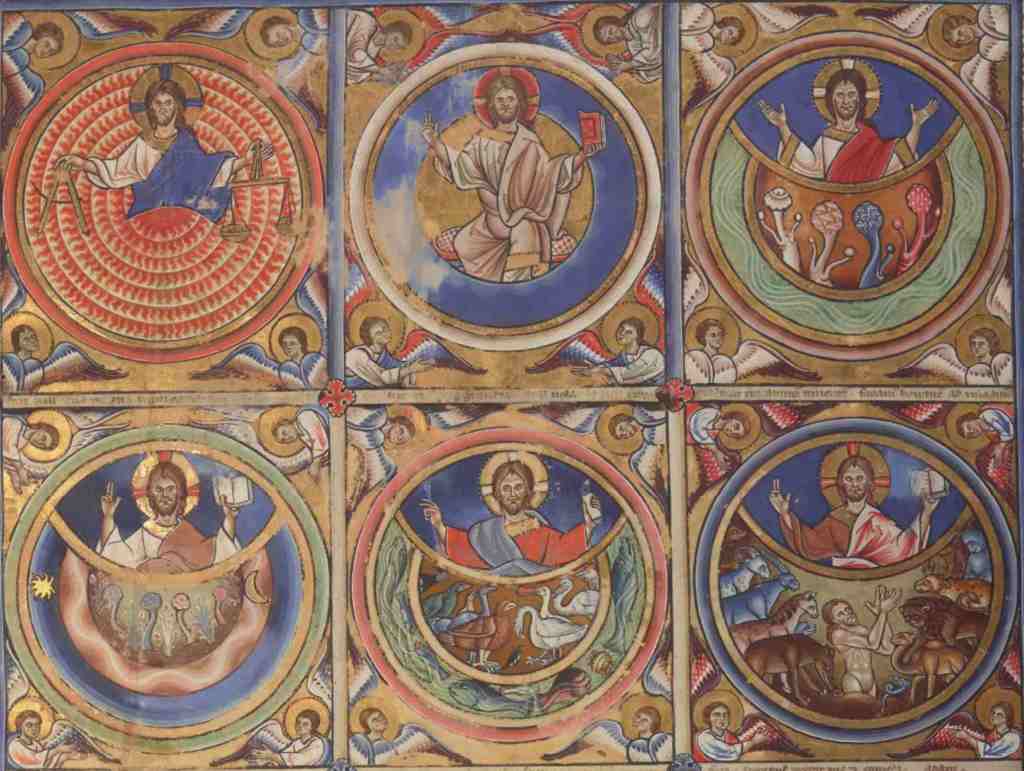
Image notes: “f11 row 1 and 2 six days of creation.jpg” 252 KB [5:19 pm Jan. 4, 2025]
{mushrooms}: Day 3: Panaeolus; Liberty Cap; Cubensis; Amanita. Branching form develops from Left to Right: III, IYI, YI. Two rows below, tree of knowledge cap adds details to plant 2: each liberty cap in the cap is indicated as having left and right arm, indicated by a pair or red or white spots in other liberty cap grid caps. The branches are mushroom-shaped.
{branching}: Day 3: Pilzbaum 1 & 2 are paired tridents, 🔱 🔱. 1 is III form; 2 is IYI (grid in cap is relatively branching). 3 & 4 are paired. 3 is YI form. Lower part of 4 is IY. Upper part of 4 is YI, matching 3.
{handedness}: Day 3: Each plant has Left and Right arms. 1 and 2 lack handedness, being symmetrical. 3 and 4 include YI; lower part of 4 is IY, so YI is predominant (left = branching; right = non-branching). 3 is pure YI form.
{stability}: Not depicted.
{mushrooms}:
Day 1: balance scale’s 2 bowls of mushrooms, pointed to by Plant 3 & 4 in Day 4 below it.
Day 3: Pan, Lib, Cub, Ama (with branches that look like mushrooms), id’d by me in 2020.
Day 4: Lib, Cub, Pan, Ama. Mushroom-trees without branches. The incongruout plants — lacking branches — in “separate land from water” point to branching and stability motifs in Day 1.
{branching}:
Day 1: Compass on Left is branching. Scale Balance on right is non-branching, in that it is pointed to by Day 4’s non-branching mushrooms.
Day 3: III, IYI, YI, IY/YI; increasing order from naive branching to sophisticated comprehension of branching form.
Day 4: mushrooms (grid in cap, but no branches): Y, Y, I, I. Smaller plants: YI, IYI, IYI, IYI, IY.
{handedness}:
Day 1: branching V of compass on Left; balance scale pointed to by non-branching mushrooms on Right.
Day 4: Branching (liberty cap grid) mushrooms on left; non-branching (no grid) on right.
{stability}: Day 1: Balance scale. Alpha compass & Omega scale balance: transformation from possibilism to eternalism; start with branching, end with non-branching.
I’m basically in effect filling in the exam questions, forming the answer guide. What are the most important motifs instances/ messages?
Eden (Canterbury Psalter) Genesis 2-3
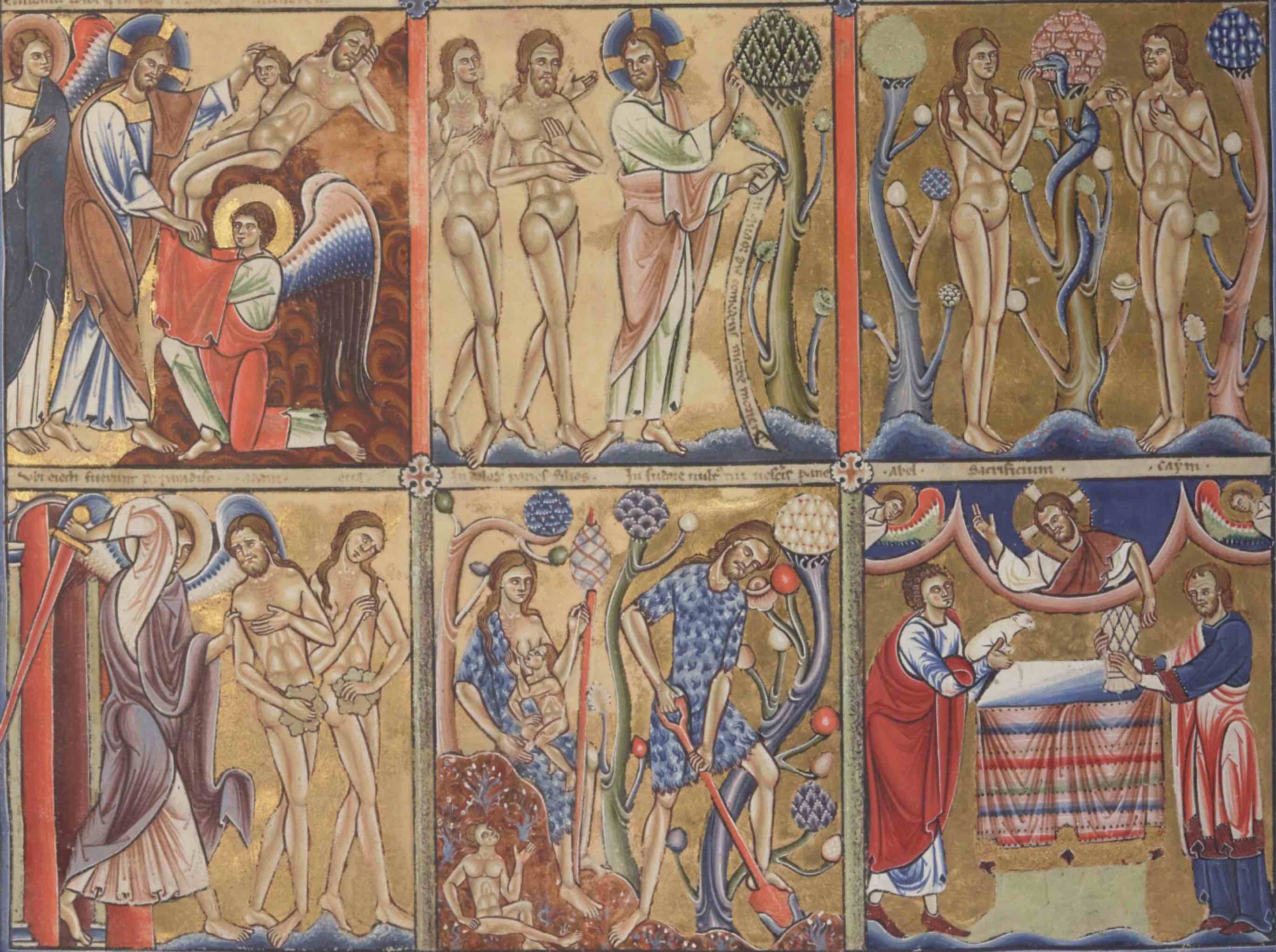
{mushrooms}: Mushroom hems. Angel guard has phallic garment. 7 mushroom-trees. Eve and Adam look at left and right arm in uppermost Liberty Cap mushroom-tree in grid cap while holding fruit in left & right hands. Before eating, Eve & Adam have right foot down (good) and right hand lower (good); after eating, left hand lower (bad).
{branching}: Tree of knowledge has grid of Liberty Cap mushroom-trees, each with left and right arm, like Day 3 plant 2, implying left and right arms in every grid cap, abbreviated as two circles like above Eve spinning. Tree of knowledge, under crown, has branching form YXY, where X has (same as left & right tree).
{handedness}: Creating Eve: angel kneels with right foot forward. Tree of knowledge and left and right tree, under crown, have branching form X with {cut right branch} via right cross-behind. Working the land: mature figures have right foot down; immature figures have left foot down. Exiting gate: all figures have {right foot down}.
{stability}: Guarding {gate} with red {fire} {blade} (threat of loss of control).
merge into motifs above
Genesis 2:16-17 & Genesis 3, reversed by Revelation 22
Snake with legs (branching). White spots; compare 4-legged salamander.
Liberty caps in cap, each with fruiting arms.
pink liberty caps, tan Panaeolus,
Cubensis-type veil branches.
Panaeolus-type lower right cap.
{serpent} = worldline frozen in {rock} = pre-existing future thoughts; brings {fruit} = psychedelic eternalism with 2-level control.
Non-branching neck goes through the veil branches.
God Creates Plants (Golden Psalter) – Genesis 1:11-12
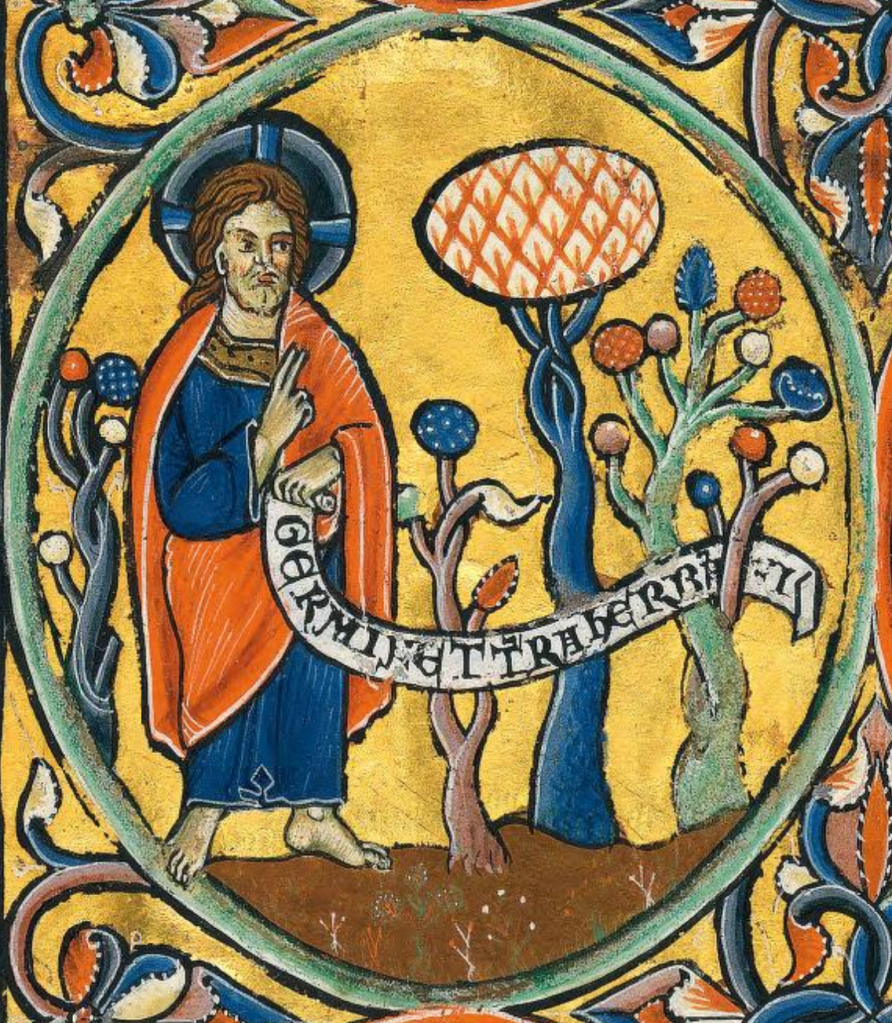
Figure 1. God Creates Plants. Image 21 detail, Golden Psalter.
{mushrooms}: Mushroom hem.
{branching}: 4 plants. Cut right branches and cut left branches. Visually cut left and right branches.
{handedness}:
{stability}:
merge into motifs above
God’s right-hand two fingers are pressed together, non-branching. Mushroom hem. Tree 1 has a right cut trunk (YI). Tree 2 above the scroll is a YI. Tree 3 is an IYO. Tree 4 has an IY touching the opened scroll. God is the creator of branching illusion, non-branching reality, and psilocybin mushrooms that reveal the difference.
Water from Rock (Golden Psalter)
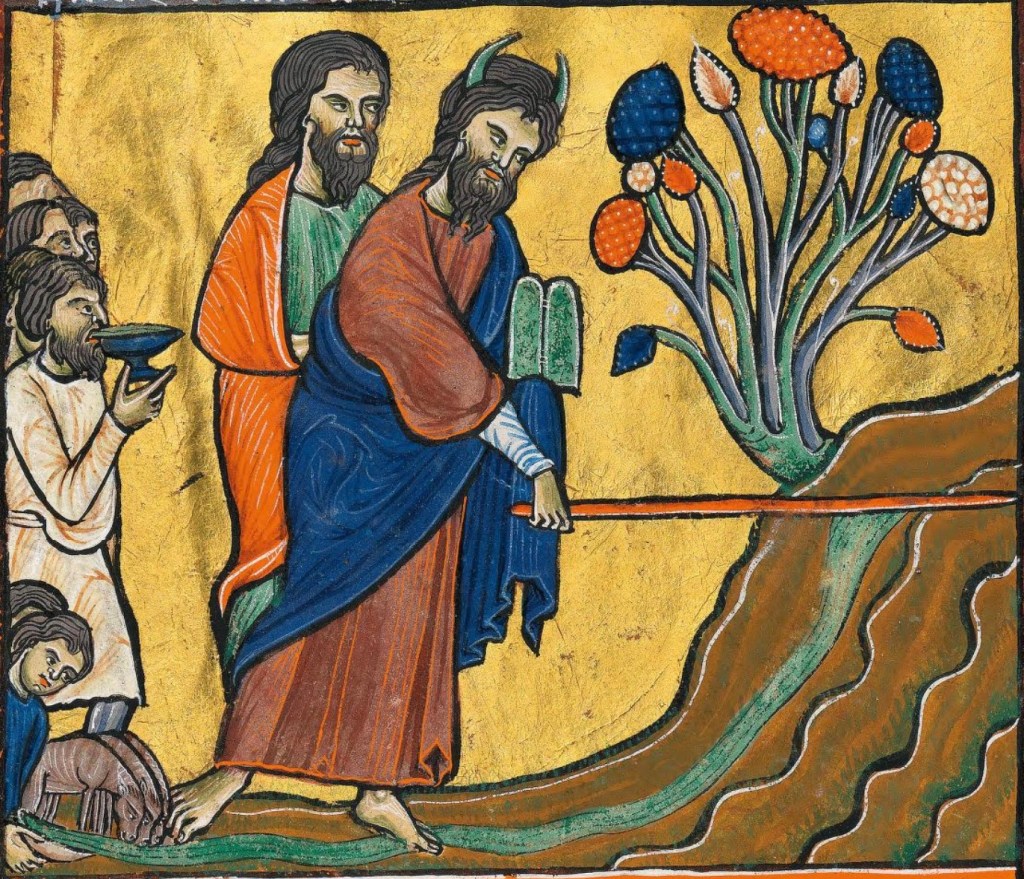
Figure 1. Water from Rock (Exodus 17), image 45 top, Golden Psalter.
{mushrooms}:
{branching}:
{handedness}:
{stability}:
merge into motifs above
Black-arrow mushroom hem. Lifted garment holding up similar stone tablets. Aaron looks at tree. Tree morphology shifts progressively from left-favoring near tablet, to right-favoring near wand: Green stem 1: I, purely non-branching near Moses’ lifted garment & tablets. Gray stem 1: YI = (YO, I); YI (the primary pattern) is good because non-branching on right. Green stem 2: IY = (I, YO); normally IY would be bad (backwards), but here, the I is closer to Moses, which is good. Gray stem 2: (IY, YI) = (prominent I closer to Moses, YO, I). Green stem 3: (IY, YI) = (I, YO, I); the I’s are balanced, forming a Y around the central I or central YO. Gray stem 3: (IY, YI) = (I, YO, prominent I pointing to Moses’ wand).
[9:11 p.m. March 30, 2023]: blue leaf points at end of wand, parallelling red leaf pointing to tip of wand. Blue stem bases point at tablet.
The frozen, pre-existing block universe contains motion, but not meta-motion or branching.
Looking at Bronze Serpent on Pole Heals Fatal Snake Bite (Golden)
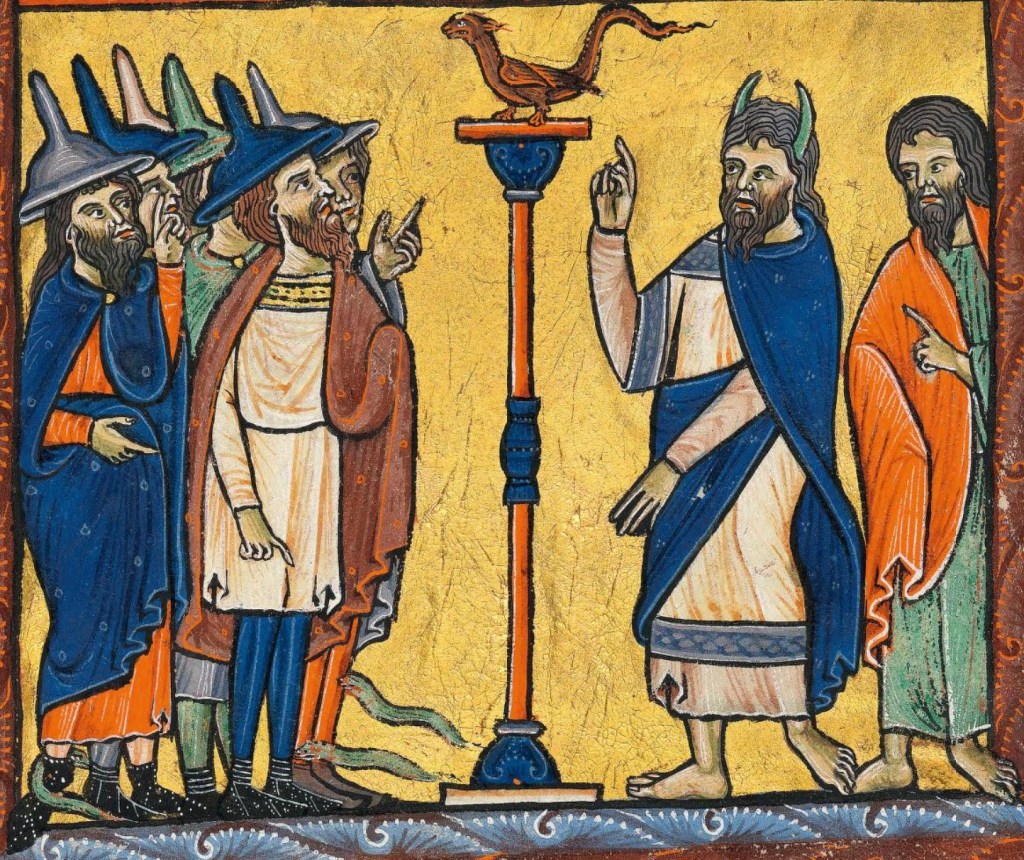
Figure 1. Looking at Bronze Serpent on Pole Heals Fatal Snake Bite (Numbers 21), image 45 bottom, Golden Psalter.
{mushrooms}:
{branching}:
{handedness}:
{stability}:
merge into motifs above
{snake fatally bites left leg}. {looking at bronze serpent on pole} reverses {fatal snakebite}. Pointing equates {fatal snakebite of left leg} and {rigid bronze serpent on a tree trunk with cut branches} that {heals fatal snakebite of left leg}. Israelite on left has {weight on left leg}, {mushroom hem} applied to {left leg}. Moses & Aaron on right have {weight on right leg}, {mushroom hem} applied to {right leg}.
Genesis 3 connects {eating fruit, fire-guarded gate, woman vs. snake, and snake biting heel}; reversed by Revelation 22.
Eve Tempted by the Serpent (Cranach)
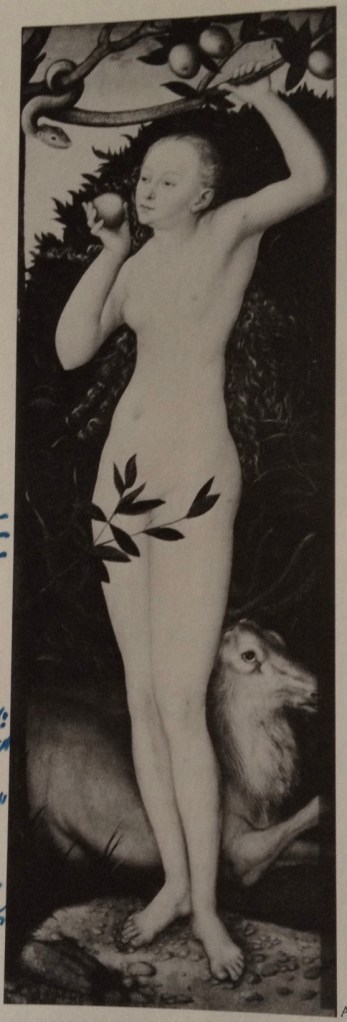
Figure 1. Eve Tempted by the Serpent (Lucas Cranach). From The Power of Myth, Illustrated edition, Joseph Campbell.
{mushrooms}:
{branching}:
{handedness}:
{stability}:
merge into motifs above
merge into motifs above
3-layer branching: plant branch in front of Eve’s branching legs, stag antlers behind her legs.
Holds onto branch with left hand.
Holds the fruit of wisdom in right hand.
Stands on stable rock.
Non-branching serpent contrasted with branching tree.
When You Eat from the Tree of Knowledge, You Will Certainly Die that Day (Golden Psalter)
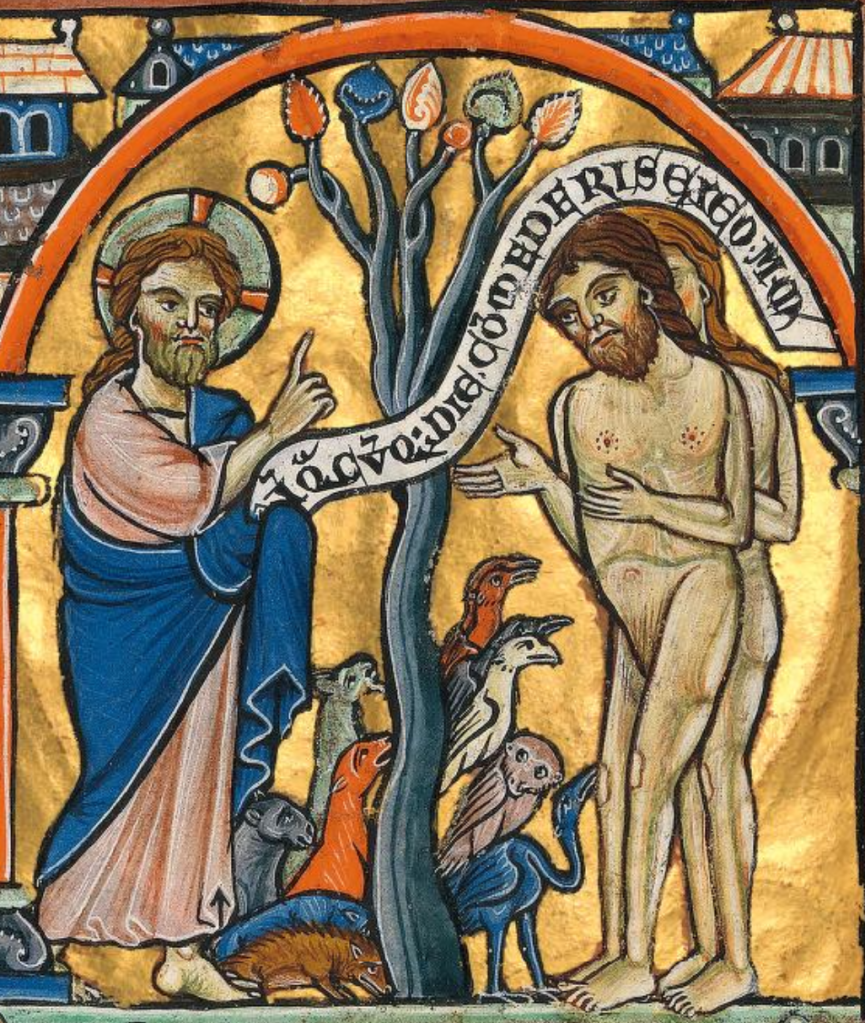
Figure 1. When you eat this fruit, you will certainly die that day. Image 22 detail, Golden Psalter.
{mushrooms}:
{branching}:
{handedness}:
{stability}:
merge into motifs above
God points to a YI pair (branch 1). Branch 2 and 3 are Y’s, asserting branching, matching Adam’s two hands with splayed thumbs.
Lifted garment with black-arrow mushroom hem.
The message comes from God’s lifted mushroom garment. Knowledge of control vulnerability and non-branching.
God’s right foot touches stable column base.
Upper level tree morphology: YIYY.
Owl turns right and looks back at lifted garment.
Adam’s right hand touches non-branching trunk, on the same side as the two Y branches.
Black-arrow mushroom hem.
Bird touches Adam’s right leg and bird’s right heel touches trunk.
Birds’ right wings touch non-branching trunk.
Adam’s right hand touches the branching point of the tree and the message from God.
God’s left foot touches animals; animal-like thinking.
Tree of Knowledge (Golden Psalter)
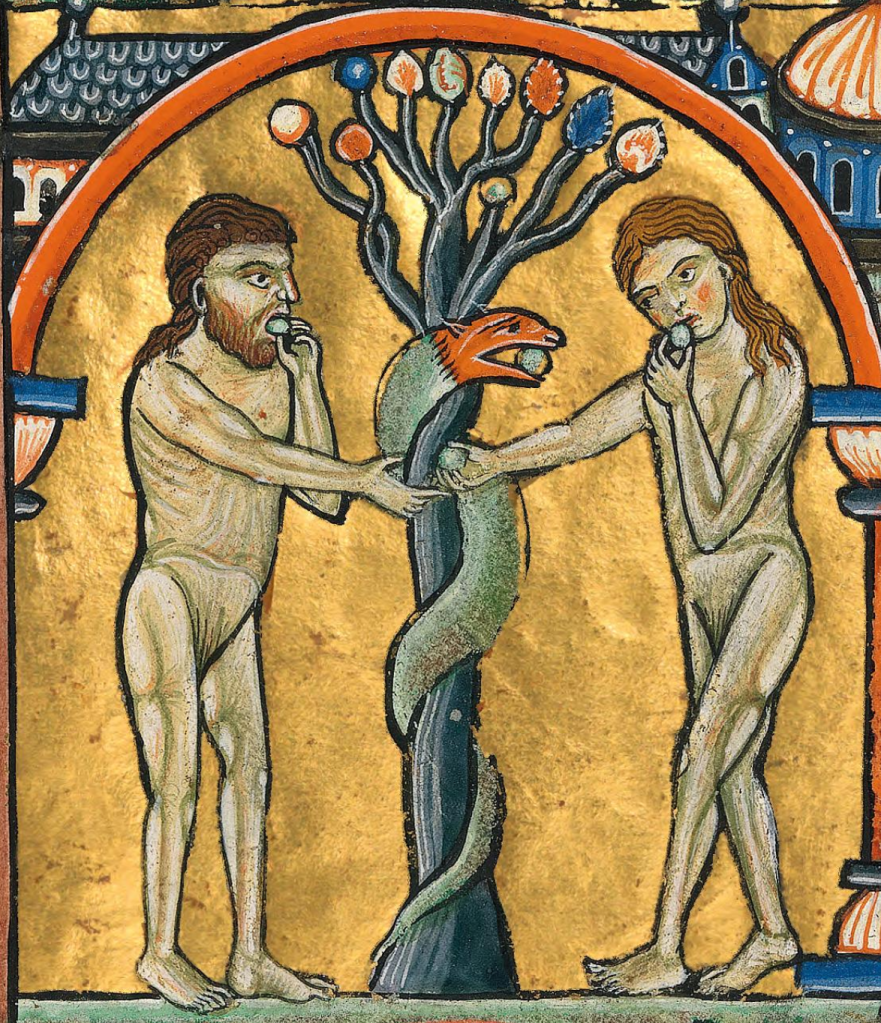
Figure 1. Tree of Knowledge. Image 22 detail, Golden Psalter.
{mushrooms}:
{branching}:
{handedness}:
{stability}:
merge into motifs above
Eve’s {right heel} on {stable column base}.
Tree morphology: YI, YIY, IY.
Non-branching serpent contrasted with branching tree brings fruit of wisdom.
Tree of Knowledge (Plaincourault)

Figure 1. Tree of Knowledge (Plaincourault).
{mushrooms}:
{branching}:
{handedness}:
{stability}:
merge into motifs above
Amanita imagery indicates Psilocybin effects. which is EXACTLY how every single psychedelics scholar acts & fantasizes already
Eve stands on right foot.
Left leg bent, right leg straight.
Eve holds non-branching cap over branching legs.
Non-branching snake in branching tree.
Tree has left arm, right arm, left leg, and right leg, and non-branching trunk base.
Angle of 3 branches under cap matches angle of Eve’s arms.
Eve’s underlying, imperishable ribs are revealed.
{they saw that they are naked} = the underlying mental functioning of control system becomes perceptible, including vulnerability since it becomes clear that you don’t control the source of your control-thoughts but are profoundly dependent on the higher, hidden, uncontrollable source of control-thoughts, as has always been the case, but initially veiled for a time, occluded, concealed conditionally until exposed to psilocybin-induced loose cognition, at which time the autonomy illusion of monolithic control operating in a branching possibilities world collapses and the adult mature mental world-model is created, unfurled, sloughing off the garment (or flesh layer) that hid the underlying reality.
Blame panel (Bernward) – replace by L door top 4 of 8 panels
Because You Have Eaten the Fruit, the Snake Will Bite Your Heel (Bernward)
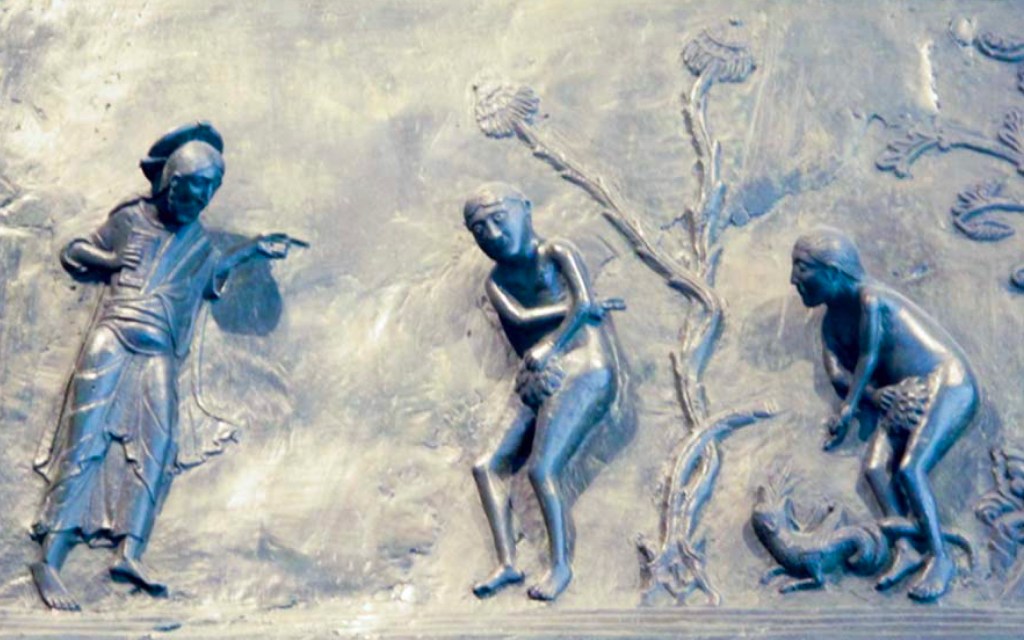
Figure 1. Revealed ultimate source of causal agency in a block universe with embedded snake-shaped, pre-existing worldlines frozen in rock (bronze). Panel 4, Adam and Eve, Bernward’s Door of Salvation. St. Michael’s Church, Hildesheim, Germany, 1015. Photo credit: Julie M. Brown.
{mushrooms}: 8 Liberty Cap mushroom-trees: 3 in left Bernward Door; 5 in Bernward Column. Mushroom hem of bronze, in “Working the land”: Eve nursing child. Bernward Column: roofs of towers are Liberty Cap caps.
{branching}: Column: Broken branch points at Jesus’ halo.
{handedness}: YI tree. God stands on right foot, left foot lifted.
{stability}: God’s left foot lifted; stable. Adam & Eve’s right foot lifted; unstable. Visually cut right arm. Visually cut right leg, occluded by serpent.
[11:49 feb 4 2025] Visually cut right leg, occluded by serpent. todo: move out
merge into motifs above
{enmity between woman and snake} = the branching-possibility world model is incompatible with altered-state experiencing of one’s worldline of preexisting control-thoughts frozen in a non-branching block universe.
YI tree.
God holds a message of transcendent knowledge in right hand.
Branching snake with legs.
Enoch Carried Up to Heaven (Golden Psalter) – Genesis 5:24
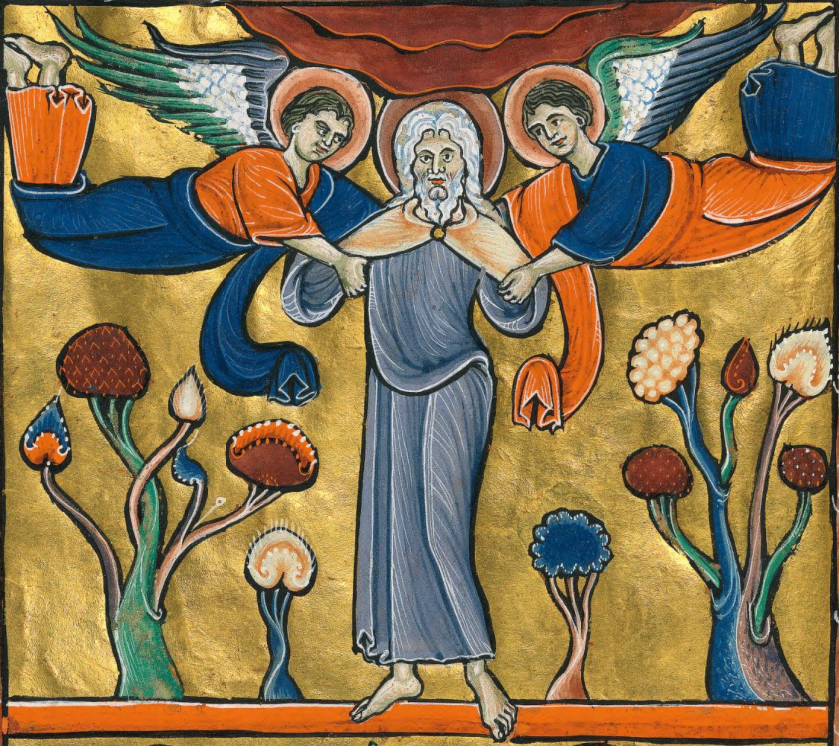
Figure 1. Enoch carried up to Heaven (image 24 top, Golden Psalter).
{mushrooms}:
{branching}:
{handedness}:
{stability}:
merge into motifs above
Lifted garment above non-branching tree 2x.
Trees 1 & 4 have a matching YI in middle, mirrored at their base yet both end up YI. Tree 1’s branch uses a switchback to become a YI. Tree 1 = I YI IY. Tree 4, on the right, = I YI YI, which is better.
Diagrammatic redundancy creates a communication parity check, to confirm deliberate arrangement of elements and messaging.
Mushroom hem is on Enoch’s right.
Bent left leg; standing with greater percent of weight on right leg.
Arrow-based mushroom hems match arrows in lifted garment mushroom hems.
Lamech Shoots Cain (Golden Psalter) – Genesis 4:23
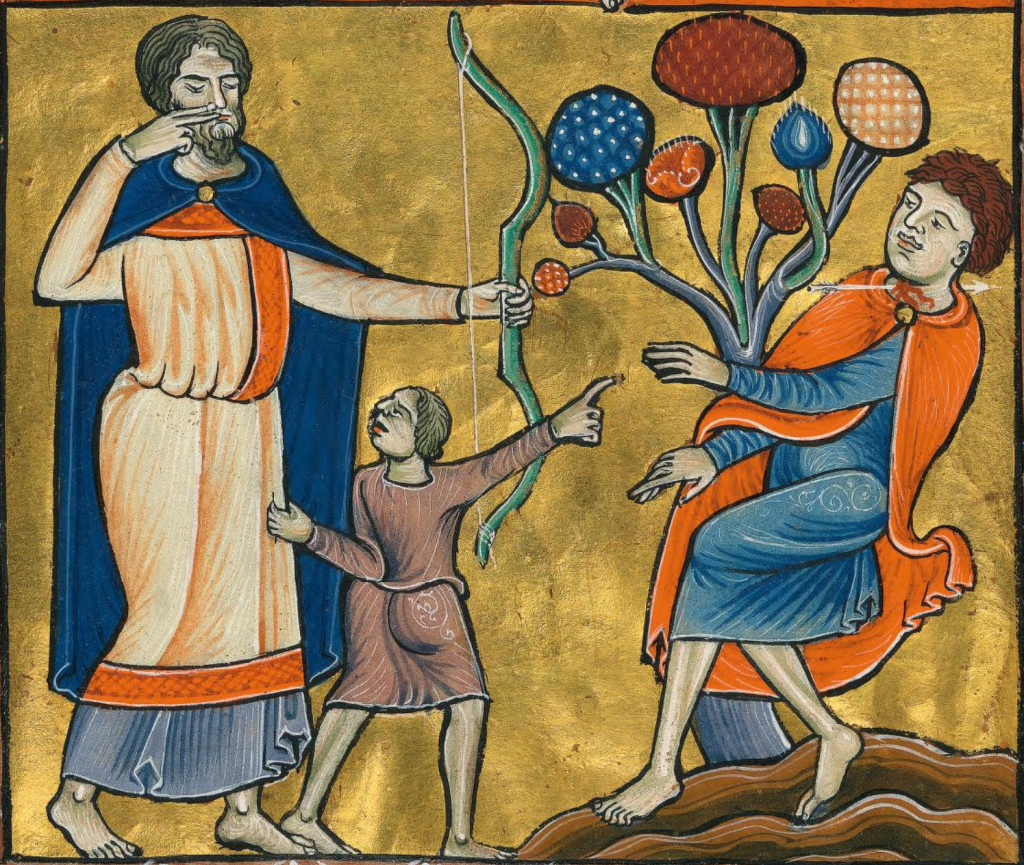
Figure 1. Enoch carried up to Heaven (image 24 bottom, Golden Psalter).
{mushrooms}:
{branching}:
{handedness}:
{stability}:
merge into motifs above
Bottom panel: Right hand higher than left (bad). Two fingers held together non-branching.
Right leg bent; weight on left leg (bad).
Cain (right): right foot down, left floating (good). Left hand higher than right (good).
Mushroom hems and lifted garment.
Branching tree growing from Cain’s left arm.
Cain’s left foot floating (good).
Jacob’s Ladder (Golden Psalter) – Genesis 28:12
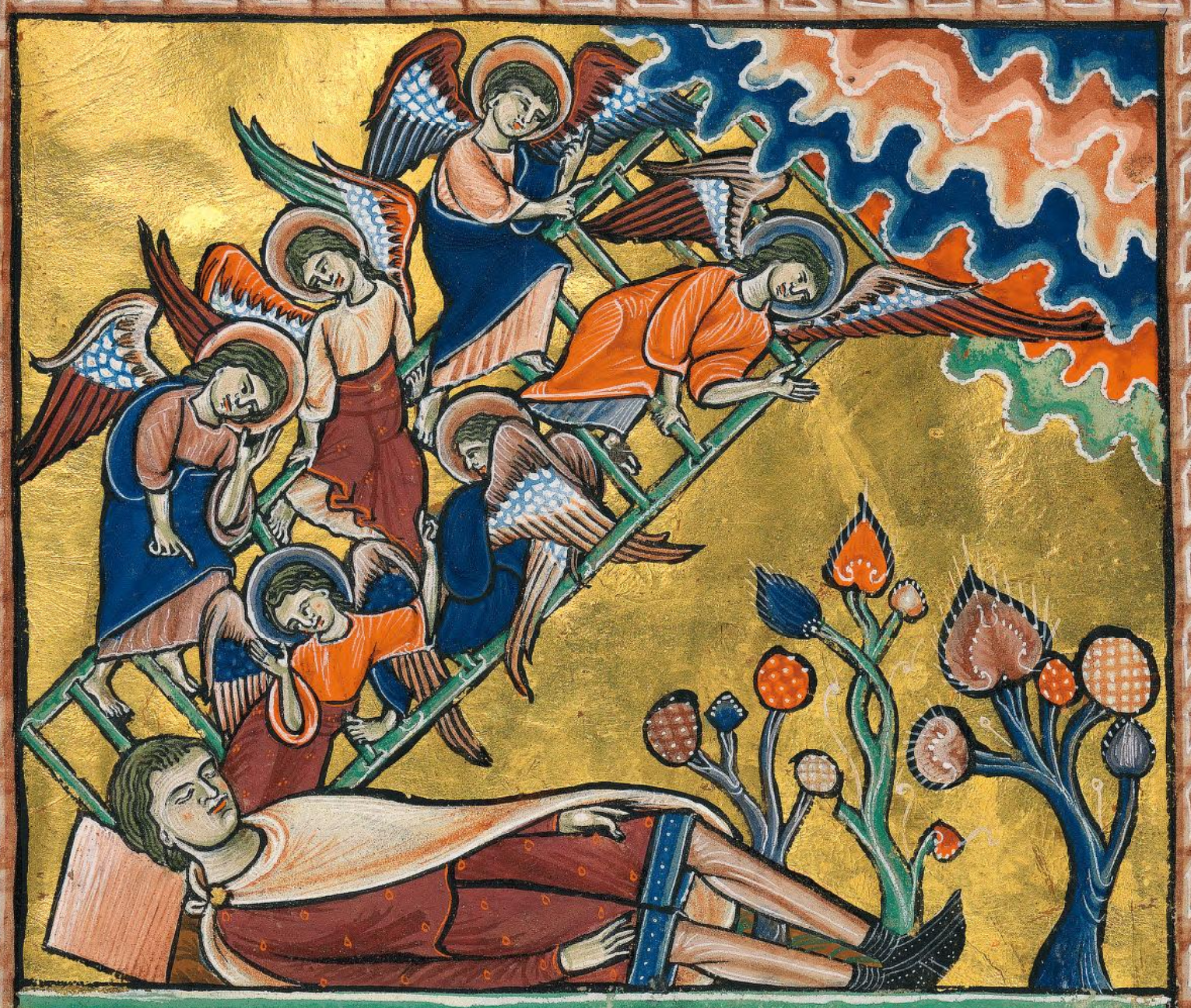
Figure 1. Jacob’s ladder (image 31 Top, Golden Psalter).
{mushrooms}:
{branching}:
{handedness}:
{stability}:
merge into motifs above
Right heel on ground, and non-branching trunk base of tree.
Top half of tree 2 is YI.
Top quarter of tree 2 is a YI.
Tree 3 is a YI. The I touches the adjacent non-branching cap of a Y branch.
Right arm on ground.
Jacob Wrestles an Angel (Golden Psalter) – Genesis 32:22–32
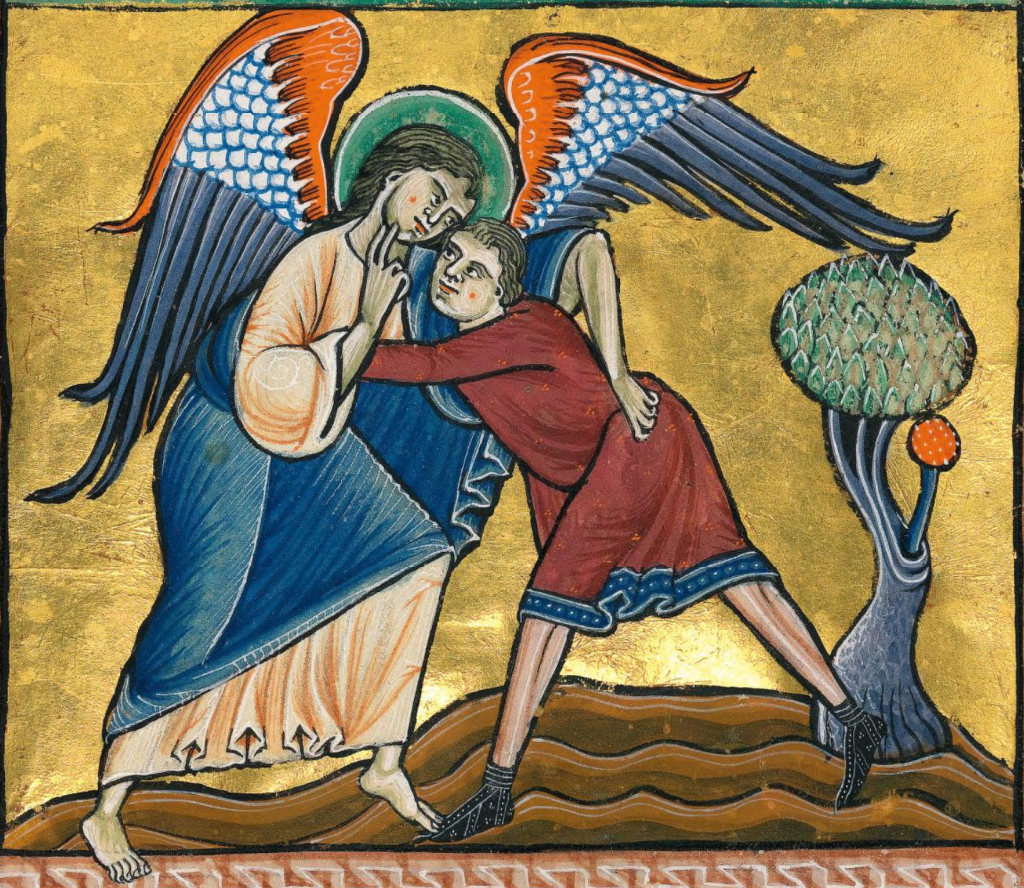
Figure 1. Jacob wrestles an angel (image 31 bottom, Golden Psalter).
{mushrooms}:
{branching}:
{handedness}:
{stability}:
merge into motifs above
Branching mushroom tree on left, non-branching on right.
Jacob’s right heel touches stable base of tree trunk non-branching.
Non-branching fingers held together giving blessing of comprehending non-branching; trunk = right subtree red nonbranching.
Angel stands on right foot, left leg more bent than right.
Angel’s left foot lifted, touching Jacob’s left lifted foot.
Left wing splayed feathers touching branching left tree.
Three hem mushrooms, just like Moses’ 3 in Mystic Y only when he’s next to Pilzbaum, only Moses — on no other figures.
Angel makes “non-branching” shape with right hand fingers; teaching non-branching / eternalism.
Angel’s left hand injuring Jacob’s left hip.
Sacrifice of Isaac – Genesis 22:1-19
Sacrifice of Isaac (Canterbury Psalter)
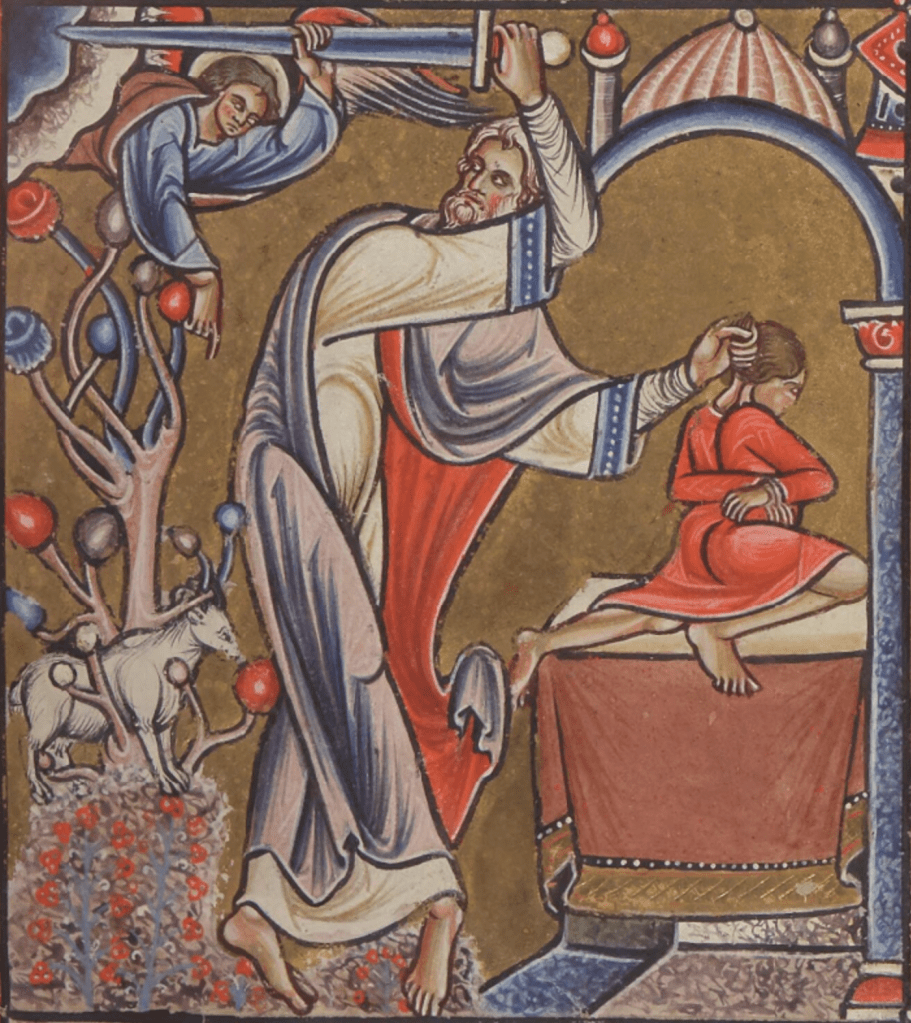
Figure 1. Sacrifice of Isaac. Canterbury Psalter, BnF Latin MS 8846, folio f12. 1176-1200 CE. https://gallica.bnf.fr/ark:/12148/btv1b10551125c/f12.item.zoom#
{mushrooms}:
{branching}:
{handedness}:
{stability}:
merge into motifs above
Lifted mushroom hem touches Isaac’s straight left leg (false foundation of control).
Isaac’s left leg is straight, right leg bent.
Abraham’s left foot floating; weight on right foot.
Mushroom hem.
Mushroom thicket with ram helplessly caught to no avail to extricate himself by his power.
For {lifted mushroom hem}, John Rush’s terminology is “celestial erection”. Cite Rush.
Abraham & Isaac: Isaac straight left leg (in Canterbury not Golden Ps) touches Abraham’s lifted garment; Abraham knows that asserting possibilism-thinking causes loss of control — ram caught in thicket by its own power and ends up with no control and reality is revealed, eternalism-thinking results, given birth, engendered from above, God-mode thinking, higher level of 2-level (not autonomous monolithic) mental model of control. See the three rams in Canterbury Psalter image f177 row 2 left.
Sacrifice of Isaac (Golden Psalter)
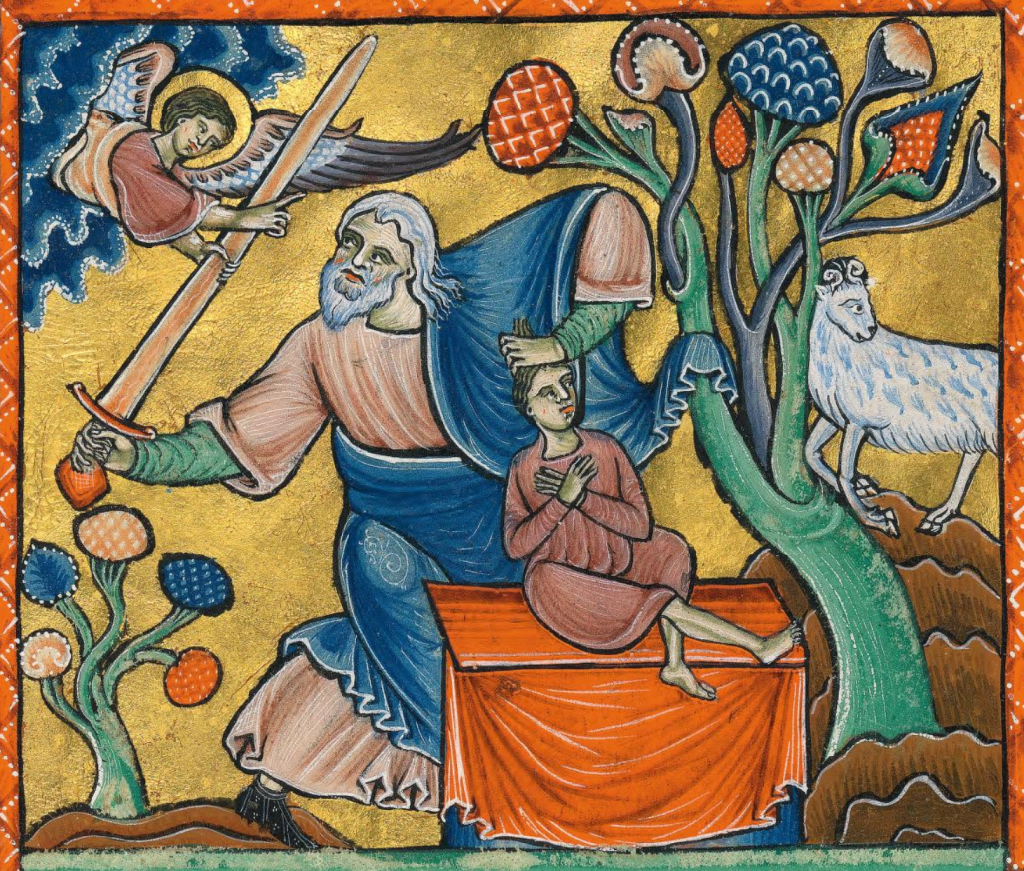
Figure 1. Sacrifice of Isaac (Golden Psalter).
{mushrooms}:
{branching}:
{handedness}:
{stability}:
merge into motifs above
Abraham has four mushroom hems, one of which is a lifted mushroom hem.
The lifted mushroom hem is on a non-branching part of the tree.
Youth’s right leg is straight, left bent, implies relying of eternalism-thinking.
Abraham’s left leg is bent.
Tree 1: IY, IY, IY, YI. The I branch of the YI branch leans toward a black-arrow mushroom hem.
Gill striations on lifted mushroom hem.
Angel’s left wing touches leftmost branch of a YI branch of the tree.
Multiple black-arrow mushroom hems contrasted against multiple rounded naturalistic hems proves that mushroom hems mean mushrooms. [Rush 2011/2022]
Sacrifice of Isaac (Van der Borch)
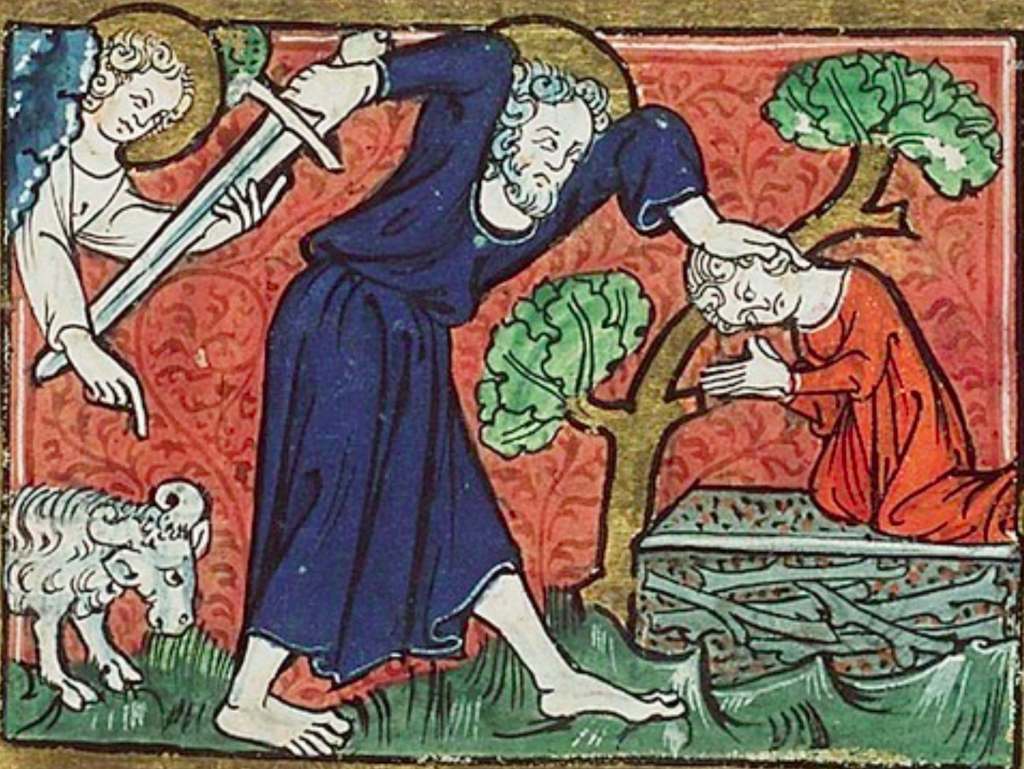
Figure 1. Sacrifice of Isaac (Van der Borch).
{mushrooms}:
{branching}:
{handedness}:
{stability}:
merge into motifs above
Angel’s left fingers splayed branching, right single finger non-branching.
Moses standing on right leg, left foot floating.
Isaac fingers held together nonbranching at the cut branch.
Tree left crowns, suggesting branching, right cut branches.
Lack of branching in tree crowns.
Background vine trees mostly non-branching.
Rock altar has cut branches.
Burning Bush
Moses, Burning Bush, and Tablets (Ingeborg Psalter)
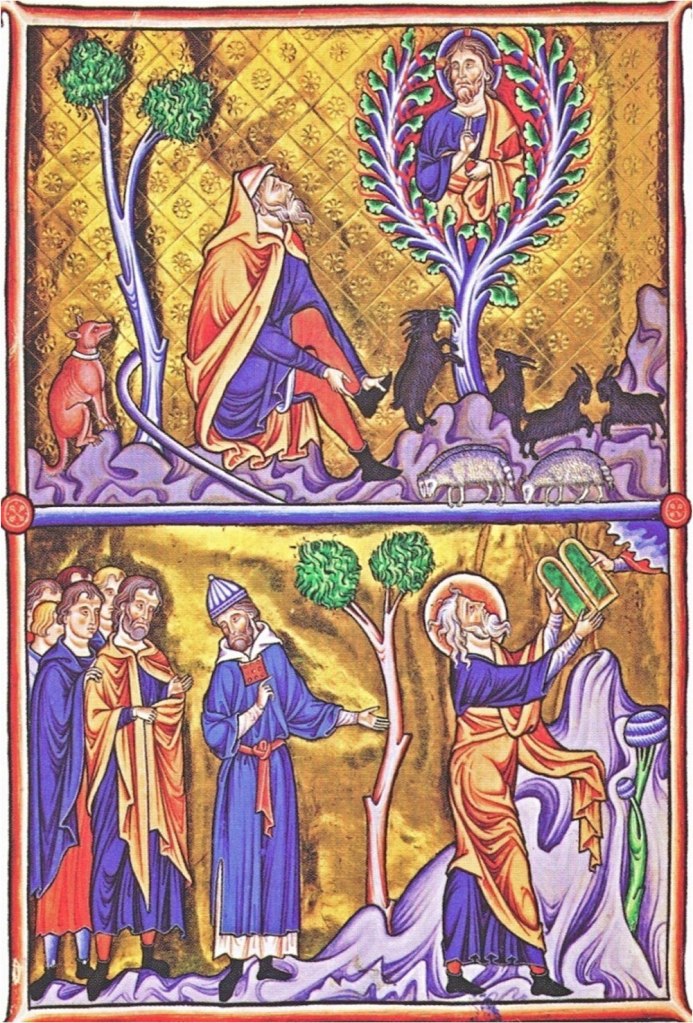
Figure 1. Moses, Burning Bush, and Tablets. Exodus 3. Ingeborg Psalter.
{mushrooms}:
{branching}:
{handedness}:
{stability}:
merge into motifs above
Cubensis or Panaeolus mushroom tree, left branching, right non-branching yet close to lifted garment.
Creator’s fingers are held together in contrast to the branching Y tree.
Aaron non-branching fingers held together touching cut branch.
Diagrammatic Y-branching trees with two cut branches added.
God as creator of Y-branching.
Shepherd’s hook for directing sheep is touching cut branch.
Neat row of 3 mushroom hems only on Moses next to the mushroom tree.
Burning Bush (Van der Borch)
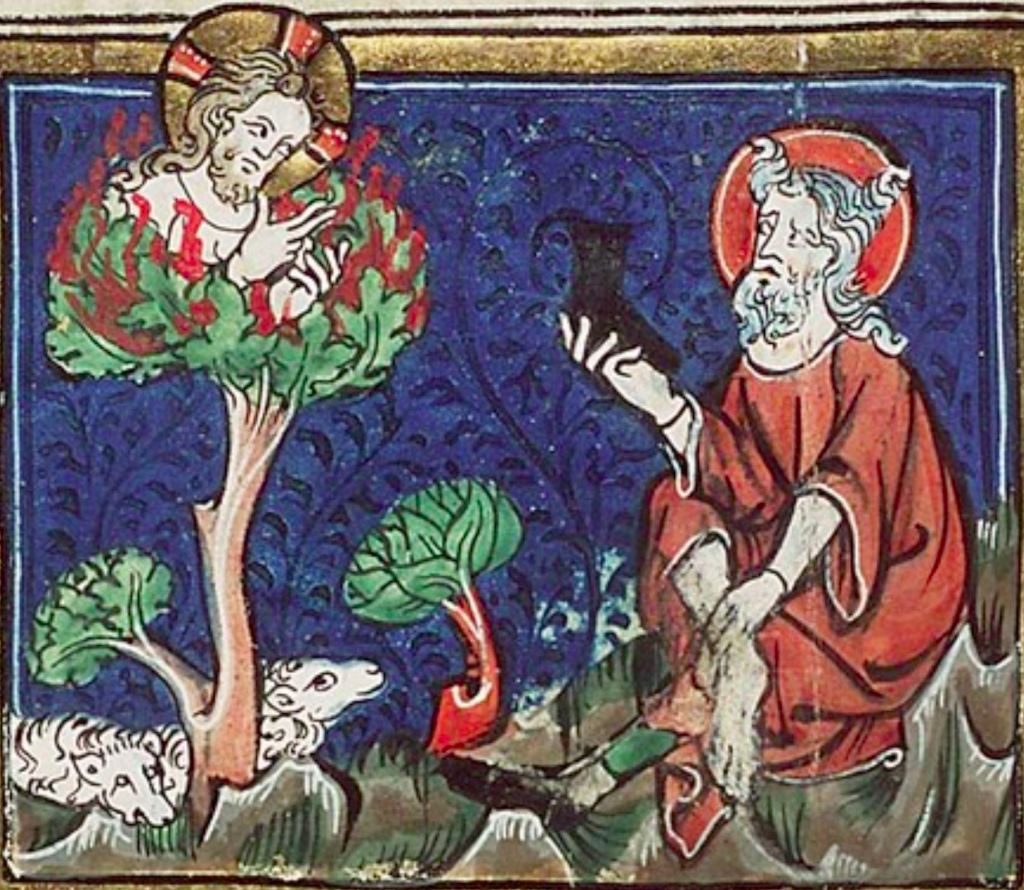
Figure 1. Burning Bush (Van der Borch).
{mushrooms}:
{branching}:
{handedness}:
{stability}:
merge into motifs above
God: fingers together right hand, left fingers splayed
Moses fingers together left hand, right fingers splayed
YI tree pair.
Moses left leg straight, right leg bent.
Background vine trees (90% non-branching)
Jonah and the Gourd Plant (Golden Psalter)
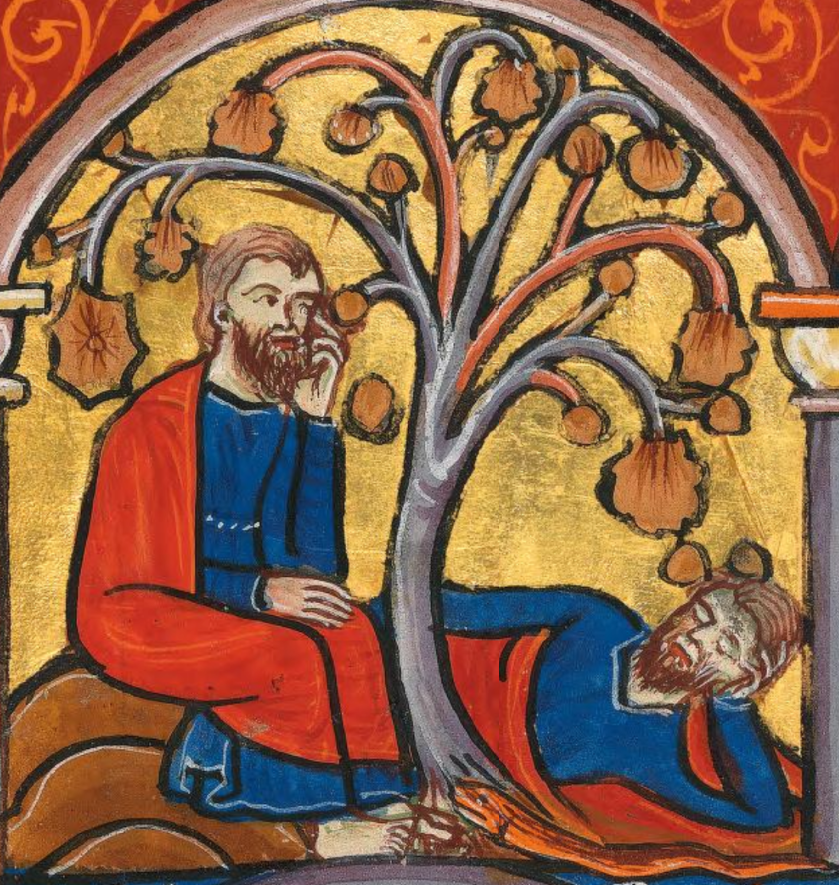
Figure 1. Jonah and the gourd plant. Jonah and the Gourd Plant. Image 230, Golden Psalter.
{mushrooms}:
{branching}:
{handedness}:
{stability}:
merge into motifs above
Left-hand fingers splayed, 2x.
Right-hand fingers held together.
Gourd is a branching-averse vine.
Floating caps with no branches, touching him.
Non-branching worm (worldline) eats possibility branches (compare burning bush), Jonah unhappy about losing shade = freewill fog blocking the sun light.
Entry into Jerusalem (Church of Saint Martin)
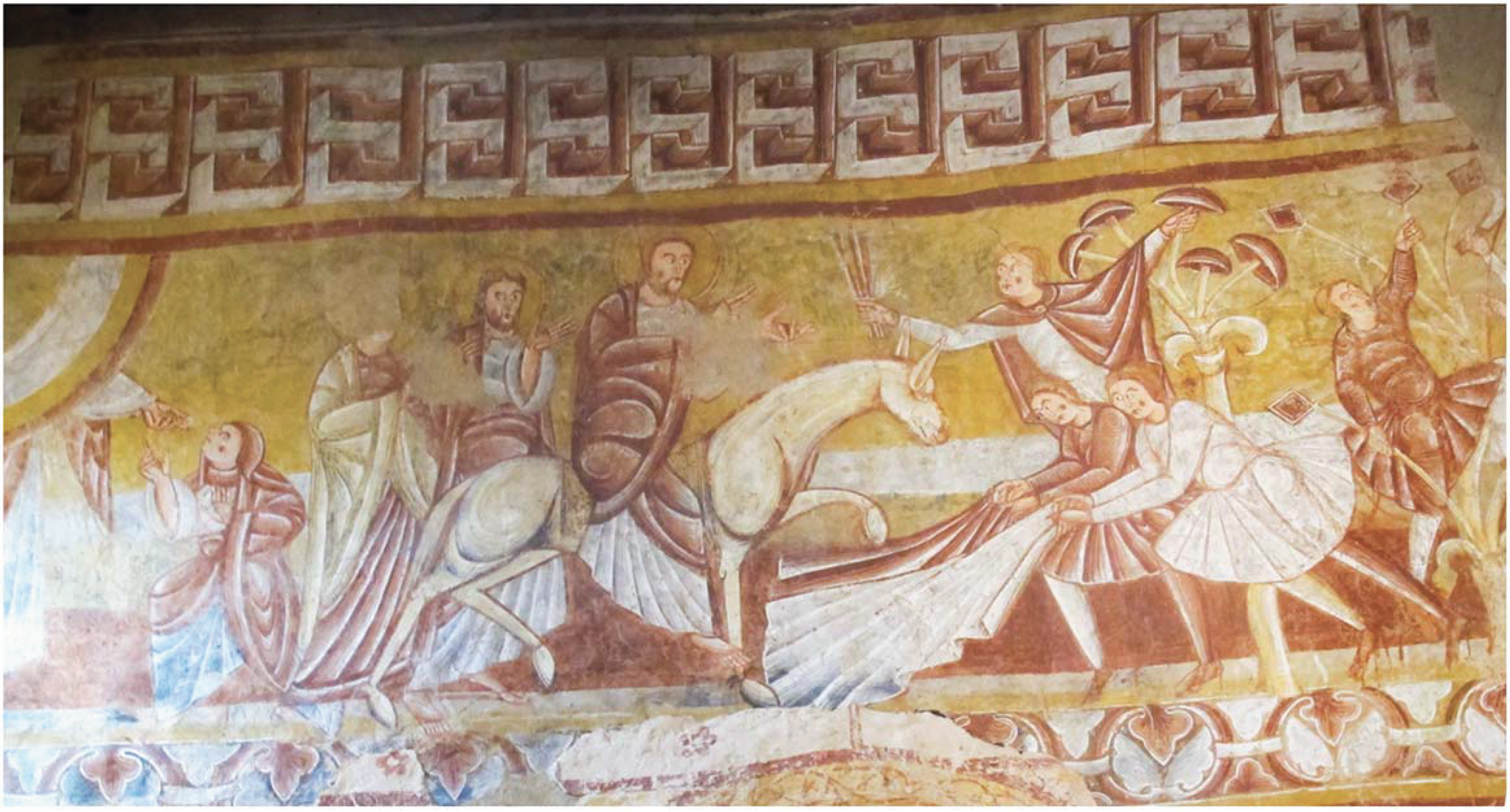
Figure 1. Purification of Isaiah’s Lips and Christ’s Entry into
Jerusalem. Fresco on south choir wall, Church of Saint Martin de
Vicq, France. Early 12th century (photo by Julie M. Brown, used with permission).
{mushrooms}:
{branching}:
{handedness}:
{stability}:
merge into motifs above
Jesus’ left-hand fingers branching.
Jesus’ right-hand fingers held together non-branching.
Youth in tree holds branch with left hand.
Apostles behind Jesus display fingers together, non-branching.
Youth in tree holds non-branching sticks and branching feathers in right hand.
Jesus holds his contrasting finger-shapes out, and youth in tree holds his contrasting sticks and feathers out, in matching fashion.
Donkey lifts left front leg and left rear leg.
Donkey’s right leg is on the top of an arch of a door.
Jesus’ right foot touches donkey’s right foot, which is down.
Youth in diamond-leaf tree holds branch in a branching cluster with left hand.
Youth in diamond-leaf tree holds branch not in branching cluster with right hand.
Right hand holds a semi-lance-shaped, non-branching spear in right hand aimed at Jesus.
Youth in diamond tree has left hand higher, toward more branching; right hand lower, toward less branching.
A youth out of view holds onto branching with left hand, cuts branch with pruning knife held in right hand.
Youths remove outer garments and put them under the donkey’s feet.
Youths spreading outer garments put weight mainly on their right legs.
Towers of Jerusalem (Church of Saint Martin)
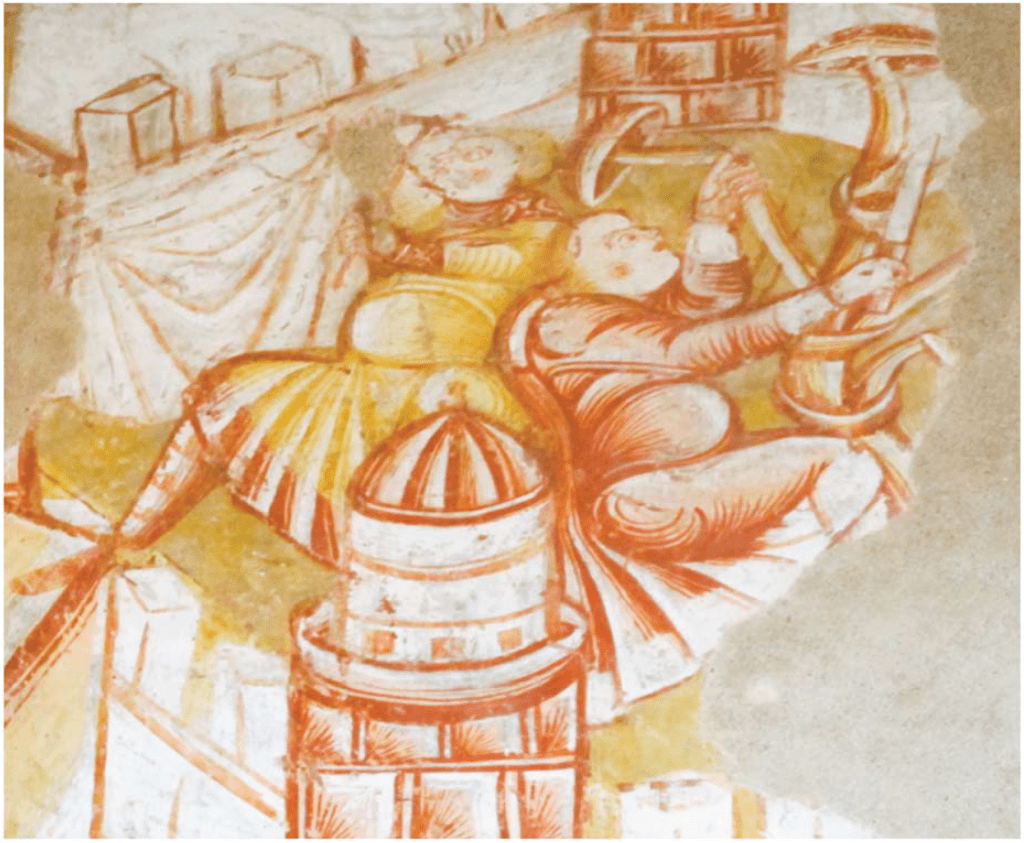
Figure 1. Detail from Towers of Jerusalem. Church of Saint Martin de Vicq, France. Early 12th century (photo by Julie M. Brown, used with permission).
{mushrooms}:
{branching}:
{handedness}:
{stability}:
merge into motifs above
… a conventionalized tree type, … which art historians actually refer to as “mushroom tree” … there are hundreds of instances …
If you are interested, I recommend a little book by A. E. Brinckmann, Die Baumdarstellung im Mittelalter (or something like it) …
Just to show what I mean, I enclose two specimens: a miniature of ca. 990 which shows the inception of the process, viz., the gradual hardening of the pine into a mushroom-like shape, and a glass painting of the thirteenth century, … which shows an even more emphatic schematization of the mushroom-like crown.
Letter of Erwin Panofsky to R. Gordon Wasson, May 12, 1952. Wasson Archives, Harvard University Herbarium, Cambridge, Mass., in [Brown 2019], citing [Brinckmann 1906]
… even the most mushroom-like specimens show some traces of ramification; if the artists had labored under the delusion that the model before him was meant to be a mushroom rather than a schematized tree he would have omitted the branches altogether.
… Please keep my poor little pictures as long as you wish. And I really recommend to look up that little book by A. E. Brinckmann.
Letter of Erwin Panofsky to R. Gordon Wasson, May 20, 1952. Wasson Archives, Harvard University Herbarium, Cambridge, Mass., in [Brown 2019], citing [Brinckmann 1906]
{tower}, {blade}, {fire}, {animal demons}, {scale balance}, {furrowed brow}, {panic}, {flames}, {monsters}, {torment}, {dependent control/balance}, {holding up by right limb}, {stable column base}, {balancing in tree}, {balancing on right foot}, {cathedral building construction}, {balancing in tree}
So we want to communicate and depict moving from one mental worldmodel to the other, and we want to indicate that that transformation process is driven by control instability. so we have motifs then to represent control stability
a transformation of control from autonomous control, like king, to dependent control, like guy being held up by the right hand by God’s hand coming from the cloud.
These are motifs that represent control stability; transformation to reliance to get control stability.
Features: youths in trees cutting branches, {holding branch} with {left hand}, {cutting branch} with {right hand}, standing on gate hinge with right foot.
See also the curved pruning knife in upper right of Entry into Jerusalem (Church of Saint Martin).
Against Panofsky’s letters to Wasson, mushroom tree artists used their artistic freedom, ingenuity, and intentionality to depict not merely “a mushroom” or “a tree”, but rather, to depict the possibility non-branching effect that’s produced by psilocybin mushrooms. Panofsky didn’t note that artists prominently add {cut branches} and {cut right trunk}, as well as branches, to mushroom trees. Don’t just look for mushrooms, because that’s all you will see: merely physical mushrooms, rather than depictions of the peak psilocybin cognitive, experiential effect: possibility non-branching.
Youth in tree cutting branches.
Left hand holds branch.
Right hand cuts branch.
Youth draping walls: right foot is on the hinge of the Jerusalem gate.
Left hand higher, toward more branching, right hand lower, toward less branching.
Entry into Jerusalem (Otto Gospel)
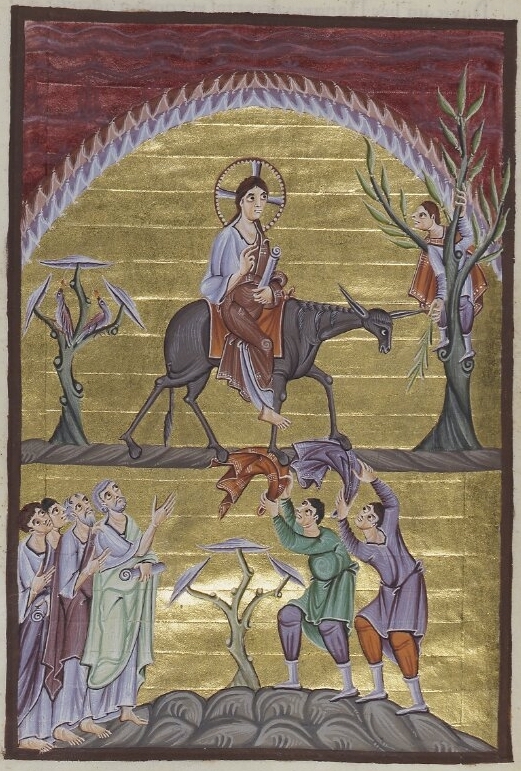
Figure 1. Entry into Jerusalem. Page 94, Otto Gospel.
{mushrooms}:
{branching}:
{handedness}:
{stability}:
merge into motifs above
Bottom tree has YI morphology.
Mushroom trees. Each cap has 1 stem.
Scroll = Transcendent Knowledge of transformation from possibilism to eternalism.
Birds eating dangling fruit from mushroom cap.
Lower left: 2 guys hold right-hand two fingers together, 1 guy holds four fingers together.
Youth in tree holds branching portion of tree with left hand.
Youth in tree: left fingers splayed branching.
Youth in tree holds left hand high, toward more branching; right hand low, toward less branching.
Youths’ outer garments removed and placed under the donkey.
Youth in tree holding a {removed branch} in right hand.
Jesus’ right hand fingers held together, non-branching.
Jesus and youth in tree look at each other while gesturing.
Youth in tree: outer garment pulled away.
Donkey’s weight on right leg; left leg lifted.
Jesus’ right foot touching donkey’s right leg.
This image is used for plate VII in Brinckmann 1906, which was strongly recommended by Panofsky to Wasson twice (though not mentioned by Wasson).
Entry into Jerusalem (Lorenzetti)
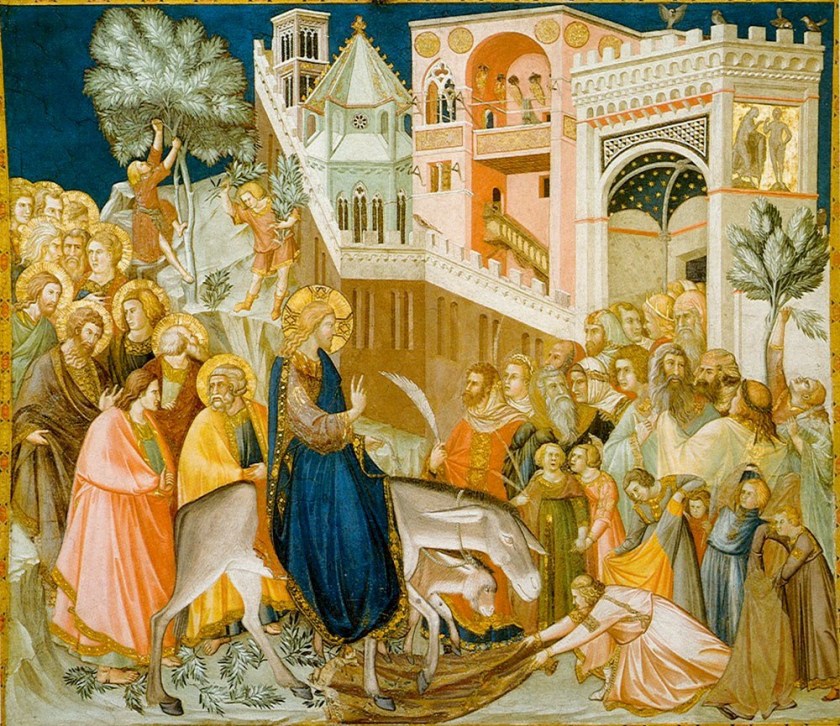
Figure 1. Entry of Christ into Jerusalem (1320) by Pietro Lorenzetti.
{mushrooms}:
{branching}:
{handedness}:
{stability}:
merge into motifs above
Youth climbs tree with straight right leg on cut trunk, bent left leg on main branching point.
Stars above gate = Heimarmene gate; no-free-will gate; cybernetic eternalism gate.
Youth climbing tree holds lower thicker branch (less branching) in right hand, higher thinner branch in left hand.
Youth at tree on right holds removed branch in right hand and branching feathers in left hand.
Bearded adult holds a removed feather, relatively non-branching at the macro level.
Jesus holds right hand fingers in a branching shape.
Youth removes outer garment, places it under feet of donkey.
Beardless youth holds two feathers in a branching Y shape.
Youths in trees removing branches.
Branches under donkey’s feet.
Donkey lifts left front leg. Baby donkey lifts left front leg.
Liberty caps in upper porch.
Peaceful donkey rather than an overpowering horse (like dove vs. eagle & lamb vs. ram).
Entry Into Jerusalem (Golden Psalter)
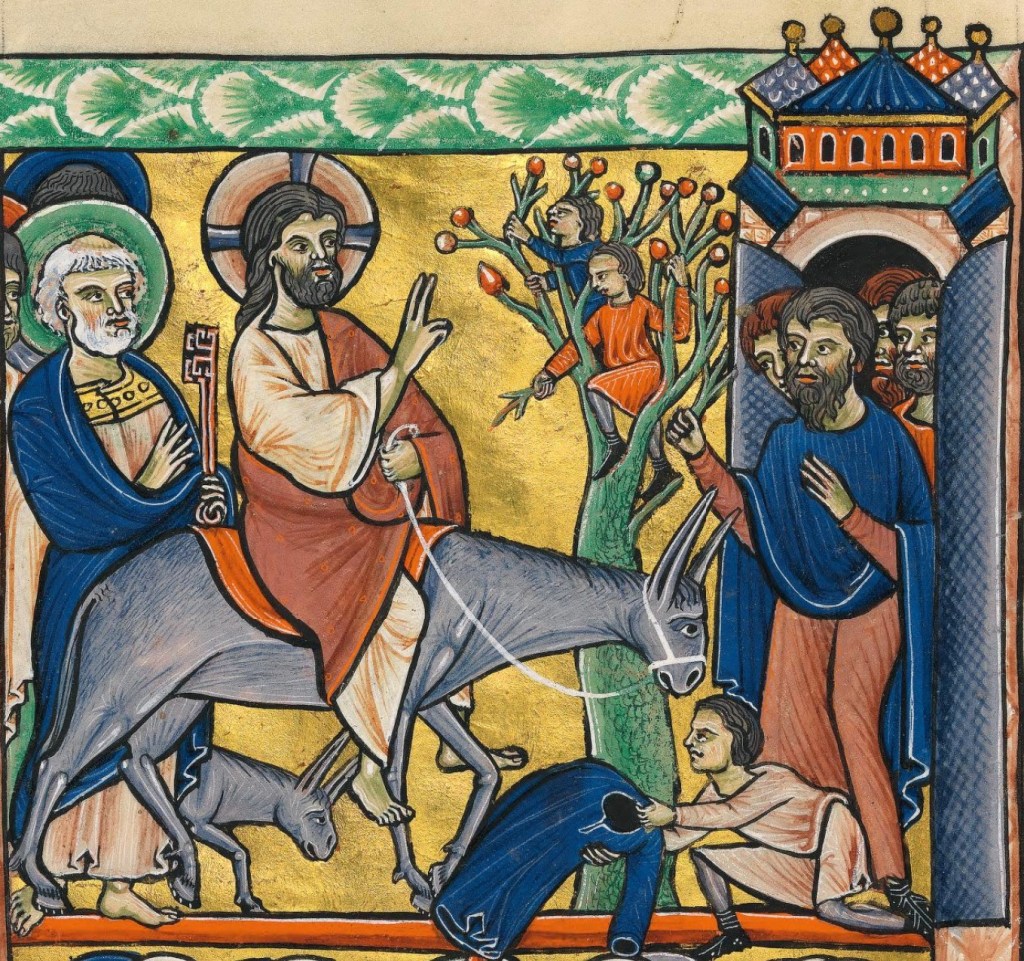
Figure 1. Entry of Christ into Jerusalem (image 54 top, Golden Psalter).
{mushrooms}:
{branching}:
{handedness}:
{stability}:
merge into motifs above
Mirroring: Peter’s right-hand fingers are splayed branching, contrasting mirrored held-together fingers of guy passing through gate.
City contained in 5 towers behind the gate.
Removed branch touches the gate.
The {left foot back} of {outer-garment} spreader touches/is the {bent left leg} foot, showing that:
{left foot back} = {left leg bent}, which = {standing on right foot}
Peter’s fingers as an indicator through contrast, useful to communicate powerful clear messaging, like Eadwine’s pink key tree. This hand-pair functions same as the “left fingers splayed vs right fingers together” hands-gesture. Splayed fingers on the left, non-branching held-together fingers on the right. branching = left, non-branching = right.
Left hand helpfully serves any positive or negative or contrastive function just like positive mushroom serves to represent branching. Showing branching is showing non-branching. Visually the two … non-branching requires branching, to represent the contrast and positive of the non-branching.
donkey branching ears = lower, egoic thinking is based on eternalism but is possibilism-thinking.
Y/II diagram. Left hand holds key to gate. Left hand gestures “non-branching”.
{gate key} = {removed branch} = contrast of {splayed fingers} vs. {held-together fingers}
The genre is a diagrammatic challenge of how to communicate eternalism.
This genre, cybernetic art, uses non-naturalistic art for communication about control agency in world, two ways of experiencing/ two ways of thinking, climactic switch by the mushroom tree.
Imagery for communicating that there are two mental world-models
mushroom gives the eternalism experiential mode; eternalism experiencing, then eternalism-thinking, the “eternalism” mental worldmodel. ordinary state vs altered state: they give two opposed world-models: transformation from possibilism to eternalism.
There are two mental world-models, for the two states of consciousness, the altered state gives the eternalism experiencing & eternalism-thinking
The loose cog state gives the “eternalism” mental worldmodel, including metaperception.
Man passing through gate has fingers held together, not branching/splayed.
Gate guys have cicular halo-like arch, mirroring Peter’s halo.
Man passing through gate has bent left leg; weight on right leg. Mirroring implies
Peter is has opposite handedness as donkeys and everyone else.
Donkey has bent left leg; relying on right leg.
Jesus’ right foot touches donkey’s straight right leg. Left foot higher, touches bend of donkey’s left leg.
Mirroring of Peter vs. gate guy. Peter holds key close to branching fingers, gate guy holds removed branch far from held-together fingers.
Baby donkey’s right leg is down.
Lower youth in tree holds left hand high, toward greater branching.
Youth’s right leg standing in tree on cut branch, left leg bent in main branching point.
Man in gate holds a removed branch in right hand, near the cut branch.
Peter has two mushroom hems.
Peter implicitly standing on left leg, opposite of the other legs.
Crouching youth has a mushroom hem.
Youth in tree left fingers splayed.
Jesus holds right-hand fingers together, non-branching, contrasted near the branching mushroom pair.
2 Youths in Branching Mushroom Tree
Christ on Donkey Lifting Left Leg
Standing on Cloak
Youth removes outer garment.
Peter’s weight is on his left (wrong) heel, contrasting with the donkey’s rear heels.
Holding Removed Branches
Blood on held-out branch aimed at king Jesus.
Peter holds the key to kingdom, to pass through the gate of Jerusalem.
Youth in tree holds out a {removed branch}.
{standing on right foot} on a {cut branch}.
Youth climbs tree with straight right leg on cut trunk, bent left leg on main branching point.
Higher youth in tree holds lower thicker branch in right hand, higher thinner branch in left hand.
Last Supper (Golden Psalter)
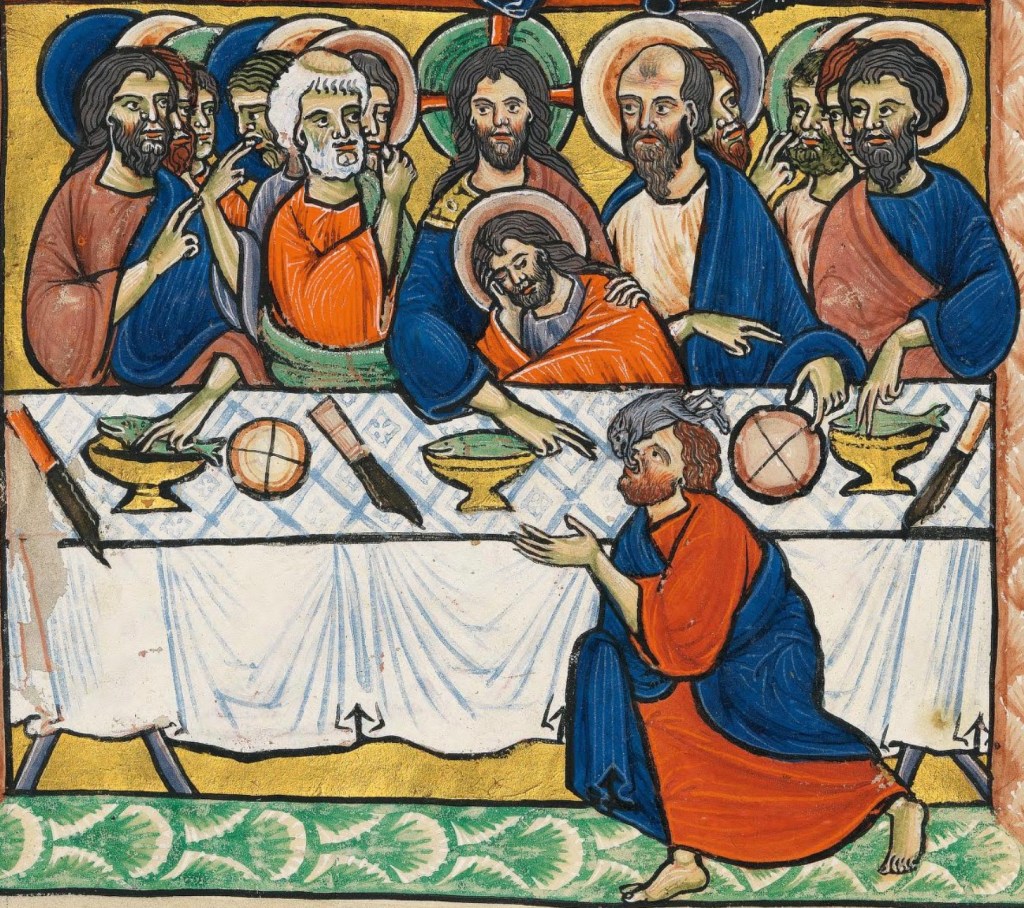
Figure 1. Last Supper (image 54 bottom, Golden Psalter).
{mushrooms}:
{branching}:
{handedness}:
{stability}:
merge into motifs above
Judas has lifted garment [Rush 2022], with a lifted black-arrow mushroom hem.
Black-arrow mushroom hem of tablecloth touches his lifted mushroom hem.
Judas doesn’t display two fingers.
Judas has outer-garment-spreading posture/ stance; cloak-spreading stance.
Right-hand fingers are held together 4x, and left-hand fingers are splayed 1x.
Right-hand fingers are splayed 1x, and left-hand fingers are held together 1x.
Christ Reigns (Otto Gospel)
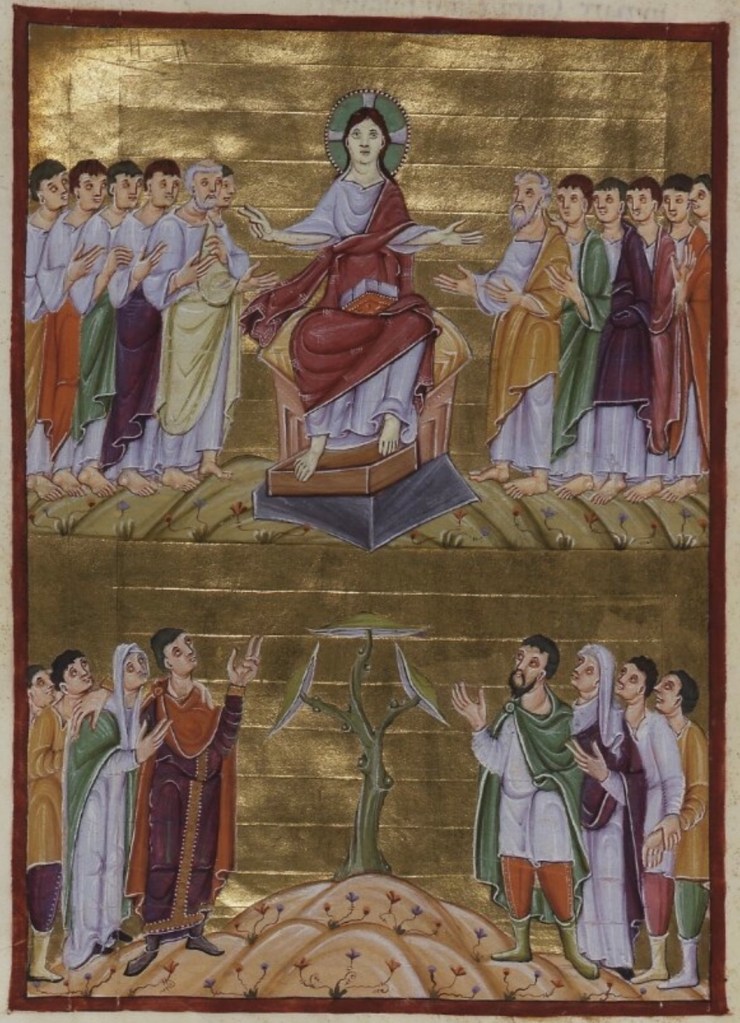
Figure 1. Christ reigns. Page 32, Otto Psalter.
{mushrooms}:
{branching}:
{handedness}:
{stability}:
merge into motifs above
YI tree morphology.
Right foot lower than left.
Left thumb & fingers branching, right fingers non-branching.
Fingers/ thumbs branching & non-branching.
Non-Biblical Scenes
St. Eustace Crossing the River (Chartres Cathedral)
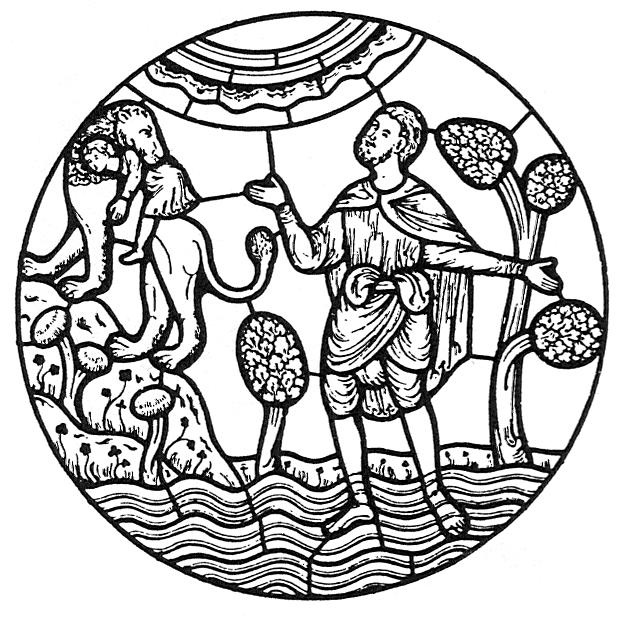
Figure 1. Mâle, p. 3, The sky, water and trees. From the Legend of St. Eustace. Window at Chartres.
{mushrooms}:
{branching}:
{handedness}:
{stability}:
Triumph of Dionysus (Roman Mosaic)
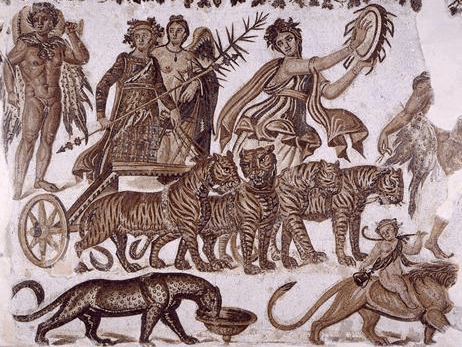
Figure 1. Triumph of Dionysus on a Roman mosaic (3rd century, Sousse Archaeological Museum).
{mushrooms}:
{branching}:
{handedness}:
{stability}:
merge into motifs above
todo: link to local image.
http://www.egodeath.com/images/egodeatharticle/HighRes/DionysusVictoryChariot_HiRes.jpg
Thiasus – Wikipedia-Triumph of Dionysus on a fragmentary Roman mosaic (3rd century, Sousse Archaeological Museum)
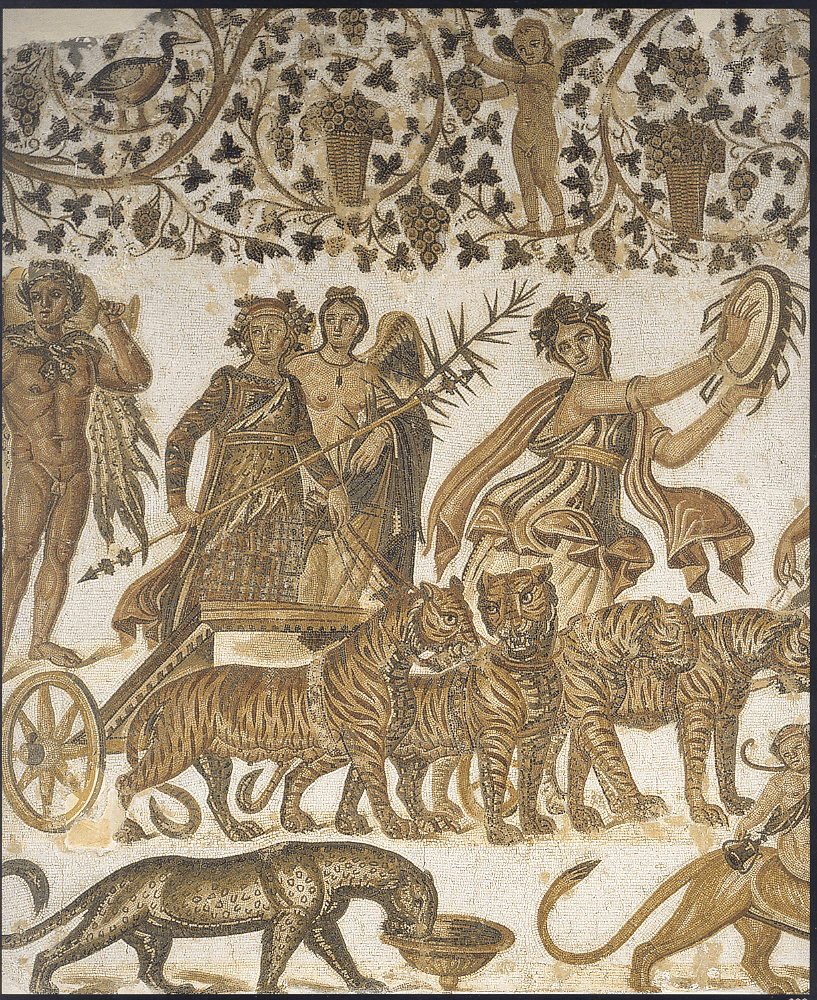
Figure 1. Triumph of Dionysus on a Roman mosaic (3rd century, Sousse Archaeological Museum).
Ariadne holds branch in left hand.
Dionysus holds non-branching spear in right hand.
Ariadne holds removed garment on left arm.
Dionysus wears divine garment.
Dionysus steers with left hand.
Lifted mushroom hem behind Dionysus.
4 mushroom hems above each tiger.
Leopard watering fountain balancing on stem.
Grape vines grow from krater in upper right.
Non-branching vines.
4 mushroom-shaped grape baskets.
Maenad’s unbound hair vs. Ariadne’s bound hair.
Image provided by the Egodeath community for 2006 article.
Jason, Ladon, Golden Fleece, & Athena (Douris Kylix)
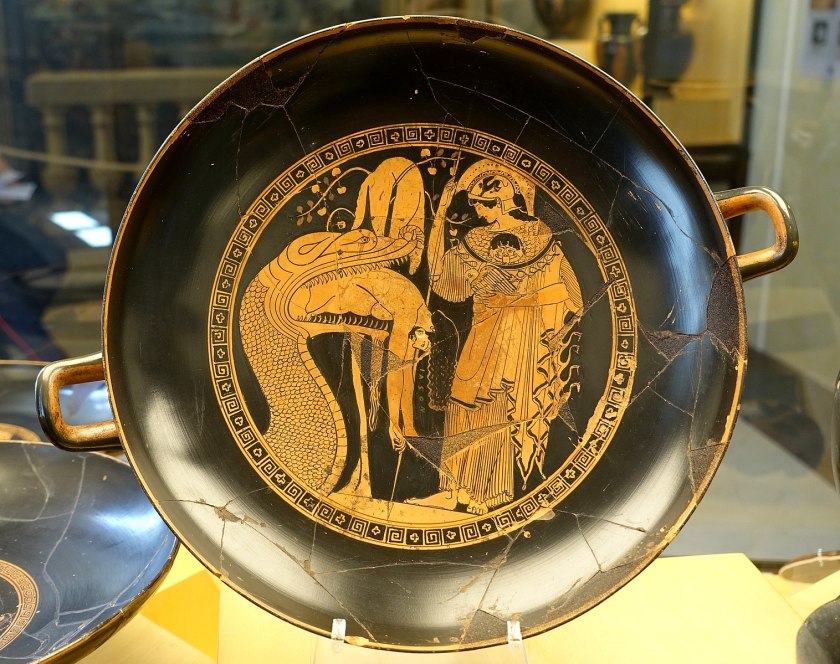
Figure 1. Ladon, Jason, Athena, golden fleece of Zeus’ ram hiding the non-existent branching of the vine tree. Kylix by Douris. Photo from Wikipedia user Daderot, xyz public use license.
{mushrooms}:
{branching}:
{handedness}:
{stability}:
merge into motifs above
Snake body, human torso.
Ladon, Jason, Athena, golden fleece of Zeus’ ram hiding the non-existent branching of the vine tree.
Right hand touches non-branching spear.
Non-branching spear separates mortal and immortal boundary.
Owl of wisdom.
Death-head gorgon medusa breastplate.
A riddling Sphinx on the helmet, a gate guard.
Serpents in Athena’s breastplate.
Non-branching vine tree.
Golden fleece of sacrificed ram blocks view of branching portion of tree.
Ladon serpent/dragon.
Jason dead and impotent in conjunction with non-branching serpent.
Salamander (Bodleian Bestiary)
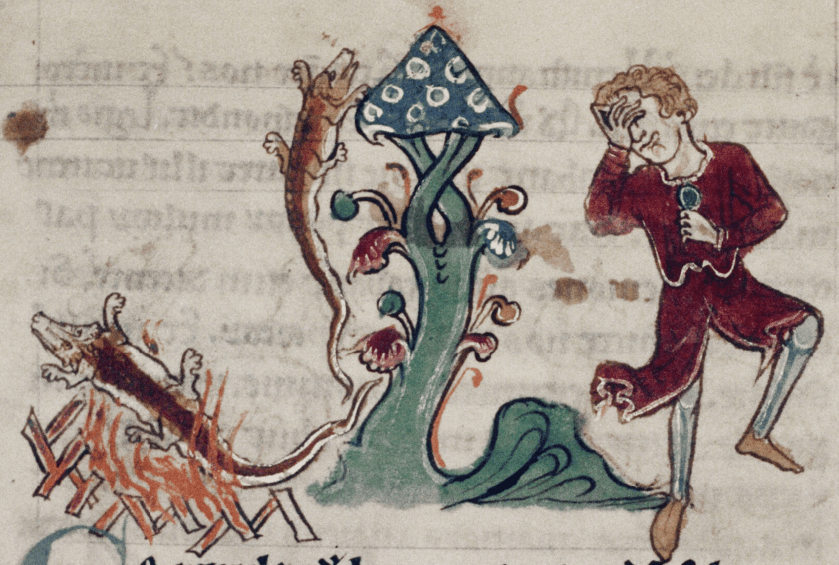
Figure 1. Salamander. Bodleian Ms. 602, fol. 027v.
{mushrooms}:
{branching}:
{handedness}:
{stability}:
merge into motifs above
Standing on straight right leg.
[10:34 p.m. March 30, 2023]: 4 fingers at head 4 branches hold up cap understood as branching zone (do not touch/affirm). Fingers = branching zone = outside head; seeing it; perceiving the no longer engaged egoic the possibilism mental worldmodel. Splayed fingers = possibilism mental worldmodel and that means that his head = cap = non-branching zone. He knows non-branching: his head = non-branching cap.
Within whole-tree scope/scale, the cut right trunk is “good”, and the entire left tree is “bad”. Within scope/scale of only the left tree portion, the branching zone is “bad”, the non-branching cap & stem are “good” so touch the non-branching snake-tail of the the salamander or right paw touches cap. Branching part of tree (bad) doesn’t touch salamander (good).
Fire is altered state loose cognition causing loss of control that drives transformation from possibilism to eternalism. [6:08 p.m. March 17, 2023]
Cut right trunk.
Tree has left arm, right arm, left leg, right leg branching limbs, and a mushroom on each limb.
right hand touching head, like right paw touching cap
Serpentine “snake with legs” salamander is similar in morphology to snake in tree eg. Canterbury Psalter’s Tree of Knowledge with legged serpent.
Non-branching trunk touches non-branching tail.
Right paw touches non-branching cap.
Salamander avoids touching branching part of tree.
Lifted hem above cut right trunk.
Lifted left leg; relying on right leg.
Right heel touching cut major branch.
Triangular liberty cap cap shape.
Asp (Aberdeen Bestiary)
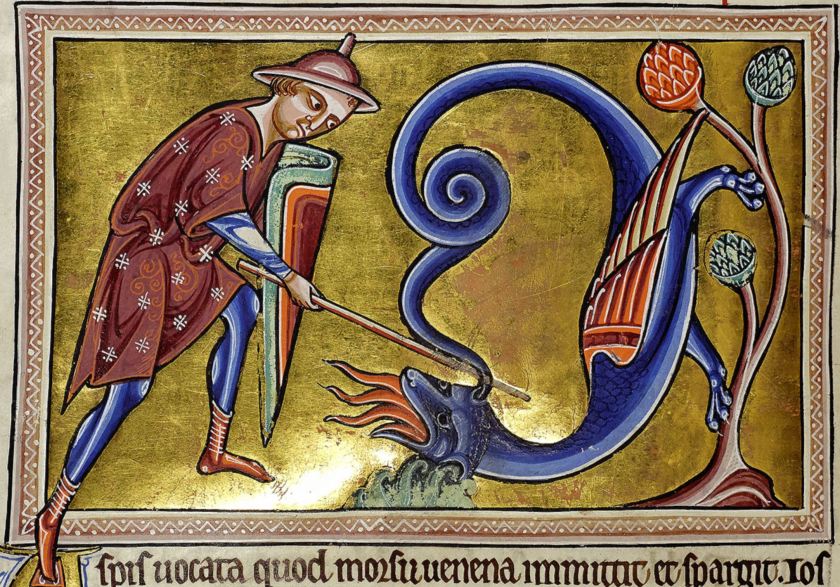
Figure 1. Asp (Aberdeen Bestiary).
{mushrooms}:
{branching}:
{handedness}:
{stability}:
merge into motifs above
Standing on right leg, left leg lifted.
Serpent’s right leg is on non-branching part of mushroom tree.
Serpent’s left leg is on branching part of mushroom tree.
Serpent has left paw higher in the tree, toward more branching; right paw lower, toward less branching.
Tauroctony (Mithraism)

{mushrooms}:
{branching}:
{handedness}:
{stability}:
merge into motifs above
The cover of Entheos journal issue 3 is flawed in two ways: reversed, blue to red shift hid Psil mushroom in leg.
quote Erik Davis to explain astral ascent mysticism, transcend no-free-will by enter Empyrian beyond snake-wrapped rock. Led Zep IV book climax, 2 pages.
bent L leg = no weight on branching/ possibilism. Bull’s bent R leg = failing to rely on eternalism thinking. Sol = authorized qualified virtual egoic control agent; virtual possibilism; transcend heimarmene fixed stars ogdoad.
Maybe correct Hane, quote “dk if fixed stars are in planet 7 sphere or ogdoad, 414 footnote”. purpose: he wishes Transcendent Knowledge to move you from eternalism to possibilism; not so fast tho. pre/trans fallacy Ken Wilber.
The true cognitive developmental progression: naive possibilism-thinking, eternalism-thinking , then qualified possibilism-thinking. Lower levels reveal eternalism; higher level restores to qualified possibilism-thinking; virtual steersman Sol in a pact from Mithras.
Philosophers Beside the Tree, Splendor Solis – version 1
{mushrooms}:
{branching}:
{handedness}:
{stability}:
merge into motifs above
Philosophers Beside the Tree, Splendor Solis – version 3
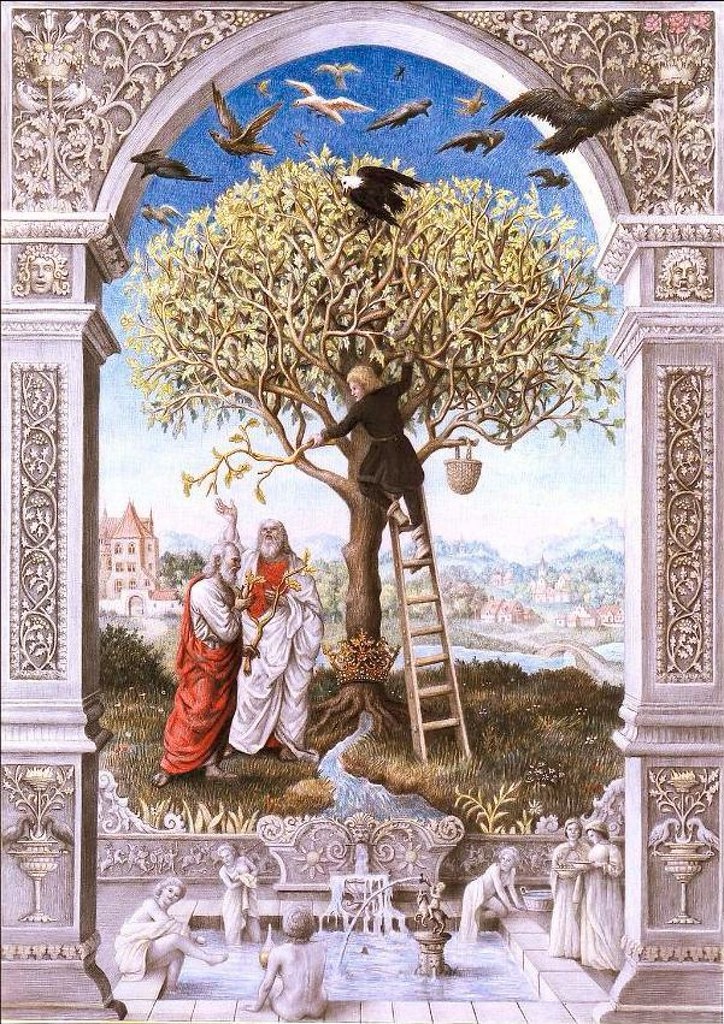
{mushrooms}:
{branching}:
{handedness}:
{stability}:
merge into motifs above
Philosophers Beside the Tree, Splendor Solis – version 2
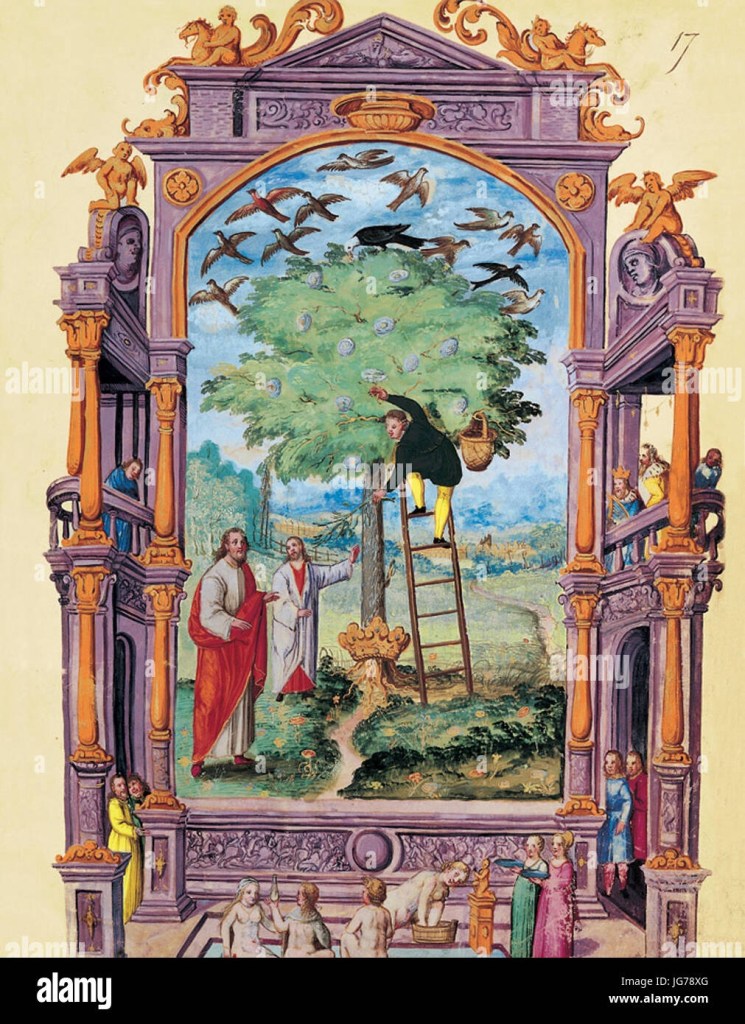
{mushrooms}:
{branching}:
{handedness}:
{stability}:
merge into motifs above
Great Canterbury Psalter
todo: delete image, use 6 Days of Creation instead
The above inventory focuses on Day 1 (Row 1 Left), Day 3 (Row 1 Right), and Day 4 (Row 2 Left).
Hanging Upside Down (Canterbury Psalter folio 62v)
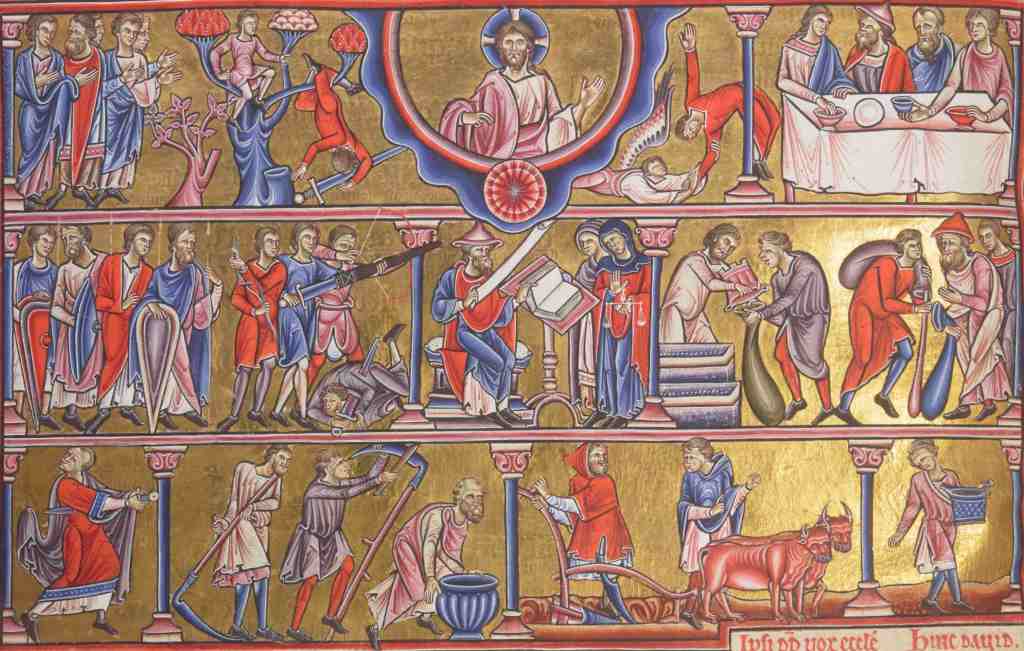
“f134 bigscreen.jpg” hi-res 678 KB .jpg from 20.4 MB .png of Dec. 18, 2024, uploaded Jan. 6, 2025
{mushrooms}: row 2 right: mushrooms in dispensary bins. Cubensis tree, row 1 left. Banqueting on 1 or 2 bowls of cubensis, row 1 right. Gathering cubensis behind bovines, row 3 middle. Altered-state fire light above psalter reader, row 1 middle. Mushroom hems, including lifted garment row 1 & 3 left.
{branching}: Pink key tree is generally isomorphic with cubensis tree, row 1 left. Both trees are YI at lower level and upper level. Cubensis tree: branching left, cut right, including {cut right trunk} & visually occluded right stem that becomes middle cap/crown. Pink key tree has {cut right trunk}, lacks {cut branch}; right branch (good) touches right foot; left branch dead, touching left hand.
{handedness}: Blade touches left limb, all rows. Psalter reader is threatened when left finger is closer to the ground, row 2 middle. Weight on right foot: oxen, red youth row 2 right. Weight on left foot (unstable): Youth at the dispensary, row 2 right; sower row 3 right.
{stability}: Balance scale, row 2 middle. Reconcile threat by touching left hand to blade. Balancing in pilzbaum by right foot and right hand on cut branches. Hanging from tree by right leg, affirming cut right trunk with right hand. {furrowed brow} means instability, unless countered by stability indicators. Stable column base. Puzzle: Assess stability of each figure based on inventory of attributes. Student 2 (face only) and 4 implicitly have weight on left foot (unstable). Two self-stabbing youths have transcendent stability, row 2 middle, row 3 left.
Relative hand-heights is a driving theme, climaxing in the problematic hands of psalter viewer (right-hand fingertip height), bucket receiver, balance-holder, and hanging upside-down figure.
Blade touches left limb: row 1 middle (sword), row 2 middle (swords), row 3 left (scythes), row 3 middle (plow blades).
row 2 right: [Noon April 2, 2023] Intermediate guy looks at furrowed brow of sage = the student who figured out {right foot} basics is now set up and given the next level of problem to solve: ok, so now that you understand {stand on right leg = lower right hand} = control stability, next, reconcile upside down guy’s relative foot elevations contradicting his relative hand (& knee) elevations.
Row 3 right: right heel touches stable plow foot, right leg touches rear right leg of ox.
The bins, bucket, and dumb happy guy scene depicts psilocybin.
Row 1 left: Teaching and examining students about psilocybin control re-stabilization prior to banqueting.
Row 3 middle: Blue krater cubensis collector looks at mushroom dispensary bins.
Row 2 middle: Swordsman looks at the fingertip height of psalter reader and sheaths or unsheaths.
Row 2 right: Standing on left leg = 0 degrees of analogy comprehension;
Row 2 right: Standing on right leg = 1 degree of analogy-indirection comprehension: {foot heights} is like (& refers to) which mental world model is relied on for control-in-world.
Row 2 right: Funnel Hat sage standing on no leg = hanging from right leg = 3 degrees of analogy-indirection comprehension. Forearm points to hands of hanging guy, fingers point up to feet and knee. Row 3 middle points to sage’s pointing arm, connecting the source of cubensis mushrooms with the relative limb-heights of the hanging guy.
Row 2 right, limbless looker eye-points at wrong hands under bucket = 2 degrees of analogy-indirection comprehension: {hand heights} refers to {foot heights} refers to which mental world model is relied on for control-in-world.
Psilocybin caps & stem, therefore every element in this image depicts analogy to peak psilocybin effect.
Row 1 right: Funnel Hat eye-points to maiden’s non-furrowed forehead, indicating that this initiate understands eternalism and so is qualified for psilocybin.
Row 1 right: Limbless father eye-points to God’s hand positions.
Row 2 middle: Psalter reader holds open scroll of knowledge about control instability in right hand, right foot on ground.
Row 2 middle: She holds closed scroll with scale balance: knowledge/message that relying on left foot possibilism-thinking causes loss of control. She’s the stable self-control of the ordinary state. Her right ear points at top of stable column base with right foot of cybercide guy, while her eyes point at bowman and swordsman, connecting these pointing-targets.
Distinct YI morphology in lower vs. upper part of pink key tree and mushroom tree; must re-assess “good” and “bad” within local scale and local context. Rightmost leaf, like a finger, is “good”, leftmost is “bad”.
Left branch is dead, touching left arm of non-passing student giving incorrect answer (showing left hand).
Rightmost leaf (“good”) touches pink’s right heel (“good”; stable self-control).
The two red caps form a Y, the rightmost red cap is “good” and touching God’s cloud. Local scope of assessing “good” and “bad”: left is bad, Y is bad, yet the right part of Y is “good” when considered within local scale/scope.
Row 2 Right: Naive newbie (stand on left foot), basic understander (stand on right foot), advanced interpreter (hang upside-down from right knee):
Standing on left leg = no understanding of {handedness} motif.
Standing on right leg = basic understanding of {handedness} motif= pink guy in tree w/ right foot on cut branch.
Floating feet = hanging from right leg = advanced understanding of {handedness} motif ({branching-message mushroom trees}, {handedness}, and {non-branching} motifs).
Row 2 middle: Self-threatening psalter reader has right-hand finger lifted to exactly the same height as left-hand fingers, surfing the edge of catastrophic loss of control.
Right-hand cap of Y touches God’s cloud. [5:54 March 17, 2023, continuing to spin out March 16 a.m.’s “relative local scope” breakthrough]
Row 2 Right: Mushroom distributor looking at worried/excited brow of foolish youth.
Sun light below God = intense perception of control dynamics in peak loose cog state.
Row 2 Right: Floating Feet Guy Is Looking at Floating Feet of Right-Knee-Hanging Guy. His feet are same height = advanced surfing the edge of loss of control, furrowed brow. [11:17 p.m. March 14, 2023]
Row 3 Left: Reaper feet both down, surfing the edge of loss of control as he shifts % of weight to L vs. R foot.
Row 2 Right: Limbless youth bulging eyes eye-points to wrong hands of foolish youth receiving psilocybin, and connects that to target of floating sage = Red guy in tree’s limbs relative heights in relation to sword of control-loss.
Systematic mastery of {handedness} requires presenting problematic, non-simple scenarios: hanging upside down by right knee, 3D table perspective of Maiden hands; pair of 1-legged guys (Row 3 Middle).
Candidates for initiation who pass the exam (Row 1 Left) banquet on one or two bowls of cubensis, such as a secondary delayed dose (Row 1 Right).
Row 1 Left: Pink key tree is isomorphic with the cubensis tree, indicating left = branching (unstable control), right = non-branching (stable control).
Row 2 Middle: Threatening arrowhead inches from the anxious psalter viewer
Row 2 Middle: Breaking bow to refrain from transgressing control limits, per good judgment and mercy.
Skillful balancing in tree by right foot on cut branch, left foot floating, left hand floating (not relied on), right hand holding onto cut branch.
Left hand touching sword blade of control limits. Reliance on possibilism-thinking has been cut/pierced, like cut branching.
Row 1 Middle: Right hand touching cut major right-hand trunk.
Row 3 Left: Right foot on stable column base.
Row 3 Right: Oxen wisely lifts left foot, stands on right foot.
Row 1 Left: Candidates for initiation, 3 of 4 don’t qualify, not able to demonstrate reliying on right-hand, non-branching thinking.
Row 3 Middle: Blue krater to gather cubensis.
Foolish youth on left leg, wise youth on right leg, wise man on no leg, with mushroom hem on stable column base, carrying a limbless, non-branching youthful thinking.
Two cybercide guys, transgressing lower, egoic control limits of possibilism-thinking, right foot on stable column base.
Teaching and Testing Students About Control Re-Stabilizing (Canterbury f134) [f134-1]
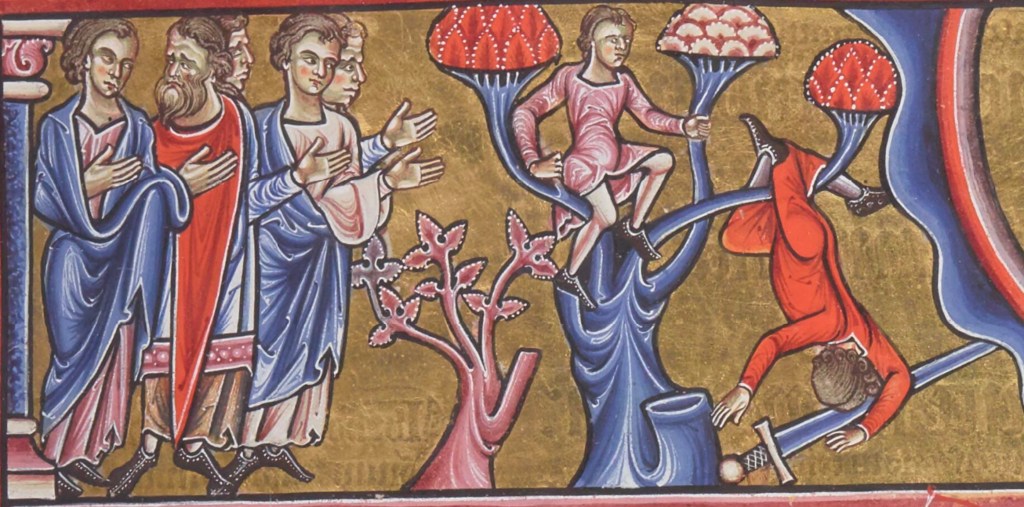
Figure 1. Teaching and examining students about control re-stabilization prior to psilocybin banqueting, including advanced analogies of handedness and non-branching. Row 1 Left, image f134, Canterbury Psalter [Lash 2008].
{mushrooms}:
{branching}:
{handedness}:
{stability}:
{display right hand} = {stand on right foot} = cut right trunk = eternity non-branching = stable control.
On psilocybin, asserting the left-hand, possibility-branching model of control-in-world causes loss of control. Asserting the right-hand, eternity non-branching model of control-in-world gives stable control. Thus, relying on {left leg} causes loss of control. Relying on {right leg} gives stable control.
The hand-heights of this {hanging upside down} are consistent with the standard motif, which is: {weight on right foot} (for stable control) means {left foot raised}, represented by {left hand raised above right hand}. By analogy: {weight on right knee} (for stable control) when hanging upside down would mean {left knee dangling closer to the ground}, represented by {left hand dangling closer to the ground than right hand}.
YI morphology of pink tree: At trunk level, {cut right trunk} = YI. At upper, branches level, branches 1 & 2 vs. branch 3 = YI. At topmost, detail level, any leaf 1 & 2 vs. leaf 3 = YI. Branch 3’s leaf 3 = {right heel} = good = {cut branch} = stable control. Branch 3’s leaf 2 = overall I branch = non-branching = {garment} of successful {balancing} = the eternalism mental worldmodel of control-in-world. Branch 1 = possibilism-thinking = unstable control = {dying branch} touching {left arm} of failing student who is correctly {standing on right foot} but incorrectly displaying {left hand} and thus has {semi-furrowed brow}. At topmost, detail level, branch 1’s leaf 3 = {right-hand} = {I of a YI} = good = stable control. Branch 1 has extra leaf = more branching = bad.
Mushroom Depictions (f134) [delete]
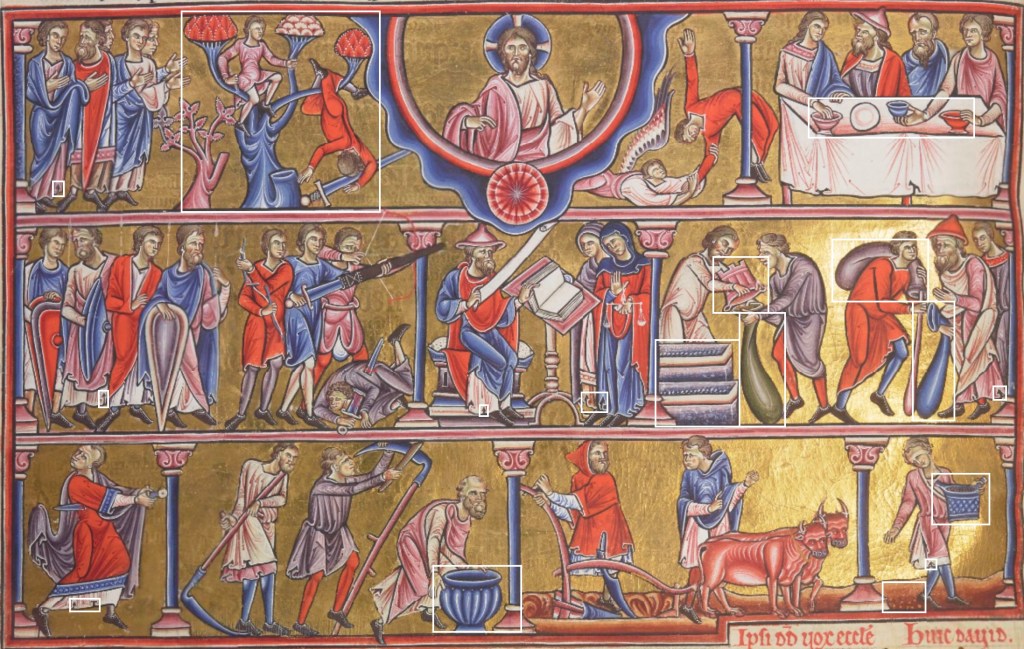
Figure 1. Canterbury Psalter image f134. Annotations by Michael Hoffman.
Mushroom Bins & Bucket (f134) [delete]
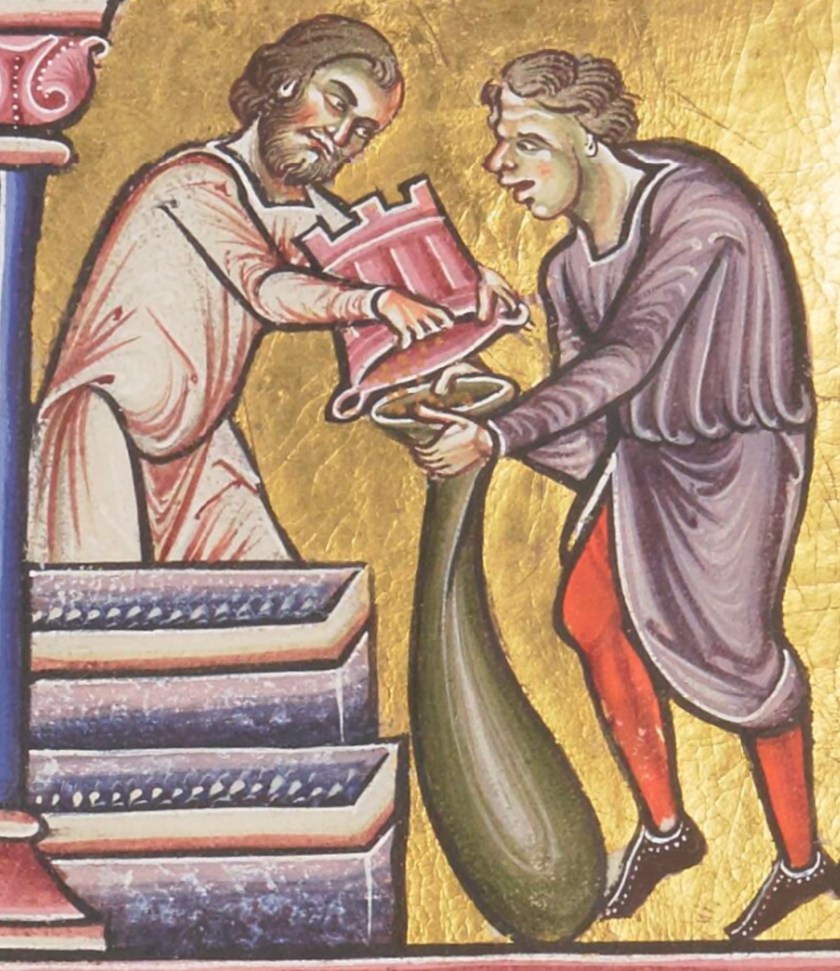
Figure 1. : Apprehensive newbie psychonaut relying on naive possibilism-thinking. Image f134 Row 2 Right, Canterbury Psalter. Crop by Michael Hoffman.
Hands & Feet (f134) [delete]
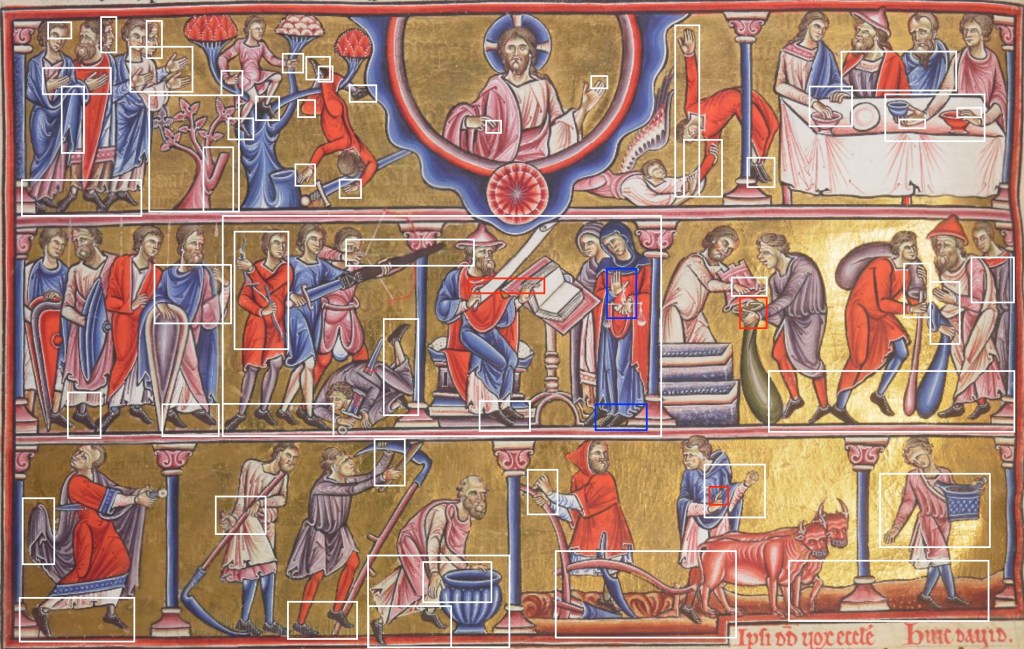
Figure 1. Relative hand-heights and foot-heights, image f134, Canterbury Psalter. Crop and annotations by Michael Hoffman.
Looking-Lines (f134) [delete]
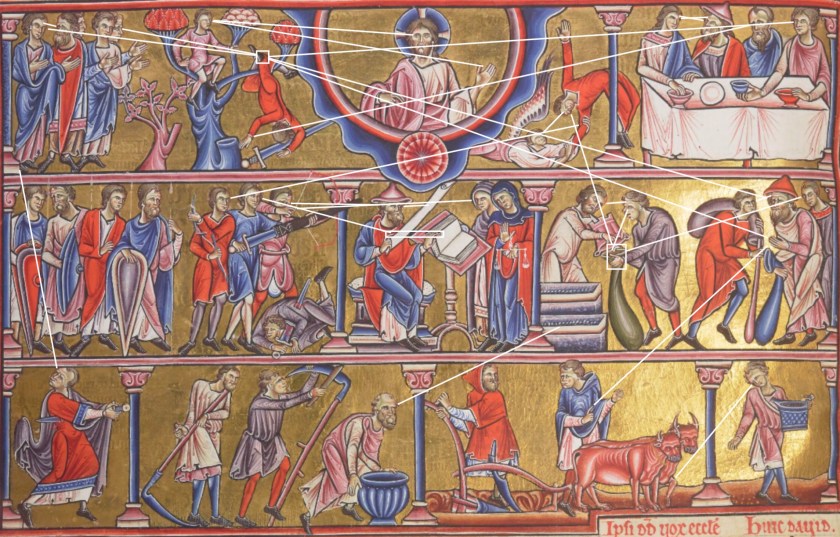
Figure 1. Looking-lines in image f134, Canterbury Psalter. Crop and annotations by Michael Hoffman.
Loss of Control Depending on Fingertip Height (f134) [delete]
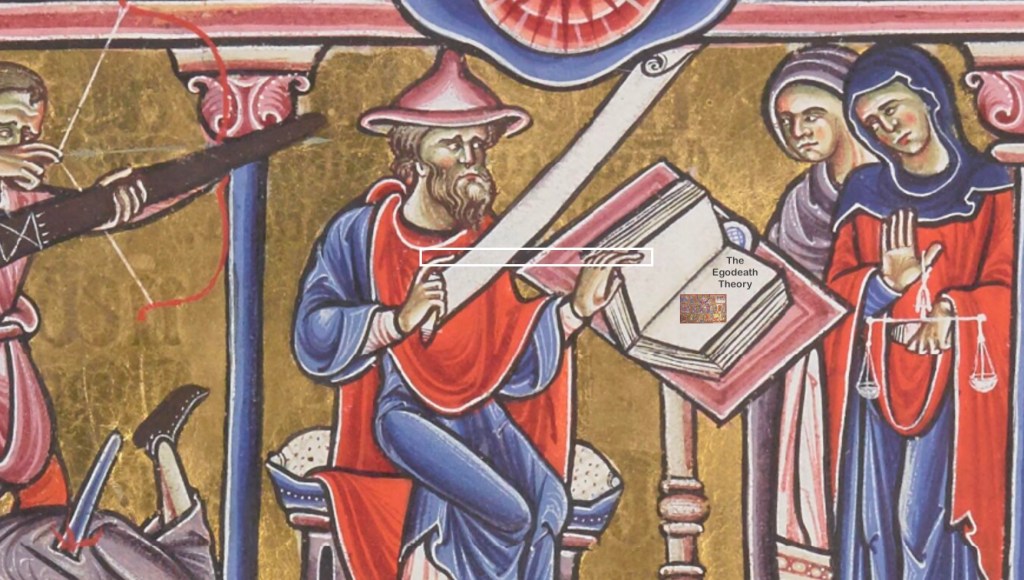
Figure 1. Canterbury Psalter image f134, finger height maps to loss of control. Crop, image processing, and annotations by Michael Hoffman.
Loss of Control as a Function of Fingertip Height (Mapped to Which Mental Model of Control-in-World)
Open scroll is knowledge about this & balance = loss of control. “When I didn’t know about this (that possibilism-thinking in peak state of loose cognition causes loss of control) (ie when scroll was closed), I had balance/ stable self-control, back when I stood on left heel in OSC.”
She’s holding a scroll with balance scale, which is Transcendent Knowledge that possibilism-thinking causes loss of control.
THE SCROLL MESSAGE about doomed POSSIBILISM-THINKING, asserting/RELYING ON LEFT FOOT CAUSES LOSS OF CONTROL
f145 Row 1 R God too holds in left hand closed scroll, but is open in Row 2. He holds in right hand open scroll.
She’s the balance that u have in OSC and that you wish for in altered state. He’s out of control, he looks at her in OSC she has stable control, contrasted against him, she is stable bc she lacks Transcendent Knowledge (closed scroll, wrong hand & foot down), she is the ctrl-stab’y of the tightcog ordinary state.
what’s in his book is what’s on his & her scrolls.
{rams} assert and double down on asserting possibilism-thinking and so they lose balance, building falls down, they go out of control
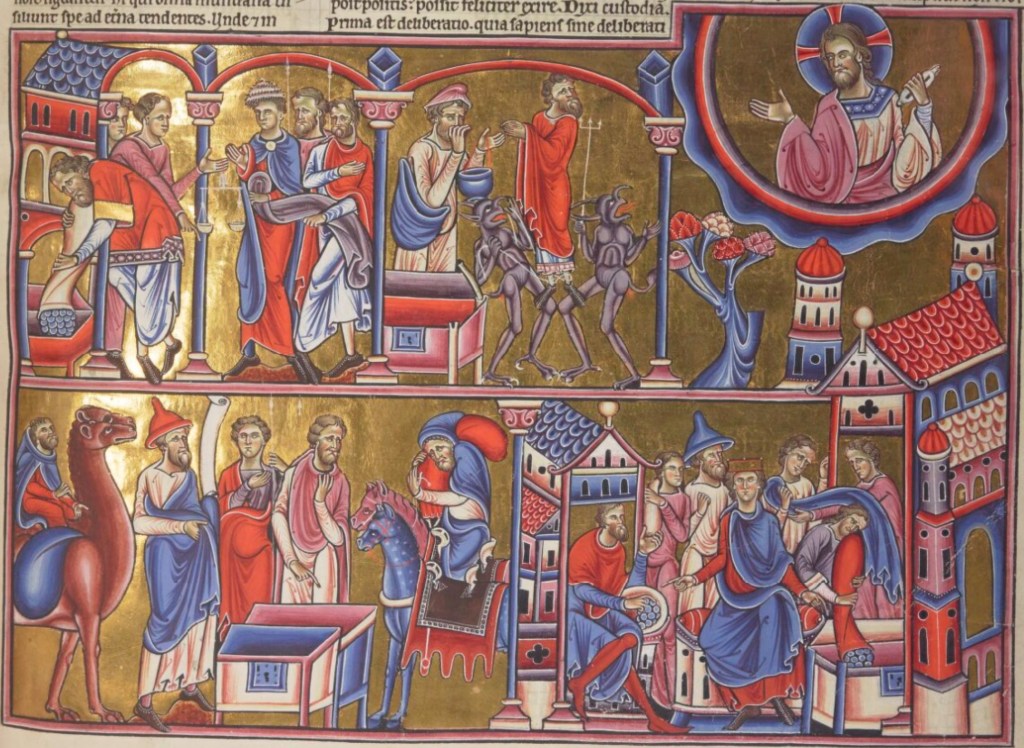
King Filling Bins (Canterbury Psalter folio 68r)
todo: replace by jpg from jpg from Dec. 2024 hi-res png.
Crop by Michael Hoffman.
Canterbury-f145.jpg 932 KB [2:50 March 17, 2023]
https://gallica.bnf.fr/ark:/12148/btv1b10551125c/f145.item.zoom
{mushrooms}:
{branching}:
{handedness}:
{stability}:
King has good feet, bad hands.
Scroll in God’s raised left hand = scroll in Row 2 Left touching left hand / lifted garment (compare f134 Row 1 Left & f177 Row 1 Middle). [1:10 a.m. March 18, 2023]
Stable towers & mushroom tree touch God’s cloud.
Sitting in doorway = maximum stability of control.
Buildings control stability not loss of control, doorway especially stable.
Row 1 Middle: In transition lowering right hand/foot to same level as left guided pushed by loss-of-control demons.
[6:15 March 17, 2023] trident = punished by loss of control due to asserting possibility branching.
[2:04 a.m. March 18, 2023] trident vs. rope: the good demon (correcting you by showing truth) employs a 1-d non-branching rope that conrols both control-worldmodels (feet), the bad demon corrects you by asserting possibilism-thinking (branching trident).
scroll held in God’s left raised hand and a scroll touches the lifted by left hand garment; inspired to lift left hand/ foot. scroll = God-mode thinking.
Riding a pair of horses or camels: two mental models of control-in-world.
Holding a balance, vs. loss of control; control stability.
YI tree morphology: branching on left, cut trunk on right.
Filling lockbox bins with trade commerce blue cubensis mushrooms matching stem of tree.
Mushroom eaves on stable building gates/doors.
Instructing barbarian traders to rely on right rather than left foot during peak to keep balance and avoid loss of control stability.
Mushroom Depictions (f145) [delete]
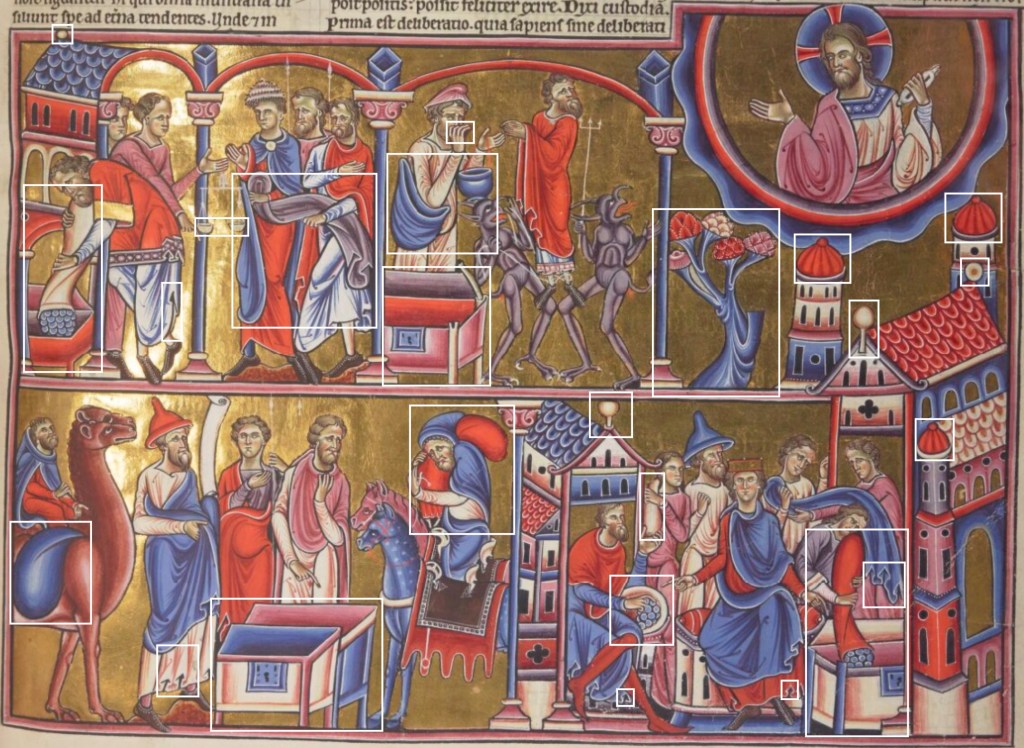
Figure 1. Mushroom imagery in image f145, Canterbury Psalter. Crop and annotations by Michael Hoffman.
Row 1 left: he is pointing at right foot, but also at open scroll touching lifted garment.
Hands & Feet (f145) [delete]
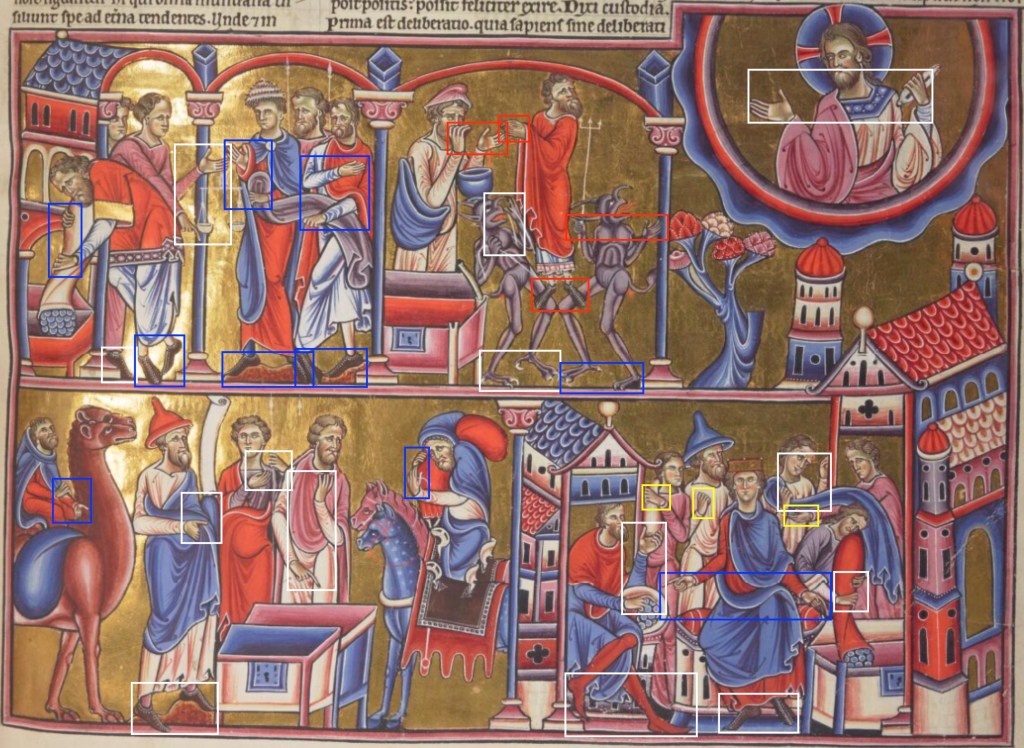
Figure 1. Relative foot and hand elevation in image f145, Canterbury Psalter. Crop and annotations by Michael Hoffman.
Blue cloth or bag over bin with msh hem indicates cubensis bin. Matches bag in Row 1 L.
King David. Prophet Nathan to left.
blue box i added = bad = left foot/hand down = possibilism-thinking
3 yellow boxes left to right:
- L hand raised, so implicitly R foot down; implicitly good/wise.
- R hand raised, so implicitly L foot down; implicitly bad/foolish.
- L hand level; ambiguous.
ambig (L hand level), probably good; ambig, probably bad; fully ambig (L hand level)
white = good = right foot/hand down = eternalism-thinking
red = peak seizure = right foot/hand same height as left = in transformation from possibilism to eternalism thinking
- when right hand down, open scroll (god excepted) Row 2. also f134 Row2 middle: closed vs open scrolls, two of them.
Teaching Cubensis Traders About Control Re-Stabilizing (Image f145) [delete]
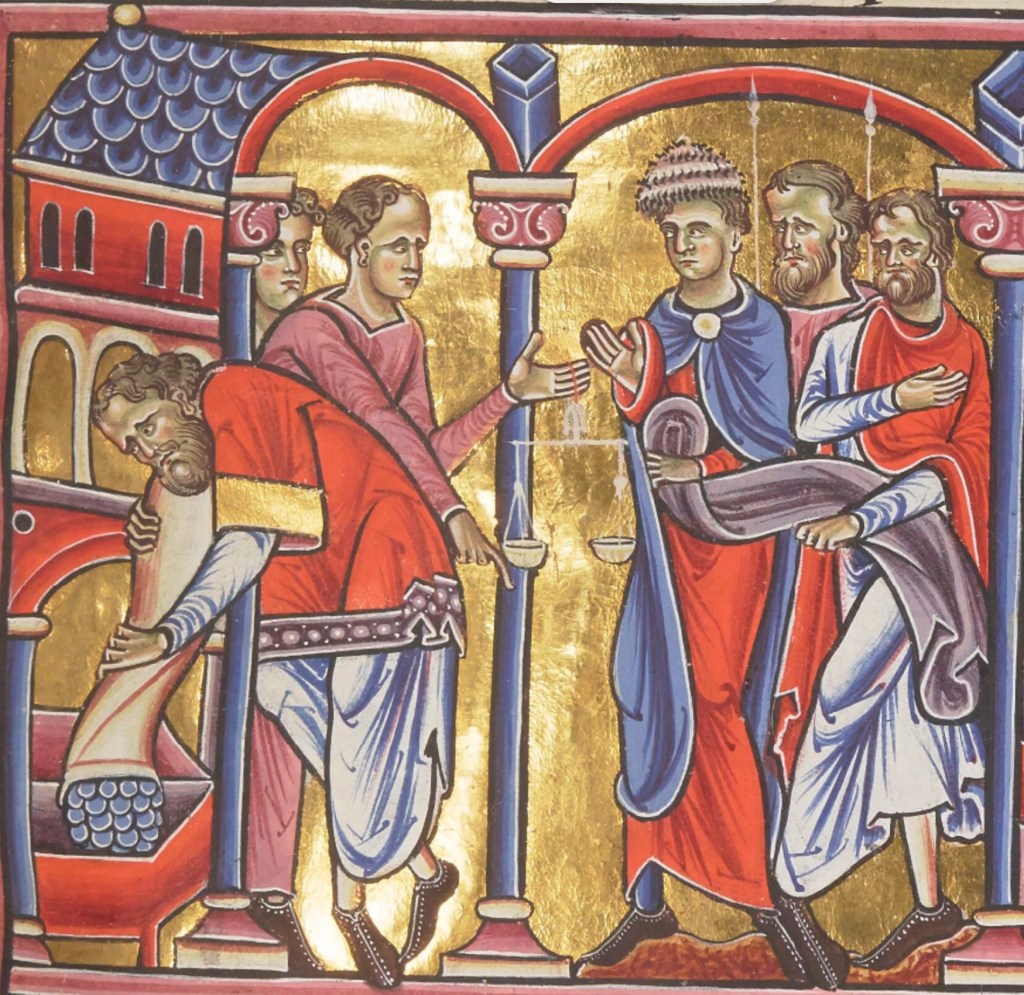
Figure 1. Teaching psilocybin control re-stabilization to cubensis traders. Row 1 Left, image f145, Canterbury Psalter.
{mushrooms}:
{branching}:
{handedness}:
{stability}:
Row 1 Left: {scale balance} = control stability = {stable tower building}. Row 1 Left: cubensis traders right foot x3 does not touch the {stable column base}, but floats unstably; {weight awkwardly on reversed left foot} = unstable control.
Horses at Tree (Canterbury Psalter folio 84r)
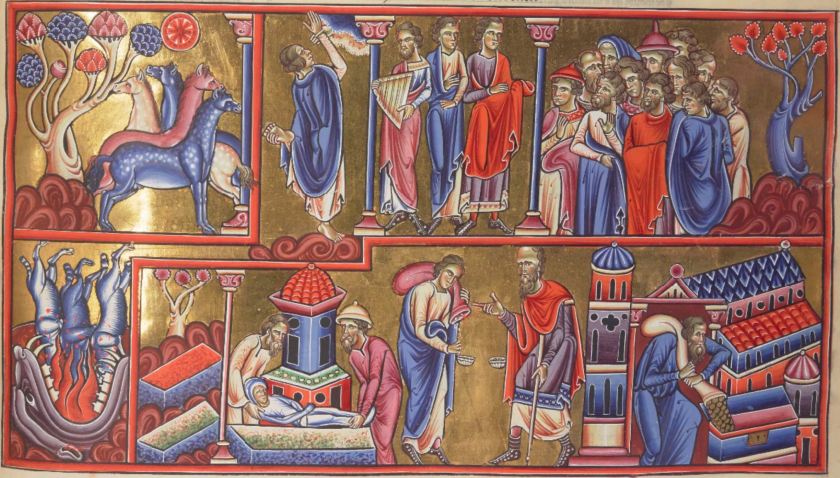
todo: replace by jpg from jpg from Dec. 2024 hi-res png.
{mushrooms}:
{branching}:
{handedness}:
{stability}:
Sun, white light of loosecog awareness, attached to mushroom tree.
The simple tree and the leaf tree teach non-branching, therefore each tree functions as a branching-message mushroom tree.
Winnowing basket for mental model filtering. Right hand at bottom where wheat gathers; left hand at top of basket with thumb splayed where chaff blows away. Winnowing basket to sort possibilism-thinking (down chute) vs. eternalism-thinking.
2 bags of cubensis mushrooms.
1 direct mushroom tree, 2 indirect mushroom trees.
Weighing cubensis mushrooms on a balance while balancing on toes.
Lockbox filled with cubensis mushrooms.
Psilocybin caps & stem, therefore every element in this image depicts analogy to peak psilocybin effect, edge of loss of control depending on which mental model is relied on.
Row 2 Middle: Scale balance. To weigh cubensis mushrooms. To switch to mental model of control & world that can keep its balance.
Addresses/ recognizes the q: if “stand right not left foot, what if upside down, what happens to that “simple” rule? The middle ram is relatively good because left foot not touching ground (ceiling), like the simple key tree’s middle cap not touching the ceiling.
Sun light attached to cubensis tree over horses = intense perception of control dynamics in peak loose cog state.
The middle ram is relatively good, like the simple key tree’s middle cap not touching the ceiling.
Row 1 middle, 3 guys stand right foot, 1 by crossing legs, middle’s foot hidden.
Row 2 left: 3 rams stand left foot, middle’s foot hidden.
Right-foot balancing guy standing on stable tower.
Big tall brain of guy with difficult motif-combination {left heel of lame leg stable column base holding balance} + {crutch} indicating inability to use left heel, big brain = understanding of inability of left heel; understanding gives stability.
Right foot balancing = eternalism-thinking; crutch + left leg = qualified possibilism-thinking.
Big brain guy looking at Row 1 foot.
Crowd has no legs because they represent the viewer, more than referent of analysis. Left person looks at viewer establishing this connection.
Row 1 middle: Looks left, points left; looks right, points left and right; looks right, points right, lifted garment.
Two horses look at blue non-branching cap, two look and right hand of God.
Crutch is knowledge that left heel is unstable; lame left leg indicates eternalism-thinking, which is stable. Left heel (with crutch negating) is on stable column base.
Simple key tree above ego death rock ossuaries graveyard in row 2 is YI morphology; establishes YI is good. Left = branching = unstable; right = non-branching = stable.
Right tree trunk = YI = Good.
Buildings = stability = towers.
Psilocybin lockbox. Stands in gateway door frame (stable), must understand eternalism to access lockbox and pass through gate. Stability/ instability acts as a lock/gateway to prevent unworthy/ uneducated (about cybernetic eternalism) from accessing the psilocybin intense mystic altered state. The Bad Trip Barrier, the 39% under optimal conditions have extreme panic terror seizure panic escalation frenzy whirlwind elevator to heaven.
An image viewer (row 1 right) has furrowed brow, dread because relying on unstable possibilism-thinking, indicated by displaying left hand–
instead of hiding limbs branching to negate. [debatable; appreciates danger, knows to pointedly avoid using left hand]
Left tree’s upper level: IY, I, IY = Bad, Good (because non-branching at trunk level), Bad.
Left tree’s upper level: YI, IY, YI = Good, Bad, Good (because cut branch = non-branching).
Right-hand session guide holds right foot while looking at pink key tree.
Left-hand session guide holds right arm while looking at crutch and left heel.
Standing on right leg held up by right hand by God, left foot in left hand neither used to remain balanced and standing.
Egoic animal thinking down chute sacrificial 3 rams in dragon furnace consumed. Illusion and repudiated animal thinking that causes control instability is repudiated and cast down chute to consuming furnace sacrificial three rams.
Various top-row figures look at left tree, right tree, or right foot.
Toes-balancing guy uses balance to weigh 5g dried from the psilocybin lockbox.
Balance bag same angle as lockbox bag.
Looking-Lines (f177) [delete]
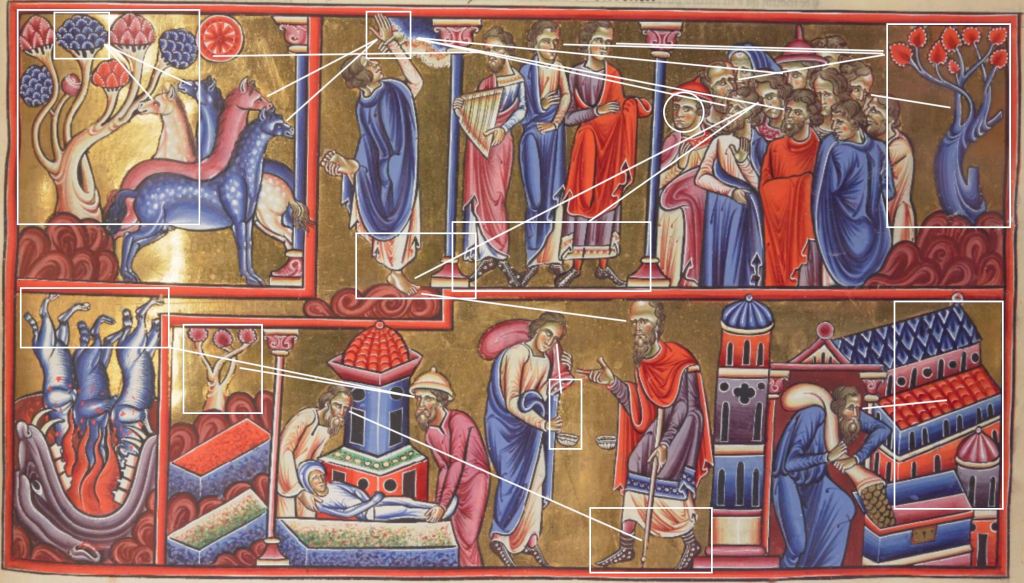
Figure 1. Canterbury Psalter f177, with looking-lines and target features added by Michael Hoffman.
Rams Standing on Left Leg (f177) [delete]
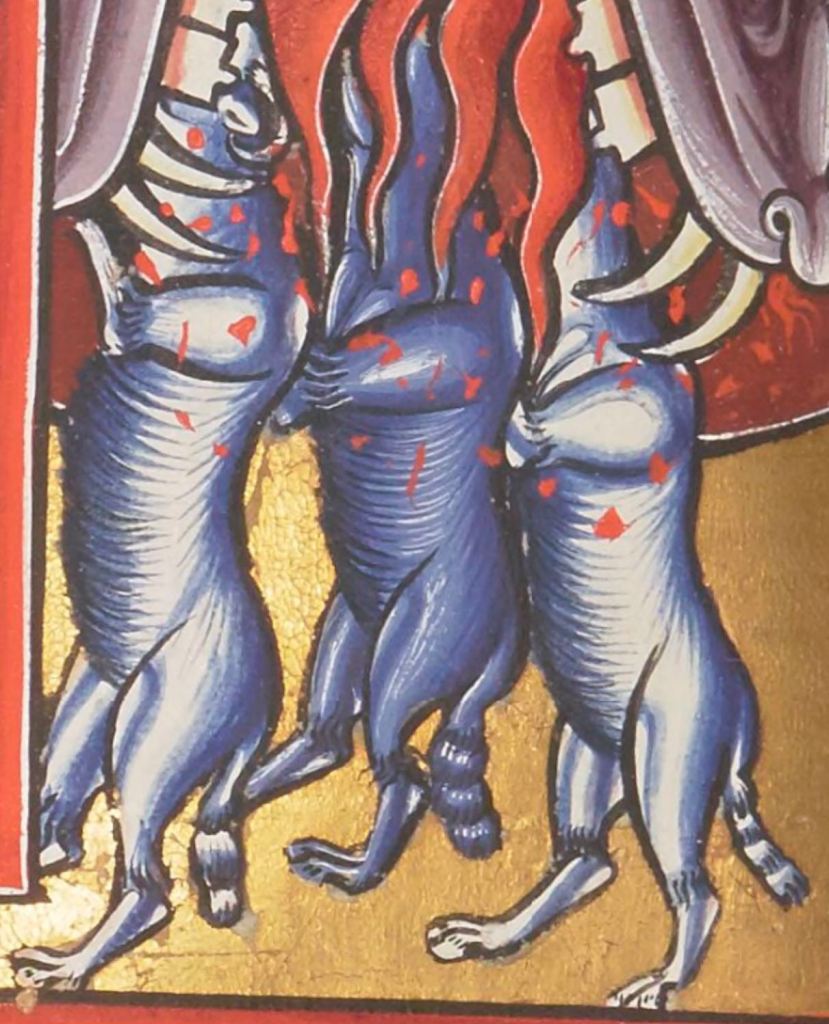
Figure 1. Rams standing on left leg, causing fire (loss of control). Image f177 Row 2 Left, upside-down, Canterbury Psalter. Crop and image processing by Michael Hoffman.
The middle ram is not touching ground with left foot; it’s relatively good, a different color, and maps to the I of the YI tree, which similarly stops short of touching the red bar. Right leg deliberately occluded by branching tail, like I branch of tree is occluded by Y branch.
Occluded right-hand, non-branching elements.
The middle special dark ram is equated with the special, I branch of simple key tree: the shroud carrier looks simultaneously at the cross-under of the good branch and beyond that the occluded right leg exactly inline . or/and, looks at crown of good branch and beyond that, exactly at angled at right leg of “good” (in another sense/perspective) ram 3 (rightmost as if I of YI trio).
Ram 1 + 2 ~= Y, ram 3 = I. Same w/ each trio of tail & legs. tail + L leg ~= Y, R leg ~= I. The proof that these details count for points is the botched cross-under of the msh tree. Ram 3’s right leg awkwardly under the border signals “analyze cross-unders”; signals that R-hand cross-unders are significant.
The non-branching “I” branch of the mushroom tree is completely cut, offset 100%, to form a {cut right trunk} and a {cut branch}. The tree is {balanced} around the “I” branch, whose cap is directly above the trunk base, 3 caps on either side. Row 2 shroud: Right arm/wrist is not hidden of Shroud; in ego death, non-branching reality is visible/ unveiled. The Right Shroud Carrier’s left hand hides Shroud’s right foot. The key tree’s Y branch occludes and visually cuts the “I” branch cross-under (branching hides non-branching reality). Two rams have an occluded right foot. Shroud Carrier looks at the key tree’s I branch (“true” branch’s) cross-under veiled by Y branch, and beyond that, the 2 ram hidden “true” right feet. Ram 1’s right foot is shown, indicating that the right foot of ram 2 & ram 3 are intentionally, meaningfully occluded.
Left tree trunk = YI = Good. Cross-under matches the pink key tree.
Shroud’s right-hand wrist being not cross-undered then means: fully ego-dead state = full, non-occluded perception of right-hand non-branching branch, clearly, directly, fully perceiving non-branching, without that reality being at all occluded by the branching illusion.
Shroud’s right FOOT (max. “good”) is not hidden by his “bad” left hand. We can excuse Carrier for hiding Shroud’s right ankle, because Right Carrier is looking at 3 cross-unders (tree + 2 ram R feet). Right Carrier is able to see the occluded branch & right feet, so we are “able to see”, in effect, Shroud’s occluded right ankle.
Shroud’s right foot touches Right Carrier’s right leg.
Right Carrier is looking at cross-unders, indicating that Shroud’s cross-overs/ cross-unders are to be analyzed.
Carriers put Shroud’s wrists crossover configuration on display to be analyzed.
The X of Shroud’s cross-over wrists is exactly under Stable Tower that’s under Stably/Rightly Standing guy in Row 1, proving that a focal point for analysis is Shroud’s wrists choice of overlap, the fact that the right wrist is not occluded; “the non-occlusion of Shroud’s right wrist” is a major focal point.
Shroud displays visibility (non-occlusion) of the right wrist.
Left Carrier’s right hand occluding Shroud’s right shoulder doesn’t count as occluding, because right hand.
Conclusions
Expect and Find Psilocybin in Mainstream Religion and Culture, not only in Suppressed, Secret Counterculture
Write Specifically about Psilocybin or Amanita, not “Mushrooms” or “the Mushroom”
Write specifically about psilocybin mushrooms or Amanita, which are two entirely different, unrelated psychoactives. Do not write “mushrooms”, “the mushroom”, “the holy mushroom”, or “sacred mushrooms”, because Amanita is overemphasized and conflated with psilocybin effects.
Don’t write “entheogens”, “psychedelics”, or “mushrooms”; write “psilocybin” or “Amanita”.
Outtakes: Smash the Amanita/ Prohibition Paradigm
Amanita = complicit, enabler, conflict of interest
past tense: the Amanita paradigm failed because, it was …, replaced by the Egodeath theory/ the Psilocybin paradigm.
This article and the Egodeath theory replaces the Amanita paradigm by the Psilocybin paradigm.
The Amanita paradigm = perpetual prohibition, primitivism; a physicalist-limited theorizing (shape of Amanita); ambiguous, obfuscating language (“the mushroom”, “mushrooms”, “the holy mushroom”, “entheogens”); unstated argumentation, poor theorizing; proxy associations and narratives; lowering consciousness, immature childish exoteric misreading of religious myth and art motifs.
The Psilocybin paradigm = repeal and beyond to mainstreaming psychedelics; advanced comprehension of history; a cognitive experiencing domain approach; controlled conceptual vocabulary unambiguous; sound theorizing, explicit argumentation, direct speech and direct thinking/ argumentation (not proxy), elevating consciousness; mature adult esoteric coherent reading of religious myth and art motifs.
Carl Ruck & John Rush need to convert from the “Amanita counter-culture” paradigm to the “Psilocybin mainstream” paradigm.
We must abandon Amanita-based, Amanita-centric psychedelics scholarship like the plague.
Helpful, Domain-Relevant Theory
The Egodeath theory is successful as a relevant, domain-appropriate, useful and effective explanatory model because it models and provides an explanatory model using a custom, appropriate, purpose-optimized, conceptual vocabulary and lexicon suitable for effectively capturing the explanandum.
Ineffective approaches fail to deliver an effective explanatory model to explain dread of the {shadow dragon monster}, instead just deleting and eliminating the explanandum (dread of fatal control instability) and replacing the explanandum by some substitute: an ordinary-state based Grief subscale that simply deletes 18 of Dittrich’s 21 5D-ASC Dread effects [Barrett et al 2016: Scoring Guide appendix]; a Physicalism/Materialism focus that’s conceptually limited to domino-chain determinism [Johnson, 2022]; eliminative “Cognitive” Neuroscience that attempts to discuss loose cognitive binding by instead talking indirectly in terms of “neuroplasticity”; or unscientifically vague mysticism as a methodology [rejected by Sanders & Zijlmans 2021].
The Egodeath theory is an anti-neuroscience, bona fide actual cognitive phenomenology-based approach, explaining experiencing of control model transformation in terms of control models, not in terms of neural networks which deletes and removes the explanandum through using a conceptual lexicon which fails to describe the explanandum. We must discuss the experience of mental model transformation, in direct terms about experiential mental model transformation, not indirectly and ineffectively in terms of brain scans.
Outtakes: Smash the Amanita Paradigm/ Prohibition 2
Anti-“secret amanita sect” paradigm, which is ordinary-state based, limited to the physical forms of the Amanita, ignores repeal of Psilocybin prohibition, and is fully invested in a false theological claim that what makes a form of Christianity mainstream vs. heretical is that mainstream Christianity is required by psychedelics scholars (sitting in Pope’s chair issuing theological decrees) to prohibit Psilocybin.
Bad, anti-Psilocybin, Prohibition-asserting theology, is how the “Amanita sect” theory operates.
According to the Amanita heresy theology that’s a false theological dictum or decree of the “heretical Amanita sect” paradigm, there are only two options: mainstream anti-psychedelic religion and culture in opposition to heretical psychedelic sects.
In sharp contrast, the “mainstream Psilocybin Eucharist” paradigm formed by the Egodeath theory, provides the correct, true, theologically correct theological decree, that real Christianity, normal mainstream religion and culture, is Psilocybin-based. The fatal flaw of the “Secret Amanita” paradigm is that the flip side of assigning psychedelics to a postulated counter-culture is the false assertion that mainstream culture must prohibit psychedelics – a fatally self-defeating, false theology.
Avoid Reductionism: Engage the Explanandum, Dread of Loss of Control
Like the self-contradiction that is “Cognitive Neuroscience”, the “Secret Amanita heretical sect” paradigm is infantile, concretistic, limited to the physical form of the fly agaric, and cannot engage with the cognitive content, mental model transformation about control-in-world. The result is reductionism, which is the elimination of the explanandum through ineffective and inappropriate explanatory model using terms that allow the escape of the explanandum. Only the Egodeath theory captures the explanandum and explains, not deletes [Barrett et al 2016: scoring guide appendix] OAV’s Dread DED dimension {shadow dragon monster}, replacing the altered-state explanandum by a ordinary-state based Grief subscale.
The “Amanita sect”theory asserts that mainstream religion is anti-psychedelics, which maximally supports Prohibition. The “Psilocybin Eucharist” theory asserts that mainstream religion is psychedelic, which maximally supports repeal of Prohibition. Do not associate “counter-culture” with psychedelics, which maximally benefits Prohibition. Associate mainstream religion with psychedelics, which maximally leads to Repeal of Prohibition.
Other methodologies fail to effectively model the actual explanandum, experiencing mental model transformation from transformation from possibilism to eternalism, transforming the mental worldmodel of control-in-world, driven by corrective instability and failure of control. No other theory than the Theory of Psychedelic Eternalism captures and recognizes and effectively models and explains this dynamic: not neuroscience, physicalism, or mysticism.
Only Psychedelic Cognitive Science, liberated from Neuroscience’s replacement and reductionism of the explanandum, can accurately, usefully, and relevantly model and explain mental worldmodel transformation in the psilocybin loose cognitive binding state. This explanatory model of conditional control stability enables the field of Psychedelic Cognitive Science; enables Cognitive Scientists to enter the loose cognitive realm to get the treasure of Transcendent Knowledge, without being cast out through the gate by terror of seeing the {shadow dragon monster}.
CARL RUCK’S “AMANITA HERETICAL SECT” THEORY IS OPTIMIZED AND MAXIMIZED TO SUPPORT PROHIBITION OF psychedelics AS MUCH AS POSSIBLE.
Do not assert that mainstream religion was anti-psychedelics; that false assertion maximally supports Prohibition. The “Amanita sect” theory falsely asserts that mainstream religion is inherently anti-psychedelics; that false assertion maximally supports Prohibition. Assert that mainstream religion was psychedelics; that correct assertion maximally repeals Prohibition. The “Psilocybin Eucharist” theory (part of the Theory of Psychedelic Eternalism) truthfully asserts that mainstream religion is inherently psychedelic; that correct assertion maximally supports repeal of Prohibition.
Outtakes: Don’t Gen2/3 w/o Rev22
Do not read Genesis 2 & 3 as exoterically read God is prohibitionist, and ignore Revelation 22 at the end of the Bible, titled by NIV as “Eden Restored”.
Esoteric affirmation … the only possible reading is esoteric, God speaks truth Adam died that day, God is not a rank prohibitionist.
the Minimal Secret Amanita theory/paradigm/ assumption-set
the Maximal Psilocybin Eucharist theory/paradigm/ assumption-set
Switch from the “Amanita Counterculture Sect” Paradigm to the “Psilocybin Mainstream Eucharist” Paradigm
the Secret Amanita paradigm vs. the Psilocybin Eucharist paradigm
The Brown Rule, Against My Brown-Certified Blurry Internet Images
YOU GOTTA LOOK AT THE HIGH RESOLUTION LIBRARY IMAGES DIRECTLY !!!
EG F134 ROW 3 MIDDLE, BLUE KRATER GUY, IS LOOKING AT THE MSH BINS ON ROW 2 RIGHT.
Minimize wordcount to make these points as minimal hooks, no elaboration. As a list of sentences.
- Point 1 (10 words).
- Point 2 (10 words).
- Point 10 (10 words).
Snapshot topics – March 27 snapshot. https://egodeaththeory.wordpress.com/2023/03/27/snapshot-of-verbose-draft-of-branching-message-mushroom-trees-article/#Conclusions – those topics are: (spelled out in linked page):
- Re-centers the Field on Psilocybin Rather than on Amanita
- Read Esoterically to Reveal that Genesis Is Not Simple Literal Prohibition
- Increased Ability to Perceive and Recognize Psilocybin Evidence
- Flip the Psilocybin-Absence Narrative Expectations and Presuppositions
- Understand Control Instability from Psilocybin
- Repeal Psilocybin Prohibition and Leverage Evidence in Christianity
- The Path Is Cleared for Psychedelic Cognitive Science
- The Mental Transformation Process Is Now Efficient
Ruck strives to restrict mushrooms to mystics and deviant, exceptional heretical sects. John Allegro fails to be interested in mushroom trees, except the lone Amanita-based instance in the fresco. John Allegro is a main source of the counterproductive Secret Amanita Cult dead-end, self-defeating paradigm that supports Prohibition. John Rush, John Allegro, and Carl Ruck have all tried to restrict mushrooms to Amanita, used only by deviant heretical sects or “elite”. Instead, build theory around explanatory constructs such as the normal mainstream psilocybin Eucharist instead, as an effective, strategic, forward-driving explanatory construct.
The Psilocybin Eucharist paradigm is more useful and relevant than the Secret Amanita paradigm. Avoid explanatory constructs like secret, heretical, exotic cult sects from the exotic East. Don’t strive to build a thick wall that separates mushrooms from normal Christianity, because that supports Prohibition. Reject the Amanita Primacy Fallacy and the explanatory construct of Secret Christian Amanita cult. Treat Psilocybin as the normal Eucharist, because that drives toward full repeal of Psilocybin Prohibition, and because it’s true, against the Amanita Primacy Fallacy. Psychedelics scholarship should not be used for the purpose of striving to separate mushrooms from real Christianity. The objective of psychedelics scholarship should be developing transcendent knowledge about how the mind works, for full repeal of Psilocybin Prohibition, and to learn to recognize as much as possible the central presence of the Psilocybin Eucharist at the heart of normal, real Christianity.
This “normal psilocybin Eucharist” interpretation of mushroom trees supersedes the Secret Christian Amanita Cult theory (which restricts mushrooms in Western religious history), as called for by [Irvin 2008] and [Hatsis 2013]. Don’t rely on explanatory constructs and words per the wrong master narrative and bad emphasis such as “secret, hidden, heretical, cult, rite, sect, and imported into Christianity from the East”. That emphasis and bad project is self-defeating and perpetuates Prohibition. Simply say “People ingested psilocybin or Amanita mushrooms in a Christian context.”
Medieval Christianity had expert knowledge of psilocybin’s outstanding effect, and had a shared language of {branching-message mushroom trees}, {handedness}, and {non-branching} motifs.
The success of this 1988/2007/2023 theory is due to a two-leg, differentiate-and-integrate approach: rejecting mysticism as a foundation basis for an explanatory framework [Sanders & Zijlmans 2021, Thagard 1992], and explanatory style. The Theory of Psychedelic Eternalism instead uses an explanatory basis as the explanatory approach and communication framework style of Engineering; Control Systems [Wiener 1948]; Physics; Science, Technology, Engineering, and Math (STEM); and Psychedelic Cognitive Science. This approach treats mystic experiencing, mythemes, and art motifs as the distinct explanandum. While keeping these domains distinct, the Psychedelic Eternalism theory then translates and maps from mytheme analogies to the ultimate referent: the dynamics of mental model transformation in the loose cognitive state.
This explanation of motifs is part of the Explicit Psilocybin Eucharist Normal Christianity paradigm, against the Secret Deviant Amanita Heretical Cult paradigm. This decoding article is part of a set of articles defining the Egodeath theory.
The first writeup of the core, the Cybernetic Theory of Ego Transcendence is [Hoffman 1988].
Meta-perception of the mental worldmodel of control in the loose cognitive state is described in [Hoffman 1996]. The core theory specification of the Theory of Psychedelic Eternalism is presented in [Hoffman 1997]. Religious mythology is mapped to the core theory of Psychedelic Eternalism in [Hoffman 2007]. The present article remedies a gap in that article, to better explain its art works. [Hoffman 2020b] provides guidance for psilocybin sessions extracted from the art, and led to the development of the theory of branching-message mushroom trees summarized here.
Don’t Associate Psilocybin with Counter-culture
Reject the self-defeating and counterproductive, prohibition-friendly narrative, “Mainstream religion is inherently and necessarily anti-psychedelics, and always forever will be anti-psychedelics.”
Conflict of interest:
The Egodeath theory (the Theory of Psychedelic Eternalism; the psilocybin Eucharist paradigm) is not invested in a “counterculture Amanita sect” narrative that perpetuates and is compliant with psilocybin prohibition. This theory is in no way conformant with or enabling of Psilocybin prohibition. The objective of the Egodeath theory is to deliver a useful, relevant, helpful explanatory model of Transcendent Knowledge, to return Psilocybin to mainstream culture and religion, and to fully repeal Psilocybin prohibition, like the lack of laws in 1912 or 1965.
STATEMENT OF COMMITMENT TO ACTIVIST OBJECTIVE-DRIVEN REPEAL OF PROHIBITION
The Secret Christian Amanita Cult paradigm, which is invested in a narrative of perpetual defeat and has a conflict of interest, Prohibition-compliant and enabling, complicit.
Do not strive to build a wall separating Psilocybin from mainstream culture and religion.
The Secret Christian Amanita Cult theory props up and emphatically pushes a false narrative of [optimize wording counter to supreme court’s framing wording] “There was/is/can be no psilocybin mushroom tradition in actual, Reference Christianity, only in heretical sects. Mainstream Christianity is inherently and necessarily anti-psychedelics, and always forever will be anti-psychedelics.”
The Theory of Psychedelic Eternalism disproves and counters the fallacious John Allegro/ Carl Ruck/ John Rush narrative of absence and active prohibition of psychedelics in mainstream Christianity.
Test psychedelic companies, psychedelic theorists, and psychedelic historians: Are you committed to the full repeal of Psilocybin prohibition, or are you an enabler, complicit and compliant, such that it’s in your interest to perpetuate prohibition by (falsely) proclaiming and pronouncing that mainstream religion is inherently anti-psychedelics?
Bad psychedelics scholars are trying as hard as they can to support Prohibition by proclaiming and emphasizing that normal religion has been and inherently must be anti-psychedelics — music to the ears of Prohibitionists, providing exactly the narrative they need to perpetuate Prohibition.
I’m looking to establishing a “statement of commitment to full repeal of Psilocybin prohibition”.
No entity in the space of psychedelic science or psychedelics scholarship should be amenable to putting people in cages, perpetuating prohibition and condoning it; your company or theory should be pointedly incompatible with prohibition.
What has your theory, historical explanatory paradigm, or company done, towards full repeal of Psilocybin prohibition?
I have assembled the proof that psychedelics scholarship (the “Secret Christian Amanita Cult” paradigm) has been complicit in pushing and emphasizing and investing in a false narrative commitment, that “normal, reference Christianity does not have a Psilocybin tradition”.
When Discussing Genesis 2 and 3, Discuss Revelation 22
Revelation 22, the last page of the Bible, was ignored by the v1 entheogen scholarship of the old, Amanita-based, Prohibition-friendly paradigm: https://www.biblegateway.com/passage/?search=rev+22&version=NIV —
Revelation 22:1-5 is titled by NIV as “Eden Restored”. Revelation 22:1-4: “Then the angel showed me the river of the water of life, as clear as crystal, flowing from the throne of God and of the Lamb down the middle of the great street of the city. On each side of the river stood the tree of life, bearing twelve crops of fruit, yielding its fruit every month. And the leaves of the tree are for the healing of the nations. No longer will there be any curse. The throne of God and of the Lamb will be in the city, and his servants will serve him. They will see his face, and his name will be on their foreheads. ” Revelation 22:14: “Blessed are those who wash their robes, that they may have the right to the tree of life and may go through the gates into the city.” Revelation 22:19: “And if anyone takes words away from this scroll of prophecy, God will take away from that person any share in the tree of life and in the Holy City, which are described in this scroll.”
Entheogen scholars who cite Genesis 2 & 3 while omitting Revelation 22 have lost their share in the tree of life; they are prohibited from Psilocybin. Entheogen scholars who complete Genesis 2 & 3 by citing Revelation 22 are granted a share in the tree of life and the ability to go in and out through the gate of the city that contains the tree of life.
Primary Documents
Aberdeen Bestiary. 12th century. https://www.abdn.ac.uk/bestiary/ms24/
Bodleian Ms. 602. Abbreviated as Bodleian Bestiary. https://digital.bodleian.ox.ac.uk/objects/05f663d9-1fcb-4750-9ce3-03d0eb687648/surfaces/ca3ce84c-c589-4340-afa6-0733ecce5acf/
https://digital.bodleian.ox.ac.uk/objects/05f663d9-1fcb-4750-9ce3-03d0eb687648/
Golden Munich Psalter. Abbreviated as Golden Psalter.
Great Canterbury Psalter, BnF Latin MS 8846. c. 1176-1200. Abbreviated as Canterbury Psalter. todo: how Brown cites Canterbury Psalter
Ingeborg Psalter. c. 1210.
Evangeliarium of Emperor Otto. Abbreviated as Otto Gospel. Das sogenannte Evangeliarium Kaiser Ottos III (The so-called Evangeliarium of Emperor Otto), Latin Codex 4453, Munich, c. 1000.
References
Journal of Psychedelic Studies
https://egodeaththeory.wordpress.com/2023/04/09/journal-of-psychedelic-studies/ – todo: assess
Barrett, Frederick; Bradstreet, Matthew; Leoutsakos, Jeannie-Marie; Johnson, Matthew; Griffiths, Roland. (2016). The Challenging Experience Questionnaire: Characterization of challenging experiences with psilocybin mushrooms. https://www.academia.edu/33760114/The_Challenging_Experience_Questionnaire_Characterization_of_challenging_experiences_with_psilocybin_mushrooms
Bricklin, Jonathan. (2016). The Illusion of Will, Self, and Time: William James’s Reluctant Guide to Enlightenment. SUNY Series in Transpersonal and Humanistic Psychology. https://www.amazon.com/Illusion-Will-Self-Time-Enlightenment/dp/143845628X/
Brinckmann, Albert. (1906). Baumstilisierungen in der mittelalterlichen Malerei (Tree Stylizations in Medieval Paintings).
https://archive.org/details/bub_gb_8AgwAAAAYAAJ/ Partial translation to English: https://egodeaththeory.wordpress.com/2020/12/11/brinckmann-mushroom-trees-asymmetrical-branching/
Brown, Jerry; Brown, Julie. (2016). The Psychedelic Gospels: The Secret History of Hallucinogens in Christianity. https://www.amazon.com/Psychedelic-Gospels-History-Hallucinogens-Christianity/dp/1620555026/
Brown, Jerry; Brown, Julie (2019). Entheogens in Christian art: Wasson, Allegro, and the Psychedelic Gospels. Journal of Psychedelic Studies,
Volume 3: Issue 2, pp. 142–163. https://doi.org/10.1556/2054.2019.019
Brown, Jerry (2022). Christianity’s Psychedelic History: Reply to Thomas Hatsis’ Review of The Psychedelic Gospels. https://grahamhancock.com/brownj1/
Camilla, Gilberto; Gosso, Fulvio. (2007 (Vol. 1), 2016 (Vol. 2)). Allucinogeni e Cristianesimo: Evidenze nell’arte sacre (Hallucinogens and Christianity: Evidence in Sacred Art). Gilberto Camilla and Fulvio Gosso Books on Psychedelics and History of States of Consciousness
Davis, Erik. (2005). Led Zeppelin’s Led Zeppelin IV (33 1/3). https://www.amazon.com/gp/product/0826416586/
Fuller, A. (1986). James Clerk Maxwell’s Glasgow manuscripts: extracts relating to control and stability. International Journal of Control, 43:5, 1593-1612. https://doi.org/10.1080/00207178608933561
Hatsis, Thomas. (2013). Roasting the Salamander: Mushroom Cult Theorists vs. Critical Historical Inquiry. Includes appendixes and original title.
https://web.archive.org/web/20160218214557/http://arspsychedelia.com/uploads/3/2/1/4/3214063/roasting_the_salamander.pdf
Hoffman, Mark; Ruck, Carl; Staples, Blaise (2001), Conjuring Eden: Art and the Entheogenic Vision of Paradise, Entheos 1(1), pages 13-50; additional images: https://entheomedia.net/eden1.htm
Hoffman, Michael. (1996). The Bubble of Simulation: Subjective Experience as a Virtual Environment. Crash Collusion. http://egodeath.com/BubbleOfSimulation.htm
Hoffman, Michael. (1997). Self-control Cybernetics, Dissociative Cognition, & Mystic Ego Death: The Cybernetic Theory of Ego Transcendence. Principia Cybernetica website. https://egodeaththeory.wordpress.com/2020/11/30/self-control-cybernetics-dissociative-cognition-mystic-ego-death/
Hoffman, Michael. (2006). Wasson and Allegro on the Tree of Knowledge as Amanita. Journal of Higher Criticism. http://egodeath.com/WassonEdenTree.htm
Hoffman, Michael. (2007). The Entheogen Theory of Religion and Ego Death. Salvia Divinorum, Issue 4. http://egodeath.com/EntheogenTheoryOfReligion.htm
Hoffman, Michael. (2020a). Defining “Compelling Evidence” & “Criteria of Proof” for Mushrooms in Christian Art. Egodeaththeory.wordpress.com. https://egodeaththeory.wordpress.com/defining-compelling-evidence-criteria-of-proof-for-mushrooms-in-christian-art/
Hoffman, Michael. (2020b). Proof that the Canterbury Psalter’s Leg-Hanging Mushroom Tree Is Psilocybe. Egodeaththeory.wordpress.com. https://egodeaththeory.wordpress.com/proof-canterbury-psalters-mushroom-trees-are-psilocybe/
Hoffman, Michael (2023). Erwin Panofsky’s Letters to Gordon Wasson, Transcribed. Egodeaththeory.wordpress.com. https://egodeaththeory.wordpress.com/2025/01/07/panofskys-letters-to-wasson-transcribed/
Hofstadter, Douglas. (1995). Fluid Concepts and Creative Analogies: Computer Models of the Fundamental Mechanisms of Thought. https://www.amazon.com/Fluid-Concepts-Creative-Analogies-Fundamental/dp/0465051545/
Hofstadter, Douglas; Sander. Emmanuel. (2013). Surfaces and Essences: Analogy as the Fuel and Fire of Thinking. https://www.amazon.com/Surfaces-Essences-Analogy-Fuel-Thinking/dp/0465018475/
Houot, A.M. (2019). Toward a Philosophy of Psychedelic Technology: An Exploration of Fear, Otherness, and Control.
https://www.academia.edu/38583547/Toward_a_Philosophy_of_Psychedelic_Technology_An_Exploration_of_Fear_Otherness_and_Control
Huggins, Ronald (2024). Foraging for Psychedelic Mushrooms in the Wrong Forest: The Great Canterbury Psalter as a Medieval Test Case. Bible in the Arts, #8. 33 pages. https://www.academia.edu/118659519/Foraging_for_Psychedelic_Mushrooms_in_the_Wrong_Forest_The_Great_Canterbury_Psalter_as_a_Medieval_Test_Case; .pdf from journal: https://cms.ibep-prod.com/app/uploads/sites/18/2024/05/BiKu_2024_02_Huggins_Mushrooms-2.pdf; journal: https://www.die-bibel.de/en/bia-biku-volume-8-2024.
Huggins, Ronald (2022). Dizzy, Dancing or Dying? The Misappropriation of MS. Bodl. 602, fol. 27v, as ‘Evidence’ for Psychedelic Mushrooms in Christian Art. FRAGMENTS Journal 1.1: 1-25. https://www.academia.edu/74021123/_Dizzy_Dancing_or_Dying_The_Misappropriation_of_MS_Bodl_602_fol_27v_as_Evidence_for_Psychedelic_Mushrooms_in_Christian_Art_
Irvin, Jan. (2008). The Holy Mushroom: Evidence of Mushrooms in Judeo-Christianity. https://www.amazon.com/Holy-Mushroom-Evidence-Mushrooms-Judeo-Christianity/dp/1439215170/
Janikian, Michelle. (2019). Your Psilocybin Mushroom Companion: An Informative, Easy-to-Use Guide to Understanding Magic Mushrooms—From Tips and Trips to Microdosing and Psychedelic Therapy. https://www.amazon.com/Psilocybin-Mushroom-Companion-Easy-Mushrooms/dp/1646043901/
Johnson, Matthew. (2022). Introduction: Psychedelic Science Needs Philosophy. Philosophy and the Mind Sciences, 3. https://doi.org/10.33735/phimisci.2022.9452
Johnson, Matthew; Richards, William; Griffiths, Roland. (2008). Human Hallucinogen Research: Guidelines for Safety. Journal of Psychopharmacology, 22, 603-620. 22(6):603-20. doi: 10.1177/0269881108093587. Epub 2008 Jul 1. PMID: 18593734; PMCID: PMC3056407. https://www.ncbi.nlm.nih.gov/pmc/articles/PMC3056407/
Johnstad, Petter. (2021). Day Trip to Hell: A Mixed Methods Study of Challenging Psychedelic Experiences, Journal of Psychedelic Studies, 5(2), 114-127. https://doi.org/10.1556/2054.2021.00155
Kang, Chul-Goo. (2016). Origin of Stability Analysis: “On Governors” by J.C. Maxwell [Historical Perspectives]. IEEE Control Systems. https://ieeexplore.ieee.org/document/7569049
Lash, John. (2008). The Discovery of a Lifetime. http://metahistory.org/Discovery.php.
Mâle, Emile. (1913). Religious Art in France of the Thirteenth Century: A Study in Mediaeval Iconography and its Sources of Inspiration.
Maxwell, James. (1868). On Governors. Proceedings of the Royal Society of London. https://royalsocietypublishing.org/doi/10.1098/rspl.1867.0055
Mayr, Otto. (1970). The Origins of Feedback Control. Scientific American. https://www.scientificamerican.com/article/the-origins-of-feedback-control/
Mayr, Otto. (1971). Maxwell and the Origins of Cybernetics. Isis 62.4: 425–444. https://www.semanticscholar.org/paper/Maxwell-and-the-Origins-of-Cybernetics-Mayr/1e4371dfda1fd1ee630371fe6af8c4e4626f3477
https://www.google.com/search?q=Mayr+%22Maxwell+and+the+origins+of+cybernetics%22
https://www.journals.uchicago.edu/doi/abs/10.1086/350788?journalCode=isis
Metzner, Ralph. (1998). The Unfolding Self: Varieties of Transformative Experience. Previously published as Opening to Inner Light, 1986.
Minkowski, Hermann. (2021 (1908)). Spacetime: Minkowski’s Papers on Spacetime Physics. https://www.amazon.com/Spacetime-Minkowskis-Papers-Physics/dp/1989970435/
Minsky, Marvin. (1985). Society of Mind. https://www.amazon.com/Society-Mind-Marvin-Minsky/dp/0671657135/
Panofsky, Erwin (1952a & b). Letters to R. Gordon Wasson, May 2, 1952 & May 12, 1952. Wasson Archives, Harvard University Herbarium, Cambridge, Mass. Tina and R. Gordon Wasson Ethnomycological Collection Archives, ecb00001, series IV, drawer W3.2, folder 20. Botany Libraries, Economic Botany Library of Oakes Ames, Harvard University. Published in Brown & Brown 2019.
Ruck, Carl; Staples, Blaise. (2001). The World of Classical Myth: Gods and Goddesses, Heroines and Heroes. https://www.amazon.com/World-Classical-Myth-Goddesses-Heroines/dp/0890895759/
Rudy Rucker (2014 (1984)). The Fourth Dimension: Toward a Geometry of Higher Reality. https://www.amazon.com/Fourth-Dimension-Geometry-Reality-Science/dp/0486779785/
Rush, John. (2022). Jesus, Mushrooms, and the Origin of Christianity. https://www.amazon.com/Jesus-Mushrooms-Origin-Christianity-John/dp/B09VWP4CV1/
Giorgio Samorini (1997). The Mushroom-Tree of Plaincourault. Eleusis 8: 29-37. https://www.samorini.it/doc1/sam/sam%20plaincourault.pdf
Giorgio Samorini (1998). “Mushroom-Trees” in Christian Art. Eleusis new series, 1:87-108. https://www.samorini.it/doc1/sam/sam-alberifungo-1998.pdf
Sanders, James; Zijlmans, Josjan. (2021). Moving Past Mysticism in Psychedelic Science. American Chemical Society (ACS) Pharmacology & Translational Science. 2021, 4, 3, 1253–1255. Publication Date: May 4, 2021. https://doi.org/10.1021/acsptsci.1c00097
Savitt, Steven, “Being and Becoming in Modern Physics”, section “2.1: Presentism, Possibilism, Eternalism”, The Stanford Encyclopedia of Philosophy (Fall 2024 Edition), Edward N. Zalta & Uri Nodelman (eds.), https://plato.stanford.edu/archives/fall2024/entries/spacetime-bebecome#PresPossEter.
Thagaard, Paul. (1992). Conceptual Revolutions. Table of contents: https://egodeaththeory.wordpress.com/2020/11/15/conceptual-revolutions/ https://www.amazon.com/Conceptual-Revolutions-Paul-Thagard/dp/0691087458/
Watts, Alan. (1960). Zen and the Problem of Control. In This Is It. https://www.amazon.com/This-Other-Essays-Spiritual-Experience/dp/0394719042/
Wiener, Norbert. (1948). Cybernetics: or Control and Communication in the Animal and the Machine. https://www.amazon.com/Cybernetics-Second-Control-Communication-Machine/dp/1684931150/
Wikipedia. Control theory. https://en.wikipedia.org/wiki/Control_theory
Wikipedia. Cybernetics. https://en.wikipedia.org/wiki/Cybernetics
Wilber, Ken. (2001 (1983)). Eye to Eye. In Eye to Eye, Revised 3rd Edition. https://www.amazon.com/Eye-Quest-New-Paradigm/dp/157062741X/
Williams, Michael. (1997). The Immovable Race: Gnostic Designation and the Theme of Stability in Late Antiquity. https://www.amazon.com/Immovable-Race-Designation-Stability-Antiquity/dp/9004075976/ Google Scholar: https://www.google.com/books/edition/The_Immovable_Race/RwrwgcHz1_MC
Zevit, Ziony. (2013). What Really Happened in the Garden of Eden? https://www.amazon.com/What-Really-Happened-Garden-Eden/dp/0300178697/
Outtakes & Detailed Analysis
- Outtakes from Branching-Message Mushroom Trees Article – 2023/02/25
- Snapshot of Verbose Draft of Branching-Message Mushroom Trees Article – 2023/03/27

 The Egodeath theory

What is the purpose and benefit of the theory of Psychedelic Eternalism for the ordinary state world?
What requirements, limitations, restrictions, and precautions are noted in the Theory of Psychedelic Eternalism as related to the stability and health of the mind prior to experiencing Psychedelic Eternalism, such as for those with chronic depression, suicidal ideation and anxiety?
What medical conditions and medications are listed as possible risk factors and contraindications for experiencing the Theory of Psychedelic Eternalism, i.e. chronic hypertension, heart disease, and respiratory insufficiency.
What academic requirements are necessary for the meaningful understanding of the Theory of Psychedelic Eternalism as related to ordinary world state of western religion and its religious archetypes?
What age requirements are there for experiencing the Theory of Psychedelic Eternalism?
LikeLiked by 1 person
Assuming you have seen this. The original discovery..
http://metahistory.org/Discovery.php
LikeLiked by 1 person
Thanks! Was needing to look for that domain, possibly hidden page, for References section of article draft “branching-message mushroom trees”. Has significant improvements, compared to Archive.org, eg resolves garble:
As I noted elsewhere, the mushroom imagery of the Utrecht Psalter (Reims, c. 800 CE) was known to discover the Paris MS.
became:
As I noted elsewhere, the Wassons knew of the mushroom imagery of the Utrecht Psalter (Rheims, c. 800 CE) —knowledge that might have, but did not, lead them to discover the Paris MS.
I’m trying to avoid any gratuitous citations. This citation is truly deserved. Lash worked hard to actively research that and draft book portions, uploading such images. I found a way to be extremely low-key in how I cite Discovery.
It so happens that in my trajectory, it was specifically through Hatsis’ article (though with a degraded, degenerate version of the title, missing appendix, etc.) — not through Irvin’s book that has a blurry low-res off-color version — that I got the Dancing Man Salamander image and some (albeit poor) commentary and substantive info about Salamander. Hatsis’ archived, real, .pdf Salamander article deserves a citation, from my POV; it’s directly in line with the breakthrough decoding of Great Canterbury Psalter.
Hatsis’ Salamander article is really a part of my intellectual trajectory that led to my 2015 key decoding of right leg that enabled 2020 Nov. huge breakthrough image f134 Great Canterbury Psalter.
LikeLike
Answered the questions to some extent at
Purpose and Requirements of the Theory of Psychedelic Eternalism
url https://egodeaththeory.wordpress.com/2023/03/21/purpose-and-requirements-of-the-theory-of-psychedelic-eternalism/
though wordcount limit and art focus makes it unlikely to fold into branching-message mushroom trees article.
LikeLike
Why not emphasize the importance of Psilocybin helping life in the ordinary world by it being used in the health field to treat depression, anxiety and other mental health issues.
Emphasizing the importance of Psilocybin in religion cannot be backed up by saying that it helps life in the ordinary world. In fact, you have said that it doesn’t help life in the ordinary world when used in a religious way.
How can theory ignore that.
LikeLike
It was once quite clear in recognizing references to the mystic altered state per the Egodeath Theory within assorted literature.
Why is it becoming so limitingly complicated per the Psalters. The Psalters were created by Monks, and I am unsure why and how the references by the Monks are becoming scripture-like for the mystic altered state.
LikeLike
I just realized the concern for using Eadwine’s Psalter as description of the mystic altered state actions into mental transformation. The concern is that they lack the gut level richness and luster of Greek and Roman mythology. The beautiful and stellar creations of those mythologies can never be replaced as they exist in the modern world throughout literature and art, shattering all time barriers.
LikeLike
The main focus is the confluence of medieval era imagery in 4 motifs: mushroom, branching, handedness, & stability. Not psalters, any more than Browns’ book The Psychedelic Gospels is a book about psalters. Eadwine’s images in a psalter, in context of Golden Munich Psalter and the Eustace window (the genre of branching-message mushroom trees) , is of special value because it presents an unusually specific message and model of cubensis experiencing, and solution to the greatest problem that’s impeding the Psychedelic Renaissance: how to have viable stable control when vulnerability to the shadow dragon monster is encountered. The solution is to combine two models of control, emphasizing an opening and vulnerability for the higher control to enter in and reveal its veiled higher, ultimate power over the local control agency. This genre, which runs throughout art mediums, addresses the world’s hardest problem: adjusting the model of control to accommodate this threat. Art motifs and religious mythemes describe how the mind is transformed to not simply collapse and run away, kicked out through the gate – but how to pass through the gate via receiving reverence and a new, clean garment (mental model of control-in-world). This topic requires high fitness to investigate; high energy and rest and recovery and adjustments of stance regarding the limits of personal control agency.
LikeLike
Thank you for the information.
Regarding the mystic altered state;
today I saw a photo of a beautiful figure sculpted on glass of Europa, the Phoenician princess, sittong on the back of a bull. After a bit of research I discovered that the bull she is on is the Greek God Zeus who came to her as a beautiful white bull. When she got on his back, he plunged into the sea and took her to Crete. I felt and realized at that very moment how magnificent, on a deep gut level, the Greek and Roman mythologies are handed down to us by the ancient world. I then thought of the psalter images and felt something missing in their substance. For me, they are the sterile prescription pads, while the lustrous mythologies are the living Caduceus.
LikeLike
Even though the site is a living document, and in reference to goals specifically, the site looks so complete now.
LikeLike
The Egodeath theory is complete, and this site is in some sense complete. That is encouraging, since there are various messes in my work, just as I observe other authors facing, such as:
Ronald Huggins’ Dizzy article (2022) mentions that Thomas Hatsis showed him an older, more complete version of Hatsis’ published article about the Salamander bestiary image.
Hatsis has been busy writing books instead of website maintenance such as restoring his article with the correct original title and appendixes.
I wish to encourage Hatsis to repair his article, to make it easier for me to cite in my branching-message mushroom trees article, instead of having to cite Archive.org to get the real version of his published article.
I fixed x number of typos in Cyberdisciple’s writings, while adding 1000x that number of typos in my own sites. Egodeath.com needs repair and maintenance.
Robert Graves in 1970 and 1973 was confused about where he first published his “Centaur” article (apparently after June 27, 1957 in New Yorker).
It was hard to un-pin this branching-message mushroom trees draft article the other day; found the hidden UI control.
I’ve been experimenting with mobile app authoring, since the last few years of postings in the Egodeath Yahoo Group maybe 2013-2019, and webpages here since around maybe 2021. It’s rougher, more telegraphic writing, in the mobile app.
Egodeath.com and the Egodeath Yahoo Group set a high bar for writing. Those website largely overlap; dup content, by design.
LikeLike